

Honda CB200X…359,000 yen
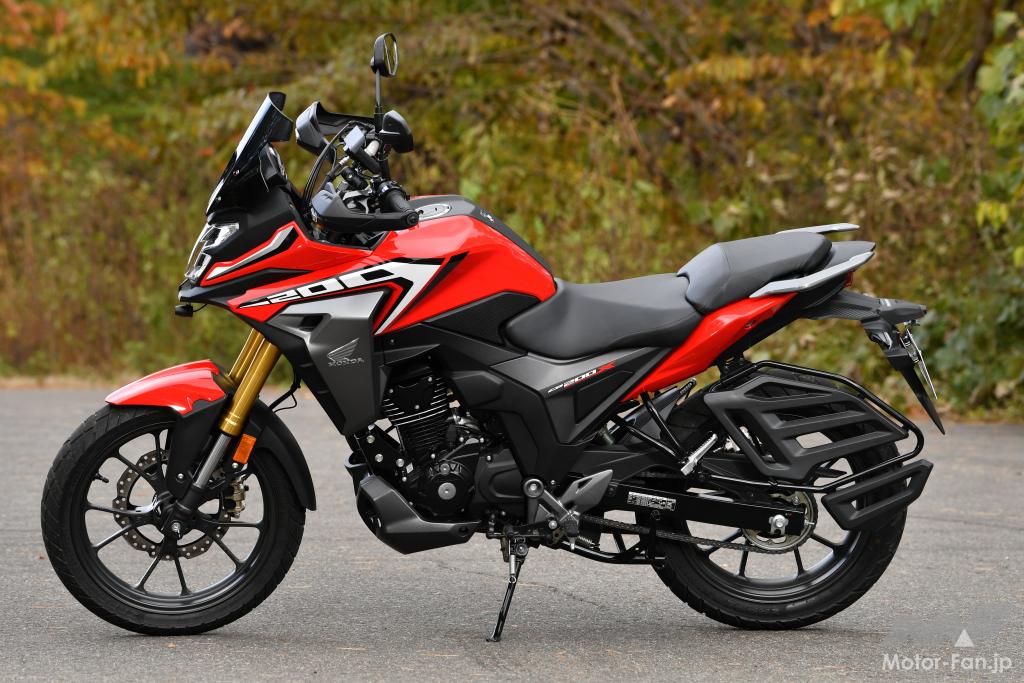
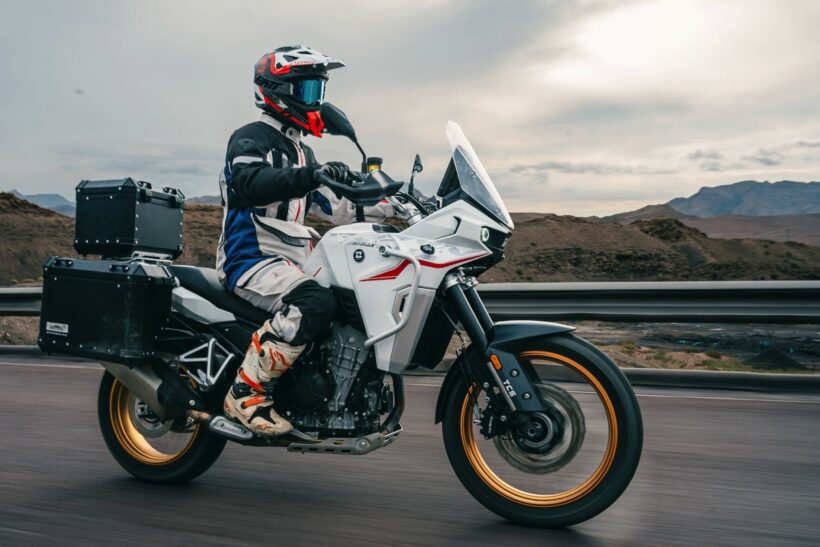
The original tires are MRF ZAPPER KURVE. The test vehicle is equipped with a smart monitor and dashcam made by Caedia, which is available through Bikekan/2rinkan.
Is it suitable for Japan’s road conditions?
There are probably many people who have doubts about the Indian-spec Honda CB200X (the name will be changed to NX200 from the 2025 model with enhanced equipment), which is imported and sold by Bikekan, and wonder how usable it will be on Japanese roads.
To be more specific, are the special considerations specific to Indian production unnecessary? Doesn’t the 184.4cc engine with a maximum output of 17ps feel insufficient? Does the chassis have the qualities to be used as an adventure tourer? And so on.
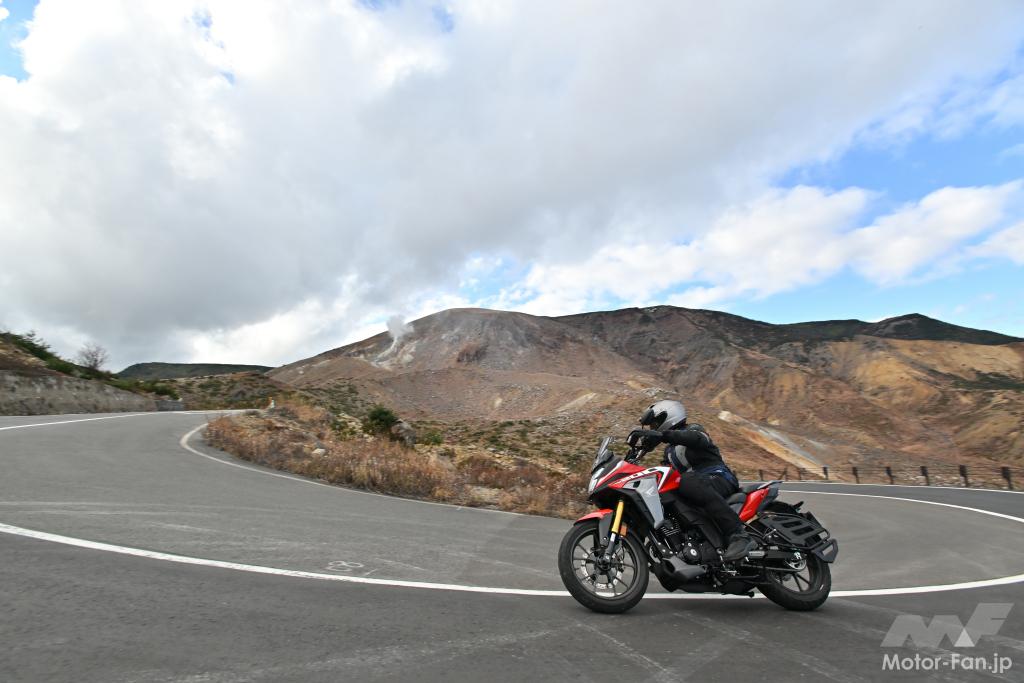
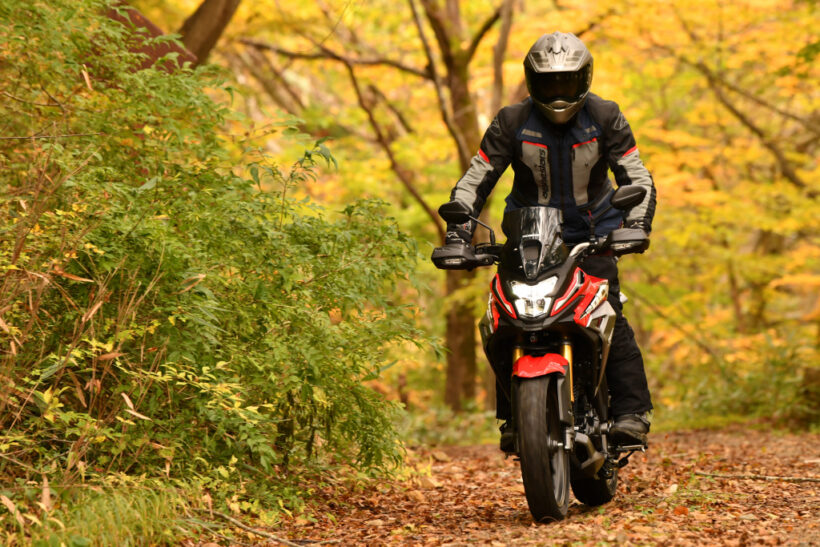
In the first article, I kept these factors in mind and shared my positive impressions of a day trip of about 800km and off-road riding, but I felt those two examples were a bit extreme. So this time, I would like to write about the features of this bike from an easy-to-understand perspective.

Substantial low- and mid-range torque and tenacity
First of all, when I talk about the care that is unique to Indian production, there was none of it.
The atmosphere of the cockpit and the operability of the switch box are the same as recent Honda models officially sold in Japan, and the operation feel of the Keihin throttle, Nissin brakes, and Showa shock unit is very natural. The constant adjustments that were said to be essential on some Asian bikes of the past are completely unnecessary on the CB200X.

Next, I’ll talk about the engine, designated MC56E, which, at least for me, was good enough.
That said, there is a weak sense of power building up at high rpm, and sometimes it feels a bit lacking when going up steep slopes or overtaking on the highway, but this is to be expected considering the engine displacement, and on the contrary, I was very impressed that such substantial low and mid-range torque and tenacity could be achieved with an engine displacement of 184.4cc.

Incidentally, the feel of the MC56E is very similar to the MD33E that was previously fitted to the SL230 and XR230. The two engines share a common valve train with a SOHC 2-valve configuration and an air-cooled cooling system, and the bore and stroke ratio is also similar (the 61 x 63.1mm MC56E is 1.03, while the 65 x 66.2mm MC33E is 1.01), but there is a difference of 38.6cc in displacement.
The reason it managed to achieve the same qualities despite this is probably due to advances in the intake and ignition systems. Without fear of being misunderstood, the MC56E, with its precise control that is unique to the modern era, makes it easier to extract power than the MC33E.

If I were to raise an objection to the MC56E, it would be that because the transmission is five-speed, the engine speeds are higher when cruising at high speeds (100km/h: 7200rpm, 110km/h: 8000rpm, 120km/h: 8800rpm). However, maintaining a speed of 100-110km/h is easy, and the increase in vibration at high speeds is negligible, so it wasn’t a problem for me.
Adventure Tourer Qualities

When talking about the riding experience of an adventure tourer, most people imagine smooth handling with an outstanding sense of security, a high-quality ride that easily absorbs bumps in the road, and high-speed cruising performance that allows you to continue riding steadily for long distances.

Below are my impressions of the CB200X in these three areas. Firstly, the handling was better than I expected. Before the test ride, I knew that the dimensions of the bike were almost the same as the Hornet 2.0, on which it was developed, so I wasn’t expecting much in terms of handling stability. However, perhaps due to the increased front wheel load and higher seating position achieved by adding a fairing, this bike achieved an exquisite sense of stability and just the right amount of calm, which is surprising for a bike with a 17-inch front wheel.

However, while the ride comfort and high-speed cruising performance were by no means bad, they were not completely praised.
These two elements seem to be the downsides of reusing the basic design of the Hornet 2.0, and during the test ride I found myself considering extending the front and rear wheel travel and wheelbase (the estimated standard wheel travel is F: 118 / R: 115mm, with a wheelbase of 1355mm). For example, if the wheel travel were around 130mm front and rear, and the wheelbase were around 1400mm, the comfort of the CB200X would undoubtedly be greatly improved.

However, as I mentioned in the first article, I have been able to easily complete day trips of about 800km on this bike. Increasing the wheel travel and wheelbase would likely hinder the bike’s ride friendliness, and of course would also increase costs. Considering these factors, I think the current bike configuration is the right choice.
If you buy from Bikekan, you don’t have to worry.

Looking back at what I’ve written so far, I’ve mentioned a few things that bothered me, but I have a very good impression of the CB200X. With this riding feel and price, I can recommend it to a wide range of riders who love to travel, from entry-level riders to veterans, and it would also make a great second bike purchase.

That being said, I think there are people out there who feel uneasy about purchasing a vehicle that is not officially sold in Japan. However, Bikekan, which has handled many Asian bikes up until now, has a thorough backup system in place, so if you buy a bike from the store, you don’t need to worry about maintenance or replacement parts.
*In the third installment, which will be published soon, the author will explain each part from his own unique perspective, as well as introduce the actual fuel consumption measured after driving approximately 1,200 km.

The tire sizes are 110/70-17 front and 140/70-17 rear. There are an extremely wide variety of tire options for on-road use, but the Metzeler Karoo Street is the only tire with a block pattern that is suitable for rough roads. However, if you don’t mind the rear being one size narrower, you can also use the Pirelli Scorpion Rally STR.
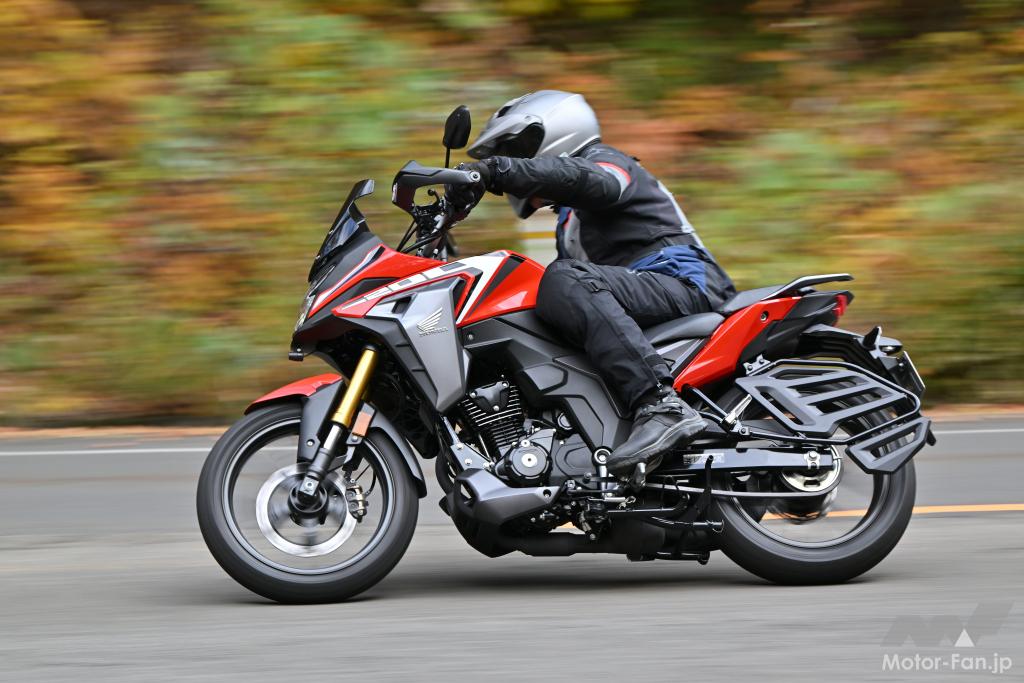
Main specifications
Model: CB200X
Length x Width x Height: 2035mm x 843mm x 1248mm
Wheelbase: 1355mm
Ground Clearance: 167mm
Seat Height: 810mm
Caster/Trail: 25°30’/97mm
Vehicle Weight: 147kg
Engine Type: Air-cooled 4-stroke single cylinder
Valve Type: DOHC 4-valve
Total Displacement: 184.4cc
Bore x Stroke: 61mm x 63.1mm
Compression Ratio: 9.5
Maximum Power: 12.7kW (17.3ps) / 8500rpm
Maximum Torque: 16.1N・m (1.64kgf・m) / 6000rpm
Starting Method: Self-starter
Lubrication Method: Wet sump
Fuel Supply
Method: Fuel injection Transmission Type: Constant mesh 5-speed return
Clutch Type: Wet multi-plate
Gear Ratio
1st: 3.076
2nd: 1.789
3rd: 1.300
4th gear: 1.066
5th gear: 0.916
1st and 2nd reduction ratios: 3.136 and 3.214
Frame type: Diamond
Front suspension: Telescopic inverted type φ37mm
Rear suspension: Swing arm mono shock
Front tire size: 110/70-17
Rear tire size: 140/70-17
Front brake type: Hydraulic single disc
Rear brake type: Hydraulic single disc
Fuel used: Unleaded regular gasoline
Fuel tank capacity: 12L
Seats: 2 people

Bikekan, which has over 70 stores nationwide, handles a variety of domestic and international vehicles. The company is also actively importing Japanese cars sold in Asia, and is preparing the Hornet 2.0, which was the development base for the CB200X, and the Chinese-spec CB190 series.










![[Izu City, Shizuoka Prefecture] A great touring spot to visit by motorcycle | Passing the Amagi Pass through central Izu.](https://motopeek.com/wp-content/uploads/2025/11/4734-1762339049801.jpg)