

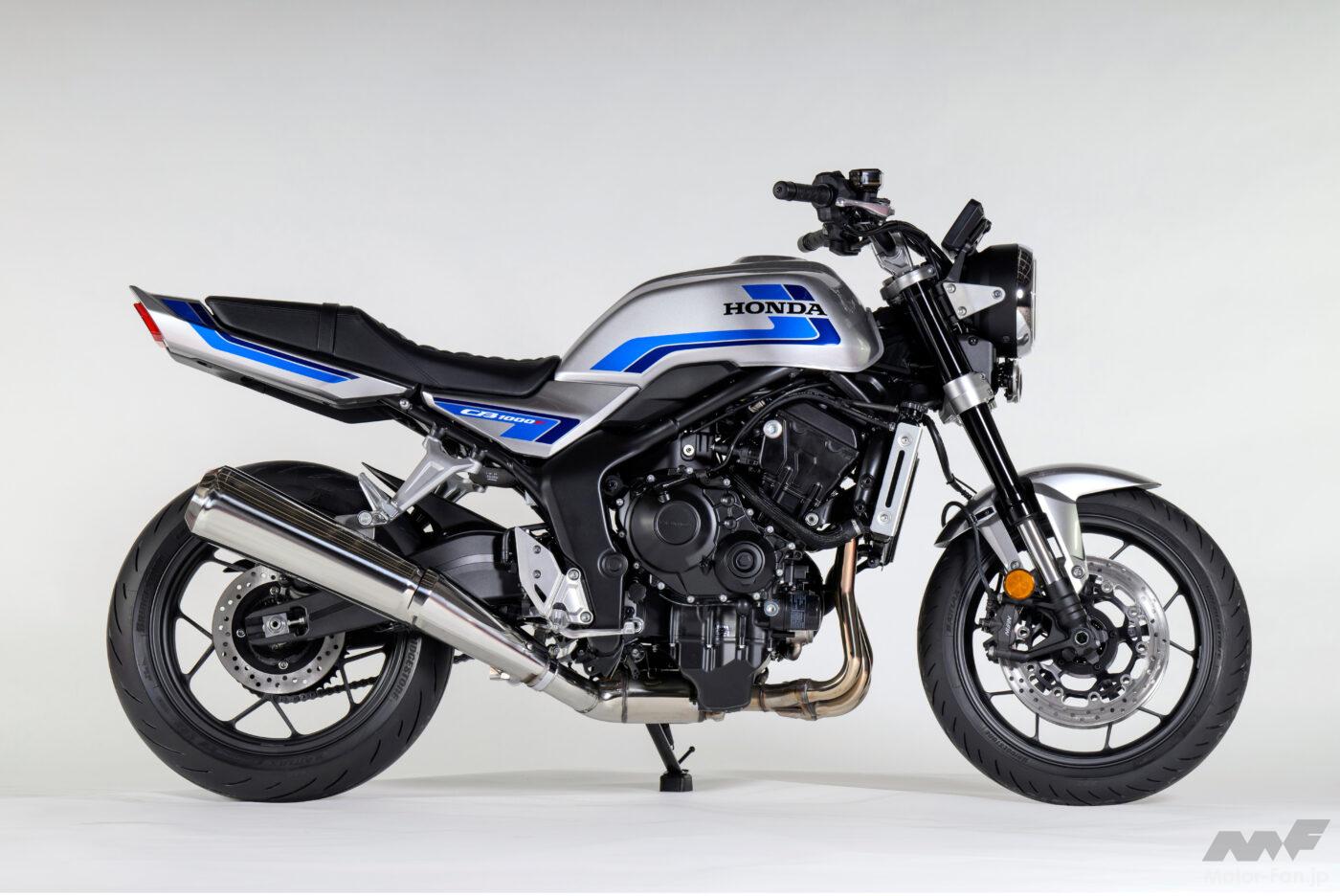
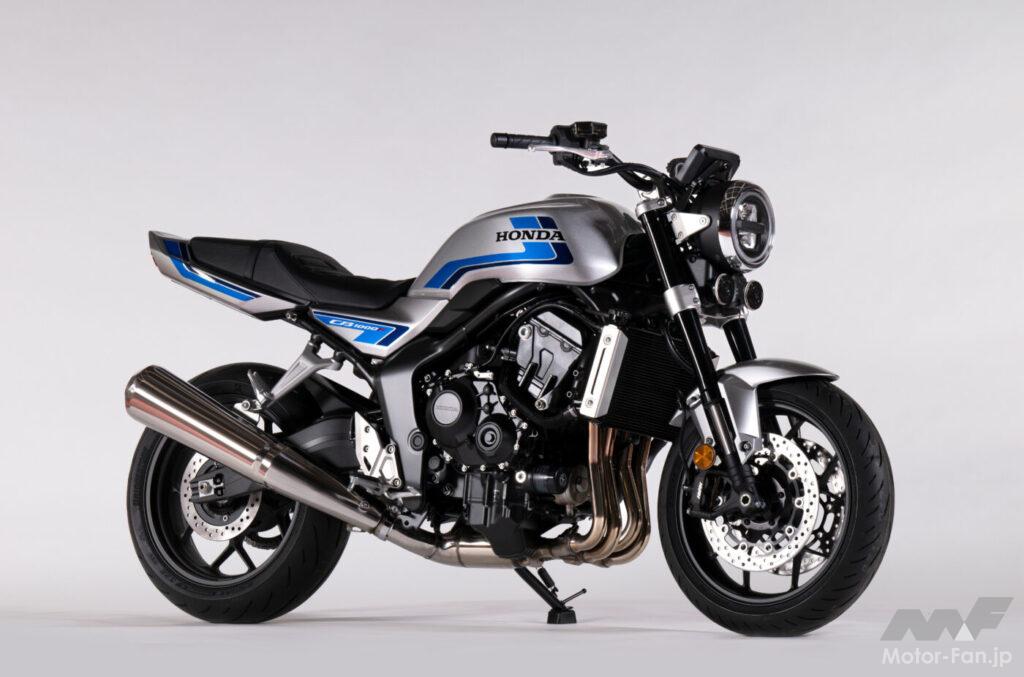
CB1000F
“CB” is the model name given to Honda’s road sports models. There are currently 16 commercially available models bearing this name, including the derivative “R” model. But what does CB actually mean? There are various theories, but it is said to come from the “C” representing motorcycles within Honda, and the “B” standing for “for Clubman Racer.”
As the name suggests, it originated from the CB71 and CB90 racing prototypes developed by Honda for the All Japan Motorcycle Clubman Race, but the origin of the commercial model is the Benly CB92 Super Sport, which was released in 1959.
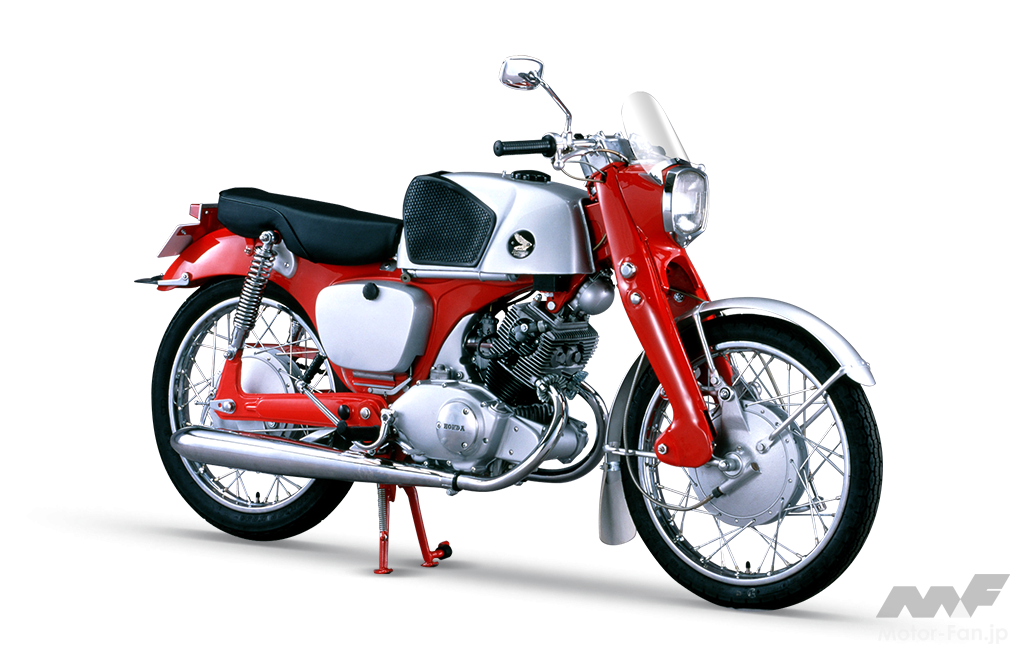
The CB92 was the model that made the world aware of the superior performance of Honda motorcycles when it was driven to victory by rider Gen Kitano in the Asama Volcano Race. As an aside, it is said that Gen Kitano was the inspiration for the protagonist in Haruhiko Oyabu’s novel “Dirty Hero.”
There are too many legendary and famous CB models to list, but one that became a benchmark for the returning rider generation is the “Dream CB750 FOUR.” This model, commonly known as the “K-type,” was developed with the overseas market in mind. It easily exceeded speeds of 200 km/h and was known for being the world’s first bike to feature a single disc brake on the front wheel.
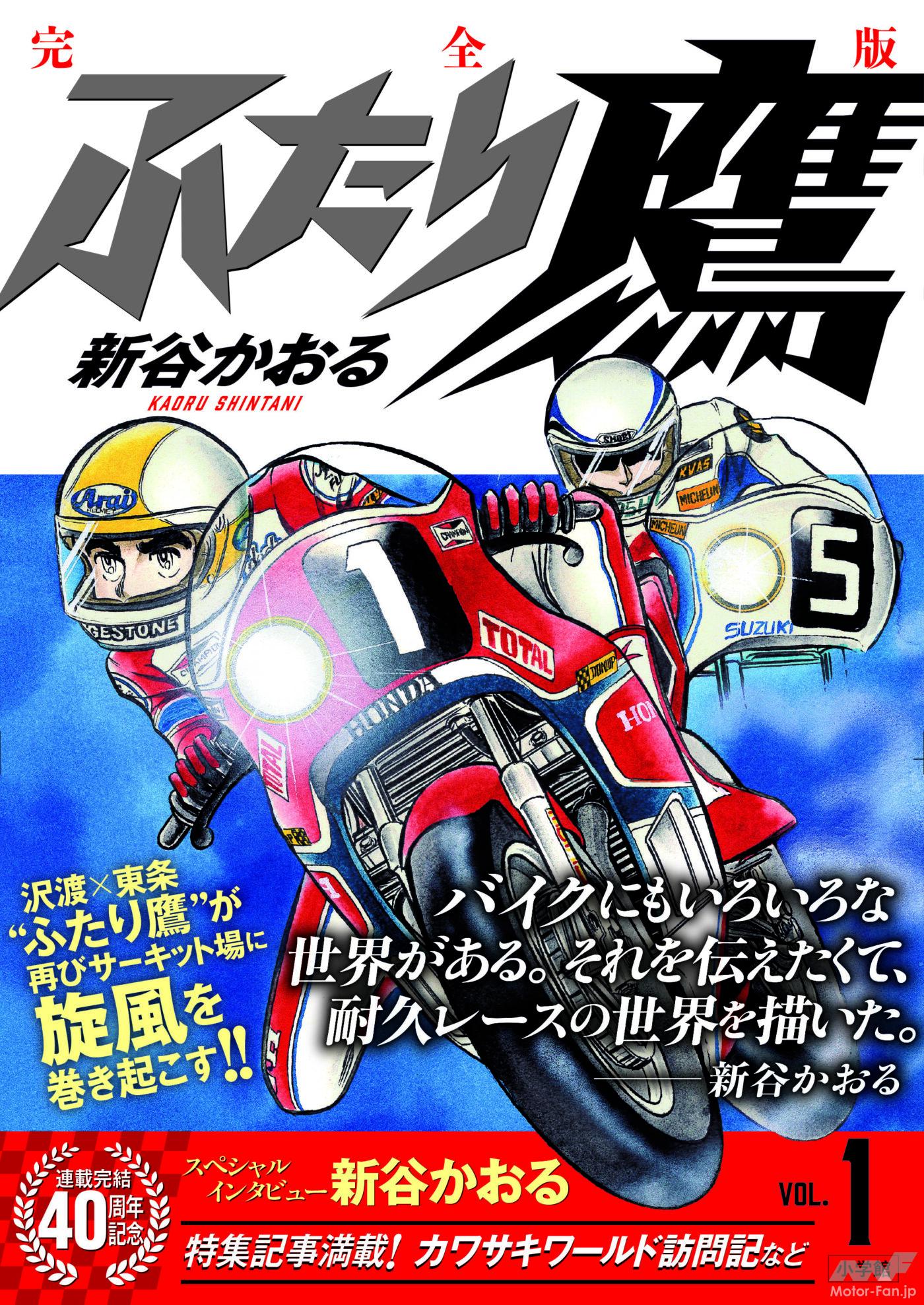
For the returning generation, it is well known as the motorcycle ridden by the main characters in the manga “Wild 7” and “750 Rider,” and I’m sure there are many who were inspired by this and wanted to ride one.
There was another CB that led the motorcycle boom of the 1970s and 1980s. That was the CB-F series, led by the CB900F. This was released as a successor to the K-type, which had become outdated. Its mission was to recapture the domestic and international markets from Kawasaki’s Z1, which had been a constant winner in the racing scene.
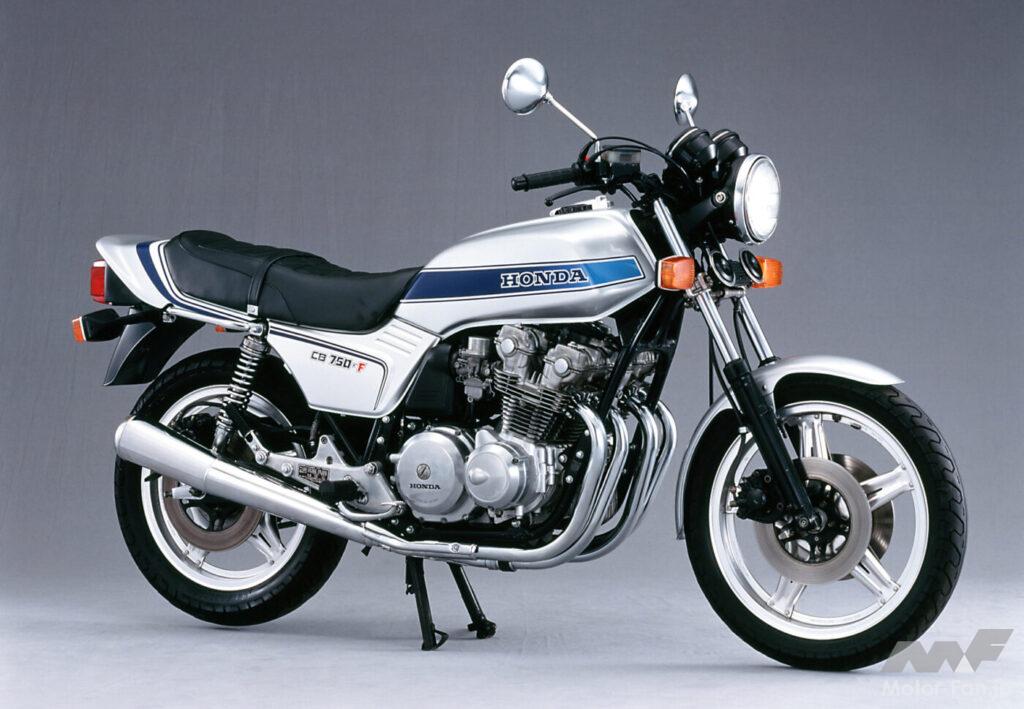
The CB900F, which appeared in 1979, was a production supersport model that utilized the know-how of the RCB1000, a race machine that was overwhelmingly strong in European endurance races at the time, and was Honda’s first vehicle to feature an air-cooled, 4-valve DOHC engine. In Japan, due to engine displacement cap regulations, it was scaled down to 750cc and sold as the CB750F.
This model is also familiar to the returning generation, and became extremely popular because the main character of the hit manga “Bari Bari Densetsu” rode it. Many young riders wanted to ride this, so they flocked to take the “restriction lift” test under the large motorcycle license system at the time.
Additionally, the CB-F’s prestige was further enhanced when a machine based on the CB750F competed in the AMA Superbike Championship (now the MotoAmerica Road Racing Series) held in the United States. Unknown rookie Freddie Spencer rode a CB-F at the time, and three years later he became the youngest champion in the 500cc class of the Road Racing World Championship. The silver body color of the AMA-competed machine, with its blue line, is still popular today as the “Spencer color.”
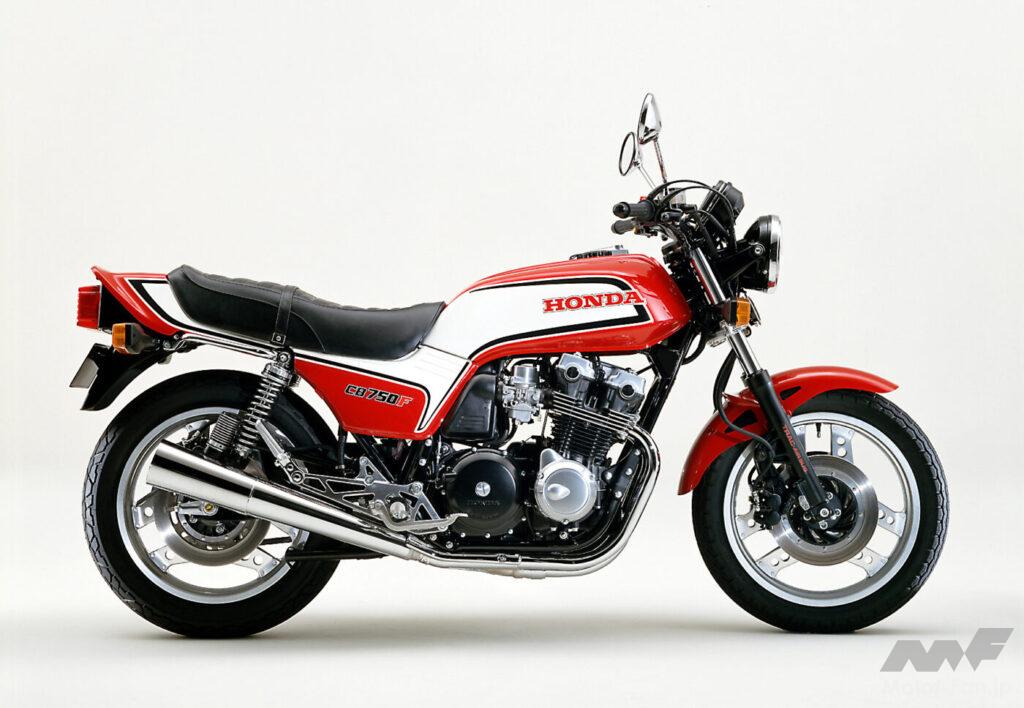
The 1980s could be called the golden age of the CB, with the appearance of the CBX400F in 1981 and the CBR400F in 1983, spreading a lineage of derivatives and new values, and its DNA is now passed down to current models such as the CB1300 Super Four and CBR1000RR-R Fireblade.
The CB series is likely to enter a new chapter in 2025. A sign of this is the CB1000F Concept, which was unveiled at the Osaka Motorcycle Show in March. Honda previously announced the CB-F Concept in 2020, touting the revival of the long-lost “F” model. However, the decision was later made to discontinue development of the CB-F Concept, much to the disappointment of fans.
However, this spring, the new “CB1000F Concept” was suddenly announced, bringing new hope to the market after the discontinuation of the CB1300 Super Four series. At first glance, the concept model that appeared on the stage at the launch event was clear to see that it shared the engine and other parts with the “CB1000 Hornet,” but its design was a perfect fit for the older generation. The developers were said to be mainly in their 20s and 30s, but the finished machine was reminiscent of the CB-F that competed in the aforementioned AMA Superbike Championship.
First of all, the shape of the tank is different from the rounded tanks of the CBs that have appeared over the past decade or so, and instead adopts an edgy design like the CB750F. This alone should have made fans of the old model say “Wow!”
But that’s not all. The styling also recreates the tuning used by Daytona racers, along with the long front forks, megaphone muffler, fenderless rear spoiler, and hollowed-out seat, all of which are still standard customizations for the CB-F. It’s truly moving.
Of course, when it goes on sale, it will likely be fitted with safety features like blinkers and a rear fender, and there are mixed opinions about the LCD meter and engine shape. Nevertheless, there is no doubt that many riders over the age of 50 were ecstatic about the return of the F.
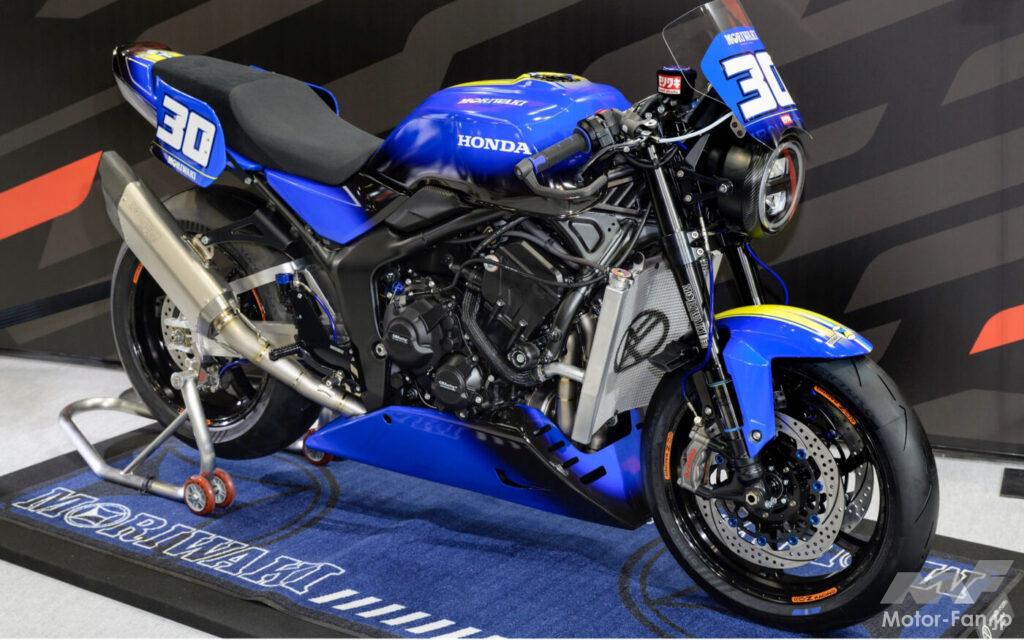
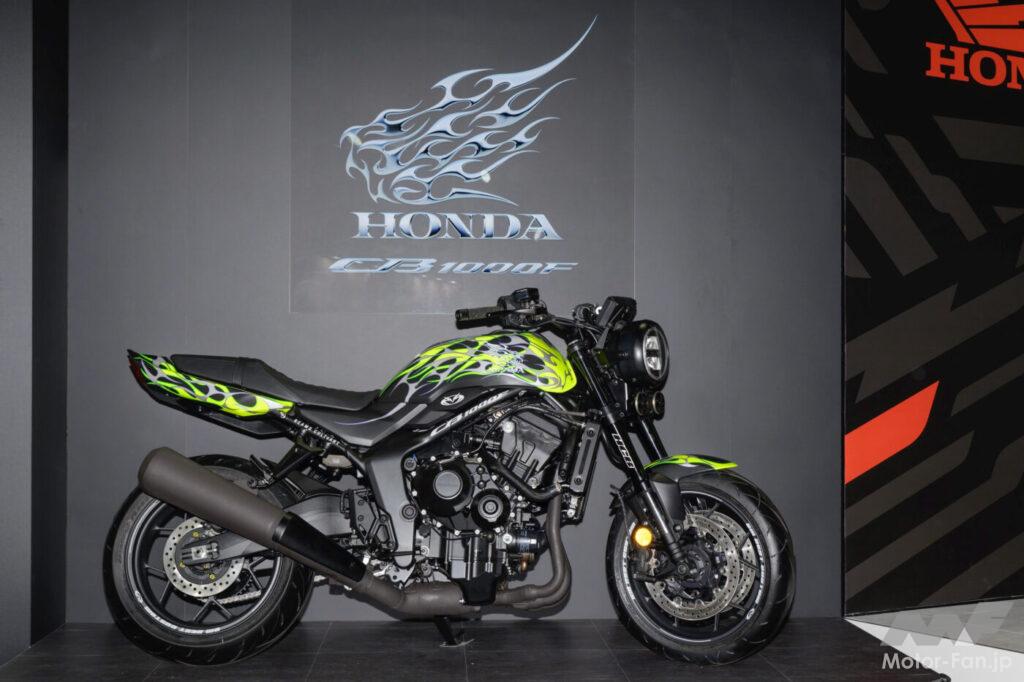
Since its unveiling in March, Honda has been bringing the CB1000F Concept to events held around the country to raise awareness, and they are fully prepared to put it on the market. Based on the information I have received, I predict that it will be released in the fall of 2025.
Incidentally, it appears that there will be two types available in the lineup. The standard version without a cowl, which has been exhibited at shows, and a higher-end version fitted with a bikini cowl are expected to be released. The higher-end version will also come with features such as a quick shifter, which will differentiate it from the standard version in terms of functionality.
There are three different color options: the silver and blue Spencer color, and two variations on the CB750F color scheme.
The CB1000F Concept has already generated excitement among fans, but rumors are spreading that when it goes on sale, the number of units will be significantly reduced to make it a premium model. There are rumors that the sales strategy will be based on that of its rival, the Z900RS, and if this is true, it is likely that it will be sold out immediately after its debut.
In any case, the CB1000F, which comes with the end of the BIG1 series, will undoubtedly herald the arrival of a new era for the CB series. Expectations are rising as to whether this newcomer will be able to offer performance worthy of Honda’s prestigious CB name.