

Vespa Primavera S150…566,500 yen
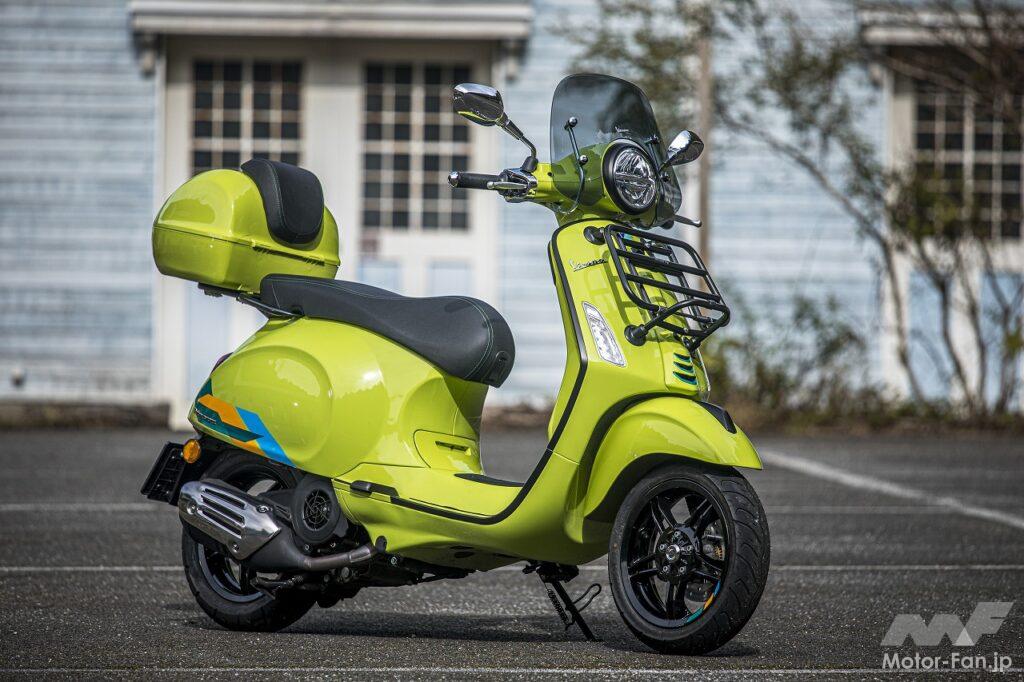
Vespa has the form that comes to mind when anyone thinks of a scooter. Looking at the current models, although there are minor differences, the basic styling structure is the same. The form is unconventional and is a refinement of Vespa's traditional design. So, although it inherits the classic style, it doesn't feel outdated at all. Personally, I've only been to Italy once, but I thought the Primavera S150 would suit the scenery of old-fashioned Italian cities. I also think it would blend seamlessly into the landscape of modern cities. Perhaps that's because it has a strong presence backed by a long history.



Not much freedom, but it provides a comfortable position
The vehicle height feels higher than Japanese scooters. For riders of average build, the toes of both feet can reach the ground. While it doesn't feel like an inconvenience in practice, a lower seat height would be more comfortable, considering the vehicle's weight of 150 kg. There are no issues with ease of boarding or disembarking. The flat-floor step-through design means you don't have to lift your feet much to straddle the floor. This is extremely convenient for older riders whose bodies tend to be stiff and find it difficult to lift their feet. While some sports scooter models require you to swing your feet backwards to board or disembark, as with regular motorcycles, I believe a step-through design is best, since scooters are such a convenient vehicle.
The seating position, which feels more like sitting on the seat than straddling, is also comfortable. It matches the handlebar position naturally, making it a comfortable position for anyone.
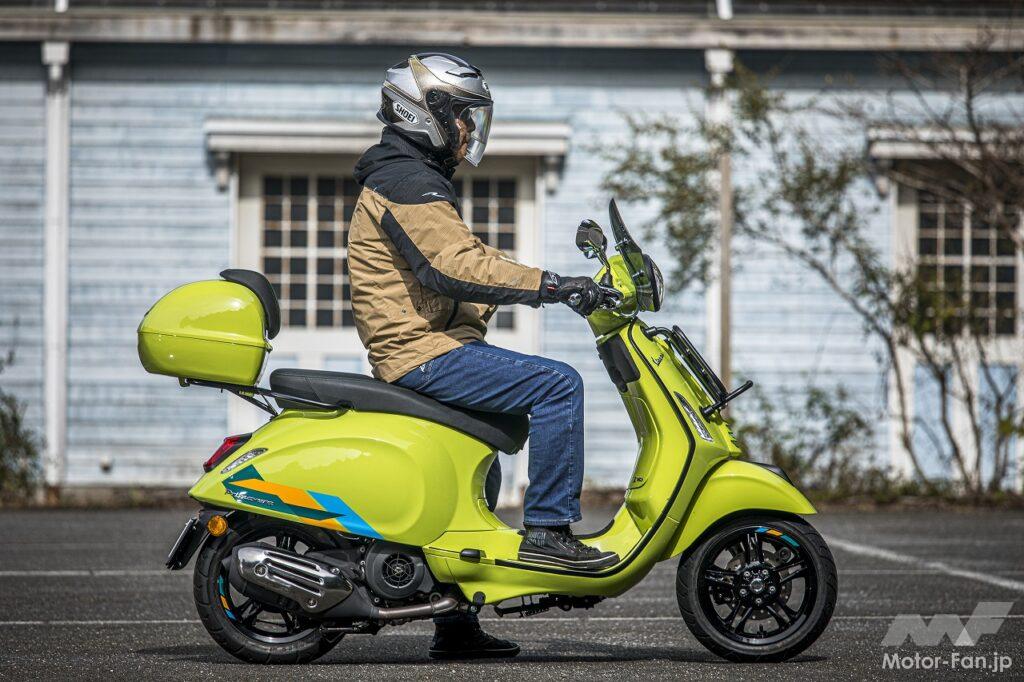
The floor board is a step-through, making it easy to get in and out. The floor itself is not that wide, so the foot placement is somewhat limited. However, there is ample space around the knees, so you don’t feel cramped.
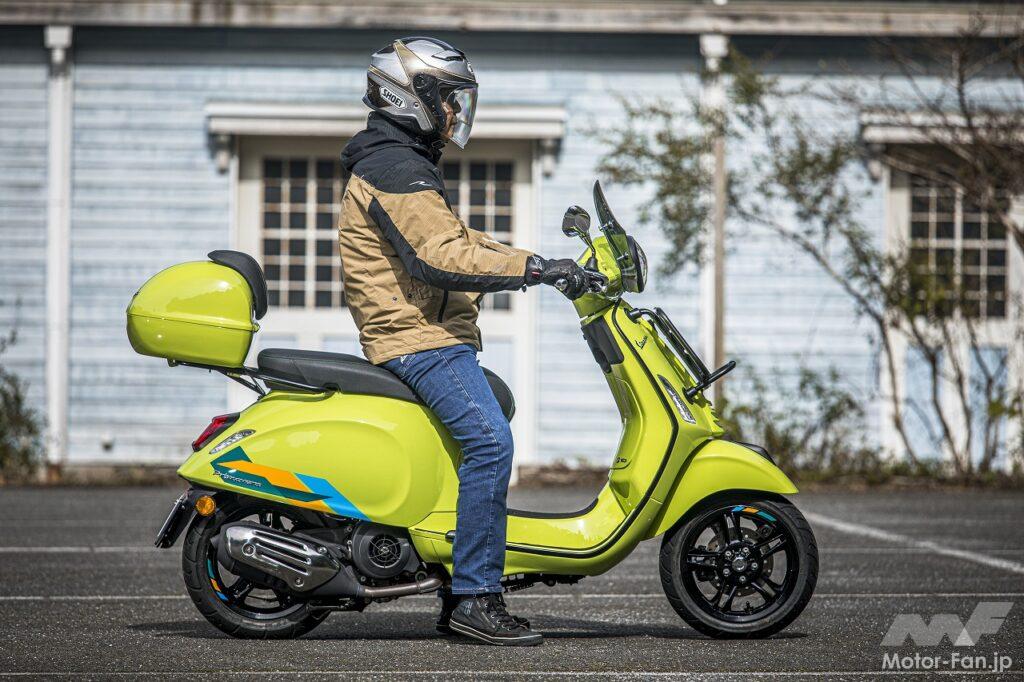
The handlebars are just the right width and height, allowing anyone to ride in a natural riding position regardless of their build. There is ample space around the upper body and arms, making it comfortable. The seat is also quite comfortable.
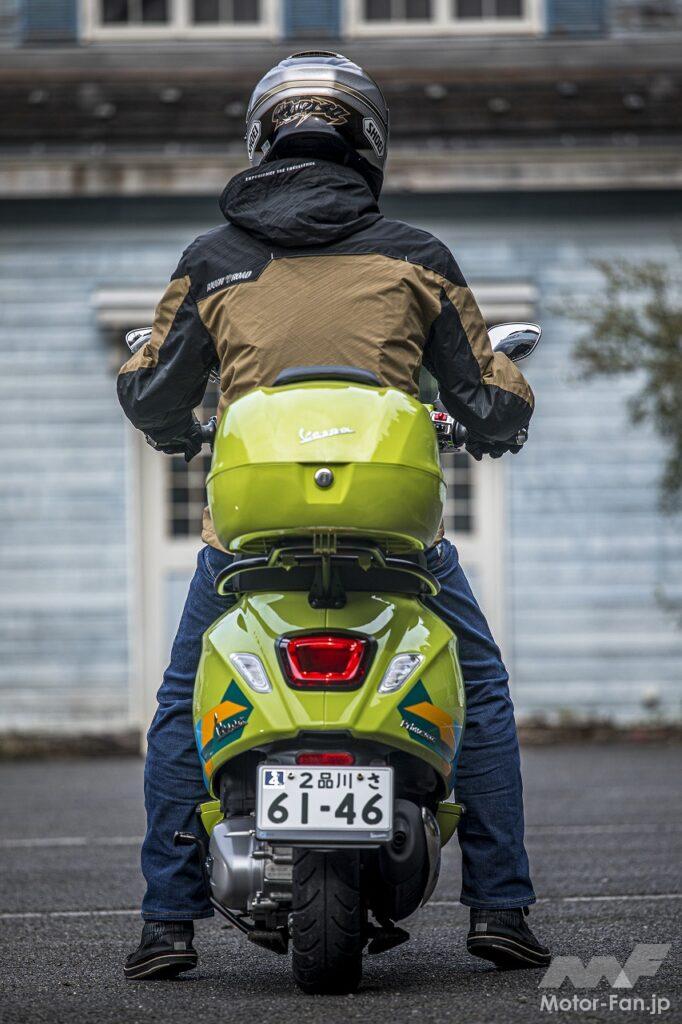

The seat height is 785mm. From this figure, you would imagine that both feet should be able to easily touch the ground, but in reality, even for me, who is 178cm tall, both feet are not flat on the ground. This is because the body and floorboard are wide, so my feet end up spreading apart. So, I can’t say that it is easy to reach the ground. Also, the weight of the car is on the heavy side at 150kg, so I have to be careful when maneuvering and stopping.
A powerful engine for everyday use
For example, if you were to start head-to-head with a Japanese scooter in the same 150cc class, you'd be left behind. The Primavera S150's i-get four-stroke, air-cooled, single-cylinder SOHC three-valve engine has lower power and torque than the Japanese scooter. It's also about 20kg heavier, so it's inevitable that it's less powerful. However, this is only the result of a competition; when riding alone, it doesn't feel sluggish or sluggish. Opening the throttle gives it a rev-up that matches the effort, and there's no lack of acceleration. This makes it highly maneuverable even in urban areas with frequent stop-and-go traffic. It's also perfectly capable of staying in the flow of traffic when touring on the highway.
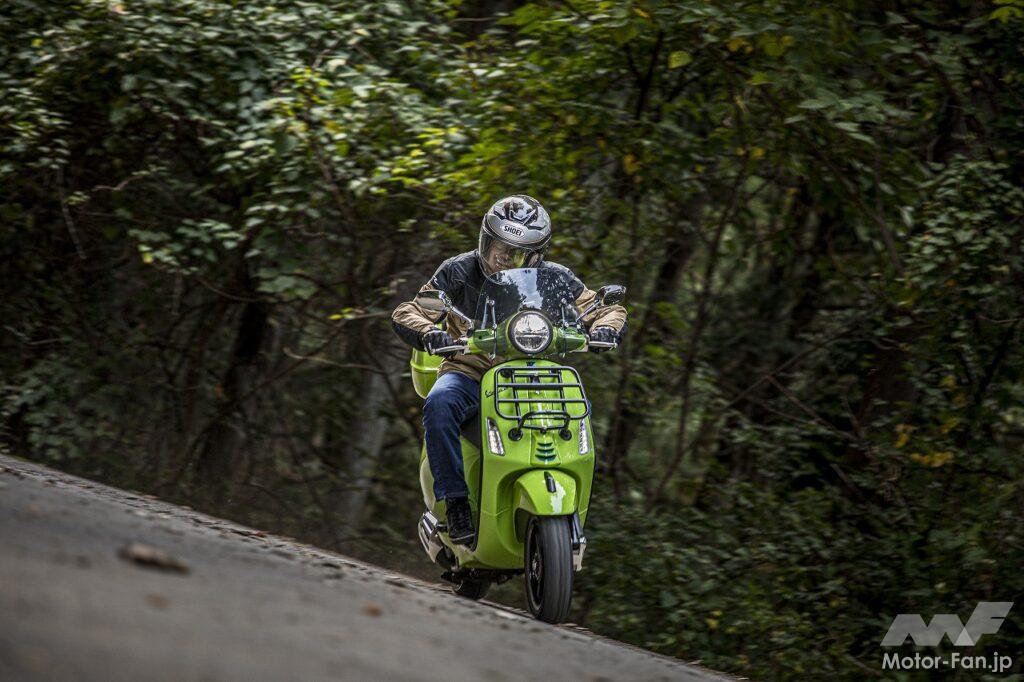

The engine at the heart of the bike is a 150cc i-get air-cooled 4-stroke SOHC 3-valve single cylinder. While the specs aren’t as good as Japanese scooters in the same class, it delivers ample power for everyday use. Its sprinting power is also something to be reckoned with.
Comfortable ride and suitable for touring use
Generally speaking, scooters tend to have a short suspension stroke, resulting in a rough ride. Like many scooters, the Primavera S150 also tends to bounce when going over rough surfaces or bumps. However, as long as you're riding on public roads at reasonable speeds, it absorbs small bumps well and provides a comfortable ride. Incidentally, the front suspension is a single-arm link arm hydraulic suspension, while the rear uses a mono shock absorber with a four-stage spring preload adjustment mechanism. It's not a suspension designed for hard riding, but rather strikes a balance that's optimal for the practicality of a scooter. While the small 12-inch tires on both sides have significant drawbacks in terms of riding performance, I never felt uneasy on the city streets or tight mountain roads I rode on this trip. Straight-line stability and nimble handling made it enjoyable to ride on winding roads. The Primavera S150's brakes, a single disc with ABS in the front and a drum in the rear, provided ample stopping power and good control. What impressed me was the wide steering angle. I thought it was easy to handle and maneuverable when maneuvering in tight spaces or making U-turns. In that respect, I thought it really embodied the convenience of a scooter.

The front uses a single-arm link arm hydraulic suspension. It absorbs small bumps well and contributes to a comfortable ride and driving stability. The brake is a single disc with ABS.

The rear suspension is equipped with a four-stage preload adjustable mono shock, and the brakes are drum type.

Cast aluminum wheels with 110/70-12 size tires

The rear tire is 120/70-12 size.

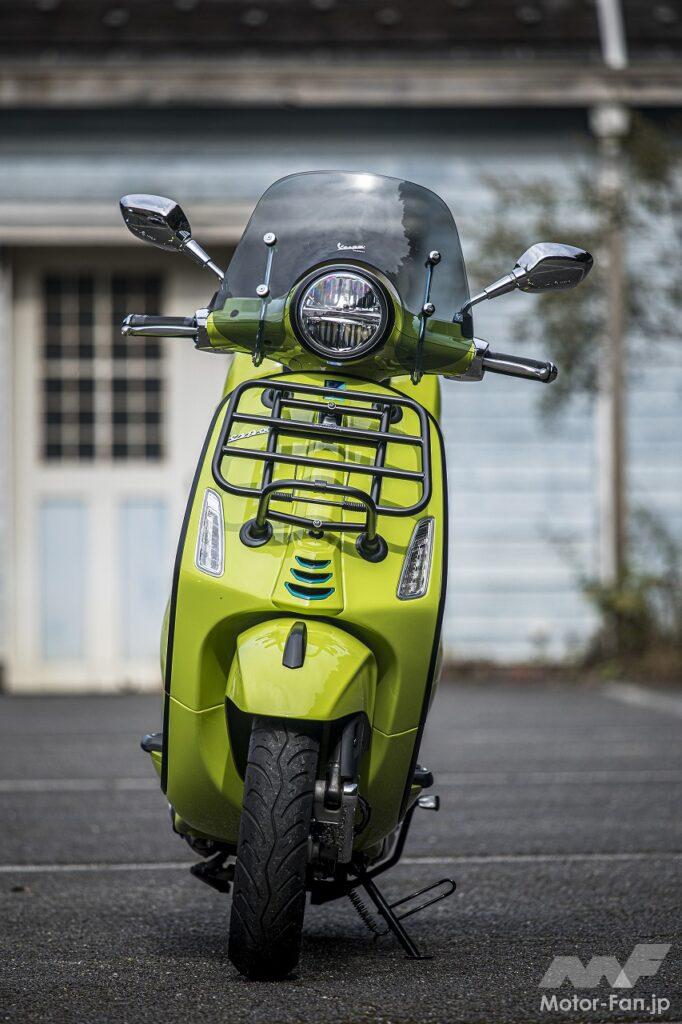
The round headlights that match the style use LEDs. The installed fly screen smoke (17,600 yen) is an accessory part.
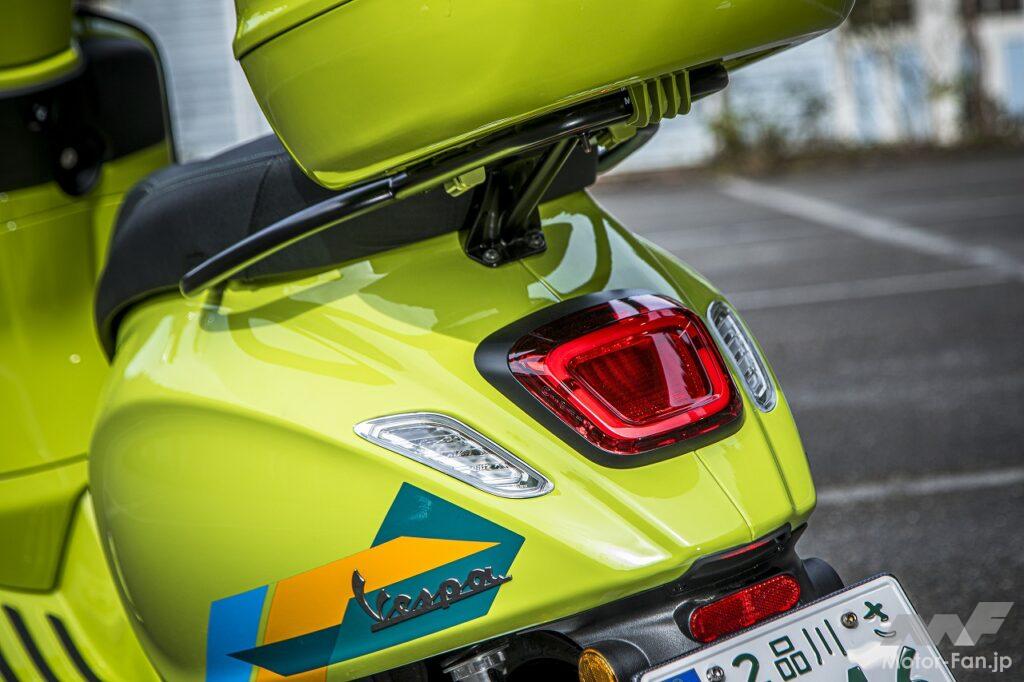
Both the tail lamps and turn signal lamps built into the body use LEDs to improve visibility.
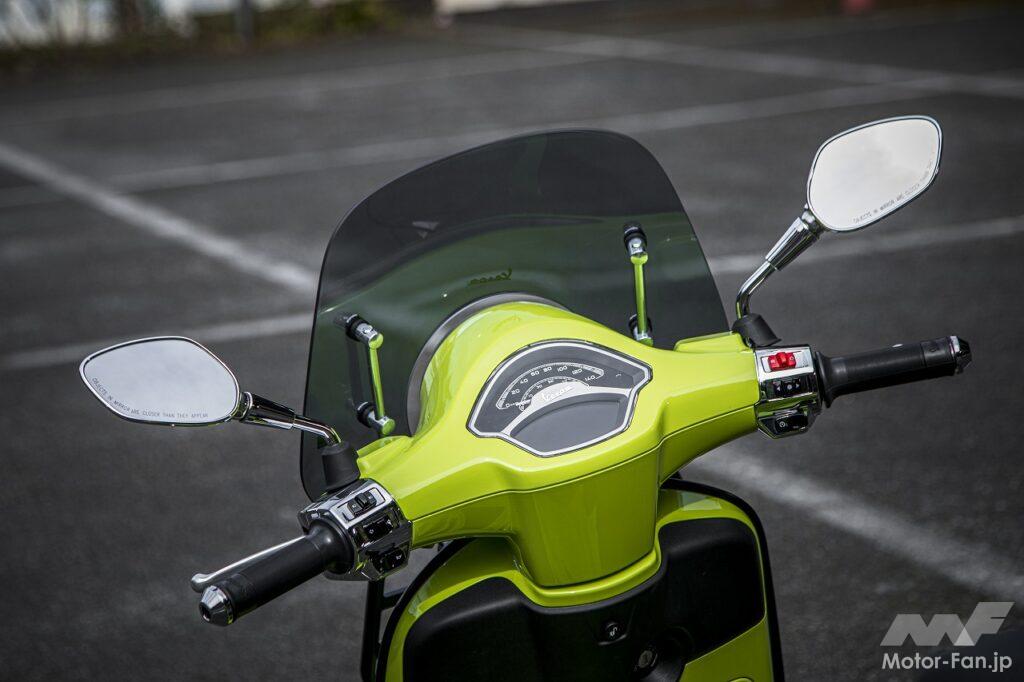
Simple design yet functional handle

The chrome-plated switch covers give a high-quality impression. The switches are generally small.
ADVERTISEMENT
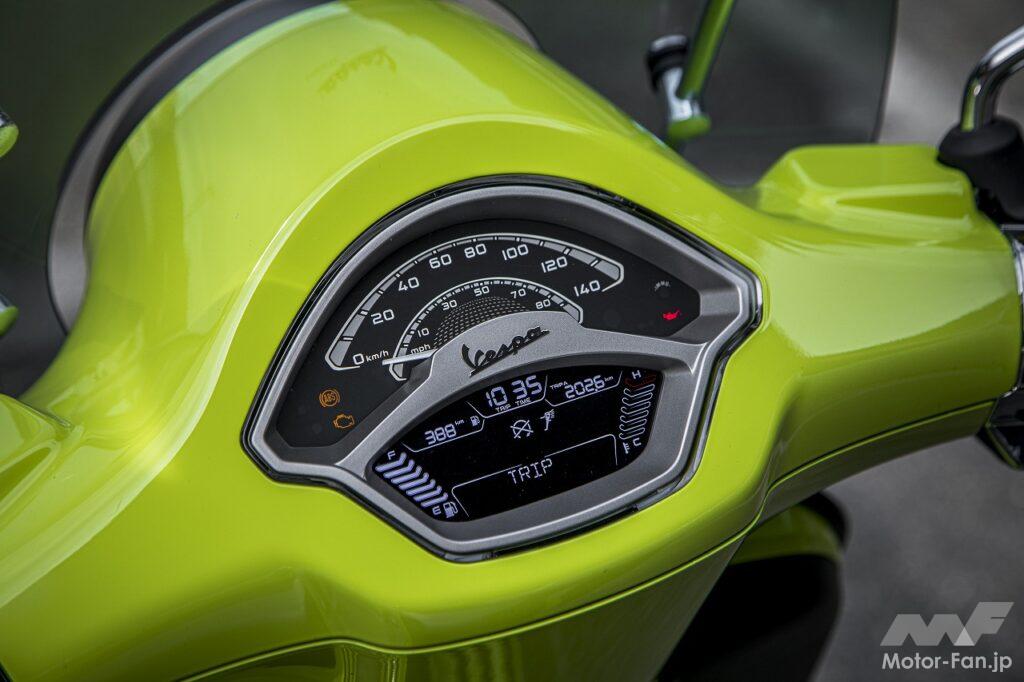
A combination meter that combines an analog speedometer and an LCD meter. Indicator lamps are located inside the analog speedometer. The digital LCD meter displays a variety of information.
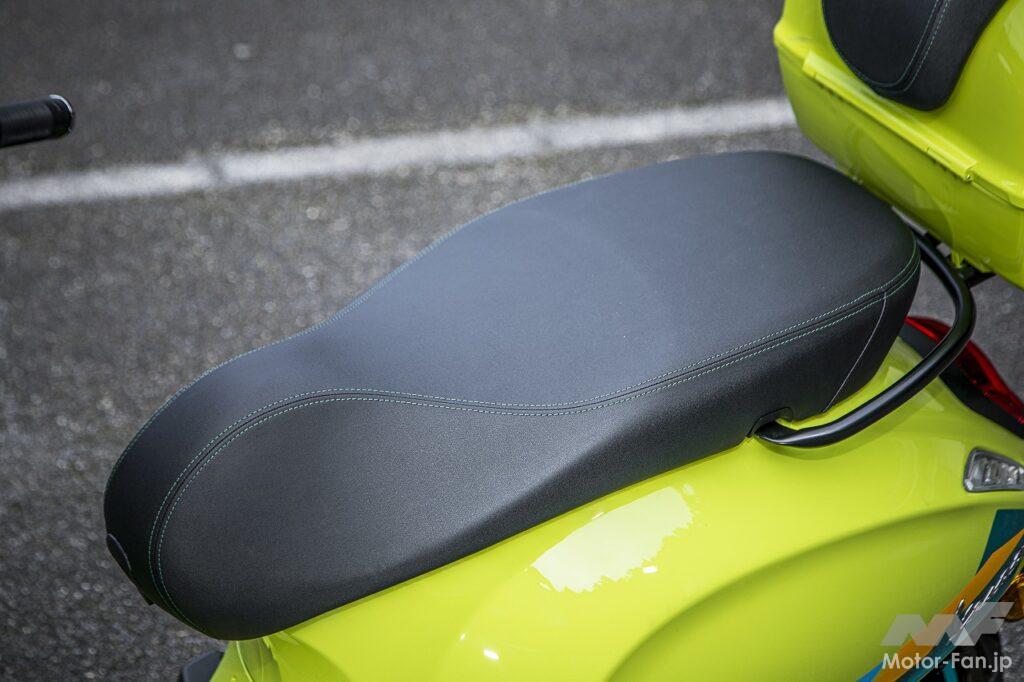
The double seat isn’t particularly cushioned, but it offers a wide and comfortable seating surface.
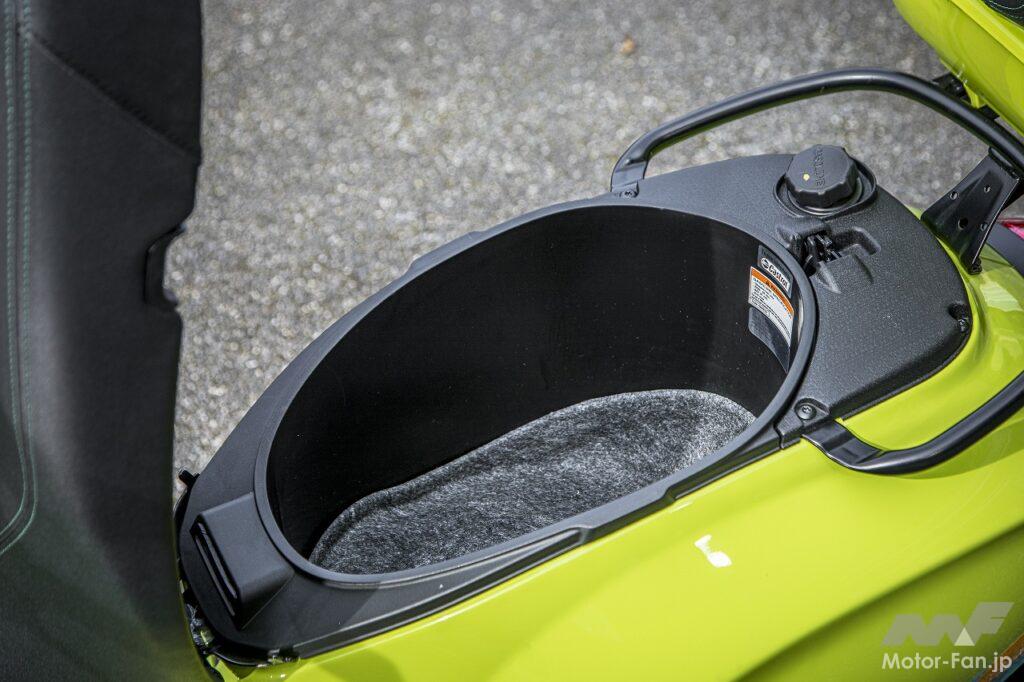
When you open the seat, the gasoline filler cap appears at the rear. The space under the seat is a trunk, which is convenient for storing small items.

There is a small storage compartment on the left side of the front trunk, and it also has a USB power supply.

The front rack (16,577 yen) is an accessory part that is convenient for loading luggage.

The top box support (16,517 yen) and top box (28,050 yen) greatly increase the luggage storage capacity.

The top box is key-locked for security and can also store a helmet.
Main specifications
| Engine type | i-GET air-cooled single-cylinder 4-stroke |
| SOHC 3 valve | |
| Total displacement | 155cc |
| Maximum power | 12.3 HP (9.2 kW) / 7,750 rpm |
| Maximum torque | 12.8 Nm / 6,500 rpm |
| Fuel system | Electronically controlled fuel injection system |
| transmission | Automatic (CVT) |
| clutch | Automatic centrifugal clutch |
| Frame | Steel monocoque body |
| Front suspension | Cantilever link arm dual |
| Action Hydraulic Suspension | |
| Rear suspension | Hydraulic mono shock absorber |
| 4-stage spring preload adjustment | |
| Front brake | Hydraulic 200mm disc brake |
| ABS | |
| Rear brake | Mechanical 140mm drum brake |
| Front tire | 110/70-12″ |
| Rear tire | 120/70-12″ |
| Total length/width | 1,870 mm / 735 mm |
| Wheelbase | 1,334 mm |
| Seat height | 790 mm |
| Fuel tank capacity | 7 L |
| Vehicle weight* | 132 kg |