
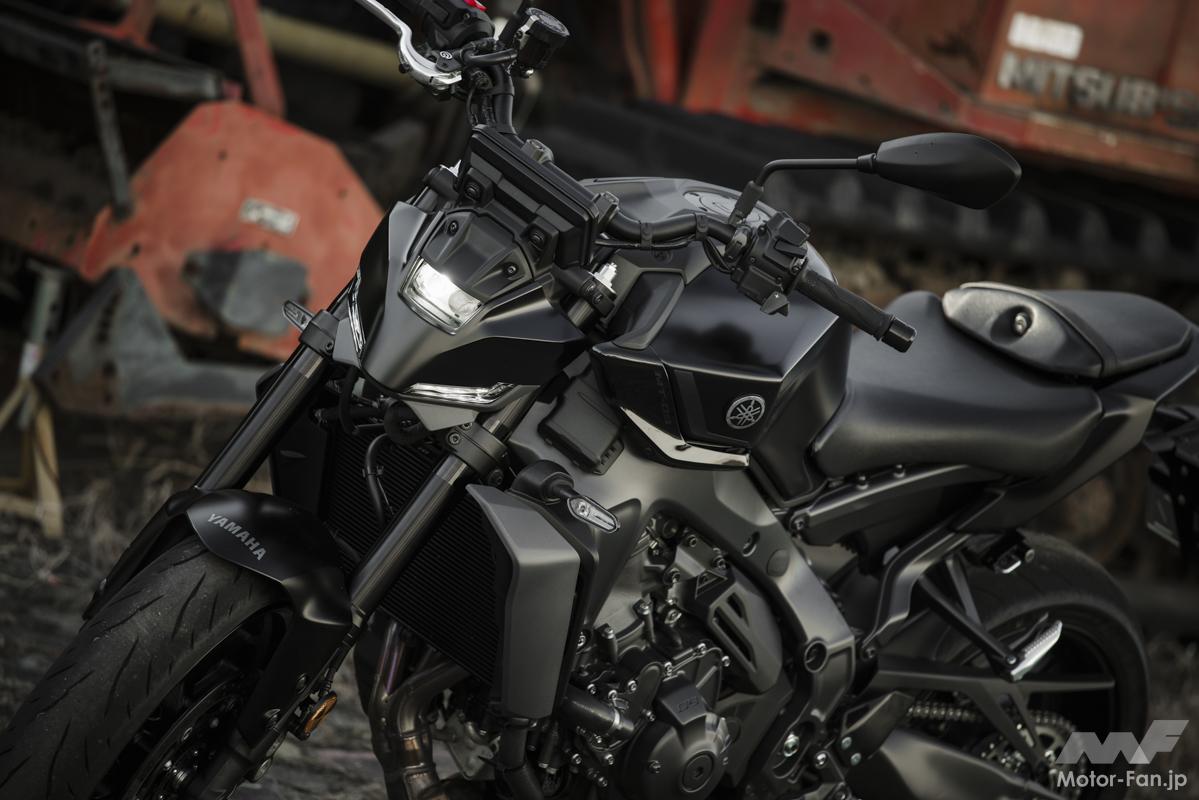

Yamaha MT-09 Y-AMT ABS… 1,364,000 yen
Equipped with Yamaha’s unique electronically controlled gear shifting system
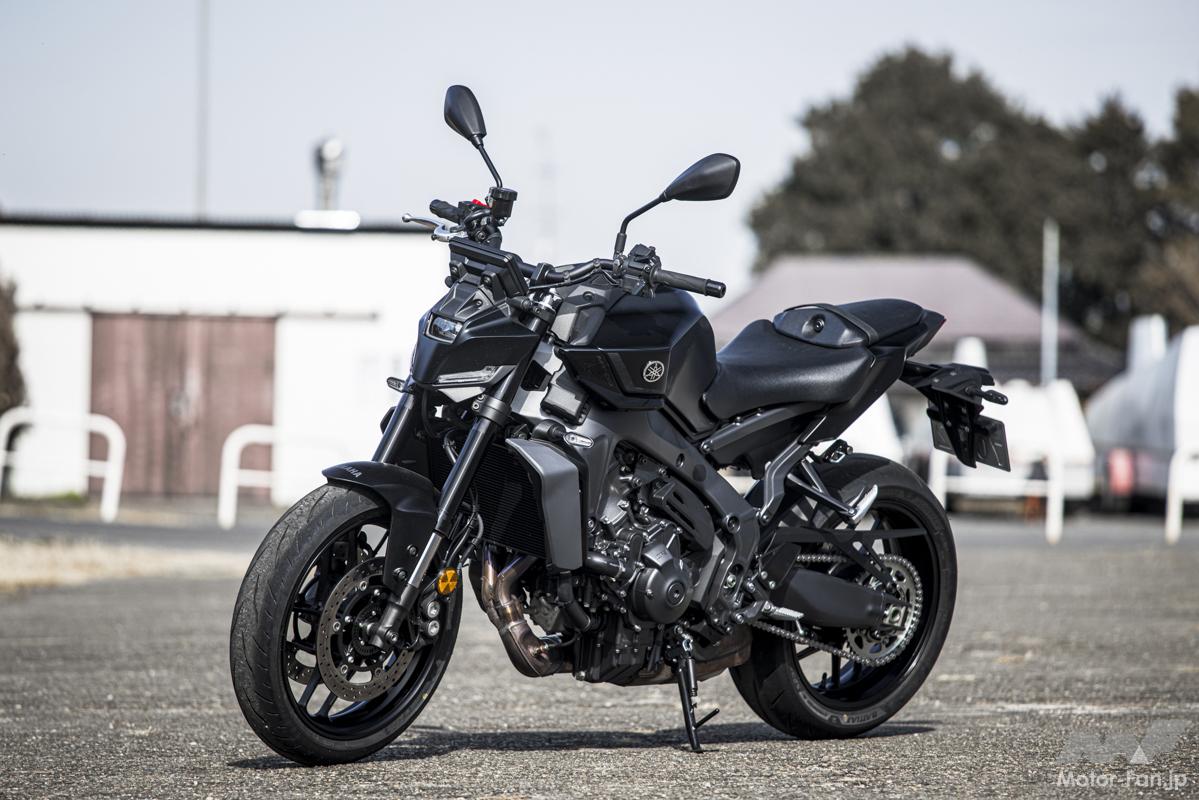
Y-AMT is an electronically controlled transmission system developed independently by Yamaha. It is similar to Honda’s DCT in that it automatically controls the clutch and shifts gears, but DCT is a system used in four-wheeled sports cars and the like, designed for motorcycles. There are two clutches, one for 1st, 3rd, and 5th gears, one for starting and one for 2nd, 4th, and 6th gears, and these clutches are alternated when shifting, so there is little loss in gear shifting. In contrast, Yamaha uses an existing transmission and controls the clutch and shifts with an actuator, so the mechanism is completely different.
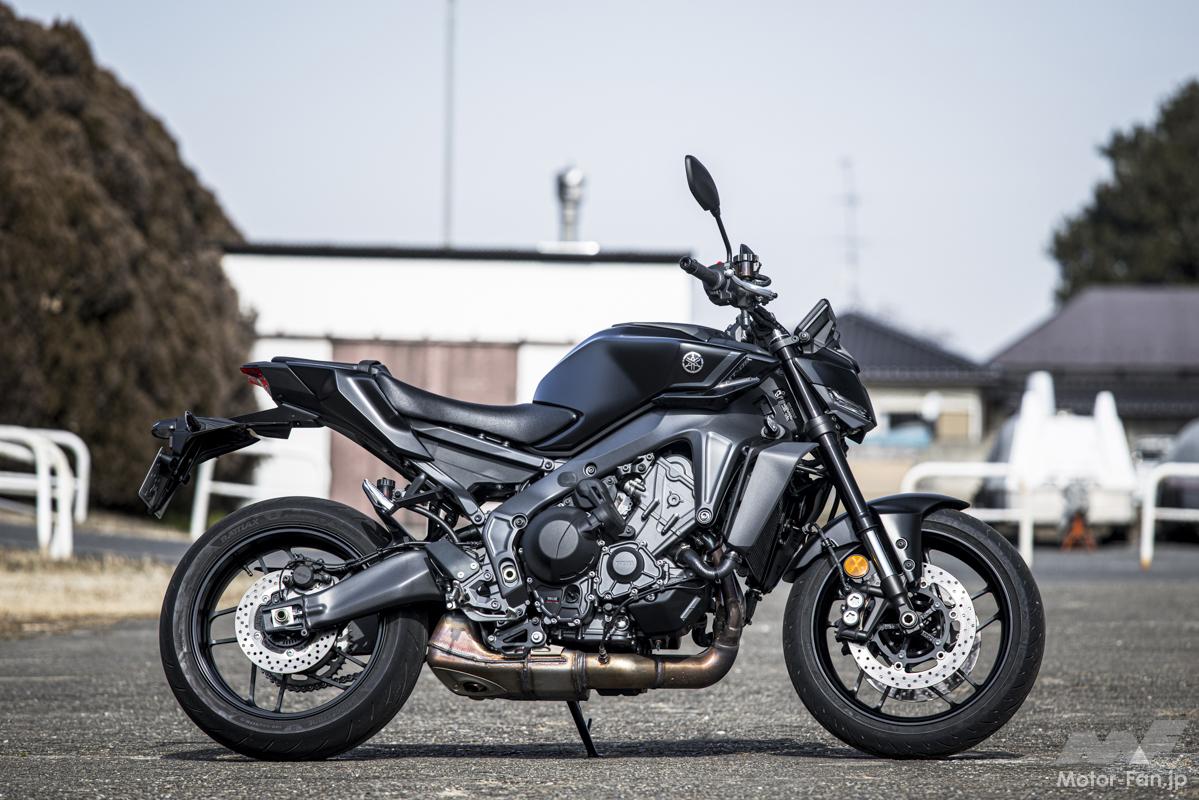
Yamaha has been equipping the FJR1300AS with an electronically controlled clutch for over 10 years. Initially, there was simply no clutch lever, but in later years this evolved into a function that downshifts according to the vehicle speed. After all that time, the Y-AMT was introduced, which electronically controls the clutch and gear changes.
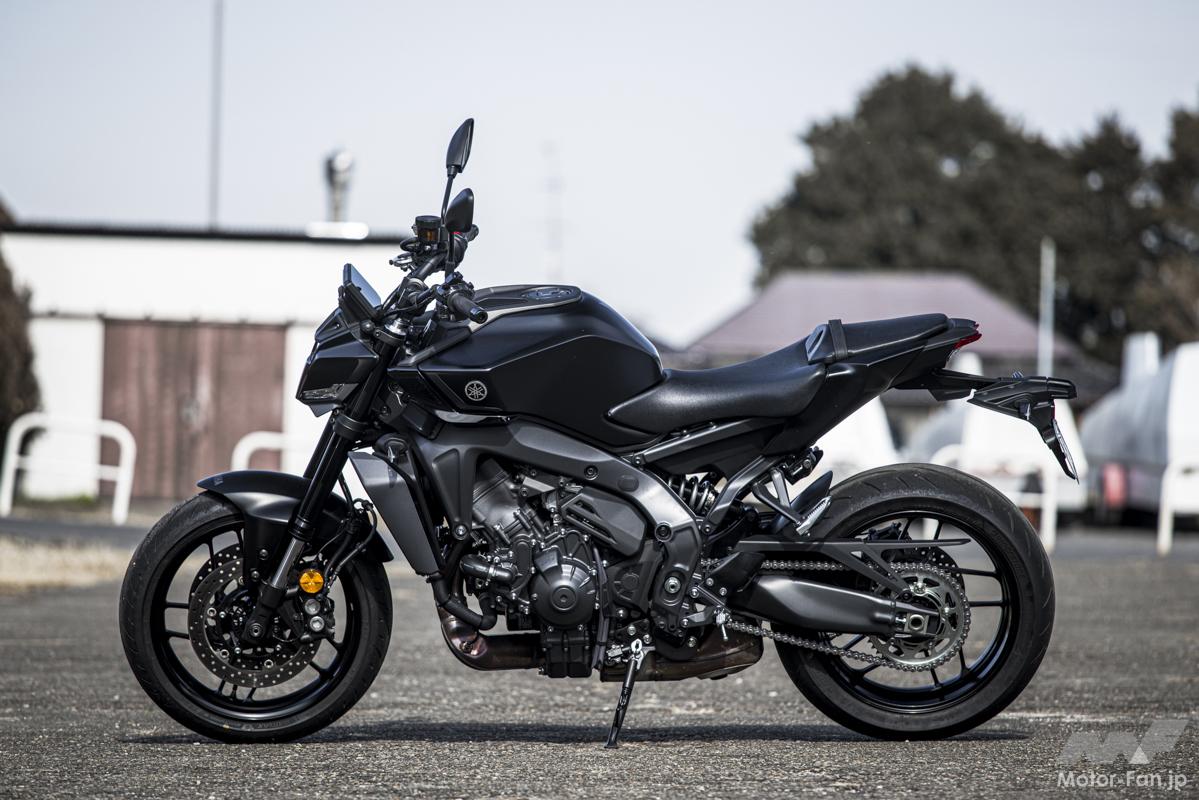
The MT-09, equipped with Y-AMT, is a sports naked bike that features a three-cylinder engine born from Yamaha’s crossplane concept, and a chassis and suspension that are designed for the enjoyment of control.
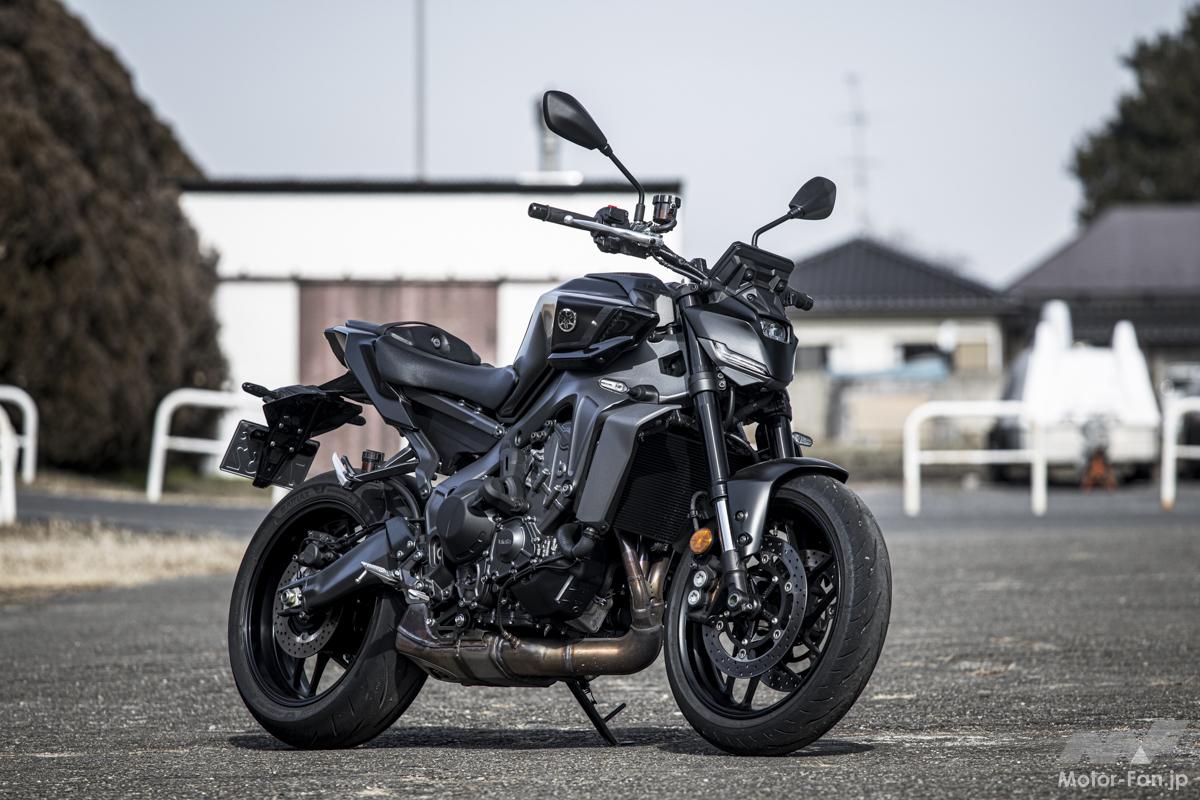
The weight increase due to the installation of Y-AMT is 2.8 kg. This shows how lightweight and compact the actuator and control unit are. The price has increased by 110,000 yen.
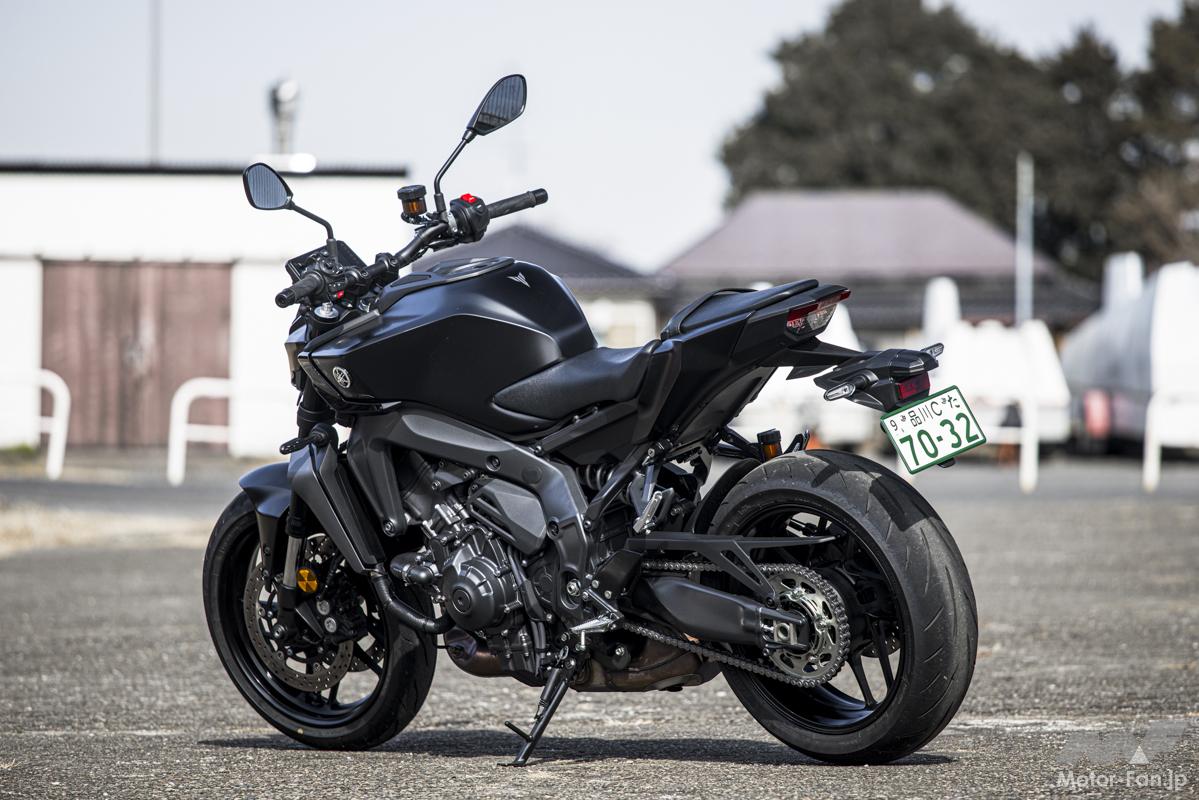
The biggest difference from the MT-09 is that it does not have a clutch lever or shift pedal. The clutch cover has a protruding actuator.
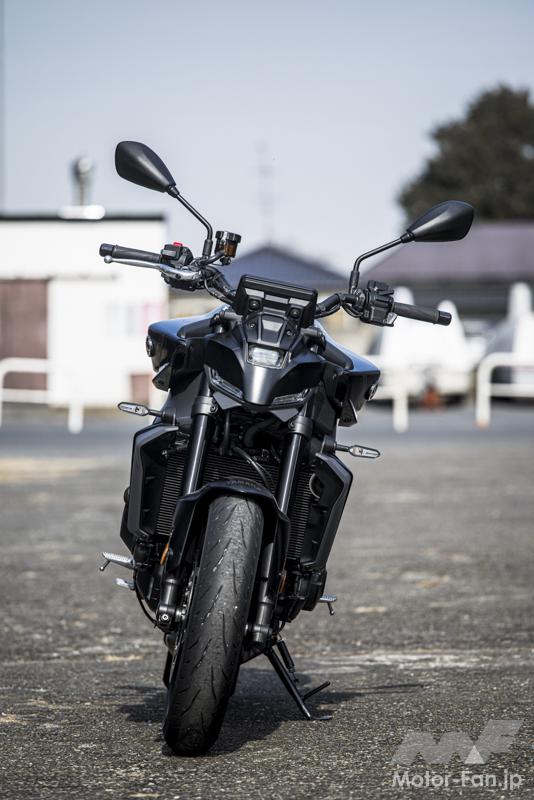
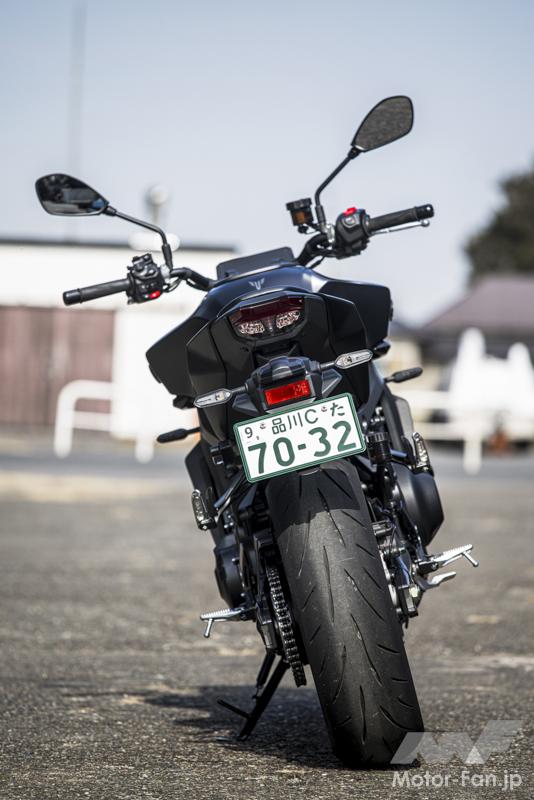
Other features added to the switch box include buttons for manual gear changes.
A perfected automatic transmission system
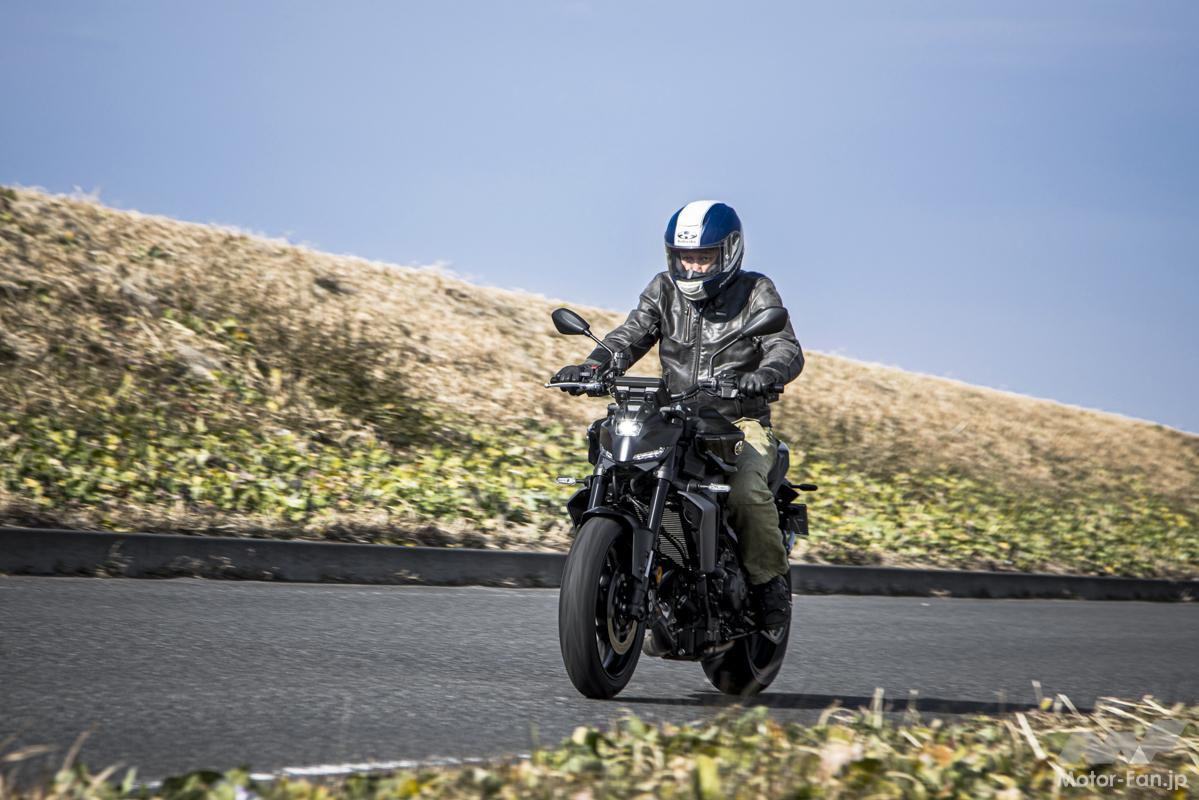
The Y-AMT does not have a clutch lever or shift pedal. Once the engine is started, you need to either switch to automatic mode, or switch to manual mode and use the button that controls the shift to shift into first gear. First, I decided to try driving in automatic mode for a while.
Since the test ride was on the street, I wasn’t able to drive at high RPMs on a regular basis, but in urban areas or while touring, the bike shifts up and down smoothly. The timing of the gear changes is also precise, so there is no stress at all. The kickdown when accelerating suddenly to overtake also responds quickly, so there is no time lag.
When in manual mode, you shift up and down using the buttons on the left switch box. It’s certainly easier than a typical manual transmission bike, and it may be convenient when doing sporty riding. You can operate it while holding the body with your lower body, and you can shift even when leaning deeply to the left and it’s difficult to get your feet under the pedals.
If you frequently switch modes, you may forget to downshift even though it’s a manual, but don’t worry. Even in manual mode, if you slow down without downshifting, the function will support you by shifting into first gear just before coming to a stop.
The good thing about the Y-AMT is that the clutch control is natural. The half-clutch state is smooth. When making a U-turn, if you use the rear brake a little, you can turn with the handlebars fully locked without any discomfort.
When accelerating full throttle from a standstill, I felt that the shock of shifting from 1st to 2nd gear was quite large, but it’s hard to say whether there’s a difference unless you compare it with other automatic gear-shifting bikes.
The exhaust sound and feel of the three-cylinder engine are still as great as ever. The power in the mid-speed range makes it fun to ride any time. The smooth feel at high speeds is also nice.
Switching the engine mode changes the feeling considerably, and it becomes much more lively when in sport mode. When accelerating at full throttle in a low gear, the way the front lifts up as it accelerates is impressive. Because the engine is very powerful in the mid-speed range, if you’re driving leisurely on the street, I found it easier to drive in rain mode even on dry roads.
Enjoyable handling on the street
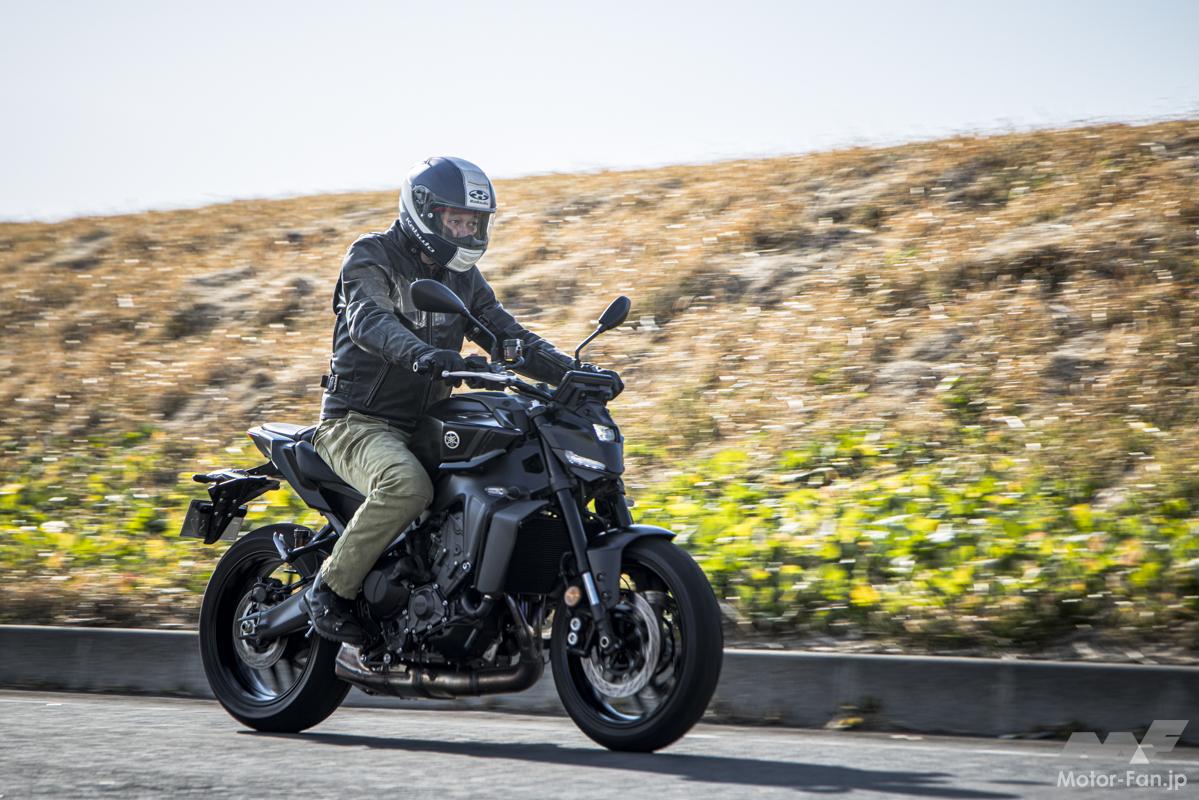
The early MT-09 engine revved up violently even at low speeds, and had a large pitching motion, making it seem like a tough bike, but it has since been tamed considerably, and this model is much easier to ride. The handling is straightforward, and you can bank the bike with confidence even when cornering at low speeds, like turning at an intersection. I got the impression that it has been very well-finished while still retaining the sportiness that it has had since the beginning.
The suspension stroke is long, but the damping is just right, so the change in posture during acceleration and deceleration isn’t too great. When driving in the standard setting, you may feel a slight shock when passing over large bumps, but on normal road surfaces, the ride is not particularly bad.
As you know, in addition to Honda’s DCT, BMW has also released an automatic transmission system. I didn’t get the impression that the Y-AMT was particularly superior or inferior to those (although I’m sure you’ll notice many differences if you take a comparison test drive at the same time).
However, it seems that their aims are slightly different. As the MT-09 Y-AMT website proclaims, “Enjoy sports riding even more,” they are probably trying to broaden the scope of sports riding beyond just easy riding on the street.
If that’s the case, they may be trying to differentiate themselves from other manufacturers with the bikes they will be releasing in the future.
I heard from an acquaintance who rode the same machine on a circuit that for sports riding, the manual mode, which allows you to decide the timing of gear changes yourself, was easier to ride, but there are still some aspects that I’m not entirely satisfied with, so if I have the opportunity in the future, I would like to actually ride it on a circuit and on winding roads and test it out.
Position & foot grounding (height 178cm, weight 75kg)
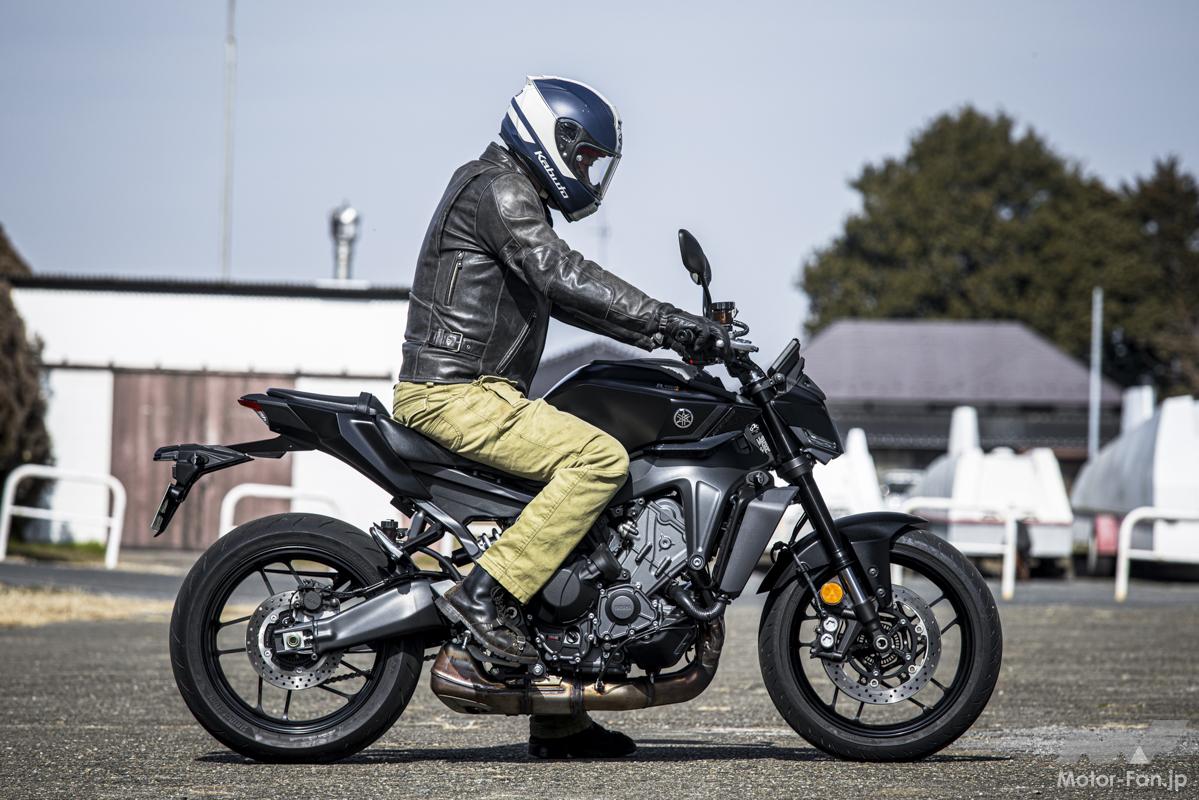
It features low handlebars and slightly set-back footpegs, typical of a sports naked bike. One thing worth noting is that the footpegs are tapered inward. If the heel plate protrudes, when you try to hold the bike, if your heel hits it, your lower body loses its fit and it becomes difficult to open your knees (this is the case with many bikes). In this regard, the MT-09’s position has been carefully considered down to the smallest details, making it easy to control the bike even during sports riding.
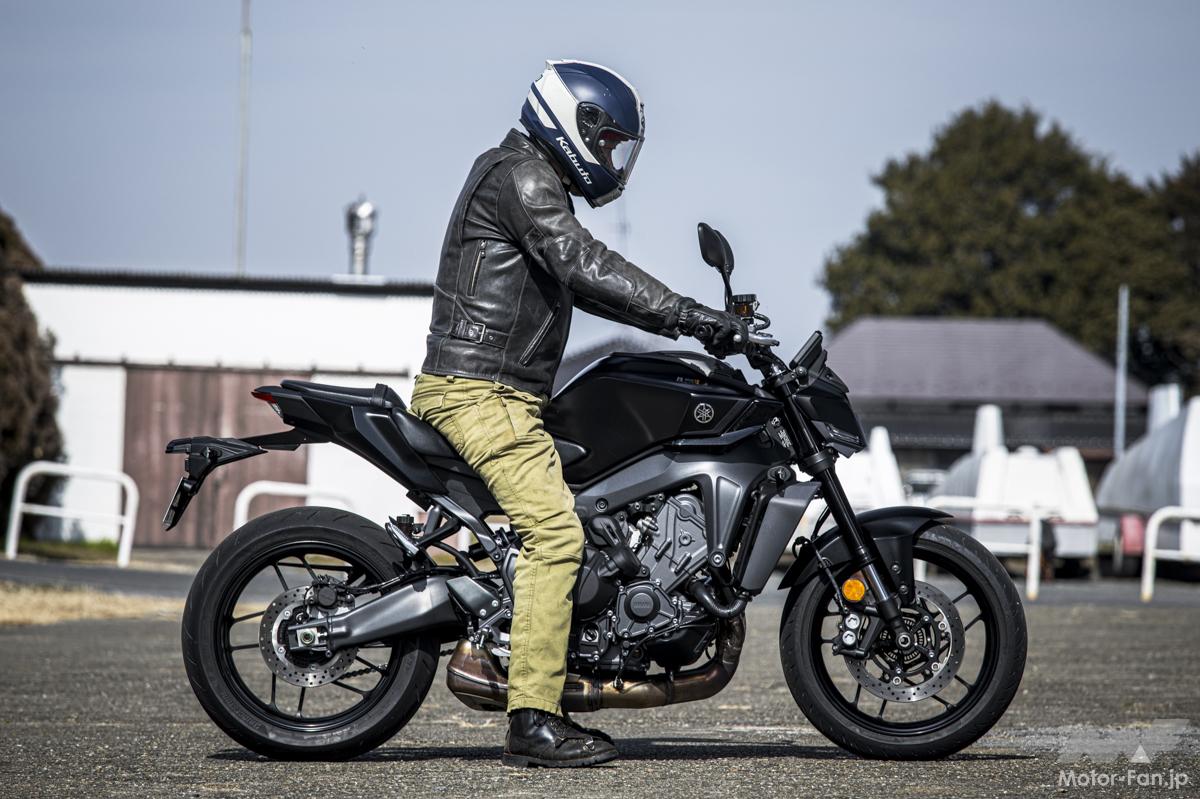
The front of the seat is narrowed, so it’s not difficult to reach the ground, but the clutch cover protrudes and hits your right knee. It’s not particularly intrusive, but the corners of the cover do hit your knee, so it might be bothersome.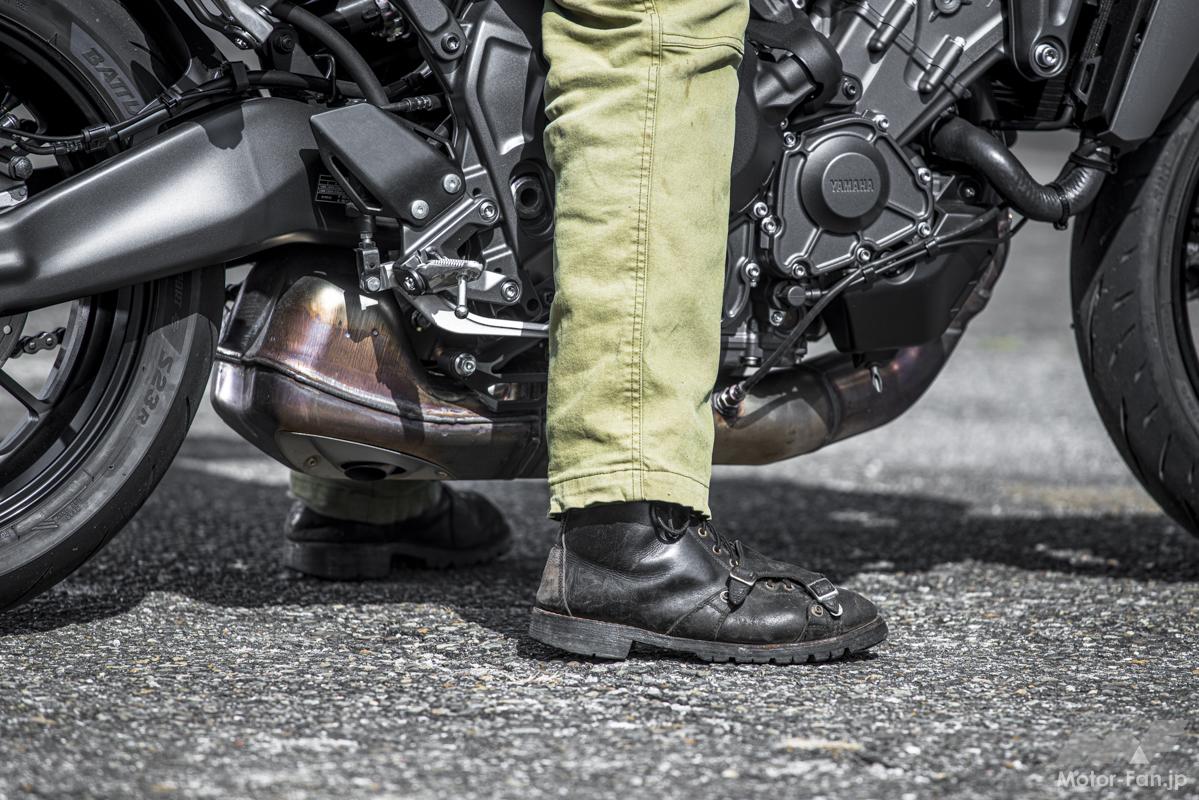
Detailed explanation
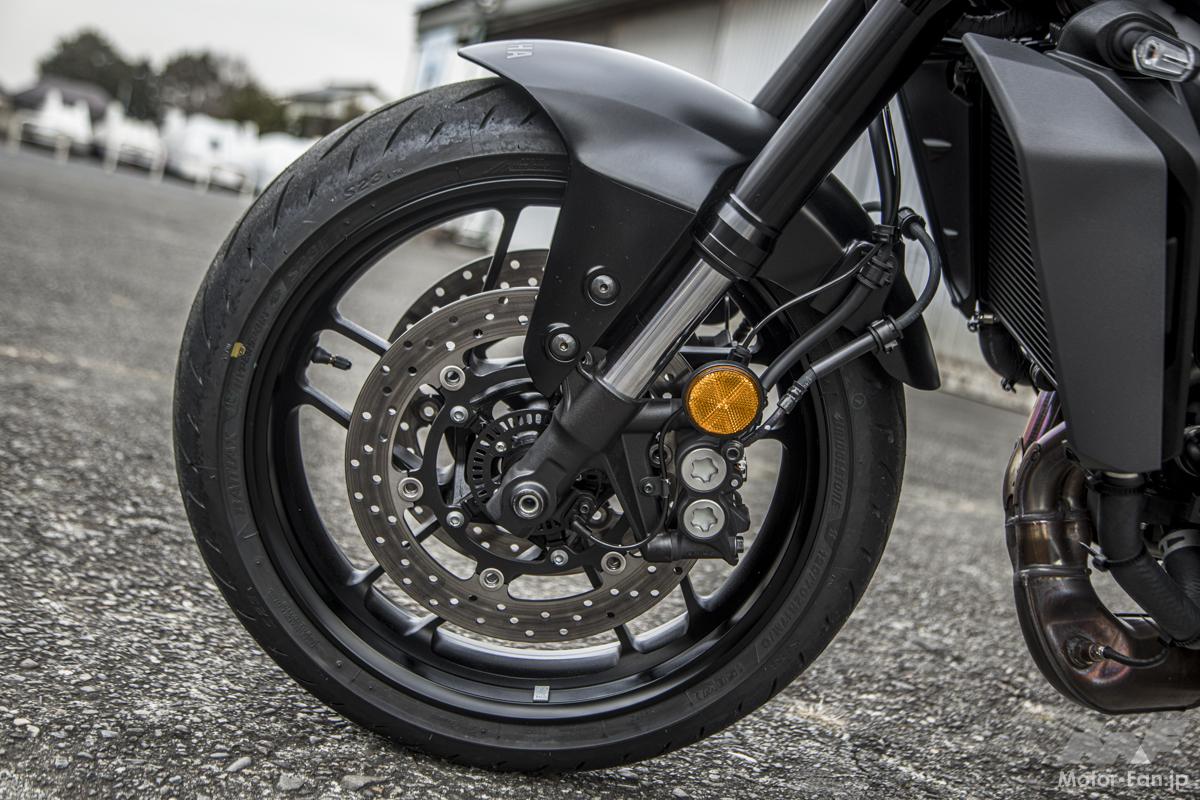
The wheels are manufactured using Yamaha’s unique rotary plastic processing method, and are lightweight thanks to their thin walls.
ADVERTISEMENT
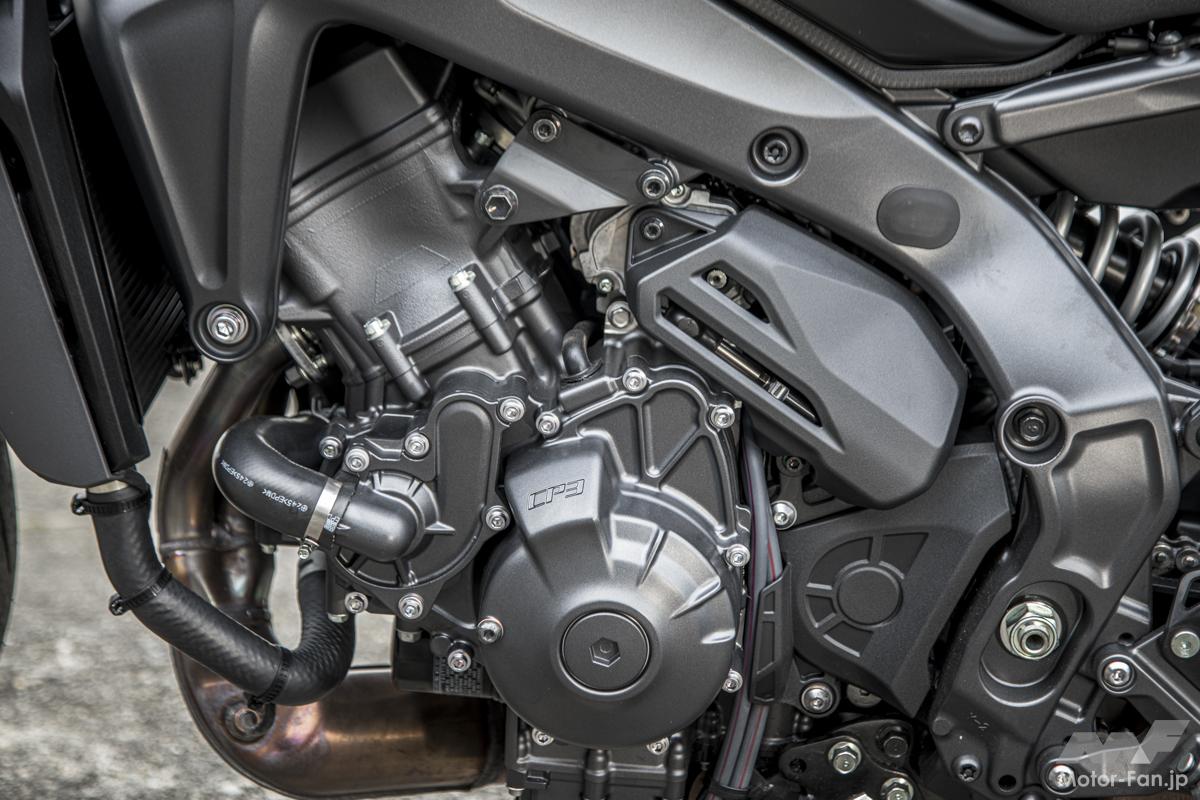
888cc water-cooled DOHC inline 3-cylinder engine. Y-AMT (YAMAHA AUTOMATED MANUAL TRANSMISSION) automatically controls the clutch and gear changes.
ADVERTISEMENT
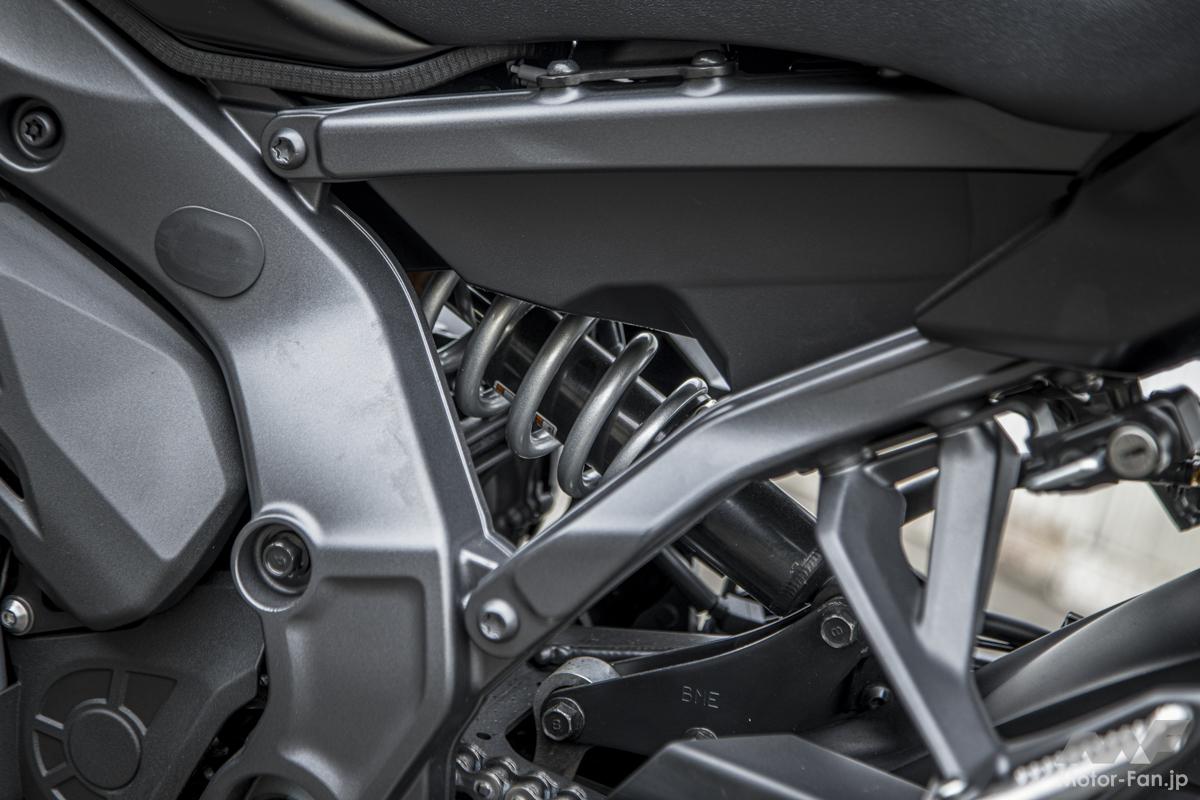
The rear shock is attached to the swingarm via a link.
ADVERTISEMENT
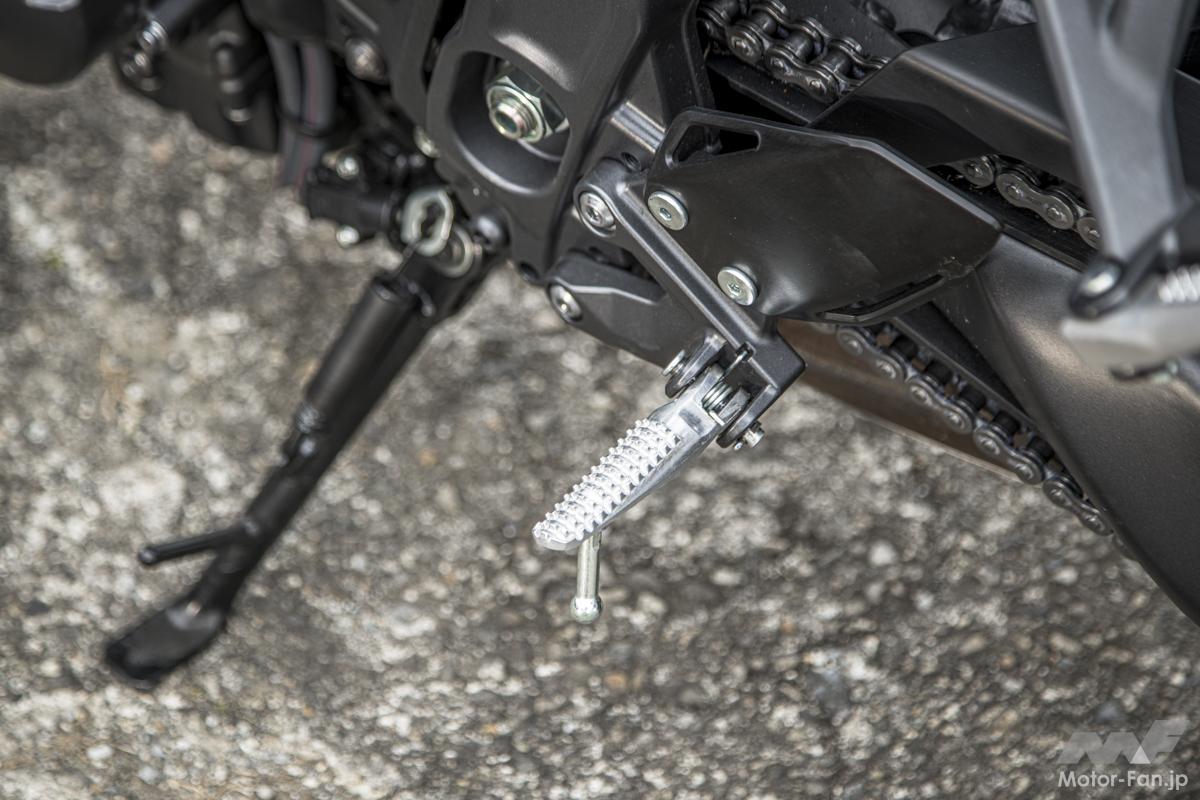
The footpegs are positioned slightly further back than the previous model. The heel guards are pushed inward, making it easier to hold the machine with your lower body. The Y-AMT does not have a shift pedal.
ADVERTISEMENT
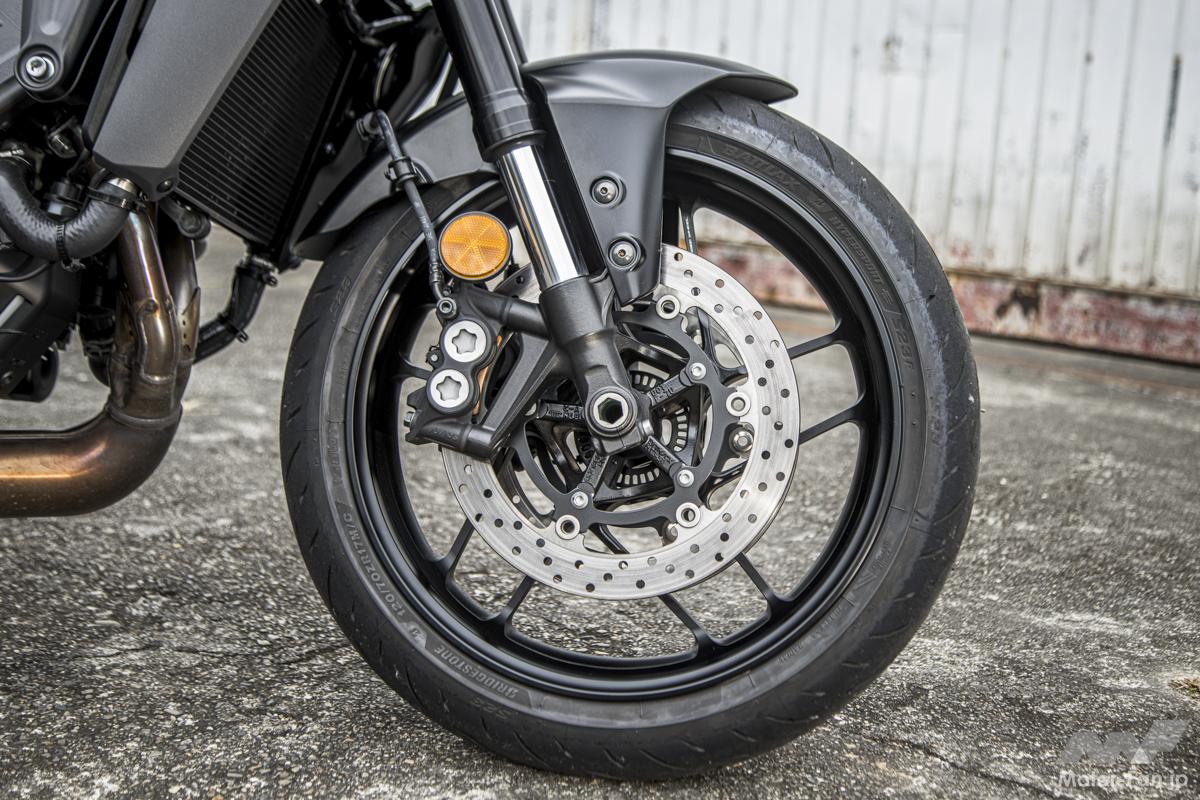
The front caliber is a radially mounted, unequal diameter four-pot engine.
ADVERTISEMENT
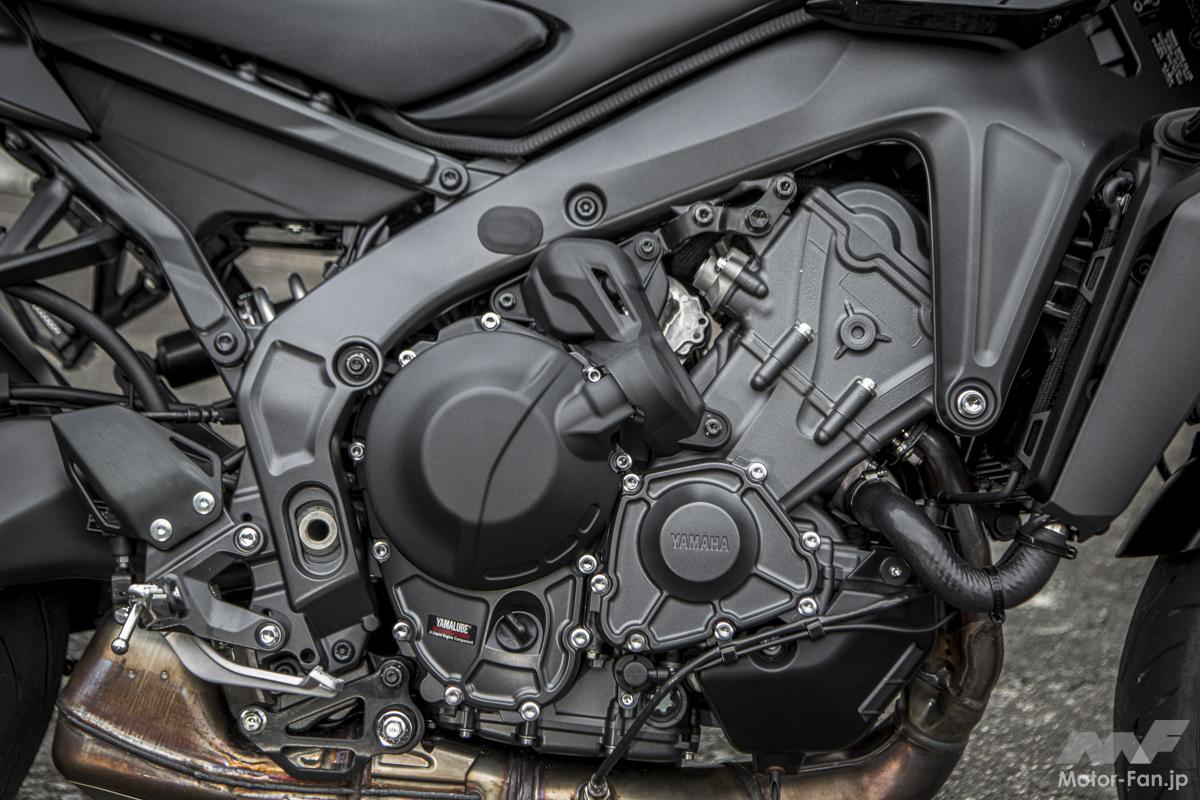
The clutch actuator cover is attached to the front top of the clutch cover.
ADVERTISEMENT
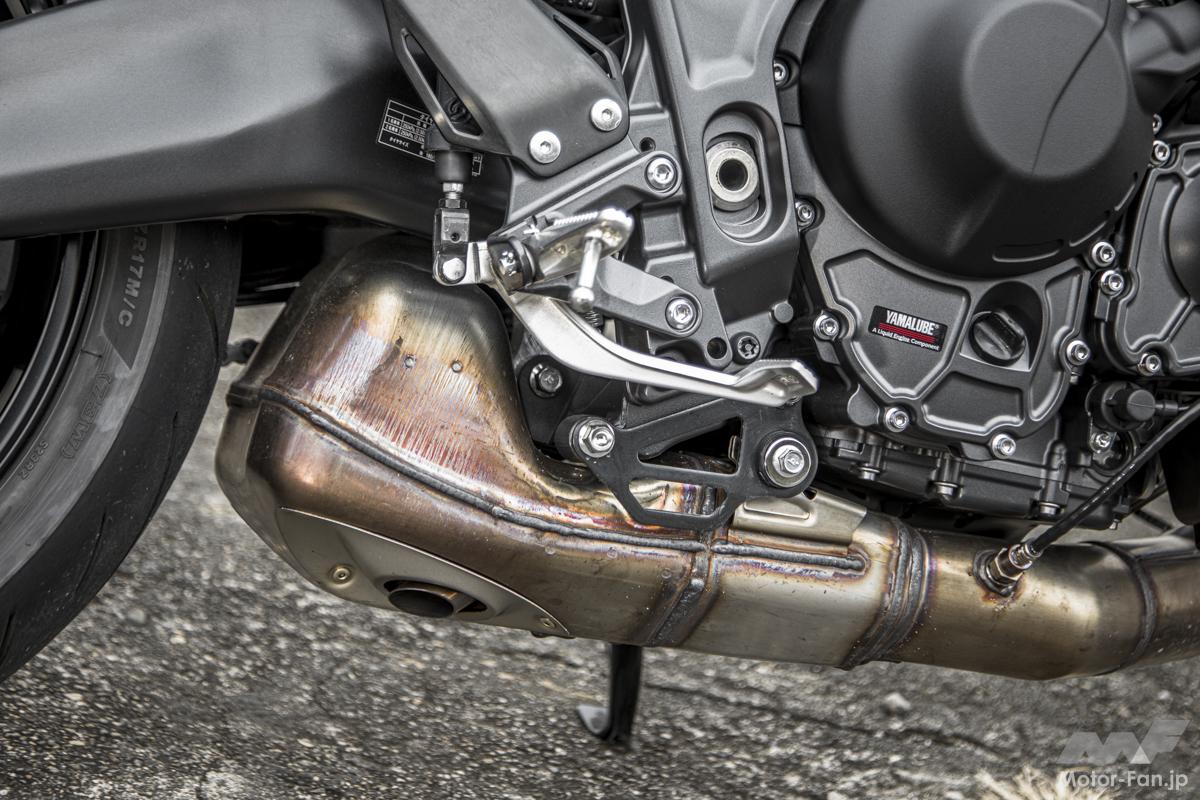
The stainless steel silencer is located under the body, contributing to a low center of gravity. The exhaust sound of the three-cylinder engine resonates pleasantly.
ADVERTISEMENT
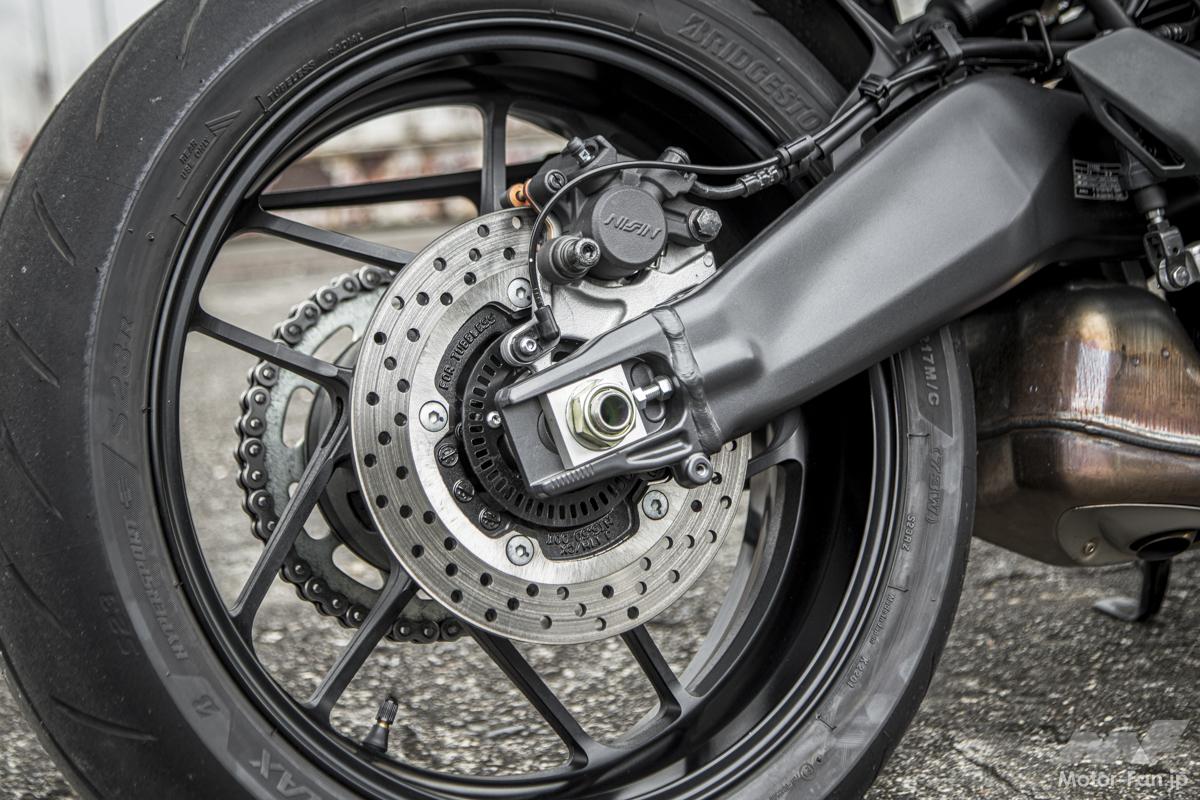
The rear brake is a slide pin type 1-pod caliper
ADVERTISEMENT
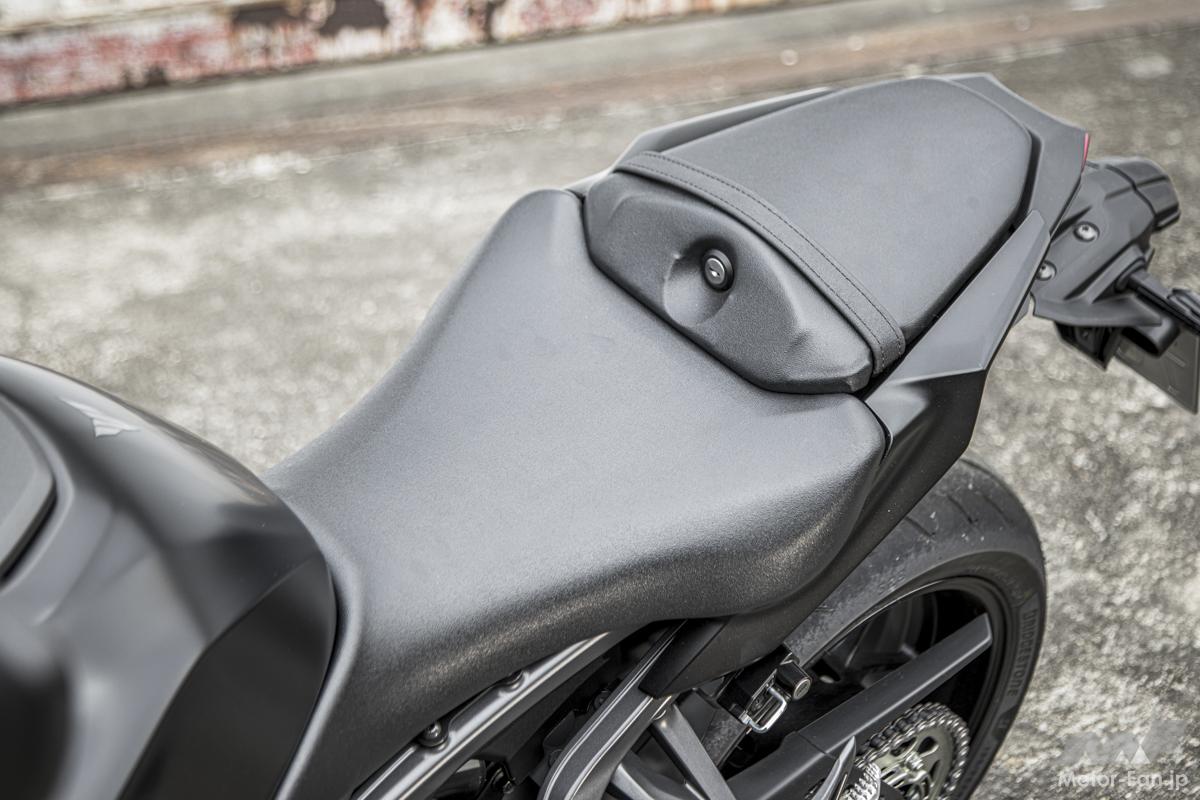
The narrowed seat improves foot reach.
ADVERTISEMENT
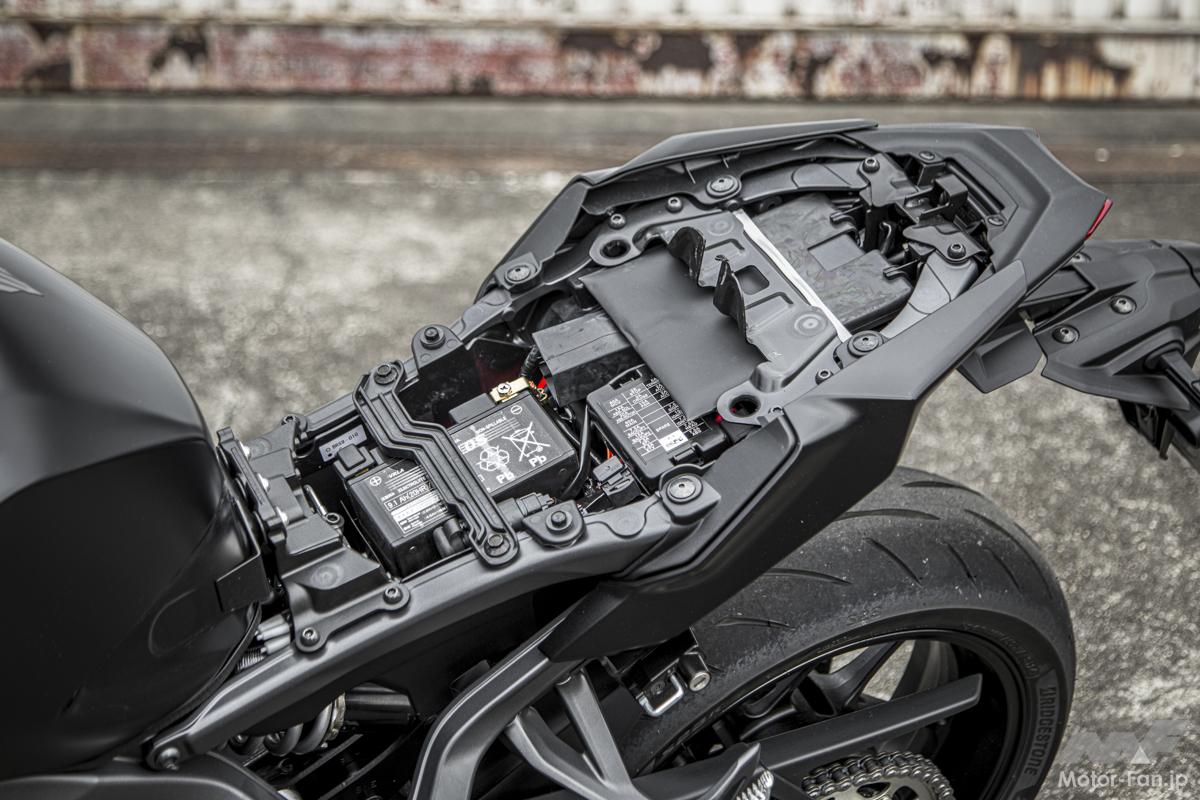
Electrical equipment is stored under the seat. The seat rails have low-profile mounting bolts to allow for easier foot reach.
ADVERTISEMENT
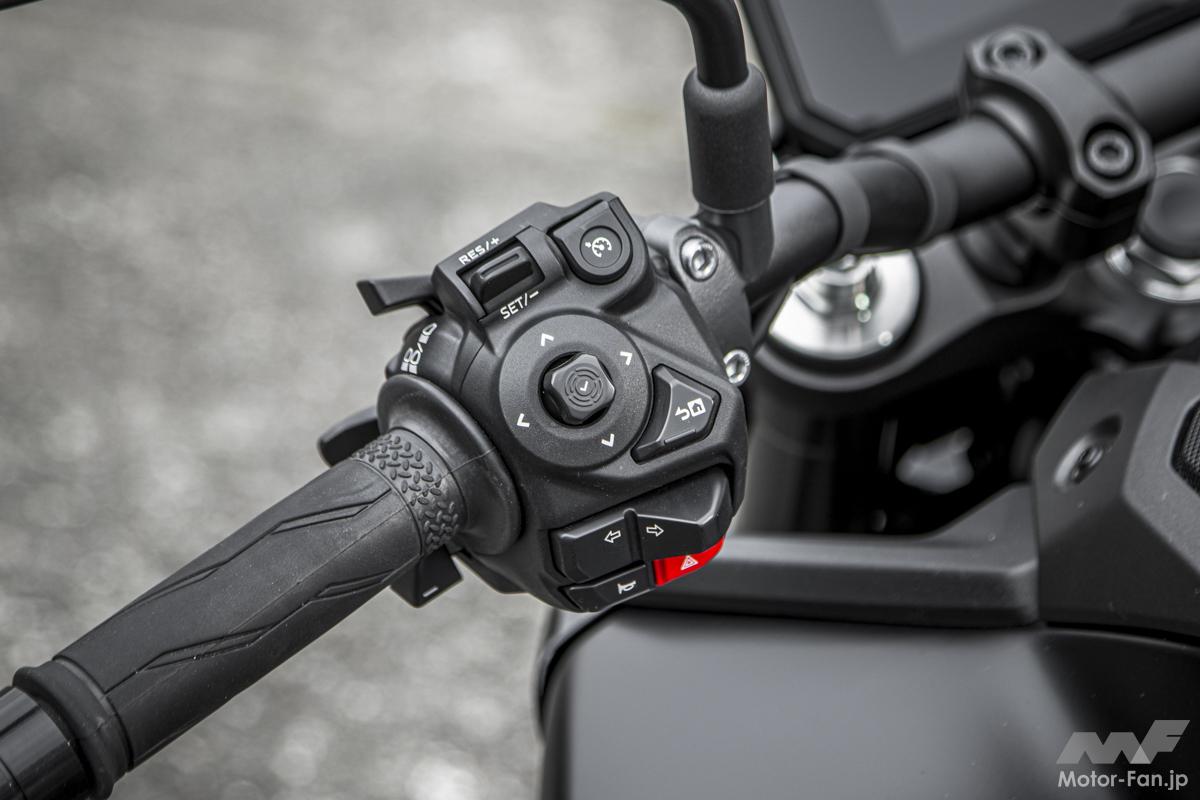
The top of the left switch is the cruise control, and the center switch can be used to operate information and various settings.
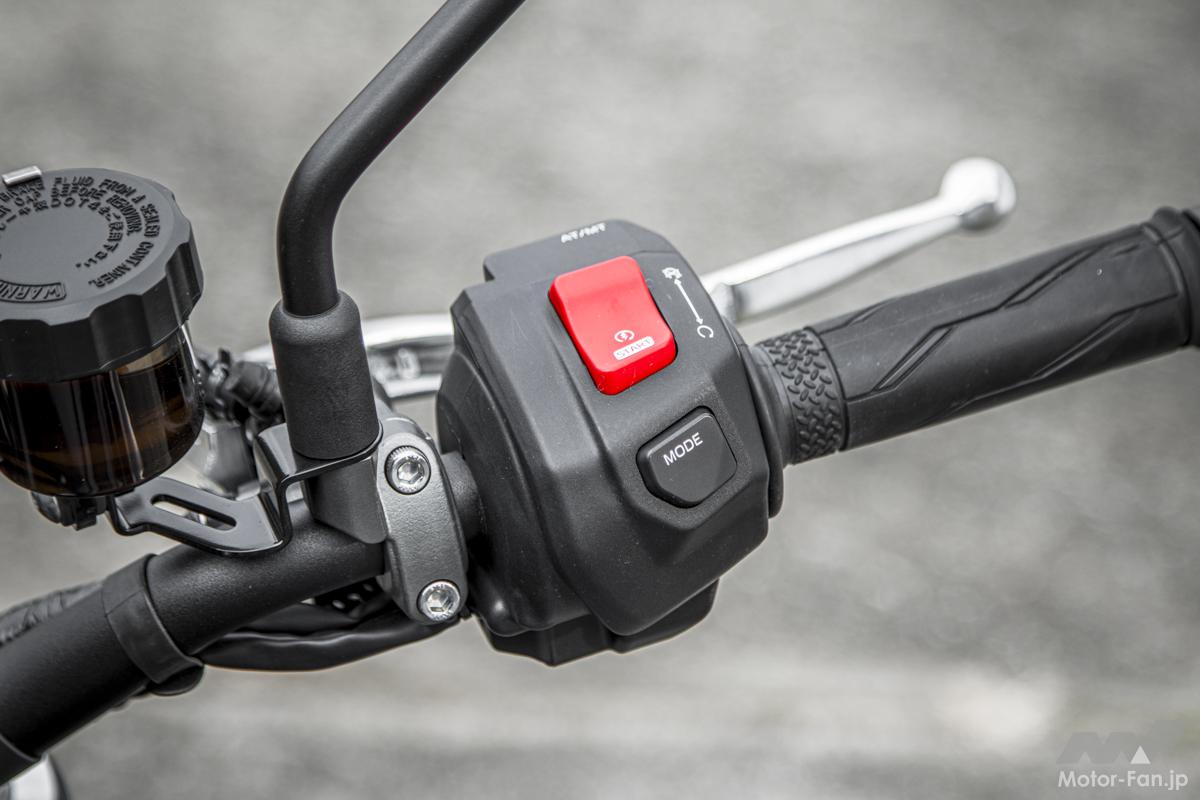
The right handlebar switches include the kill switch, starter button and mode selector switch.
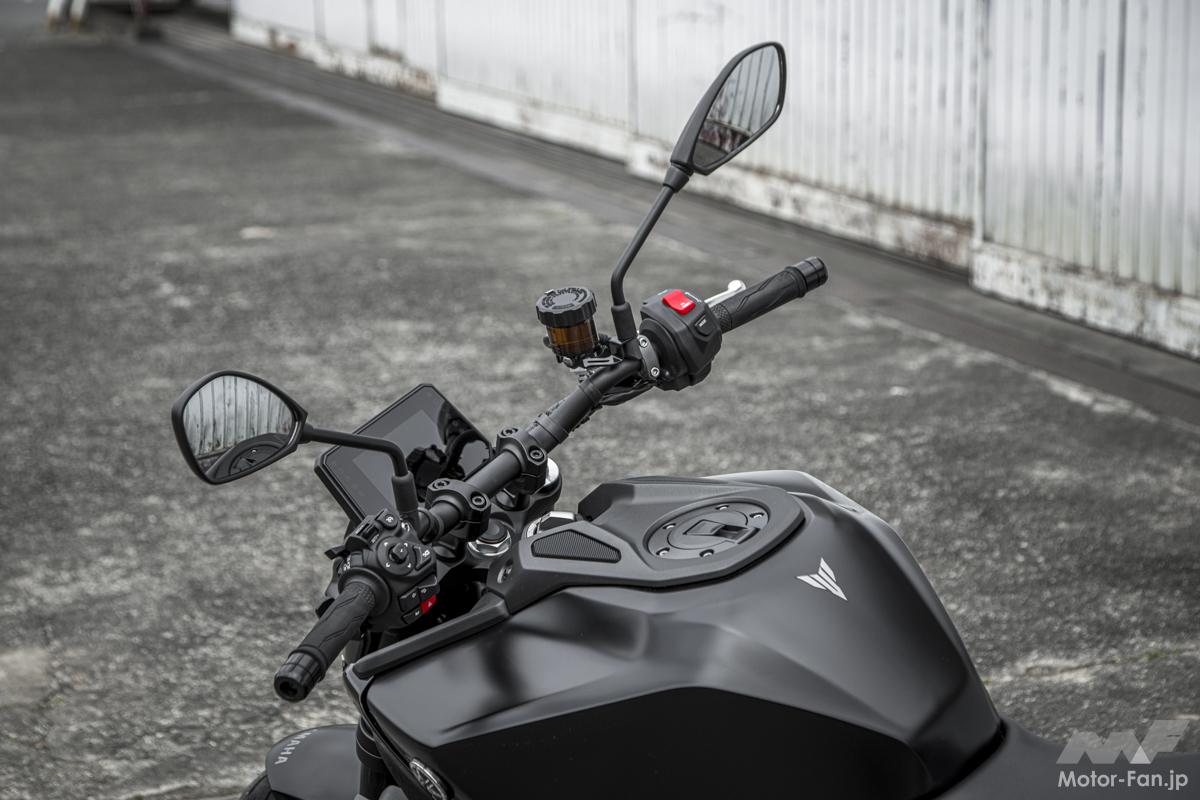
The flat and wide handlebars make it easy to control the machine. The handlebars are slightly lower than the previous model. For a machine with an inverted fork, the handlebar angle is large (32 degrees), making it easy to maneuver and make U-turns.
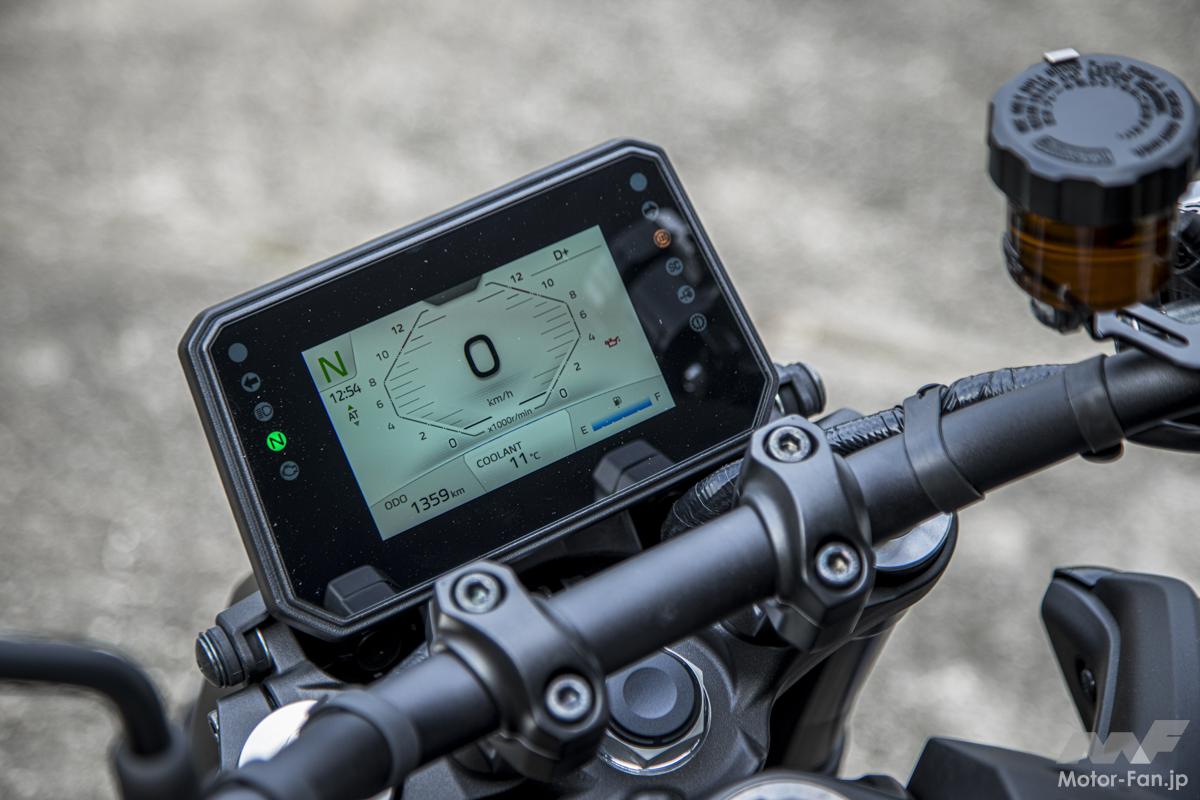
The display uses a large 5-inch TFT LCD.
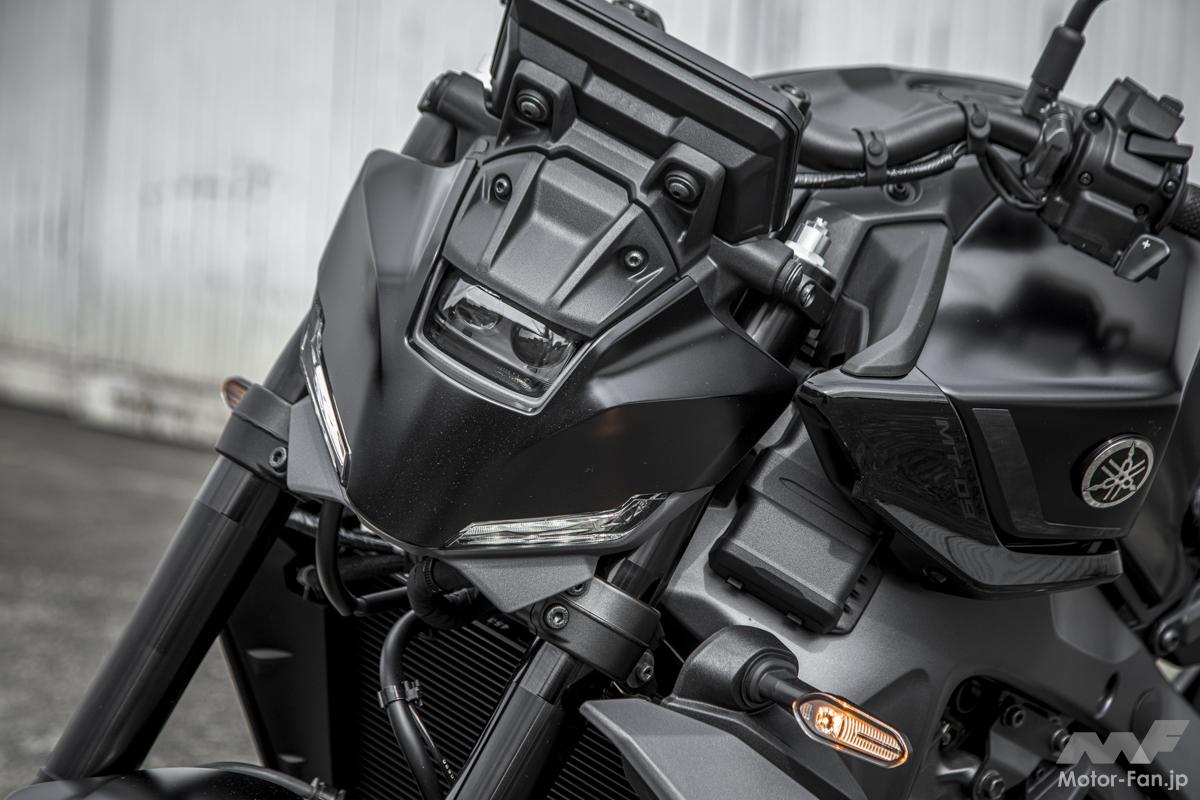
The headlights use very small and thin lenses. The position lights are located at the top, and the headlights are located below, on the left and right.
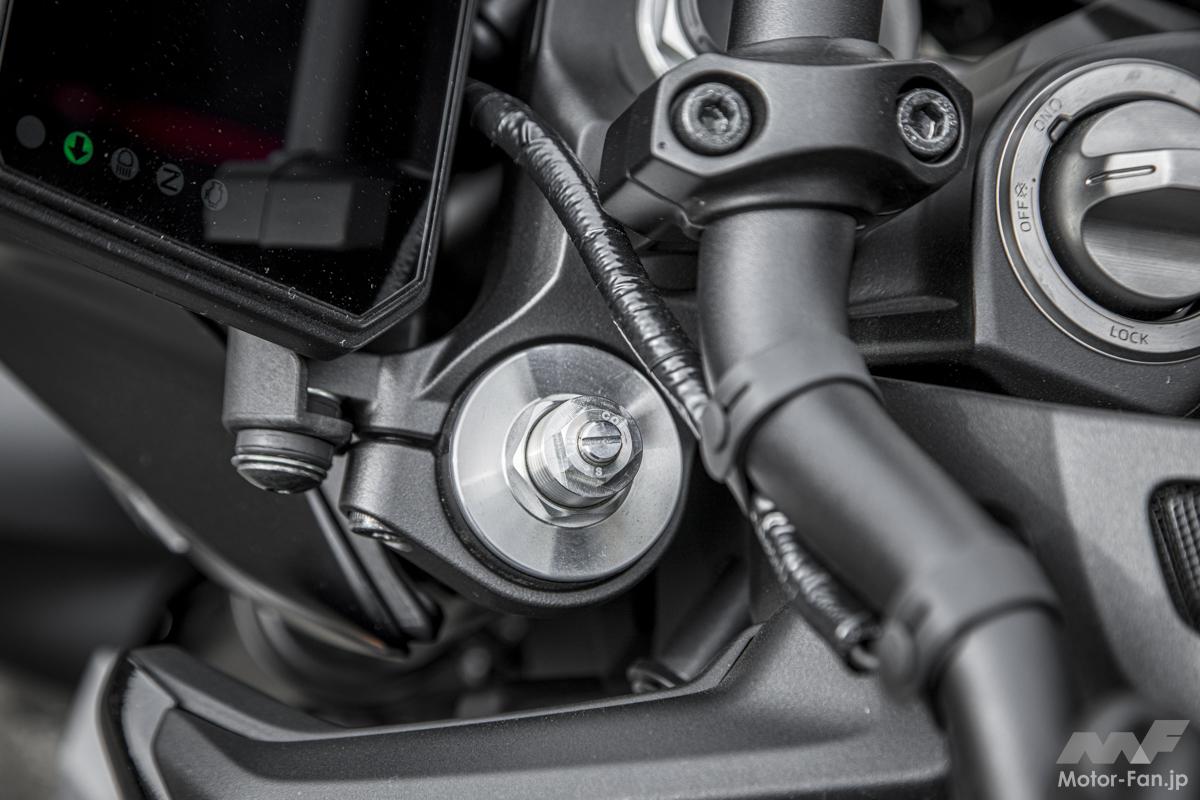
The inverted fork can be adjusted for initial force and damping force.
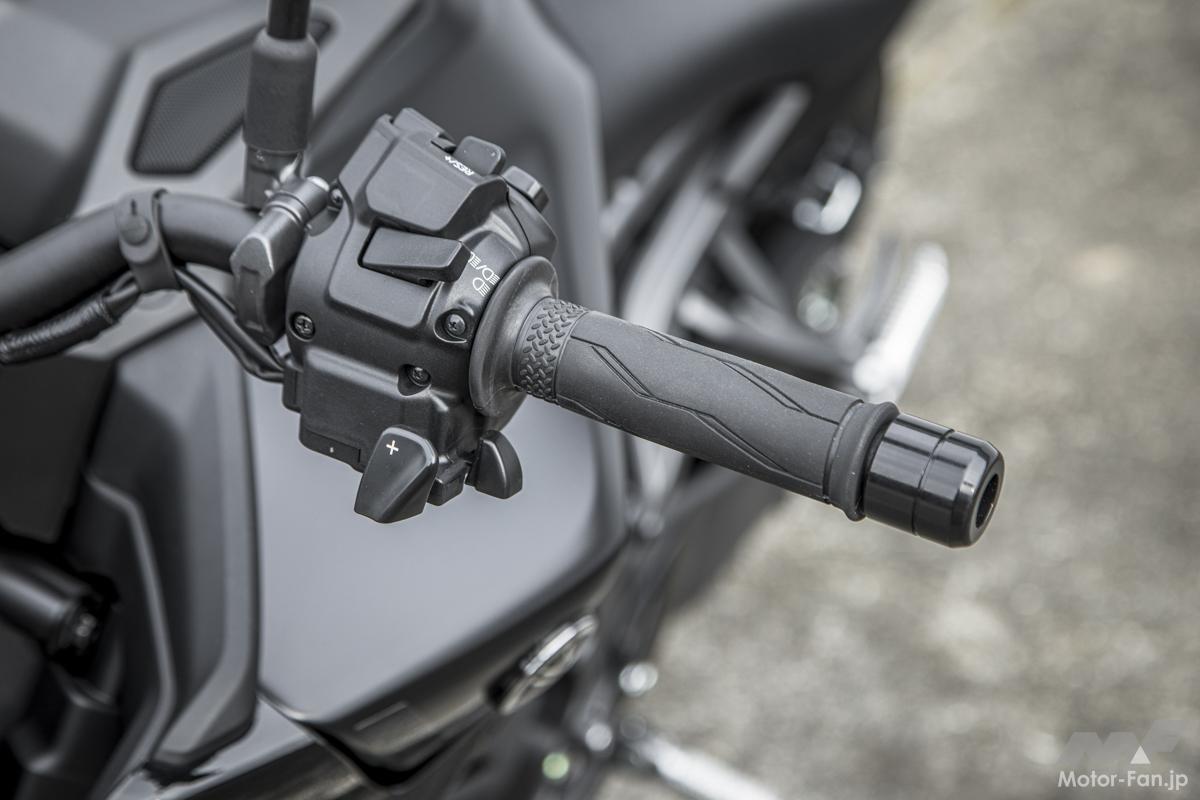
The left switch box seen from the front. The + button is for upshifting. It is operated with the index finger. The button can be operated even when driving in automatic mode.
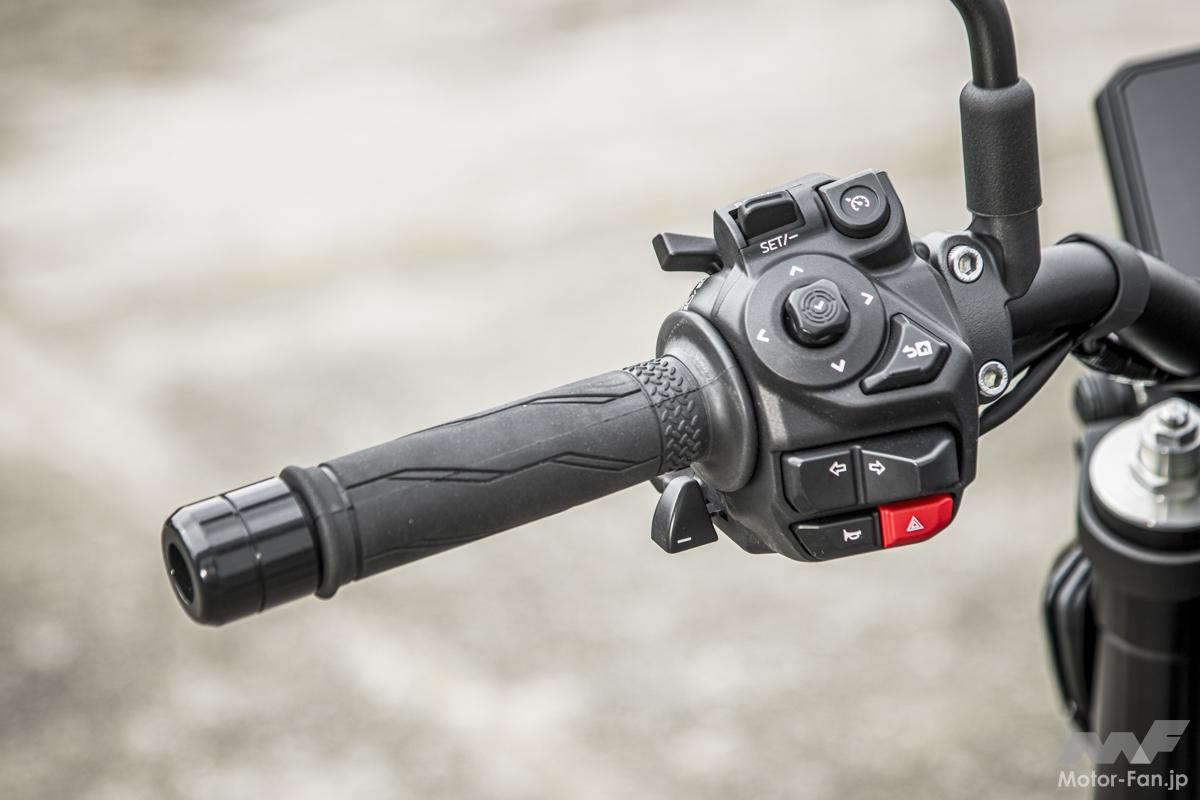
The – button on the bottom of the left switch box is for downshifting and is operated with your thumb.
Main specifications
| MT-09 Y-AMT | ||
|---|---|---|
| Certified model/engine stamped model | 8BL-RN88J/N722E | |
| Total length/width/height | 2,090mm/820mm/1,145mm | |
| Seat height | 825mm | |
| Center distance | 1,430mm | |
| minimum ground clearance | 140mm | |
| Vehicle weight | 196 kg | |
| Fuel consumption rate*1 | Ministry of Land, Infrastructure, Transport and Tourism reported fuel economy value*2 | 31.6km/L (60km/h) with two passengers |
| WMTC mode value *3 | 20.8km/L (Class 3, Subclass 3-2) with one passenger | |
| Engine type | Water-cooled, 4-stroke, DOHC, 4-valve | |
| Cylinder arrangement | In-line, 3-cylinder | |
| Total displacement | 888cm 3 | |
| Inner diameter x stroke | 78.0mm x 62.0mm | |
| Compression ratio | 11.5:1 | |
| Maximum power | 88kW (120PS) / 10,000r/min | |
| Maximum torque | 93N・m (9.5kgf・m)/7,000r/min | |
| Starting method | Self-service | |
| Lubrication method | Wet sump | |
| Engine oil capacity | 3.50L | |
| Fuel tank capacity | 14L (unleaded premium gasoline) | |
| Intake and fuel system/fuel supply system | Fuel injection | |
| Ignition method | TCI (transistor type) | |
| Battery capacity/model | 12V, 8.6Ah (10HR) / YTZ10S | |
| Primary reduction ratio/secondary reduction ratio | 1.680/2.812 (79/47 x 45/16) | |
| Clutch type | wet, multi-plate | |
| Transmission/shifting method | Constant mesh 6-speed/return type | |
| gear ratio | 1st gear: 2.571 2nd gear: 1.947 3rd gear: 1.619 4th gear: 1.380 5th gear: 1.190 6th gear: 1.037 | |
| Frame Format | diamond | |
| Caster/Trail | 24°40′/108mm | |
| Tire size (front/rear) | 120/70ZR17M/C (58W) (tubeless) / 180/55ZR17M/C (73W) (tubeless) | |
| Brake device type (front/rear) | Hydraulic double disc brake/Hydraulic single disc brake | |
| Suspension method (front/rear) | Telescopic/swing arm (link type) | |
| Headlamp bulb type/headlamp | LED/LED | |
| Passenger capacity | 2 people | |