

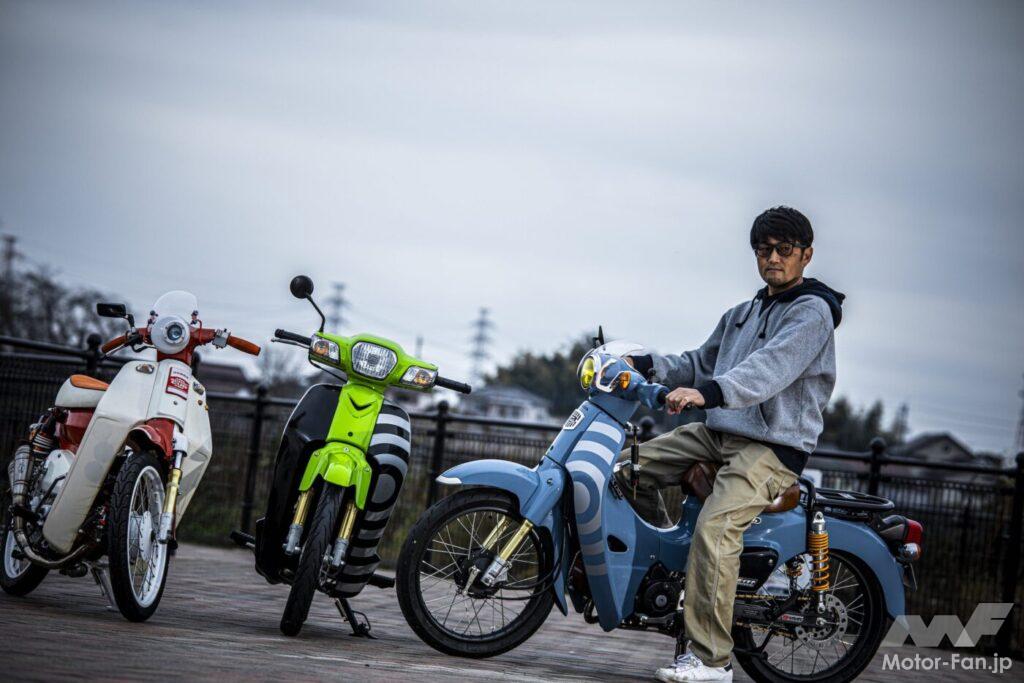
Kaikichi customized all three bikes with his own parts.
In our previous article , we introduced Kaikichi, who owns three Super Cubs and customizes all of them himself. Kaikichi’s passion for Super Cubs began with the orange C50 we introduced in that article, and he started by converting the front forks to telescopic, then shortening the handlebars and adding a subframe. When he took this C50 to the Cafe Cub Meeting in Aoyama, he won a popular vote. In 2017, a photo of him at the time of his entry was even posted on Honda’s website.
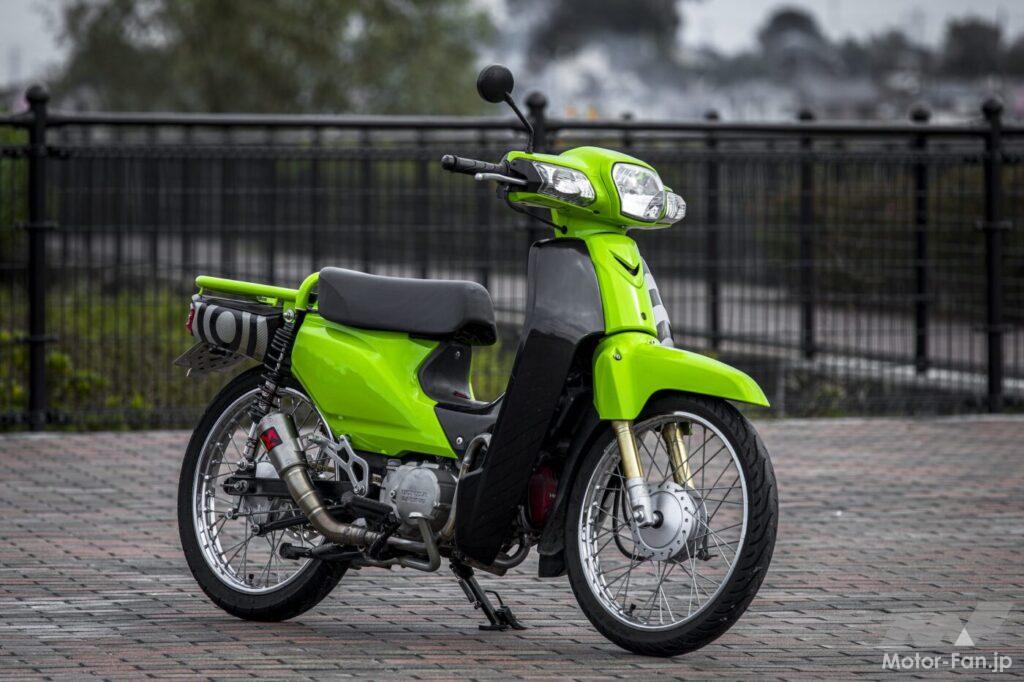
The JA10 Super Cub 110 is not often customized.
He used to attend the Cafe Cub Meeting in Aoyama every year on his orange C50, but then a turning point came. The colleague who had given him his C50 was selling it to switch to a JA10. Kaikichi had also traded in his C50, so he responded in a similar way to this conversation. And so he ended up with another custom-based Super Cub.
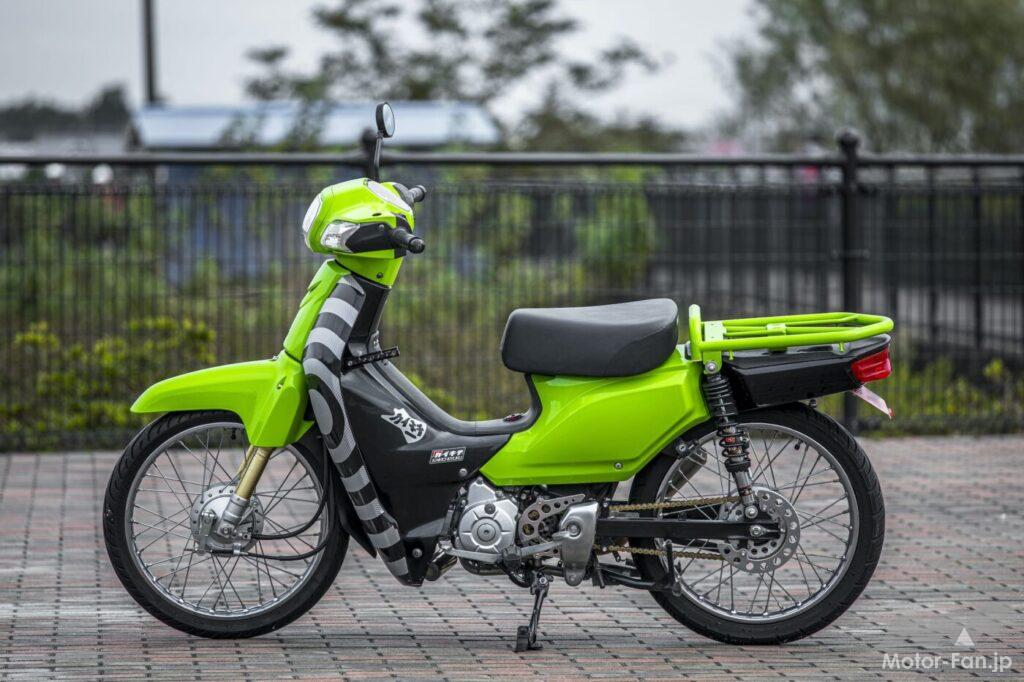
Kaikichi himself sprayed the paint using two-component urethane paint.
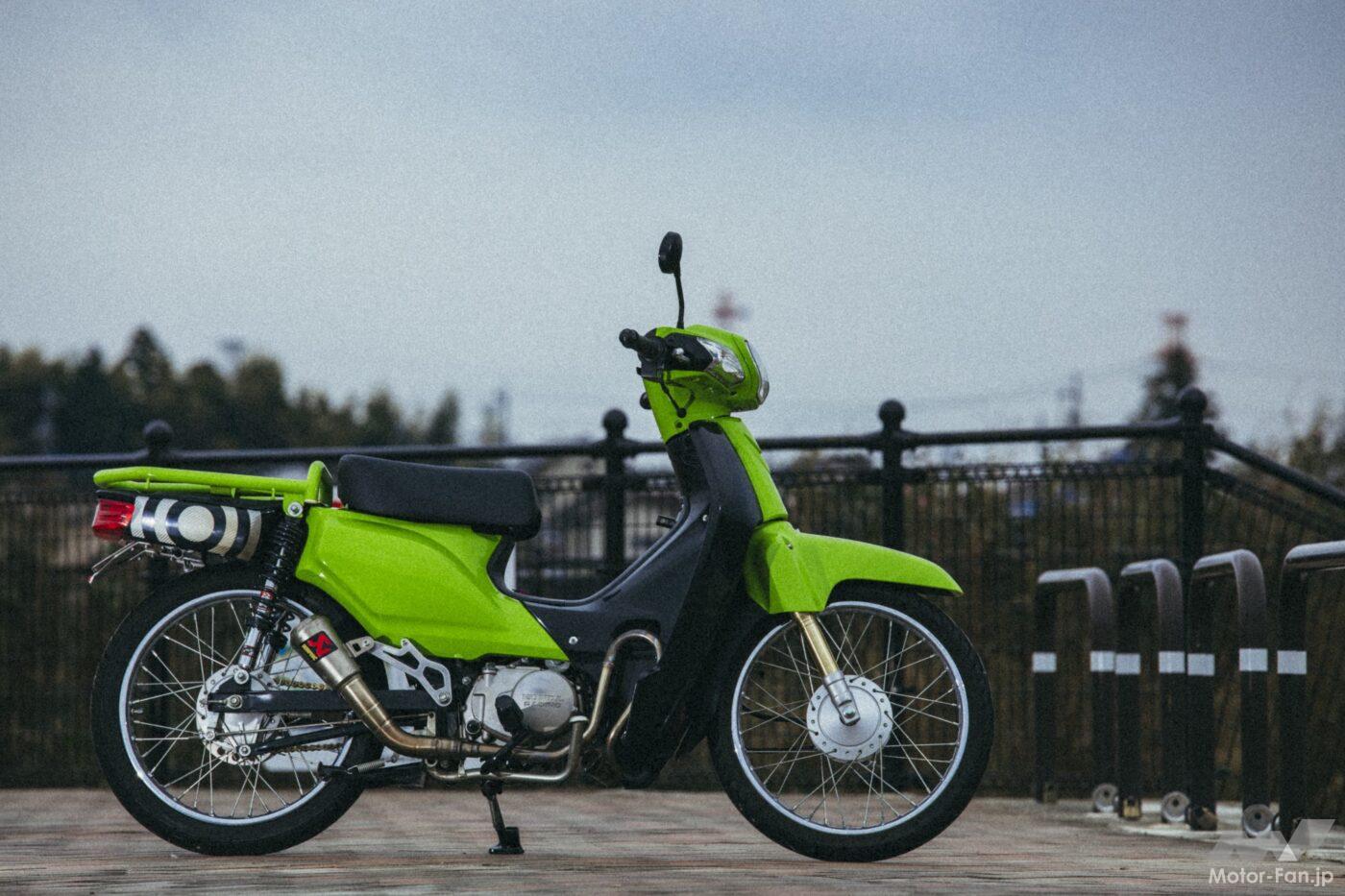
The JA10 Super Cub 110 isn’t a very popular model, and due to its short production run, there aren’t many left. Although it’s rare, I had no intention of riding it in its stock form, so I decided to disassemble it straight away. I removed all of the body cowlings and painted the entire bike green with two-component urethane paint, just like the C50. This was possible because I had a compressor and guns in my garage, and there was no sign of any paint dripping anywhere, showing my professional skills.
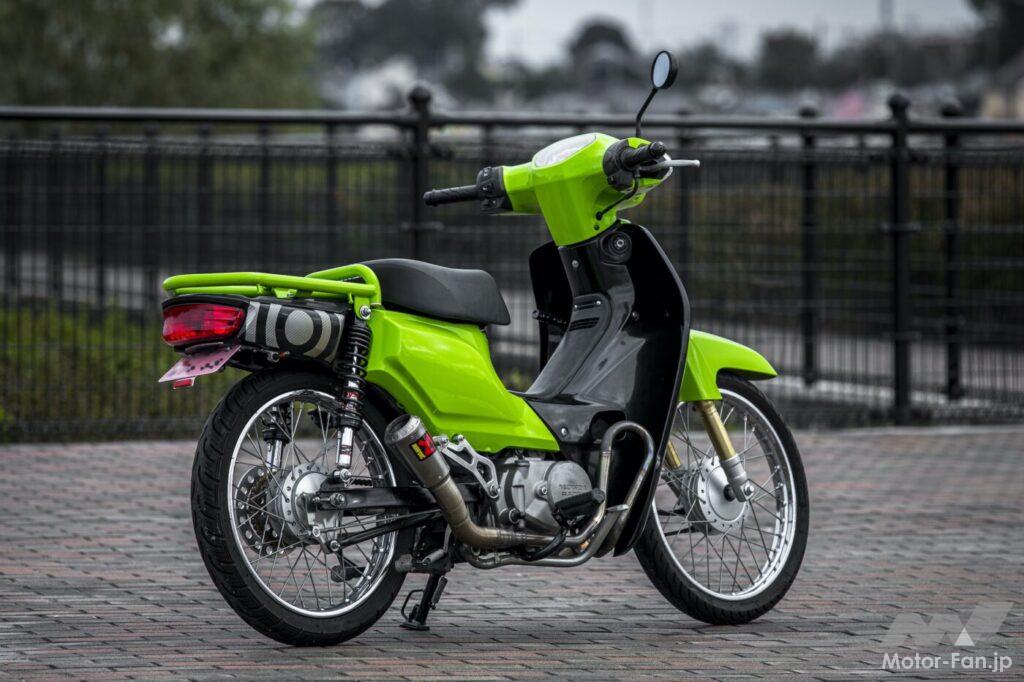
Previously, it had the same seat as the JA44.
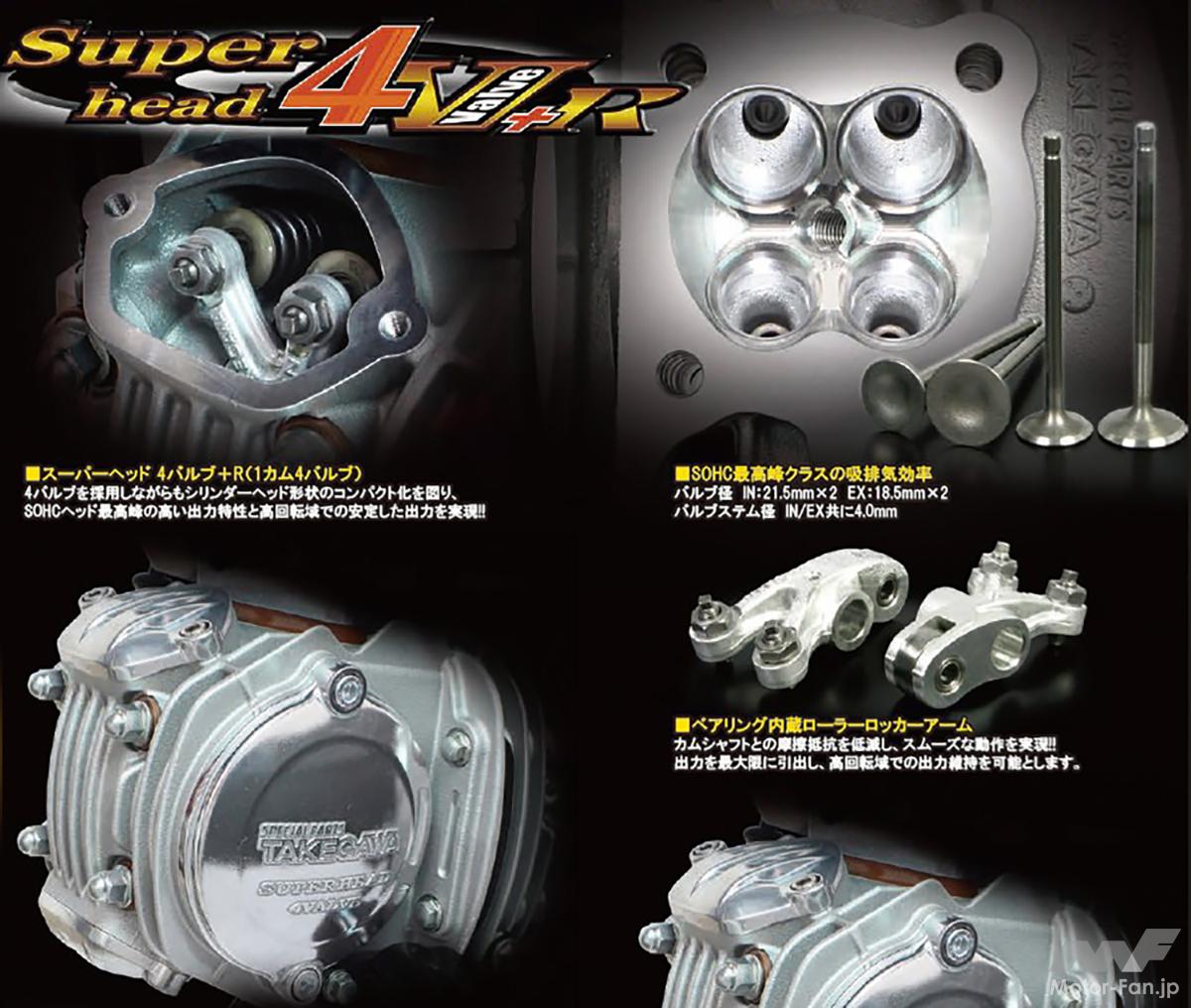
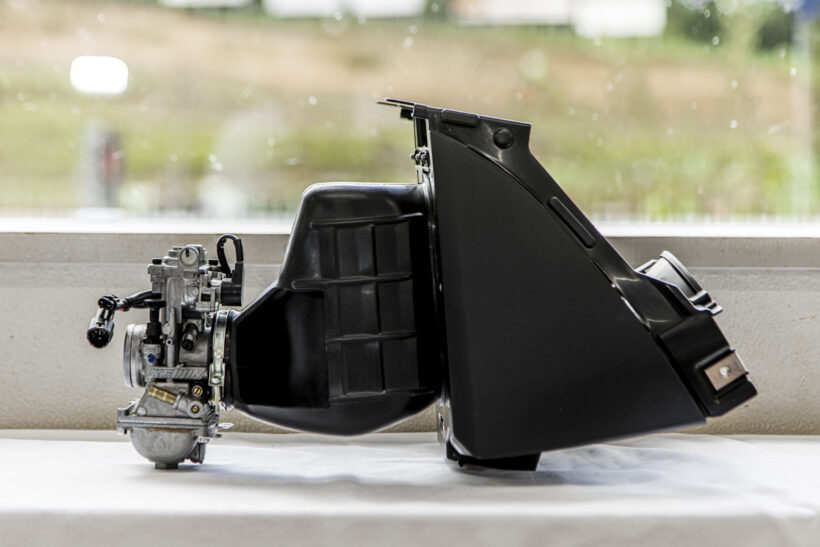
With the cowling gone, maintenance is easier, so we decided to remove the engine. But instead of just removing it, we started tuning it. We obtained a bore-up kit from an unknown overseas manufacturer and increased the displacement to 124cc. We then modified the ports so that it could draw in a larger amount of mixture. We then further modified the throttle body, increasing its diameter to φ23.4mm, and added resistance to the ECU so that it would recognize the engine temperature as being high. This would cause the mixture to be rich in gasoline even when cold, so this, along with the bore-up, was an effective tuning step.
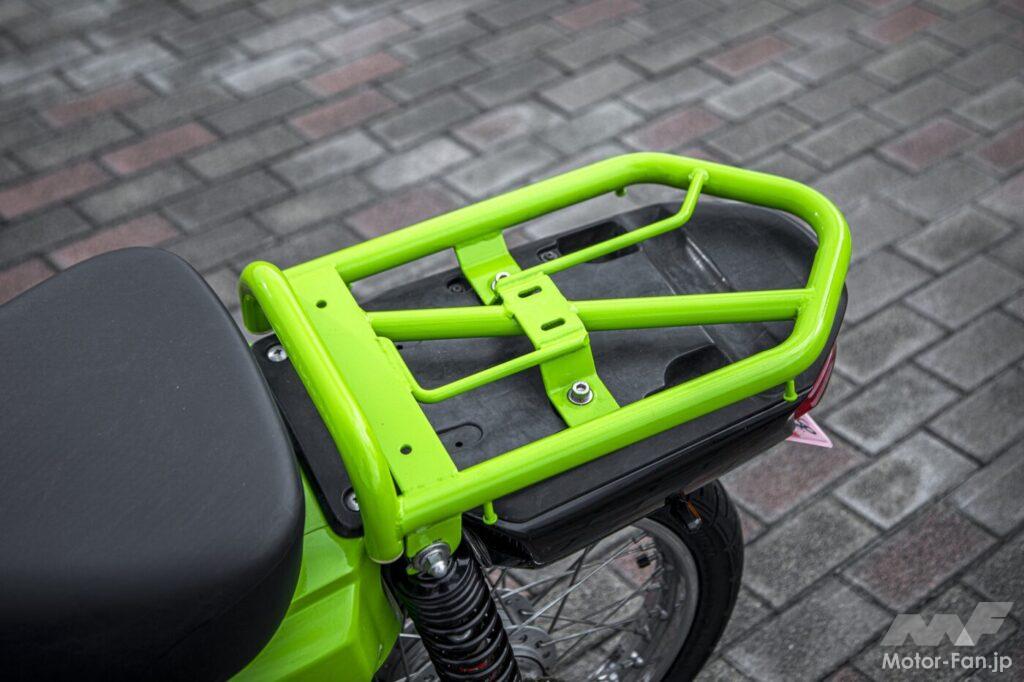
The rear carrier was cut and pasted to create a unique style.
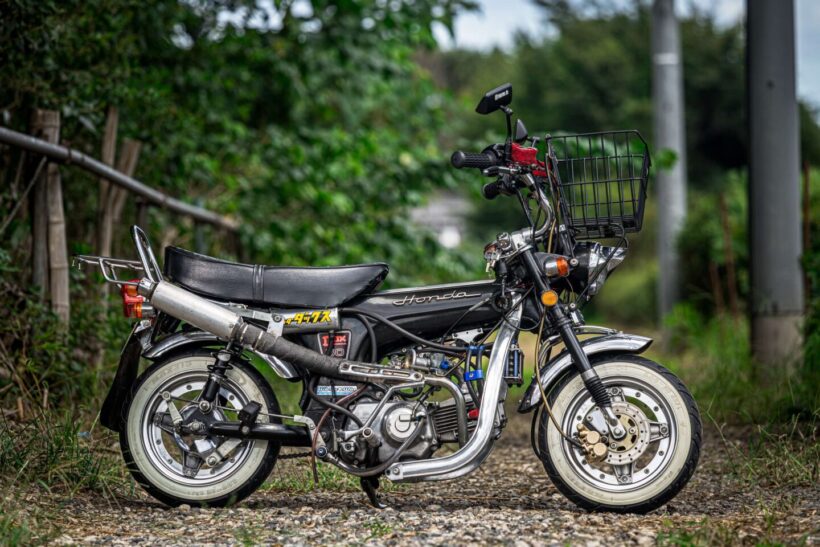
Of course, he also paid attention to the exhaust side, and attached a sub-chamber that was effective on the C50 to a homemade exhaust pipe. The sub-chamber itself was also homemade, and because he wanted to make the exhaust pipe longer, the exhaust pipe was made to draw a large arc inside the leg shield. The silencer is made by Akrapovic, but even the muffler stays were homemade, making it a storm of one-off parts.
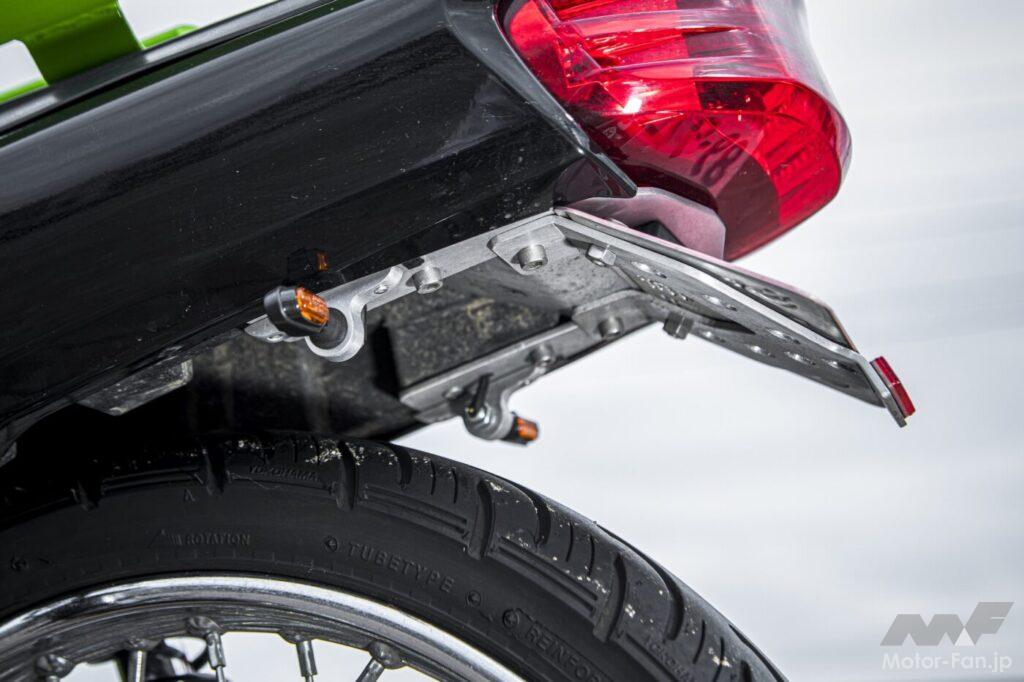
The fenders have been removed using parts that I made myself.
While the body hasn’t been modified much, the rear carrier is interesting. The original part was cut up to reduce its size, while the design itself was significantly changed. He even has a welding machine in the garage, so this type of construction wasn’t difficult. He even made his own bracket to make the rear fenderless. Anticipating that doing this would mean the original turn signals would no longer be usable, he even made a special bracket to mount small LED turn signals to the bracket.
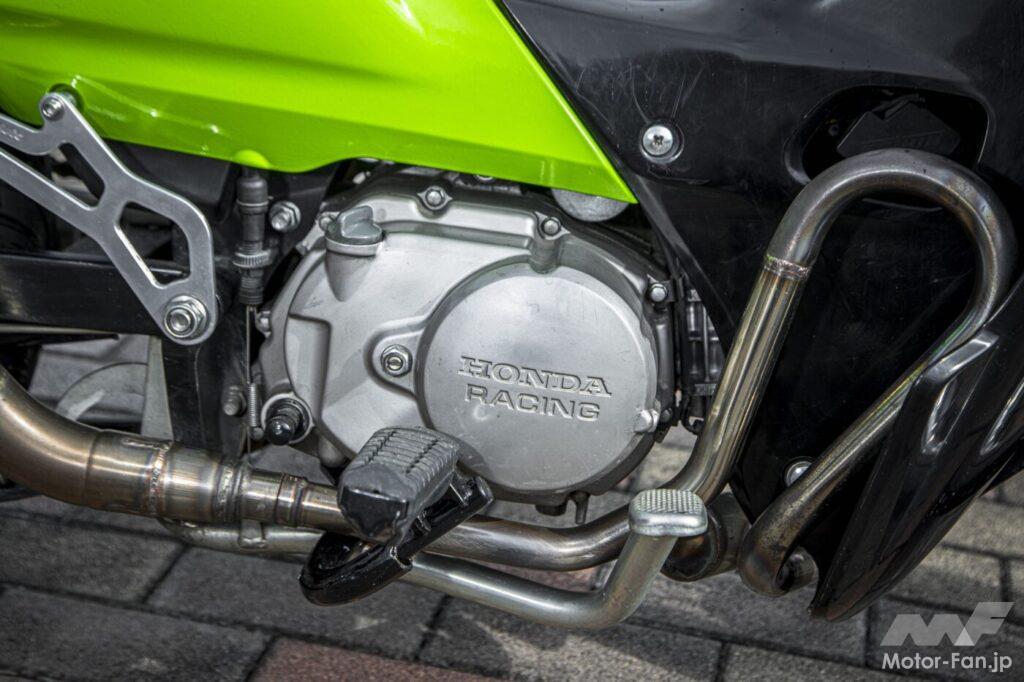
A cover with HONDA RACING engraved on it?
As the tuning and customization progressed, the most interesting feature was the clutch cover. The stock clutch cover has a recess in the center with the word HONDA cast into it, but the flat surface now has the words HONDA RACING written on it. The model is a secret, but the cover was cut out from another Honda vehicle and replaced with the stock cover. It’s a masterful technique that makes full use of aluminum welding, and is nothing short of impressive.
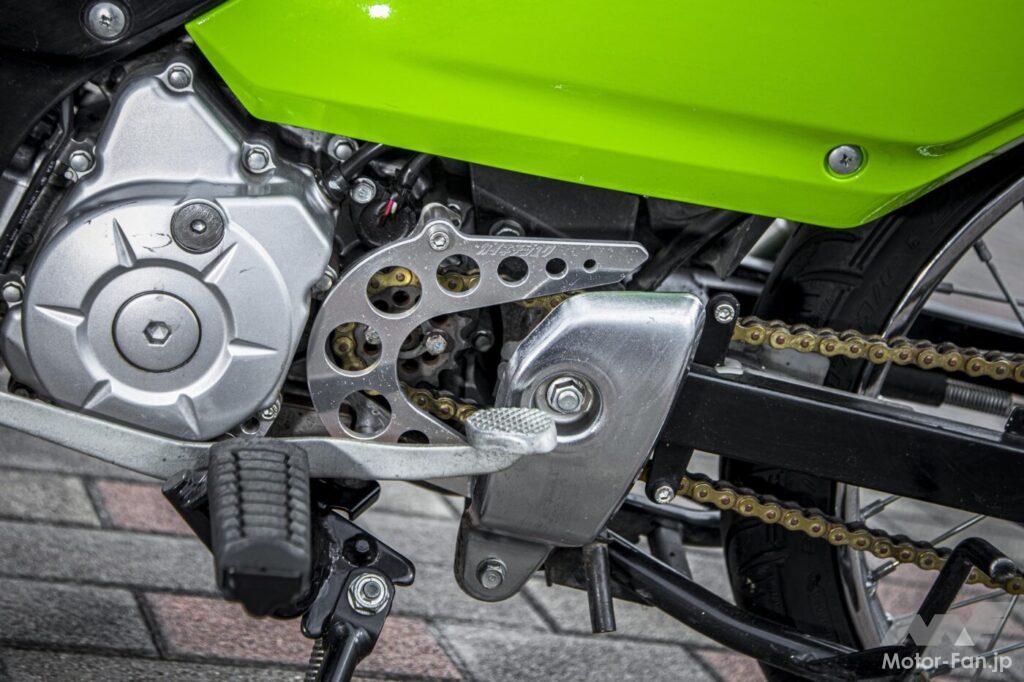
The sprocket cover was designed and made by myself.
Looking at the other side of the engine, you can see that the chain case, a feature of the Super Cub, is missing. Instead, there is an unfamiliar sprocket guard. This was also designed and made by Kaikichi himself from aluminum plate. However, what is even more impressive is that the front and rear sprockets are homemade. They are cut out of extremely hard extra-super duralumin with a laser cutter, and it is possible to make them with any number of teeth you like.
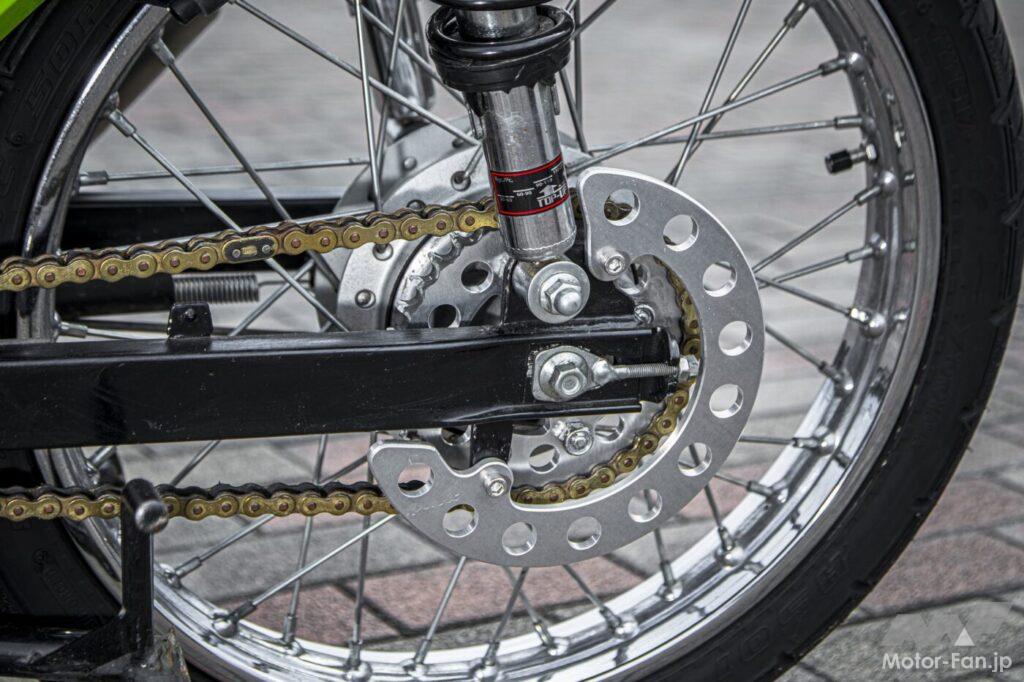
As you can see, the rear side is also equipped with a homemade part.
Initially, the stock front forks were used, but like the C50, this was also customized with the Dio stock forks. This was done because the increased power from the engine tuning meant that the stock forks were no longer sufficient, and also to change the vehicle height.
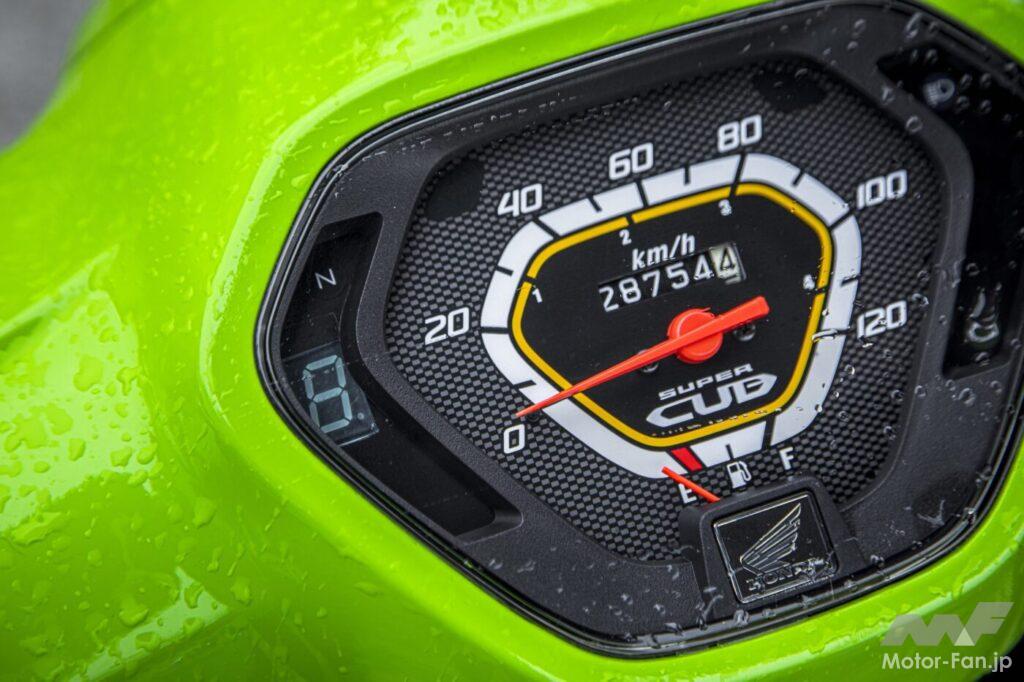
The gear shift indicator is a generic one.
The finishing touch is the meter. A generic gear shift indicator can be purchased online for around 1,000 yen. So, I removed the factory meter and transplanted it near the neutral lamp. The factory harness already has a coupler that outputs the gear position signal, so once I made the six-wire harness, it would work just by plugging it in. This JA10 custom is chock full of useful information for Cub owners.
 He owns three Super Cubs. And they’re all coolly modified. We asked the owner, Kaikichi, about it!
This year, 2024, the final Cafe Cub Meeting in Aoyama was held. This event has continued to spread Super Cub culture, and Kaikichi has been ranked highly in the fan popularity poll for 10 consecutive years. Let’s start by introducing him to the first C50 he built, to find out what kind of person he is and what kind of customizations he enjoys. REPORT: Masuda Mitsuru PHOTO: Yamada Shunsuke










![The child seat is retro and cute. But the 124cc straight-line leader is the Honda Chari! [Portrait of a 4MINI Enthusiast]](https://motopeek.com/wp-content/uploads/2025/10/4598-1762340867209.jpg)
![Only the frame and tank are genuine! A modified Ape finished with used parts [Portrait of a 4MINI Enthusiast]](https://motopeek.com/wp-content/uploads/2025/10/4604-1762340994544.jpg)