
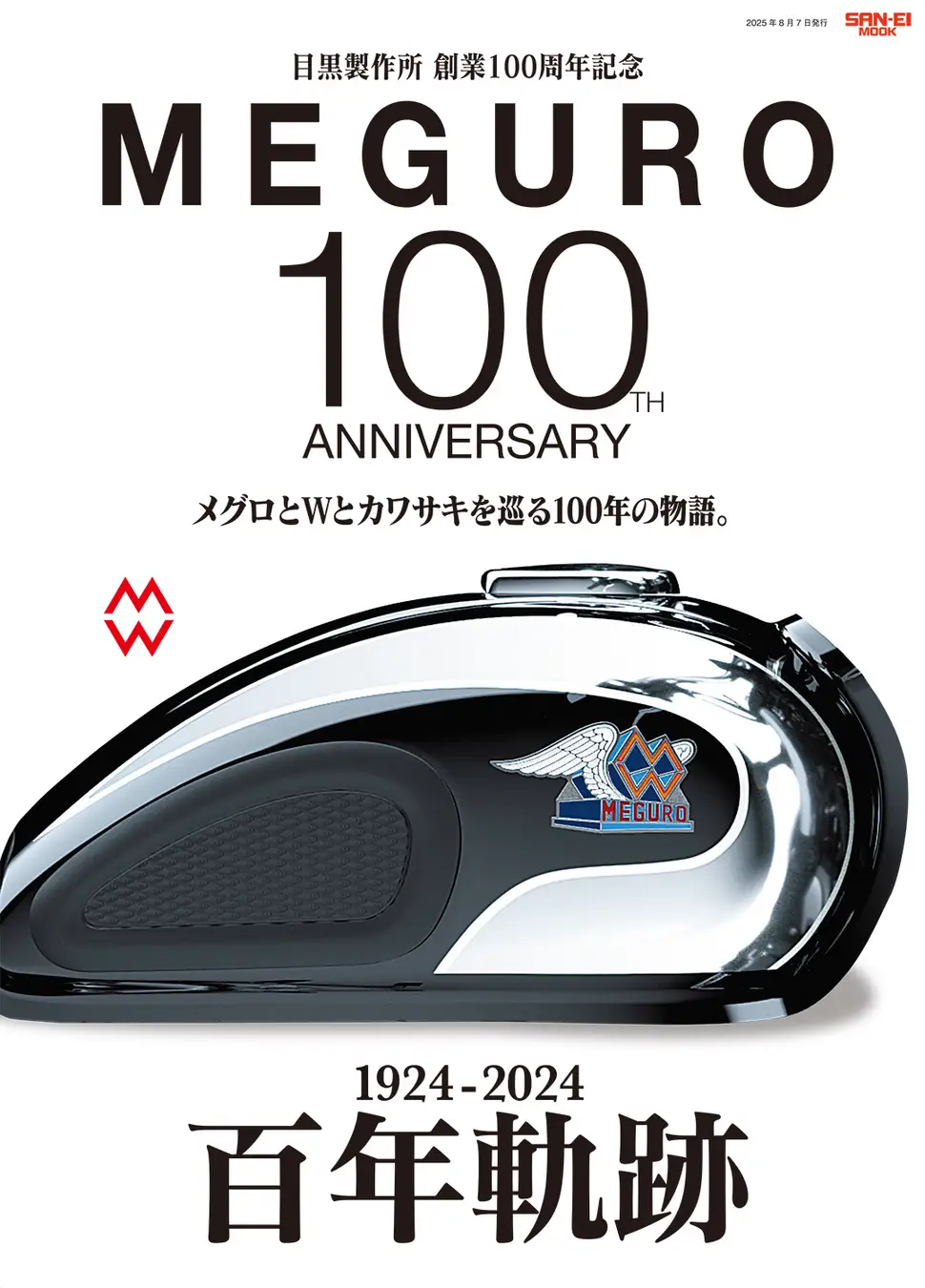

Who was Meguro Manufacturing? The unknown giant of the Japanese motorcycle industry
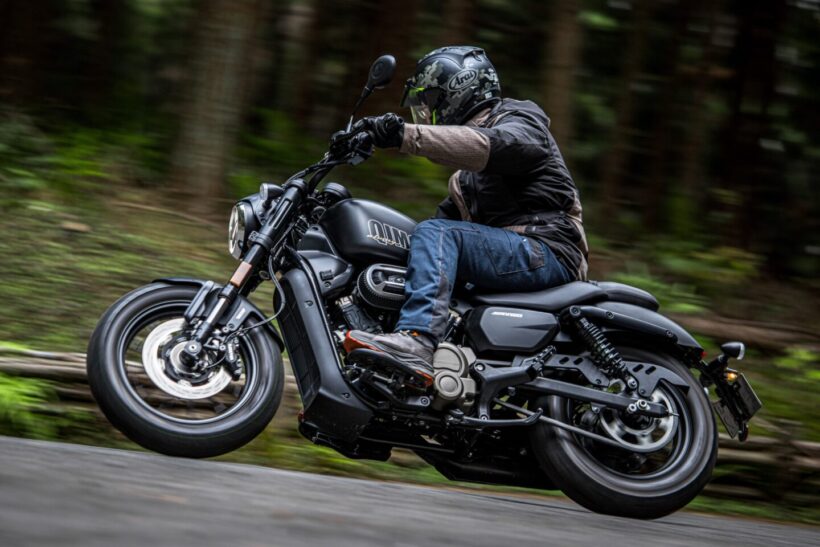
With the release of the MEGURO K3 in 2021, Meguro Manufacturing has suddenly been thrust into the spotlight. However, there is surprisingly little detailed information about this motorcycle manufacturer, which reached its peak in the 1950s. Even on the Internet, there are almost no materials that systematically trace the evolution of the motorcycles produced by Meguro.
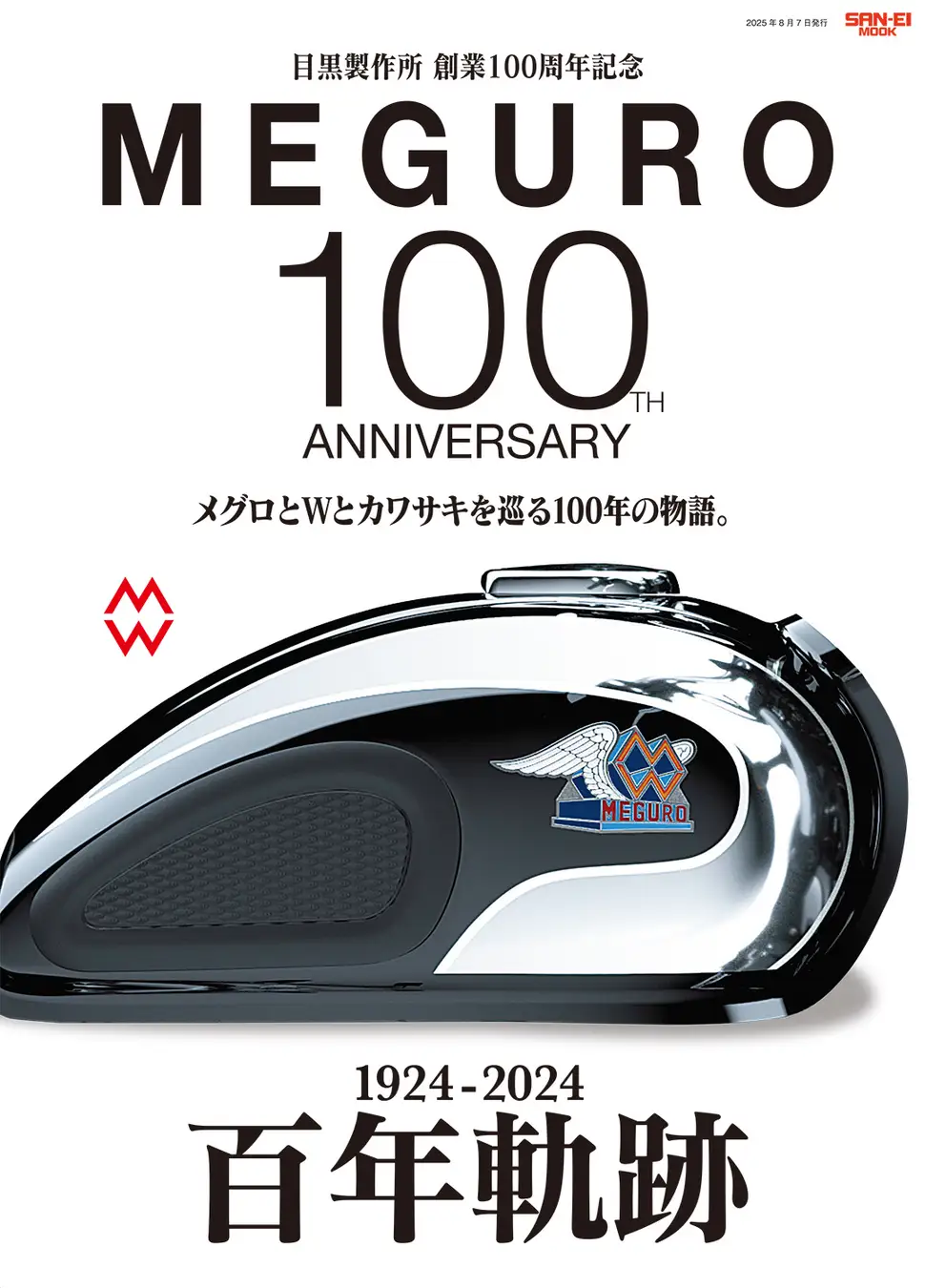
“Meguro Manufacturing 100th Anniversary ‘MEGURO 100’ Meguro, W and Kawasaki, 100 Years of Story” is a valuable book that fills this gap. This book photographs vehicles as close to the original as possible and carefully interviews enthusiasts who still use Meguro.
When you line up each model in chronological order, you can get a vague idea of the type of motorcycle Meguro was aiming for at the time. This is a philosophy that has been passed down to the modern K3 and S1.
Meguro Z-type lineage: The appeal of the long stroke 500 single
ADVERTISEMENT
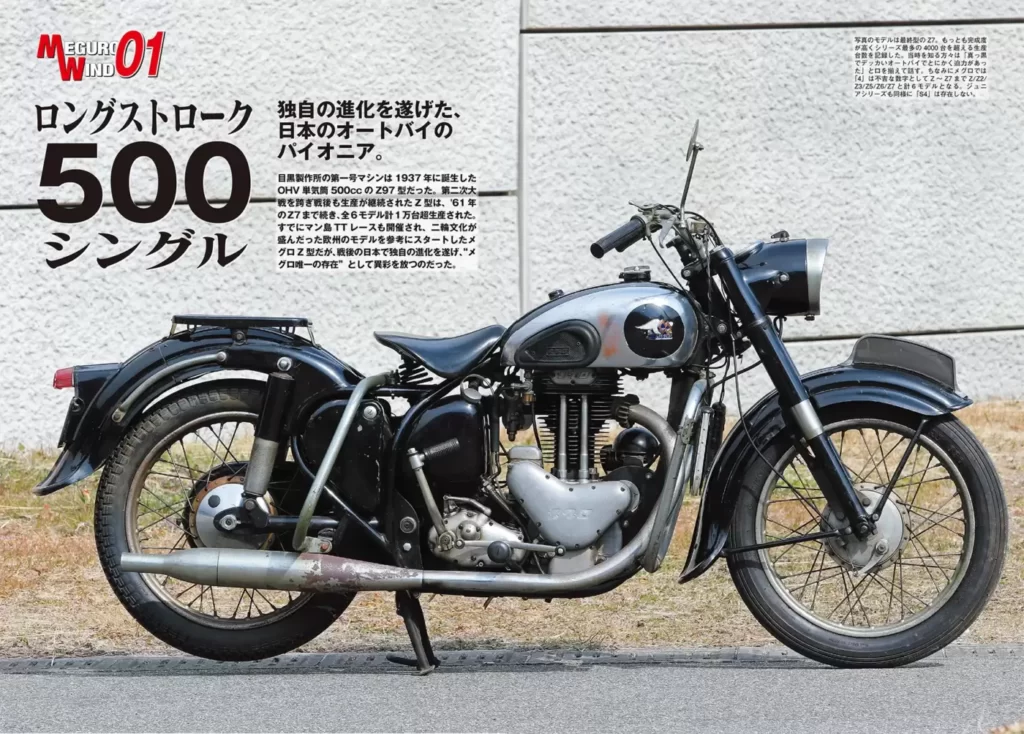
Meguro Factory’s first machine was the OHV single-cylinder 500cc Z97 model, which was born in 1937. Production of the Z model continued through World War II and after the war, up to the Z7 in 1961, with a total of over 10,000 units produced in six models.
The Meguro Z-type was started based on the European model, where the Isle of Man TT race had already been held and motorcycle culture was thriving. However, in postwar Japan, it evolved in its own way and stood out as a unique and unique “Meguro”.
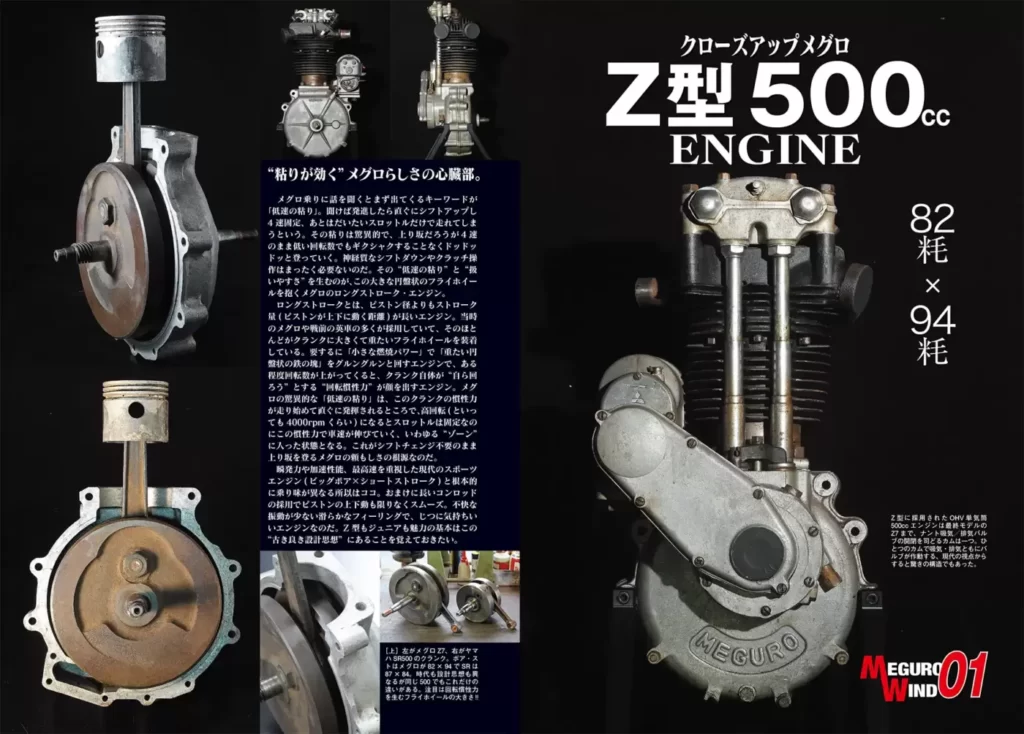
The reason why Meguro is Meguro is that it has a low compression, long stroke, and a heavy flywheel, and is a 500cc single-cylinder long-stroke engine that imitates the former European prestigious brands. Along with photos of the precious Z-type crank, we are approaching the source of the appeal of the long-stroke engine and the hidden charm of Meguro.
Junior Series: Elegant and luxurious practical 250cc class
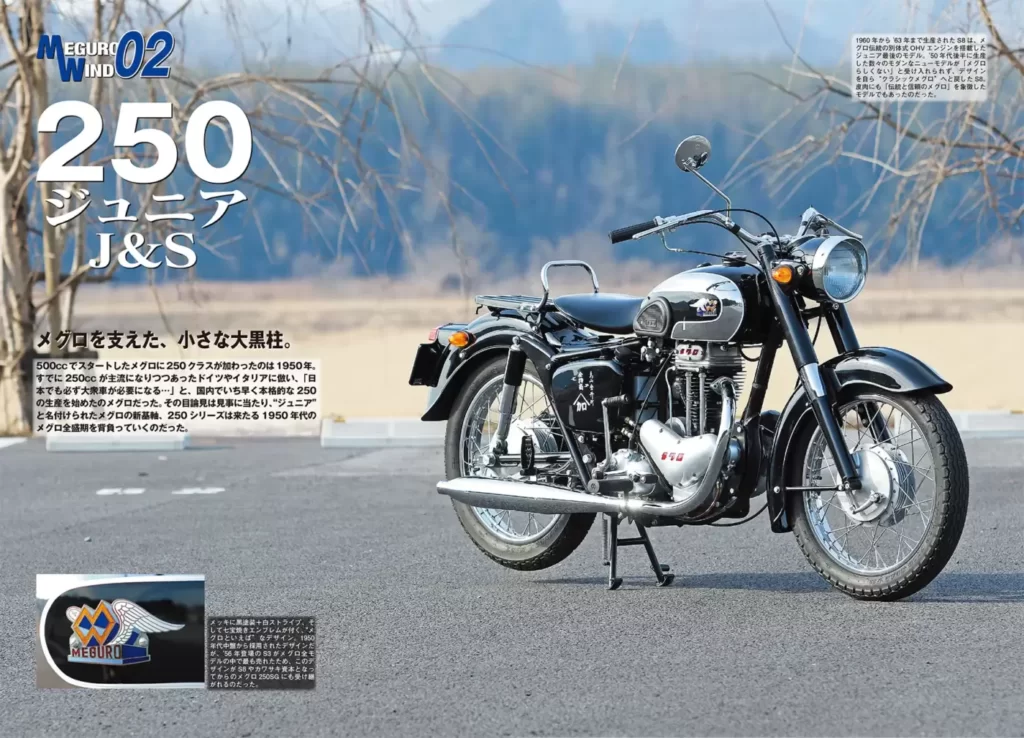
Meguro, which started out with a 500cc model, added the 250 class in 1950. Following in the footsteps of Germany and Italy, where 250cc models were already becoming mainstream, Meguro was one of the first to start full-scale domestic production of 250cc models, saying that “Japan will definitely need a mass-produced car.”
The plan was a perfect success, and the 250 model named “Junior” would carry the Meguro heyday of the 1950s. It completely covers the lineage from the first Junior J-type, to the S-type, the final model S8 with a separate engine, Autorack, and the SGT and SG from the Kawasaki Meguro era.
The challenge of twin-cylinder engines, leading to the Kawasaki W
A lineage inherited from Meguro T-type and K-type to the present day
ADVERTISEMENT
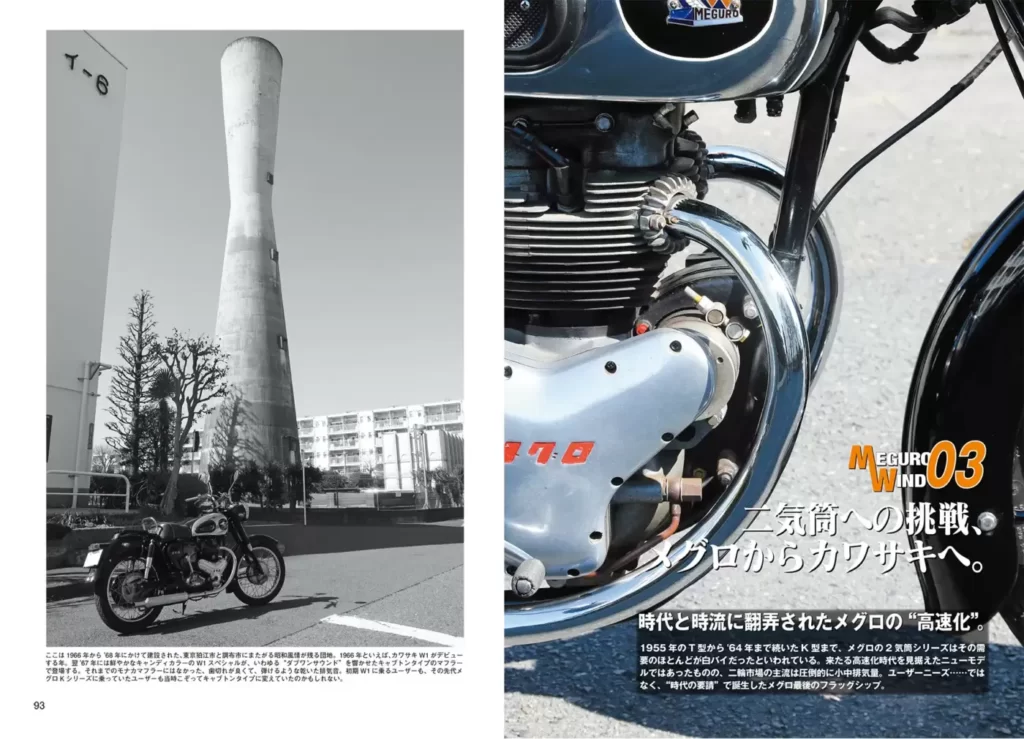
It is said that most of the demand for Meguro’s two-cylinder series, from the T-type in 1955 to the K-type that continued until 1964, was for police motorcycles. Although it was a new model that looked ahead to the coming era of higher speeds, the mainstream of the motorcycle market was overwhelmingly centered on small and medium displacement motorcycles.
This book carefully traces the lineage of Meguro’s final flagship two-cylinder series, which was born out of the “demands of the times” rather than user needs. It covers everything from the precious T1-type Senior that appeared in 1955 to the K1-type, through the Kawasaki Meguro era to the Kawasaki K2 and W1 series.
Estrella: A rare breed that makes you want to call it Meguro
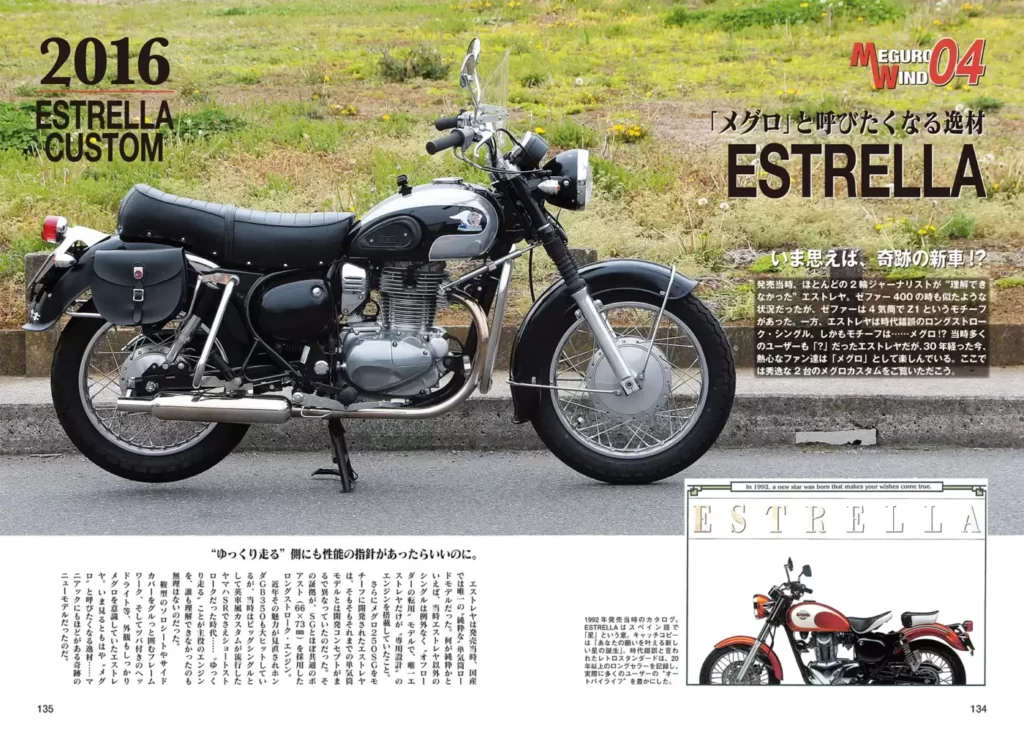
When the Estrella was released, almost all motorcycle journalists “couldn’t understand it.” The situation was similar when the Zephyr 400 was released, but the Zephyr had a four-cylinder engine and was based on the Z1. Meanwhile, the Estrella was an anachronistic long-stroke single-cylinder. And that engine was based on the Meguro.
Many users also had doubts about the Estrella, but now, 30 years later, enthusiastic fans are enjoying it as “Meguro.” This book introduces how “Meguro fans” enjoy the Estrella.
Meguro spirit revived in modern times: The secret story behind the birth of K3 and S1
From W650 to K3: A stepping stone to the inevitable revival of Meguro
ADVERTISEMENT
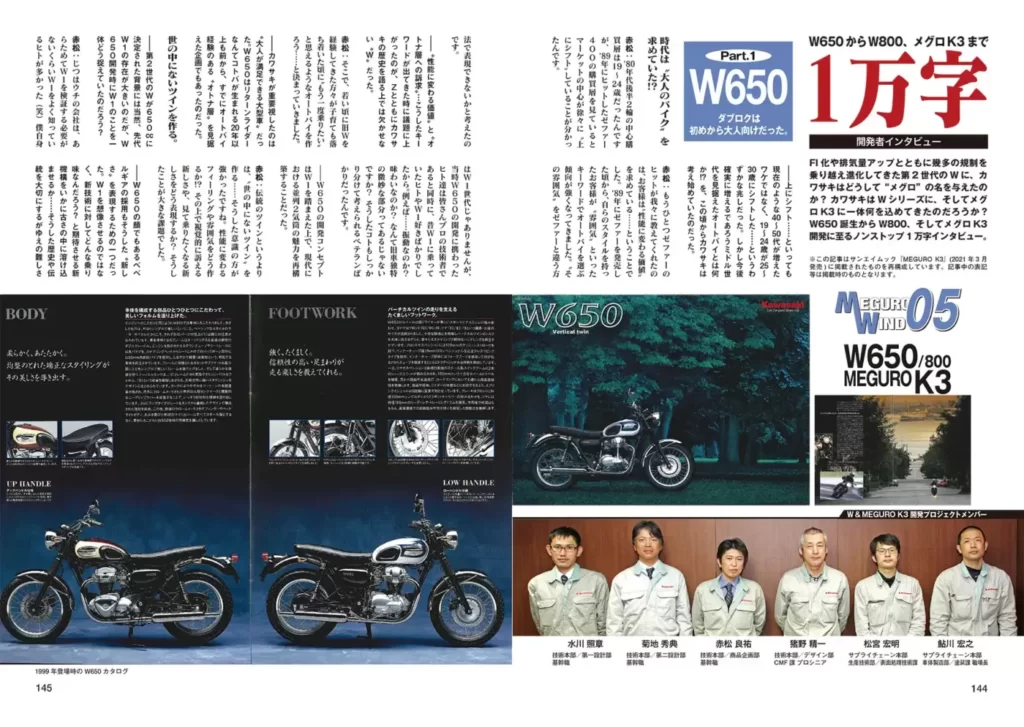
In 1999, the “traditional 650 twin” was re-released, exciting even fans of the old W. The new SOHC unit engine, with four valves per cylinder, attracted much attention, with mixed reviews, due to its “bevel tower” that used bevel gears to drive the cams.
However, if we look back carefully at history, it is this completely new two-cylinder engine that laid the foundation for the birth of the K3 and the revival of Meguro. From the W650 to the W800, and the second-generation W800 that underwent a model change, to the MEGURO K3, this book contains a valuable 10,000-character interview with Kawasaki’s development team.
MEGURO S1: Let the Good “SLOW-RIDES” Roll
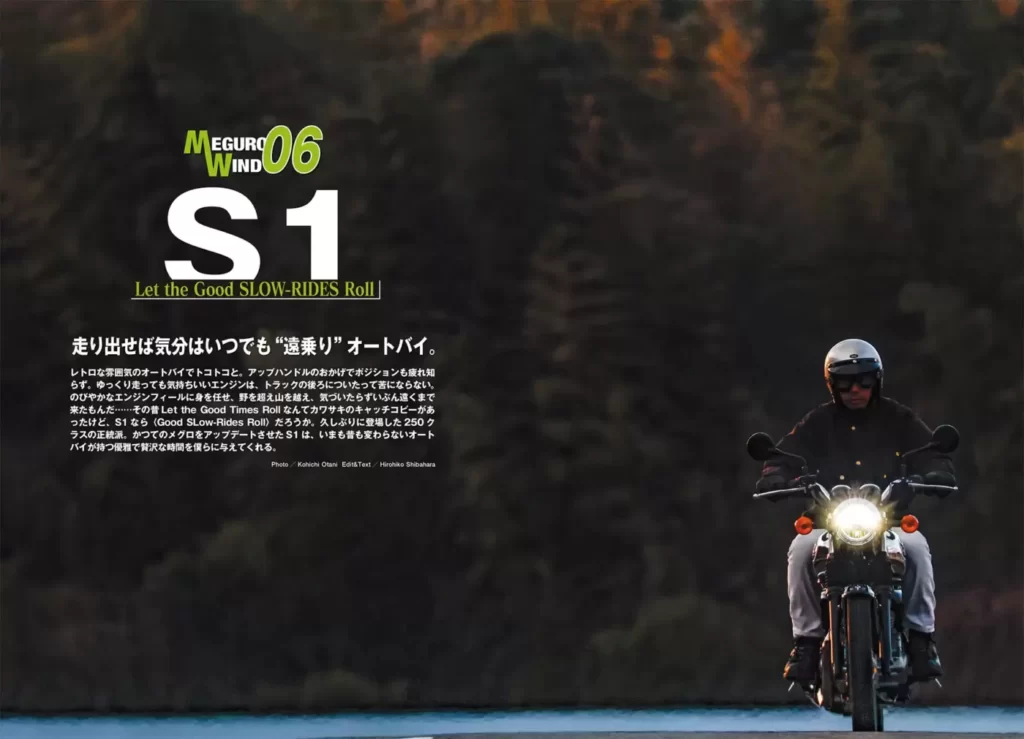
A retro-style motorcycle that zips along. Thanks to the raised handlebars, the riding position is comfortable and you won’t get tired. The engine is pleasant even when riding slowly, so it’s not a hassle to ride behind a truck.
Surrendering yourself to the smooth engine feel, you cross fields and mountains, and before you know it, you’ve come a long way. Kawasaki used to have a catchphrase, “Let the Good Times Roll,” but perhaps the S1’s catchphrase would be “Good SLOW-RIDES Roll.”
A classic 250 class bike that has been around for a long time. The S1, an updated version of the old Meguro, gives us the elegant and luxurious time that motorcycles have always had. The book also includes a thorough introduction to the new Meguro, the S1, and an interview about its development.
Meguro’s genes passed down to the present day
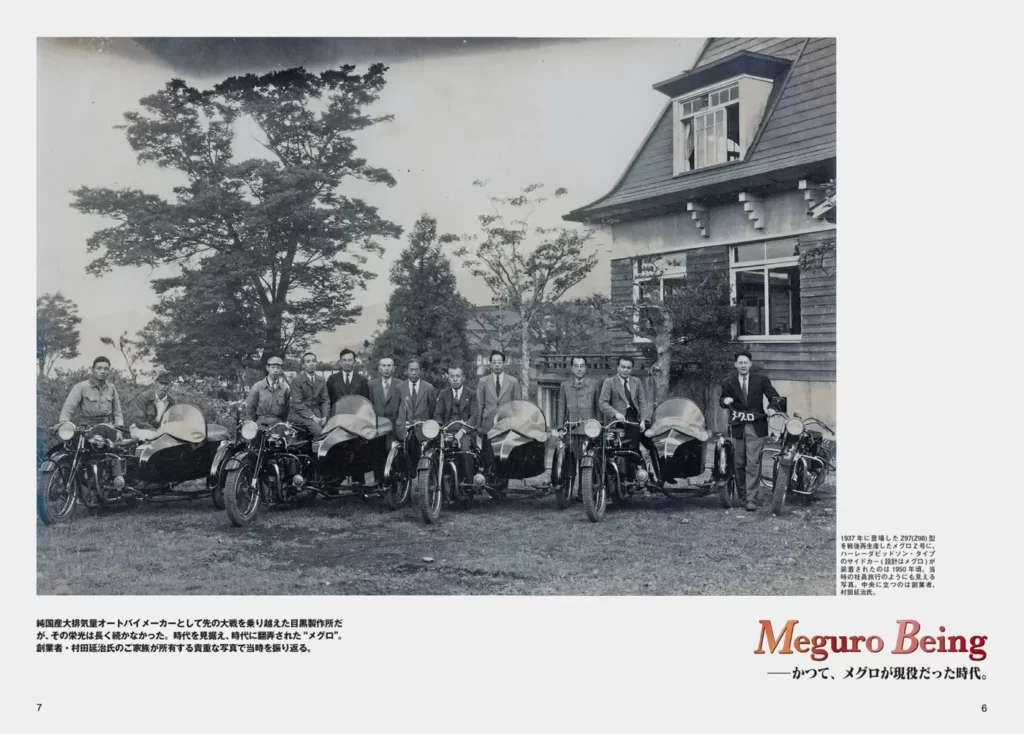
Meguro Factory overcame the last war as a purely domestic large displacement motorcycle manufacturer. Although its glory did not last long, the spirit of “Meguro” – anticipating the times and being tossed about by the times – has been passed down to the present day.
This book is filled with the voices of people who love Meguro, including “Meguro Being,” which looks back on those days using precious photographs owned by the family of founder Nobuharu Murata, “What kind of motorcycle is Meguro?”, which asks a total of 22 Meguro enthusiasts, and the efforts of Nasukarasuyama City, Tochigi Prefecture, to preserve the cultural heritage of Meguro Factory.
With the introduction of the MEGURO K3 and S1, Meguro Manufacturing is once again attracting attention. By unraveling its 100-year history, the true value of modern Meguro will become clear. This book is a must-read for motorcycle enthusiasts.
“A 100-year story of Meguro, W and Kawasaki”
<table of contents>
■INTRODUCTION [Mellow]
■MEGURO BEING – A look back at Meguro Factory in photos.
■Chronology of major models introduced
■Meguro Factory History (1924-1964)
■Special feature: MEGURO WIND
01 “The lineage of the Meguro Z-type” The long-stroke 500 single.
02 “The lineage of the Junior Series” The elegant and luxurious practical 250.
03 “The challenge to twin-cylinder engines” From Meguro T-type/K-type to Kawasaki W.
04 “ESTRELLA” A masterpiece that makes you want to call it Meguro.
05 “W650 → W800 → K3″ The foundation for the inevitable Meguro revival.
06 “MEGURO S1” Let the Good “SLOW-RIDES” Roll.
■Meguro People – Asking 22 Meguro enthusiasts “What kind of motorcycle is Meguro?”
■Column〈Innovation and pandering〉~The truth about Meguro.
■Photo Break――1957 Asama Racer “RZ type”
■Meguro and Nasukarasuyama “A town that preserves the cultural heritage of Meguro Manufacturing”
■A cafe where you can see Meguro – BATOWL CAFE (Nakagawa Town, Tochigi)
“Meguro Manufacturing 100th Anniversary Celebration “MEGURO 100″ Meguro, W and Kawasaki, a 100-year story”
Released on Tuesday, June 24, 2025 at bookstores nationwide and online stores.
Price: 3,630 yen (tax included)