
Royal Enfield New Himalayan…from 880,000 yen
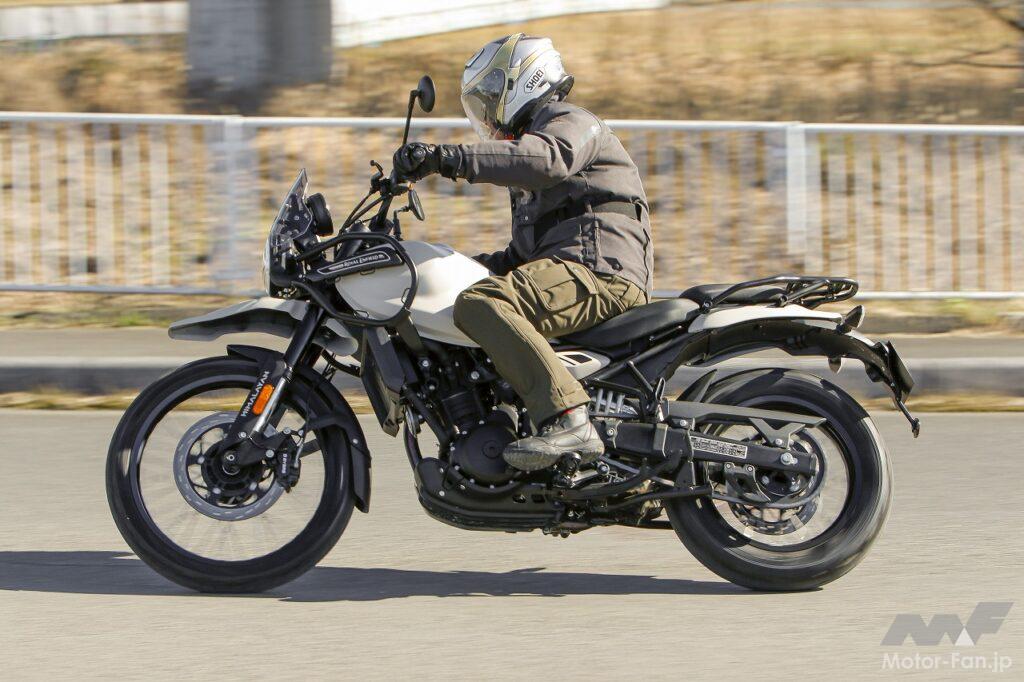
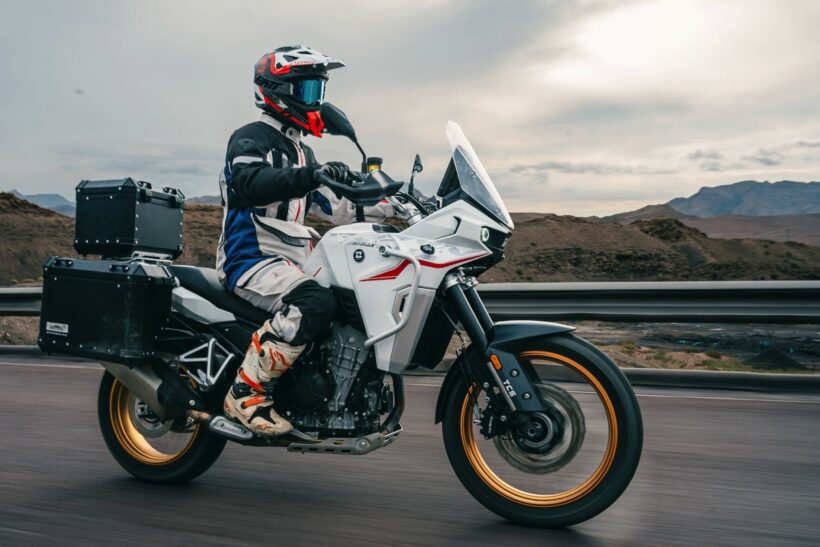
The body is a reasonable size and is suitable for everything from city riding to touring.
Large models over a liter are the norm for adventure tourers. However, given Japan's road conditions, it's likely that they are too much for anyone other than the most enthusiastic riders. This is my personal opinion, but considering size and performance, the 250-400cc class is the most user-friendly in Japan.
Looking at the adventure tourer category, there aren't many options in the mid-range. The Honda NX400, BMW G310GS, and KTM 390 Adventure are the only models that come to mind. The new Royal Enfield Himalayan is a new addition to the mid-range adventure category.
While Royal Enfield already has a model called the Himalayan 411, this new Himalayan is not an evolution of the Himalayan 411, but rather an entirely new model. Therefore, the current lineup consists of two models: the Himalayan 411 and the new Himalayan.

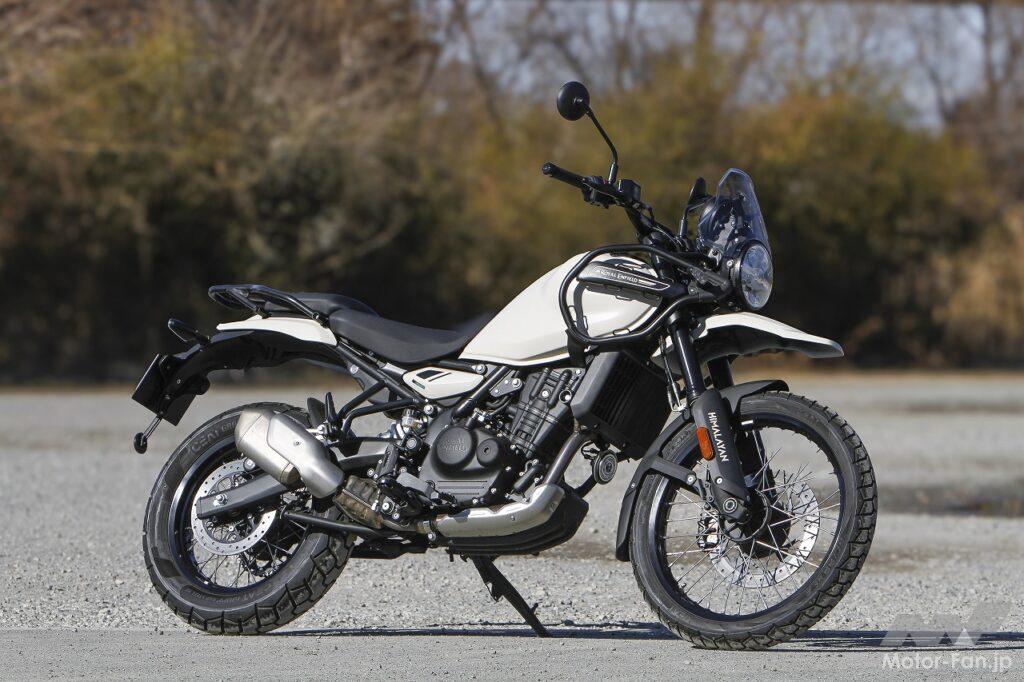
The 21-inch front and 17-inch rear tires mounted on wire-spoke wheels create an adventure look designed for off-road riding. The body size is by no means compact, but it's not intimidating either. I think it's probably on the small side for an adventure tourer. Incidentally, this model is equipped with a 450cc engine, and you could say that the size is appropriate for that engine displacement.
What catches your eye on the exterior is the sturdy-looking tank guard made of steel pipes and adorned with the "ROYAL ENFIELD" logo. In the event of a fall, there's a significant risk of it falling over. This is an important piece of equipment that will prevent damage to the fuel tank in the unlikely event of such an incident, allowing you to continue on to your destination. It's not over-equipped, but has all the necessary equipment. This concept is reflected in the body styling.
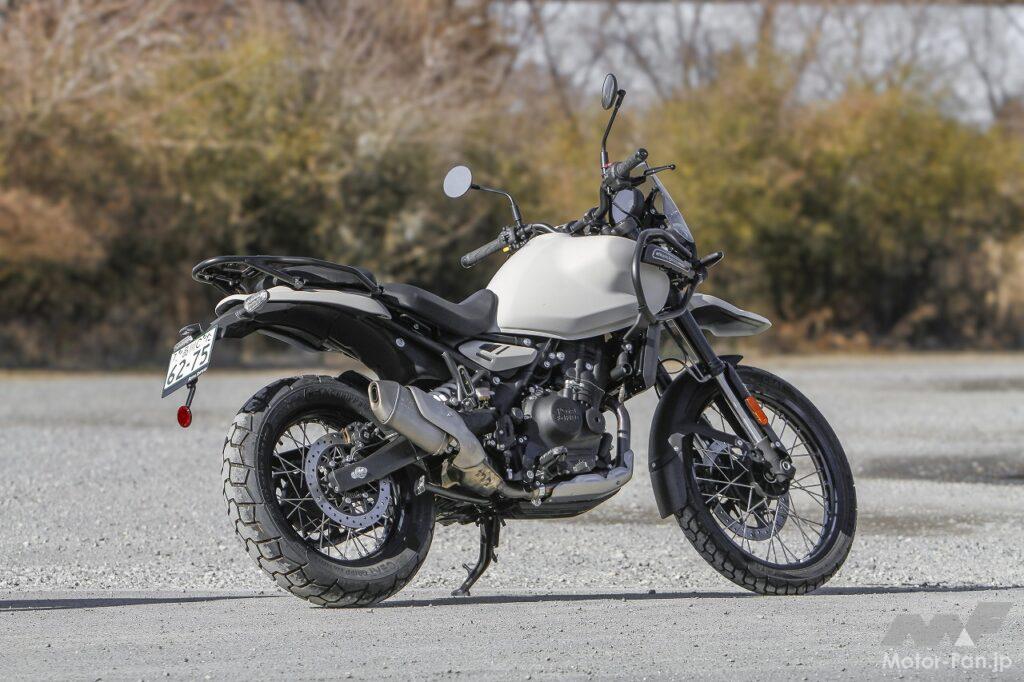
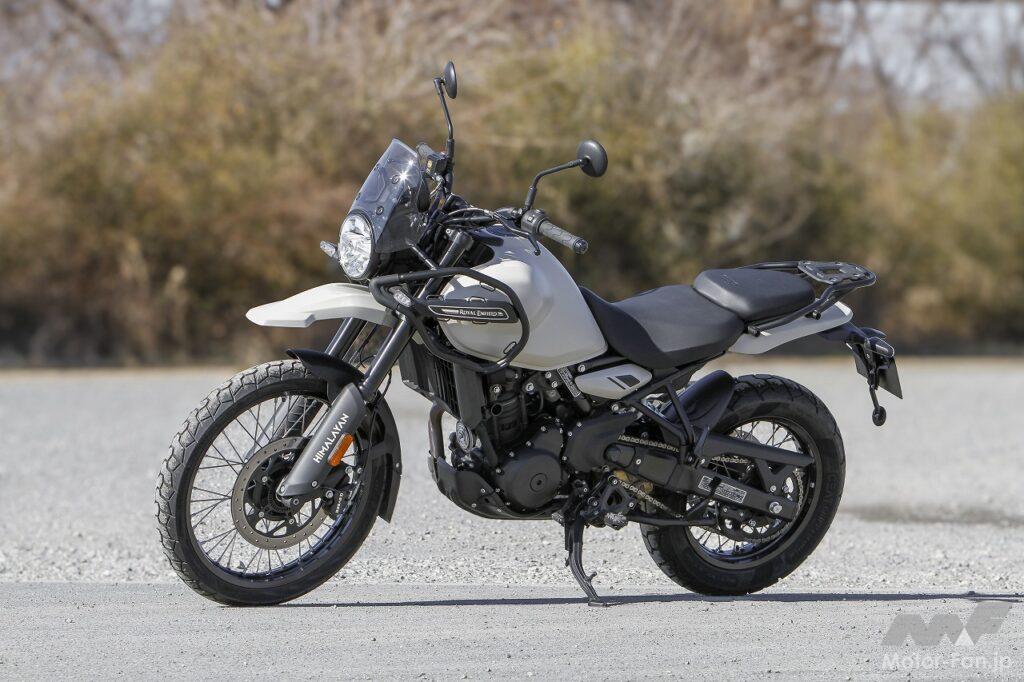
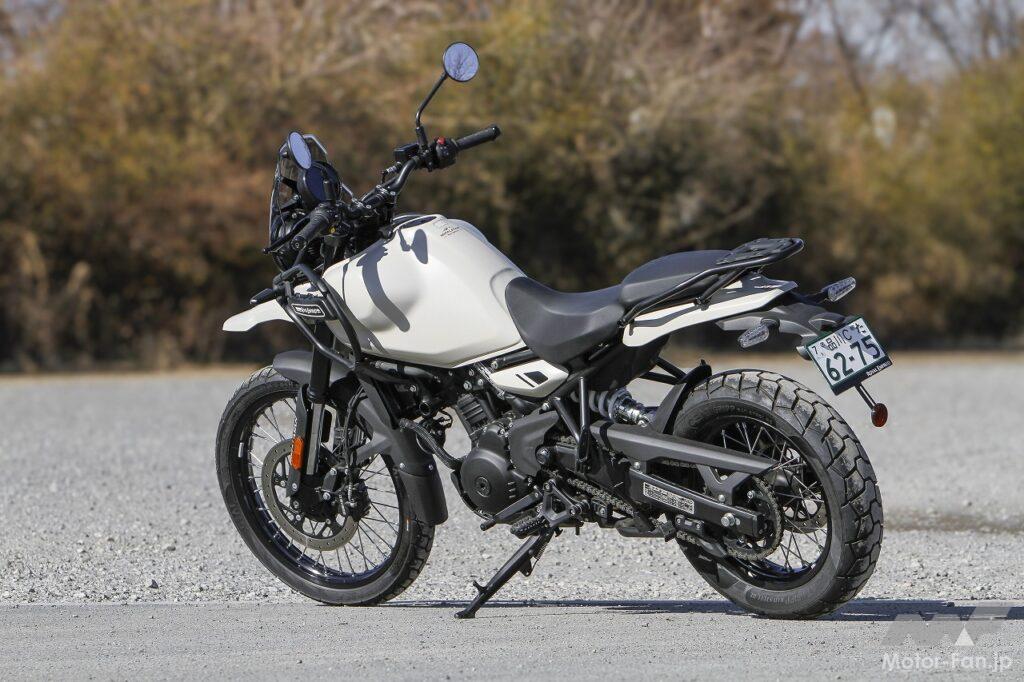
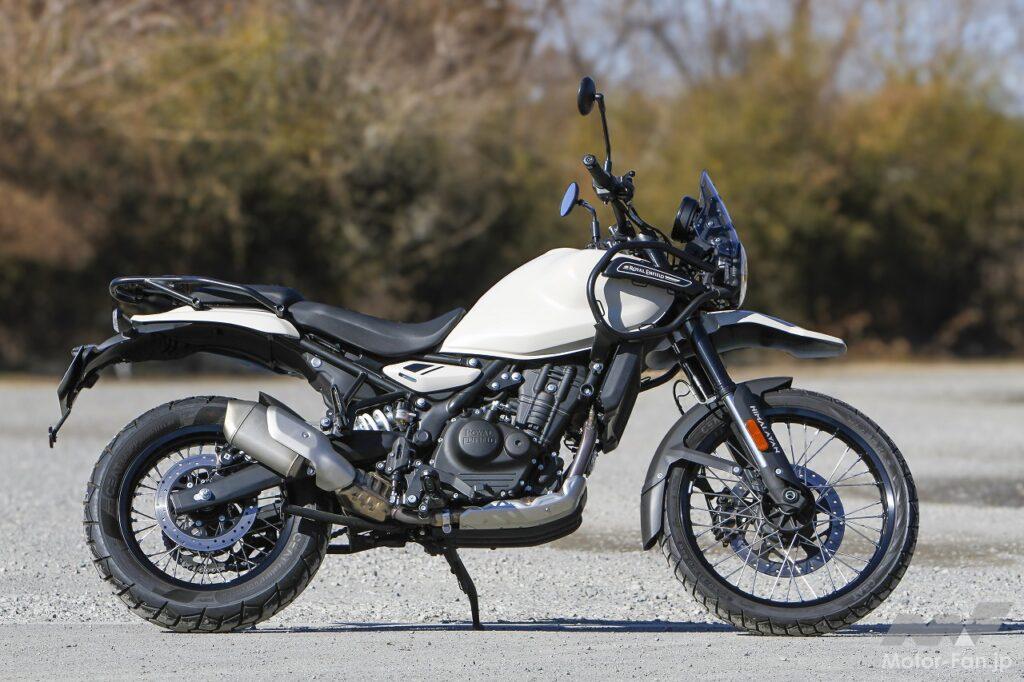
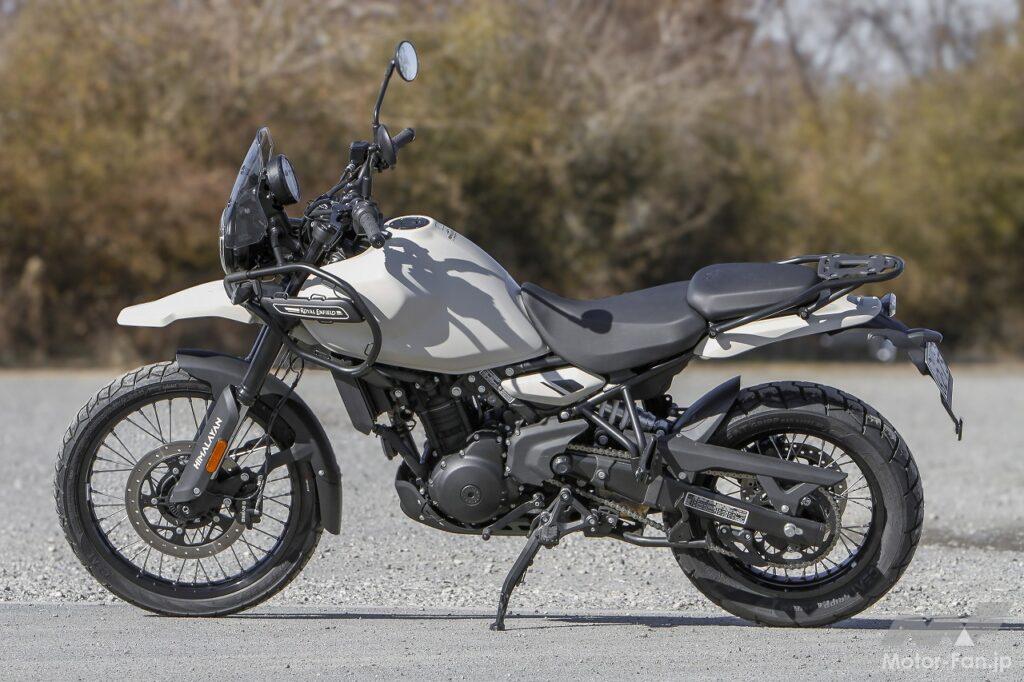
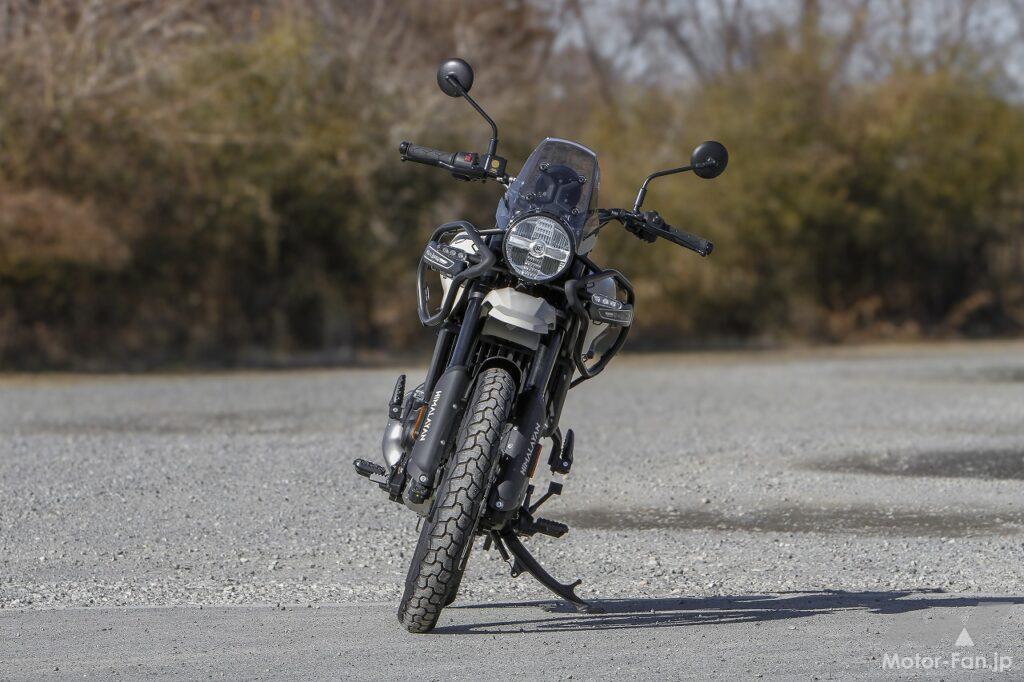
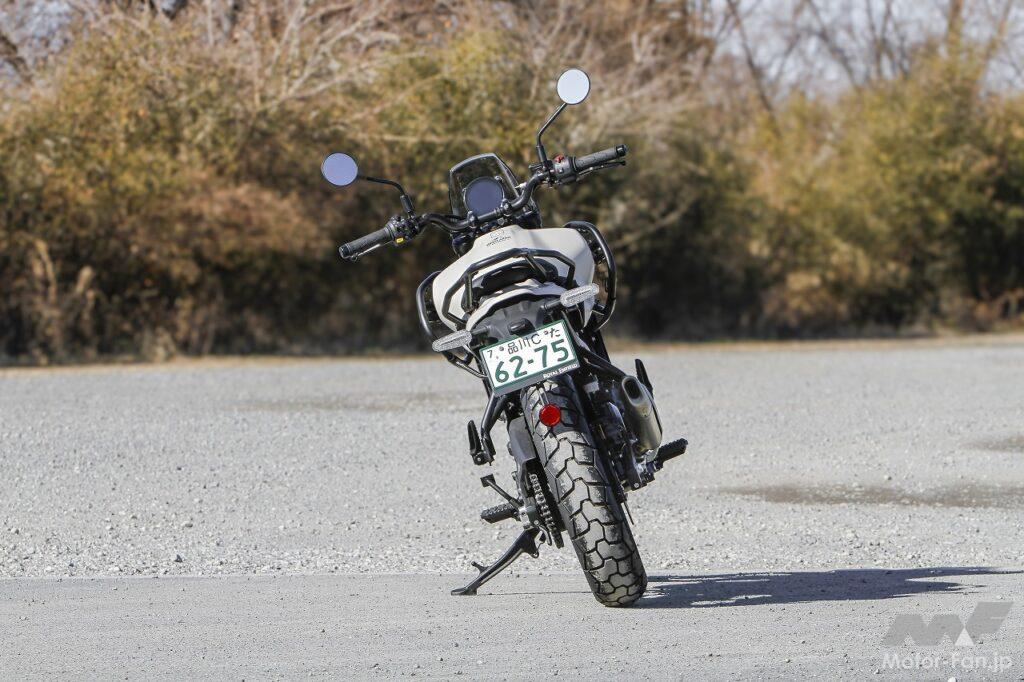
Comfortable position setting and seat height adjustment function for long-distance riding
The side stand looks sturdy and reliable, but it can be propped up with the bike leaning back quite a bit. If you park it in the wrong place, there's a risk of it tipping over, so I think it needs to be improved. In addition to the side stand, the bike is also equipped with a center stand, which is useful for maintenance and carrying luggage.
When getting on, you put down the side stand, but because it's leaning back, it feels heavy to raise the bike. The bike weighs 195 kg, which is standard for this class, but the tank guard, rear carrier with grab bar, and other heavy items mounted on top of the body likely contribute to the weight.
The seat height can be adjusted to two positions: 825 mm and 845 mm. I chose the lower 825 mm position for this test. I ended up with no issues with foot reach, and even I, who am 178 cm tall, didn't feel cramped around the knees. If you're primarily riding around town, a lower seat position is probably fine. On the other hand, for long rides that include high-speed riding, a higher position would be more comfortable and easier.
The footpegs are wide and equipped with rubber, making it easy to place your feet comfortably. Furthermore, the seat is wide and has decent cushioning, so it seems likely that your buttocks will not hurt as much.
In terms of position, I felt that the style was such that an average-sized Japanese rider could enjoy riding comfortably without any strain, for general use from riding around town to touring.
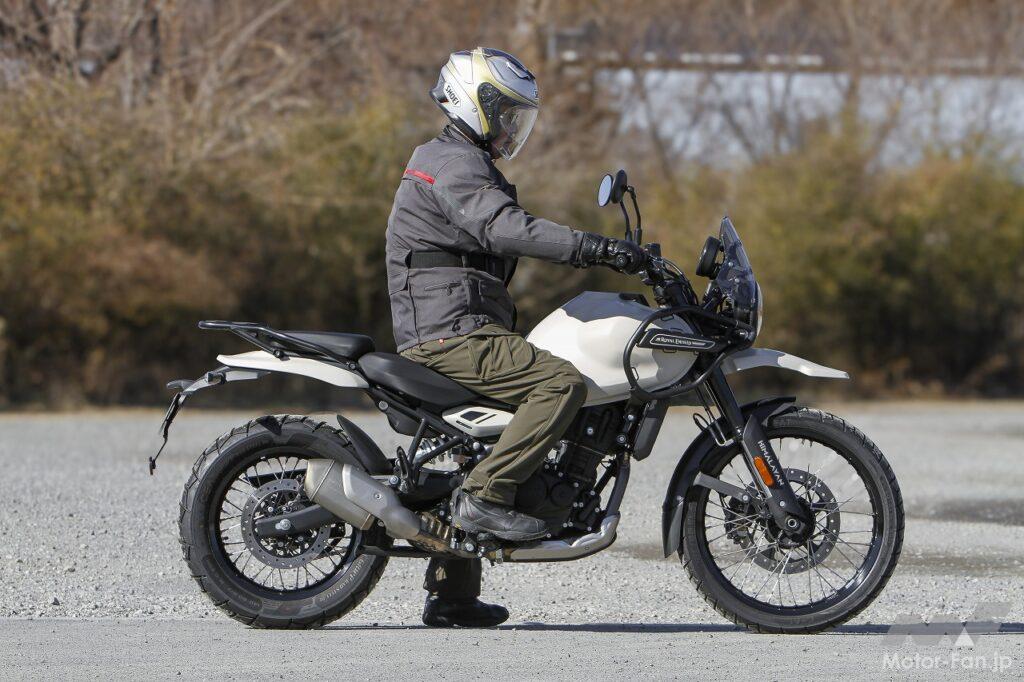
The bike size is well suited to the physique of Japanese riders, providing a comfortable ride.
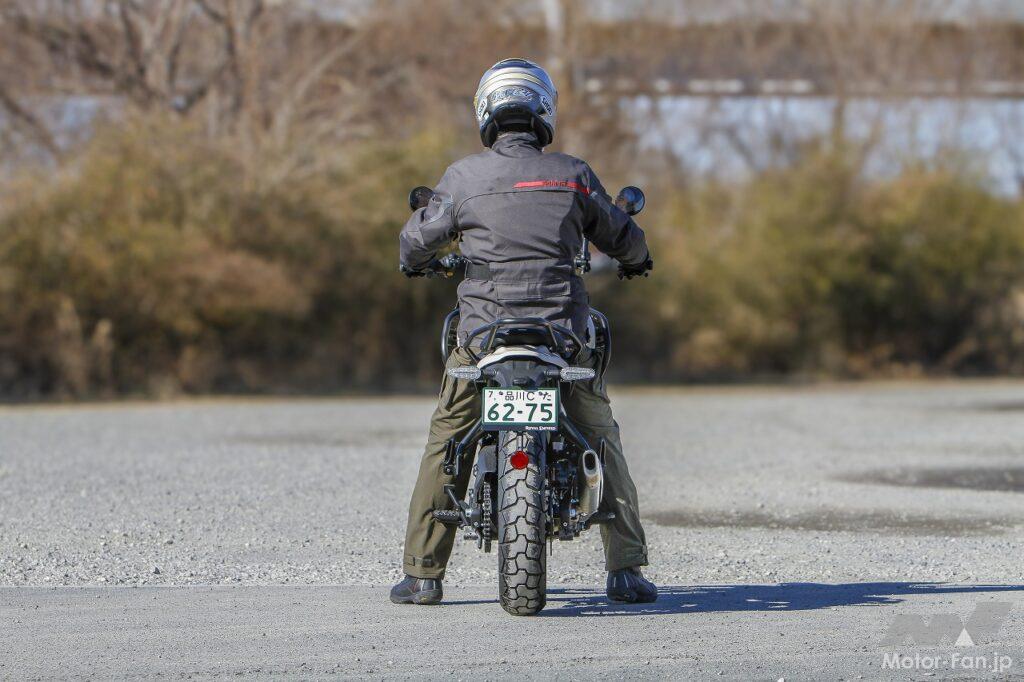
The seat can be adjusted to two different heights, and the one in the photo is at the lowest position of 825mm. I’m 178cm tall, so both my feet can land comfortably on the ground.
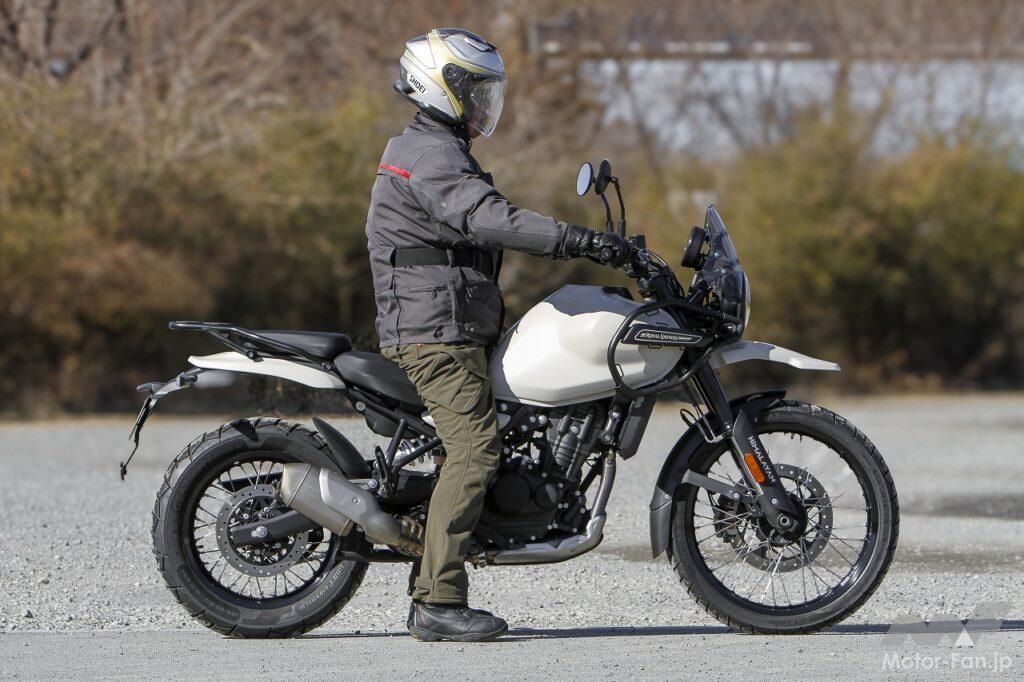
The position provides ample space for the upper body, so you won’t get tired even on long rides.
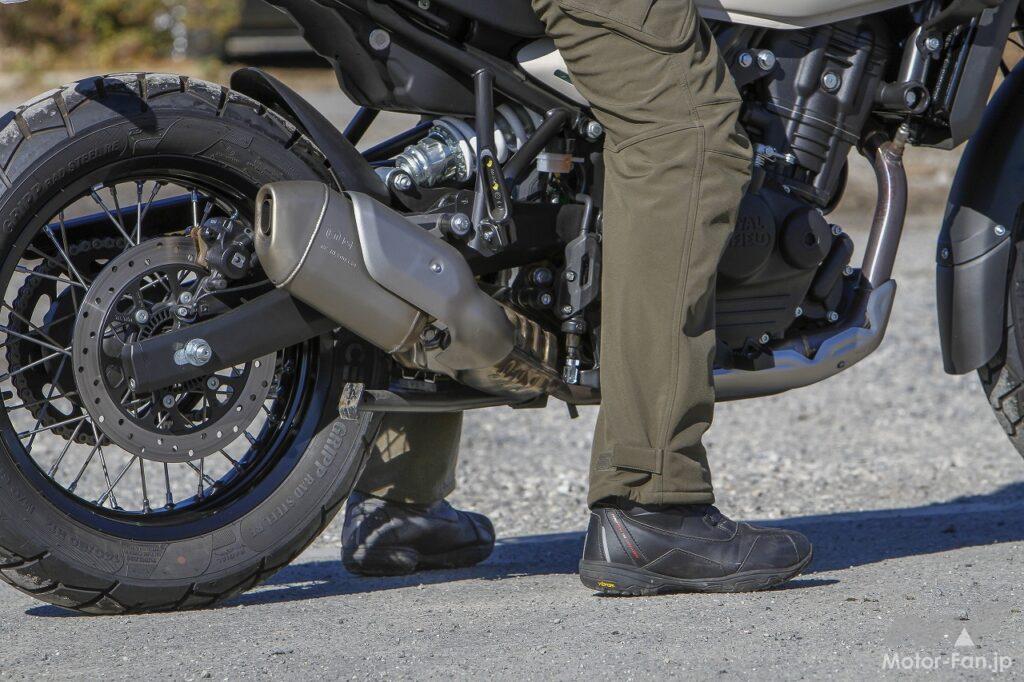
I’m glad that it doesn’t interfere with the step when I put my foot down.
A newly developed engine full of firsts
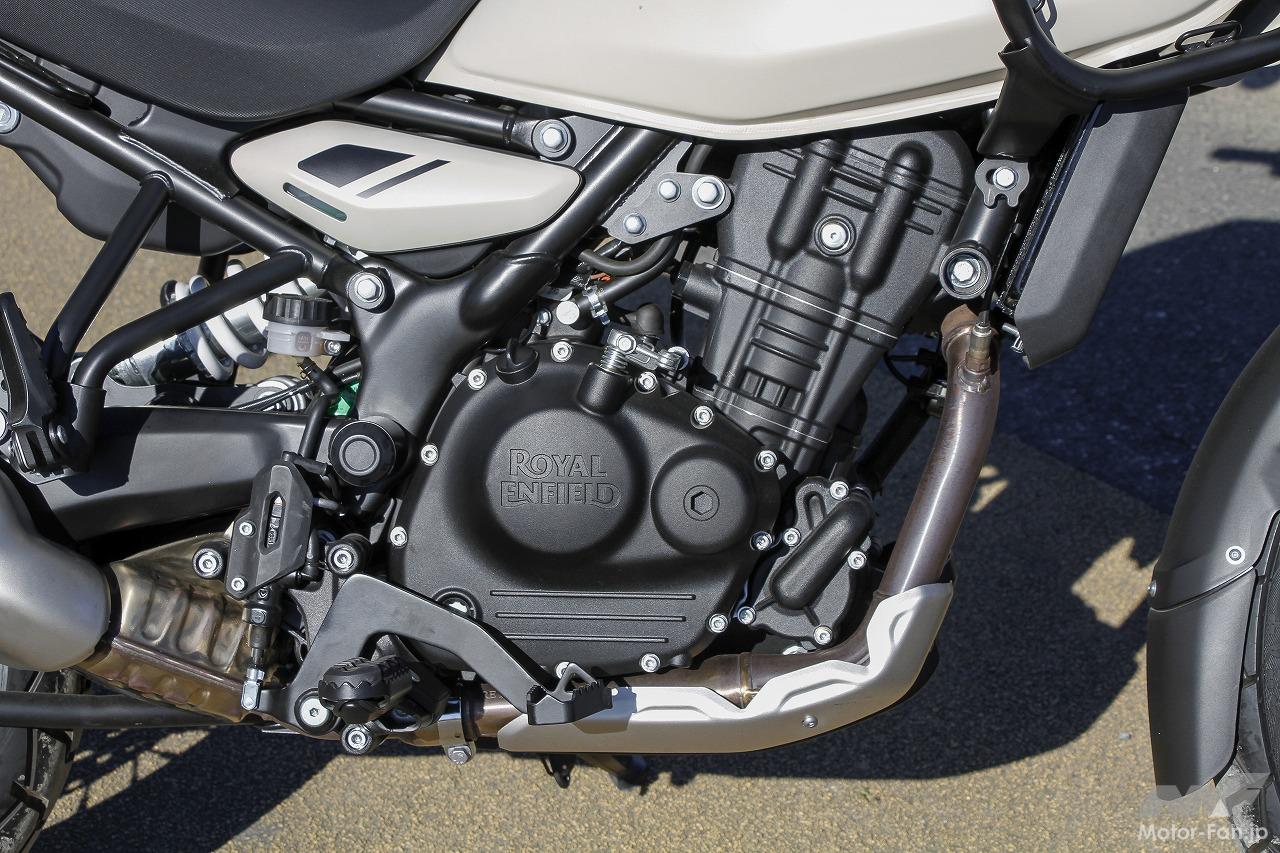
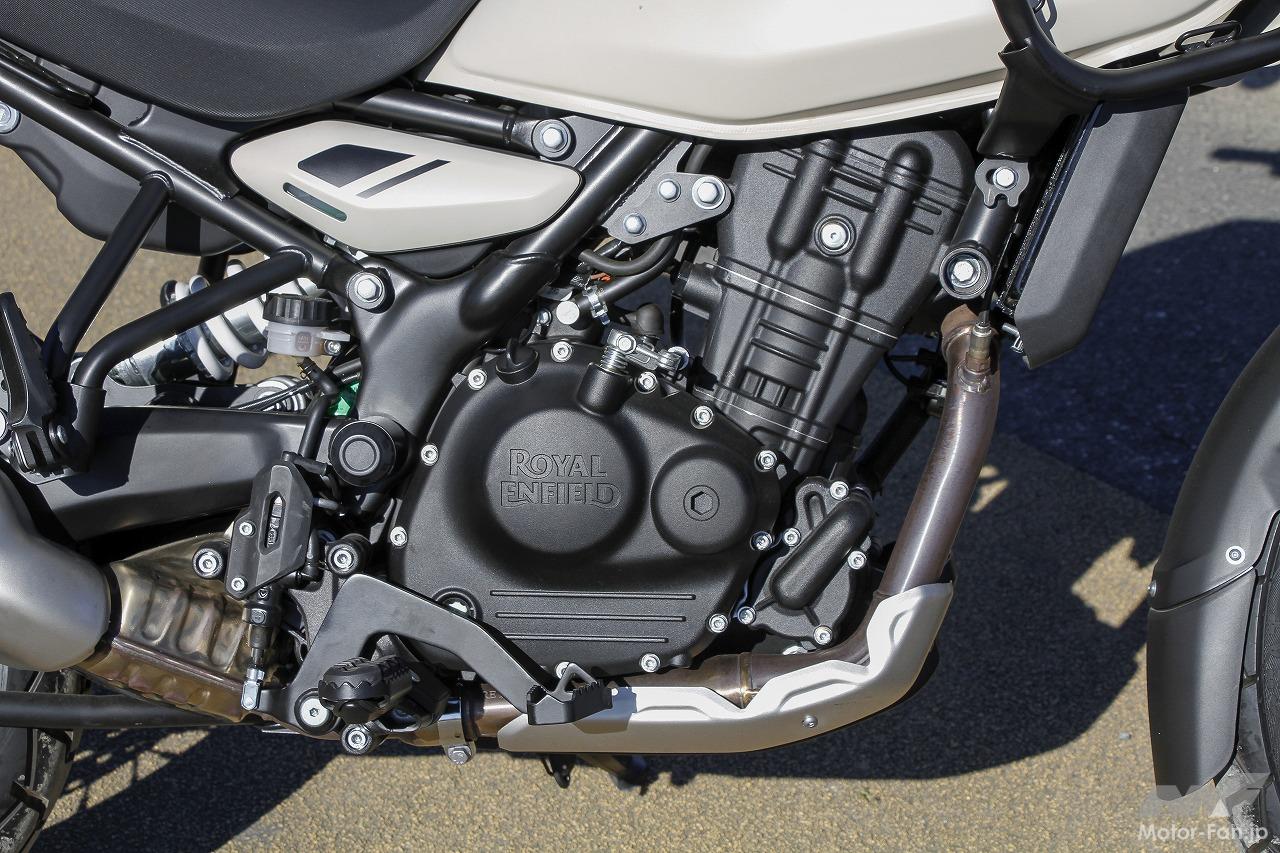
The new Himalayan incorporates new initiatives for the next generation, starting with the engine. It's the first to feature a water-cooled system, a twin-camshaft, and ride-by-wire. The newly developed, water-cooled, DOHC, 4-valve, single-cylinder, 452cc engine delivers a maximum output of 29.4kW (40ps) at 8000 rpm and a maximum torque of 40Nm (4.08kgm) at 5500 rpm. Riding modes include Performance and Eco, and ABS and rear-only ABS off, for a total of four settings. This allows you to select the optimal characteristics for your riding situation.
When you turn the key on, a round digital meter comes up. The large, easy-to-read display is a welcome addition. Furthermore, this meter also displays navigation, and by installing the Royal Enfield app on your smartphone and linking it to the vehicle, you can display Google Maps navigation. It's packed with useful features.
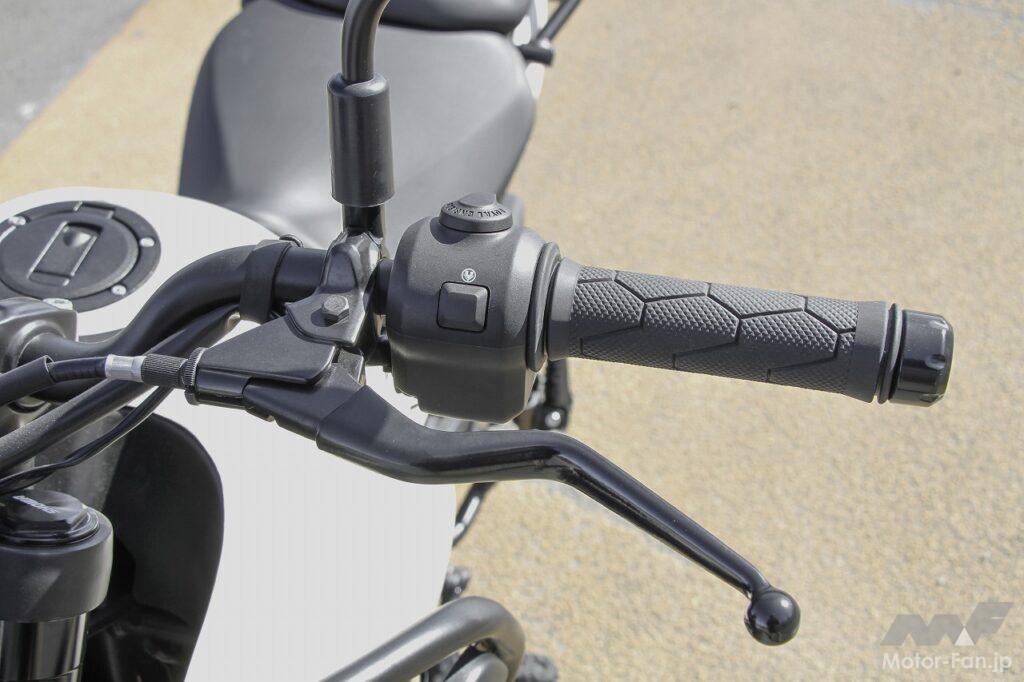
I started the engine using the switch that also serves as the kill switch, and the engine started up vigorously. Using the mode switch on the right, I started with Performance mode and ABS on. While the riding mode was set to Performance, the power output wasn't overly aggressive, responding linearly to the throttle and accelerating smoothly. While the single-cylinder engine doesn't have the typical thumping feel, the torque is readily available from low RPMs, allowing for precise acceleration and deceleration. The engine produces maximum power at 8000 rpm, providing ample high-speed extension. Performance is maximized across the entire RPM range.
Switching to Eco mode and ABS on again resulted in a gentler response, with power somewhat lacking during normal riding. With such gentle engine characteristics, it seems like it would be safe to ride even on rainy days. Touring often involves exposure to a variety of weather conditions, so riding modes like this offer a great sense of security.
The transmission is six-speed, but it's generally high-geared, which is advantageous for high-speed riding, but only allows for fifth gear for city riding and regular roads.
In terms of engine performance, I felt it offered sufficient potential. Its characteristics make it easy to use in urban areas, and it also meets the demands of driving steadily on regular roads and sporty driving on mountain passes. It also has minimal vibration, making it comfortable to drive on long distances. This makes it ideal for driving on Japanese roads.
ADVERTISEMENT
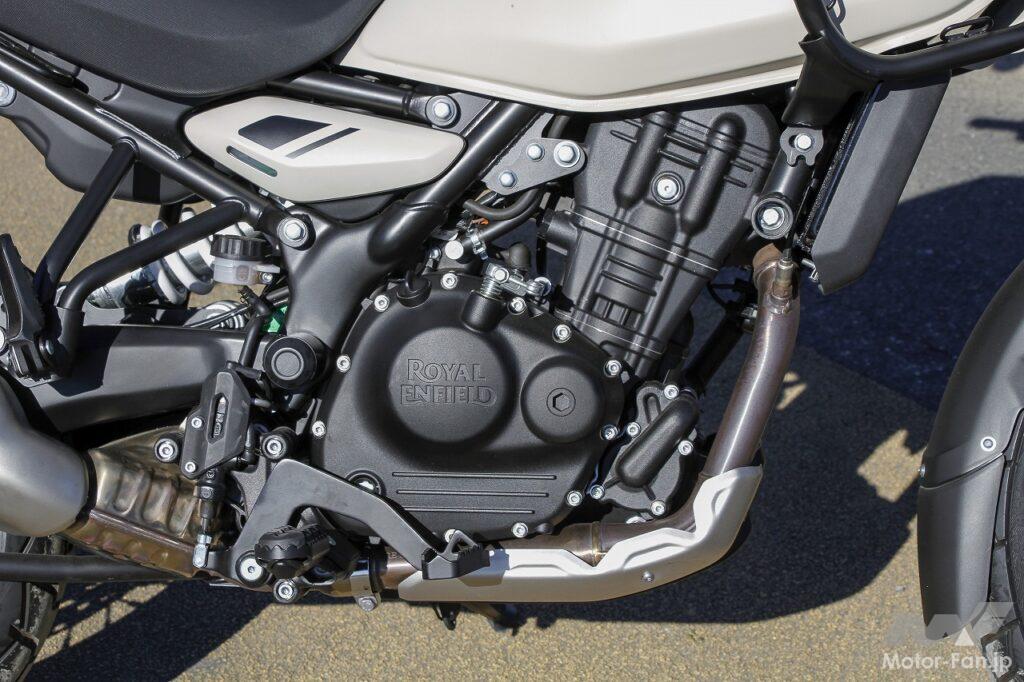
A newly developed water-cooled DOHC 4-valve single-cylinder 452cc engine. With its high rotation and torque, it is suitable for long-distance travel and off-road driving. The introduction of ride-by-wire also allows for switching between riding modes.
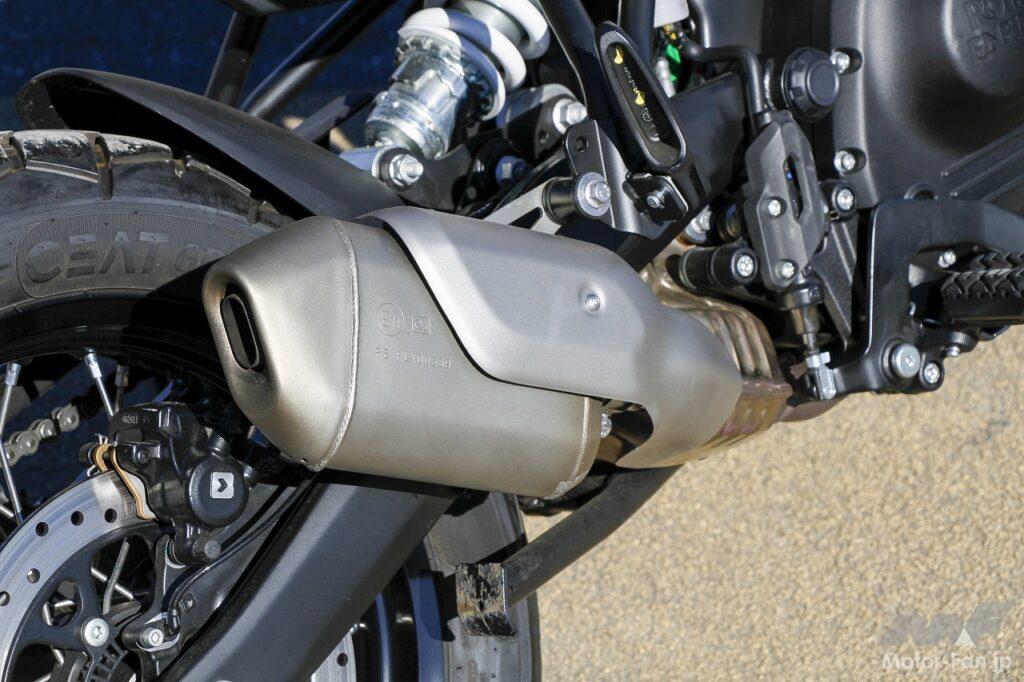
A thickly covered muffler
The hard-working suspension provides a comfortable ride and responsive handling.
The steel twin-spar frame is designed to be sturdy and durable, ensuring a tough ride even in the harsh conditions of the Himalayas. The suspension is equipped with Showa cartridge-type inverted forks in the front and a monoshock with adjustable preload in the rear. The long-stroke suspension is designed for off-road riding and provides excellent operability. The 21-inch front and 17-inch rear wire-spoke wheels also help cushion shocks, providing a very comfortable ride. The tires are manufactured by CEAT in India, measuring 90/90-21 in the front and 140/80R17 in the rear. The standard model we test rode is equipped with tube-type tires, while the premium model uses tubeless tires. The
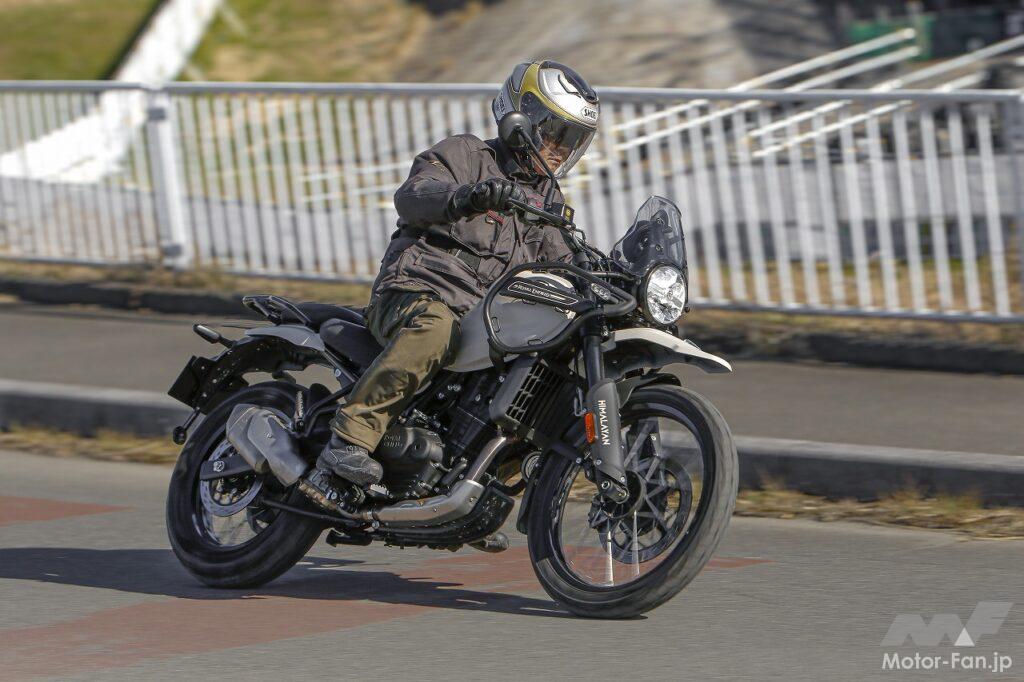
21-inch front and 17-inch rear tires provide solid straight-line stability and smooth handling. While not particularly nimble, the overall response is straightforward, making it easy to maneuver. The semi-block pattern tires are suitable for both on-road and off-road riding. Although these are what are known as adventure tires, I wasn't bothered by road noise and there was no lack of grip.
The brakes are single discs on both the front and rear, with a Φ320mm rotor on the front and a Φ270mm rotor on the rear. ABS is equipped on both the front and rear, but you can turn off only the rear by switching the mode.
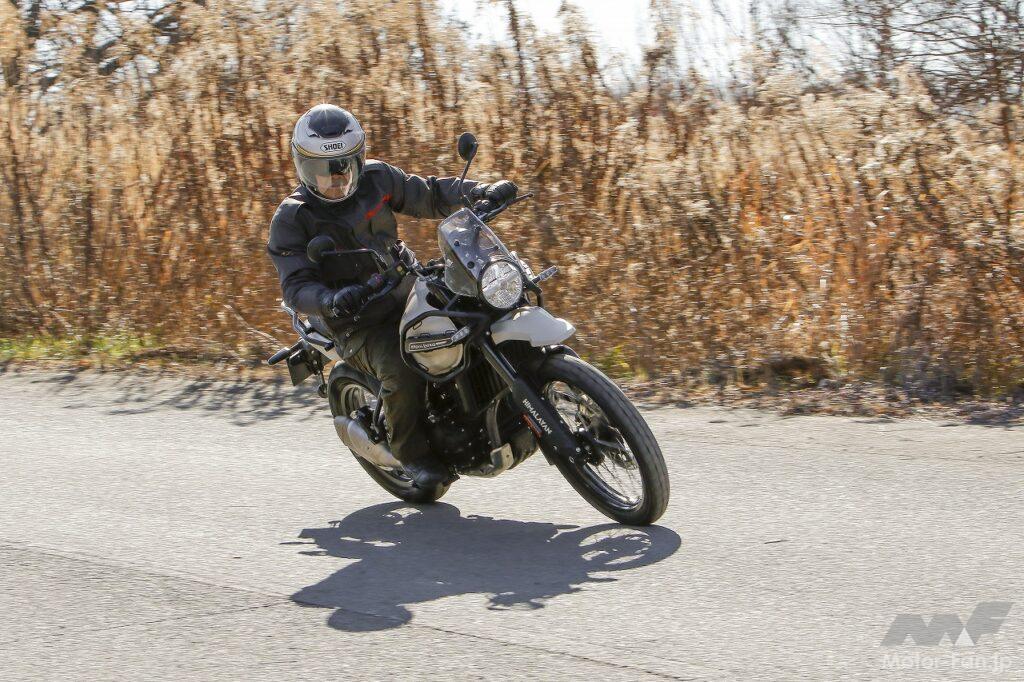
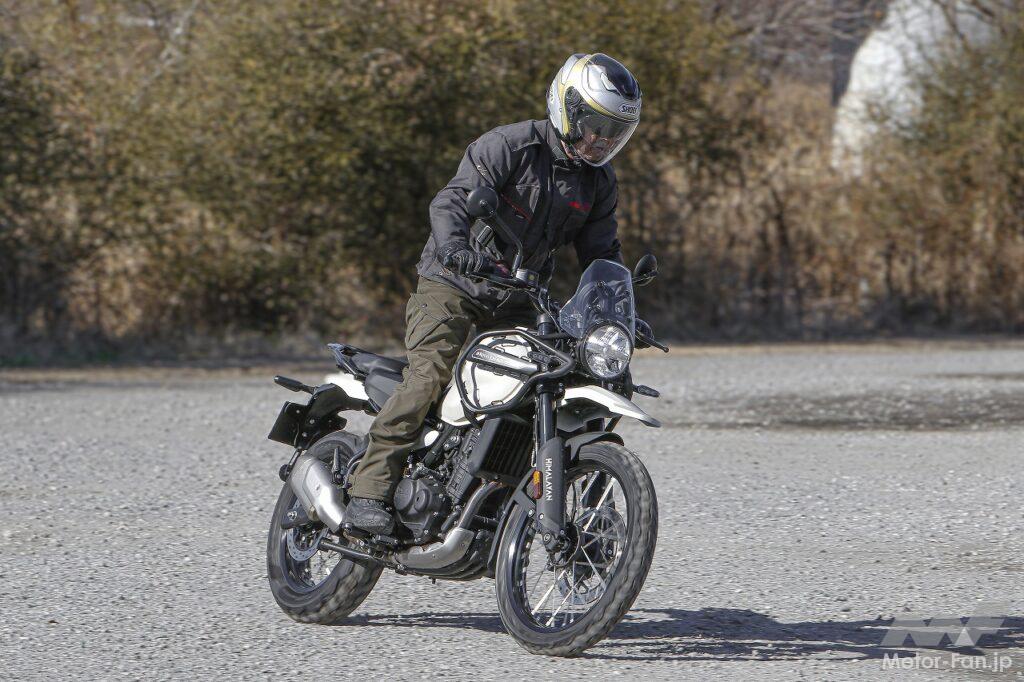
In Japan, a country with a small land area and many narrow mountain roads, I think mid-size adventure tourers are an easy-to-use category. In that respect, I feel that the New Himalayan is a model that will support the touring of Japanese riders. It's not much different in price from rival models, so it should definitely be a viable option. However, while many rival models are under 400cc and can be ridden with a standard motorcycle license, the 452cc New Himalayan requires a large motorcycle license. One disadvantage is that it excludes riders with intermediate licenses.
Detailed explanation
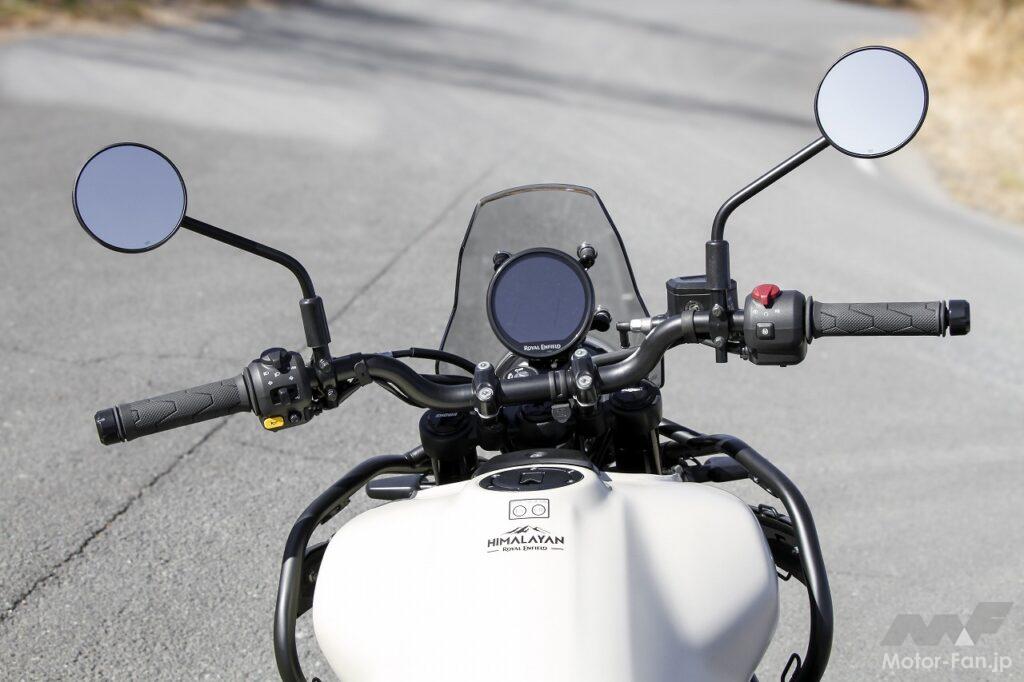
Pipe handlebars with height and width that make them easy to operate from touring to off-road riding
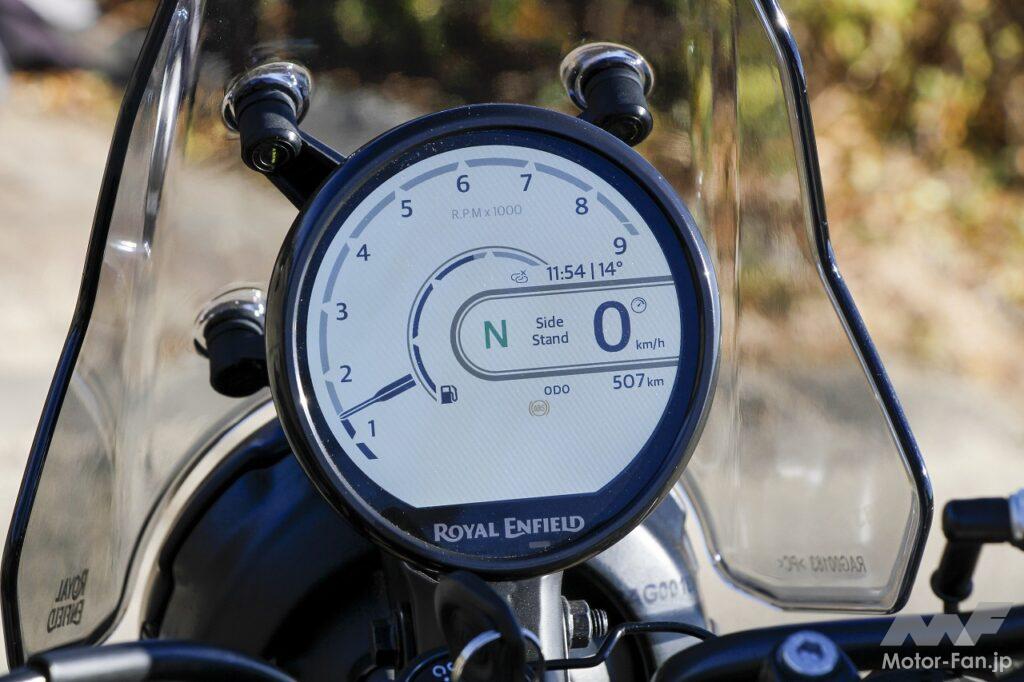
A round TFT meter. If you install the Royal Enfield app on your smartphone and link it to the vehicle, you can display Google Maps navigation.
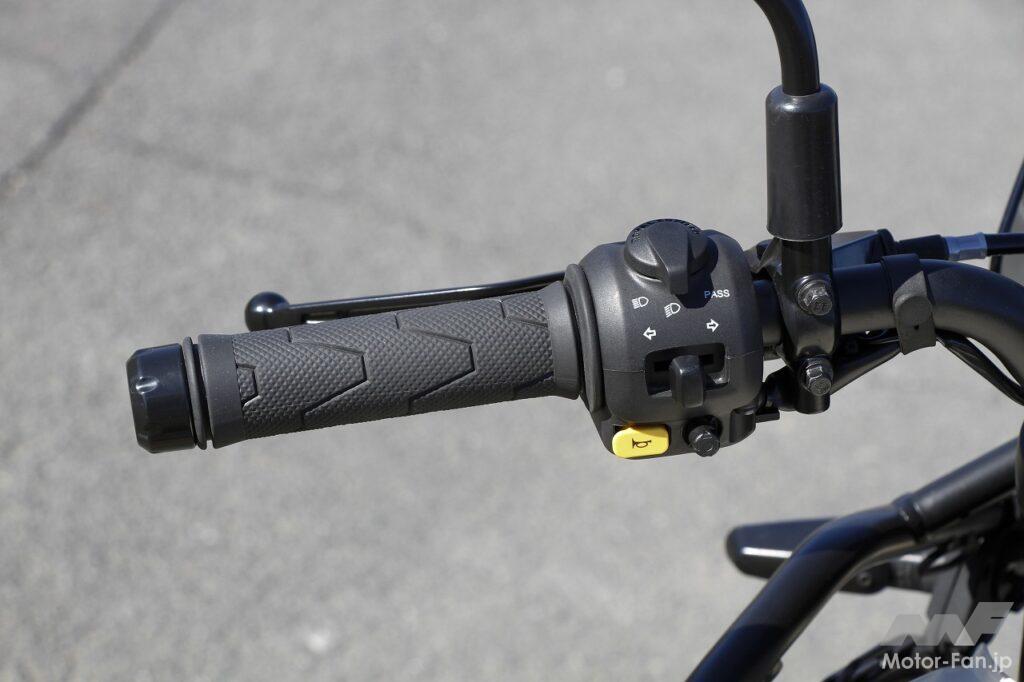
Left switch with joystick for switching the meter screen display
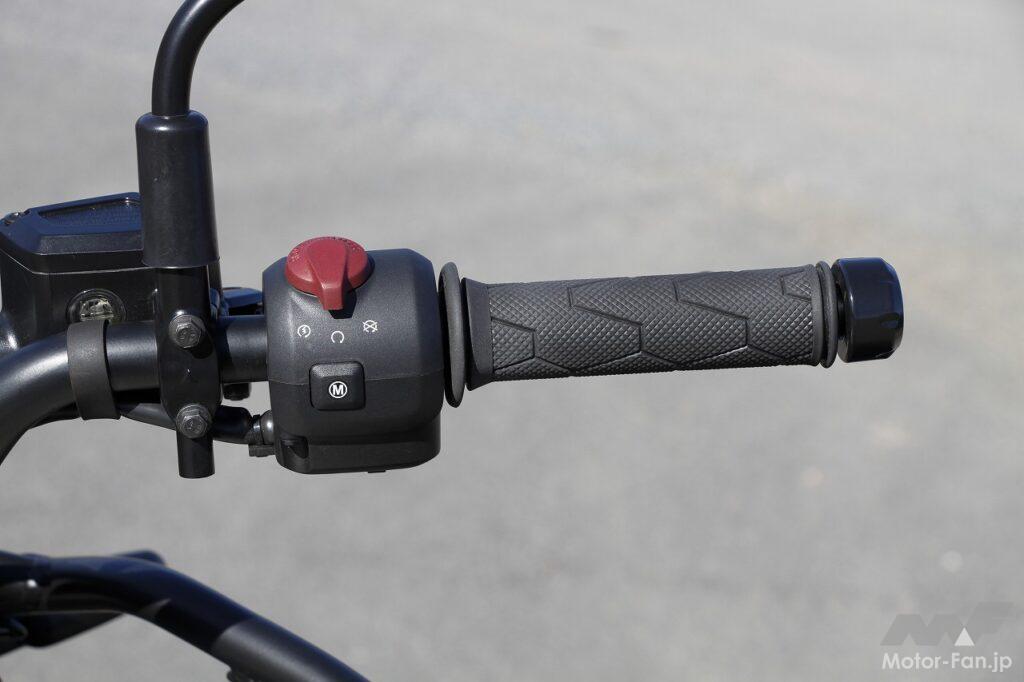
Right switch with riding mode change button
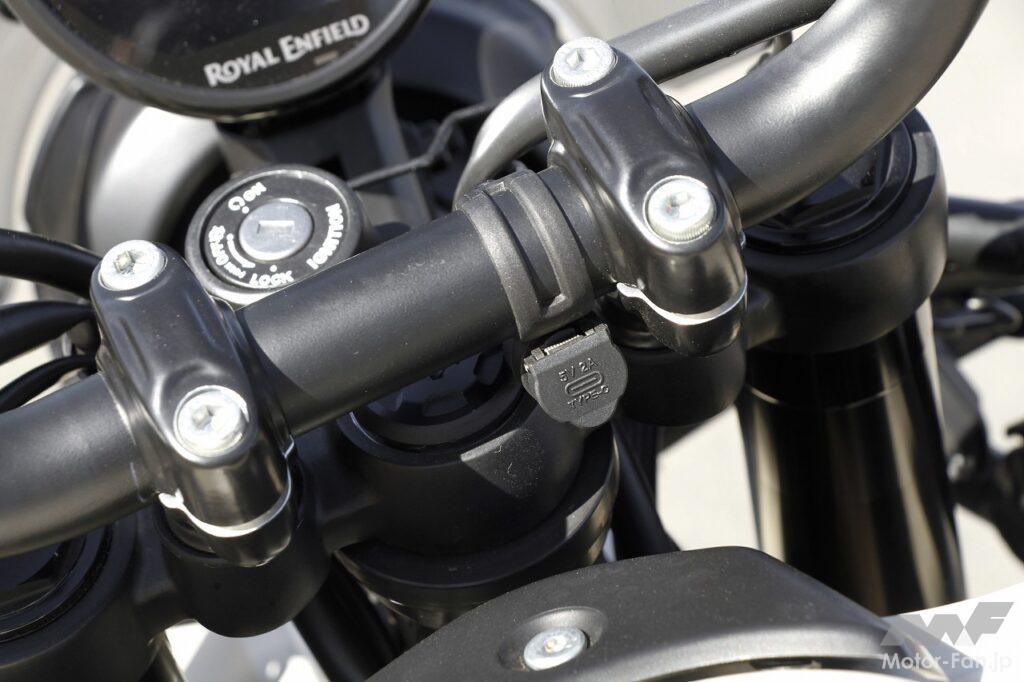
Equipped with a Type C USB power supply, it’s perfect for charging your smartphone.
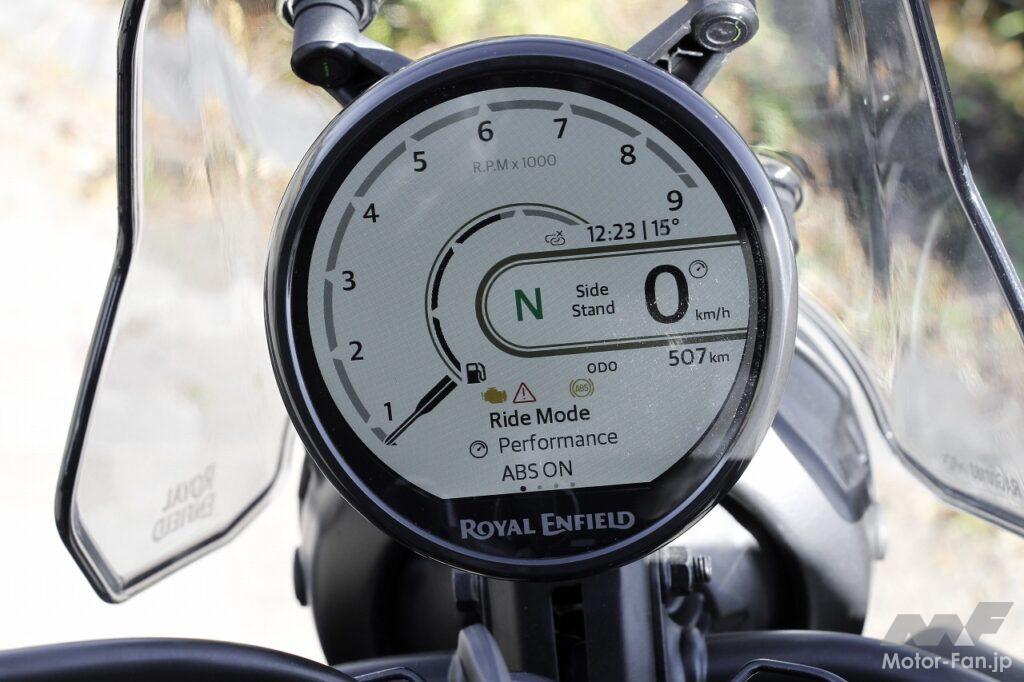
Performance mode + ABS on
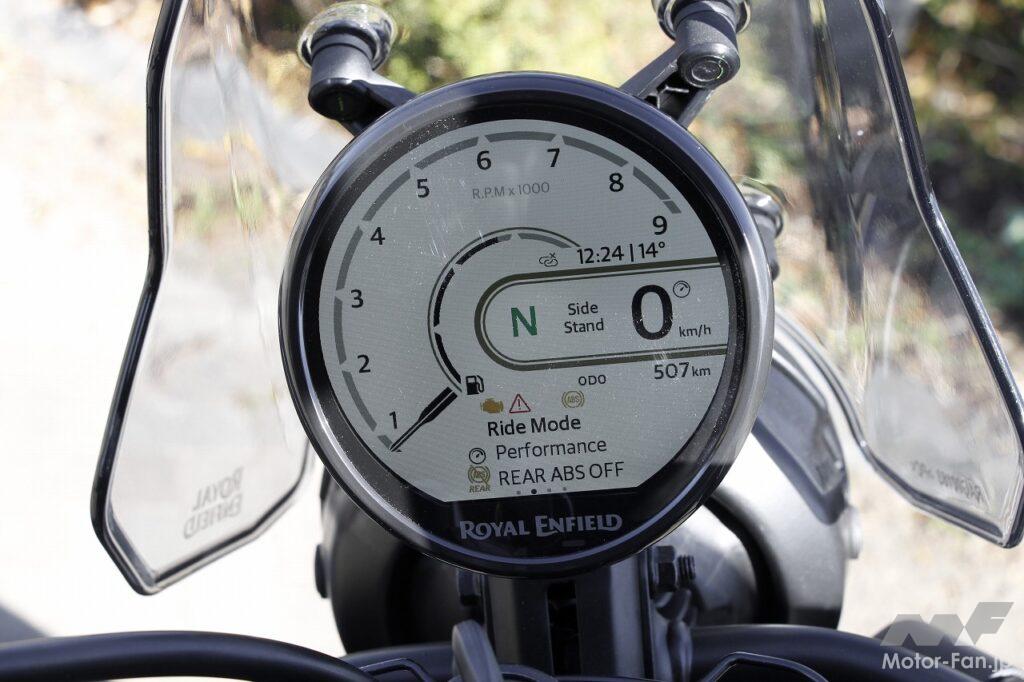
Performance mode + rear ABS off
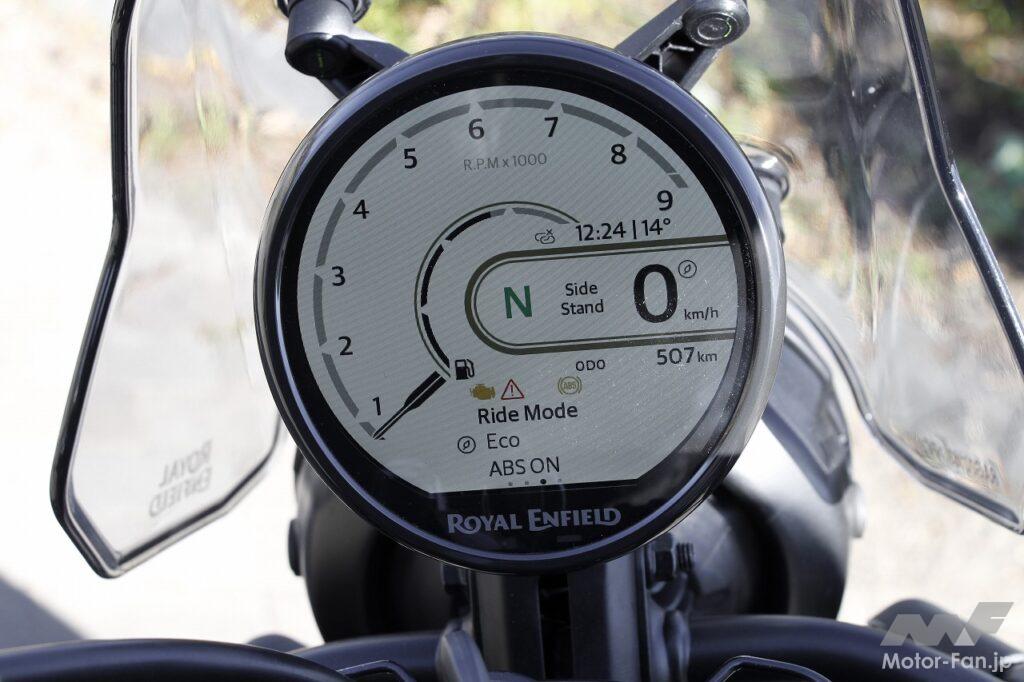
Eco mode + ABS on
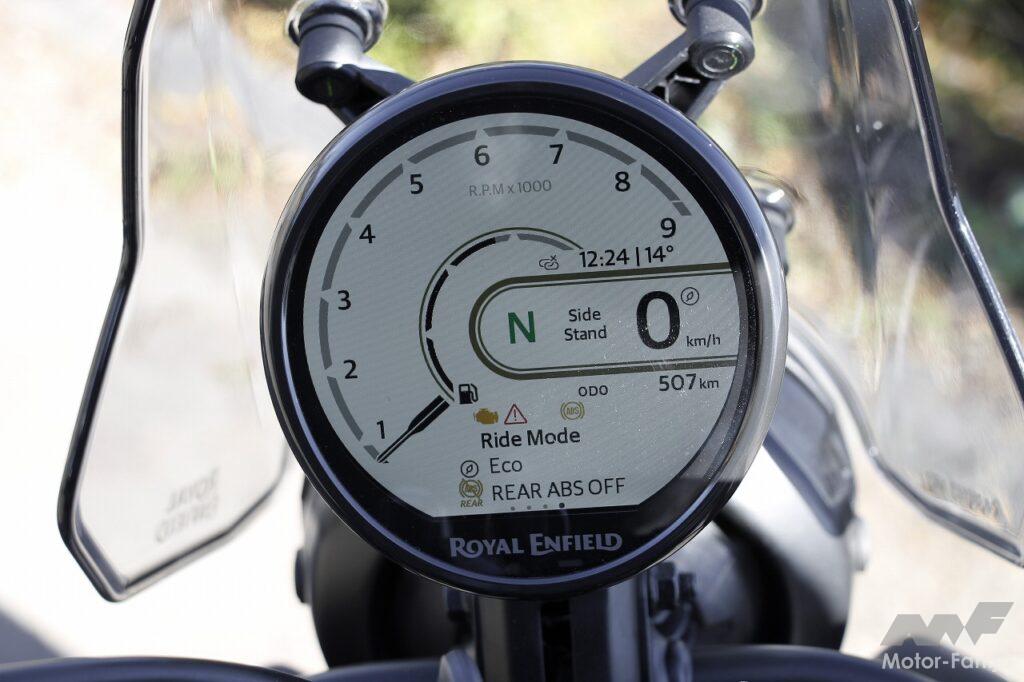
Eco mode + rear ABS off
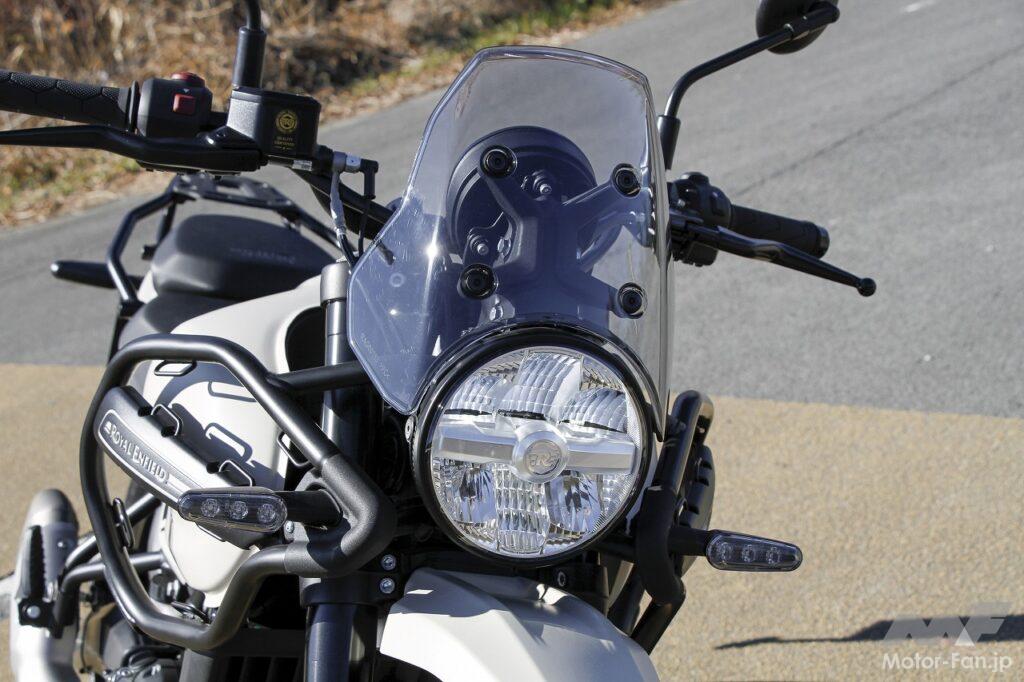
The headlights equipped with a small windscreen are LED
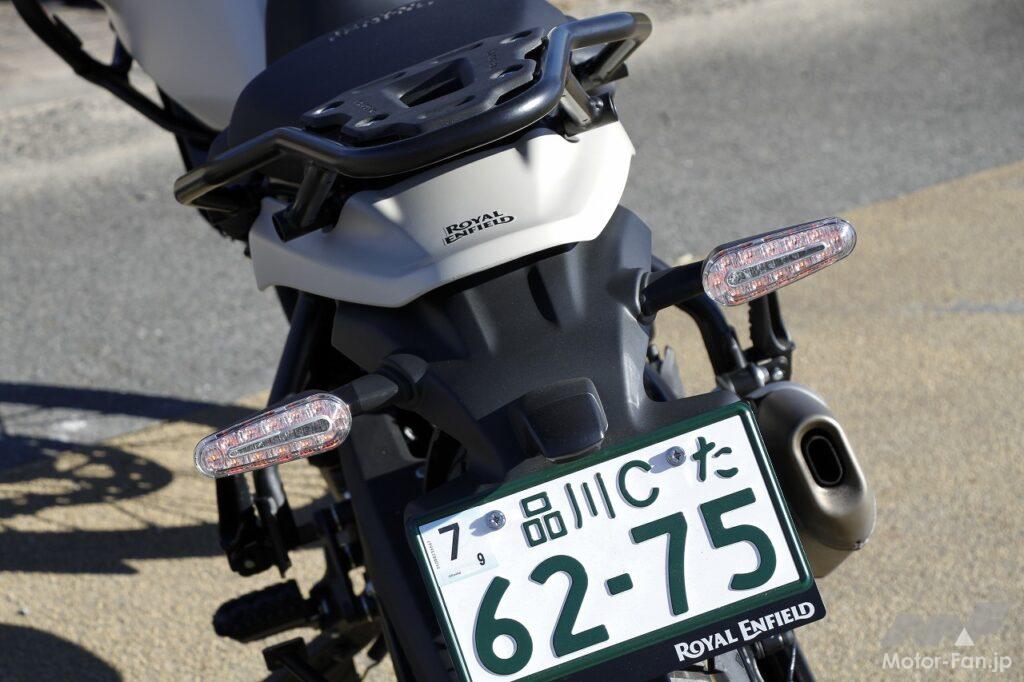
Tail/stop lamps are LED with shared turn signals
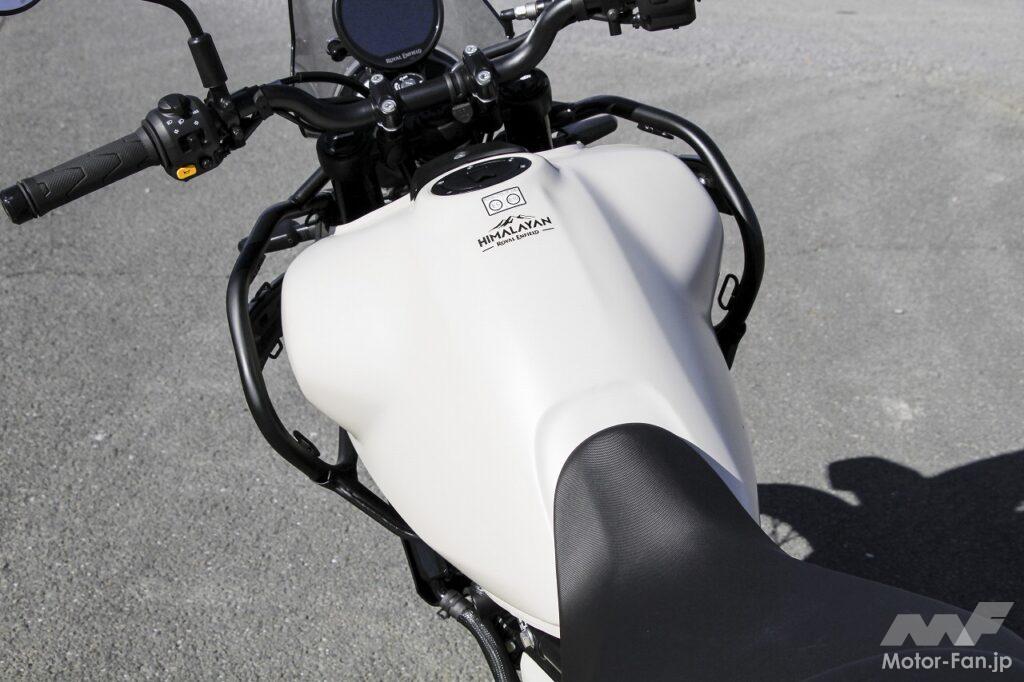
The fuel tank is shaped for easy knee grip and has a capacity of 17L, allowing for a range of approximately 450km when full. The cap is an airplane type that can be opened and closed.
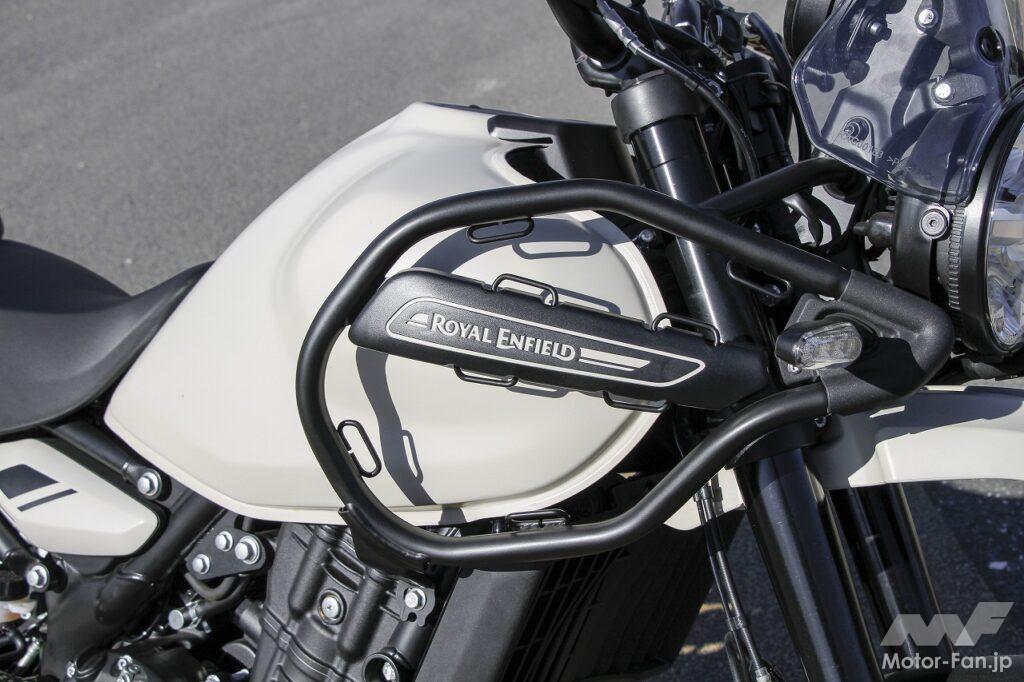
A steel pipe tank guard is included as standard equipment to prevent damage to the fuel tank in the event of a fall.
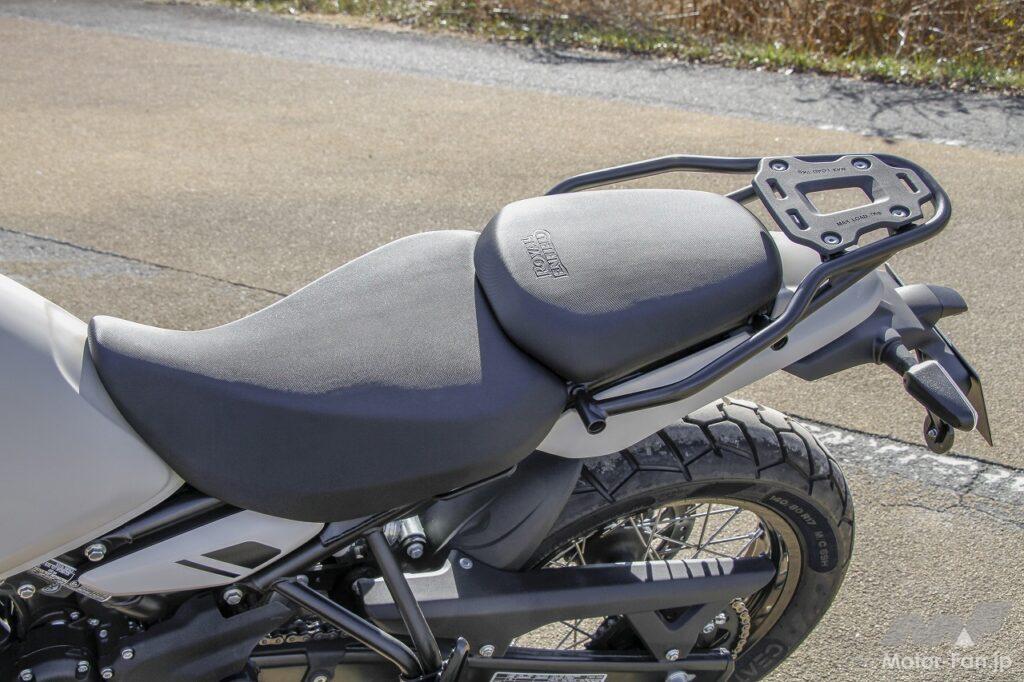
The thick and wide seat provides comfortable support for long touring. The height can be adjusted to two levels. The rear carrier with grab bar also enhances the comfort of touring.
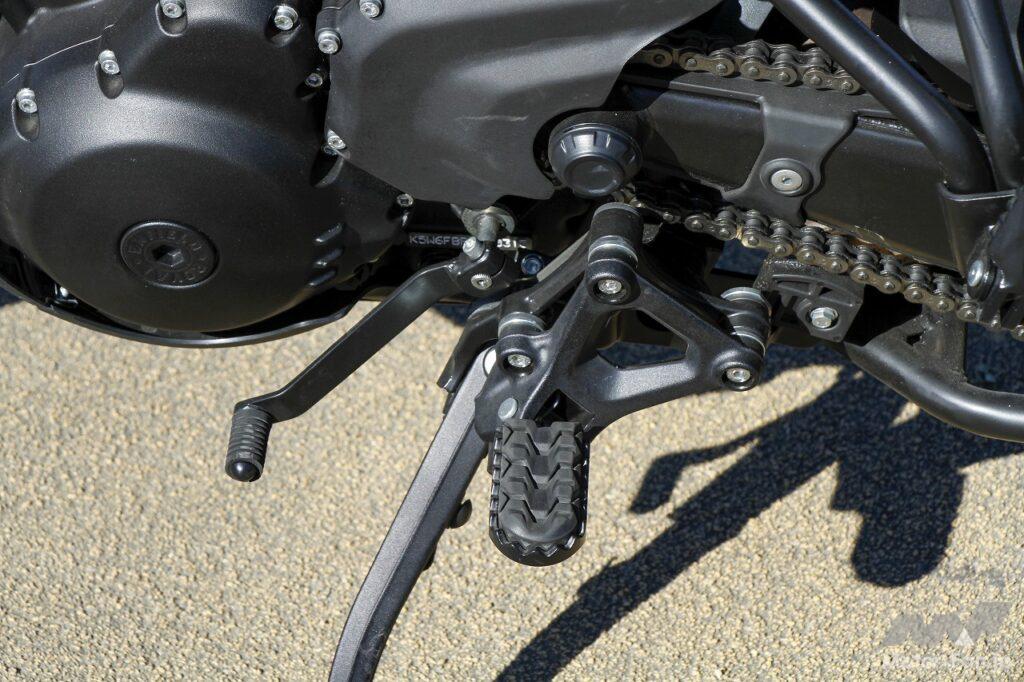
The sturdy side stand is reliable, but you need to be careful where you park the bike as it will lean too far over. The wide footpegs are equipped with rubber. The transmission is a 6-speed.
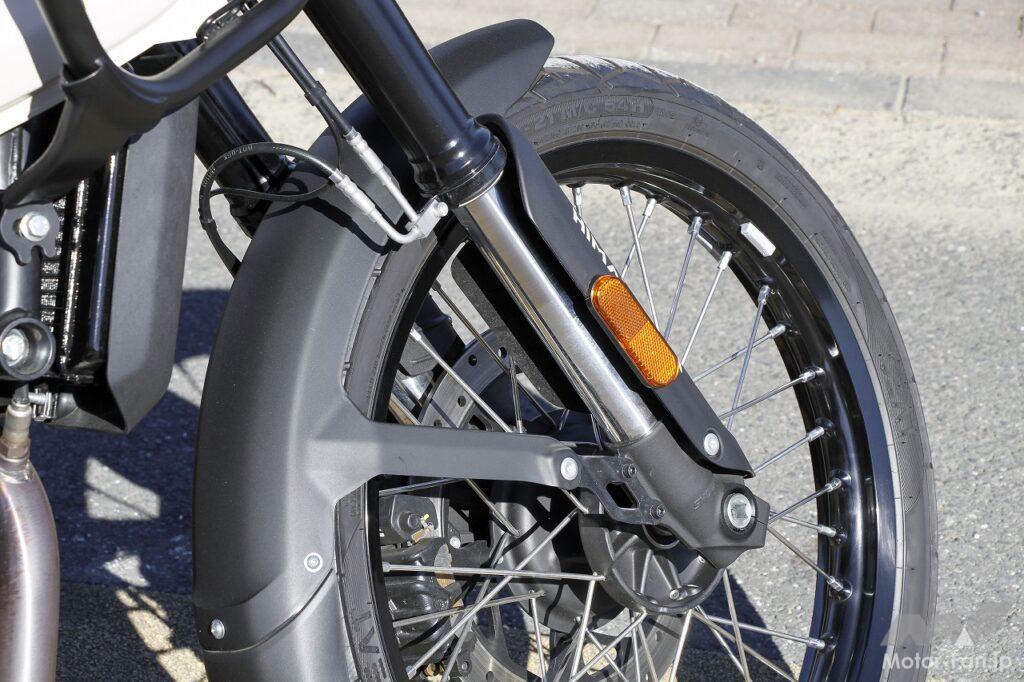
The front suspension uses a Showa cartridge-type inverted fork.
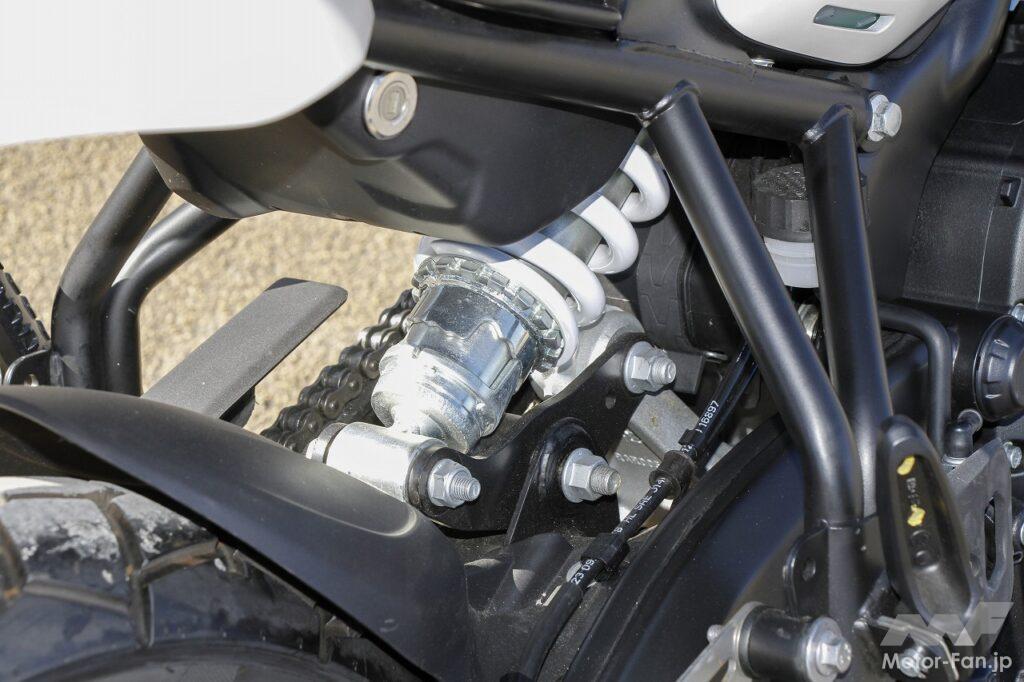
The rear suspension uses a link-type single shock absorber. Preload adjustment is possible.
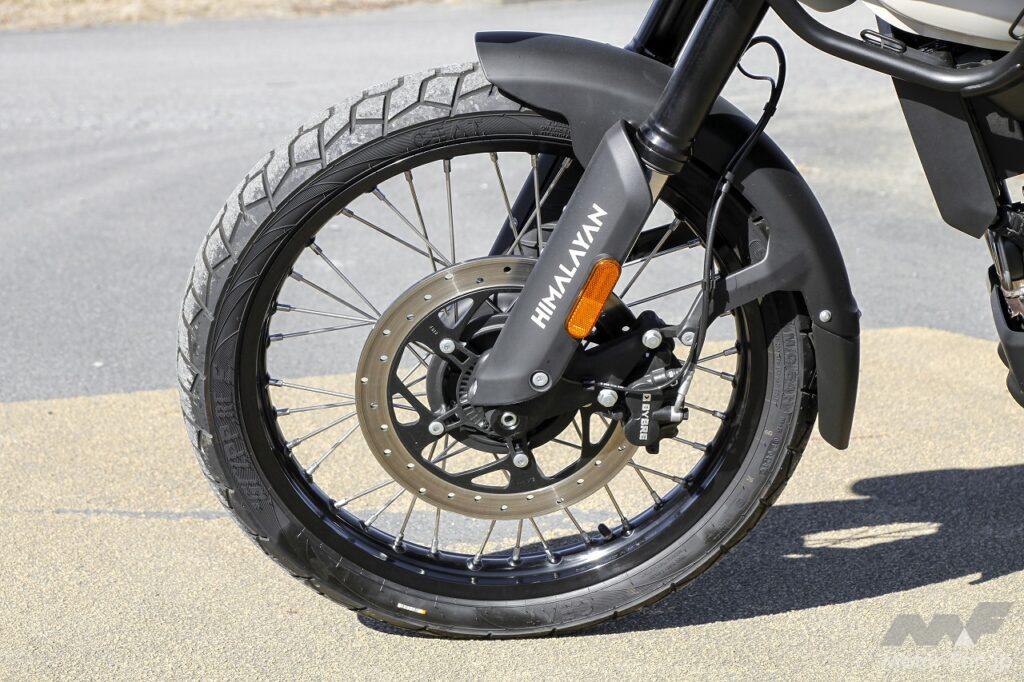
The front brake is a single disc with a Φ320mm rotor and a 2-pot caliper made by Vibra
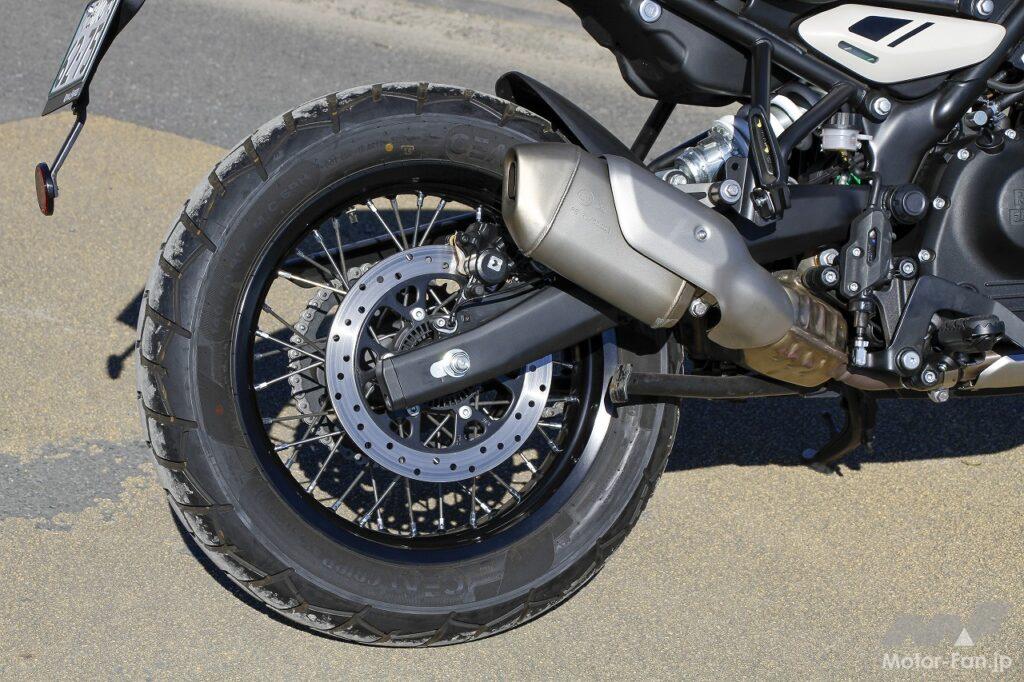
The rear disc brake is also equipped with a BYBRE caliper with a rotor diameter of Φ270mm.
Main specifications
| full length | 2,285mm |
|---|---|
| Overall width | 852mm |
| Overall height | 1,316mm |
| Seat height | 825mm/845mm |
| Passenger capacity | 2 people |
| Engine displacement | 452cc |
| weight | 195kg |
| engine | Water-cooled 4-stroke single cylinder DOHC 4 valve |
| Maximum output | 29.4kW (40ps) / 8000rpm |
| Maximum torque | 40Nm (4.08kgm) / 5500rpm |
| transmission | 6-speed return type |
| Fuel tank | 17L |
| brake | Front = φ320mm disc, Rear = φ270mm disc, both with ABS |
| tire | Front = 90/90-21 Rear = 140/80R17 |
| Other standard equipment | ○ LED headlight ○ Integrated LED taillight and turn signal lights ○ 4-inch round TFT color display, Ride-by-Wire system, Tripper Dash full-map navigation ○ USB (Type-C) charging port ○ Rear rack/top box mounts |
| Country of manufacture | India |