

Suzuki Katana…1,661,000 yen

Like the classic GSX1100S Katana, the modern Katana’s main color is silver, but it is also available in black, matte blue, gray, and more, and a limited edition of 100 red models will be sold in 2021. The test ride vehicle’s Pearl Vigor Blue is a new color that will be used for the first time on the 2025 model.
Six years have passed since its launch, and awareness has changed.
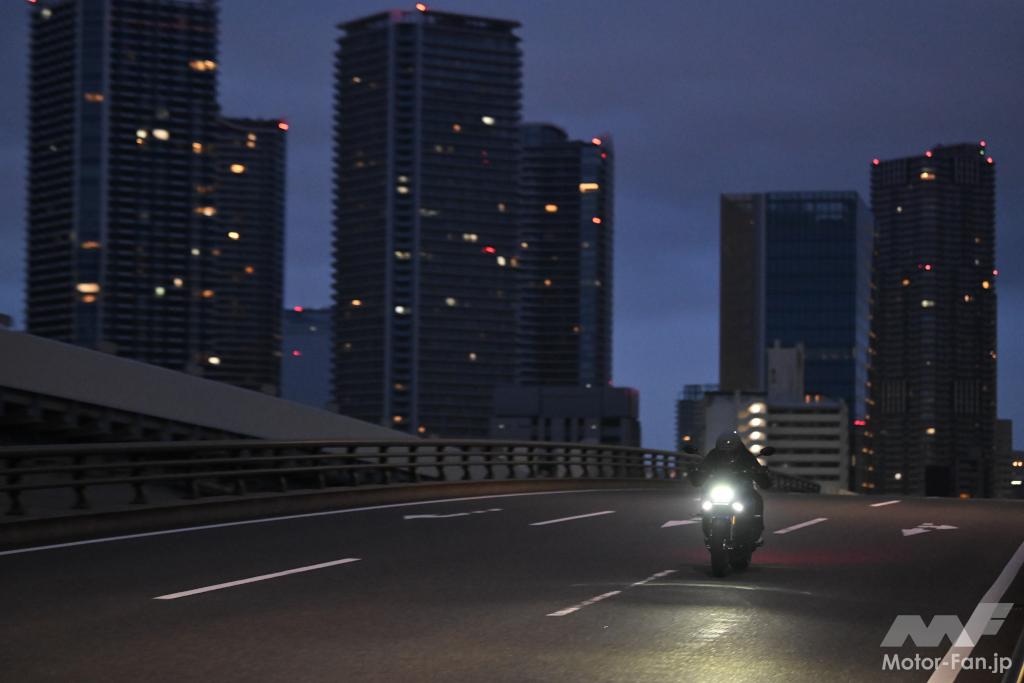
When I first experienced the new generation Katana in 2019, I thought it was quite difficult to evaluate. The ride was interesting, but the looks were similar but not identical to the classic GSX1100S Katana, which didn’t quite click with me personally. Also, the fact that it was about 400,000 yen more expensive than the GSX-S1000 (first released in 2016), which it shared the same development base and basic design with, was something that felt strange to me.

However, now in 2025, after spending some time with the Katana for the first time in a long while, my perception has changed completely. The reasons for this include the fact that about six years have passed since its release, and the desire to compare it with classic models of the past has disappeared, and the price difference with the GSX-S1000 has narrowed to 154,000 yen with the most recent model change, but at this point in time, I’ve begun to feel a desire to write about the appeal of this bike again with a neutral mindset, without being caught up in such factors.
Its roots lie in the supersport GSX-R1000

The distinctive front cowl and tank cover are reminiscent of the classic GSX1100S Katana. The LED headlight is a two-lamp design with position lamps on the left and right sides.
Before we get into the main topic, let’s start with the basic premise: the roots of its siblings, the Katana and GSX-S1000, lie in the supersport GSX-R1000 series, with the in-line four-cylinder engine based on the K5-8 (2005-2008 models) and the truss-structured aluminum swingarm borrowed from the K9-L6 (2009-2016 models).The twin-spar aluminum frame also has a similar structure to the K9-L6, but it appears that the rigidity around the front engine hangar has been intentionally reduced slightly.
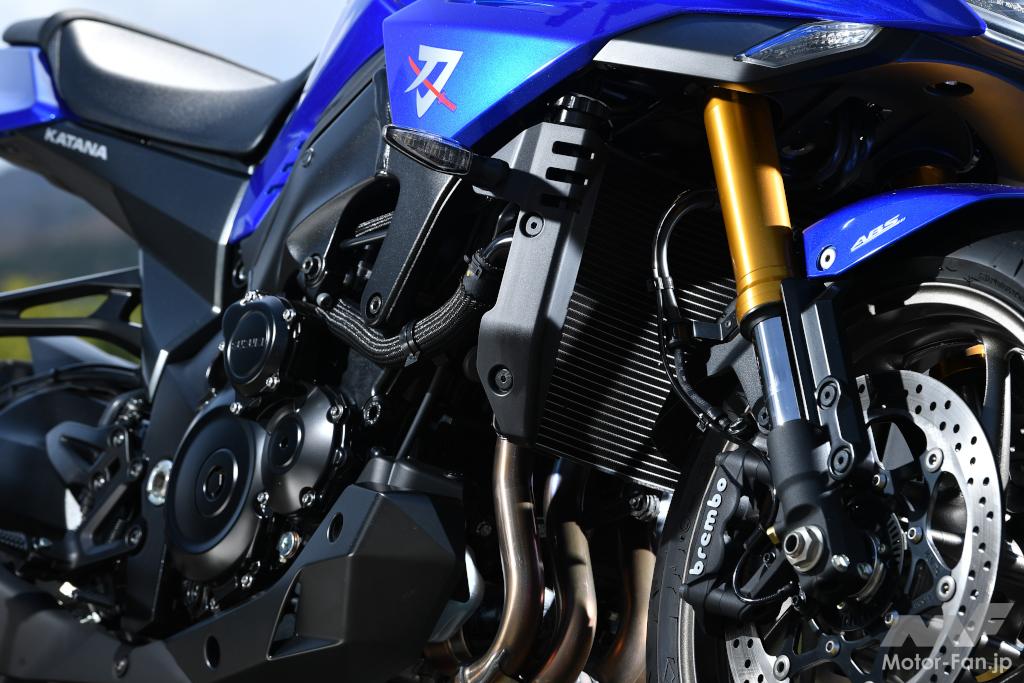
The engine is based on the one used for the GSX-R1000 K5 to K8. Considering the standards for large-displacement four-cylinder engines from 2000 onwards, the dimensions of 73.4 x 59 mm are in line with a long stroke.
When I compared the two bikes with such characteristics in 2019, I got the impression that the Katana was somewhat docile and friendly, while the GSX-S1000 was somewhat aggressive, but with the model changes made in 2021/2022, the positions of the two bikes seem to have been reversed, with the current model Katana being somewhat more aggressive. That said, both bikes, which have their roots in the GSX-R1000, are capable of being all-around vehicles, but if a beginner to large motorcycles were wondering whether to buy a new Katana or a GSX-S1000, I would probably recommend the latter.
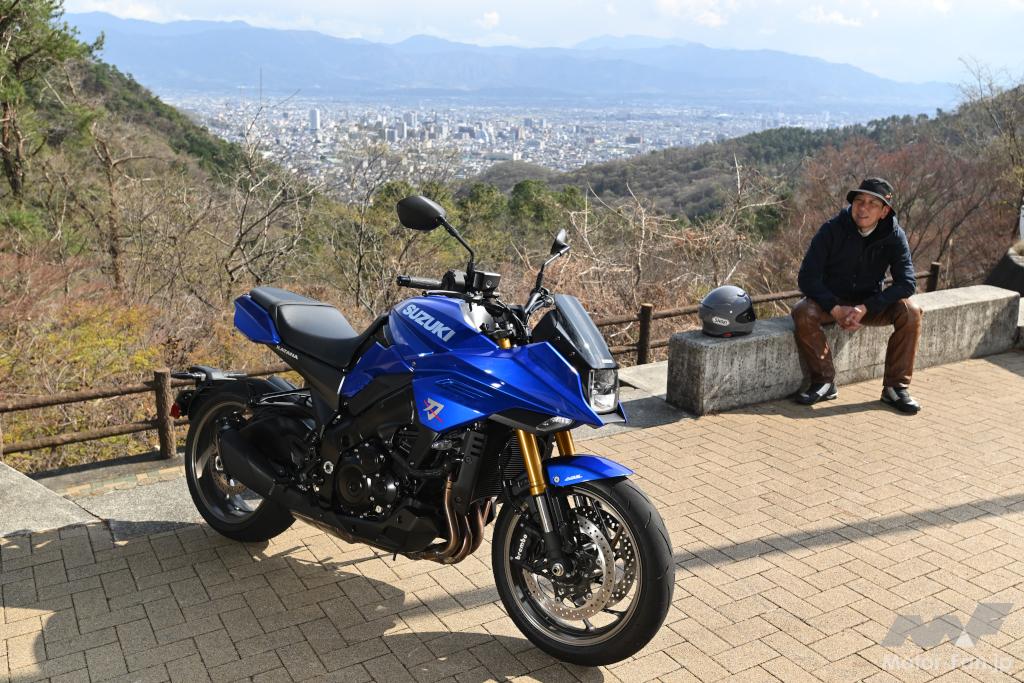
So what kind of rider is the Katana suited to? It would have to be someone who likes sports riding. Of course, everyone has their own ideas about sports riding, and the GSX-S1000 is also great for sports riding, but when you ride the Katana on a winding road, you get the feeling that it has unique qualities that no other similar vehicle has.
A riding position different from that of its sister models and rivals

Riding the Katana on various winding roads, what impressed me most was its nimble handling. However, its weight of 215 kg is the same as that of the Honda CB1000 Hornet and Yamaha MT-10, and there are European-made 4-cylinder sports naked bikes that are even lighter, but the feeling reminiscent of a supermotard, and the ability to easily handle corners big and small, is a unique beauty of the Katana.
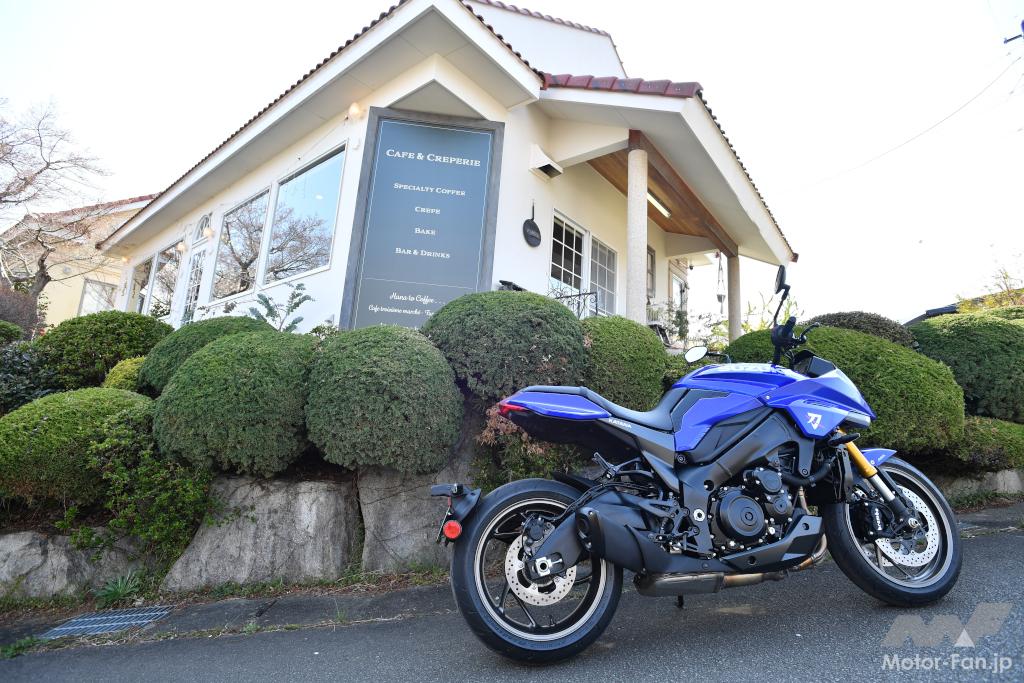
The main reason for this riding style is the riding position. This is easier to understand when comparing it with its sibling, the GSX-S1000, but compared to the standards of modern sports naked bikes, the Katana’s seating position is forward and the handlebar grip position is high. So when I test rode it for the first time in a while, I initially felt a bit uneasy, and it sometimes felt uncomfortable at ultra-high speeds, but this bike is incredibly fun to ride on prefectural roads, paved forest roads, and cramped roads with poor visibility and poor pavement that can be found all over Japan.
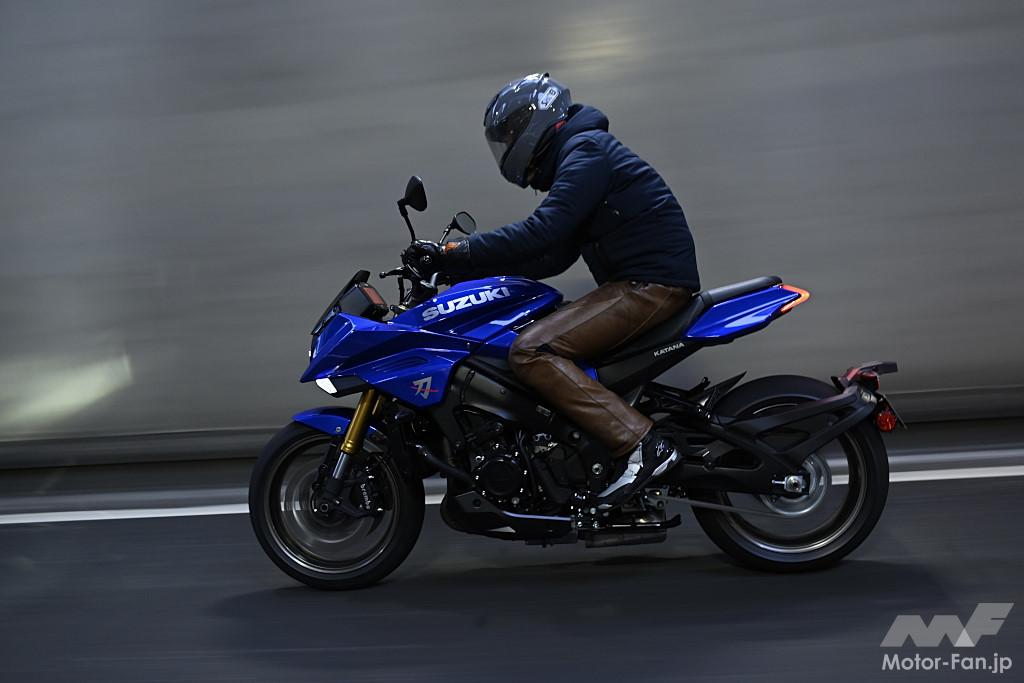
Of course, contributing to this feeling must be the front and rear suspension, which prioritizes maneuverability over comfort, the frame, which is rigid enough but doesn’t feel stiff, and the engine, which responds faithfully at any RPM range.However, the Katana’s nimble handling cannot be discussed without mentioning its riding position, which is different from that of its sibling models and rivals.
Isn’t it neoclassical?
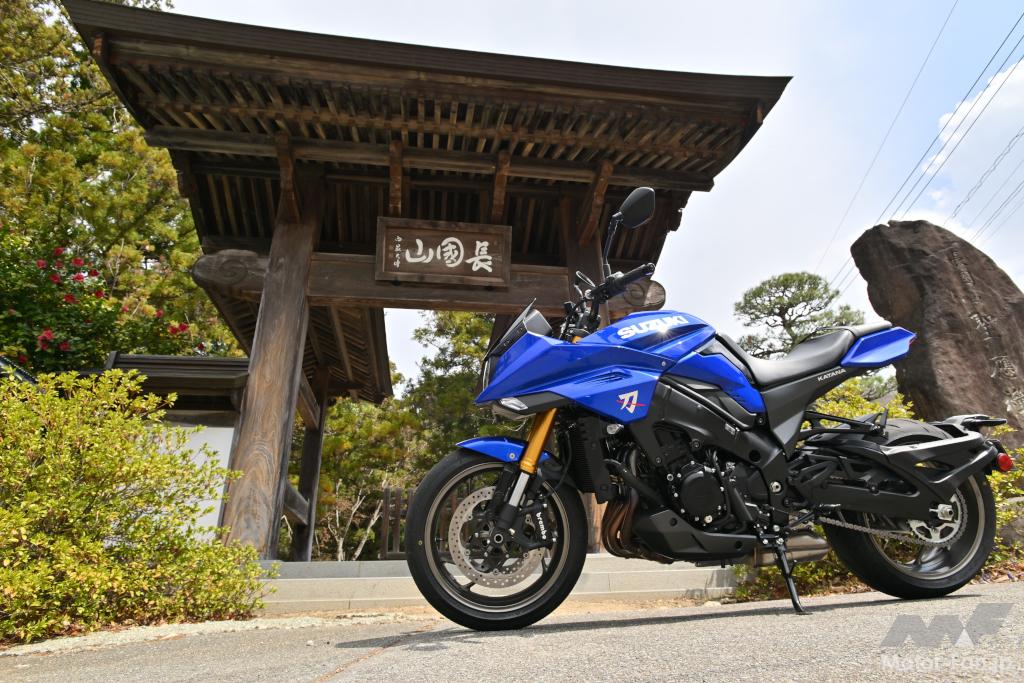
Well, I’ve ended up emphasizing the riding position, but this test ride made me realize once again that this model is a modern sports naked bike that repurposes supersport technology. Some people might argue that I’m stating the obvious now, but even though it bears the name of a classic bike from the past and incorporates a GSX1100S Katana-like atmosphere in some of its exterior, the Katana’s riding feel is not neo-classical.
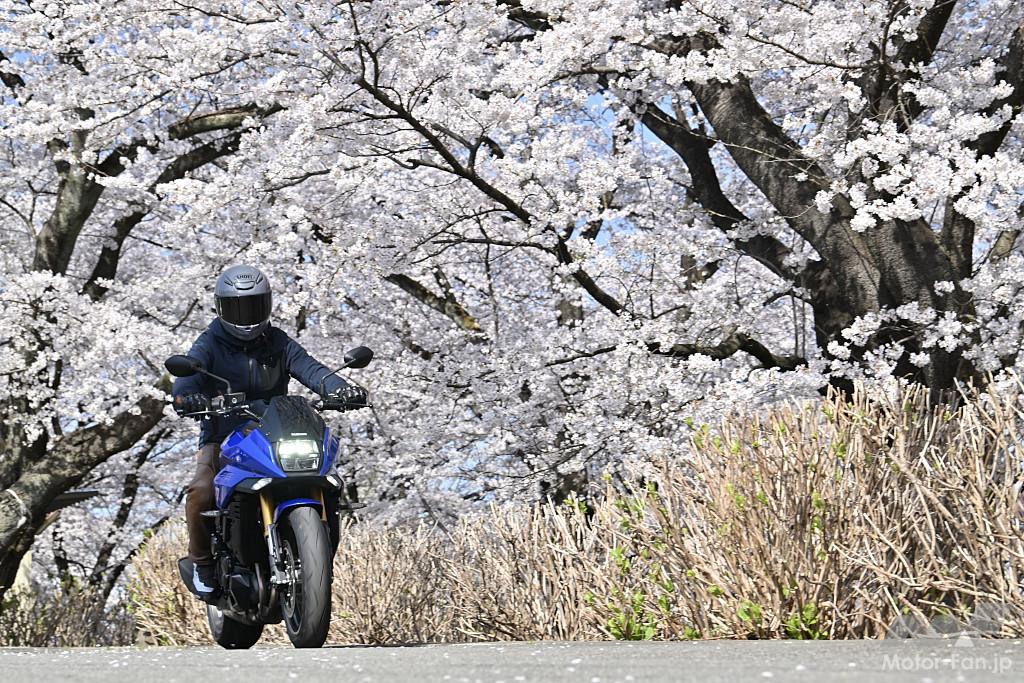
By the way, when I normally ride sports naked bikes that have the same origins as the Katana and were born by reusing the technology of super sports bikes, I often feel that various parts have been detuned and that the development base is more attractive, but I didn’t feel that way during the test ride of the Katana.
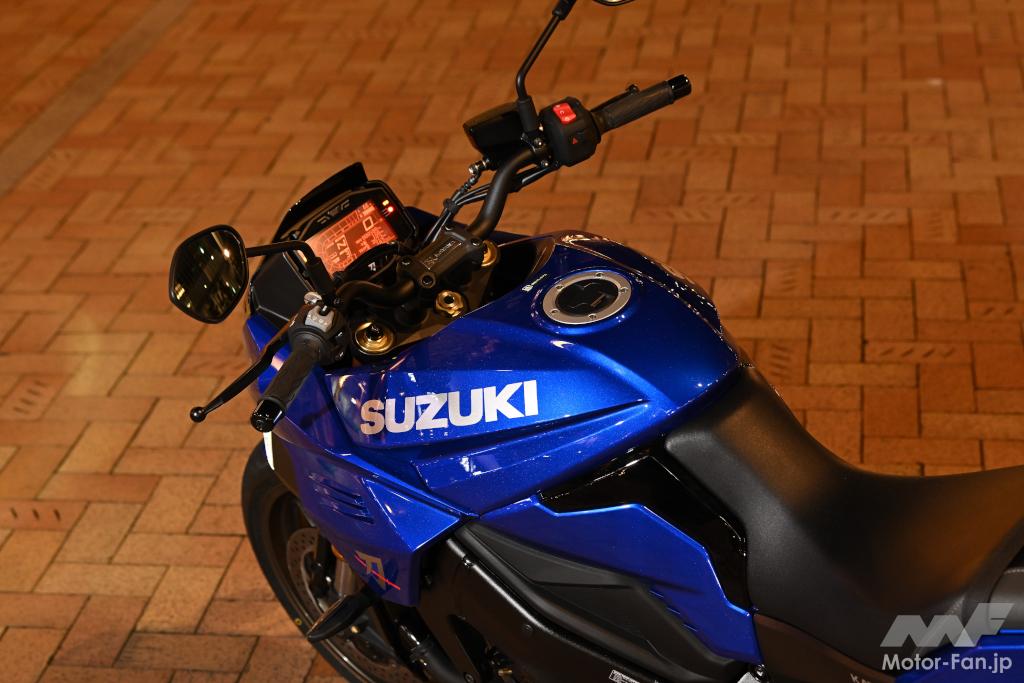
The reason is that it has a different stance from its sibling, the GSX-S1000, and is designed to be a sporty ride that is primarily aimed at the street. That said, compared to the GSX-R1000 series that it is based on, the maximum power output is lower, the weight is heavier, and there is a slight sense of underperformance in the suspension, but that doesn’t mean that the Katana is any less fun to ride than the GSX-R1000.
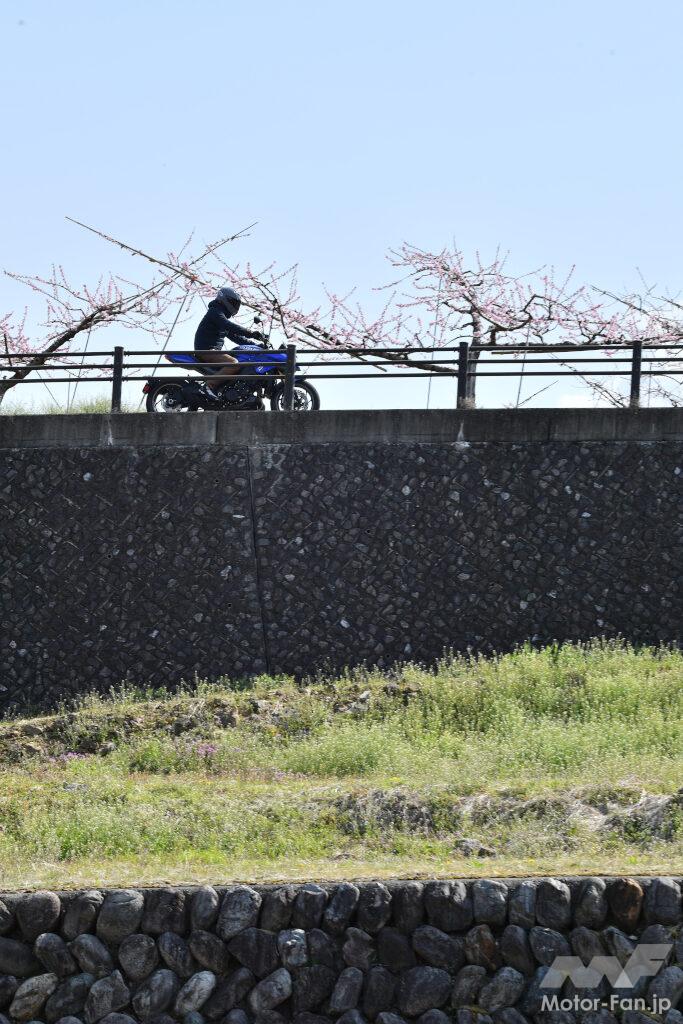
However, when it comes to actually buying a Katana, the deciding factor is its sibling model. As mentioned above, the GSX-S1000, with its orthodox ride feel and low seat (810mm, 15mm lower than the Katana), would likely be more suitable for beginners to large motorcycles, while for long-distance riding the full-cowl version GSX-S1000GT or the GSX-S1000GX, equipped with semi-active suspension, would be more comfortable. Having said that, having had a good impression after riding the approximately 1000km on this test ride, I feel like I want to promote the Katana’s unique appeal to the world. That’s why I’d like to provide even more in-depth information in the second part, which will be published soon.
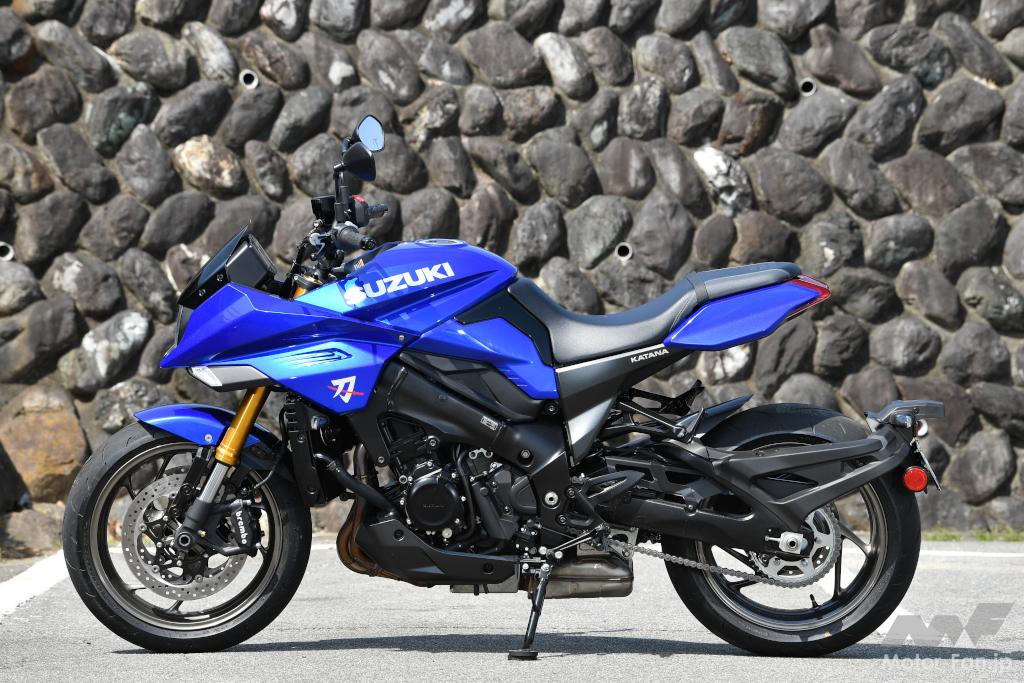
The important factors that determine handling stability are caster angle: 25 degrees, trail: 100mm, and wheelbase: 1460mm, which are the same as its sister model, the GSX-S1000. However, the seat height is 825mm for the Katana and 810mm for the GSX-S1000, and the overall width and height, which indicate the handlebar shape, are 820mm and 1100mm for the Katana and 810mm and 1080mm for the GSX-S1000.
ADVERTISEMENT
 I drove the Honda NX400 1,800 km → It was perfectly suited to Japan’s road conditions. | 1,000 km serious test drive [1/3]
The NX400 is the younger brother of the CRF1100L Africa Twin and XL750 Transalp. That’s the image many people have of it. However, this model, which has been optimized for the Japanese market, has qualities that surpass its older brothers, depending on how you look at it. REPORT: Nakamura Tomohiko PHOTO: Togashi Hideaki
 Conclusion after a 1000km test drive: “Even though the maximum power output has decreased, the Suzuki SV650 is still a solid choice” | 1000km serious test drive part 1/3
 Ever since I was impressed by the first SV that appeared in 1998, Suzuki’s mid-range V-twin series has been a big favorite of mine. This feeling hasn’t changed even after riding the 2022 model, which has slightly reduced maximum power and torque to comply with the Euro 5 regulations. REPORT: Nakamura Tomohiko PHOTO: Togashi Hideaki
Main specifications
Model: KATANA
Model: 8BL-EK1AA
Length x Width x Height: 2130mm x 820mm x 1100mm
Wheelbase: 1460mm
Ground Clearance: 140mm
Seat Height: 825mm
Caster/Trail: 25°/100mm
Engine Type: Water-cooled 4-stroke in-line 4-cylinder
Valve Type: DOHC 4-valve
Total Displacement: 998cc
Bore x Stroke: 73.4mm x 59.0mm
Compression Ratio: 12.2
Maximum Power: 110kW (150ps) / 11000rpm
Maximum Torque: 105N・m (10.7kgf・m) / 9250rpm
Starting Method: Self-starter
Ignition Method: Full Transistor
Lubrication Method: Wet Sump
Fuel Supply Method: Fuel Injection
Transmission Type: Constant Mesh 6-speed Return
Clutch Type: Wet Multi-plate Coil Spring
Gear Ratio
1st: 2.562,
2nd: 2.052
3rd gear: 1.714
4th gear: 1.500
5th gear: 1.360
6th gear: 1.269
1st and 2nd reduction ratios: 1.533 and 2.588
Frame type: Diamond (aluminum twin spar)
Front suspension: Telescopic inverted type φ43mm
Rear suspension: Bottom link mono shock
Front tire size: 120/70ZR17 Rear
tire size: 190/50ZR17
Front brake type: Hydraulic double disc
Rear brake type: Hydraulic single disc
Vehicle weight: 215kg
Fuel used: Unleaded high-octane gasoline
Fuel tank capacity: 12L
Passenger capacity: 2 people
Fuel consumption rate (Ministry of Land, Infrastructure, Transport and Tourism notification value): 21.2km/L (with 2 passengers)
Fuel consumption rate (WMTC mode value, class 3): 16.2km/L (with 1 passenger)