
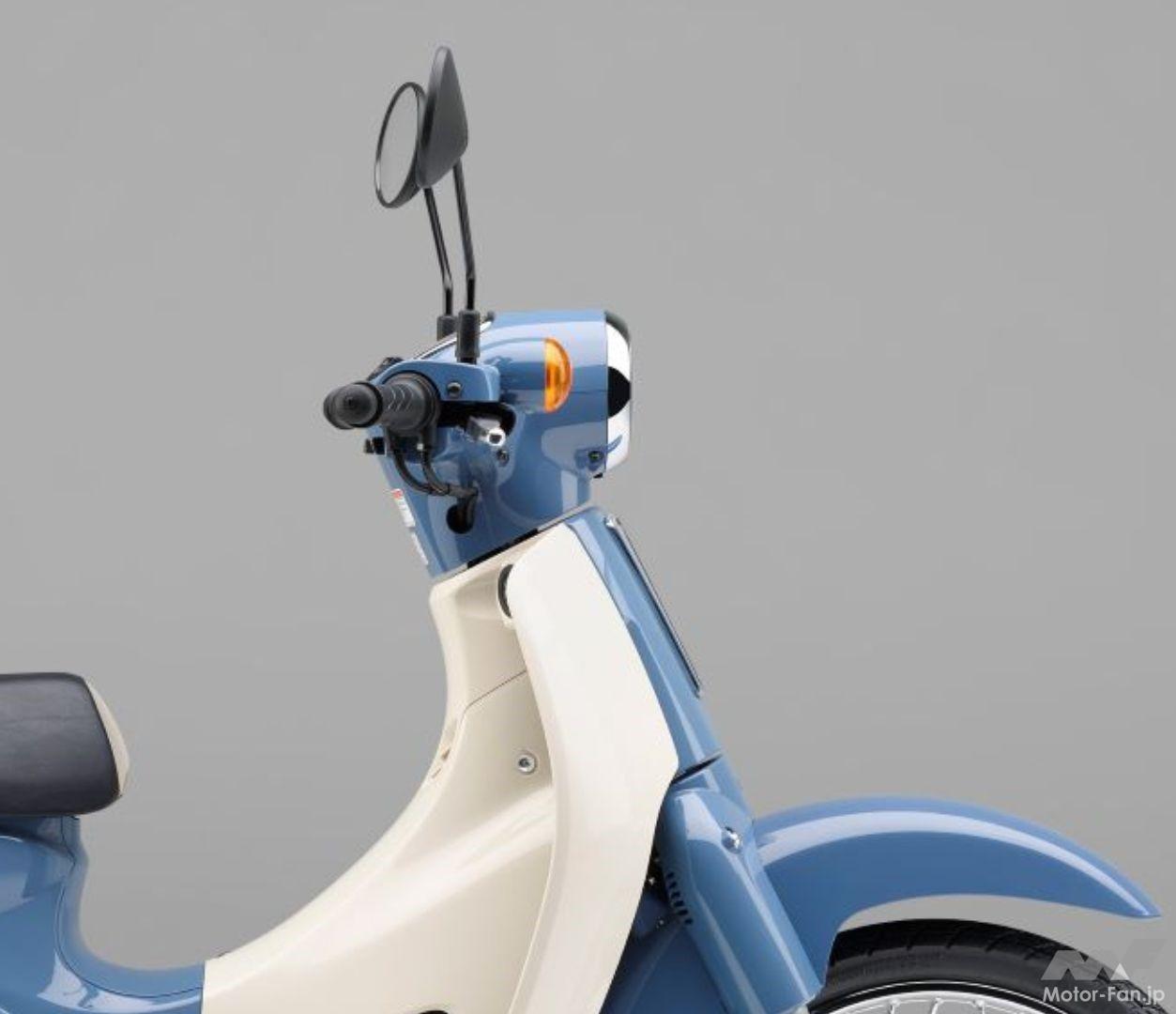
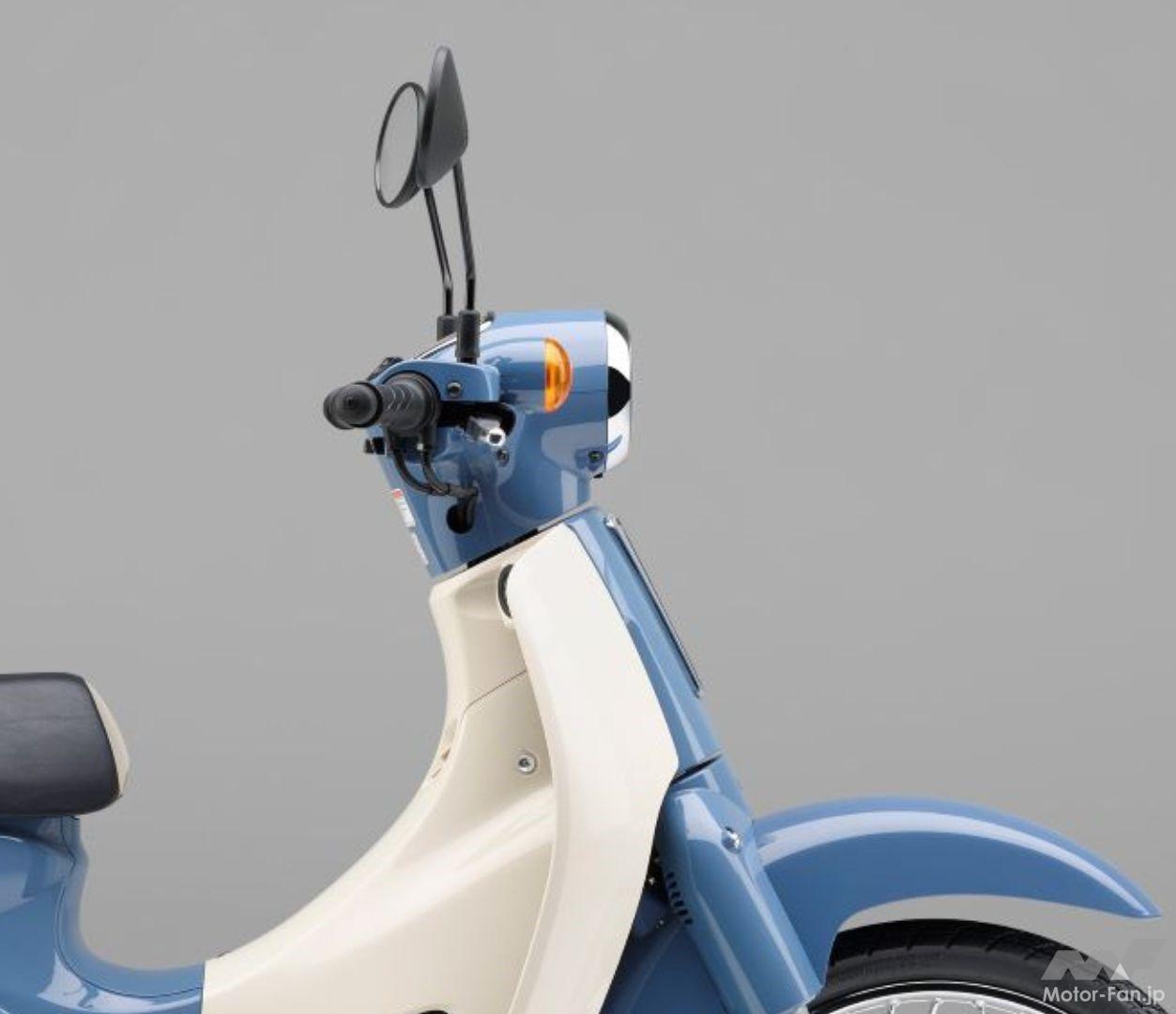
The Super Cub 50 Final Edition features a familiar “Bonnie Blue” color scheme reminiscent of the Super Cub of yesteryear.
The front emblem, side emblem, and ignition key feature a special design, while the rear carrier, chain case, and swingarm feature the same Bonnie Blue color as the body.
Furthermore, the meter rim and muffler cover are chrome-plated, and the two-tone seat features gray front and rear sections for a special touch. Since its launch in 1958 with the original “Super Cub C100,” the Super Cub 50 has been praised for its ease of use, including its fuel-efficient, quiet, reliable, and durable four-stroke engine, its low-floor backbone frame for easy access, and its automatic centrifugal clutch that eliminates clutch operation. While production of the current Super Cub 50, equipped with a 49cm3 engine, will end with this model, production of the Super Cub 110, a two-motorized scooter, will continue.
The Super Cub series will continue to be a long-selling model loved by a wide range of customers, and will continue to offer ideas that enrich the lives of customers.
*1 The order period is from Friday, November 8, 2024 to Sunday, November 24, 2024.
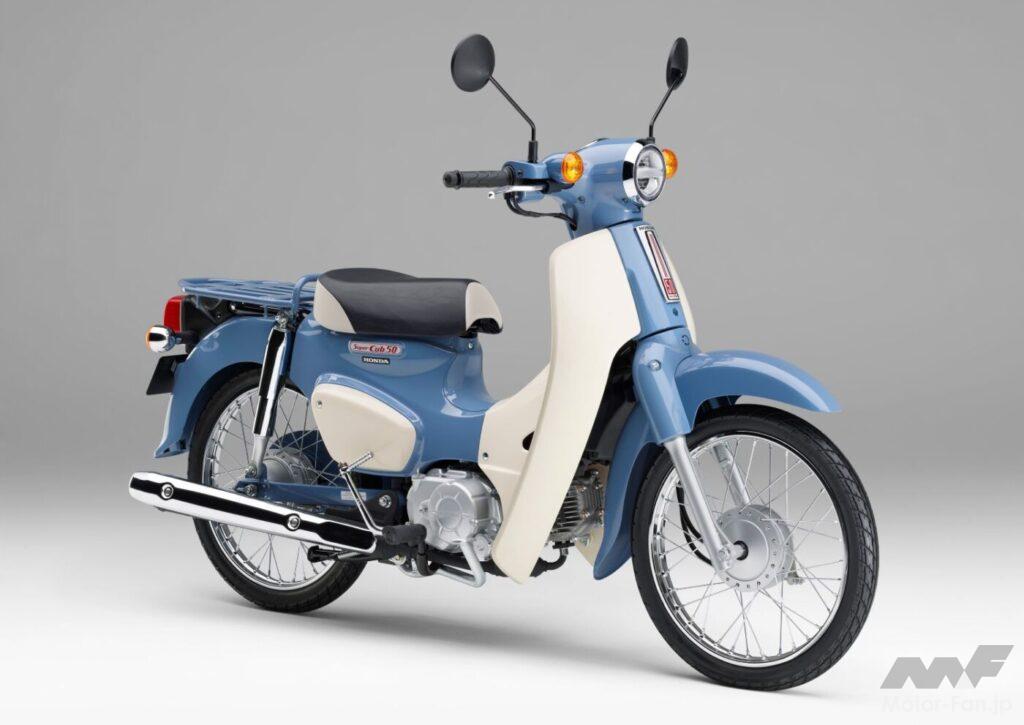
Honda Super Cub 50 Final Edition
ADVERTISEMENT
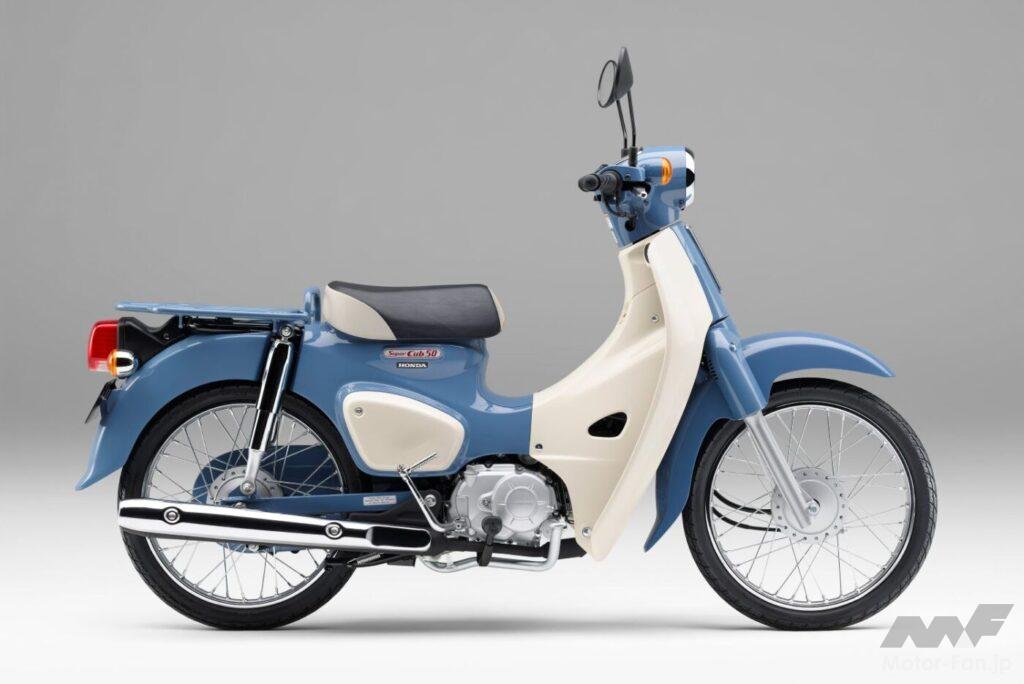
Honda Super Cub 50 Final Edition
Sales plan (domestic, annual)
2000 units
Manufacturer’s suggested retail price (including 10% consumption tax)
297,000 yen (base price 270,000 yen excluding consumption tax)
*Prices (including recycling costs) do not include insurance, taxes (excluding consumption tax), registration fees, etc.
Main specifications
| Nickname | Super Cub 50 | |
| Car name and model | Honda 2BH-AA09 | |
| Overall length x overall width x overall height (mm) | 1,860×695×1,040 | |
| Wheelbase (mm) | 1,210 | |
| Minimum ground clearance (mm)★ | 135 | |
| Seat height (mm)★ | 735 | |
| Vehicle weight (kg) | 96 | |
| Passenger capacity (people) | 1 | |
| Minimum turning radius (m) | 1.9 | |
| Engine model and type | AA04E, air-cooled, 4-stroke, OHC, single cylinder | |
| Total displacement (cm 3 ) | 49 | |
| Inner diameter x stroke (mm) | 37.8×44.0 | |
| Compression ratio★ | 10.0 | |
| Maximum output (kW[PS]/rpm) | 2.7[3.7]/7,500 | |
| Maximum torque (N・m [kgf・m]/rpm) | 3.8[0.39]/5,500 | |
| Fuel consumption rate *2 (km/L) | Ministry of Land, Infrastructure, Transport and Tourism reported fuel consumption value *3 (km/h) | 105.0 (30) <When one person is riding> |
| WMTC mode value ★ (class) *4 | 69.4 (Class 1) <1 passenger> | |
| Fuel supply device type | Electronic type (Electronically controlled fuel injection system (PGM-FI)) | |
| Starting method★ | Self-service (kick-start available) | |
| Ignition system type★ | Fully transistorized battery ignition | |
| Lubrication method★ | Combined pressure-fed droplet type | |
| Fuel tank capacity (L) | 4.3 | |
| Clutch type★ | Wet multi-plate diaphragm spring type | |
| Transmission type | Constant meshing 4-stage return *5 | |
| gear ratio | 1st gear | 3.181 |
| 2nd speed | 1.705 | |
| 3-speed | 1.190 | |
| 4-speed | 0.916 | |
| Reduction ratio (1st★/2nd) | 4.058/3.538 | |
| Caster angle (degrees)★/Trail (mm)★ | 26°30´/72 | |
| tire | before | 60/100-17M/C 33P |
| rear | 60/100-17M/C 33P | |
| Brake type | before | Mechanical Reading |
| rear | Trailing | |
| Suspension method | before | Telescopic type |
| rear | Swing arm type | |
| Frame Format | backbone | |
Type approval application figures according to the Road Transport Vehicle Act (Items marked with an asterisk are Honda published specifications)
Manufacturer: Honda Motor Co., Ltd.
(※2) Fuel consumption rate is the value under specified test conditions. It varies depending on various conditions such as the customer’s usage environment (weather, traffic congestion, etc.), driving method, vehicle condition (equipment, specifications), and maintenance status.
(※3) The constant fuel consumption value is the fuel consumption rate based on actual measurements when driving at a constant vehicle speed
. (※4) The WMTC mode value is a calculated value based on the exhaust gas test results measured in a driving mode that is an international standard, including starting, accelerating, and stopping. Driving mode classes are classified according to engine displacement and maximum speed.
(※5) It is a change mechanism that is return type when driving and becomes rotary type only when stopped.