
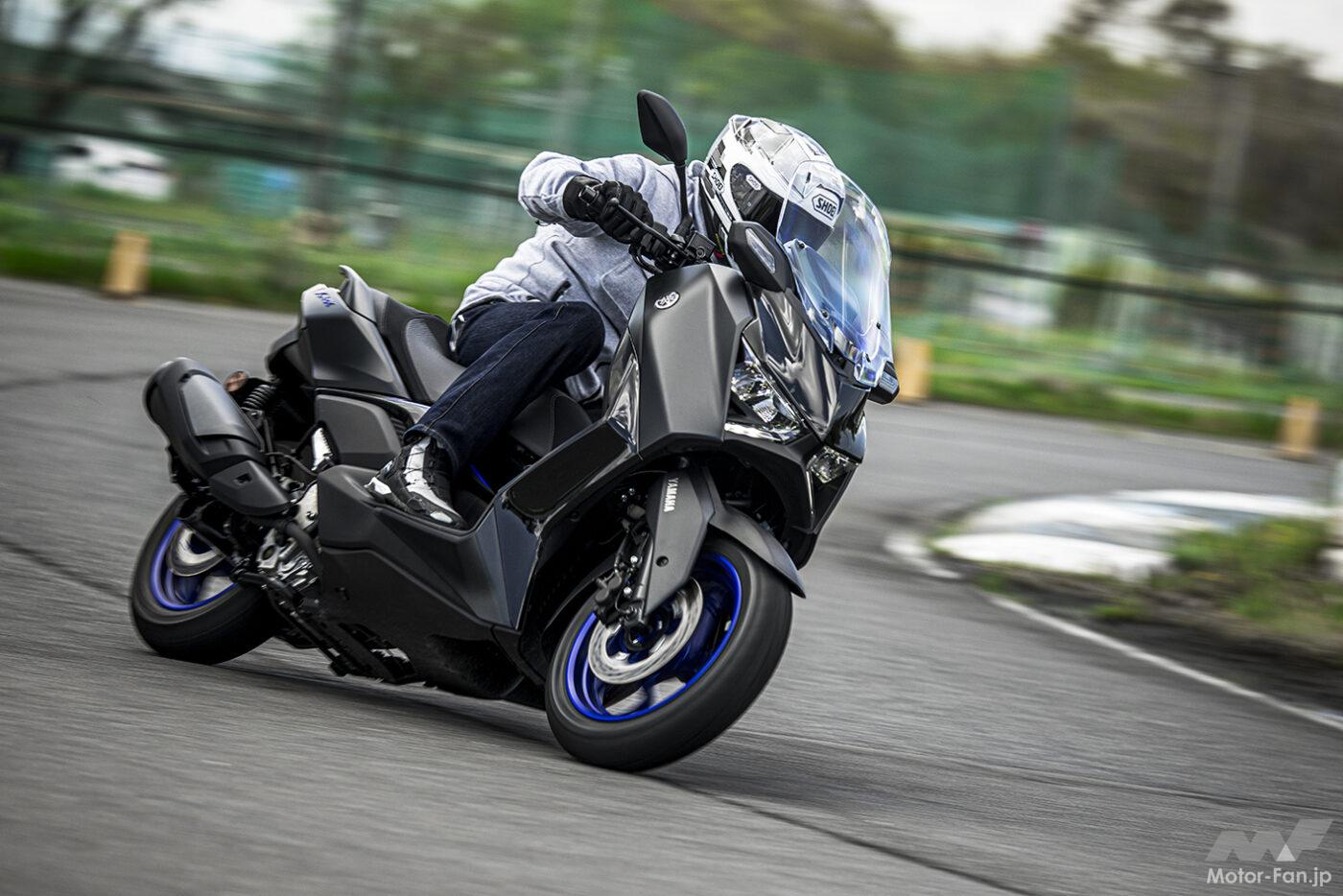
Yamaha XMAX ABS…737,000 yen
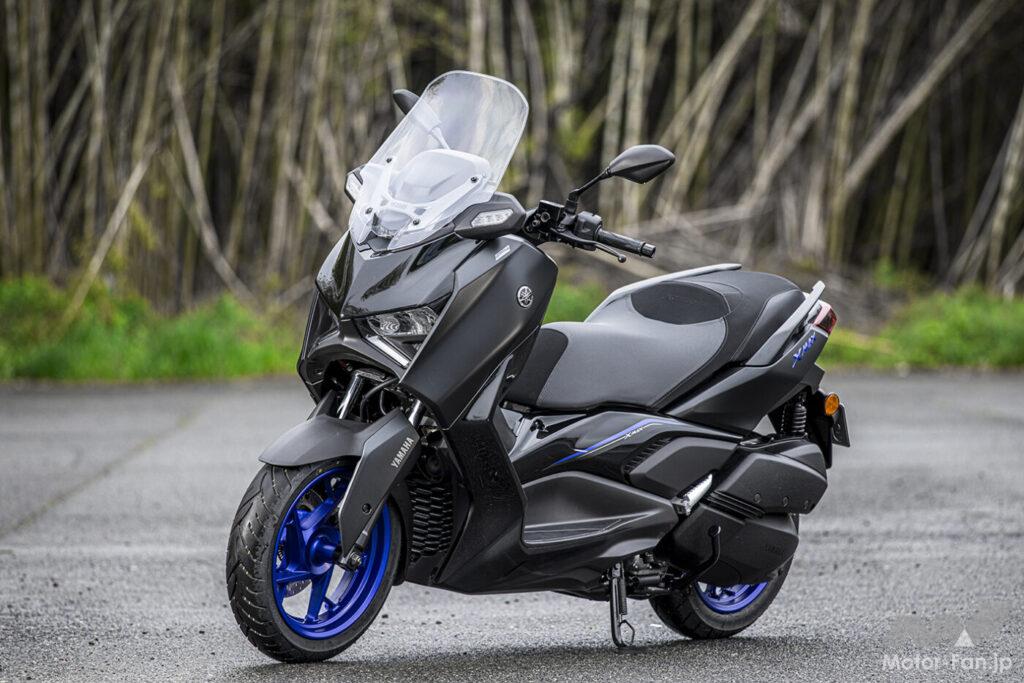
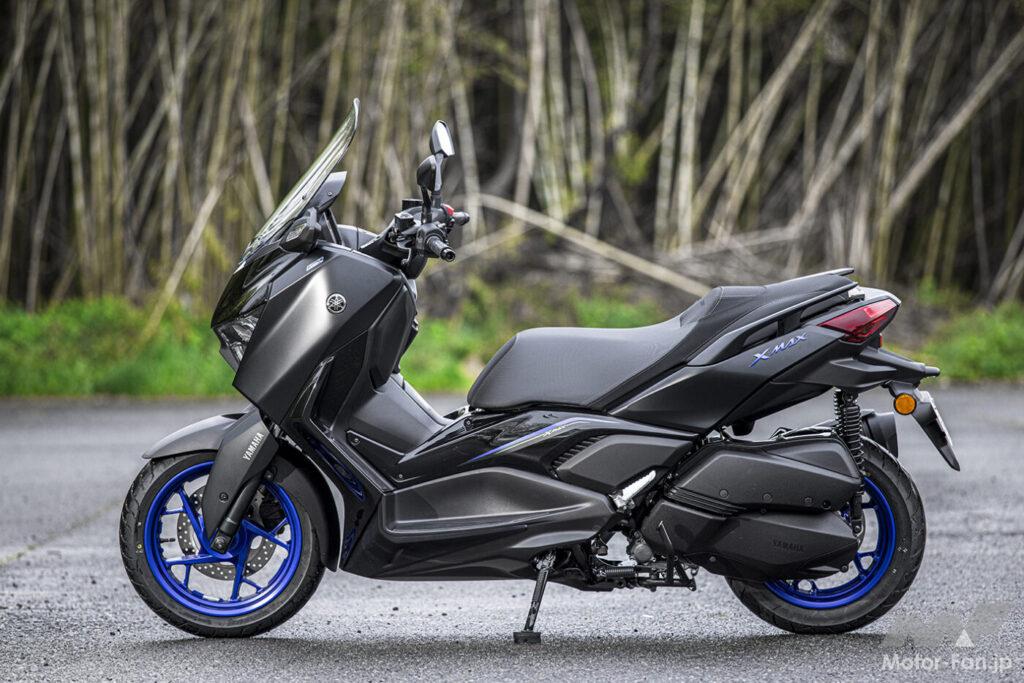
At first glance, it looks the same as the 2023-2024 model, but the 2025 XMAX features an electric windscreen, a new muffler that is approximately 800g lighter, and a reconfigured TFT+LCD meter.
250cc scooters are a minority these days
Although 250cc scooters were extremely popular from the mid-1990s to the 2000s, the majority of scooters on the Japanese market today are 125cc. In fact, most of the scooters I’ve test ridden recently have been in the 150-180cc class, which shares the same basic design as 250cc scooters, and I’ve only had a few experiences with 250cc scooters, which are the upper limit of the light motorcycle class.
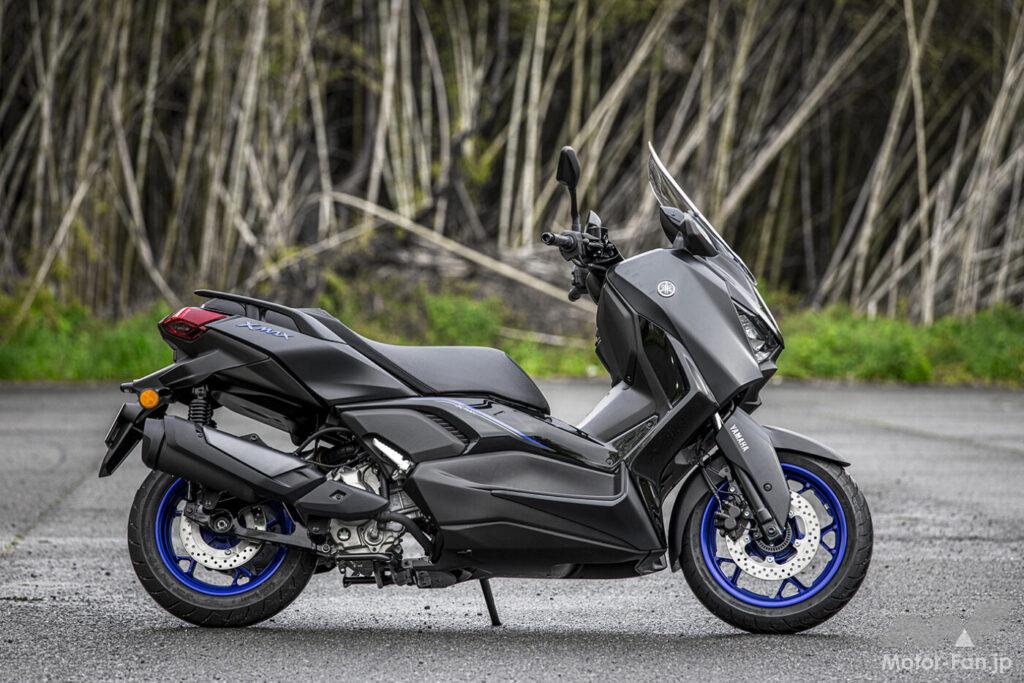
So, my first impression of the 2025 model year revised XMAX was that it was big and heavy. This may be because I had just test-ridden the NMAX (125)/155, but as someone who has had little experience with 250cc scooters recently, the size of the XMAX was a bit too high a hurdle for me.
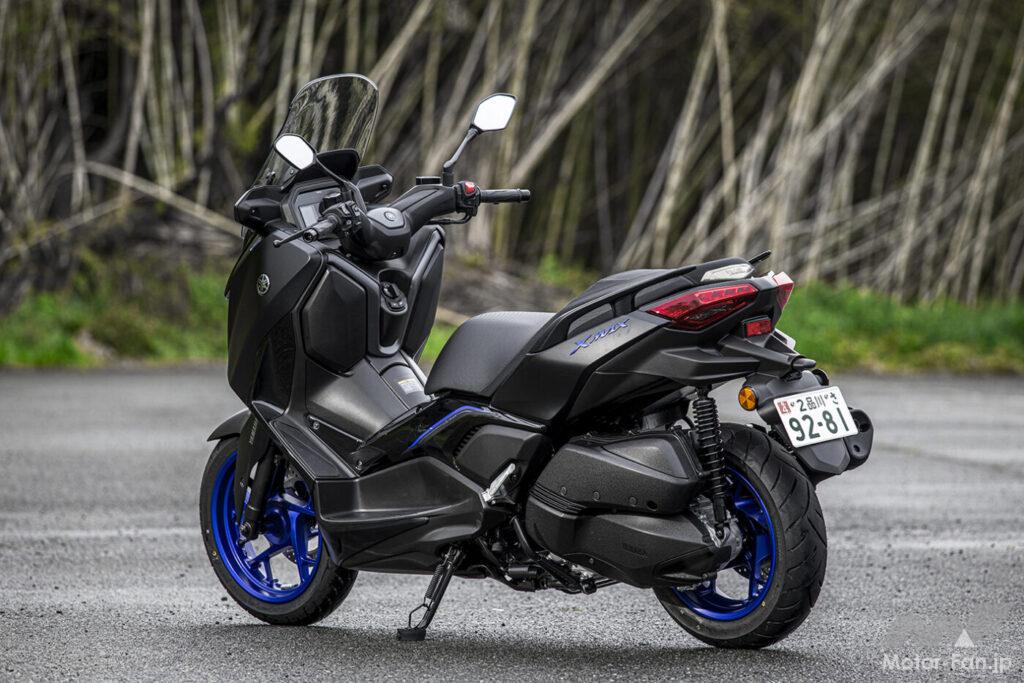
The MAX series has four models in Japan.
Before we get into the main topic, let’s start with the basic premise: Yamaha’s MAX series of sports scooters in recent years includes the 125/155cc NMAX, the 250/300cc XMAX, and the 560cc TMAX. The weights, wheelbases, and seat heights of the four models sold in Japan are as follows:

NMAX (125)…132kg・1340mm・770mm
NMAX155……135kg・1340mm・770mm
XMAX (250)…183kg・1540mm・795mm
TMAX560……218kg・1575mm・800mm
As you can see by looking at the figures for each vehicle, the XMAX’s dimensions are closer to the TMAX560, rather than between the NMAX and TMAX560. However, by the standards of modern 250cc scooters, the XMAX is by no means large. The figures for its rivals are Honda Forza (250): 186 kg, 1510 mm, 780 mm; KYMCO X-Town CT250: 194 kg, 1500 mm, 790 mm; and SYM Joymax Z250: 184 kg, 1546 mm, 747 mm. Considering these facts, riders like me who feel the size and weight of the XMAX may be in the minority.
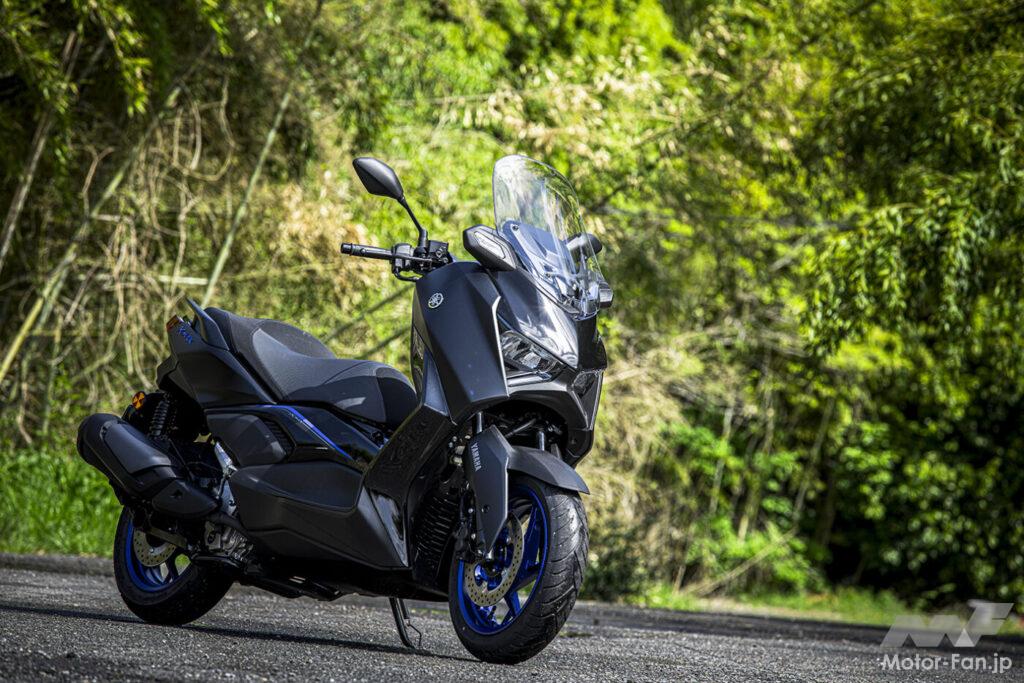
The size of the car is closer to the TMAX, but the price is closer to the NMAX?
Regarding the 2025 model XMAX, which has undergone specification changes, Yamaha’s press release lists the main differences from the previous model as follows: 1) A muffler that has been made 800g lighter through a review of the internal structure, 2) The screen has been changed from a two-stage adjustable type that uses bolt replacements to a stepless electrically adjustable type, and 3) A new meter that arranges a 4.2-inch TFT and a 3.2-inch LCD side by side. However, there are a wide range of improvements, such as moving the standard position of the adjustable handlebars approximately 20mm closer to the rider, unifying the bolts around the cockpit in black, and taking measures to account for aging on the back of the footrest covers.
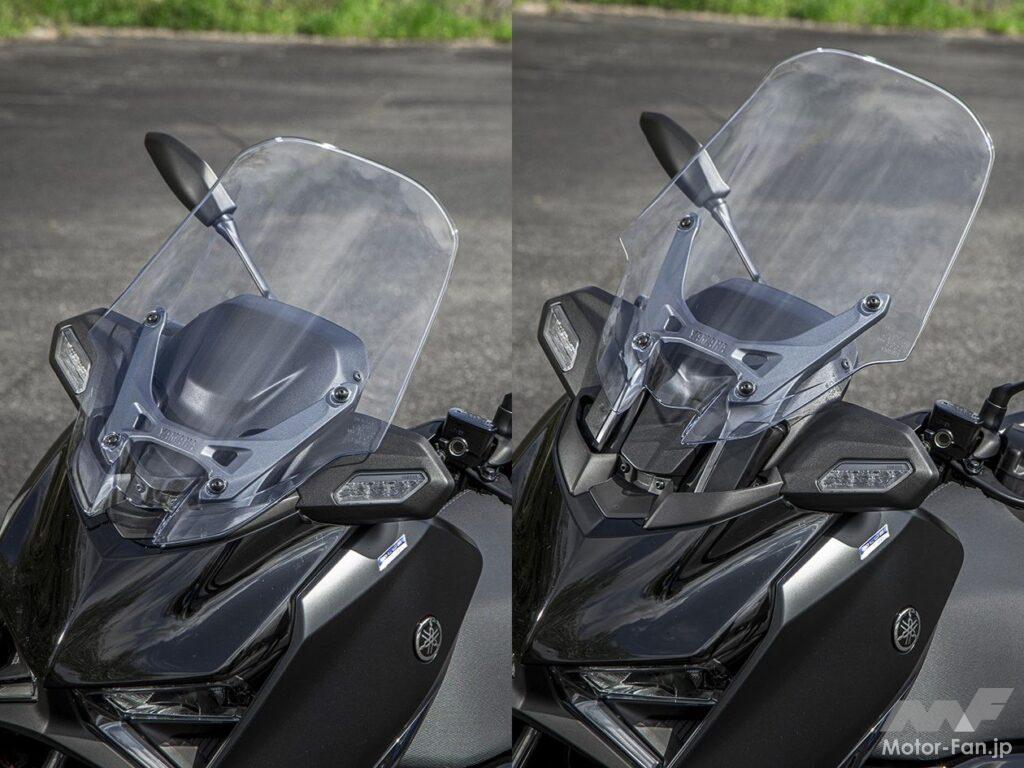
The electric windscreen, a first for the series, has a range of movement of 100mm. The stays are made of die-cast aluminum and painted in crystal graphite to accentuate the shadows.
The price of the 2025 XMAX will be 737,000 yen, 23,000 yen more than the previous model, and considering the improvements, few people would object to a price increase of about 3%. The other MAX series models are the TMAX560: 1,408,000 yen, the Techmax: 1,644,500 yen, the NMAX155: 423,500 yen, and the NMAX (125): 379,500 yen, so despite the body dimensions, the price of the XMAX is closer to the NMAX.
Experience the ease of a 250cc
The impression I mentioned at the beginning that it was “big and heavy” hasn’t disappeared. However, after riding the XMAX in various situations, I came to fully appreciate the merits of a 250cc scooter, which sets it apart from the 250cc scooters and their bigger brothers. To be more specific, the NMAX (125)/155 is easier to handle in crowded city streets and cramped residential areas, but on smooth main roads and expressways, the XMAX is clearly superior.

The main reason I felt this way is the power of the engine (maximum output: XMAX: 23ps/7000rpm, NMAX155: 15ps/8000rpm), but another appealing feature of the XMAX is that it gives off an incredible sense of stability, thanks to factors such as the longer wheelbase, large diameter tires (XMAX: 15/14 inch, NMAX: 13 inch front and rear), and front suspension that supports the fork with upper and under brackets, just like a regular motorcycle (the NMAX follows the old-fashioned scooter convention of supporting it with only under brackets).
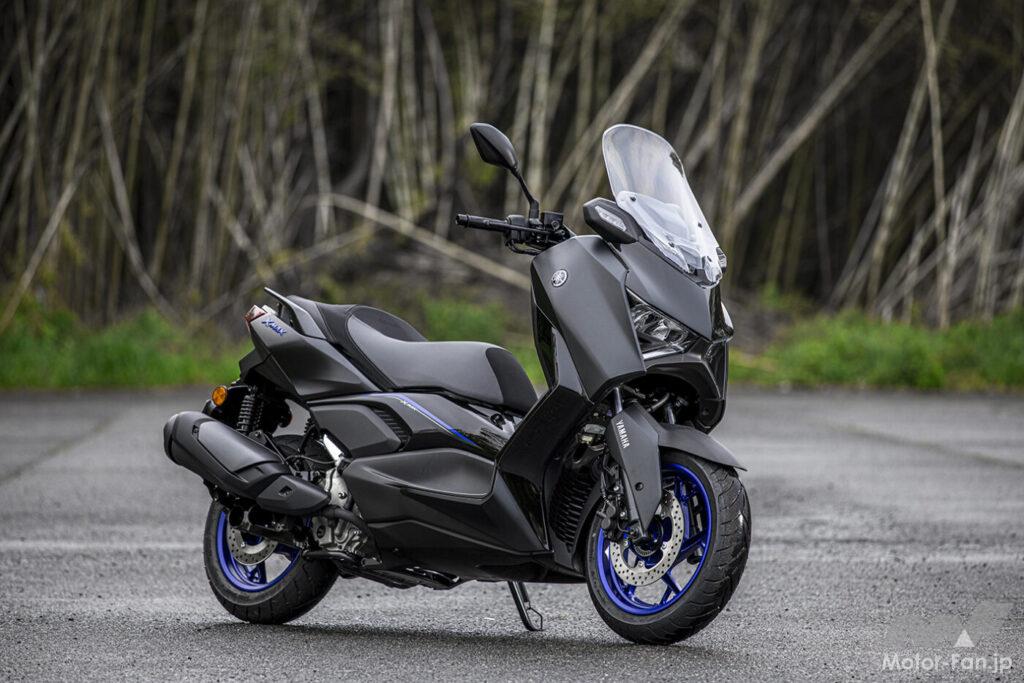
Incidentally, when I rode the NMAX155 on the highway in the past, I noticed that it could cruise at 100km/h, and I thought that this was enough, but this test ride made me realize the ease that only a 250cc can offer. If you’re not traveling short distances, but riding for longer distances, cruising at 120km/h is a breeze, overtaking is easy, and what’s more, the XMAX, which gets an electric windscreen from the 2025 model, is much more comfortable.
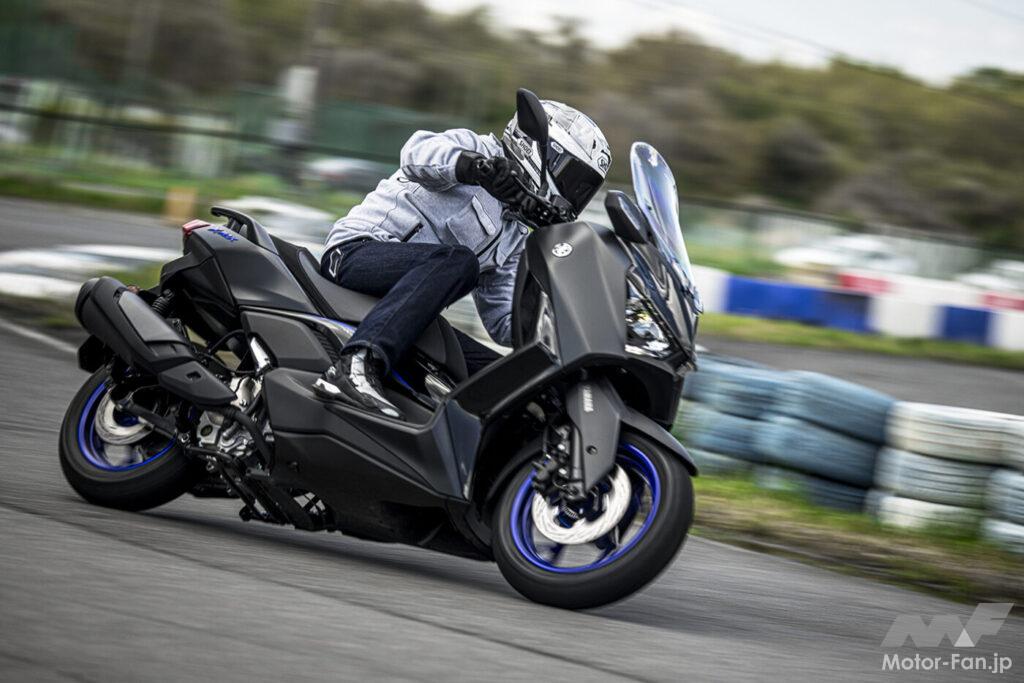
So, I was very impressed with the XMAX’s performance, but many of the good points I’ve mentioned so far can also be said for 250cc scooters from other manufacturers.So, what good points does the XMAX have compared to its rivals in the same engine displacement range?I think it’s the fact that you can fully enjoy the sportiness that is unique to the MAX series.
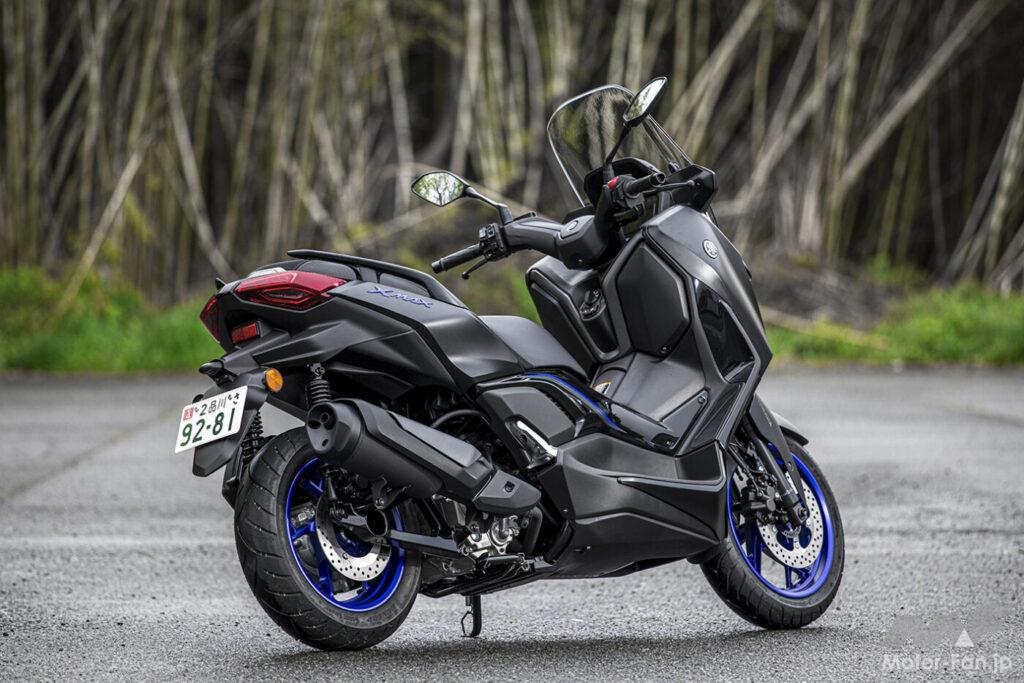
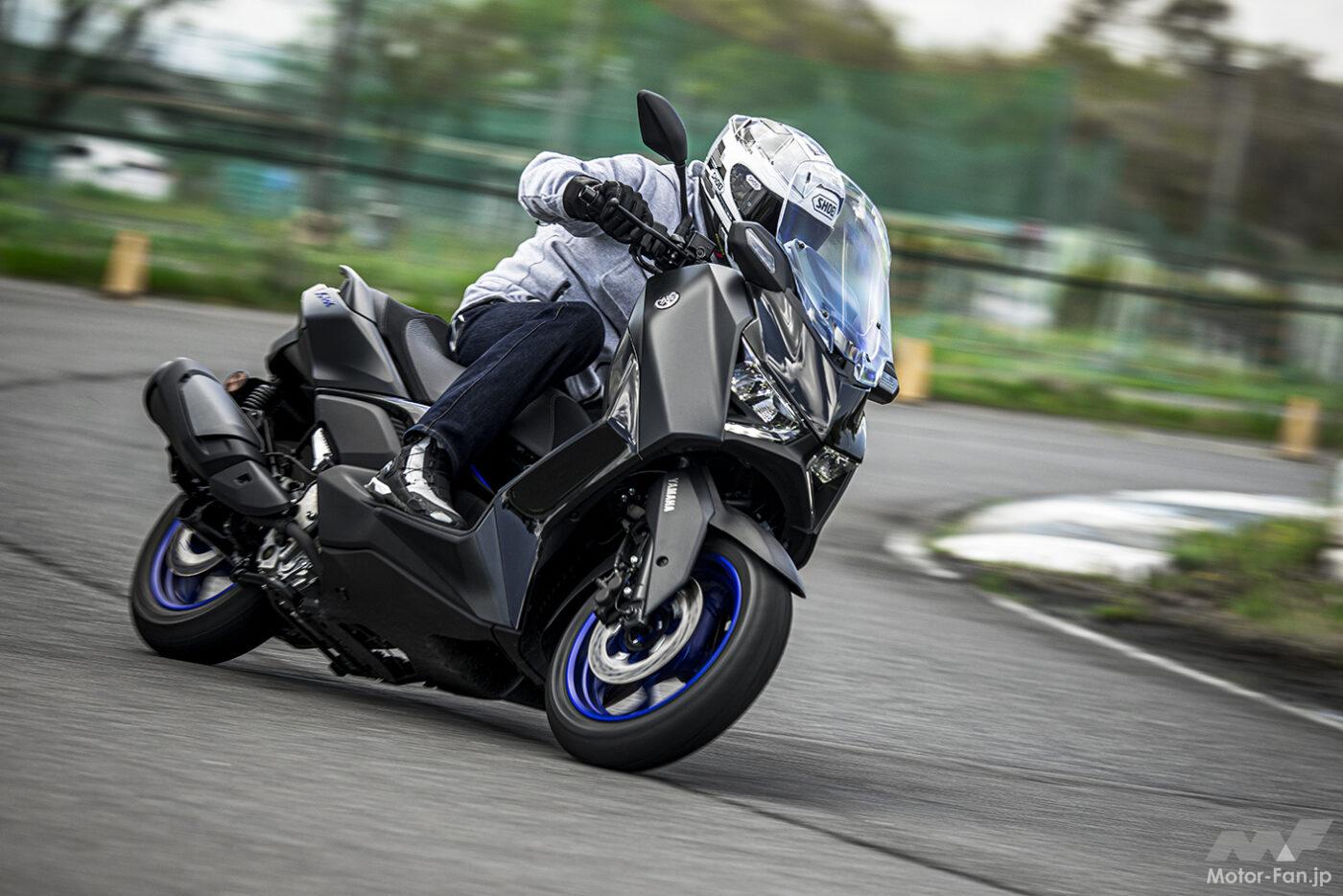
Of course, it’s impossible to make a definitive statement about this without comparing it with rivals under the same conditions, but the XMAX responds perfectly when the rider is in the mood, and accelerating, decelerating, and cornering are simply fun. I felt that the handling response had the same qualities as the NMAX and TMAX.
Riding position (height 182cm, weight 74kg)
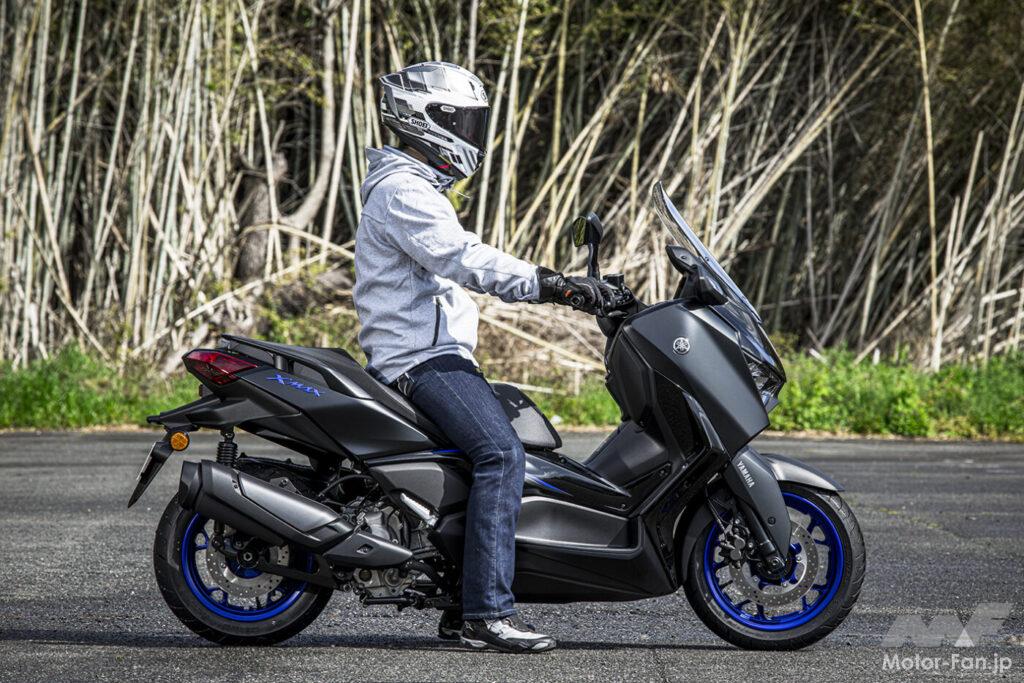


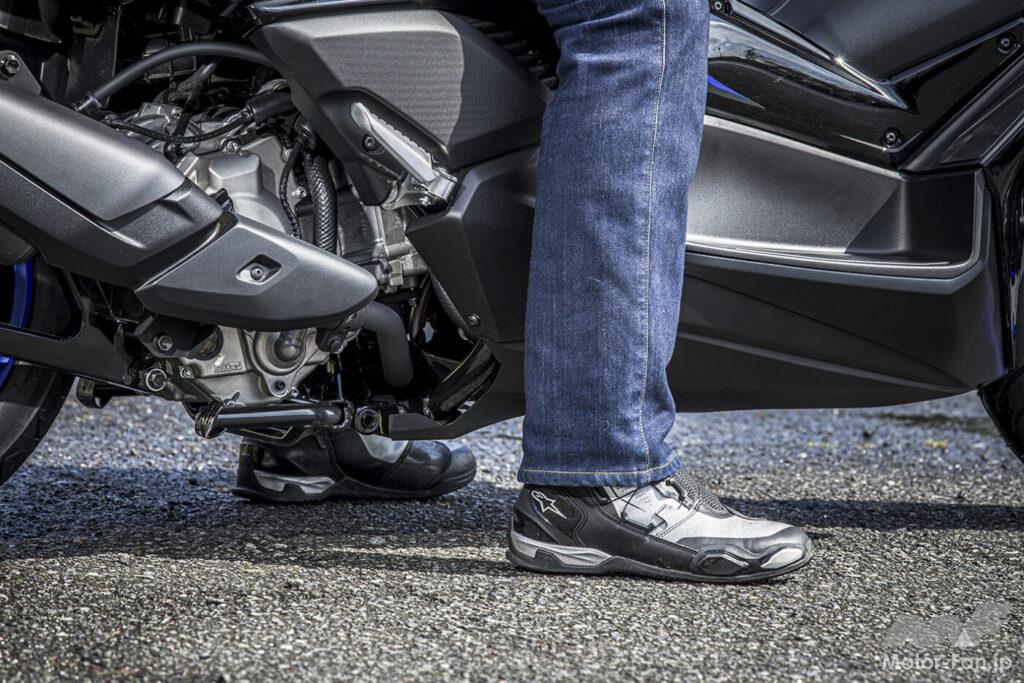
While the riding position of Yamaha’s previous 250cc scooters, the Majesty and Maxam, was focused on comfort and stability, the XMAX emphasizes sportiness. However, the seat height is 795mm, and the side covers protrude significantly to the left and right, so riders under 170cm tall may find it difficult to reach the ground with their feet. To solve this problem, Y’s Gear, which sells genuine Yamaha accessory parts, offers a low-down seat that lowers the seating position by approximately 40mm for 42,350 yen.
Detail explanation

The low beam and position lamps of the headlights are X-shaped. The high beam is located at the bottom center. The turn signal covers and spoiler have been redesigned to balance with the electric windscreen.

Just like the headlights and position lamps, the tail and stop lamps also light up in an X-shape, but only when the brakes are applied. The rear turn signals are built into the tail and stop lamps.

The ignition is smart, and the front inner pocket with lid (located only on the left side) is equipped with a USB Type-C power supply.

The LCD + TFT meter, which is equipped with smartphone connectivity, has been reconfigured from top to bottom to left to right. The TFT screen can display Garmin navigation.

The seat is very comfortable, and the flat seating surface makes it easy to shift your weight on winding roads.

The trunk space under the seat has a capacity of 45 liters, designed to fit two helmets or a helmet and an A4-sized business bag.

The water-cooled OHC 4-valve single-cylinder BLUE CORE engine, which aims to achieve both driving performance and environmental friendliness, uses a DiASil cylinder and forged aluminum pistons. The crankshaft is a one-piece forged crankshaft supported by plain metal, which is rare for a single-cylinder engine.
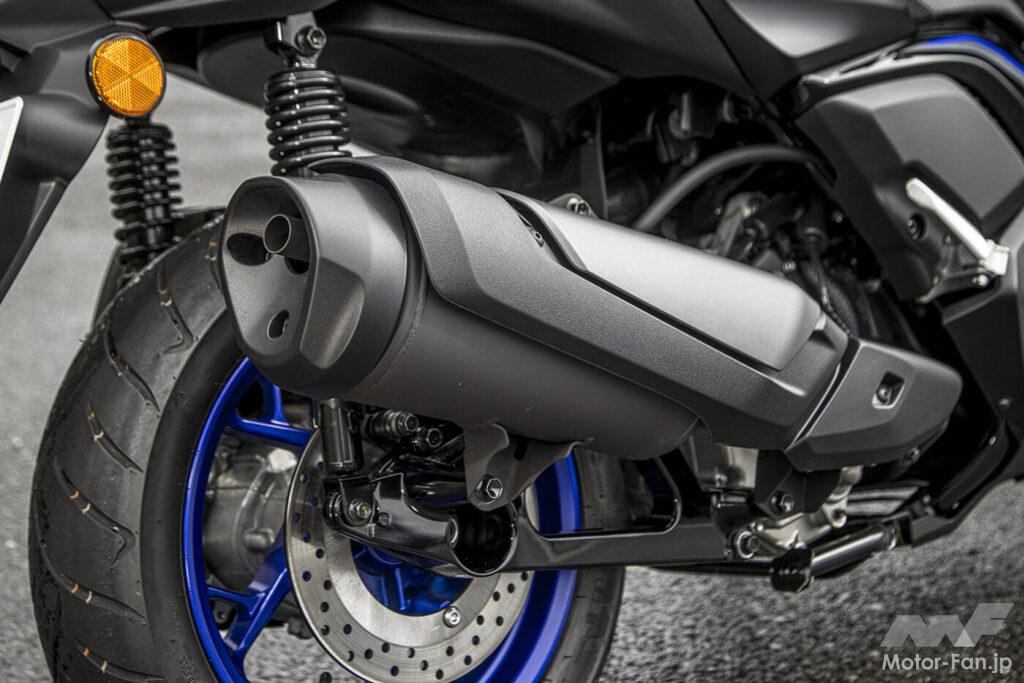
Although the end cap is oddly shaped, the muffler has been made approximately 800g lighter and is nearly circular (the previous model was oval).The muffler cover, which was previously solid black, is now two-tone, black and crystal graphite.

The front forks are φ33mm upright type, the rear suspension is twin shock, the front and rear wheel travel is 110/79mm, and the front brake is a φ267mm disc + single-side two-piston caliper.

The rear brake is a 245mm disc with a single-piston caliper. The tire size is F: 120/70-15, R: 140/70-14, and the factory specified tire is Dunlop Scoot Smart.
Main specifications
Model: XMAX ABS
Model: 8BK-SG8J
Total length x width x height: 2180mm x 1410~1505mm
Center distance: 1540mm
Minimum ground clearance: 135mm
Seat height: 795mm
Caster/Trail: 26°30′/95mm
Engine type: Water-cooled 4-stroke single cylinder
Valve type: OHC4 valve
Total displacement: 249cc
Inner diameter x stroke: 70mm x 64.9mm
Compression ratio: 10.5
Maximum output: 17kW (23ps) / 7000rpm
Maximum torque: 24N・m (2.4kgf・m) / 7000rpm
Starting method: Self-starter
Ignition method: Full transistor
Lubrication method: Wet sump
Fuel supply system: Fuel injection
Transmission type: V-belt type continuously variable speed
Frame type: Backbone
Suspension system Front: Telescopic upright type φ33mm
Rear suspension: unit swing type twin shock
Front tire size: 120/70-15
Rear tire size: 140/70-14
Front brake type: hydraulic single disc
Brake type: Hydraulic single disc
Vehicle weight: 183 kg
Fuel used: Unleaded regular gasoline
Fuel tank capacity: 13L
Passenger capacity: 2 people
Fuel consumption rate reported by the Ministry of Land, Infrastructure, Transport and Tourism: 41.7km/L (with two passengers)
Fuel consumption rate WMTC mode value: 33.5km/L (with one passenger)