

Vespa Sprint S150… 566,500 yen (released June 1, 2024)
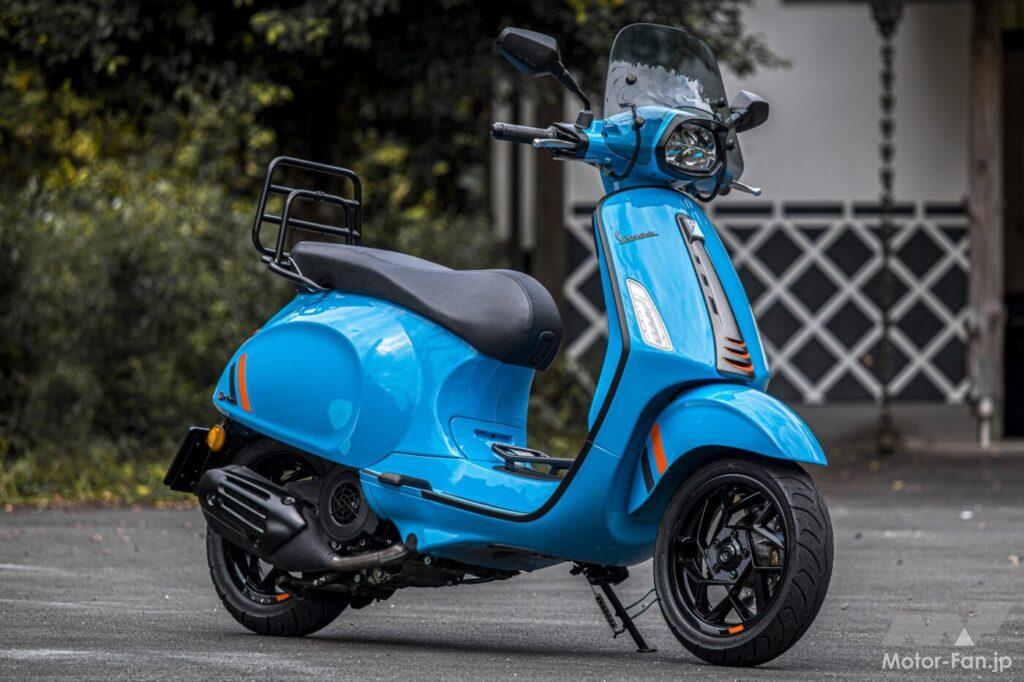
Vespa’s small body series consists of two models: the Primavera, which has a round headlight, and the Sprint, which has a square headlight. Although they share the same steel monocoque chassis, the designs of the 12-inch aluminum wheels on the front and rear are different between the two models.
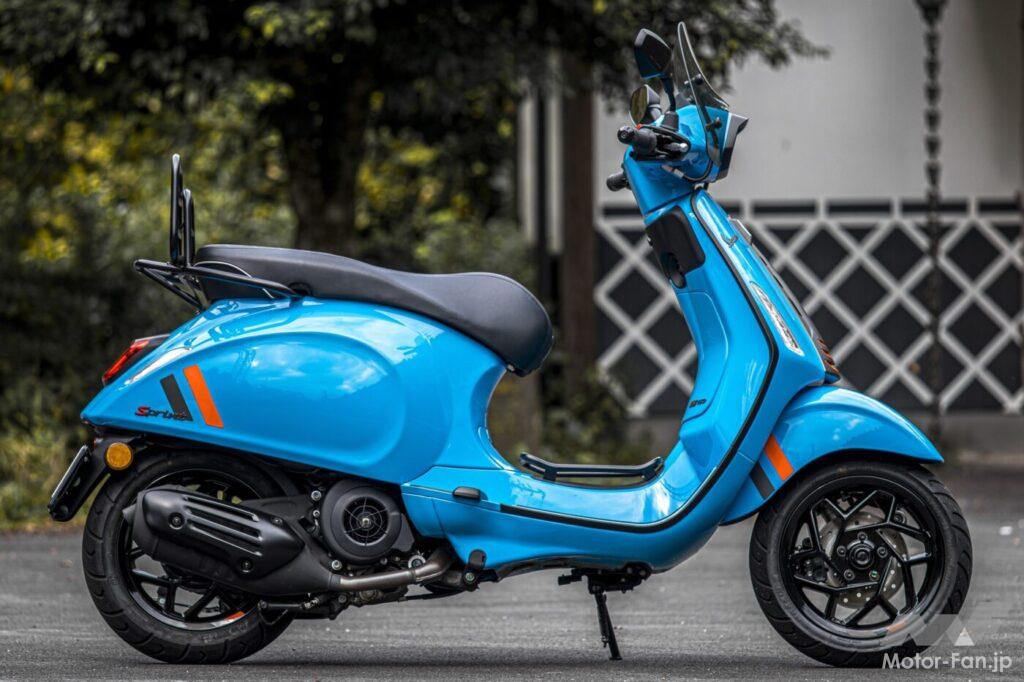
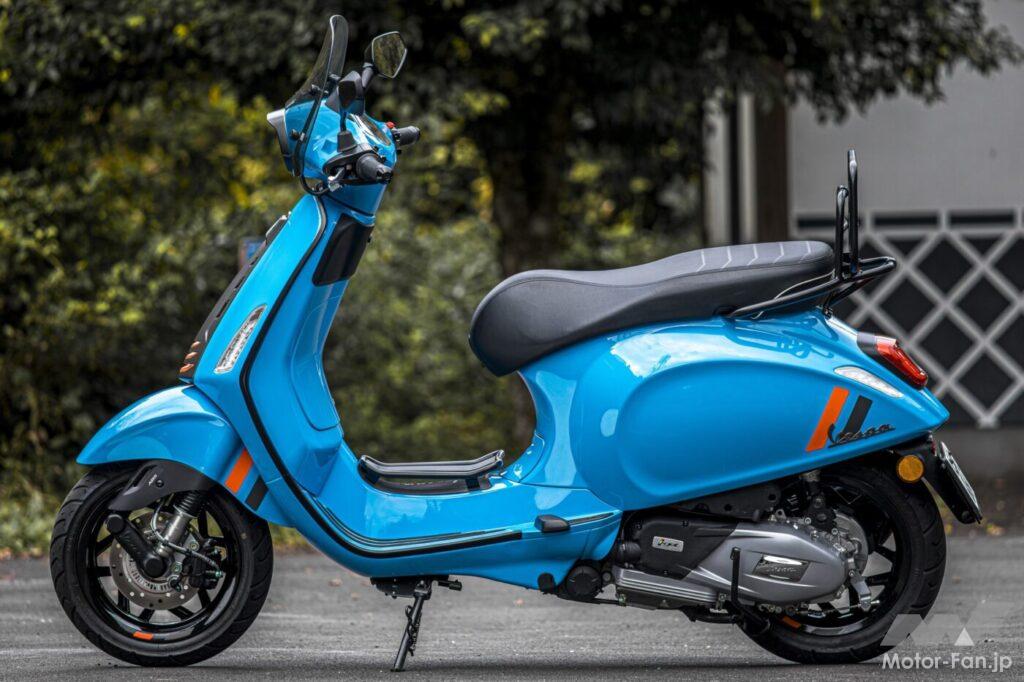
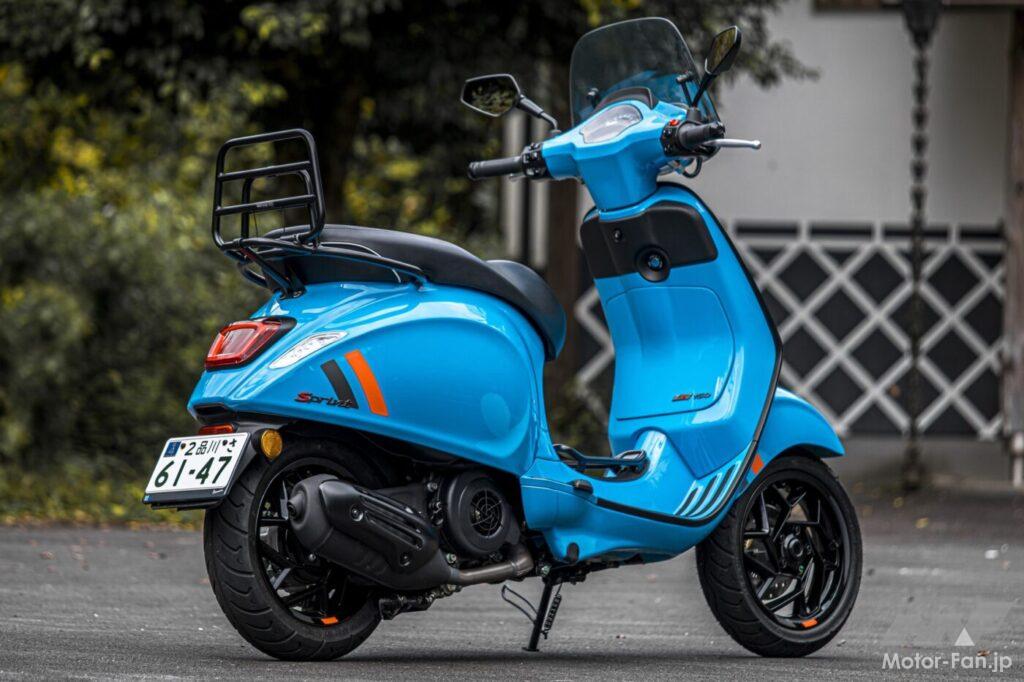
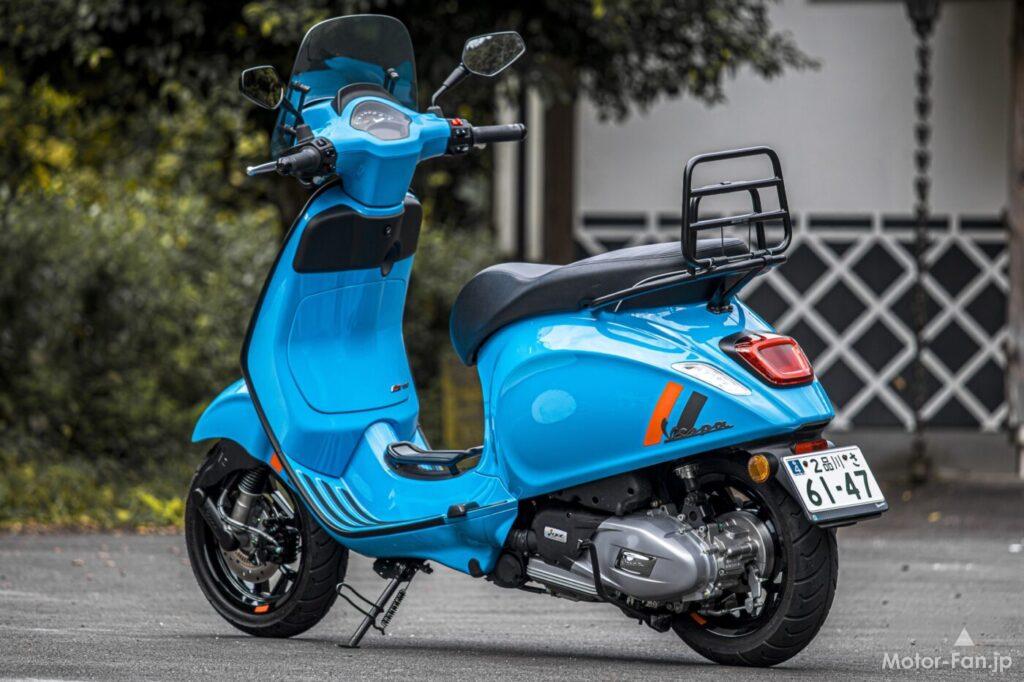
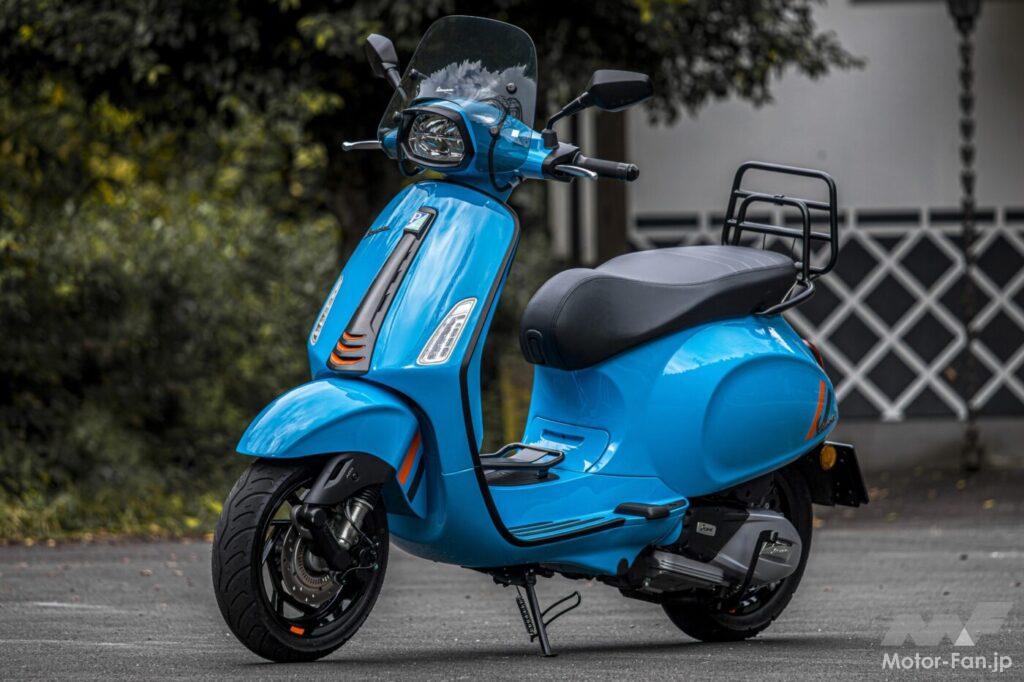
The difference between the Sprint 150 and the S150 is the coloring, with the latter having exclusive orange and black stripes and many of the plated parts being blacked out. While there are 50, 125 and electric models available overseas, only the 150 is currently sold in Japan.
It has a stronger start than a Class 2 moped and good throttle response.
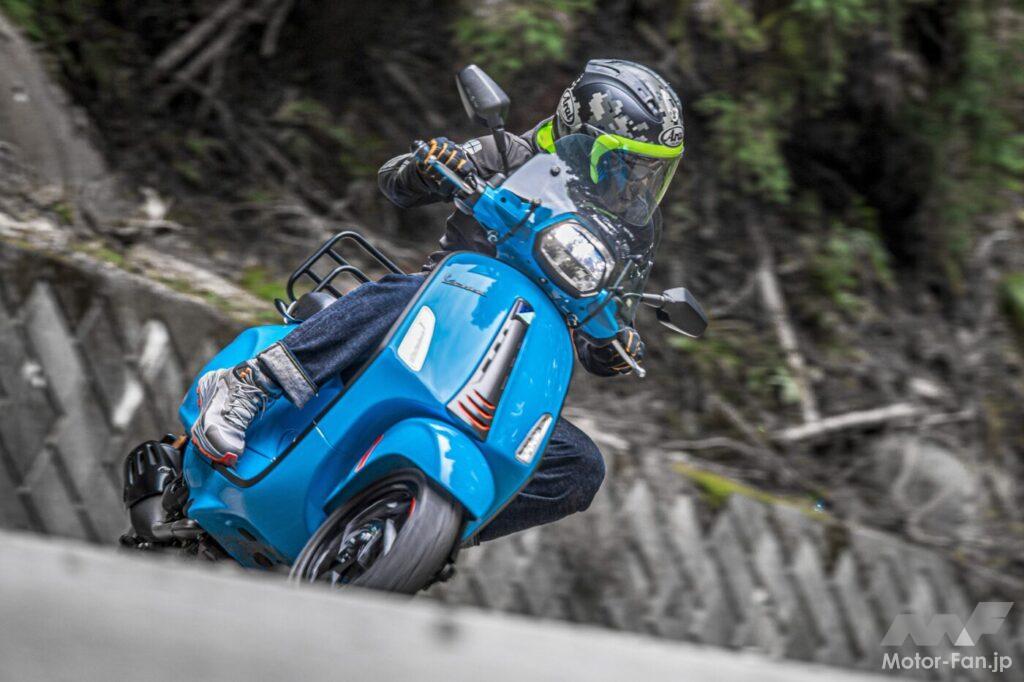
Italian aircraft manufacturer Piaggio released the groundbreaking scooter, the Vespa 98, in 1946. Since then, the company has continued to produce scooters with a classic form, maintaining the basic structure of the vehicle, including a steel monocoque chassis, a single-arm bottom link front suspension, and a unit swing rear suspension.
The current lineup is broadly divided into large body models such as the GTS and GTV, small body models such as the Sprint and Primavera that we test rode this time, and the LX, which has the lightest body. High-wheel scooters are said to be popular in Europe, where traditional cobblestone roads still remain in many places, but the Italian-born Vespa still uses small wheels. Both the large and small body models have 12-inch wheels front and rear, and the LX even uses a special 11-inch wheel size in the front (10-inch in the rear).
The car I test drove this time was the Sprint S150 from the small body series. This model pays homage to the 150 Sprint with square headlights that was released in 1965, and the S150 features exclusive orange and black stripes. Five different colors, including white and red, are available overseas, but in Japan, only the Ecretico Blue shown in the photo is available.
Let’s start with the engine. The 155cc forced air-cooled 4-stroke single-cylinder engine has a unique SOHC 3-valve valve system and is said to produce a maximum output of 12.5ps. Looking at the specs alone, it could be said that the power output is somewhat modest, as the Honda PCX160, another light scooter, produces 15.8ps.
Press the starter button to start the engine. As expected, the idling noise is quieter than the Vespas of the two-stroke, hand-operated shift era, and the vibrations transmitted to the body are no different from those of scooters made by domestic manufacturers. As you gradually open the throttle, the centrifugal clutch seems to engage at low RPMs, and from there the bike takes off smoothly and powerfully. Once the light turns green, the bike takes off a little faster than a 50cc scooter, quickly reaching 60km/h. With this, you won’t feel any stress even on fast-moving bypass roads.
On winding roads with steep uphill gradients, the difference in power compared to a 2-class moped becomes even more apparent. The response to the throttle, including the moderate engine braking, is good, allowing for a brisk ride. It can be said that this excellent power performance lives up to the name Sprint.
The bottom link suspension’s shock absorption is impressive, and straight-line stability is also excellent.
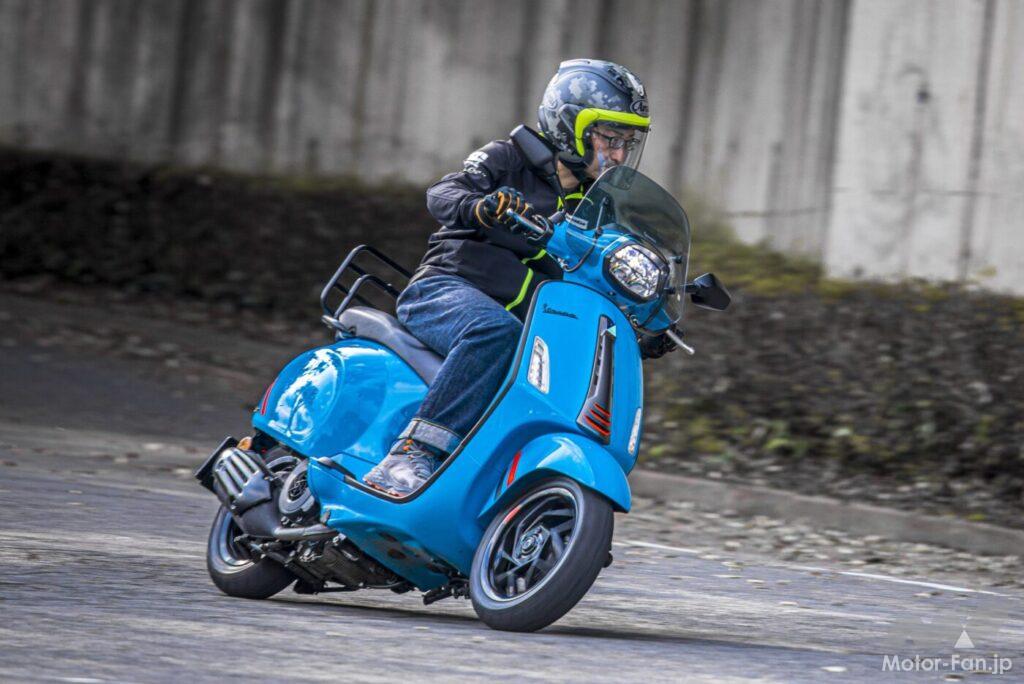
Next is handling. Compared to the PCX160, which is stable even at slow speeds, the Sprint S150 feels a little unsteady at walking speeds. However, this quick handling is a Vespa tradition, and once you get used to it, you can control it at will with light input.
On the other hand, as the speed increases, straight-line stability gradually improves, and the bike becomes unaffected by minor disturbances. Although I wasn’t able to try it out this time, this would make it safe to travel on the highway. What impressed me most was the comfortable ride of the bottom link suspension. It works better than a telescopic fork, especially on small bumps in the road, and it’s easy to see why Vespa continues to use this mechanism. On the other hand, there is a fair amount of shock transmitted over large bumps, but this is within the acceptable range.
The brakes are discs in the front and drums in the rear. The return spring in the rear felt too strong, but controllability was generally good both front and rear. I had no complaints about the ABS intervention.
Currently, the best-selling scooter in the light motorcycle class is the PCX160, and compared to that, the Sprint S150 costs 154,000 yen more, or about 37% more. It doesn’t have a smart key or an idle stop system, and the luggage compartment isn’t as spacious as the PCX. The rear brake is a drum… and there are a few other weak points, but these are all made up for by the style and coloring that are typical of this Italian brand. If you were to own a four-wheeled vehicle from a highly sophisticated overseas brand, a Vespa would probably suit your garage better than a Honda. It’s a rare and stylish light motorcycle scooter that you can enjoy for a long time, and it’s fashion-forward too.
Riding position and foot reach (175cm/68kg)
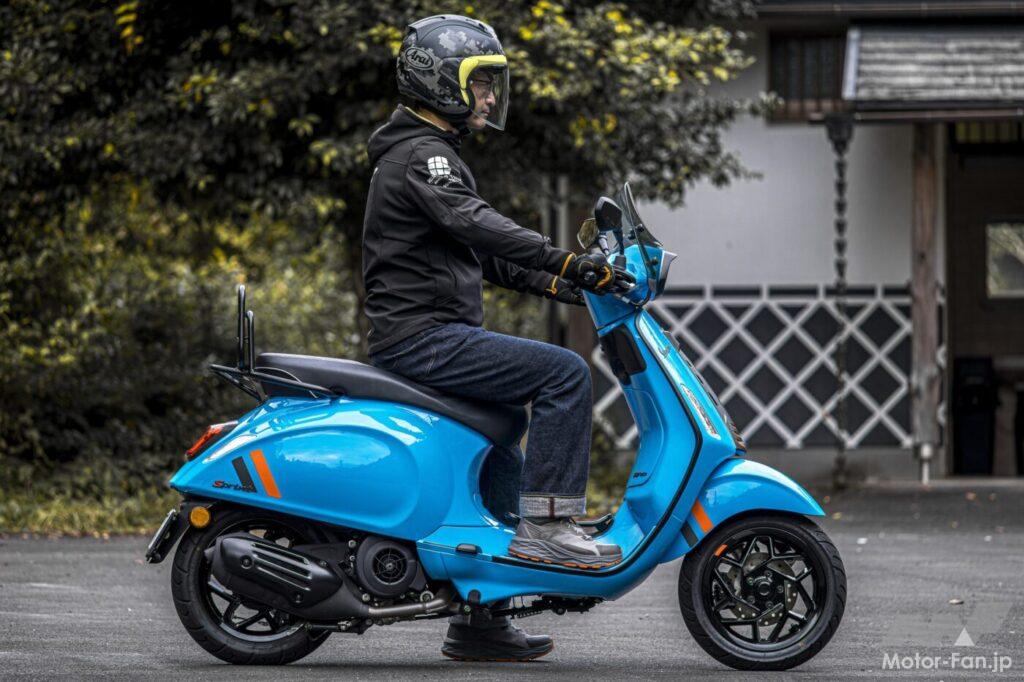
The seat and floorboard are positioned at a comfortable height, allowing for a traditional riding position that naturally keeps your back straight. Another advantage shared with previous Vespa models is the large handlebar turning angle, making it easy to maneuver in tight spaces. The wheelbase is 25mm longer than the Honda PCX160.
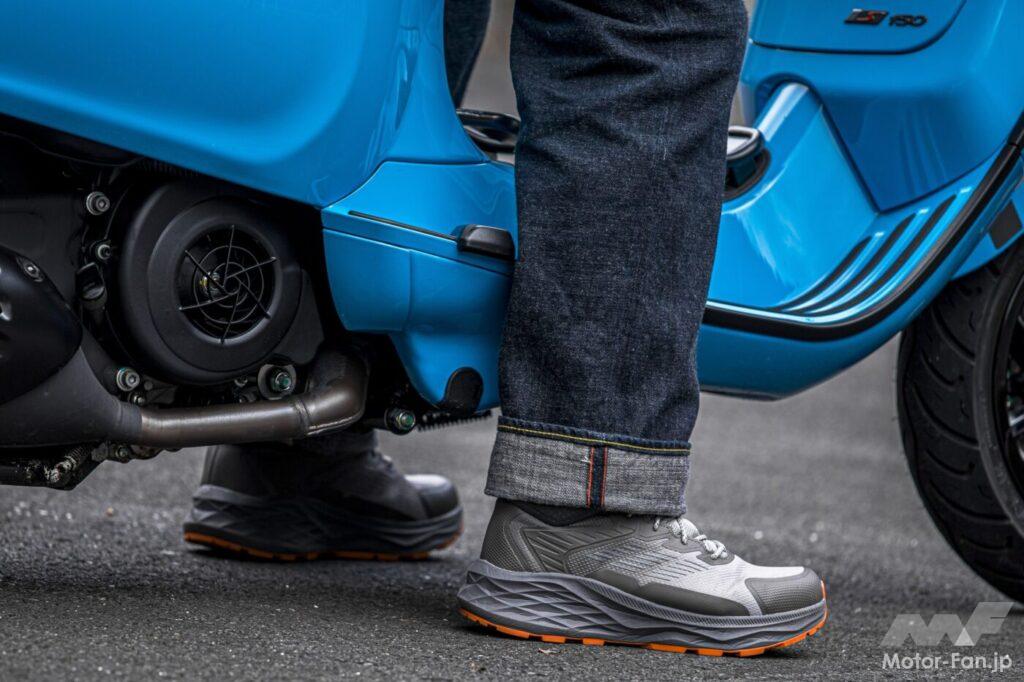
Although the seat height is a little high at 785mm, the shape of the front of the seat is slim, so as you can see, it is easy to reach the ground with your feet. However, because there is a tunnel in the center of the floorboard, it is not easy to get on and off.