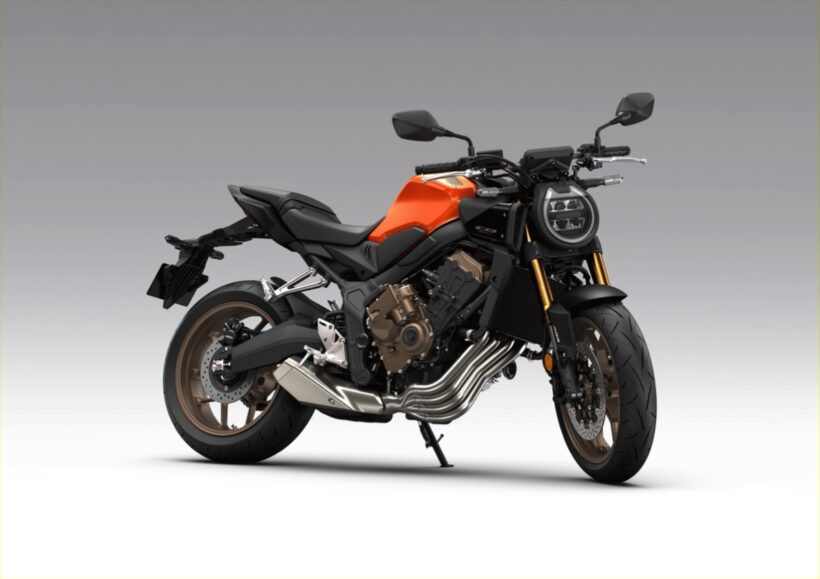

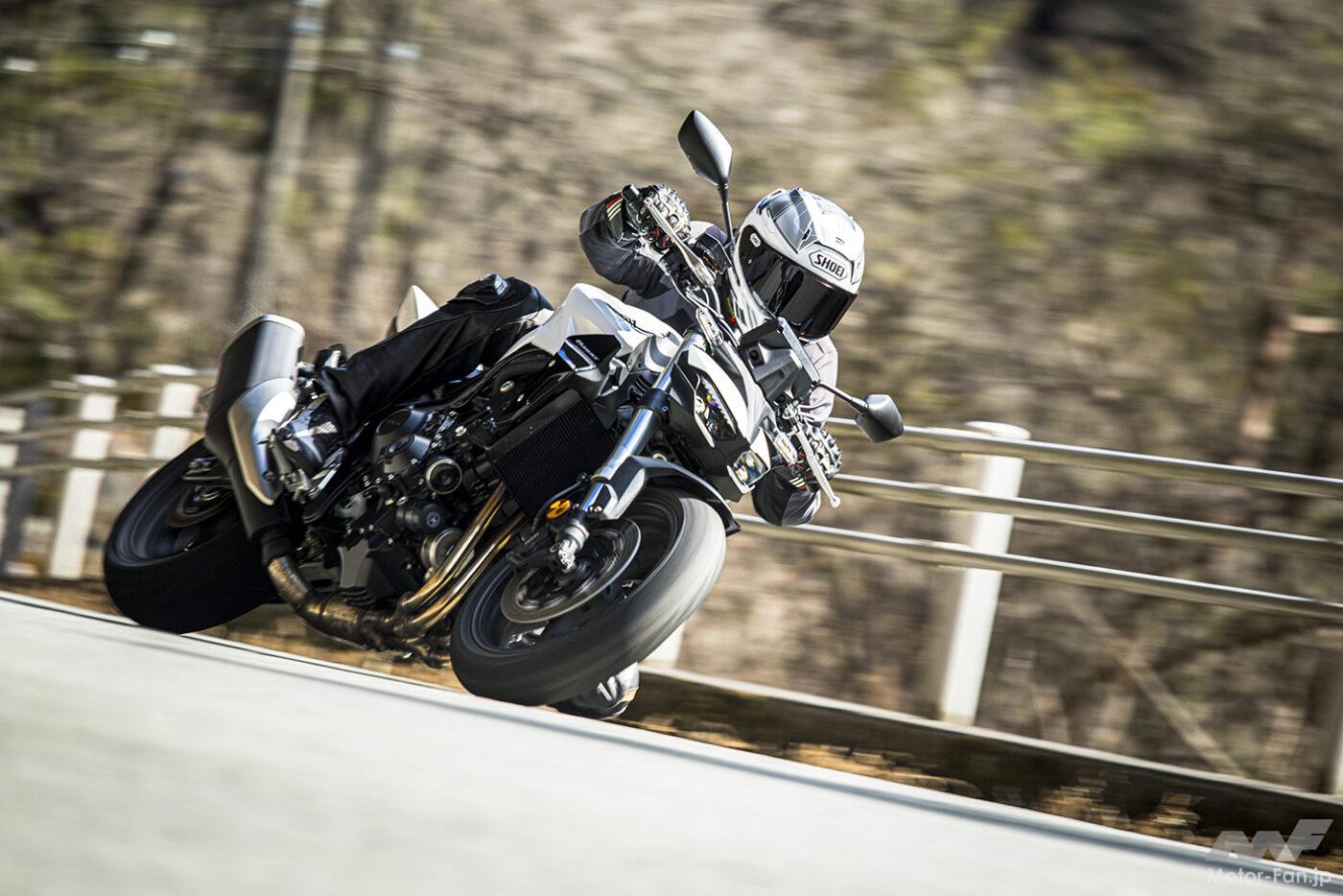
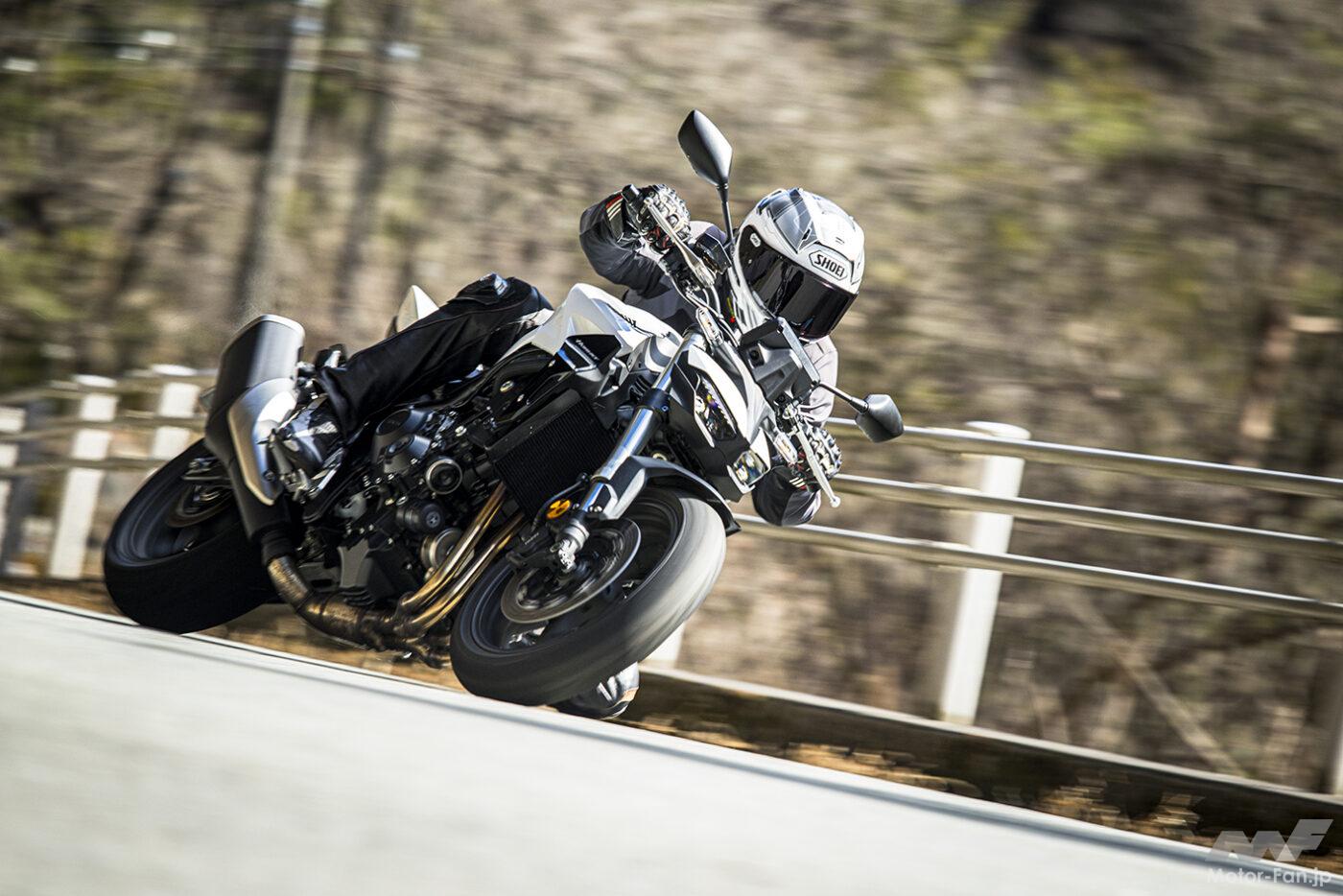
Honda CB1000 Hornet… 1,342,000 yen

The body colors for the Japanese model are standard: pearl glare white, SP: matte ballistic black metallic. In some overseas regions, gray metallic and red are also available.
It’s not just a change of the shell
It may seem odd to start this off a test drive report on a new model, but I wasn’t particularly interested in the CB1000 Hornet, which Honda began selling in the Japanese market in January 2025. First of all, I wasn’t really impressed with the ride feel of its predecessor, the second-generation CB1000R, and unlike the second-generation CB1000R, which had an original design incorporating neo-classical elements, the streetfighter-like looks of the Hornet, which seemed to be a return to the original model’s style, didn’t sit well with me.

However, when I read the promotional materials the day before the test ride, my impression completely changed. In fact, I had initially thought that the CB1000 Hornet was just a redesigned “casing” of the second-generation CB1000R, but it turns out that most of the main parts of the CB1000 Hornet are newly developed. Once I understood this, my expectations for the new generation of large-displacement in-line four-cylinder CB began to grow.
The engine and frame are different from the previous model.
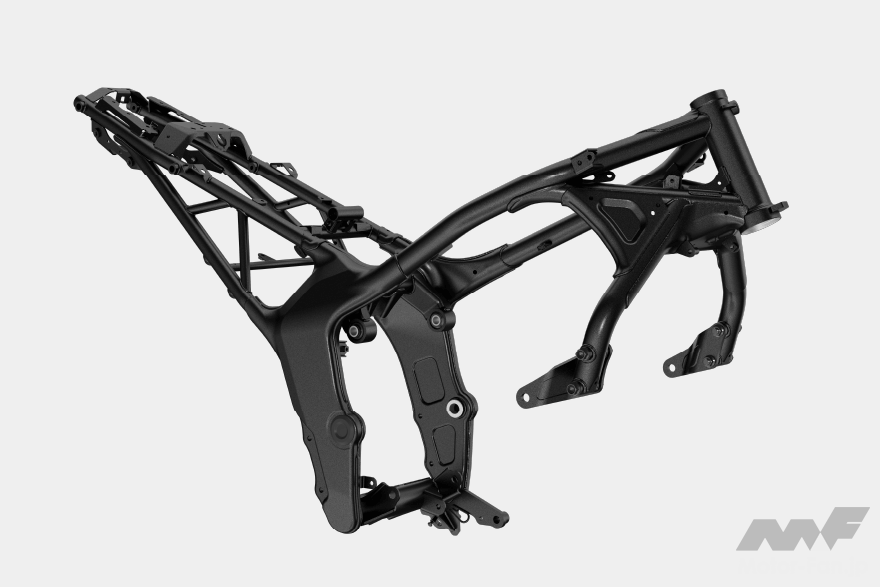
While aluminum is the main material used for frames of modern liter sports naked bikes, the CB1000 Hornet is made of steel, just like the existing series.
The first thing that caught my interest in the CB1000 Hornet’s publicity materials was the newly developed twin-spar steel frame and the use of an engine based on the 2017-2019 CBR1000RR (SC77). Considering that the first and second generation CB1000R and their sibling CBF1000 series were based on a mono-backbone frame and an engine from the 2004-2007 CBR1000RR (SC57), it has evolved into a completely different bike.

Additionally, when comparing it with the second-generation CB1000R, other factors worth noting include the change in the swingarm from a single-arm type to a double-arm type, the change in the rear suspension from a direct-pull type to a link type, and the fact that the seat has been lowered by 21mm (from 830mm to 809mm). In any case, when comparing photos of the second-generation CB1000R and the CB1000 Hornet, the only things I could see in common were some of the parts around the front, and my view that only the “casing” had been changed was a big mistake.
Why I wasn’t impressed with my previous car
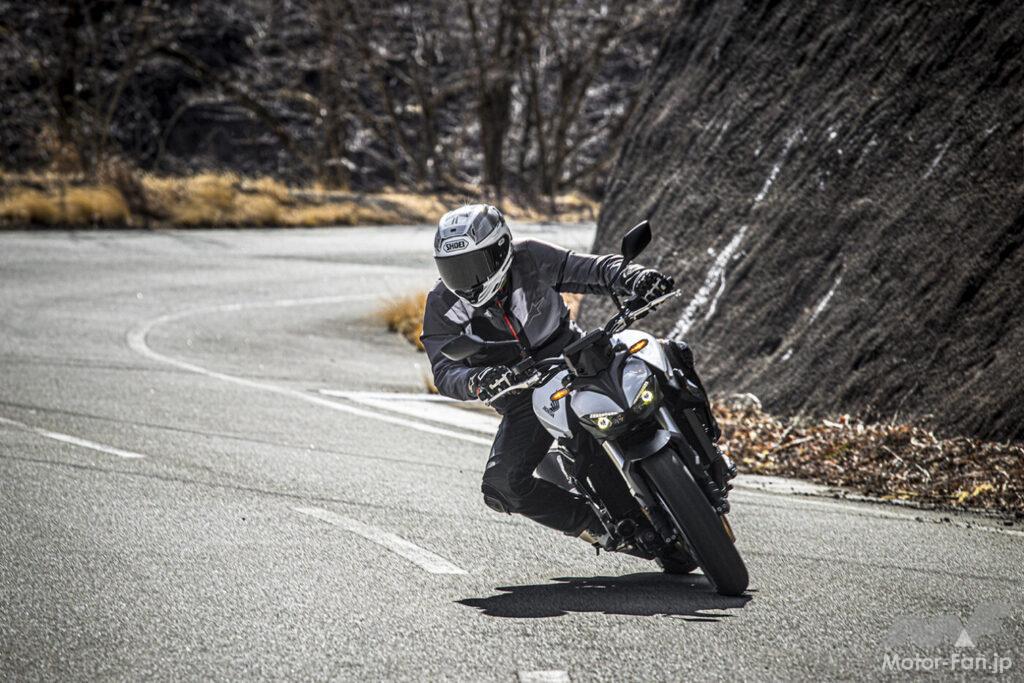
As I mentioned earlier, I wasn’t entirely impressed with the ride quality of the second-generation CB1000R. The main reasons for this were the stiff vibrations and uncomfortable ride. That said, I feel like this would have been tolerable with other manufacturers, but from my previous test rides, I had the impression that Honda’s in-line four-cylinder bikes were ultra-smooth and ultra-comfortable, so I just couldn’t understand the rough feeling.
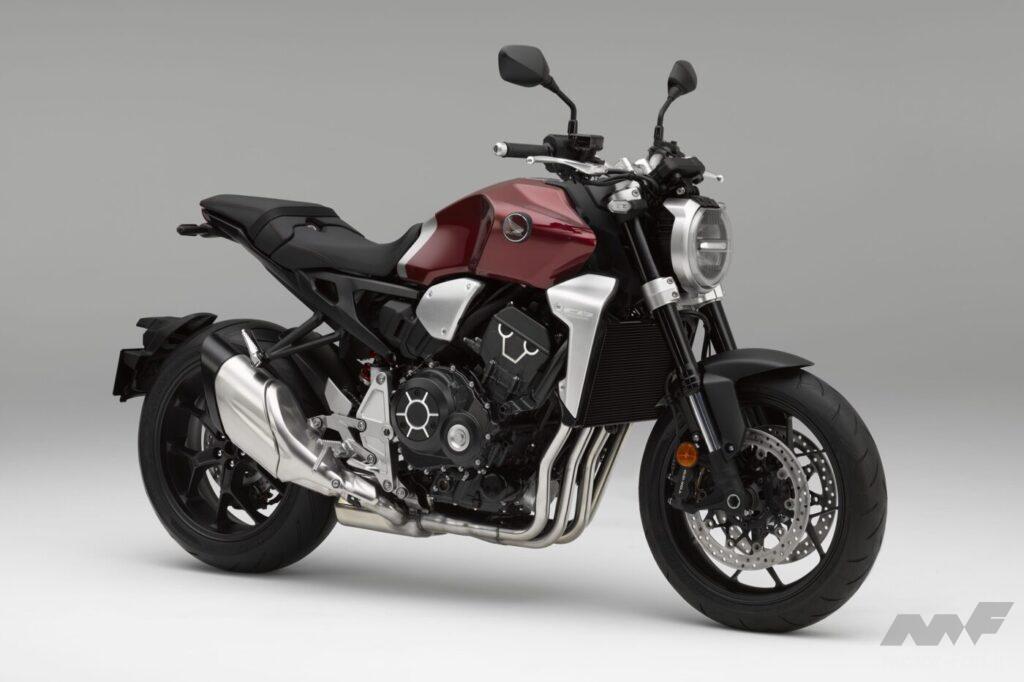
The concept of the second-generation CB1000R was “Neo Sports Cafe.” To spread this idea, the 650, 300, 250, and 125 models were later released, all adopting the same design.
Furthermore, the lack of impact and punch was also something that bothered me personally. However, on the flip side, these characteristics translate into ease of handling, so it can be seen as a typical Honda feature, but when I test rode a number of liter sports naked/streetfighter models in 2018 for work on another publication, I felt that the second-generation CB1000R needed to make a stronger statement in order to beat its rivals in the fiercely competitive market (the bike that made the biggest impression on me at the time was the KTM 1290 Super Duke R, followed by the Aprilia Tuono V4 and BMW S1000R).
A different appeal from rivals from other manufacturers
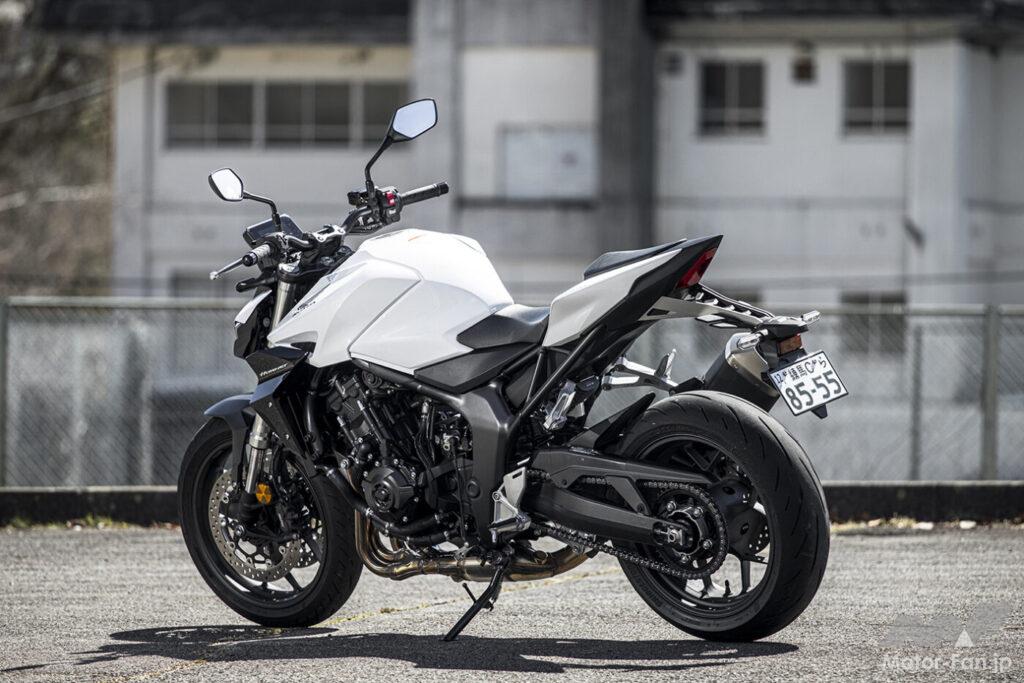
So, with that in mind, I went on this test ride, and what impression did I have of the CB1000 Hornet? It felt like a typical Honda bike, in a good way. First of all, the issues of vibration and ride comfort have been resolved to a good extent, and when you consider that, combined with the low seat setting, it seems friendlier than its rivals and can be used in a wider range of ways.

However, my other personal theme, the strength of the assertion, was a bit of a tricky one. When I think back to the previous model, the engine is more powerful (maximum output: 152ps for the standard model, 158ps for the SP model; the second-generation CB1000R was 145ps), and the body is lighter and more reliable, but that doesn’t mean that words like excitement, sensuality, or sharpness come to mind like those of rival models from other companies. In that sense, the feeling of dissatisfaction hasn’t been resolved…

During this test ride, I didn’t think that was a bad thing. That’s because liter sports naked/streetfighter bikes have become increasingly cutting-edge in recent years, and compared to 2018, there are more vehicles that are more difficult to get into. In this environment, the CB1000 Hornet has maintained Honda’s unique ease of handling, can be ridden easily by any rider and can be used for any purpose, while still providing a true taste of modern maneuverability and allowing you to enjoy considerable speed if you feel like it, so I’ve come to think of it as a valuable bike.

The high-end SP model is equipped with Brembo Stylema calipers, an Ohlins TTX36 rear shock, a quick shifter, and an exhaust device that contributes to increased maximum power output.
What’s more, the standard price of the CB1000 Hornet is 1,342,000 yen, more than 300,000 yen cheaper than the second-generation CB1000R (the high-end SP is 1,584,000 yen). Considering that the price of modern liter sports naked/streetfighter bikes is typically over 1.5 million yen, with prices around 2 million yen not uncommon (the Ducati Streetfighter V4S and BMW M1000R M Competition are over 3 million yen  ), it’s safe to say that this bike is an incredible bargain.
Riding position (height 182cm, weight 74kg)


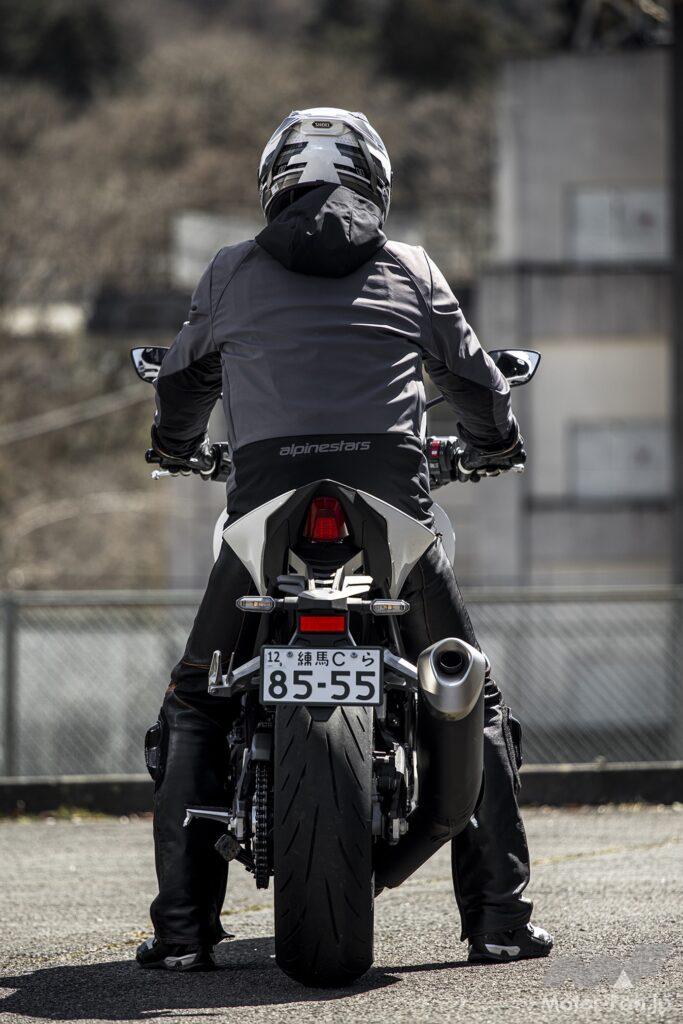
By the standards of modern liter sports naked/streetfighter bikes, the CB1000 Hornet’s low seat makes it a friendly riding position. However, to get both feet firmly on the ground, you need to be at least 170cm tall. However, because the area under the seat is slim, even riders around 160cm tall don’t seem to feel too uneasy.
Detail explanation
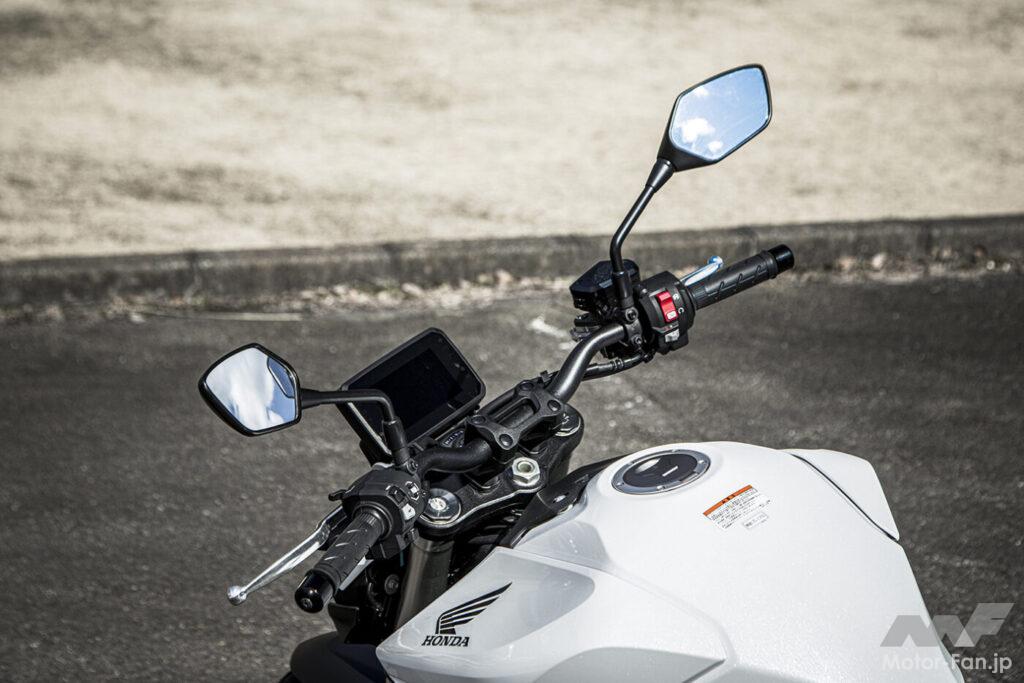
The cockpit is unified in black, including the tapered aluminum handlebars. The left and right gas tanks are fitted with resin covers that add a design accent.
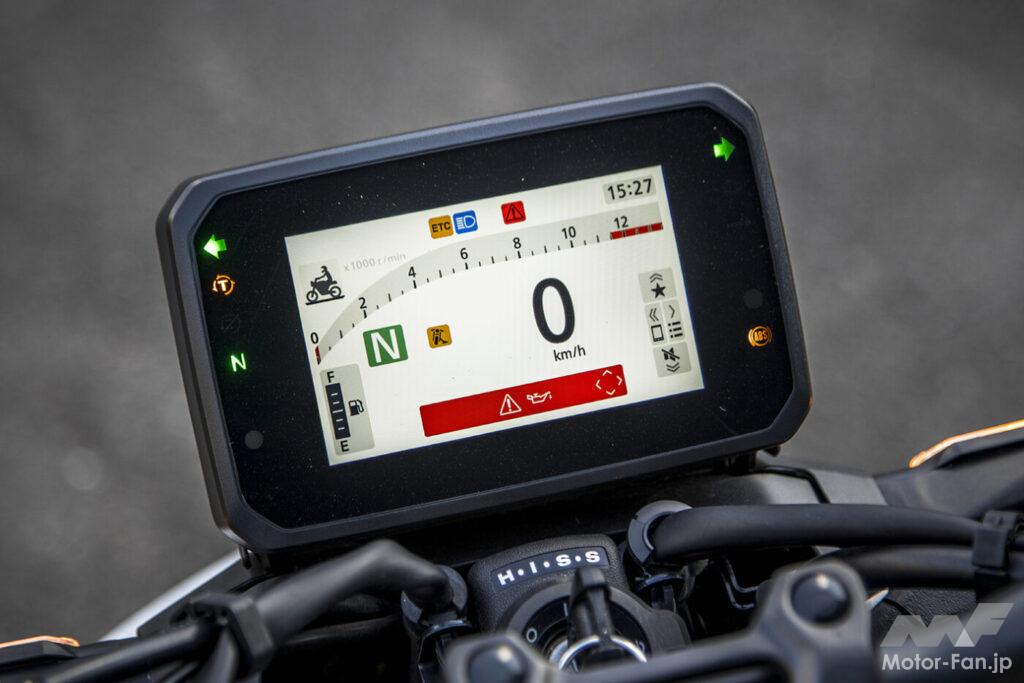
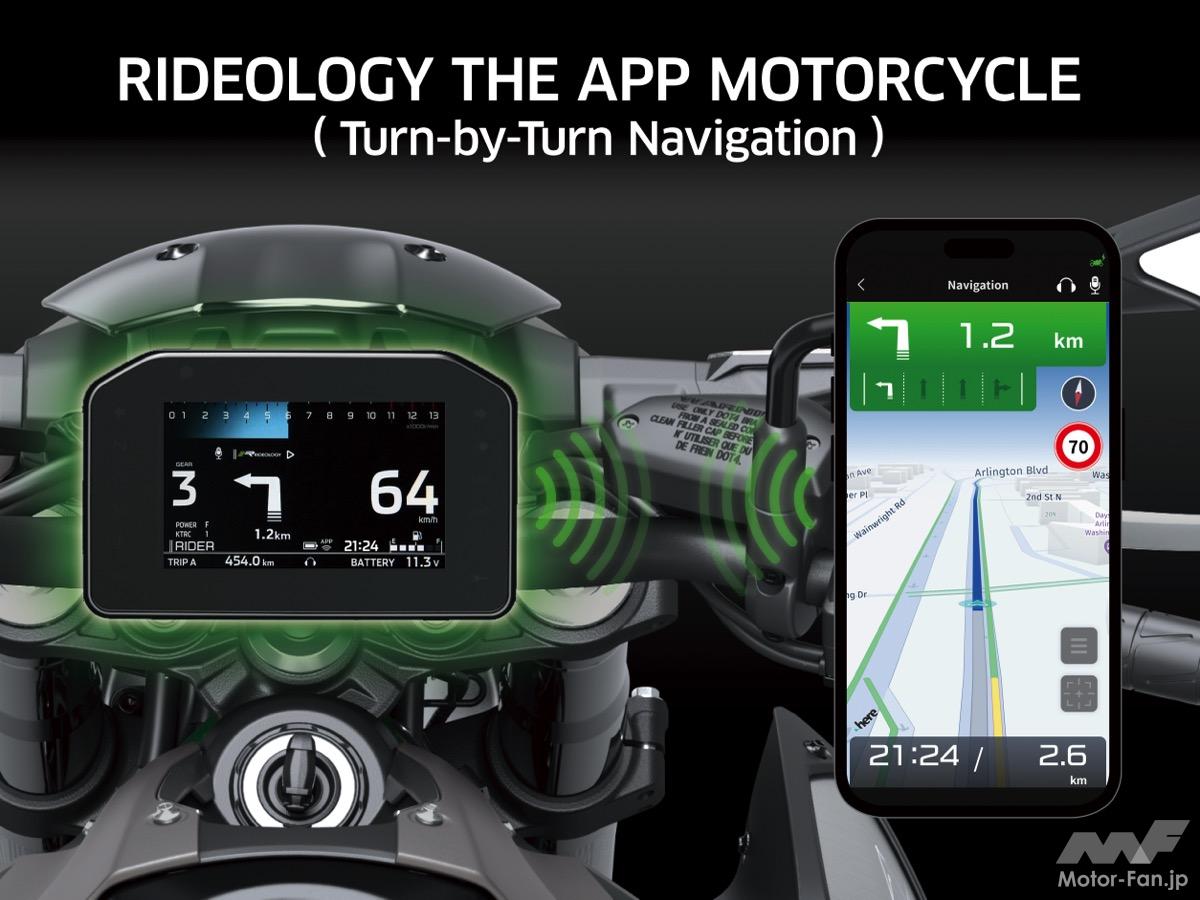
The 5-inch full-color TFT meter, which can be linked to a smartphone, has three display options. The riding mode settings, which come in 3+2 types, are displayed in an image on the top left.
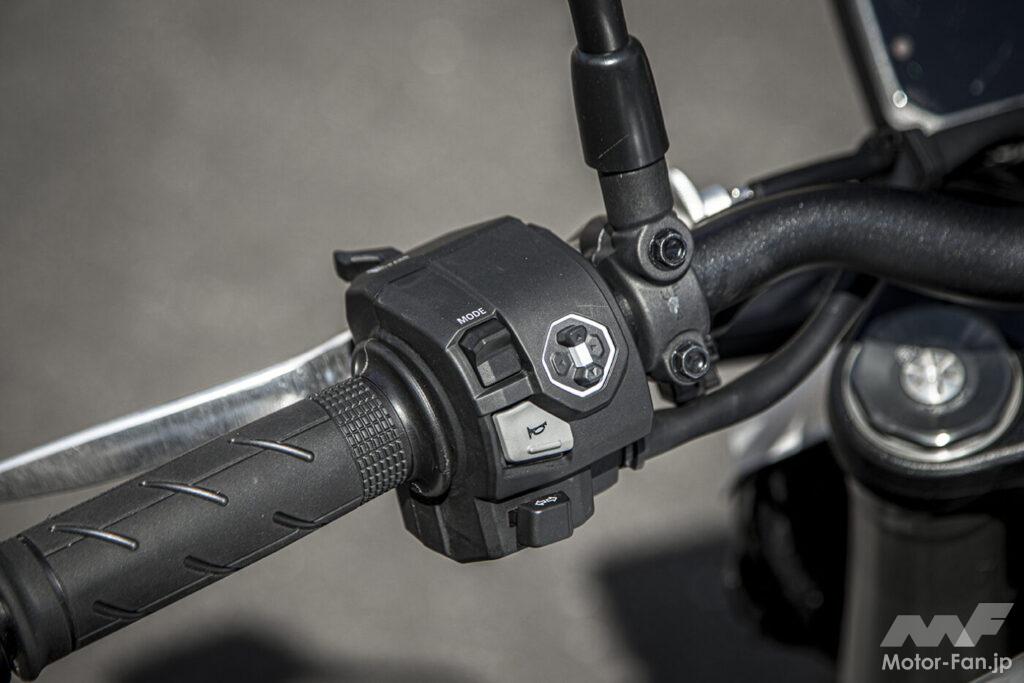
The left and right switch boxes are the same as those on the CB750 Hornet and XL750 Transalp. Display switching and setting changes within the meter are performed using the cross button on the left side.

The throttle is electronically controlled, the Nissin front brake master cylinder is a radial pump type, and the reservoir tank is a smoke type.
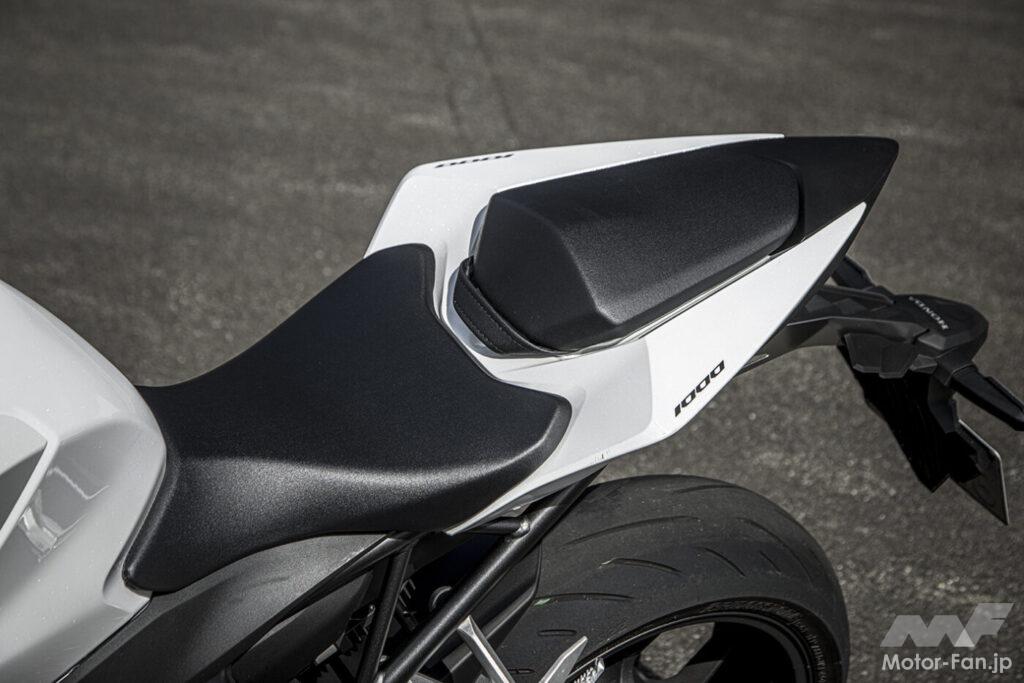
The seat has a super sports design. The seating in the main compartment was surprisingly comfortable, but it seems like it would be quite difficult to ride tandem. There is no equipment designed with cargo capacity in mind.
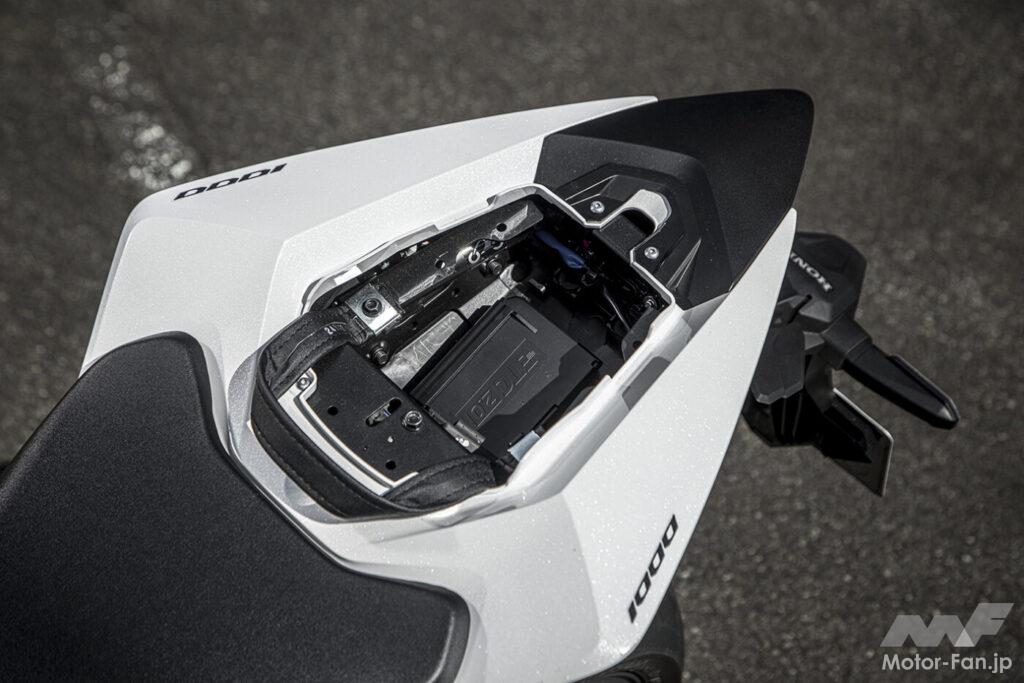
There is storage space under the passenger seat, which can be removed with a key, but the capacity is very small, making it difficult to store rainwear. The ETC2.0 unit is standard equipment.
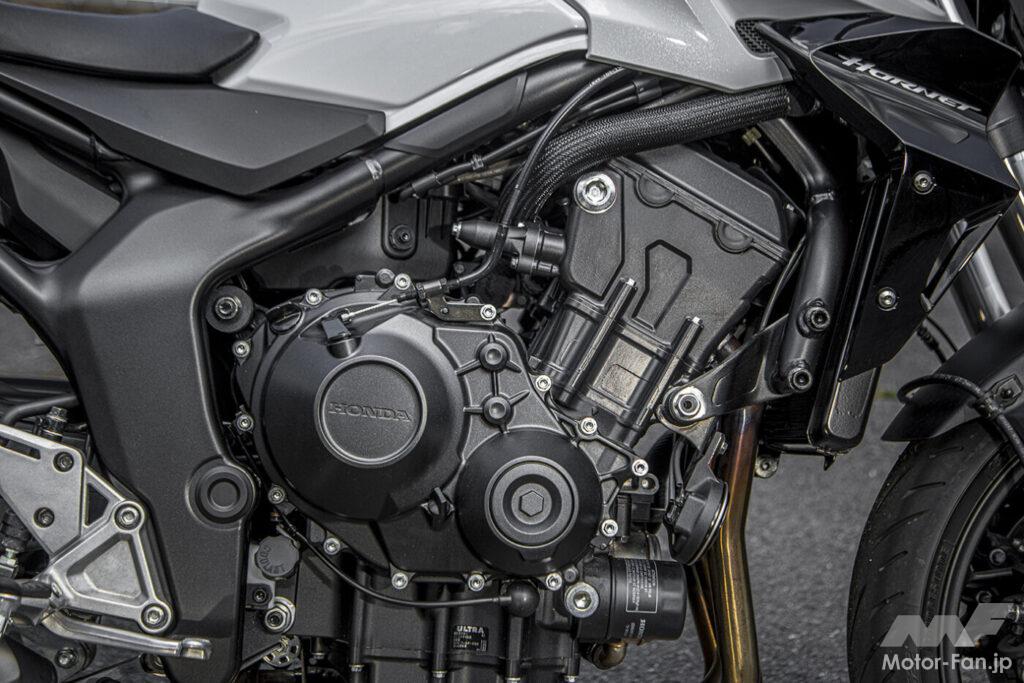
The engine is based on the 2017-2019 CBR1000RR (SC77). The original maximum output was 192ps, but the CB1000 Hornet, which has been redesigned to focus on everyday use, now has a standard output of 152ps and a SP output of 158ps.
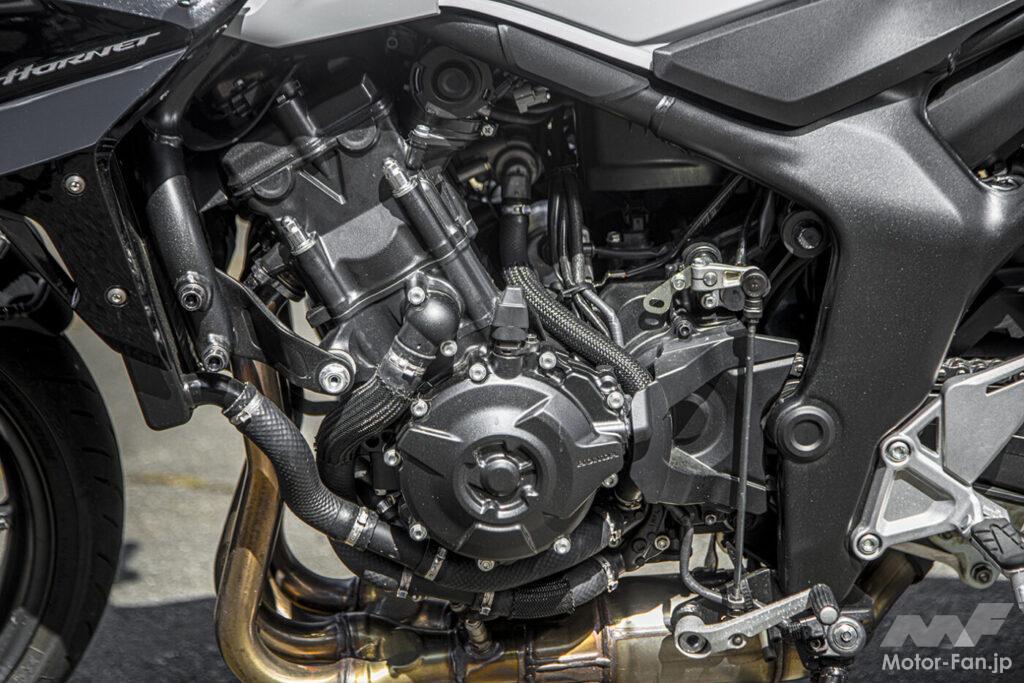
While its predecessor, the second-generation CB1000R, had its intake passage changed from downdraft to sidedraft, the CB1000 Hornet maintains the same downdraft intake as the base model.
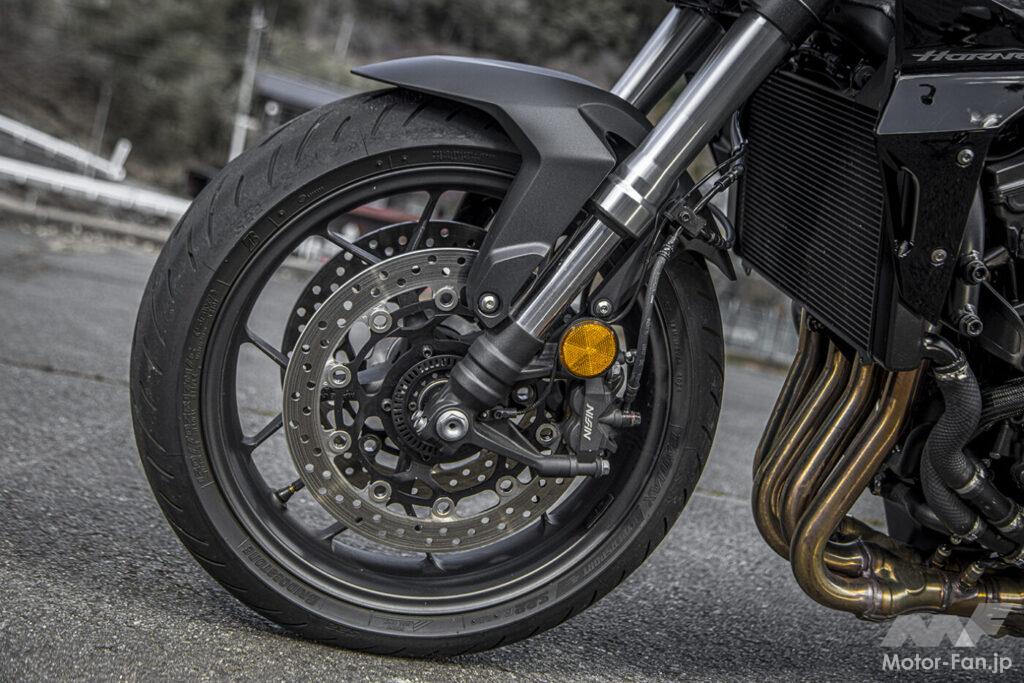
The φ41mm inverted front forks (Showa’s SSF-BP) and φ320mm front disc are the same as the second-generation CB1000R, but the front brake calipers have been changed from Tokico to Nissin.
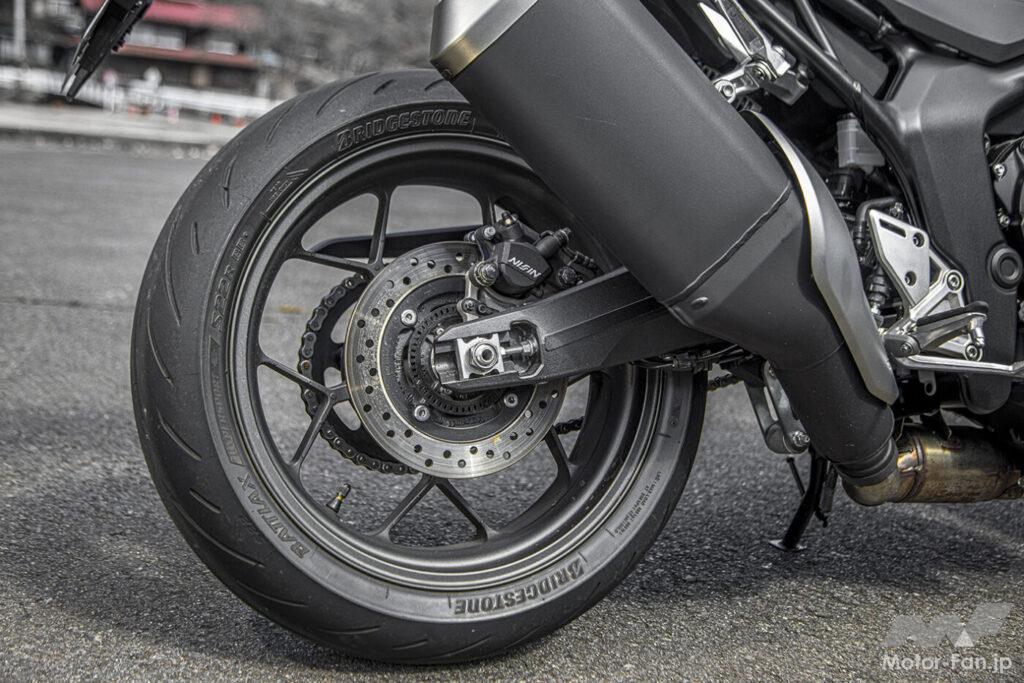
The rear brake, which was a 256mm disc + single-piston caliper on the second-generation CB1000R, has been updated to a 240mm disc + single-piston caliper. The aluminum swingarm is newly developed.
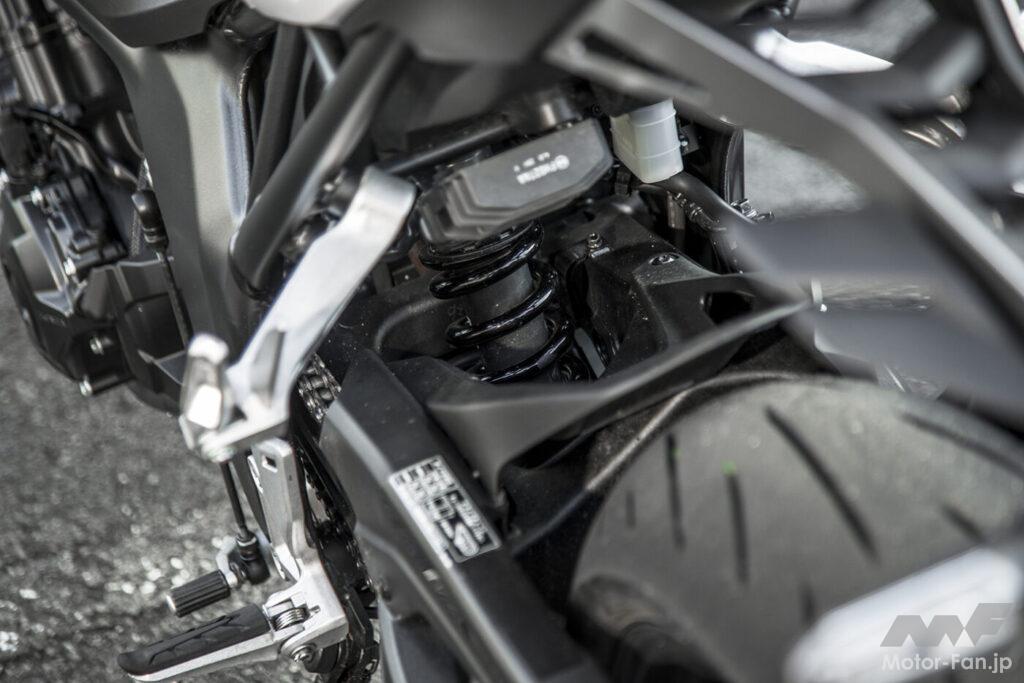
The rear suspension is a bottom-link type with a Showa shock unit, and the original tires, Bridgestone S22 and Dunlop Road Sport 2, are high-grip sports tires from the previous generation.
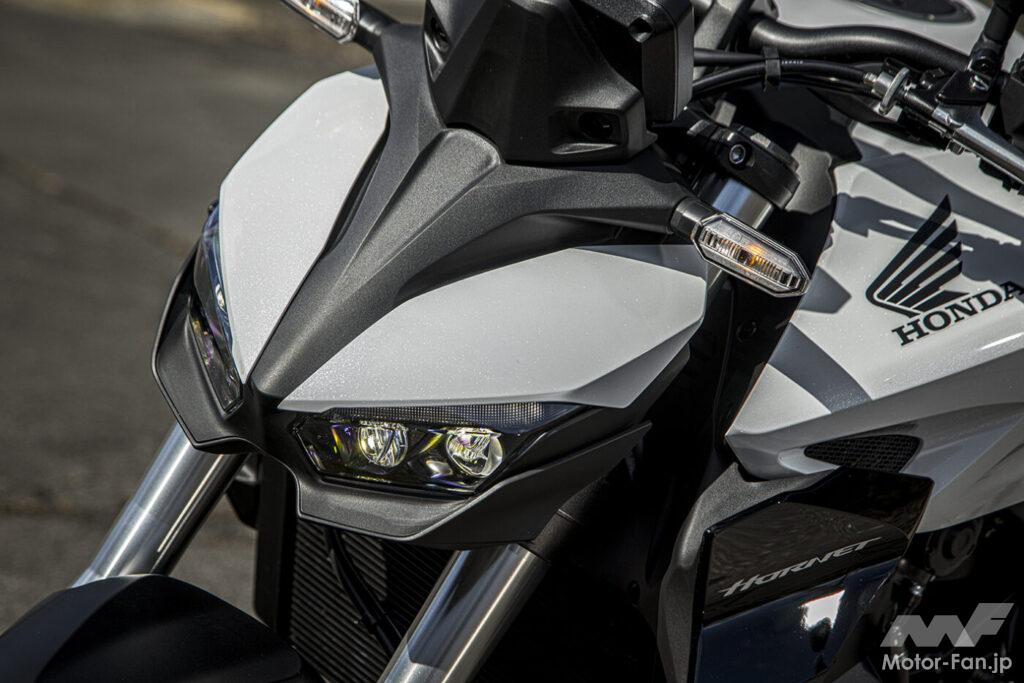
The front mask has a street fighter feel, and compared to the previous model, which had a neo-classical feel and round headlights, it seems to offer some wind protection.
Main specifications
Model: CB1000 Hornet
Model: 8BL-SC86
Length x Width x Height: 2140mm x 790mm x 1085mm
Wheelbase: 1455mm
Ground Clearance: 135mm
Seat Height: 809mm
Caster/Trail: 25°/98mm
Engine Type: Water-cooled 4-stroke in-line 4-cylinder
Valve Type: DOHC 4-valve
Total Displacement: 999cc
Bore x Stroke: 76.0mm x 55.1mm
Compression Ratio: 11.7
Maximum Power: 112kW (152ps) / 10,000rpm
Maximum Torque: 104N・m (10.6kgf・m) / 9,000rpm
Starting Method: Self-starter
Ignition Method: Full Transistor
Lubrication Method: Wet Sump
Fuel Supply Method: Fuel Injection
Transmission Type: Constant Mesh 6-speed Return
Clutch Type: Wet Multi-plate Coil Spring
Gear Ratio
1st: 2.285
2nd: 1.777
3rd gear: 1.500,
4th gear: 1.333
, 5th gear: 1.137
, 6th gear: 0.967
, 1st and 2nd reduction ratios: 1.717, 3.000,
Frame type: Diamond (twin spar),
Front suspension: Telescopic inverted type φ41mm,
Rear suspension: Bottom link mono shock (Prolink),
Front tire size: 120/70ZR17,
Rear tire size: 180/55ZR17,
Front brake type: Hydraulic double disc,
Rear brake type: Hydraulic single disc,
Vehicle weight: 211kg,
Fuel used: Unleaded premium gasoline,
Fuel tank capacity: 17L,
Passenger capacity: 2,
Fuel consumption rate (reported by the Ministry of Land, Infrastructure, Transport and Tourism): 22.0km/L (with 2 passengers),
Fuel consumption rate (WMTC mode value, class 3-2): 17.7km/L (with 1 passenger)