
From Shimizu Port to the coastline
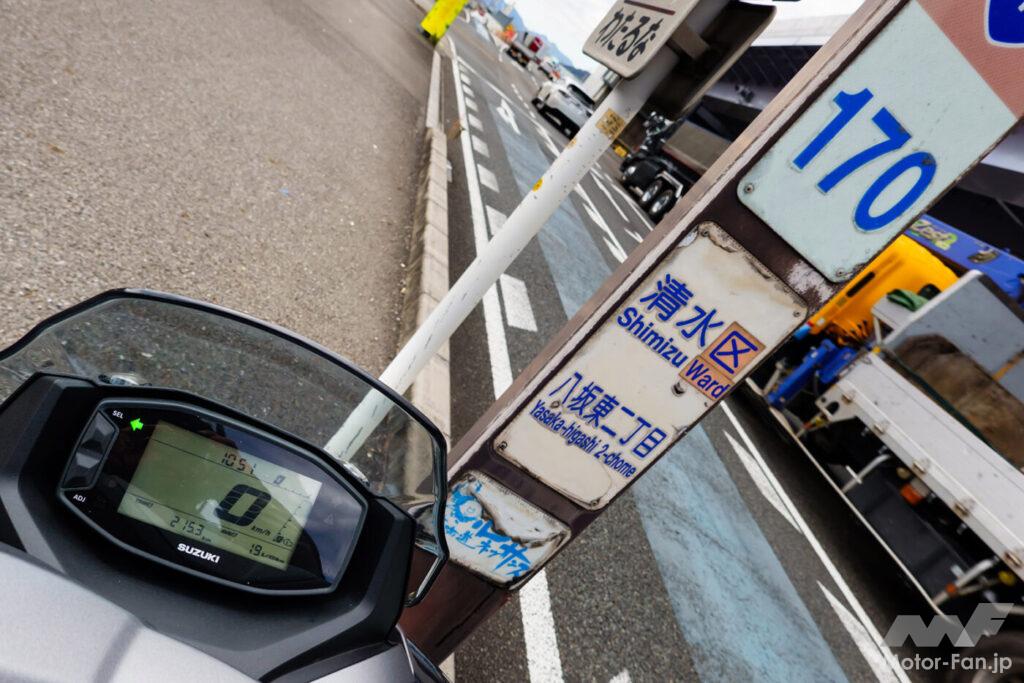
This is Shimizu Ward, Shizuoka City. It was originally Shimizu City, so the sign just says “ward” over the “city” to avoid confusion.
It was a beautiful sunny day. After leaving the inn, we arrived at Shimizu Port in no time. The port’s ferris wheel was a leisurely welcome, spinning around.
For those visiting from land, the center of Shimizu Port is the glamorous ferris wheel and Shimizu Marine Park. But for those who work on the sea, the center of Shimizu Port is the Hinodemachi area to the east. Large cargo ships dock here, and old warehouses line the streets.
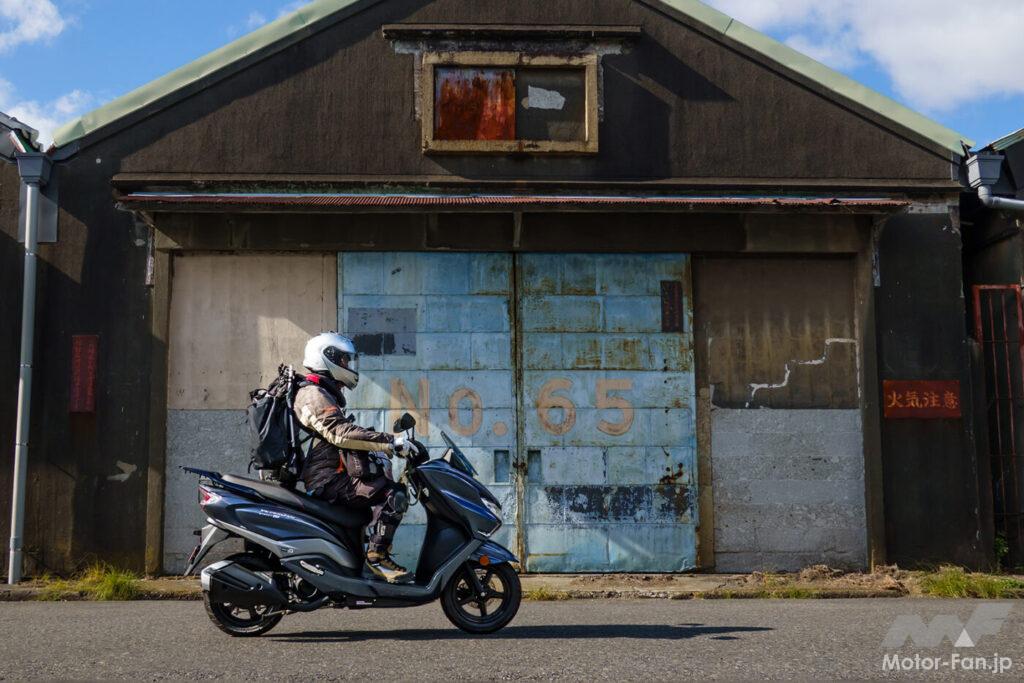
The warehouse district of Shimizu Port is a great spot for any decent rider to look good. But the word “looking good” doesn’t exist in the dictionary of the unattractive AFO RIDER Takahashi. In fact, I don’t think the word “looking good” in the social media sense exists in any normal dictionary.
ADVERTISEMENT
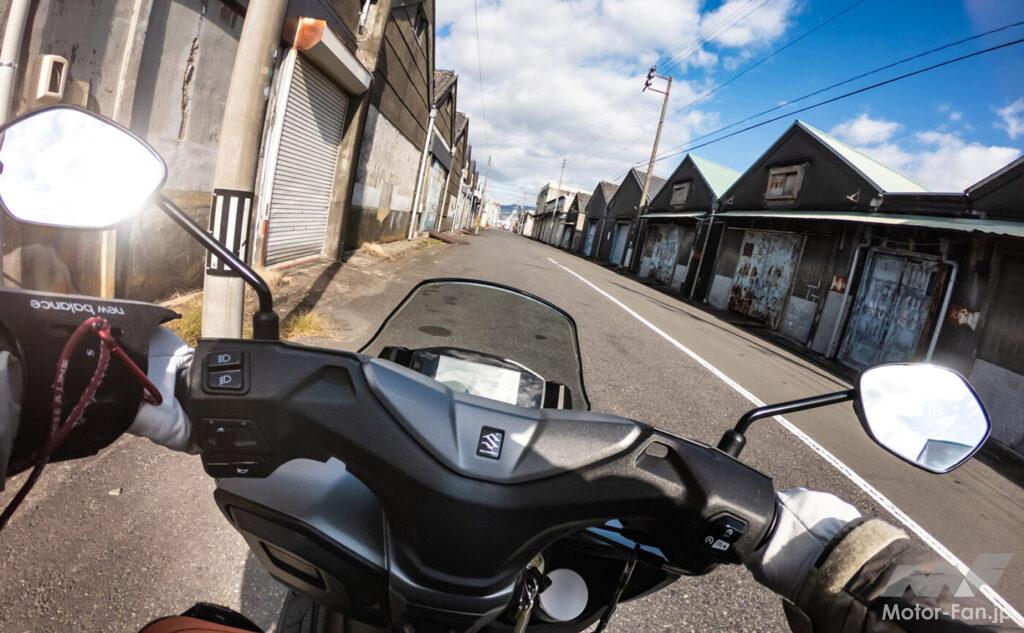
We pass through a group of retro gabled warehouses and head towards the Suruga Bay coast.
National Route 150 runs straight west along Suruga Bay, offering a pleasant seaside route with a panoramic view of the vast bay. Even Takahashi, who always strives to drive safely with a determination to die, needs to keep a sharp eye on the throttle, otherwise he might accidentally exceed the speed limit.
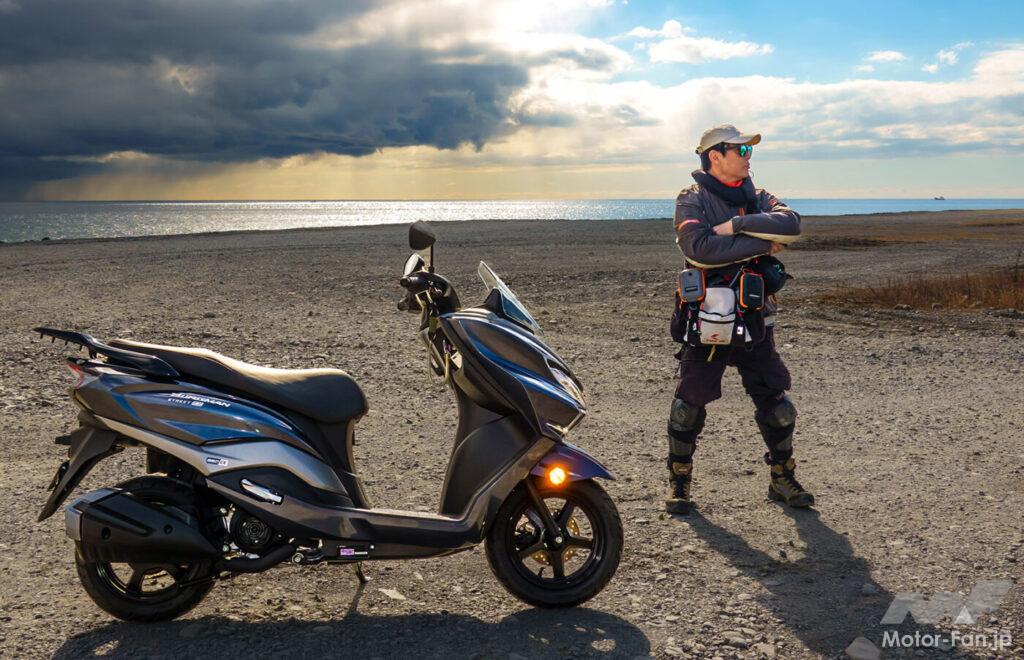
The clouds were being pushed by the howling sea breeze and moved quickly, causing the sky to change rapidly.
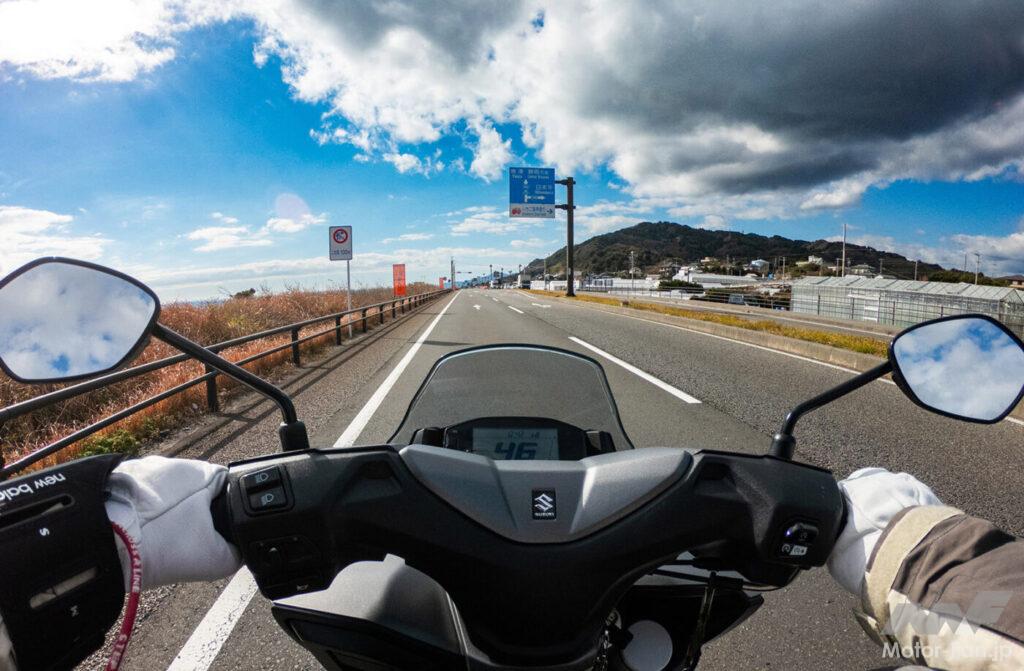
Riders traveling along National Route 150 from Shimizu Port will enjoy the refreshing ocean view.
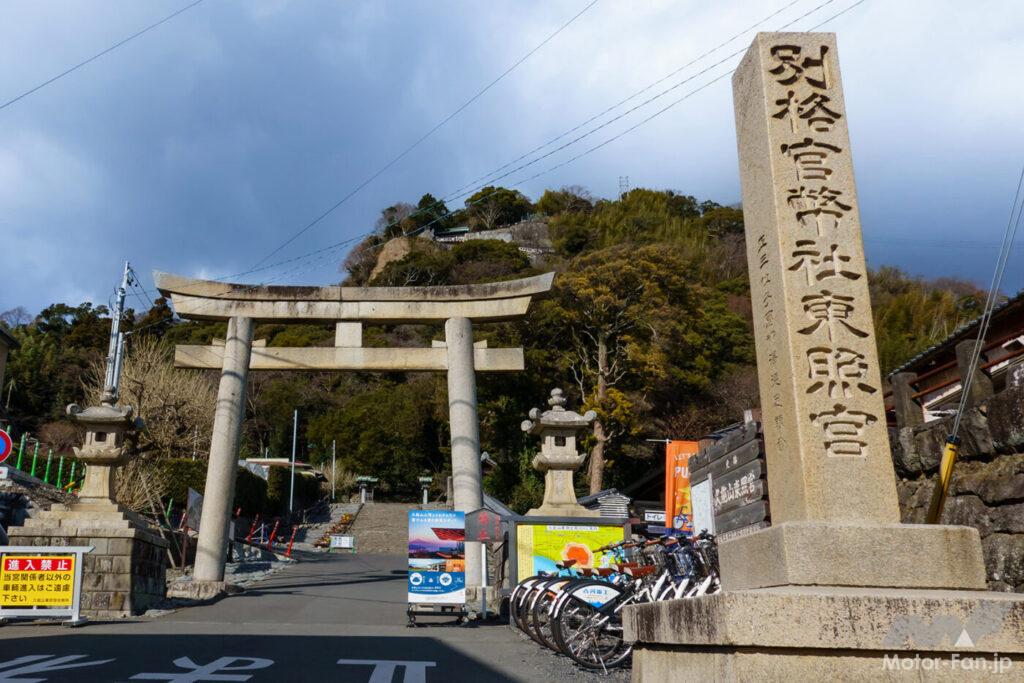
Kunozan Toshogu Shrine is located along National Route 150. It enshrines Tokugawa Ieyasu. The “Bekkek Kanpeisha” (Special Kanpeisha) engraved on the signpost is one of the ranks of shrines established under the modern shrine ranking system. It indicates that the shrine enshrines military commanders who have made great achievements.
ADVERTISEMENT
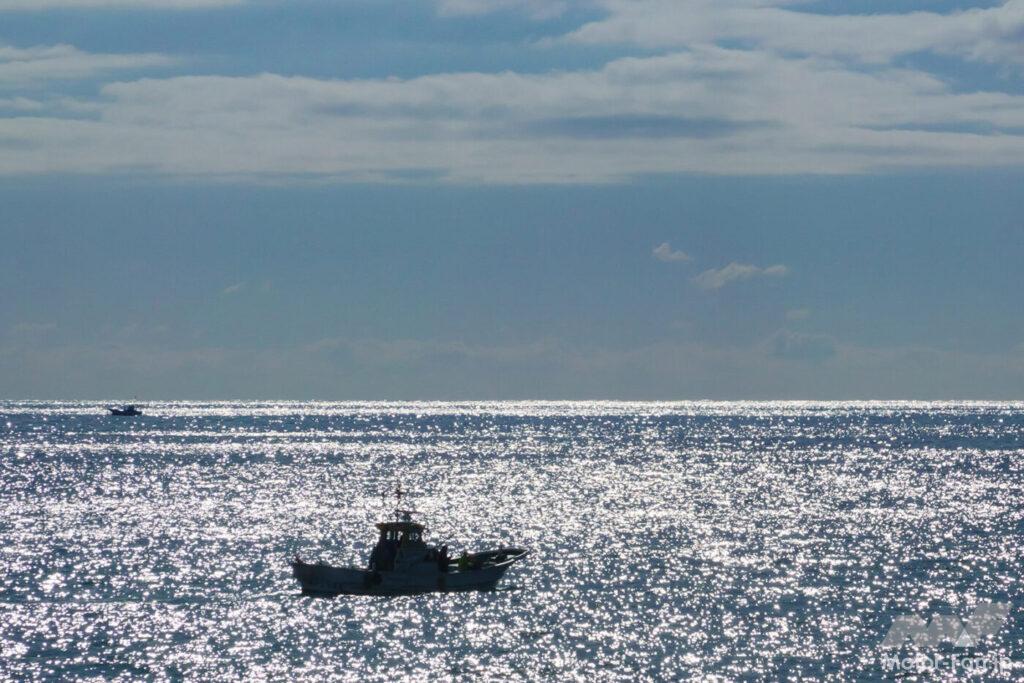
The silhouettes of fishing boats float against the dazzling light of Suruga Bay. A view of the sea in the spring.
Crossing the Abe River to Maruko-juku
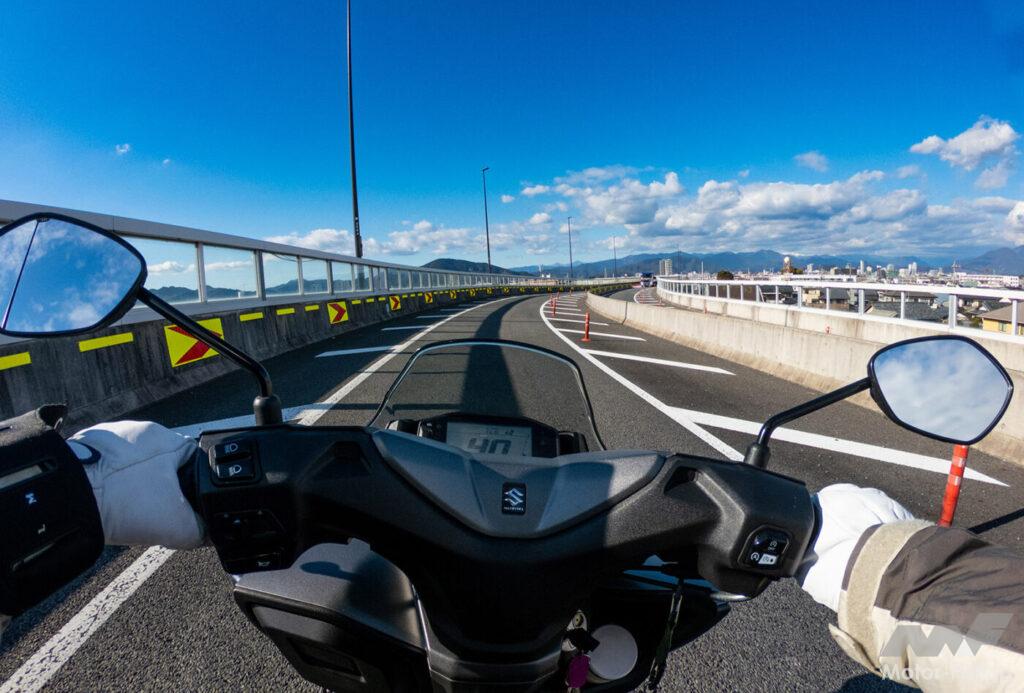
View of the city from the Shizuoka Bypass overpass. After this, the road crosses the Abe River.
We crossed the Abe River on National Route 150 and turned north. We cut through the western part of Shizuoka City and headed towards Mariko-juku. There, the last mark on the fuel gauge began to flash. This was the final warning that we were running low on gas.
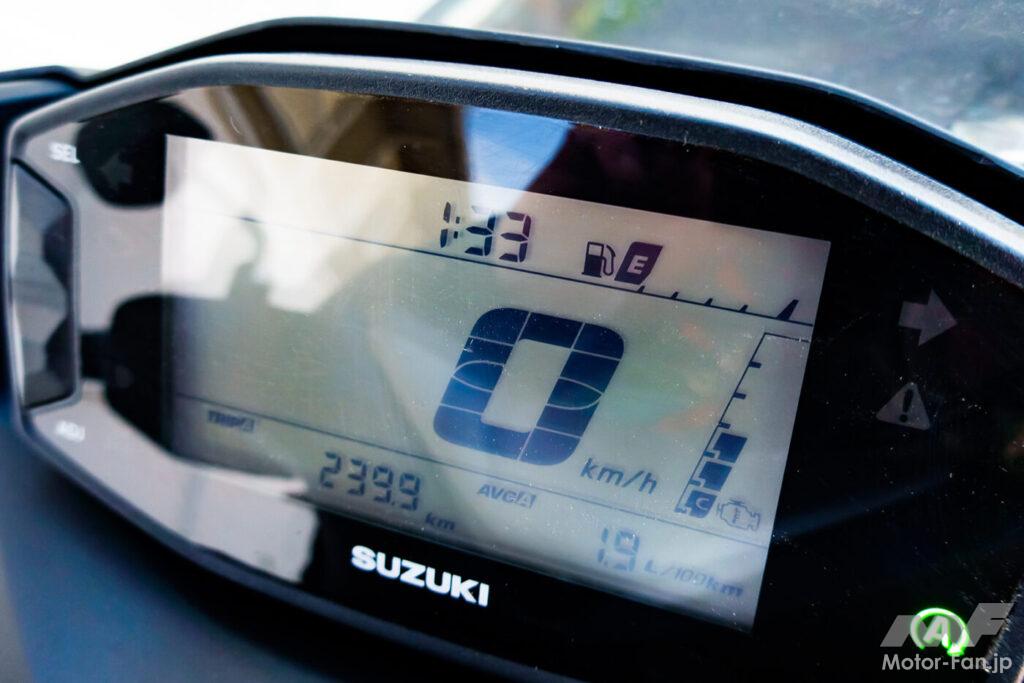
After a 239.9km trip, the last mark on the fuel gauge, marked with the letter “E,” began to flash along with the gasoline gauge mark. Perhaps because I had been driving at a steady pace, the engine temperature gauge on the far right was also a little high.
We drove a short distance along the Okabe Bypass and headed towards Utsunotani Pass. I felt like restarting the car from idle stop was starting to become a little tricky. The Burgman 125’s idle stop system has a slight time lag between when you first open the throttle and when it starts. This lag was starting to feel a bit uneasy, like it was stuck in the engine. It could be that the car was really close to running out of gas, or it could be that Takahashi, with his baby rabbit heart, was too afraid of running out of gas.
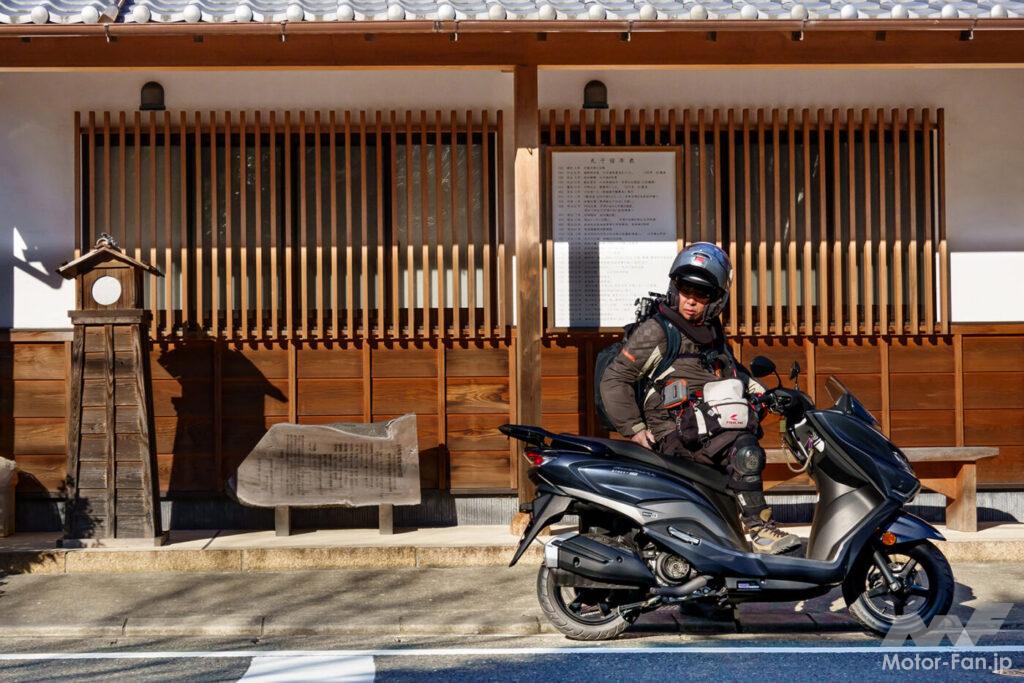
The post town of Mariko. The building mysteriously exudes an Edo-period atmosphere, but it doesn’t seem to be a historical building.
ADVERTISEMENT
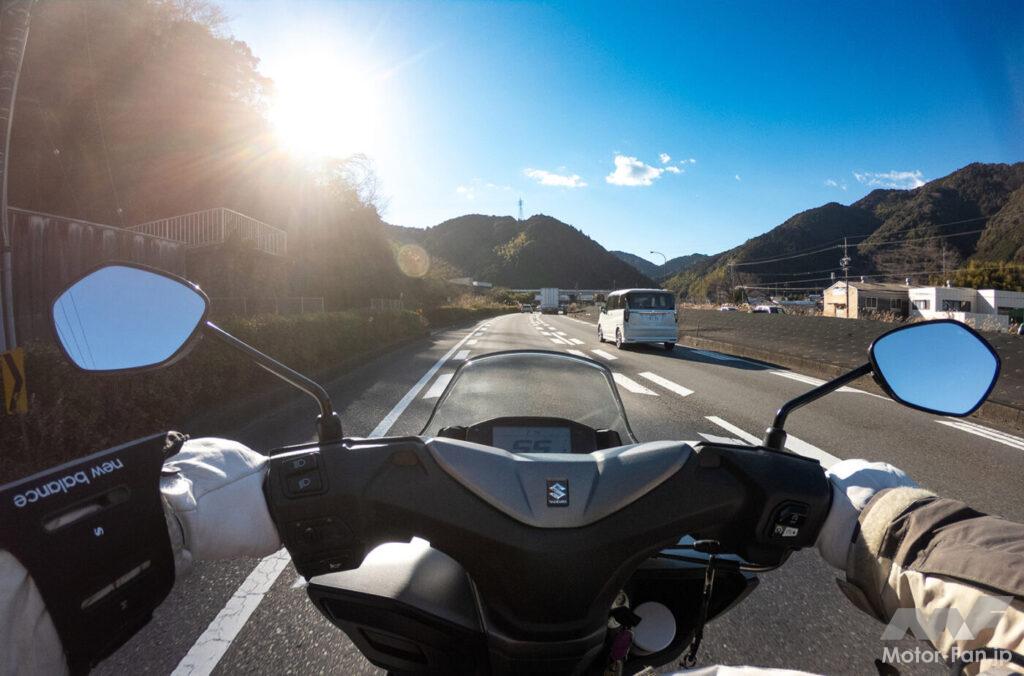
Okabe Bypass. From here, we changed onto Prefectural Route 208, and headed across Utsunotani on a narrow mountain pass to Okabe-juku.
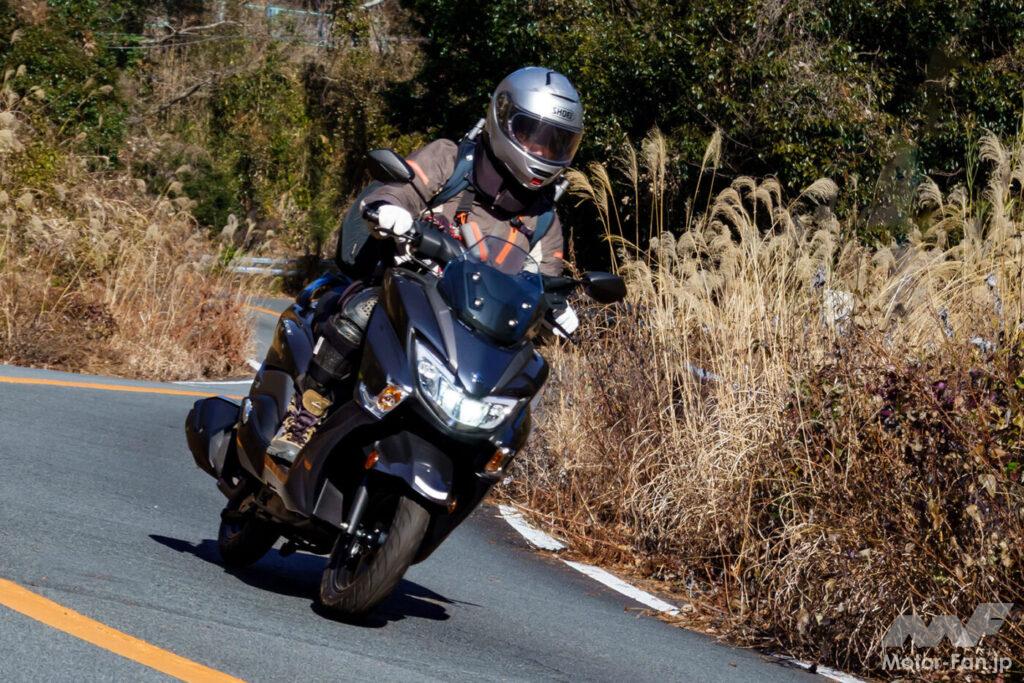
The Burgman 125 is riding downhill at Utsunotani. As long as you don’t lean it over and attack aggressively, it handles winding roads with ease and no problems.
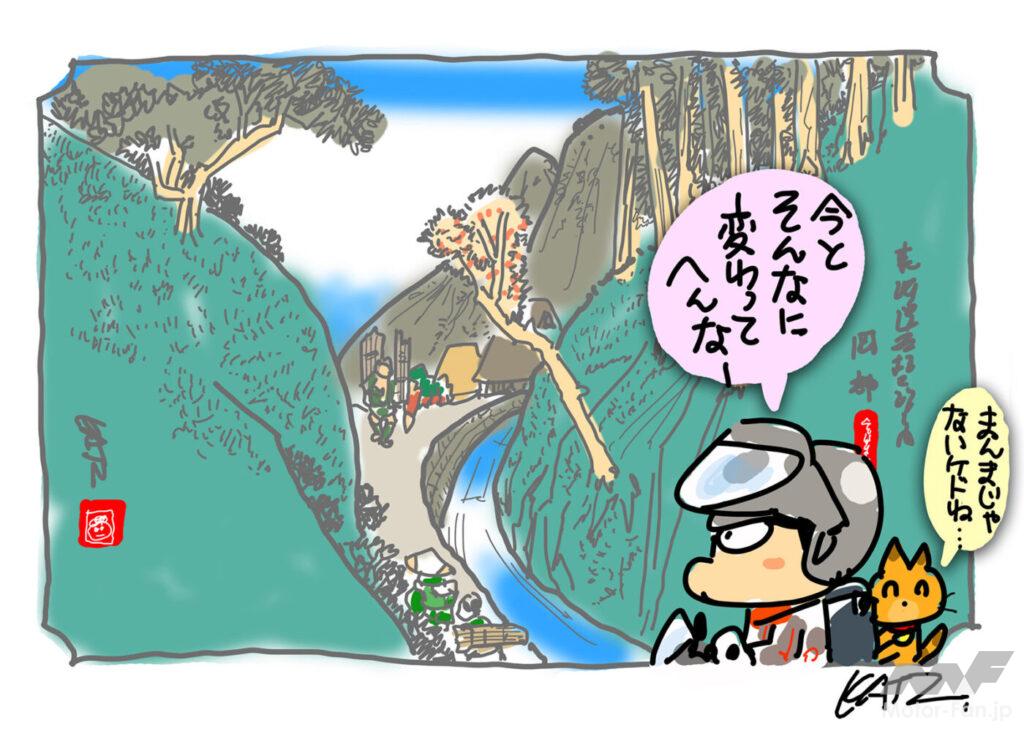
[Illustration from Ando Hiroshige’s “Okabe and Utsunoyama, one of the Fifty-three Stations of the Tokaido”] The area around Utsunoya was a dimly lit mountain path covered in ivy, and was therefore also known as the “Ivy Narrow Road.”
Prefectural Route 208 was the old Tokaido road and also the old National Route 1. Around Utsunotani and Okabe, this road is sparsely populated with people and cars, and it has lost all traces of its former glory as one of Japan’s main roads. However, thanks to being left behind by development, the appearance of the post towns of the past has not been lost.
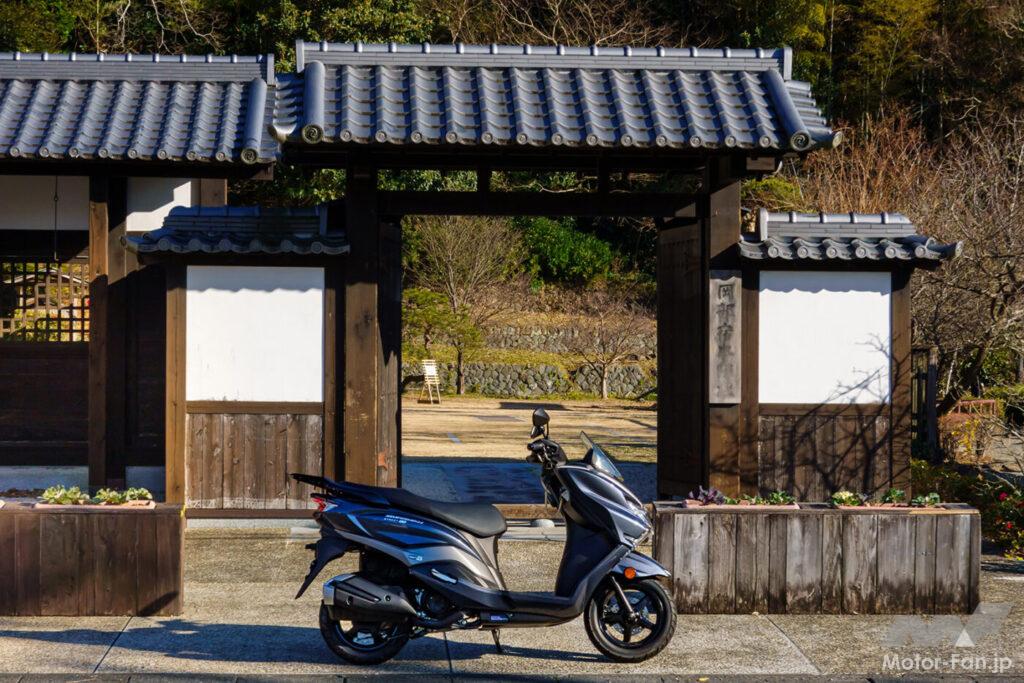
The remains of the Okabe Inn main camp. The building no longer remains, but the main gate and other structures have been restored to their original state. The layout of the grounds on the site is displayed on a flat surface, giving a glimpse of what the main camp was like back then.
ADVERTISEMENT
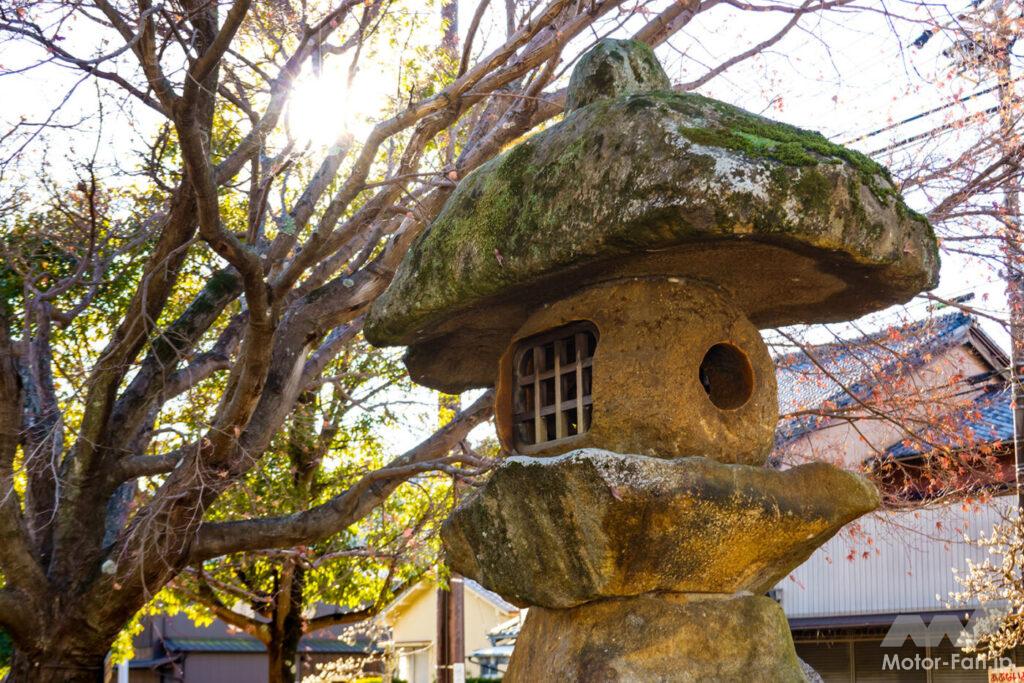
There was a stone lantern (which looked like a wind monument) near the site of the main camp.
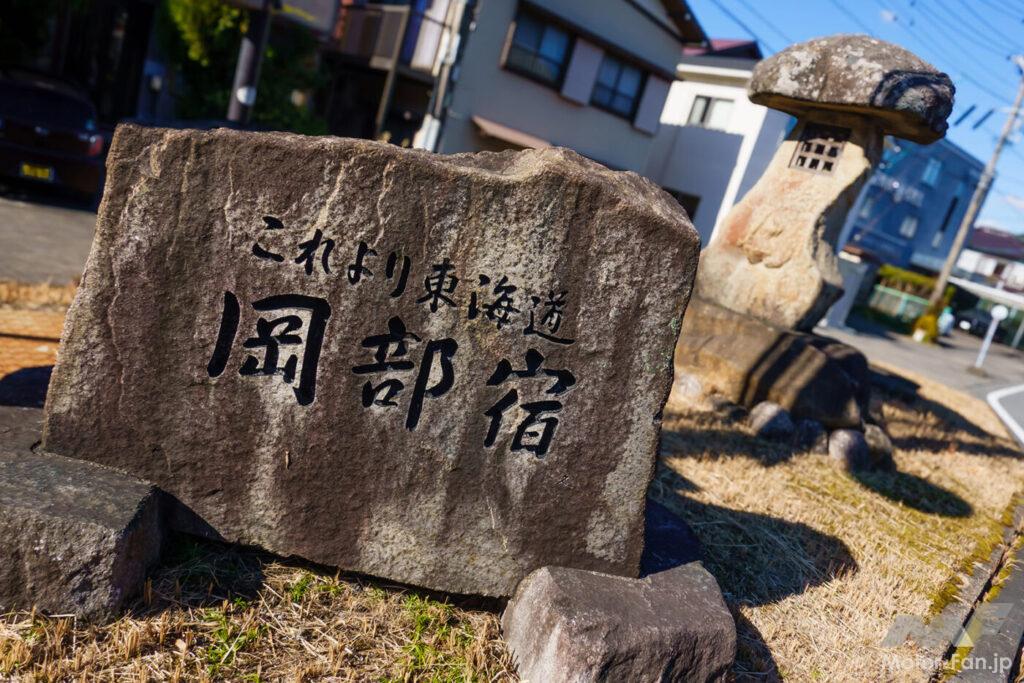
This stone monument is located on the west side of Okabe-juku. It looks very old, but it was actually erected in 1999.
After passing Okabe-juku, the road changes to Prefectural Route 381 and approaches Fujieda city. The engine’s behavior then began to become seriously strange. Once the engine stalled due to the idling stop, it would not start even when I opened the throttle. I got impatient and opened the throttle wide, and suddenly it started moving. Eventually, the idling stop system itself stopped working, and the engine continued to run even when the car was stopped.
The Burgman 125’s idle stop has several conditions for operation. It is a safety design that automatically determines whether the engine has been started and whether it has warmed up. It was not stated that the remaining gasoline level was one of the conditions, so it may be that some kind of fail-safe mechanism was activated.
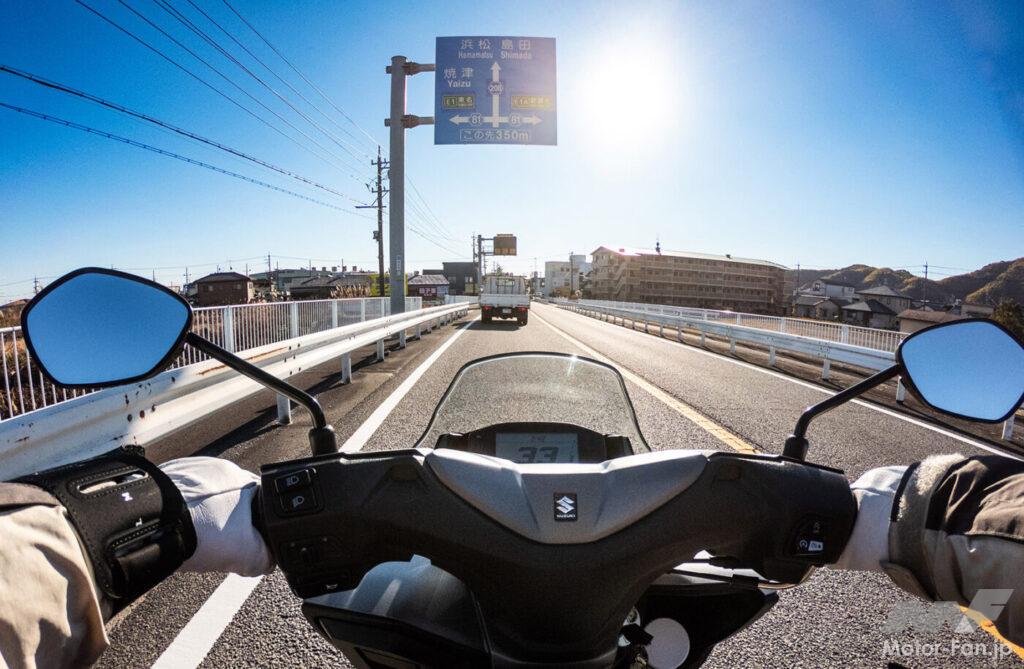
Once we entered Fujieda city, the engine started to behave erratically, but this was much better than a sudden stop because it was a clear sign that we were running out of gas.
1 kilometer difference
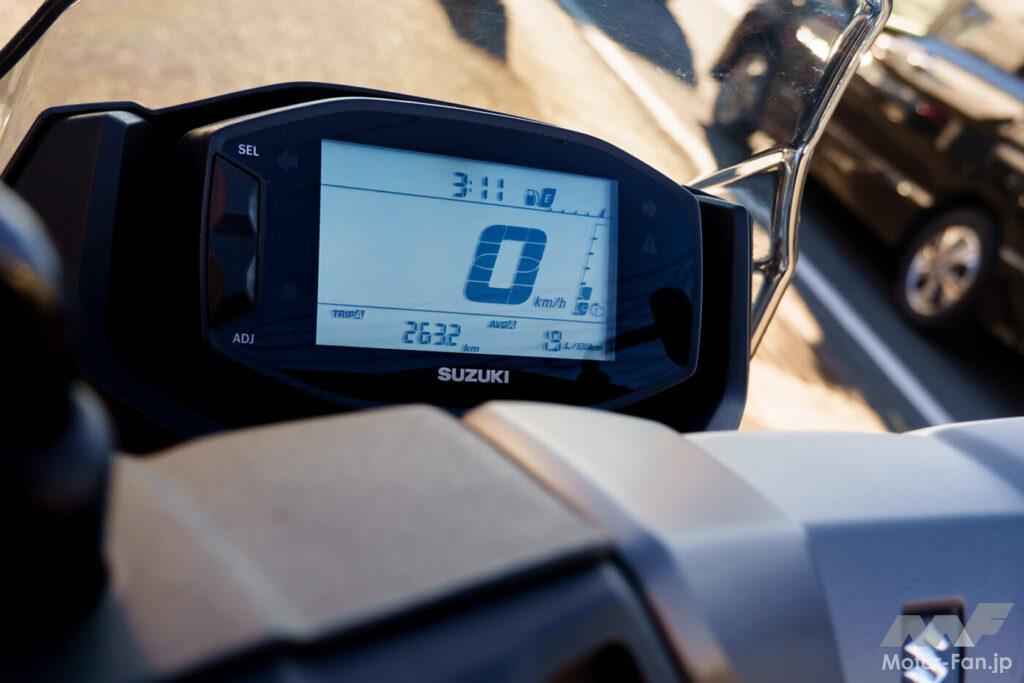
The gas-depleted journey comes to an end, with the trip total at 263.2km.
Finally, the time came when the journey ran out of gas. But it didn’t just die out. Even after the engine stalled and I couldn’t start it, I kept turning the starter until it finally started up again and I could drive a few hundred meters, then it stopped again, I tried again, and it started again… I repeated this process several times, and finally, when it stopped making any noise at all, it was determined that the car was out of gas.
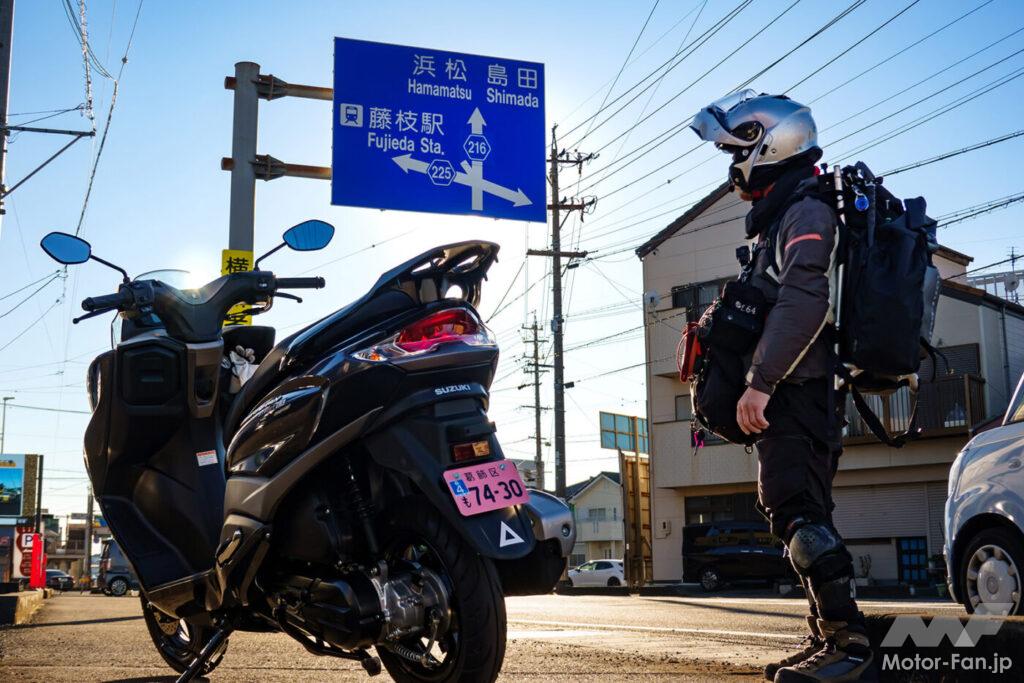
The train finally ran out of gas and had to stop just before Fujieda Station, and was unable to cross the Oi River.
Coincidentally, the location on the map was only about 1 kilometer away from the point where the Honda Cross Cub 110 ran out of gas and stopped during the previous Tokaido Gas Challenge. However, the total distance traveled was 248.1 km for the Cross Cub 110 and 263.2 km for the Burgman 125, a difference of 15.1 km. This difference was caused by AFO Takahashi getting lost, making detours, and unnecessary driving. Fuel economy tests on public roads can only be this accurate at best. I’m not saying you shouldn’t use them as a reference, but smart riders should not blindly accept the results of AFO fuel economy articles and should instead properly read the correct specifications listed by the manufacturer.
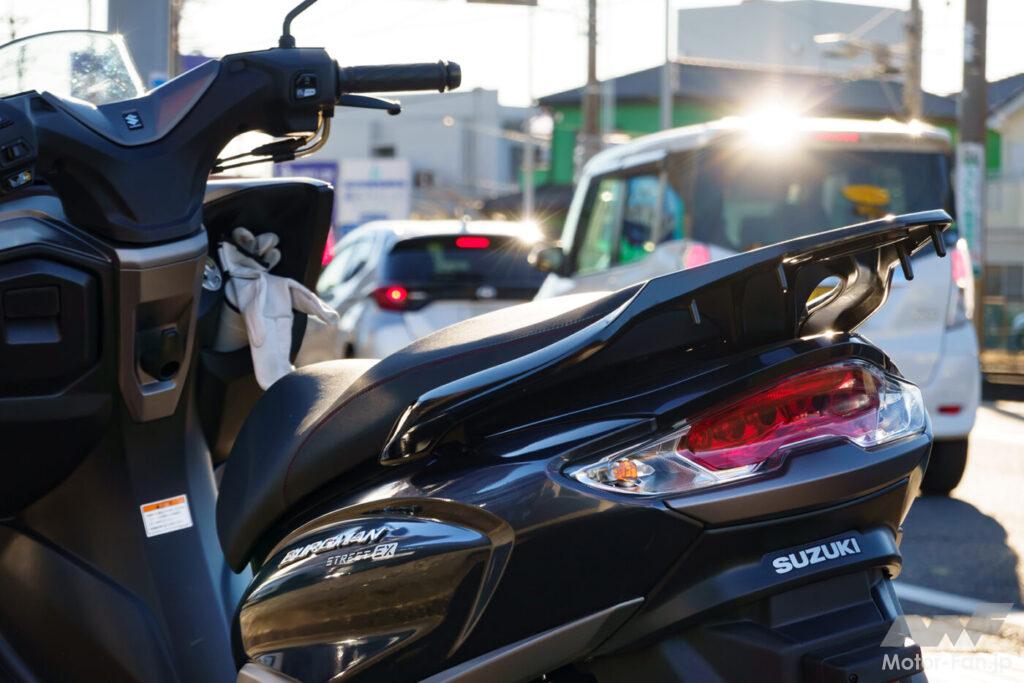
The setting afternoon sun shines on the Burgman 125, which has completed its journey despite running out of gas.
If you use up all of the 5.5 liters of gasoline in the tank, the Burgman 125’s actual fuel economy will be approximately 47.9 km/L. Compared to the catalog’s listed WMTC mode fuel economy of 56.0 km/L, this is 8.1 km/L less per liter, but this is still an appropriate and realistic figure. The fuel economy displayed on the meter panel was 1.9 L/100 km. This converts to approximately 52.6 km/L. Although it is not exact because the figures are omitted to the second decimal point, this figure is also within a reasonable range.
The Suruga Road is drowning in chocolate
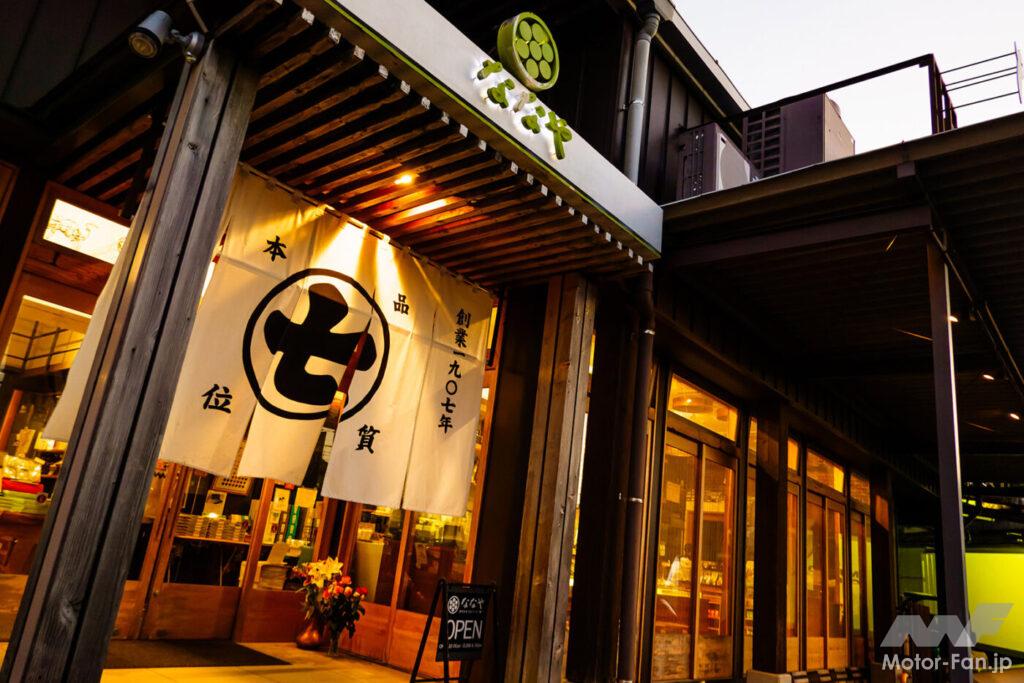
Nanaya’s storefront exudes a long history and dignity, having been in business for over 100 years.
[Nanaya website] https://nanaya-matcha.com/
Even the editorial staff, who are calm and unfazed by the brutal and immoral orders to drive a small motorbike for hundreds of kilometers until it runs out of gas, still retain a trace of humanity. Even the brutal “Tokaido Gas Challenge” has one nice reward: a special rule that allows participants to eat something delicious (at their own expense) when they run out of gas.
In Fujieda City, there is a famous long-established tea shop called Nanaya Fujieda Main Store, and when I heard that they not only sell tea but also tea-based sweets, I decided to check it out right away.
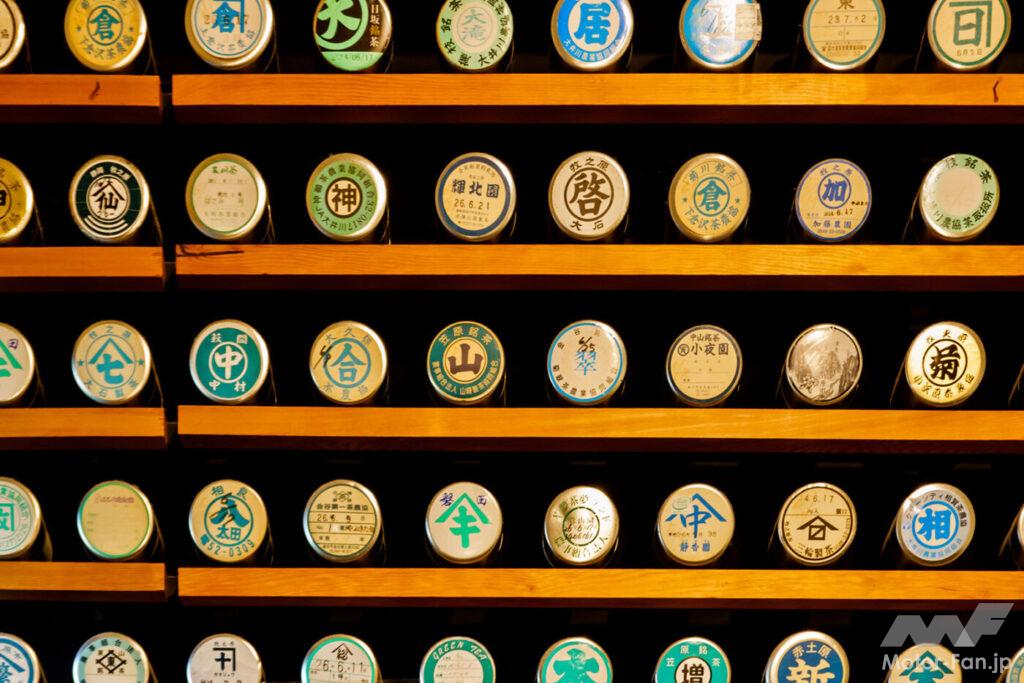
The displays inside the store also exude the pride of a prestigious tea shop.
ADVERTISEMENT
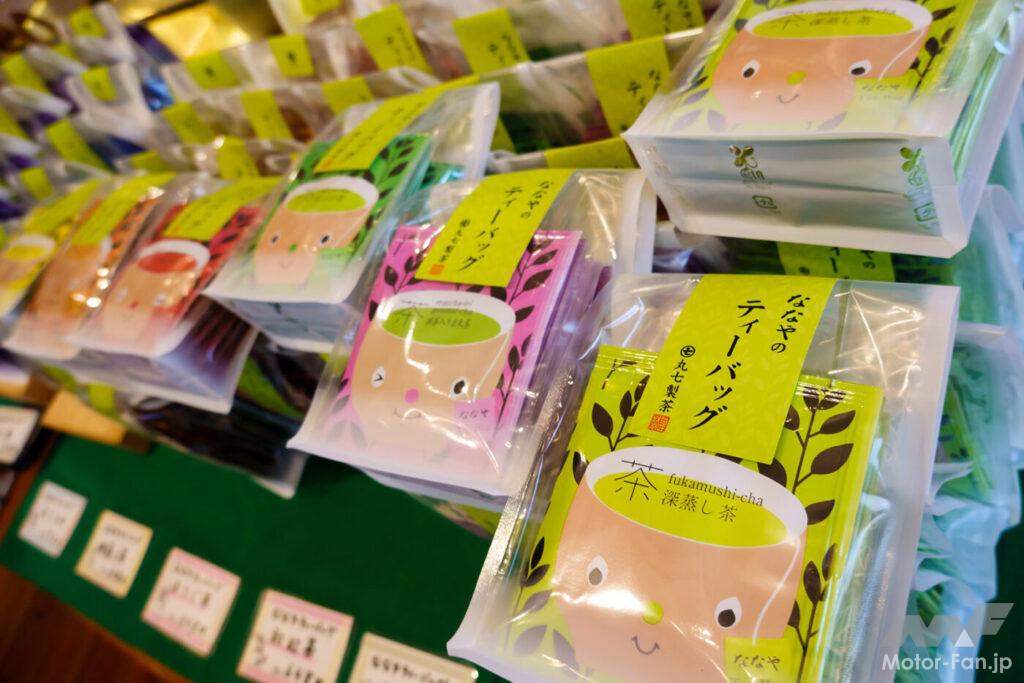
The store has an amazing selection of products, including tea gelato and honey, and it seems like you can find just about any tea-based product.
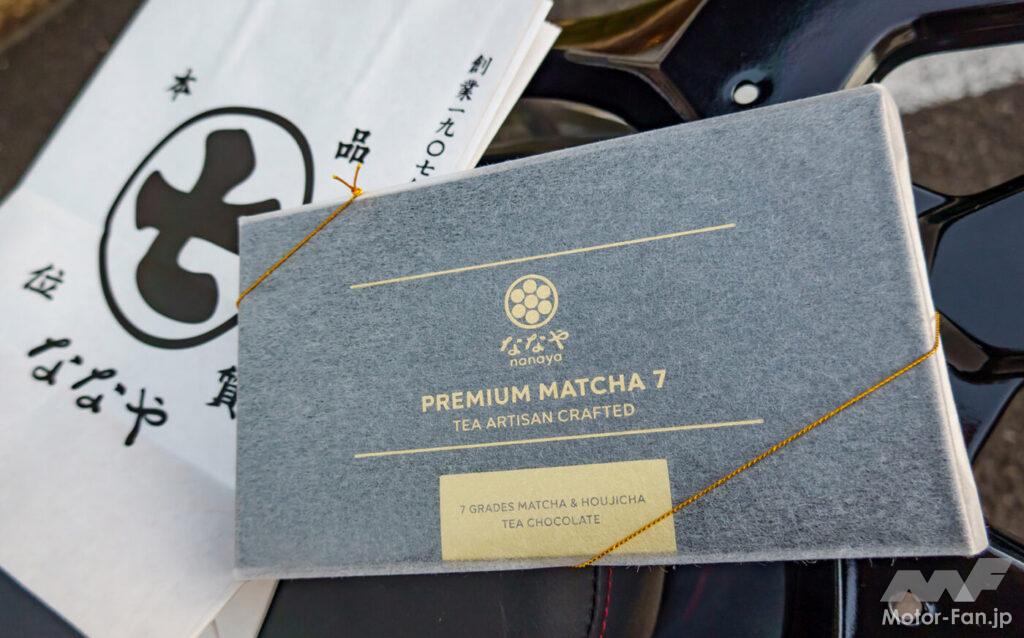
This is Premium MATCHA 7, a chocolate set that uses plenty of tea.
Takahashi bought Nanaya’s most popular sweet, the Premium MATCHA 7. No matter how special the sweet, it was a luxury item costing 2,500 yen (tax included) that Takahashi, who usually only eats 100-yen store chocolates, couldn’t easily afford. But expenses are, in essence, other people’s money, so he decided to go all out and spend it. (← the worst)
I took it to a nearby riverbank and opened the box, where I found a row of vibrant green chocolates neatly arranged inside, a beautiful gradation of color reminiscent of pastel painting.
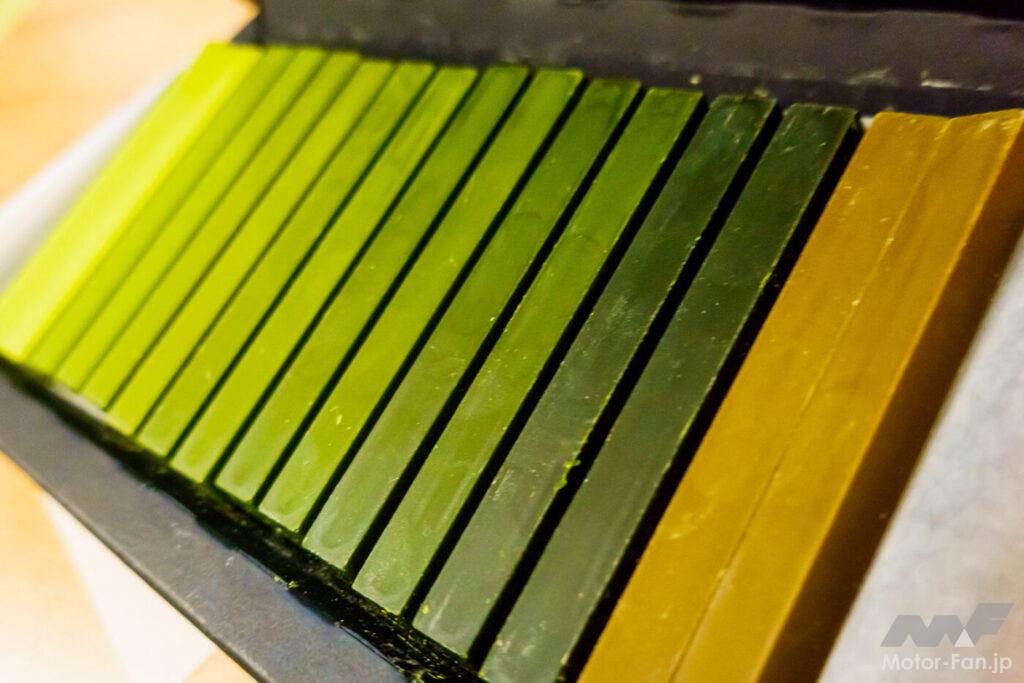
The set includes two sticks of matcha chocolate and two sticks of hojicha chocolate, each with seven different strengths, from No. 1 to No. 7. The richest matcha chocolate boasts the world’s highest strength.
The recommended way to eat them is to start with the lightest and work your way up to the darkest, finishing with the roasted green tea chocolate. The lighter ones are sweeter, while the darker they are, the more bitter they become. By the time you reach No. 7, the highest concentration, the taste is almost on the level of a “matcha stick.” Even Takahashi, who is picky about tea, was thoroughly satisfied with this delicious matcha chocolate. I’m a little worried that it might melt in the summer, but if that’s okay, it would make a great souvenir for a tour.
I put the remaining chocolate in my bag, got on my Burgman 125, and left Shizuoka on a sunny day, heading back to Tokyo. By the time I left Shizuoka Prefecture, the bitter and sweet taste still lingered on my tongue. Spring would soon be here.
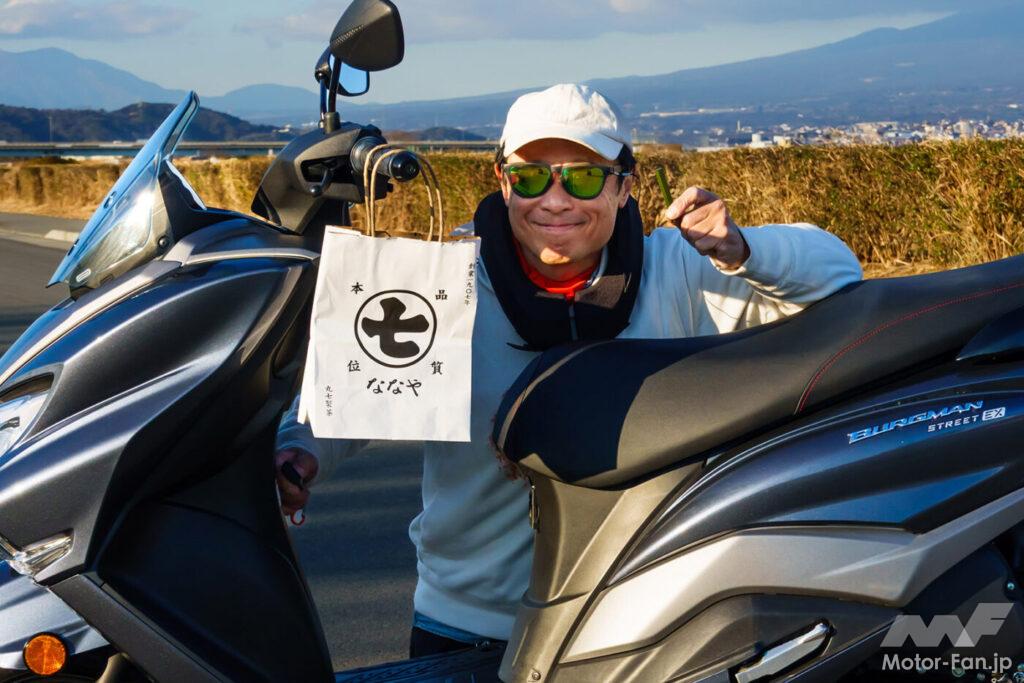
I ended my trip to Shizuoka, a tea-producing region, with some matcha chocolate. The green chocolate and green sunglasses were a beautiful combination. (Not that I’m saying that.)
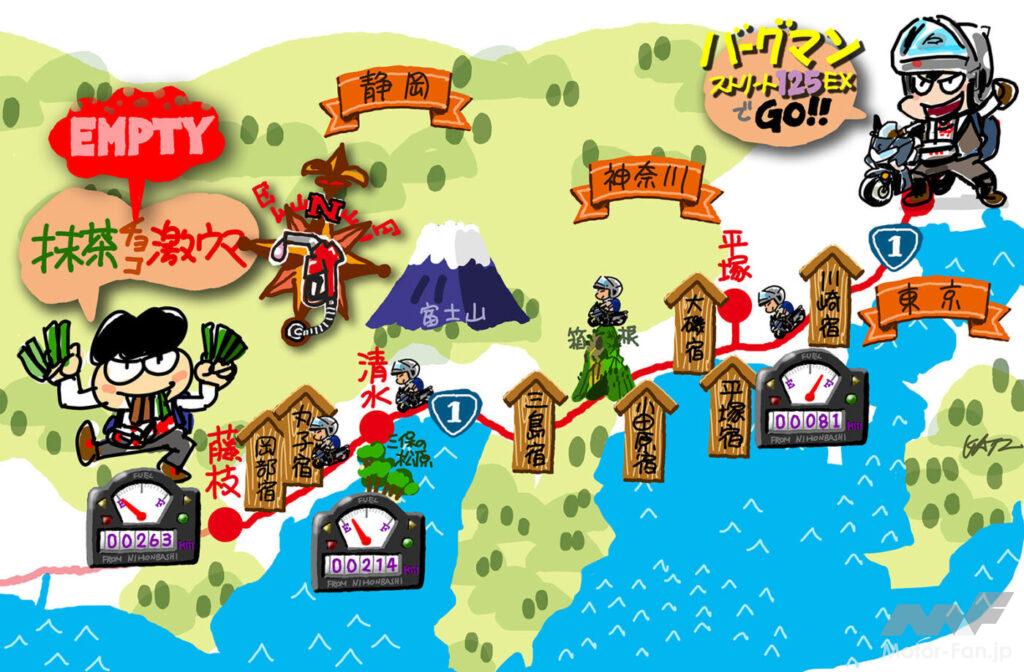
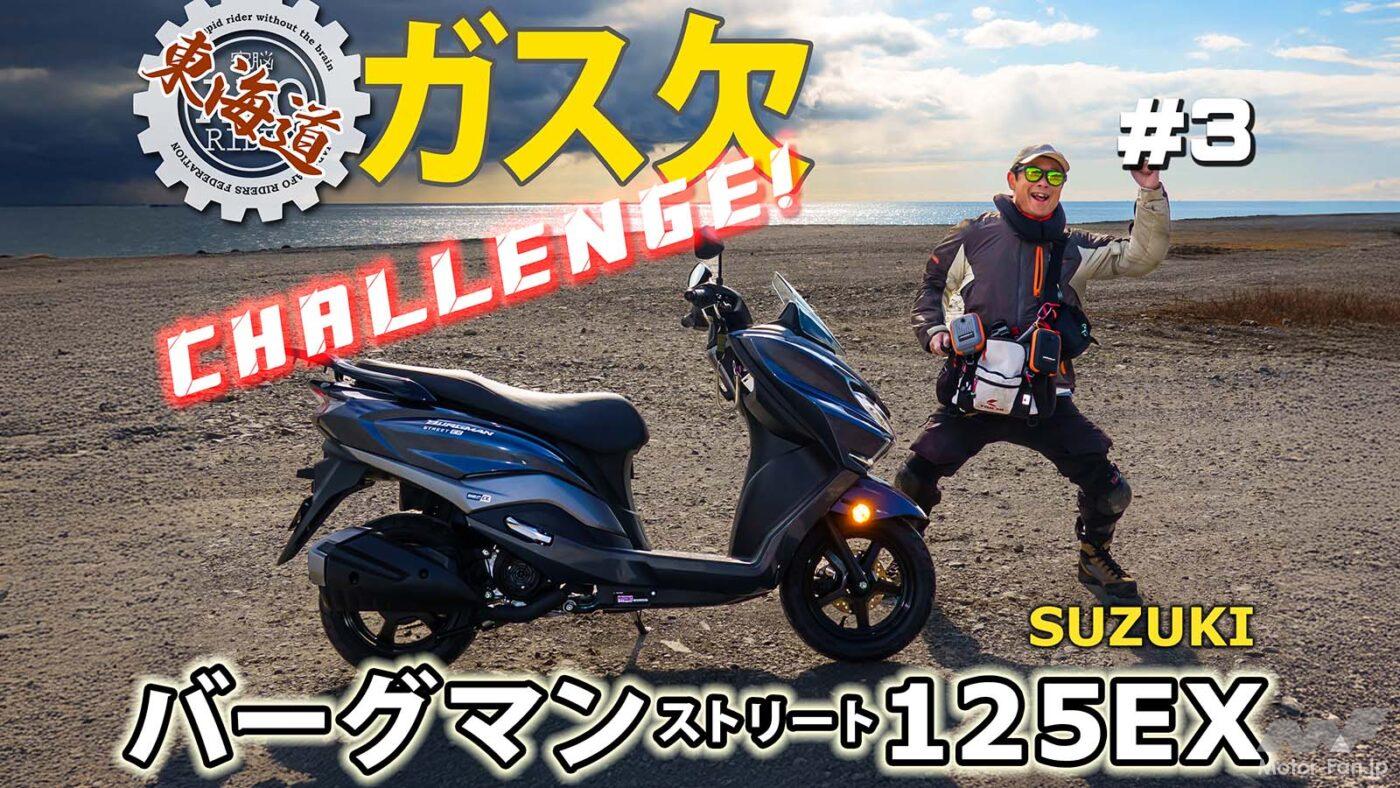
[MAP] Tokaido Gas Challenge #9 Suzuki Burgman Street 125EX [Nihonbashi to Fujieda]
 How far can a Suzuki Burgman Street 125EX go with a full tank of gas? Part 9 of the Tokaido Gas Challenge, from Nihonbashi, Tokyo to Kyoto! [Day 1]
Riding a Suzuki Burgman Street 125EX, we head from Nihonbashi, Tokyo to Kyoto, taking on a one-way attack on the Tokaido, using up a full tank. From Orochi Park to Shonan at sunset! REPORT ● AFO RIDER Takahashi PHOTO ● Takahashi Katsuya ILLUSTRATION ● Takahashi Katsuya