
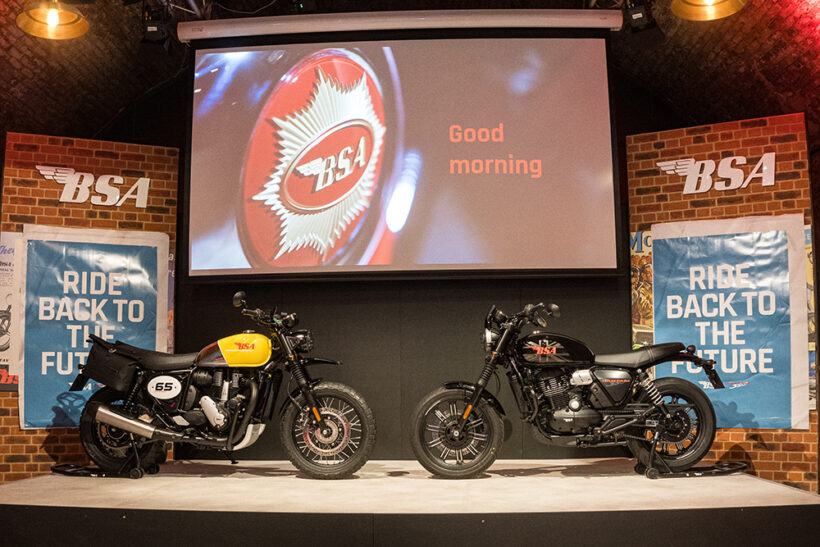
Two new models aimed at increasing presence in the global market
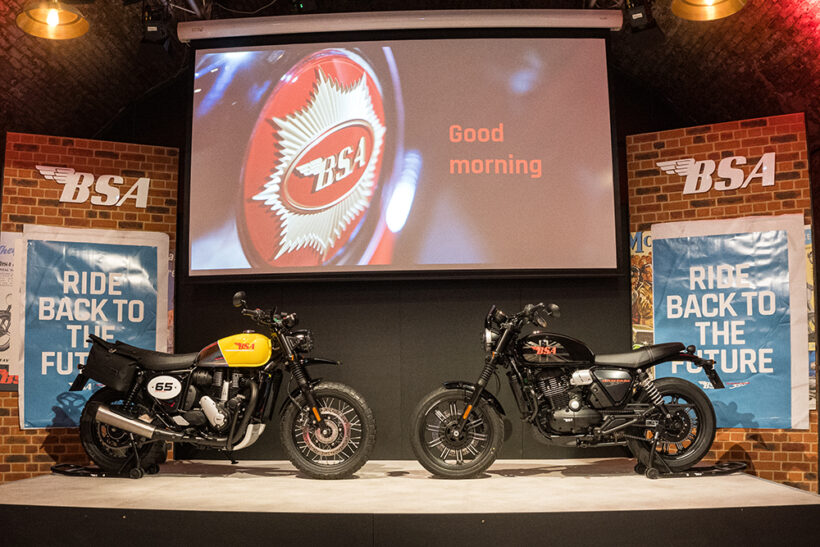
The BSA brand is making a comeback. To be precise, in 2016, Classic Legends, a subsidiary of Mahindra, a major Indian motorcycle manufacturer, became the new owner of BSA, and the revival of BSA was announced at that time. Then, in 2021, they unveiled the new Gold Star 650. It was released in the UK and parts of Europe, and sales in Japan, North America, and Southeast Asia from spring 2025 also drew attention. The second and third arrows that followed were the Bantam 350 and Scrambler 650. BSA, which had been carefully navigating the road to revival, unveiled two new models at once. While the Gold Star 650 launch was a small event aimed at UK media, this time it was a full-scale test ride and presentation aimed at European and Asian countries. With such enthusiasm, it feels like the second chapter of their revival has begun.
BSA was once the UK’s largest motorcycle brand. With engine displacements ranging from 250cc to 750cc, and available in single-, twin-, and triple-cylinder versions, BSA was a leading manufacturer of high-quality motorcycles, representing the industrial powerhouse that was Britain, and it led the market. Its size and advanced technology made it stand out globally, and from the 1950s it even brought Triumph under its umbrella. However, with the rise of Japanese motorcycles in the 1960s, the brand gradually lost its luster, and in 1973 the BSA brand was discontinued.
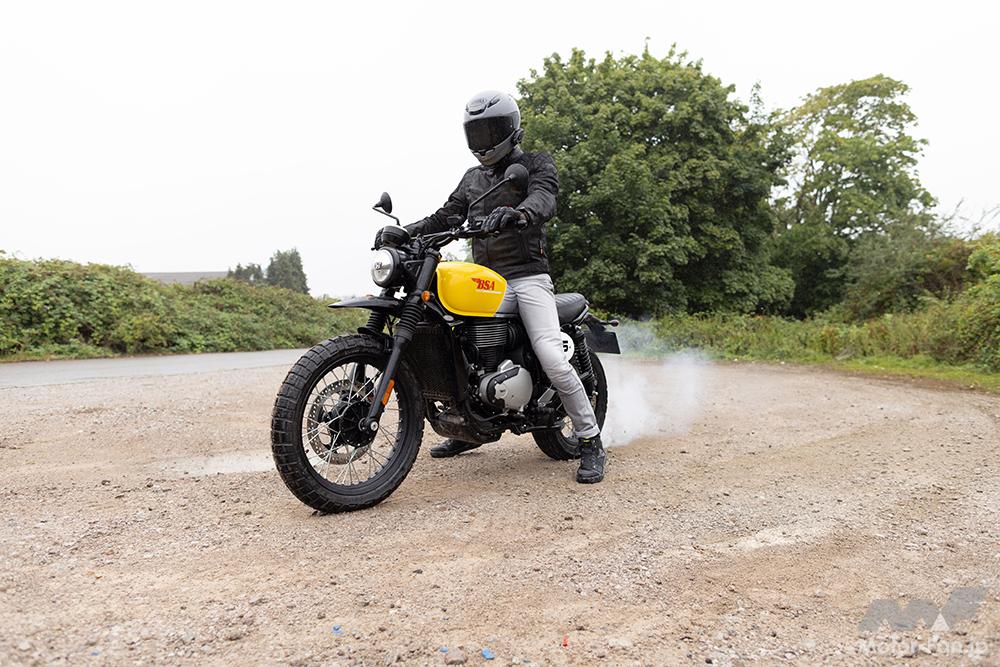
↑ Scrambler 650/Victor Yellow
The Scrambler 650 shares its engine with the Gold Star 650. It also shares parts of the frame, but the front part of the frame has been arranged to match the off-road style of the Scrambler 650. The fact that the on-road and off-road models share a platform, as well as the use of a large-displacement single-cylinder engine (known as a big single engine), can be said to be iconic details of the BSA model that once dominated the world. Therefore, in order to further emphasize BSA’s return to the motorcycle market as BSA and to increase the presence of the BSA brand in the mid-displacement category, which has been gaining popularity in the motorcycle market in recent years, it is of great significance to add the Scrambler 650, a big single engine model, to the lineup after the Gold Star 650.

↑Bantam 350/Barrel Black
The same can be said for the Bantam 350. To position BSA as a competitive brand in the global motorcycle market, choosing a 350cc engine, which is gaining popularity in each region, is an essential part of the marketing strategy. Furthermore, Classic Legends, the company that develops BSA, also owns the Czech-born JAWA Motorcycle and the Indian-born Yezdi brands, which have already developed 350cc models specifically designed for the Indian market. By leveraging this platform, BSA can increase reliability by receiving feedback from previous market launches, reduce development costs, and aim for a price that can compete with rival brands. The Bantam 350’s mission is different from that of the Scrambler 650 and Gold Star 650, but the mission remains the same: to spread the BSA brand throughout the global motorcycle market.
The Bantam 350 is right in the middle of the Roadster in terms of style and ride feel.
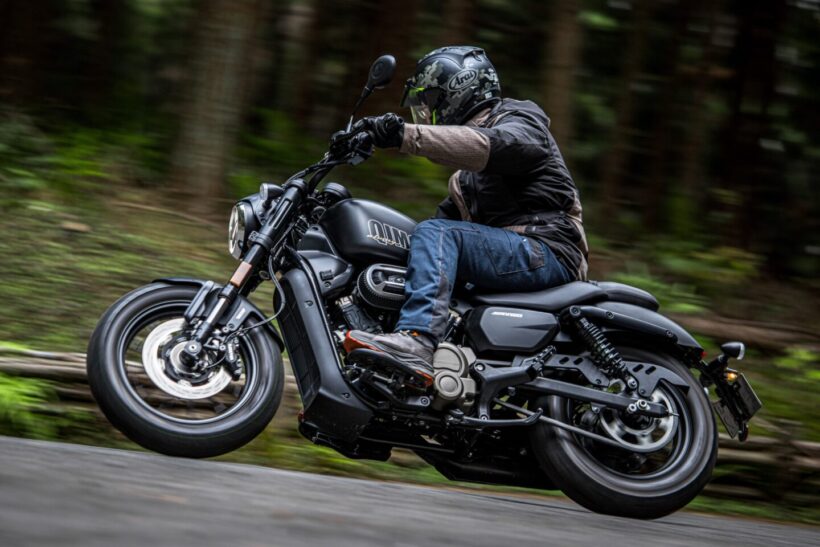
The Bantam 350 is a naked roadster fitted with a 334cc water-cooled, single-cylinder, DOHC, four-valve engine mounted in a steel tubular frame. Its 18-inch front and 17-inch rear wheels are supported by upright front forks and a rear twin shock and swingarm. While the BSA press release describes it as having a teardrop-shaped fuel tank, the car actually has well-designed character lines, creating a shape that lies somewhere between retro and modern, rather than the retro feel a teardrop-shaped fuel tank would impart. The silhouette created by the fuel tank, front and rear wheel sizes, and front and rear suspension is neither too modern nor too retro, and can be described as a truly neutral roadster style.
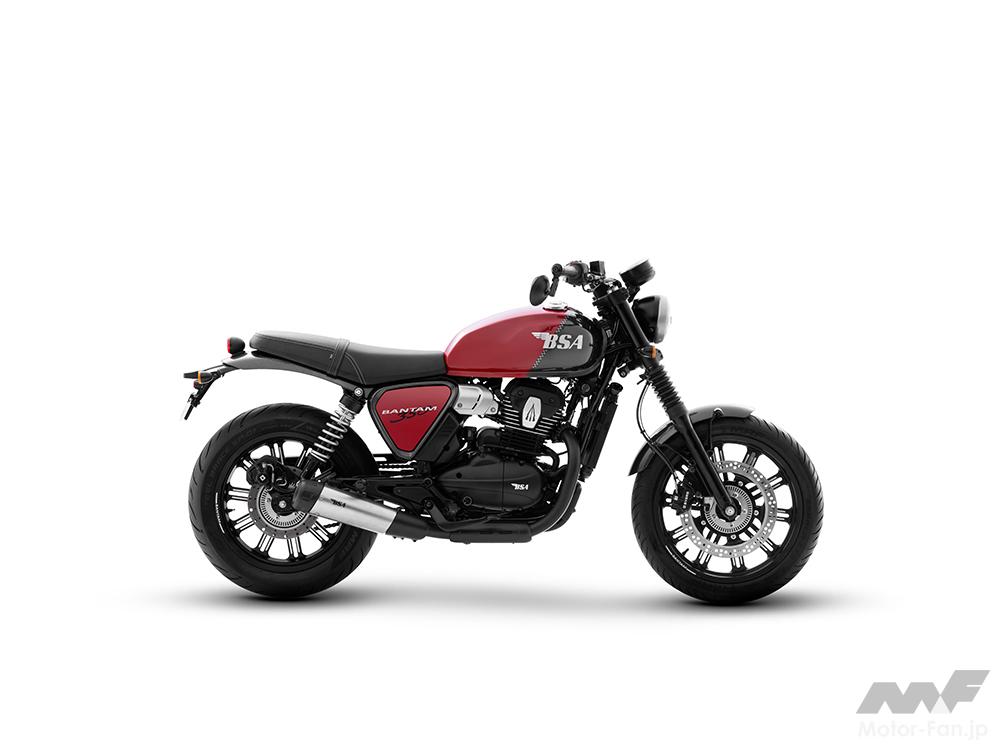
↑Bantam 350/Firecracker Red
ADVERTISEMENT

↑Bantam 350/Oxford Blue
ADVERTISEMENT
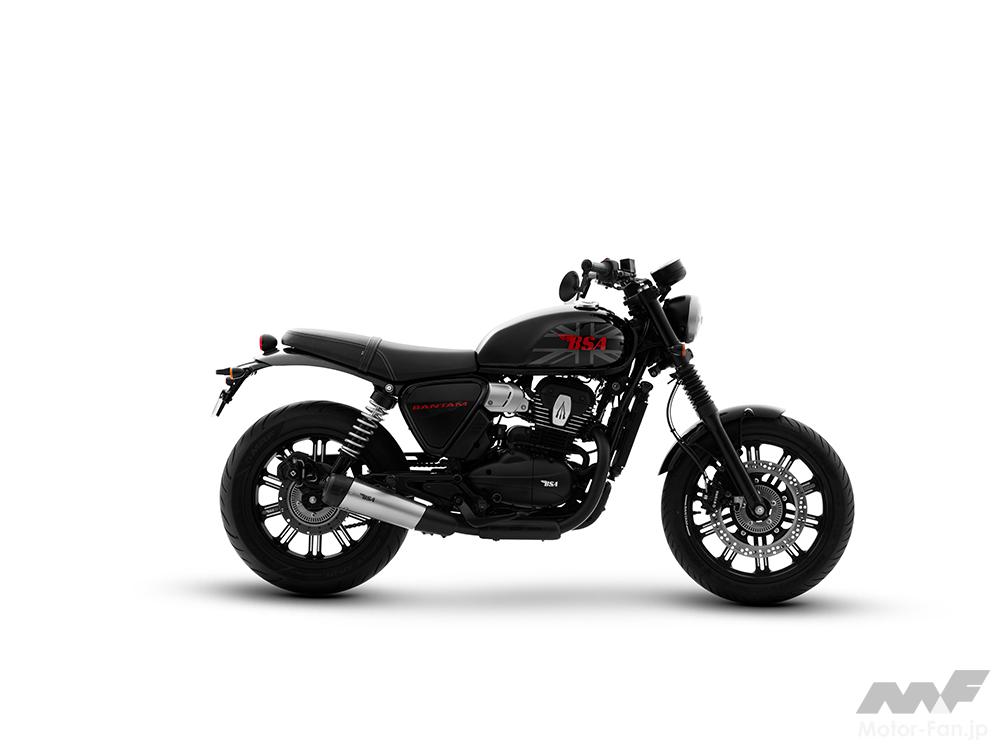
↑Bantam 350/Barrel Black
The test ride route for this event was approximately 50km, centered around London city. Much of the route was congested, and speed cameras were everywhere, meaning most of the riding was at speeds between 20mph (approximately 35km/h) and 30mph (approximately 50km/h). However, the Bantam 350’s chassis setup and settings were carefully designed for such conditions—that is, for low-speed riding using the engine’s low RPMs. While using third gear around town is no problem or dissatisfaction, I ventured to ride in a gear higher than the engine RPMs and speed range I was using: fourth, fifth, and even sixth gear. While sixth gear can be jerky and difficult to ride in city streets, fourth or fifth gear is perfectly usable even at around 2,000-3,000 RPMs. This means that you can avoid frequent shift changes in urban areas and enjoy energy-efficient riding.
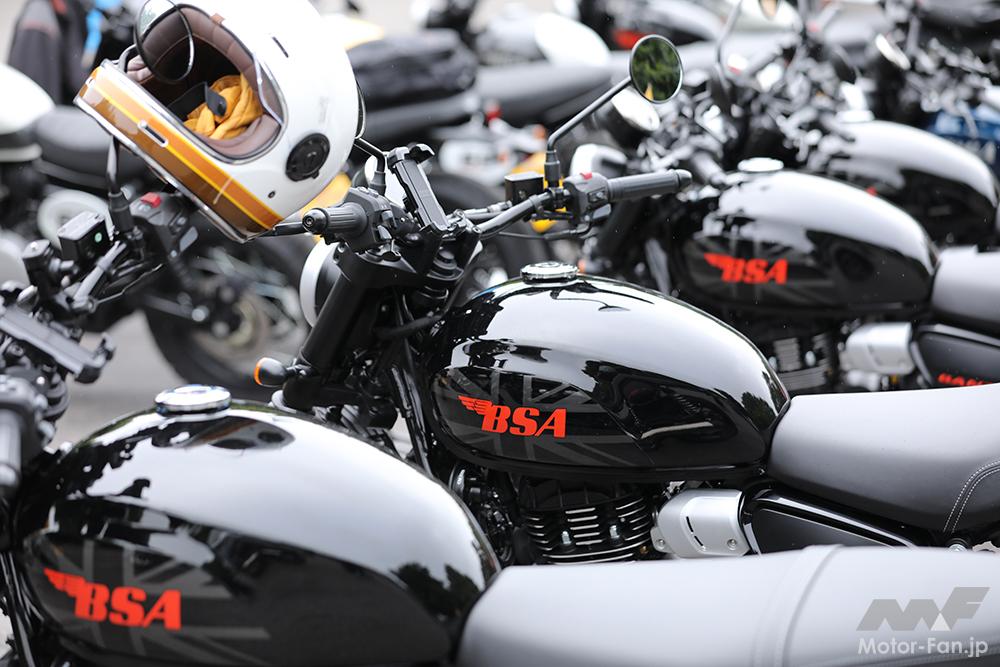
↑Bantam 350
ADVERTISEMENT
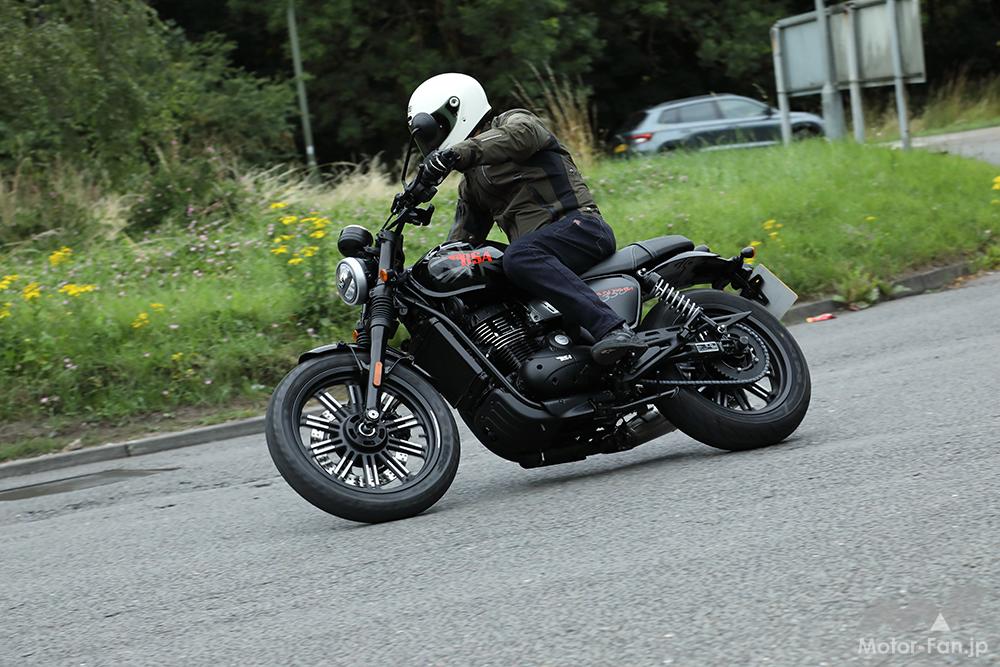
↑Bantam 350
Finally, when I finally got out into the suburbs and revved the engine up to high rpm, I was able to enjoy a thrill that blew away the stress of riding in urban areas. The engine’s beat increased once it exceeded 5,000 rpm, and it continued to grow from there. From there, I was able to rev the engine up to around 6,000-7,000 rpm, and the feeling of comfort and punch at that speed was something only a DOHC engine could offer. Many of its rival neo-classic models use SOHC engines, and their easy-to-handle torque characteristics at low rpm are at the heart of their character, so this difference, along with the feeling of comfort at high rpm, could be said to be the strengths of the Bantam 350.
The origin of the single-cylinder bike that represents Japan is now available as the Scrambler 650
This may seem like an abrupt point, but the Yamaha XT500, which was the base for the Yamaha SR400/500 series, was inspired in its early development by BSA’s Scrambler models, which were ridden in American deserts. These were the Gold Star Scrambler and B50 Scrambler, and with the thunderous exhaust sound and thick torque of their four-stroke single-cylinder engines, they were able to speed through heavy desert sand. Even in the 1970s, when many lightweight, high-powered off-road models were being developed, these BSA Scrambler models were coveted, and they possessed an appeal that instinctively appealed to the hearts of riders the world over.
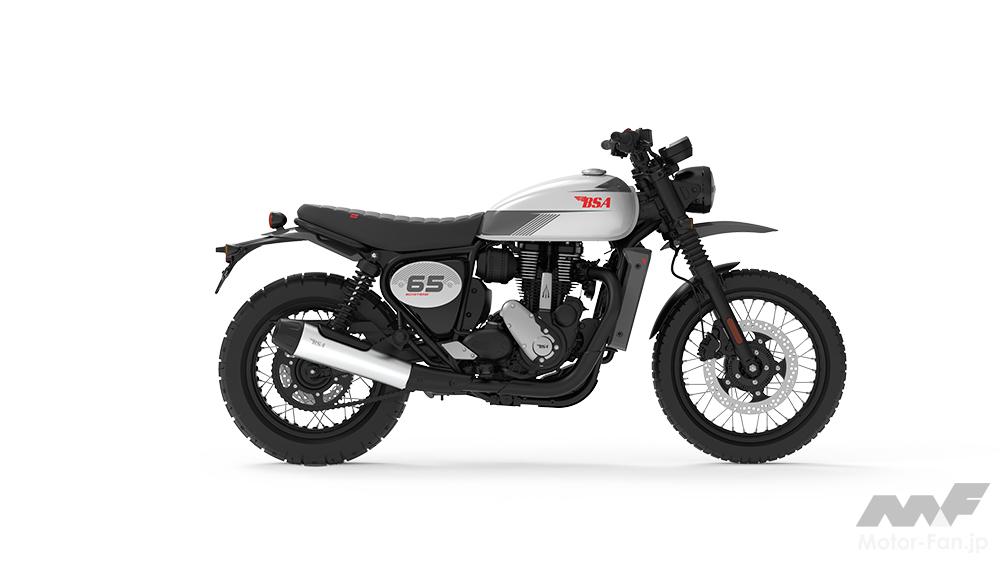
↑Scrambler 650/Thunder Gray
ADVERTISEMENT
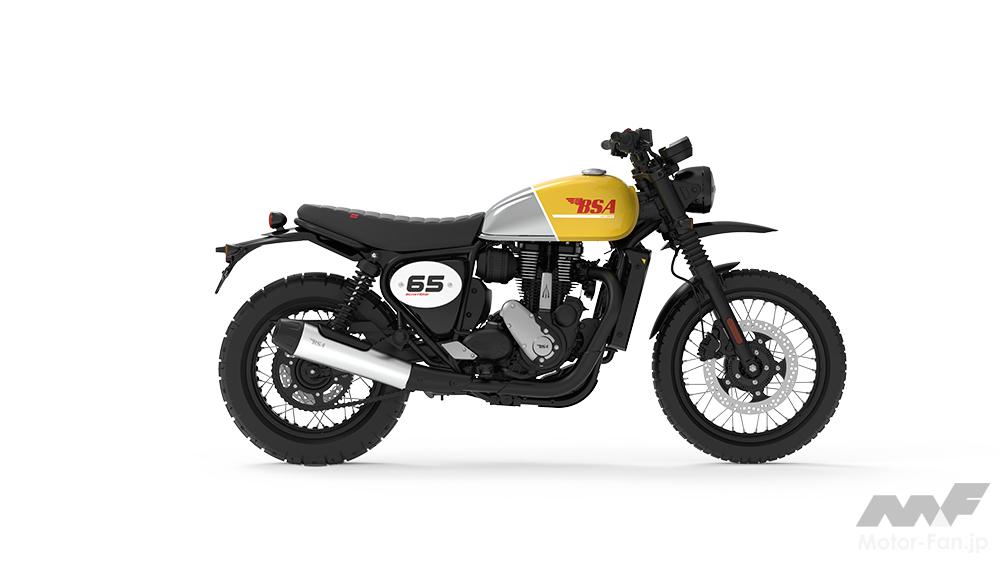
↑ Scrambler 650/Victor Yellow
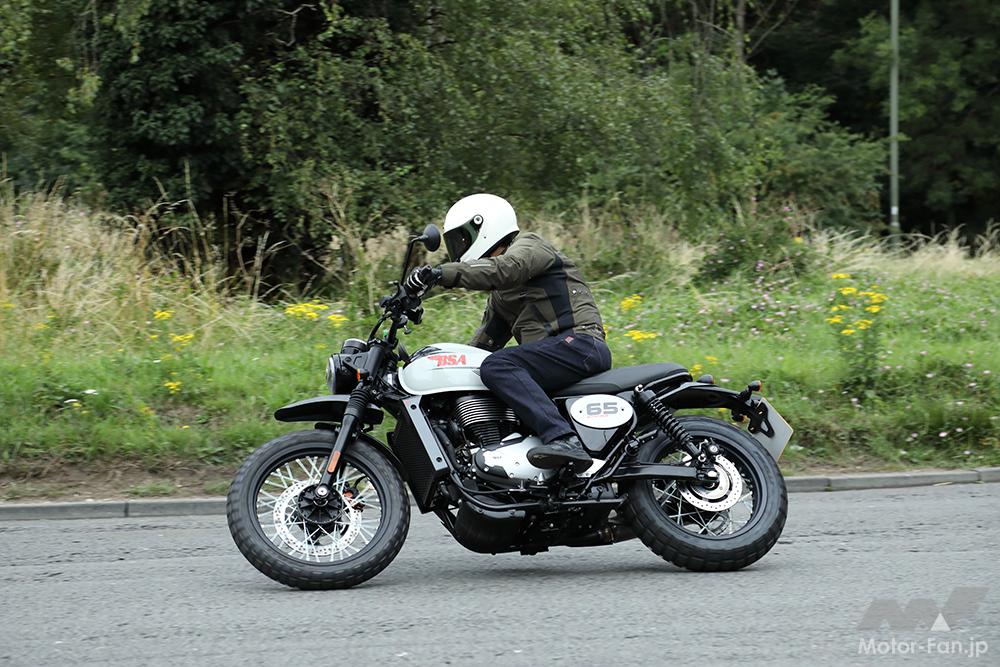
The new BSA Scrambler, the Scrambler 650, is a modern-day revival inspired by the Scrambler models of BSA’s golden age. It features a 652cc water-cooled, single-cylinder, DOHC, 4-valve, twin-spark, dry-sump engine mounted in a double-cradle frame made of steel pipes. The platform, including the engine and frame, is the same as the previously released Gold Star 650. However, the front part of the frame has been modified to accommodate the scrambler style, with the front wheel now 19 inches and the front forks extended. The rear suspension and seat shape have also been changed. As a result, the seat height is now 820mm, 38mm higher than the Gold Star 650.

↑Scrambler 650
ADVERTISEMENT
↑Scrambler 650
The engine is quite interesting. I had imagined the pulsating feeling and vibration typical of a big single, as well as the sudden, powerful torque, but the installation of two counterbalancers significantly reduced the vibration. Acceleration was surprisingly smooth at any engine speed. It was also set to generate about 70% of its maximum torque at around 1,800 rpm, allowing the bike to propel forward smoothly without revving the engine. While the power was palpable, it was very easy to handle at low speeds without any roughness. And, at high speeds, which I was only able to test briefly, I was able to enjoy the smooth acceleration and punch typical of a DOHC. It was so intense that I almost forgot it was a big single, and I definitely wanted to try it on winding roads or the highway next time.
Neo-classic models are now in full bloom, with each brand offering unique models. Among them, the BSA Scrambler 650 is one of the few big single-cylinder models, and its character and the story behind it are rich and interesting. If you have the chance, this is a bike that Japanese riders should definitely try.
Bantam 350 riding position and foot reach (170cm/65kg)
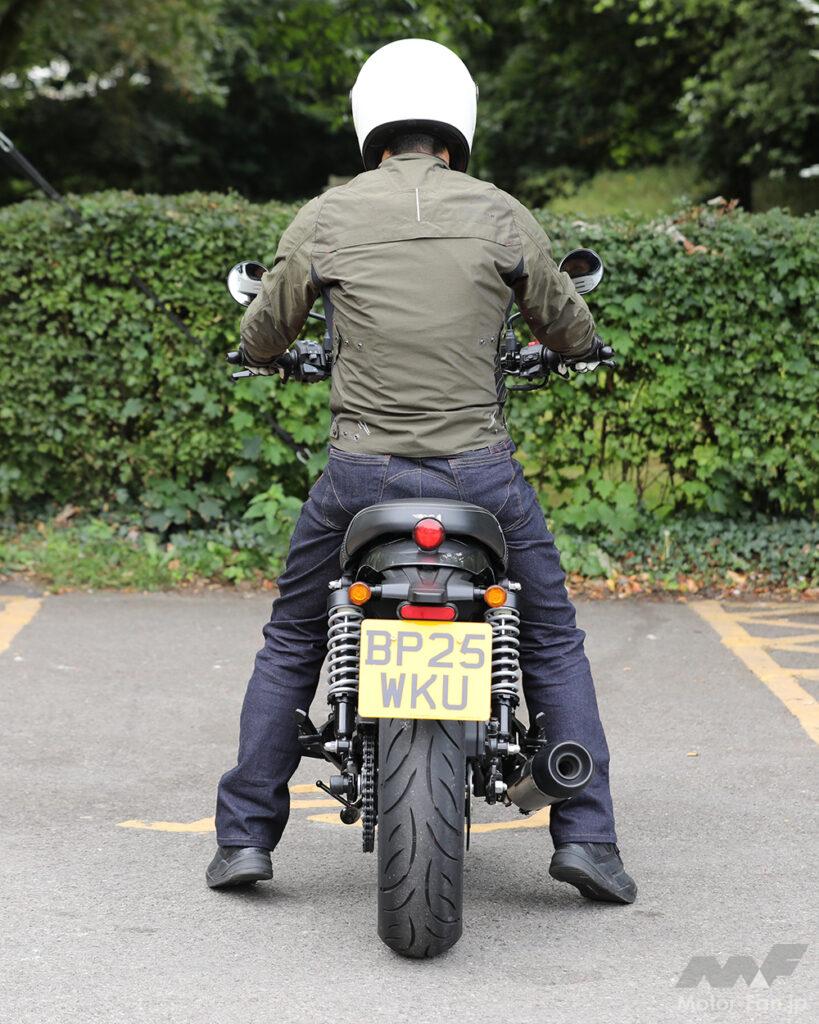
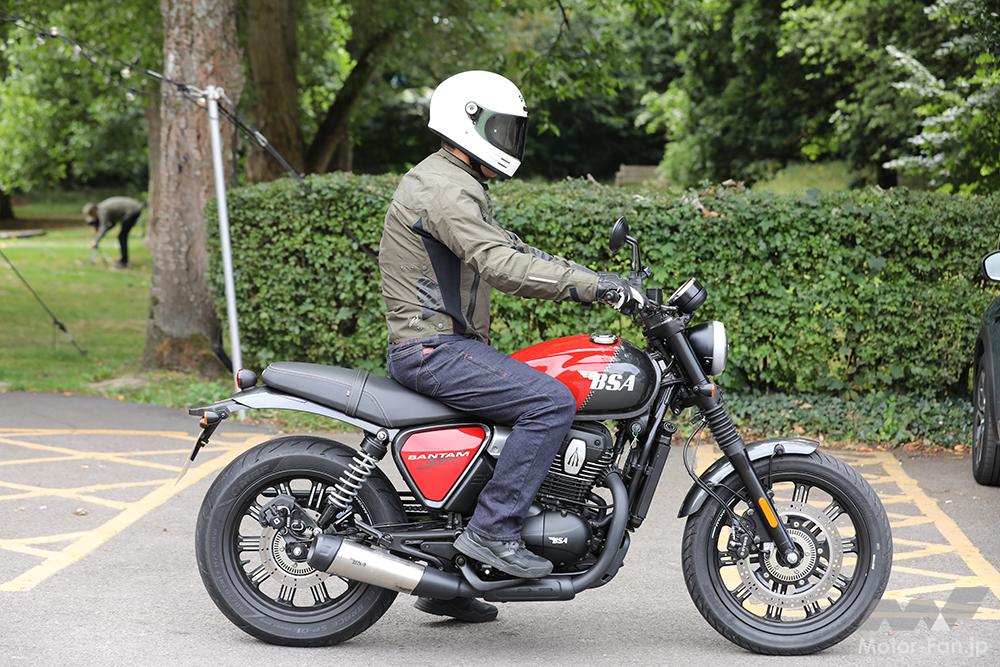
The seat height is a little high at 800mm. Both heels are raised and the footrests are easy to reach. The footpeg position, knee bending, and handlebar position are all natural.
“Bantam 350” detailed explanation
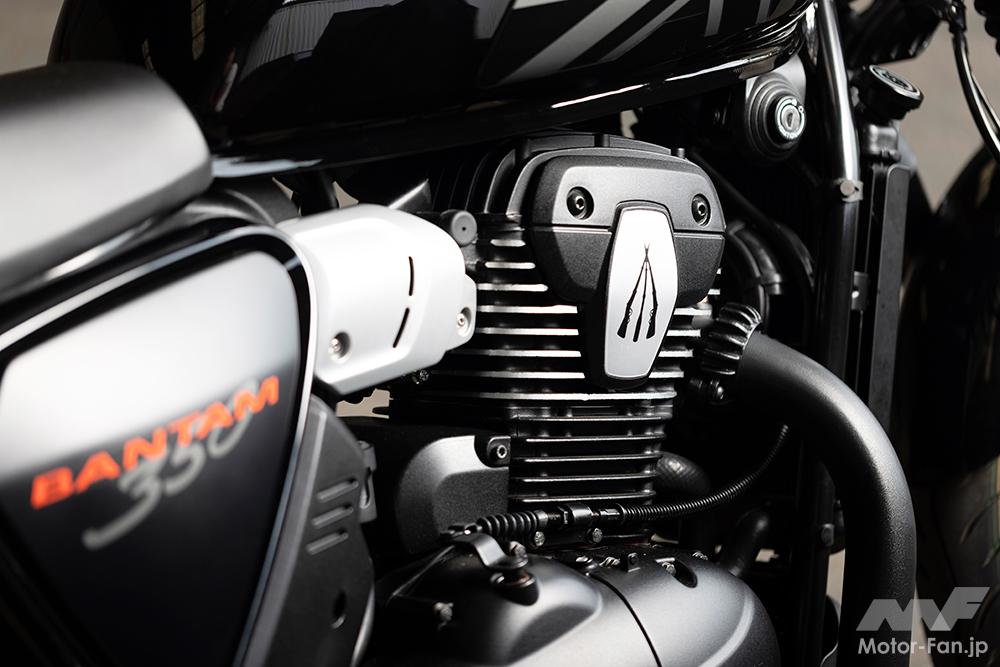
The engine is a 334cc water-cooled single-cylinder DOHC 4-valve engine. It produces a maximum output of 29hp and a maximum torque of 29.62Nm. This engine is also used in BSA’s sister brands JAWA and Yezdi, and the cases and other parts have been modified.
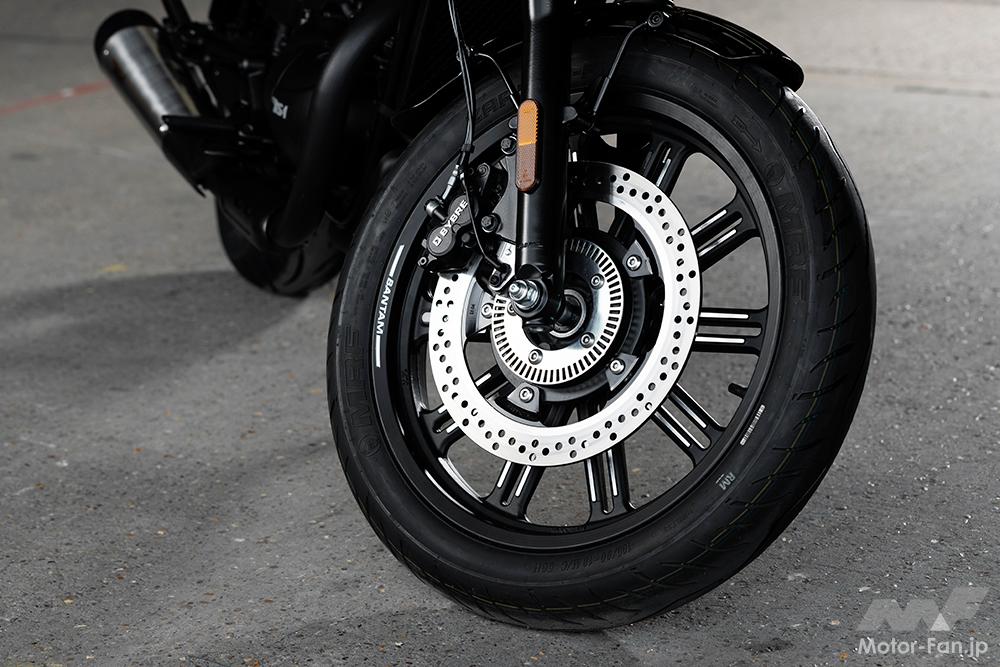
The front fork is an upright type made by Gabriel in India. A single brake disc with a diameter of 320 mm is fitted with a Byble brake caliper.

The rear twin shocks have a five-stage initial adjustment mechanism. The rear brakes are also made by Byble. They are combined with a single brake disc with a diameter of 240 mm.

The digital meter display features a tachometer surrounding the central speedometer. It displays gear position, mileage, and a clock. An indicator light is located at the top.
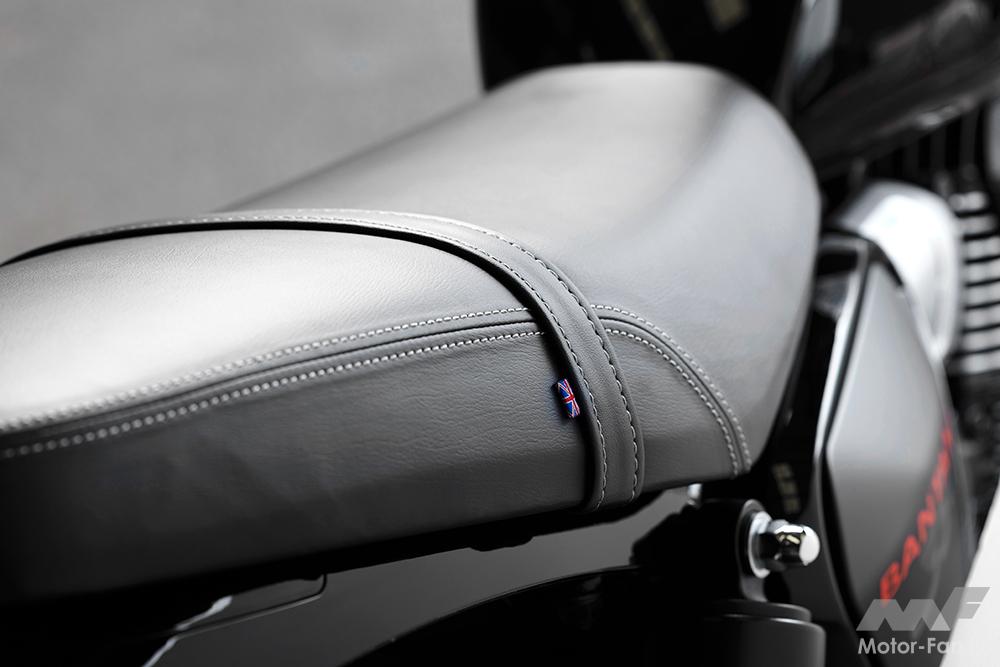
The seat is 800mm high. The tip is designed to be thin, but both corners are taut. The rear shock absorber has a five-stage initial adjustment mechanism, and is set from the weakest to the second stage.
“Scrambler 650” detailed explanation

The engine is a 652cc water-cooled, single-cylinder DOHC 4-valve engine. It is a classically styled, upright single-cylinder engine, but the shaft arrangement and other design details were provided by Rotax, and the engine was newly designed in collaboration with the university.

The fuel tank is beautifully painted in chrome and yellow. The frame is the same double cradle as the Gold Star 650, but the front of the frame has been redesigned to match the changes around the front legs.

The digital display is the same as the Bantam 350, but it does not display the gear position. The scrambler-type handlebars are wide and have a small droop angle.

The front brake is a 320mm diameter single disc brake with a Brembo 2-piston caliper. The front fork is an upright type with a Gabriel inner tube diameter of 41mm.
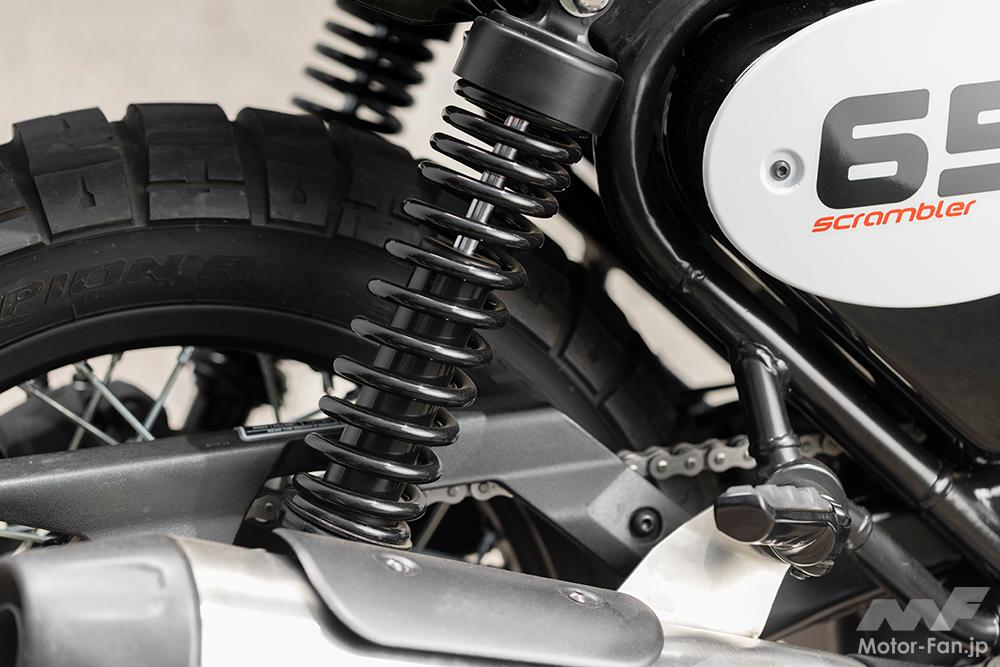
The 19-inch front and 17-inch rear wheels are fitted with Pirelli Scorpion Rally STR tires.
“Bantam 350” main specifications
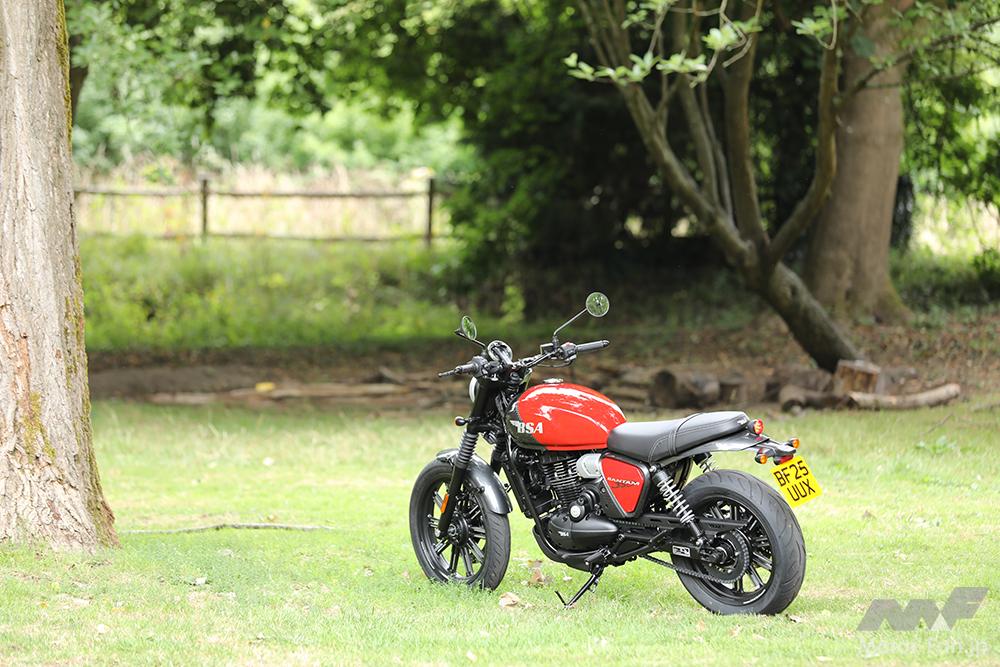
■Wheelbase 1,440mm■Seat height 800mm■Caster angle 29 degrees■Equipped weight 185kg■Engine type Water-cooled single-cylinder 4-stroke DOHC■Displacement 334cc■Compression ratio 11:1■Maximum power output 29hp@7,750rpm■Maximum torque 29.62Nm@6,000rpm■Fuel tank capacity 13L■Suspension (front and rear) Upright type / 135mm travel, twin shock absorbers with 5-stage adjustment / 100mm wheel travel■Transmission type 6-speed return■Brake type (front and rear) 320mm single brake disc with ABS / 240mm single brake disc with ABS■Tire size (front and rear) 100/90-18M/C 56H / 150/70-ZR17 M/C 69W■Vehicle price ¥698,500 (tax included) Barrel Black, Oxford Blue, Firecracker Red
Scrambler 650 main specifications
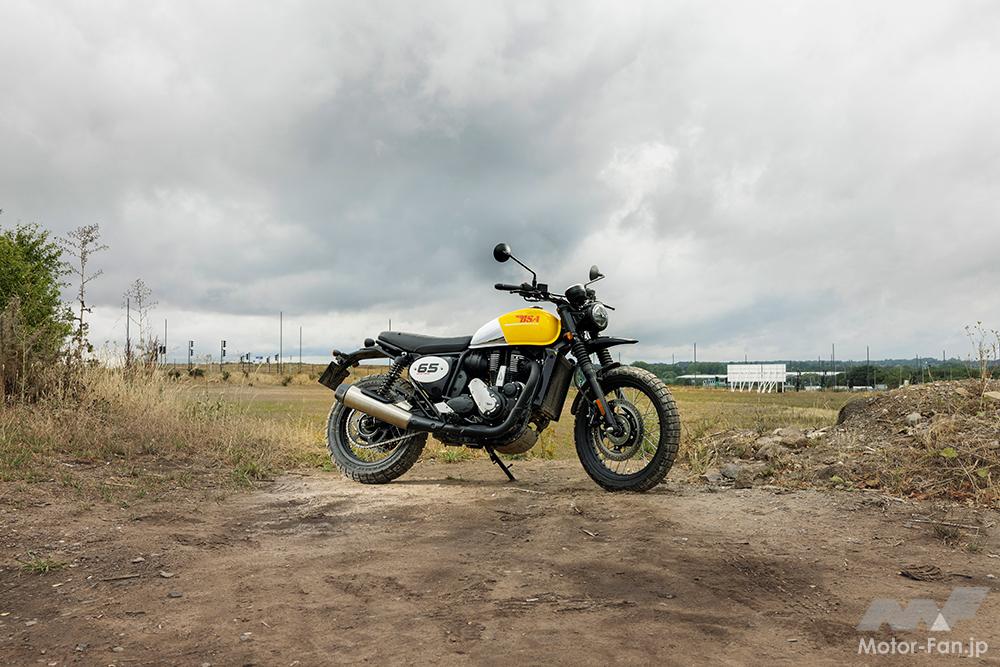
■Wheelbase 1,463 mm■Seat height 820 mm■Caster angle 26 degrees■Equipped weight 218 kg■Engine type Water-cooled single-cylinder 4-stroke DOHC 4-valve twin spark■Displacement 652 cc■Compression ratio 11.5:1■Maximum power output 45 hp @ 6,500 rpm■Maximum torque 55 Nm @ 4,000 rpm■Fuel tank capacity 12 L■Suspension (front and rear) Inner tube diameter 43 mm upright type, twin shock absorbers with 5-stage adjustment mechanism■Transmission type 5-speed return■Brake type (front and rear) 320 mm single brake disc + Brembo 2-piston brake caliper with ABS, 225 mm single brake disc + Brembo 1-piston brake caliper with ABS■Tire size (front and rear) 110/80-19 Pirelli Scorpion Rally STR 150/70-R17 Pirelli Scorpion Rally STR ■ Vehicle price: ¥1,179,200 (tax included) / Victor Yellow, Thunder Gray