
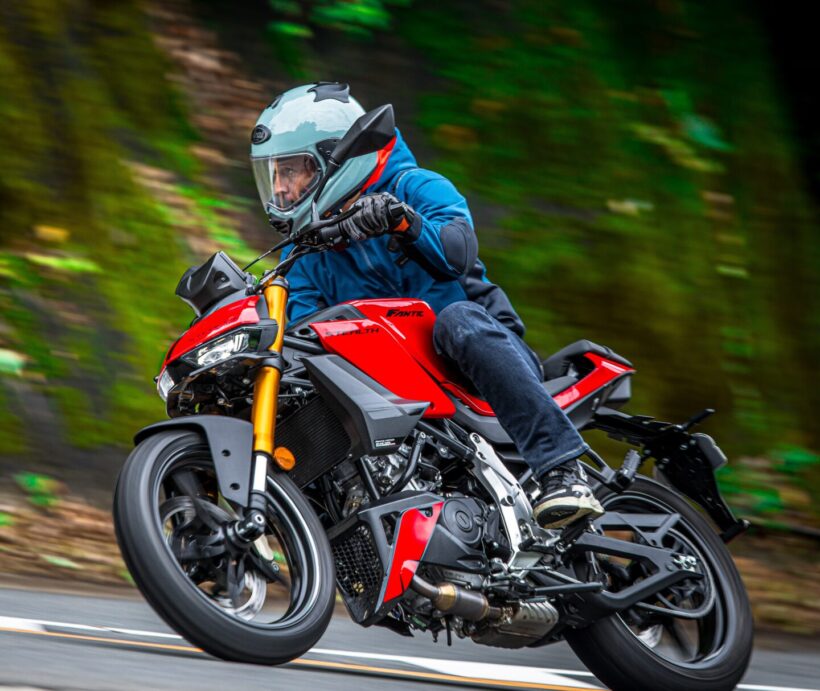


Fantic Stealth 125: Noah Sellen
The progress of Fantic
Fantic may be best known for its famous scrambler model, the “Cavallero.” It’s also a strong presence in the off-road world, offering authentic off-road models in Japan that delight hardcore fans. Meanwhile
, the brand has recently begun to make its presence felt in the on-road world, competing in MOTO2 and achieving impressive results. Those who have already test-ridden a Caballero know that even scrambler-like models offer impressive on-road performance. It wouldn’t be surprising if they were to release a 125cc sports model. However,
due to regulations and license classifications in each country, maximum output for 125cc bikes is limited to 15 horsepower, making it a difficult category to pursue individuality. While the Suzuki GSX-R125, Yamaha YZF-R125, and Honda CB125R are popular in Japan, Fantic offers the Stealth. Will its
unique ride be as distinctive as its looks?
It’s cooler than the photo
ADVERTISEMENT

ADVERTISEMENT
ADVERTISEMENT

ADVERTISEMENT

ADVERTISEMENT


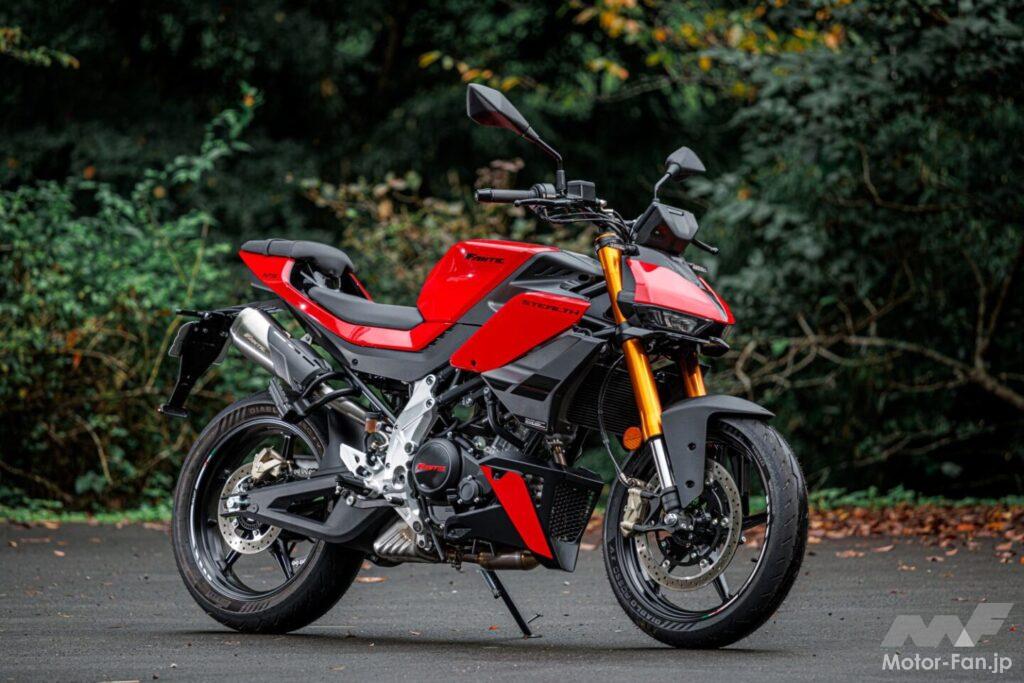
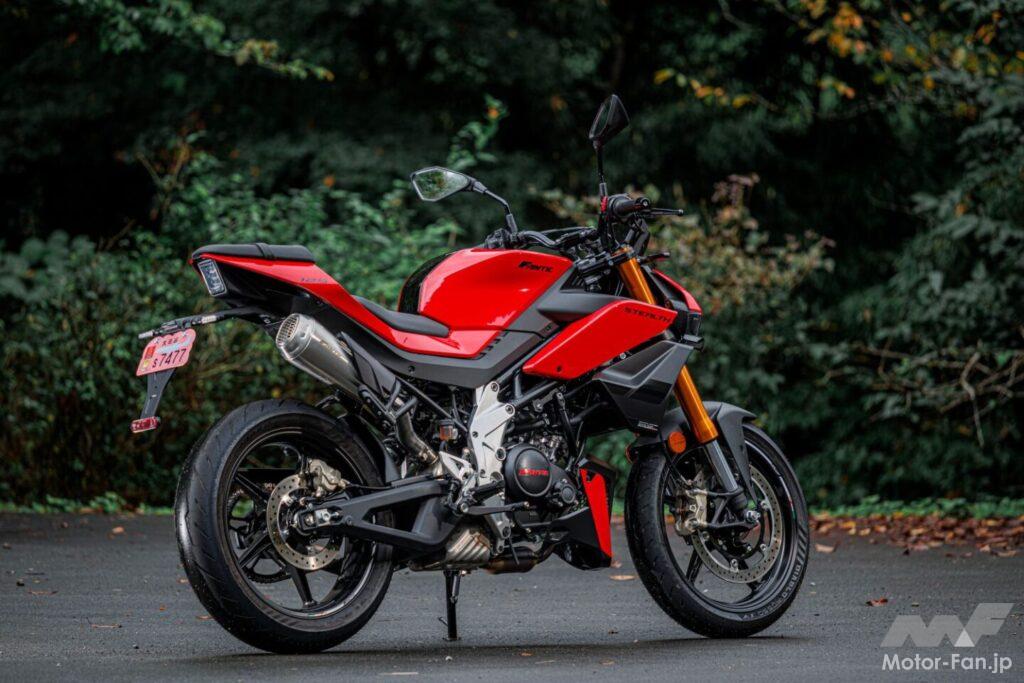
I know this sounds rude to the photographer, but there are some bikes whose coolness is hard to capture in photos, and I think the Stealth is one of them. The rear view highlights its distinctive features, such as the square taillight and upturned silencer, but the front end, especially the distinctive cowl shape, is hard to convey, even though it’s really cool.
The light and light cowl, which appear semicircular, actually have a ridge in the center and the light section is reverse-slanted, creating a very intricate design. I highly recommend seeing it in person.
And with its three-dimensional tank, comfortable yet smart seat, and the aforementioned cool tail, it’s a very intricately crafted bike, despite being a 125cc, with a distinctive Italian appeal in every way. Its premium price of 960,000 yen is a testament to the attention to detail. In the 125cc class, which is often built within cost constraints, this bike truly stands out.
Trellis frame and variable valve engine
Even in terms of performance, cost is clearly not being considered. One obvious example is the Pirelli Diablo Rosso 4 tires. While one might think such luxury was exclusive to the Japanese model, Motorist, the importer, explains, “No, this is a choice made in Italy. The fact that they’re putting these tires on a 125cc shows how serious they are, doesn’t it?”
Furthermore, there are no compromises, even in the 125cc class, such as the frame, which combines a trellis-shaped main section with forged aluminum plates, which looks costly, and the engine, which is equipped with a variable valve timing mechanism and is assembled entirely in Italy without outsourcing production to Asia.
Yet, what makes it appealing is that it doesn’t feel like it’s trying too hard. There’s nothing that makes you overlook it and think, “Well, it’s an Italian car, so it can’t be helped,” and even the riding position and the angle of the handlebars are just like those of a Japanese car. Anyone will be able to get used to it right away.
Stretching engine
With maximum power output now all around 15 horsepower, each manufacturer must be racking their brains over how to best enhance their own 125cc engines. Since the upper limit is already set, one option is to make it as flat and easy to use as possible up to that point. Conversely, perhaps a more powerful torque boost at low RPMs might be an option. However, the Stealth’s engine’s appeal lies in its stress-free revving feel, which doesn’t feel like it’s reaching its 15 horsepower ceiling. Even at higher RPMs, there’s no sense of
“I’m almost there,” and the tachometer easily enters the redline, with no sense of hitting a plateau even beyond 11,000 rpm. The feeling of squeezing out the power all the way up to nearly 12,000 rpm is incredibly exciting, and the sheer enjoyment of getting the most out of the engine makes you forget about the 15 horsepower. At the
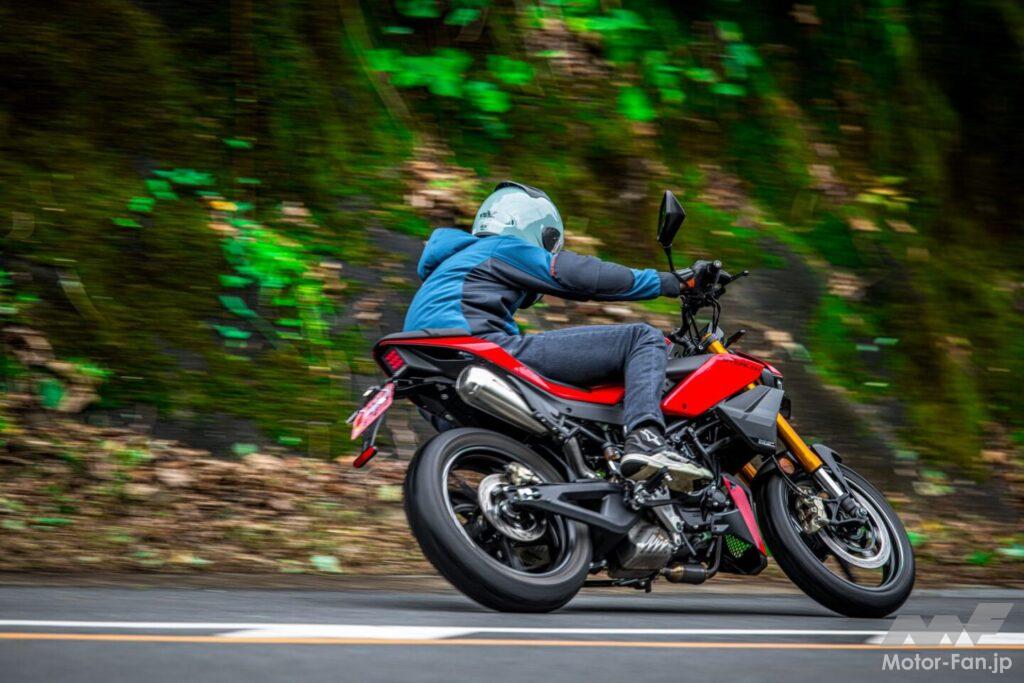
start of the ride, the torque is as expected of a 125cc, and you need to let the clutch slip for a long time to launch energetically, but once you’re on a winding road, you’ll be amazed at the wide bandwidth in third gear. Perhaps it’s the variable valve that’s working, but the engine is surprisingly torqueful even in the normal operating range, and it’s fun to regularly use the redline at higher speeds. The test drive this time was on a narrow, medium-to-low speed winding road, and the engine was so flexible that it was fine to keep it in third gear on the way up and fourth gear on the way down. And even in fourth gear, once the RPMs increased, I realized that it was actually picking up quite a lot of speed. Especially on the way down, the pace made me feel strongly of the “sport” aspect.
There are many 15 horsepower 125cc sports engines from various manufacturers, but this one from Fantic is clearly made with an Italian mind. With this, it’s sure to be fun to drive on the circuit too.
Find your position
One might assume that the 125cc engine makes the bike compact, but while it’s noticeably slim, it’s not particularly small. I’m tall at 185cm, but I didn’t feel it was particularly small. However, when I straddled the bike and rested my crotch against the tank, my knees would hit the shrouds, which required some adjustment for the fit. However, the seat is long and flat, so there are no restrictions on seating position, allowing even tall riders the freedom to sit wherever they wanted.
Initially, I sat far forward on the seat for filming, riding in a hang-on style. But as I got to know the bike better, I realized that pulling my hips back and firmly gripping the slim tank with my knees gave me a greater sense of unity and enhanced maneuverability. Riding with my hips pulled back in this way prevented my knees from hitting the shrouds, and I was able to actively control the bike with my lower body. A similar feeling would be found on the Yamaha SDR for older riders, or the Ninja 250SL for a more recent example. I enjoyed that slim, sharp ride.
Sturdy frame and flexible legs


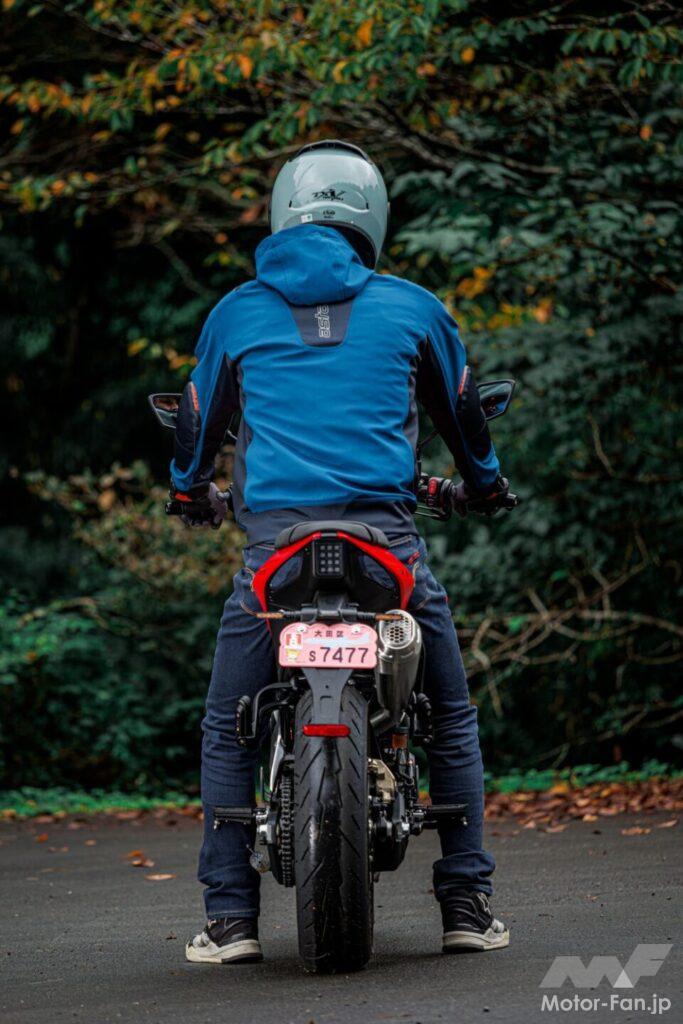

The high level of connection and the fun-to-rev engine allowed me to steadily increase my pace, but at the same time, I also noticed the bike’s unique characteristics. The feeling of firmly gripping the knees and plunging into corners was very reassuring, and the suspension absorbed even rough road surfaces well. At the same time, there was a slight jolt over bumps and other obstacles…
It reminded me of replicas from around the 1990s, like the NSR250R and Bros 650, models from that era with sturdy aluminum frames and flexible suspension. The Stealth also evokes a similar image. The frame is extremely sturdy, creating a strong sense of connection with the rider, yet without being too racer-like, the suspension is adaptable to any situation on public roads, a new (and nostalgic) feeling I hadn’t experienced with other 125cc sports bikes.
This also likely hints at the Stealth’s potential for further development. While its official introduction to Japan has yet to be decided, there is a 500cc version of the Stealth, with a nearly identical chassis. Naturally, the suspension and various settings will be custom-made, but the frame appears to be retained. This means that the rigidity is already set to match the power of a 500cc.
The 125cc frame is already quite attractive, but when it’s equipped with a 500cc engine, it’s hard not to get excited.
Realistic Premium
At 960,000 yen for a 125cc, it’s not a model for entry-level riders, but definitely a product aimed at riders who want to experience the true appeal of this type of model. Made entirely in Italy and infused with a definite Italian spirit, the Stealth 125 has a unique world not found in other 125s from other manufacturers. At the same time, however, the riding position and handling are somewhat reminiscent of Japanese cars, making it an easy-to-ride bike. It’s not an overtly premium model, and being able to enjoy this premium feel in a realistic, practical way is one of the Stealth’s greatest attractions.
Motorist Factory has test ride vehicles available, so you can first see it for yourself and appreciate its coolness, and then ride it and experience its appeal that goes beyond the confines of a 125cc bike.
Detailed explanation

The inverted fork has a φ41mm inner tube diameter, and is rigid yet flexible and well-suited to the lightweight 125cc engine. The brakes are φ320mm discs with vibrating calipers. They work extremely well and invite you to get into sporty riding.

The original tires are Pirelli Diablo Rosso 4. The front is 110/70-17.
ADVERTISEMENT

The aluminum swingarm with a tower attached to the bottom is highly rigid. It may seem like overkill for a 125cc, but it also hints at the upcoming 500cc version. The rear disc is φ230mm. ABS can also be disabled. The rear tire size is 150-60/17.
ADVERTISEMENT

ADVERTISEMENT

Like the new Fantic Caballero, the engine is manufactured by Minarelli in Italy. It also has a variable valve mechanism, which allows for both torque in the normal range and power at high revs. While all 125cc engines have a maximum power output of 15 horsepower, the engine is still designed to provide a smooth, full-speed power at high revs, making it very satisfying.
ADVERTISEMENT

The Stealth has a familiarity reminiscent of Japanese-made cars, and this is largely due to the riding position.
The footpeg and handlebar positions are extremely natural. The passenger footpeg also has footpeg rubber, showing the company’s commitment to comfort.
ADVERTISEMENT

Creating a sub-chamber-like room around the pivot and then extracting the silencer at any angle is a recent trend seen on KTM and other models. The outlet of the up-type silencer has a mesh structure like a MotoGP model, making it very racing-like. Although it is an up-type, it also comes with a full range of heat guards in consideration of the demand for pillion riding.
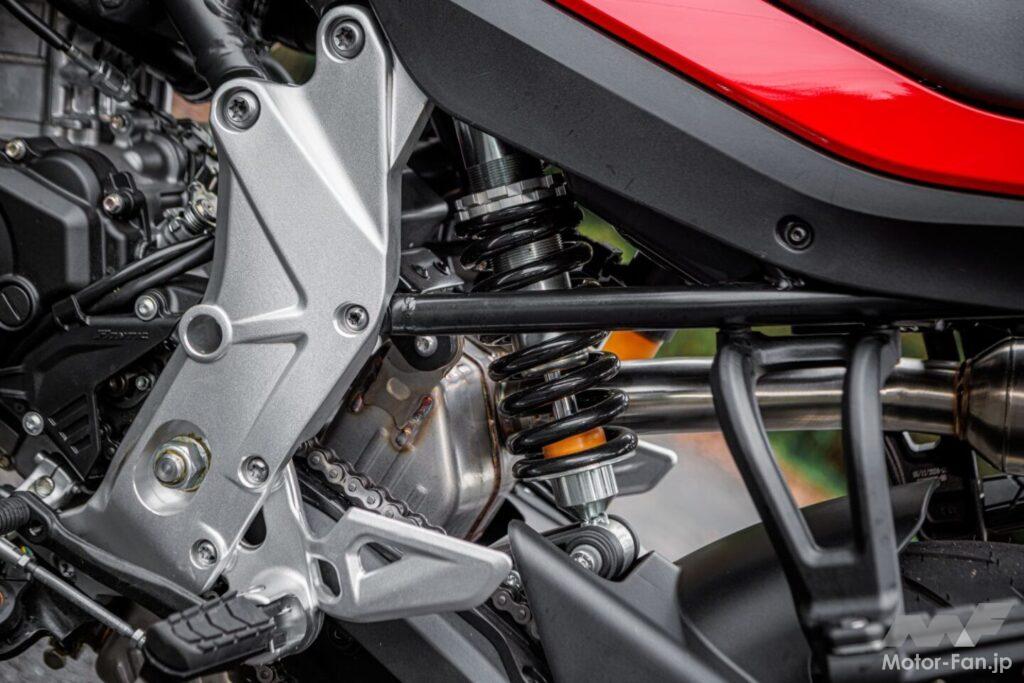
The double-link rear suspension with infinite preload function has a simple linkless structure. However, perhaps due to the exquisite setting of the variable spring, the operation is very impressive, and even in this test drive situation where there were still wet patches, the vehicle’s posture was clearly visible.


When sitting down and the suspension is initially lowered, the top of the seat is firmly level with the ground, which leaves a very good impression. There is no feeling of being forced to sit forward, and the rider can distribute weight on the bike in their preferred position, making it comfortable even when riding long distances. As a tall writer, my knees hit the shroud when sitting forward, so I really appreciated the freedom to ride with my hips pulled back a little. There is no space under the seat, but the battery is easily accessible.


The switches are intuitive to operate, and the feel of pressing them is easy to understand and leaves a good impression. It also comes with a track mode that sharpens the throttle response and makes the meter display more race-like, and cornering ABS is also available as an option. The throttle is lower than expected. This may be why it's easy to handle, but if you want to drive in a sporty style, you need to consciously open it all the way. The left and right levers have an adjustment function.

The angle of inclination and the angle of drop are as versatile as those of Japanese motorcycles, and the riding position is natural for a normal road sports naked bike, rather than having your elbows sticking out like on a street fighter. The handlebars are rubber mounted for vibration control.

The simple meter has good visibility. It’s great fun to watch the tachometer bar at the top spin energetically all the way to the red zone on the far right. The ABS can only be disabled on the rear. There’s a fuel gauge on the far right, and one of the appealing points of this engine is its high-revving performance as well as its good fuel economy. The key has a wavy groove on the side, giving it a special feel.

The tail is also cool. Twelve LEDs are arranged in a vertical rectangle, and the muffler coming out from the side creates a unique rear view.

It’s hard to tell from the numerous side-view photos that are circulating, but the front mask is very elaborately sculpted and simply cool. The design goes beyond the 125cc range, and it’s so luxuriously crafted that it feels like the balance between performance and design would only be achieved if a 500 version were released.

Its looks are streetfighter-esque, but the relationship between the handlebars, seat, and footpegs creates a familiar naked position. The seat is long from front to back, allowing the rider to sit wherever they like. It feels a little large for a 125cc, but that’s what gives it room, and considering the 500cc version that is expected to be released in the future, it will be a very compact 500cc sports bike. The tank has a jutting top, and riding with your thighs hooked on it gives an even greater sense of unity with the bike, which is very comfortable. It was natural to place my feet between the footpegs and pedals.



Main specifications
Engine type: Water-cooled 4-stroke single-cylinder SOHC 4-valve variable valve timing (VVT)
Displacement: 124.66cc
Bore x stroke: 52 x 58.7 (mm)
Fuel supply system: Electronically controlled fuel injection | Throttle body diameter: φ30mm
Maximum output: 11kW/10,250rpm
Starting method: Electric starter
Transmission: 6-speed
Clutch: Wet multi-plate clutch with back torque limiter
Main frame:
Hybrid structure of steel trellis frame and forged aluminum side plates
Rear subframe: Steel
Brakes (F): φ330mm disc, BYBRE radial caliper
Brakes (R): φ230mm disc, BYBRE floating caliper
Electronic control system:
Dual channel ABS (rear can be turned off) with traction control and
cornering ABS [Optional]
Suspension (F): Fantic FRS φ41mm inverted fork USD
Suspension (R): Fantic FRS monoshock with preload adjustment
Overall length: 1996mm
Seat height: 810mm
Wheelbase: 1335mm
Tires (F/R): 110/70R-17, 150/60-17 | Pirelli Diablo Rosso IV
Vehicle weight: 129kg (excluding gasoline)
Tank capacity: 12L
Body color: Yellow | Red
Manufacturer’s suggested retail price: 960,000 yen (tax included)