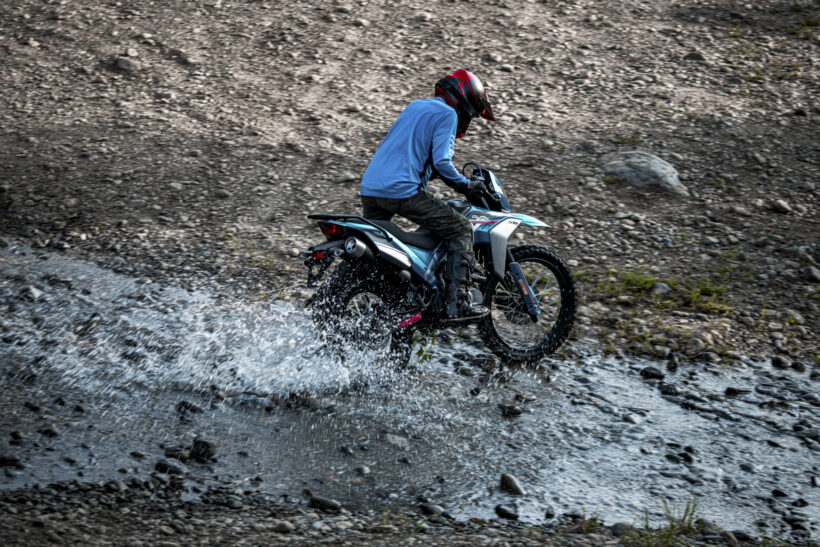


The YZ series is Yamaha’s proud motocross tradition. Among them, the beloved YZ125 has evolved once again with the 2026 model. The theme set by the development team was “Ride anytime, anywhere, and whoever rides it, however they want.” This single sentence encapsulates the philosophy that Yamaha has put into the YZ125. In this article, we’ll share our impressions of a test ride of the 2026 YZ125.
A mature engine

The greatest feature of the new YZ125 is that it has been designed to maximize the ease of use of a two-stroke engine, achieving smooth response when exiting corners and stable riding in any weather or road conditions. Two-stroke models can sometimes be dependent on the rider’s skill and setup skills, but the 2026 YZ125 defies that common sense. Anyone can easily experience a sense of unity with the bike, as if it were tuned to suit them.

The development team was led by Toshiyuki Shirai and Masakazu Kono, who have supported Yamaha’s 2-stroke design for many years. Rather than pursuing peak power output, their goal was “connectivity” and “ease of use.” They thoroughly refined the engine’s characteristics, achieving a linear response at any throttle opening by thoroughly balancing combustion efficiency and carburetor settings.
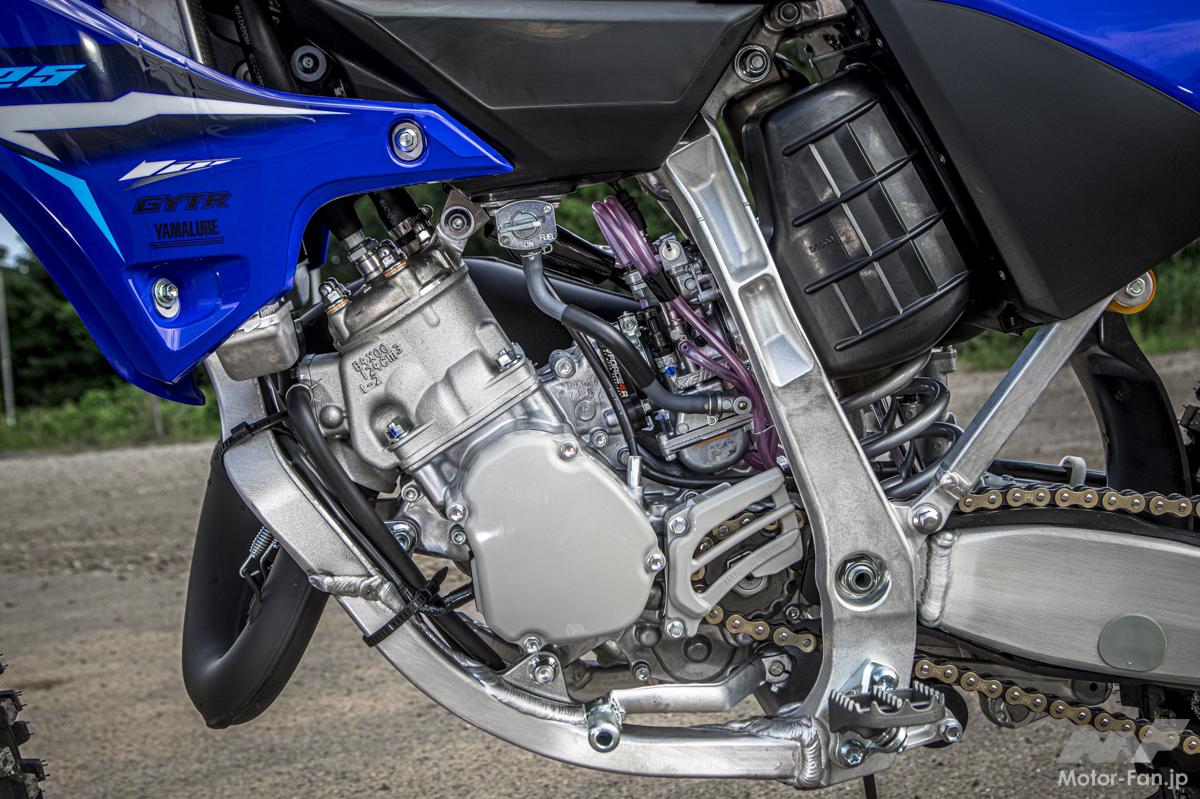 No major changes have been made to the engine or chassis, but the improved characteristics have made it easier to handle, which has led to increased combat power.
The briskness and lightness of the 2-stroke engine shines through.

The 125 is compact and easy to handle. Even testers unfamiliar with motocross bikes felt confident and confident. The two-stroke engine’s response was excellent. Opening the throttle produced a sharp increase in revs, accompanied by a high-pitched exhaust note. As a tester who loves two-strokes, this alone got me excited. Because it’s a 125cc two-stroke, the power only comes at higher revs, but the engine’s strength is its ability to hold up well even at low and mid-speeds. Even at extremely low revs, it doesn’t struggle, and the bike tenaciously moves forward with a droning sound. Because it’s a 125, the torque isn’t impressive at low speeds, but it’s still appreciated for its ability to move forward.  From mid-speed, the power builds up and accelerates very sharply. The exhilarating acceleration is unique to two-strokes. Once you’ve entered the power band quickly, you can raise the bike in sync with the power coming in, and then you can open it up full throttle without worrying about throttle work. In some ways, it feels easier to ride than a four-stroke.
The suspension, which has the same structure as the higher-end model, works very well and absorbs shocks well even when hitting large gaps. The body has a good balance of firmness and flexibility. The body is light, so it can handle even the most challenging conditions, and our tester, who hadn’t ridden a motocross bike in a while, was able to raise the base and enjoy the ride. This is a machine that beginner and intermediate level motocross riders can enjoy to the fullest. If you’re a rider who wants to seriously race on a motocross course, why not consider riding a YZ125?
Detailed explanation
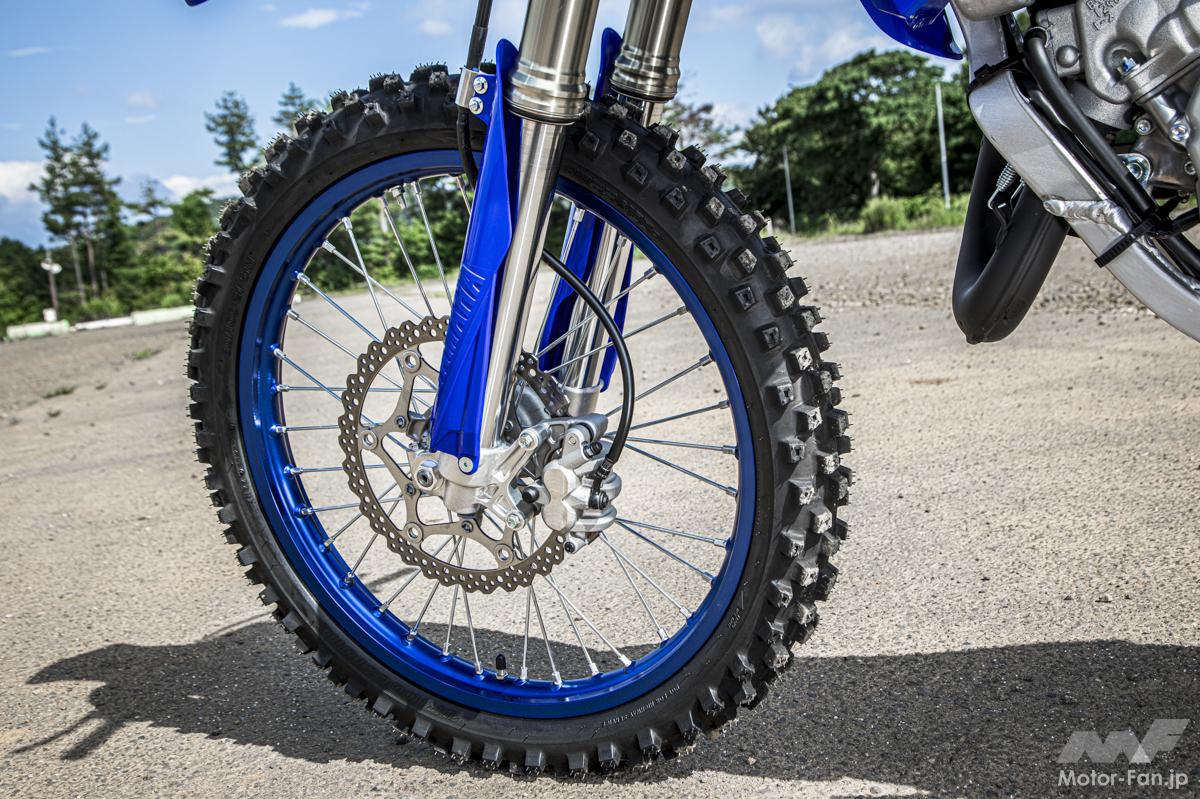
The inverted forks use the same mechanism as the 4-stroke YZ. Leaf valve springs provide precise damping and a smooth ride. The compression damping can be adjusted without the use of tools.
ADVERTISEMENT
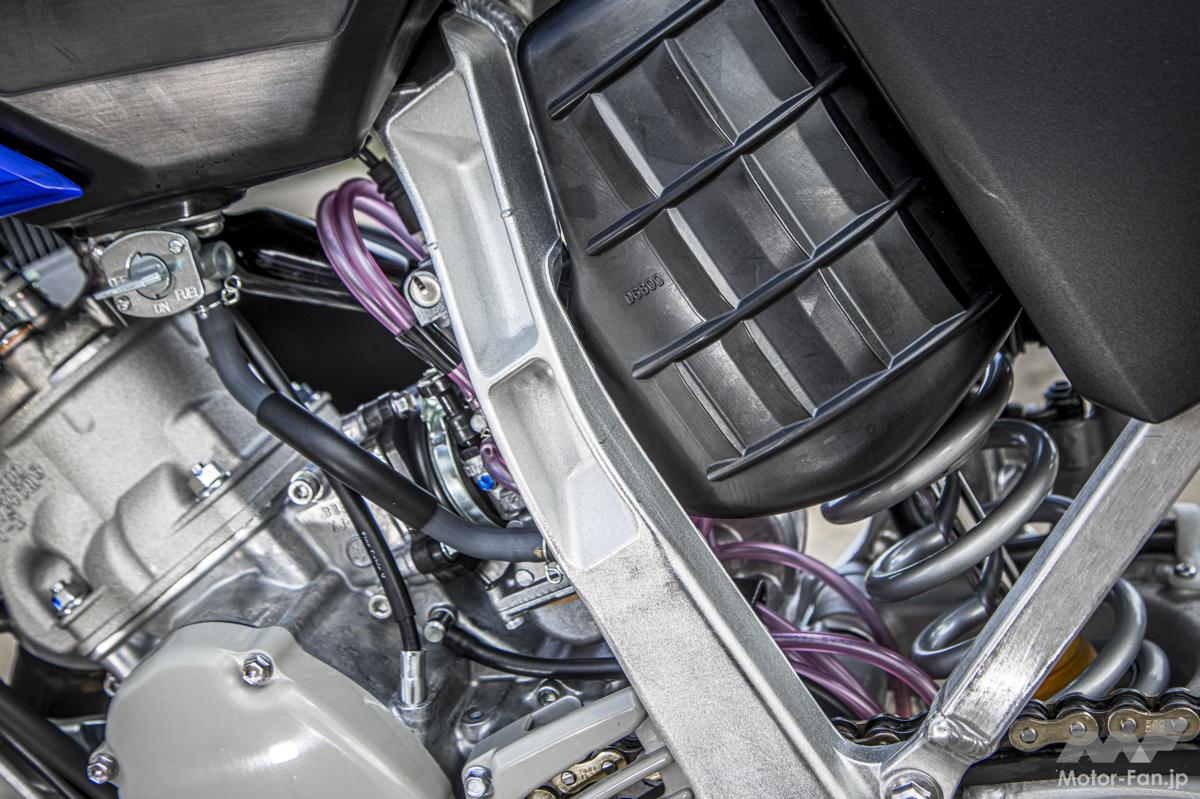
The carburetor is a KEIHIN PWK38S. It adjusts the ignition timing optimally according to the throttle opening and engine speed. The reed valve is a W-type carbon. The engine is equipped with Yamaha’s proprietary YPVS exhaust valve, which provides easy handling across the entire engine range.
ADVERTISEMENT

The rear shock has damping characteristics and spring rate set to take into account the balance of the front fork.
ADVERTISEMENT
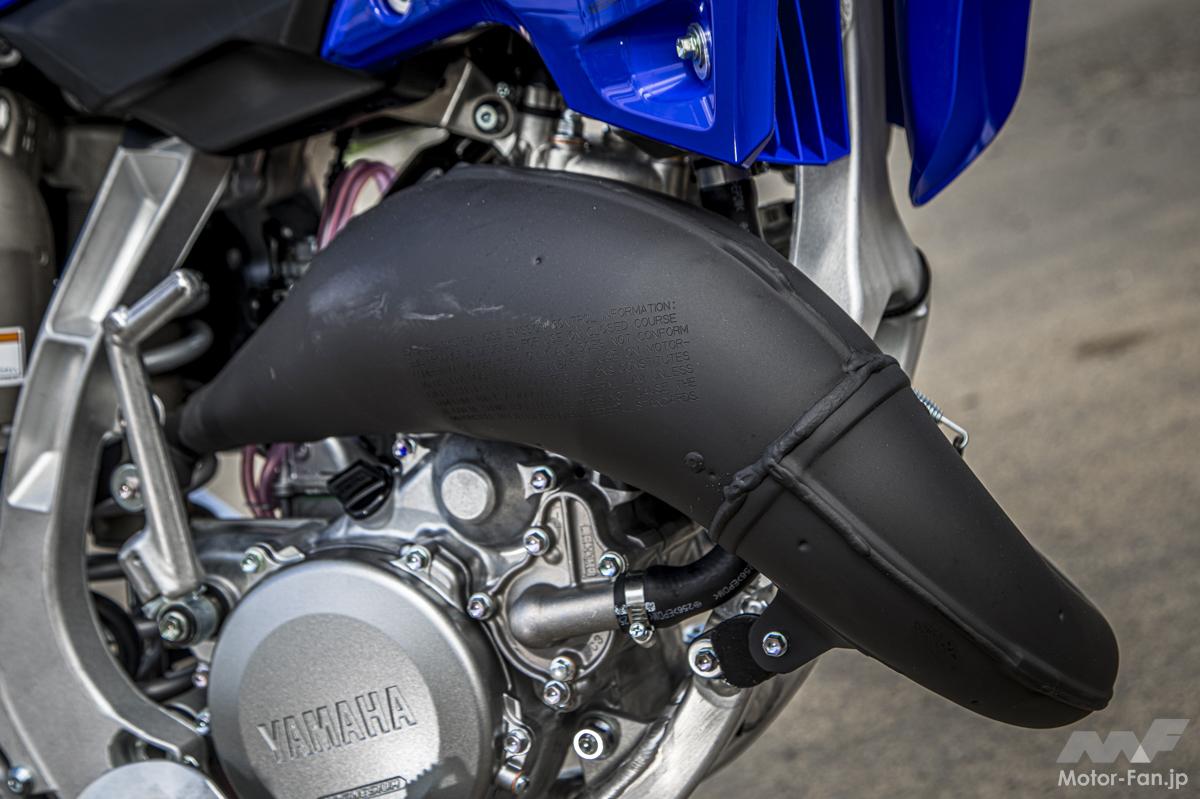
The chamber is the key to the power of a 2-stroke engine. Its shape takes into consideration the over-revving characteristics at high revolutions.

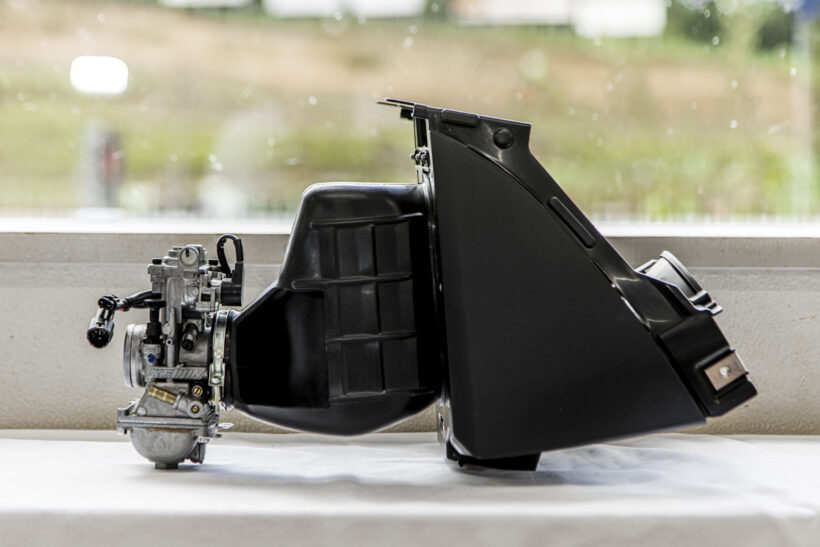
The intake has a straight structure to guide the intake air in a straight line to the carburetor. The intake port is located behind the seat, and fins are attached to the back of the seat to improve intake efficiency.