
![Suzuki Katana 1000km Test Drive [2/3] Experience the charm of a custom-made bike that’s different from its siblings](https://motopeek.com/wp-content/uploads/2025/05/2786-1760844804874.jpg)

Suzuki Katana…1,661,000 yen
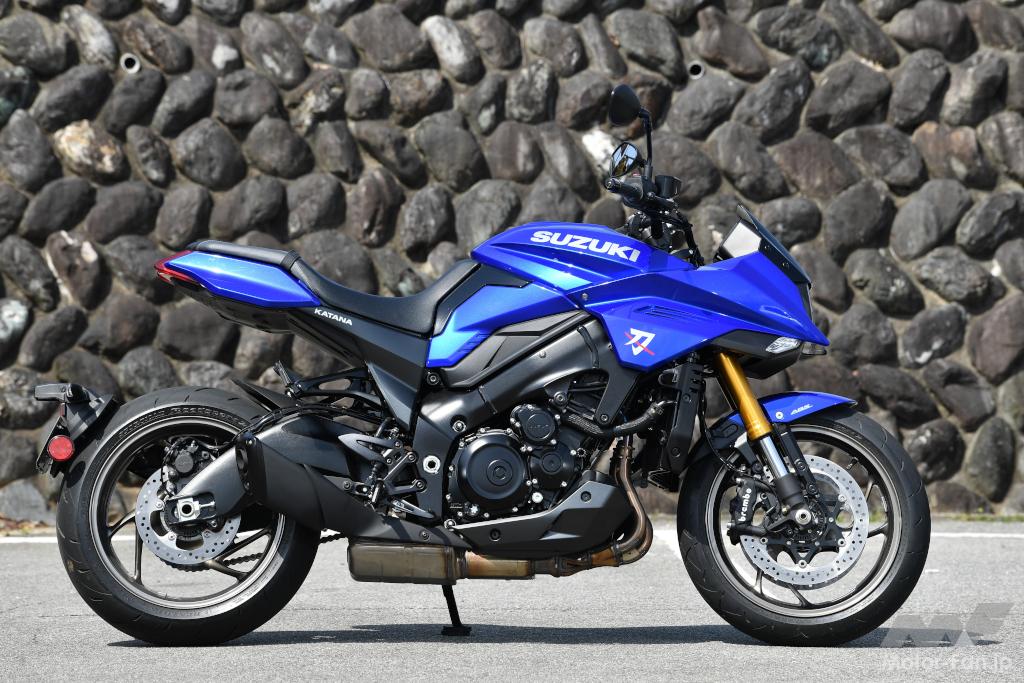
At first glance, it looks the same as the first generation model that was released in 2019, but the Katana from 2022 onwards will be equipped with a new electronically controlled throttle and a bidirectional quickshifter. The riding modes, which allow you to select from three engine characteristics, now have a clearer distinction between A, B, and C, and the traction control sensitivity has been changed from 3 to 5 levels. The camshaft, clutch, intake and exhaust systems have also been revised.
The merits of long-stroke engines

Suzuki’s current lineup includes the GSX-S1000, GSX-S1000GT, GSX-S1000GX, and Katana (model code GSX-S1000S), all of which share an aluminum twin-spar frame and in-line four-cylinder engine. Of these, the GT and GX are models that prioritize comfort and convenience for touring, and considering that the gas tank capacity of 12 liters is 7 liters less than the other three, the Katana is not the most suitable for long journeys. However, during this test ride, it was not difficult to achieve the target of 1000km.
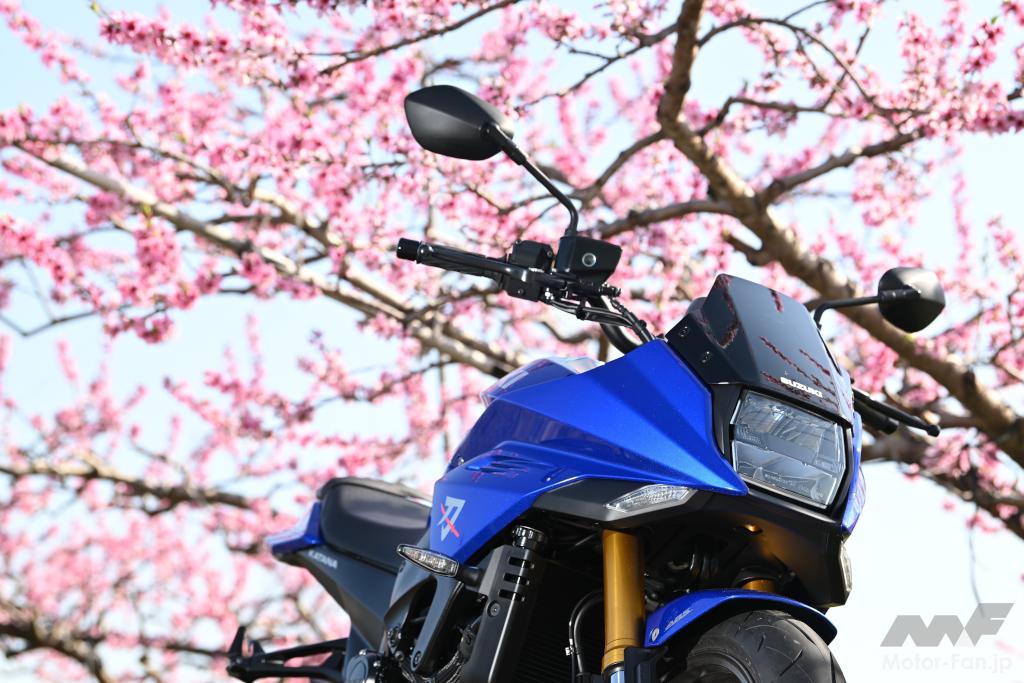
The main reason is that the engine is based on the one used for the GSX-R1000 K5 to K8. Despite being designed to win races, the K5 to K8 engines have ample torque in the low and mid-range, and the GSX-S1000 series, including the Katana, has refined this quality, so situations where you can’t use the high revs are not a problem. Of course, as the figures of maximum output: 150ps/11000rpm and maximum torque: 10.7kgf-m/9250rpm show, the Katana’s engine really shines in the high rev range, but even below 5000rpm, you get a clear response from your right hand, and in that range the heavy exhaust sound and gentle vibration feel pleasant.
The biggest reason these characteristics were possible is probably the long-stroke bore and stroke. Compared to rivals from other manufacturers, the GSX-R1000 series has consistently been long-stroke, with the K5 to K8 being particularly notable in this regard (73.4 x 59mm. Contemporaneous rivals were CBR1000RR: 76 x 55.1mm, YZF-R1: 78 x 52.2mm, ZX-10R: 76 x 55mm, S1000RR: 80 x 49.7mm). Long-stroke engines have the characteristics of good charging efficiency in the low and mid-range, and the crankshaft weight, which contributes to stability, tends to be large and heavy, and these two aspects seem to be more readily apparent as advantages in the Katana than in the K5 to K8.
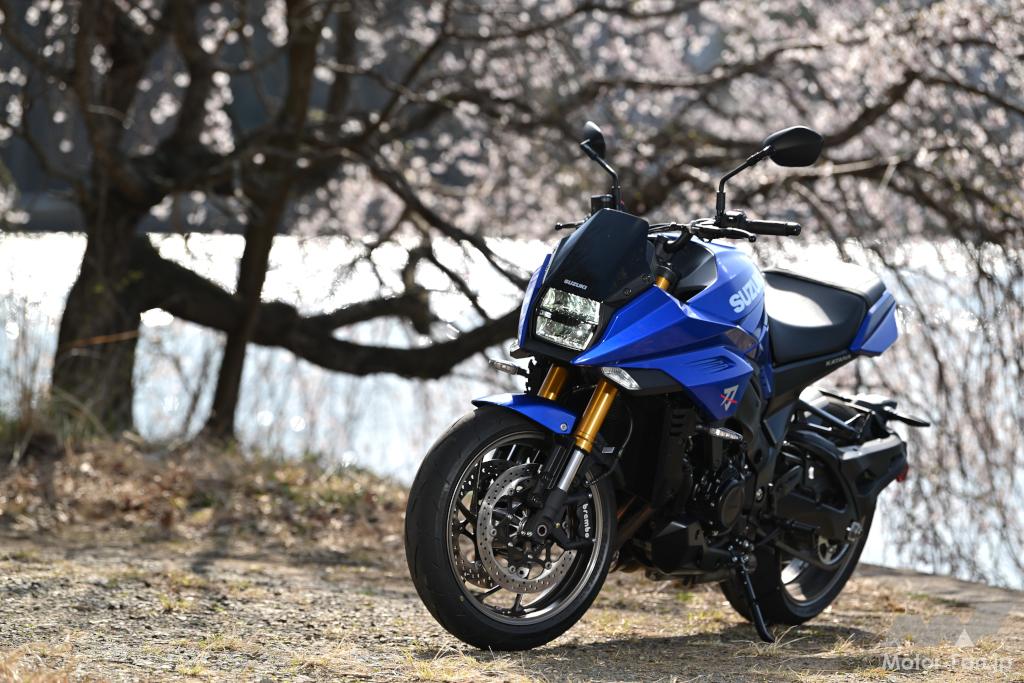
A light feel that is different from its sister models
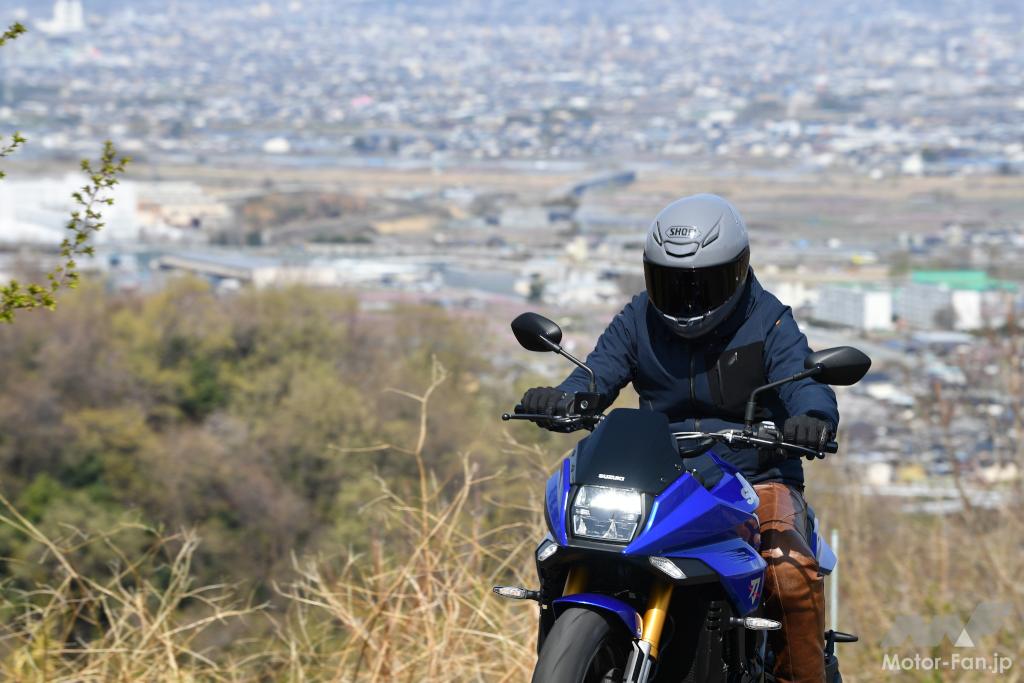
Now, I’ve started by writing down my impressions of the engine, but what I’ve said so far applies to the other sibling models as well. So what is the unique merit of the Katana? If we compare it to the GT and GX, it’s its light weight. After all, compared to the 226kg GT and 232kg GX, the 215kg Katana is easy to get on and off on the road, and it’s also easy to push and pull. Of course, the GT and GX win in terms of wind protection and ride comfort, but for someone like me who loves touring mainly on small mountain roads, the Katana’s light weight is a big attraction.
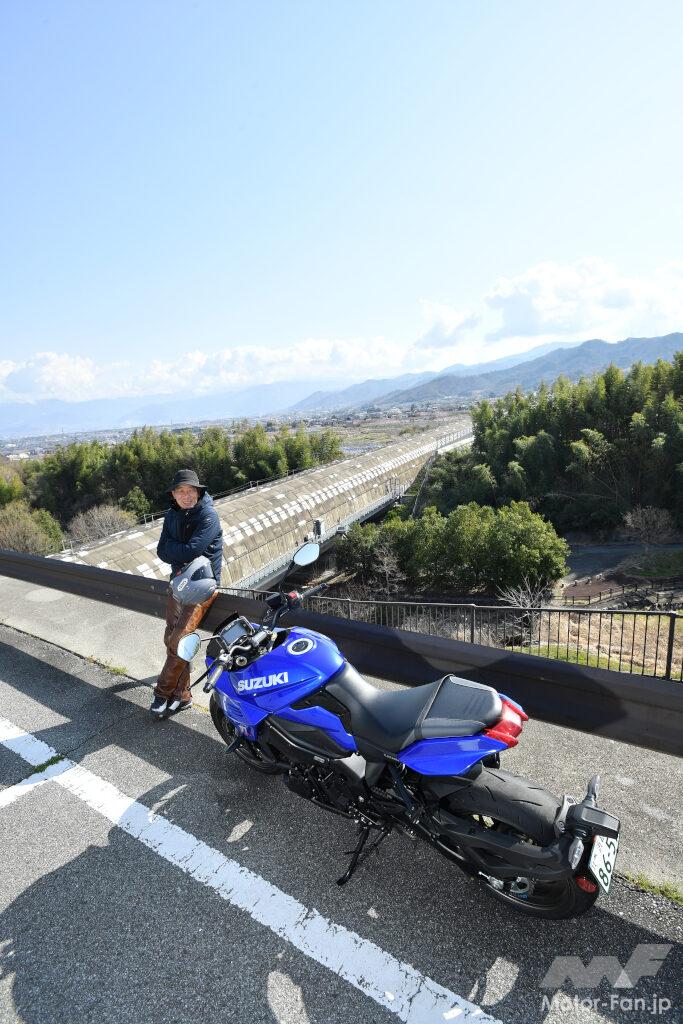
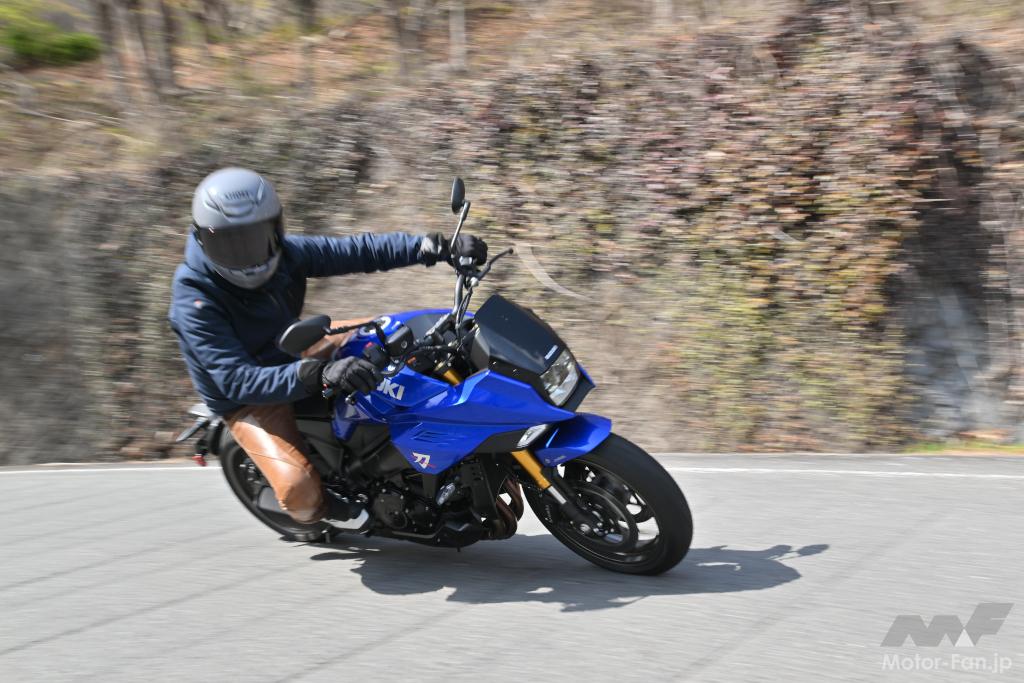
And compared to the GSX-S1000, which has roughly the same weight (214 kg), the appeal of the Katana is its supermotard-like handling, as mentioned in Part 1. While the GSX-S1000 has characteristics that could be called the standard for modern sports naked bikes, the Katana, with its forward seating position and high handlebars, changes direction sharply when entering corners, resulting in a light and exciting ride.
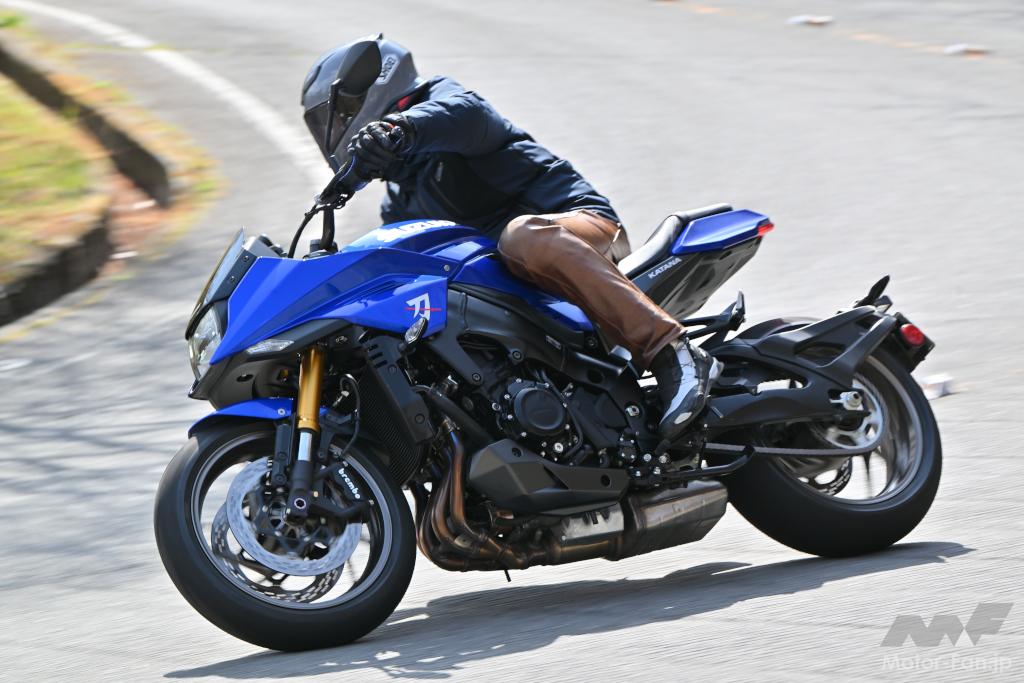
By the way, the standard settings for the Katana’s front and rear shock units are a little on the stiffer side, and they don’t provide much shock absorption when going over bumps in the road, so I felt a lingering pain in my arms, legs, and hips on my first outing. However, after gradually adjusting each adjuster to be weaker, I turned the front preload back one turn, left the rear rebound damper at its standard setting, and set the front rebound damper and rear preload to the weakest setting as specified in the owner’s manual, and the problem was resolved. My second outing was extremely comfortable.
If there is something to gain, there is something to lose
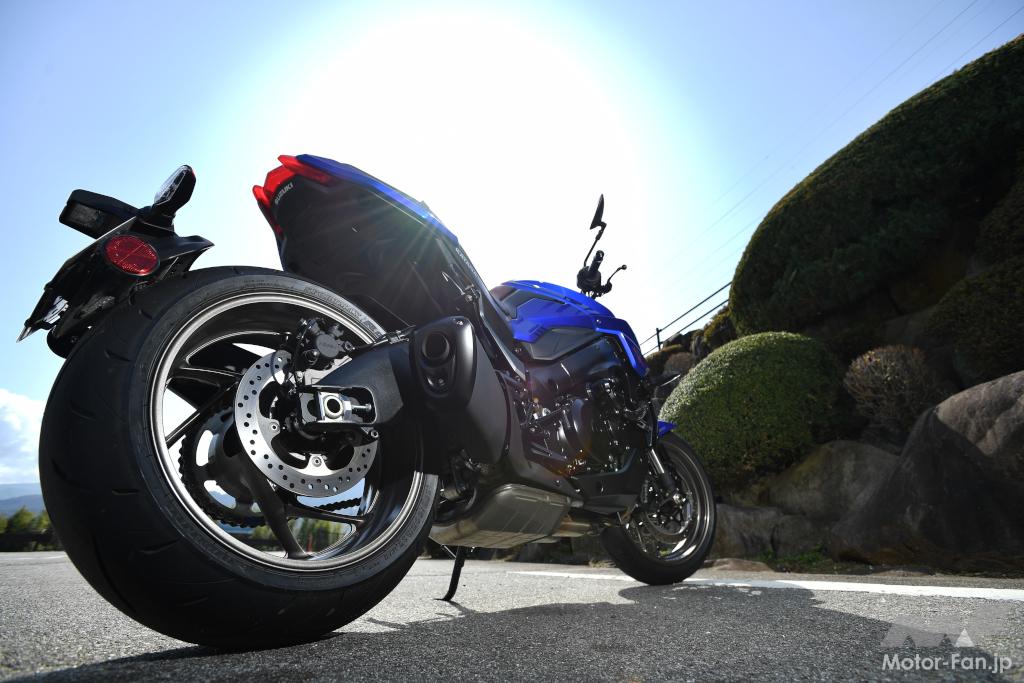
So, although I have a good impression of the Katana, I’m sure there are some people out there who are dissatisfied with the small gas tank capacity and poor loading capacity mentioned at the beginning. In fact, when I test rode the Katana in 2019, its debut year, I was also bothered by these two points, but during this test ride, while taking a break in a parking lot on a mountain pass and looking at the vehicle, a thought occurred to me. Isn’t it a bit rude to object to practical aspects of a custom bike that was created with design as the top priority?

Yes, if you think about it, the Katana is a custom-made bike based on the GSX-S1000. And in the world of custom bikes, it’s common knowledge that if you gain something, you also lose something (for example, increasing engine power tends to shorten the lifespan, and adding comfort features to various parts of the bike makes it harder to maintain its original appearance), so it’s only natural that the Katana, which has achieved unique looks and handling, has lost some of its practicality…or so you might say.
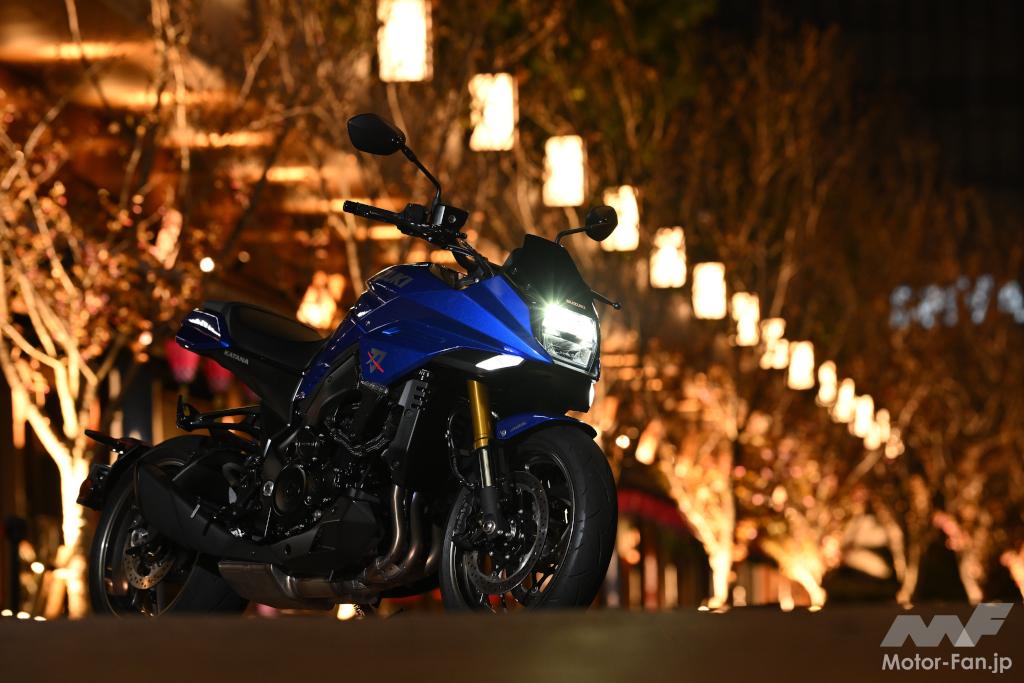
However, the gasoline issue can be resolved by simply filling up earlier, and the loading issue can be resolved by installing seats and side bags available on the aftermarket (unfortunately, there are no genuine accessories available), so for me personally these were not a major negative factor. On the contrary, during this test drive, I could clearly sense that the Katana has a different direction from its siblings, or, to put it bluntly, a “straightforward” approach, and I’ve come to like the Katana more than ever before.
*In the third installment, which will be published soon, the author will explain each part from his own unique perspective, as well as introduce the actual fuel consumption measured after driving approximately 1,000 km.
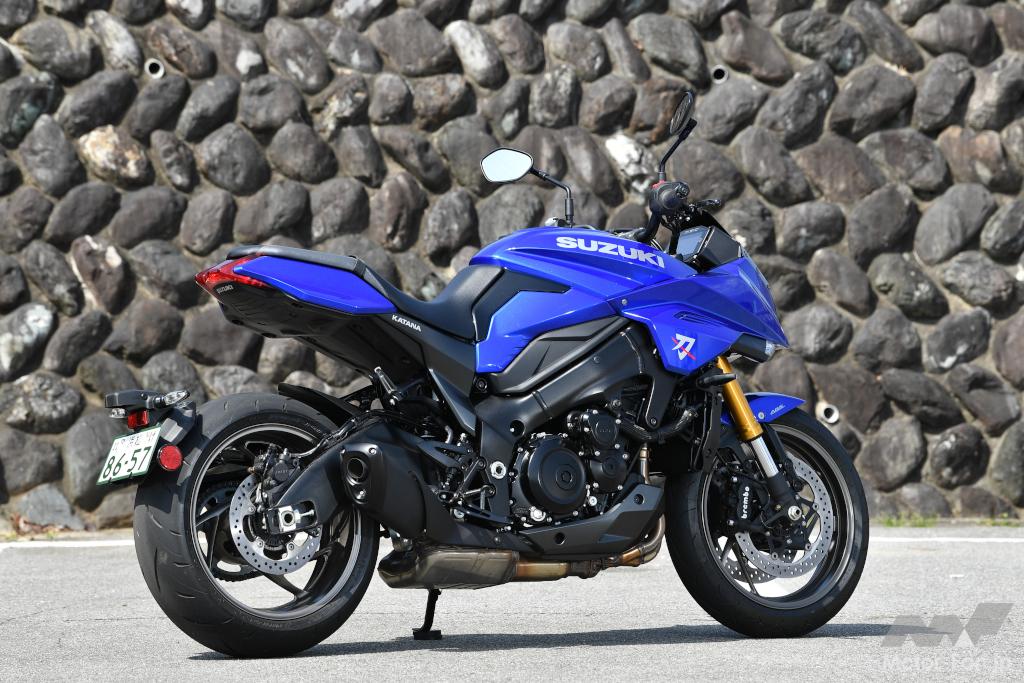
The factory-specified tires are Dunlop Road Sport 2. While they’re not bad tires, considering the current ride quality, I feel like better results would be achieved if they were replaced with the latest sports touring tires (Dunlop’s Road Smart IV).
ADVERTISEMENT
 The Suzuki Katana is six years old. Its supermotard-like handling is hard to imagine from its appearance. | 1000km test drive [1/3]
Although the exterior incorporates an atmosphere reminiscent of classic motorcycles of the past, the riding feel of the modern Katana is not neo-classical. This bike is a sports naked that inherits the DNA of super sports, and on mountain roads you can enjoy the lightness of a supermotard. REPORT: Nakamura Tomohiko PHOTO: Togashi Hideaki
Main specifications
Model: KATANA
Model: 8BL-EK1AA
Length x Width x Height: 2130mm x 820mm x 1100mm
Wheelbase: 1460mm
Ground Clearance: 140mm
Seat Height: 825mm
Caster/Trail: 25°/100mm
Engine Type: Water-cooled 4-stroke in-line 4-cylinder
Valve Type: DOHC 4-valve
Total Displacement: 998cc
Bore x Stroke: 73.4mm x 59.0mm
Compression Ratio: 12.2
Maximum Power: 110kW (150ps) / 11000rpm
Maximum Torque: 105N・m (10.7kgf・m) / 9250rpm
Starting Method: Self-starter
Ignition Method: Full Transistor
Lubrication Method: Wet Sump
Fuel Supply Method: Fuel Injection
Transmission Type: Constant Mesh 6-speed Return
Clutch Type: Wet Multi-plate Coil Spring
Gear Ratio
1st: 2.562,
2nd: 2.052
3rd gear: 1.714
4th gear: 1.500
5th gear: 1.360
6th gear: 1.269
1st and 2nd reduction ratios: 1.533 and 2.588
Frame type: Diamond (aluminum twin spar)
Front suspension: Telescopic inverted type φ43mm
Rear suspension: Bottom link mono shock
Front tire size: 120/70ZR17 Rear
tire size: 190/50ZR17
Front brake type: Hydraulic double disc
Rear brake type: Hydraulic single disc
Vehicle weight: 215kg
Fuel used: Unleaded high-octane gasoline
Fuel tank capacity: 12L
Passenger capacity: 2 people
Fuel consumption rate (Ministry of Land, Infrastructure, Transport and Tourism notification value): 21.2km/L (with 2 passengers)
Fuel consumption rate (WMTC mode value, class 3): 16.2km/L (with 1 passenger)