

Honda Super Cub 50 (first generation, 1958)
Honda’s “Super Cub” series is a business bike that has been hugely popular worldwide since the first model, the “Super Cub C100 (50cc displacement),” was released in 1958. Among the 50cc class bikes that can be ridden with an easy-to-obtain moped license, this bike has been particularly popular for many years as a convenient means of transportation, from commercial use such as delivery work to everyday transportation.
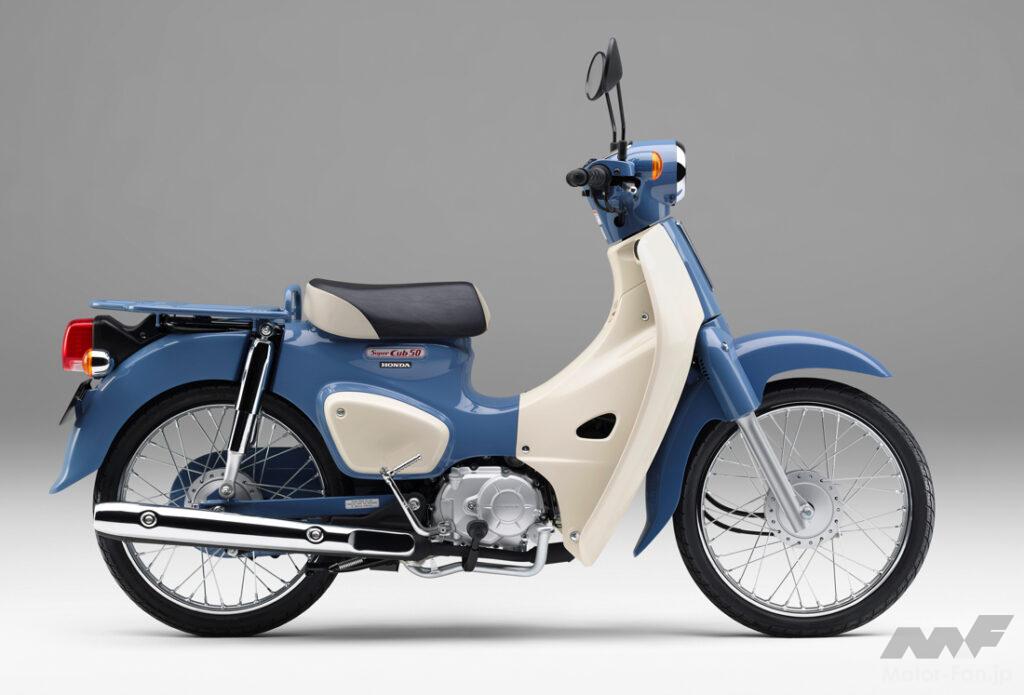
Super Cub 50 Final Edition
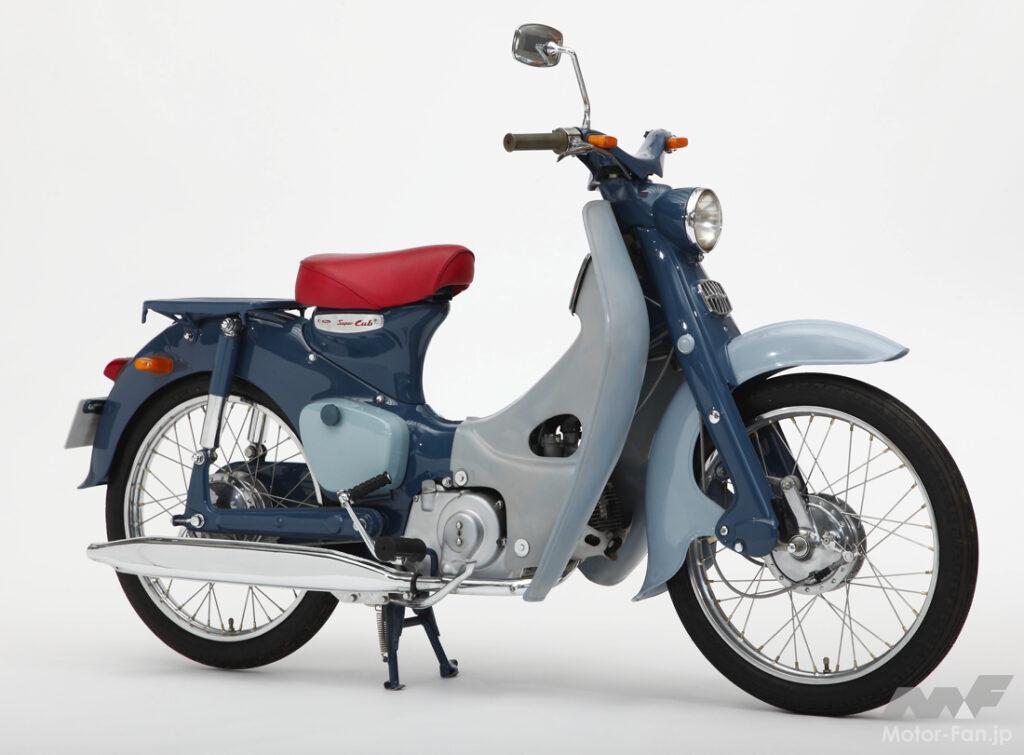
Super Cub C100 (1958)
In particular, the current model, like its sibling 110cc model, the Super Cub 110, has a style reminiscent of the classic Cub, with leg shields and round headlights. It boasts an elegant appearance with chrome-plated parts in various places, and a light and nimble ride thanks to a 4-speed return shift that eliminates the need for clutch operation.
Honda has already announced that it will end production of the Super Cub 50, and will release the final version, the “Super Cub 50 Final Edition,” for a limited time on Thursday, December 12, 2024.
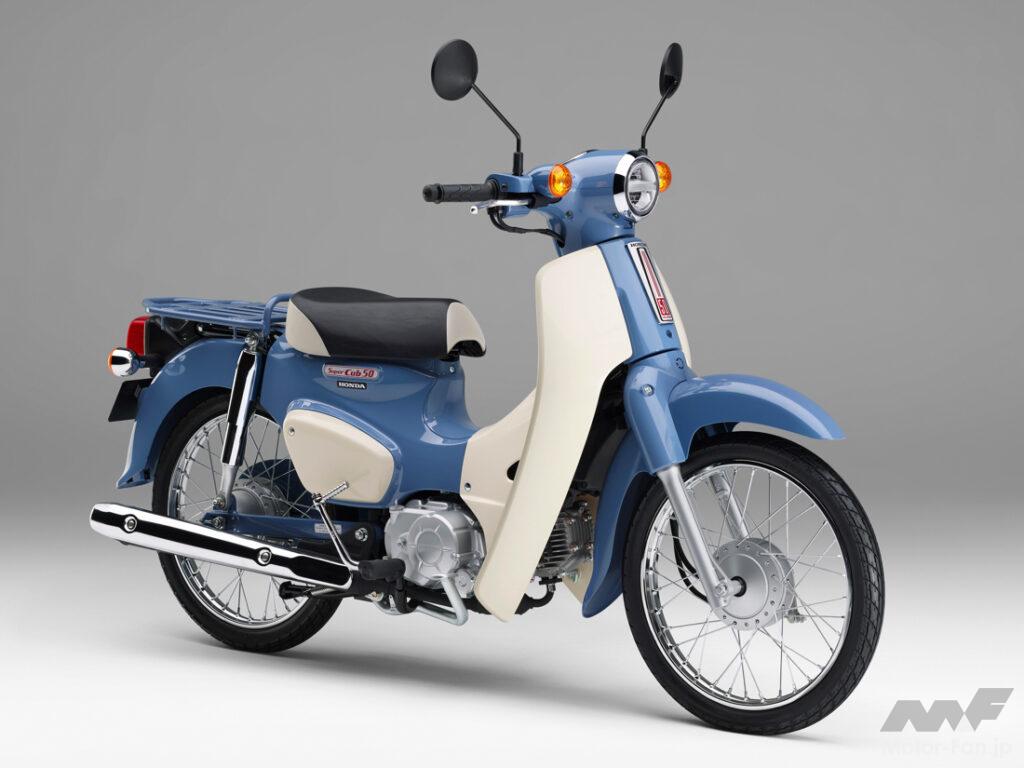
Super Cub 50 Final Edition
Its main features include a “bonnie blue” color scheme reminiscent of the classic Super Cub, and exclusive designs for emblems, etc. In addition, the meter rim and muffler cover are plated, and the front and rear of the seat are two-tone gray, creating a special feel.
At the same time, Honda also announced the “Super Cub 50 HELLO KITTY,” which is based on the Super Cub 50 and commemorates the 50th anniversary of Sanrio’s popular character, Hello Kitty. This will be followed by the “Super Cub 110 HELLO KITTY,” based on the Super Cub 110, but either way, two types of special edition vehicles have been released for the final Super Cub 50.
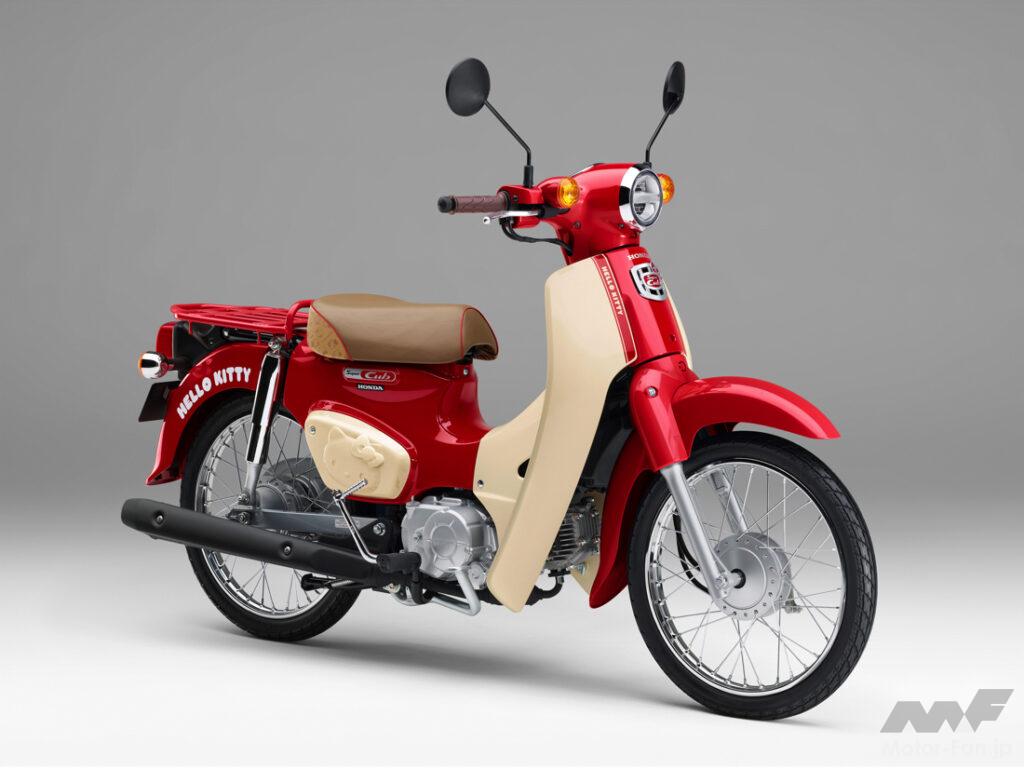
Super Cub 50 HELLO KITTY
These two types were only available for a limited time, but the order period ran from Friday, November 8, 2024 to Sunday, November 24, 2024, and has now ended. The price (including tax) for the Super Cub 50 Final Edition is 297,000 yen (an increase of 49,500 yen over the standard model). The price for the Super Cub 50 HELLO KITTY is 330,000 yen (an increase of 82,500 yen over the standard model). Both are more expensive than the standard model, which is priced at 247,500 yen (including tax), but as these are the last Super Cub 50s available to buy new, those who are able to purchase one are probably quite lucky.
Incidentally, its sister models, the 110cc model “Super Cub 110” (price including tax: 302,500 yen) and the 125cc “Super Cub C125” (price including tax: 451,000 yen), will continue to be sold. The style is almost the same as the Super Cub 50, and with the existence of a Class 2 moped model with increased displacement, it looks like the “Super Cub legend” will continue for some time to come.
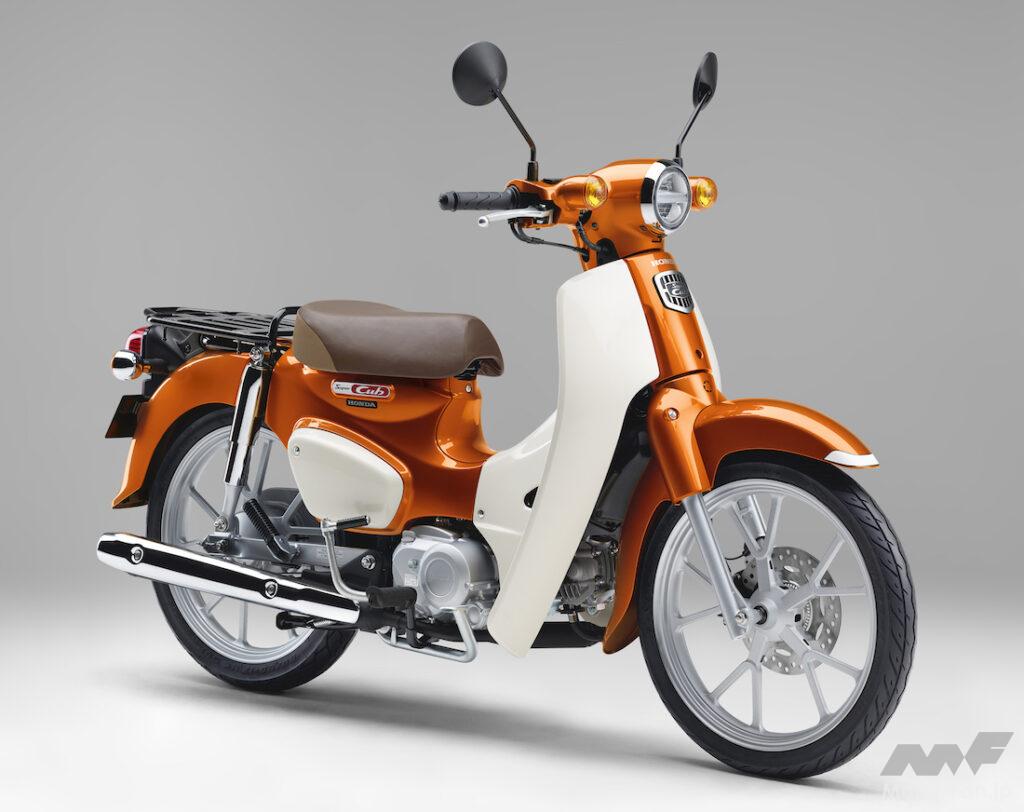
Super Cub 110
ADVERTISEMENT
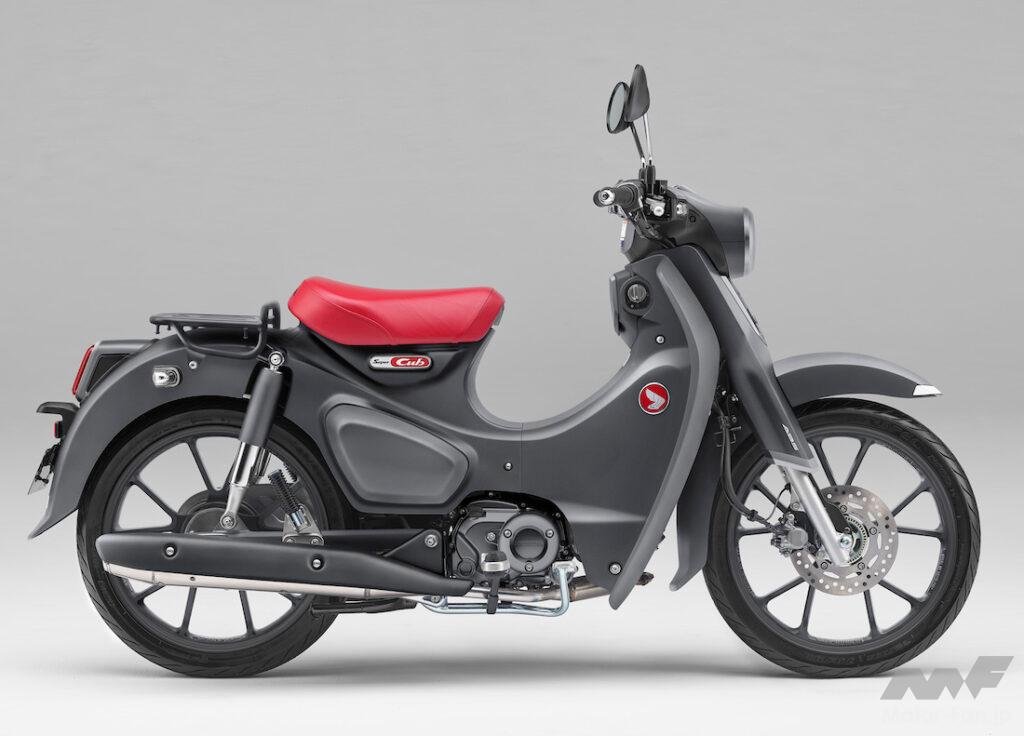
Super Cub C125
Honda Gyro X (first generation, 1982)
Like the Super Cub 50, the three-wheeled moped scooter “Gyro X” is a business model that was born in the Showa era and is still in the lineup today.
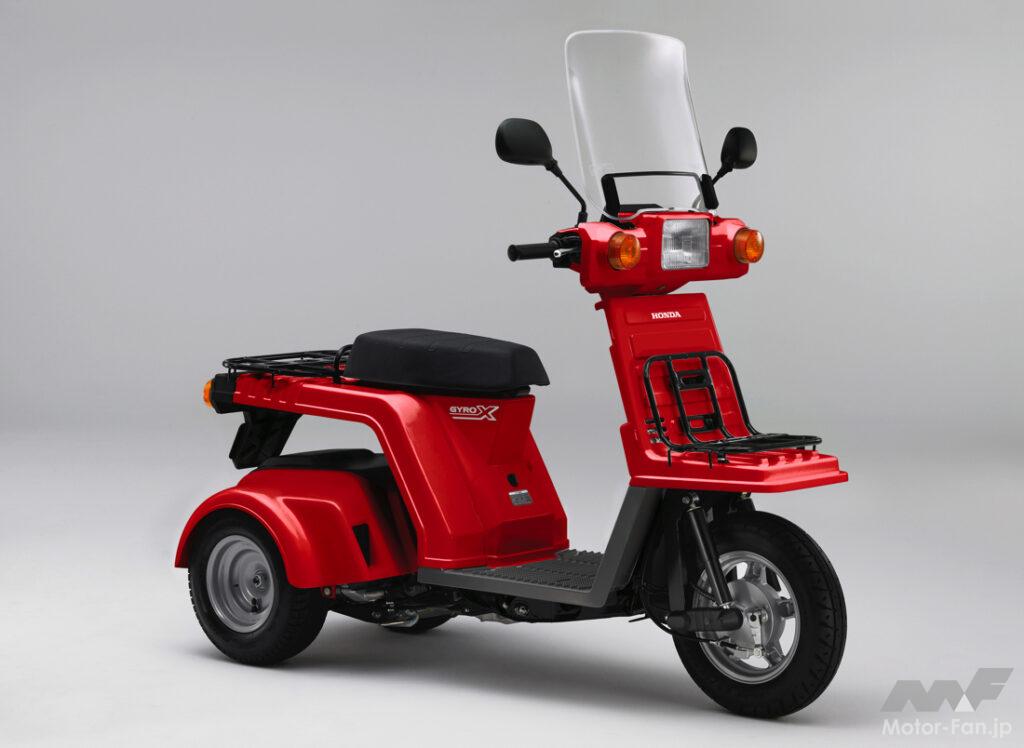
The current Gyro X, which was released in 2017
The first model appeared in 1982. At the time, Honda released a 50cc motorcycle with three wheels (one in front and two in the back) as a new type of vehicle called the “Threeter.” Following the Stream, which had a passenger car-like image, released in 1981, the Gyro X was released as the second three-ter model.
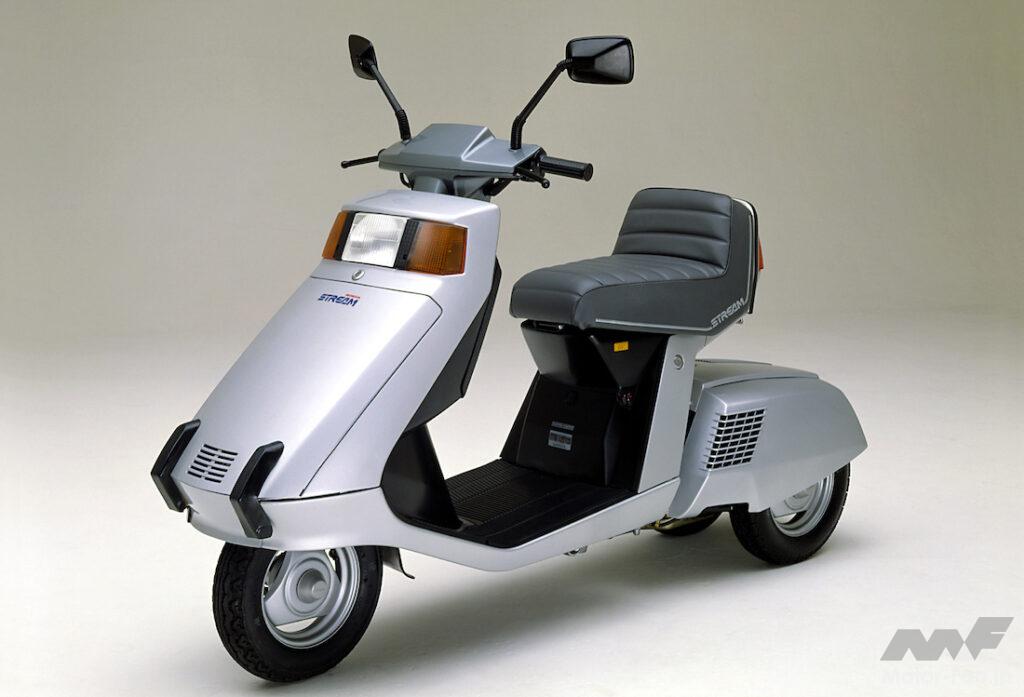
Stream (1981)
The main features of the first-generation Gyro X were its 49cc, two-stroke, single-cylinder engine that produced a maximum output of 5PS and its Neidhart mechanism, which allowed the front body to swing left and right when cornering. Its appeal was its combination of the stability of a three-wheeled vehicle with the nimble maneuverability of a motorcycle.
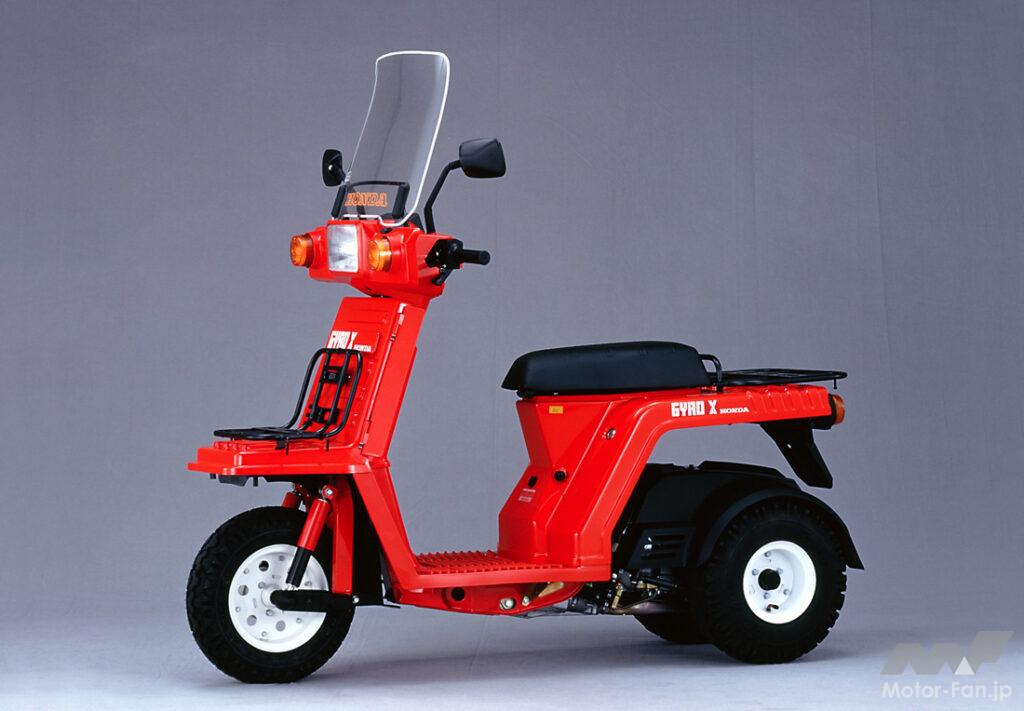
First generation Gyro X (1982)
In addition, the non-slip differential mechanism and wild-pattern low-pressure wide tires provide excellent off-road performance on uneven ground, snowy roads, slopes, etc. The tough exterior evokes an outdoor image, and the front deck and large rear carrier provide high loading capacity and practicality.
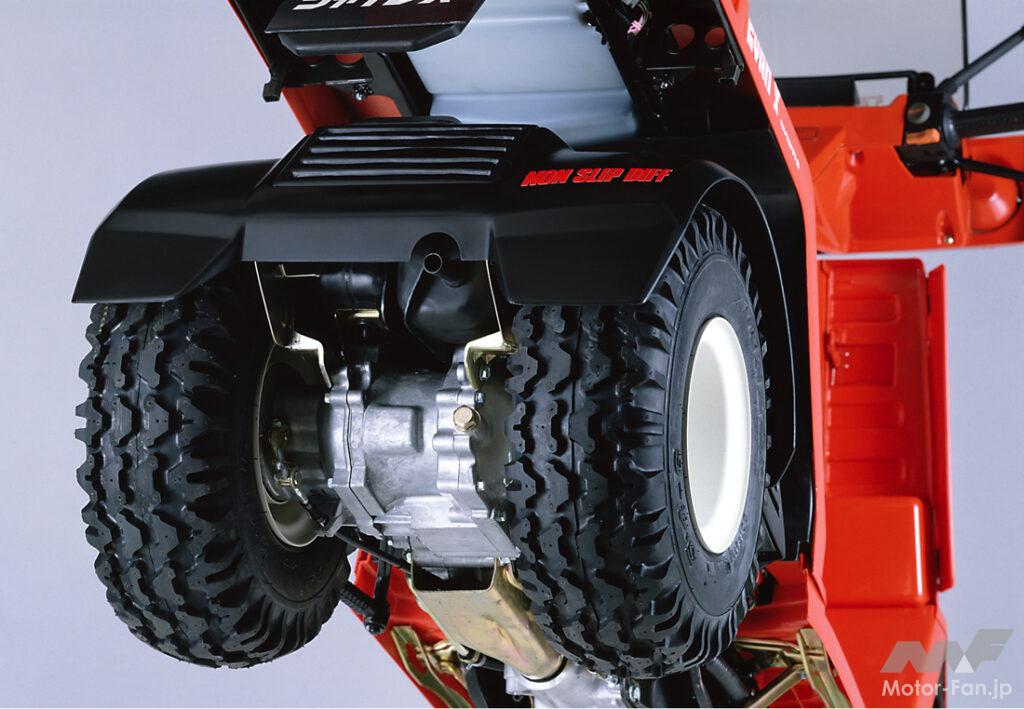
The first Gyro X also featured a non-slip differential.
In 1990, the Gyro Canopy, a sibling three-wheeled motorcycle equipped with a roof and a windscreen with wipers, was released. Highly practical for use in the delivery business, it became established as a standard three-wheeled motorcycle for business use, along with the Gyro X.
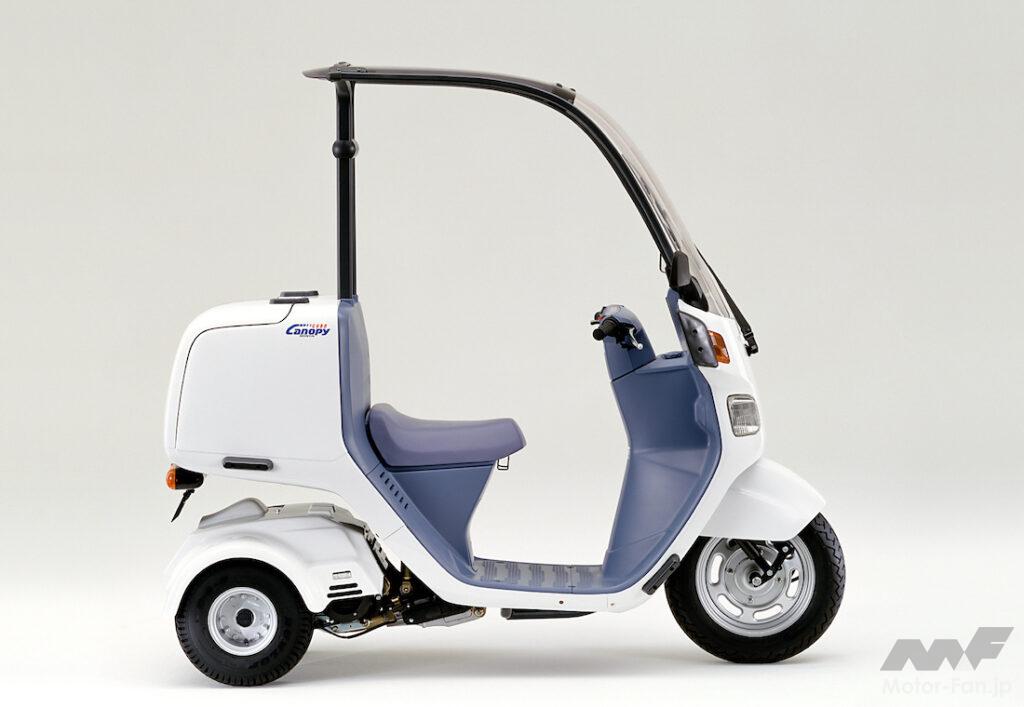
First generation Gyro Canopy (1990)
The current Gyro X was released in 2008. Along with its sister model, the Gyro Canopy, the engine was revamped, changing from the previous 2-stroke engine to a 49cc water-cooled 4-stroke OHC single-cylinder engine. It features improved environmental friendliness, such as a 30% improvement in fuel efficiency compared to the previous model, while also achieving smooth output characteristics.
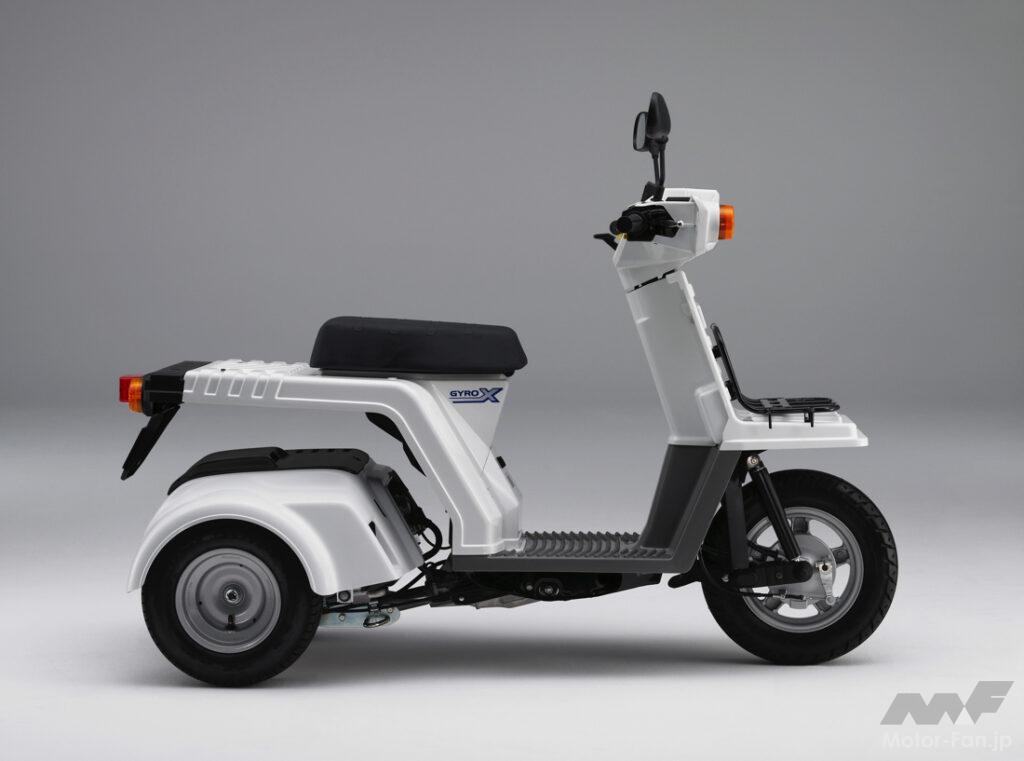
Current Gyro X basic type
In addition, newly designed aluminum wheels and tubeless tires are used on the front and rear wheels, and the rear wheel size has been increased from 6 inches to 8 inches. Combined with the wider tread of the rear wheel, driving stability has also been improved.
Since then, the Gyro X and Gyro Canopy have undergone changes such as making their engines compliant with the 2016 exhaust gas regulations in 2017, improving their environmental performance. However, it is still unclear whether they will be able to comply with the new exhaust gas regulations that will come into effect in November 2025, and although there has been no specific announcement as of March 3, 2025, it is entirely possible that production will be discontinued.
However, the electric motorcycles “Gyro e:” and “Gyro Canopy e:” will be released in 2021, and it is expected that these will not be affected by the new exhaust gas regulations. The Showa-era three-wheeler model will likely continue its tradition by being converted to an electric unit.
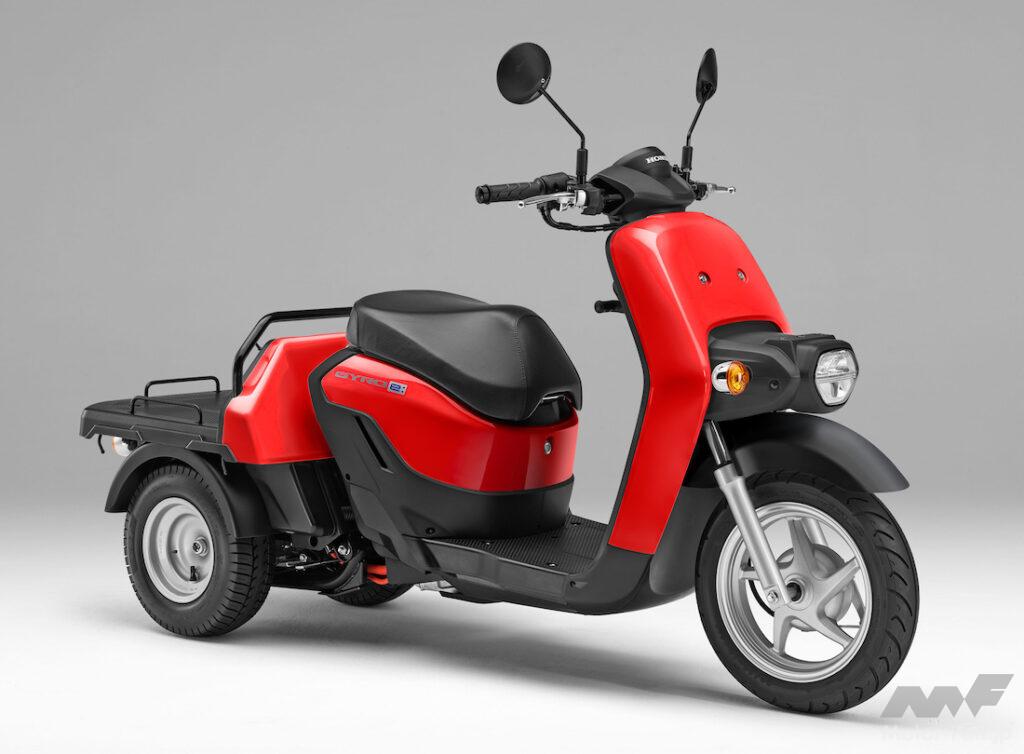
Gyro e:
The current price (including tax) of the Gyro X (50cc engine model) is 404,800 yen for the basic type without a windshield or rear carrier, and 426,800 yen for the standard type with a windshield and carriers attached to the front and rear of the vehicle. The current price (including tax) of the Gyro Canopy is 570,900 yen.
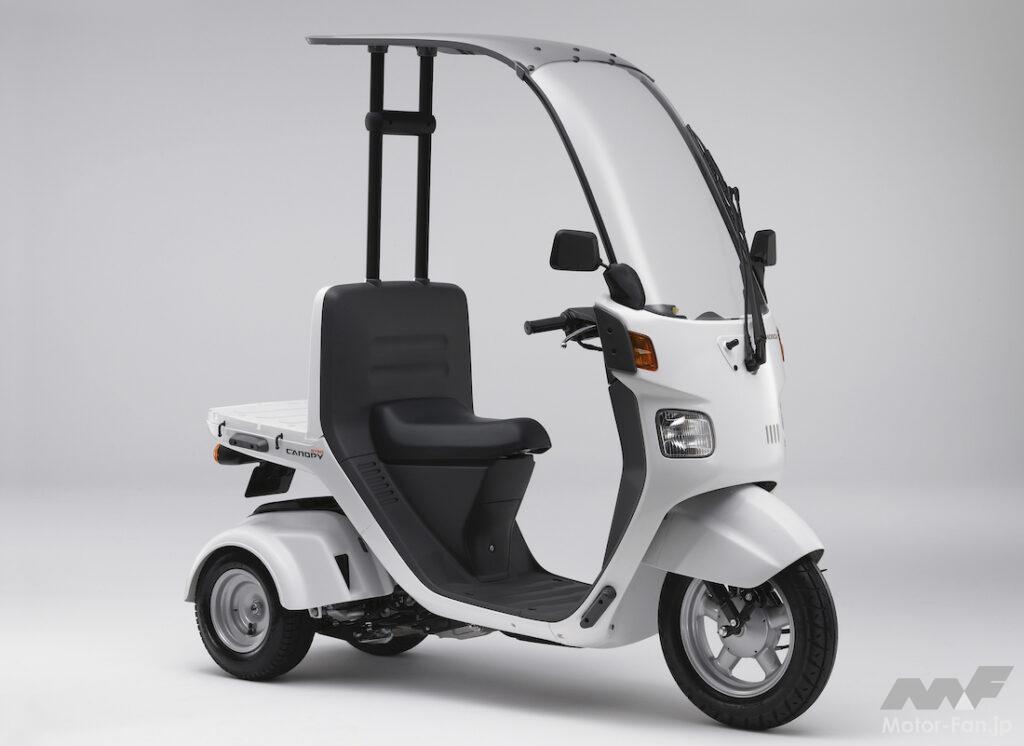
Current Gyro Canopy
Yamaha Jog (first generation, 1983)
Yamaha Motor Co., Ltd. (hereinafter referred to as Yamaha)’s Jog series of moped scooters is a long-selling model that is attractive for its sporty style and powerful driving performance.
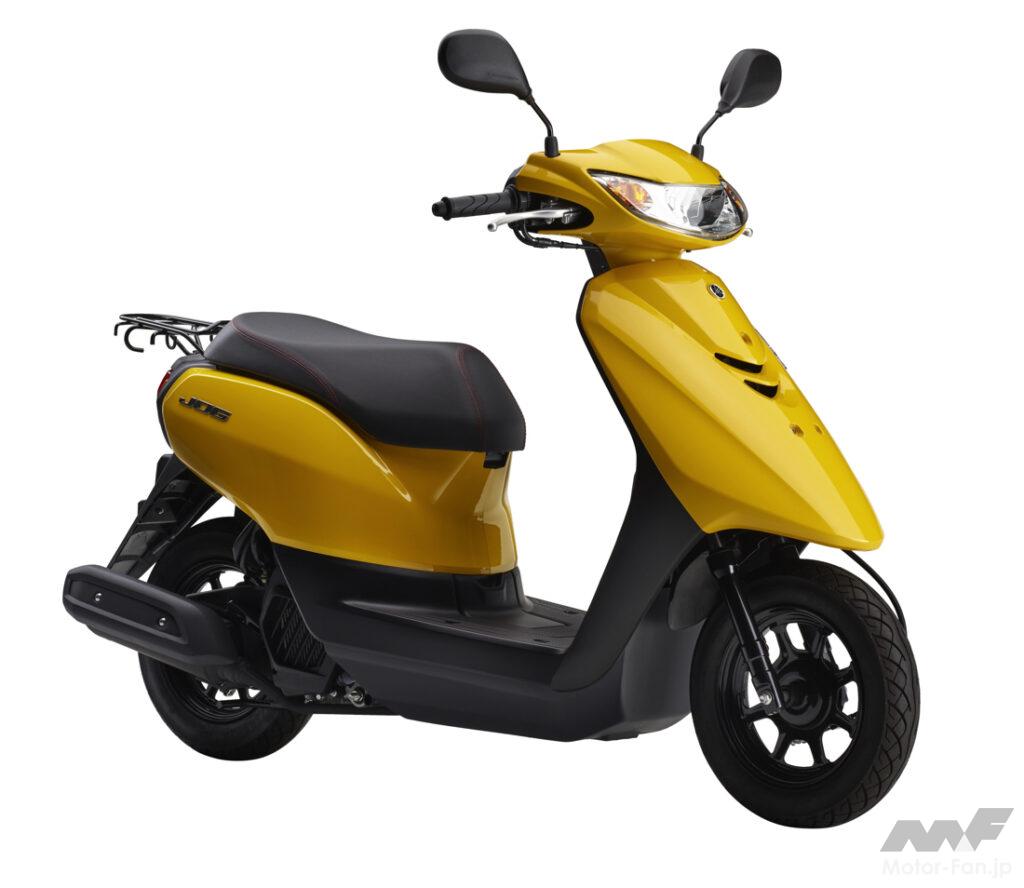
Jog Deluxe
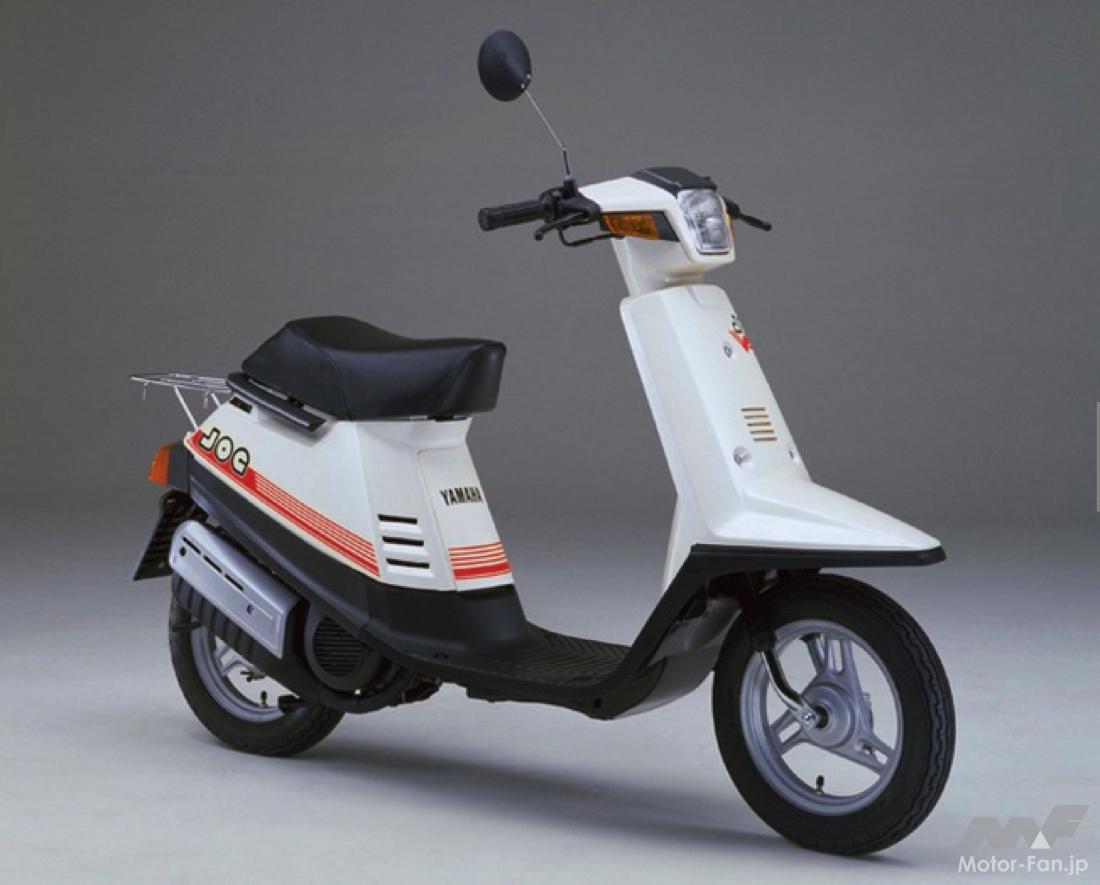
The first model, which appeared in 1983, can be said to have been a driving force behind the boom in sporty 50cc scooters that continued until the early 2000s. Its 49cc, two-stroke engine, which produced a powerful 4.5PS at the time, and its aggressive style with a pointed front cowl covering the front wheel were well received, making it a huge hit.
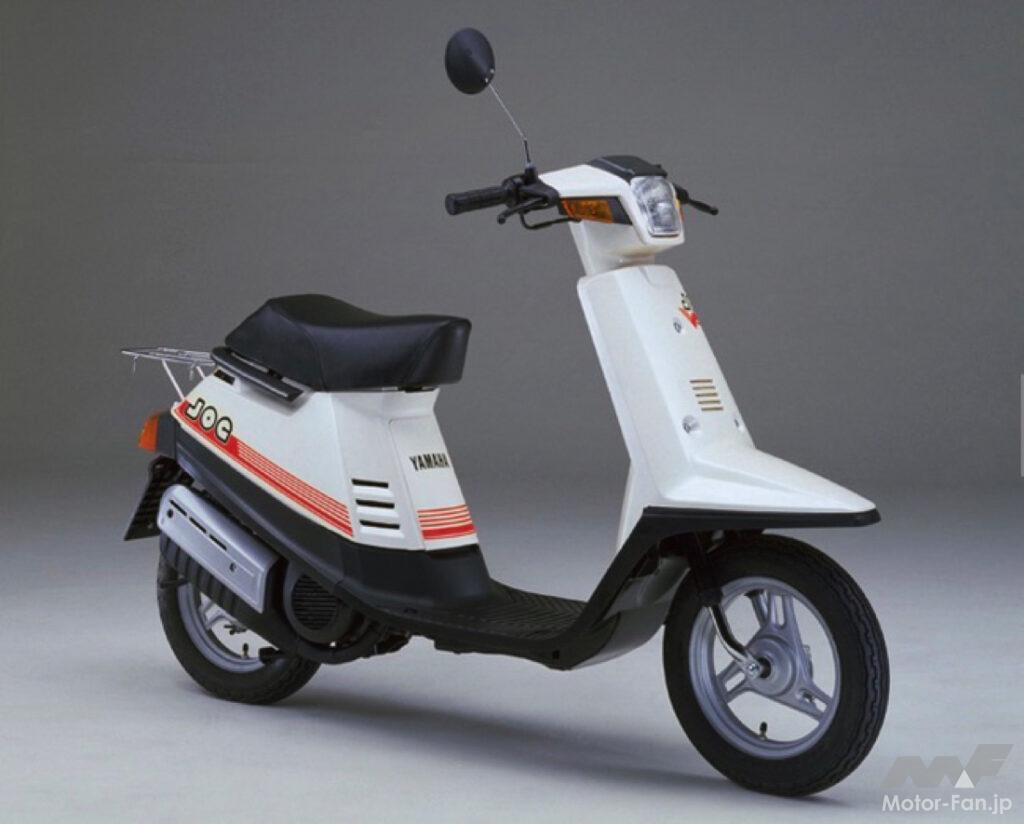
First generation Jog (1983)
The Jog was later given a number of derivative models, including one with a 90cc 2-stroke engine, and became the cornerstone of Yamaha’s scooters. However, due to increasingly strict exhaust gas regulations, the Jog was switched to a 4-stroke engine in 2007.
Furthermore, the current 50cc model, which was released in 2018, is an OEM model based on Honda’s “Tact” (described below) and incorporates Yamaha’s design. The 50cc sports scooter that was once Yamaha’s flagship model retains its original appearance and name, but shares the same basic structure, such as the engine and body.
The current Jog model lineup consists of the high-end “Jog Deluxe” and the standard “Jog.” The 49cc, water-cooled, four-stroke, single-cylinder engine delivers a maximum output of 4.5 PS, providing powerful performance that allows you to climb uphill without stress. In addition, it is characterized by its consideration for fuel efficiency and the environment.
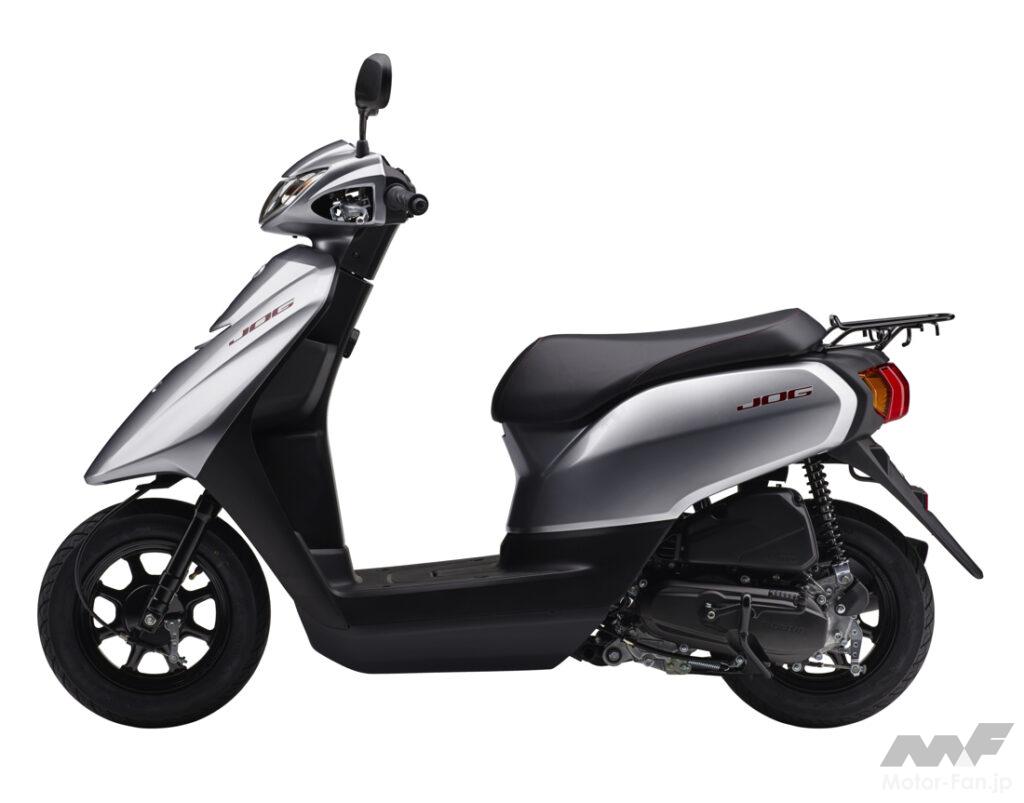
Standard jog
In particular, the premium model Jog Deluxe is exclusively equipped with an idling stop system, which contributes to reducing excess fuel consumption, noise, and exhaust gases. Along with the standard model, it also boasts high fuel efficiency, achieving a WMTC mode value of 58.4km/L.
Additionally, the under-seat trunk has a large capacity of 20L for the Deluxe model and 19L for the Standard model. It is convenient for storing not only helmets but also rainwear. Furthermore, when the left lever (for the rear brake) is operated, the braking force is distributed appropriately to the front wheel as well, and the combined brakes support braking, ensuring a high level of safety. The current Jog is priced (including tax) at 181,500 yen for the Standard model and 194,700 yen for the Deluxe model.
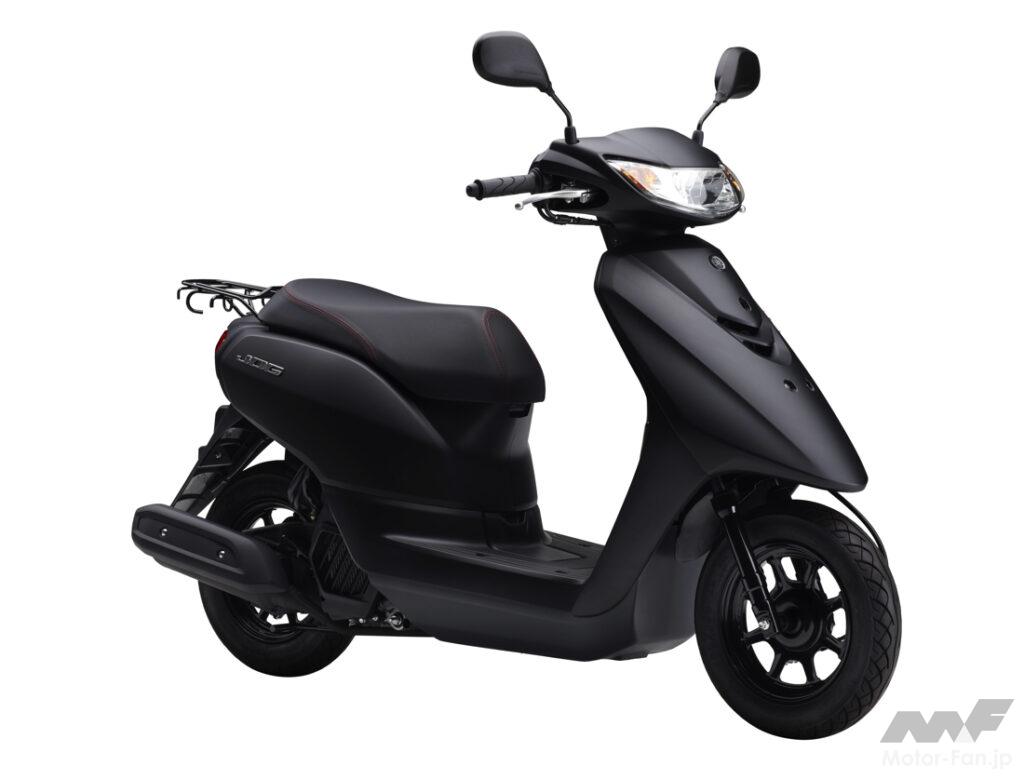
Jog Deluxe
Incidentally, the Jog lineup currently also includes the Jog 125, a 50cc scooter equipped with a 124cc air-cooled 4-stroke engine (price including tax: 267,300 yen). This model, which was released in 2022, adopts the sporty style common to the series. The key point is that it is equipped with Yamaha’s unique “BLUE CORE” engine, which combines powerful power with a maximum output of 8.3 PS and high fuel efficiency with a WMTC mode value of 51.9 km/L.
And even if the 50cc version of the Jog doesn’t meet the new exhaust gas regulations, there’s a good chance that this 50cc moped model will survive. The lineage of this long-selling model is expected to continue as a 125cc model.
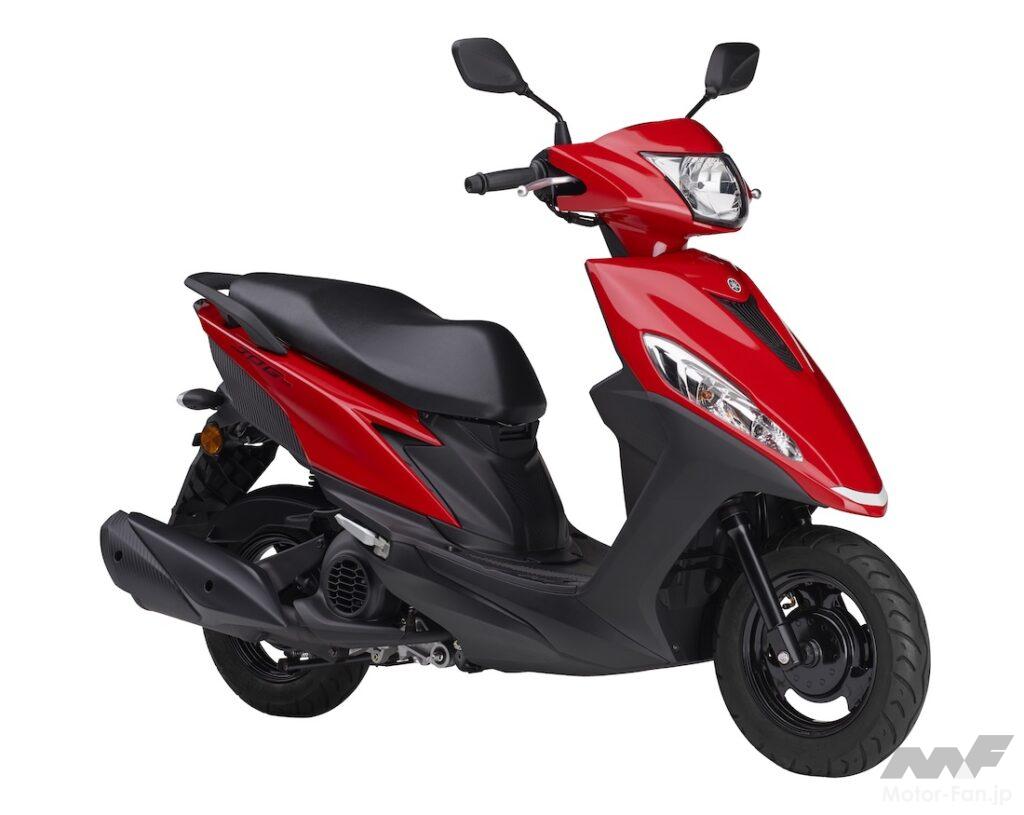
Jog 125
Honda Tact (first generation 1980)
The Tact is a Honda 50cc scooter that boasts a history of over 40 years.
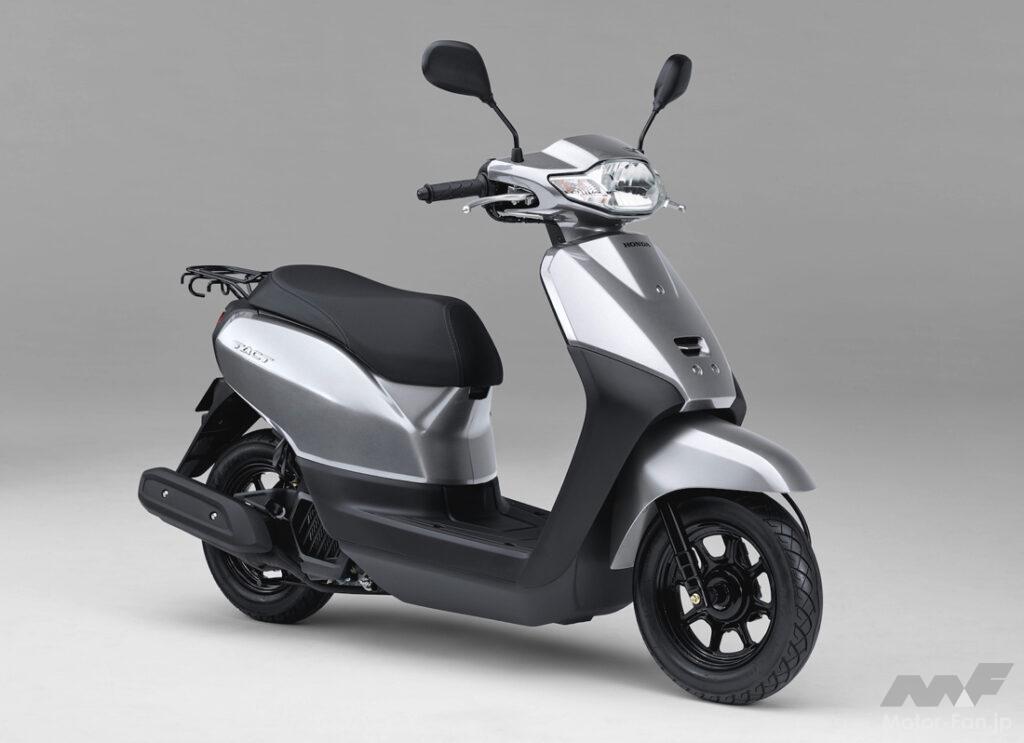
Tact
The first model was released in 1980. Its 49cc, two-stroke, single-cylinder engine delivered a maximum output of 3.2 PS, delivering high riding performance. It gained immense popularity thanks to a number of comfortable and practical features, including the now-common step-through flat footpeg.
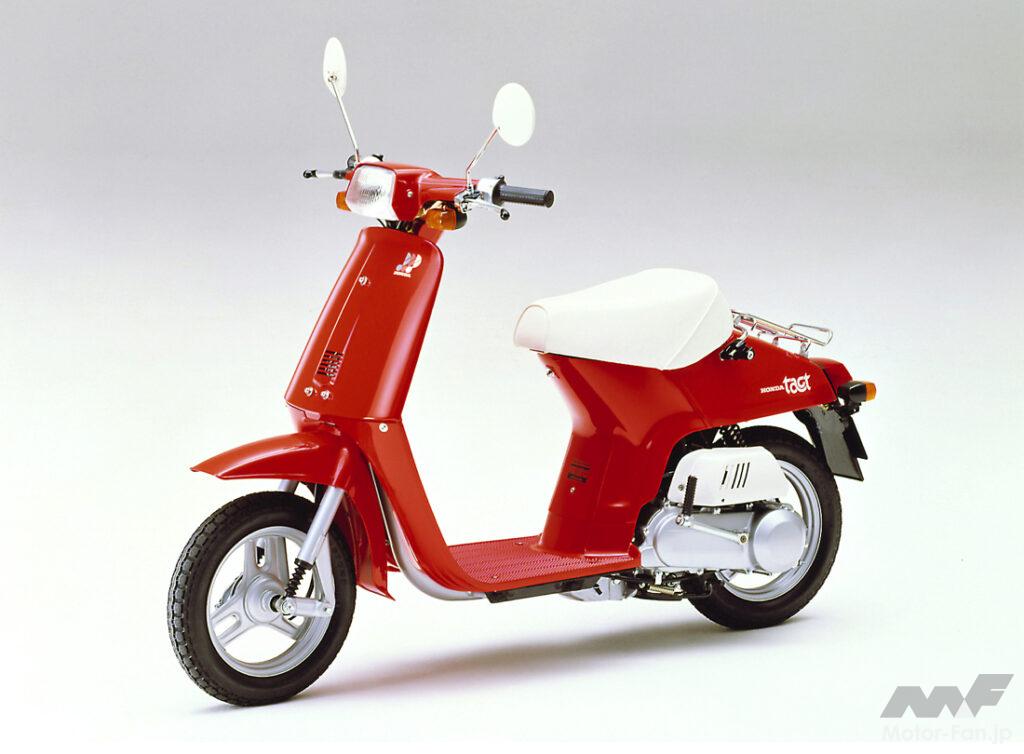
First Tact (1980)
At the time, Yamaha’s moped scooters, such as the Jog introduced earlier, also recorded big sales. It even developed into a sales war known as the “HY Wars,” but the Tact became one of Honda’s central models.
Incidentally, as mentioned above, Honda’s Tact is currently supplied to Yamaha on an OEM basis and is sold under the name “Jog.” The fact that these two former rivals have now become sister models feels like a somewhat mysterious connection.
Although the Tact was removed from the lineup for a while, the current model was released in 2015, making a comeback after 16 years. The engine is equipped with a water-cooled, 4-stroke, OHC, single-cylinder “eSP” engine, which has easy-to-handle output characteristics and is also environmentally friendly. It delivers a maximum output of 4.5 PS and a maximum torque of 0.42 kgf-m, and boasts excellent fuel economy of 58.4 km/L in WMTC mode.
In addition to the “Tact” model with an idling stop mechanism, the lineup also includes the “Tact Basic” model, which has a 15mm lower seat height for better foot reach and does not have the idling stop mechanism, making it more reasonably priced.
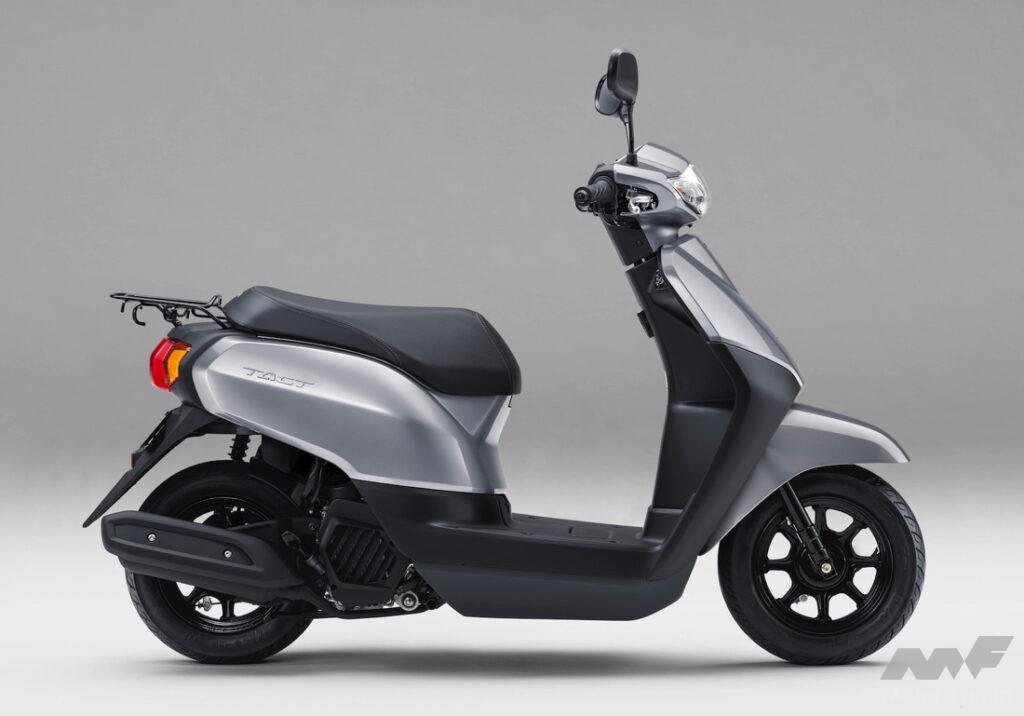
Tact
ADVERTISEMENT
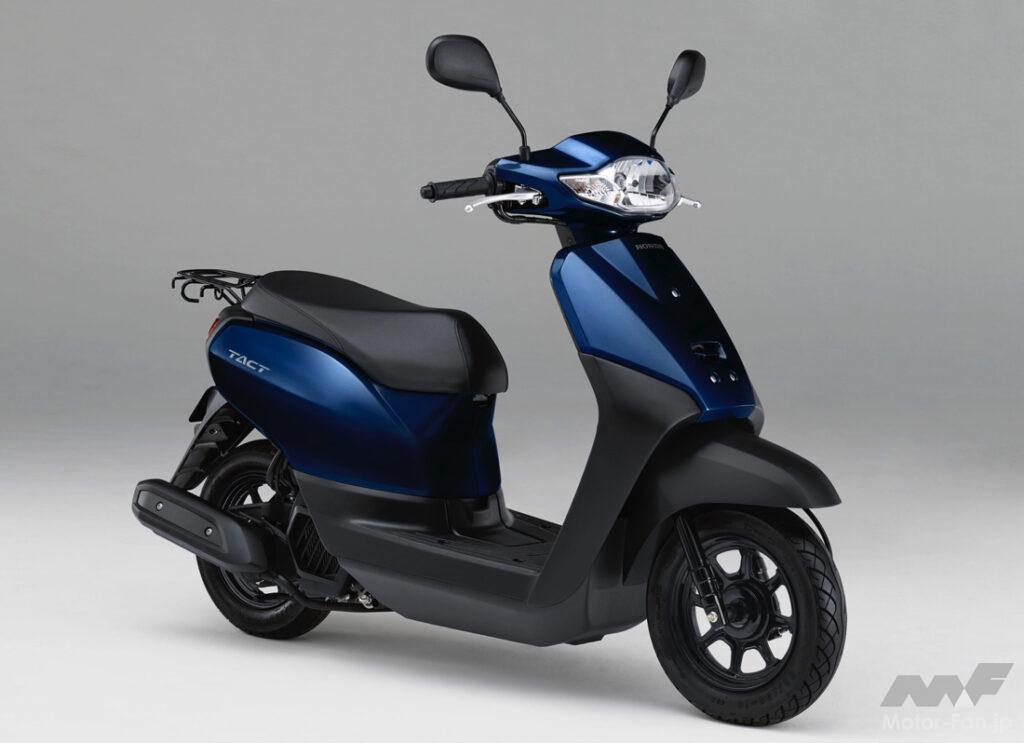
Tact Basic
All grades are packed with convenience-conscious equipment, including a luggage box that can store a helmet and small items, large, highly visible multi-reflector headlights and taillights, and a center stand that can be easily put down.
The current price of the Tact (including tax) is 179,300 yen for the Tact Basic and 192,500 yen for the Tact. It is unclear at this time (as of March 3, 2025) whether production of this model will end or whether a successor model will be released with electrification or increased engine displacement. However, as this model has been loved for over 40 years, we hope that it will somehow be prevented from becoming extinct.
Suzuki Address V50 (first generation, 1987)
The Address V50 is a Suzuki 50cc scooter that has been a long-selling hit since the first Address was released in 1987.
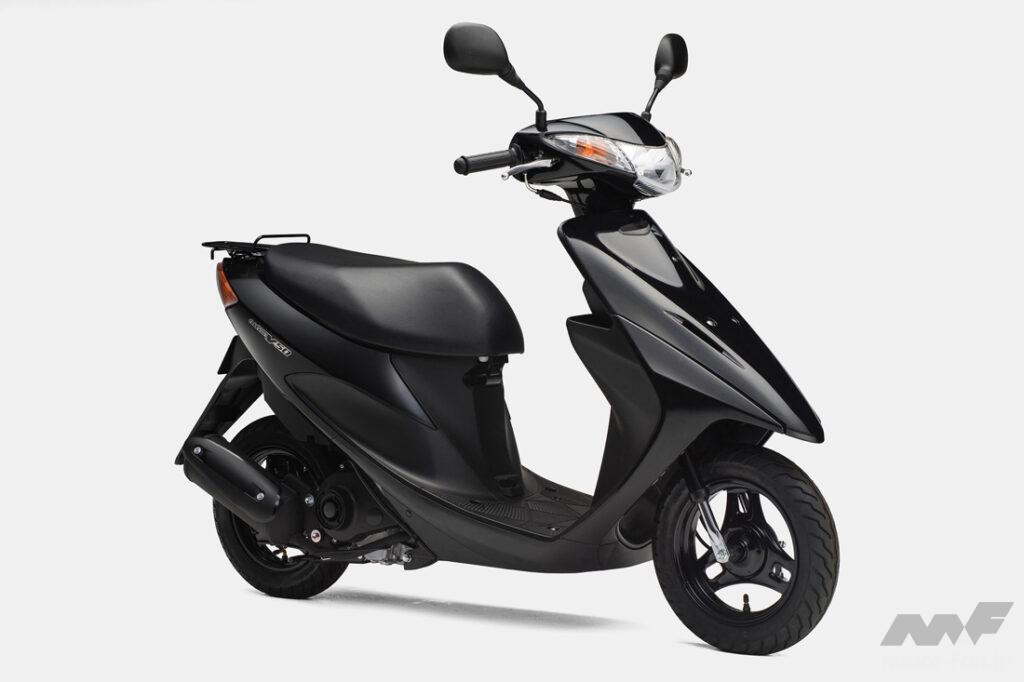
Address V50
The first model, with its sporty and fashionable form, was equipped with a 49cc, two-stroke, air-cooled, single-cylinder engine that delivered a high output of 6.5 PS. Another feature was the provision of a personal space (multi-purpose storage space) under the seat that could hold a full-face helmet, as well as lighting, making it extremely user-friendly.
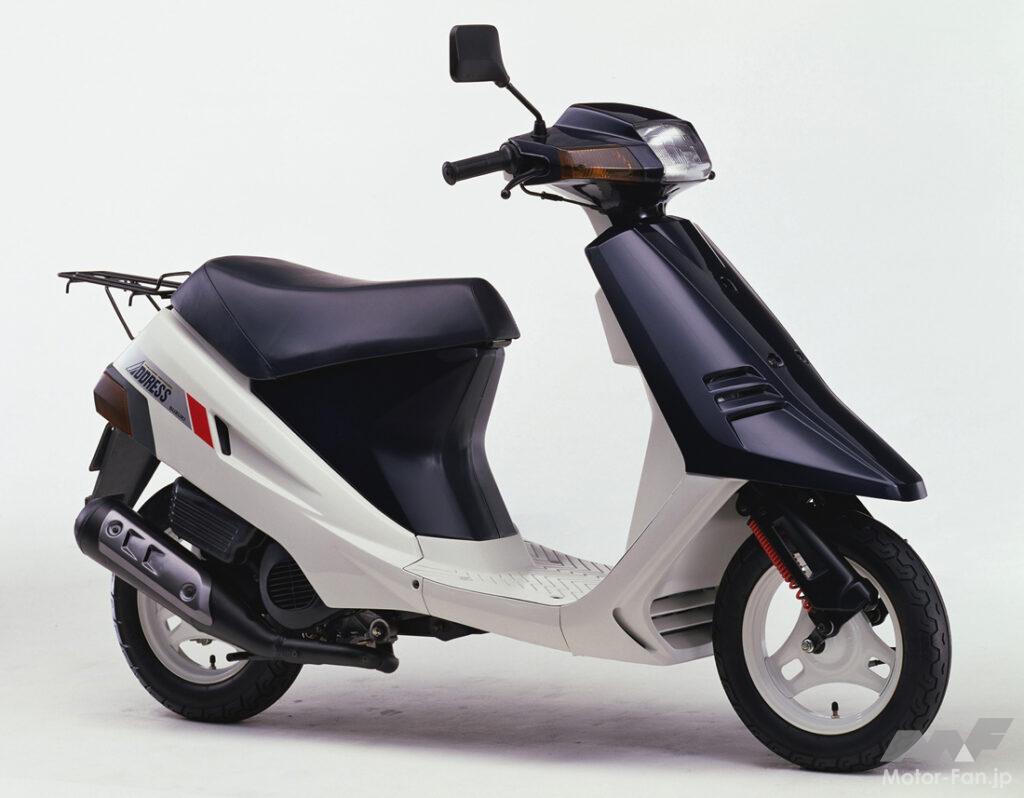
The first Address (1987)
In 1990, the high-end Address V model was released. It featured a large body that allowed for a relaxed ride and a 49cc, two-stroke, single-cylinder engine with a maximum output of 6.8PS. In addition to offering a sporty ride, it also featured a large-capacity 4.8L fuel tank that was convenient for long-distance riding.
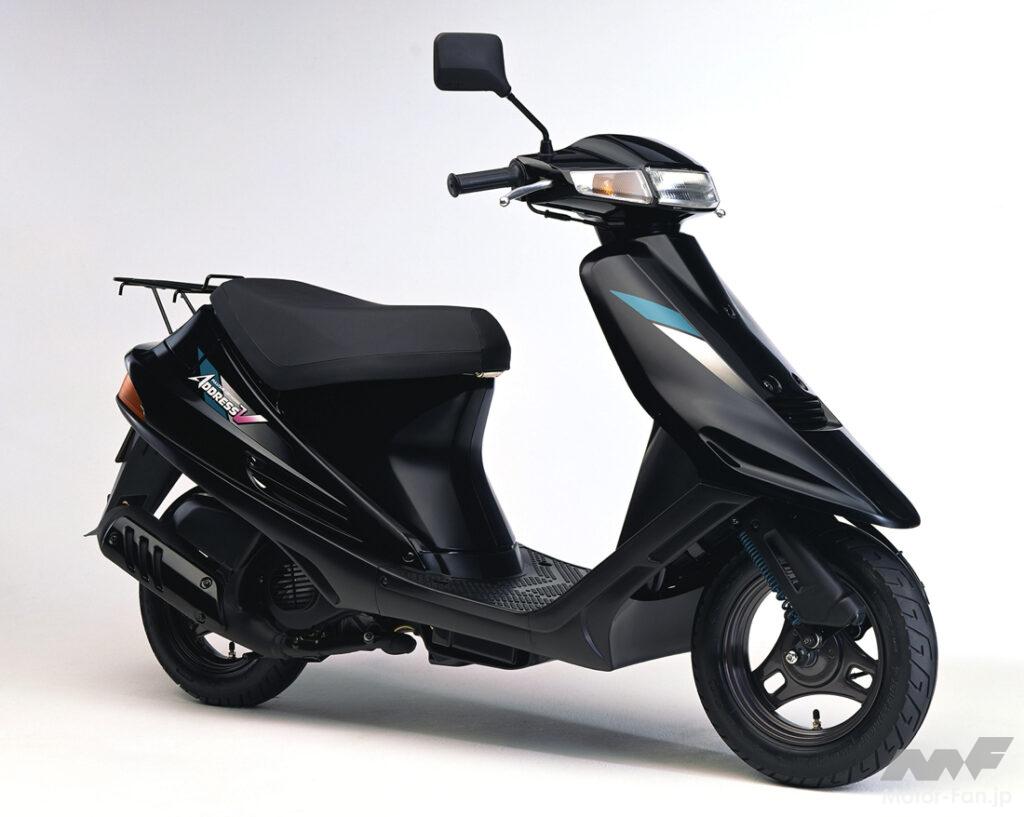
Address V (1990)
Also, in 2006, the Address V50 was released, which was based on the Address V series of high-end scooters and featured a four-stroke engine.
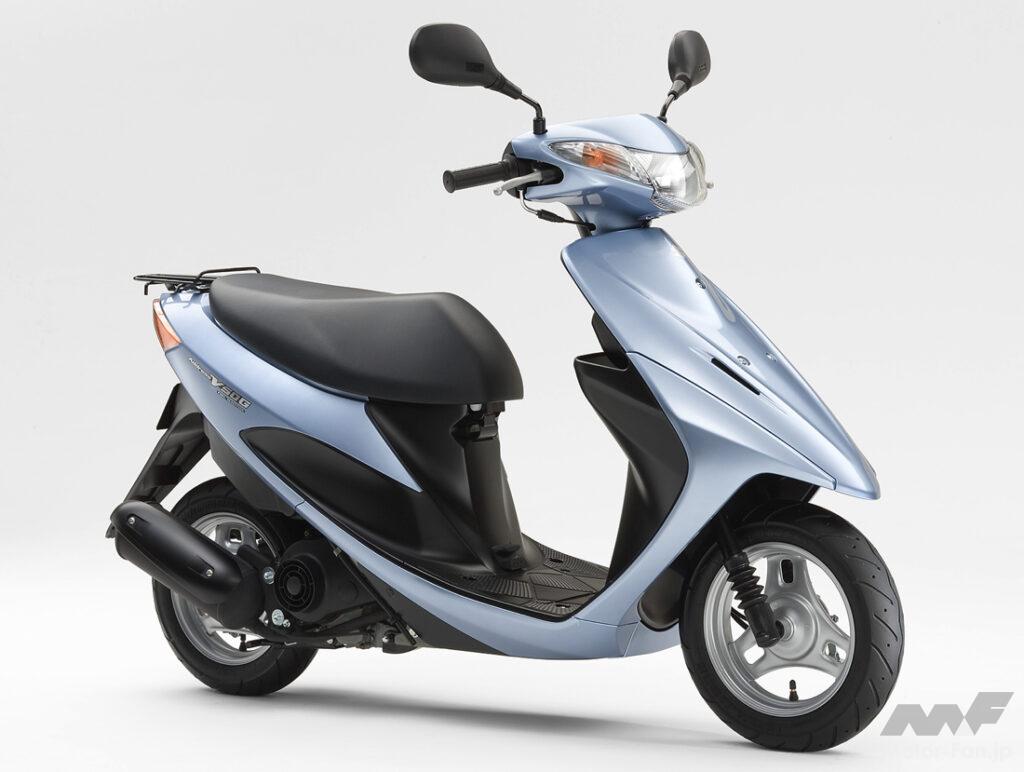
The first four-stroke Address V50 (2006)
The current model is equipped with a 49cc, 4-stroke, air-cooled, single-cylinder engine with fuel injection. The engine delivers a maximum output of 3.7 PS, delivering sporty and powerful driving. It also achieves high fuel efficiency with a WMTC mode value of 52.8 km/L, pursuing high comfort and economy for daily commuting to work or school.
The trunk space under the seat is large enough to store a full-face helmet sideways. It also has a convenient front inner rack and rear carrier for storing small items such as gloves, making it easy to carry luggage. It also has high security features, such as a shuttered key cylinder to prevent tampering with the keyhole and theft.
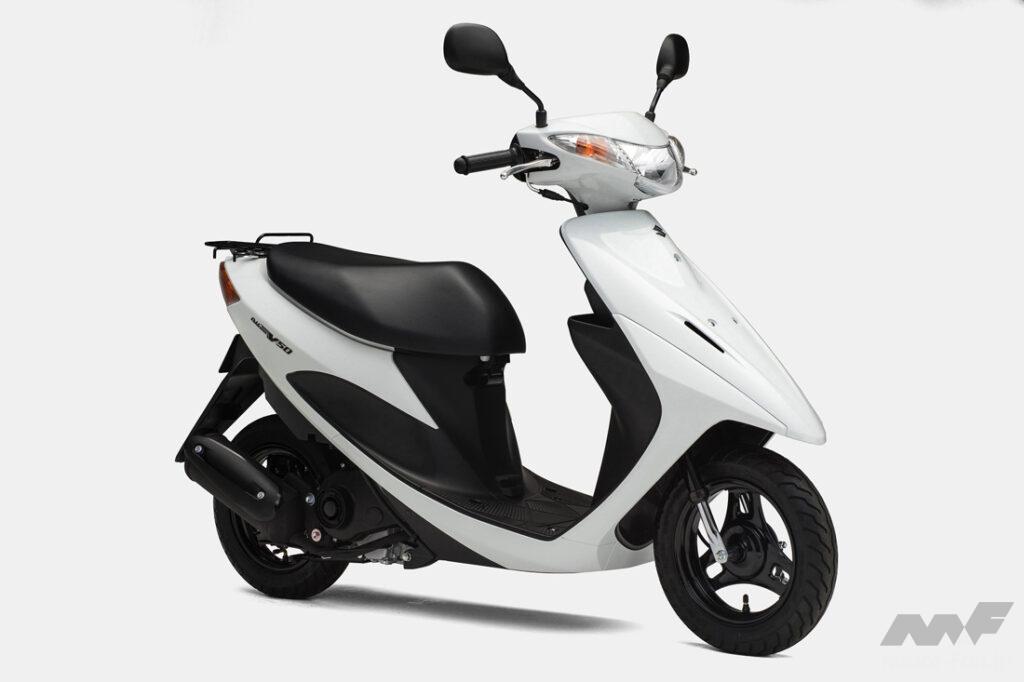
Current Address V50
The current Address V50 is priced at 193,600 yen (including tax). Suzuki’s scooter lineup also includes the Address 125, a 125cc engine moped (273,900 yen including tax).
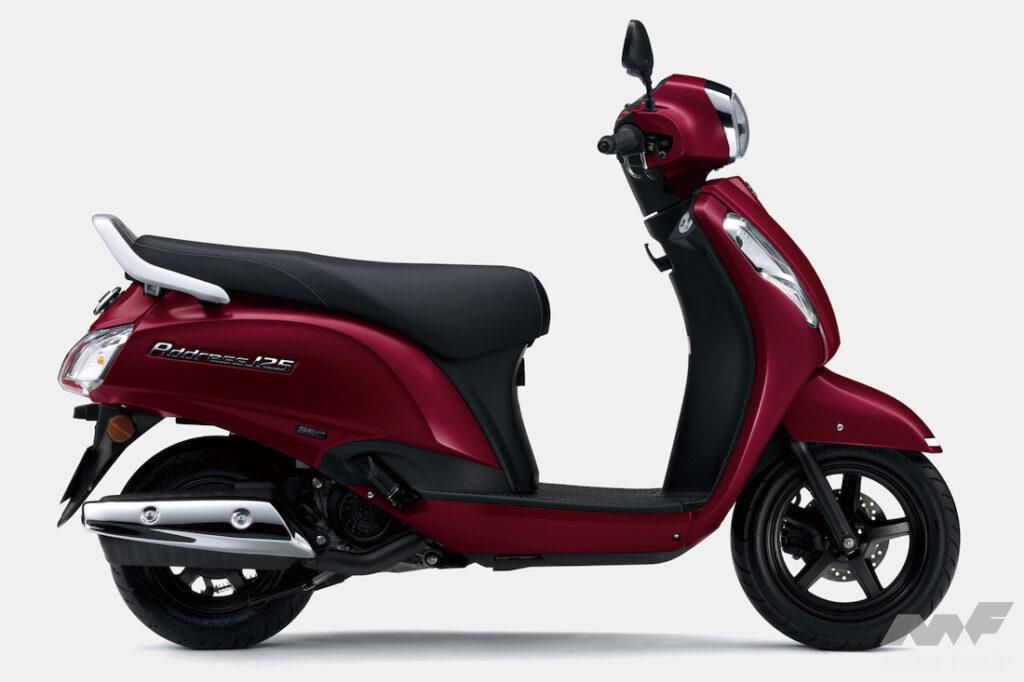
Address 125
Therefore, even if production of the Address V50 is discontinued due to new exhaust gas regulations, it is certain that the series will continue. However, there is a high possibility that there will be no more easy-to-use and affordable 50cc scooters. In any case, there have been no specific announcements about this model at this time (as of March 3, 2025), so we will be keeping an eye on future developments.
Will the model that has been around since the Showa era continue to exist in the future?
As of March 3, 2025, there have been no production announcements for any of the models listed here except for the Super Cub 50. However, as mentioned earlier, there is no doubt that they will be affected in some way by the new exhaust gas regulations that will come into effect in November 2025.
50cc mopeds have long been used as entry models for beginners, as a casual means of transportation around town for commuting to work or school, and for business purposes. In particular, the originals introduced here were born in the Showa era, and are models with a long history. It would be great if they could continue to survive in some form.