

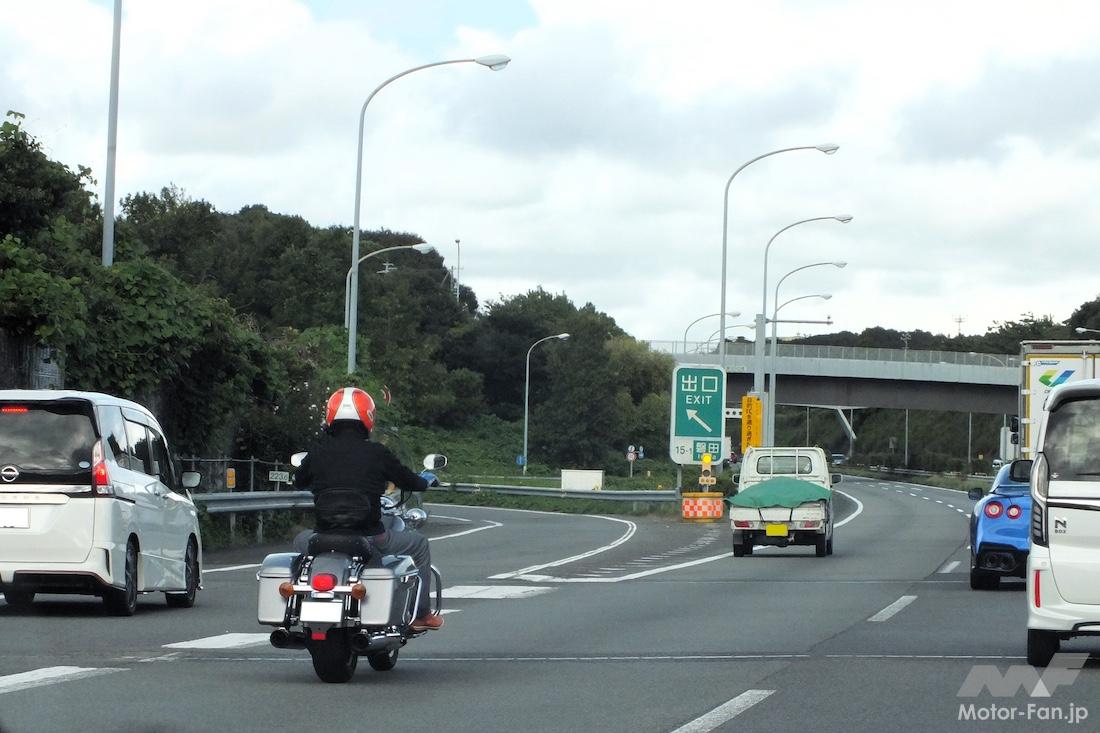
Running out of gas on the highway is a violation of the Road Traffic Act!
Unlike regular roads, there are no gas stations on expressways unless you go to a rest area such as a service area. Moreover, not all facilities have gas stations, so if you refuel at the wrong time, there is a high possibility that you will run out of gas. Furthermore, if you run out of gas and have to stop on the expressway, you could be rear-ended by a following vehicle, which is dangerous. Moreover, under the Road Traffic Act, this is also a traffic violation.
First of all, why is it a traffic violation? The basis is the following provision in Article 75-10 of the Road Traffic Act.
“When a driver intends to drive a motor vehicle on a national expressway, etc., he/she must check the amount of fuel, coolant, or engine oil, as well as the state of the cargo load, and if necessary, take measures to prevent the motor vehicle from becoming unable to be driven on the national expressway, etc., due to a lack of fuel, coolant, or engine oil, or to prevent the loaded cargo from falling or scattering.”
This provision stipulates “things that automobile drivers must comply with.” Before driving on an expressway, drivers are required to check the amount of fuel, such as gasoline, engine oil and coolant, and the status of cargo loads, to prevent running out of gas, engine breakdowns, or cargo falling while driving on the expressway.
Therefore, stopping on the expressway due to running out of gas is considered a “violation of the rules for drivers on expressways, etc.” If you are caught, you will be penalized with two penalty points and a fine of 7,000 yen for motorcycles (9,000 yen for standard cars, 12,000 yen for large vehicles). The same rule applies if you stop your vehicle without checking the remaining amount of engine oil or coolant, or if any cargo has fallen off, in addition to gasoline.
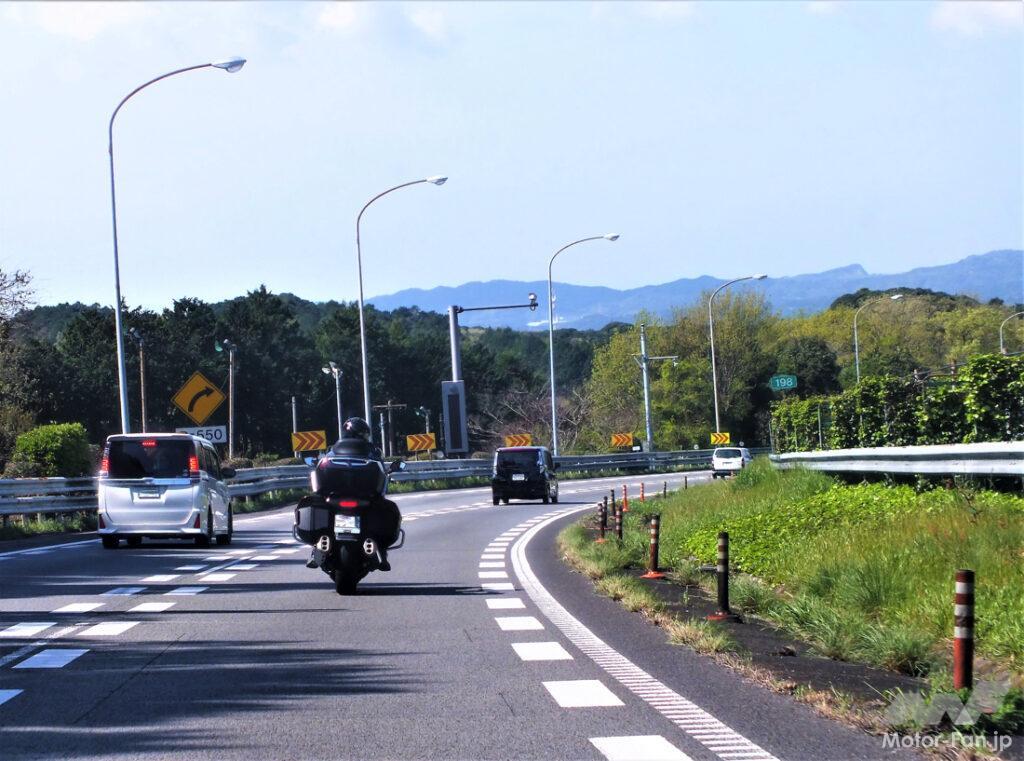
On expressways, it is a violation to stop without checking not only the amount of gasoline, but also the amount of engine oil and coolant remaining, or if any cargo has fallen off.
What if the fuel warning light comes on?
As you can see, stopping on the highway due to running out of gas is a violation of the Road Traffic Act, but even so, it’s possible that you might accidentally forget to refuel. For example, there are cases where you get on the highway thinking you don’t need to refuel yet, only to find that you’re actually low on gas and the fuel gauge has dropped considerably. If the fuel warning light comes on in that situation, it can be quite worrying. You need to be especially careful if you’re riding a motorcycle that doesn’t have a fuel gauge and only lights up when the fuel level is low.
Generally, most motorcycles are able to continue to be driven for a certain distance even after the fuel warning light comes on, so it’s a good idea to know in advance how far you can drive your bike after the fuel warning light comes on, in case such a situation occurs.
To check, first check your bike’s instruction manual to see how much fuel is left in the tank before the fuel warning light comes on.
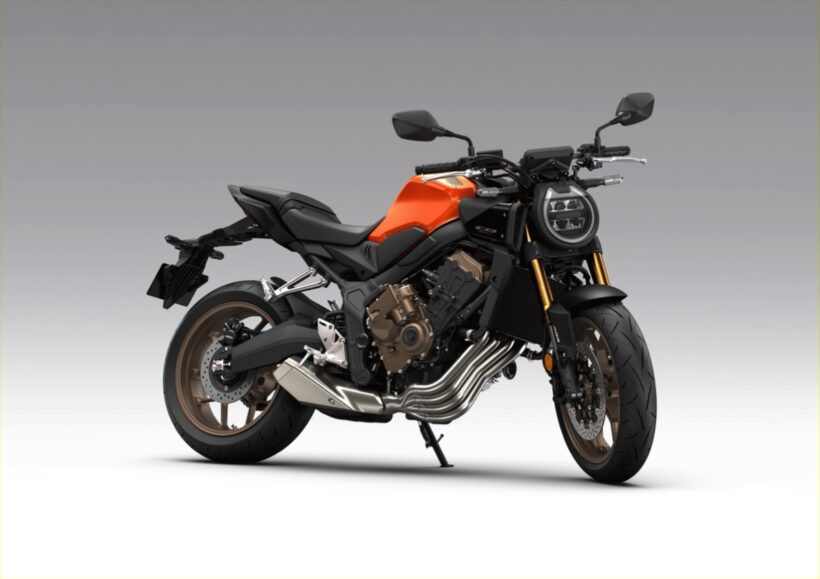
For example, the Honda CBR650R E-Clutch and its sister model, the CB650R E-Clutch.
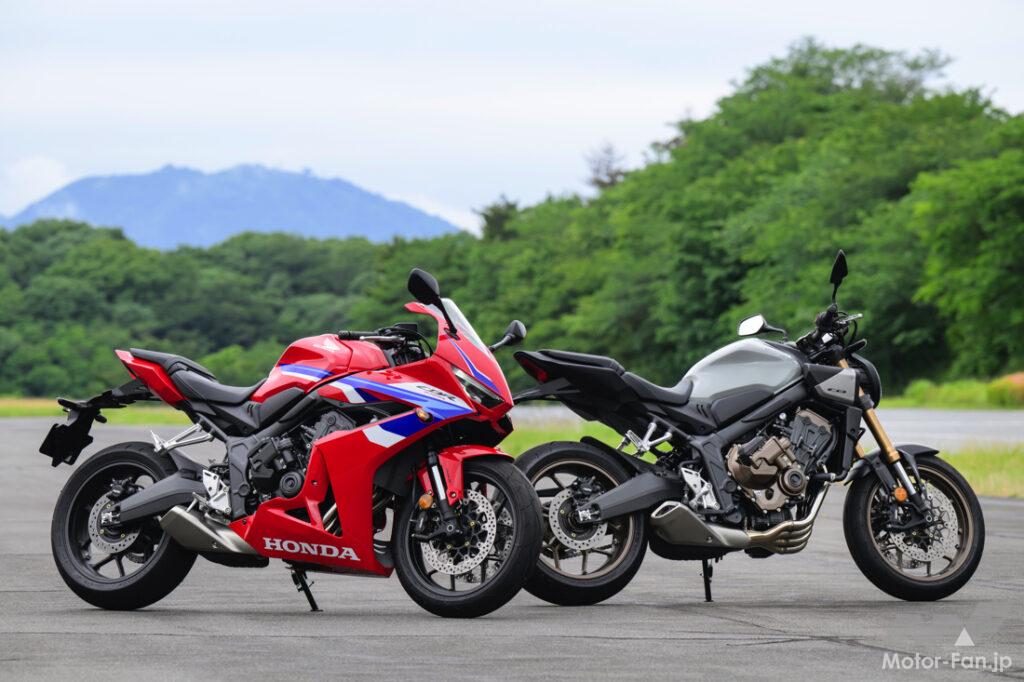
On the left is the CBR650R E-clutch, and on the right is the CB650R E-clutch
When the fuel gauge (FUEL) changes from a single mark to an orange driving range (RANGE) mark, there is approximately 3.0 L of fuel remaining. Based on that remaining amount, you can look up the fuel economy information in the catalog, for example, to determine how far you can drive after the low fuel warning light comes on.
The catalog fuel economy of the CBR650R E-Clutch and CB650R E-Clutch is 21.3km/L in WMTC mode. Multiply this by the remaining fuel (reserve fuel) of approximately 3.0L to get the cruising range.
21.3km/L x 3.0L = 63.9km
This means that these models can be driven for approximately 63.9 km after the fuel warning light comes on. However, this distance is only a catalogue figure, so it will vary depending on driving style and weather conditions.
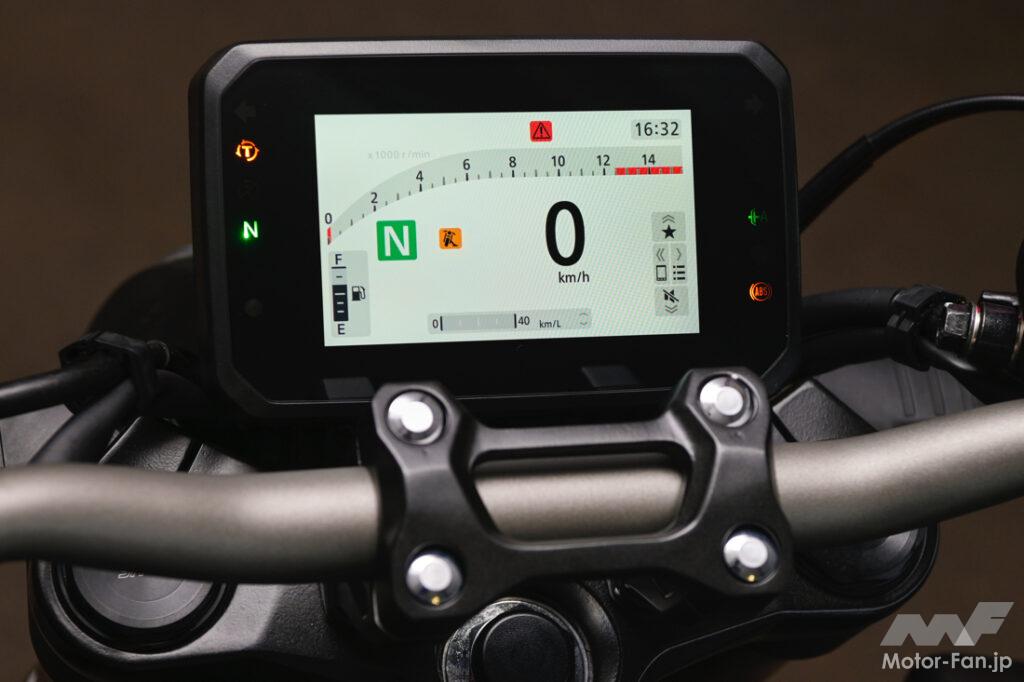
The CB650R E-Clutch has a fuel gauge on the bottom left.
These figures also vary depending on the model. For example, even for the same Honda car,
For the Rebel 250, when only one mark (E) flashes on the fuel gauge, the fuel level is approximately 2.2L. For
the Rebel 1100, when the fuel gauge (FUEL) display changes to the orange driving range (RANGE) display, the fuel level is approximately 4.0L.
Even for similar types, the figures will vary depending on the engine displacement and manufacturer, so it is best to research and calculate the figures for each vehicle in advance.

Rebel 250 E-Clutch
ADVERTISEMENT
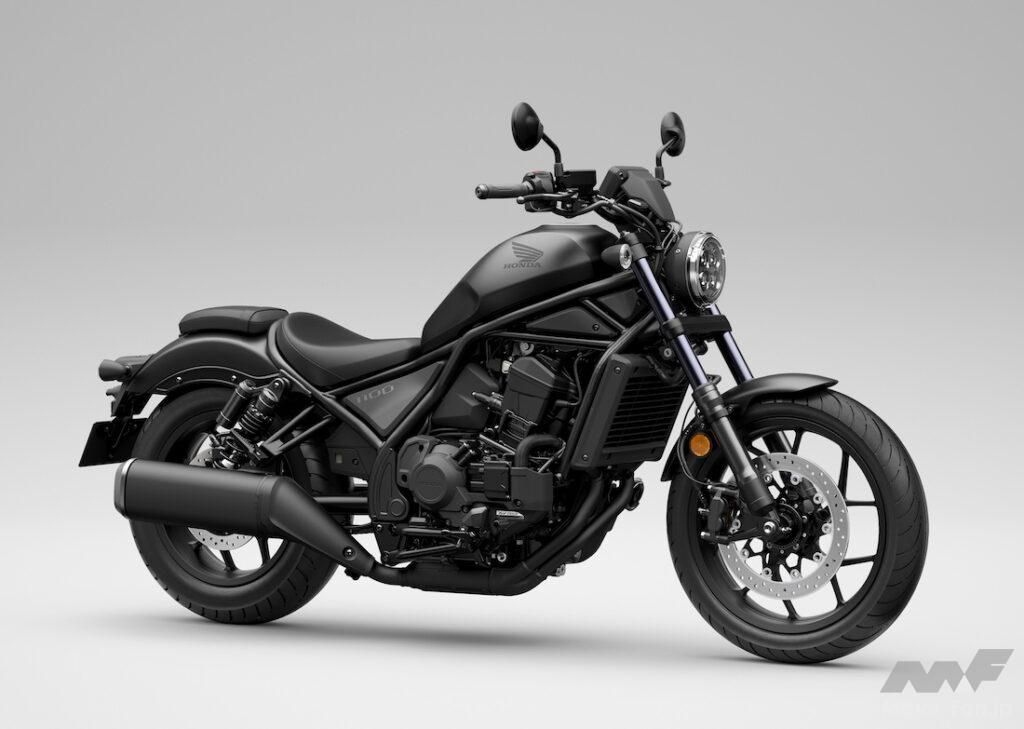
Rebel 1100
In any case, just because the fuel warning light comes on does not mean the engine will suddenly stop. Therefore, if you keep these figures in mind beforehand, it will certainly give you peace of mind in case of an emergency.
What if there is no gas station nearby?
As mentioned above, most motorcycles can still be driven a certain distance even after the low fuel warning light comes on. However, once the low fuel warning light comes on, it means that the motorcycle is close to running out of gas. If you are running low on gas while riding on the highway, you should stop at the next service area with a gas station as soon as possible and refuel.
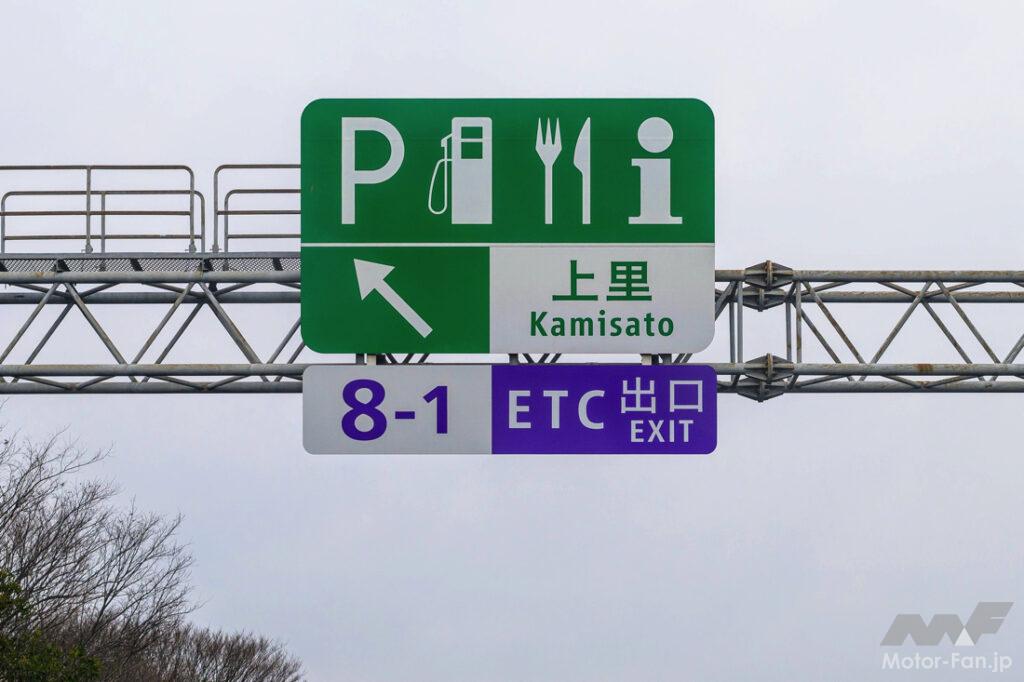
You can tell if a service area has a gas station attached by looking for an illustration of a gas pump on the sign in front.
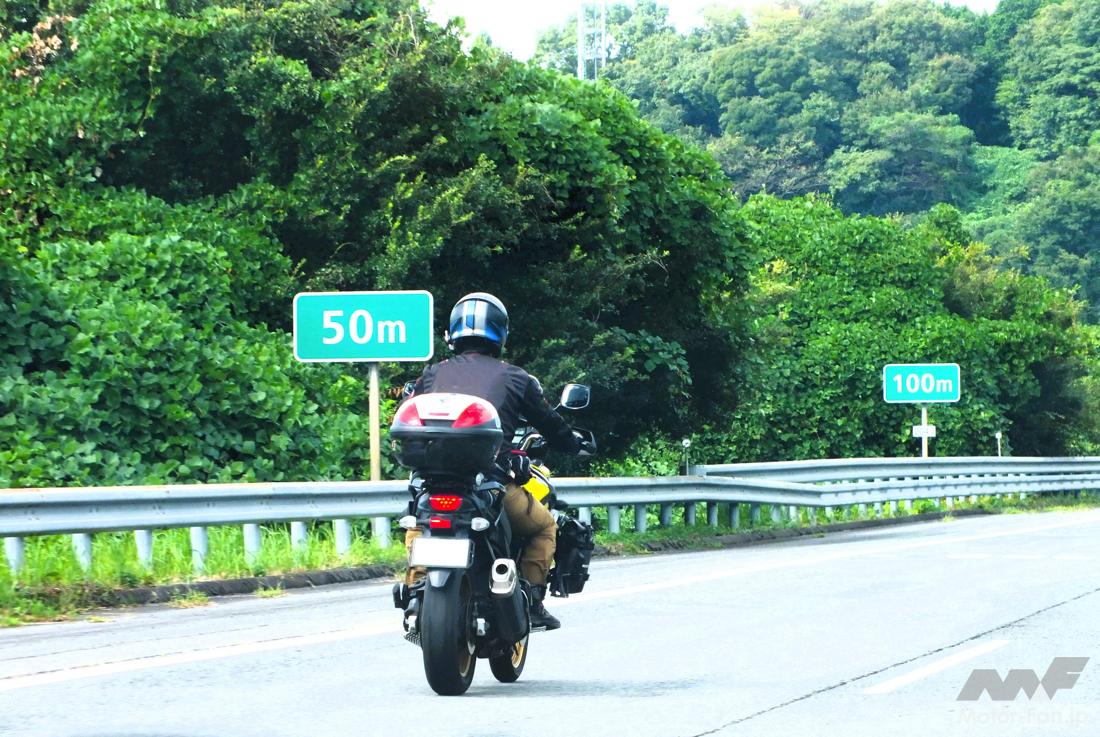
However, although expressway service areas are located approximately every 50 km, they do not always have gas stations attached. It is said that there are more than 80 routes across the country where there are no gas stations for more than 100 km. In such areas, even if you continue driving on the expressway, you may not be able to reach a service area with a gas station.
In such cases, it is best to get off onto a regular road immediately. On regular roads, there are many places where you can safely stop if you run out of gas, and as long as you stop properly, you won’t be penalized like on a highway. Furthermore, depending on where you stop, if there is a gas station nearby, you may be able to push your motorcycle.
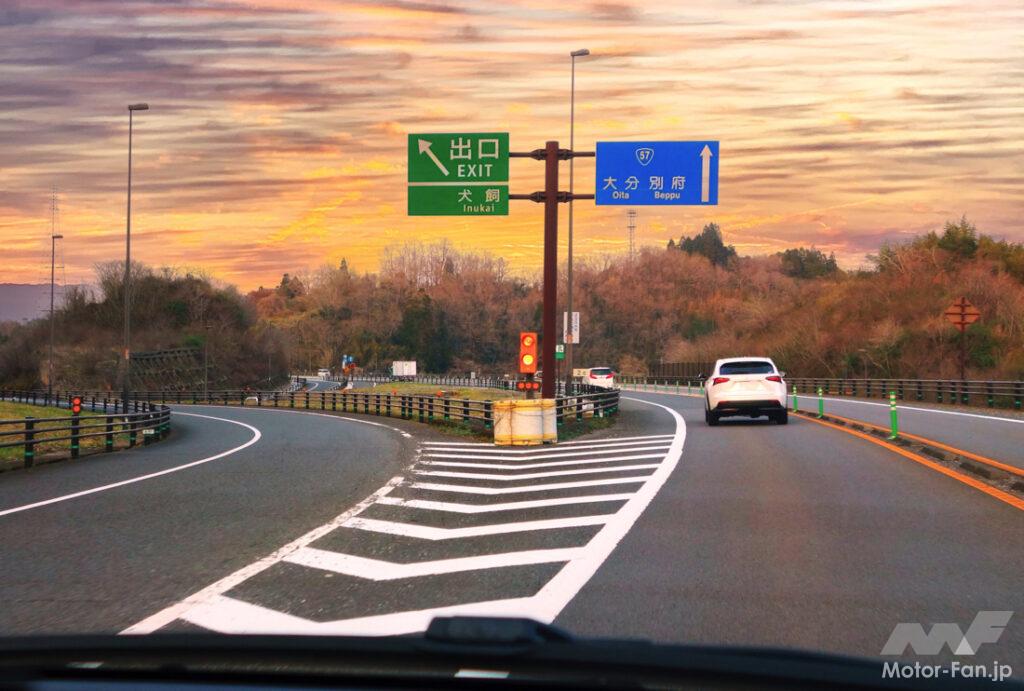
If you are unable to reach a service area with a gas station even if you continue driving on the highway, it is better to get off onto a local road.
What if you run out of gas and end up stranded on the highway?
What if you run out of gas on the highway and the engine is about to stall? In that case, first turn on your hazard lights or blinkers, move your motorcycle to a safe place on the shoulder of the road, and stop it.
Once you have stopped, your first priority should be your own safety. Be especially careful as there is a high risk of being hit from behind by a vehicle. First, quickly evacuate to a safe place, such as outside the guardrail.
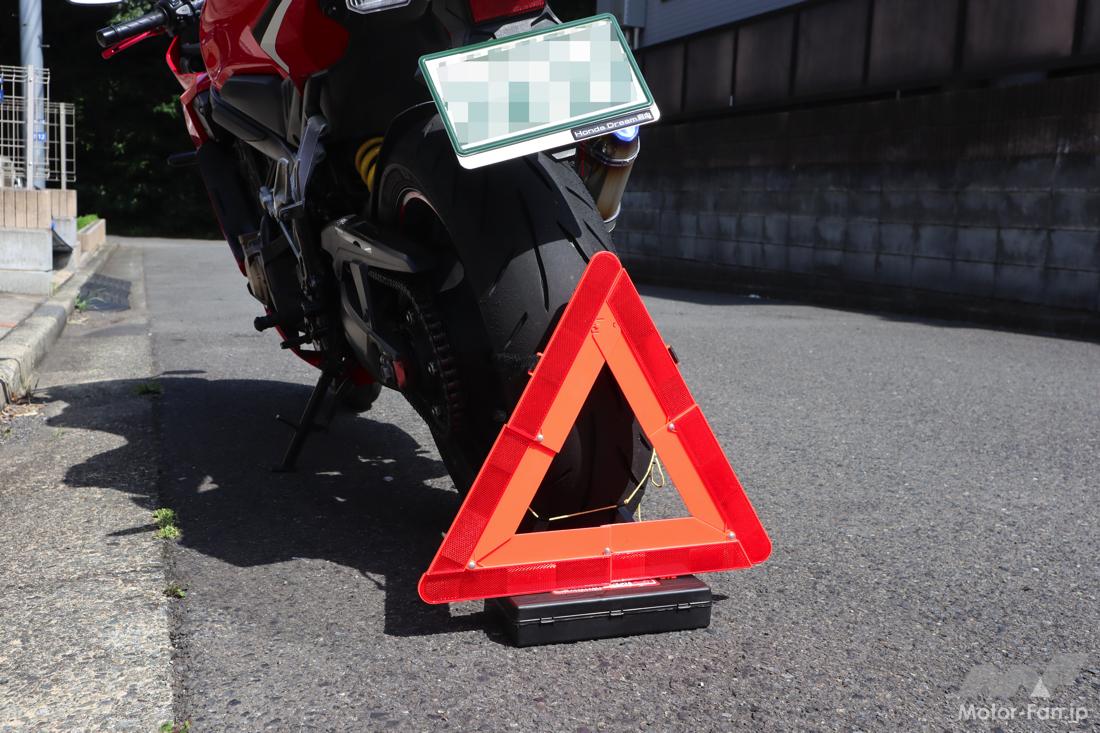
Incidentally, when stopped on a highway, even motorcycles are required to have a “triangle warning sign” installed at the rear (cars are also required to have a “smoke bomb,” but motorcycles do not). What is surprisingly little known is that if the sign is not installed, it is considered a “violation of the obligation to display a broken-down vehicle,” and motorcycles will be penalized with one violation point and a fine of 6,000 yen.
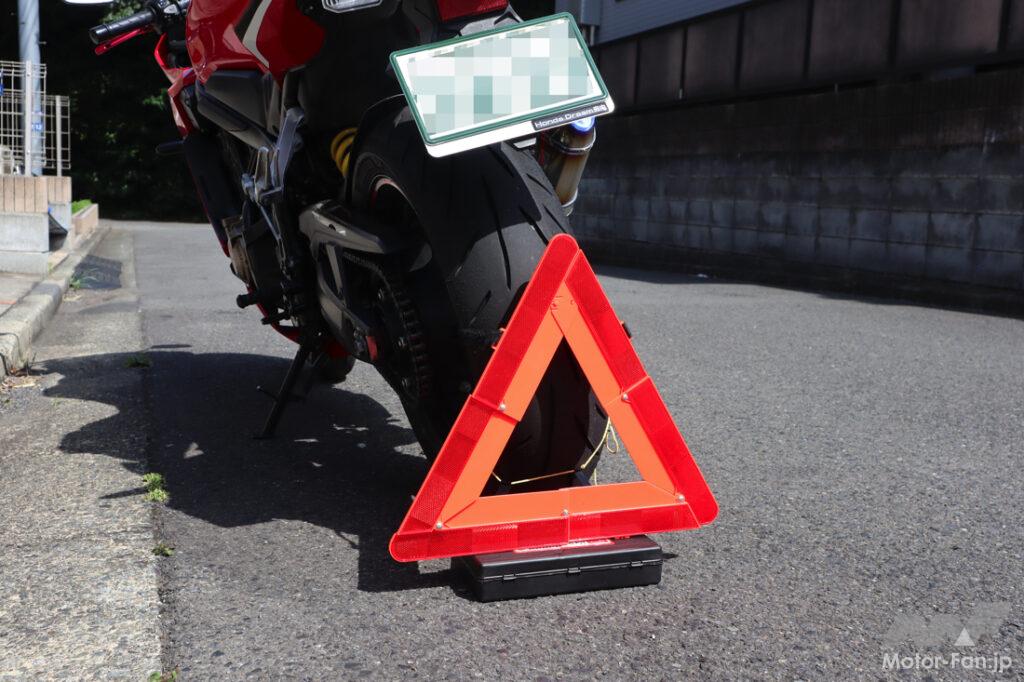
When stopped on a highway, even motorcycles are required to have a “triangle warning sign” at the rear.
Generally, the size of warning triangles is regulated by law, and many of the ones for cars are large and difficult to carry on a motorcycle. However, recently there are warning triangles for motorcycles that can be folded up compactly, so we recommend purchasing one of these and keeping it on hand.
Once you have set up the warning triangle and evacuated to the area outside the guardrail, your only option will be to call the JAF or the road service included in your voluntary insurance. You can either call directly from your mobile phone or use the emergency telephones located every kilometer on the main road, which will connect you to the road control center, to request rescue.
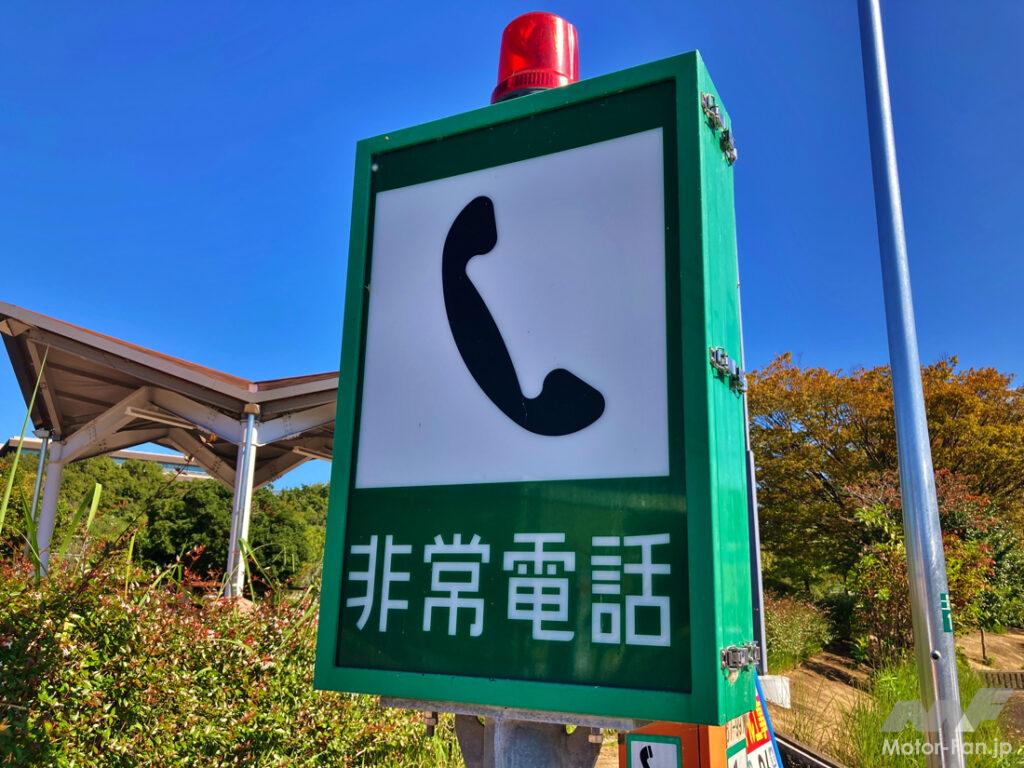
If you run out of gas on the highway, you can call the road control center for help using the emergency phone installed on the main road.
How to prevent running out of gas?
For safety reasons, especially on expressways, stopping as easily as on regular roads is not permitted, and in fact it is very dangerous. Furthermore, the majority of causes of running out of gas are human “careless mistakes,” such as forgetting to refuel, so it is important to take measures such as making it a habit to always fill up your tank before getting on the expressway.
You should also have some idea of how far your bike can travel on a single tank of gas. Knowing this, along with the range after the fuel warning light comes on, will help you decide when to refuel when you’re out and about.
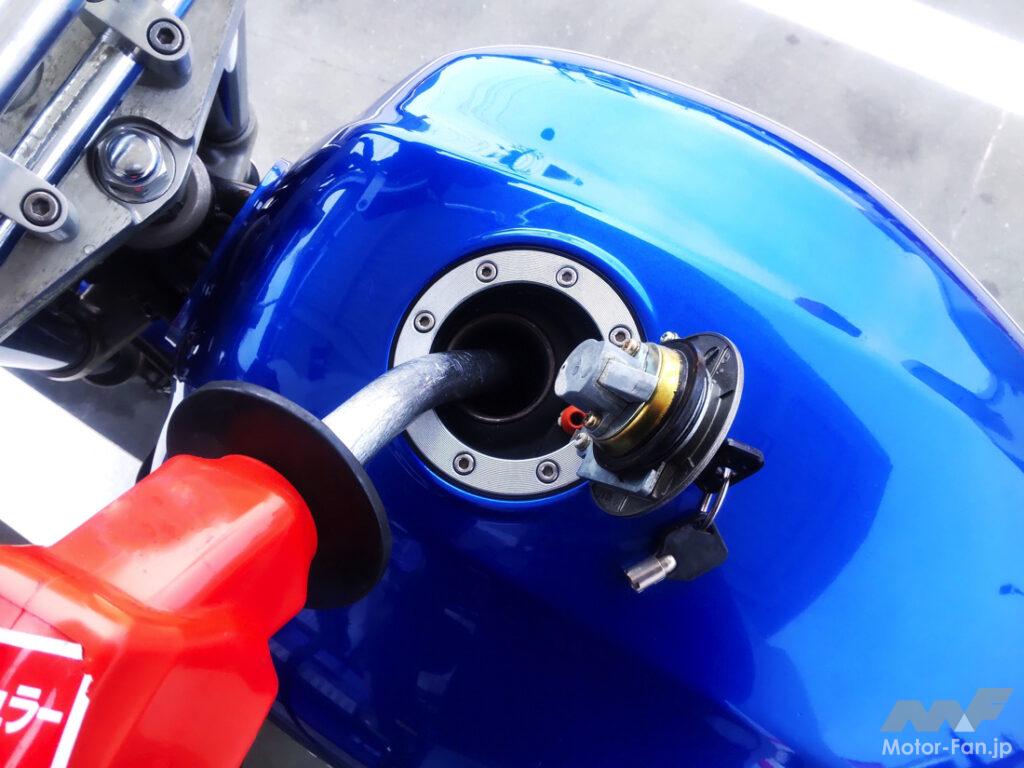
I want to know to some extent how far my bike can travel on one full tank of gas.
To find out the cruising distance from a full tank, you first need to know the fuel efficiency of your motorcycle. The best way to calculate fuel efficiency is to record the amount of fuel you refueled and the distance traveled over several tours, but if you don’t have any actual measurement data, you can look up your motorcycle’s specifications (major specifications) in a catalog or on the manufacturer’s official website and calculate the cruising distance from the “fuel consumption rate” and “fuel tank capacity.”
By the way, the fuel consumption rate column in the spec sheet lists the “constant fuel consumption value” and the “WMTC mode value,” but the WMTC mode value is said to be closer to reality, so we will calculate it using this value and the fuel tank capacity. The calculation formula is as follows.
“Fuel consumption efficiency (WMTC mode value)” x “Fuel tank capacity” = “Driving range”
For example, take the Kawasaki 250cc supersport Ninja ZX-25R SE.
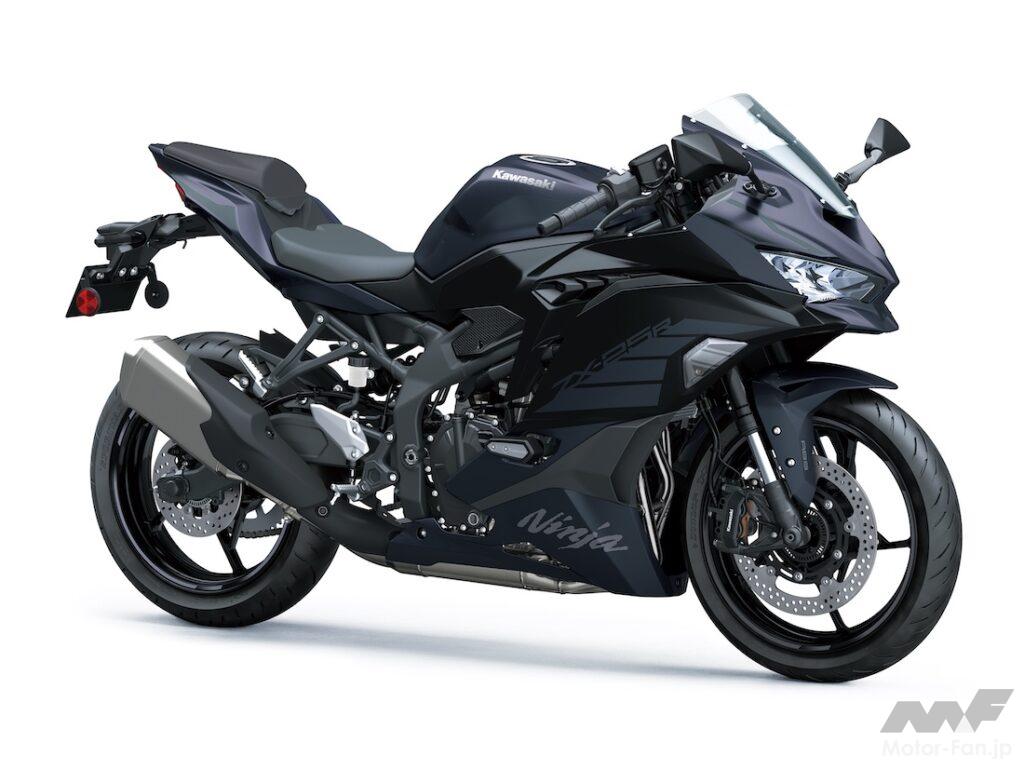
Kawasaki Ninja ZX-25R SE
The catalogue’s WMTC mode value is 18.7km/L, and the fuel tank capacity is 15L.
Putting these numbers into the formula,
18.7km/L x 15L = 280.5km
This means that the range is approximately 280.5 km on a single full tank.
In addition to knowing the driving range, it is also a good idea to check the location and operating status of gas stations at your destination or destination, if possible. It is especially good to know how many service areas with gas stations are located along the highway you will be using.
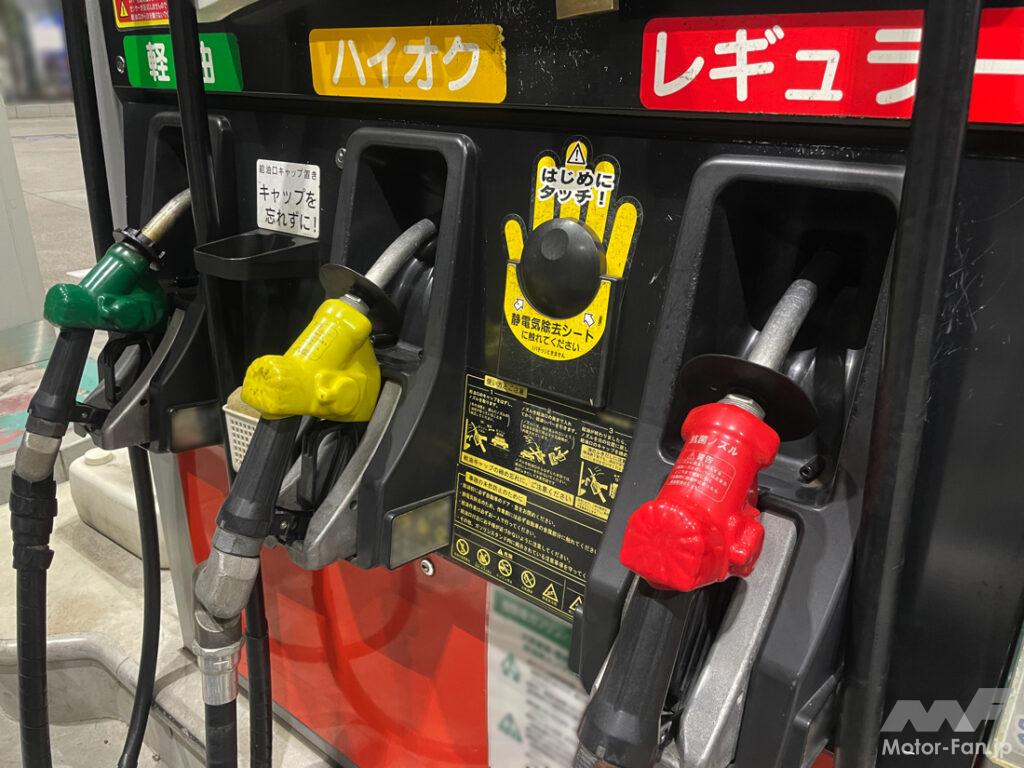
If possible, it’s a good idea to check the location and business status of gas stations near your destination or destination.
In any case, stopping on the highway due to running out of gas is a nuisance to other vehicles and can be dangerous and cause serious problems for yourself, so please be careful not to cause any trouble.