
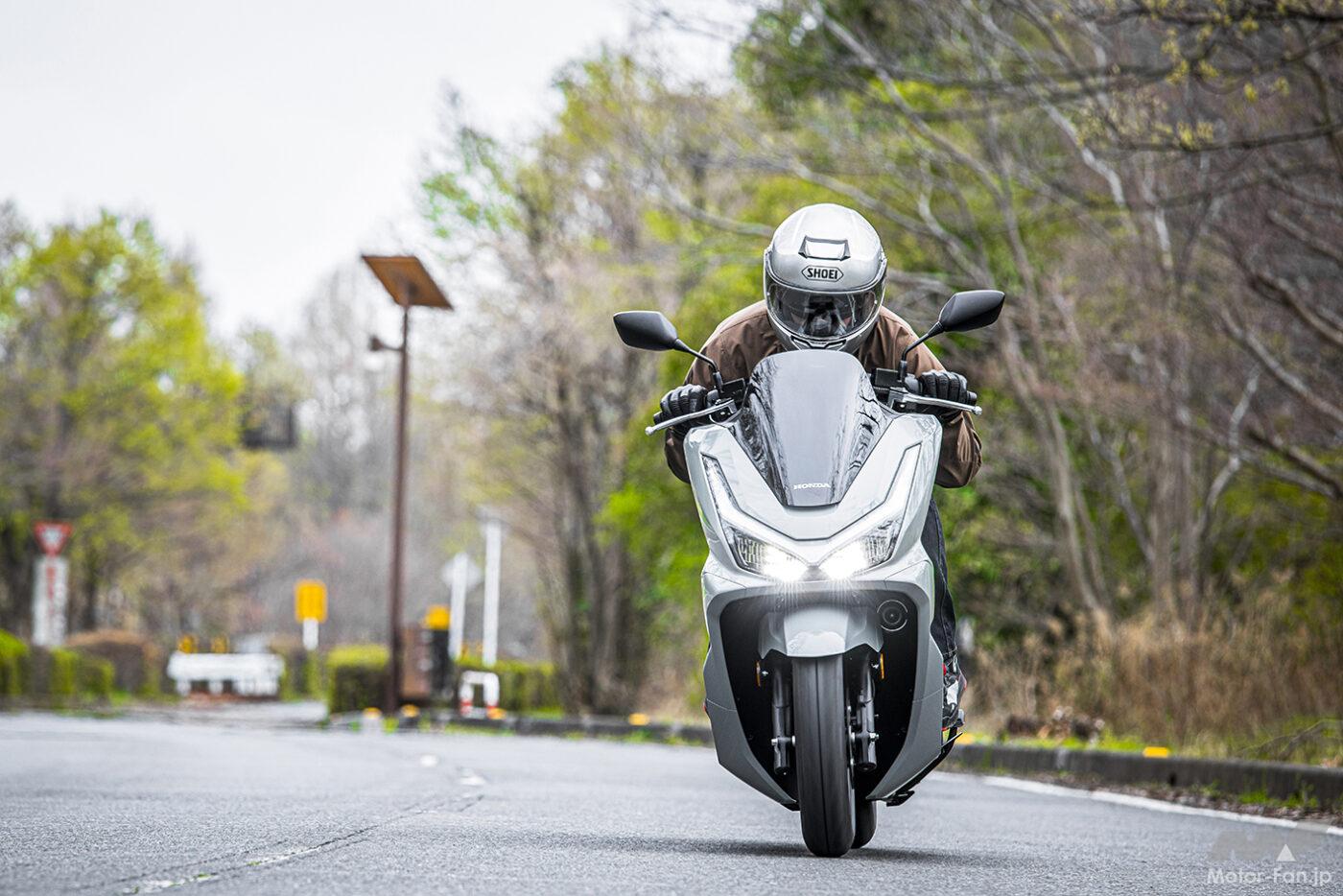
Honda PCX160…462,000 yen

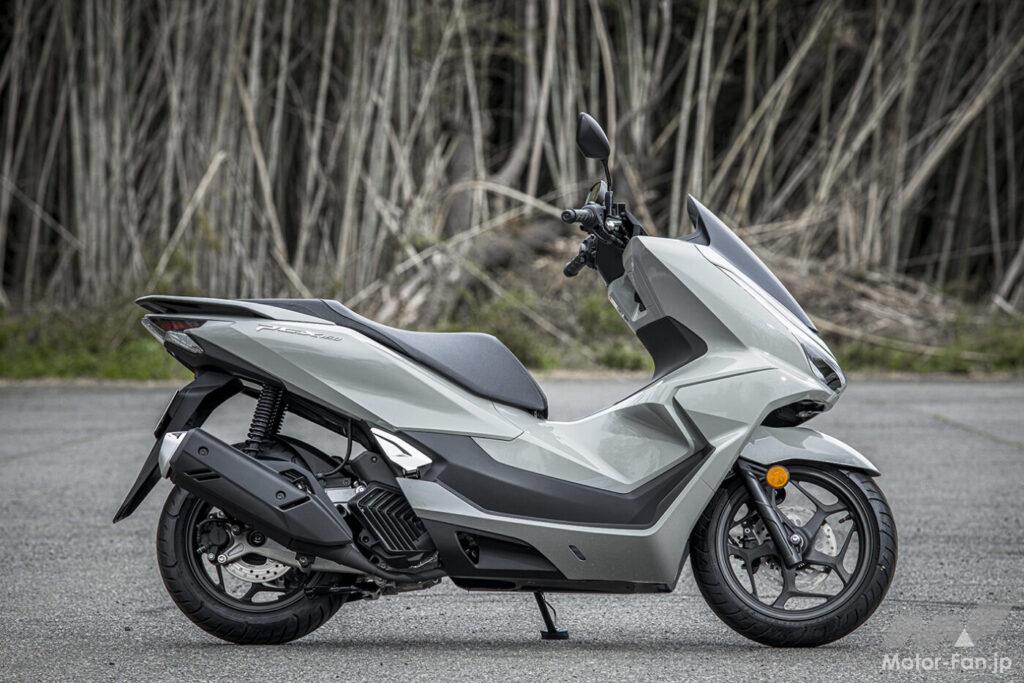
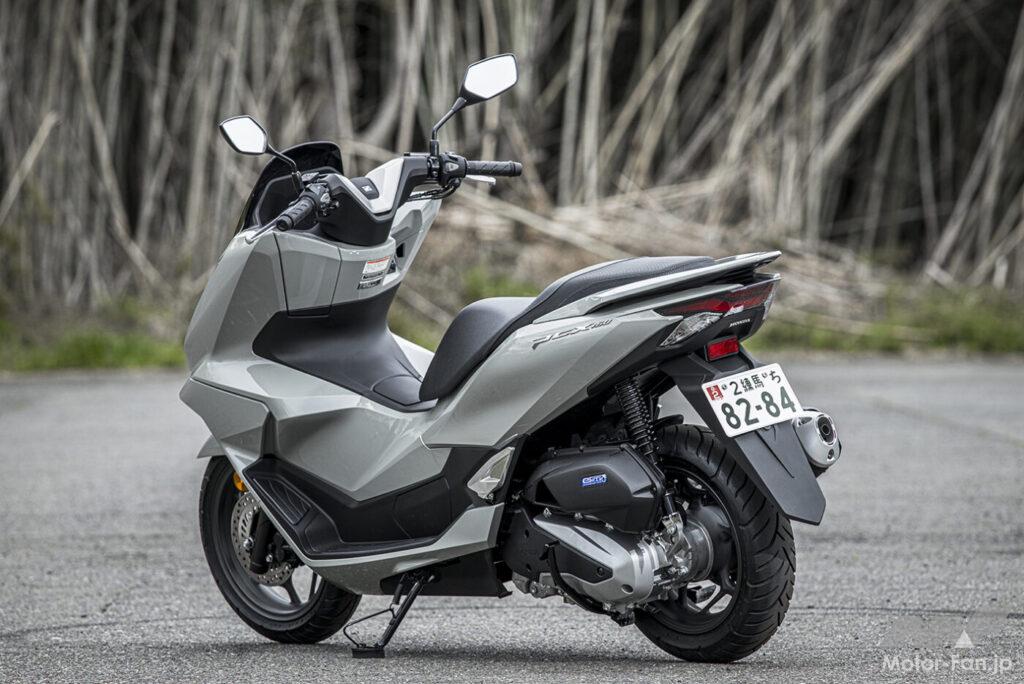
The body colors are the same four as the 125. The test vehicle’s Pearl Jupiter Gray is a new color that will be used for the first time on the 2025 model.
Regularly ranked among the top three in sales in the light motorcycle class
The projected sales numbers for the 2025 PCX in the Japanese market are 18,500 units for the 125 and 6,500 units for the 160. Needless to say, the younger model is by far the most popular (although the PCX160 and its predecessor, the 150, have been regulars in the top three annual sales figures in the light motorcycle class in Japan in recent years), and having test-ridden the PCX125/150/160 several times, I thought that if I were to own one, I would go for the older model… However, that is no longer necessarily the case with the 2025 model.
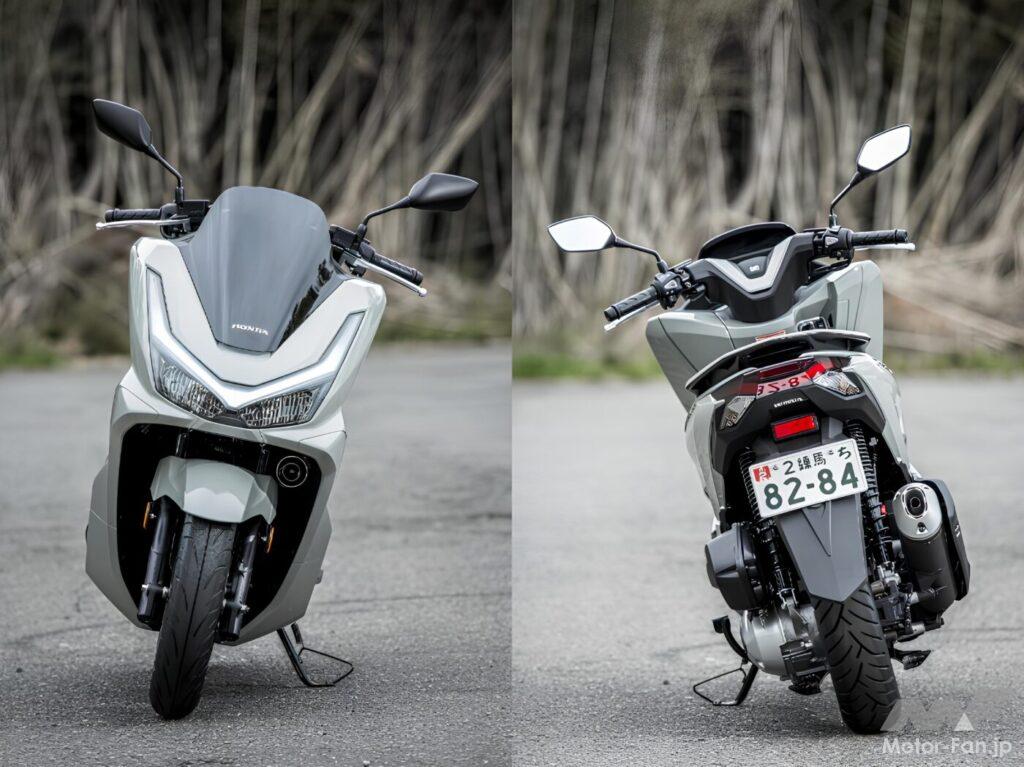
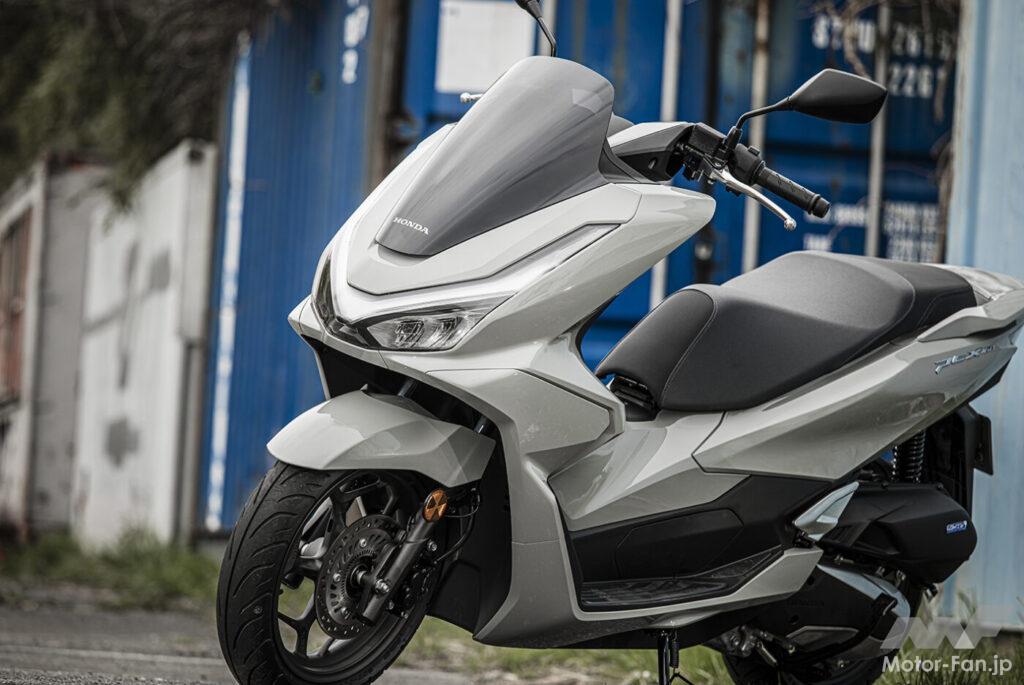
Before we get to the main topic, let’s start with the basic premise: the 2025 PCX160 has undergone specification changes in line with its younger sibling, the 125, evolving into its fifth generation. Speaking of features that set the fifth generation apart from its predecessor, many people would first point to the covered handlebars (the previous model had bare handlebars with a chrome finish). However, the front mask with its reverse slant nose, the side panels and rear area with their sharp and light lines, and the signature lights with their increased presence are also essential elements when talking about the fifth generation.

The basic design of the fifth-generation engine and chassis is the same as the fourth-generation, but when I actually rode the 2025 PCX125/160, I noticed the increased legroom thanks to the slimmer front side covers, the improved wind protection achieved by the new screen (about 15mm higher than the previous model) and front cowl, and the slightly lighter handling thanks to improved aerodynamics and repositioning of the handlebar weight. In any case, the fifth-generation, which is based on the theme of “Premium & Powerful PCX,” maintains the qualities of a “personal comfort saloon” that it has inherited since the first model was released in 2010, while acquiring a different appeal from previous models.
You can really feel the difference in displacement of 32cc when it matters most.

Now, I’ll be comparing the two PCXs under the same conditions. I first rode the 125, then the 160, and once again,  I thought the big brother was better. Of course, the reason is its power. Although the difference in maximum power is only 3.3ps and maximum torque is only 3Nm (125: 12.5ps/12Nm, 160: 15.8ps/15Nm), the 32cc difference in displacement really comes into play in crucial situations, such as when starting from a stoplight, exiting a corner, or overtaking a car in front on a main road.

Incidentally, although the PCX125 is larger than a typical 50cc scooter (its weight is 133kg and wheelbase is 1315mm. For reference, the Lead 125’s figures are 118kg and 1275mm), the powerful 160 makes such issues hardly noticeable. Also, although I wasn’t able to test the top speed, when I tried full throttle acceleration on a closed course, the 125 took a long time to reach 100km/h, whereas the 160 did so in an instant.

However, when I first rode the 125 during this test ride, I found myself thinking, “Huh, which one am I riding now?” This fact, in turn, means that the 125 isn’t slow at all. After that, I alternated between riding the two bikes, and while the 160’s power unit’s direct response to the controls of my right hand is appealing, I also found the 125’s gentle, obedient feeling, reminiscent of the vacuum carburetors of the past, quite appealing. However, if I had to choose, I personally would be drawn to its bigger brother.
Is there much difference in maintenance costs between the 125 and 160?
So, although I’m basically a big brother type, I think there are many people who choose the 125 when it comes to this model, taking into account the benefits unique to mopeds that can be added to four-wheel vehicle insurance, such as the family bike special clause (costs around 10,000 to 20,000 yen per year). After all, if you use this special clause, you can keep maintenance costs lower than with general optional insurance.
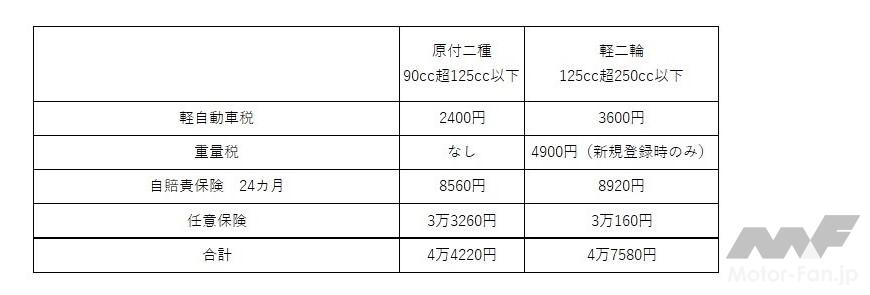
The amount of optional insurance is calculated on Zurich’s website for new customers over 30 years old. The amount varies depending on the conditions and coverage.
However, as you can see from the table above, the difference in maintenance costs between a Class 2 moped and a light motorcycle is not that great (the same goes for fuel economy. WMTC mode values are 125: 47.7km/L, 160: 44.9km/L), and even if you use the family bike special policy for a 125, the maximum cost is around 20,000 yen. And there are quite a few riders out there who feel that the coverage provided by the family bike special policy is not enough and take out regular voluntary insurance even for their 125, which makes the difference in maintenance costs with a 160 even smaller.
Taking these circumstances into consideration, I have always been a fan of the “big brother” model, but while the price difference between the 4th generation was 45,000 yen (125: 363,000 yen, 160: 412,500 yen), the 5th generation was 82,500 yen (125: 379,500 yen, 160: 462,000 yen). With such a big difference, it’s hard to call myself a “big brother” model, but…

As someone who currently lives in western Tokyo and frequently uses expressways and toll roads, I would still give the edge to the 160, even though there is a big price difference. However, if I imagine myself living in Morioka City, Iwate Prefecture, where my parents live (where I rarely use expressways and toll roads for everyday travel or touring), I think I would probably choose the 125.

The only difference between the 125 and 160 that can be distinguished from the outside is the emblem on the rear of the side panel. All body-related parts, including front and rear shocks and tires, are the same.
Riding position (height 182cm, weight 74kg)


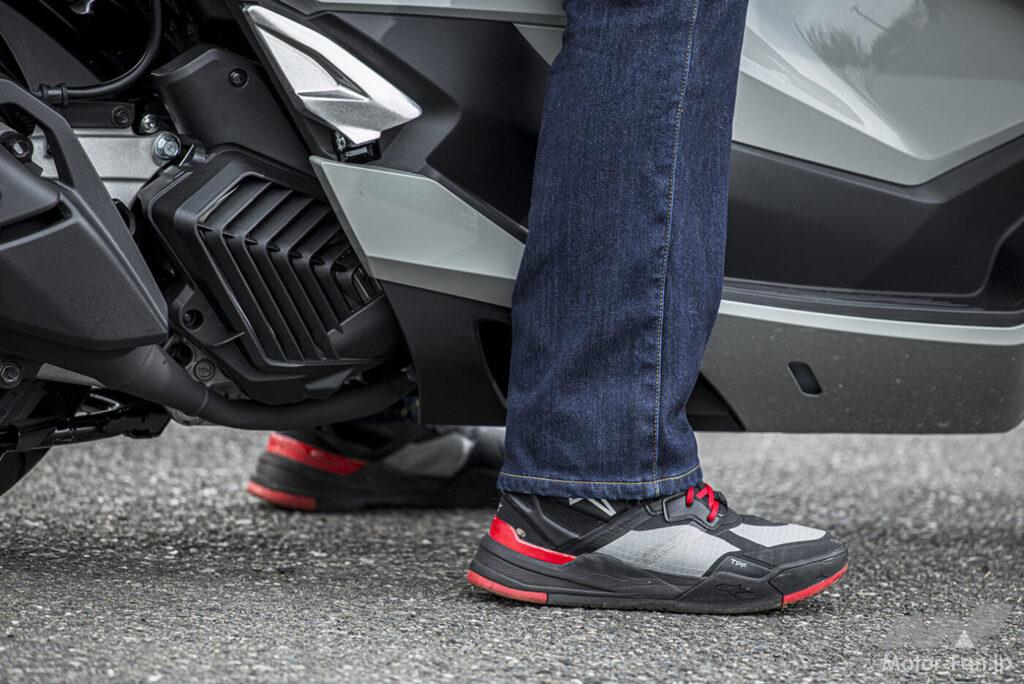
The riding position, which strikes a good balance between maneuverability and comfort, is exactly the same as its younger brother, the 125. The seat height of 764mm is on the low side compared to other manufacturers’ 150-180cc scooters. By the way, the figures for rivals are Yamaha NMAX155: 770mm, X-Force: 815mm, KYMCO Tarsley S150: 790mm, KRV180TCS: 795mm, and SYM DRG BT160: 803mm.

Detail explanation

The front cowl is the first in the series to feature a reverse slant nose. By creating a recess below the headlight, the center of gravity is raised slightly, creating a sporty look.
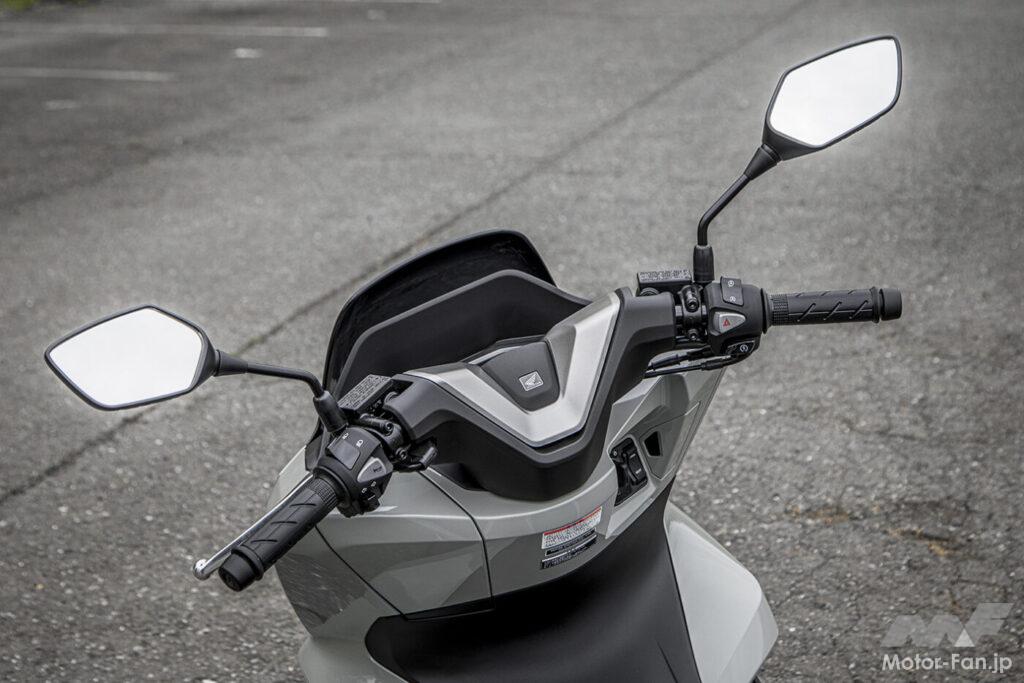
A steering wheel cover that contributes to a sense of luxury is also fitted for the first time in the series. The display content and layout of the digital meter follow the fourth generation, but the design of the silver outer frame has been changed.

The box on the left side of the front inner cover can hold a 500ml PET bottle, and there is a USB Type-C socket on top.

The main switch is a dial type (the ignition key is a smart type), and to the right of it are the seat and fuel tank lid open switches.

In recent years, most Honda models have installed the turn signal lever on the left switch box at the bottom, which requires less thumb travel compared to the middle position commonly used by other manufacturers.
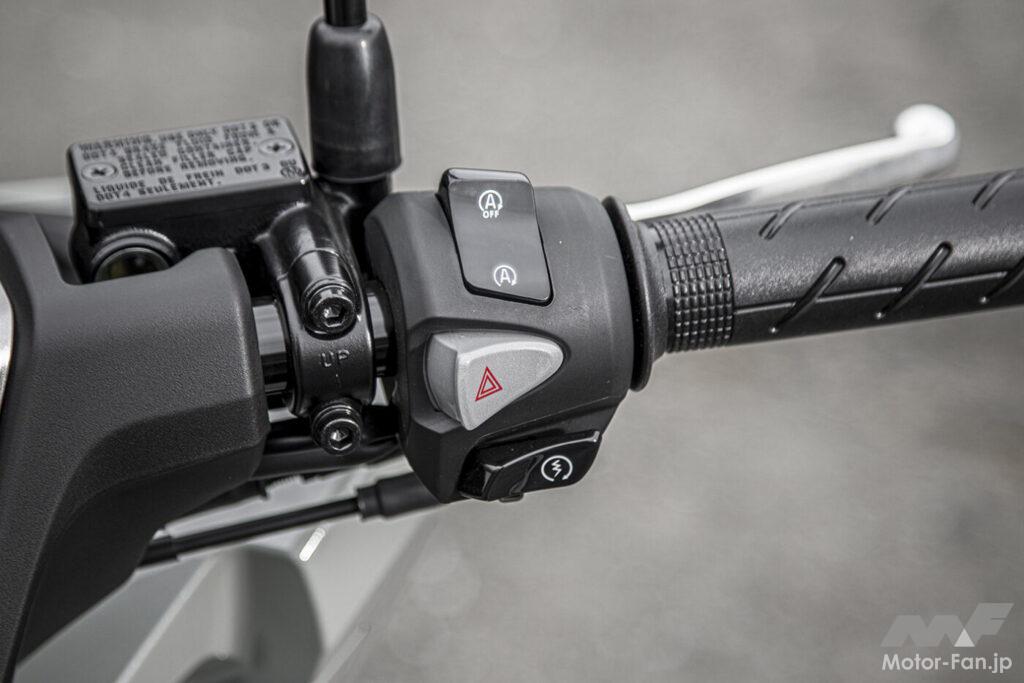
The right switch box has a design that is consistent with the left. The idle stop mechanism, which has been carried over from the first generation, can be turned on or off using the seesaw switch on top.
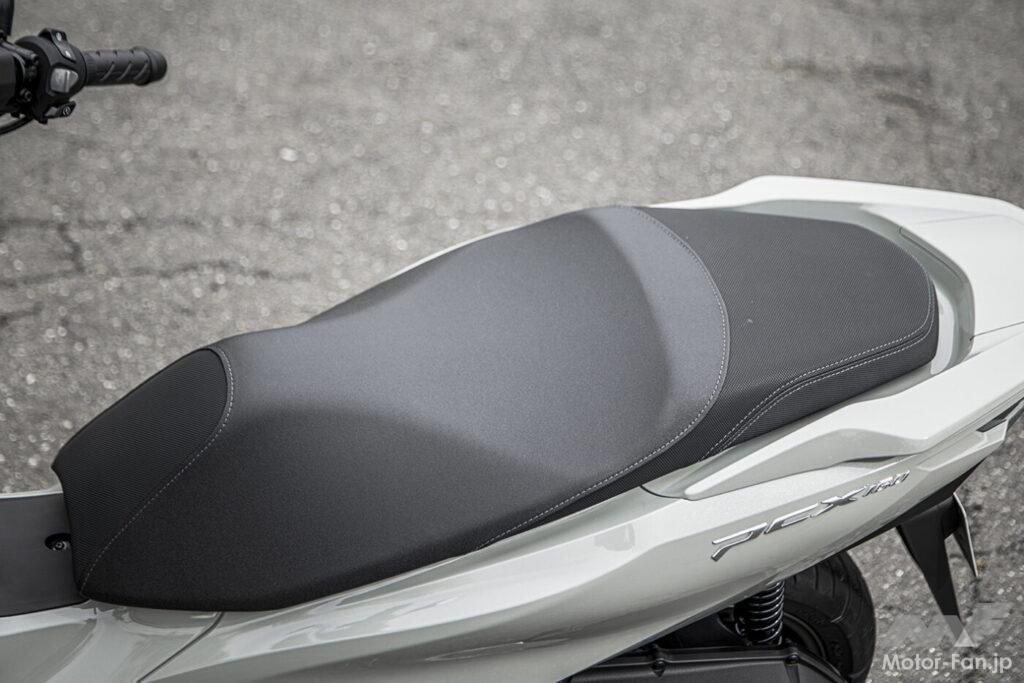
The seats are quite comfortable, and the trunk space underneath has a capacity of 30 liters, designed to accommodate a full-face helmet.
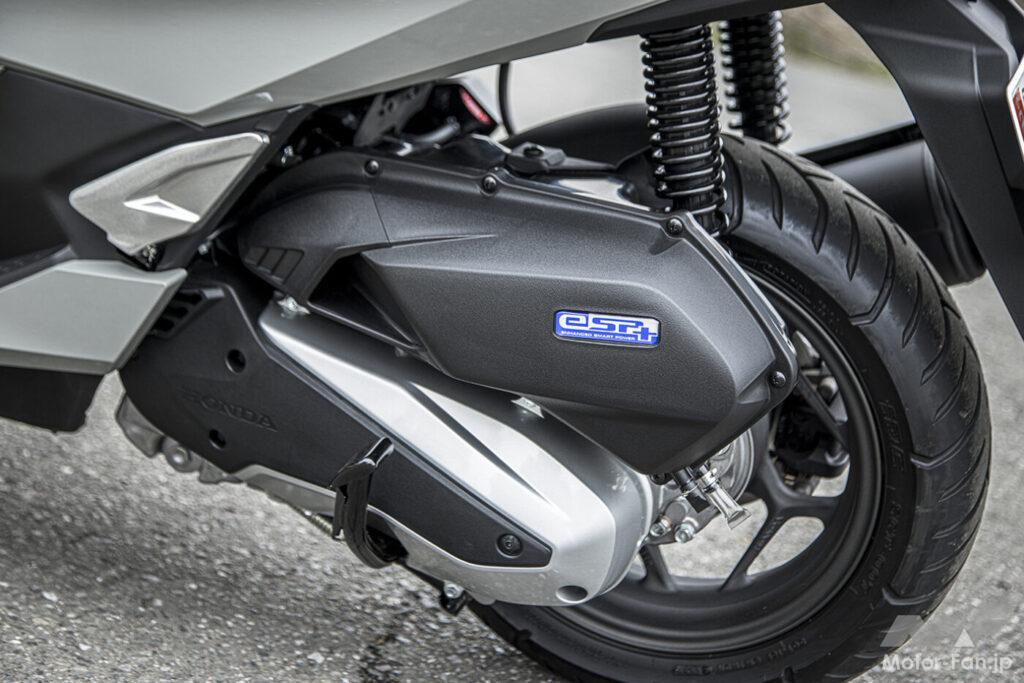
The basic design of the water-cooled single-cylinder engine is the same as its younger brother, but while the 125 has a long stroke (53.5 x 55.5 mm), the 160 has a short stroke (60 x 55.5 mm).

The front fork is a φ31mm upright type, and the settings are the same as those of the 125. To prevent wind and rain from getting into the foot space, a slit is installed in the front panel to reduce negative pressure.
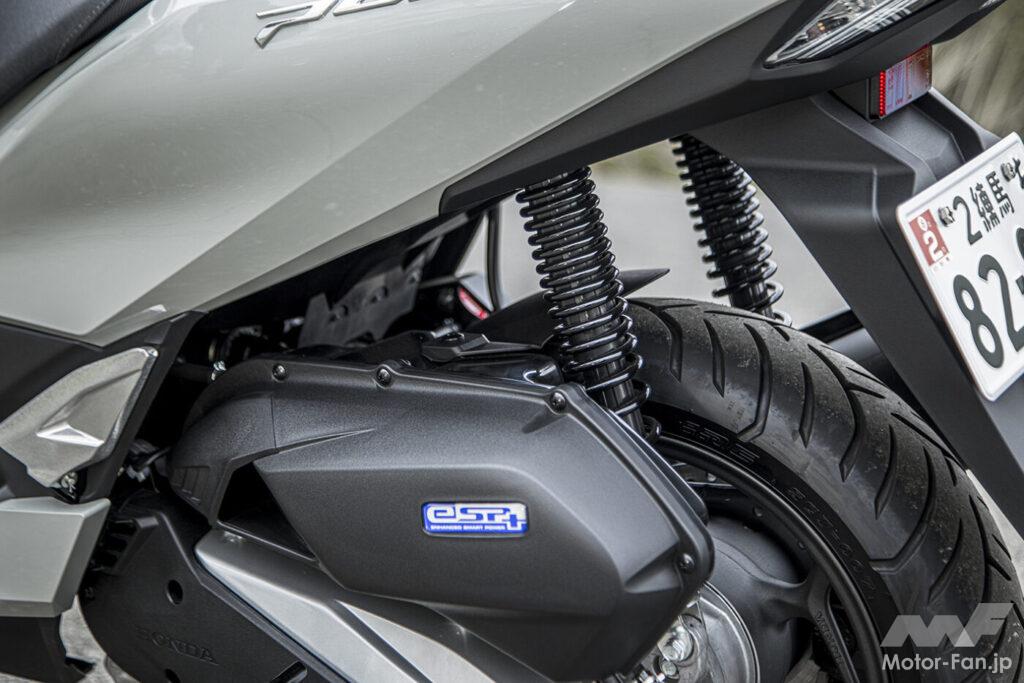
The twin-shock rear suspension is also the same as the 125. The brake discs are φ220mm both front and rear, and the brake calipers are single-sided, two-piston, in the front and single-piston, in the rear.
ADVERTISEMENT
 I thought it was just a minor change, but when I actually rode it, I felt that the lightness had been refined. | Test ride report of the 5th generation PCX
In addition to the “Personal Comfort Saloon” concept that has continued since the first generation, the fifth generation has a new keyword: “Premium & Powerful PCX.” In this article, we will introduce the appeal of the new PCX using the 125 model, which will be the main player in the Japanese market. REPORT: Nakamura Tomohiko PHOTO: Yamada Shunsuke
Main specifications
Model: PCX160
Model: 8BK-KF47
Length x Width x Height: 1935mm x 740mm x 1125mm
Wheelbase: 1315mm
Ground Clearance: 135mm
Seat Height: 764mm
Engine Type: Water-cooled 4-stroke single cylinder
Valve Type: OHC 4-valve
Total Displacement: 156cc
Bore x Stroke: 60.0mm x 55.5mm
Compression Ratio: 12
Maximum Output: 12kW (15.8ps) / 8750rpm
Maximum Torque: 15N・m (1.5kgf・m) / 6500rpm
Starting Method: Self-starter
Ignition Method: Full Transistor Lubrication Method:
Wet Sump
Fuel
Supply Method: Fuel Injection Transmission Type: Continuously Variable (V-Matic)
Frame Type: Underbone
Front Suspension: Telescopic upright type φ31mm
Rear Suspension: Unit swing type Twin shocks
Tire size (front): 110/70-14
Tire size (rear): 130/70-13
Brake type (front): Hydraulic single disc
Brake type (rear): Hydraulic single disc
Vehicle weight: 134 kg
Fuel: Unleaded regular gasoline
Fuel tank capacity: 8.1 L
Occupancy: 2 people
Fuel consumption rate (reported by the Ministry of Land, Infrastructure, Transport and Tourism): 53.5 km/L (with 2 passengers)
Fuel consumption rate (WMTC mode value, class 1): 44.9 km/L (with 1 passenger)