
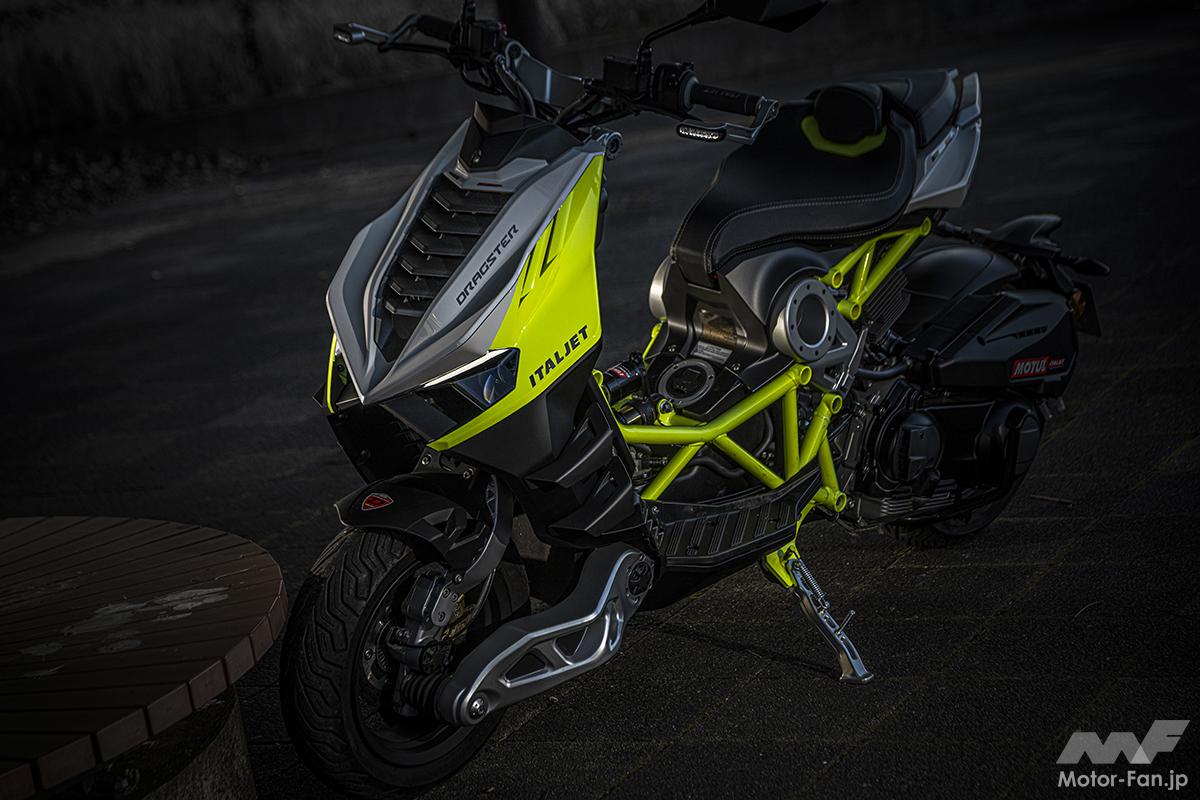

Italjet Dragstar 300…1,067,000 yen (including consumption tax)
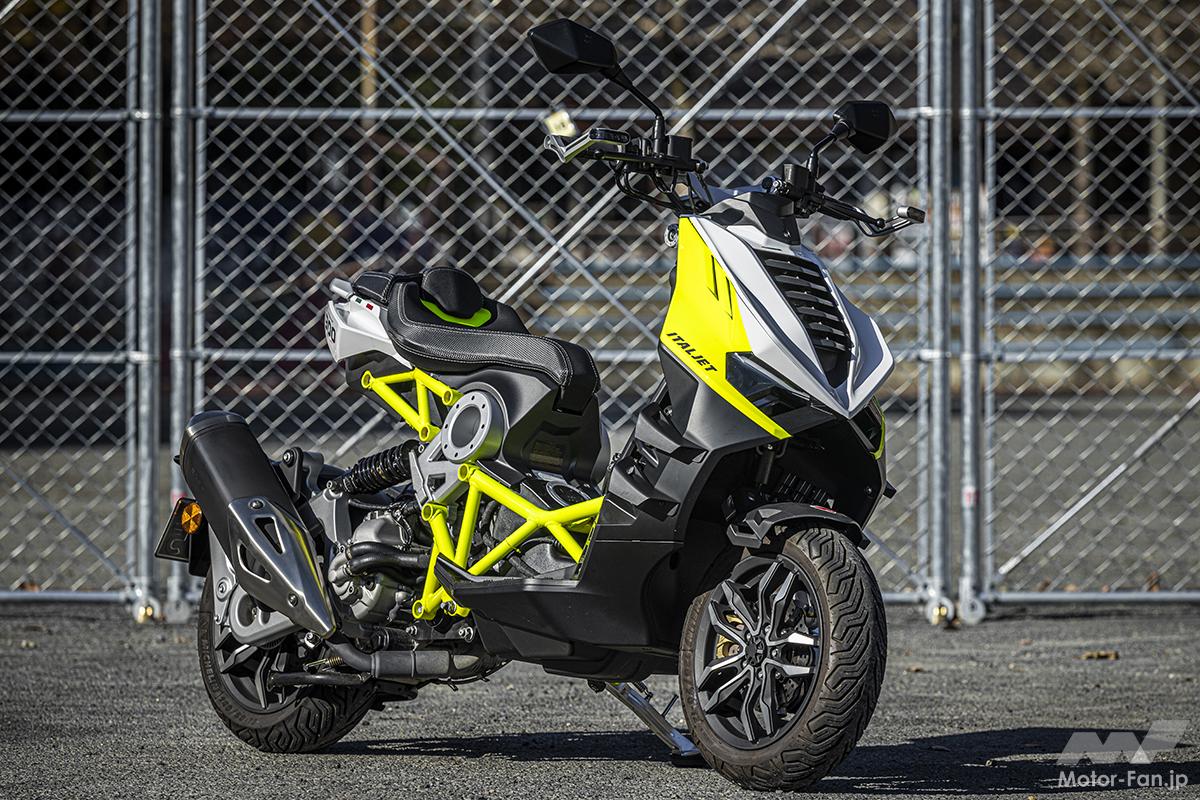
Italjet is an Italian manufacturer founded in 1959. In the mid-1990s, they released the Dragster series, a model that used hub steering (called an independent steering system by Italjet), and its unique mechanism attracted a lot of attention. They subsequently went bankrupt in 2003 but were rebuilt in 2005.
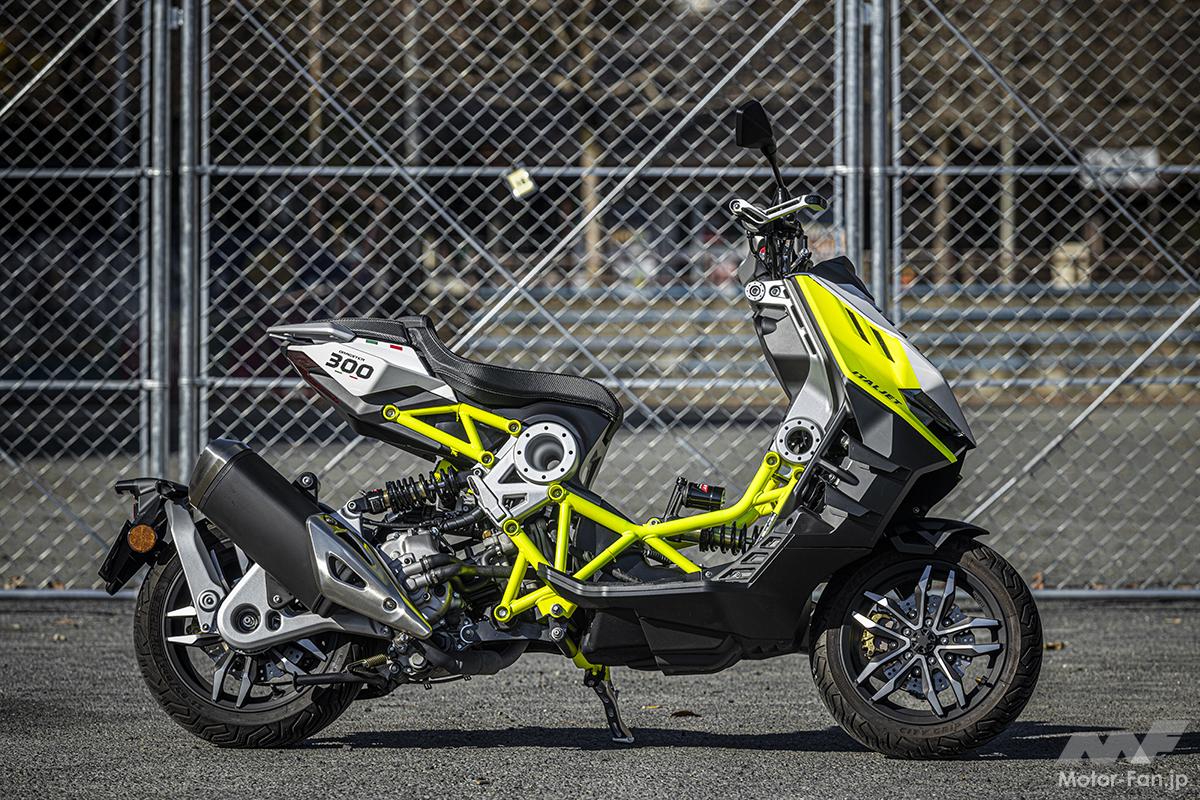
This time we will be introducing the new Italjet Drag Star 300. The Drag Star, which uses the Independent Steering System (ISS), has previously been available in 125 and 200 models, but a new 300 has now been added to the lineup.
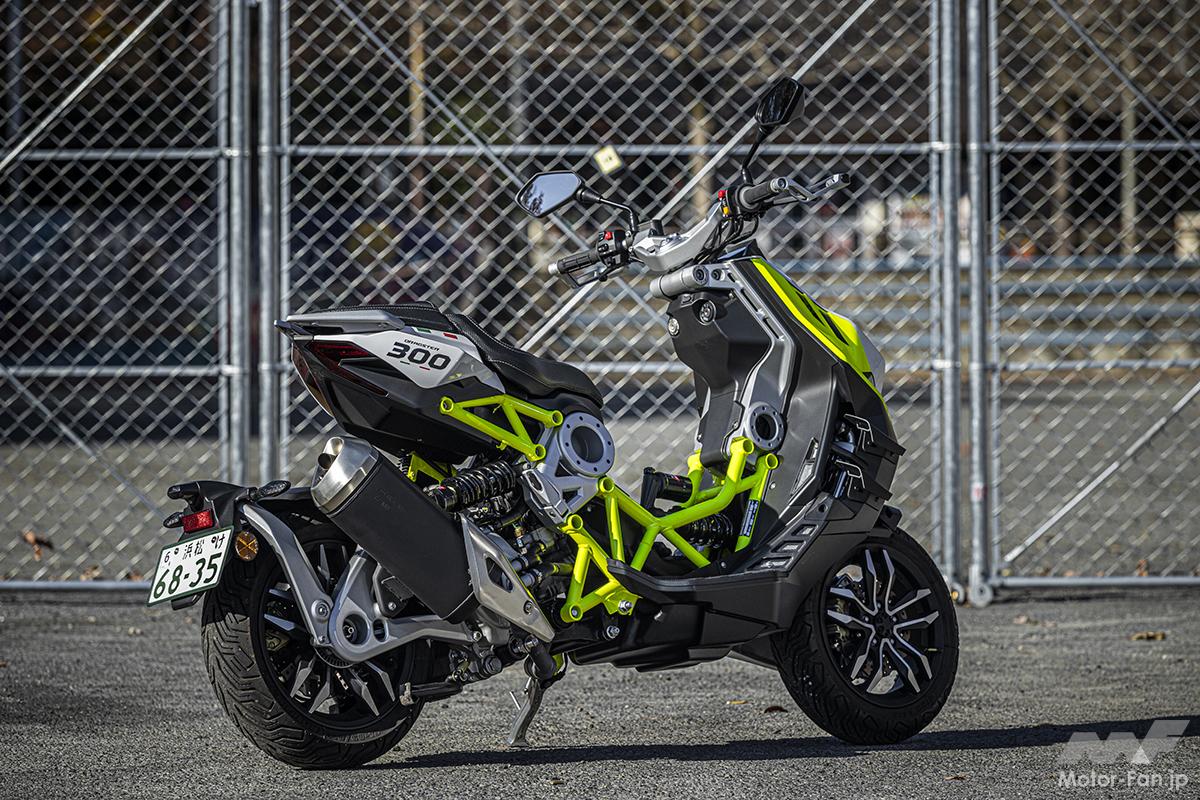
Tester Goto has been a big fan of the Dragster since the first generation was released. There is no other scooter that is as unique and full of functional beauty as this one. Another attraction was the powerful 2-stroke engine.
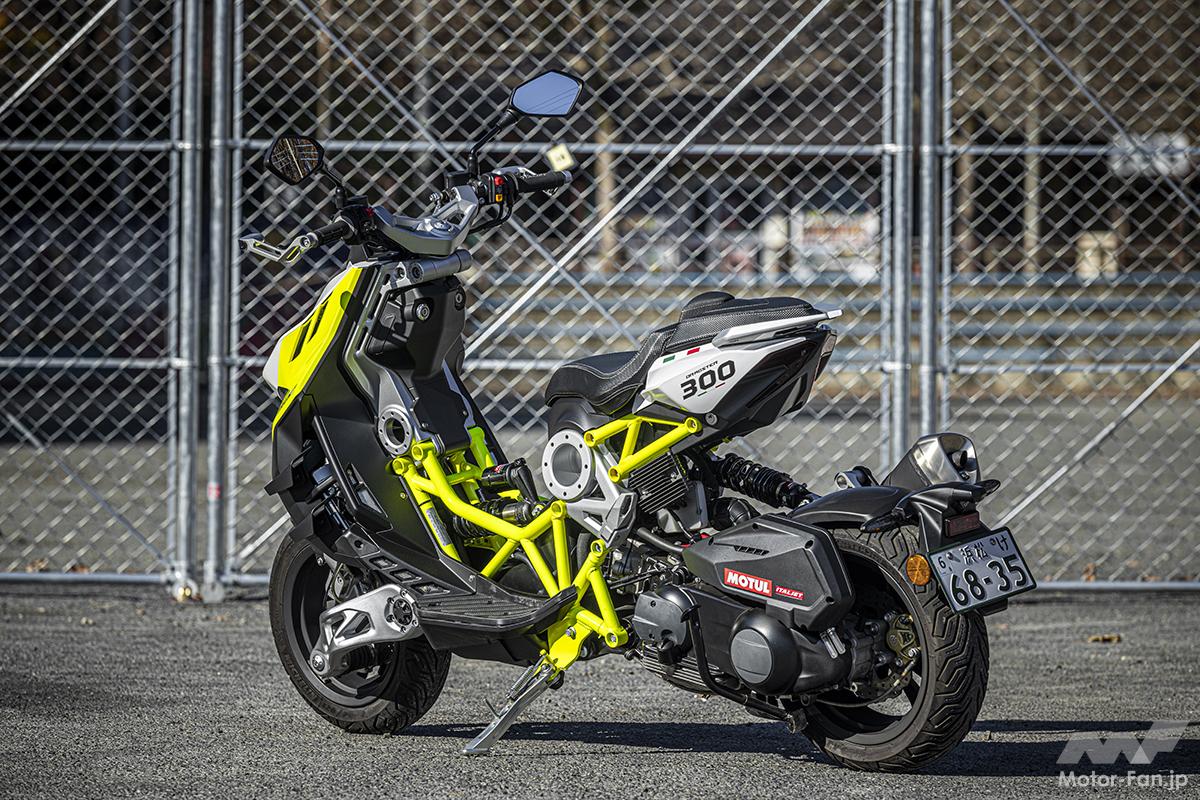
The new Dragster is equipped with a 4-stroke engine that complies with environmental regulations, but this machine has a 300cc displacement and a DOHC 4-valve. Moreover, since this engine is mounted in a chassis that is almost identical to the 125, power performance should be quite high.
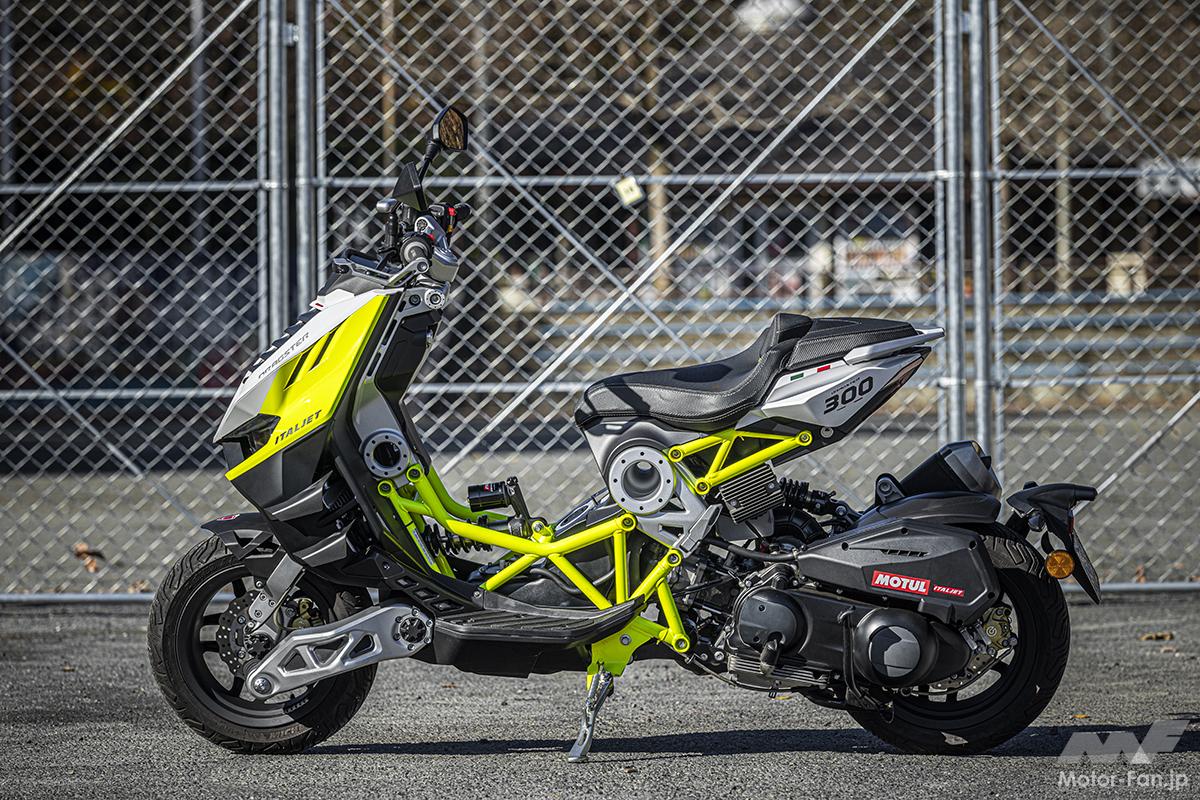
When you see the actual car, you can feel its overwhelming presence and texture. The frame, made of a trellis frame and aluminum casting plates, gives off a sense of wonderful functional beauty from any angle. Even when you look at the finer details, such as the framework and front steering mechanism, there is no sense of cutting corners. This is a machine that seems to be packed with the Italian manufacturing spirit.
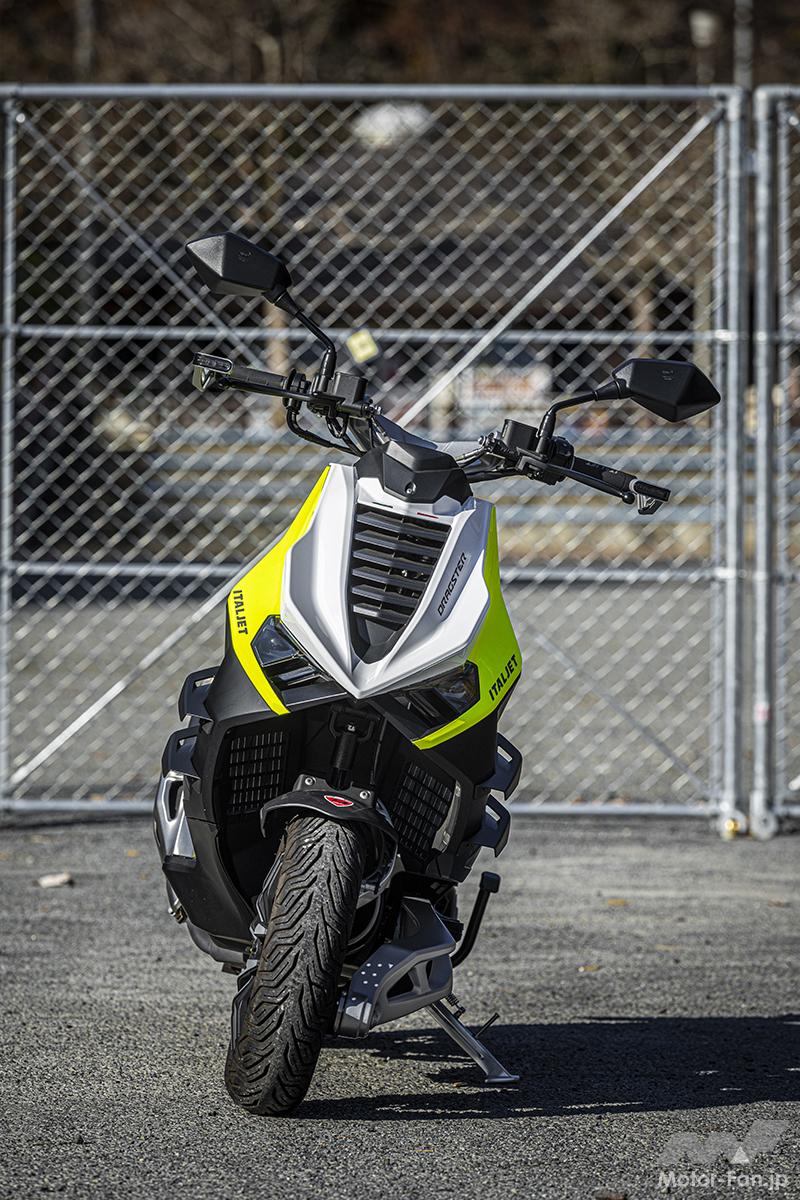
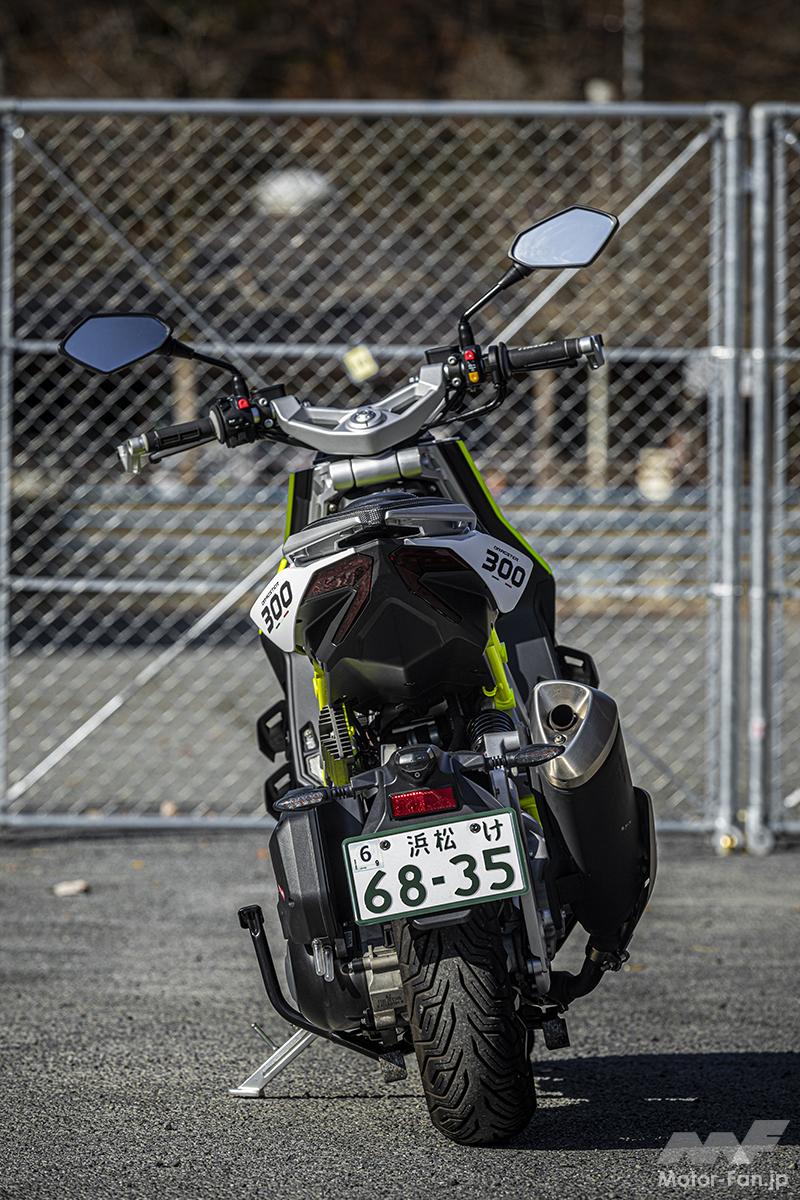
Unique steering feel
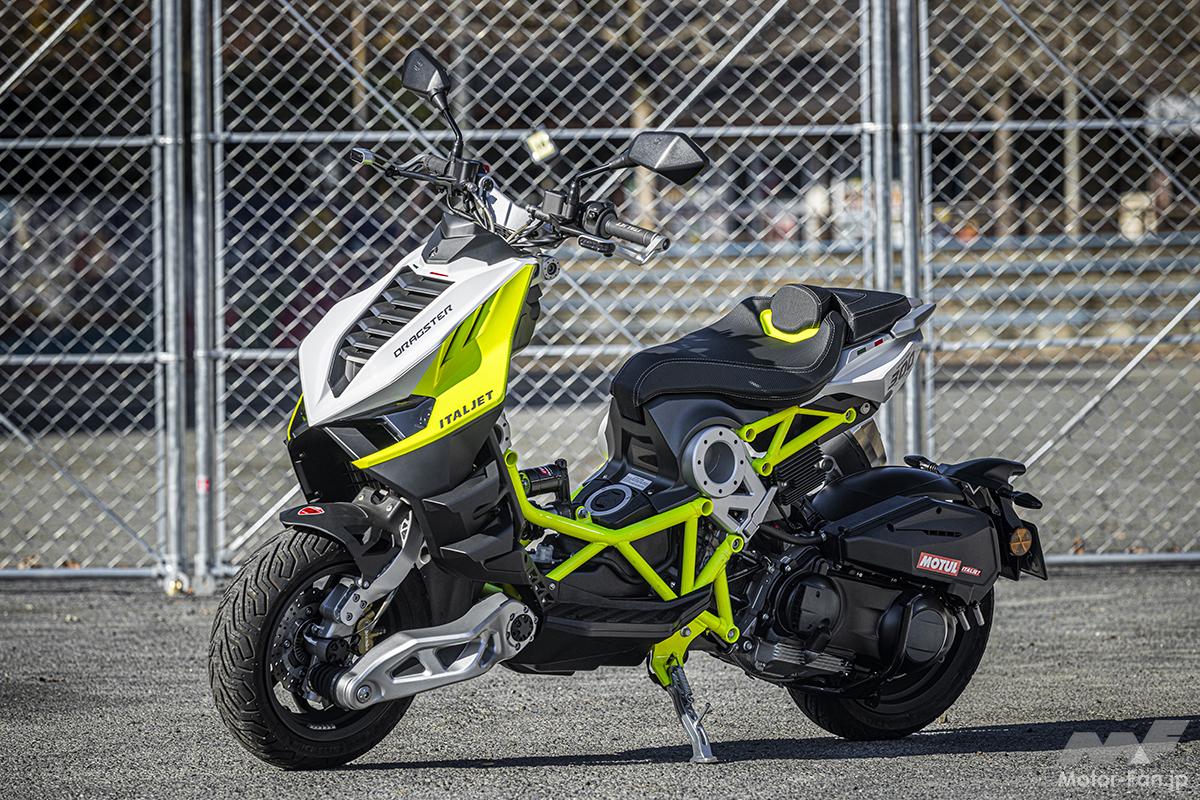
Because this is a very special machine, I decided to check the steering and suspension movement before test driving it. First, I tried turning the steering wheel with the engine off. I didn’t feel much difference from a machine with a normal telescopic front suspension. However, there was a weight, as if the steering damper was working (I didn’t feel any friction), and it seemed to get a little heavier as the steering wheel moved closer to full lock.
When you push the suspension, it doesn’t move like a scooter. The spring rate and damping are almost like a super sports car. The stroke is also short, and you can see that the body and suspension are quite bold. It seems that they have pursued not only atmosphere but also driving performance.
By the way, even if you try to compress the front suspension while holding the front brake, it doesn’t budge. This is a distinctive feature of I.S.S.
Cornering that you wouldn’t expect from a scooter
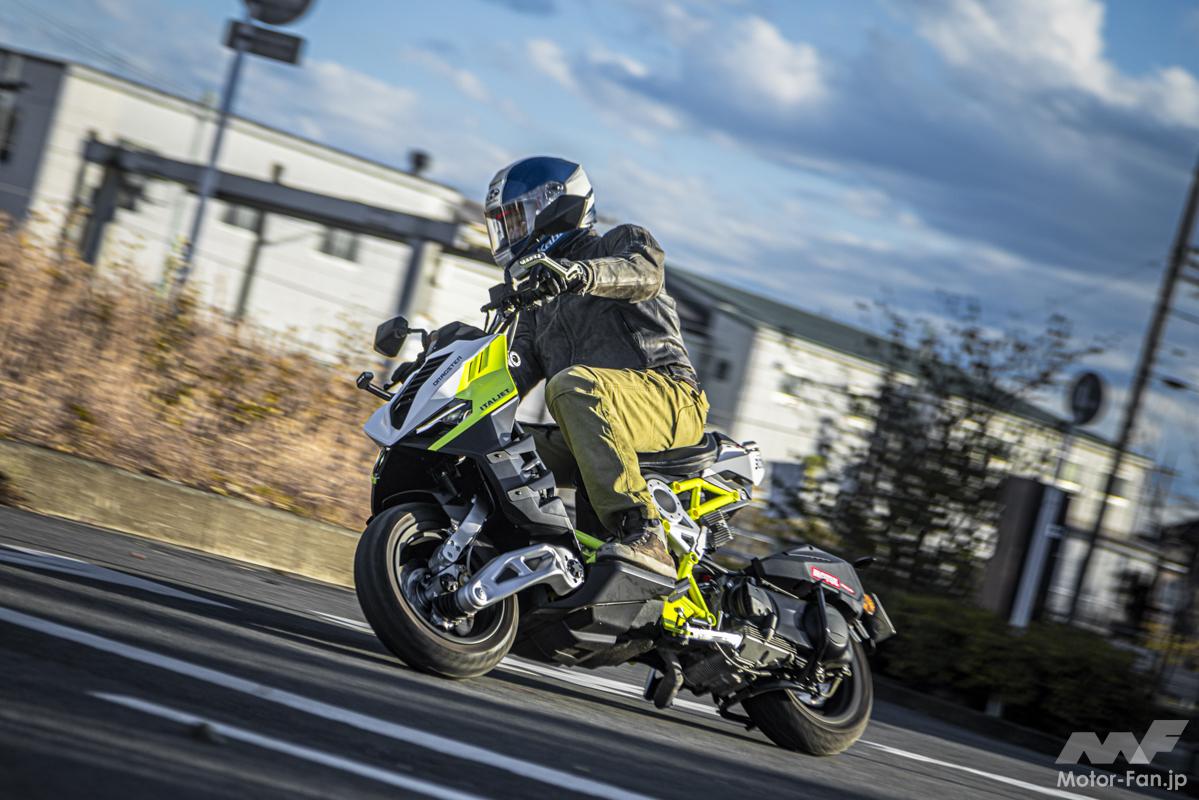
Once I started riding, the ride wasn’t as bad as I’d expected. The suspension is hard, but the initial movement is smooth, so you don’t feel any hard shocks. It’s not as comfortable as a regular scooter, but it’s on the same level as a sports bike. And after just a short ride, I could tell that the body was very solid.
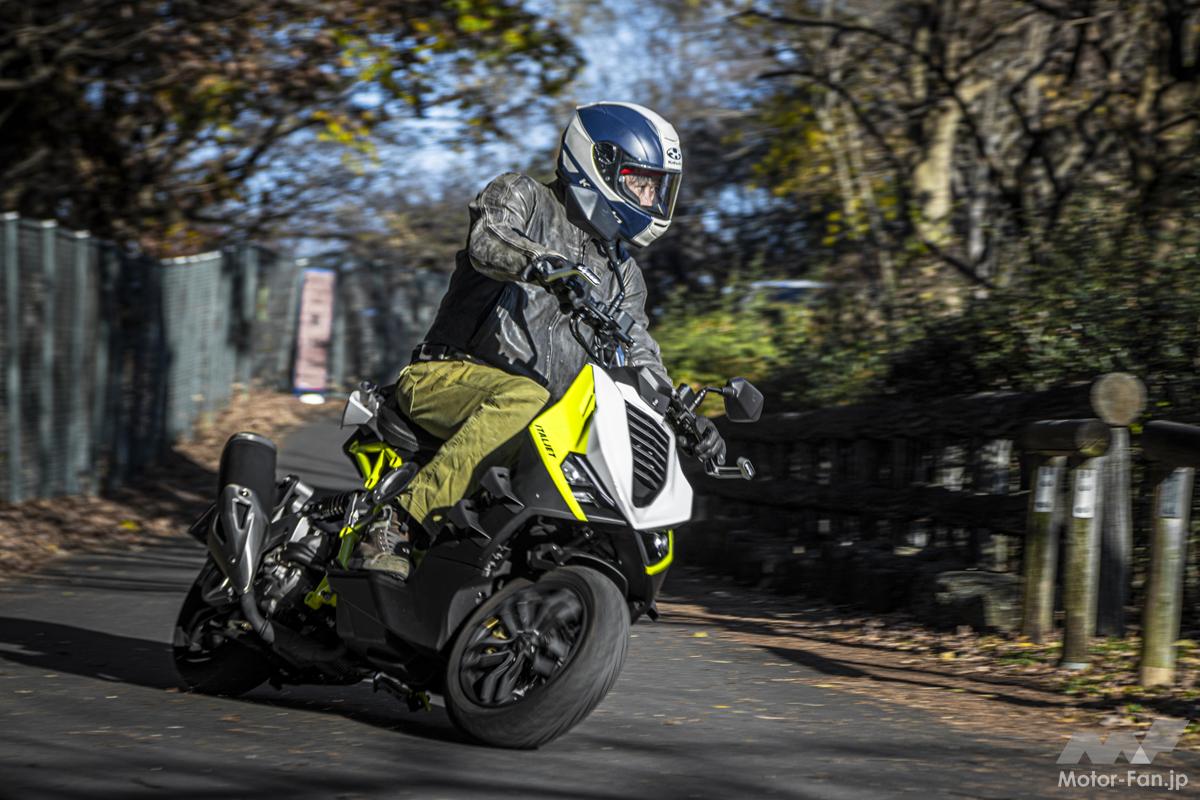
One of the attractions of the Dragstar 300 is the sense of security that comes from the overwhelming presence of the front tire. When switching from a motorcycle to a scooter, the quickness of the small diameter tire can make you feel unsettled. However, the Italjet is different. It is so stable that you would never guess it has a small diameter tire.
This sense of stability is also present when banking the bike. It has a unique tenacity, but it doesn’t feel strange, and you can corner without any anxiety. This is the high level of perfection that can only be achieved through a long period of maturation.
Overwhelming stability when decelerating
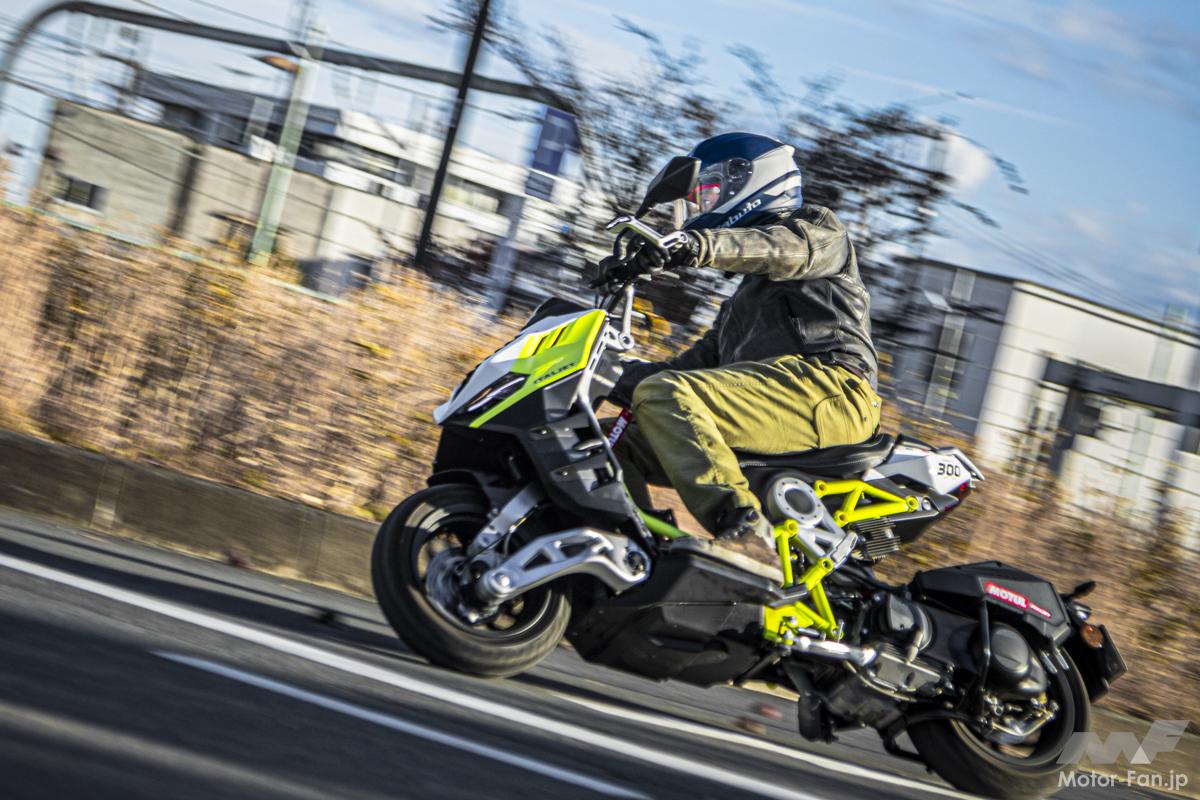
The advantage of I.S.S. is most noticeable when braking. There is absolutely no nose dive when decelerating. However, the suspension is not stiff, and even when you squeeze the brake lever hard, it smoothly absorbs shocks over bumps.
The sense of stability during sudden deceleration is incredible, and even if you apply the brakes hard when the car is banking, the car doesn’t rise up. The process from deceleration to turning in a corner is the busiest and most unstable part, but the Dragstar 300’s body remains stable, as if it were running on rails.
The brakes are also sharp and effective, just like a sports bike. If you try squeezing just the front brake hard, the front of the vehicle will lift up slightly just before coming to a stop. If you squeeze just the rear brake, the front suspension will sink slightly due to deceleration G. Operating the brakes separately will cause a slight change in posture, but if you use the front and rear brakes simultaneously, this behavior will not occur.
By the way, ABS is used on both the front and rear brakes. It is not very precisely controlled, but since it does not use an IMU or anything like that, the ABS is probably reasonable. It is sufficient to prevent the bike from losing its balance when braking hard in an emergency.
Powerful engine characteristics
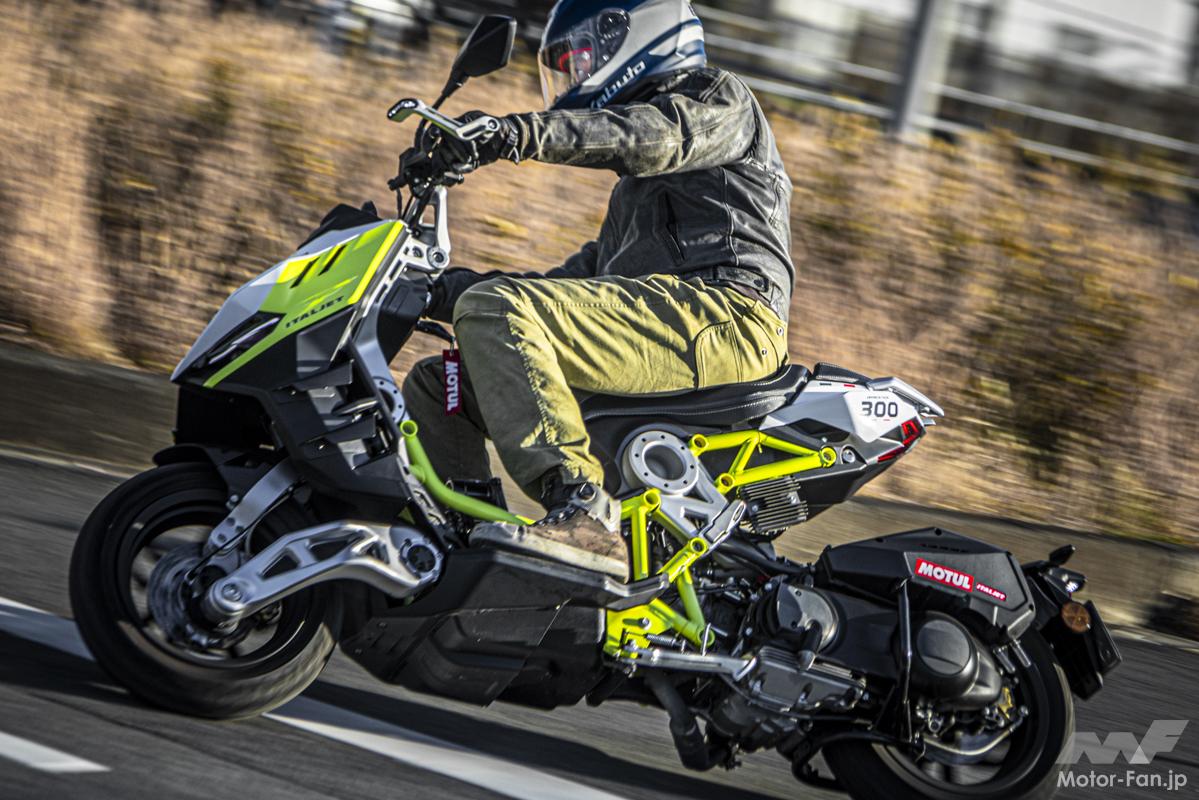
This machine, with the largest displacement in the Drag Star series, delivers a truly powerful ride. The engine has torque even at low revs and accelerates well. As you’d expect from a DOHC 4-valve engine, it also delivers smooth power at high revs. It would be difficult for a 250cc scooter to keep up with this machine.
However, even if you open the throttle wide from a stopped position , it doesn’t jump out with a bang. The driving force is gently connected, so the start is smooth. It starts running smoothly, and once it picks up speed, it feels like it’s accelerating with the power of the displacement. Personally, I feel like it would like a bit more of a rough feel, but that’s a matter of opinion depending on the rider.
The Dragstar 300 was a very interesting machine. When I told a friend about it, he said, “Why would they put all that equipment on a scooter…?” But I think it makes sense precisely because it’s a scooter. The mechanical beauty of the trellis frame and I.S.S. stand out because they’re not hidden by a tank or anything, and it also has a sense of playfulness that you don’t get with road sports bikes. The manufacturer’s suggested retail price including tax is 1,067,000 yen (the 200 is 946,000 yen, the 125 is 902,000 yen), but compared to hub-steered road sports bikes, it’s quite realistic.
It was a truly fascinating machine, built to meet the expectations of riders who love niche craftsmanship.
Position & foot reach (height 178cm, weight 75kg)

The dimensions of the bike are almost the same as the Dragstar 125, so it feels very compact when you straddle it. It’s also light to handle. The seat is quite hard and doesn’t feel as comfortable as a regular scooter, but this isn’t too bad, and my butt didn’t hurt after riding around town for half a day.
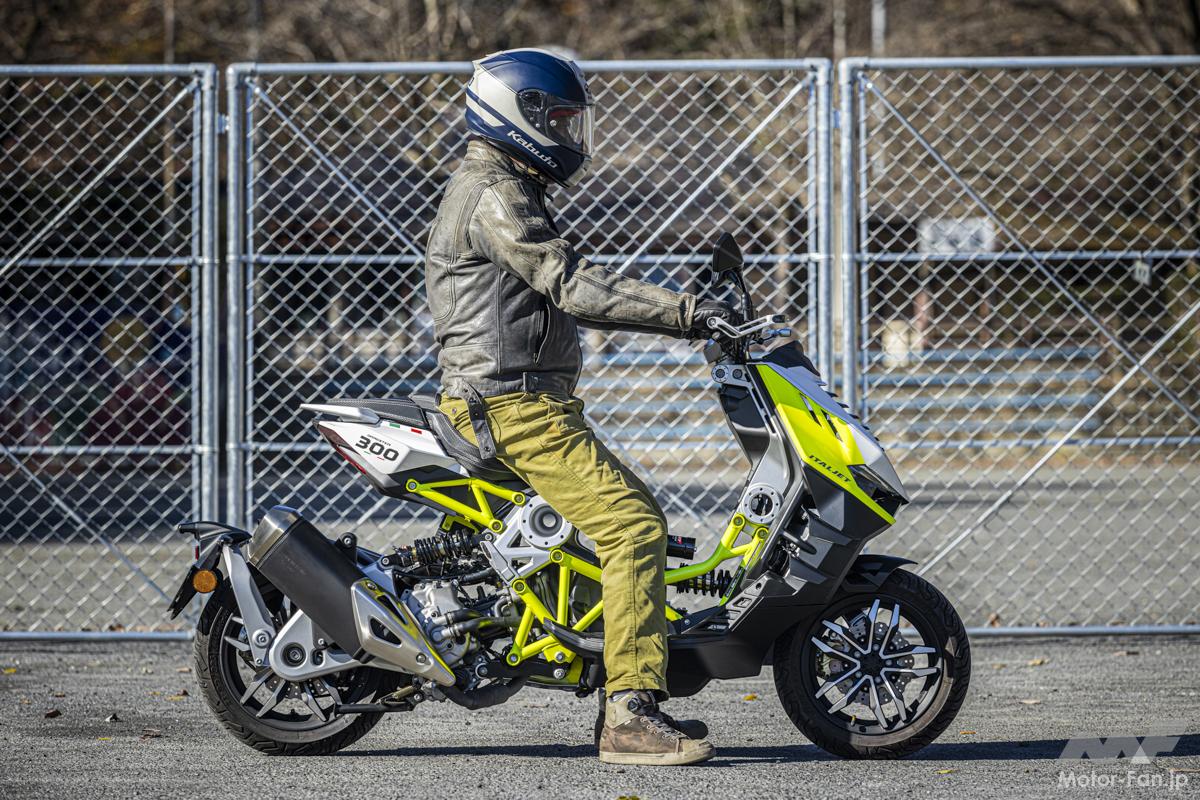
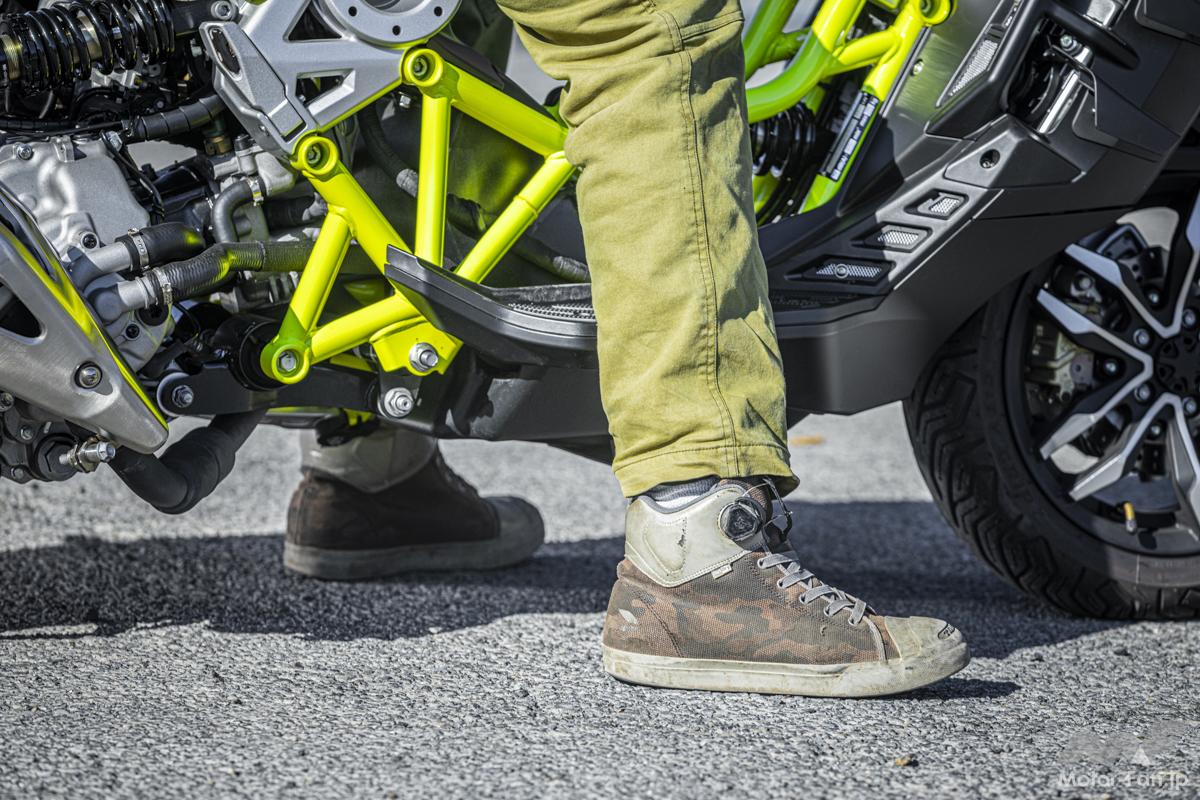
The seat height is 770mm. The body is compact and the sponge on the seat is not thick, so it is easy to reach the ground with your feet.
Detailed explanation
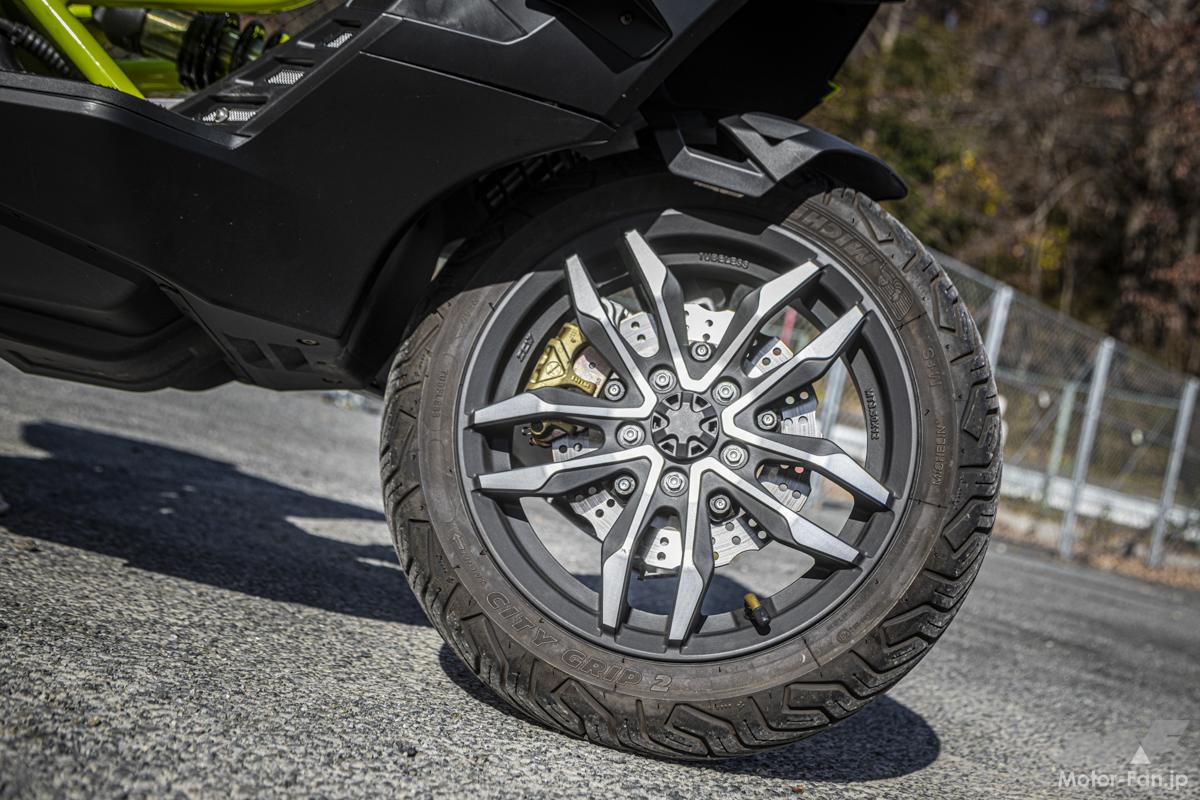
The front tire size is 120-70-12. The brake is on the left arm, so it looks neat when viewed from the right.
ADVERTISEMENT
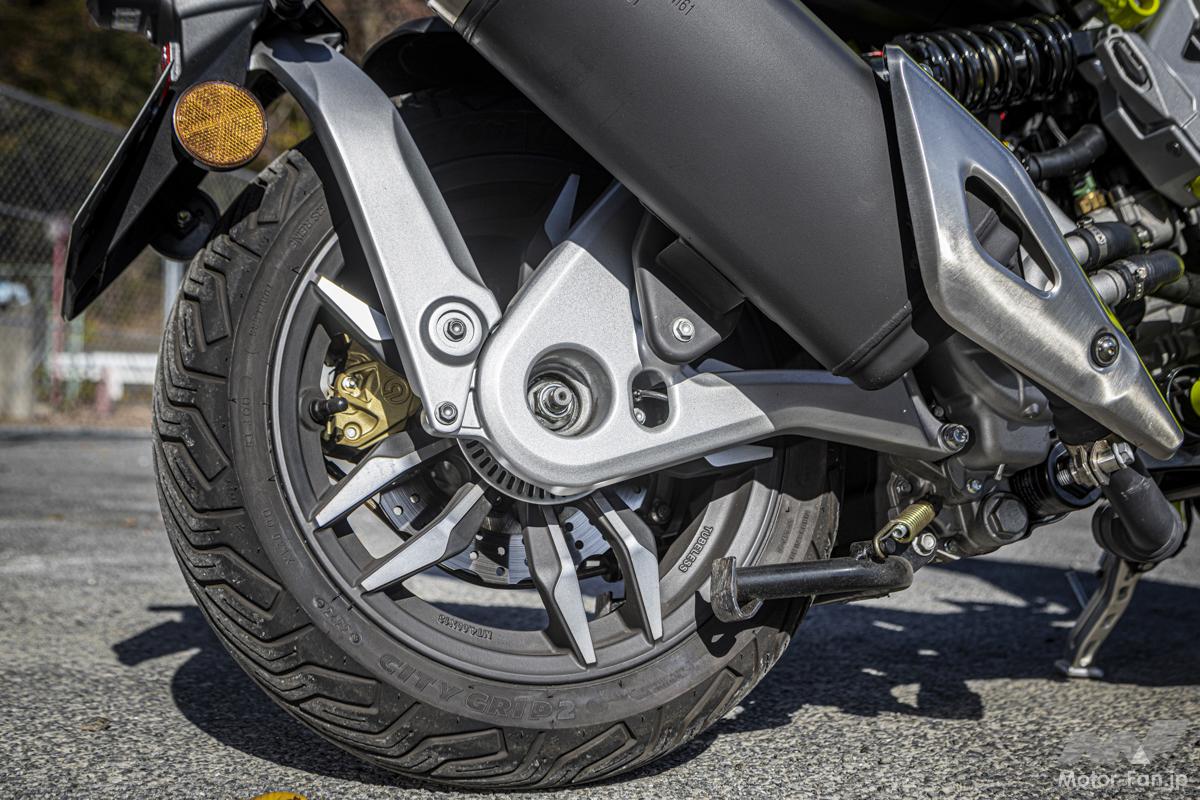
The rear tire is 140/60-13. The rear wheel is firmly supported on both sides.
ADVERTISEMENT
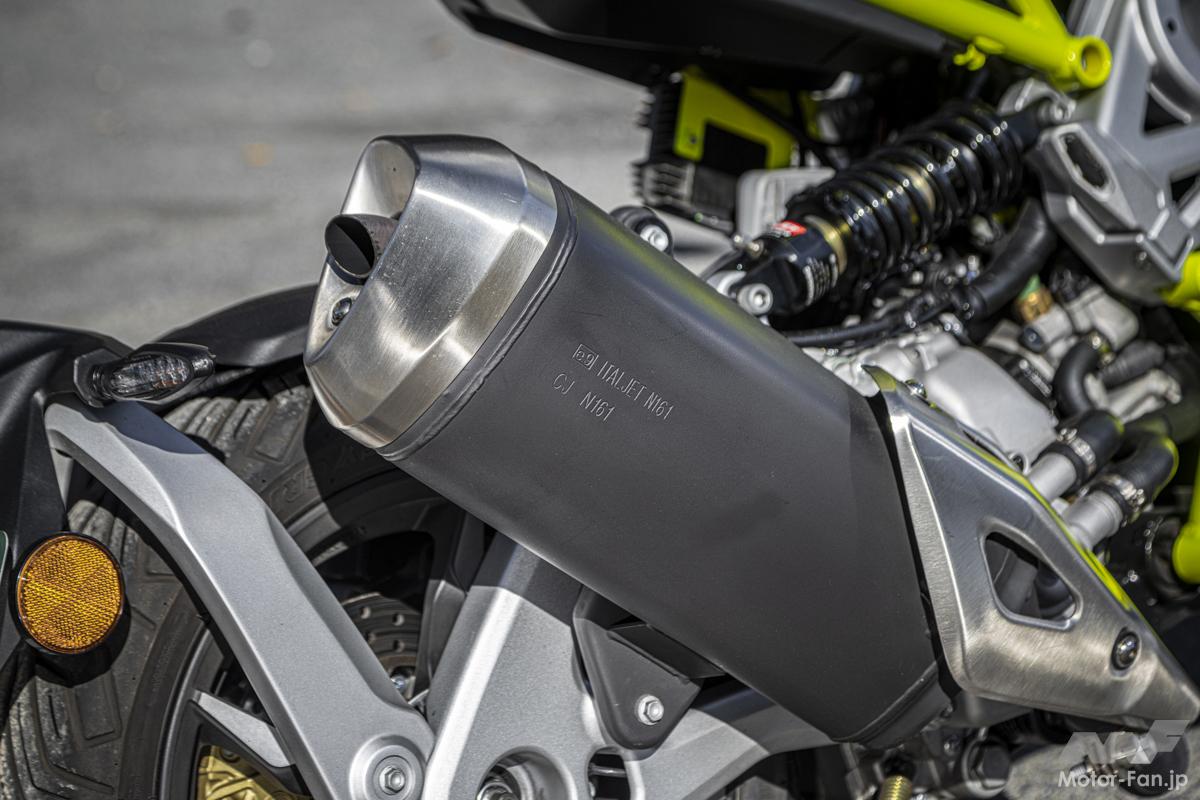
The exhaust system meets environmental regulations, and the exhaust note is thick and powerful, something that small-displacement vehicles lack.
ADVERTISEMENT
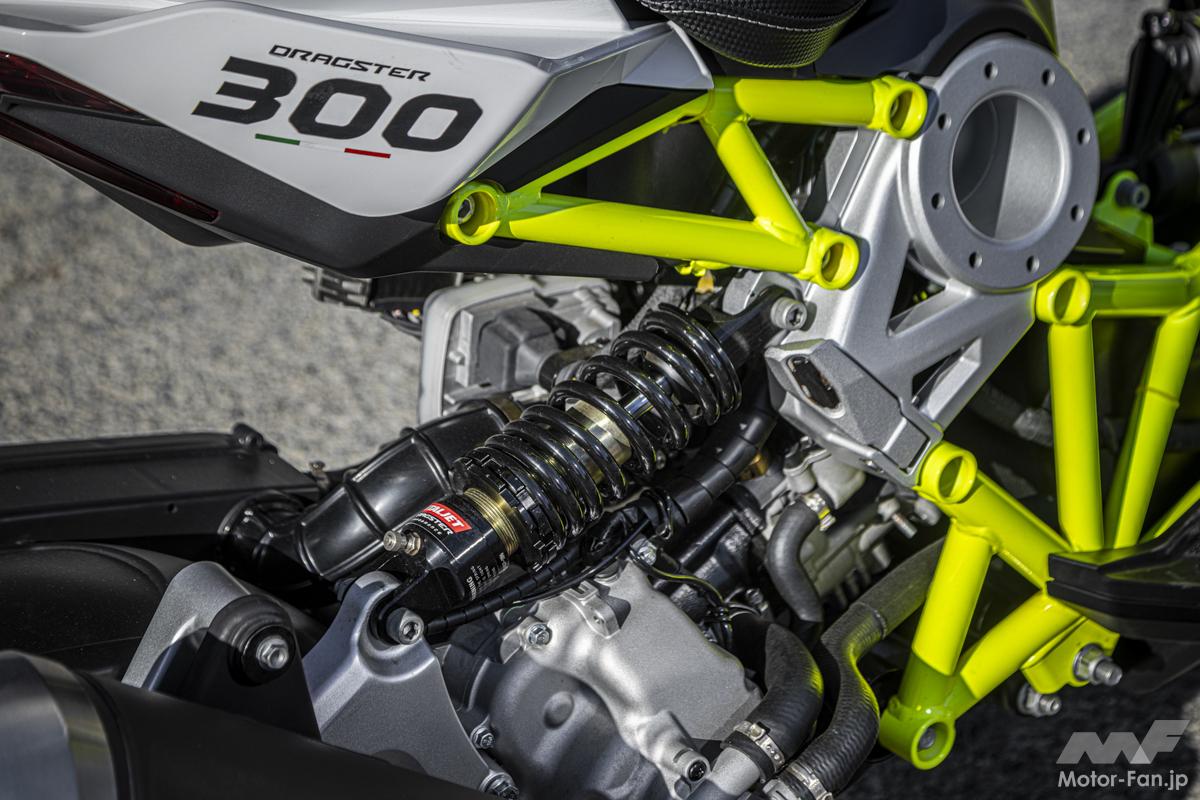
The rear shock is mounted directly to the vehicle without using a link, which makes it easy to adjust preload and other settings.
ADVERTISEMENT
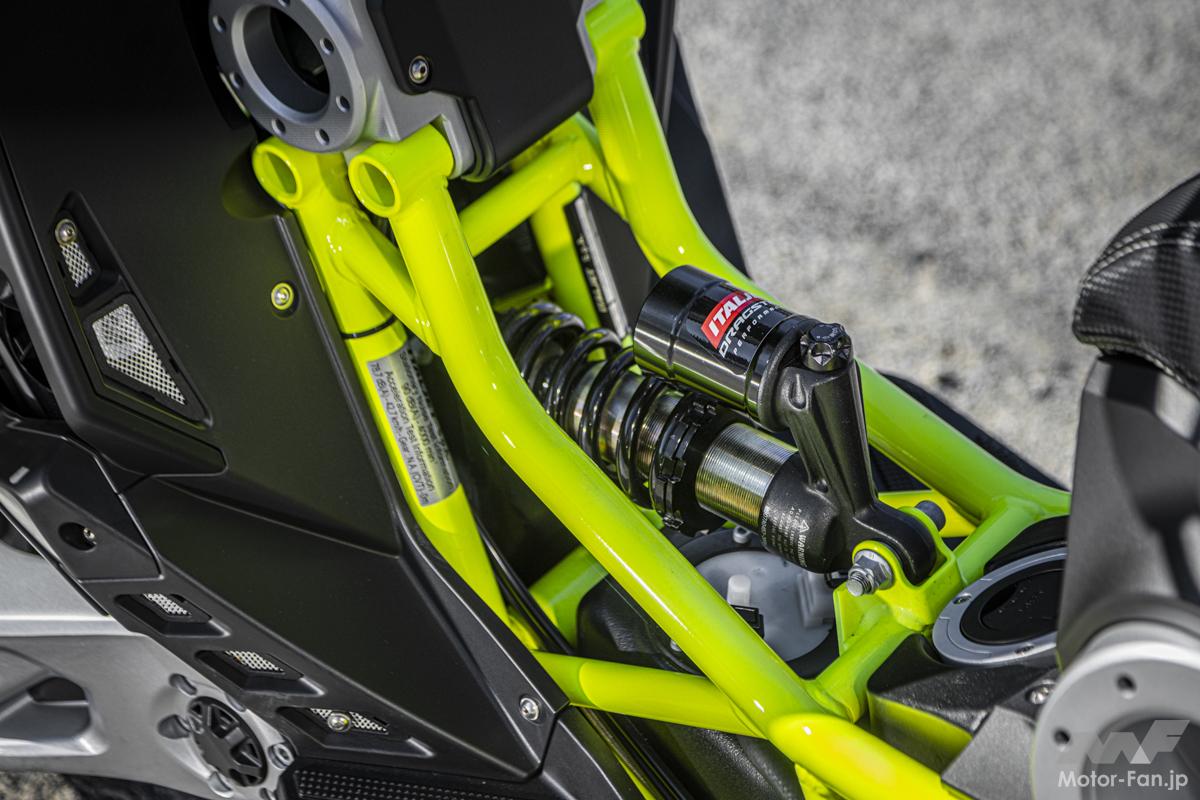
The front shocks have separate gas tanks mounted horizontally at the feet.
ADVERTISEMENT
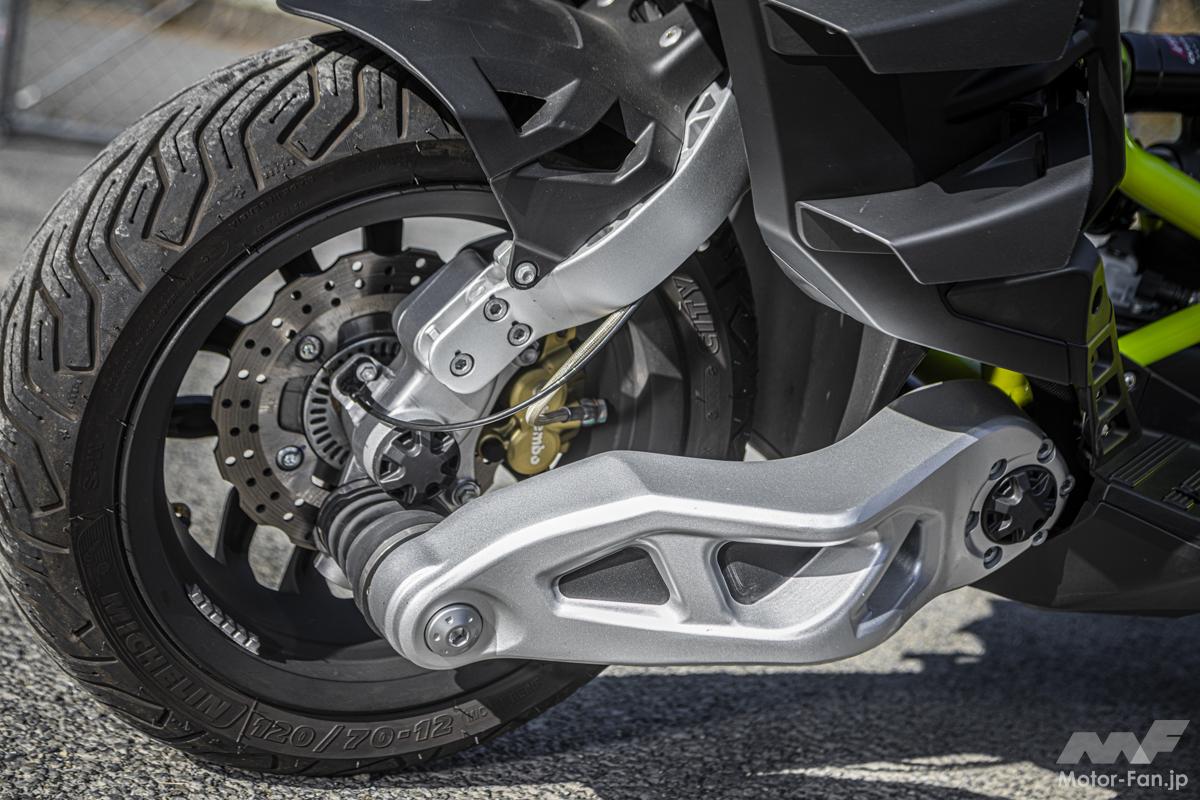
ISS suspension and steering system, supported by a sturdy aluminum swing arm.
ADVERTISEMENT
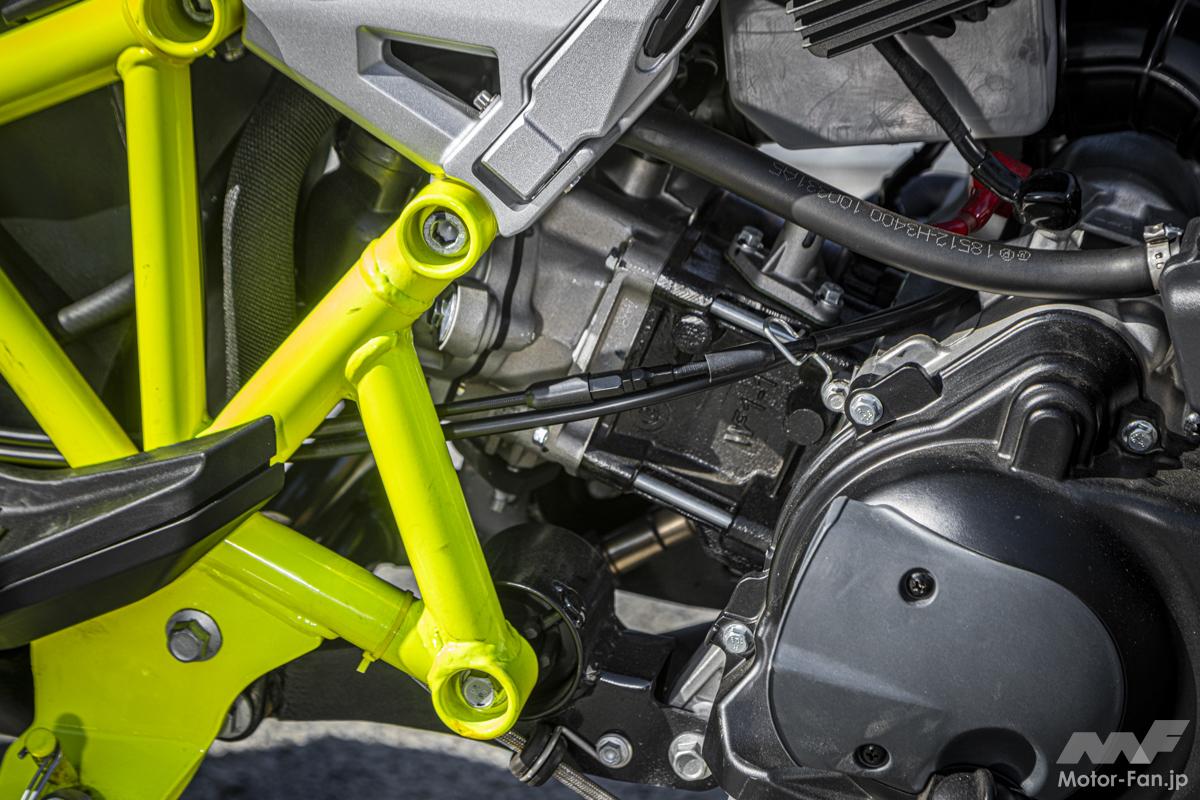
The engine is a 278cc liquid-cooled DOHC 4-valve engine that produces a maximum output of 23.8 hp (17.5 kW) at 8,250 rpm and a maximum torque of 26 Nm at 6,250 rpm.
ADVERTISEMENT
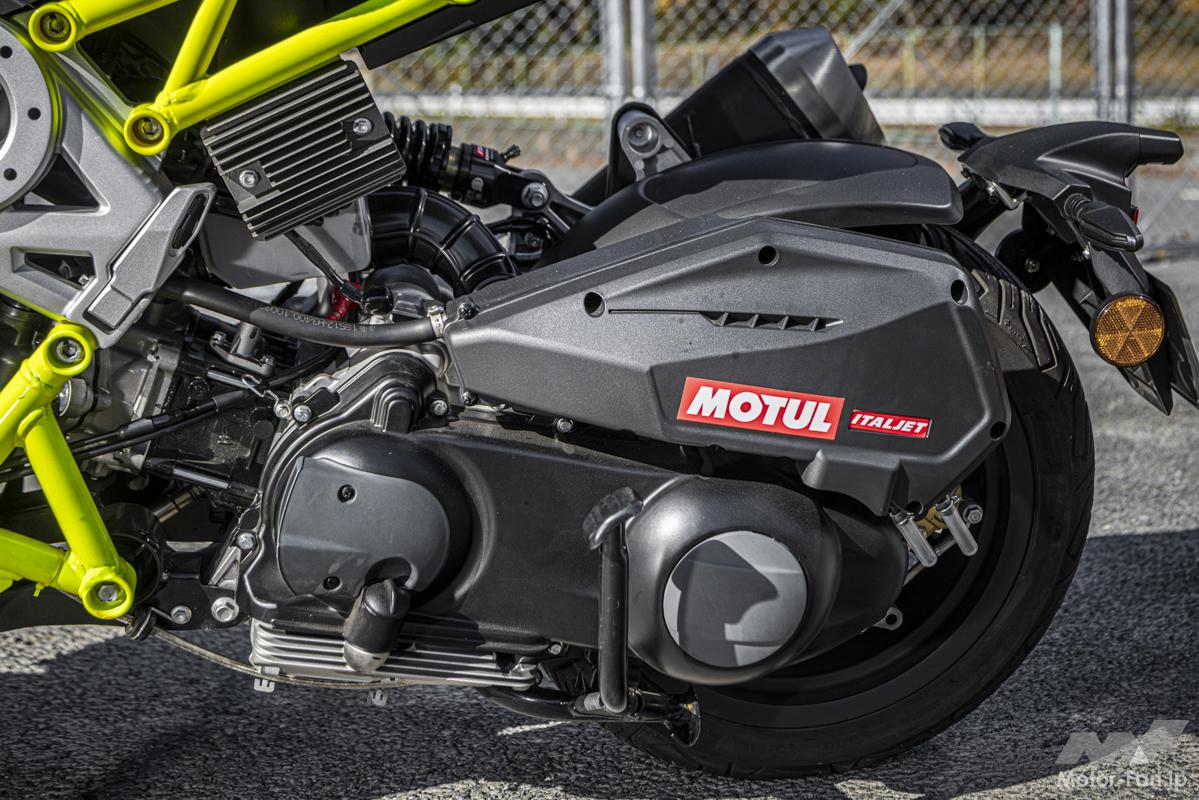
The drive system is a continuously variable transmission (CVT).
ADVERTISEMENT
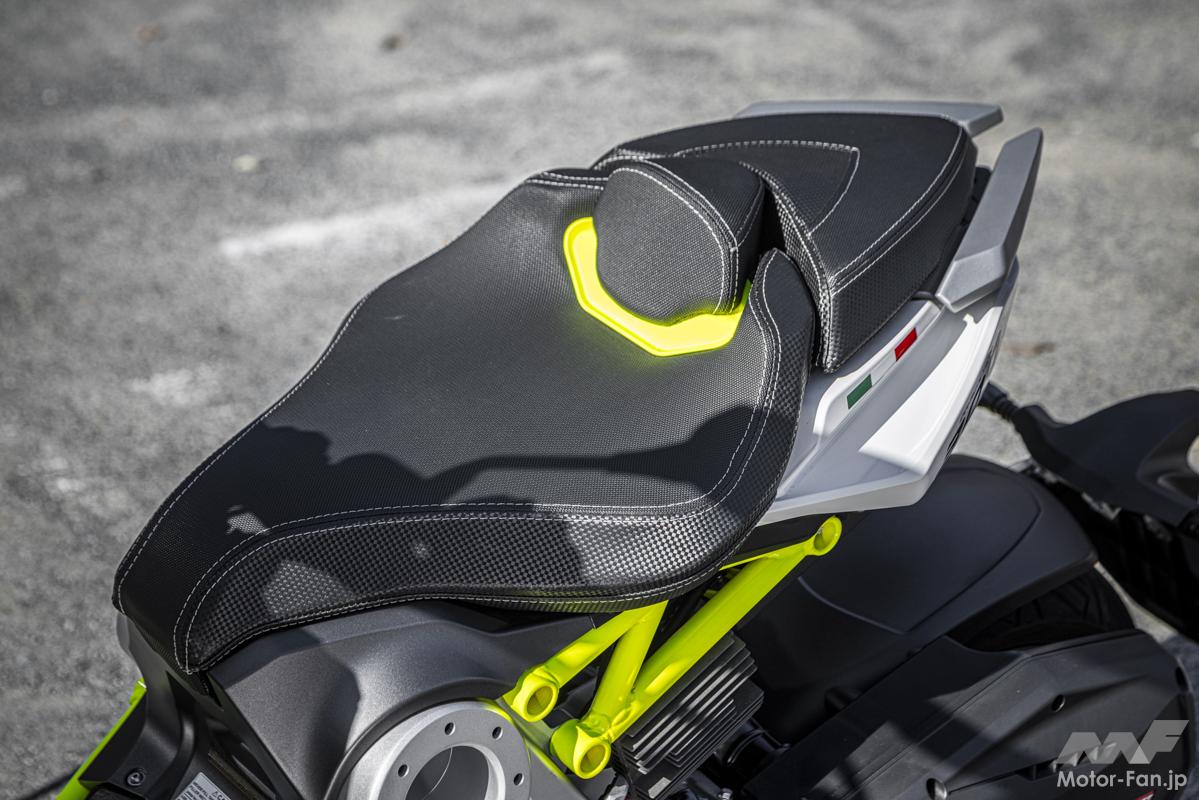
The seat is reminiscent of a sports bike in both design and comfort.
ADVERTISEMENT
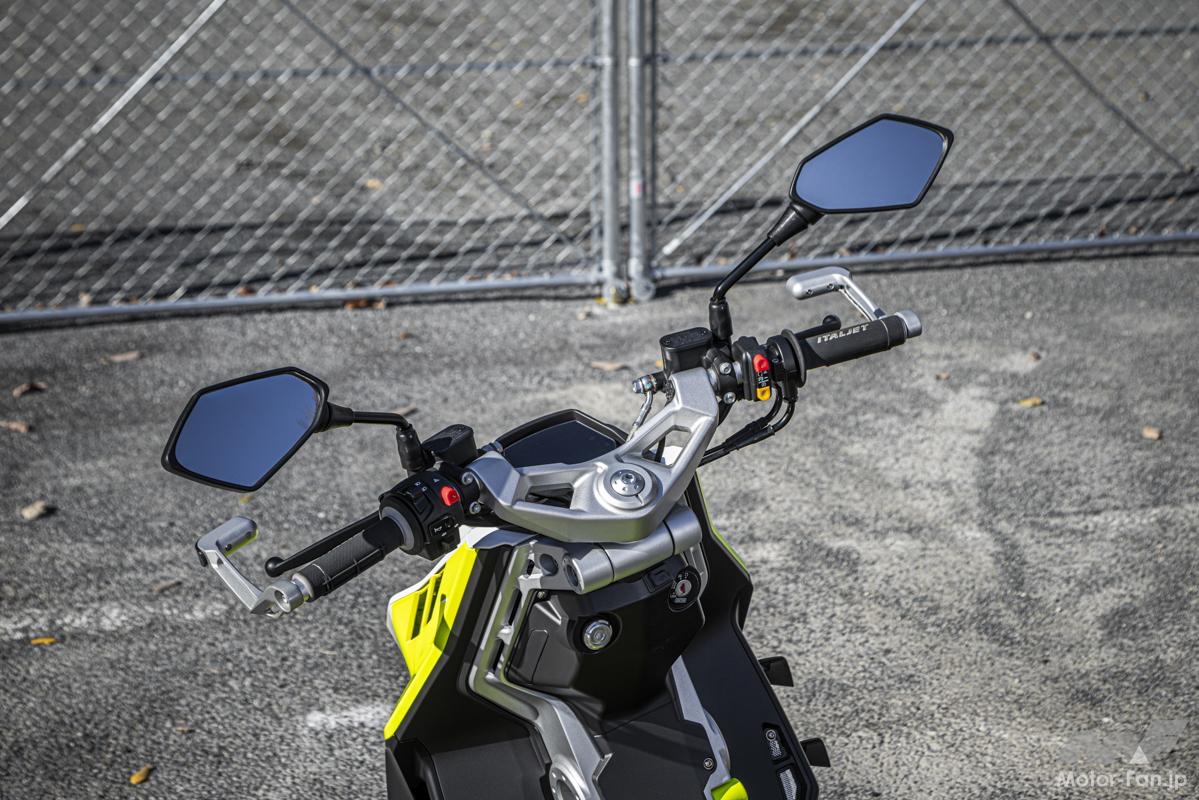
The handlebars are attached to the aluminum top bridge. They are flat and wide, making them easy to operate.
ADVERTISEMENT
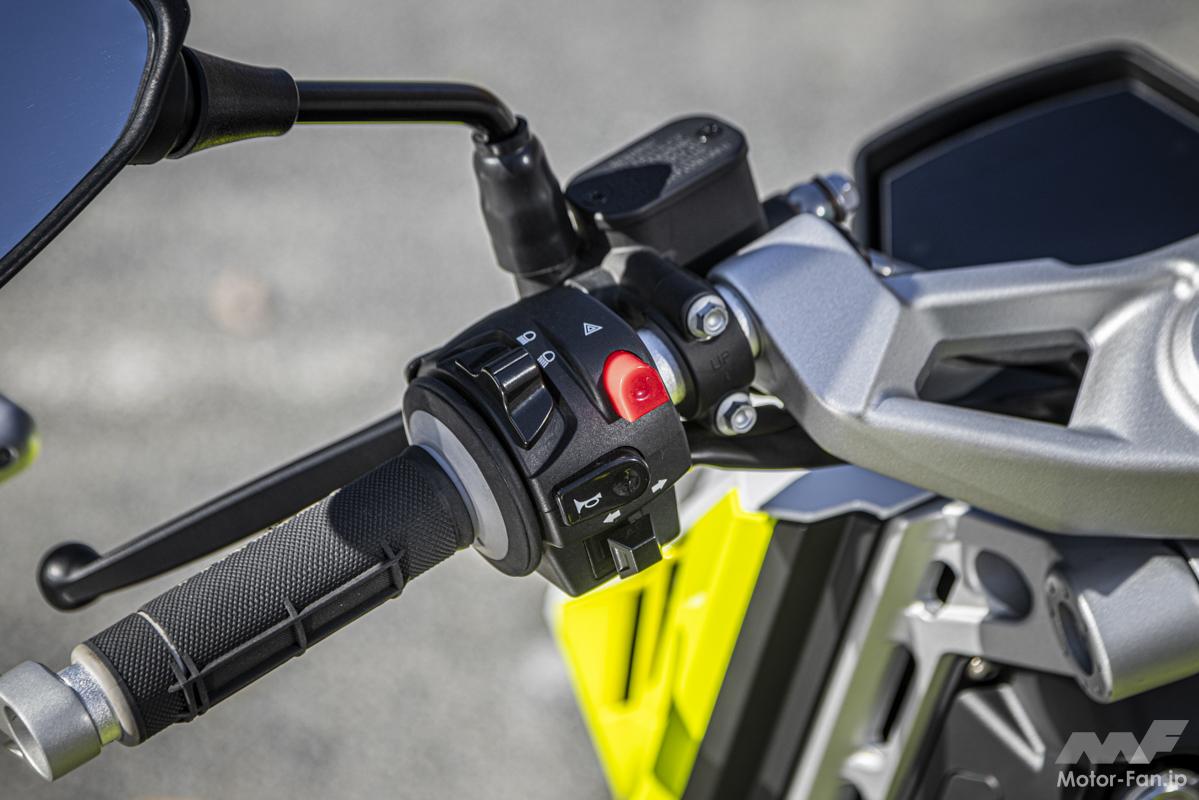
The left switch box has buttons for the turn signals, light up/down, and horn.
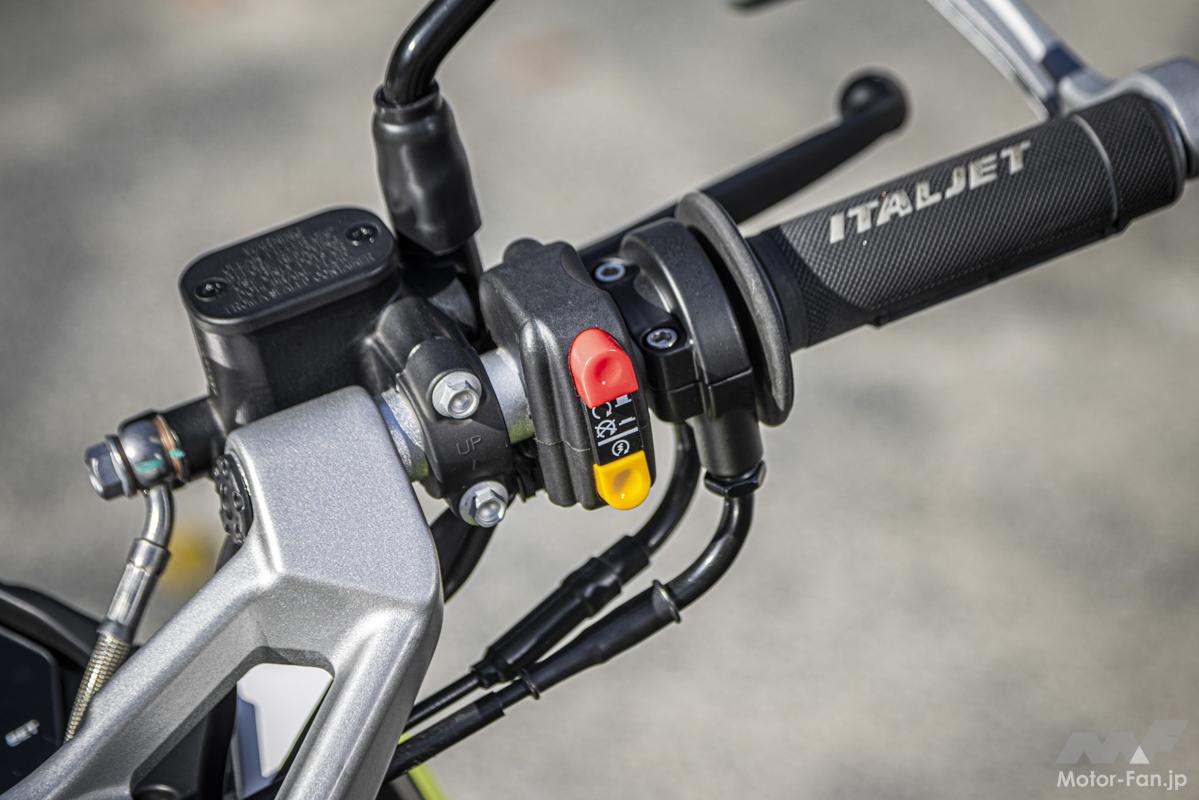
The starter and kill switch are located in the right switch box.
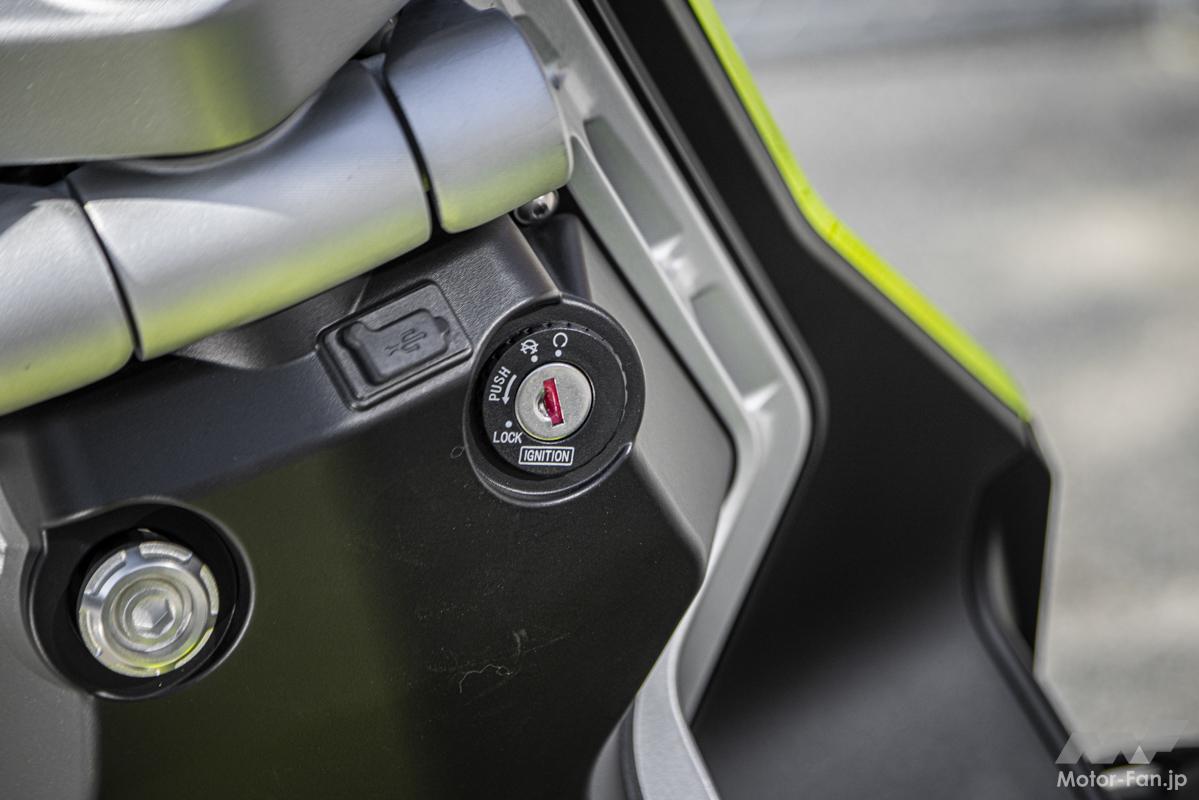
The steering wheel can be locked using the main key located on the right side of the glove box.
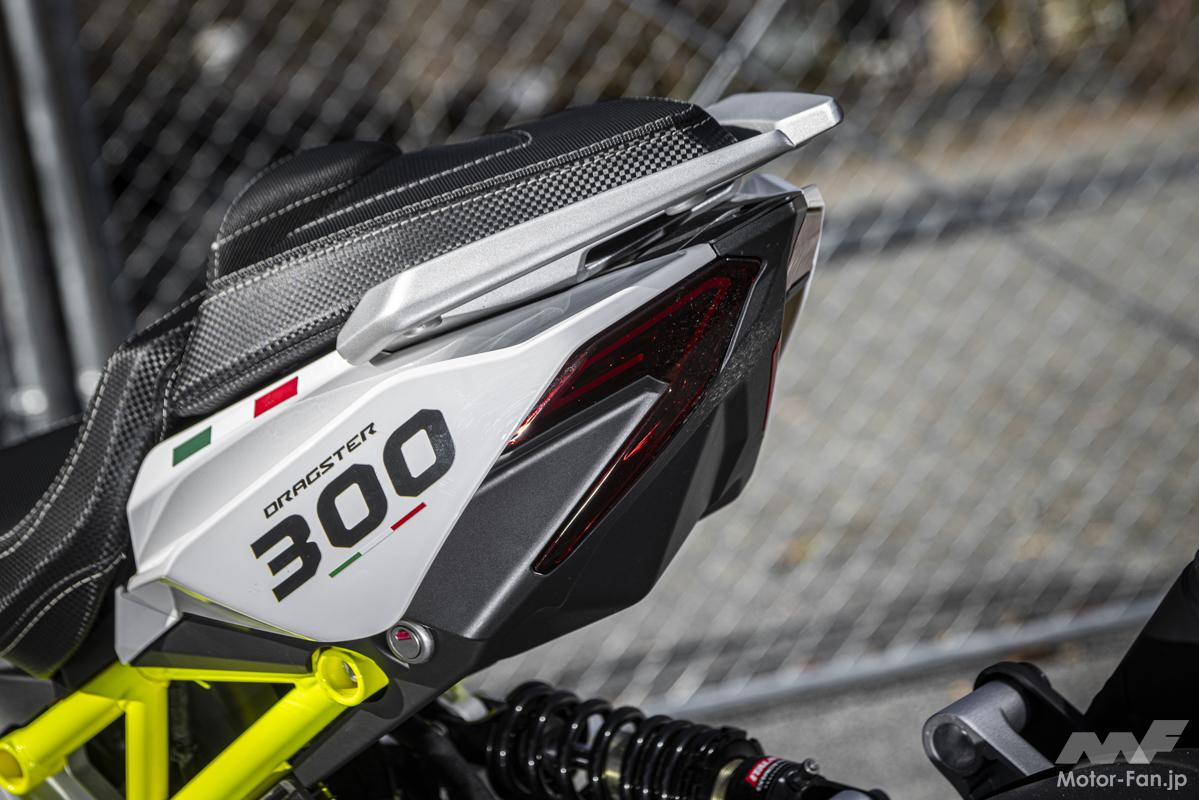
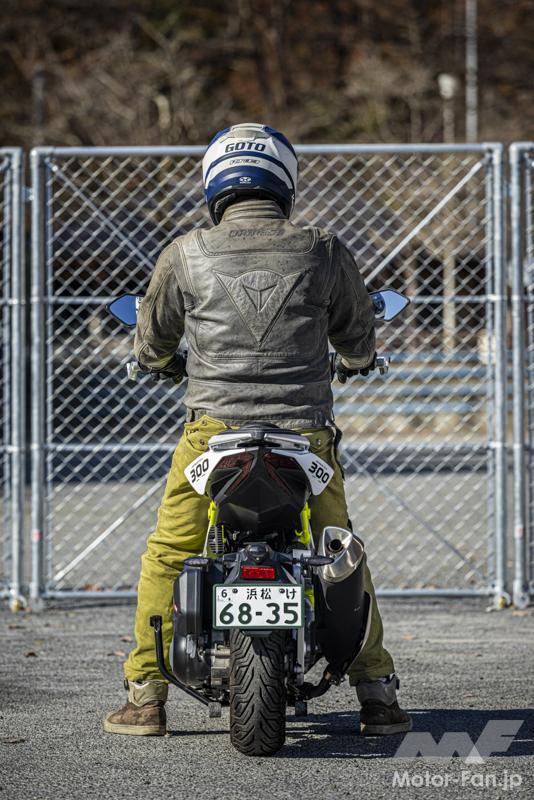
The aggressively designed tail cowl has built-in taillights and turn signals.