
![Ninja 7 Hybrid achieves 37.1km/L in EV mode + Eco HV mode. 1000km test drive [3/3]](https://motopeek.com/wp-content/uploads/2025/10/1607-1760788566523.jpg)

Ninja 7 Hybrid… 1,848,000 yen

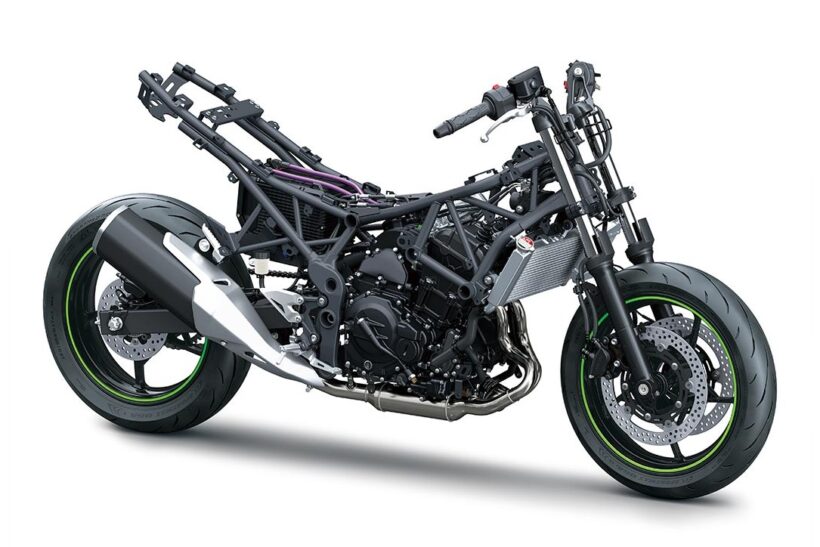
The test vehicle this time was the Ninja 7 Hybrid with a half-cowl and separate handlebars, but Kawasaki also sells the Z7 Hybrid, a naked bike with bar handlebars, which is a sister model that shares the same basic design.
Riding position (height 182cm, weight 74kg) ★★★★☆

The riding position has an atmosphere similar to that of the existing Ninja 400 and Ninja 650. Although it looks aggressive, the upper body is gently leaned forward and the lower body doesn’t feel too tight, so it can be said to be like a sports tourer.
However, the front and rear suspension settings are on the stiff side, so I felt a lingering pain in my arms, legs and hips towards the end of the long run.

Although a lithium-ion battery is installed under the main seat, the seat height is kept to 795mm, not much different from the Ninja 400’s 785mm and the Ninja 650’s 790mm.
Furthermore, if a higher seat is acceptable, it would be possible (should) to install a lithium-ion battery with a larger capacity than the current one, but if this were actually done, it would likely result in a deterioration in handling due to the increased weight.

Tandem riding ★★★☆☆

Thanks to the clever electronically controlled automatic clutch and paddle shift, there is almost no shift shock in manual mode (in automatic mode you had to be careful when starting and stopping), so from the driver’s perspective, pillion riding is quite comfortable.
That said, Cameran Togashi, who is 172cm tall and weighs 52kg, had a mixed impression of the back seat. “The seating position is quite high, so you have to be careful when getting in and out, but I liked the high and wide field of view while riding. On the other hand, I was a bit concerned about the seat not being very secure and the ride being a bit uncomfortable.”
Handling ★★★☆☆

Considering the standards of recent mid-class bikes, the bike is heavy, has a long wheelbase, and has a small steering angle (228 kg, 1525 mm, 30°; the Ninja 400 is 167 kg, 1370 mm, 35°, and the Ninja 650 is 194 kg, 1410 mm, 32°), so it is not easy to handle.
If you can make full use of the walk mode, which allows you to move forward and backward at the slowest speed (it is meant to be used while straddling the seat; the instruction manual states that it cannot be used while dismounted), you will have no trouble getting in and out of parking lots.
Steering wheel/meter area ★★★★☆

Although most of the parts are custom designed, the cockpit atmosphere is very similar to that of the Ninja 650. The separate handlebars have a fairly high grip position.
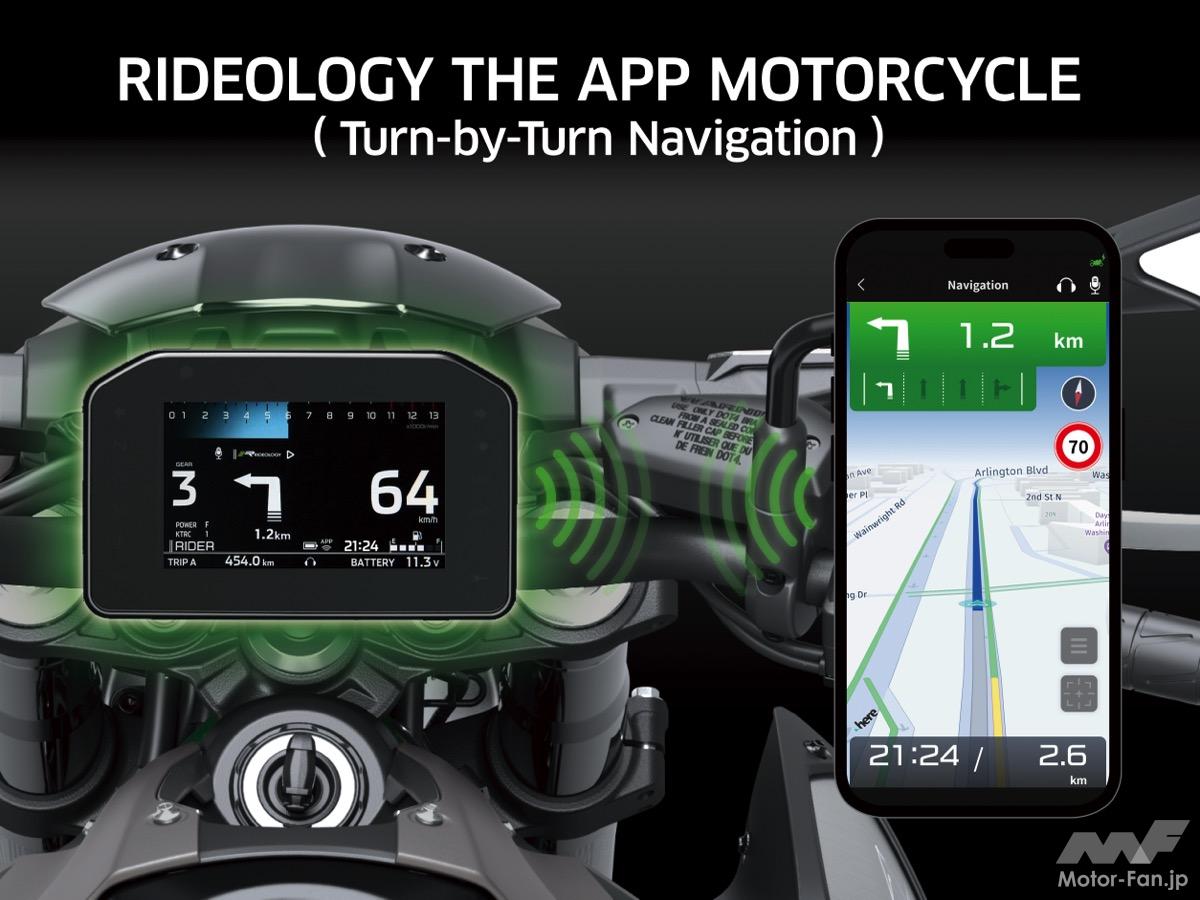
Two bar graphs on the left edge of the 4.3-inch TFT display are the temperature gauge and charge level of the lithium-ion drive battery. When the ALPF (Automatic Launch Position Finder) is displayed below the gear position indicator (N in the photo), the car will automatically downshift to first gear before stopping, even if manual shifting is selected.

Left and right switch/lever ★★★★☆


All functions except for the starter/kill switch and e-boost button are concentrated in the left switch box. At first, it felt cluttered, but once I got used to it, I was able to switch modes and screen displays smoothly. To reset the trip meter, however, I had to reach for the button at the bottom of the meter.


The + and – paddles located at the front and rear of the bottom of the left switch box are used for shifting gears. Personally, I found the operability to be good, but some people have complained that the -: down projection is small. Since it doesn’t have a clutch lever, it can be ridden with a large motorcycle license limited to automatic transmissions.
Fuel tank/seat/step area ★★★★☆

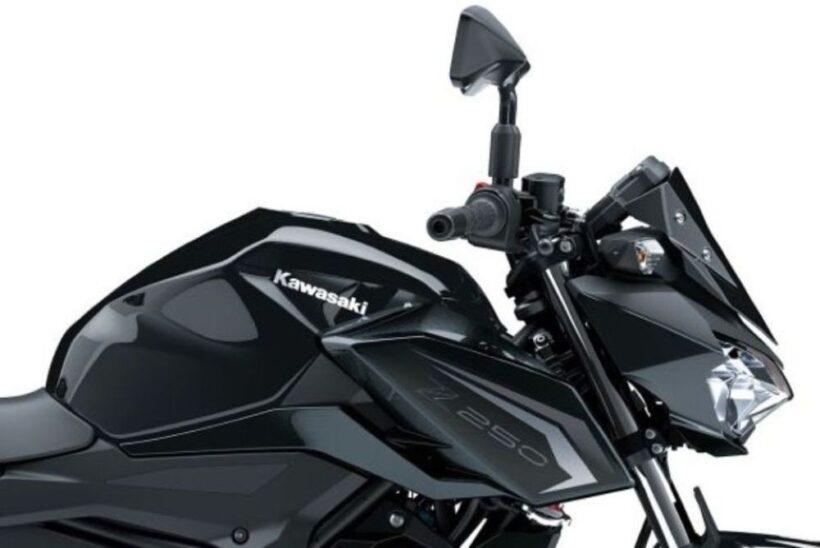
The gas tank and the plastic covers on its lower left and right sides have a design very similar to that of the Ninja 400, providing an excellent hold during sporty riding.
To avoid making the presence of the lithium-ion battery a negative factor, the shape of the side covers under the seat has been designed to minimize bulges in the left and right directions, showing consideration for ease of foot placement. A helmet holder is installed at the base of the pillion step bracket.

The step bars, heel plates, and brake pedal, which are not equipped with rubber, appear to be the same as those on the Ninja 400, but the bracket that fits between it and the frame is a special design, and there is no shift pedal. The protrusion on the clutch cover houses the electronic control valves and housings.


Loading capacity ★★☆☆☆

Unfortunately, there is no equipment designed to accommodate luggage. The photo above shows the bike with my personal Tanax Mini Field Bag Heritage Edition attached, but perhaps because the pillion seat is small, the feeling of stability was a bit lacking.
The battery, which fits under the seat, comes in two types: a lithium-ion battery that powers the motor, and a standard MF type that provides other power. In recent years, Kawasaki vehicles with a displacement of 401cc or more are equipped with ETC2.0 onboard units as standard.

Brakes ★★★☆☆

The brake discs are 300mm in the front and 220mm in the rear, and both the front and rear brake calipers are single-piston. The braking power and controllability were just enough, and the two-channel ABS, which only activates during very sudden braking, felt natural.
The factory-specified tires are Dunlop Q5A. I have a feeling that the inward-facing front end mentioned in the second article is influenced by the characteristics of these tires.

Suspension ★★★☆☆

The front fork is a φ41mm upright type, the rear suspension is a link-type monoshock, and the only adjustment mechanism is the rear preload.
During this test ride, I tried weakening the preload in an attempt to improve the ride comfort, but perhaps because the spring rate was too stiff, I didn’t notice a significant change. The square swingarm is made of steel.

In-vehicle tools ★★★☆☆

The on-board tools provided under the pillion seat are a 12x14mm open-end wrench, a hook wrench and extension bar for adjusting the rear shock preload, an interchangeable screwdriver, and a 4mm hex wrench. The contents are the same as those on the Ninja 400, but a bit more luxurious than those on the Ninja 650.
Actual fuel consumption ★★★★☆

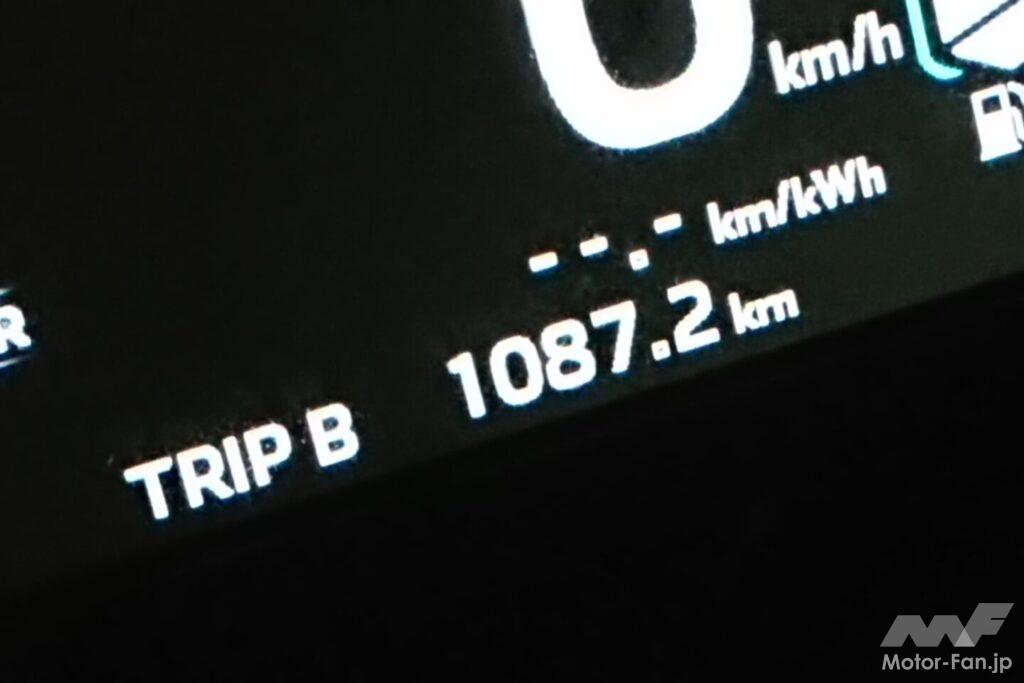
The reason why ① has such blatantly poor fuel economy is because the three modes were frequently changed and the e-Boost in Sport HV mode was used extensively, while the reason why ⑥ has such excellent fuel economy is because it was driven in an eco-friendly manner in urban areas and the EV mode was used extensively (when the lithium-ion battery was low on power, it was driven in automatic mode in Eco HV mode to recover power). The average fuel economy of ②, ③, ④ and ⑤, which were driven in a normal manner, was 706 ÷ 26.48 = 26.7 km/L, and the cruising range that can be calculated from this figure is 26.7 x 14 = 373.8 km. The recommended fuel was high-octane.
ADVERTISEMENT

As it is the world’s first strong hybrid bike, it shouldn’t be compared with other models, but considering that the Ninja 400 costs 792,000 yen and the Ninja 650 starts at 1,067,000 yen, the Ninja 7 Hybrid, at 1,848,000 yen, is quite an expensive vehicle.
Main specifications
Model: Ninja 7 Hybrid
Model: 8AL-CX500A
Length x Width x Height: 2145mm x 750mm x 1135mm
Wheelbase: 1535mm
Ground Clearance: 130mm
Seat Height: 795mm
Caster/Trail: 25°/104mm
Engine Type: Water-cooled 4-stroke parallel twin
Valve Type: DOHC 4-valve
Total Displacement: 451cc
Bore x Stroke: 70mm x 58.6mm
Compression Ratio: 11.7
Maximum Engine Output: 43kW (58ps) / 10500rpm
Maximum Engine Torque: 43N・m (4.4kgf・m) / 7500rpm
Maximum Motor Output: 9k W (12ps) / 2600-4000rpm
Motor maximum torque: 36N・m (3.7kgf・m) / 0-2400rpm
System maximum output: 51kW (69ps) / 10500rpm
System maximum torque: 60N・m (6.1kgf・m) / 2800rpm
Starting method: Self-starter
Ignition method: Full transistor
Lubrication method: Wet sump
Fuel supply method: Fuel injection
Transmission type: Constant mesh 6-speed return
(automatic with electronically controlled manual mode)
Clutch type: Electronically controlled
Gear ratio
1st gear: 2.235
2nd gear: 1.8000,
3rd gear: 1.500,
4th gear: 1.240
, 5th gear: 1.074
, 6th gear: 0.964,
1st and 2nd reduction ratios: 2.218, 3.071,
Frame type: Diamond (Trellis),
Front suspension: Telescopic upright type φ41mm
, Rear suspension: Swing arm monoshock,
Front tire size: 120/70ZR17,
Rear tire size: 160/60ZR17,
Front brake: Hydraulic double disc,
Rear brake: Hydraulic single disc,
Vehicle weight: 228kg
, Fuel: Unleaded premium gasoline,
Fuel tank capacity: 14L,
Seats: 2,
Fuel consumption rate (MLIT notification value): 31.0km/L (2 passengers, SPORT-HV),
Fuel consumption rate (WMTC mode value, class 3-2): 23.6km/L (1 passenger, SPORT-HV)










![Ninja 7 Hybrid achieves 37.1km/L in EV mode + Eco HV mode. 1000km serious test drive [3/3]](https://motopeek.com/wp-content/uploads/2025/10/1554-1761125544457.jpg)