
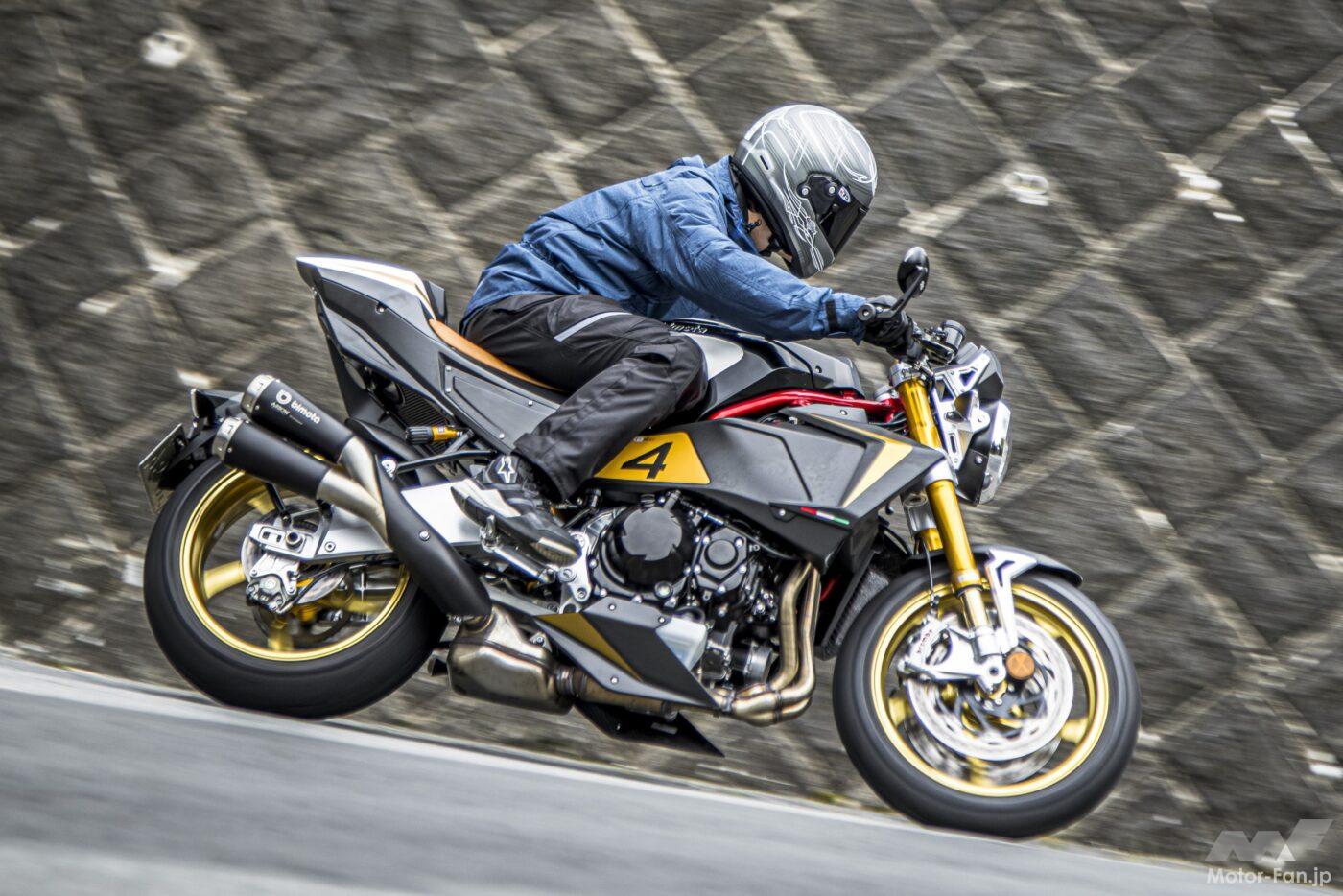
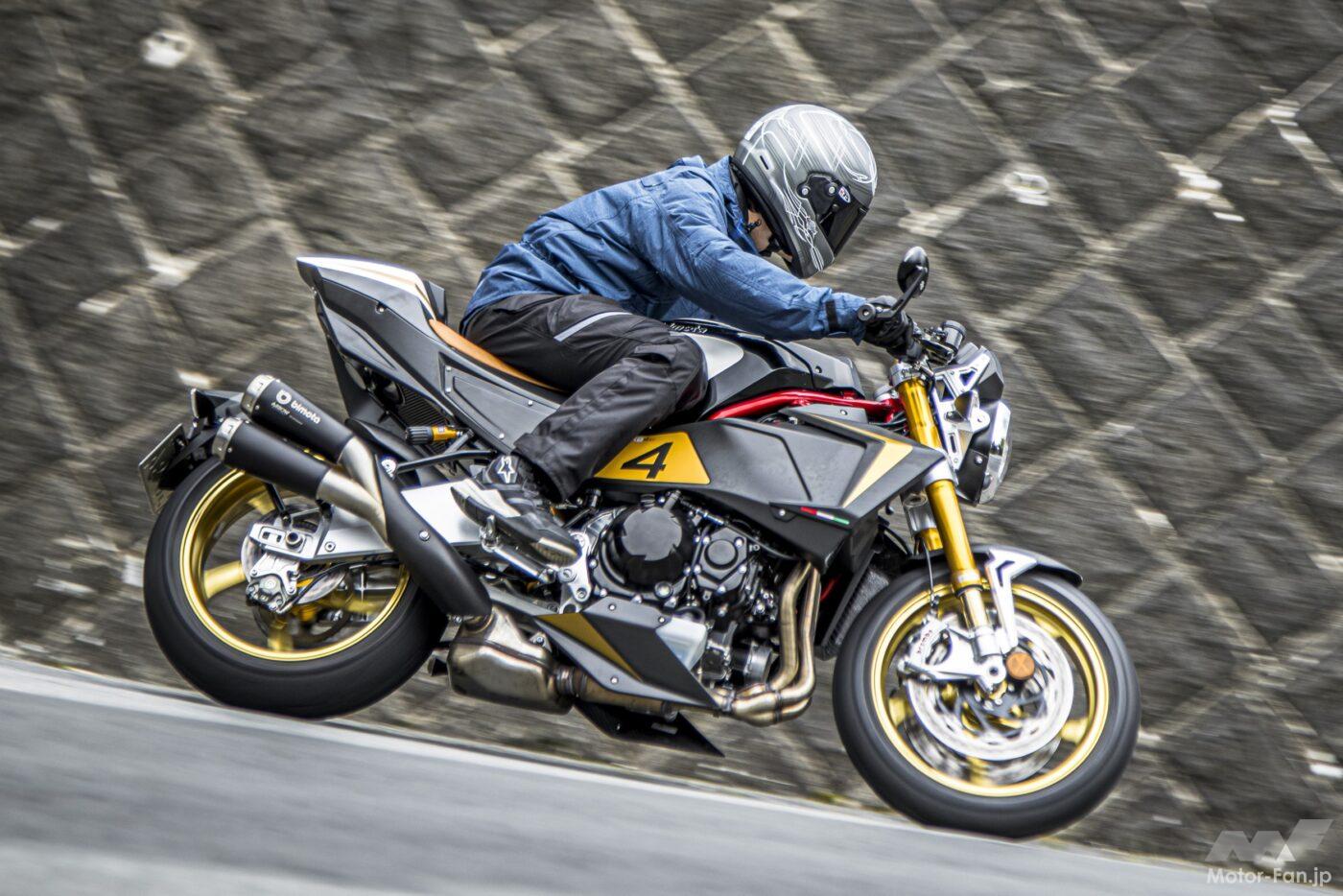
Bimota KB4RC… 4.73 million yen (released April 19, 2025)
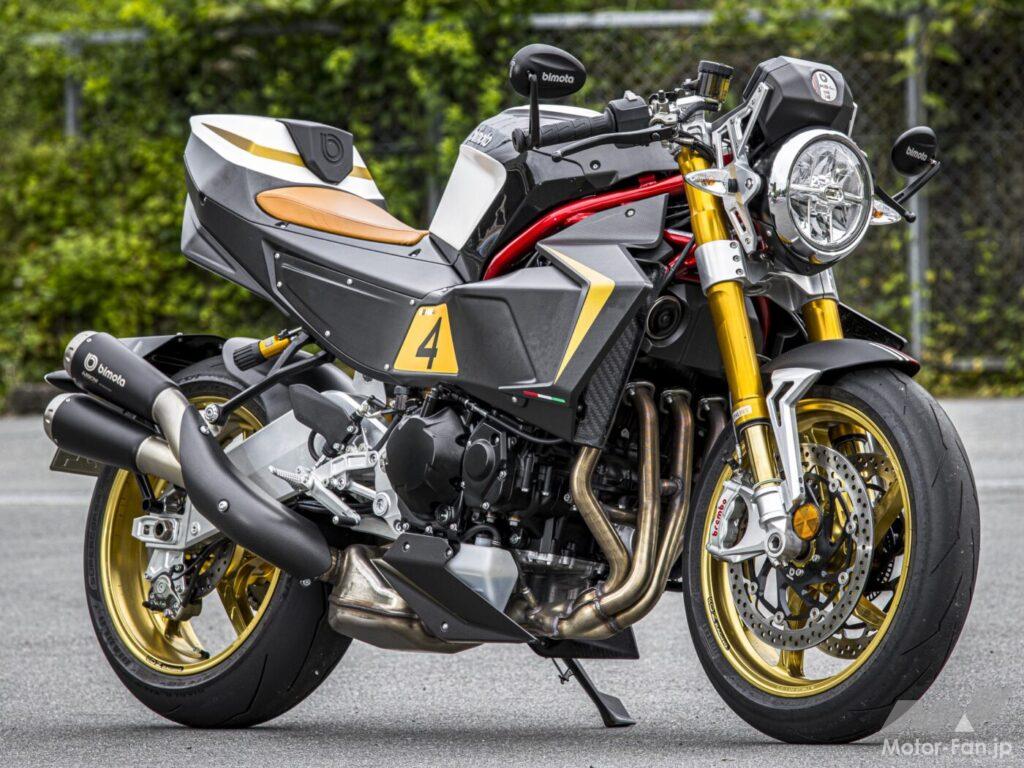
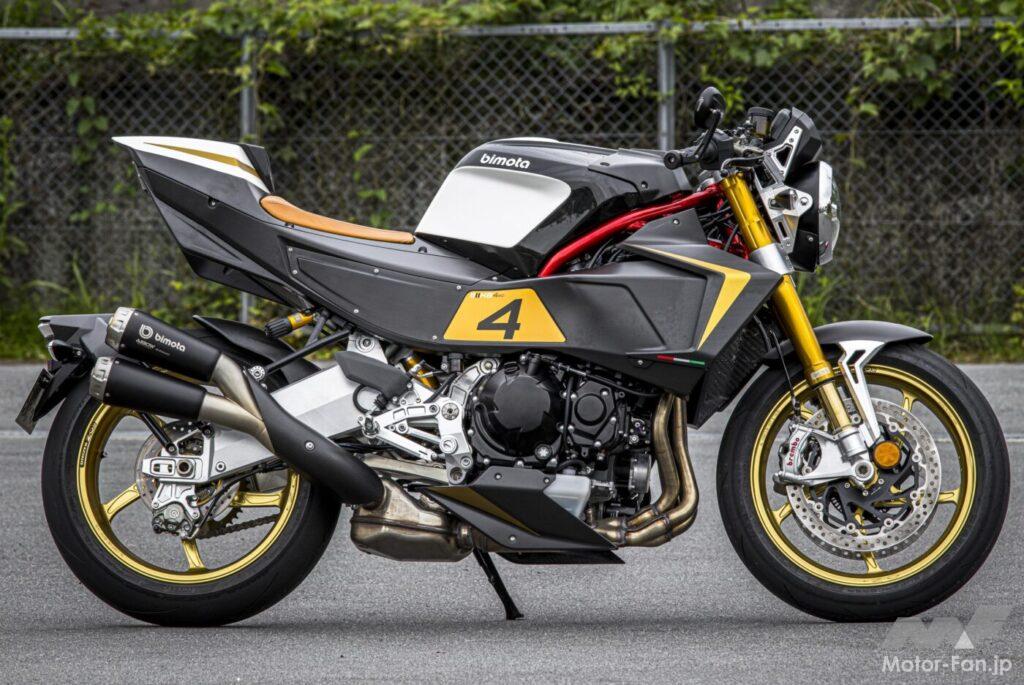
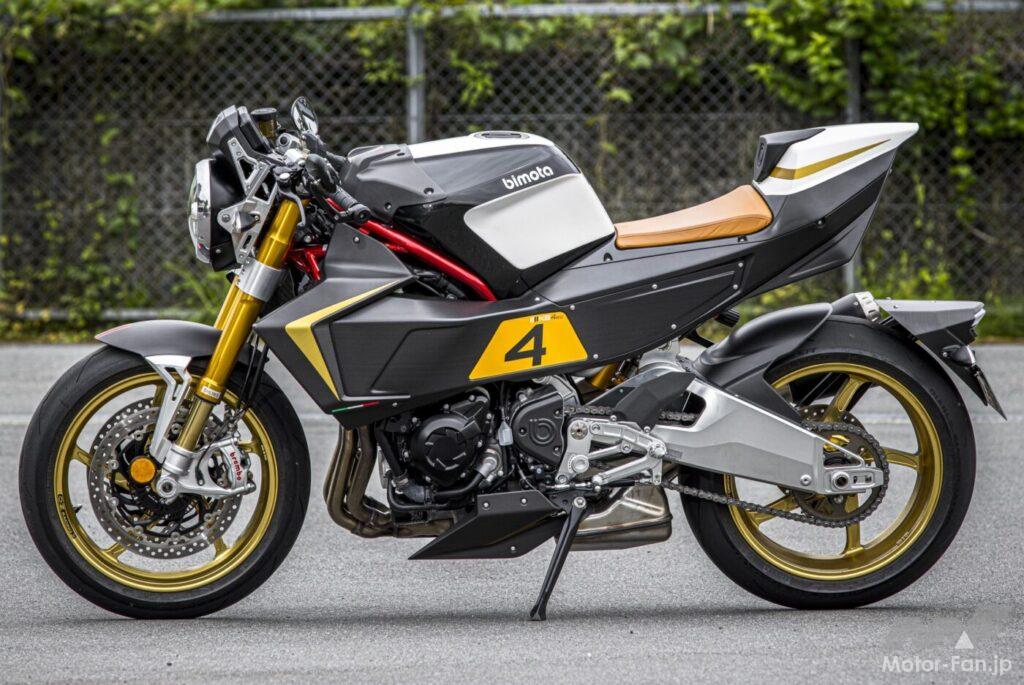
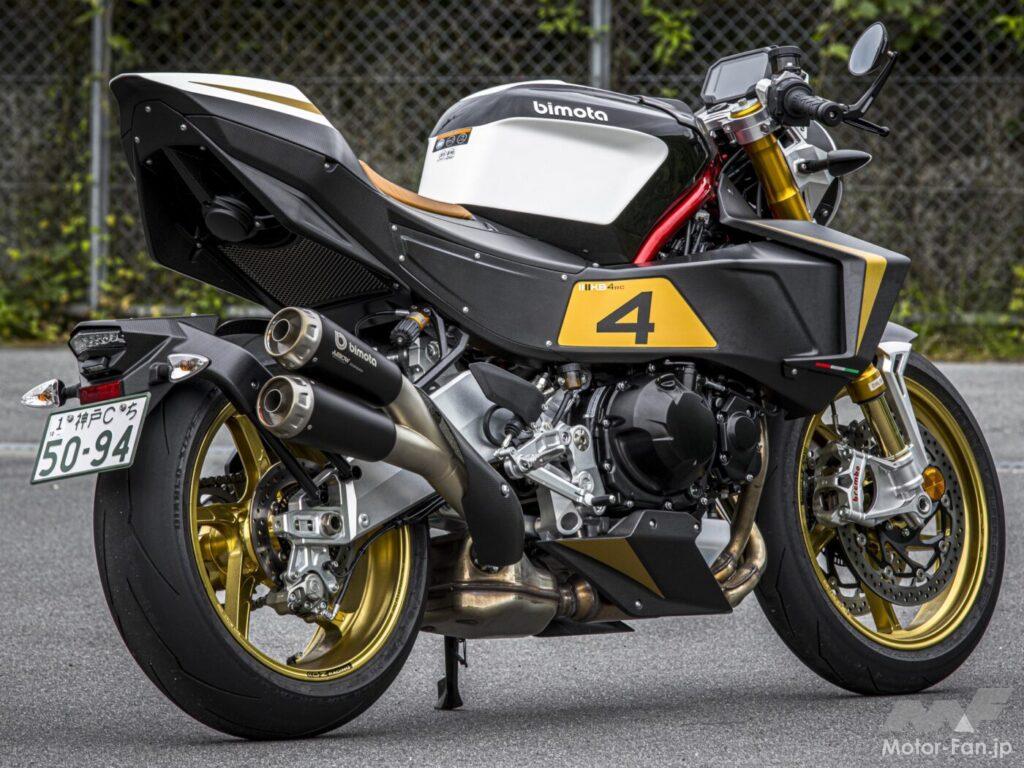
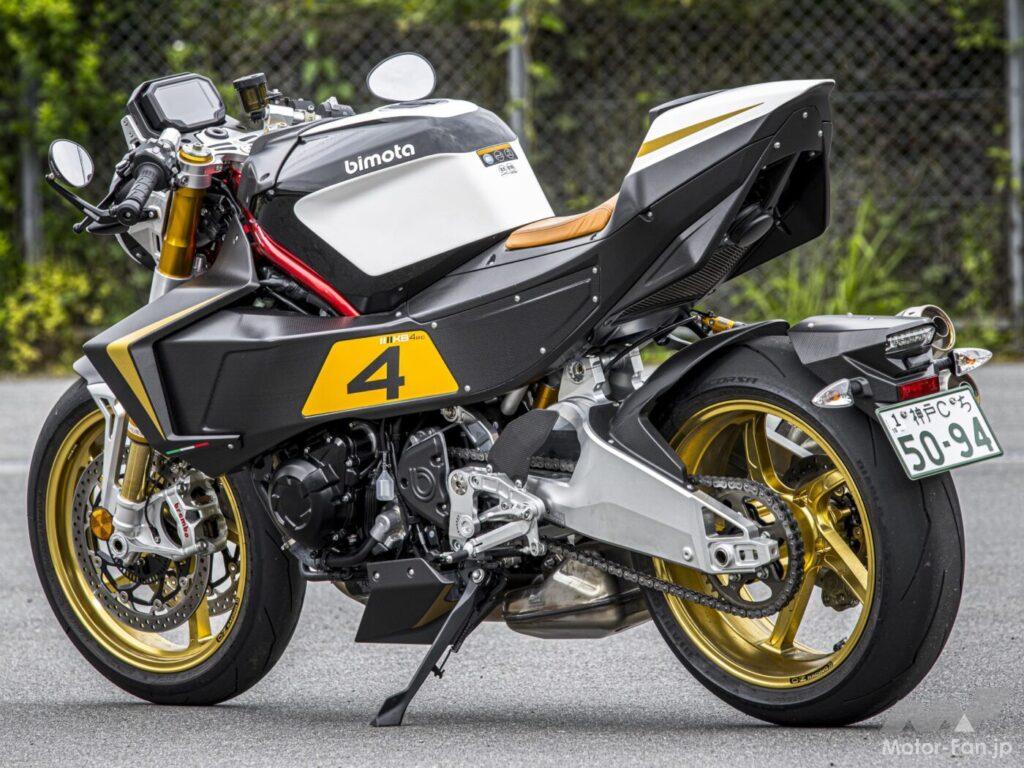
The KB4RC was first unveiled at EICMA in 2021 alongside the cafe racer “KB4,” with the production version unveiled the following year. As the name suggests, it is the naked version of the KB4, and while the KB4 uses the original silencer from the Ninja 1000SX, the KB4RC has been changed to a right-side dual exhaust made by Arrow. The body color is Rosso Rimini x Nero Pepe, as shown in the photo.
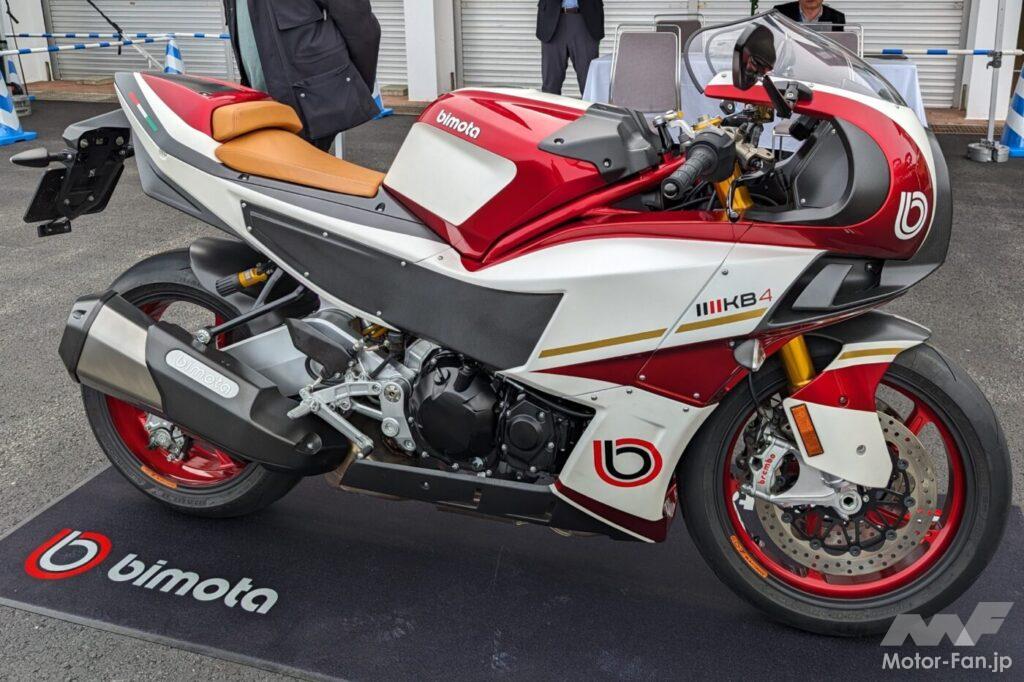
The KB4 was released in Japan in March 2022 for 4,378,000 yen. K stands for Kawasaki, B for Bimota, and 4 for fourth. The previous model, the KB3, was released about 40 years ago in 1983. It was equipped with an air-cooled inline-four engine from the Z1000J.
ADVERTISEMENT
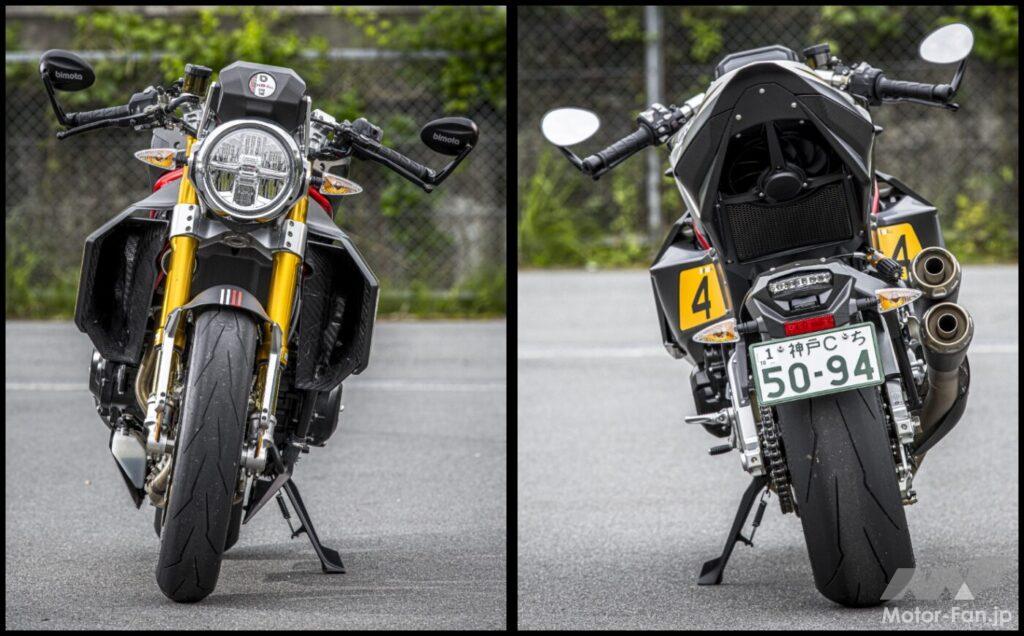
When viewed from the front, it can be seen that the openings of the air ducts protrude considerably to the left and right, while the rear is slim and tapered.
The Ninja 1000SX’s water-cooled inline-four is gentle yet extremely powerful.
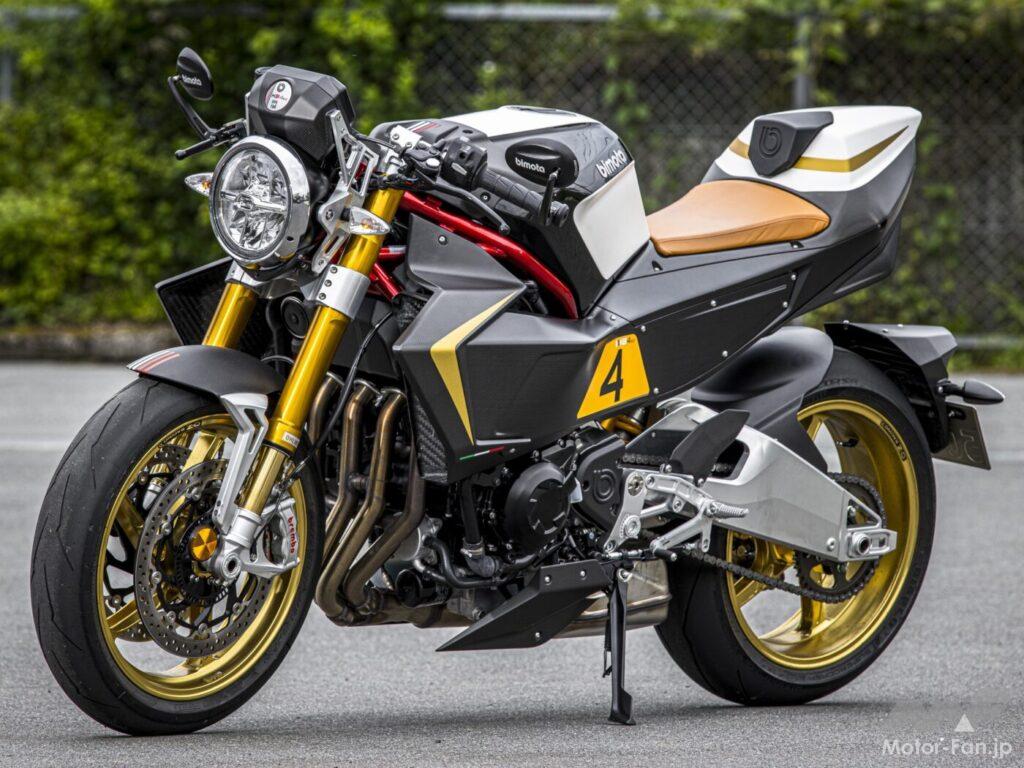
The official weight of the bike is 191 kg, which is 3 kg lighter than the KB4. As of mid-June when this was written, there are 55 Bimota authorized dealers nationwide.
Located in Rimini, Emilia-Romagna, Italy, Bimota is a luxury, handmade motorcycle brand founded in 1972. Perhaps its greatest commercial success in Japan was the DB1, released in 1985. Created by former Ducati engineer Federico Martini, it featured a beautiful steel tubing truss frame and an air-cooled L-twin engine from the Ducati 750F1. Its lightweight, compact body, comparable to a 250cc, and futuristic, fully covered styling are said to have had a major impact on engineers at the four Japanese manufacturers. The Japanese market must have been a major presence for Bimota, as they later added the 400cc DB1J, which could be ridden with a medium-sized motorcycle license.
The most recent Bimota I test rode was a DB7S custom-made by Moto Corse, the bike’s former importer. That was back in 2008, 17 years ago. The DB7’s engine is a water-cooled L-twin from a Ducati 1098, and the DB7S’s specifications change from Marzocchi to Ohlins for the front forks. I test rode it in Izu with a suspension specialist, and while the initial settings were noticeably low, the secondary turning force improved dramatically as the bike was adjusted. It was at that moment that I realized that Bimota’s reputation will be divided on whether or not it can achieve the desired suspension settings.
Well, the model I test drove this time was the “KB4RC.” It is the naked version of the KB4, which was released in 2022. Looking back at Bimota’s history, there were rules for model names, such as the naked version of the DB5 being called the DB6, and the naked version of the DB8 being called the DB9, so it is interesting that they chose to name it “KB4RC” instead of “KB5.”
The engine is a 1043cc water-cooled, four-stroke, in-line four-cylinder from the Kawasaki Ninja 1000SX, with a claimed maximum output of 142 PS, an increase of 1 PS. The most distinctive feature is the location of the radiator, which is not typically located in front of the engine but is instead located under the seat cowl. Huge air ducts are installed on both sides of the body to direct the airflow to this under-seat radiator, and there is even a large cooling fan on the underside of the radiator.

Perhaps due to inventory issues, the Ninja 1000SX will remain in the lineup for 2025 even after the 1100SX was released in March of this year. The official maximum output is 141 PS/10,000 rpm, the vehicle weight is 236 kg, and the wheelbase is 1,440 mm. The vehicle price is 1,595,000 yen.
ADVERTISEMENT

The engine is a 1043cc water-cooled, 4-stroke, in-line 4-cylinder, and the primary/secondary reduction ratios and the 6-speed transmission are the same as those of the Ninja 1000SX. It also comes equipped with a cornering management function that uses information from the IMU (Inertial Measurement Unit) to optimize power and braking, as well as traction control, riding mode selection, cruise control, and more.
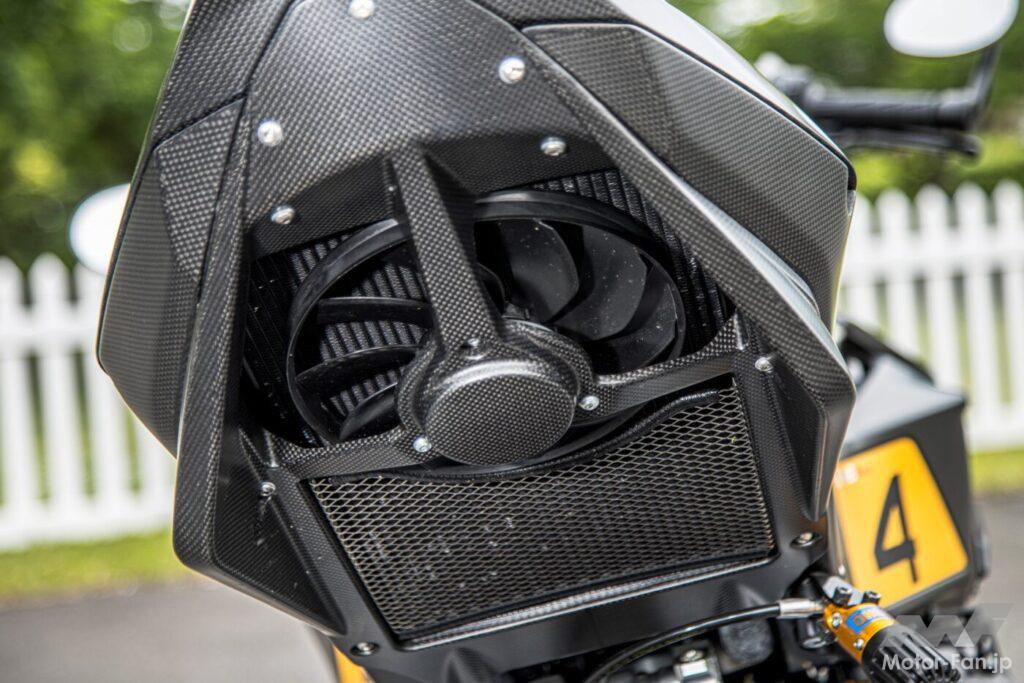
The under-seat radiator was adopted to achieve ideal front-to-rear wheel weight distribution, and the cooling fan will activate when the water temperature exceeds 100°C.
The aim of this special layout is to achieve a short wheelbase while increasing the front wheel load distribution. In fact, the wheelbase is officially 1390mm, 50mm shorter than the Ninja 1000SX, and only 10mm longer than the ZX-25R and 4R. If the only thing to do was to shorten the distance between the front and rear wheels, it would be possible to shorten the swingarm. However, this would increase the rear wheel load, so Bimota made the difficult choice.
When actually driving, the engine gives the impression of being exactly like that of the Ninja 1000SX, but the weight is 45 kg lighter, meaning the power-to-weight ratio is 19% different, so the body’s response is sharper, as if the throttle response had improved across the entire range. And because it’s lighter, it can run briskly even in higher gears and at low revolutions, which even seems to result in better fuel economy.
The acceleration feel when you open the throttle wide is so intense that it is comparable to that of a supersport bike, partly because it is a naked bike and is directly affected by wind pressure. And yet, the handling is good in all modes, and the rider never feels flustered. Through the test ride of the KB4RC, I was once again reminded of the excellence of the Ninja 1000SX engine.
I was surprised at how quickly he took me down, as if I had been swept.
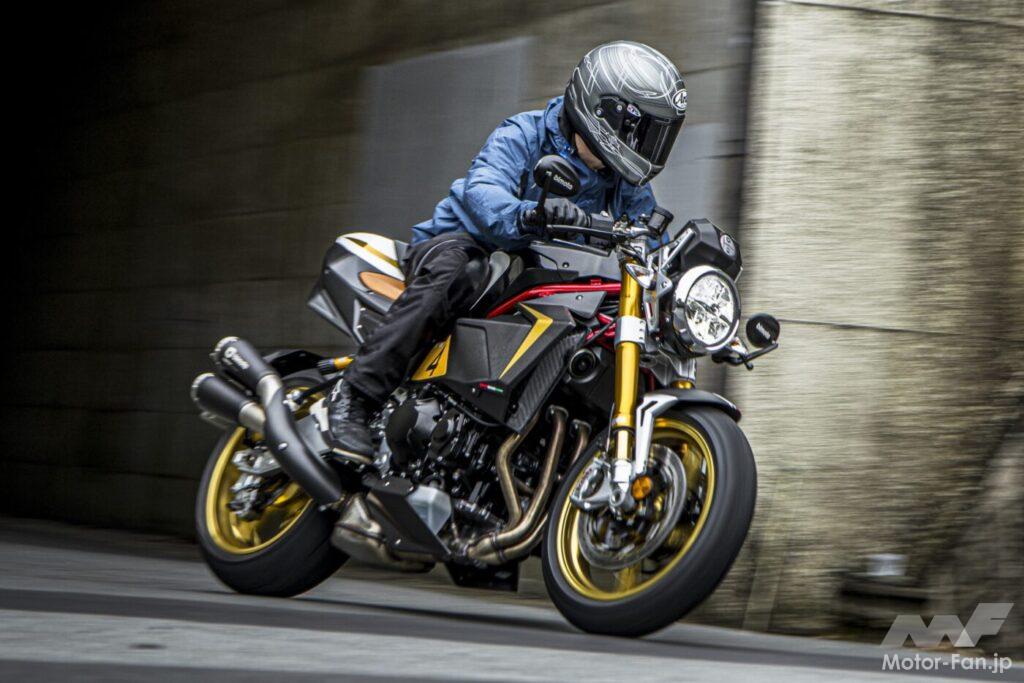
Naturally, the KB4RC’s chassis is original to Bimota, and is both traditional and very special. The engine is centered around a chrome-molybdenum steel pipe frame at the front that supports the steering head. A plate machined from an aluminum block is attached to the rear of the crankcase, which supports the swing arm and rear suspension linkage.
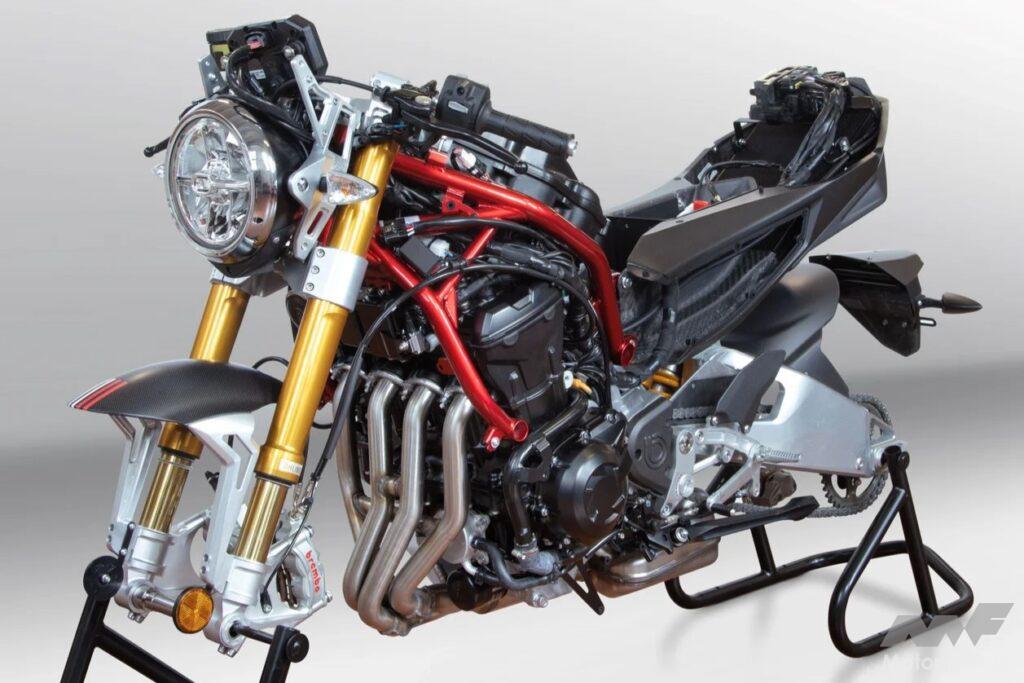
A strip of the KB4RC. You can see that the steering head is supported by minimal pipework at the front. Also note that there is no radiator in front of the engine.
The front suspension is a very common inverted telescopic fork, but the rear suspension is special in that the upper part of the shock unit does not contact the frame. The concept is similar to Honda’s Unit Pro-Link, and a major advantage is that the frame strength in this area is not required, which increases the freedom in rigidity settings. Incidentally, this is not the first time that Bimota has adopted this system, as it was also adopted on the DB7 released in 2007, including the vehicle height adjustment mechanism using an eccentric collar.
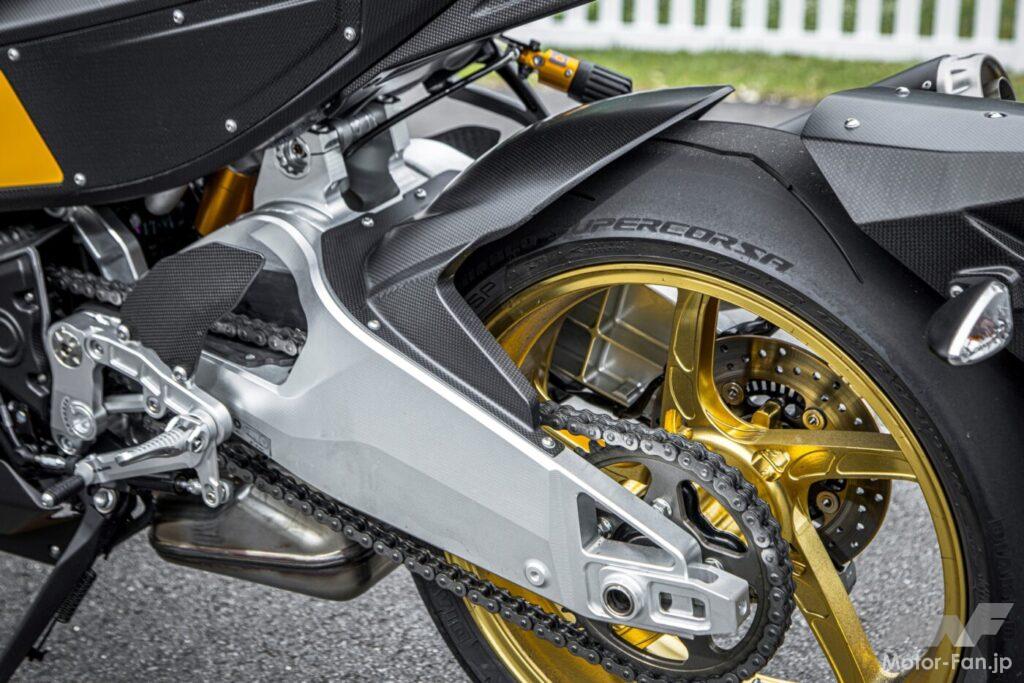
The swingarm is machined from aluminum with delicately recessed interior, while the rear inner fender and heel plate of the step are made from carbon fiber.
ADVERTISEMENT
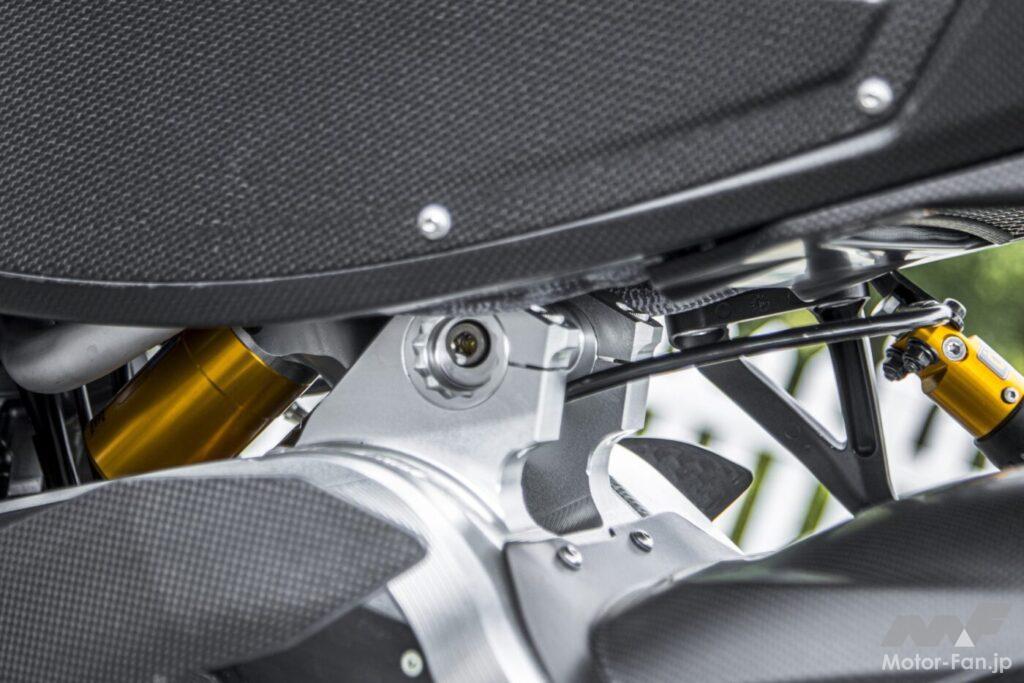
The rear shock unit is an Ohlins TTX. The upper part is supported by an eccentric collar, and by rotating this, the seat height can be adjusted within a range of ±8mm. Judging from the photo, it appears that the seat height was set to its lowest setting during the test ride.
The single seat is clearly positioned low, and when you actually straddle it, it doesn’t feel high like the recent super sports bikes. In addition, the clip-on handlebars aren’t extremely low, so apart from the small steering angle of the handlebars, it can be said that the riding position is friendly.
As soon as I started driving, I noticed something strange about the steering, as if the steering head had been tightened a little too much. The steering angle was delayed in response to the lean of the vehicle, or it didn’t seem to follow at all. This was different from the way the tires turn when they’re underinflated, so I wondered what this was, and gradually increased my speed. Once I exceeded 35km/h, the symptom disappeared. It seems that this only occurred at low speeds, and it’s possible that the original tires were having a big effect.
At speeds above 40km/h, the bike leans over quickly, as if you’ve been hit with a judo leg sweep, and the bike’s incredible maneuverability makes you grin in your helmet. Bimota wanted to express this kind of sharp riding through this piece. The original chassis conveys an exquisite sense of flexibility, and it feels much more secure than the highly rigid aluminum twin-spar frame of a supersport bike. And, if the suspension settings are fine-tuned, the symptoms at low speeds mentioned above will probably be improved, and the cornering ability in high-speed corners should also be improved.
As for the brakes, the test vehicle happened to be making a squeal, so we avoided using them too hard to avoid any further issues. However, the brakes were highly controllable, as you would expect from Brembo.
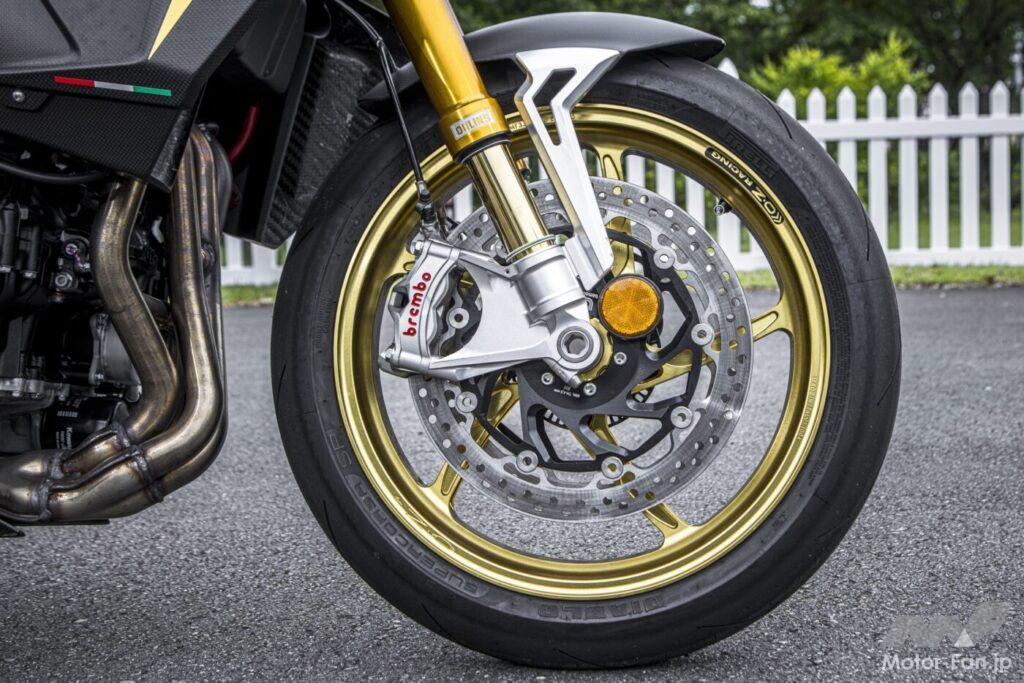
The car is fitted with Pirelli Diablo Supercorsa SP wheels mounted on OZ forged aluminum wheels, and the front calipers are Brembo monoblocks.
The only thing that bothered me throughout the test ride was that the edges of the air ducts interfered with my knees. This may be felt differently depending on your build, but I would recommend that anyone considering buying one actually straddle the bike and check it out for themselves.
I have test-ridden the SB6 and 500V due in the past, and even though the frame material and format have changed, Bimota’s riding style has remained consistent, and I was impressed that this has not changed even after Kawasaki’s investment. The KB4RC will likely become a collector’s item, but for those who are lucky enough to get their hands on one, I hope you will enjoy the unique worldview of Bimota, including the suspension settings.