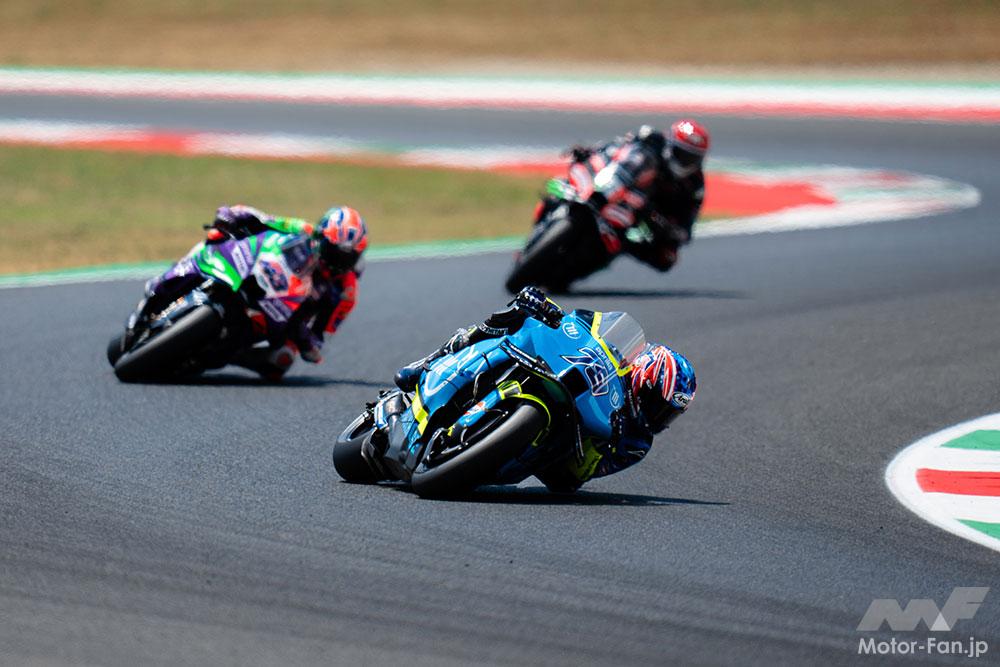

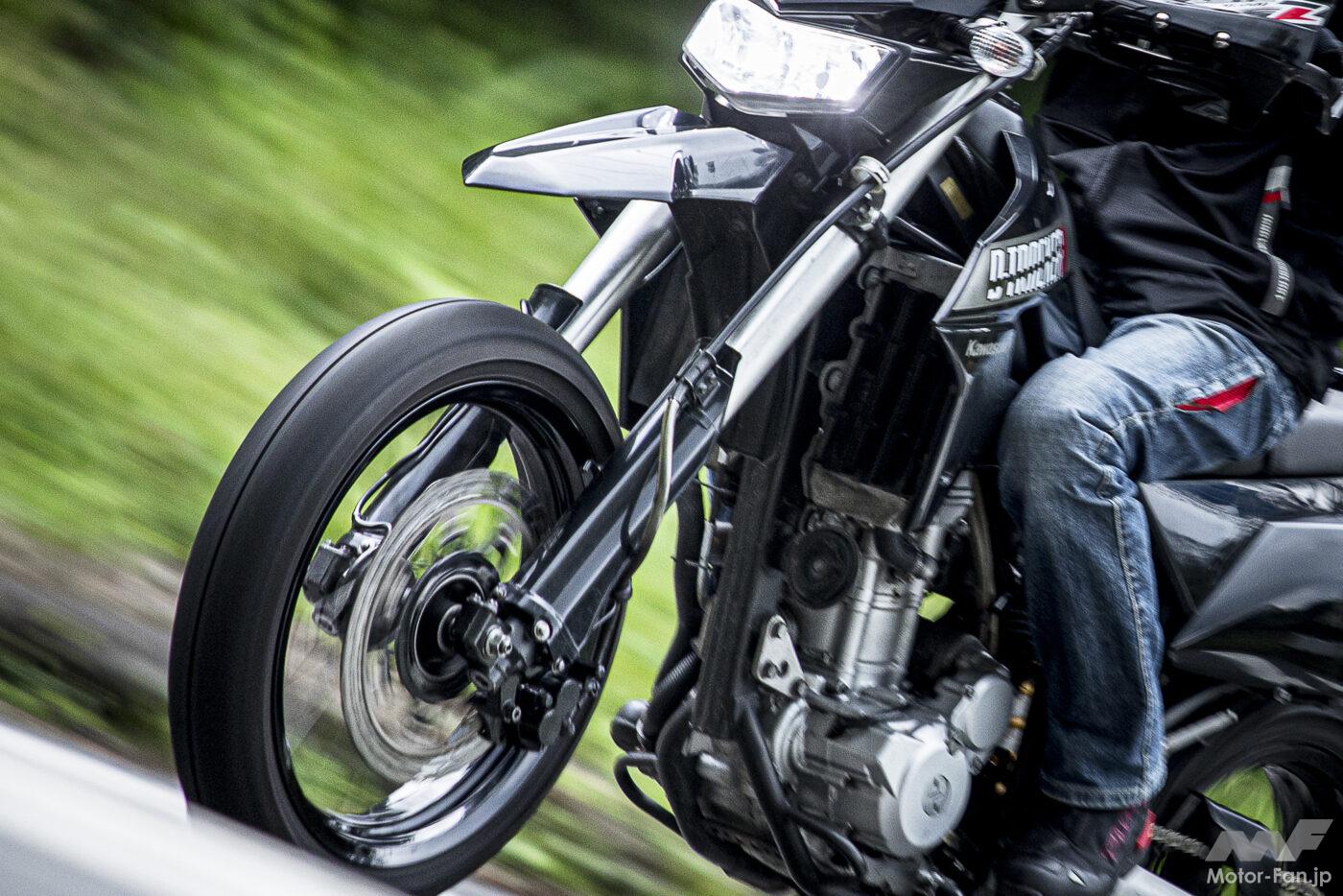
Hydraulic pump system fork
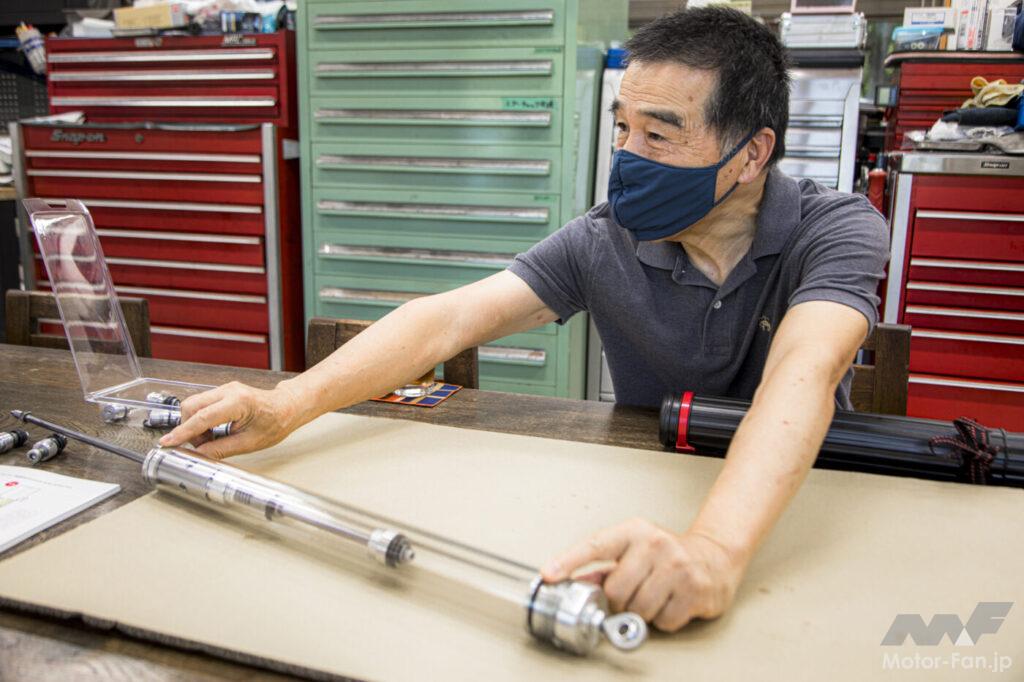
Kunimasa Hisao, president of Original Box Co., Ltd., explains the structure of the skeleton prototype.
A motorcycle’s front fork is a rod-shaped component that clamps to the upper and lower brackets (trident) of the steering wheel and supports the front wheel axle. As you know, it also moves (extends and contracts) and functions as a shock absorber. Its suspension system
features a spring that gently absorbs the impact (energy) generated by uneven road surfaces, and a damper function that attenuates the movement (including recoil) and stabilizes the sway of the vehicle (on the spring). The
term “telescopic” refers to the way the rod-shaped tube expands and contracts, resembling a monocular telescope. According to Kunimasa, a suspension expert with 40 years of experience developing and tuning suspensions, “a structure with an inner tube inside an outer case is called a twin-tube type, whether for two-wheeled or four-wheeled vehicles.”
While there have been several variations and innovations in front forks, rear shocks, and even for four-wheeled vehicles, such as air-pressure and gas-filled systems, the basic structure is generally similar. These terms are no longer relevant.
Motorcycle front forks have long been in their current form. While there are exceptions, they’ve become a standard feature on most motorcycles. For that reason, few people pay much attention to their internal structure.
Looking back at history, we recall a time when riders competed to develop innovative solutions, such as gradually varying damping force based on the operating stroke or using brake hydraulics during braking. Aiming to increase front-end rigidity, inverted forks featuring clamping on thick outer tubes were introduced. In recent years, the damping function has been separated into left and right sections, each with its own dedicated compression and rebound damping mechanisms. Electronically controlled premium types are now also available.
However, most average motorcycle riders don’t pay much attention to the hidden internals, and only a small minority of riders regularly consider changing the oil and oil seals.
Meanwhile, Kunimasa of Original Box Co., Ltd., which has suspension testing facilities, says he has been concerned about “cavitation” (the generation of air bubbles) that occurs inside the front fork when it is in operation.
Cavitation is a natural phenomenon that occurs with pressure changes when liquid (in this case, fork oil) moves inside. It occurs when there is a sudden decompression (release from compression or negative pressure).
What is cavitation?
They demonstrated the generation of cavitation (bubbles), which is normally invisible, in a way that allowed us to see it directly.
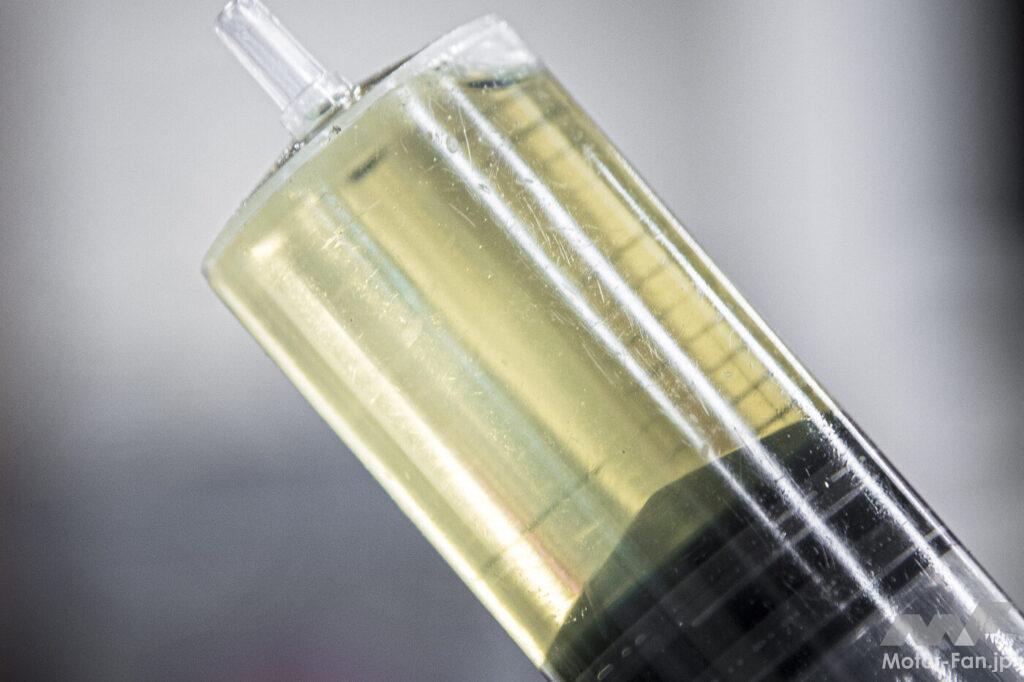
Put fork oil into the syringe.
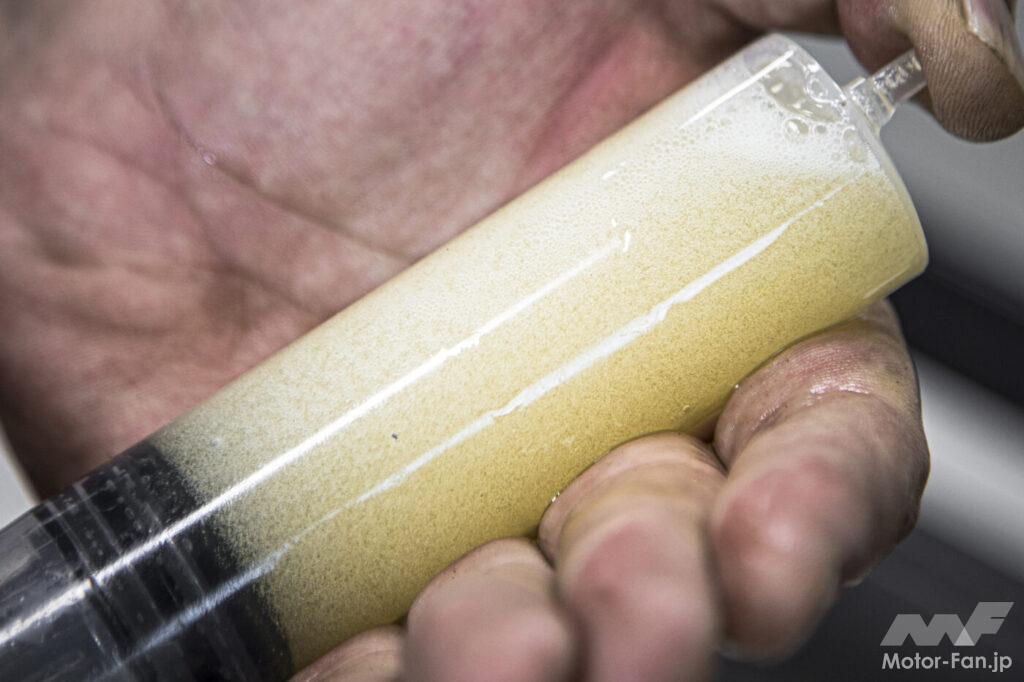
If you cover the tip of the tube with your finger and pull the piston, negative pressure will be created inside, causing cavitation (the generation of bubbles) as shown here.
Some of you may have noticed something here. For example, if air gets mixed into the brake fluid (vapor lock due to fade), the pressure applied to the brake lever is not transmitted properly, resulting in reduced braking force. The lever feels spongy with your right hand, and the brakes don’t work as well as you’d expect. This is because, unlike a liquid (oil), a gas (air) easily shrinks (compresses).
Conversely, if water is sucked into the engine, liquid, unlike air, cannot be compressed, and it can easily blow through (damage) the head gasket.
In other words, in front forks, which utilize the properties of oil to create damping by passing air through small holes (orifices), cavitation is an important factor that can impair the original damping function.
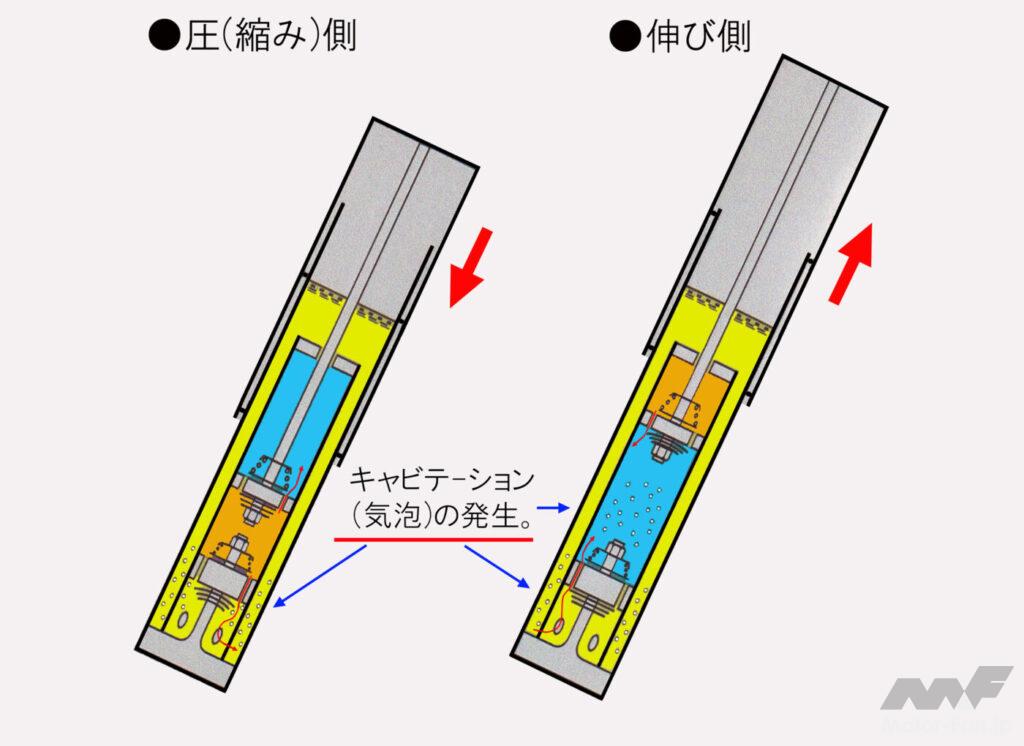
Take a look at the internal structure of a front fork below. In the common cartridge-type front forks, damping is achieved through a check valve attached to the bottom.
When the front fork compresses, the valve at the bottom of the rod drops, increasing the hydraulic pressure in the orange area. This opens a hole in the fixed valve, allowing hydraulic pressure to escape to the outer part of the cylinder while damping. This means there is a slight delay in the generation of the damping force required for suspension operation.
Furthermore, cavitation caused by internal pressure changes tends to inhibit the generation of damping force in response to front fork operation. As a result, the bumpy, bouncy behavior is overlooked. Kunimasa sought to improve this situation and came up with an innovative front fork design.
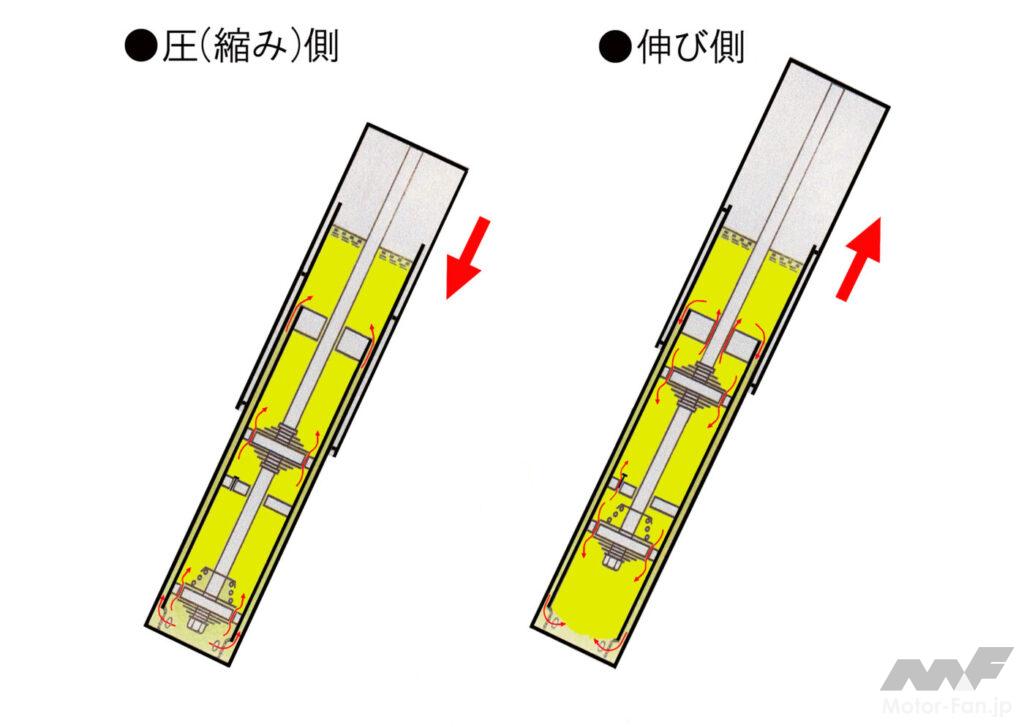
The result was the “Through-Rod Hydraulic Pump System Fork” structure, shown in the following diagram.
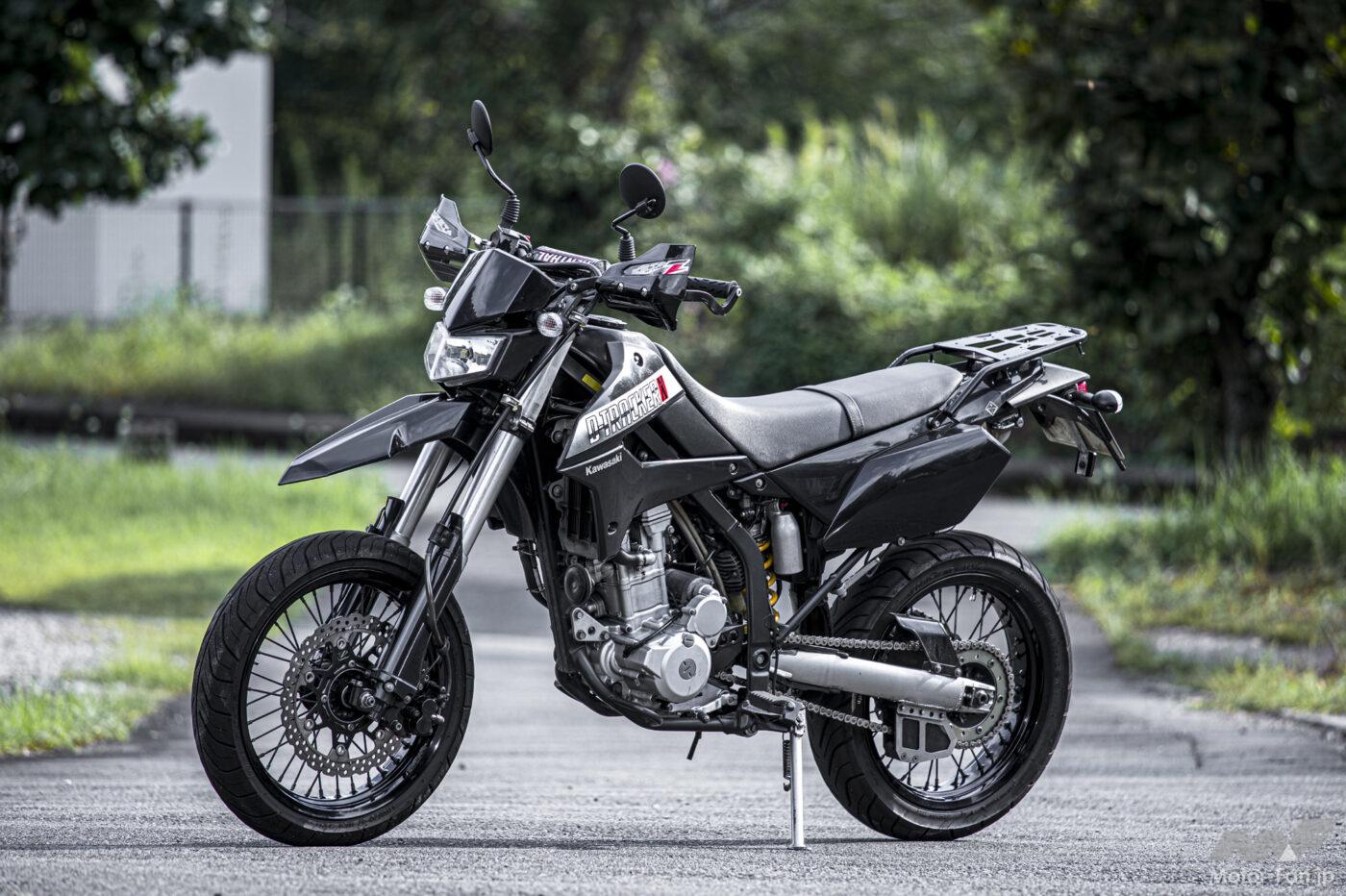
Based on know-how cultivated over many years of experience, the internal structure was revised and the oil flow path was completely redesigned, allowing the damping mechanism to primarily operate on the positive pressure side. Additionally, improvements were made to minimize oil flow. Another feature is the use of two pistons, a main piston and a pressure piston, on a single through-rod, which operate together. For this reason, they first developed a front fork with a relatively long stroke and size, which they ended up installing on a Kawasaki D-Tracker as a demo vehicle.
In fact, listening to his wide-ranging talk, the content gets increasingly deep, and it becomes clear that it will be increasingly difficult to explain, so I will not go into the technical details, but the reason Kunimasa disliked the aforementioned cavitation and tried to eliminate it was because he wanted the damping force to function properly and responsively when the front fork was operating. There is no doubt that this was an attempt to pursue an even more comfortable ride and superior handling stability than current front forks.
But what is the ride like?
Schematic diagram of the internal structure
●General front fork
●Innovative through rod type  pressurized piston type
ADVERTISEMENT
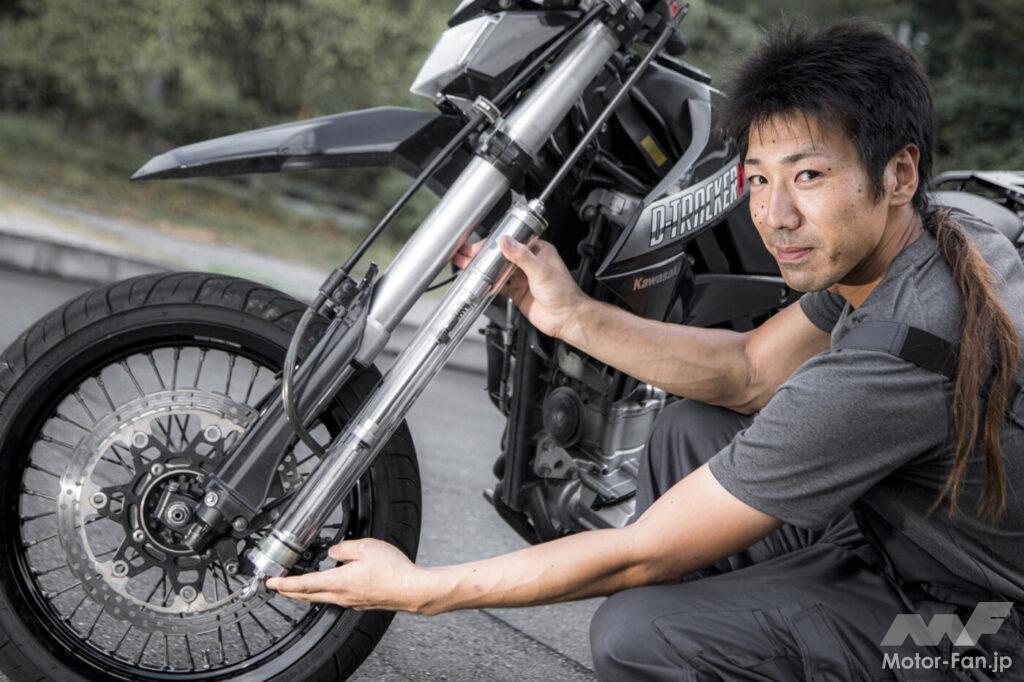
“The internal structure has been rearranged,” said co-developer Kuma Kunimasa, Hisao’s son, as he showed off a prototype.
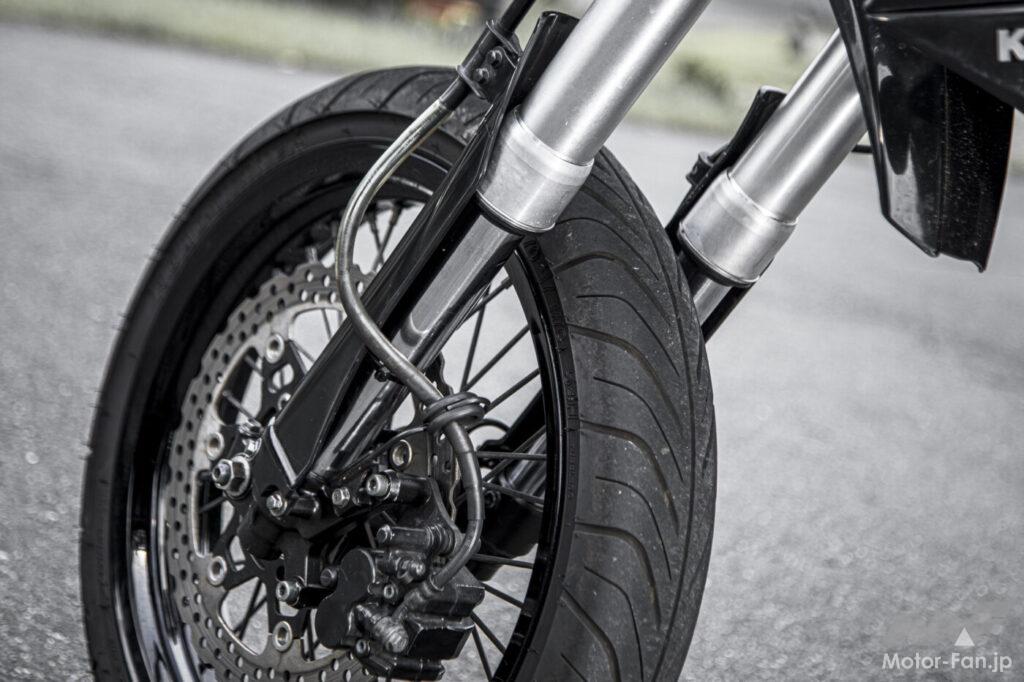
The left side features an innovative front fork that provides a damping effect, while the right side is just a spring, which contributes to overall weight reduction.
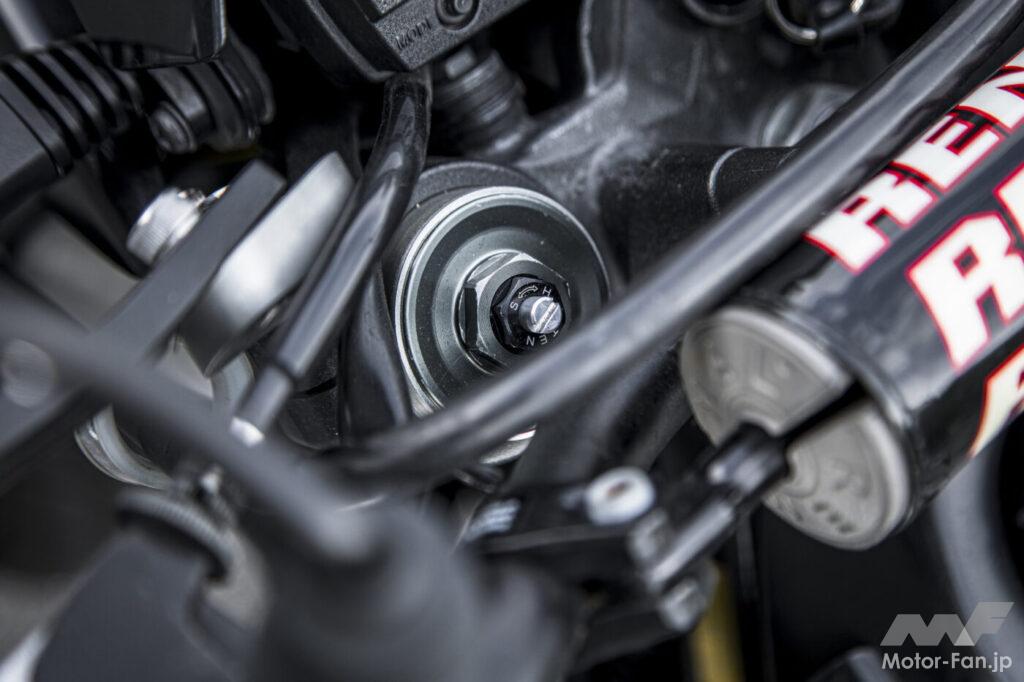
The top end of the front fork was equipped with a rebound damping adjuster.
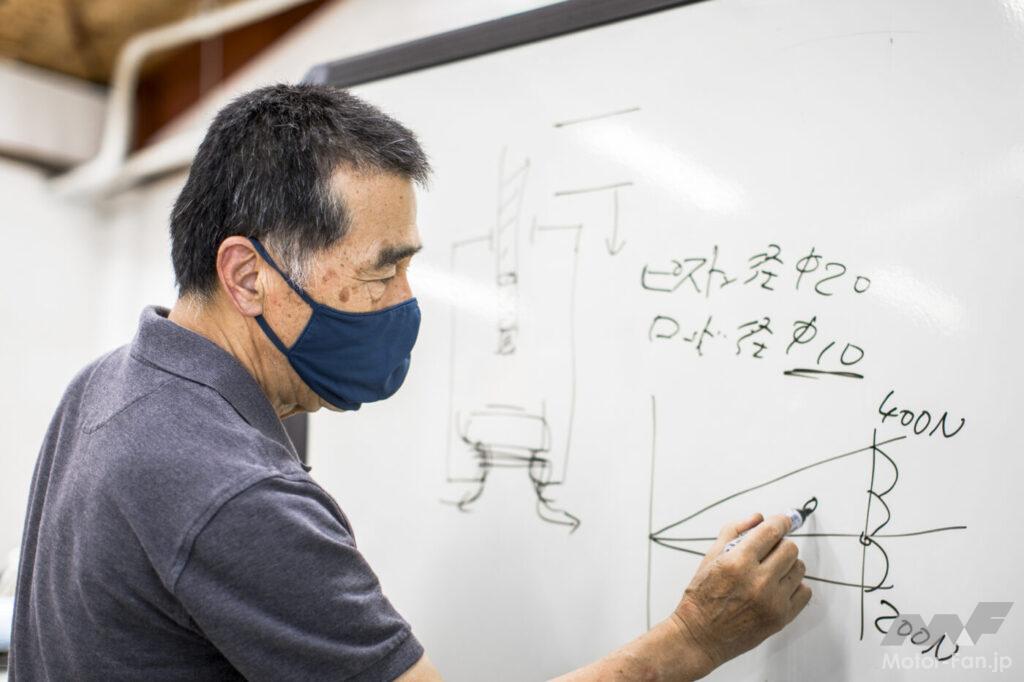
He carefully explained complex theories in an easy-to-understand manner, and is known as a leading expert on suspension development and tuning.
The test ride vehicle was a Kawasaki D-Tracker
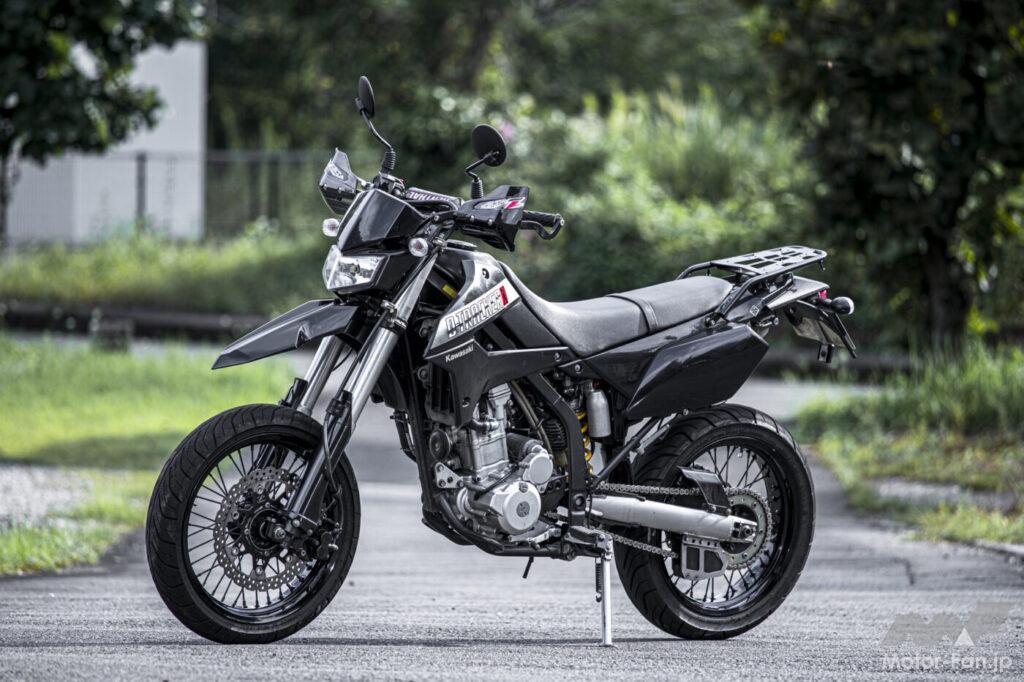
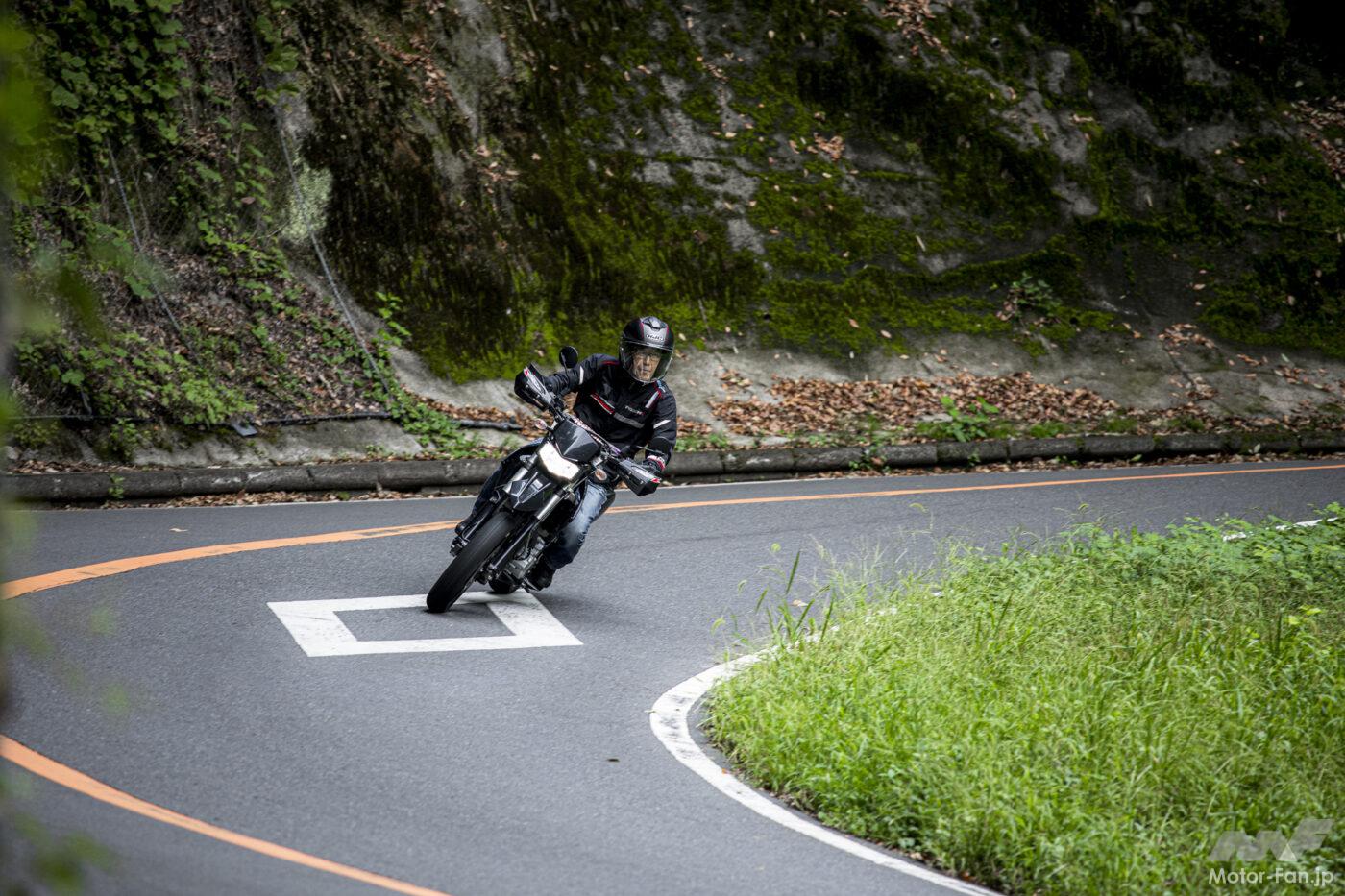
The test ride was on a narrow, winding suburban road with some ups and downs. While the course was paved, there were noticeable rough patches here and there.
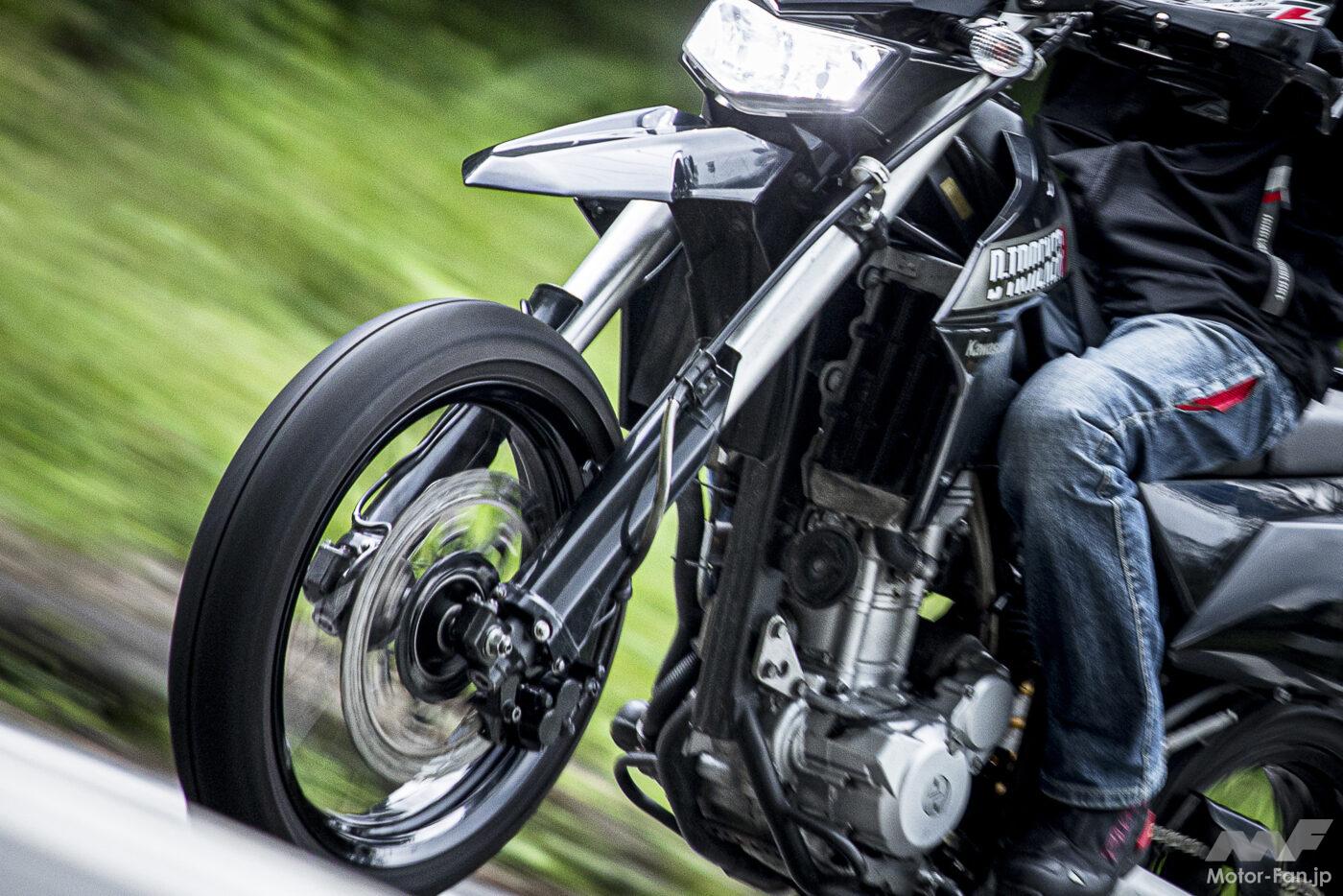
The front forks on the test bike looked stock from the outside. Only the internal structure of both the left and right sides had been modified, with the notable damping mechanism installed on the left side. The top end also featured a 20-notch adjuster. The spring was installed on the right side only, equivalent to two standard springs. While the weight of a single spring is heavier, it apparently contributes to a slight weight reduction overall.
The first thing I noticed after starting was a subtle difference between the visual information about the road surface and the footwork reflected in the ride. Physically, it felt like I was riding on a smooth paved road.
While it would have been natural to feel a bit more bumpy and pitching, the bike ran quite smoothly. I then ran my fingers over the top of the front fork’s bottom case and the rubbing surface of the inner tube, and found that it moved with a very pleasant yet gentle movement throughout.
Ideally, I would have liked to test ride it at the same time as the standard D-Tracker, but even without that, I could see the evolutionary difference in the front fork’s operating characteristics.
It’s very difficult to put into words, but perhaps I could describe it as the feeling of riding in the best condition possible after fine-tuning.
Another particularly noticeable improvement was the way the bike behaved when braking. The front fork didn’t feel stiff or rigid, but rather sunk gently. It felt like the brakes were being applied gently.
The behavior from nose dive to recovery was so smooth that it felt gradual. As a result, I could accurately grasp how the front tire pressed against the ground as it slowed down, increasing grip. The entire process, from slowing down into corners to turning and accelerating, was composed.
Even when riding at a high pace, the ride felt calm, and even on wet roads, the ride was always reassuring.
Feeling like being a bit mischievous, I tried jumping off a step about 50cm high, and when the front forks extended smoothly and when it landed hard, it demonstrated shock-free footwork, just like a cat’s feet.
The stable ride without any roughness certainly produced a comfortable ride with a sense of security. There is no doubt that Kunimasa’s sincere pursuit of what the ideal suspension should be has been fully recognized.
Incidentally, the front fork incorporating this new technology has already been patented as a “front fork with built-in hydraulic shock absorber.”
As a user, I hope that motorcycle manufacturers and supply companies will properly evaluate this front fork, which boasts considerable component technology, as one way to improve the product appeal and appeal of their motorcycles, and take an active stance in introducing and popularizing it.

The test track was a bit rough, but it felt like driving on a new, clean paved road.
ADVERTISEMENT
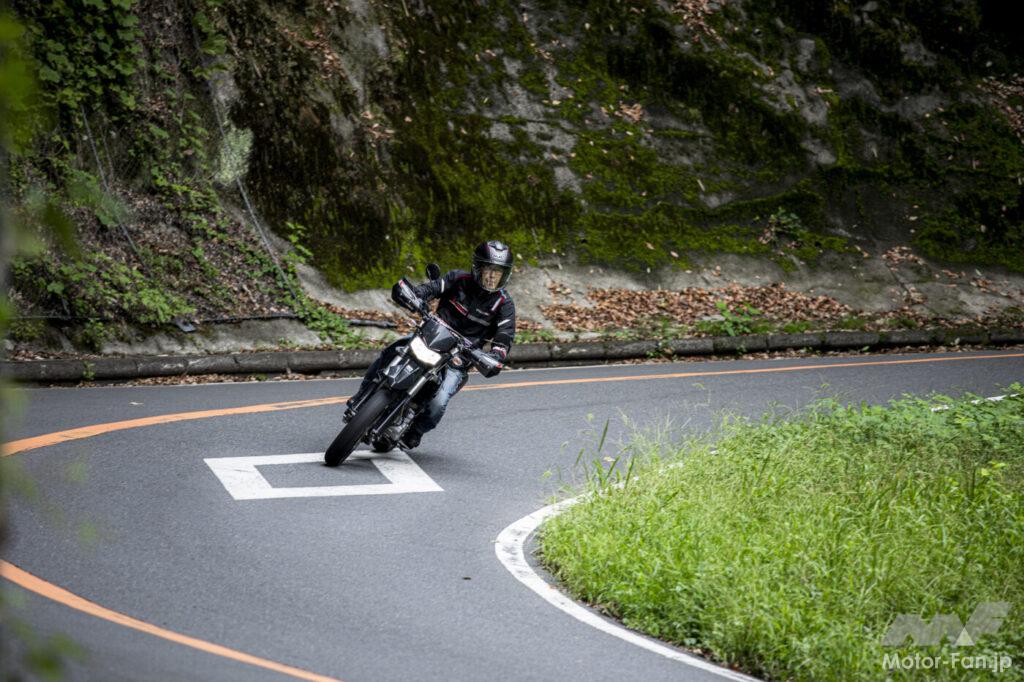
The desired line is traced smoothly, and the ride is calm.