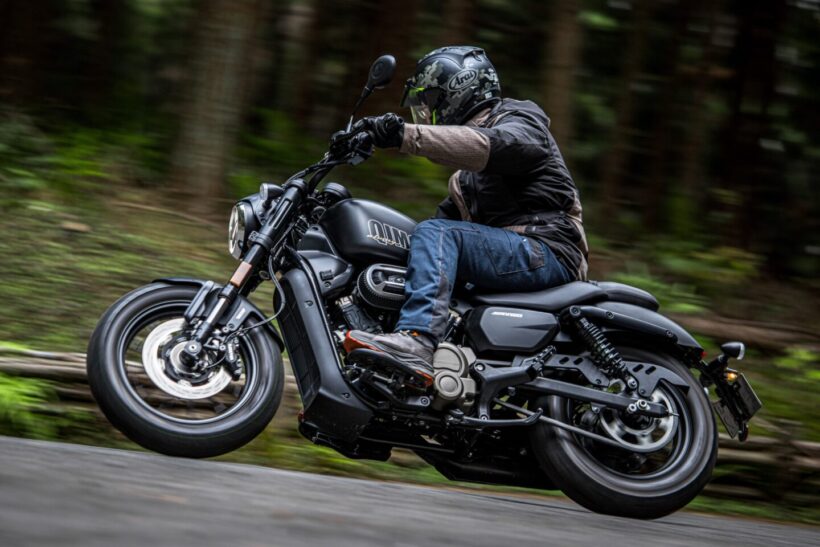


What are the requirements for riding a motorcycle on a highway?
First, we will introduce the necessary conditions stipulated by laws such as the Road Traffic Act in order to ride a motorcycle on a highway.
[Major requirements for riding a motorcycle on the expressway]
・Motorcycle over 125cc
・Holder of a regular motorcycle license or a large motorcycle license
・Maximum speed 100km/h, minimum speed 50km/h
・Conditions for riding two people
→ “Age 20 or older”
→ “Have held a large motorcycle license or a regular motorcycle license for a total of 3 years or more”
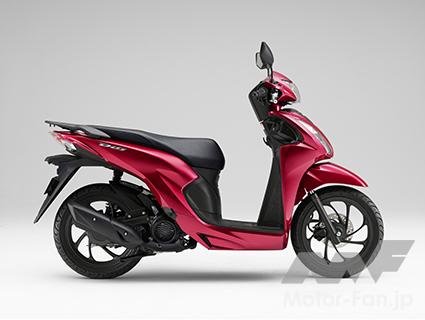
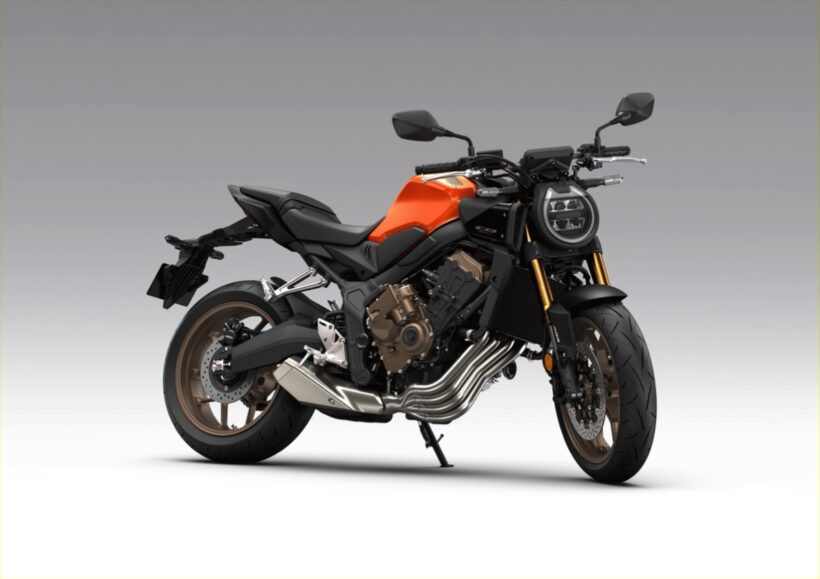
By law, motorcycles that can be driven on expressways are limited to “light motorcycles (two-wheeled light vehicles)” over 125cc and up to 250cc, and “small motorcycles (two-wheeled small vehicles)” over 250cc. In other words, only motorcycles over 125cc can be driven on expressways. Mopeds such as Class 1 and Class 2 mopeds cannot be driven on expressways.
In addition, a driver’s license is required for motorcycles up to 400cc, and a large motorcycle license for motorcycles over 400cc. However, if the motorcycle does not require clutch or shift operation, such as a scooter or one with an automatic transmission, it can be driven with an automatic transmission-only regular motorcycle license (for motorcycles under 400cc) or an automatic transmission-only large motorcycle license.
Furthermore, when driving on expressways, the maximum speed is 100km/h and the minimum is 50km/h. Driving even 1km/h faster or slower than this range is a violation, so you need to be careful. Recently, there are sections of the Shin-Tomei Expressway and parts of the Tohoku Expressway where the maximum speed is 120km/h, but basically most expressways have a maximum speed of 100km/h, so you need to be careful not to violate the speeding rules.
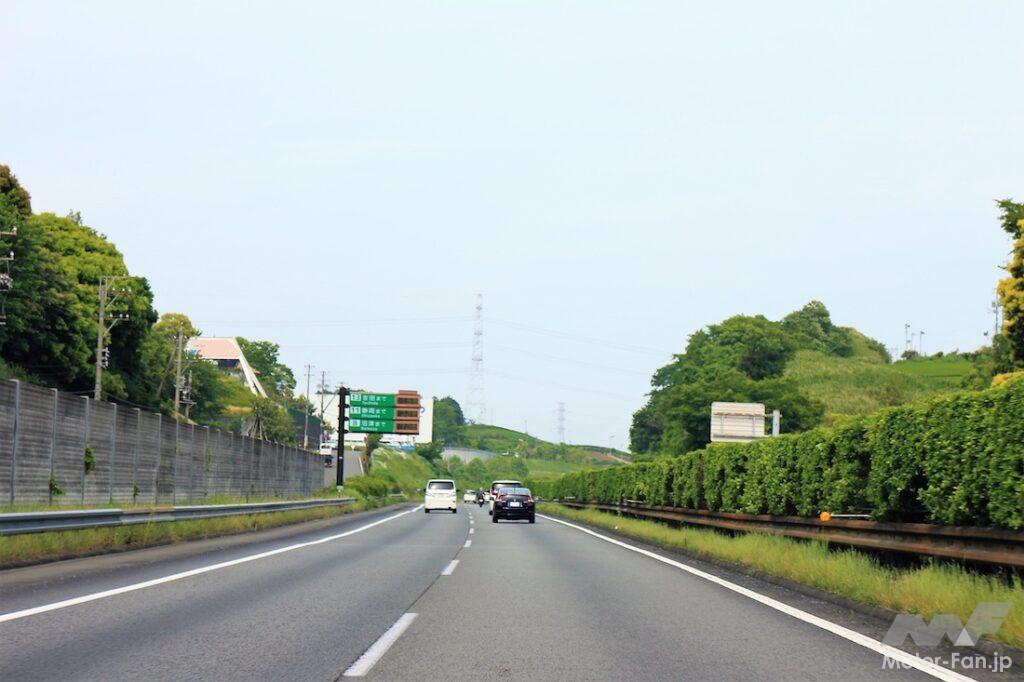
In order to travel on expressways, you must comply with various legal regulations.
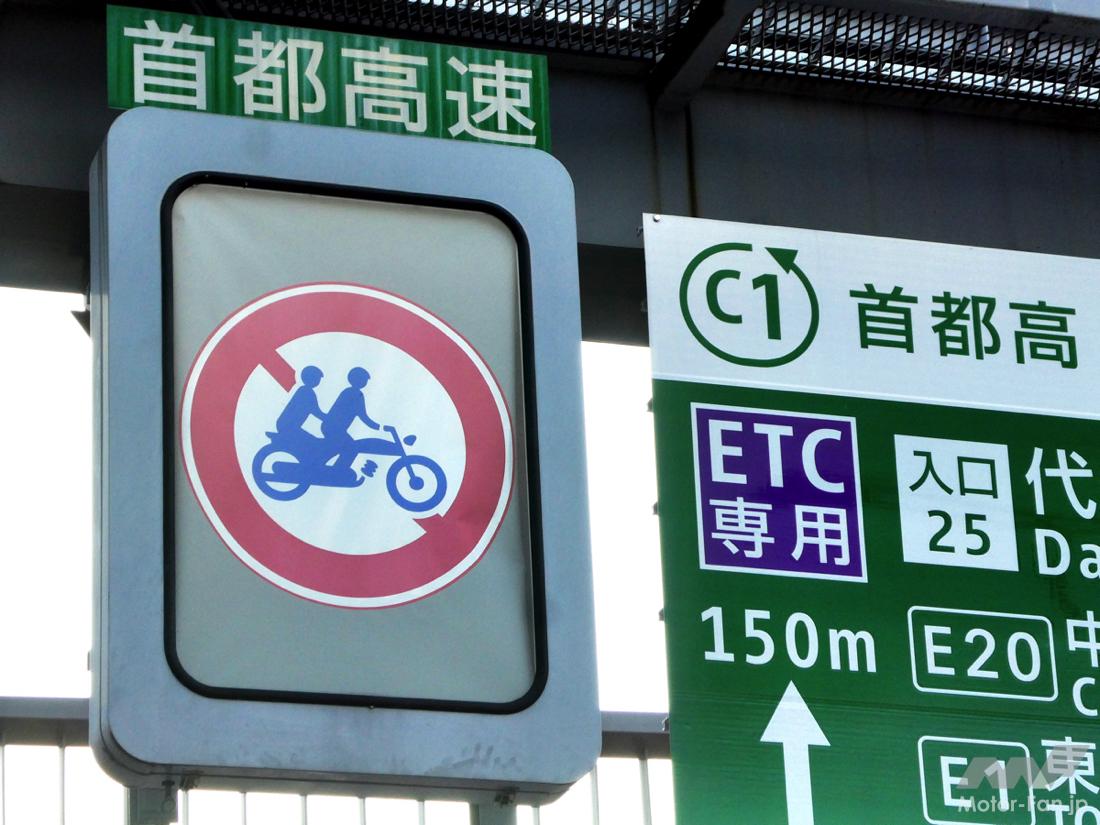
There are sections of the expressway where two people are not allowed to ride together.
In addition, two-seater riding is permitted on expressways, but as mentioned above, riders under the age of 20 or those who have held a standard motorcycle license or large motorcycle license for less than three years are not permitted to ride two-seater on expressways.
However, for example, if you obtain a regular motorcycle license and then a large motorcycle license, as long as it has been more than three years since you obtained your regular motorcycle license, you can ride two people on a large motorcycle on a highway, even if it has been less than three years since you obtained your large motorcycle license.
By the way, there are sections of the Metropolitan Expressway that run through central Tokyo, also known as the Shuto Expressway, where riding two people on the same bike is prohibited. In these sections, even if the above conditions are met, you cannot ride two people on the same bike, so be careful.

There are sections of the Shuto Expressway where two people are not allowed to ride together.
ADVERTISEMENT
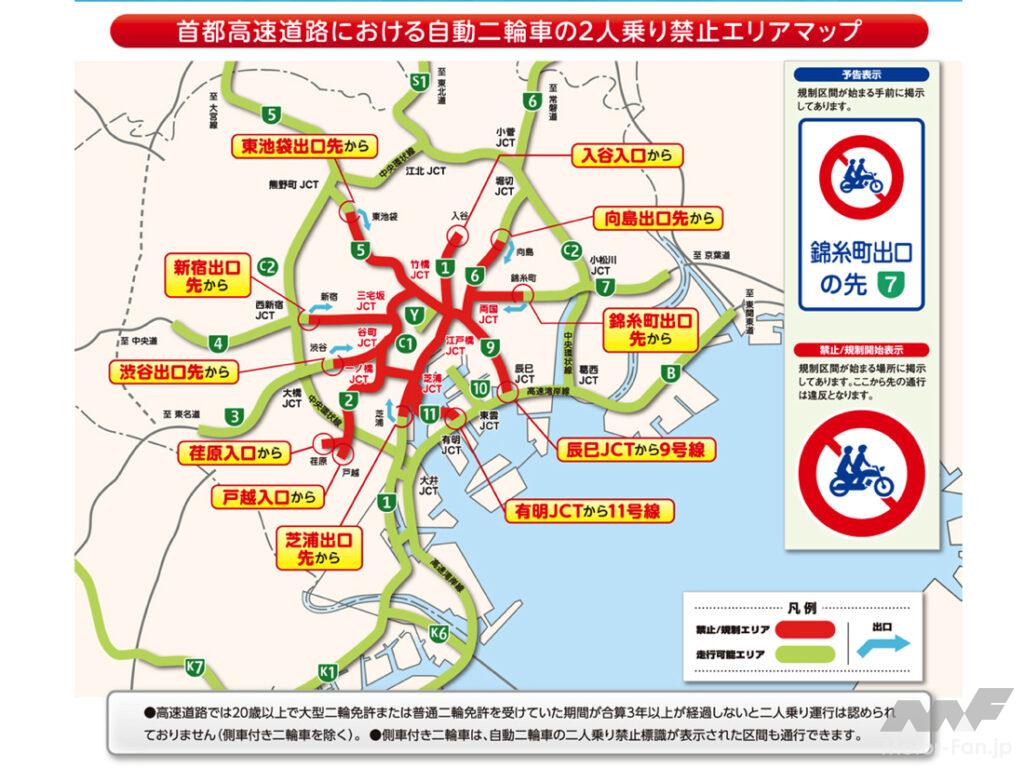
No-double-riding areas on the Metropolitan Expressway (Source: Metropolitan Expressway website “Metropolitan Expressway Drivers’ Site”)
Preparation before driving on the highway
Next, we will introduce some preparations you should make before driving on the highway.
[Preparation 1] Check the tire pressure.
To ride a motorcycle safely, it is important to first inspect the vehicle. This is the same when riding on public roads, but especially on highways where speeds are high, if there is a problem with the vehicle, the chances of it leading to a serious accident are high. It is important to check the tire pressure thoroughly before riding.
And among the things to check on your vehicle, the most important thing to do is to check the tire pressure. Always check before driving to make sure it is set to the manufacturer’s specified value.
It is also important to check the condition of your tires to see if they are punctured or have nails or other debris stuck in them. If you get a flat tire while driving on the highway, it can lead to a very dangerous situation that could even result in a fatal accident.

I want to check the tires thoroughly before driving, including the air pressure and surface condition.
[Preparation 2] Choose a helmet and clothing that are safe.
Head injuries are often the cause of fatal motorcycle accidents, so a helmet is extremely important even when riding on the highway. It is important to have one that fits your head size, and it is recommended to use a helmet that is designed to reduce wind resistance when riding on the highway, such as a full-face or jet helmet.
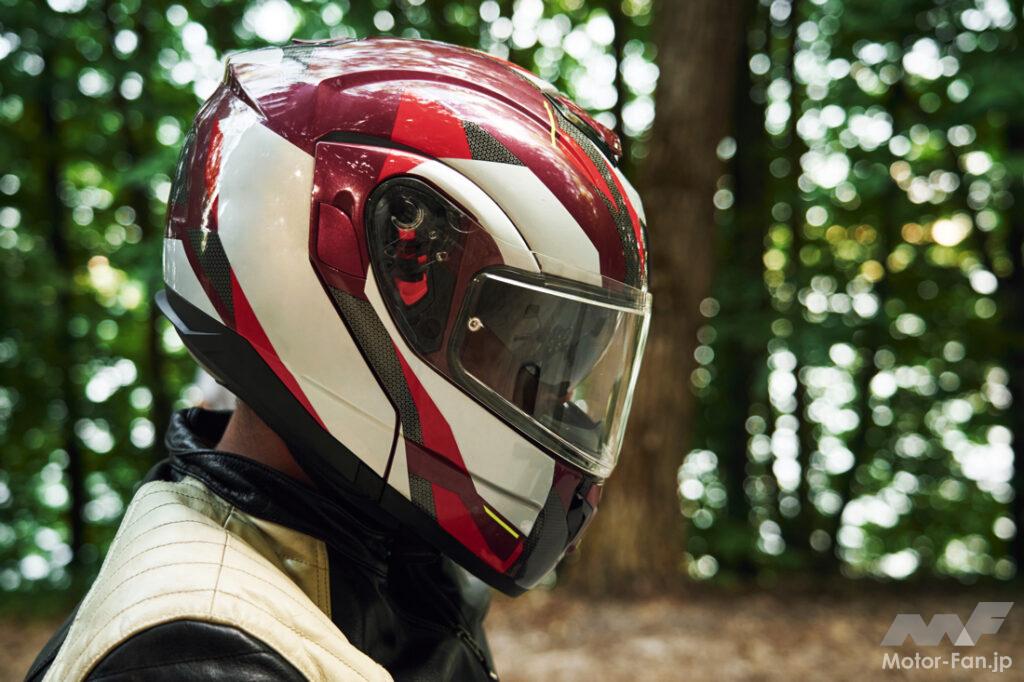
When riding on the highway, we recommend choosing a helmet that is designed to reduce wind resistance, such as a full-face or jet helmet.
ADVERTISEMENT
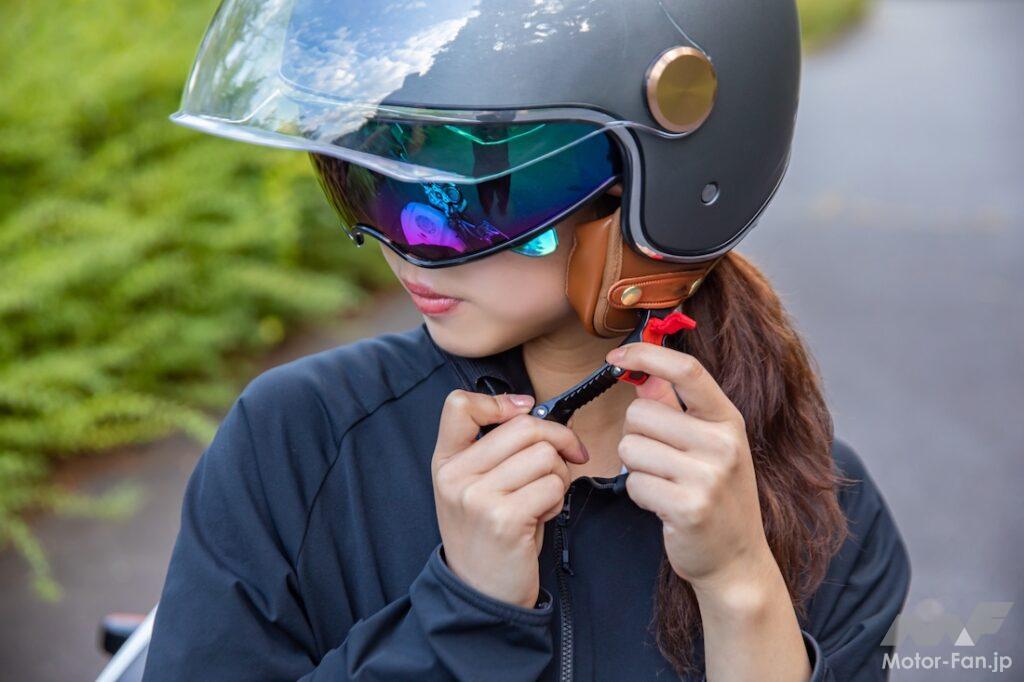
It is also important to fasten the chin strap of your helmet securely.
Additionally, helmets are subject to safety standards, such as SG standards, JIS standards, PSC mark, SNELL standards, and FIM/MFJ approved. When choosing a helmet, make sure it complies with these standards.
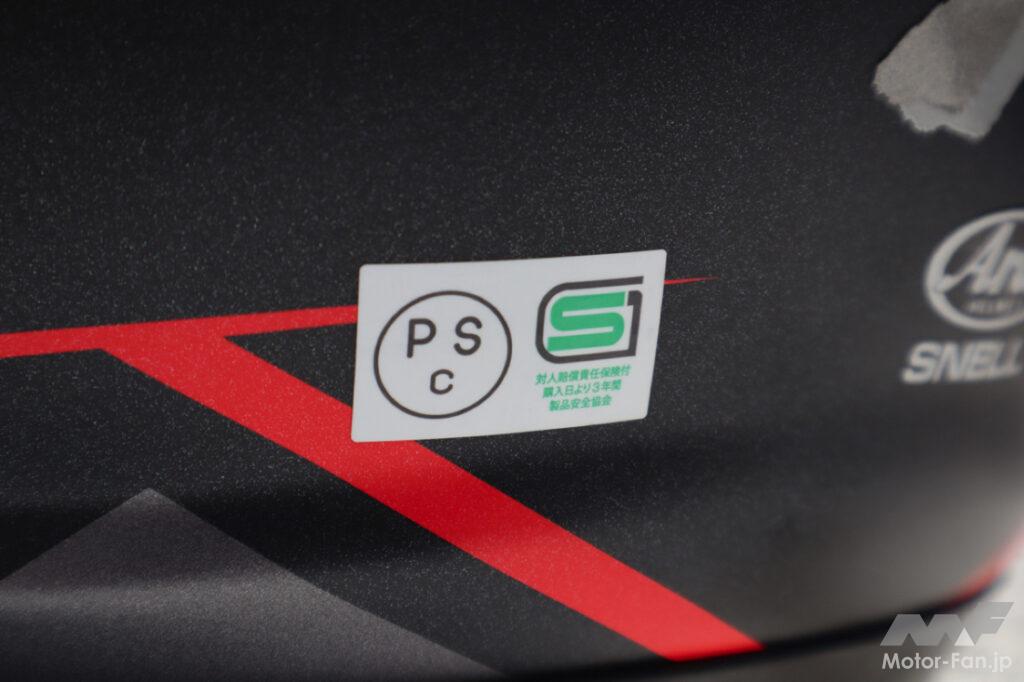
The most important thing is to wear a helmet that complies with safety standards such as SG standards, JIS standards, PSC mark, SNELL standards, and FIM/MFJ official standards.
In addition, when riding on a highway at high speeds, if you fall, there is a high risk of serious damage to not only your head but also your body. Therefore, we recommend wearing a chest protector or a motorcycle jacket with a protector.

It is also important to wear a chest protector.
[Preparation 3] Check the expiration date and insertion of your ETC card
. If your motorcycle is equipped with an ETC onboard unit, it is convenient because you do not have to stop at toll booths when riding on the expressway. However, if it is not working properly, you may encounter problems such as the gate not opening at the toll booth, so be careful.
Therefore, before driving, be sure to check whether your ETC card is within its expiration date, whether it is properly inserted into the onboard unit, and whether there are any malfunctions with the onboard unit itself.
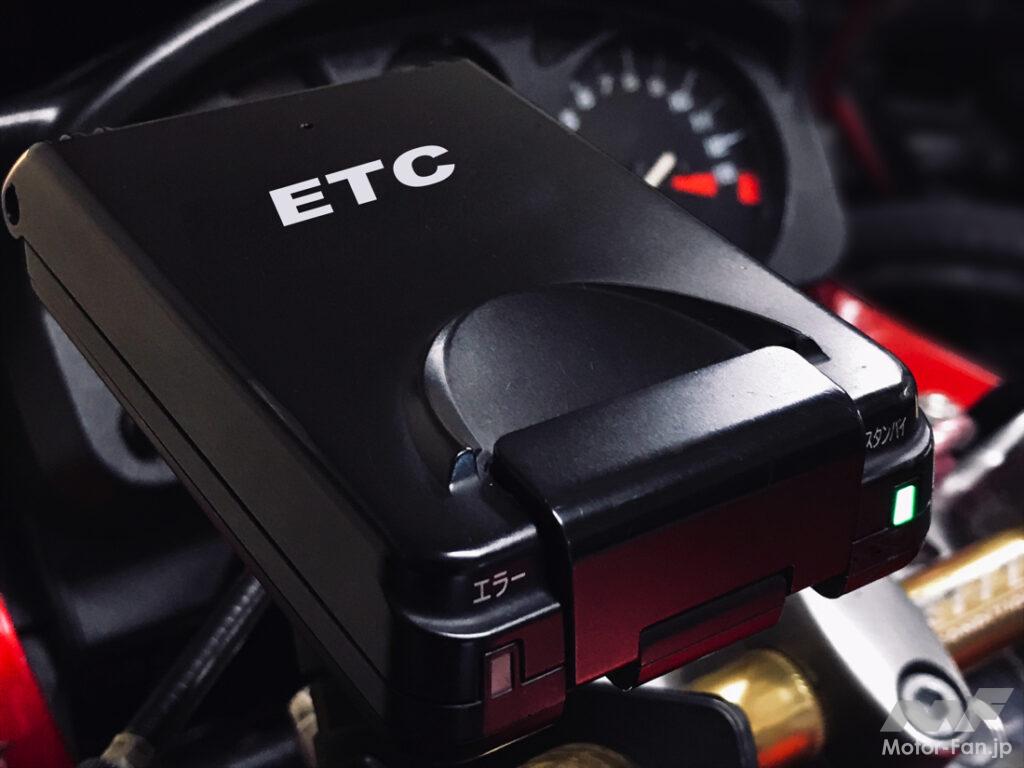
Before driving on the expressway, check that your ETC card is still valid, that it is properly inserted into the on-board unit, and that the on-board unit itself is not malfunctioning.
[Preparation 4] Check the weather conditions.
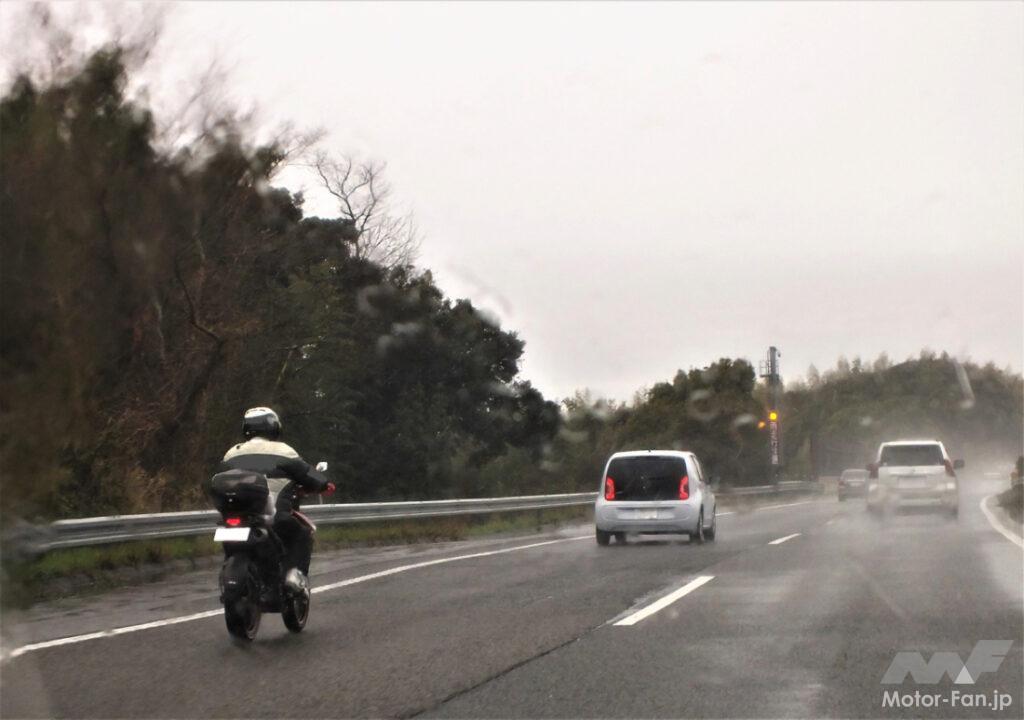
When the weather is bad, such as when there is heavy rain or snow, visibility is reduced and roads become slippery, which can create dangerous situations for motorcycles.
If you plan to use the expressway, it is important to check the weather in advance for the roads and areas you plan to travel on, and drive carefully while taking into account the local conditions.
In particular, in recent years, there have been an increasing number of cases where linear rain bands have caused sudden torrential rains and caused significant damage. In such cases, it is important to take action that prioritizes life, such as by not pushing yourself too hard and changing your touring plans.
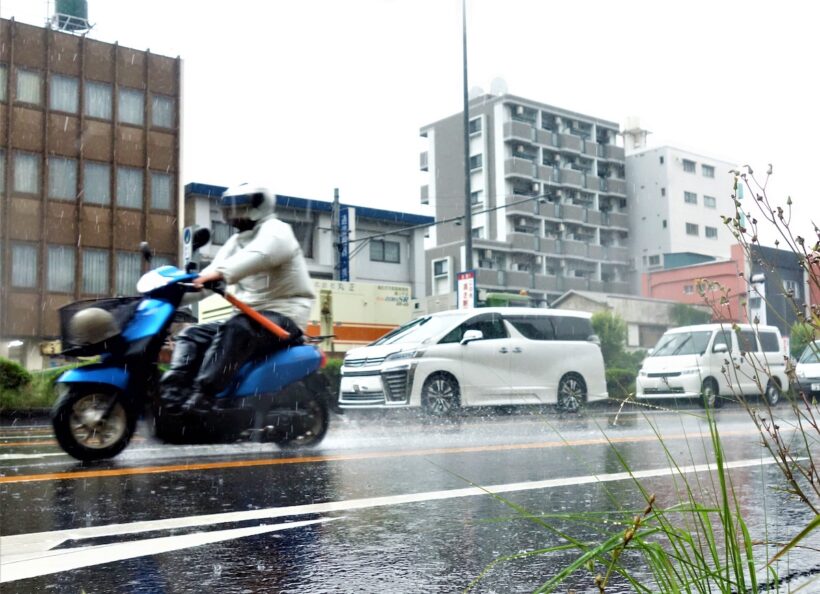
On rainy or other bad weather days, dangerous situations for motorcycles can easily occur on highways.
Six points to remember when riding a motorcycle on the highway
Next, we will introduce six points that beginners should pay attention to, such as how to drive on the highway.
[Point 1] Pay attention when merging
. You need to be especially careful when merging onto the main lane from an IC (interchange), SA (service area), or PA (parking area). Accelerate steadily to 80-100 km/h in the merging lane so that you can smoothly join the flow of traffic on the main lane.
Also, when merging, make sure there are no cars behind you that you might hit, and always try to merge onto the main lane from behind the cars traveling on the main lane. If you try to force your way in front of a car traveling on the main lane, it could lead to a collision, so you need to be especially careful.
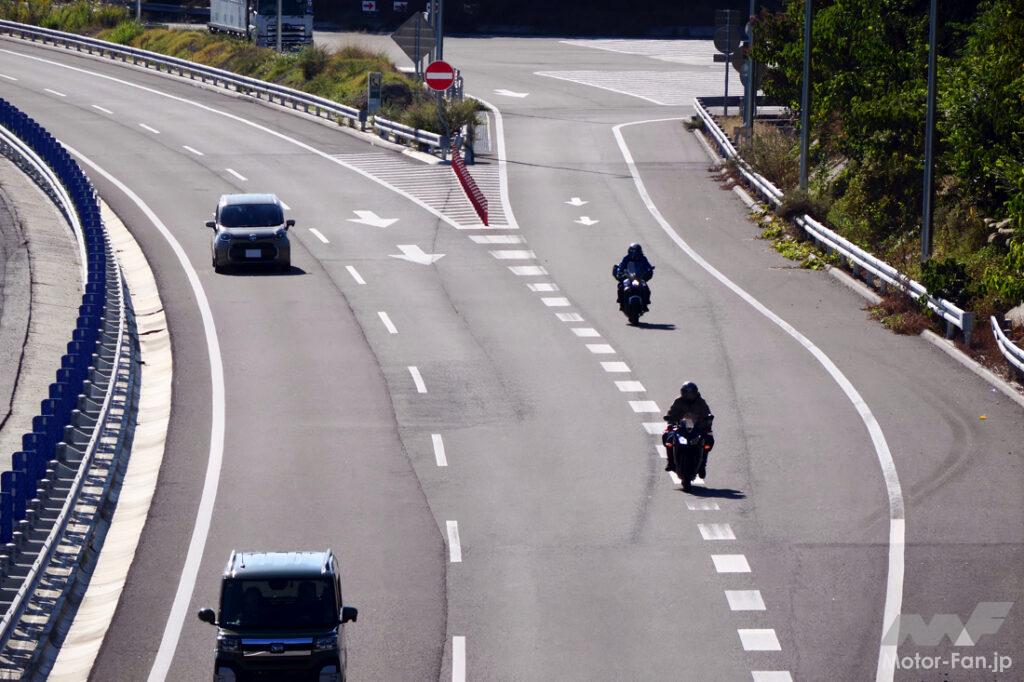
There are many things to be careful of when merging onto the main lane, such as accelerating firmly in the merging lane.
[Point 2] Generally, ride in the left lane.
Among beginner riders, you will occasionally see people riding in the passing lane on the right at a slow speed of around 80 km/h.
However, the basic rule is to use the passing lane when you are overtaking the car in front of you, and then return to the left driving lane after you have completed the overtaking.
If you continue to drive in the passing lane for a long distance, it will be considered a “lane violation,” and if you are caught, you will be penalized with one penalty point and a fine of 6,000 yen if you are on a two-wheeled vehicle.
Furthermore, driving slowly in the passing lane is not only a violation, but can also lead to dangerous tailgating. Please be extremely careful not to accidentally continue driving in the passing lane.

It is illegal to drive in the right-hand passing lane for a long period of time.
[Point 3] Keep a sufficient distance between vehicles
On expressways, where the speed range is higher than on ordinary roads, the braking distance when braking is also longer, so it is important to keep a sufficient distance between vehicles. Generally, it is said that you should keep a distance of about 80m when the speed is 80km/h, and about 100m when the speed is 100km/h.
It is also said that if the road is wet due to rain or if the tires are worn, you need to maintain a distance about twice as long.
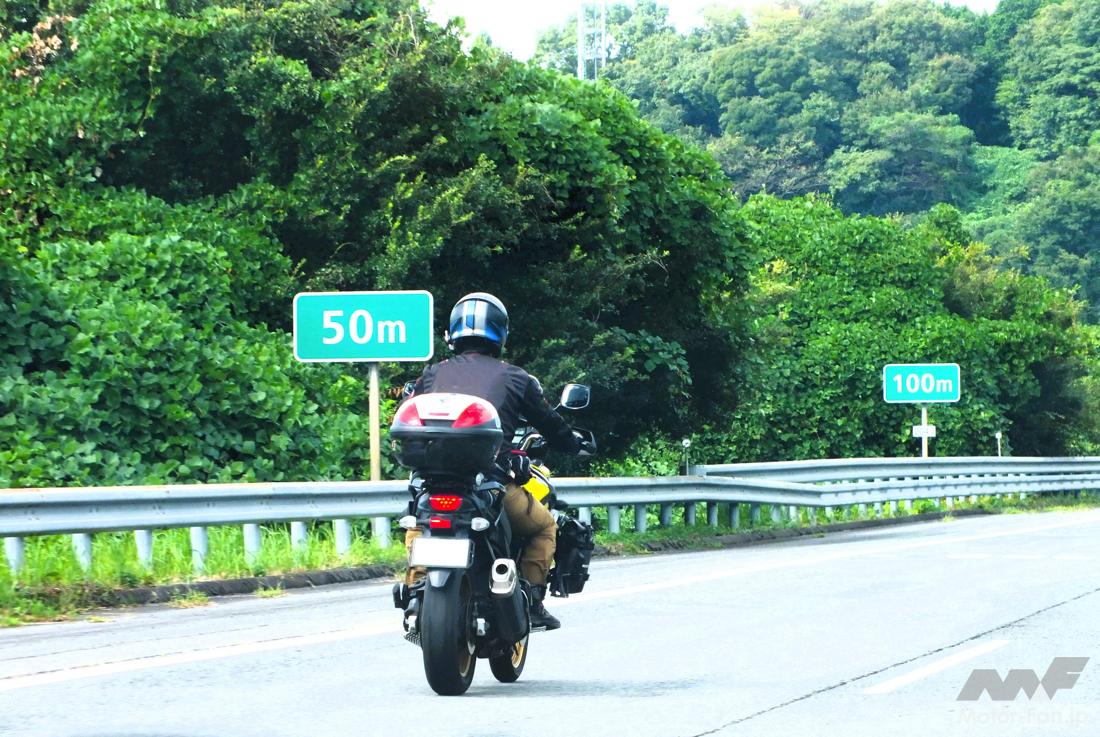
On expressways, there are distance check signs that serve as guidelines for maintaining an appropriate distance between vehicles, so make sure to use these to maintain a proper distance between vehicles.
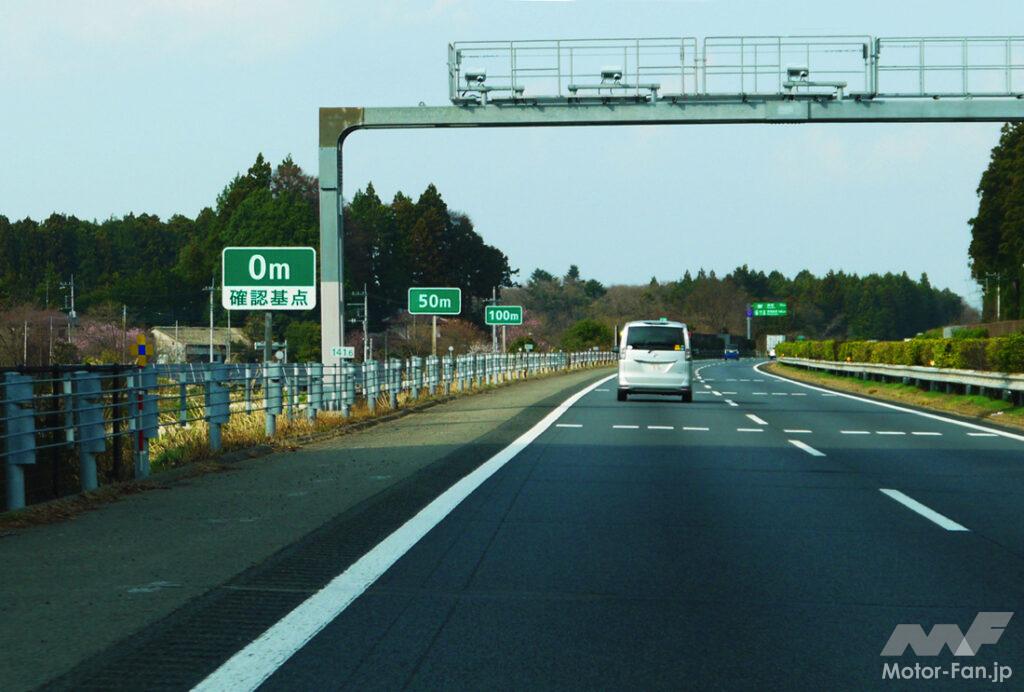
It is also important to always check the distance between you and the vehicle ahead using distance check signs, etc.
[Point 4] Beware of crosswinds
There are many places on the highway where strong crosswinds are likely to blow, such as at the exit of a tunnel, on high roads, or on bridges. Motorcycles, which are lighter than cars, are particularly susceptible to the effects of the wind, and can become unstable if they are blown around.
In areas of the highway where strong crosswinds blow, yellow “Crosswind Caution” signs and windsocks are sometimes installed to warn drivers. When driving on such sections, try to drive in a way that minimizes vehicle shaking when hit by crosswinds by dropping down a gear to increase driving force to the road surface or by strengthening your knee grip.

In areas where there are signs warning of crosswinds, you should also be careful about how you drive.
[Point 5] Avoid driving close to large vehicles as much as possible.
When driving directly behind a large vehicle such as a truck or bus, it becomes difficult to see what is ahead. In particular, if the car in front of you suddenly brakes due to traffic congestion or an accident, you may be too slow to react and end up rear-ending it, so be careful.
Also, if you ride in the passing lane and ride alongside a large vehicle in the driving lane, you may be hit by a strong crosswind, for example near the exit of a tunnel, which can cause the motorcycle’s body position to become unstable. In particular, beginners who are not used to riding on the highway should try to avoid large vehicles as much as possible.

Avoid driving near large vehicles such as trucks and buses as much as possible.
[Point 6] Take frequent breaks
On the highway, you may unexpectedly become fatigued due to the wind on your body and the tension of driving at high speeds for long periods of time. Therefore, it is important to take frequent breaks at service areas and parking areas before you get tired. Although this may vary from person to person, it is generally considered best to take a break every 100 km or every hour.
When taking a break, it is said that stretching your neck, waist, shoulders, and finger joints will help relieve fatigue. Also, since the risk of heatstroke increases in the summer, it is important to drink plenty of water during breaks.

It is also important to take frequent breaks at service areas and parking areas before you get tired.
It’s also important to follow etiquette
By the way, when you enter a service area or parking area and park your motorcycle, make sure to park it in a parking lot designated for motorcycles. SAs and PAs on expressways are places where many different types of vehicles take a break, so parking in a space designated for large vehicles, for example, can be a nuisance. If there is no motorcycle parking lot available, it is good manners to park in a nearby spot where you won’t get in the way.

When parking your motorcycle at an SA or PA, try to park in a parking lot designated for motorcycles.
Another point about highway etiquette is that it is dangerous to slip through traffic when you are in a traffic jam or trying to pass a slow car. Also, riding on the shoulder of the road when the road is congested is not only bad manners, but also a traffic violation. If you are caught, you will be penalized 2 points and fined 7,000 yen if you are on a motorcycle, so be careful.
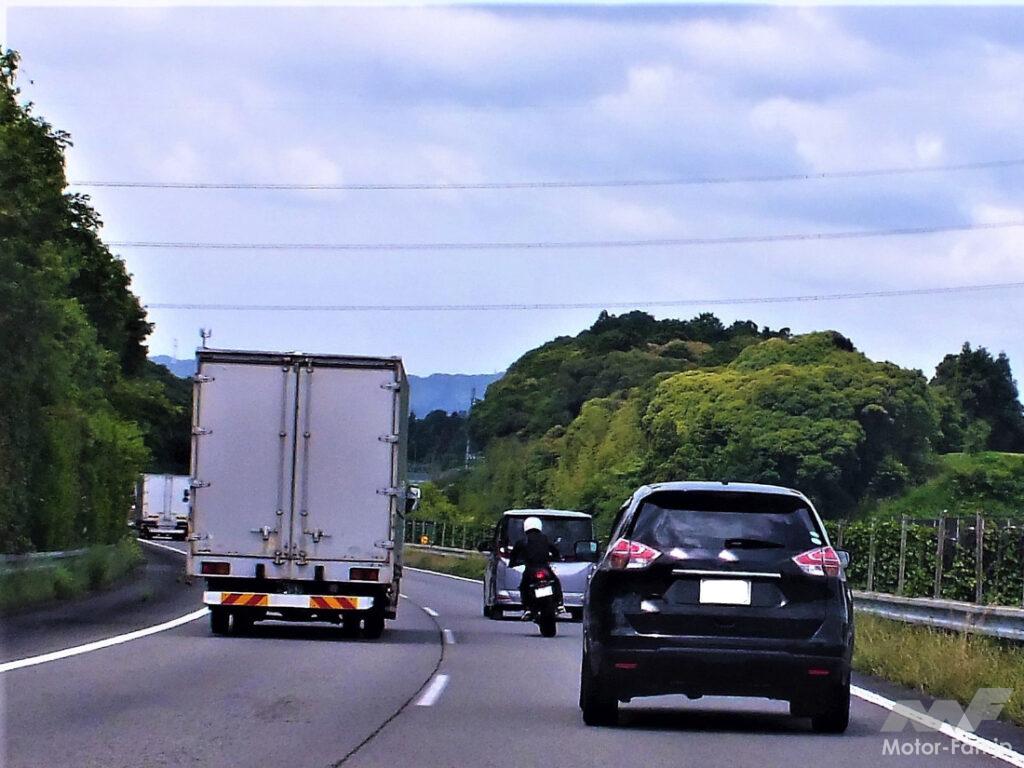
Passing through vehicles is dangerous even on the highway
ADVERTISEMENT

Riding on the shoulder is not only bad manners, but also a traffic violation.
As you can see, there are surprisingly many things to be careful of when riding on the expressway. However, if you use them well, you can travel smoothly and easily on tours, and reach farther destinations in a shorter time. If you’re new to riding on the expressway, we encourage you to master the basics and enjoy a fun and safe motorcycle trip.