

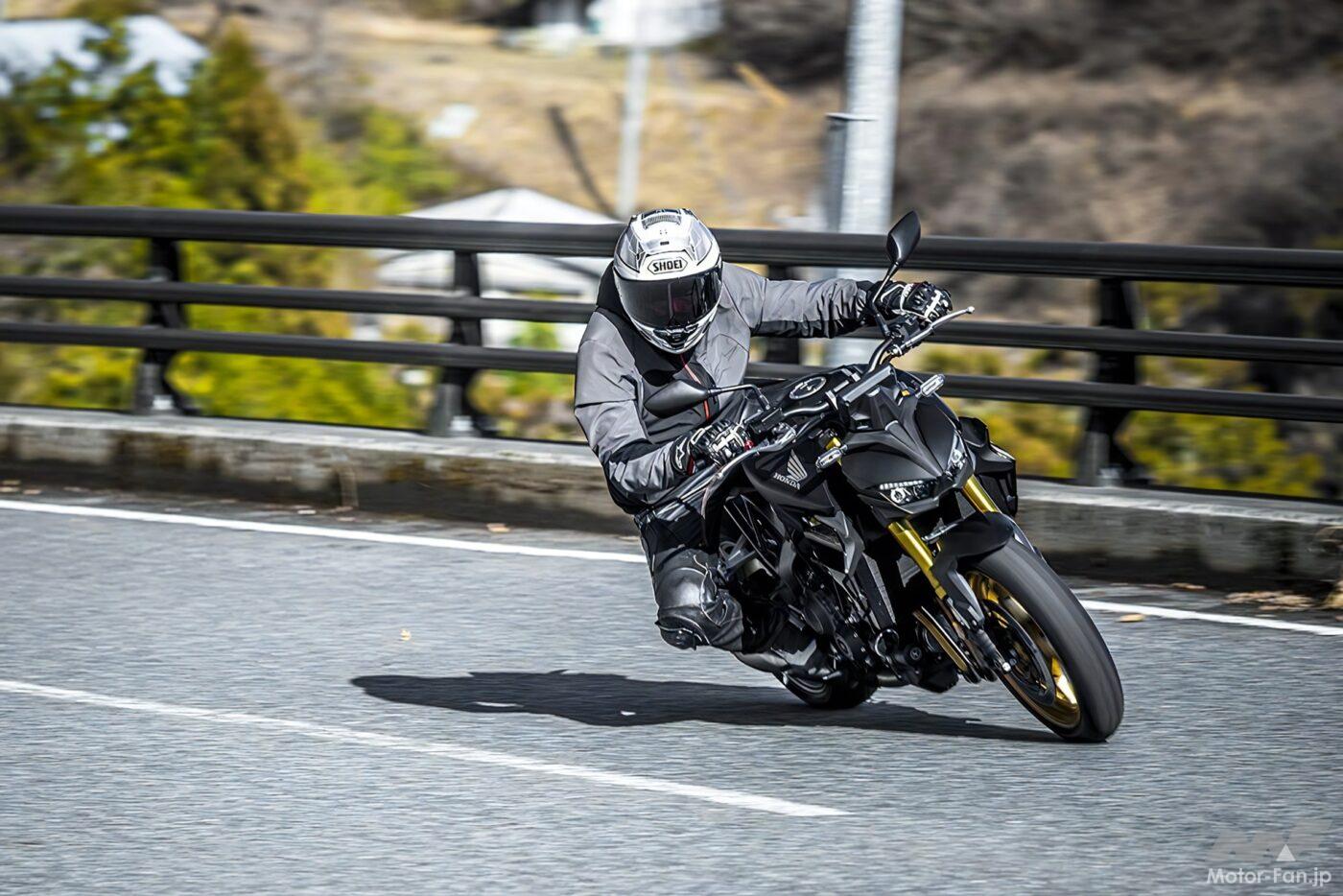
Honda CB1000 Hornet SP… 1,584,000 yen
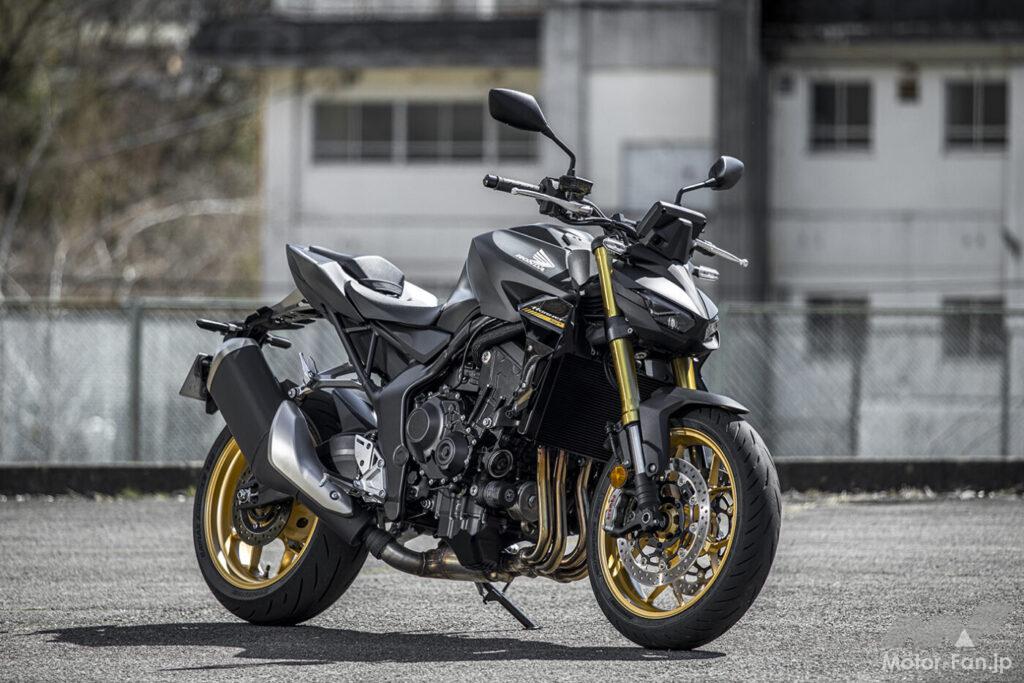
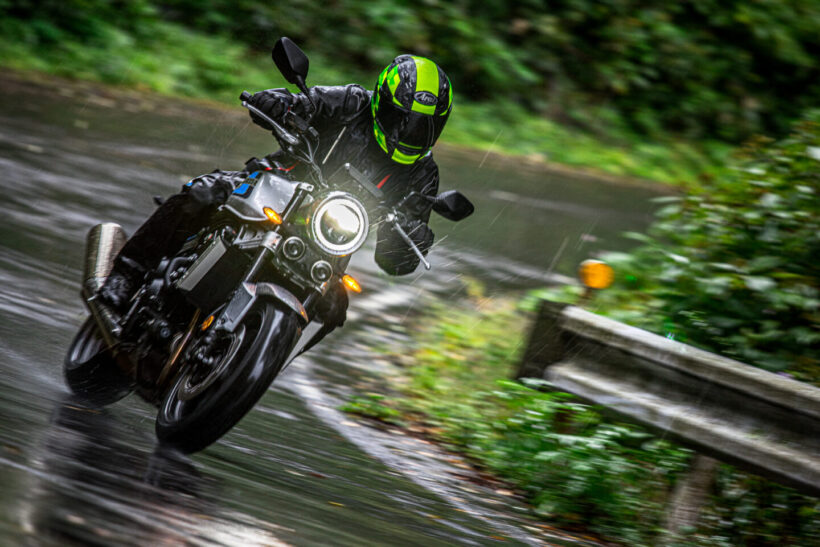
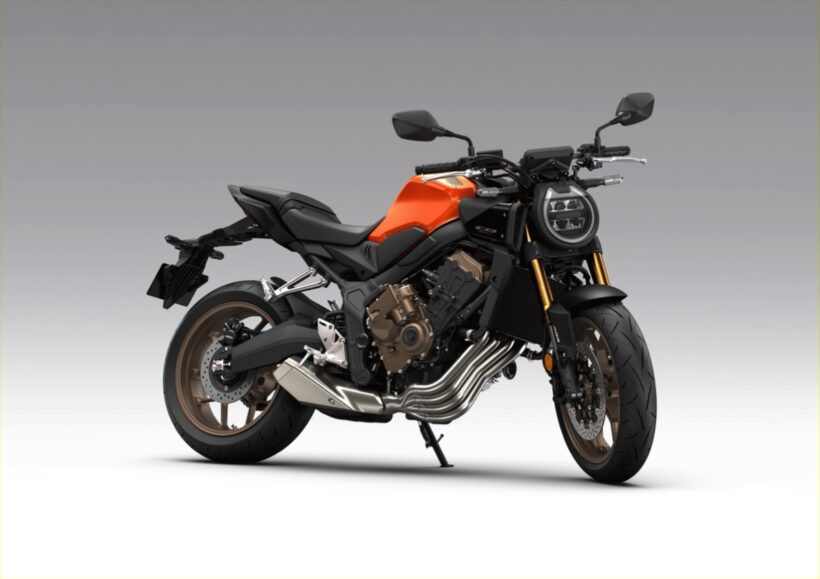
The CB1000 Hornet/SP, which went on sale in Japan in January 2025, is fitted with a twin-spar steel frame and an engine based on the 2017-2019 CBR1000RR (SC77). The standard front fork outer is silver and the front and rear wheels are black, but the SP’s are both gold.
Quite reasonable pricing
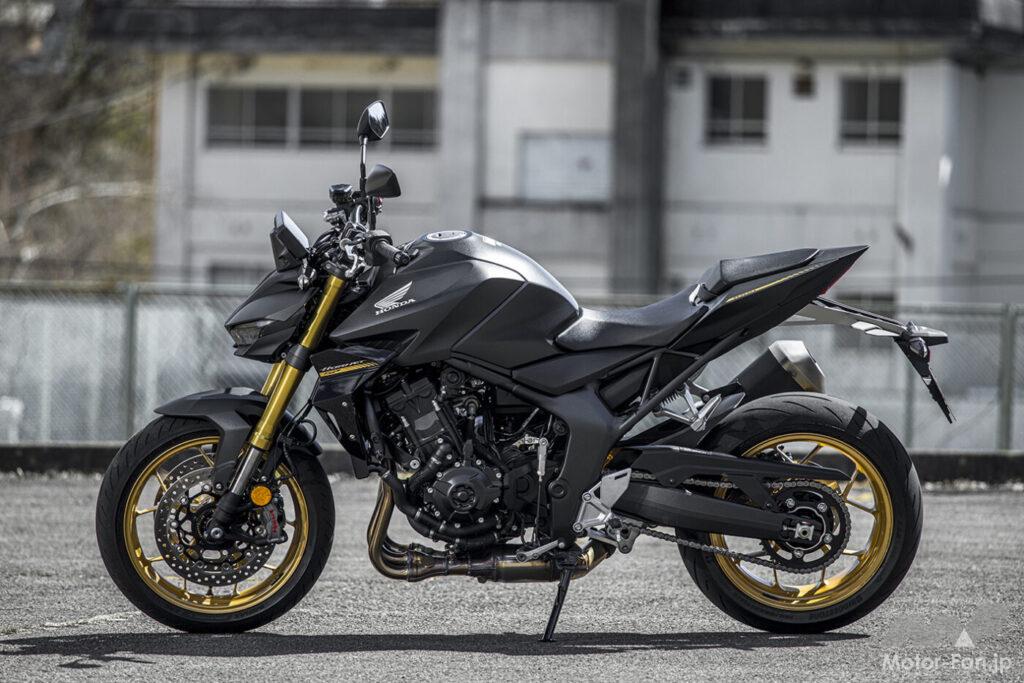
Following on from the standard model that was featured on this website a while ago, this article will introduce the ride feel of the CB1000 Hornet SP. Incidentally, looking back at the different specifications of the same vehicle that I have experienced, I have often found that the higher-spec model is clearly better than the standard model, but  this was not necessarily the case with this model.

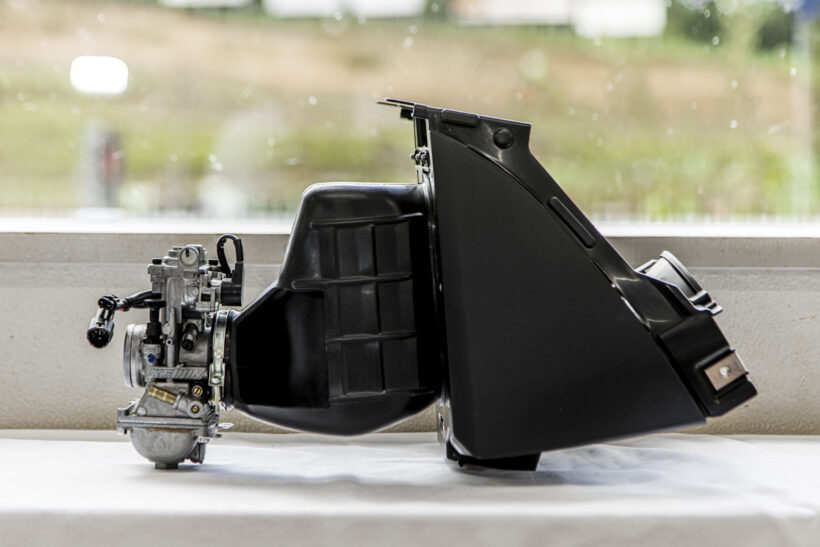
The in-line four-cylinder engine is based on the final model of the CBR1000RR, while the air cleaner box and air funnels are specially designed.
Before we get to the main topic, let’s take a look at the features of the SP that can be identified from the exterior: a Brembo Stylema caliper on the front, an Ohlins TTX36 rear shock (the standard is Nissin Showa), a quick shifter that can be used up and down, and an exhaust device that contributes to increased power and torque. The specs are almost the same, but the maximum output, maximum torque, and equipped weight are different (standard: 152ps, 10.6kgf-m, 211kg, SP: 158ps, 10.9kg-m, 212kg).

The exhaust device, which opens and closes a butterfly valve depending on the engine speed, is a feature unique to the SP and is deliberately installed in an inconspicuous manner.
The price of the SP is 1,584,000 yen, which is 242,000 yen more than the standard. Considering that the quick shifter available as a genuine accessory for the standard model costs 26,950 yen, a set of Brembo Stylema calipers sold in the aftermarket costs around 120,000 to 130,000 yen, and an Ohlins TTX rear shock absorber costs around 200,000 yen, it can be said that this is a very reasonable price.
The unique appeal of SP

After test riding the standard and SP CB1000 Hornet under the same conditions, the first merit of the SP was its quick shifter. I’m not the type of person who finds regular gear changes troublesome, but when I experienced how easy it was to change gears quickly and effortlessly without touching the clutch lever, without releasing the throttle when shifting up, and without having to think about matching engine revs when shifting down, I found this mechanism to be both convenient and appealing.
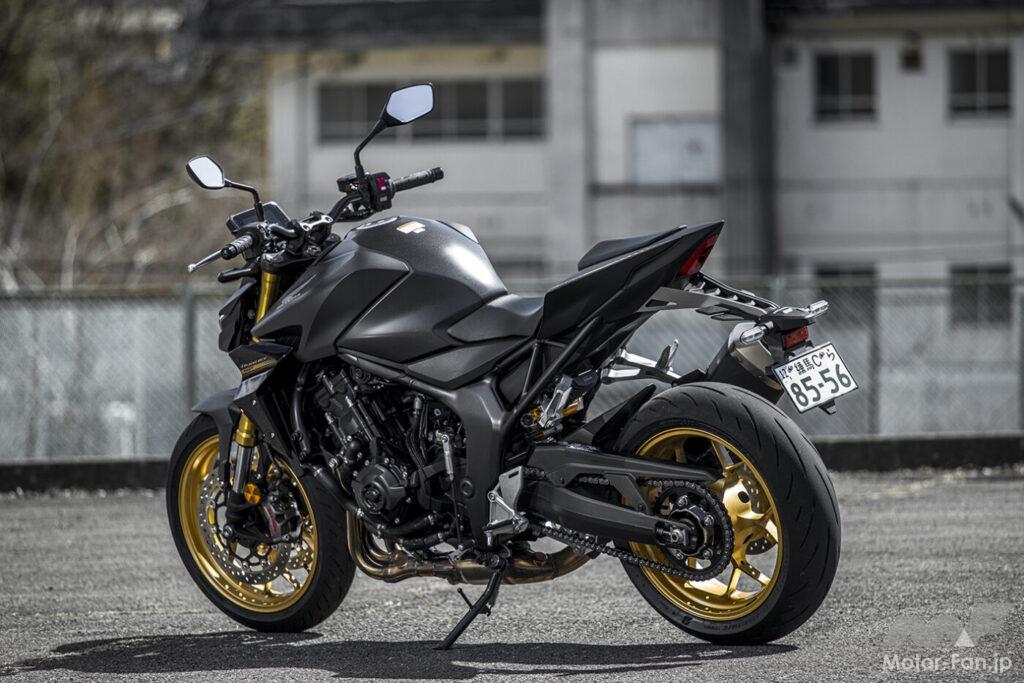
The next merit of the SP is the exhaust valve…or rather, the engine characteristics. Although the maximum output is only 6ps different, the SP’s revving up from around 6000rpm is something completely different from the standard, and you can enjoy a sharp and dynamic feeling. However, that doesn’t mean that the standard engine is slow or weak, and I do feel that the standard engine is easier to handle, but riders who like high-revving inline four-cylinder engines will want to give the edge to the SP.
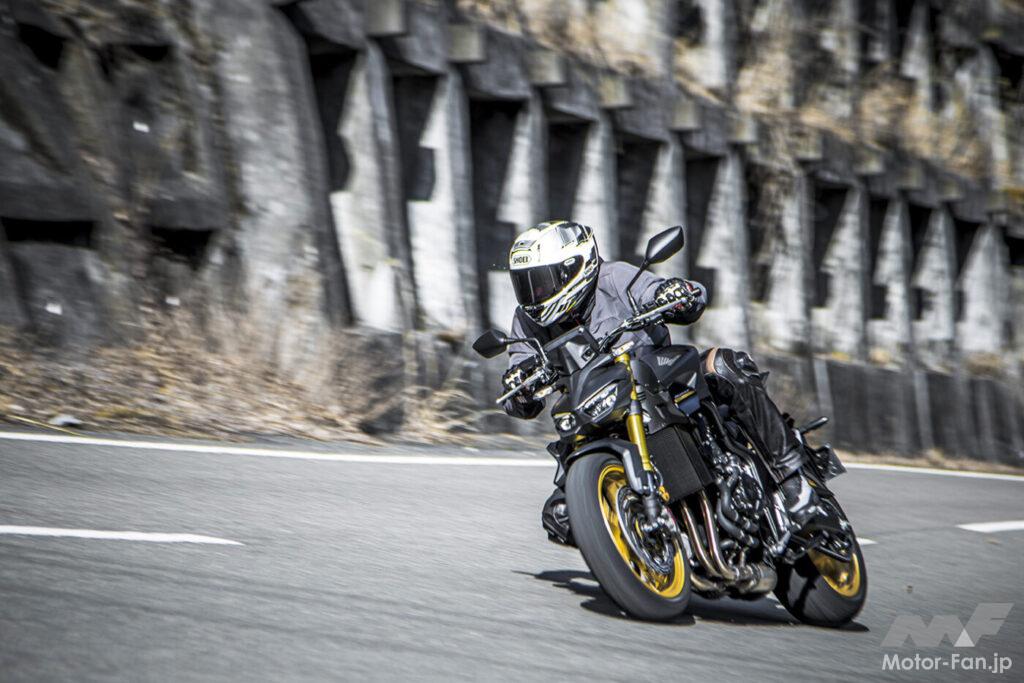
Unfortunately, however, I was unable to appreciate the merits of the Brembo Stylema caliper and Ohlins TTX36 rear shock.In fact, with regard to the latter, the standard setting seems to be designed for good roads and high load ranges, and on ordinary public roads where there are bumps everywhere and it is difficult to apply a large load, the standard setting with Showa brakes had lighter handling and a more comfortable ride.
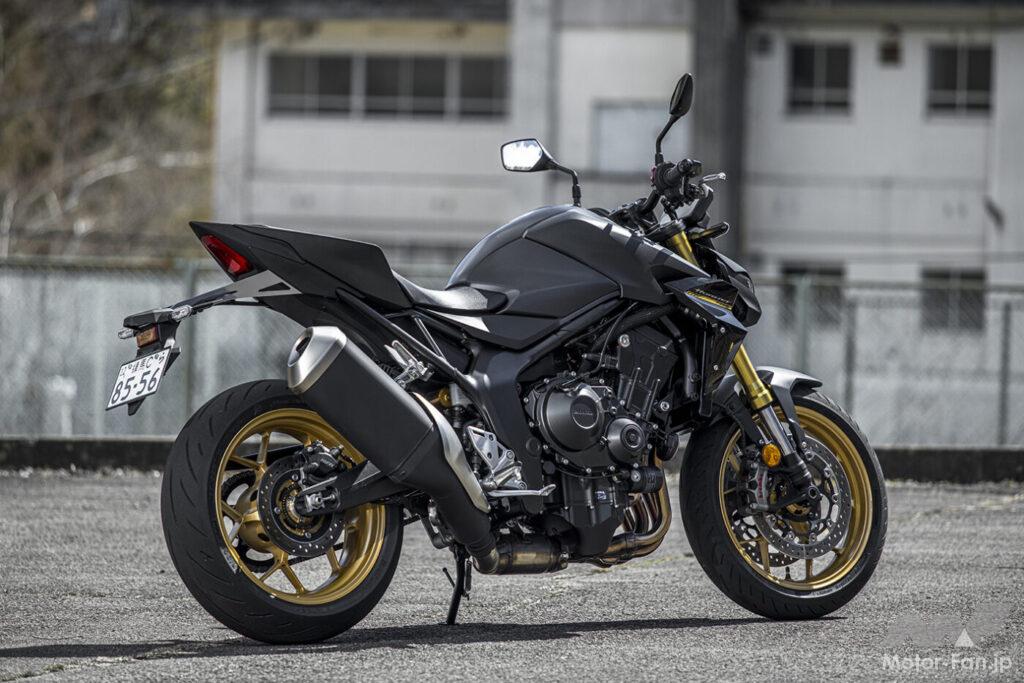
Of course, you’ll feel the superiority of the Brembo + Ohlins setup on smooth roads like a circuit, and considering the TTX36’s range, depending on the settings, it’s possible to achieve lighter handling and a comfortable ride that’s equal to or better than the standard. That said, after riding in a variety of conditions on public roads during this test ride, I didn’t think the standard front brake and rear shock were inferior to the SP.
The best varies depending on the rider’s preference.
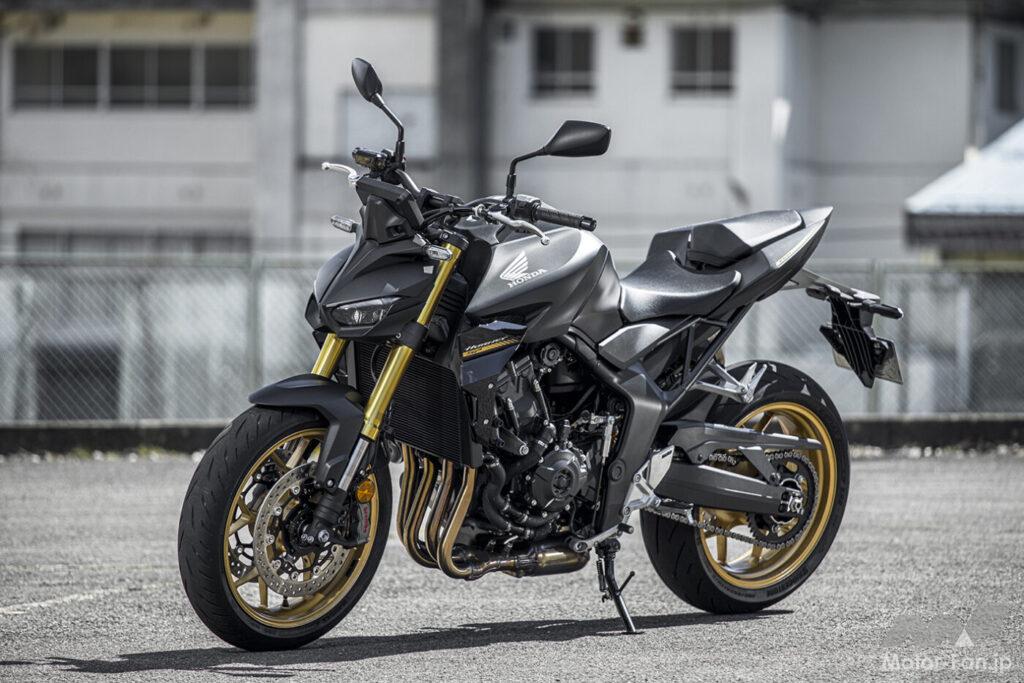
For this reason, it is difficult to decide between the standard and SP CB1000 Hornet models, but if we had to say, the standard would be better suited to riders who are touring oriented, while the SP would be better suited to riders whose main stage is winding roads with a high speed range and who participate in circuit riding events several times a year. That being said, that doesn’t mean you can’t enjoy the circuit with the standard model, and it’s not that the SP isn’t good at touring either.
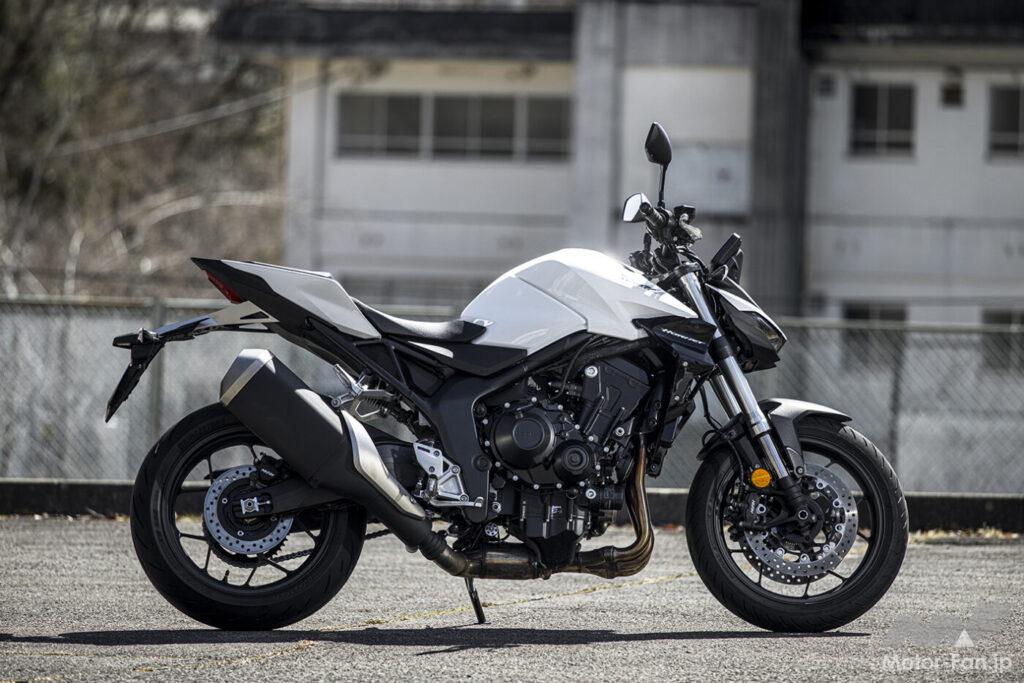
The standard front brake calipers are Nissin, the rear shocks are Showa, and there is no quickshifter or exhaust device.
By the way, as someone who enjoys touring, winding roads, and circuits, I thought right after the test ride that it would be best to customize the SP’s rear shock to my liking, but now, considering the fun I can have with the difference of 244,000 yen, I’m starting to think that maybe buying the standard would give me a more fulfilling bike life.
Riding position (height 182cm, weight 74kg)
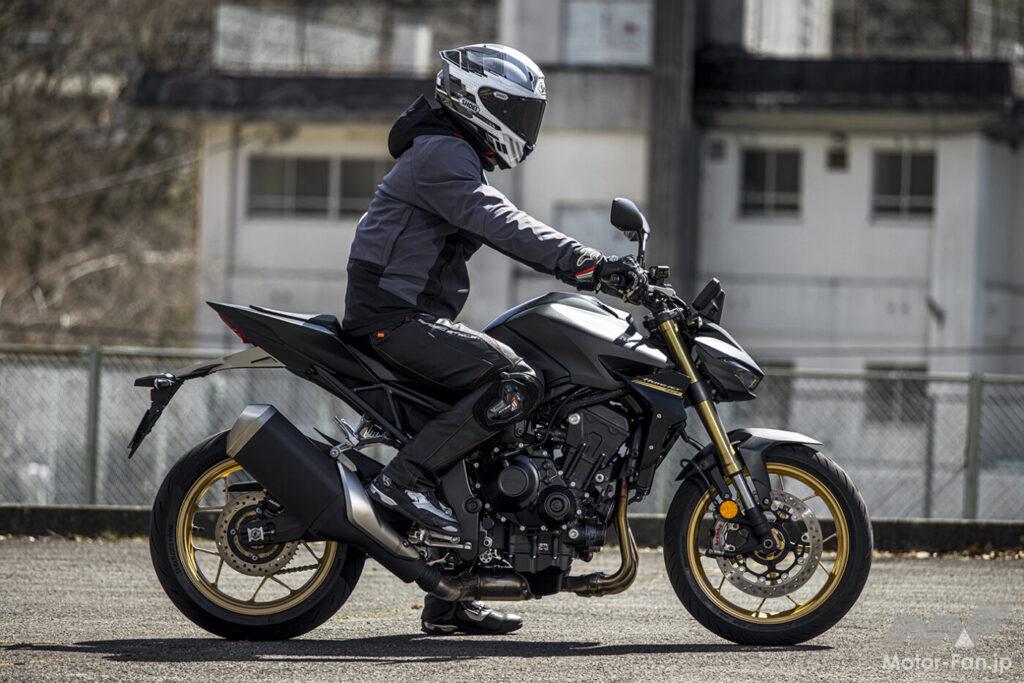
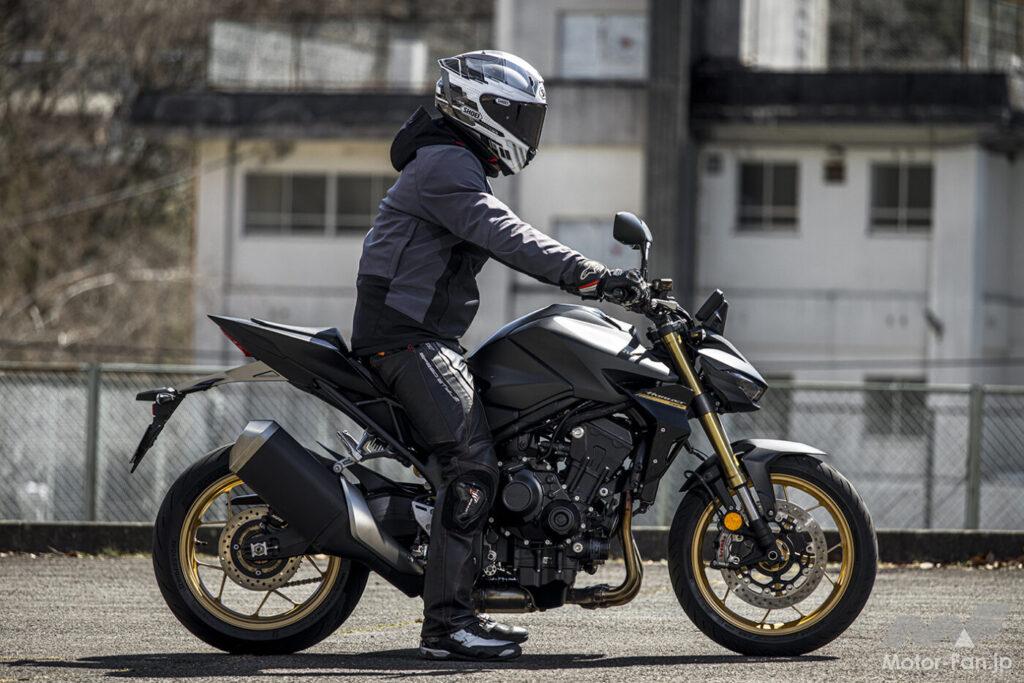
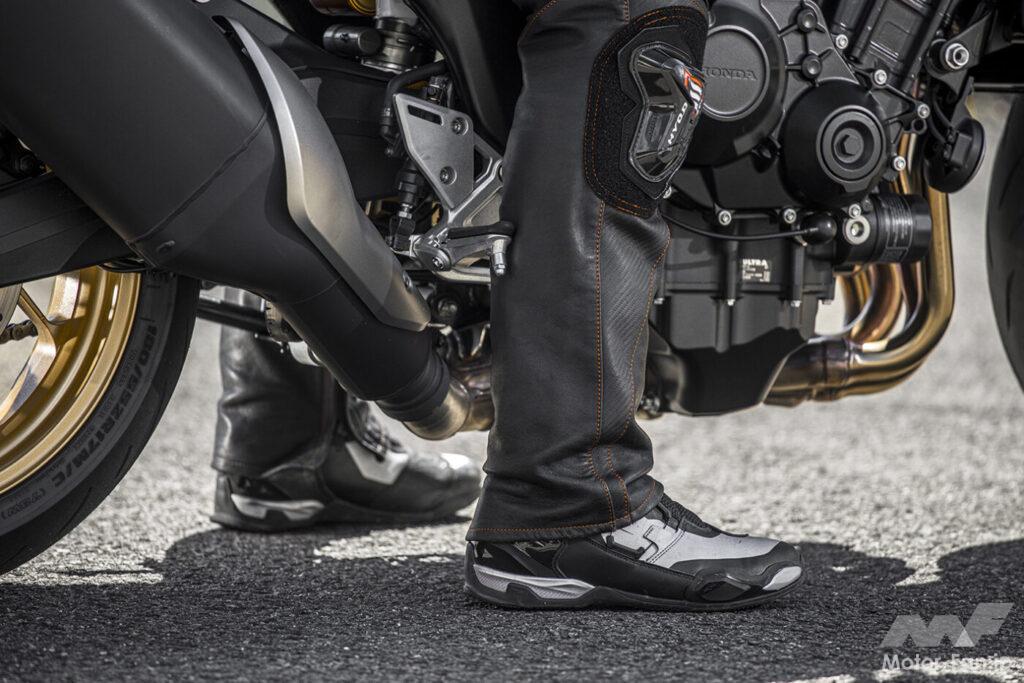
The riding position of recent liter sports naked/streetfighters often emphasizes maneuverability and gives off an aggressive vibe, but the CB1000 Hornet/SP is surprisingly comfortable and seems capable of handling city riding and touring with ease. Compared to rivals from other manufacturers, the seat is on the low side, with the 809mm figure being the same for both the standard and SP models, but there is a difference in how the rear shock sinks at 1G, and the SP has slightly better foot reach.
Detail explanation
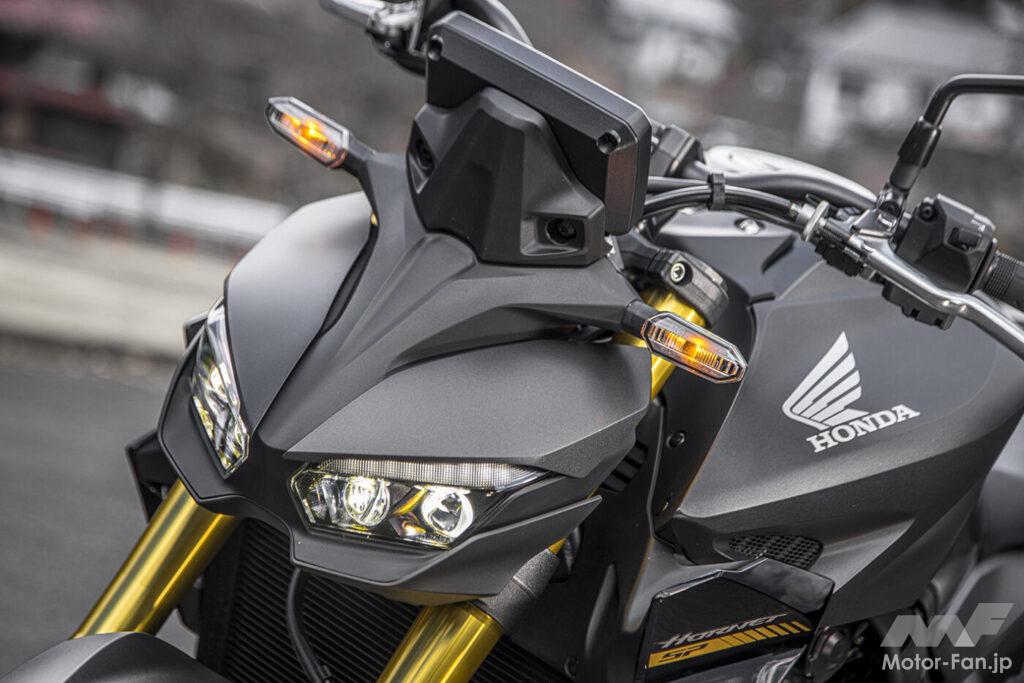
The headlights are a four-lamp type, with eyebrow-type position lamps installed above them. The ETC antenna, which comes as standard, is housed inside the headlight cowl.
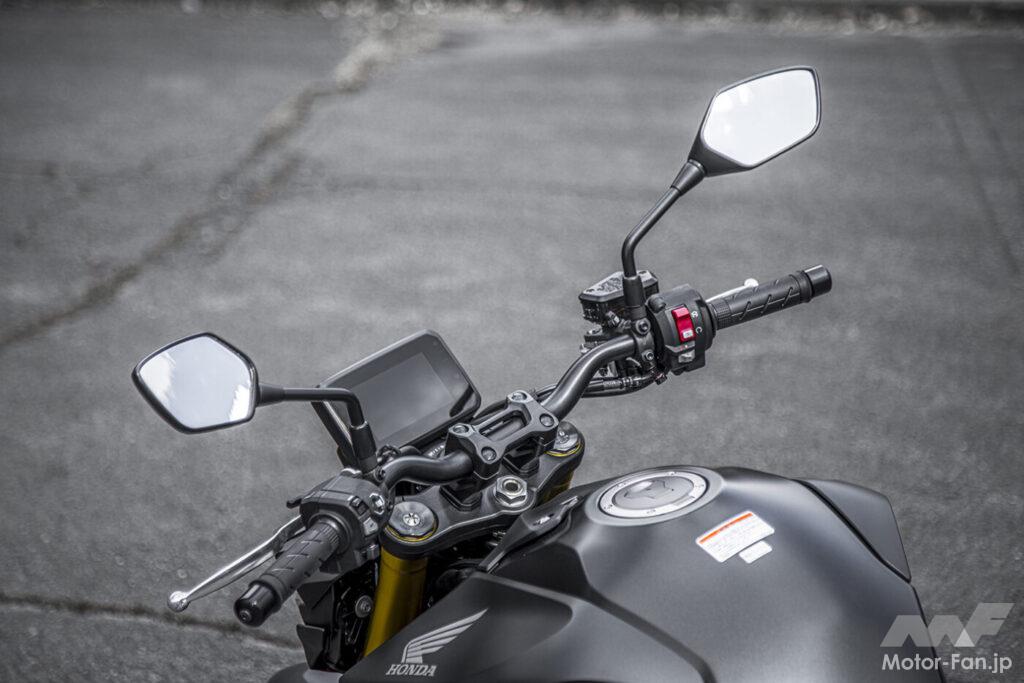
The handlebars are tapered aluminum with rubber on the mount to prevent vibration. The grip rubber is a Honda staple that has been around since the 1990s.
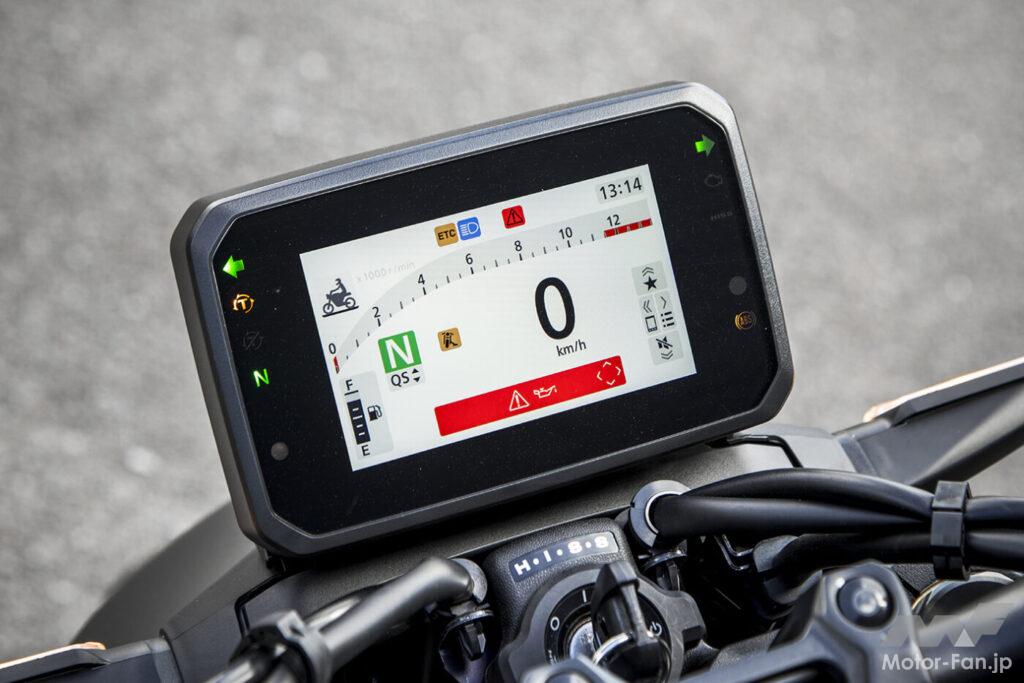
The meter is a 5-inch TFT. The riding mode, which is displayed with a picture in the upper left corner, is available in two modes that can be set by the user, in addition to the standard modes of Standard, Sport, and Rain.
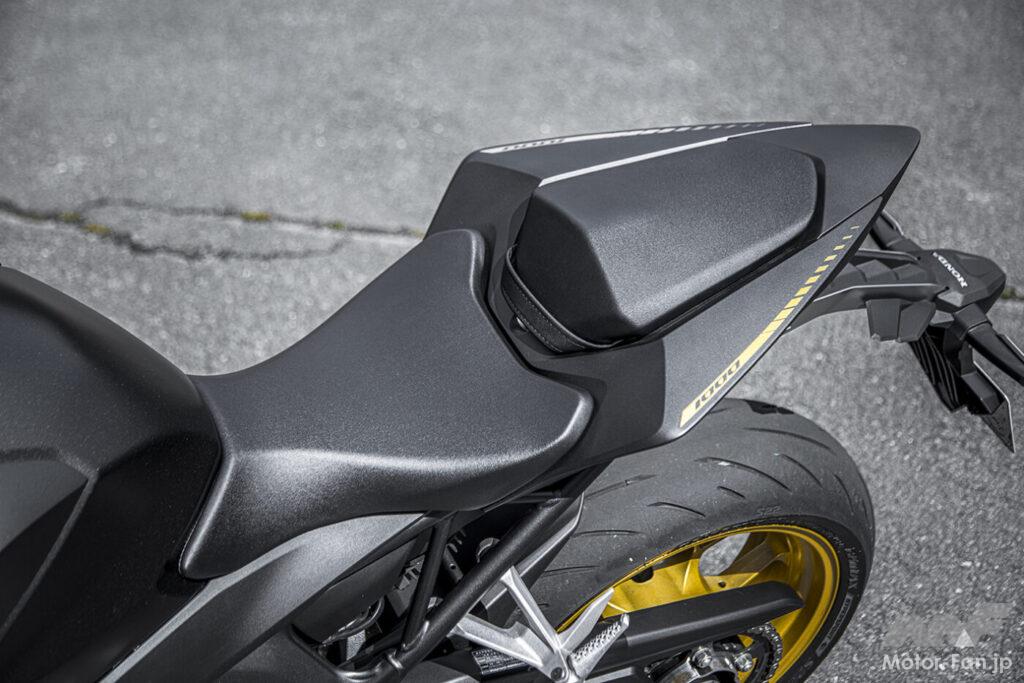
The separate type seat has a super sports feel. The main seat is bolted on and the front is tightly tapered, showing consideration for ease of foot placement.
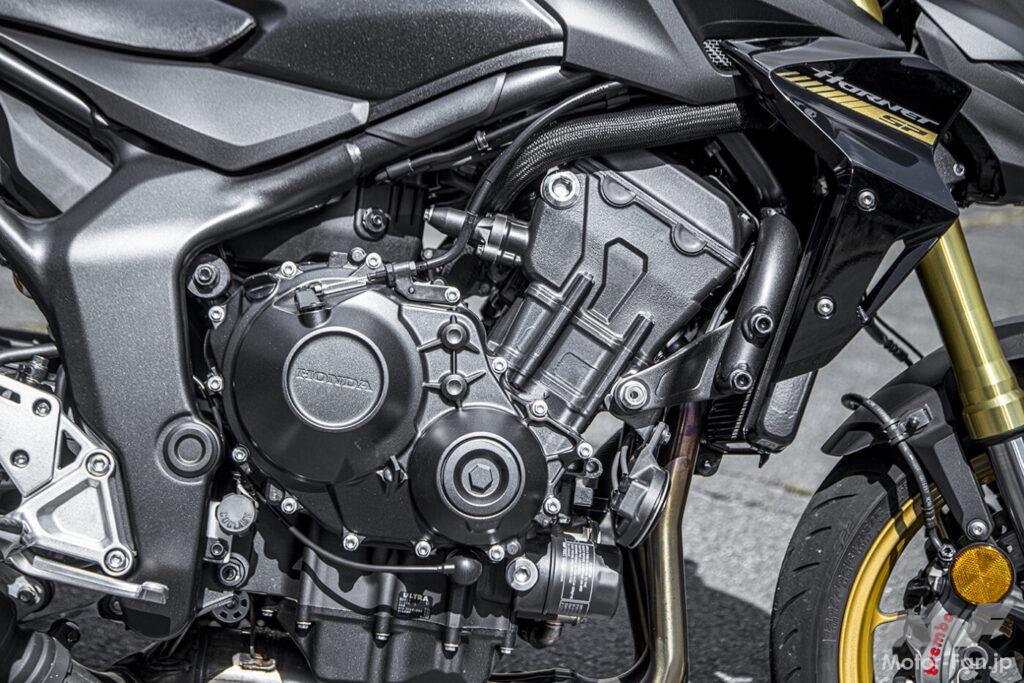
The side cam chain type in-line four-cylinder engine is based on the final model of the CBR1000RR (SC77). The pistons, camshafts, transmission, etc. have been specially designed for use on public roads.
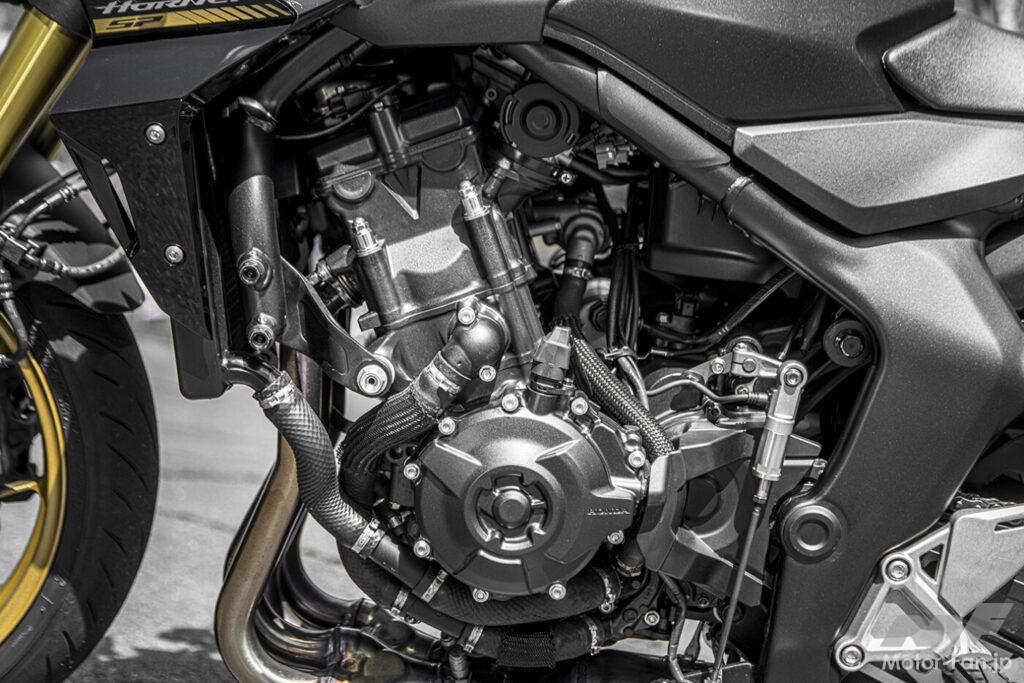
The maximum output of 152 PS for the standard and 158 PS for the SP is on the low side for recent liter sports naked/streetfighter models, while European models typically produce around 200 PS.
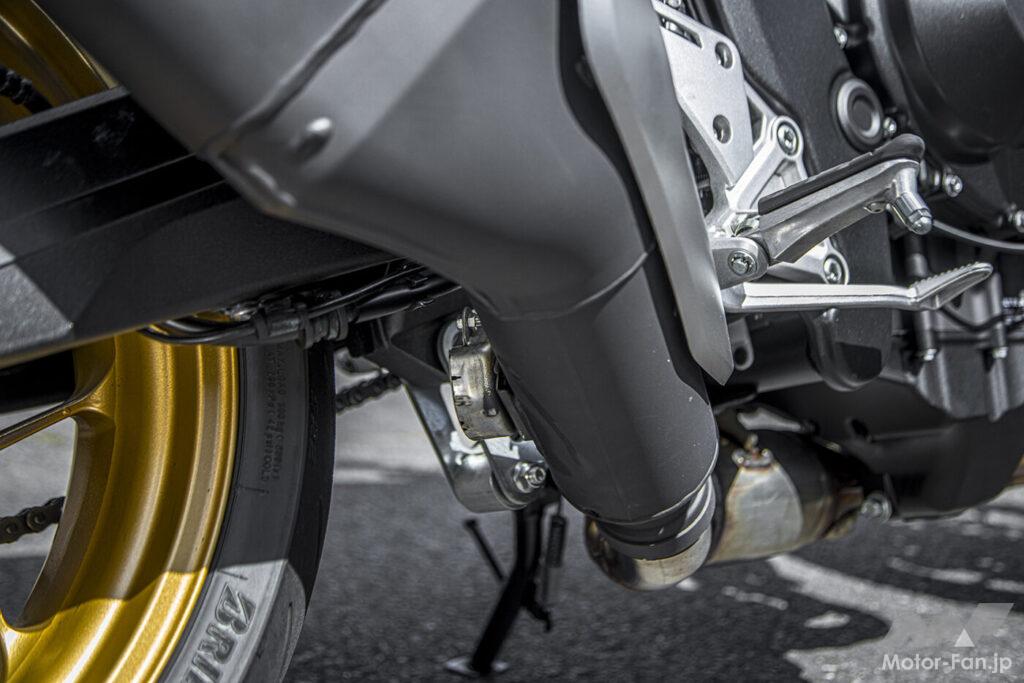
The SP features a butterfly-type exhaust device at the front of the muffler, a mechanism not present in the standard model.
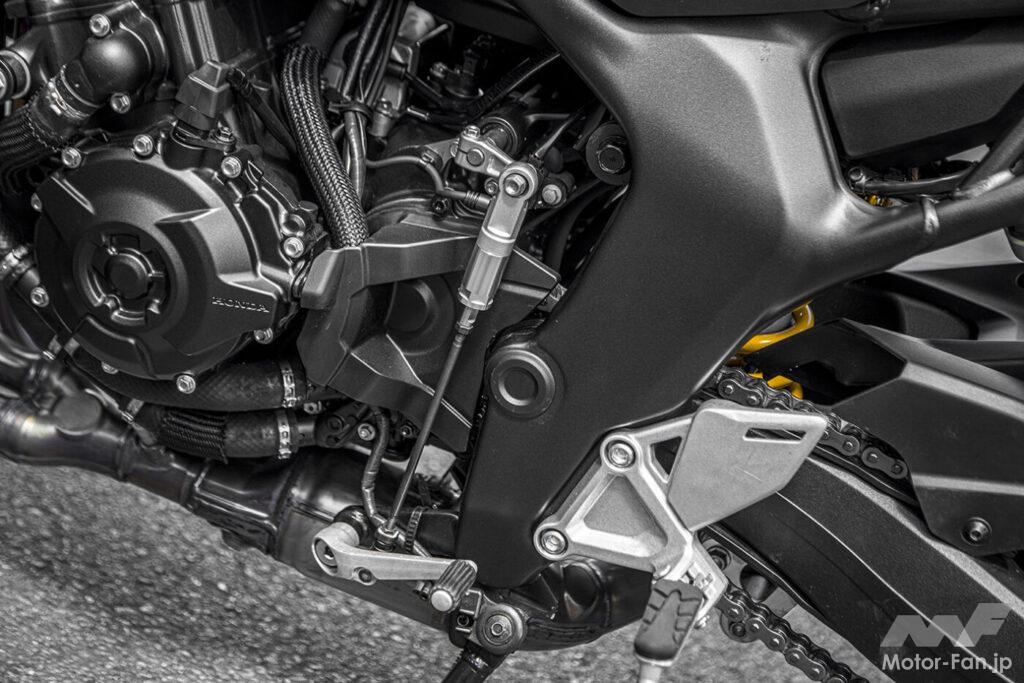
The standard model comes equipped with a quick shifter, which is treated as a genuine accessory, but the SP model comes standard with a sensor on the top of the shift rod.
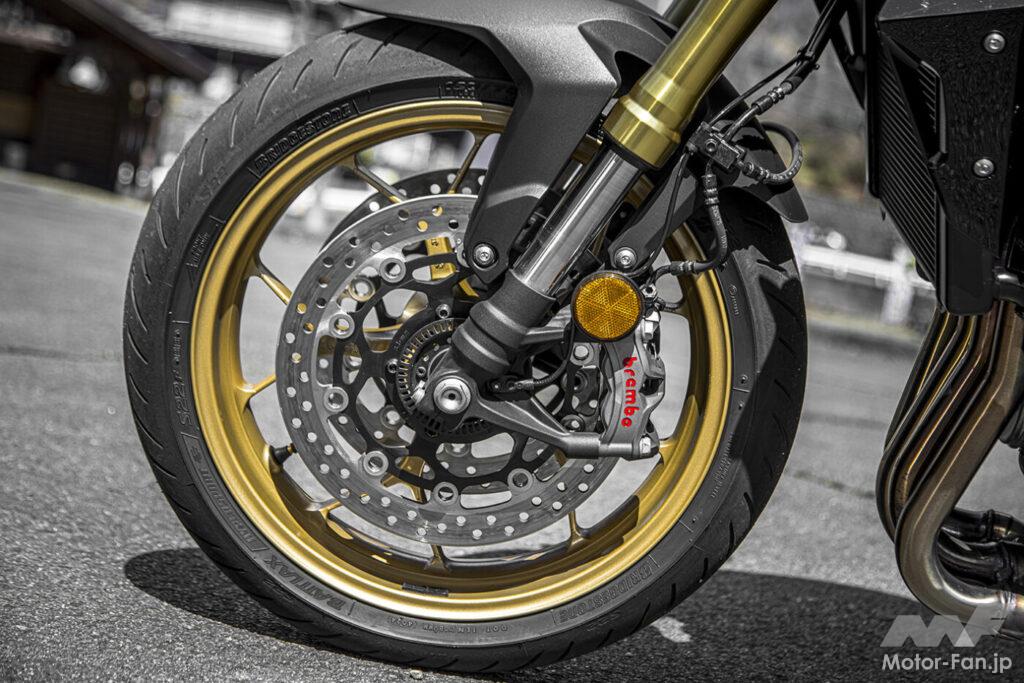
The front brake calipers are radially mounted 4-pistons, with Nissin on the standard and Brembo on the SP. The brake hoses are also different for each model, but the φ320mm discs are the same for both specifications.
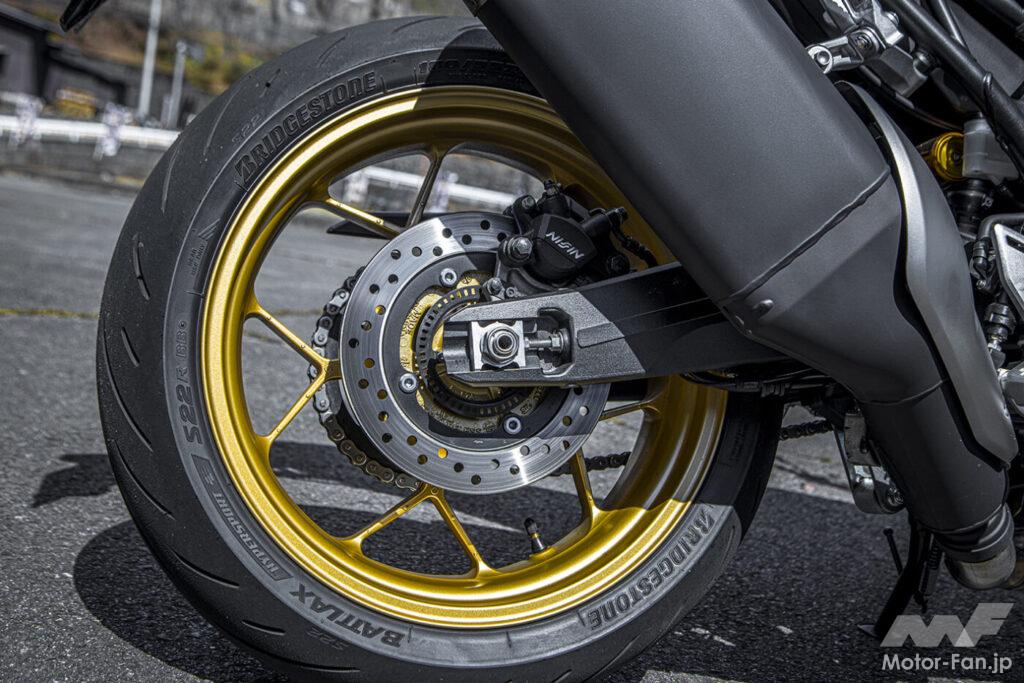
The rear brake is a 240mm disc with a Nissin single-piston caliper, and the wheels are F: 3.50 x 17, R: 5.50 x 17. The factory-specified tires are Bridgestone S22 and Dunlop Road Sport 2.
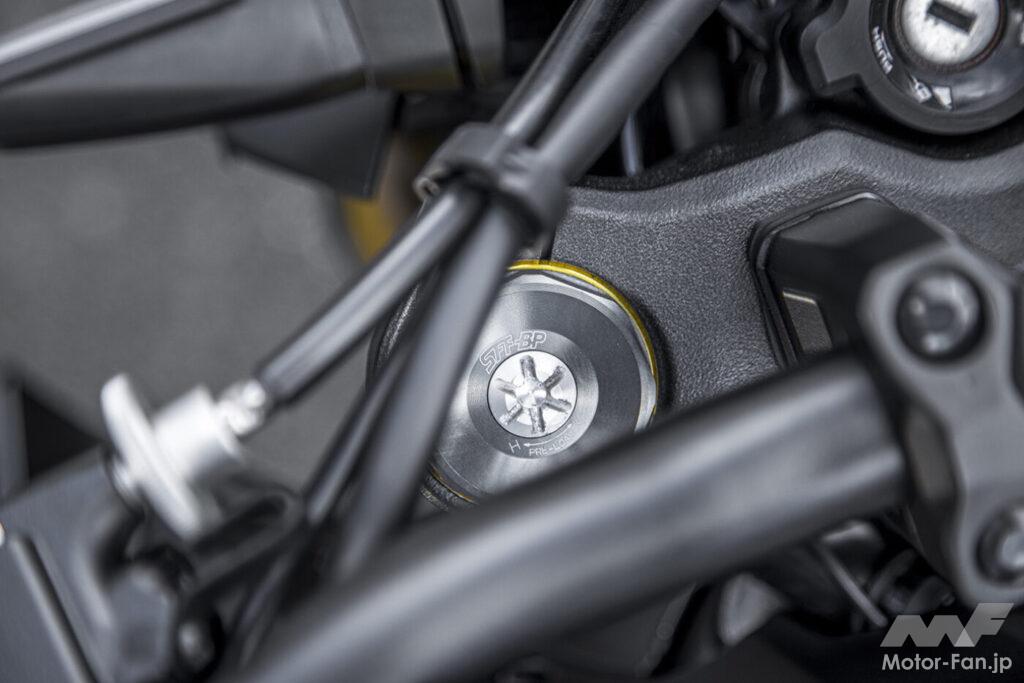
The 41mm inverted front forks are Showa’s SSF-BP, with a preload adjuster on the left top cap and a rebound damper adjuster on the right. The basic structure is the same as the standard, but the SP’s damper rod is a special design.
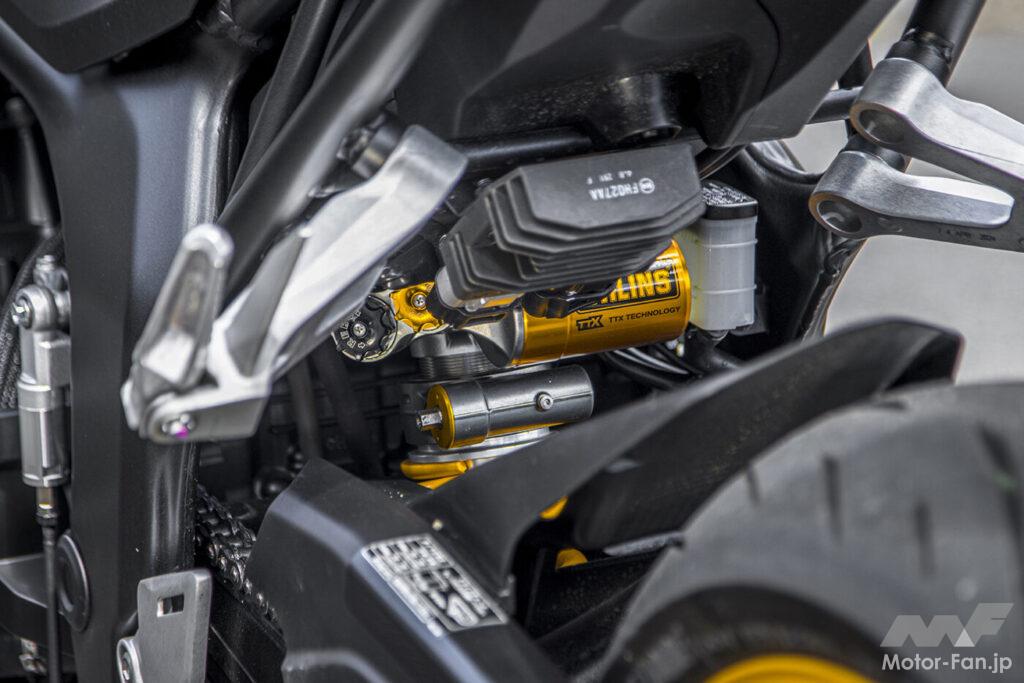
The rear suspension is a bottom link type, and the fully adjustable shock unit is an Ohlins TTX36. Compared to the standard Showa shock, the rebound damper seems stronger.
Main specifications
Model: CB1000 Hornet SP
Model: 8BL-SC86
Length x Width x Height: 2140mm x 790mm x 1085mm
Wheelbase: 1455mm
Ground Clearance: 135mm
Seat Height: 809mm
Caster/Trail: 25°/98mm
Engine Type: Water-cooled 4-stroke in-line 4-cylinder
Valve Type: DOHC 4-valve
Total Displacement: 999cc
Bore x Stroke: 76.0mm x 55.1mm
Compression Ratio: 11.7
Maximum Power: 116kW (158ps) / 11000rpm
Maximum Torque: 107N・m (10.9kgf・m) / 9000rpm
Starting Method: Self-starter
Ignition Method: Full Transistor
Lubrication Method: Wet Sump
Fuel Supply Method: Fuel Injection
Transmission Type: Constant Mesh 6-speed
Return Clutch Type: Wet Multi-plate Coil Spring
Gear Ratio
1st: 2.285
2nd: 1.777
3rd: 1.500
4th gear: 1.333
5th gear: 1.137
6th gear: 0.967
1st and 2nd reduction ratios: 1.717 and 3.000
Frame type: Diamond (twin spar)
Front suspension: Telescopic inverted type φ41mm
Rear suspension: Bottom link mono shock (Prolink)
Front tire size: 120/70ZR17
Rear tire size: 180/55ZR17
Front brake type: Hydraulic double disc
Rear brake type: Hydraulic single disc
Vehicle weight: 212kg
Fuel used: Unleaded premium gasoline
Fuel tank capacity: 17L
Passenger capacity: 2 people
Fuel consumption rate reported by the Ministry of Land, Infrastructure, Transport and Tourism: 22.0km/L (with 2 passengers)
Fuel consumption rate WMTC mode value, class 3-2: 17.7km/L (with 1 passenger)