

Satoyama scenery, which perfectly fits the expression "countryside," is soothing to the soul. And such satoyama is surprisingly close to home. The Akiyama district of Uenohara City, Yamanashi Prefecture, where settlements are scattered among the mountains, is a place that is far removed from tourism. That is why it is also a place where you can encounter traditional satoyama scenery. We took a tour of the satoyama, connecting prefectural roads and forest roads.
A glimpse of traditional life amid the rice terrace scenery
Akiyama Village, located at the easternmost tip of Yamanashi Prefecture, borders Sagamihara City in Kanagawa Prefecture. Though now part of the Akiyama District of Uenohara City, the area retains much of its charming village atmosphere. Settlements dot the Akiyama District along the Akiyama River, with Prefectural Route 35 running east to west and serving as the only main road. Separated by mountains, National Route 20 and the Chuo Expressway run north, while National Route 413 (Doshi Road) runs south. Compared to Route 20 and Doshi Road, traffic volume is significantly lighter, so it has long been used as a shortcut. It was simply an area people passed through. Perhaps it's because there aren't any prominent tourist facilities or attractions that people didn't bother to stop.
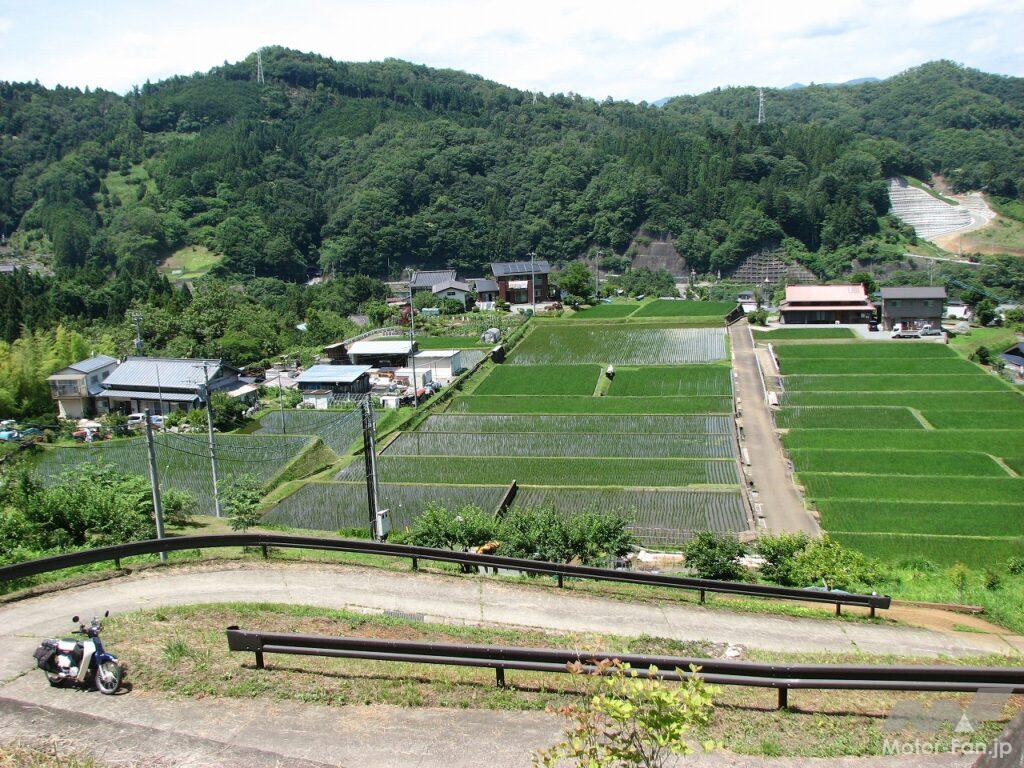
While Akiyama lacks tourist attractions, it also retains the rustic village atmosphere. The most notable example is the rice terraces of Tomioka, located at the easternmost point of the district. I'd visited there once before in the fall after the harvest, but I decided to revisit it.
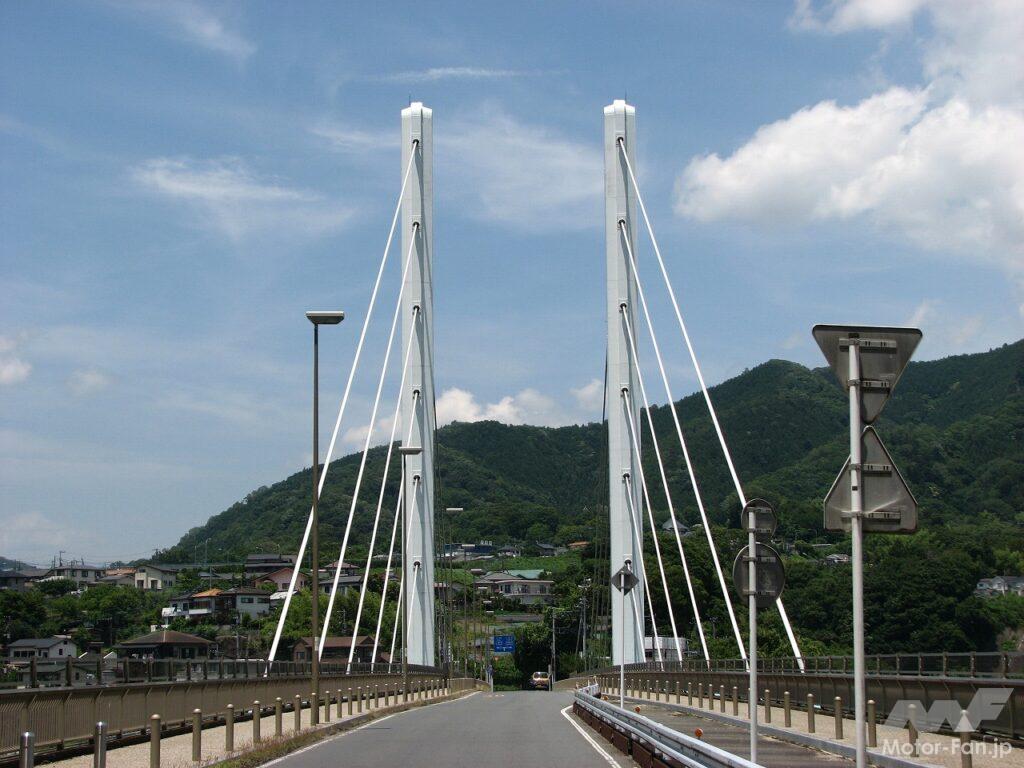

Cross the Otarumi Pass on National Route 20, then cross Katsuse Bridge on Prefectural Route 520 from the Chuo Expressway Sagamiko IC entrance intersection. There were many boats on Lake Sagami. After passing through a residential area, head north to Prefectural Route 76, then head west again on Prefectural Route 520. After a while, the road makes a hairpin turn to the right, heading toward Uenohara City. Instead of the hairpin turn, continue straight ahead. The road narrows and gradually enters the mountains. Fallen trees and rocks abound, so be careful. Turn left at the end and continue along a narrow, up-and-down mountain road. After a while, the road reaches a dead end again, emerging onto Prefectural Route 35. After a short distance, the road finally widens and you come to the village of Okumakino. Passing this village, you enter Yamanashi Prefecture. Leaving the easternmost settlement of Akiyama, the Akiyama Bridge crosses the Akiyama River and branches off to the south. Turning left after crossing the bridge, you'll come to a small shop. Turning right there and following the narrow road, the view suddenly opens up and the rice terraces spread out before you. This is the Akiyama Tomioka rice terraces.
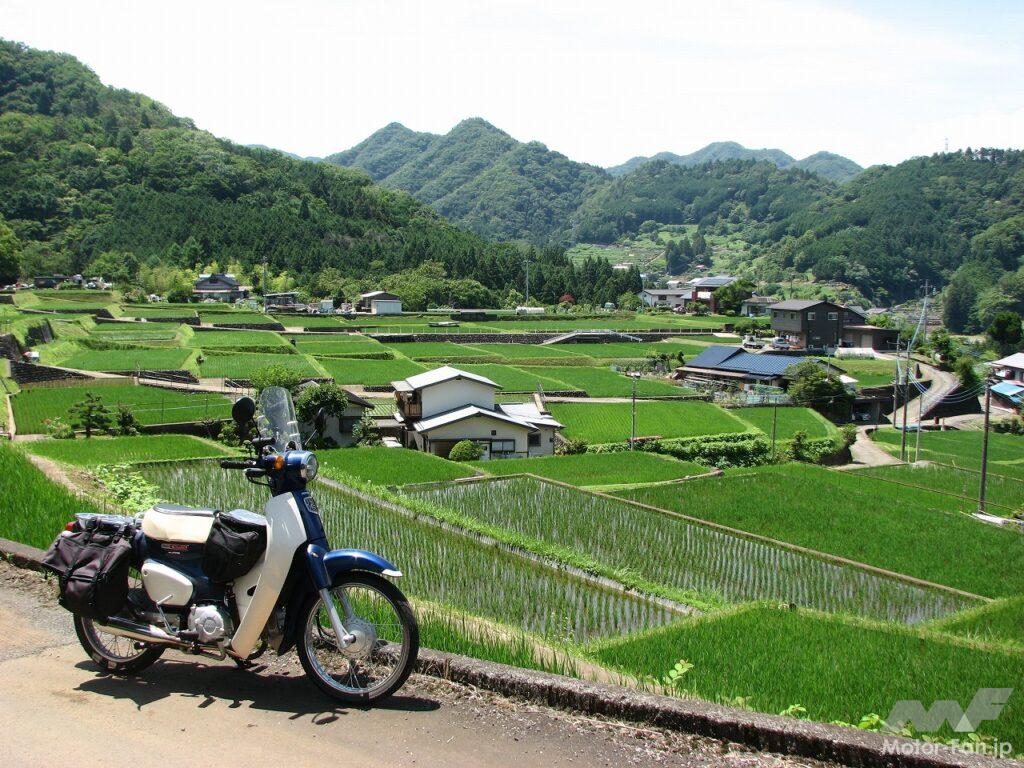
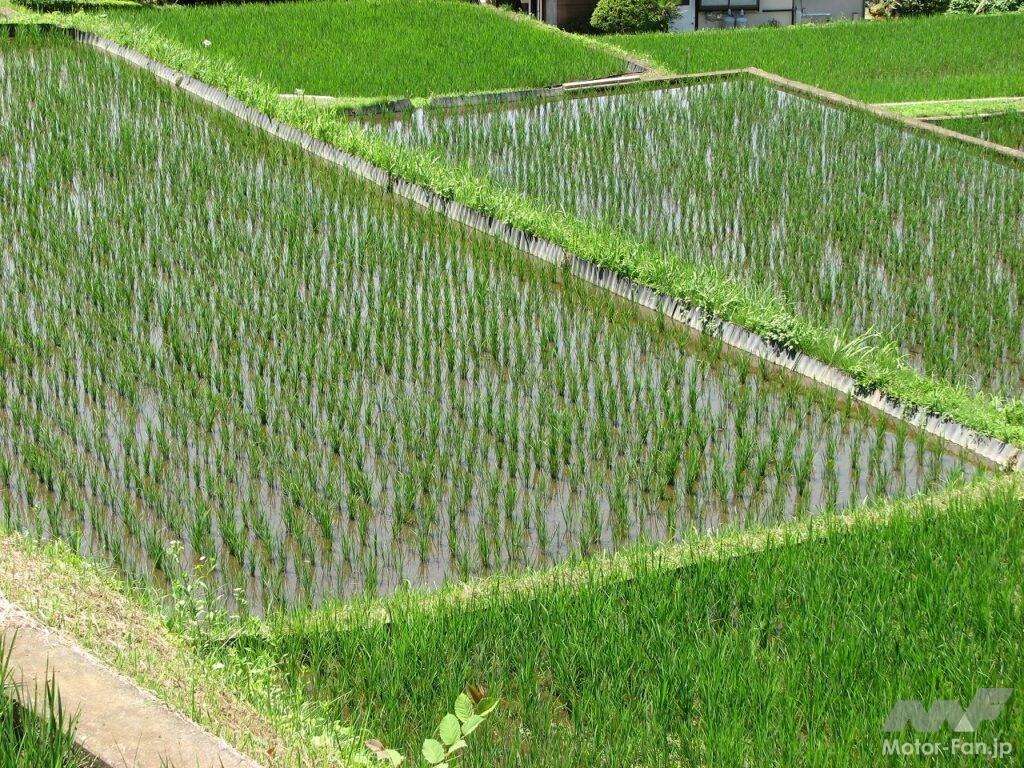
After planting, the green rice sways in the breeze, creating a truly tranquil rural landscape. Perhaps the farming work has already finished, as there are no people in sight. It's a strange feeling to see such a rural landscape right next to the designated city of Sagamihara. And the Super Cub suits this landscape perfectly.
Driving along the work road leading to the rice terraces, I parked my Super Cub in a spot with a view and quenched my thirst with barley tea, feeling refreshed.
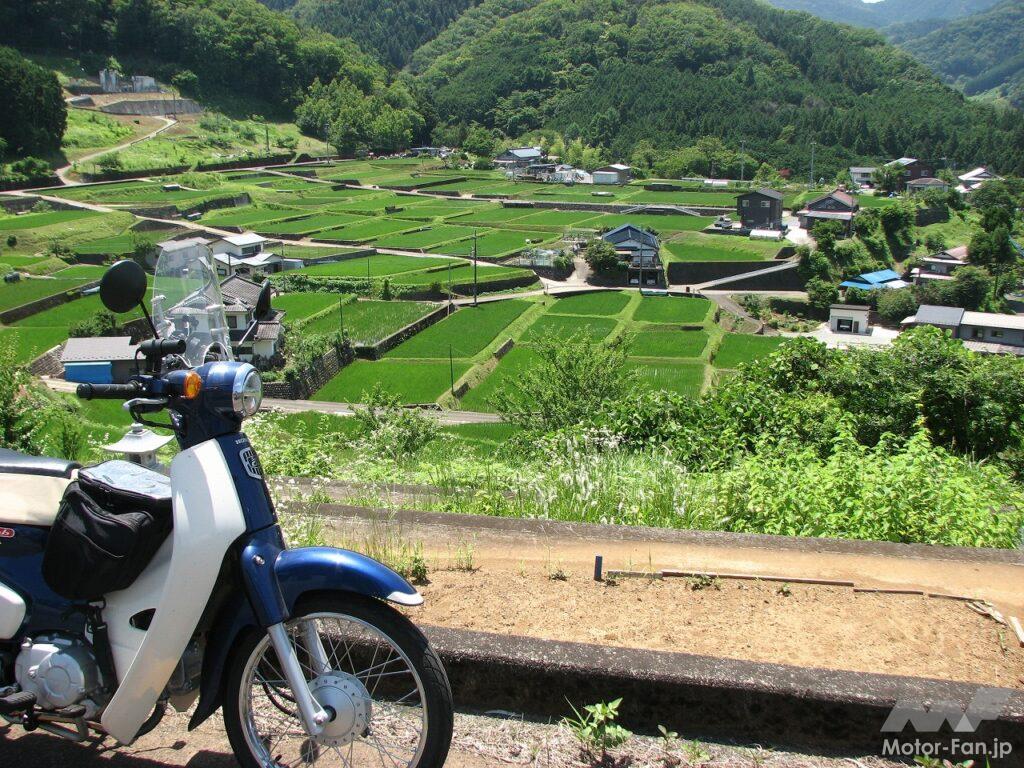
The Akiyama Tomioka rice terraces are a little-known spot for those in the know, meaning that not many people know about them. However, the rural mountain atmosphere is pleasing to the eye, and the Super Cub suits them well.
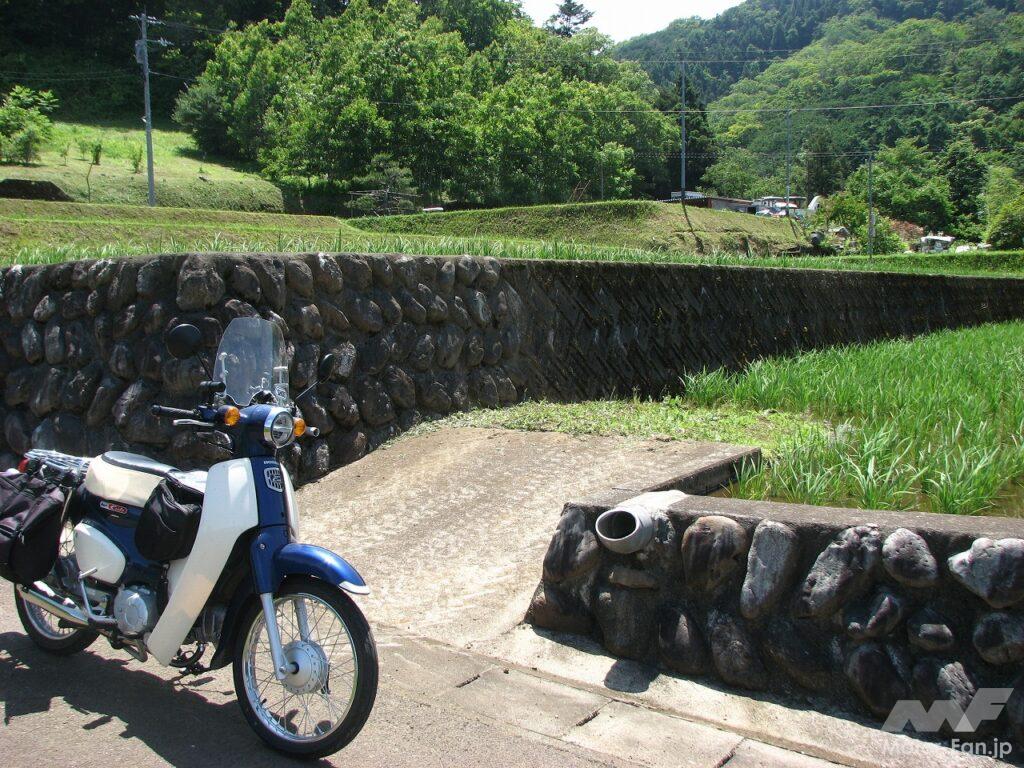
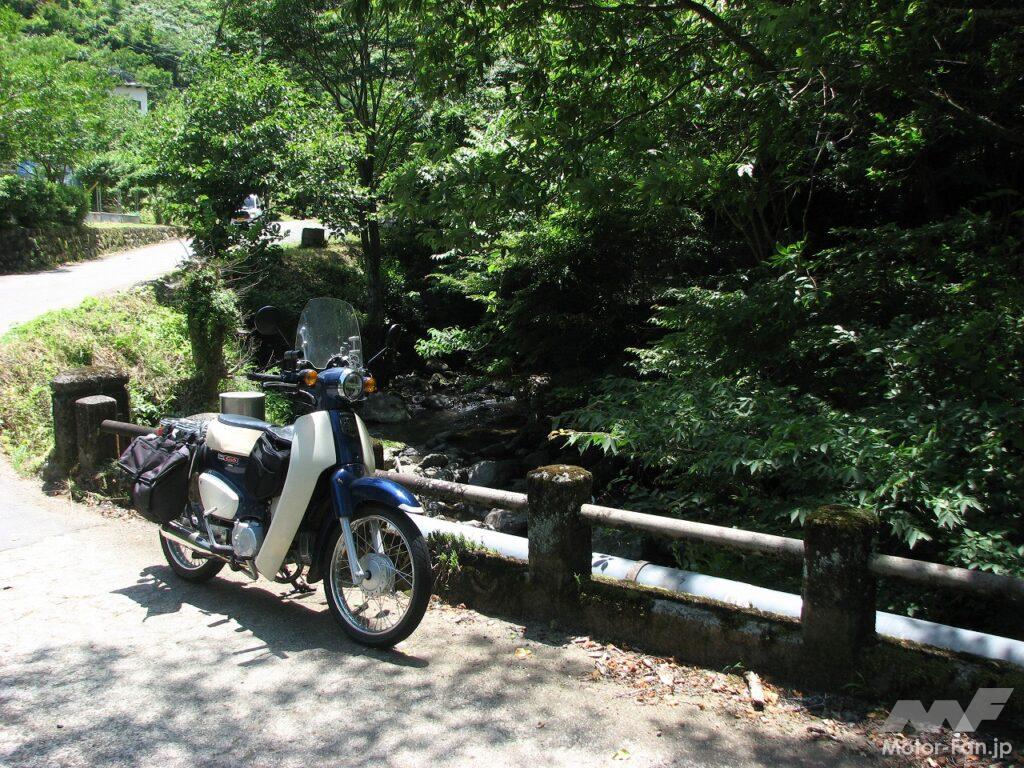
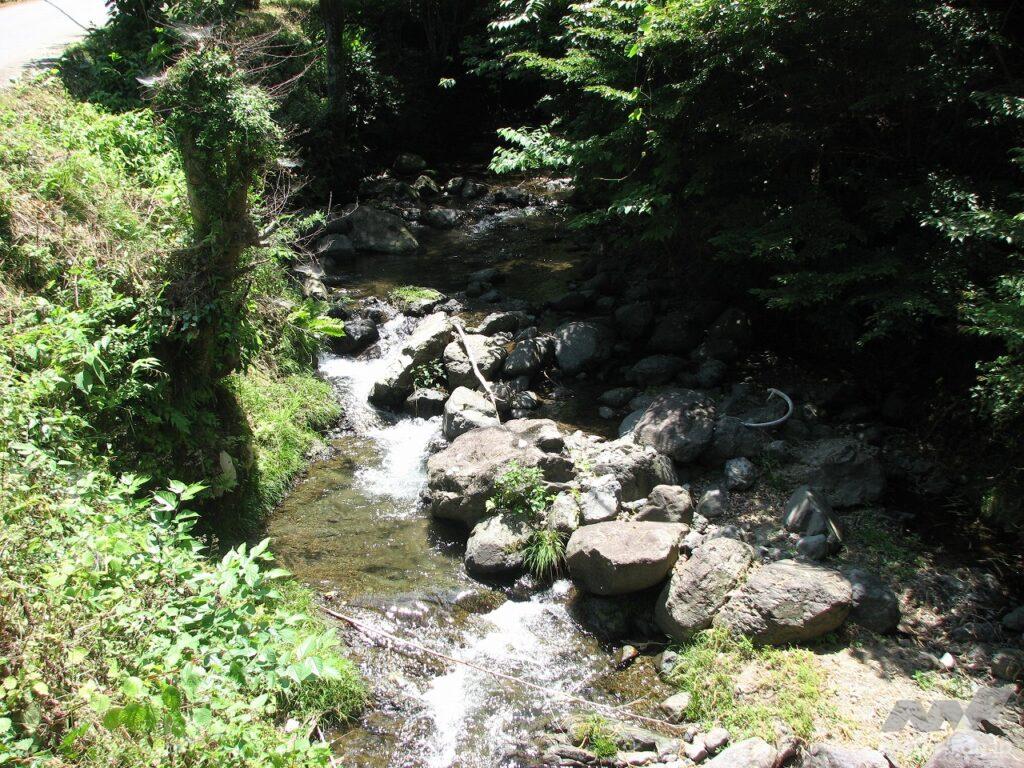
After leisurely enjoying the unspoiled Japanese scenery, I continued along the Anderasawa Line forest road. The narrow, paved road runs alongside the Anderasawa River, connecting mountain settlements. Along the way, I pass a gokura, a rice and grain warehouse established in villages nationwide by order of the shogunate during the Edo period, and the abandoned Anderasawa branch school of Sakurai Elementary School. Continuing along the forest road and crossing the Gendo Pass leads to Doshi Village. However, I chose to follow the forest road that branches off to the right. As I drove along the poorly paved forest road, gaining altitude, a truss bridge appeared before me. Huge cylinders pierced the mountains on both sides. Anyone would wonder, "Why on earth is this in the mountains?" In fact, this is the track for the Linear Chuo Shinkansen, currently under construction. Seeing this cutting-edge railway running through the mountainous terrain where bears are likely to appear at any moment, I felt as if I had entered another world.
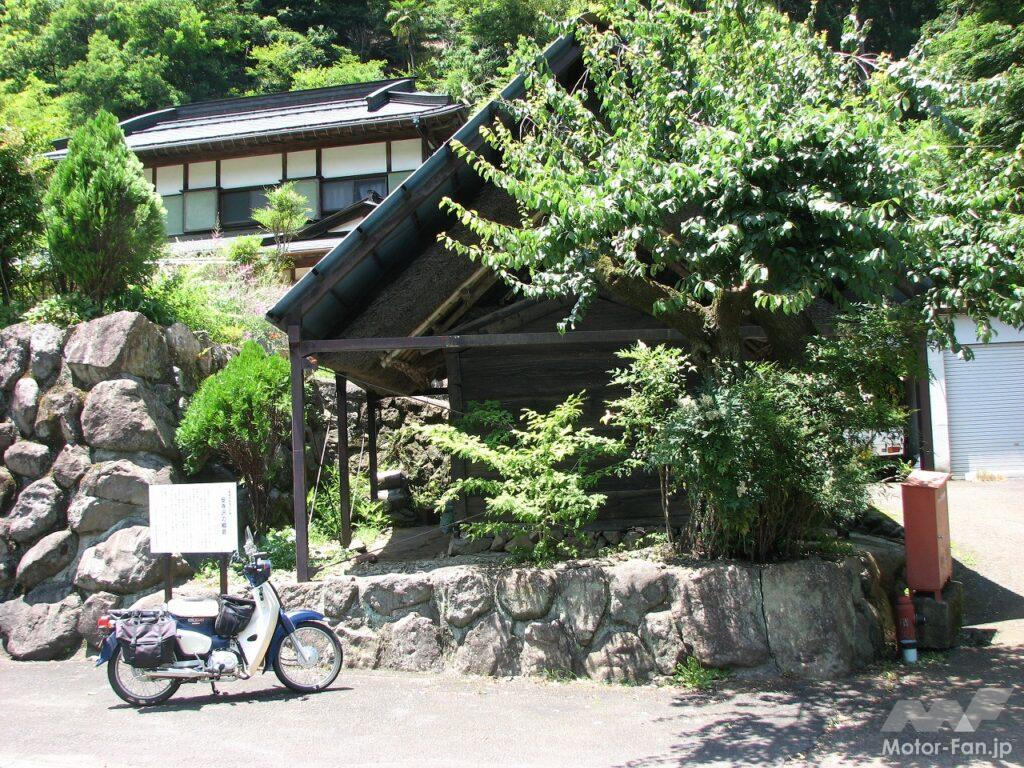
As you go along the Anderazawa forest road, you will come across a gokura (storehouse) at the entrance to the Anderazawa village. Gokura were rice and grain warehouses established in villages across the country by order of the shogunate during the Edo period, and are said to have helped farmers by storing grains in times of poor harvests.
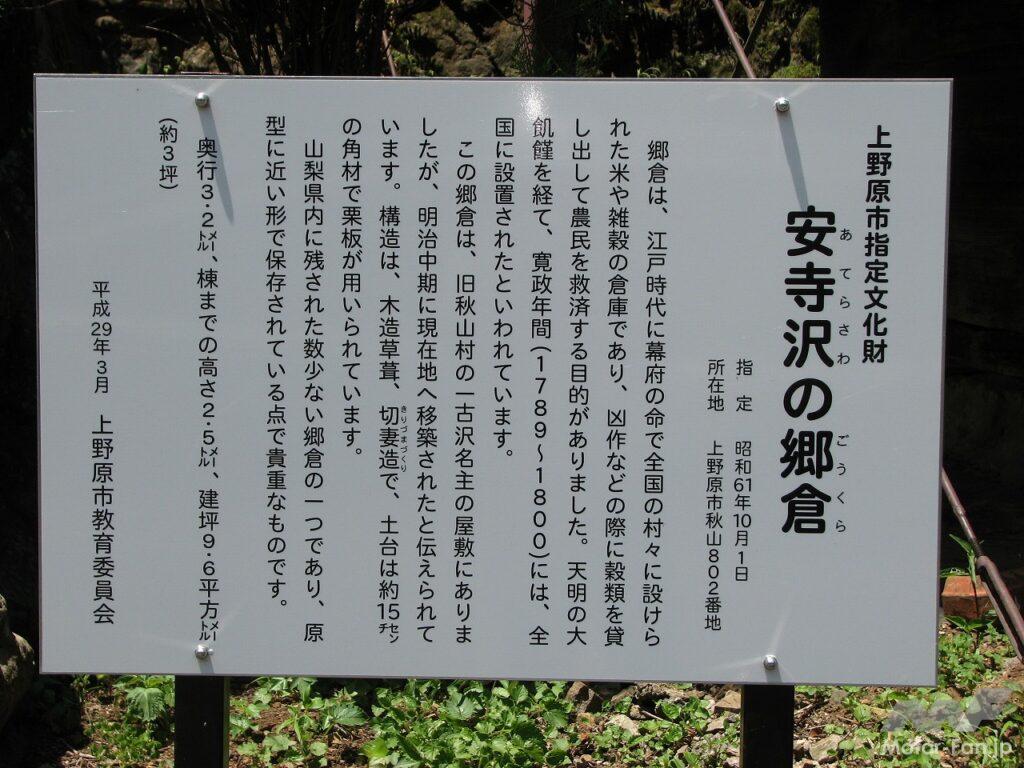
The much talked about stockpiled rice was once stored in these storehouses.

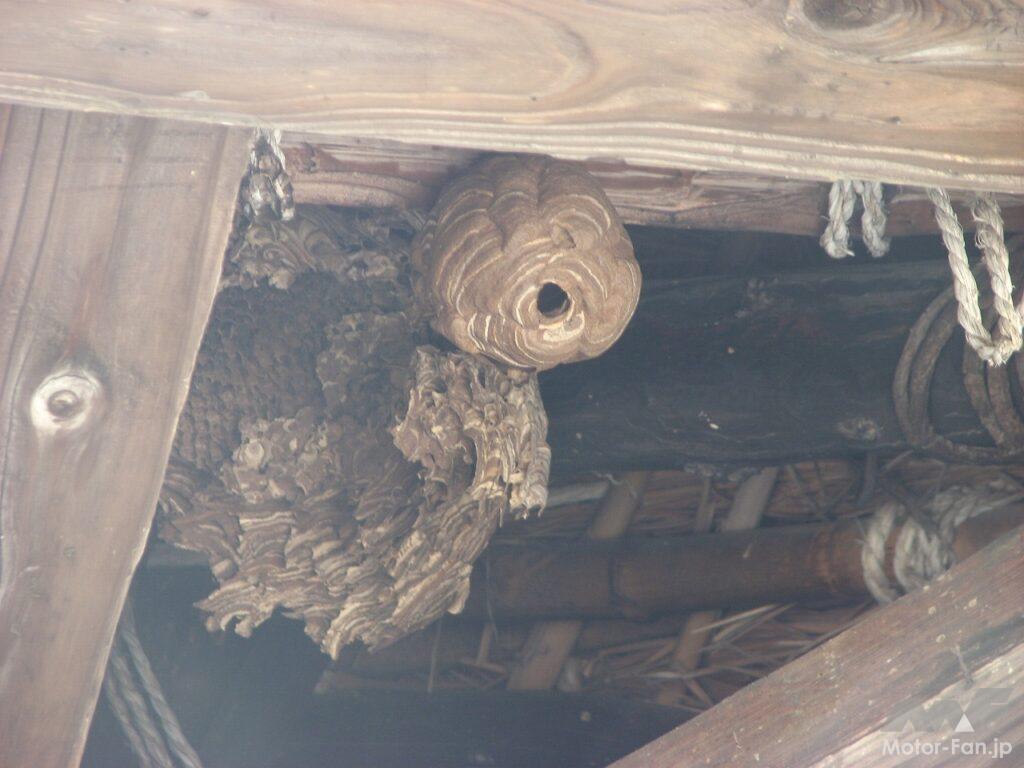
If you follow the Anderazawa River up the forest road, you will come to the abandoned Anderazawa branch school of Sakurai Elementary School. The wooden school building, which is still used as a meeting place, has a charming atmosphere.
ADVERTISEMENT

Although construction is significantly behind schedule, construction of the Linear Chuo Shinkansen is steadily progressing toward its opening. When you encounter the tracks in this remote mountain area, it feels like you’ve entered another world.
Passing a bear warning sign, I returned the way I came and headed to Akiyama Onsen, arguably Akiyama's only tourist facility. Located close to the Tomioka rice terraces, this day-use hot spring facility is adjacent to an RV park. The facility also features a restaurant and indoor/outdoor heated pools, and was bustling with families on the day I visited. There were several motorcycles parked in the bicycle parking area.
 After riding in the humid, 30-degree heat, I decided to enjoy a hot spring for the first time in a while. With an indoor bath, sauna, and open-air bath, it seemed like I could spend a long time there. While I'm not a big fan of long baths, I thoroughly enjoyed both the indoor and open-air baths. After refreshing myself, I stopped off at Akiyama, a Japanese restaurant along Prefectural Route 35, for some Zaru Soba (600 yen), and concluded my Satoyama exploration tour.
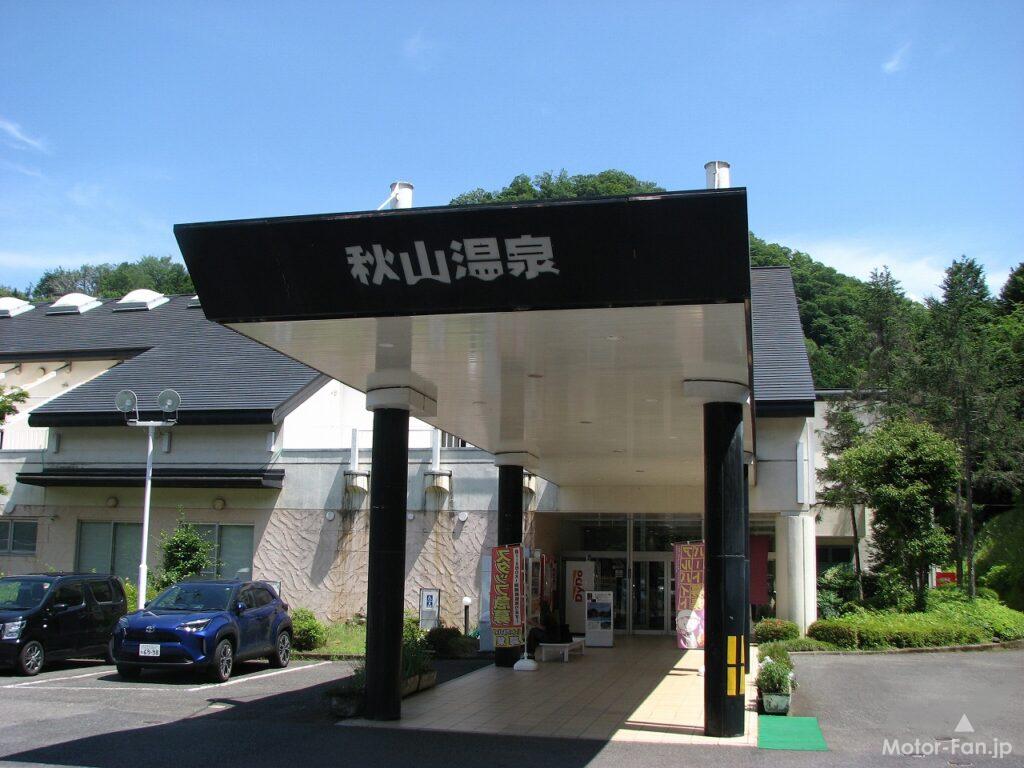
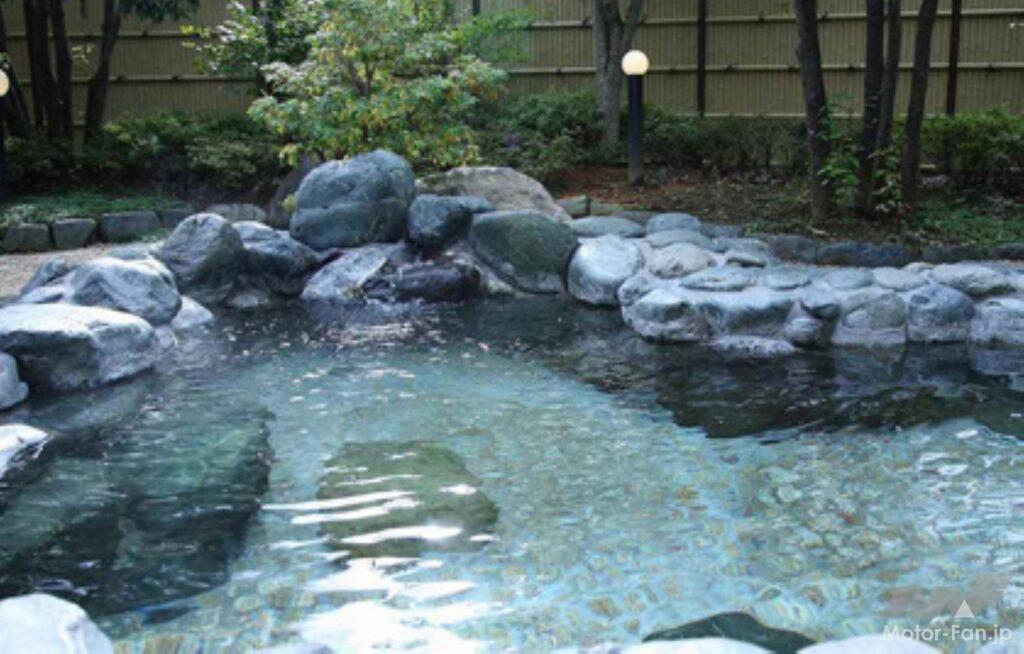
Akiyama Onsen, the only tourist facility in the Akiyama area, is a new hot spring cure site. It has a simple alkaline spring that flows directly from the source, and it has a bubble bath, an open-air bath, and a sauna. It also has a swimming pool that can be used all year round. There is also a restaurant. http://www.akiyamaonsen.com/
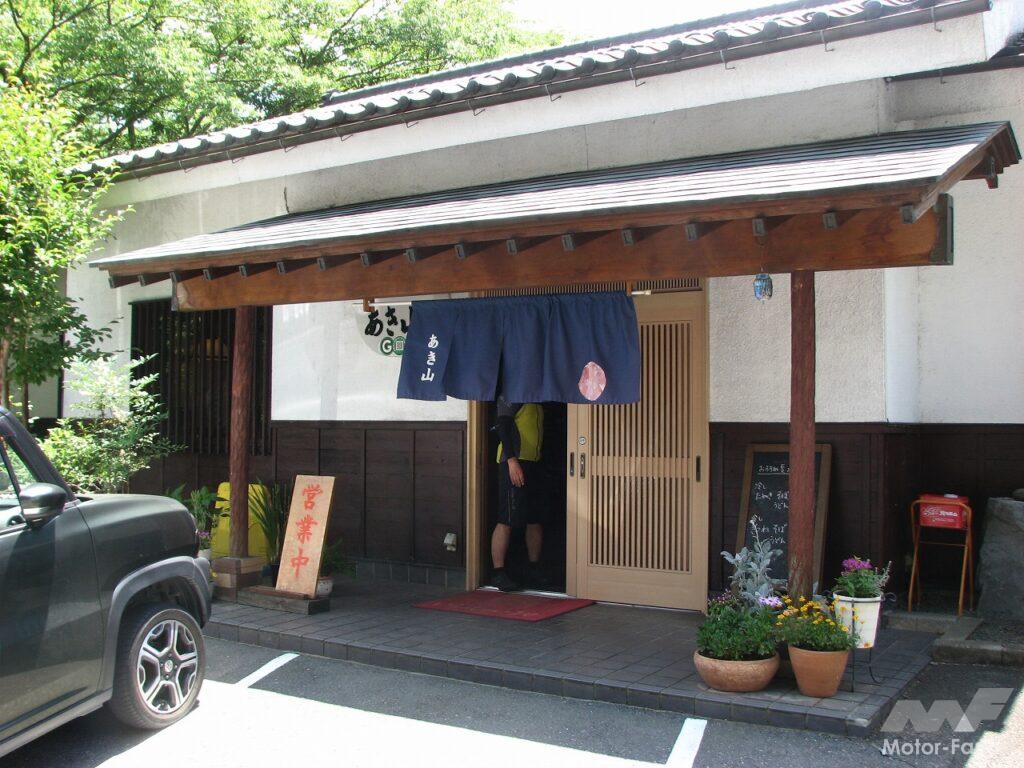
Akiyama district has a population of just over 1,000 people, and there are only a limited number of places to eat. That’s why “Sobadokoro Akiyama” is a rare restaurant. The handmade soba noodles I ordered were chewy and delicious. 0554-56-2500 Closed on Mondays
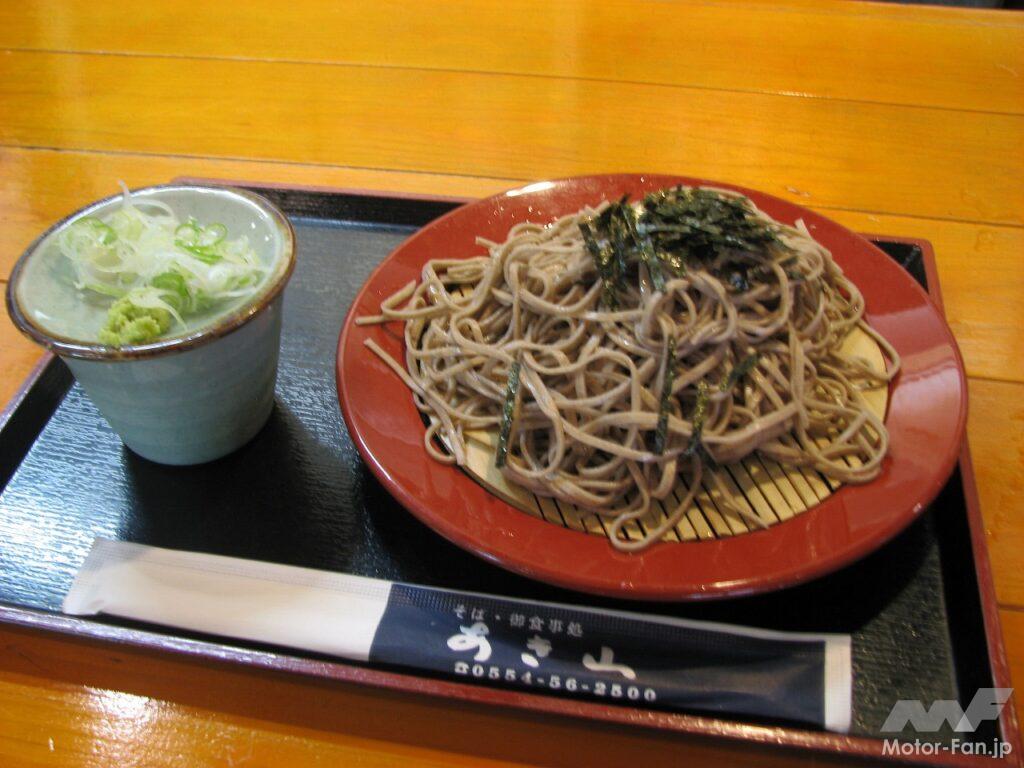
The distance traveled was 105 km. The gasoline used was 1.61 liters. Including the bathing fee of 1,000 yen, the total cost was 1,850 yen.












![[Izu City, Shizuoka Prefecture] A great touring spot to visit by motorcycle | Passing the Amagi Pass through central Izu.](https://motopeek.com/wp-content/uploads/2025/11/4734-1762339049801.jpg)