
![[Husqvarna] Is the exterior the only difference? Not just that! | The Svartpilen 801 is characterized by its generous handlin](https://motopeek.com/wp-content/uploads/2025/06/2541-1760840813705.jpg)

Husqvarna Svartpilen 801… ¥1,459,000 (released in August 2024)
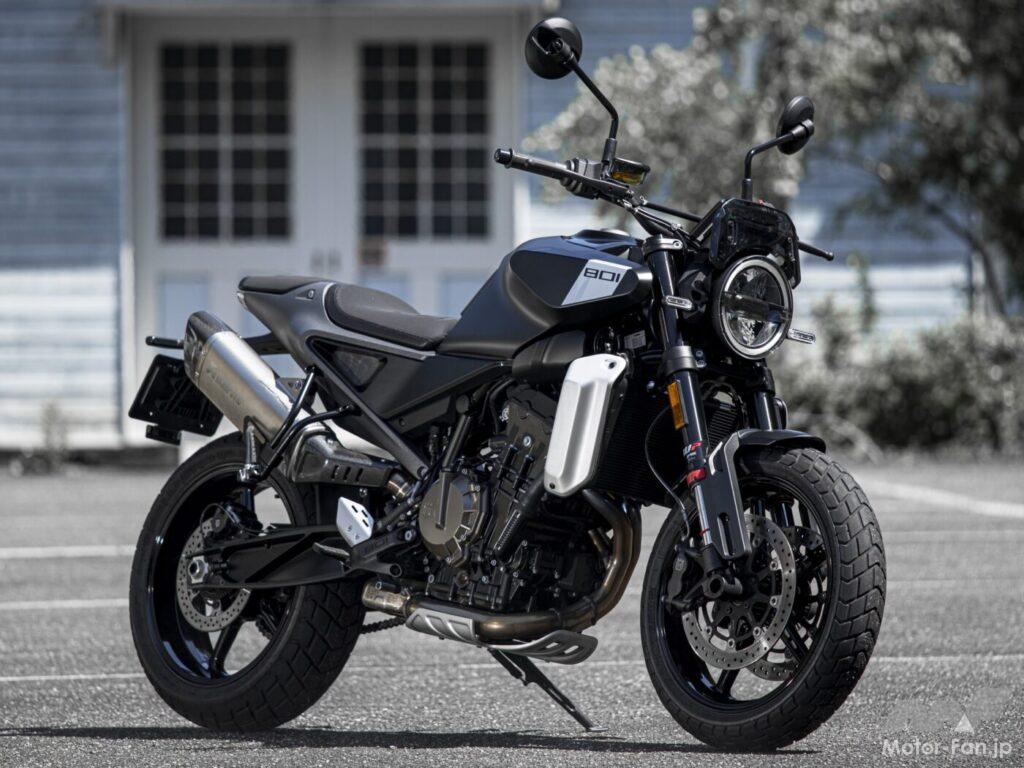
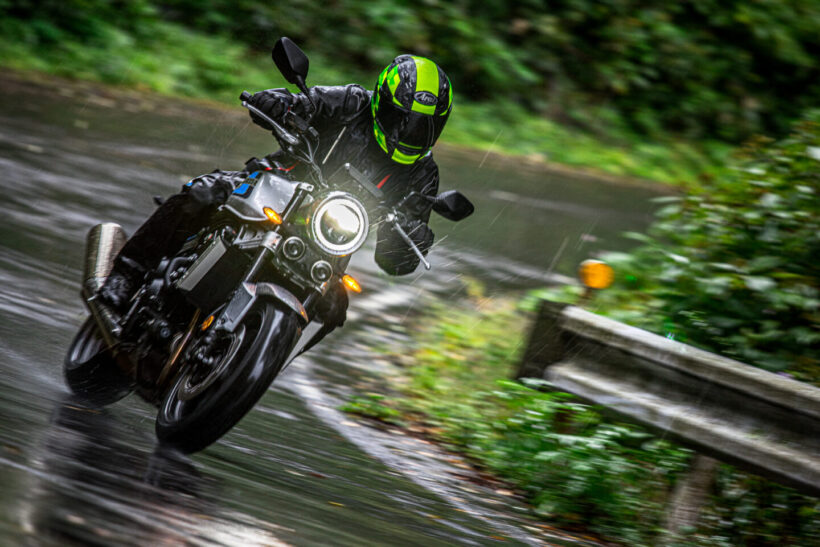
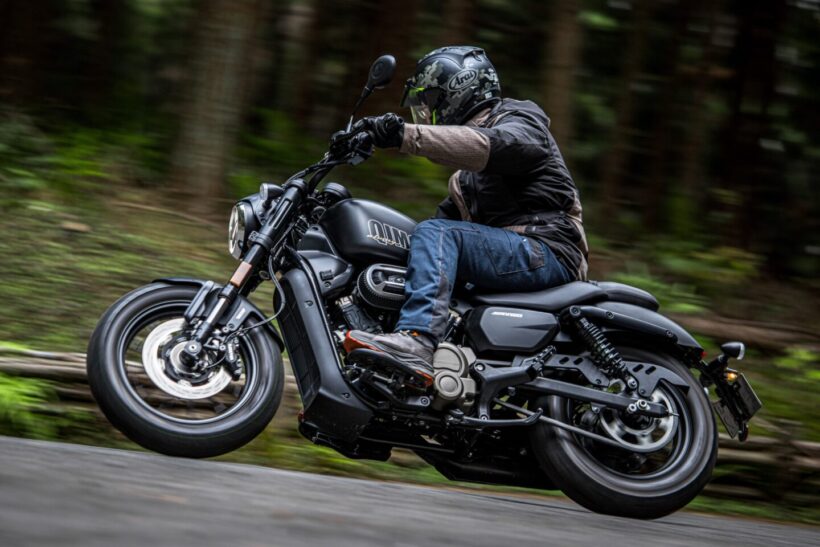
The Husqvarna Motorcycles SVARTPILEN 801 was announced in March last year and released in Japan in August of the same year. The 2024 model was priced at 1,389,000 yen and came standard with EasyShift (bidirectional quickshifter, 62,942 yen). This becomes an option for the 2025 model, and the vehicle price rises to 1,459,000 yen. This means that the price has increased by 132,942 yen from the 2024 model. The silencer on the test vehicle had been replaced with an Akrapovic slip-on (198,187 yen), a genuine accessory.
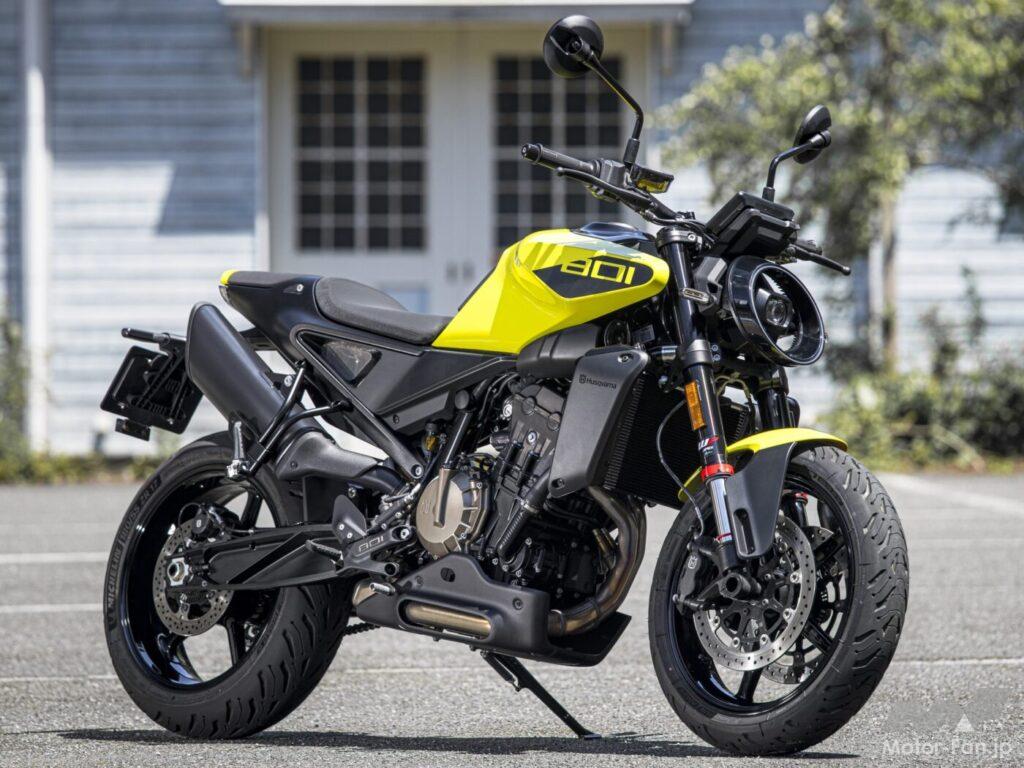
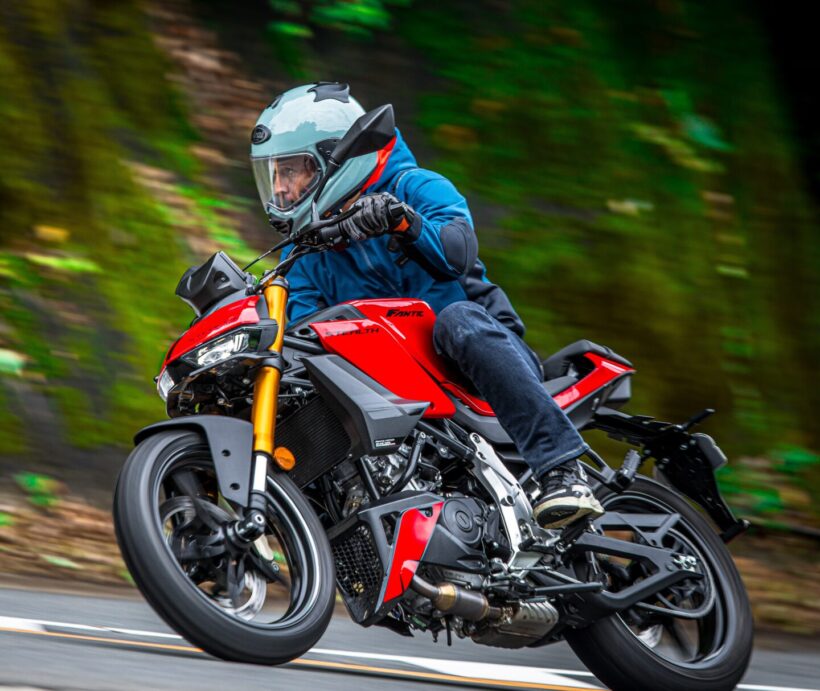
The 2025 model is the first variation model, the Vitpilen 801 (test drive impressions can be found here ). While sharing basic components, it’s amazing how the two cars have been able to create completely different impressions with only minimal changes to the exterior parts. The standard tires fitted to the Vitpilen 801 are Michelin Road 6s, while the Svartpilen 801 is Pirelli MT60 RSs, and the sizes are the same.
ADVERTISEMENT
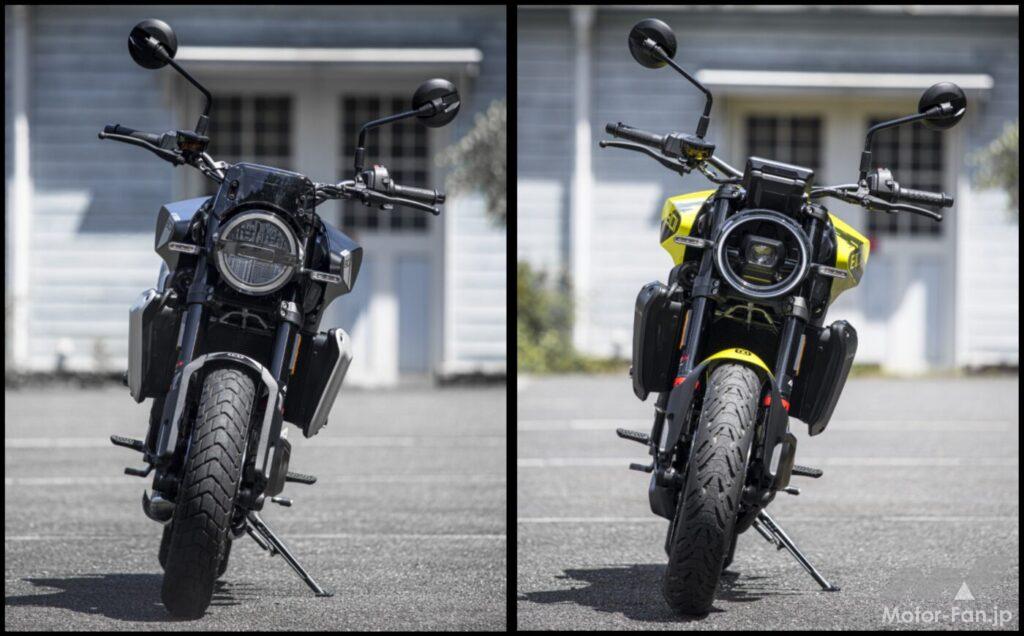
When you line them up like this, you can see that the handlebar heights are almost the same. When you actually ride them side by side, it feels like the Svartpilen 801 (left) is about one handlebar higher.
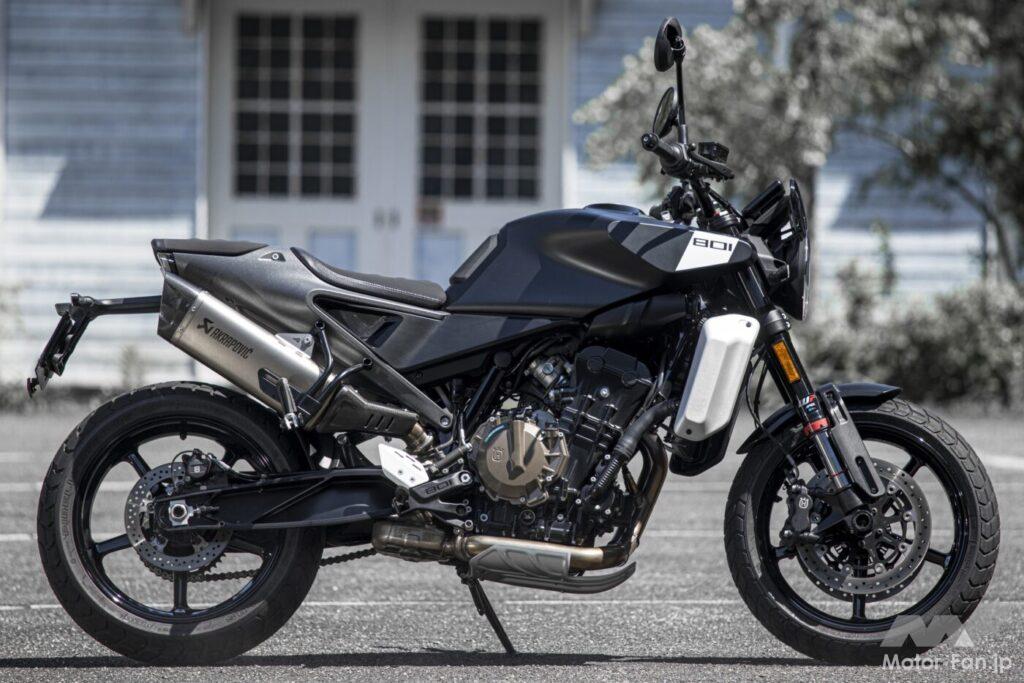
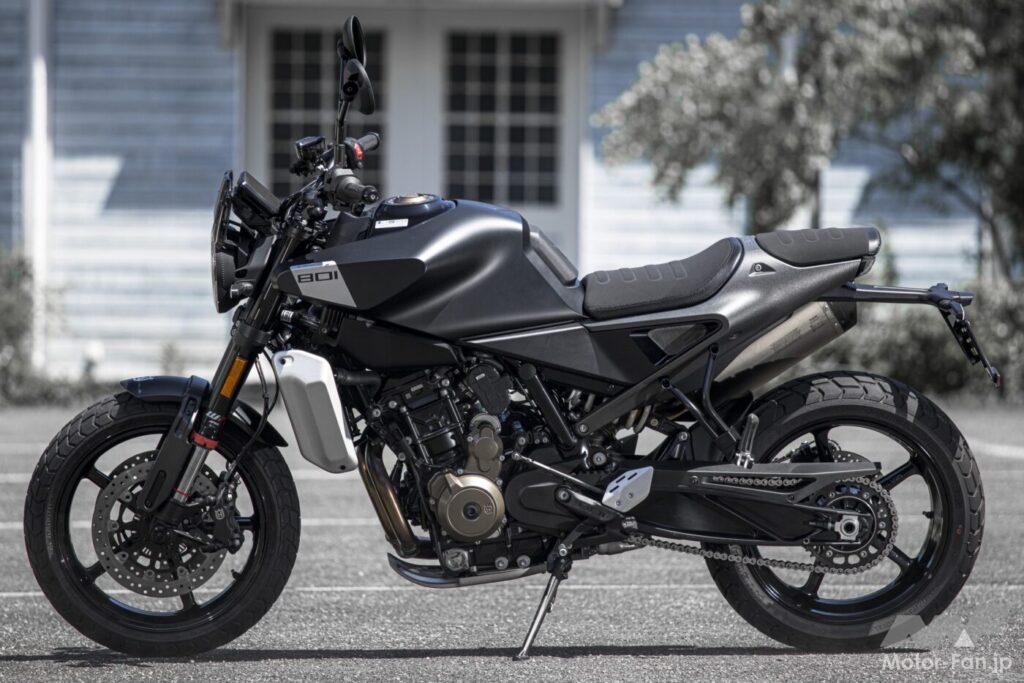
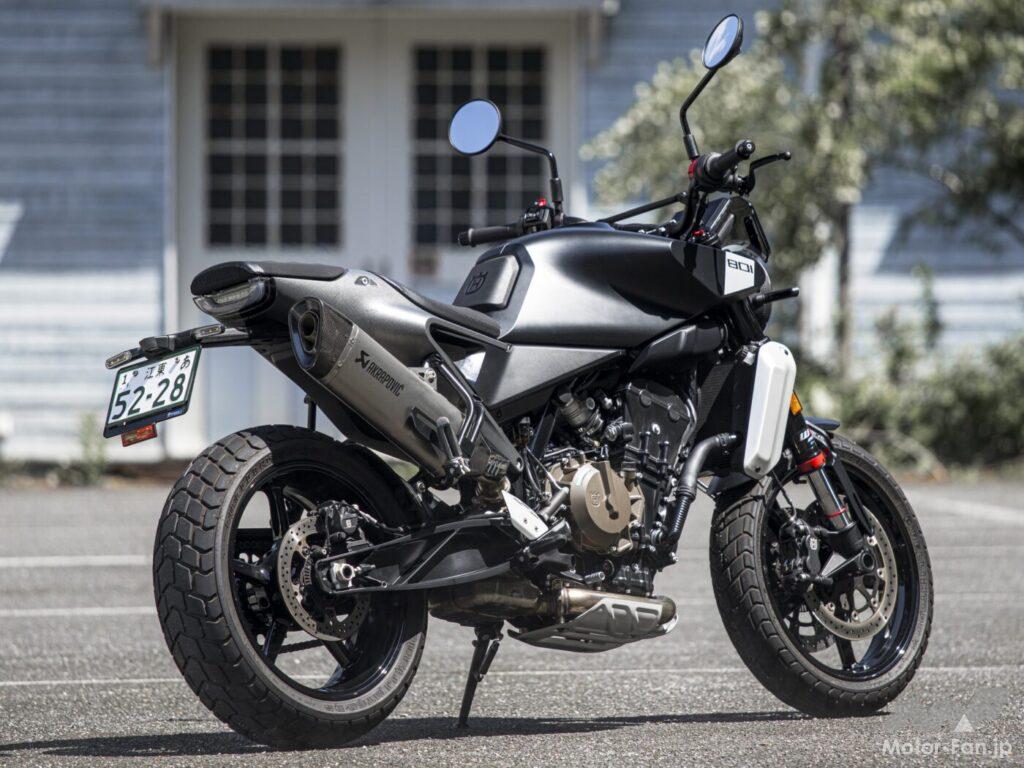
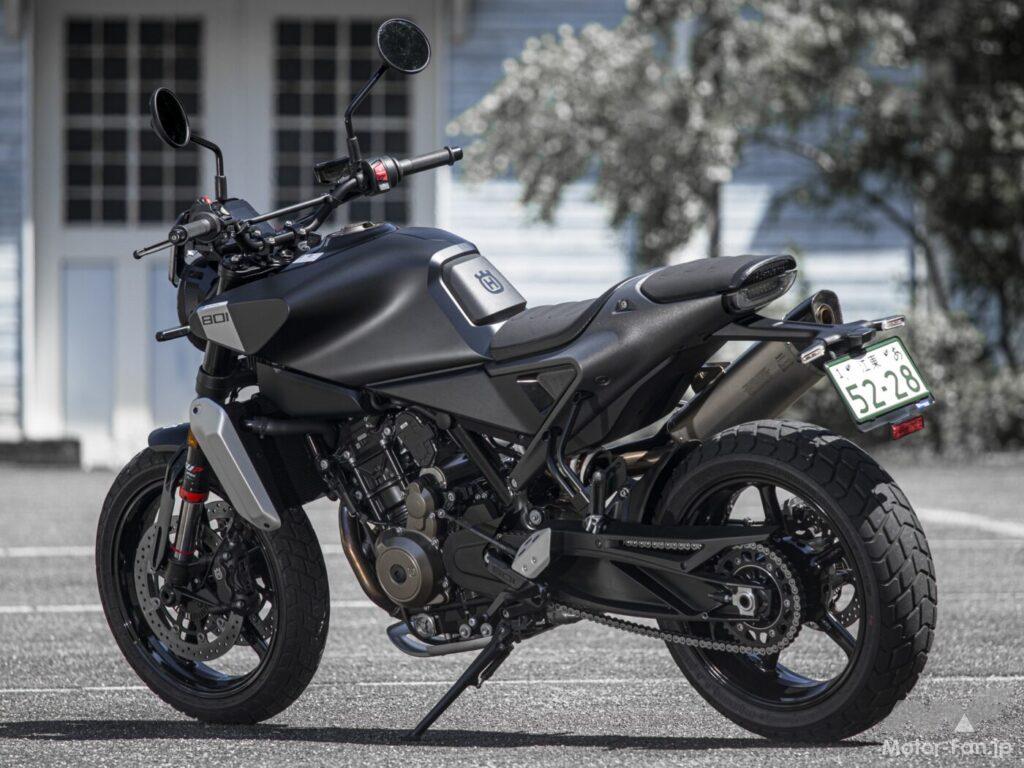
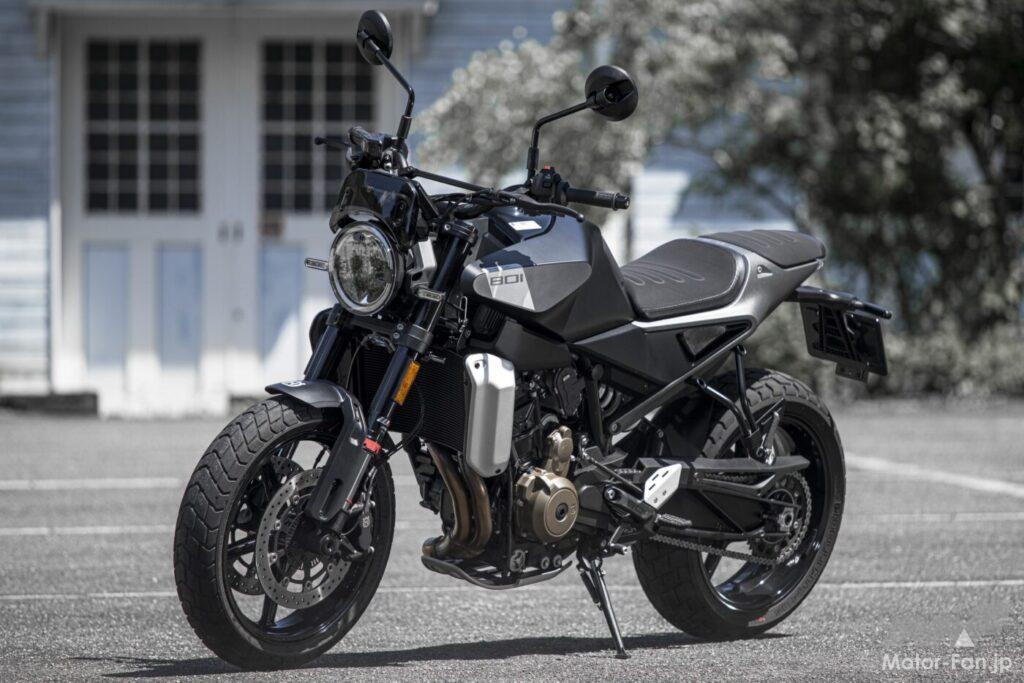
The body color is the only one shown in the photo, and remains unchanged from the 2024 model.
Turning characteristics that are clearly different from its sister model, the Vitpilen 801
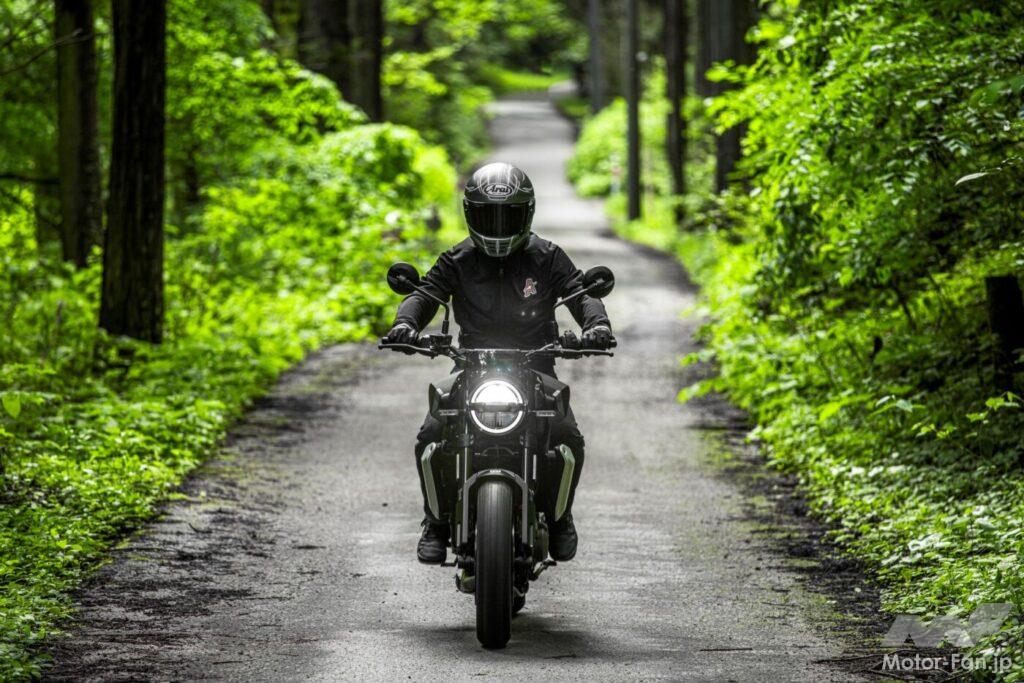
In Swedish, “pilen” means “arrow.” Additionally, “vitt” means “white” and “svart” means “black,” so a literal translation of “vitpilen” would be “white arrow” and “svartpilen” means “black arrow.” Regarding the latter, in Japan, in addition to the 401 (398.6cc) and 701 (692.7cc), the company has also offered the 125cc moped and the 250cc light motorcycle, which have undoubtedly made imported motorcycles more accessible to those with small or regular motorcycle licenses.
Well, the model I test rode this time was the new 2024 model, the Svartpilen 801. Like its sister model, the Vitpilen 801, which came out later, it shares basic components with the KTM 790 Duke, with the only differences between the two models being some of the exterior parts and the brand of tires. One is a Scrambler and the other is a Roadster (naked), so you might think there would be some differentiation in the suspension settings or something, but they both have the same wheel travel of 140mm front and 150mm rear, and even the seat height of 820mm.
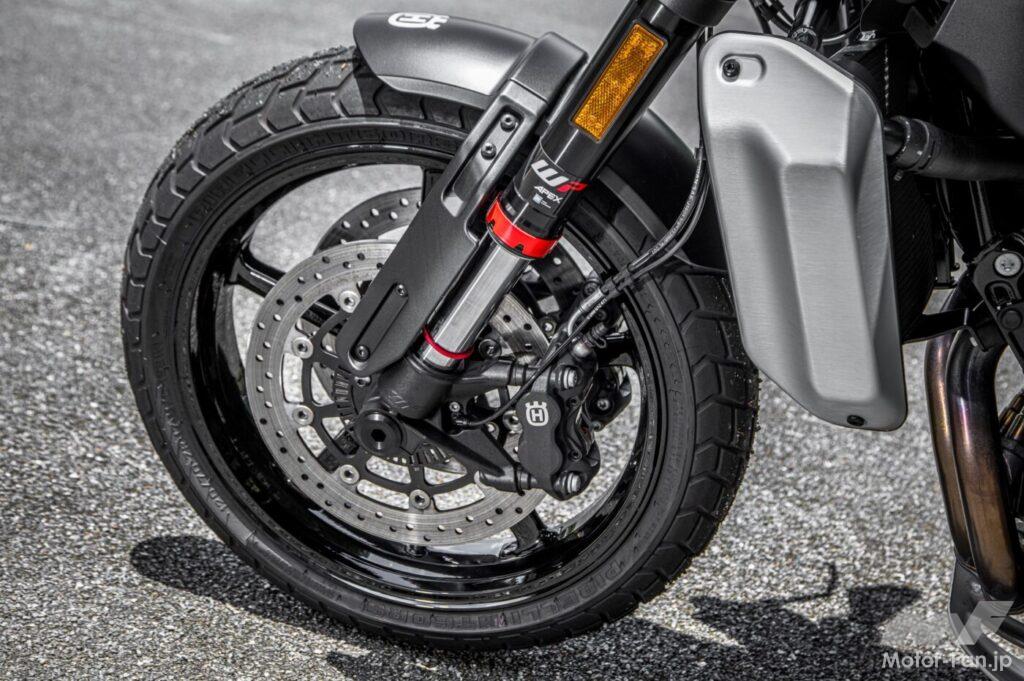
The wheels are 17 inches front and rear and share the same design as the Vitpilen 801, with the same black anodized finish. The standard tires are Pirelli MT60 RS, with a specified air pressure of 2.3 bar in the front and 2.6 bar in the rear, regardless of whether there is a passenger or not. The brake set is made by J.JUAN, a Spanish company under the Brembo umbrella. The front disc diameter is 300mm. The front fender and radiator cover design are different from those of the Vitpilen 801.
ADVERTISEMENT
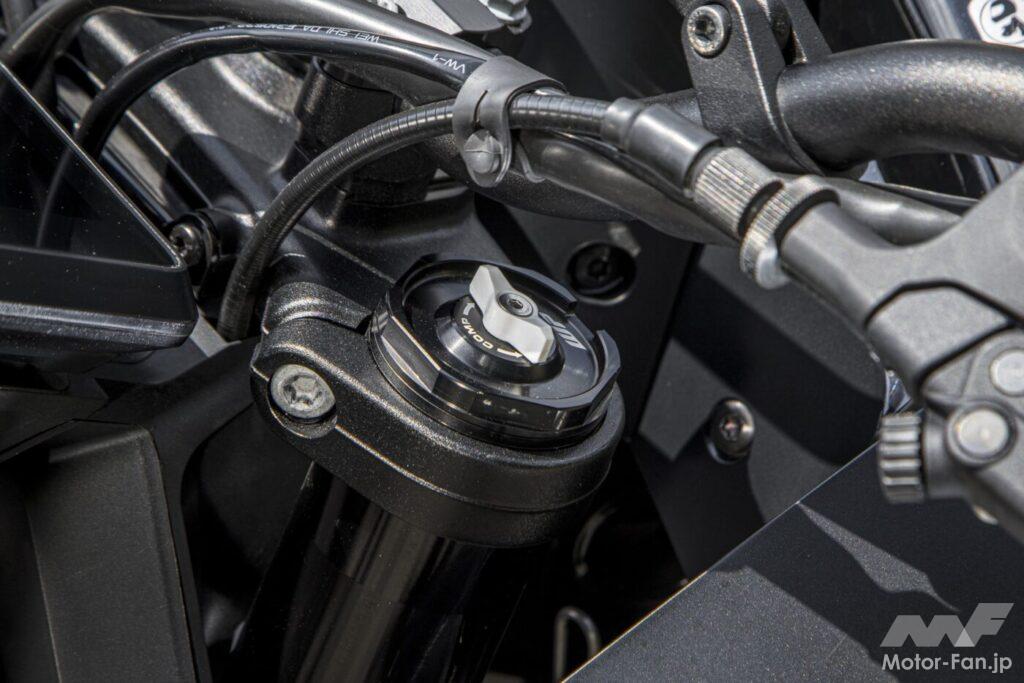
The φ43mm inverted front forks are WP APEX 3343 open cartridge type, and the 140mm wheel travel is the same as that of the SVARTPILEN 801. The top cap is equipped with both telescopic damping force adjusters, but the owner’s manual does not specify the standard positions.
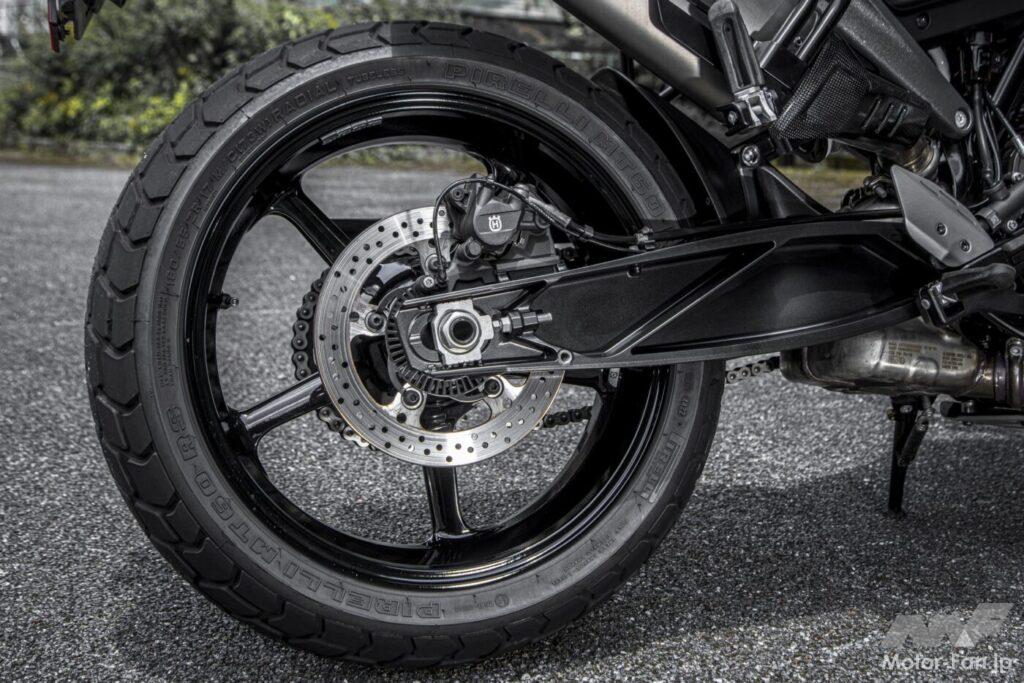
The distinctive open lattice swingarm is made from die-cast aluminum. The rear brake disc has a diameter of 240mm, and the Bosch cornering ABS system can be disabled by selecting the “Supermoto ABS” mode.
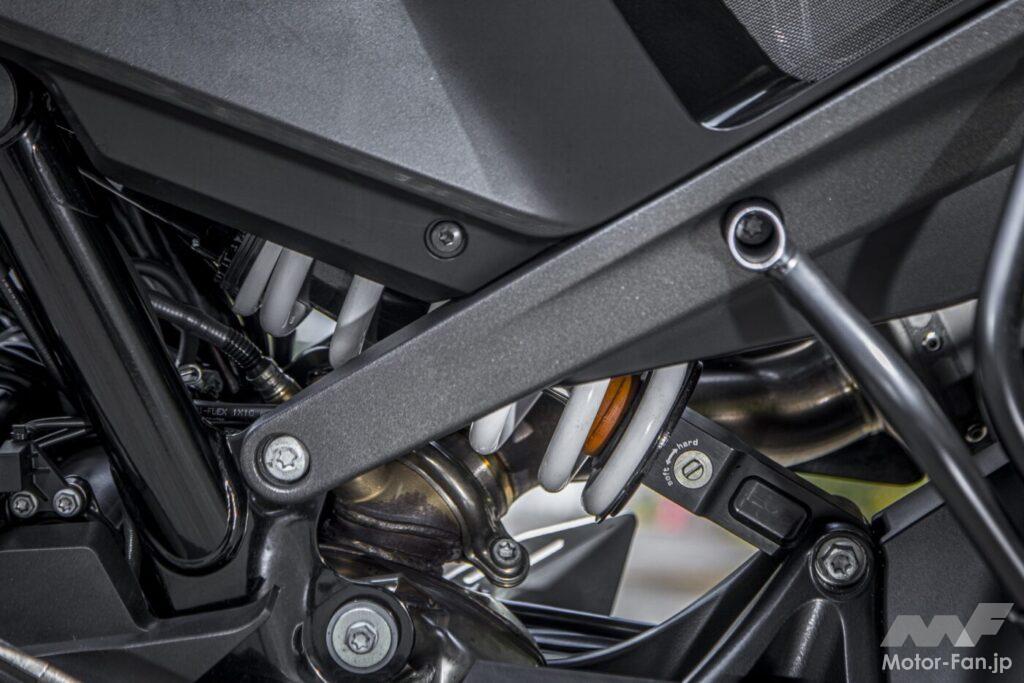
The rear suspension is a linkless monoshock, and the shock unit is a WP APEX 3146. Wheel travel is 150mm. There are 10 preload settings, with the standard position being the weakest, fifth position (the Vitpilen 801 is third position). The rebound damping force can also be adjusted, but the owner’s manual does not specify the standard position.
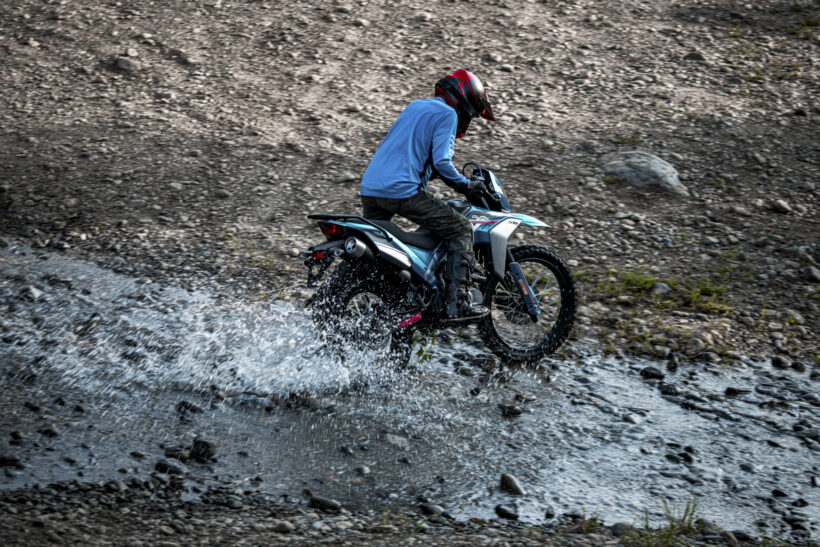
However, as soon as I started riding, I noticed that the handling of the two bikes was quite different. The Vitpilen 801 Roadster had outstanding cornering ability and maneuverability, enough to be called a handling machine. In contrast, the Svartpilen 801 had a bit more resistance when leaning into corners and turning, and the subsequent turning force was also slightly more generous. The body tends to have a strong tendency to keep itself upright, so it doesn’t start turning unless you consciously give it a nudge, but the response to steering is consistent at all speeds, which means it can be said to be easy to handle. This generousness matches the image of a Scrambler, and it is true that the Svartpilen 801 felt more stable than the Vitpilen 801 on rougher roads.
The difference in handling between the two cars is likely due mainly to the brand of tires fitted as standard, which is likely influenced by differences in outer diameter, round shape, tread pattern, internal structure, etc. On the other hand, I am impressed that they are able to differentiate to this extent despite using the same tire size, and that the handling is in line with the concept of each machine.
The brake sets are the same for both models, but perhaps this is due to the difference in tire brand, but the Vitpilen 801 with Michelin Road 6 tires is able to apply the brakes more sharply on paved roads. However, both bikes have excellent controllability, demonstrating the high level of skill of the brake manufacturer Hota Huang. The Bosch Cornering ABS seemed to intervene at the rear a little too early, but this is probably something you get used to.
The organic torque feel at low and mid-range is very pleasant.
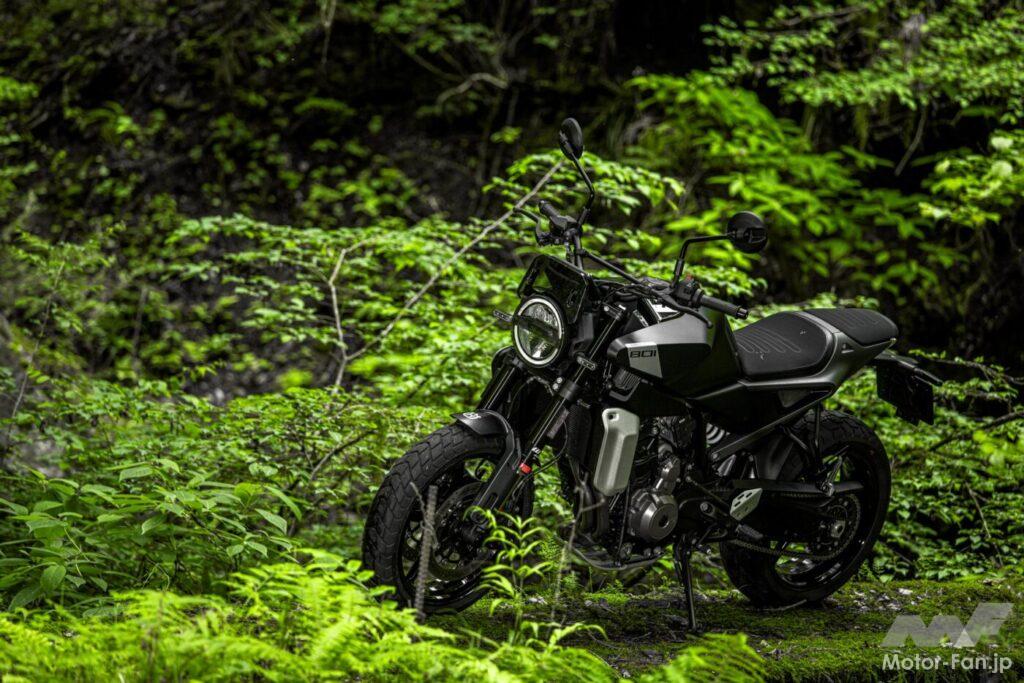
Next is the engine. The 799cc “LC8c” water-cooled parallel twin engine, derived from the KTM 790 Duke, uses a 75-degree phase crank. It produces a maximum output of 105 PS. Considering that the Suzuki GSX-8S, which has roughly the same displacement, produces 80 PS, it can be said to be quite powerful. However, it does not give the impression of being a street fighter-like mischief. It is not aggressive at low rpm, so much so that you don’t even notice the high compression ratio of 12.5:1, and the throttle’s manners in relation to the movement of your right hand are extremely excellent in any riding mode.
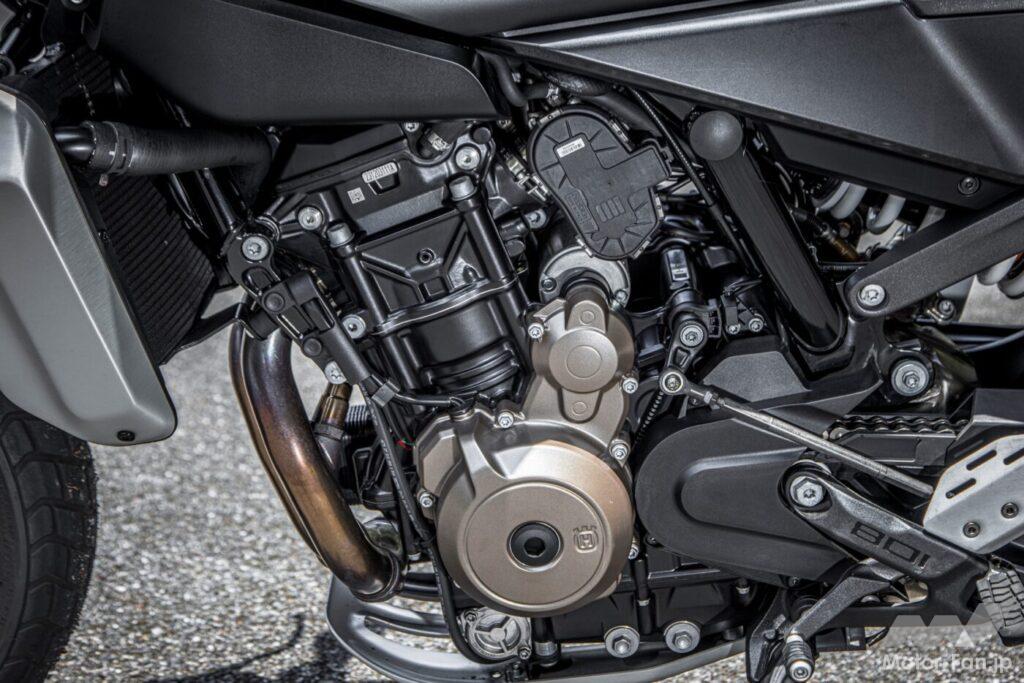
The engine is a 799cc, water-cooled, four-stroke, parallel-twin engine with a 75-degree phase crank, producing 77kW (105PS). Balancers are located in front of the crankshaft and in the cylinder head to eliminate unpleasant vibrations. It also features forged pistons, DLC-coated piston pins, a semi-dry sump, and a PASC clutch. The bike weighs an impressive 52kg. It has three riding modes: Street, Sport, and Rain, with a Dynamic mode available with the addition of an optional accessory. It also features cornering traction control. The chrome-molybdenum steel tubular frame, which uses the engine as a stressed member, is finished in black powder coating.
At 3000-5000 rpm, which is often used on public roads, there is a clear, twin-turbulent feel that is truly comfortable when cruising. The torque feel can be described as organic, and it’s impressive that such a tasteful engine could be created despite its modern design. When the throttle is wide open in lively sport mode, the acceleration is powerful, as you’d expect from a bike with over 100 PS. However, there is no unpleasant vibration even at high revs, allowing the rider to remain calm at all times.
The test vehicle was also fitted with an Easy Shift (bidirectional quick shifter). Upshifts can be made at 2000 rpm or higher in each gear, and the shift shock is relatively minimal. Blipping when downshifting is also appropriate, and there’s no doubt that it reduces fatigue caused by clutch operation. The part is a little pricey at over 60,000 yen, but it’s one of the genuine accessories we highly recommend installing.
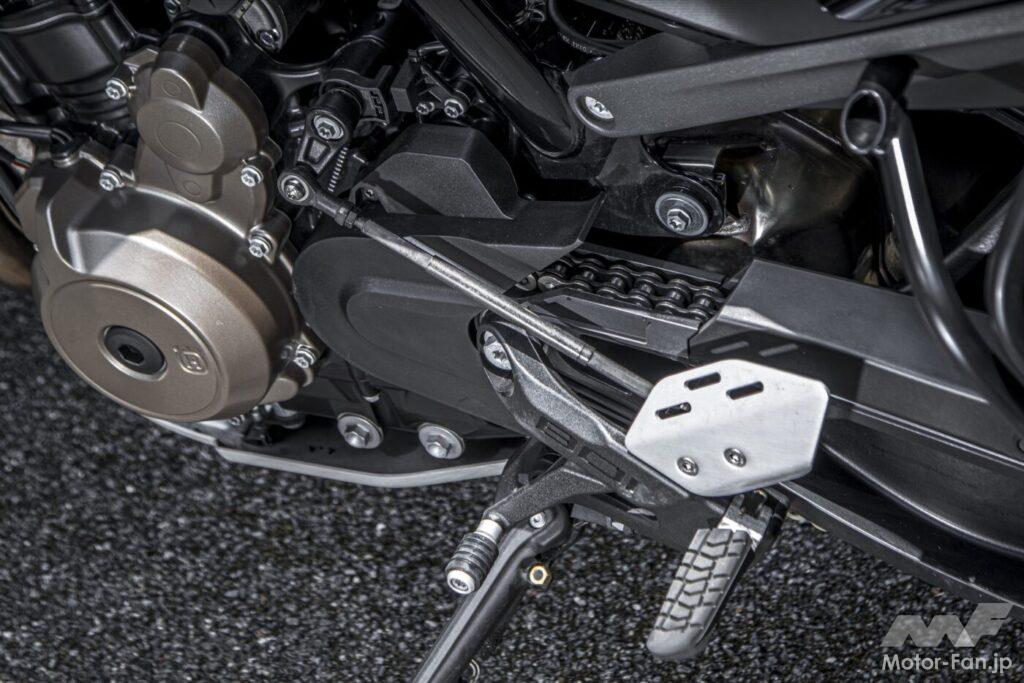
The bidirectional quick shifter, called EasyShift (62,942 yen), was standard equipment on the 2024 model, but will be an option on the 2025 model. The design and color of the heel plate are also different from the Vitpilen 801.
The Vitpilen 801 changed from clip-on handlebars on the 701 to handlebars on the other, which made me wonder how it would be differentiated from the Svartpilen 801, but riding them side-by-side on the same day made the differences clear. The first twin-cylinder model in the Pilen series was off to a really good start.
Riding position and foot reach (175cm/68kg)
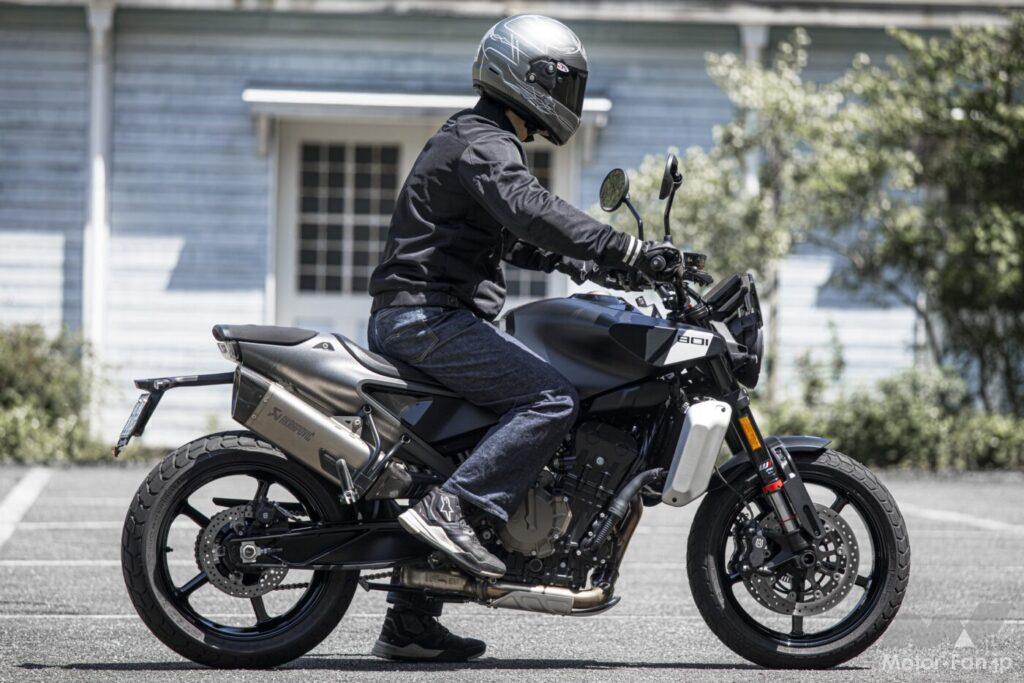
The handlebar grip position is slightly higher than that of the Vitpilen 801, but the overall balance is still closer to that of a naked bike than a scrambler.
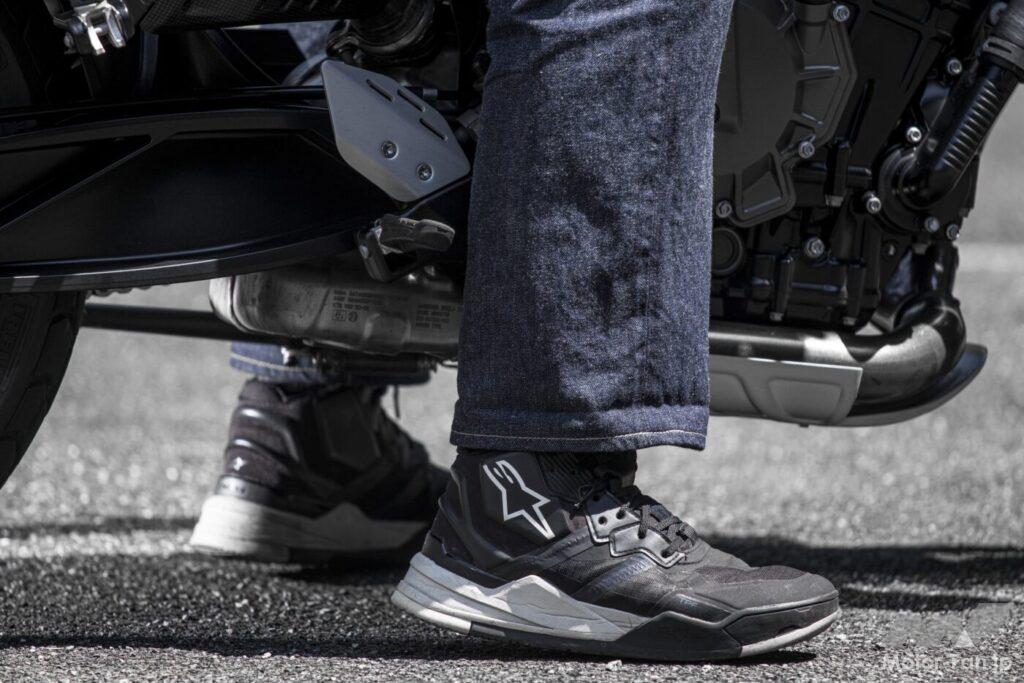
The seat height is officially 820mm, the same as the Vitpilen 801, and the foot reach is also at the same level. The seat cover is non-slip, making it suitable for sports riding.