
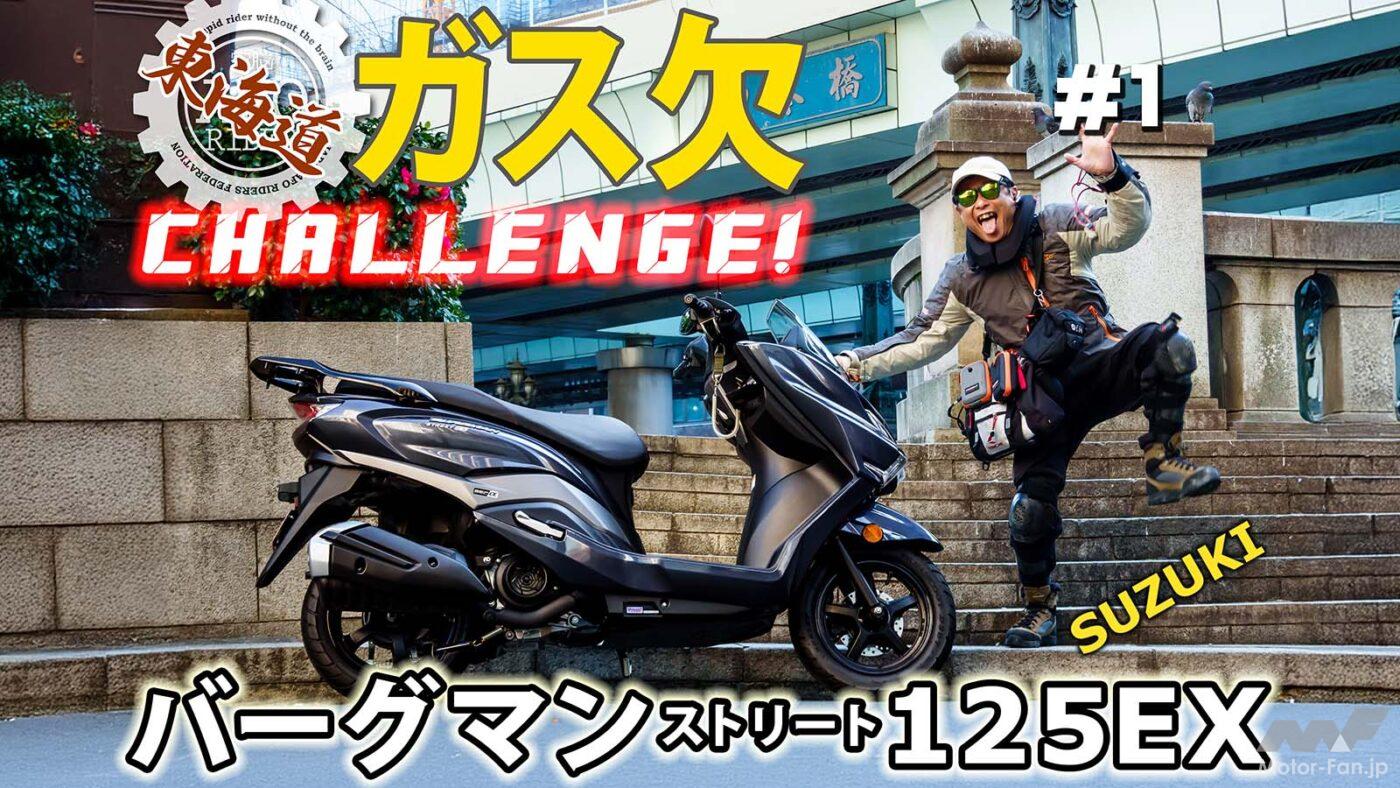
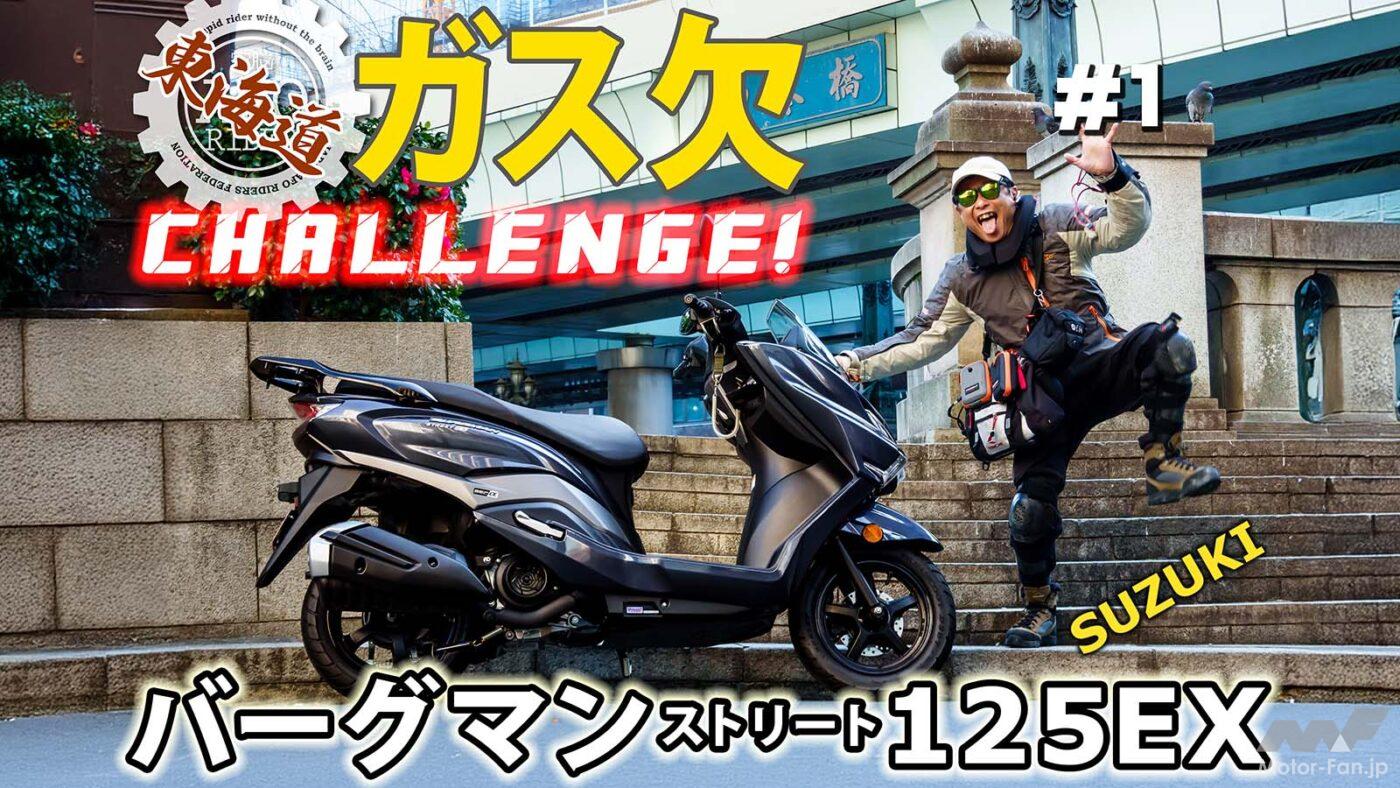
The long-awaited Burgman Street 125EX
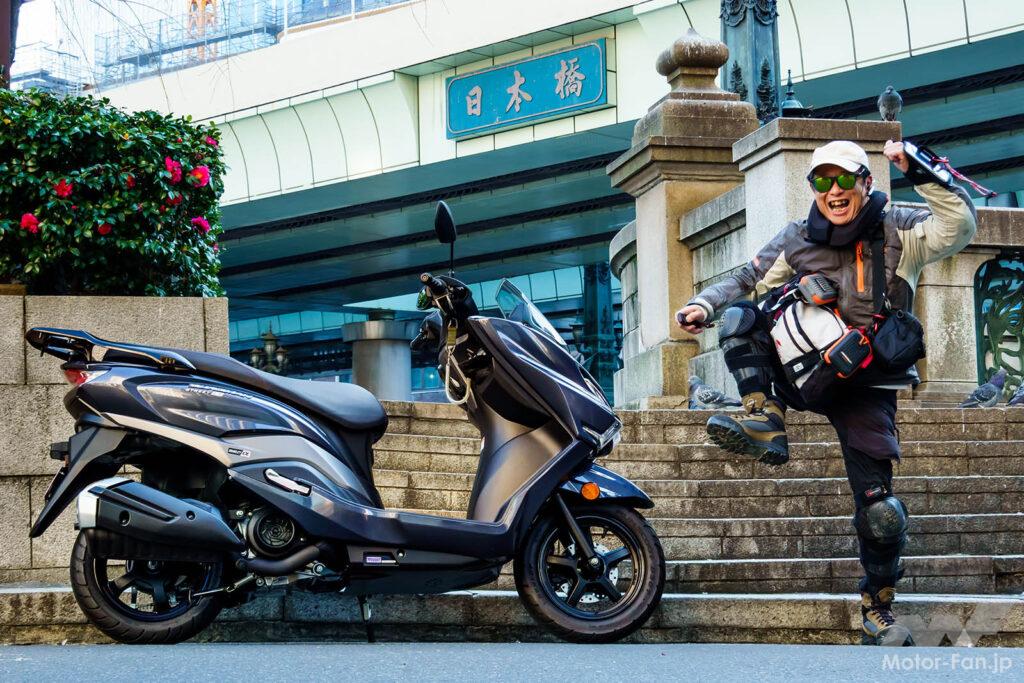
Suzuki Burgman Street 125EX and AFO rider Takahashi set off on the 9th out-of-gas challenge.
This is my ninth trip along the Tokaido Road, running out of gas. Each time, I travel on a different bike, heading from Nihonbashi in Tokyo to Kyoto, and riding the 53 stations of the Tokaido Road until I run out of gas. This time, I chose a Suzuki Burgman Street 125EX as my partner.
As usual, Takahashi, who is not good at getting up early, set off from Nihonbashi just before noon. Not only is he as bad at getting up early as a toddler, he’s also a spoiled child who doesn’t like to go to bed late either, so unfortunately, his awake time and the distance he can run in a day are inevitably shorter.
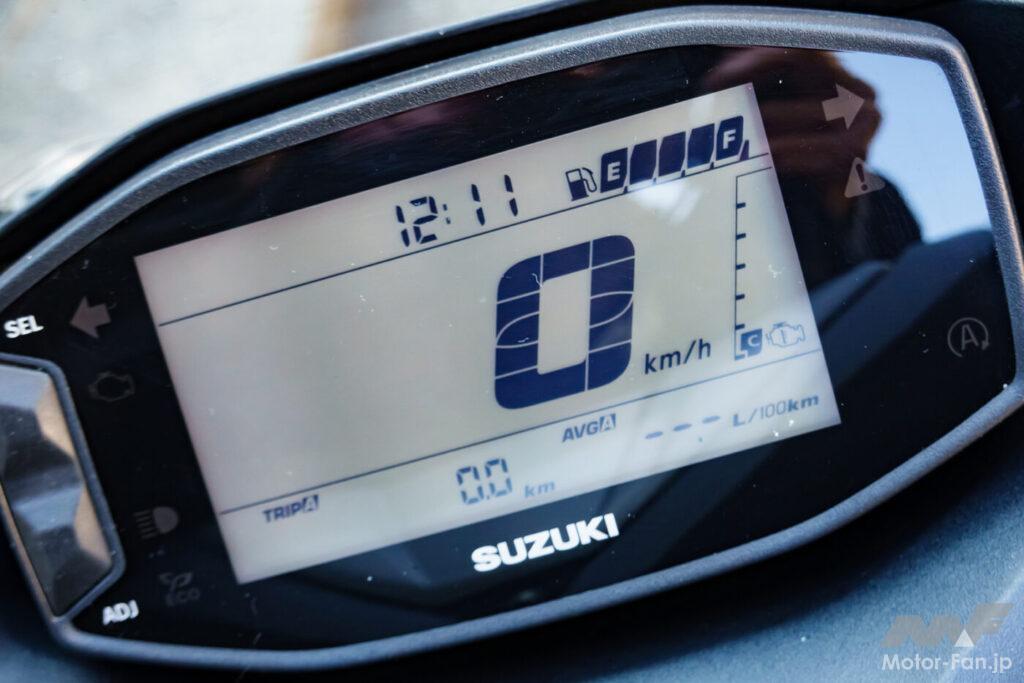
I reset the trip meter to zero in Nihonbashi. The Burgman 125’s instrument panel is a clean and simple full LCD display. It’s not a very attractive design, but it’s easy to read.
ADVERTISEMENT
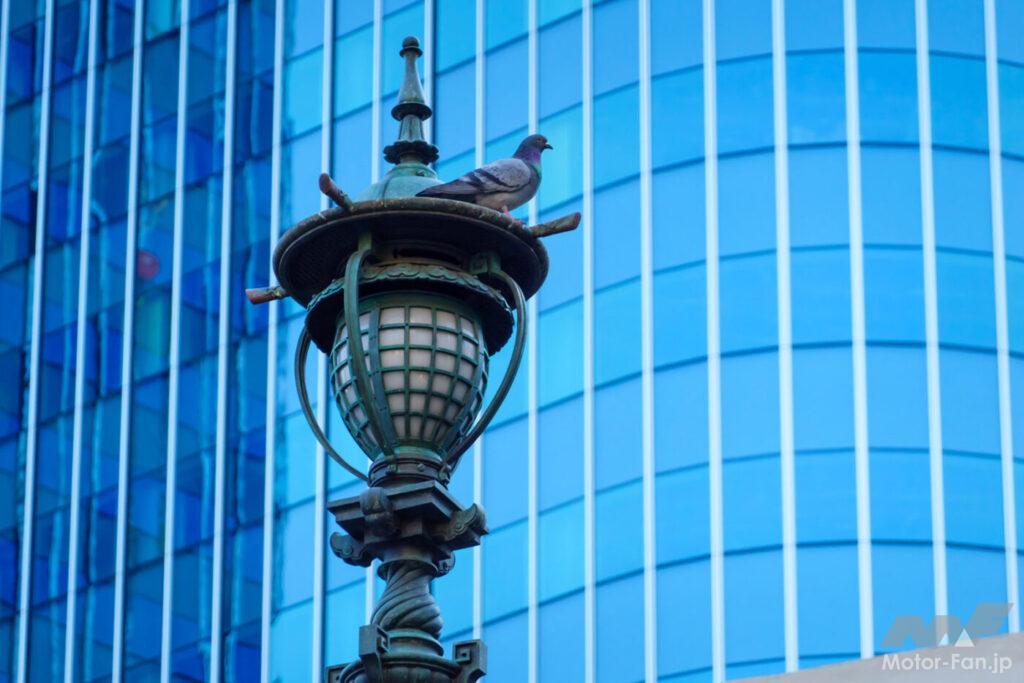
Seeing off the pigeons, a specialty of Nihonbashi, we set off towards Kyoto.
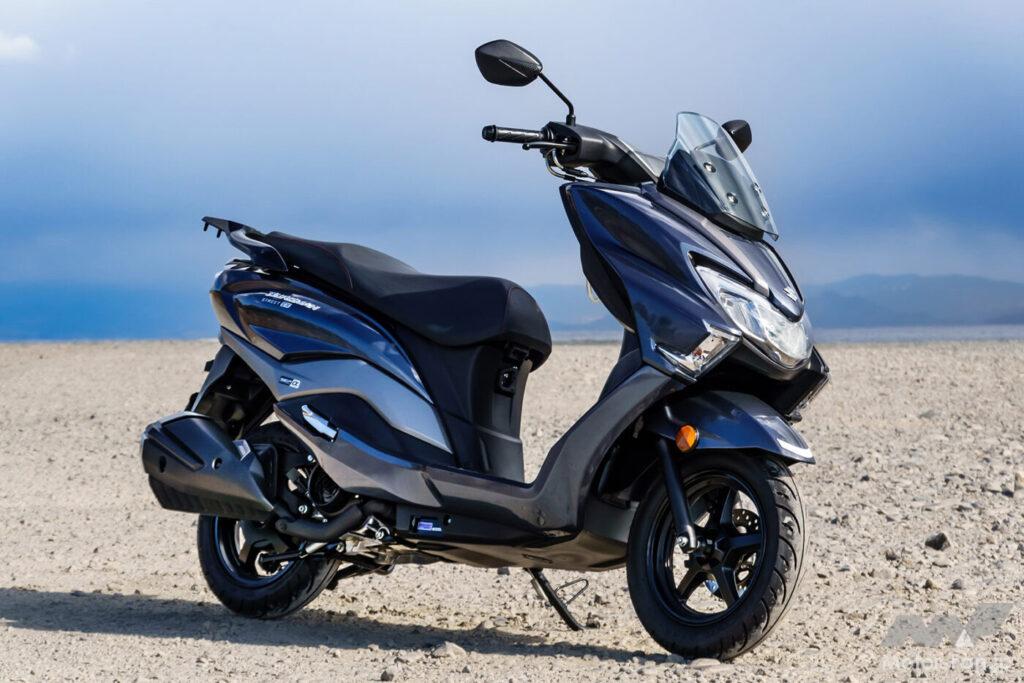
This is the Burgman 125. Its imposing body measures 1,905mm in length and weighs 112kg, and is equipped with a forced air-cooled, four-stroke, single-cylinder SOHC 124cc engine.
One drawback of the Bergman Street 125EX is its long name. It’s a whopping 15 characters long. Just writing the name 10 times adds up to 150 characters. For novelists of the past, who were paid based on the number of 400-character manuscript pages they wrote, this might be considered an advantage, as it meant they could make money just by writing the name over and over again, but for a cheap writer like Takahashi, you don’t get paid for writing as much as you write. So for this article, I’ll keep it short and just write “Bergman 125.”
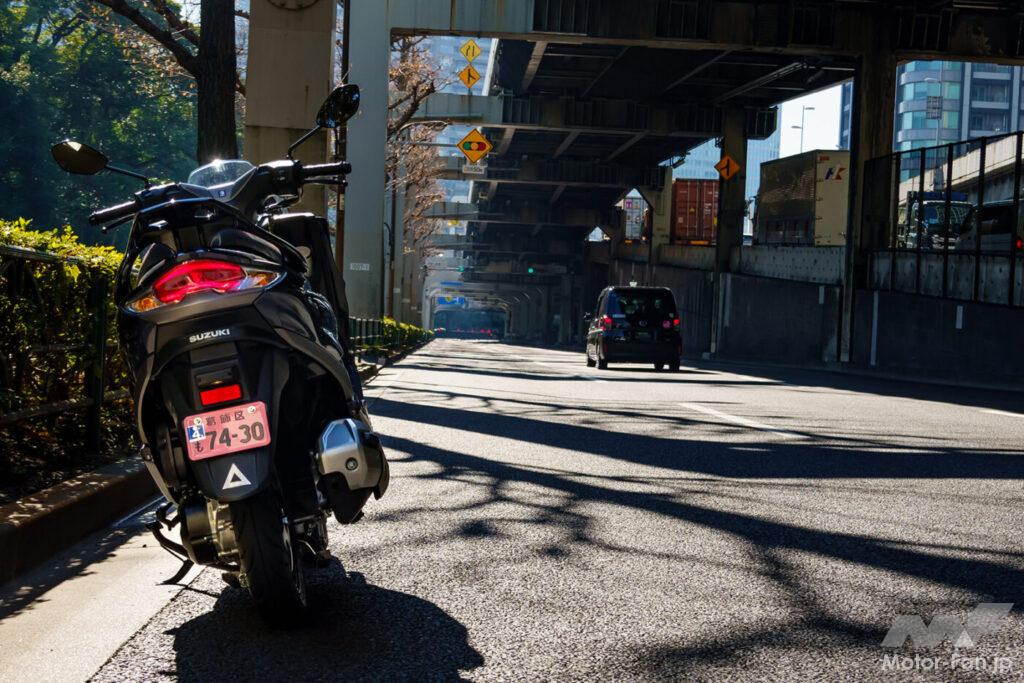
The stylish rear view stands out on the roadside in the city. It’s a chic yet sporty machine.
I left the glittering, boring downtown skyline and drove mostly along the Tokaido towards Kanagawa. The further I got from Tokyo, the better I felt, and my head became clearer. Maybe it was because of some strange radioactive fumes emanating from around Tokyo Tower.
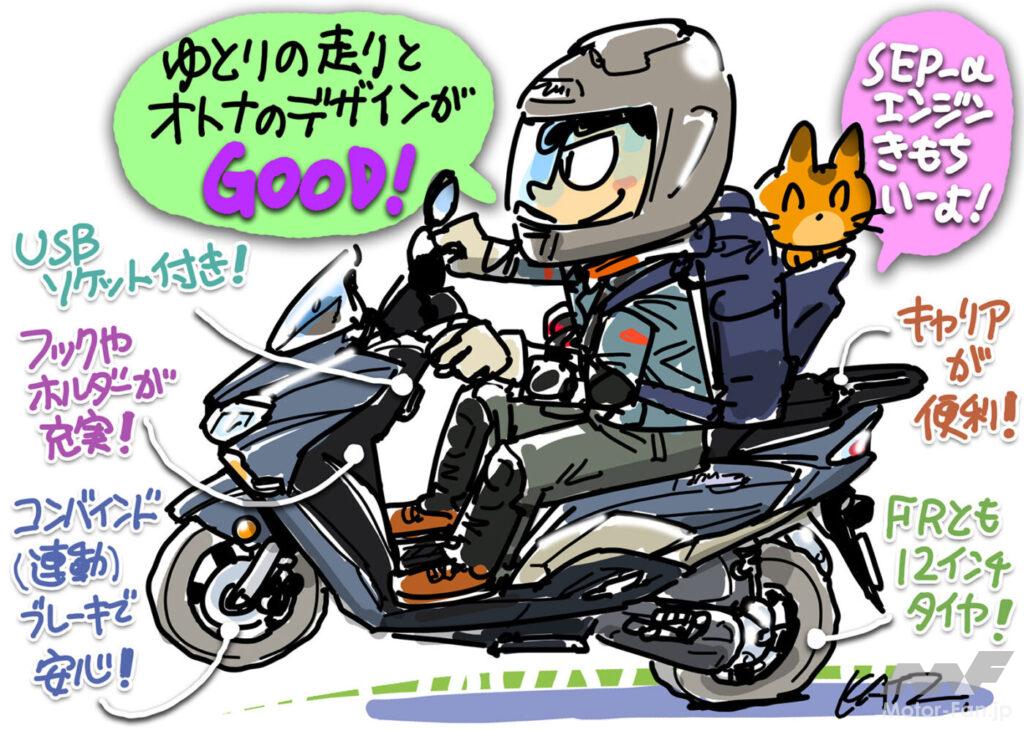
[Diagram of the Burgman Street 125EX] In reality, it’s not a wild horse with the front end popping up, but hey, it’s just a picture.
The Burgman 125 is a sibling model of the Address 125 and Avenis 125, which share the same engine and frame. The Suzuki development team must have been very enthusiastic about creating it, as it is extremely well-made. It can be said that there are no flaws other than the fact that the name is too long.
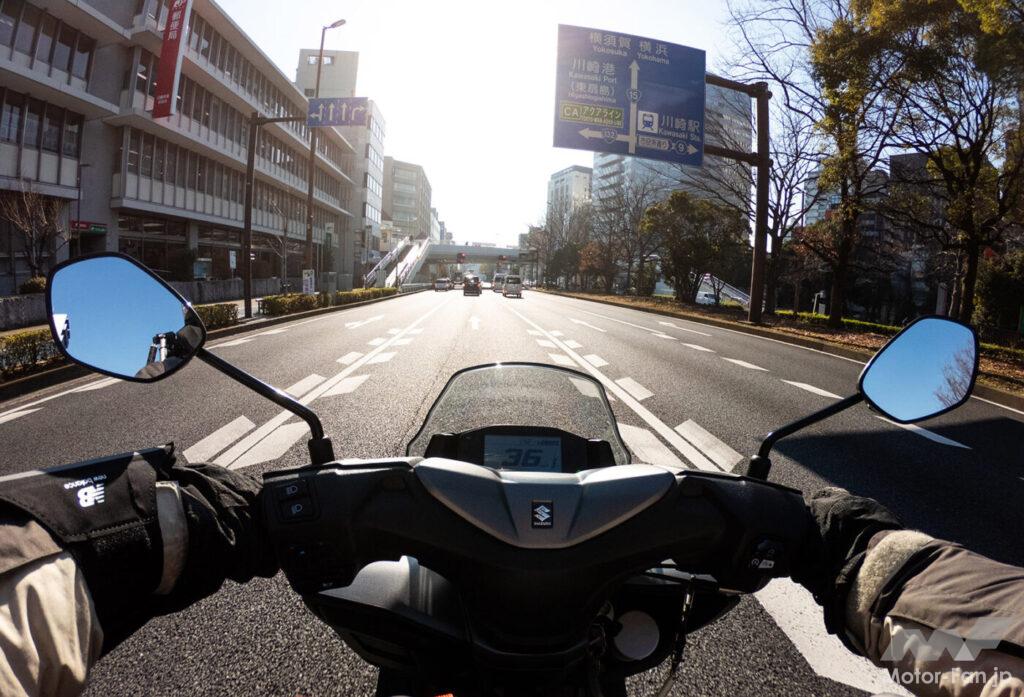
We escaped from the bland, bland, and charmless downtown Tokyo and headed to Kanagawa.
There are no obvious flaws in the engine, brakes, suspension, vehicle design or utility, and it’s also good value for money. All this quality for just 317,900 yen (excluding tax). Unless you’re a rider with special tastes like wanting to do a wheelie every time you take off, pretending to be a highway racer by scattering sparks on mountain passes, or getting covered in blood by riding full throttle on rocky dirt roads, no one will be dissatisfied. However, if you want to take a truly malicious view, you could say that the fact that it’s an “all-around excellent student with no particular surprises” is a flaw, if you like.
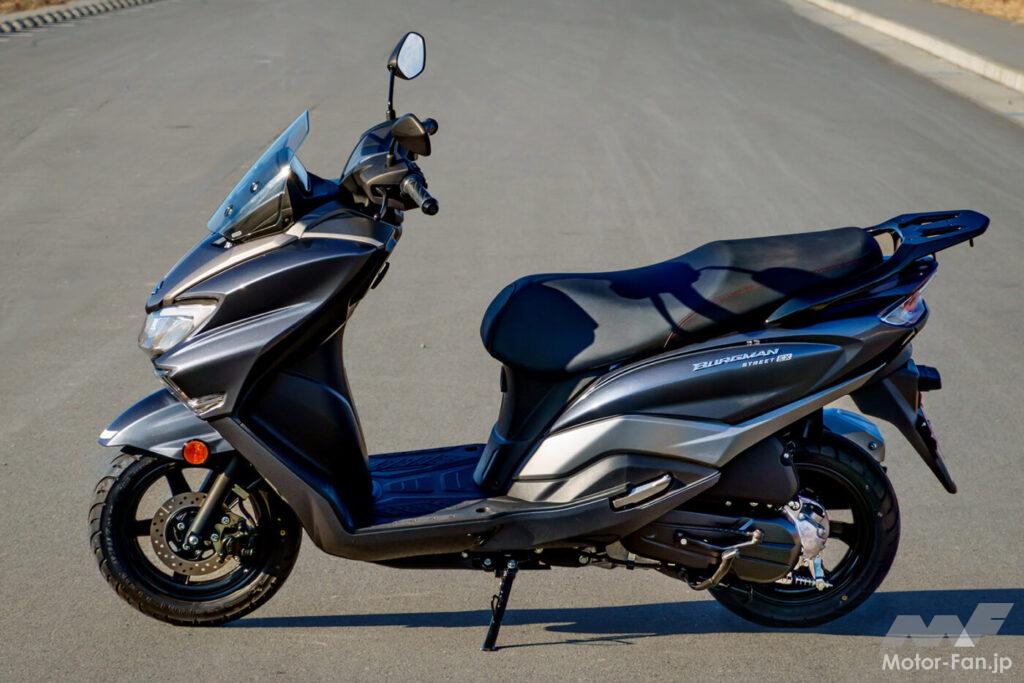
This outstanding product design combines complex curves to create a subtle feminine nuance while also achieving edgy, masculine styling.
The design of the Burgman 125, based on the concept of “elegance unassuming,” is elegant and modest. It stops just short of being a strong individual, resulting in a high-quality design.
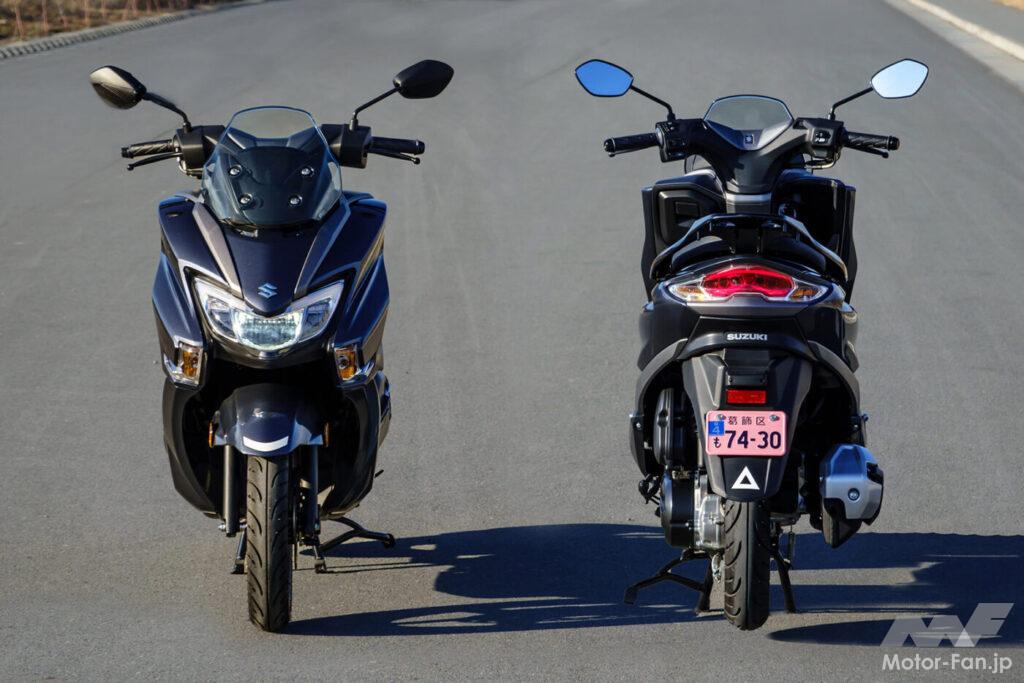
The front view is based on sharp straight lines with both ends rising, while the rear view is based on curves with both ends falling, creating a clear difference between the front and rear.
The Burgman 125 is equipped with the same SEP (SUZUKI ECO PERFORMANCE) engine as its sister models, the Address 125 and Avenis 125, but it is an upper-grade version called “SEP-α” that adds features such as an idle stop. The output characteristics are extremely gentle, making it easy for even beginners to handle. However, there is a slightly large time lag when opening the throttle to start from idle stop. In practical terms, this is not a problem, but it may be bothersome for sensitive riders.
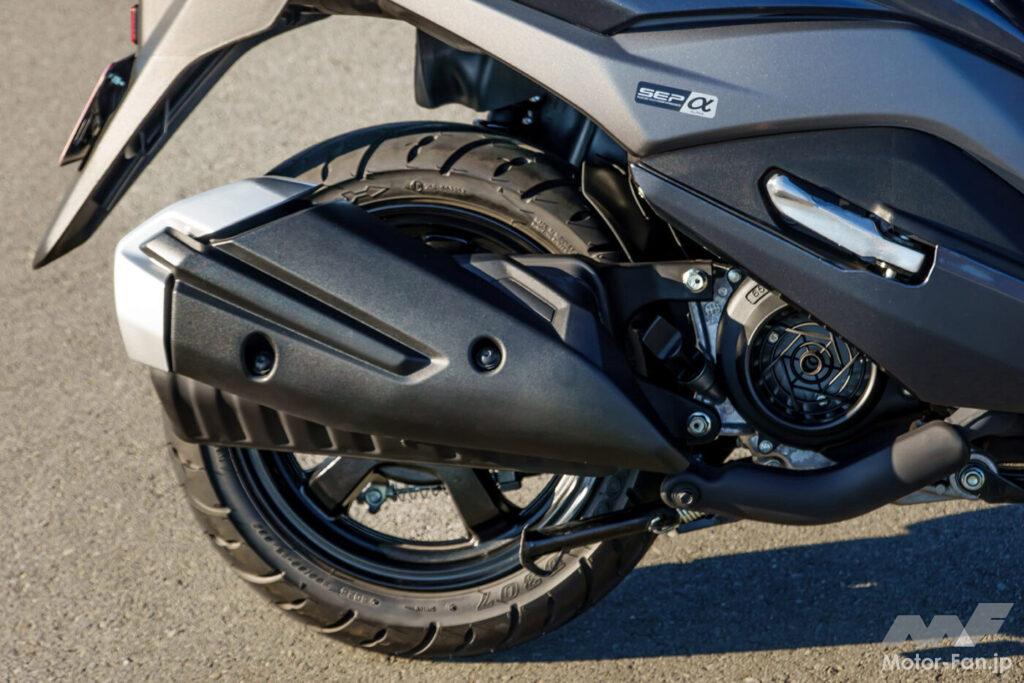
The SEP-α engine is the first Suzuki motorcycle to feature idling stop, producing a maximum output of 8.3 PS at 6500 rpm.
ADVERTISEMENT
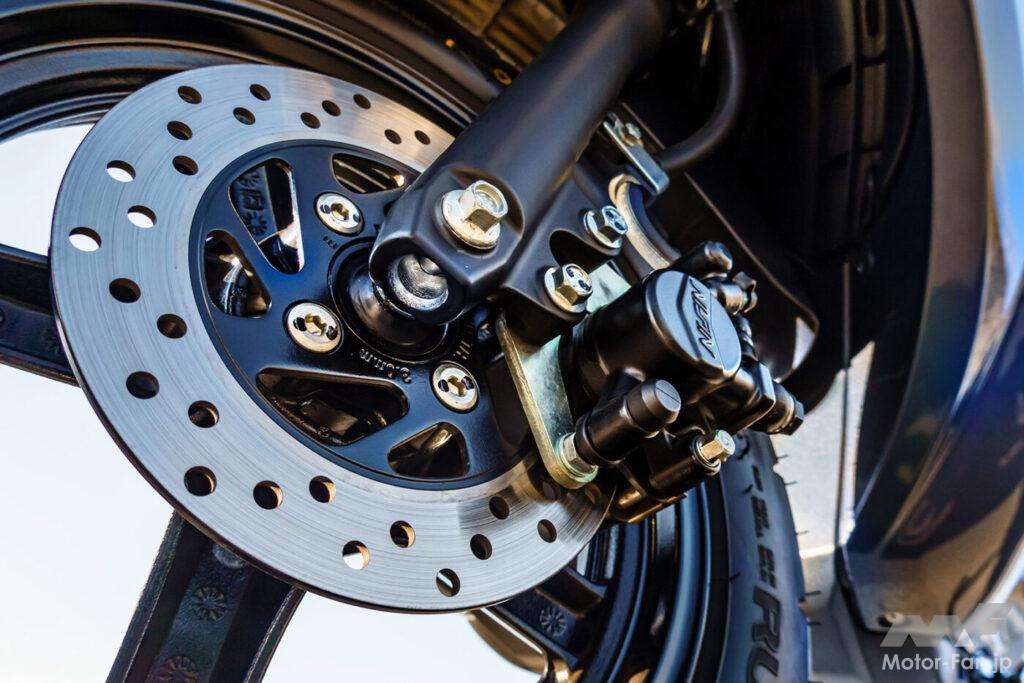
It is equipped with a 190mm hydraulic single disc brake at the front and a 130mm mechanical drum brake at the rear. It does not have ABS but has a combined braking system.
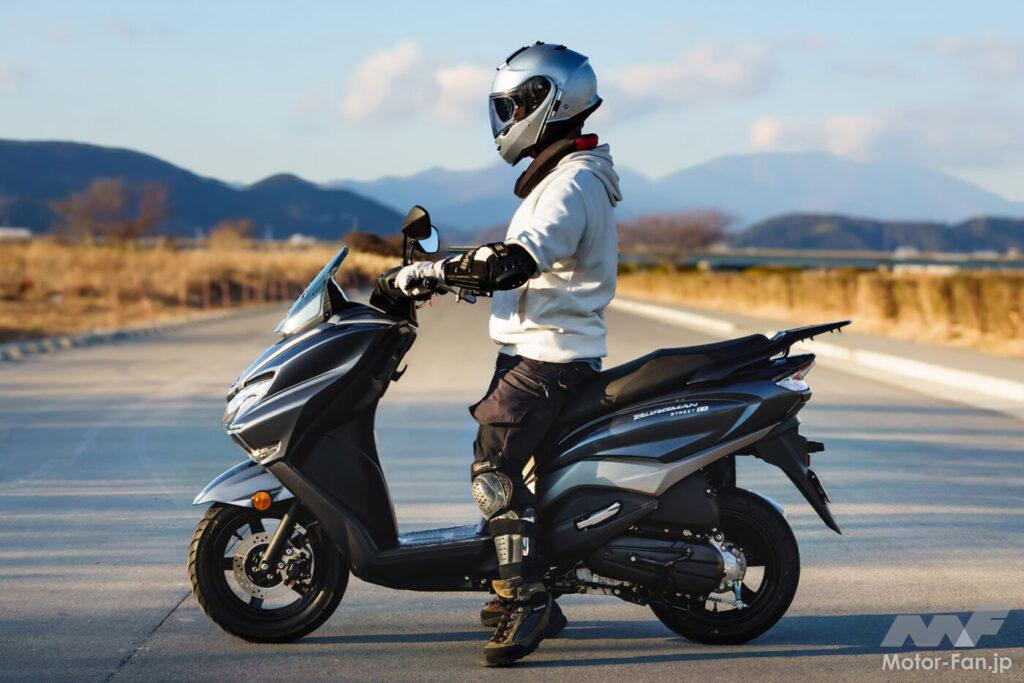
Effective height * For Takahashi, who is 153cm tall, his toes just barely touch the ground. The seat is a little high, so it doesn’t feel as secure as sitting flat on the ground, but the weight of the car is light, so it’s not scary. *Note: Height calculated from the average inseam length of Japanese people.
Even when you open the throttle, there’s no sudden acceleration punch, but you can enjoy a brisk start as it lightly leads the flow of four wheels. The handling is light and nimble, just like a 125-class bike, but it’s not too light and fluttery, and it demonstrates smooth stability when cruising at 60km/h, the top speed on public roads. When cornering, stability is more important than agility. It has a gentle flavor that allows you to leisurely trace the intended line.
The combined brake is a system in which applying only the rear brake automatically applies a small amount to the front brake as well. It doesn’t allow you to leave braking to the bike as easily as ABS, but at least on dry, good roads, it will reduce or prevent rear lock in most situations.
There are snakes in the namamugi
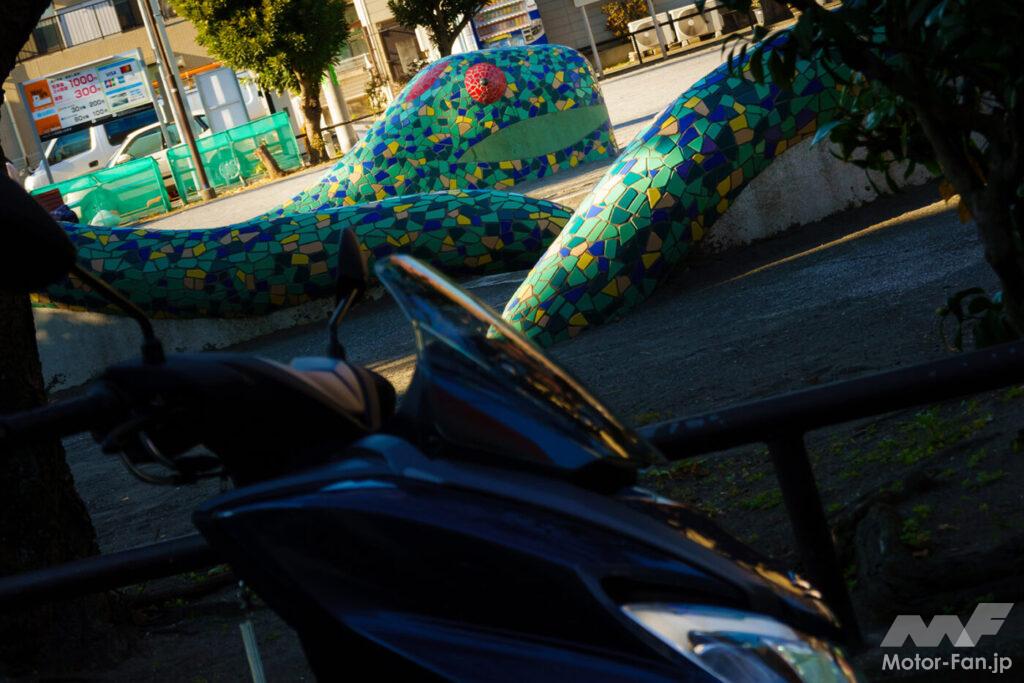
Namamugi Myojin Park is home to a giant green snake. Its glaring red eyes and writhing, undulating body make it quite scary.
Namamugi, Tsurumi Ward, Yokohama City, is the site of the extremely famous Namamugi Incident. However, ignorant people who ask, “What is the Namamugi Incident?” should immediately reread their Japanese history textbooks. However, even Takahashi has no idea what the Namamugi Incident is. It’s probably not knowledge that’s particularly necessary for someone who just rides around aimlessly on a motorcycle with a runny nose from morning until night.
In any case, I heard that there is a fairly large snake installed at Namamugi Myojin Park in Namamugi, so I decided to stop by while I was there.
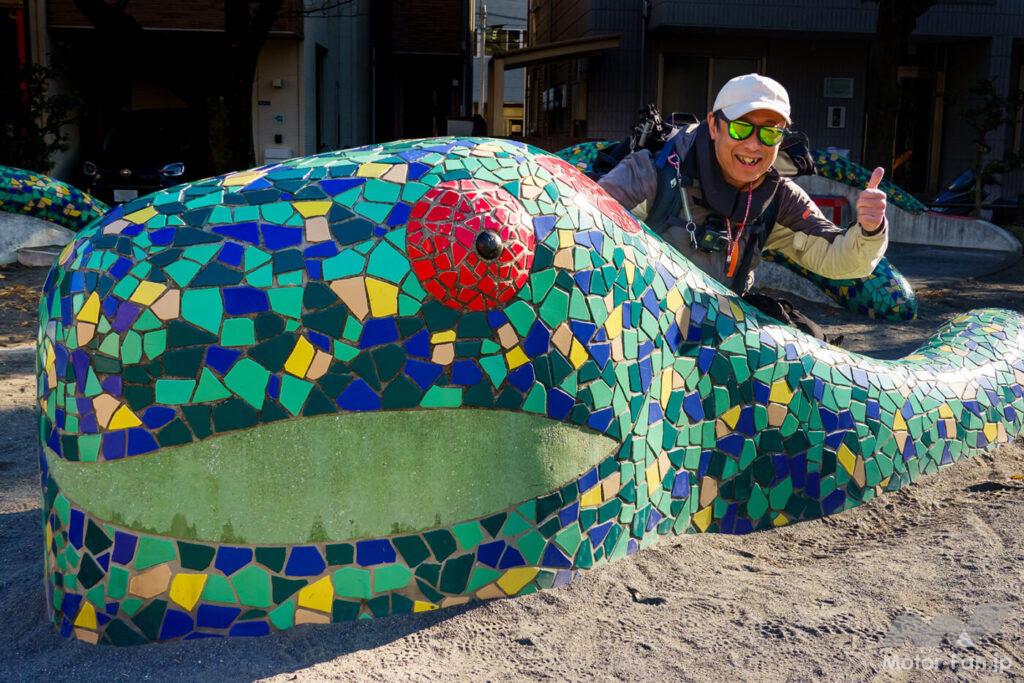
It has a very realistic reptile feel and a powerful beauty of form. I managed to push aside some timid kindergarten children playing in the park and successfully took a commemorative photo with the giant snake.
Come to think of it, Park Güell in Barcelona, Spain, is world-famous for its design, which closely resembles this snake. However, Takahashi does not wish to make the extremely rude claim that Namamugi Myojin Park has plagiarized it. In fact, it’s even possible that Park Güell plagiarized the snake from Namamugi Myojin Park. I’ll leave that judgment to the readers, so if you want to see the real thing, be sure to head over to Namamugi Myojin Park (admission is always free).
The sun sets in Shonan
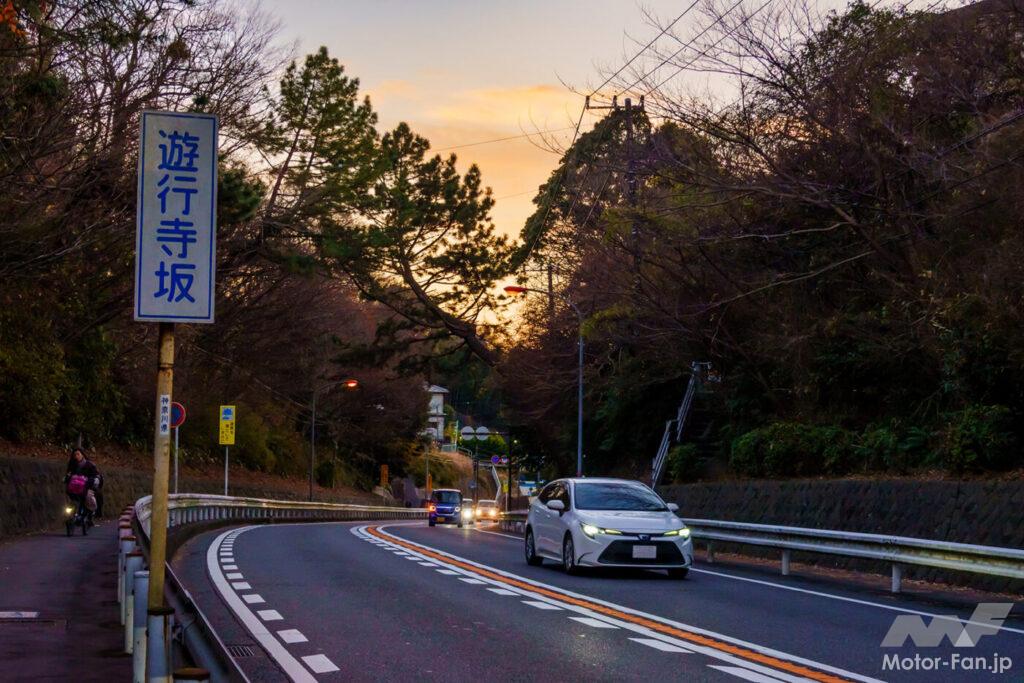
Near Fujisawa-juku, go down Yugyojizaka on Kanagawa Prefectural Route 30 and head to Shonan Coast.
Shortly after entering Kanagawa Prefecture, the sun began to set. I left National Route 1 in Fujisawa and headed toward the coast. Riding on the roads covered in buildings around Tokyo and Kanagawa was unnecessarily stressful. I decided to stop my bike at Tsujido Beach and take a breather.
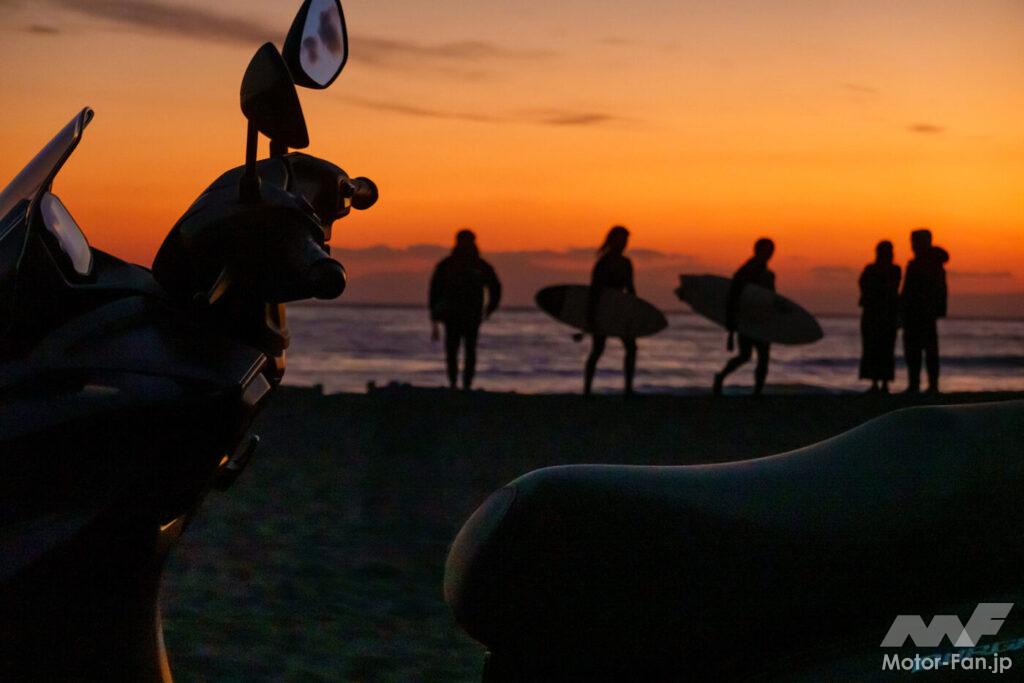
The Shonan evening twilight, when the overly cool silhouettes of the surfers tingle with my insecurities and induce intense irritation, makes me feel extremely irritated. Perhaps this is the difference in human status, but it feels as if the world is completely different on the other side of the seat of the Burgman 125.
ADVERTISEMENT
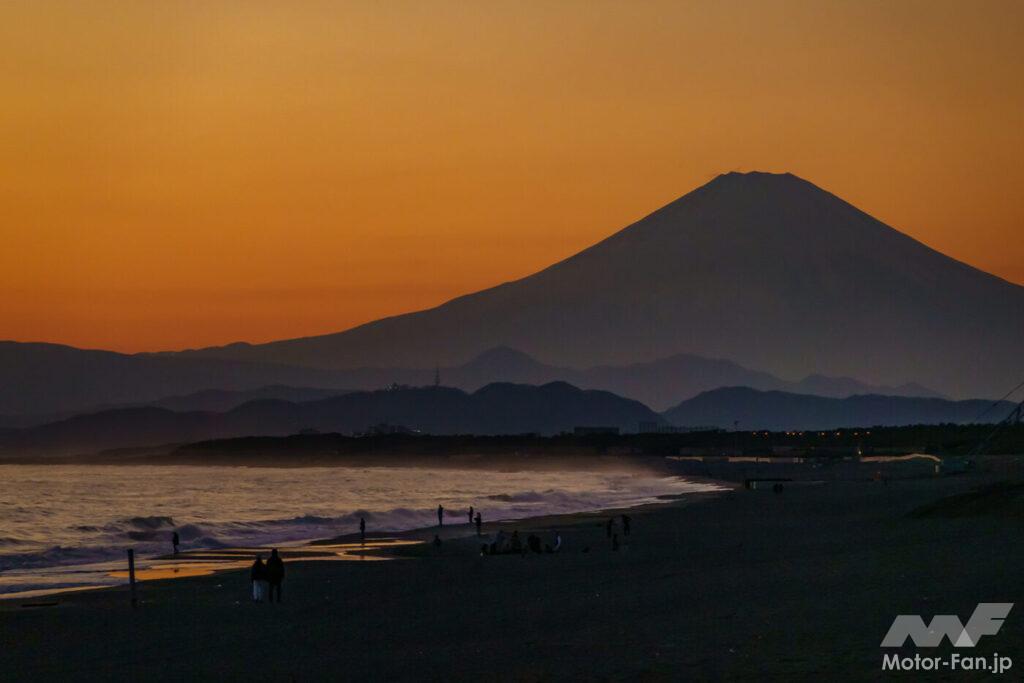
The sacred Mount Fuji appears against the crimson sky. The wind is strong and the waves are high.
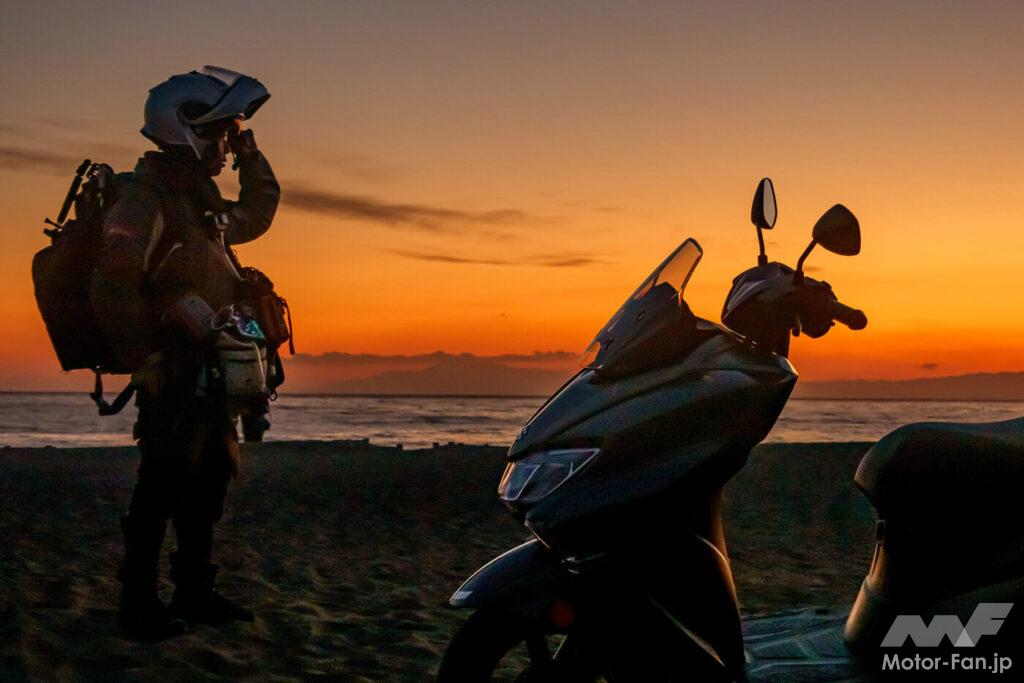
The sun sets over Tsujido Beach, and night quickly creeps in.
I picked up my heavy luggage and, leaving Tsujido Beach behind, started driving along National Route 134, a seaside route, as the sun had already set. Shortly after entering Chigasaki City, the fuel gauge started to move for the first time, and the meter, which has a total of five marks, was down to four. But I was still only one-fifth full. I still had a long way to go before I ran out of gas.
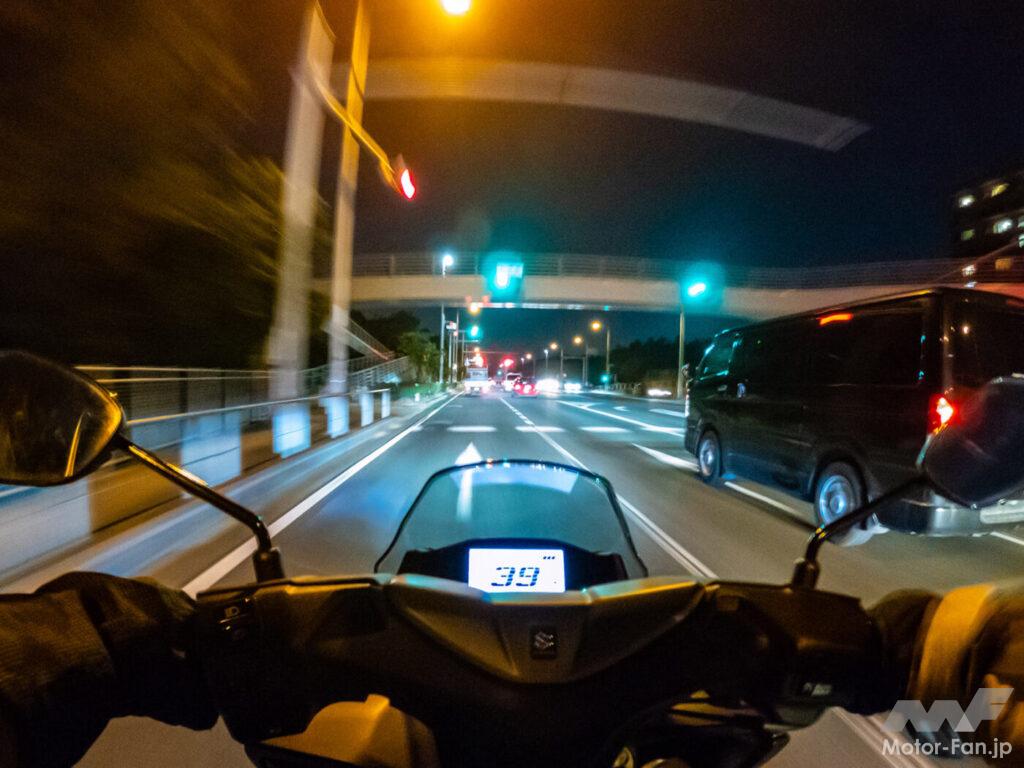
At night, we head west on National Route 134.
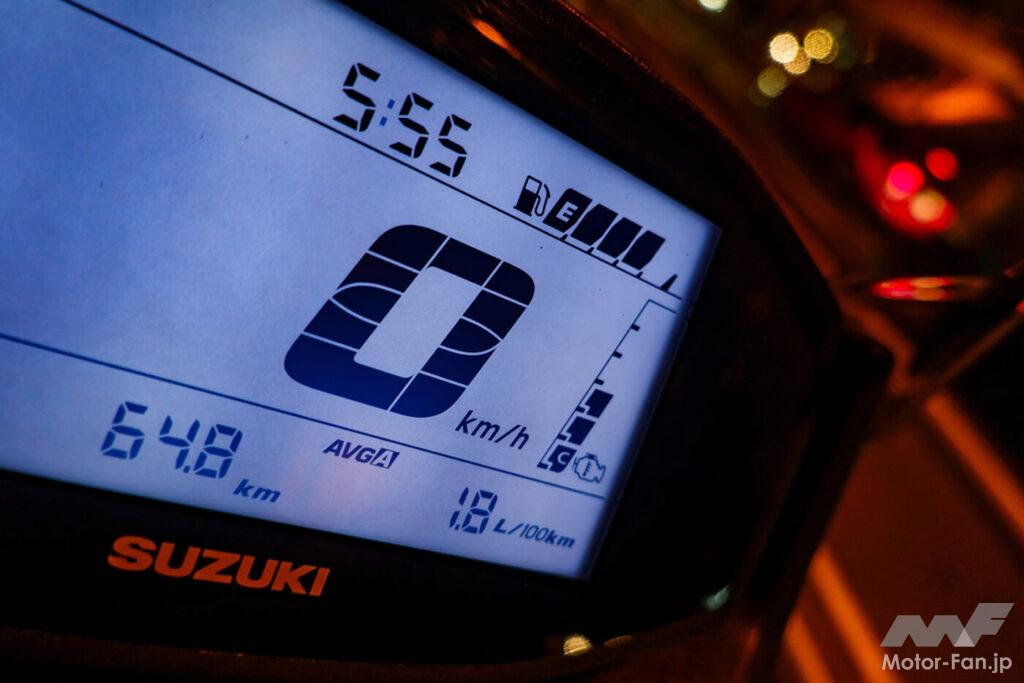
The trip was 64.8km, and the fuel meter had dropped by one mark out of five, leaving four marks remaining.
ADVERTISEMENT
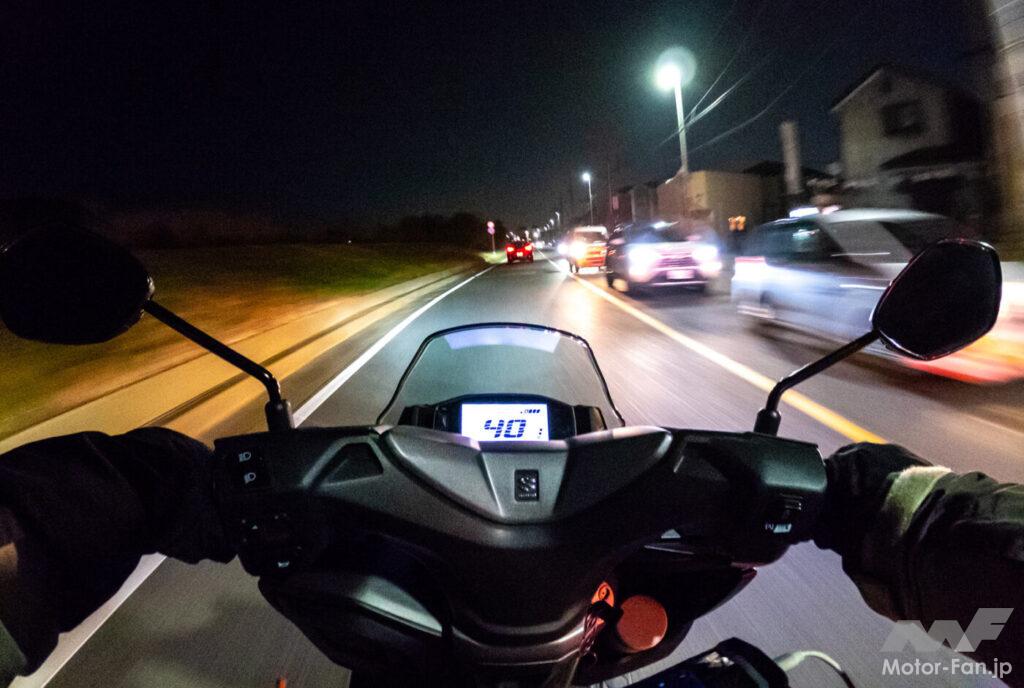
We left National Route 1 and headed for a cheap hotel. Shonan is a pretty lonely rural area, but once you leave the coastline, the stylish feel disappears and the rugged countryside becomes more apparent.
Since I was traveling along the Tokaido, it was only natural that I would want to stay somewhere along the road, but unfortunately, affordable lodgings aren’t that readily available. The area from Shonan Coast to Hakone in particular seems to be popular with tourists these days, thanks to the booming inbound tourism, and many lodgings are charging unreasonably high prices. Again, Takahashi’s lodging was unavailable that night. I had no choice but to stumble into a cheap lodging in a town a little ways off the Tokaido, shoveled some convenience store food and went to sleep.
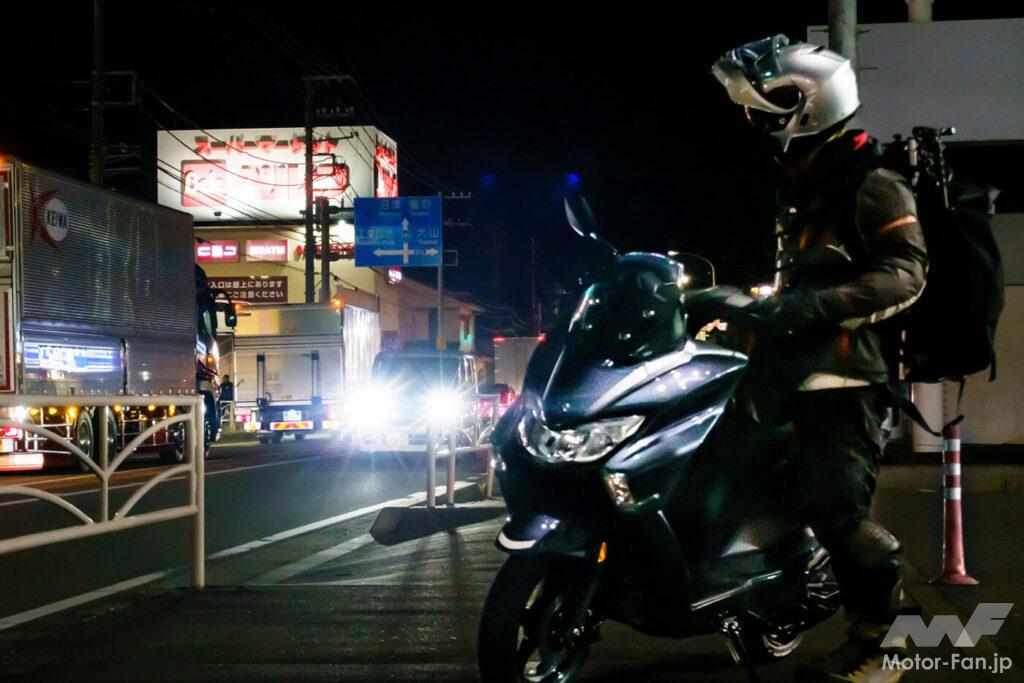
In search of a place to sleep, Takahashi ended up in a town along National Route 246, off the Tokaido road.
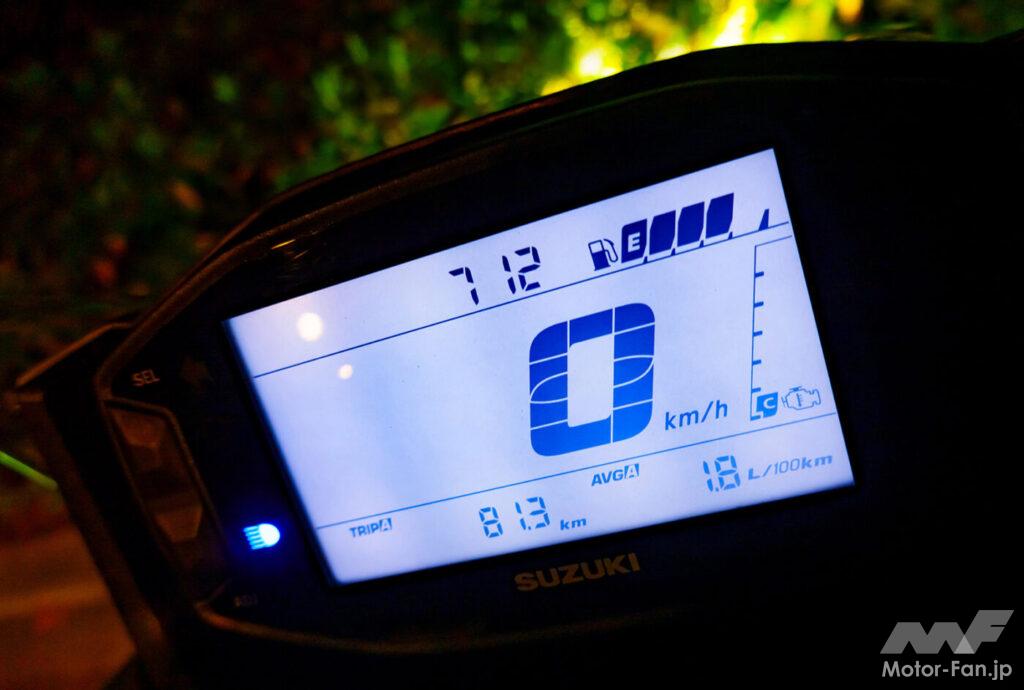
The drive from Nihonbashi was 81.3km, and the fuel meter was down 1 mark, with 4 remaining.
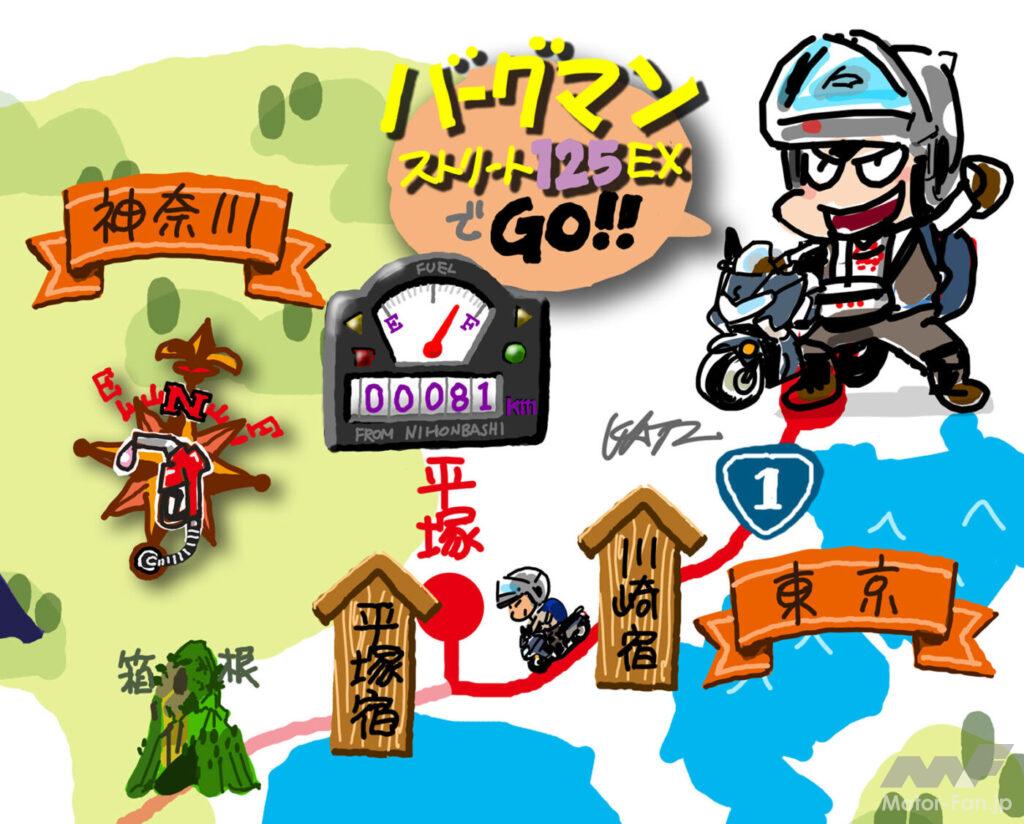
[MAP] Tokaido Gas Challenge #9 Suzuki Burgman Street 125EX [Nihonbashi – Hiratsuka]
ADVERTISEMENT
 How far can a Honda Cross Cub 110 go with a full tank of gas? Part 8 of the Tokaido Gas Challenge, from Nihonbashi, Tokyo to Kyoto! [Day 1]
Riding a Honda Cross Cub 110, we set off on a full-fueled one-way attack on the Tokaido Highway from Nihonbashi, Tokyo, to Kyoto, and a pilgrimage to sacred sites. First up is Shonan, a place dedicated to youthful basketball! REPORT ● AFO RIDER Takahashi (AFO RIDER Takahashi) PHOTO ● Takahashi Katsuya (KATSUYA Takahashi) ILLUSTRATION ● Takahashi Katsuya (KATSUYA Takahashi)