
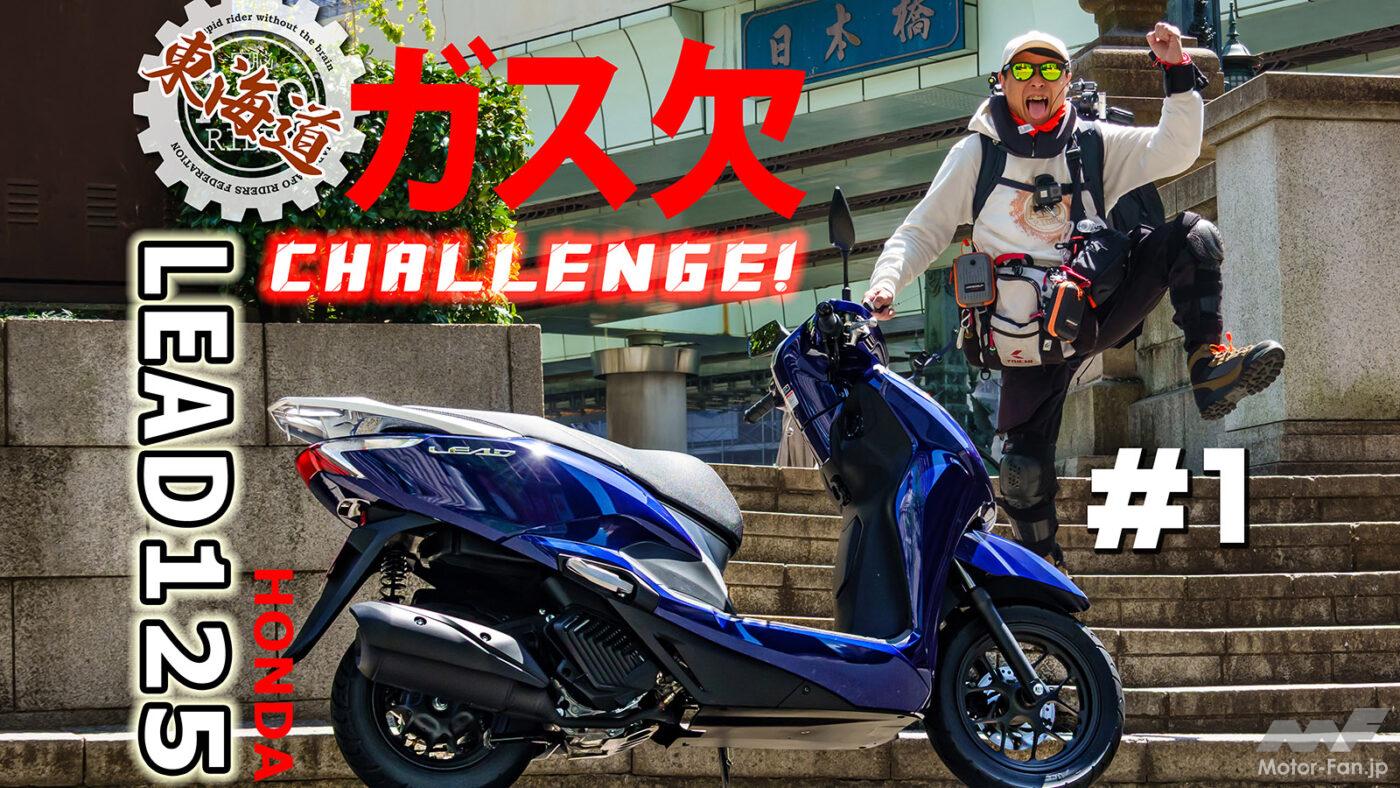
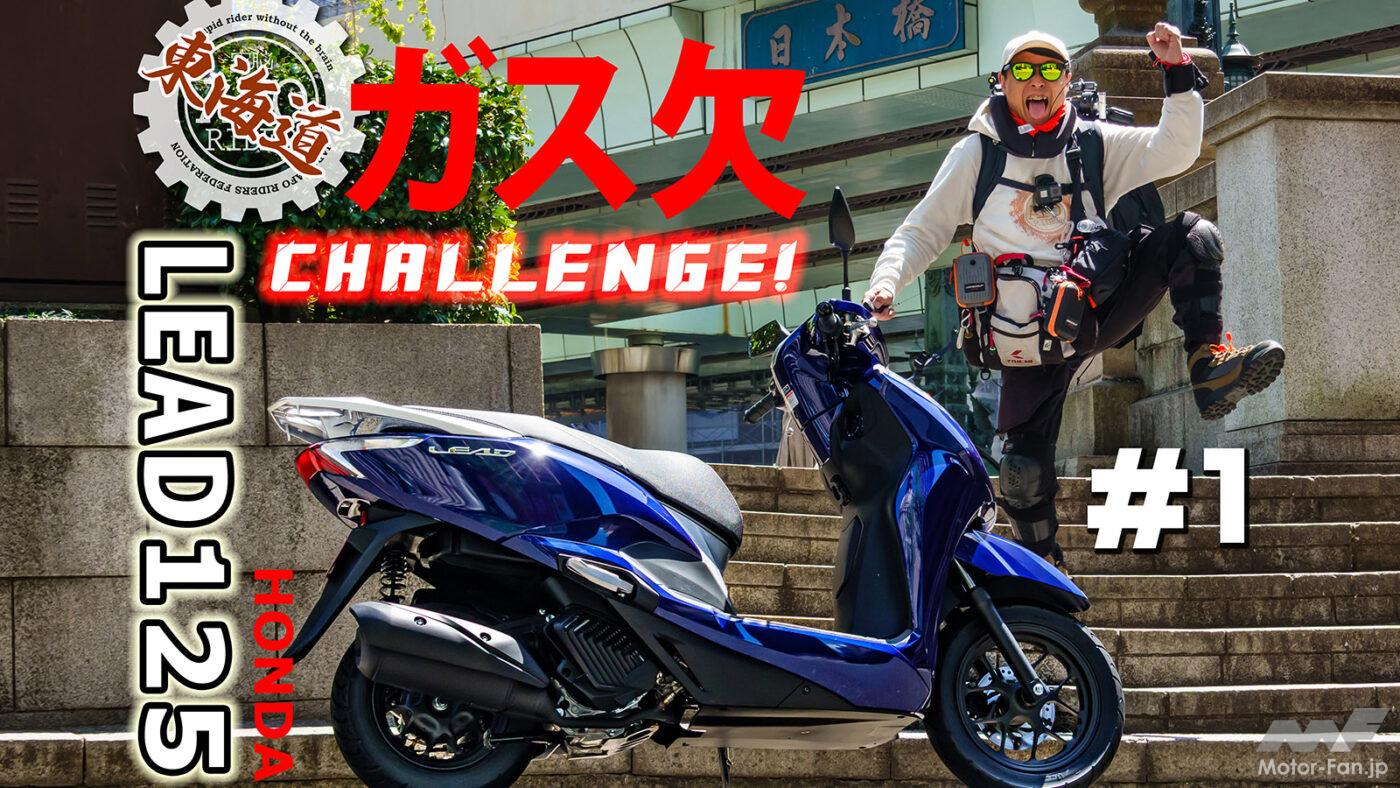
A timeless and fast-paced scooter
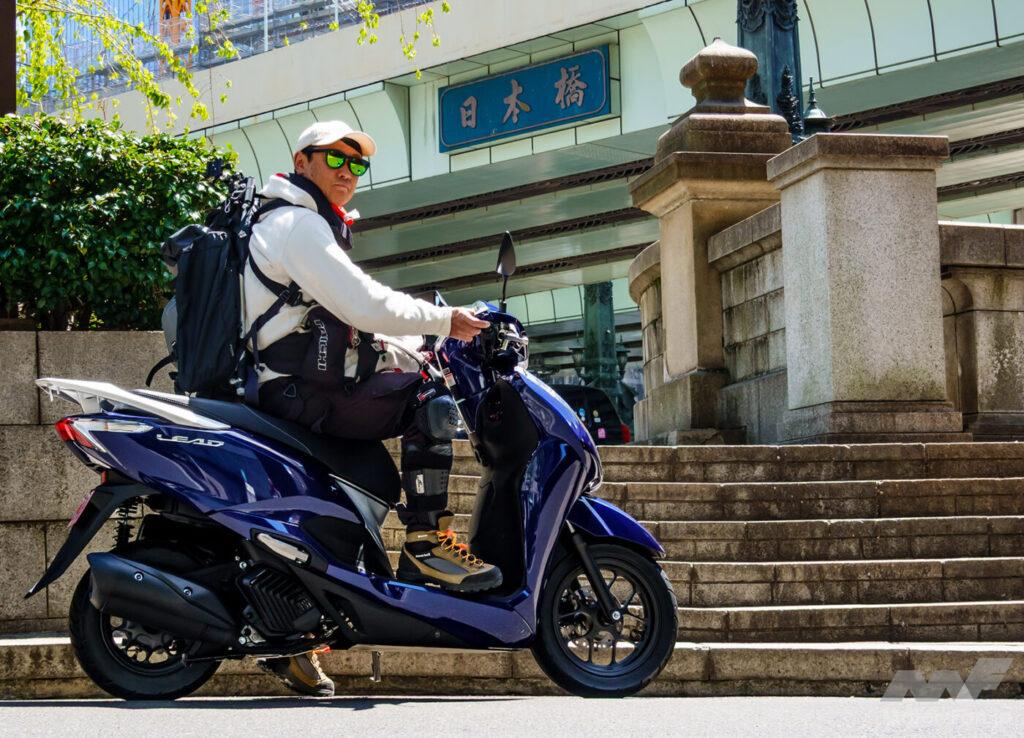
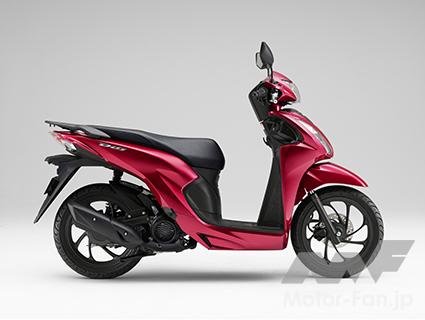
The LEAD125 is a lightweight scooter that is just the right size for city riding. It is equipped with a 124cc water-cooled, 4-stroke, OHC, 4-valve, single-cylinder engine with a maximum output of 11ps, weighing 116kg and measuring 1845mm in length.
My partner in this Tokaido Gas Challenge is Honda’s long-selling scooter, the LEAD125. Many middle-aged and older riders will probably think of it as a familiar bike they’ve ridden frequently since they were kids.
That being said, the LEAD50/80/125 released in 1982 and the modern LEAD125 are completely different vehicles. First of all, the engine has changed from a 2-stroke to a 4-stroke, so it’s a stretch to insist that they’re the same machine. However, there hasn’t been any major deviation in the design direction. The image of a “performance LEAD” has stubbornly remained consistent for over 40 years, regardless of changes in engine or times.
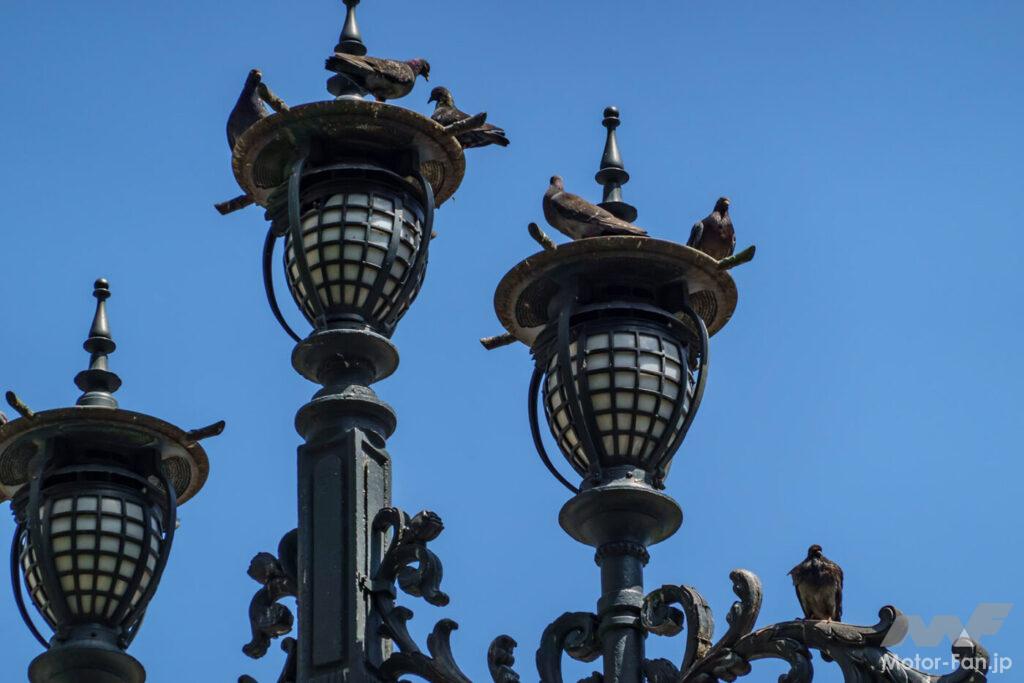
There are pigeons scattered all over Nihonbashi. It’s no exaggeration to say that the whole town is a pigeon’s nest. (No, that’s an exaggeration.)
ADVERTISEMENT
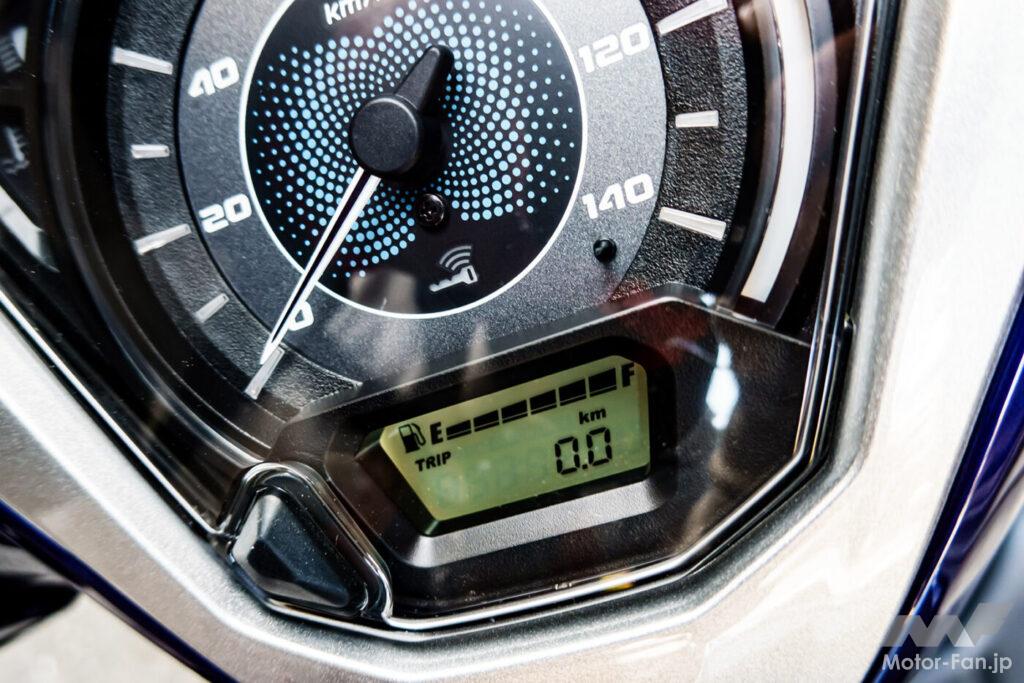
The analog meter has a slightly old-fashioned graphic and a small digital display. It doesn’t look flashy, but in actual town use, this simple meter is far easier to use.
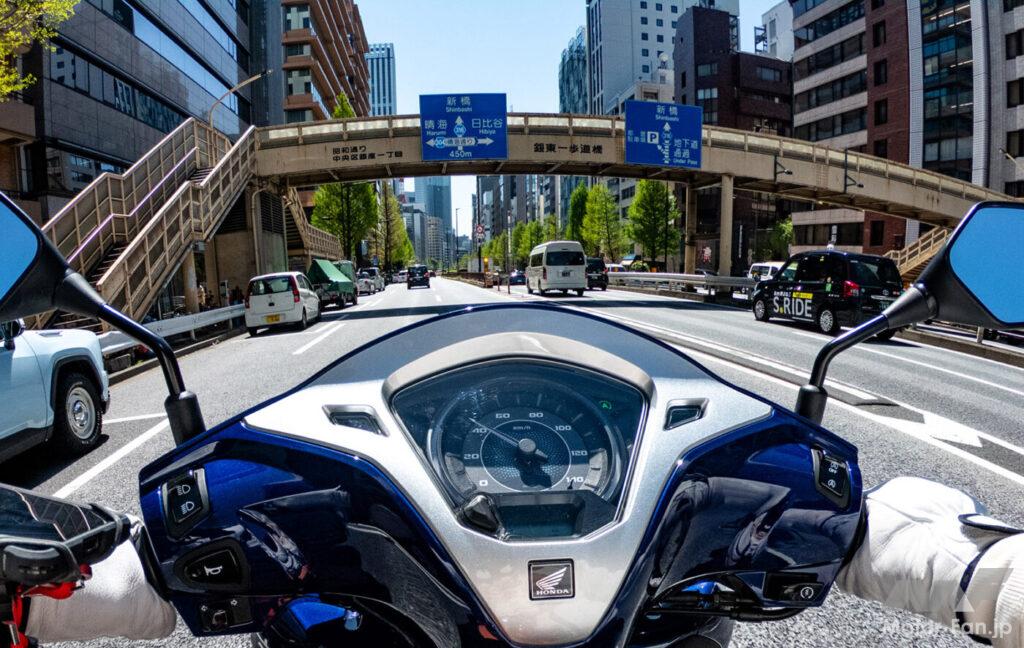
We headed west and first escaped from the city center.
A highly functional scooter that shines in everyday use
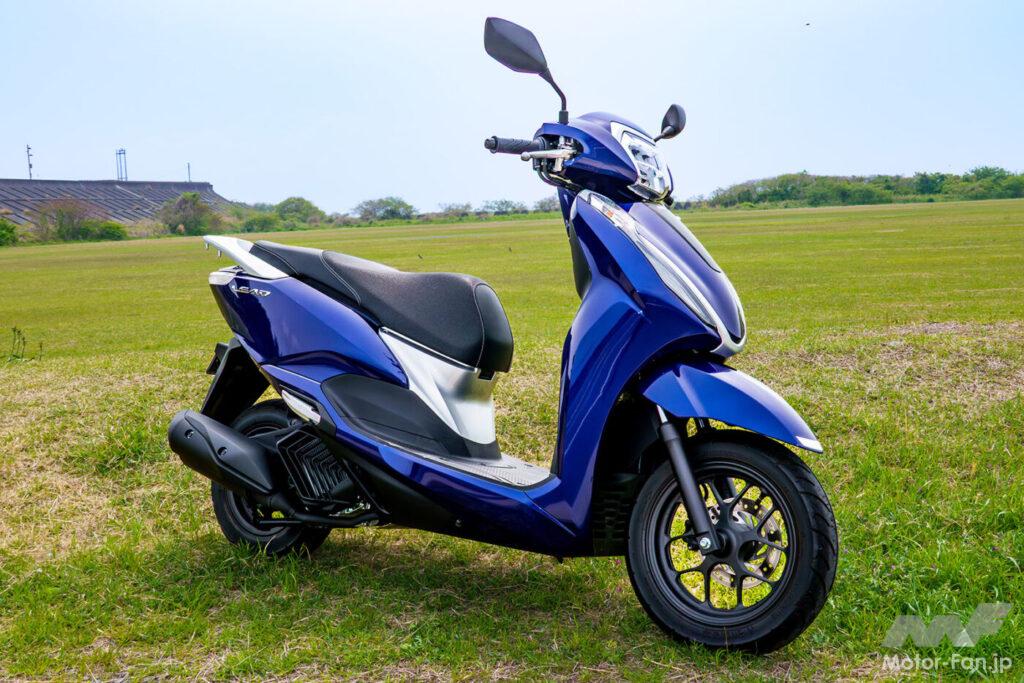
The LEAD125 is an all-round scooter that combines sharp performance with convenience. Because it is an all-round scooter, the design is understated. Rather than being loved by core enthusiasts, they chose to be a scooter that no one dislikes.
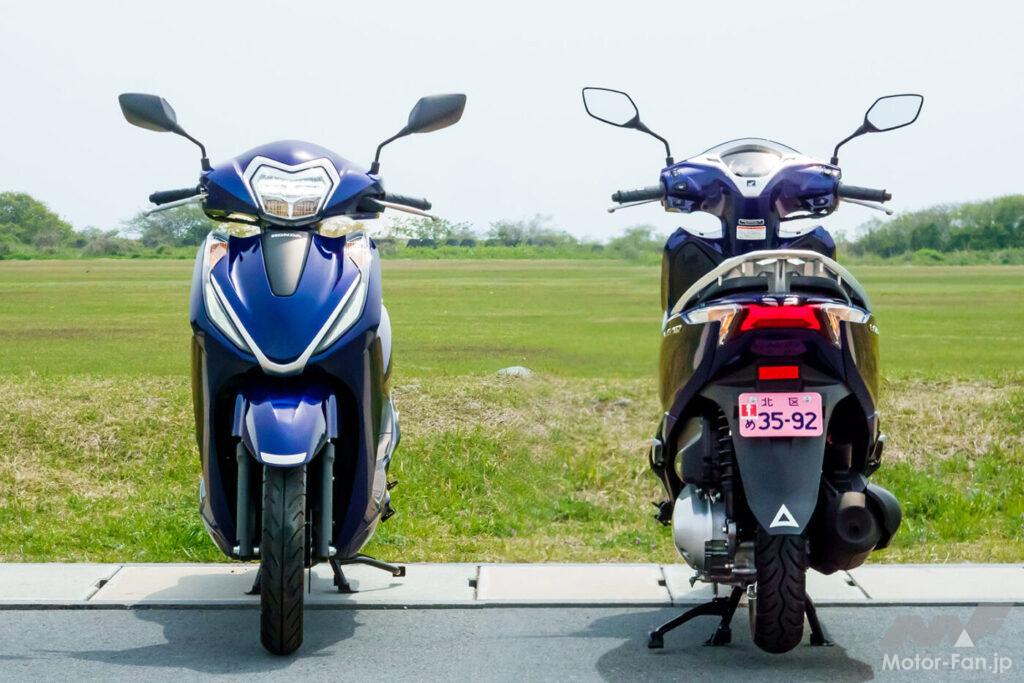
The front and rear views are well put together. There are no outstanding or lacking points, and the design is generally average. However, the front has a slightly spicy Asian feel.
I filled up on gas, reset the trip meter, and left Nihonbashi. I didn’t want to drive on the roads in the city center, but I had no choice because I had no choice but to drive here to get out of Tokyo.
City streets are certainly boring. But motorcycles don’t have to be boring. The LEAD125 has good throttle response for a scooter and runs smoothly. It’s a machine that gives you a bit of a sporty feel even when riding around town.
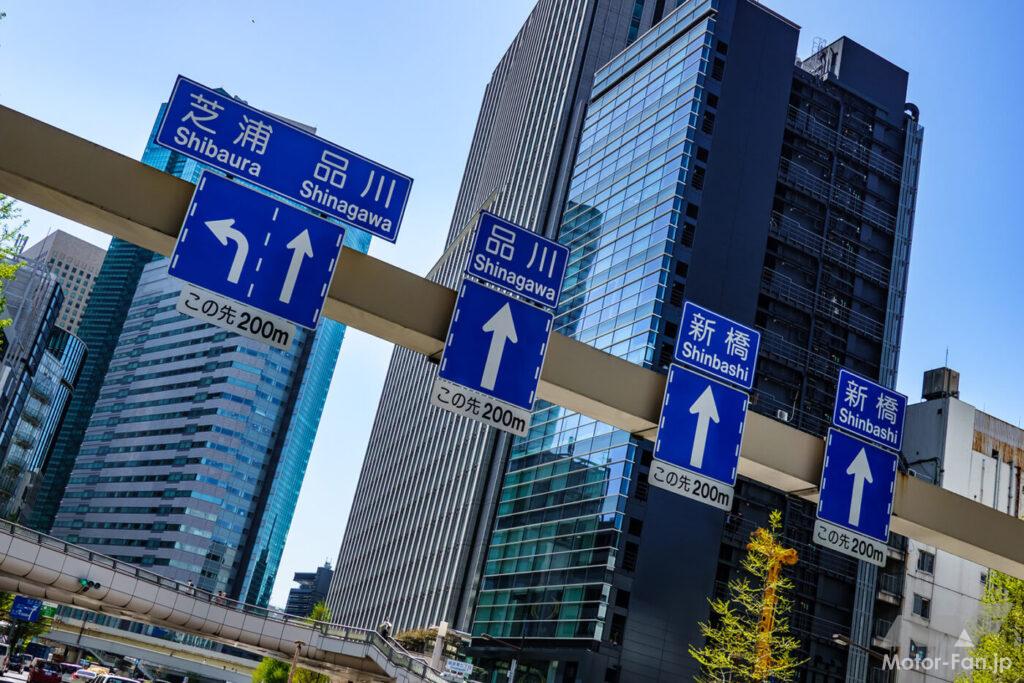
The center of Tokyo is lined with buildings that are not only unpleasant to look at, but are also of no use.
ADVERTISEMENT
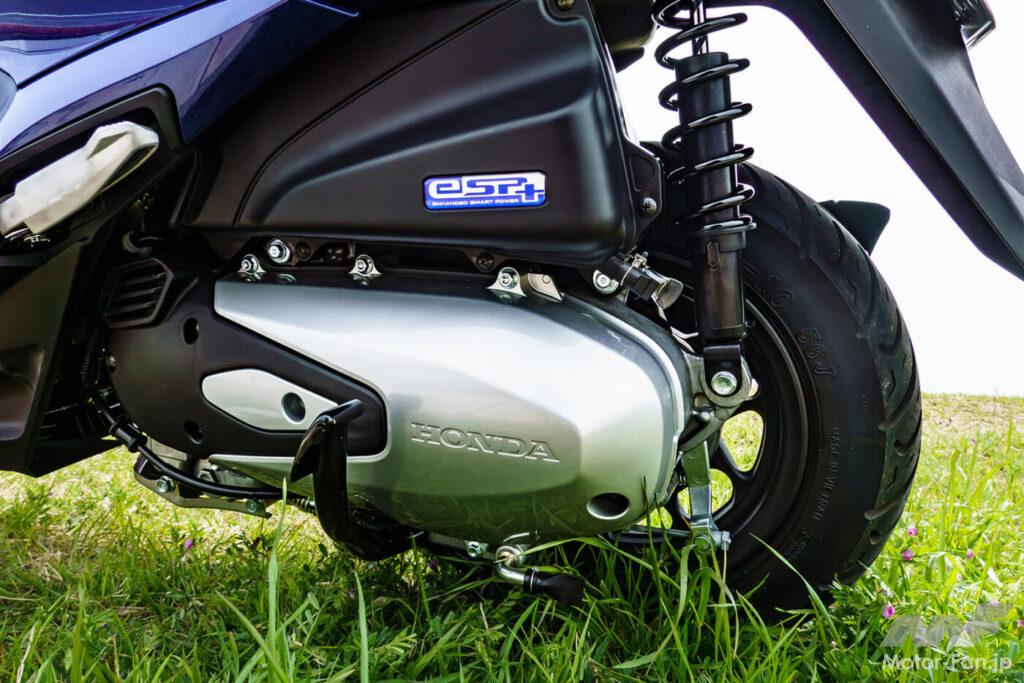
The water-cooled power unit produces a maximum output of 11 hp and a maximum torque of 1.2 kgf-m. While the specs aren’t outstanding, the power feel is excellent.
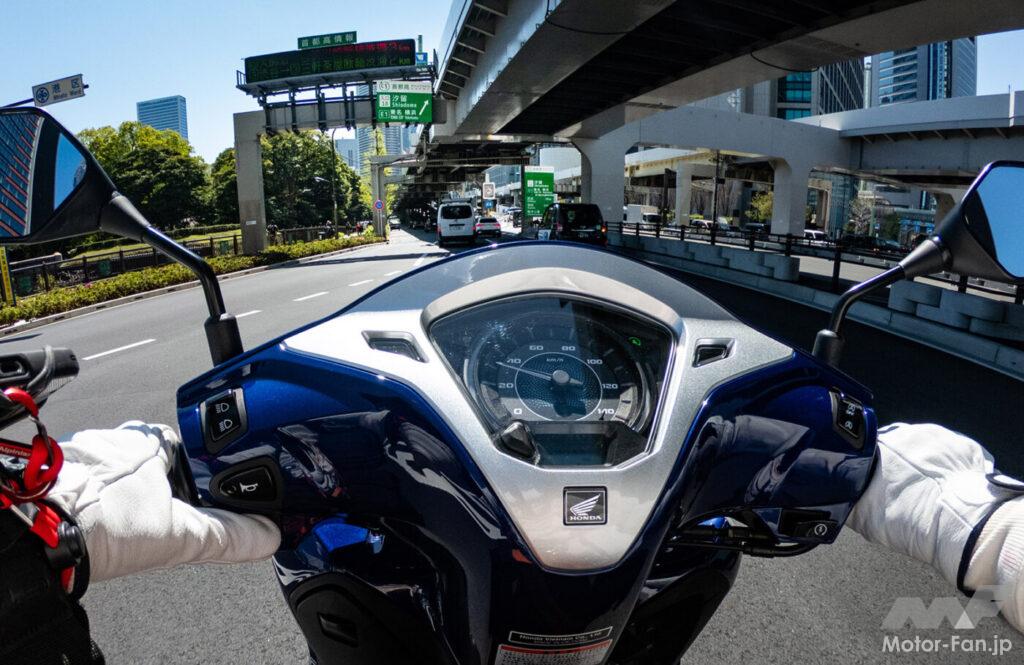
Among the many annoying areas of Tokyo, we head to Minato Ward, which is particularly annoying.
Thanks to its compact body, the LEAD125’s riding is refreshingly light and easy to handle. What’s particularly noteworthy is that the riding position is not cramped. It seems that the spirit of creature comforts permeates every corner of the machine.
If there’s one drawback to this bike, it’s that its suspension is a little lacking considering its excellent power performance. Even small bumps that are common in urban areas can’t be absorbed when the speed increases a little, and the suspension flutters. However, this isn’t a bike for attacking mountain passes at full speed, so it’s not a problem.
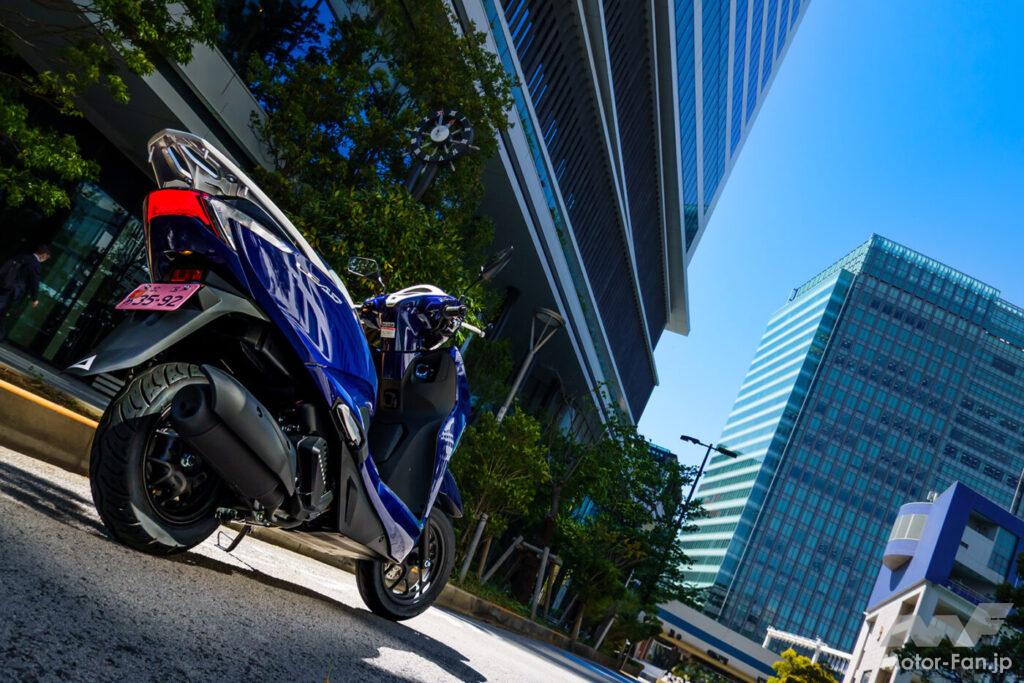
The clean design fits perfectly on the streets of Minato Ward, and would look good even if a business person in a suit were to drive around.
ADVERTISEMENT
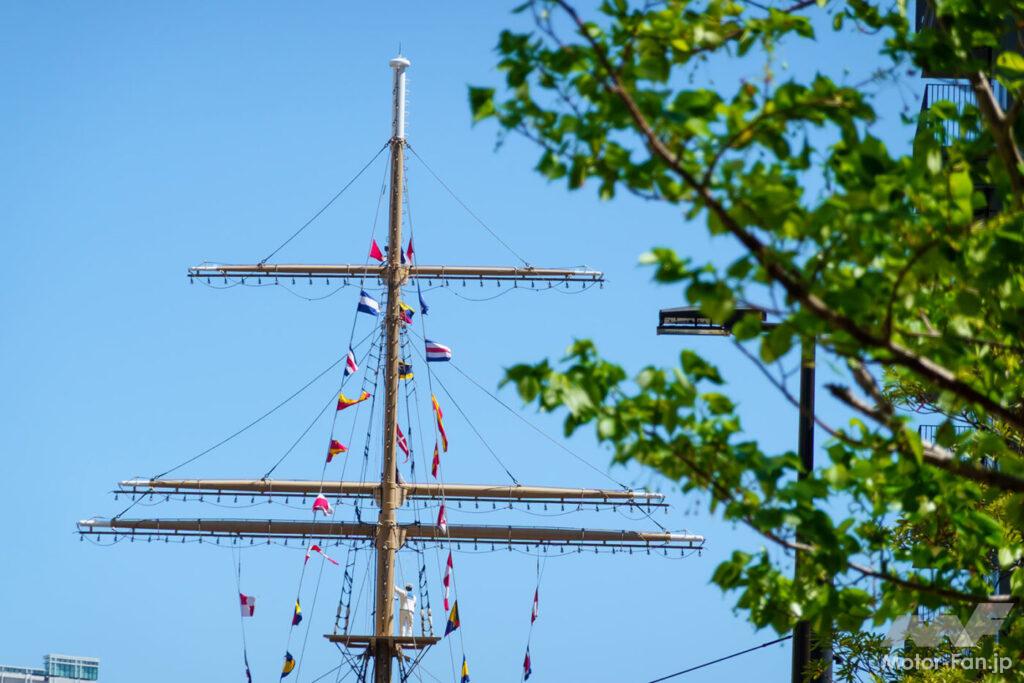
At the Takeshiba Passenger Ship Terminal, there is a monument that looks like the mast of a sailing ship. I wonder if the numerous signal flags attached to it are an attempt to decorate the ship.
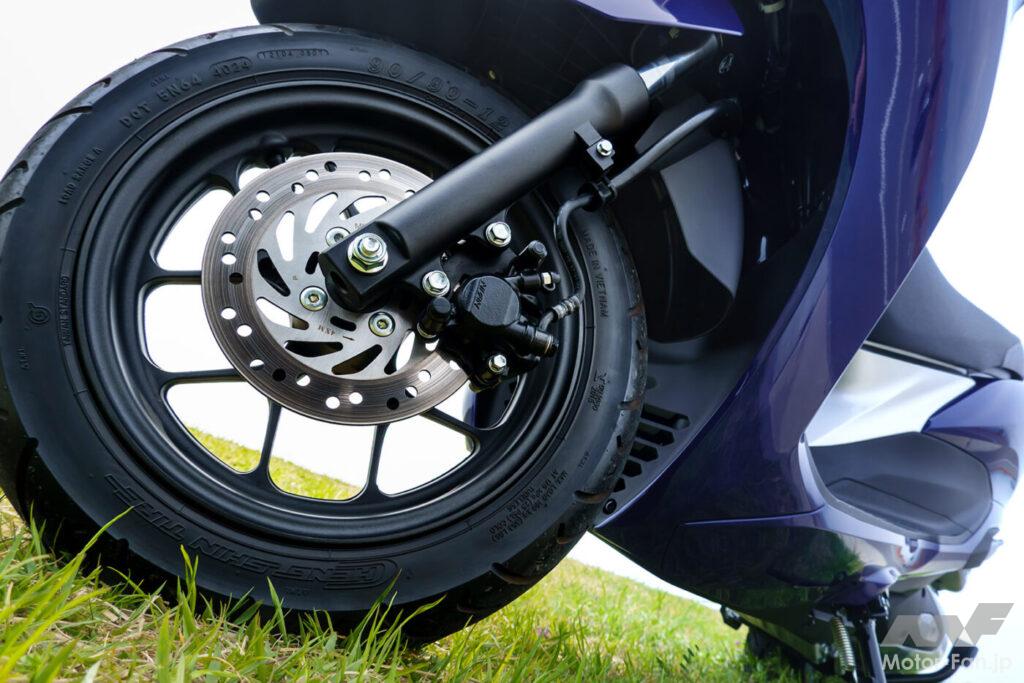
The LEAD125 uses a hydraulic disc brake in the front and a mechanical leading/trailing (drum) brake in the rear. It is also equipped with a “combined brake” system that automatically engages the front brake when the rear brake is applied.
Through the capital to Kanagawa
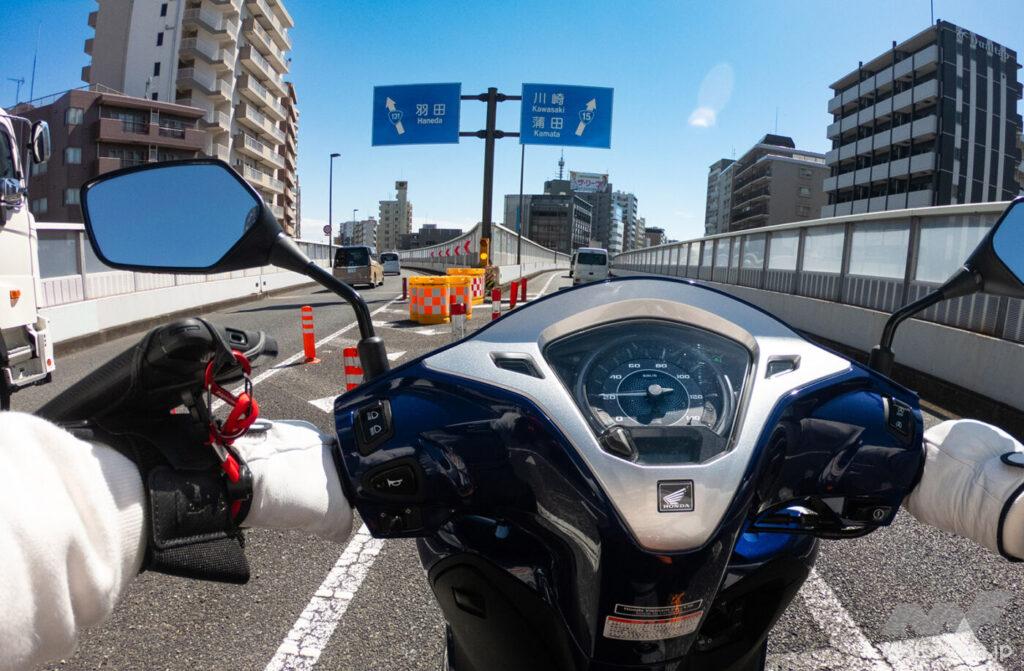
National Route 15, which runs almost like the Tokaido Road through Tokyo, branches off into National Route 131 in Ota Ward, heading towards Haneda.
Leaving Tokyo’s skyline and entering Kanagawa, which is still part of the Tokyo megalopolis, the area is far from laid-back. But at least the number of obtrusive skyscrapers has decreased, making it a little easier to breathe.
We changed course from National Route 15 onto the old Tokaido road and took a break at Ichiba Milestone in Tsurumi Ward, Yokohama. This milestone is also designated as a Yokohama City Regional Cultural Property. After taking a breather, we set off towards Shonan.
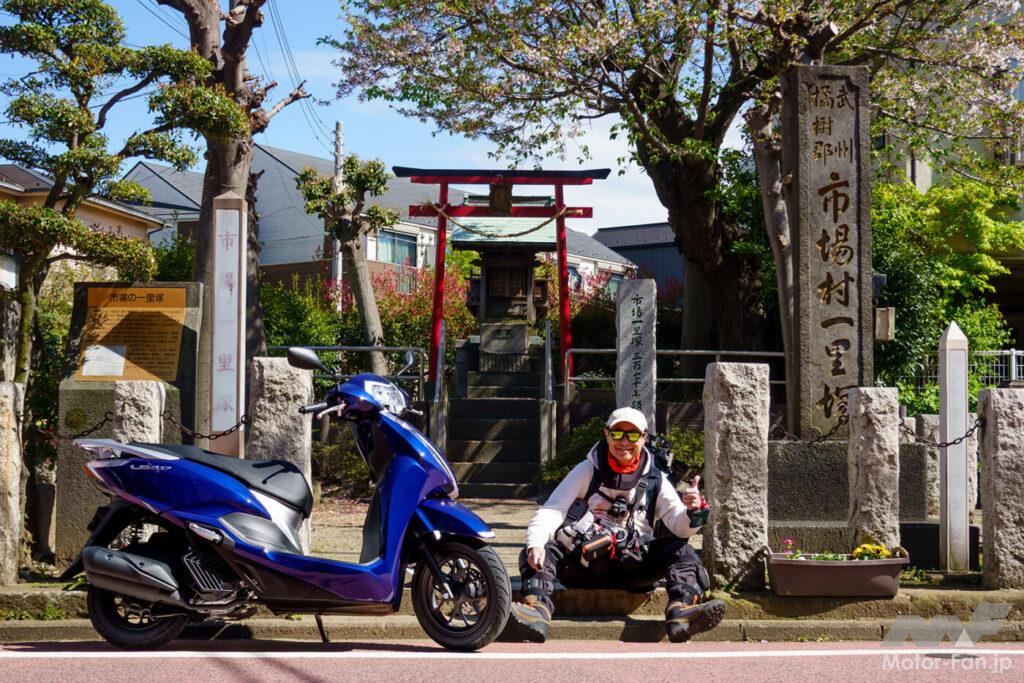
Ichirizuka are Edo-period milestones built every 1 ri (approximately 4 km) along roads. Ichiba Ichirizuka is located 5 ri from Nihonbashi.
ADVERTISEMENT
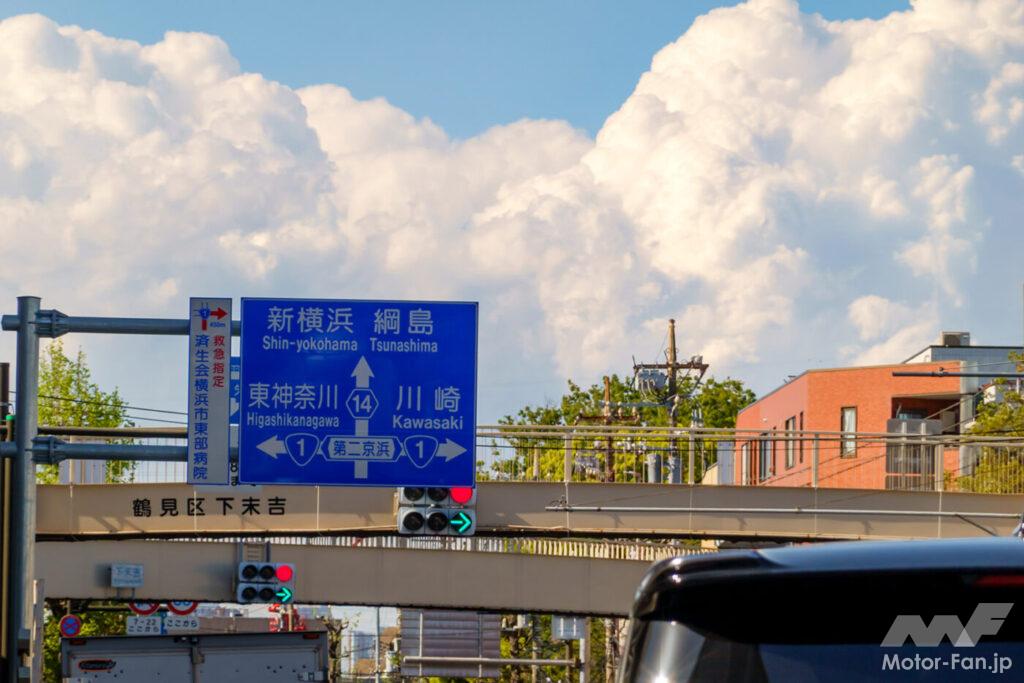
Cumulonimbus clouds rising in the blue sky signal the arrival of summer.
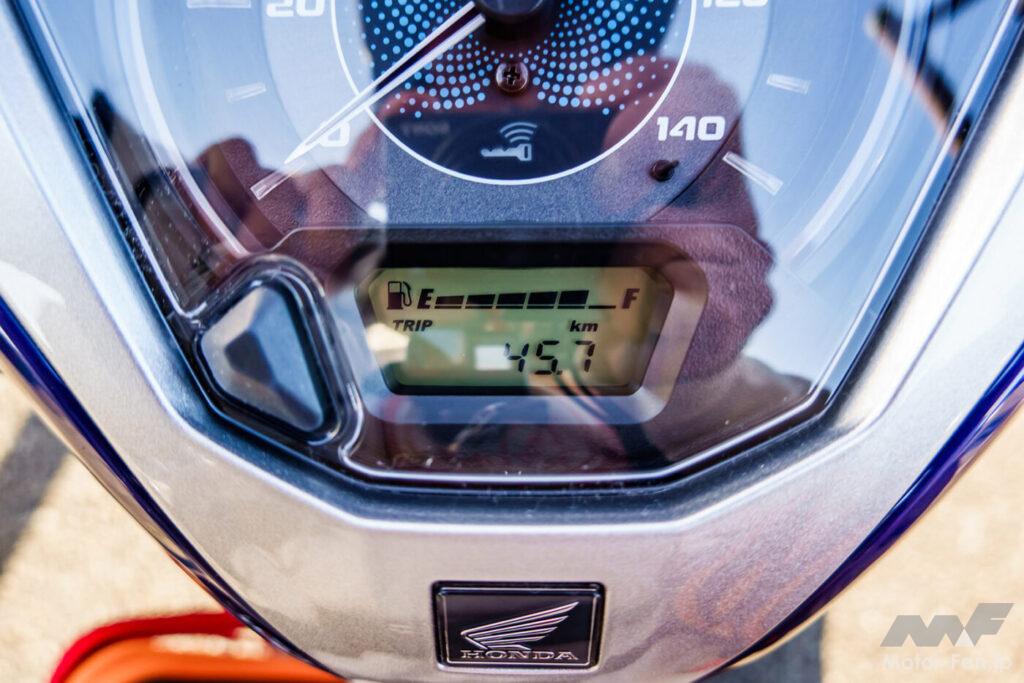
At 45.7km on the trip, the fuel meter showed 1 mark down and 5 marks remaining. The display was quite unstable, and even a slight movement of the machine could cause it to move by two marks at once.
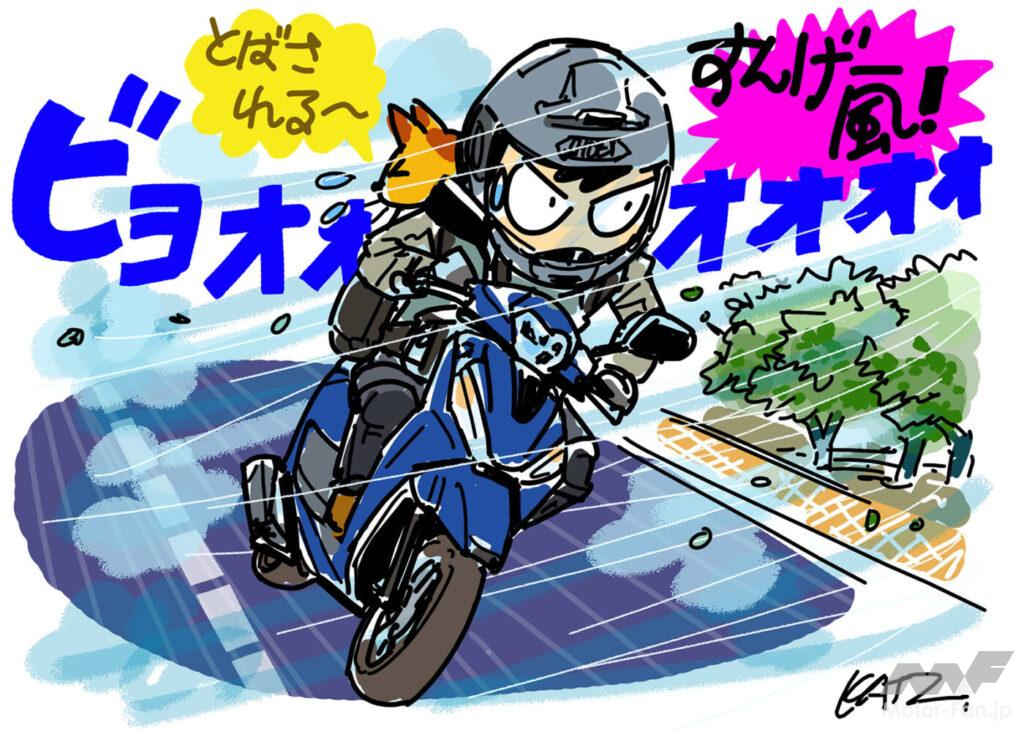
As we entered Kanagawa, an extremely strong wind began to blow. The LEAD125 is relatively unaffected by crosswinds compared to other scooters, but if you’re not careful, the lines can get twisted.
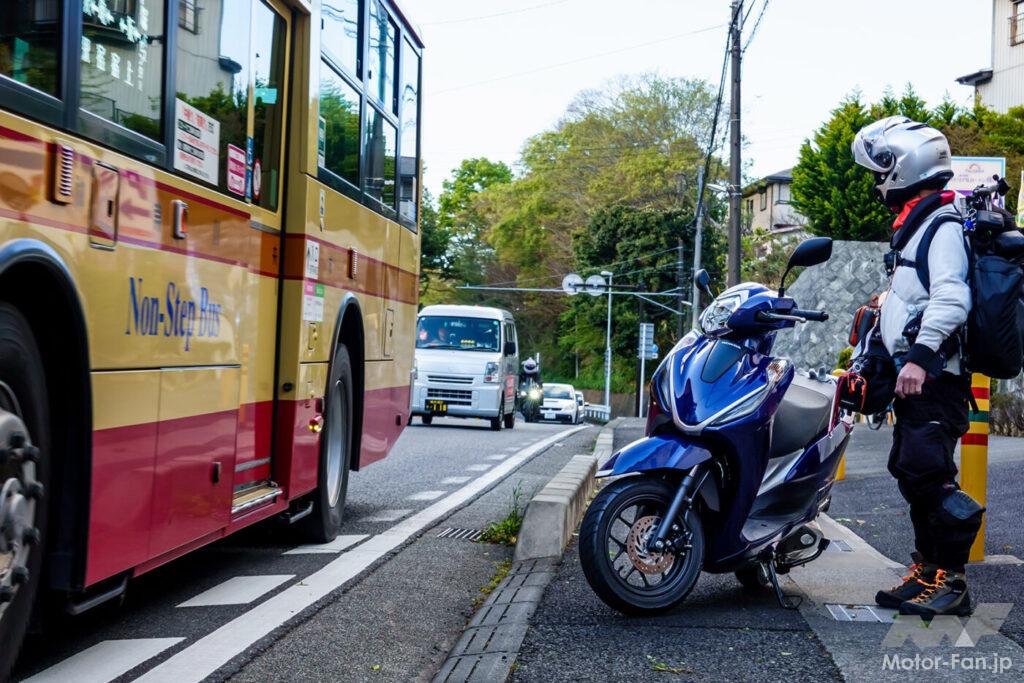
Yugyojizaka is located near the Edo-side mitsuke of Fujisawa-juku. Traces of the old post town can be seen here and there, but the traffic is so heavy that it loses its charm.
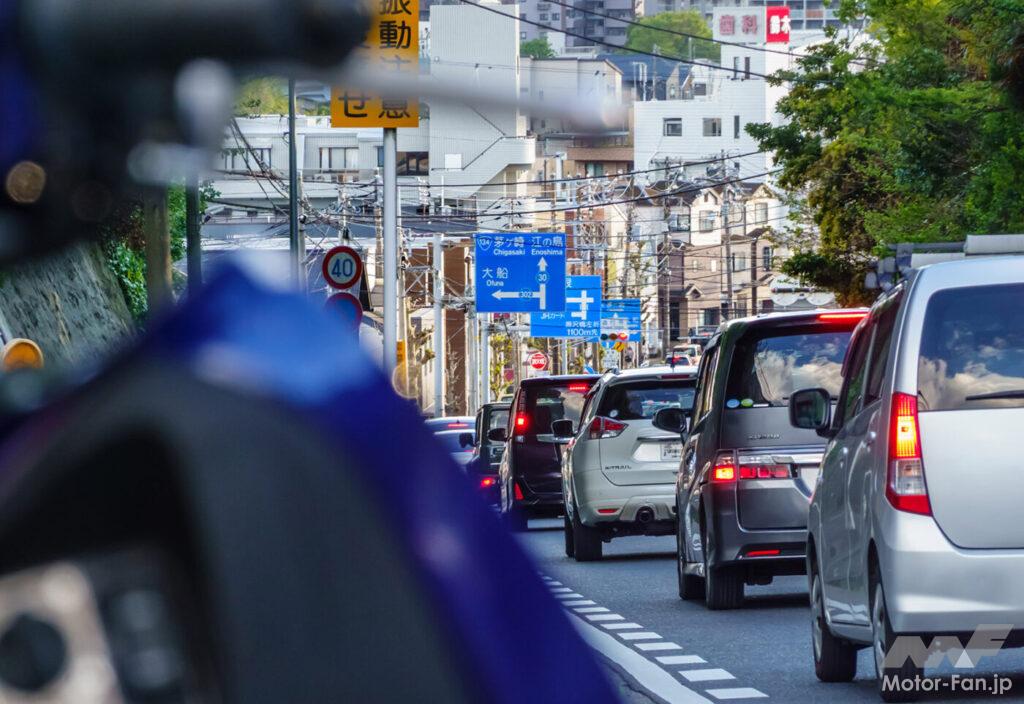
At the end of the always congested downhill road lies the sea of Chigasaki.
Shonan covered in strong winds
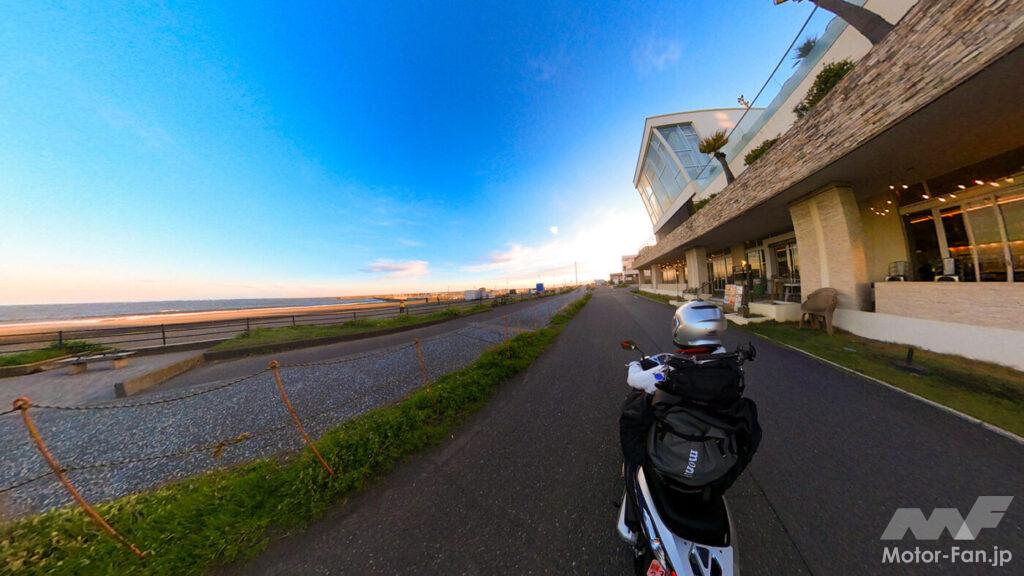
We arrived in Chigasaki as dusk was approaching.
By the time I arrived in Chigasaki, the sky was already beginning to turn crimson red. It was a familiar beach, but it looked completely different than usual. A strong wind was blowing, strong enough to blow away a lightweight scooter. And the countless cool, stylish Shonan people who usually swarm the beach had completely disappeared. I mean people who were even lighter inside than a lightweight scooter. They’d probably been blown away by the wind.
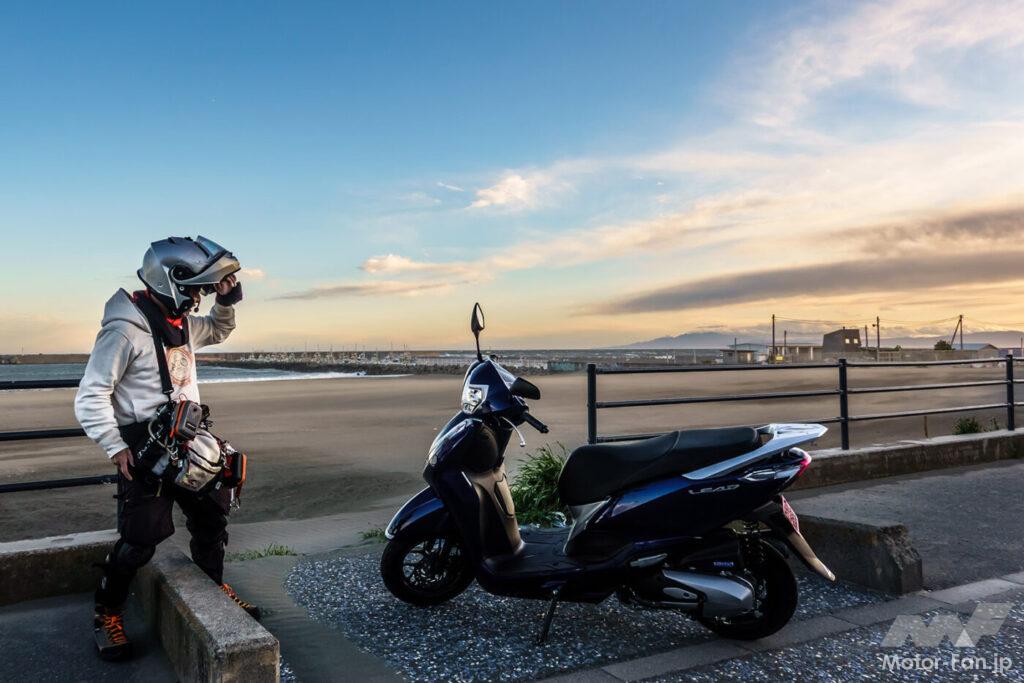
Southern Beach Chigasaki is exposed to strong winds, so strong that even adults are staggered.
ADVERTISEMENT
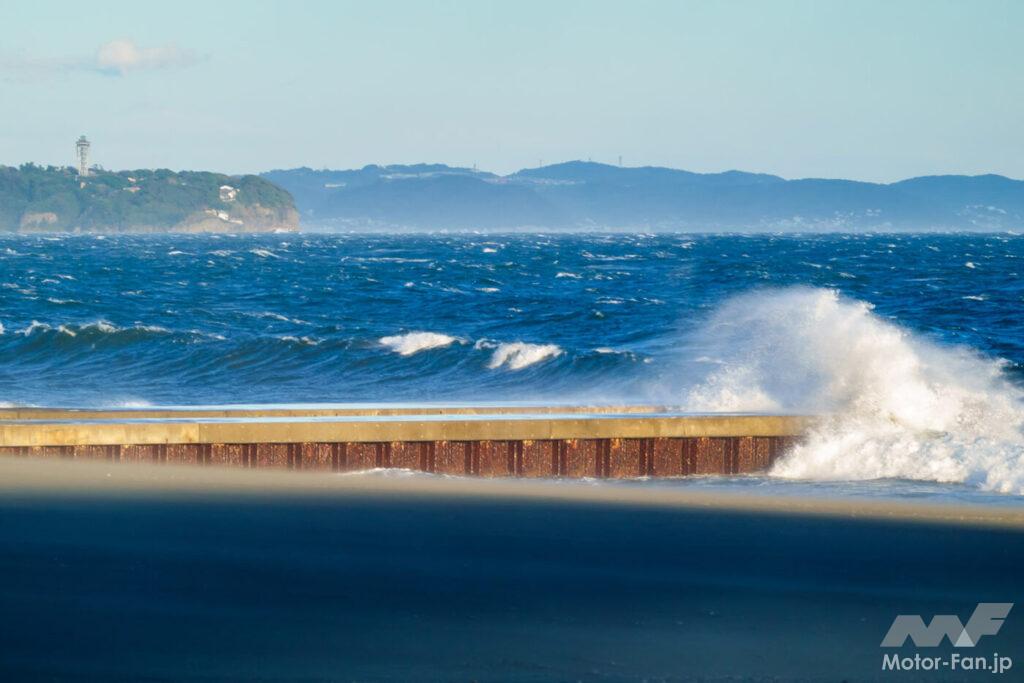
Enoshima can be seen beyond the breaking white waves.
Night road to the lodging
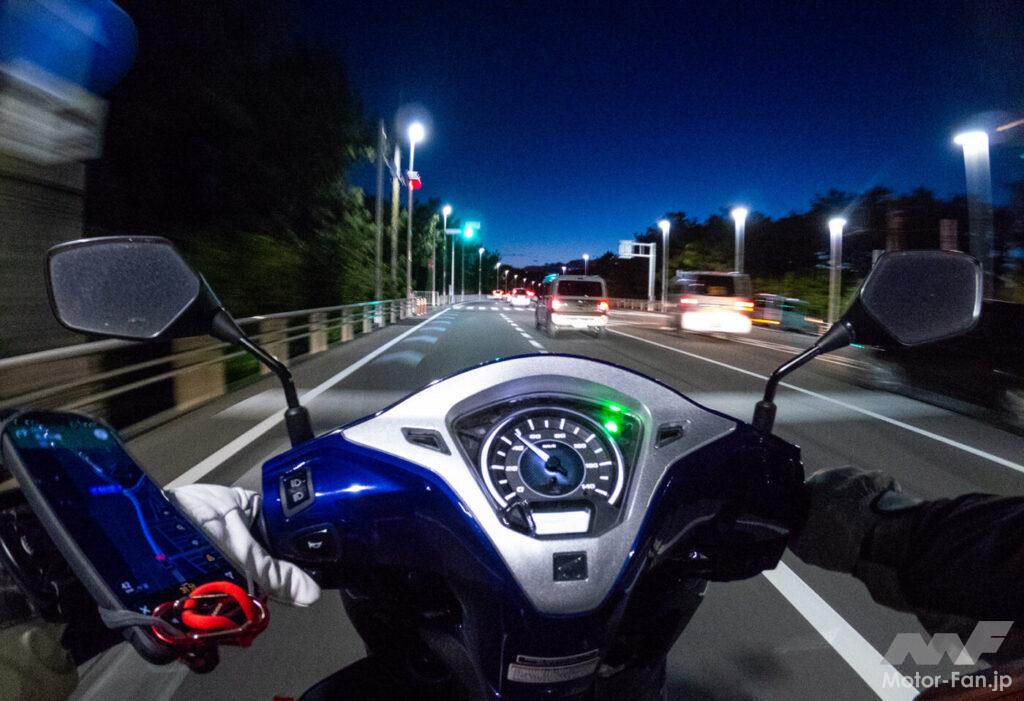
Head west along the coastline towards Hiratsuka.
Leaving Chigasaki behind, I started heading further west. Soon the fuel meter started to move. However, after a short distance, the remaining fuel indicator returned to normal. Then, it started to decrease again. Since the car was so unstable, I had no choice but to just assume that the fuel meter had dropped by two notches at 74.7km.

On National Route 134, just after leaving Chigasaki. At the 74.7km mark, the fuel meter was down 2 and had 4 left.
I wanted to stay somewhere along the Tokaido road, but unfortunately, everything was fully booked. Just a few years ago, the number of customers had decreased due to the spread of COVID-19, and I was crying out for anyone to come and visit, but now that the number of customers has increased, the whole world is making a fuss about overtourism being a nuisance. I understand that it’s a problem if customers don’t come, but it’s really inconvenient to be in trouble even when customers do come.
In any case, there are no lodgings along the Tokaido, so I stayed in a rural town quite far from the highway. After unpacking, I went up to my room, ate some convenience store food, and crawled into bed.
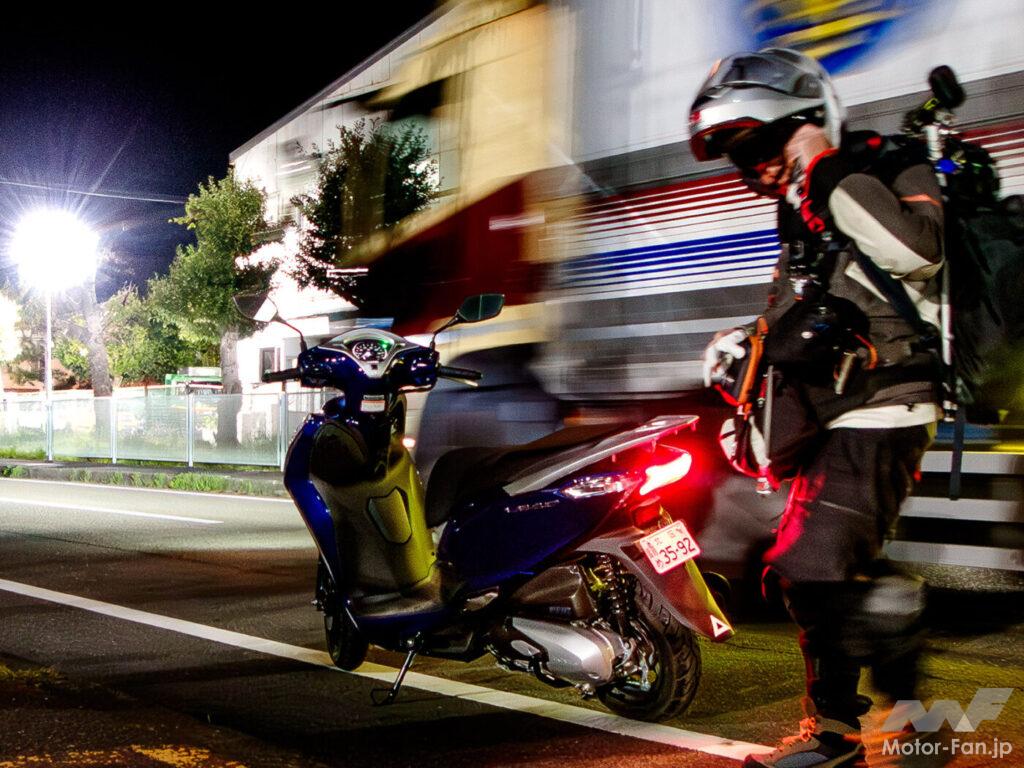
We leave the Tokaido and head to our lodging for the night.
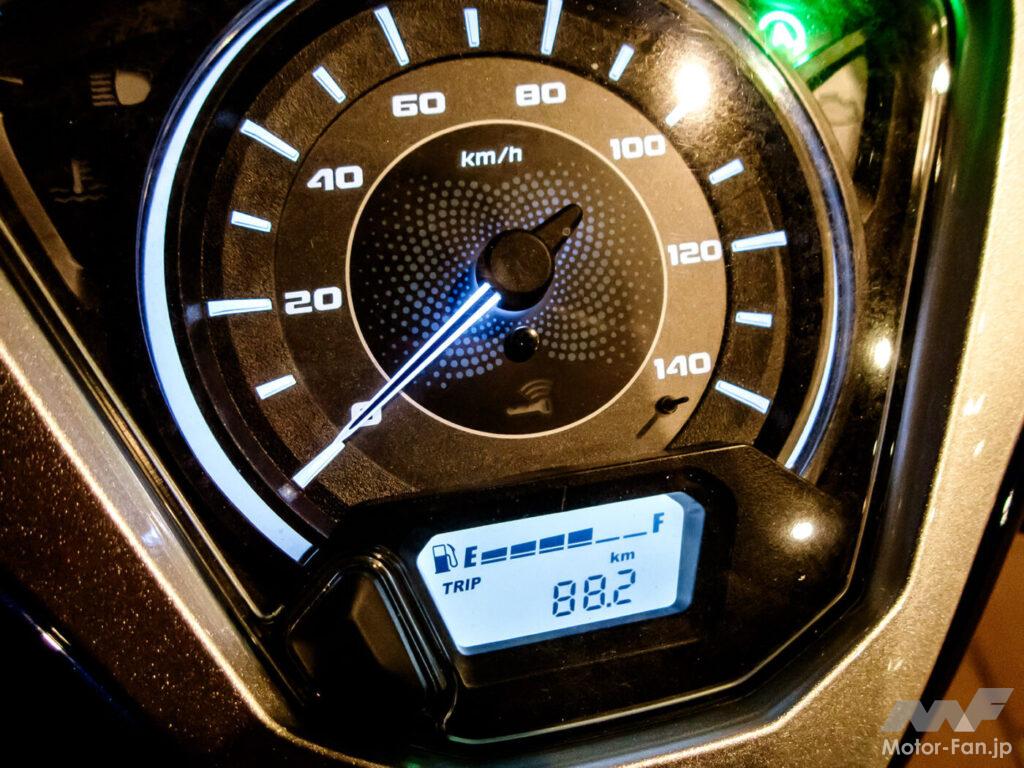
The trip was 88.2km, the same distance from Nihonbashi. The fuel meter showed 2 fuel left and 4 fuel remaining.
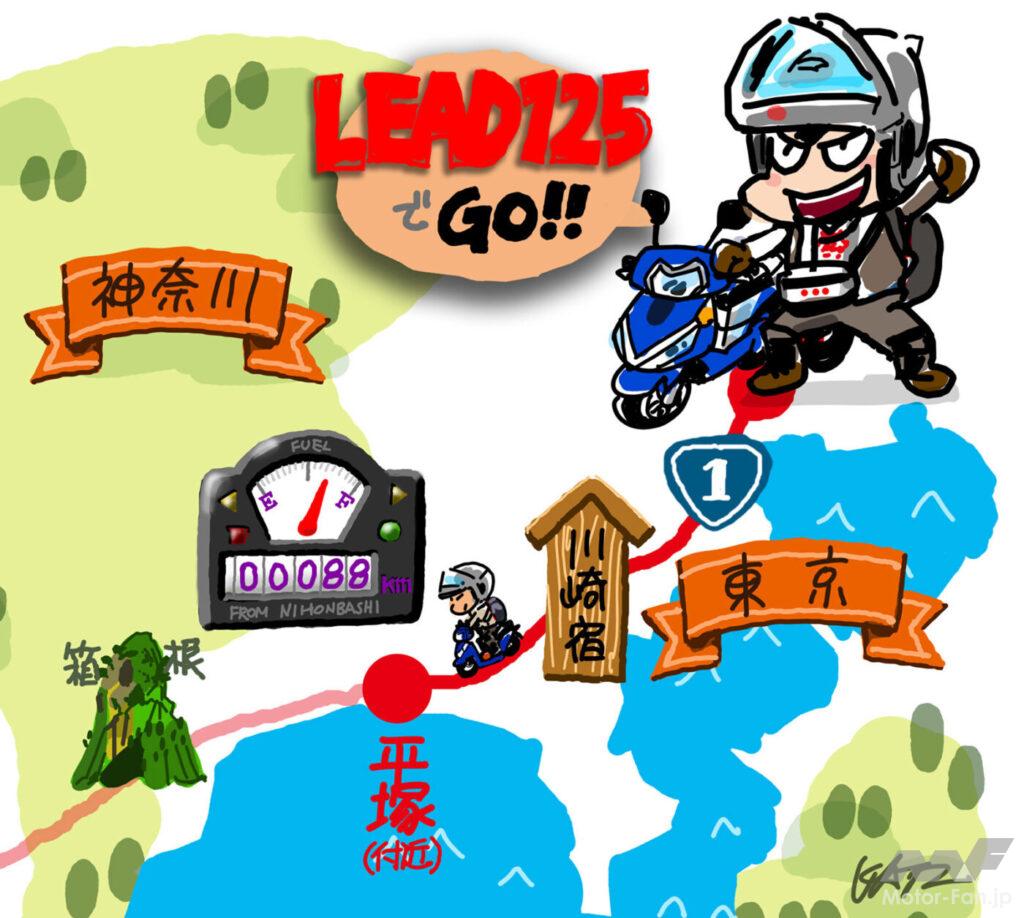
[MAP] Tokaido Gas Challenge #10 Honda LEAD125 [Nihonbashi – Hiratsuka area]











![[Izu City, Shizuoka Prefecture] A great touring spot to visit by motorcycle | Passing the Amagi Pass through central Izu.](https://motopeek.com/wp-content/uploads/2025/11/4734-1762339049801.jpg)