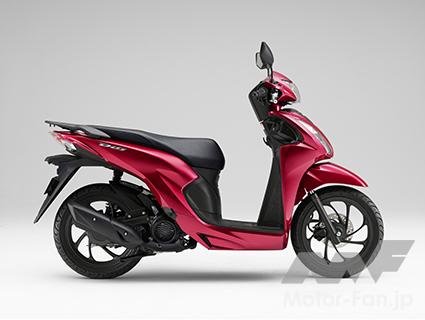



Honda EM1 e: 156,200 yen
Honda Mobile Power Pack e: 108,900 yen
Honda Powerpack Charger e: 55,000 yen
*All prices include consumption tax
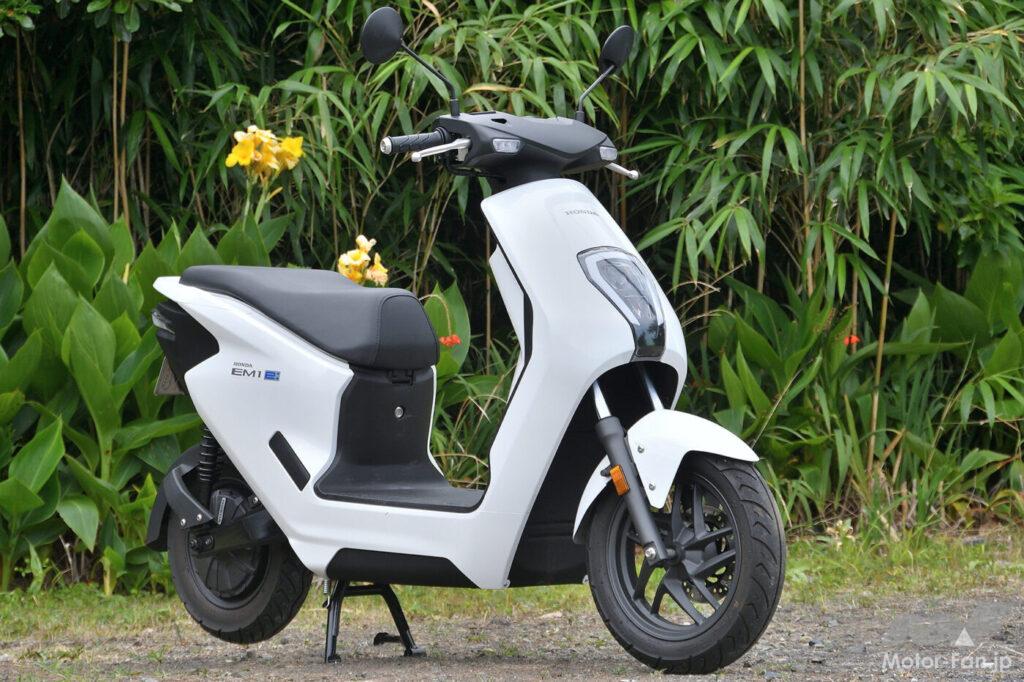
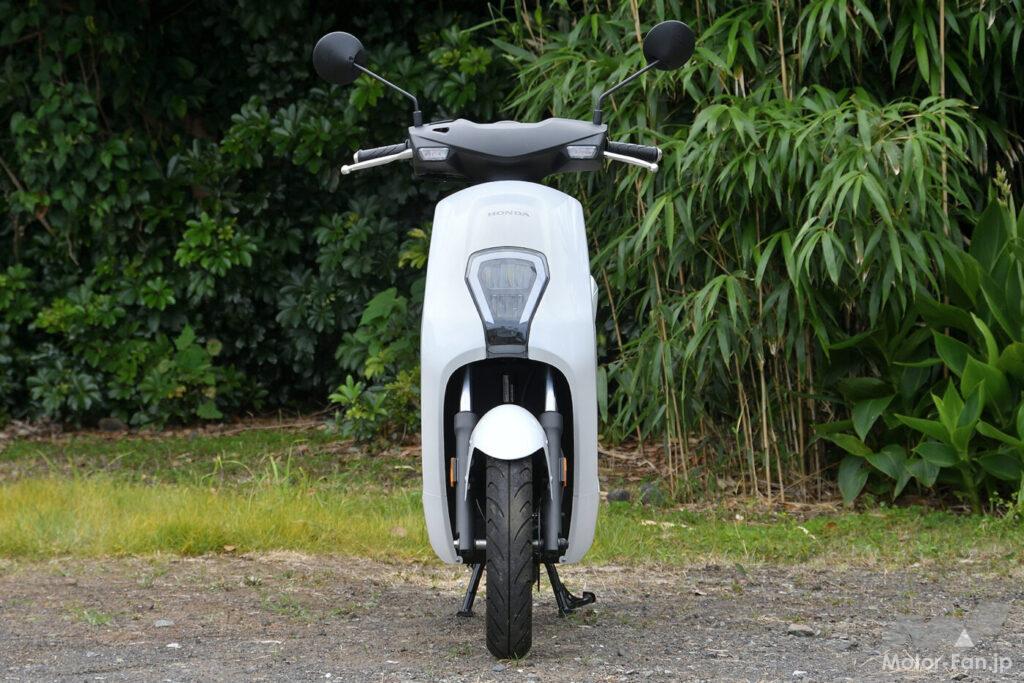
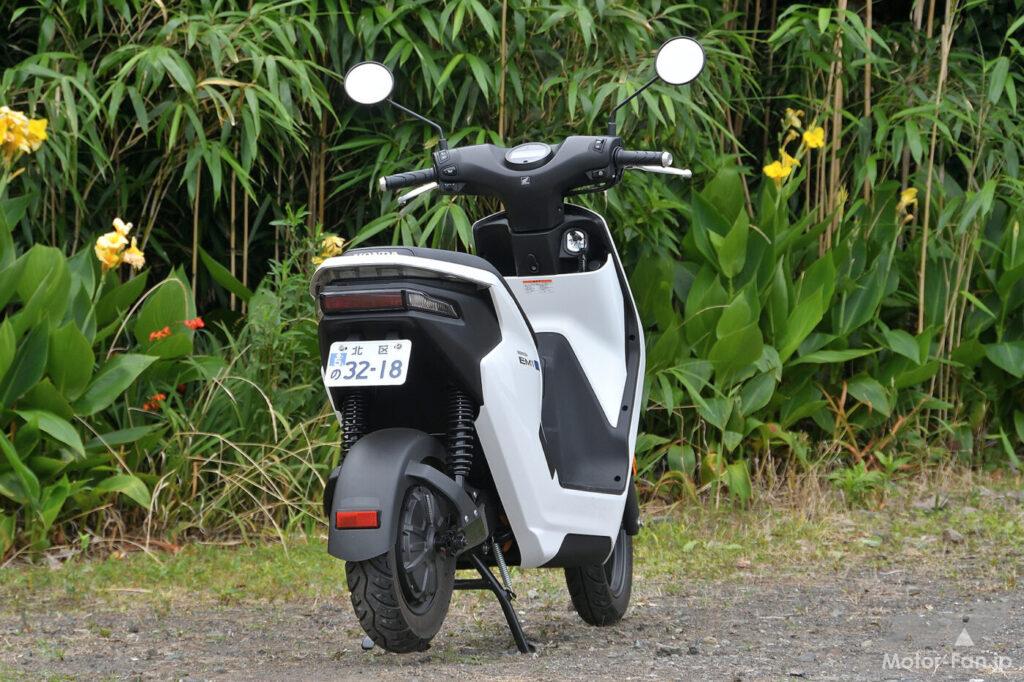
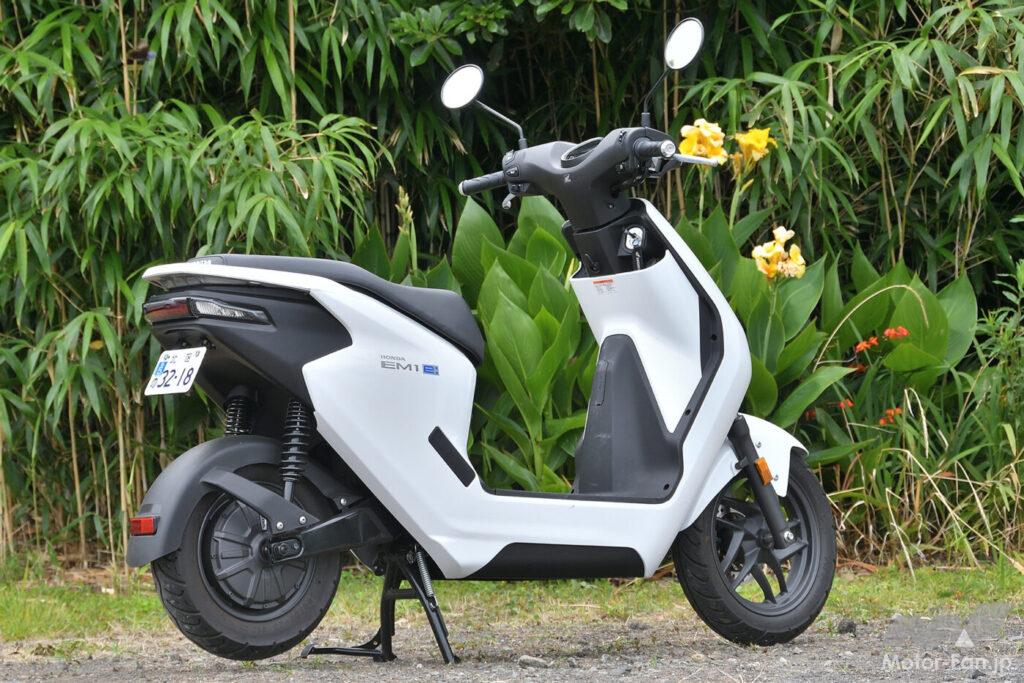
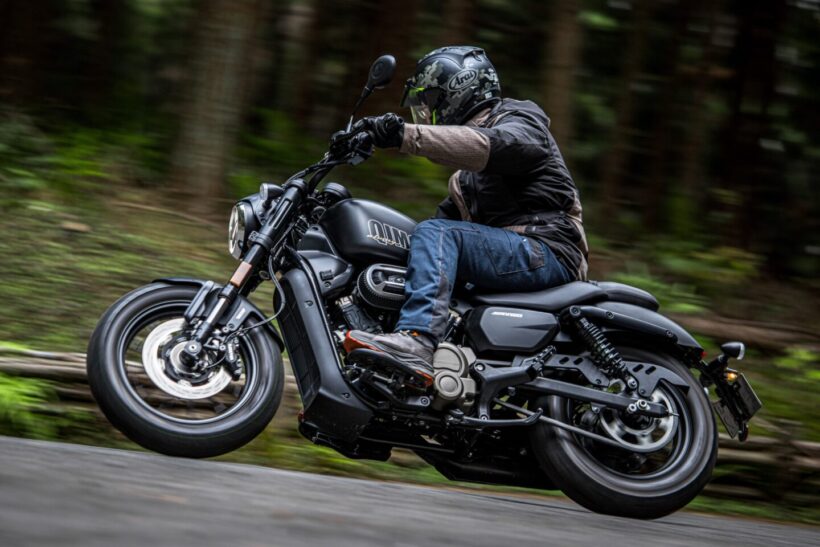
The Honda Benly e electric scooter was introduced for postal service use in 2019. Its smooth and quiet delivery has now become a familiar sight on the streets. This has led me to believe that electric scooters might be a viable option for transportation around my home.
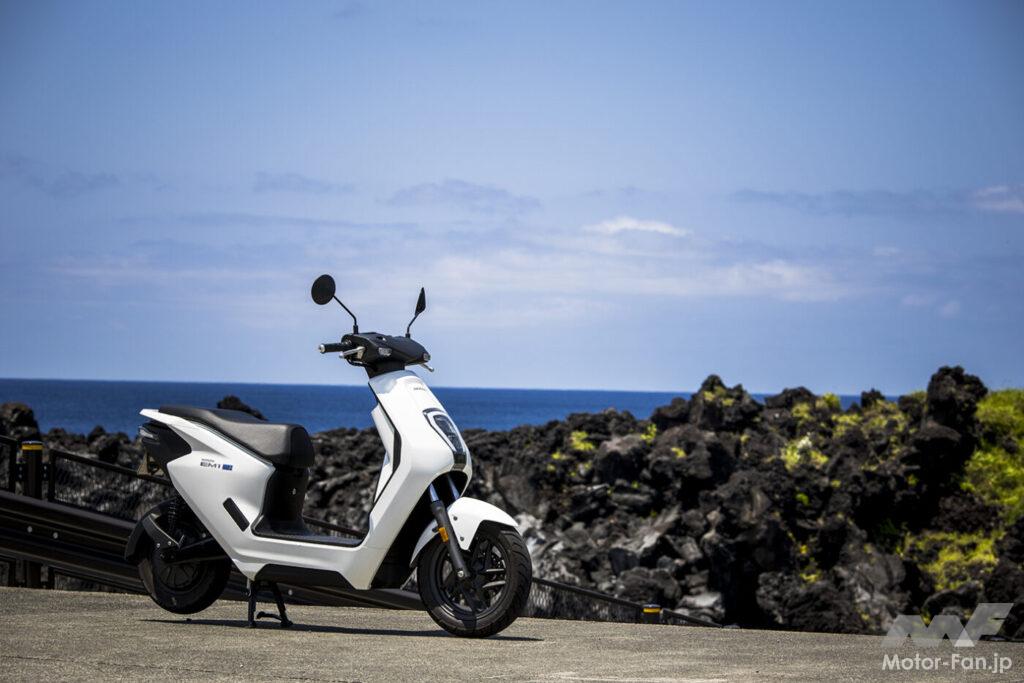
My partner this time was the Honda EM1 e:, and the stage I was driving on was Hachijojima. Hachijojima’s area (approximately 69.5 square kilometers) is about the same as the Yamanote Line. The town and residential areas are concentrated in the center of the gourd-shaped island, so even though the EM1 e: has a range of 53km (catalog value) on a single charge, I don’t think there will be any problems.
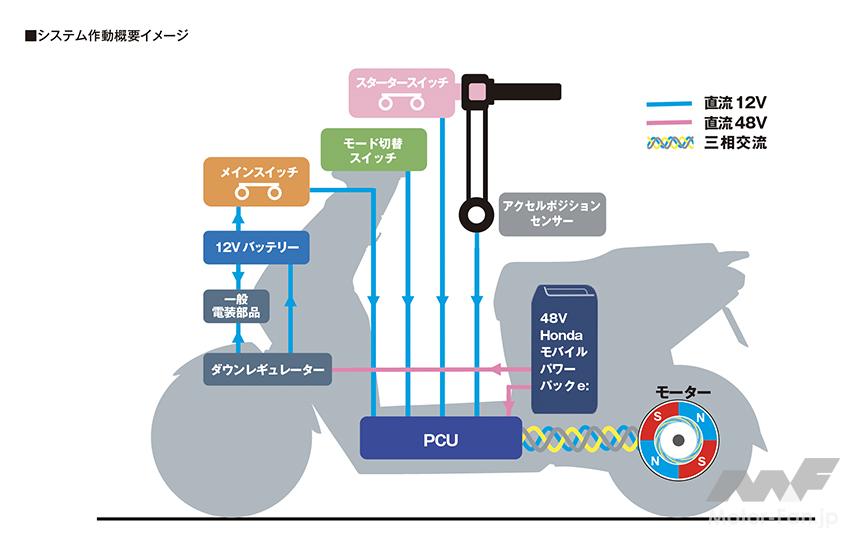
Honda’s electric scooter “EM1 e:” uses a PCU to convert power from a 48V battery pack into three-phase AC to drive the motor. It supplies optimal power according to accelerator operation and allows the rider to choose between two driving modes: STD and ECON. It also comes equipped with a 12V battery that supplies power to electrical equipment such as lights.
Let’s get started!
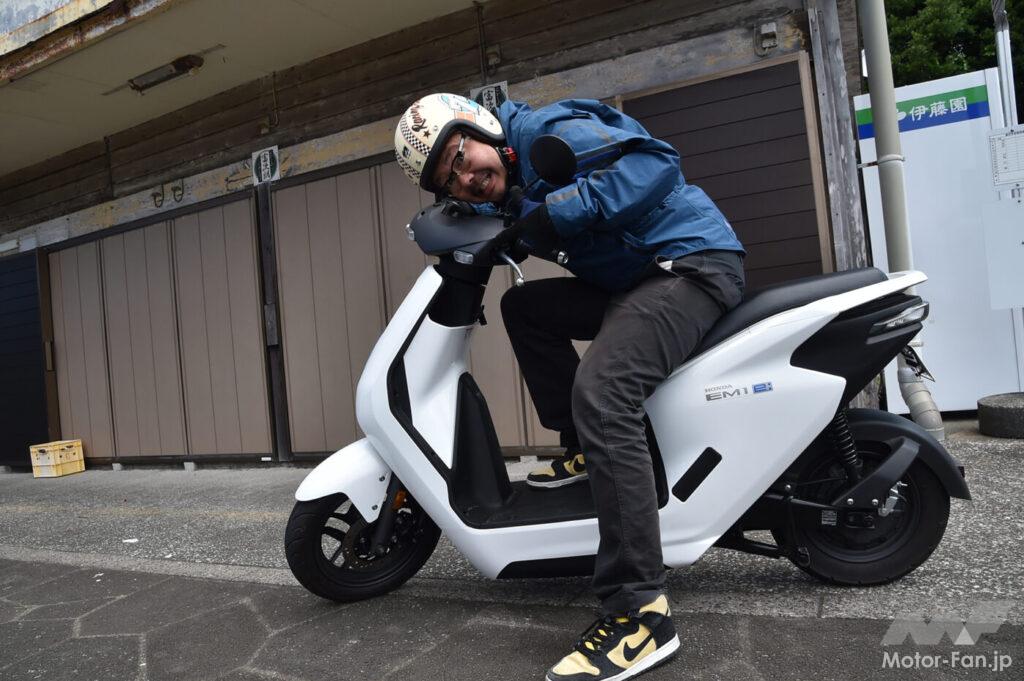
Photo by NAGAYAMA
ADVERTISEMENT
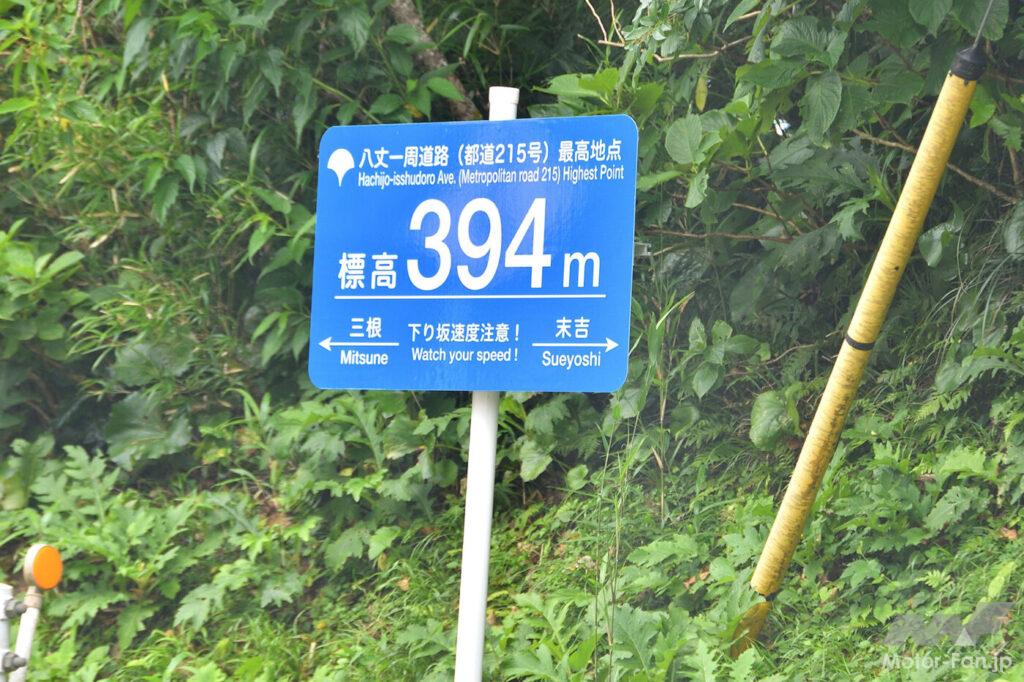
With a fully charged Mobile Power Pack e: installed in a Honda EM1 e:, we set off on a 28km course from the Kashidate area (150m above sea level) on the south side of Hachijojima Island, around Mt. Mihara. As the EM1 e: does not have a regenerative charging function, we did not pay much attention to eco-friendly driving. We chose standard mode rather than ECON mode, and kept the throttle fully open on the uphill sections.
As soon as we set off, we were on a series of uphill climbs, and the battery level indicator steadily decreased. After riding for about 13km, we reached Shoryu Pass, but from here it was downhill all the way to town, so we were relieved to have overcome the battery draining peak.
At the 22km point, we left the city and entered the Osaka Tunnel. The uphill climb from here was also steep, and the battery drained in response to the acceleration. In the end, the battery was down to 28% after the 28km journey.
Battery level change
ADVERTISEMENT
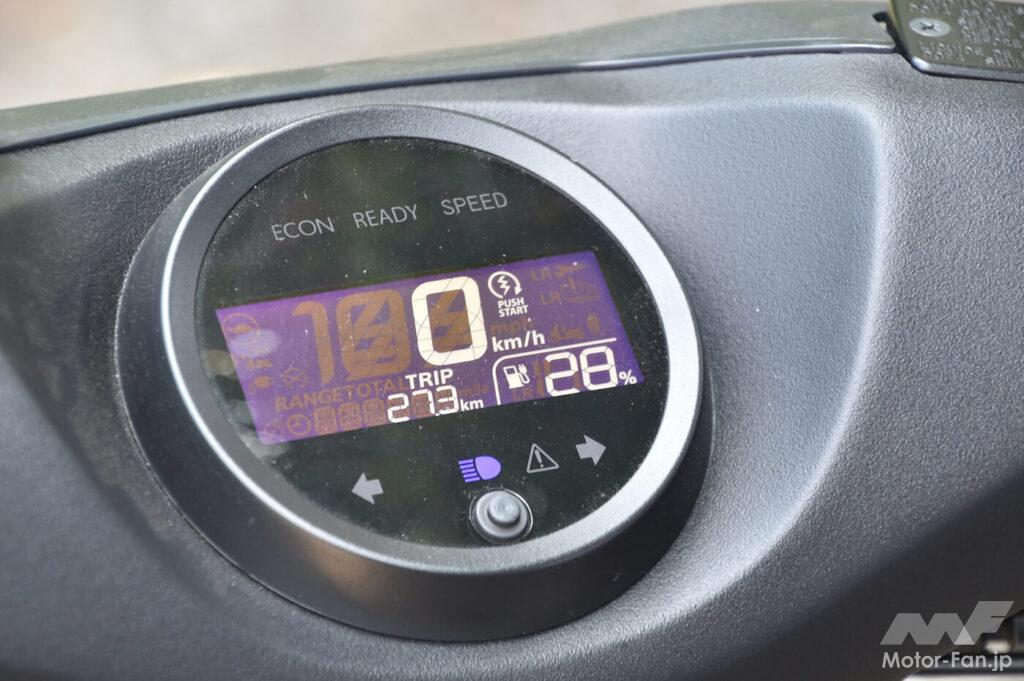
Photo by NAGAYAMA
0km・Start (100%) → 13km point・Top of the pass (59%) → 18km point・Down the pass (50%) → 22km point・Exiting the city (40%) → 28km point・Finish (28%)
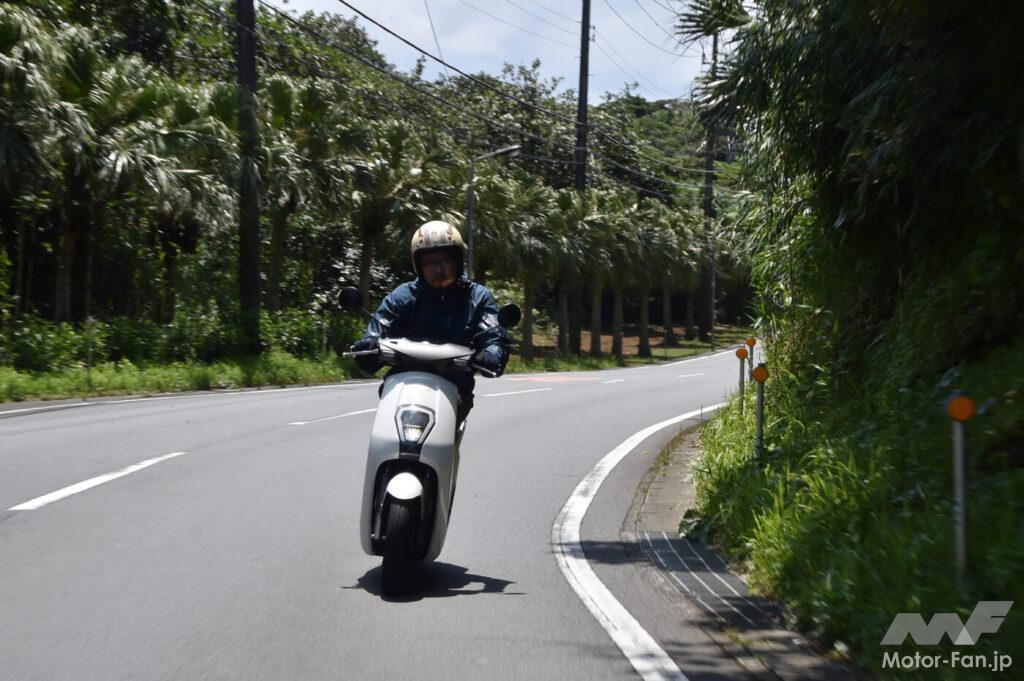
Photo by NAGAYAMA
A rough guideline is that 10% of the battery is consumed for every 5km of riding. Consumption is even greater on steep uphill slopes. On the other hand, since the battery consumption was 10% when traveling across the city (4-5km), it seemed like it would be possible to ride a trip the size of Hachijojima (the same size as the Yamanote Line) without the stress of running out of battery.
What caught my attention was…
Its climbing ability is poor. The maximum speed on flat roads is 45km/h (measured on private property). On the other hand, acceleration is slow on uphill slopes. If you brake before a corner to slow down, it will slowly accelerate again and reach 30km/h. If you slow down again around a corner, it will take a long time to pick up speed again. The fact that I weigh nearly 80kg may also be putting a heavy load on the motor. This will cause the battery charge to decrease rapidly.
However, going downhill is extremely comfortable. It accelerates smoothly under its own weight without opening the throttle, making it stress-free.
37km and 0% remaining
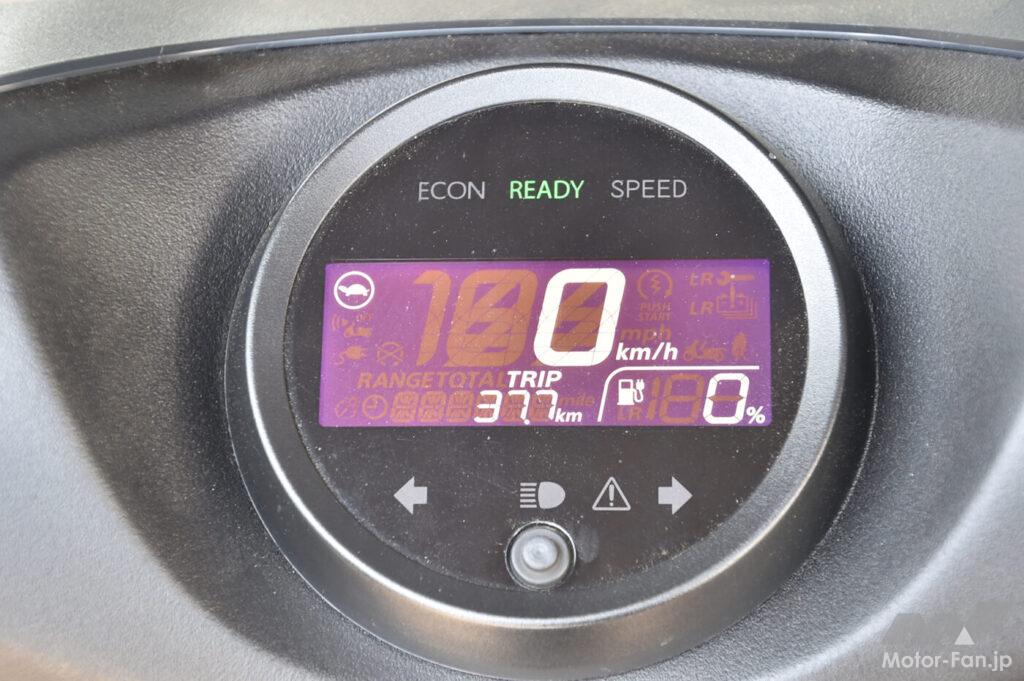
Photo by NAGAYAMA
When the battery level falls below 19%, the turtle symbol lights up and the motor output is limited. In this case, the battery level reached 0% after 37.7km.
The fuel consumption was about 70% of the catalogue value of 53km, but considering that the road was full of ups and downs, it was not bad. However, if you plan to go out more casually, a longer cruising range would be more reassuring.
EM1e: Stroll around Hachijojima

A cow looking at me with gentle eyes.

A petting ranch with many dairy cows and beautiful views.
ADVERTISEMENT
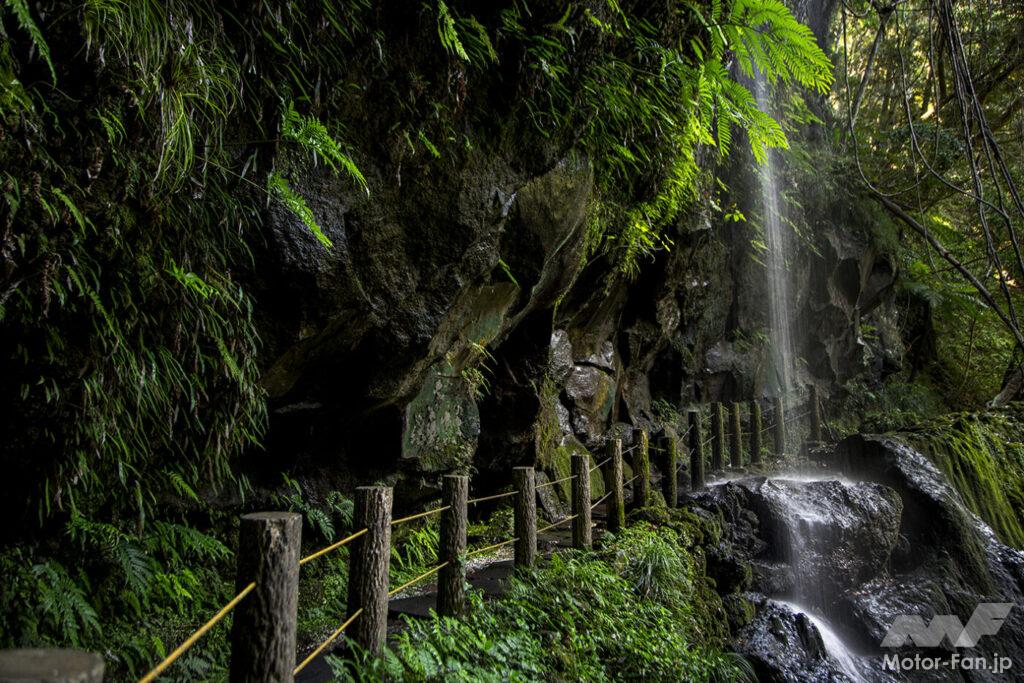
Uramigataki Falls allows you to see the waterfall from behind.
The aroma of fresh fish at Yaene Port
EM1e: Good and bad points.
Good Point 1
There is no need for oil changes like with gasoline-powered vehicles , which have low maintenance costs
. The only consumables you need to worry about are the wear on tires and brake pads/shoes, so maintenance costs are low.
Good Point 2
Subsidies make it super cheap! With
the application of national subsidies (23,000 yen) and Tokyo Metropolitan Government subsidies (approximately 36,000 yen), the vehicle alone can be purchased for approximately 97,200 yen. In addition to this, you can choose to purchase the battery and charger yourself or subscribe to them.
Bad Point 1
With a short
cruising range of 53km, there is concern about running out of battery when making a detour. Outside of urban areas such as Tokyo and Osaka, there are few Gachaco (a sharing service for replaceable batteries for electric motorcycles), so it is hoped that electric infrastructure will become more widespread in rural areas.
Bad Point #2
I’m not good at hills,
but even on steep slopes I can ride at almost 30km/h, so there’s no problem with the legal speed limit. However, even when I open the throttle, the speed doesn’t increase, and it feels like I’m stalling, which is a bit disappointing for the rider.
When you open the seat, you’ll find the Mobile Power Pack e:, with storage space about the size of a lunch box.
Detailed explanation
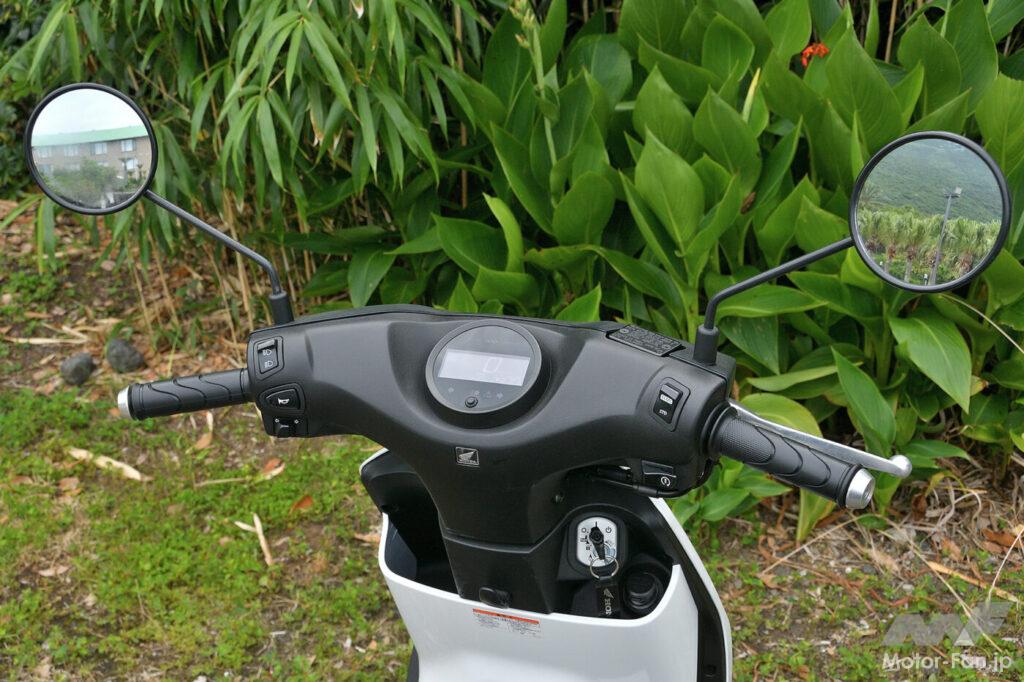
The handlebars are simple, and the motor mode can be changed with the switch on the right side.
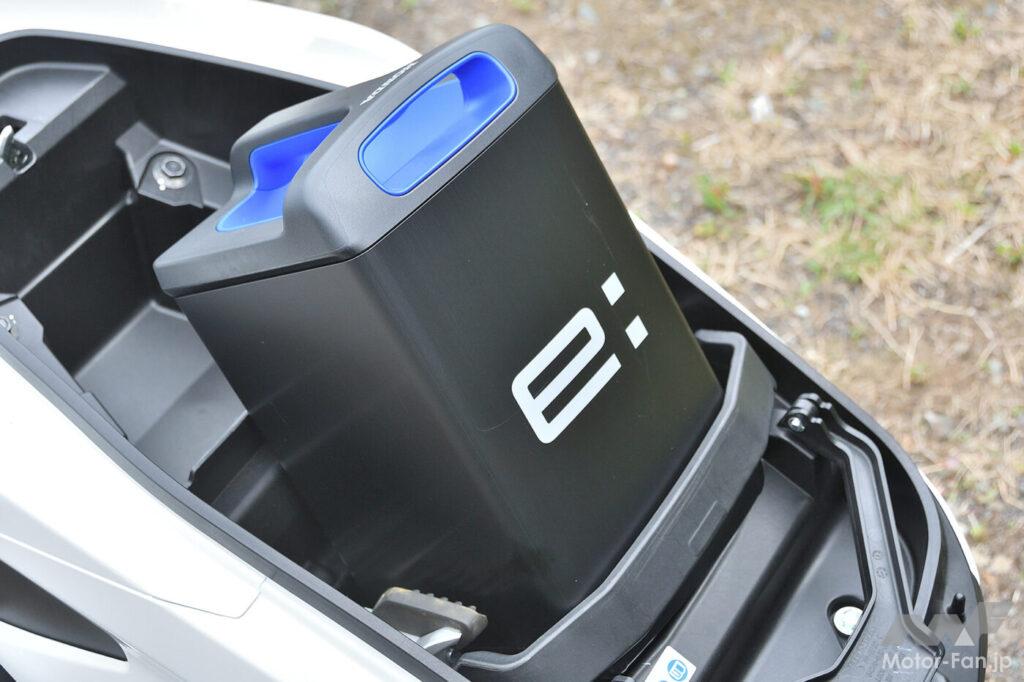
A mobile power pack e: weighing 10.2 kg is stored under the seat.
ADVERTISEMENT
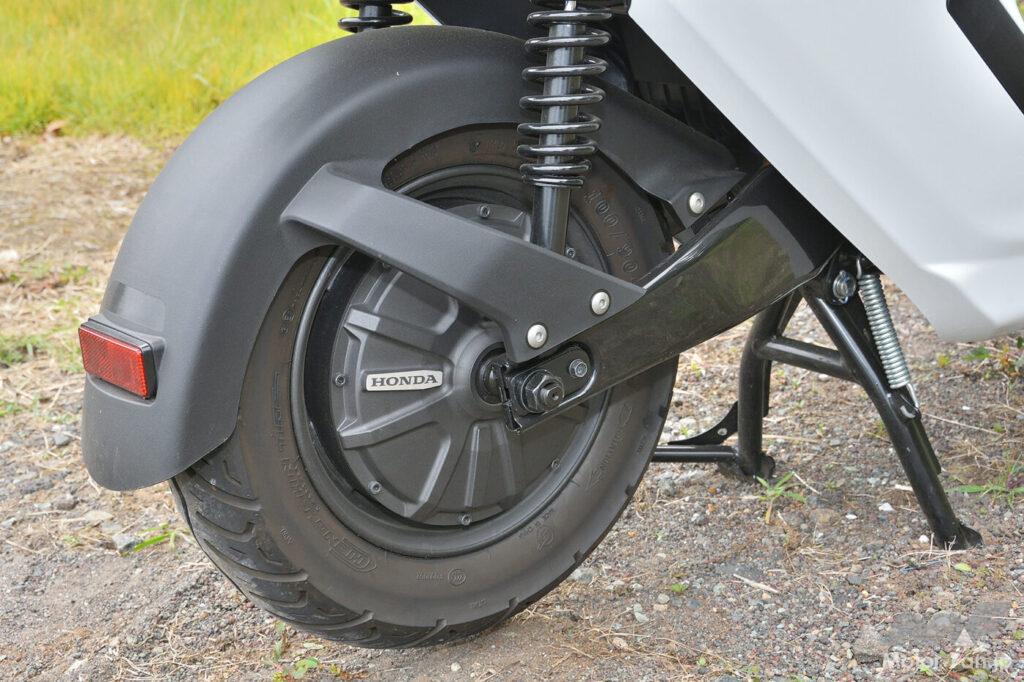
The in-wheel motor has an output of 0.58kw, which is suitable for a Class 1 moped.
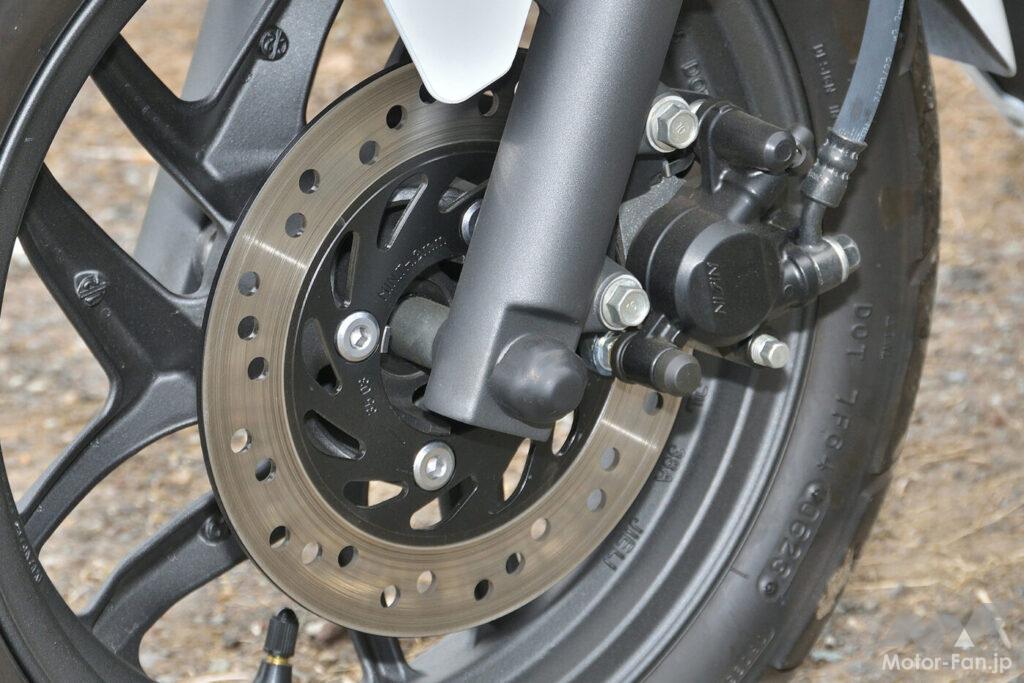
The front brake is a disc type, and uses a combined brake that applies braking both front and rear when the brake lever on the left side is squeezed.
 We took a ride in the Honda N-VAN e: on Hachijojima! Could the future of Japanese EVs lie in light EVs and onboard solar panels? | Motor-Fan is a media platform that distributes automotive-related articles.
Mitsuhiro Kunisawa’s “Denkichi” operates virtually without a power supply. At the test drive event, we also had the opportunity to test drive the N-VAN e: “Denkichi,” which Kunisawa purchased himself and brought to Hachijojima. The Denkichi is the basic grade “L […]
Main specifications
| Car name and model | Honda ZAD-EF16 | ||
|---|---|---|---|
| Total length (mm) | 1,795 | ||
| Overall width (mm) | 680 | ||
| Overall height (mm) | 1,080 | ||
| Wheelbase (mm) | 1,300 | ||
| Minimum ground clearance (mm) ★ | 135 | ||
| Seat height (mm) ★ | 740 | ||
| Vehicle weight (kg) | 92 | ||
| Passenger capacity (people) | 1 | ||
| Minimum turning radius (m) | 2.0 | ||
| Engine type | EF16M | ||
| Engine type | AC synchronous motor | ||
| Rated output (kW) | 0.58 * | ||
| Maximum output (kW [PS]/rpm) | 1.7 [2.3]/540 | ||
| Maximum torque (N・m [kgf・m]/rpm) | 90 [9.2] / 25 | ||
| Driving distance per charge * (km) Value reported by the Ministry of Land, Infrastructure, Transport and Tourism | 53 (30 km/h steady state running test value) (with one passenger) | ||
| tire | before | 90/90-12 44J | |
| rear | 100/90-10 56J | ||
| Brake type | before | Hydraulic disc | |
| rear | Mechanical leading/trailing | ||
| Suspension method | before | Telescopic type | |
| rear | Swing arm type | ||
| Frame Format | Underbone | ||
| Power battery | Honda Mobile Power Pack e: (1 piece) | ||
Honda Mobile Power Pack e:
Type: DM5026Z
Cell Specifications: Lithium-ion Battery
Rated Voltage: 50.26V
Rated Capacity/Rated Power: 26.1Ah/1314Wh
Continuous Discharge Output: 2.5kW
IP Protection Rating: IP65
Activation Method: ACTIVATE Signal Input
Communication: CAN Communication
Dimensions: H298 x L156.3 x W177.3mm (Maximum External Dimensions)
Product Weight: 10.2kg