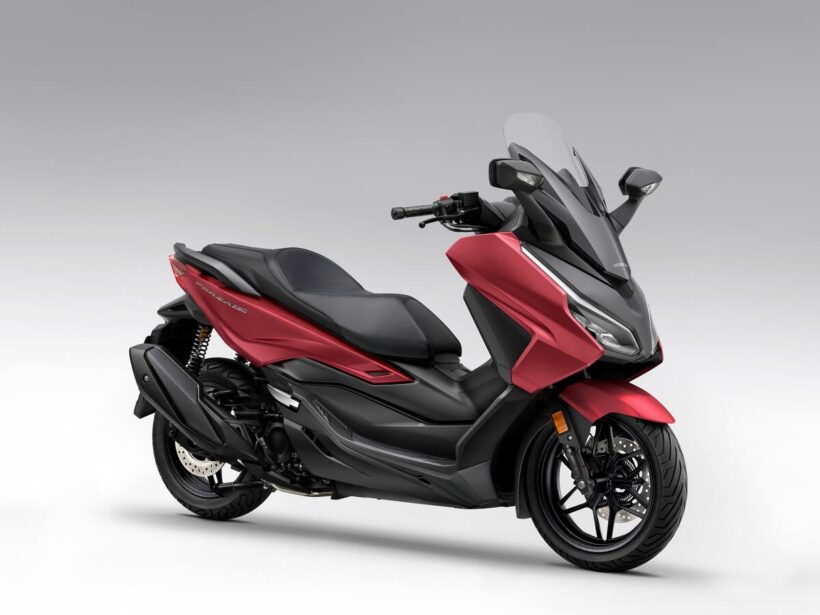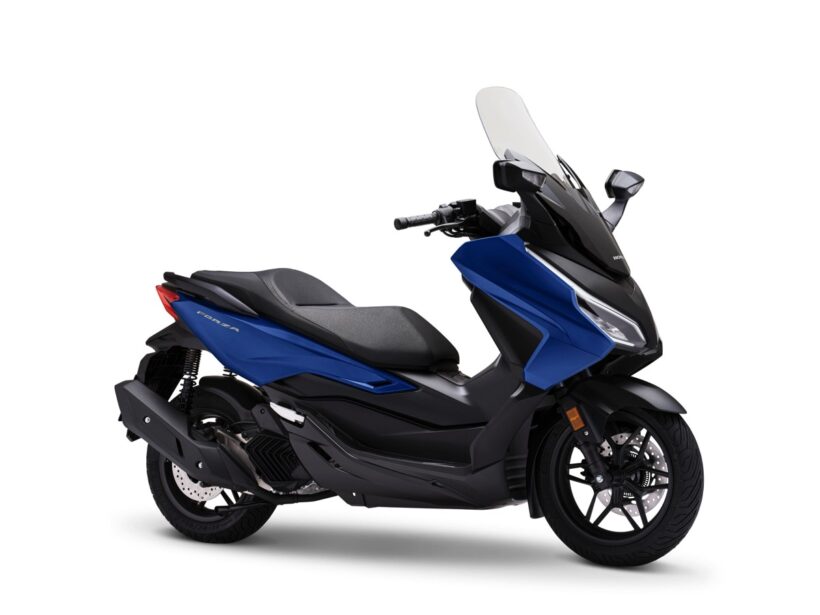


Motorcycles with an engine displacement of 125cc or less are not permitted to ride
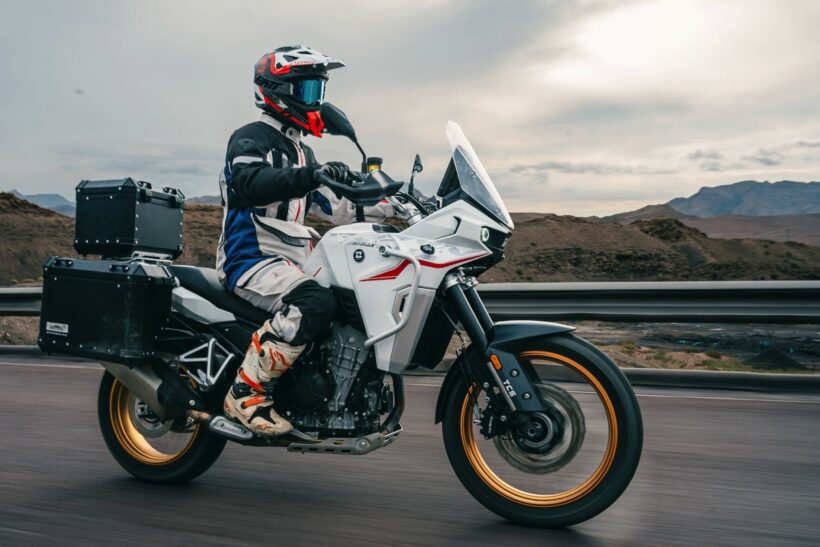
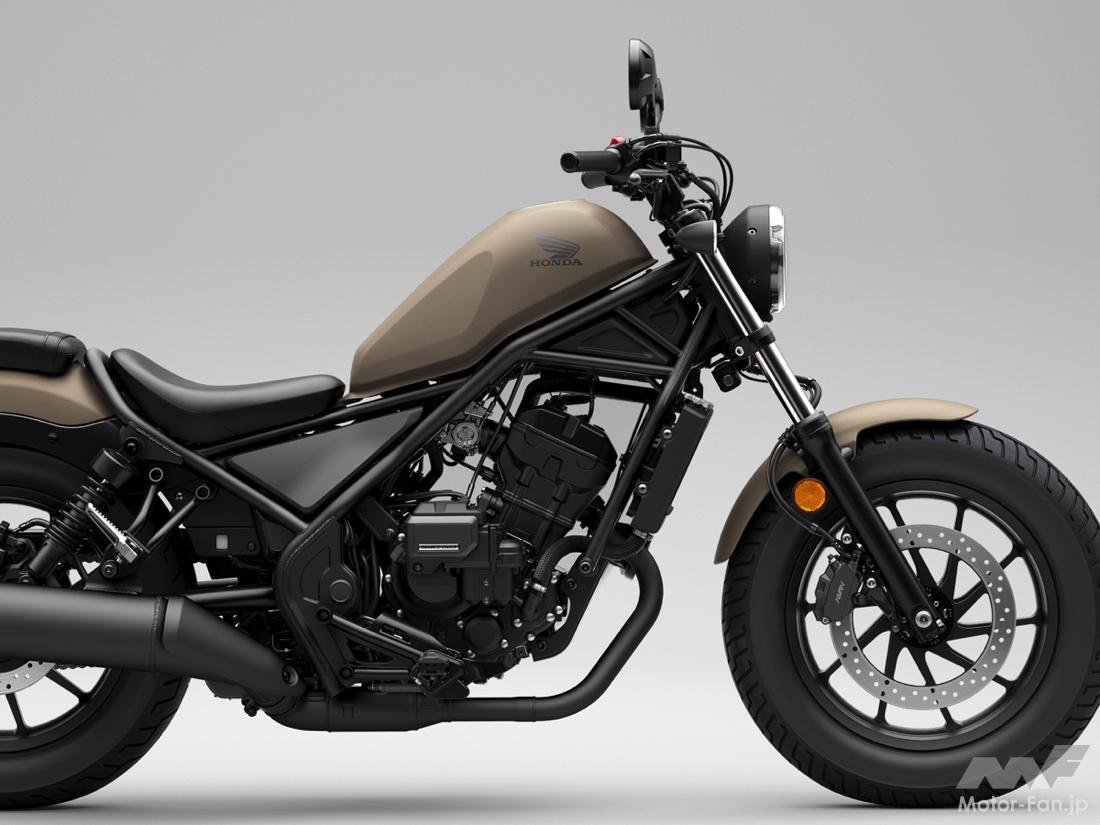
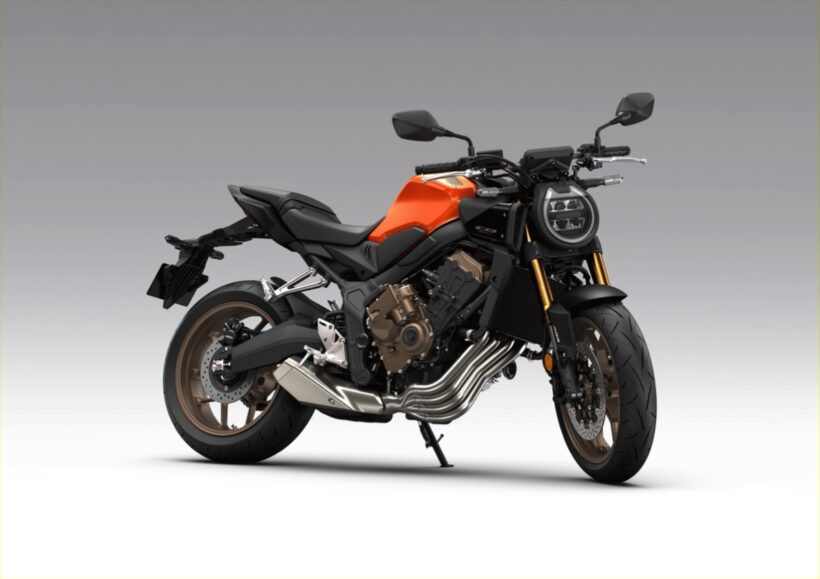
By law, motorcycles that can be driven on expressways are limited to “light motorcycles (two-wheeled light vehicles)” over 125cc and up to 250cc, and “small motorcycles (two-wheeled small vehicles)” over 250cc. In other words, only motorcycles over 125cc can be driven on expressways. Mopeds such as Class 1 and Class 2 mopeds cannot be driven on expressways.
In addition, a regular motorcycle license is required for motorcycles up to 400cc, and a large motorcycle license is required for motorcycles over 400cc. However, if the motorcycle does not require the operation of a clutch lever or shift pedal, such as a scooter or one with an automatic transmission, it can be driven with an automatic transmission-only regular motorcycle license (for motorcycles under 400cc) or an automatic transmission-only large motorcycle license.
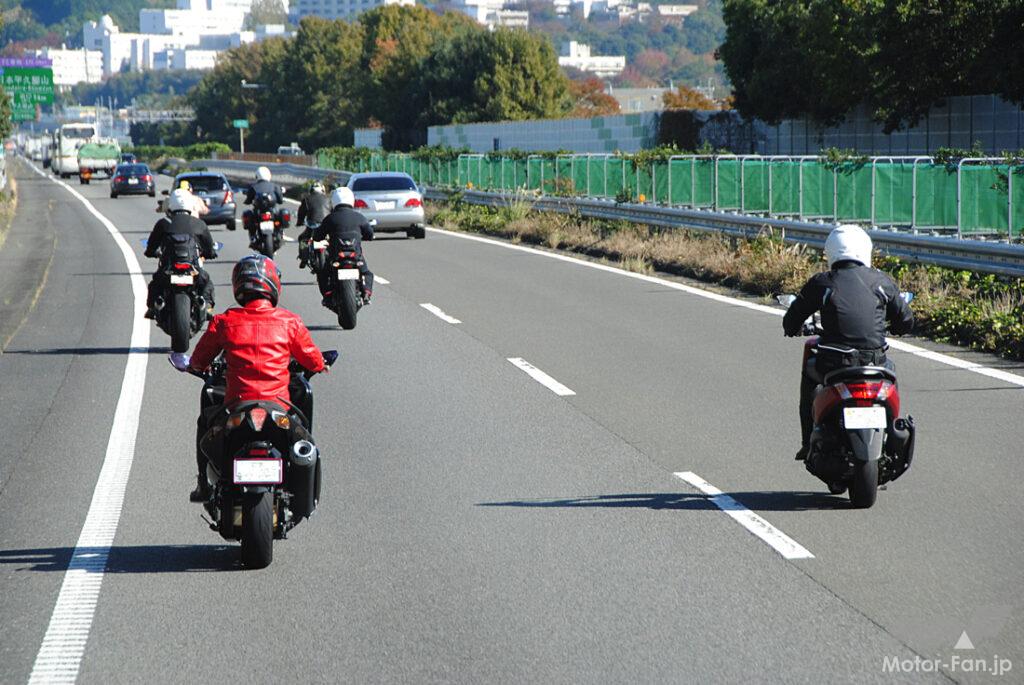
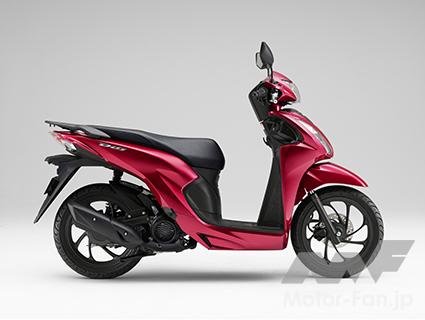
Scooters can be driven with an automatic transmission license.
If you enter or ride on a highway on a motorcycle with an engine capacity of 125cc or less, you will be in violation of the no-entry rule and will be penalized as follows:
[Penalties for violating road bans]
Fine: 6,000 yen for a Class 2 moped, 5,000 yen for a Class 1 moped
. Points awarded: 2 points.
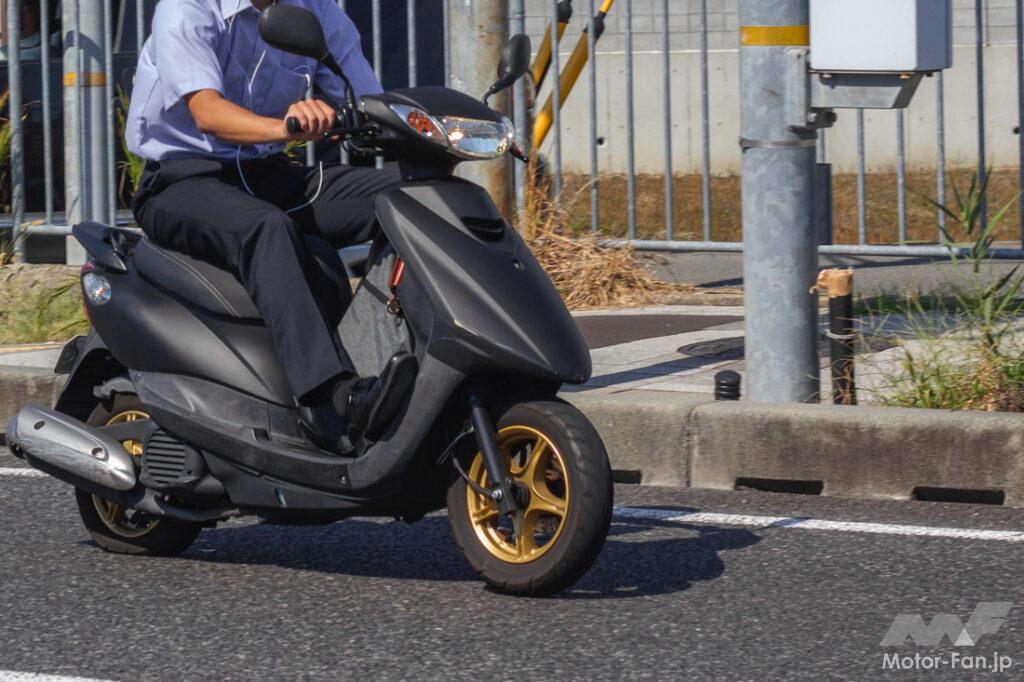
It is also illegal to ride a moped on the highway.
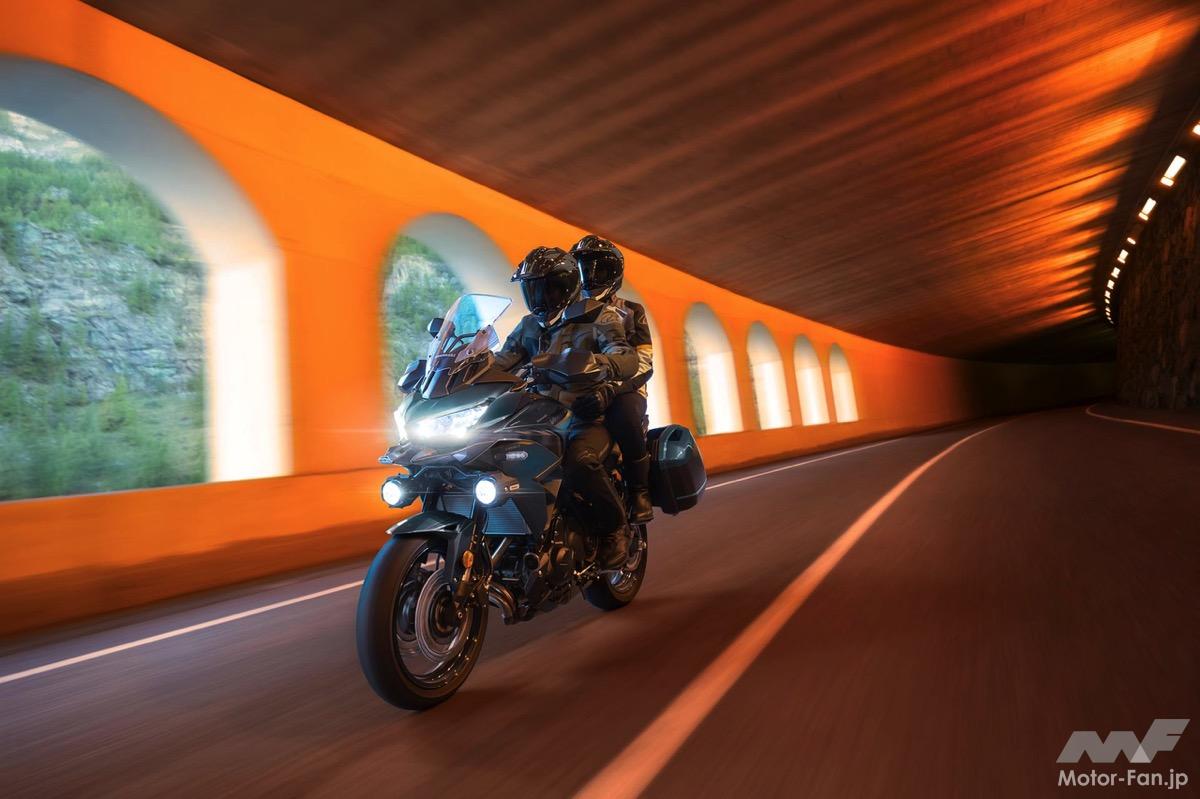
There are conditions for two-seater riding.
In order to ride two people on a motorcycle, more than one year must have passed since the date of issuance of your first regular motorcycle license (including a small-size limited regular motorcycle license) or large motorcycle license.
In addition, if two people are riding on the highway, the following conditions must be met in addition to those listed above.
[Conditions for riding two people on the expressway]
・”Age 20 or older”
・”Have held a large motorcycle license or a standard motorcycle license for a total of 3 years or more”
In other words, riders under the age of 20 or who have held a regular motorcycle license or a large motorcycle license for less than three years are not allowed to ride with someone on the expressway.
However, for example, if you obtain a regular motorcycle license and then a large motorcycle license, as long as it has been more than three years since you obtained your regular motorcycle license, you can ride two people on a large motorcycle on a highway, even if it has been less than three years since you obtained your large motorcycle license.
By the way, there are sections of the Metropolitan Expressway that run through central Tokyo, also known as the Shuto Expressway, where riding two people on the same bike is prohibited. In these sections, even if the above conditions are met, you cannot ride two people on the same bike, so be careful.
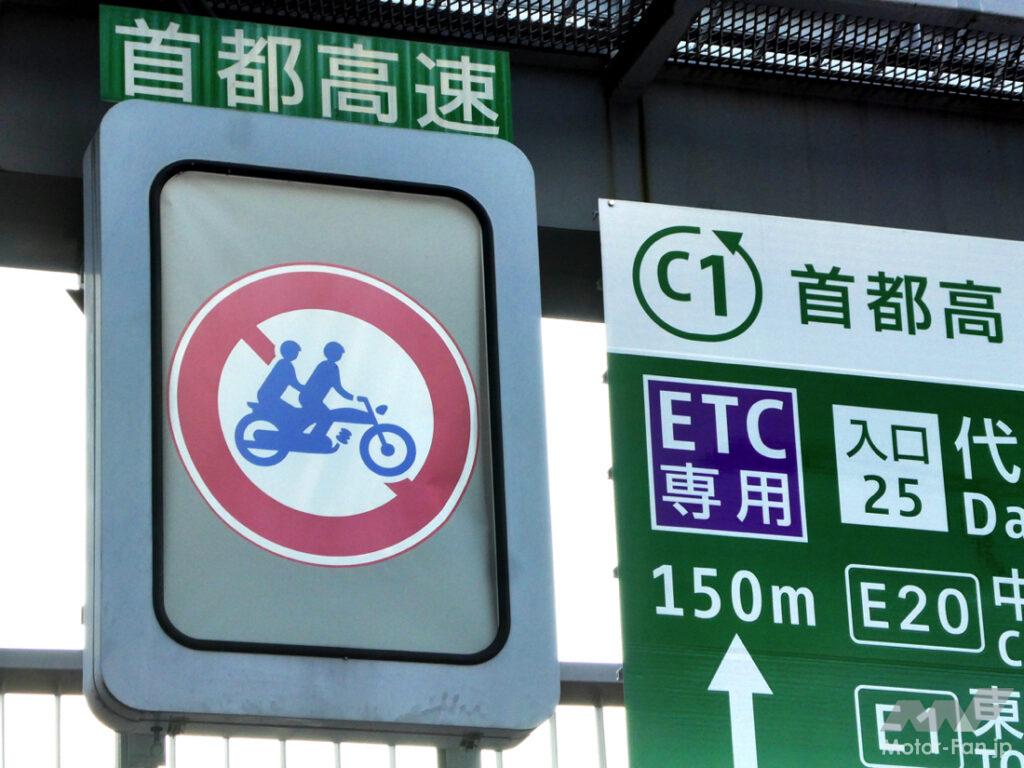
There are sections of the Shuto Expressway where two people are not allowed to ride together.
Regarding riding two people on expressways, if the rider has had their license for less than three years, if the rider is under 20 years old, or if riding in an area where two people are not allowed, it is a violation of the Large Motorcycle and Other Vehicles Act.
[Penalties for violating the Large Motorcycle Act]
Fine: 12,000 yen
Violation points: 2 points
It is also illegal to drive at less than 50km/h!
On expressways, there are many speeding enforcements. And when we talk about speeding, we generally mean exceeding the legal speed limit of 100km/h (80km/h or 120km/h in some places). However, it is also a violation to drive slower than the legal minimum speed.
The minimum speed on expressways is generally 50km/h. However, if you drive at 40km/h, for example, you will be in violation of the minimum speed limit, so be careful.
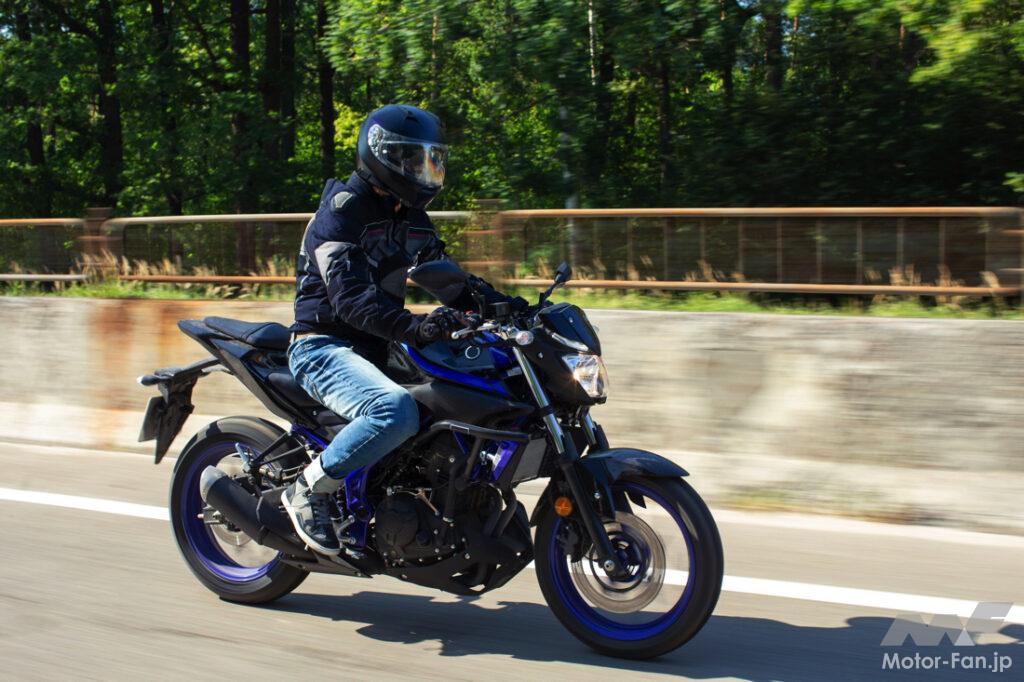
On highways, you must obey not only the legal maximum speed limit but also the legal minimum speed limit.
The penalties for speeding and minimum speed violations are as follows:
[Speeding Penalties (for motorcycles)]
Speeding less than 15km → Fine: 7,000 yen, penalty points: 1 point
Speeding between 15km and 20km → Fine: 9,000 yen, penalty points: 1 point
Speeding between 20km and 25km → Fine: 12,000 yen, penalty points: 2 points
Speeding between 25km and 30km → Fine: 15,000 yen, penalty points: 3 points
Speeding between 30km and 35km → Fine: 20,000 yen, penalty points: 3 points
Speeding between 35km and 40km → Fine: 30,000 yen, penalty points: 3 points
By the way, if you are caught driving 40km/h over the highway, you will receive a red ticket (the notice will be red) and your license will be suspended immediately. In that case, if you exceed 40km but less than 50km, you will receive 6 points, and if you exceed 50km, you will receive 12 points. Even if you have no previous offense, 6 points will result in a 30-day suspension, and 12 points will result in a 90-day suspension.
Also, there is no fine, but this is because you will be held criminally responsible. Therefore, the punishment is more severe, and you will be put on trial and, depending on the outcome, you will be subject to a fine (or in some cases, imprisonment). In this case, the penalty is “imprisonment for up to six months or a fine of up to 100,000 yen.”
[Penalties for minimum speed violation (for motorcycles)]
Fine: 6,000 yen
Violation points: 1 point
Driving on the shoulder is prohibited
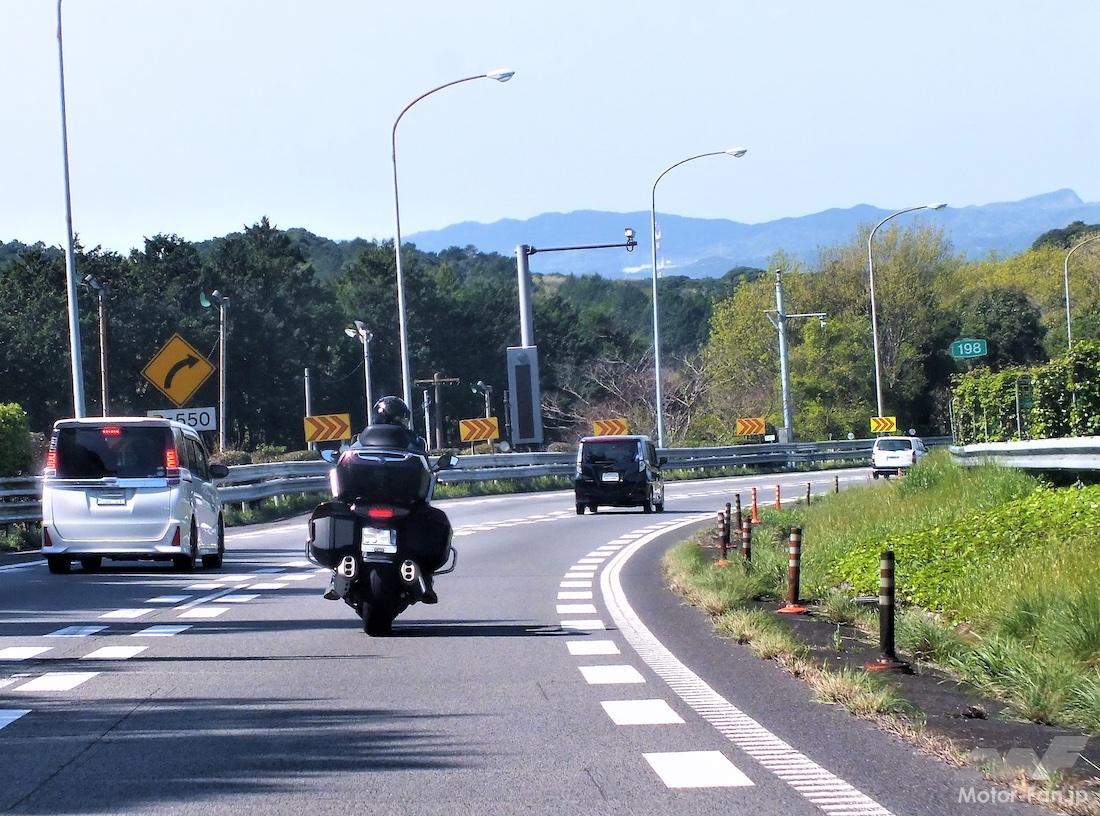
When you encounter a traffic jam on the highway, some people may be tempted to ride on the shoulder, but this is also illegal. On the highway, the area outside the white line on the far left is an area for responding to emergencies, and not only cars but also motorcycles are prohibited from riding there. Riding there will be a violation of the traffic division.
[Penalties for traffic division violations]
Fine: 7,000 yen for motorcycles
Penalty points: 2 points
By the way, even on public roads, the “side strip” on the outside of the white line on the far left of roads without sidewalks is prohibited. The penalties for motorcycles are the same as above, and for mopeds, the fine is 6,000 yen and 2 penalty points are awarded.

Driving on the shoulders of expressways is prohibited
Is passing driving illegal?
“Slipping through” on the highway is also something that people tend to do when there is congestion. For example, there are cases where a motorcycle passes a line of cars that are stopped (or moving slowly) in the same lane from the left.
In this case, too, if you are driving on the shoulder, it is a violation of the traffic division. However, if you are weaving through without entering the shoulder, it is considered overtaking from the left as long as you are not changing lanes. The general interpretation is that it is not a violation legally as long as you are observing the speed limit, etc.
However, there are cases where passing through a lane can be dangerous, and if an accident occurs, it could be considered a violation of the safe driving obligation. In that case, the penalties are as follows:
[Penalties for violating the safe driving obligation]
Fine: 7,000 yen for motorcycles
. Violation points: 2 points.
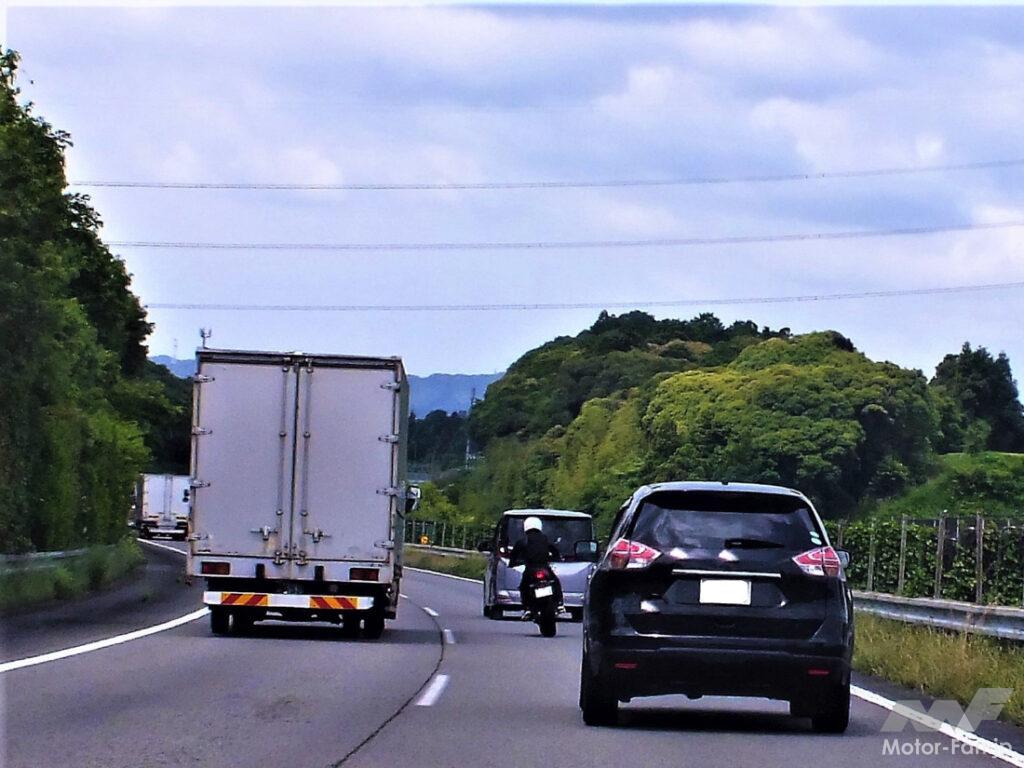
If you cause an accident while passing through other vehicles, you may be found guilty of violating the safe driving obligation.
You cannot drive long distances in the passing lane
The rightmost lane on the expressway is the lane for overtaking the vehicle in front, known as the “passing lane.” Therefore, once you have finished overtaking the vehicle in front of you, the rule is to quickly return to the left lane.
Therefore, it is a violation to stay in the passing lane and drive for a long distance. However, there is no specific regulation that states how many kilometers you must drive to be considered a violation, so it seems to be up to the discretion of the police officer in charge, but it is said that 2 kilometers is generally considered the standard.
If you are caught in such a case, it will be considered a lane violation and the penalties will be as follows:
[Vehicle lane violation penalties]
Fine: 6,000 yen for motorcycles
. Violation points: 1 point.
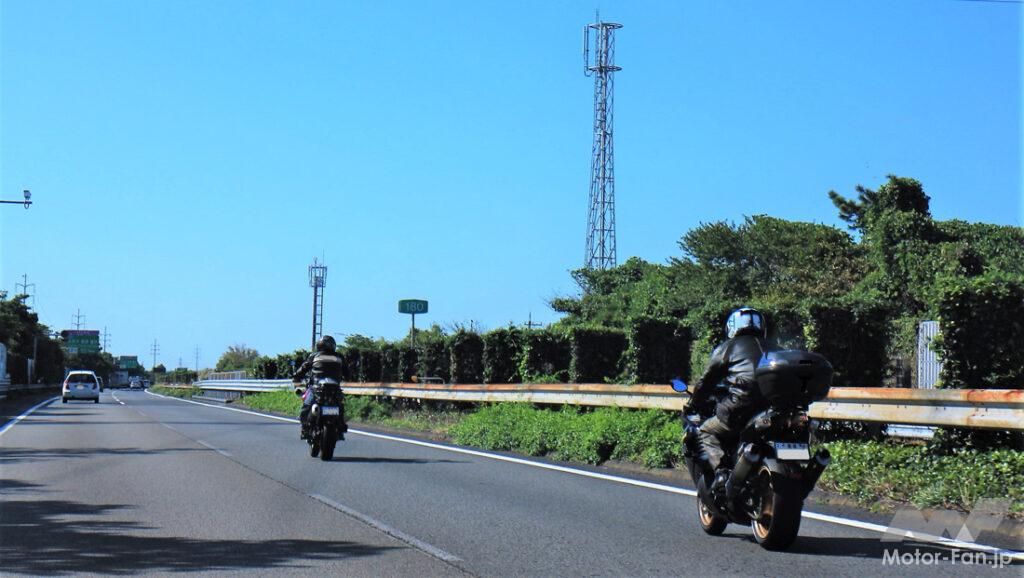
It is illegal to drive in the right-hand passing lane for a long period of time.
Hiding the triangle stop sign is also a violation
It is common for four-wheeled vehicles to have a “triangular stop sign” on them. This sign is installed to prevent rear-end collisions when a vehicle is forced to stop on the shoulder of a road while traveling on a highway due to an accident, breakdown, running out of gas, or other trouble.
So what about motorcycles, which have limited loading space? In fact, it is a legal obligation to display a triangular stop sign on the rear of the vehicle when making an emergency stop on a highway. If the sign is not installed, it will be considered a “violation of the obligation to display a broken-down vehicle,” and the penalties are as follows:
[Penalties for failure to display a broken-down vehicle]
Fine: 6,000 yen for motorcycles
. Violation points: 1 point.
The obligation to display the stop sign is only on expressways and motorways, so it is not required on ordinary roads. Also, there is no need to carry a stop sign with you at all times. It is only necessary in case of an emergency stop, so you only need to carry it when you plan to drive on the expressway, such as when touring.
However, the triangular stop signs for four-wheeled vehicles are large and difficult to load onto a motorcycle. For this reason, some manufacturers have recently started selling compact types specifically for motorcycles, so it would be better to use one of those if possible.
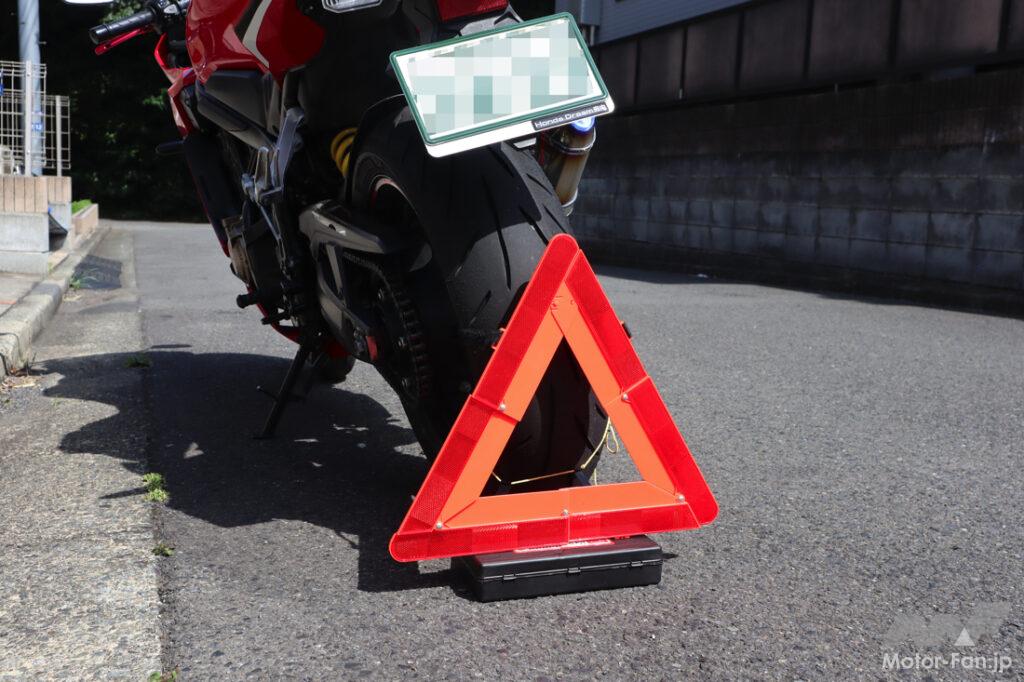
I use Emerson’s “Motorcycle Triangle Warning Sign EM-359.” It folds compactly for easy portability. I bought it on Amazon. The price (including tax) was 1,777 yen.
As you can see, there are surprisingly many things that are prohibited on expressways. Although they are convenient for long-distance travel, the speed range is higher than on regular roads, so there are many dangers. It is important to understand the rules and use them safely and securely.