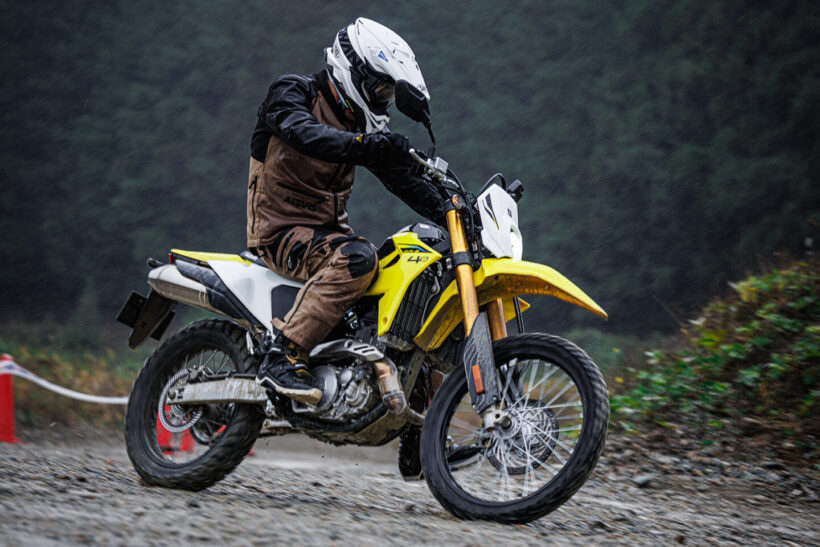


スズキDR-Z4SM……1,199,000円
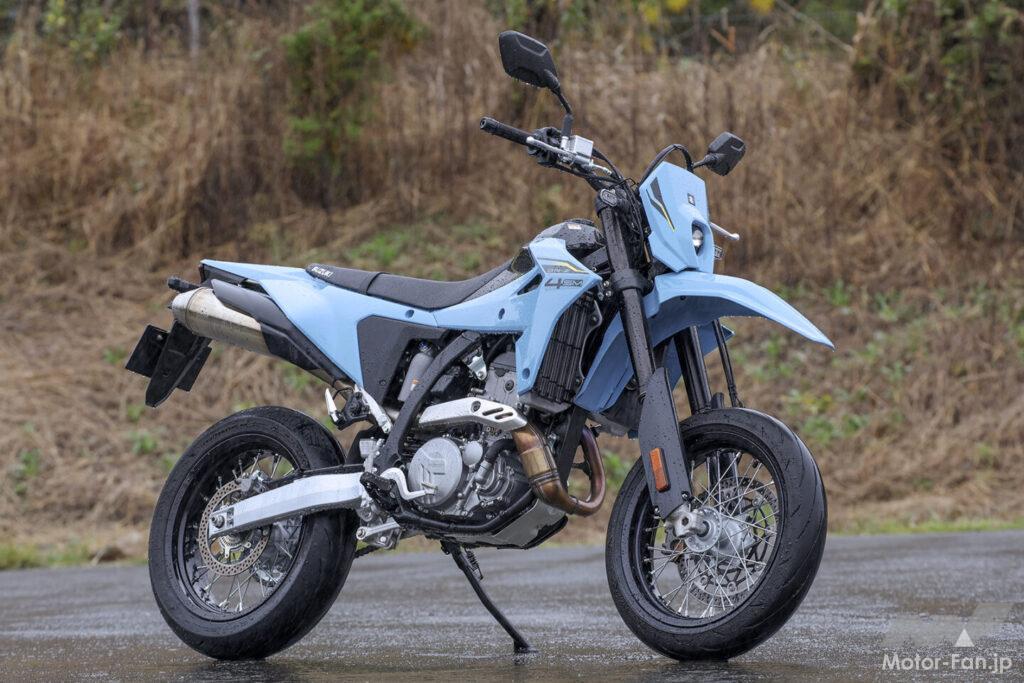
スーパーモタード≒改造車という印象
日本におけるスーパーモタードブームの黎明期、1990年代をリアルタイムで体感したからだろうか、フロント:21インチ/リア:18(あるいは19)インチのオフロードバイクのタイヤを、前後17インチに変更した車両に対して、僕は“改造車”という印象を抱いていた。
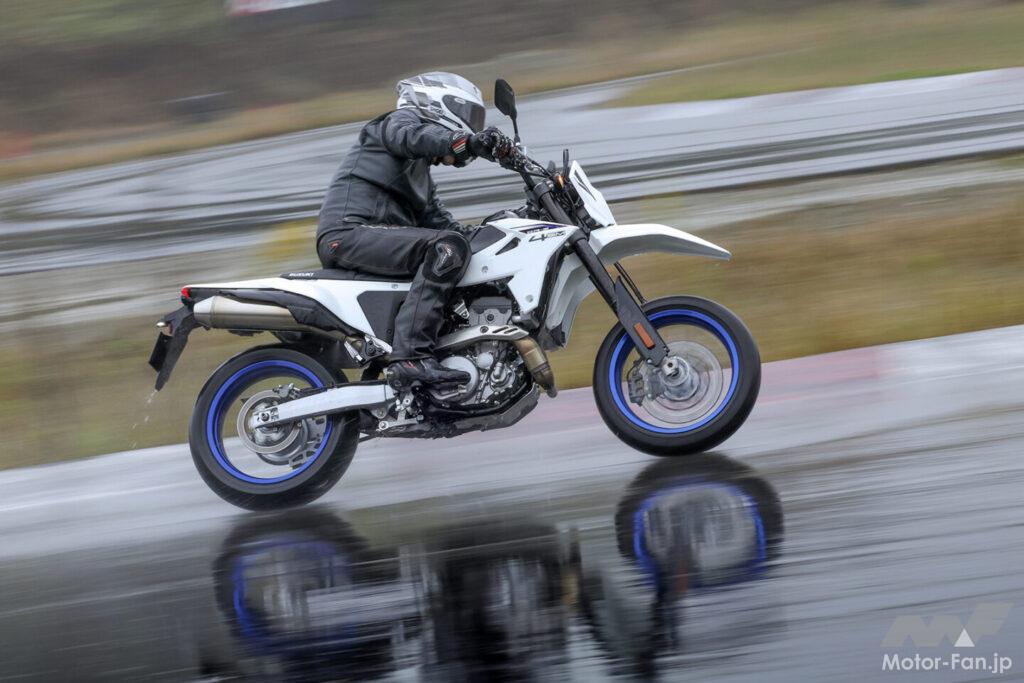
もっとも、日本の4メーカーがそういった車両を普通に販売するようになった2000年前後以降は、僕のような考え方はする人は少数派で、オフロードバイクとは一線を画する、気軽さや機動力を備えたスーパーモタードを高く評価するライダーが増加。
事実、スズキが2005~2009年に日本で販売したDR-Z400SMは、開発ベースのDR-Z400Sを上回る支持を集めていたようだ。
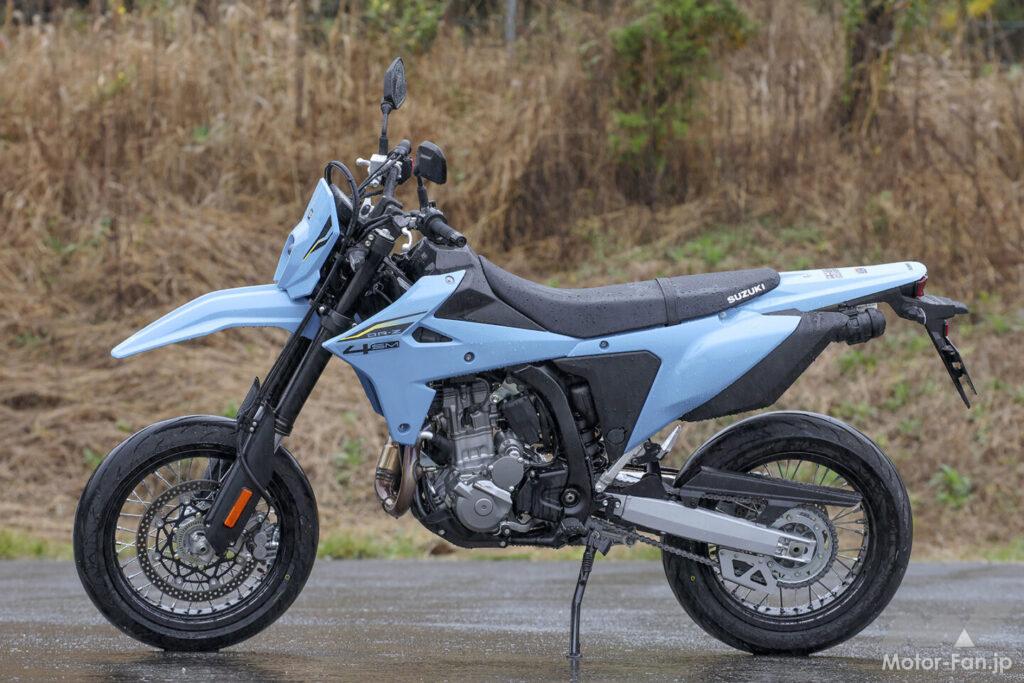
そのあたりを踏まえて、スズキは2025年10月から国内発売を開始した新世代DR-Z4の販売台数を、S:400台、SM:800台に設定。
そしてかつてのDR-Z400とは異なり、2台のDR-Z4はほぼ同時期に開発されたようだが、やっぱり個人的には、SMはSありきのモデルで、SなくしてSMは語れない……と思っていた。
各車各様の足まわり

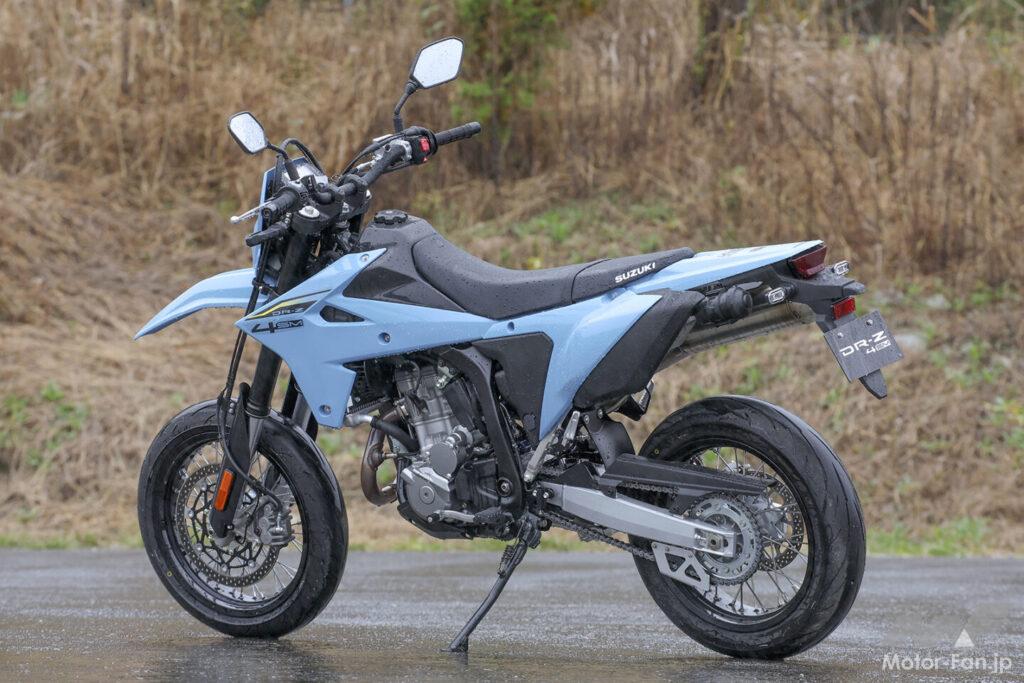
さて、この車両に興味を持っている人ならご存じのはずだが、DR-Z4SMはDR-4ZSの兄弟車で、水冷単気筒エンジンやスチール製セミダブルクレードルフレーム、S.I.R.S.:SUZUKI INTELLIGENT RIDE SYSTEMと命名した電子デバイス、アグレッシブな雰囲気の外装など、主要部品の多くを共有している(ただし、後輪の滑りを抑制するトラクションコントロールは各車各様)。
では2台の相違点は何かと言うと、それは言わずもがなの足まわりだ。フロント:80/90-21・リヤ:120/80-18のブロックパターンタイヤを履くSに対して、SMはフロント:120/70ZR17・リヤ:140/70R17のオンロードタイヤで、フロントブレーキディスクは、S:φ270mm、SM:φ310mmというサイズを選択(リアブレーキディスクはいずれもφ240mm)。

そしてフルアジャスタブル式の前後ショックは、基本構成を共有しつつも、Sは未舗装路、SMは舗装路をメインとした設定になっている(前後ホイールトラベルは、S:280・296mm、SM:260・277mm)。
また、車体寸法に注目すると、Sの軸間距離・キャスター角・トレールが1490mm・27°30′・109mmであるのに対して、SMは1465mm・26°30′・95mm。

これらの数値からは、S:安定性重視、SM:旋回性重視というキャラクターが伺えるものの、よくよく考えてみると、Sはオフロードバイク、SMはオンロードバイクとしての魅力を追求しただけで、開発陣に車体寸法で2台の差別化を図ろうという意識はなかったと思う。

生粋のオンロードバイク?
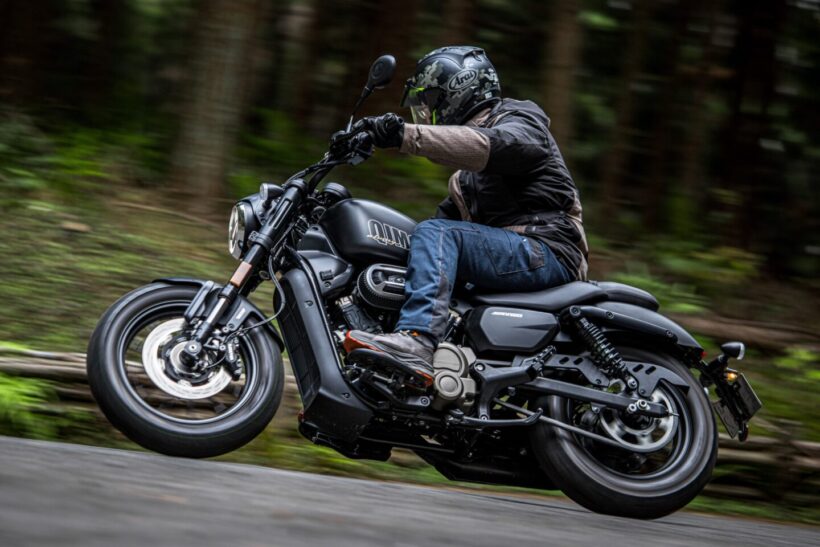
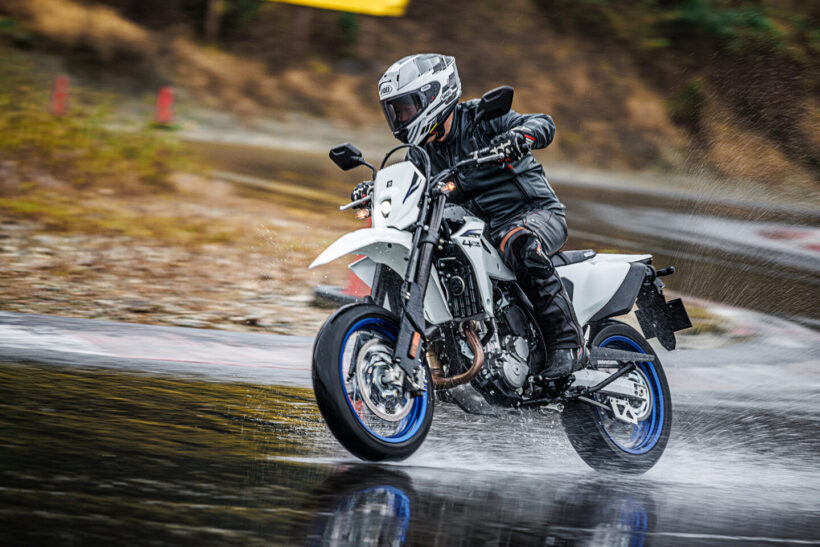
前述した言葉を覆す展開だが、10月中旬に開催された試乗会でDR-Z4SMを体験した僕は、これはもはや“改造車”ではないと思った。
かつてのDR-Z400SMも含めて、これまでに体験したスーパーモタードの多くは、開発ベース車になったオフロードバイクに対する何らかのマイナス要素を感じたのだけれど(フロントフォークの急激なノーズダイブに戸惑ったり、旋回初期の前輪に落ち着きの悪さを感じたり)、DR-Z4SMにはそういう気配が見当たらない。
誤解を恐れずに表現するなら、生粋のオンロードバイクと言いたくなる乗り味なのだ。

いや、その表現は正しくないのか。豊富なサスストロークの効果で、スロットルやブレーキを使っての姿勢変化は生粋のオンロードバイクより起こしやすいし、重心の高さやマスの集中化が原因なのだろう、ハンドリングは生粋のオンロードバイクより格段に軽快。
ただしDR-Z4SMの乗り味は至ってフレンドリーだから、ライディングをアジャストする必要はまったくなかった。
However, at first I had some doubts about the maximum output of 38ps/8000rpm, which was 2ps lower than that of its predecessor, the DR-Z400SM.
Although I felt that 38 PS was more than enough when I rode the DR-Z4S, a sister model of the DR-Z4, the DR-Z4SM is essentially an on-road bike, so I think it would have been better to aim for 47 PS, which is the upper limit for the European A2 license (KTM’s sister models, the 390SMC-R and 390 Adventure R, which are likely to be rivals in the market, have 45 PS/8500 rpm).
The entire RPM range is a power band
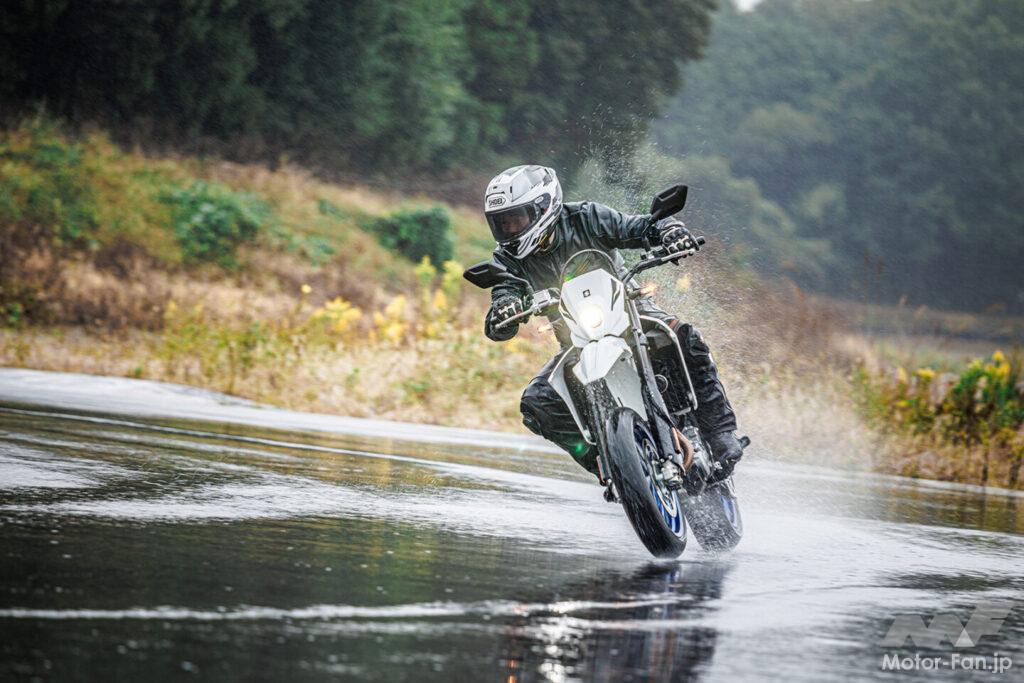
However, during actual driving, there was no moment when the maximum output was a concern.
The reason behind this may be that the weather on the day of the test drive was pouring rain and the test drive took place at Tsukuruma Circuit Nasu in Ibaraki Prefecture, which has a short full-throttle section (the total length is about 1 km, and the straight is about 250 m), but perhaps because I was able to fully utilize the engine’s best features, I did not feel any sense of dissatisfaction.

It’s difficult to put into words what I mean here, but even though the engine generates its maximum output at 8000 rpm, there’s no sense that the DR-Z4SM’s engine is just trying to get the most out of it. The entire RPM range feels like a power band, and no matter which of the three engine modes you select, or how you open the throttle, it provides exquisite and comfortable acceleration.

Of course, that acceleration isn’t just down to the engine.
The traction control, which keeps the rear wheels from slipping just right (we only used modes 1 and 2 during this test ride, and didn’t have time to try G mode or Off, which have a wider tolerance for slippage), the front and rear suspension that responds flexibly, and the semi-double cradle frame that combines high rigidity and flexibility at a high level all contribute greatly to the wide power band and ease of opening the throttle.

In any case, the DR-Z4SM completely shattered my previous notions of what a supermotard was, offering a friendly, natural, and yet exciting ride. And now I feel that this is perhaps the ideal form for a supermotard that isn’t specifically designed for racing.
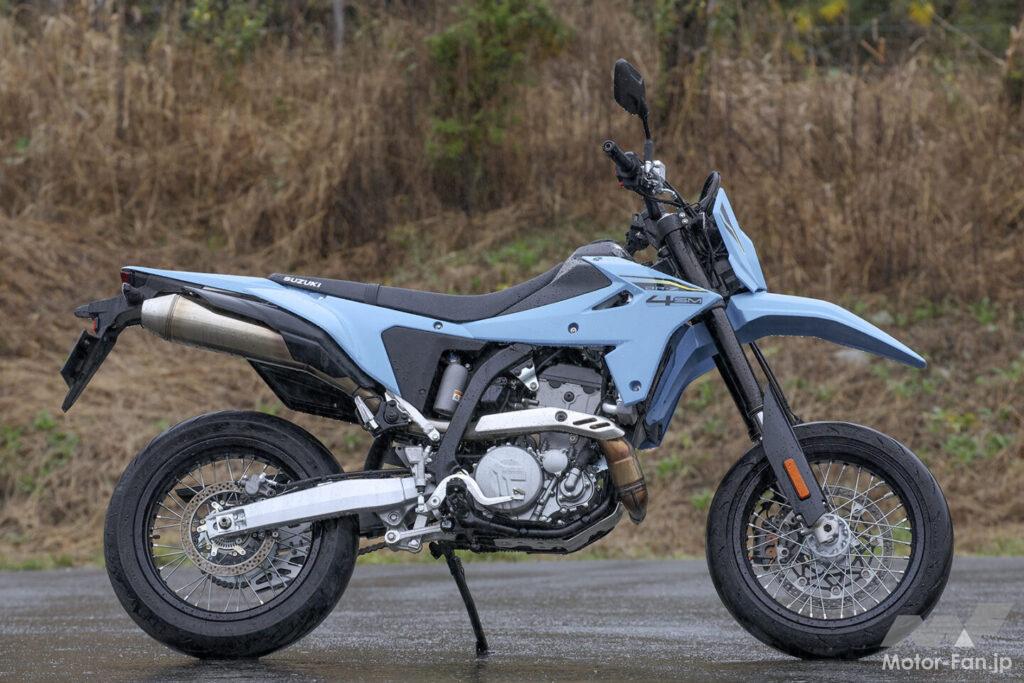
The original equipment specified tires are the all-round sports radial Dunlop Q5A, with sizes of 120/70R17 and 140/70R17, the same as the previous model.
Riding position

ADVERTISEMENT


The 890mm seat height and footpeg position are the same as the DR-Z4S, but the handlebar grip position is low, giving the DR-Z4SM an aggressive and on-road sports feel. If we compare it with the previous model based on seating position, the handlebar grip position has been moved 18mm further back and the footpeg position 20mm further back. It’s hard to say that foot reach is good (I’m 182cm tall and weigh 74kg), but considering the maneuverability unique to this model, it seems rude to argue against that point.

Detailed explanation

The LED headlights are bi-function type that can be used for both low and high with one light. The front turn signals also function as position lamps.
ADVERTISEMENT

The buttons on the top of the left switch box are for adjusting the engine mode and traction control level, and there is a helmet holder to the right of the rearview mirror.
ADVERTISEMENT

The right switch box is equipped with a seesaw-type starter/kill switch and a hazard button. The throttle valve is electronically controlled, but a cable is used from the throttle to the throttle position sensor to make it easier to fit the rider’s sensibilities and to allow for easy play adjustment.
ADVERTISEMENT
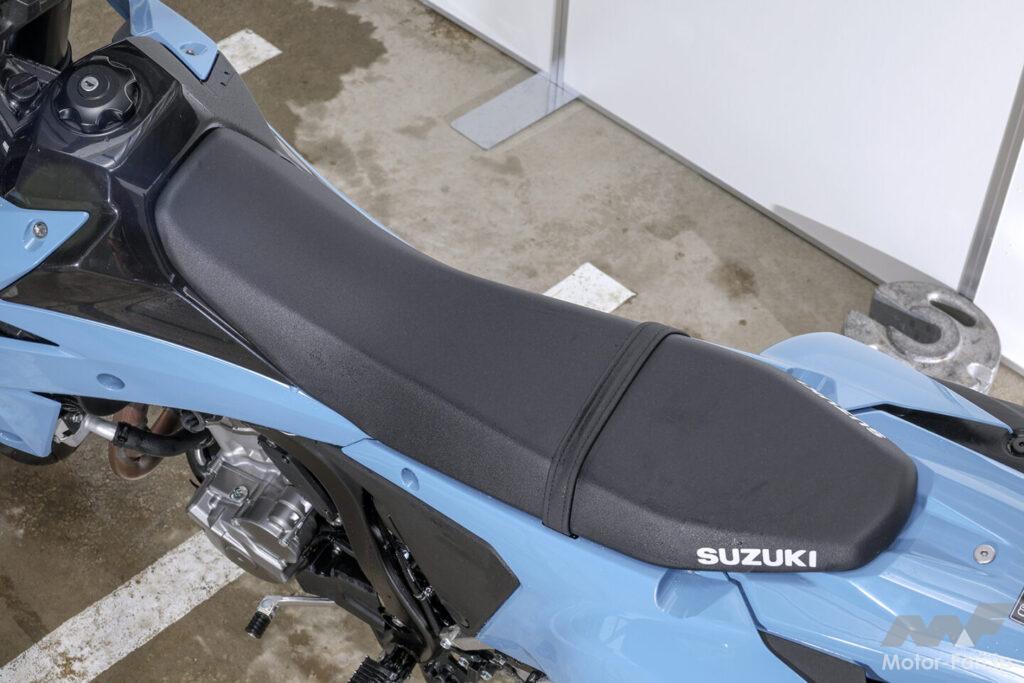
Unlike the DR-Z4S, which is equipped with a low seat to accommodate foot placement and riding posture standards based on JASO standards, the DR-Z4SM uses the same standard seat as the overseas model. The two models are compatible, so if you install the S low seat on the SM, the seat height will be 860mm.
ADVERTISEMENT

Compared to the previous model, which used incandescent bulbs, the new LED lights are much more compact.
ADVERTISEMENT

The edgy design of the radiator shroud is completely different from the previous model. The gasoline tank capacity is 8.7 liters, and Suzuki calculates the cruising range as 241km for the DR-Z4S and 250km for the DR-4ZSM.
ADVERTISEMENT

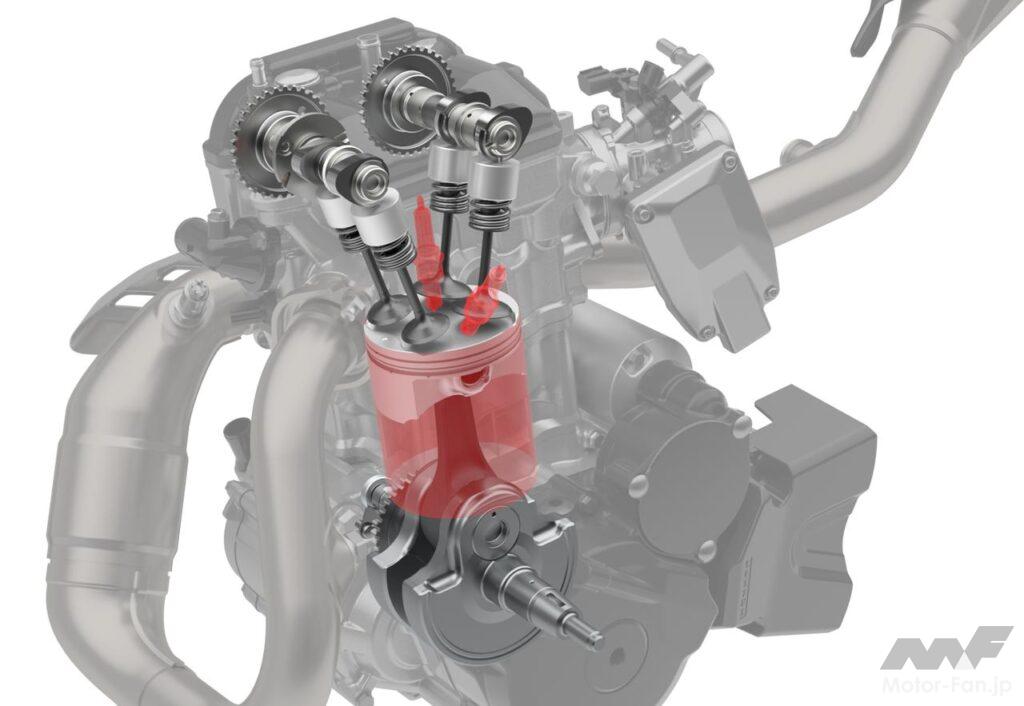
The water-cooled single-cylinder engine produces 38ps/8000rpm and 3.8kgf/m/6500rpm. While these figures are not outstanding by the current standards of the 400cc class, I think the ease of extracting power is top of its class.
ADVERTISEMENT
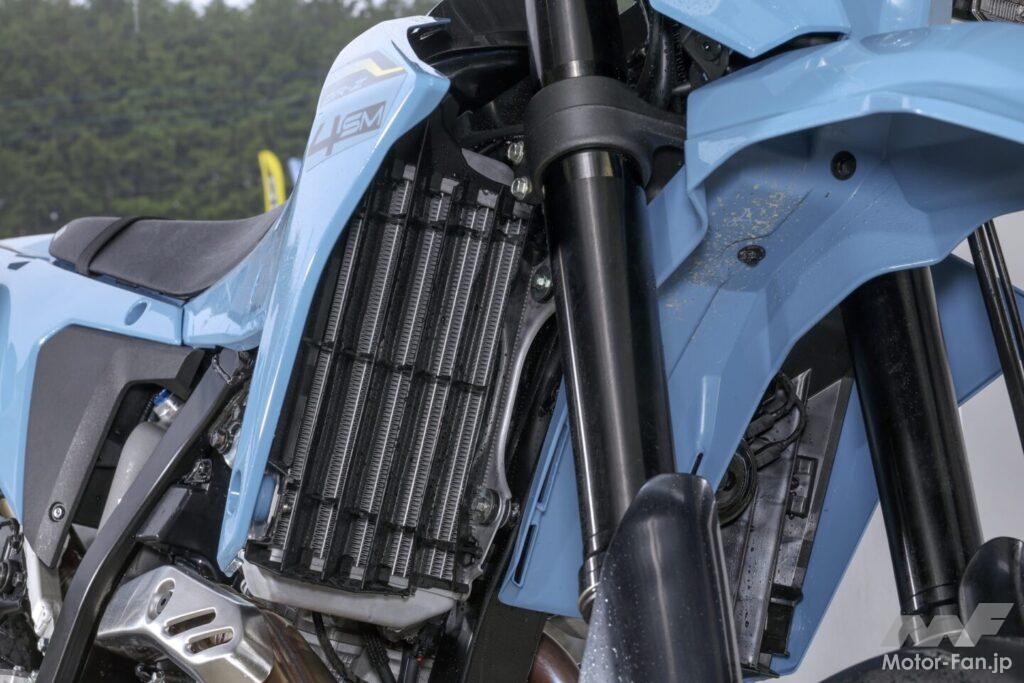
It follows the same configuration as the previous model, but the left and right split radiator is a new design that takes cooling efficiency and the placement of other parts into consideration.
ADVERTISEMENT

The front forks are φ46mm inverted type with adjustable rebound and compression damping. The front brake disc is φ310mm, the same as the previous model, but the number of floating pins has been increased from six to eight. The brake calipers are front: single-piston, two-piston, rear: single-piston, one-piston.
ADVERTISEMENT

The rear shock absorber can be adjusted for preload, rebound, low-speed compression, and high-speed compression damping. The rear brake disc is 240mm in diameter, the same as the S.
Main specifications
Model: DR-Z4SM
Model: 8BL-ER1AH
Length x Width x Height: 2195mm x 885mm x 1190mm
Wheelbase: 1465mm
Ground Clearance: 260mm
Seat Height: 890mm
Caster/Trail: 26°30’/95mm
Engine Type: Water-cooled 4-stroke single cylinder
Valve Type: DOHC 4-valve
Total Displacement: 398cc
Bore x Stroke: 90mm x 62.6mm
Compression Ratio: 11.1
Maximum Power: 28kW (38ps) / 8000rpm
Maximum Torque: 37N・m (3.8kgf・m) / 6500rpm
Starting Method: Self-starter
Ignition Method: Full Transistor
Lubrication Method: Pressure-fed dry sump
Fuel Supply Method: Fuel injection
Transmission Type: Constant mesh 5-speed return
Clutch Type: Wet multi-plate coil spring Gear
Ratio
1st: 2.285
2nd: 1.733
3rd gear: 1.375
4th gear: 1.090
5th gear: 0.863
1st and 2nd reduction ratios: 2.960 and 2.733
Frame type: Semi-double cradle
Front suspension: Telescopic inverted φ46mm
Rear suspension: Link-type monoshock
Front tire size: 120/70R17
Rear tire size: 140/70R17
Front brake: Hydraulic single disc
Rear brake: Hydraulic single disc
Vehicle weight: 154kg
Fuel: Unleaded regular gasoline
Fuel tank capacity: 8.7L
Passenger capacity: 2 people
Fuel consumption rate (reported by the Ministry of Land, Infrastructure, Transport and Tourism): 36.1km/L (with 2 passengers)
Fuel consumption rate (WMTC mode value, class 3-1): 28.8km/L (with 1 passenger)