
BMW R1300GS ADVENTURE…from 3,335,000 yen
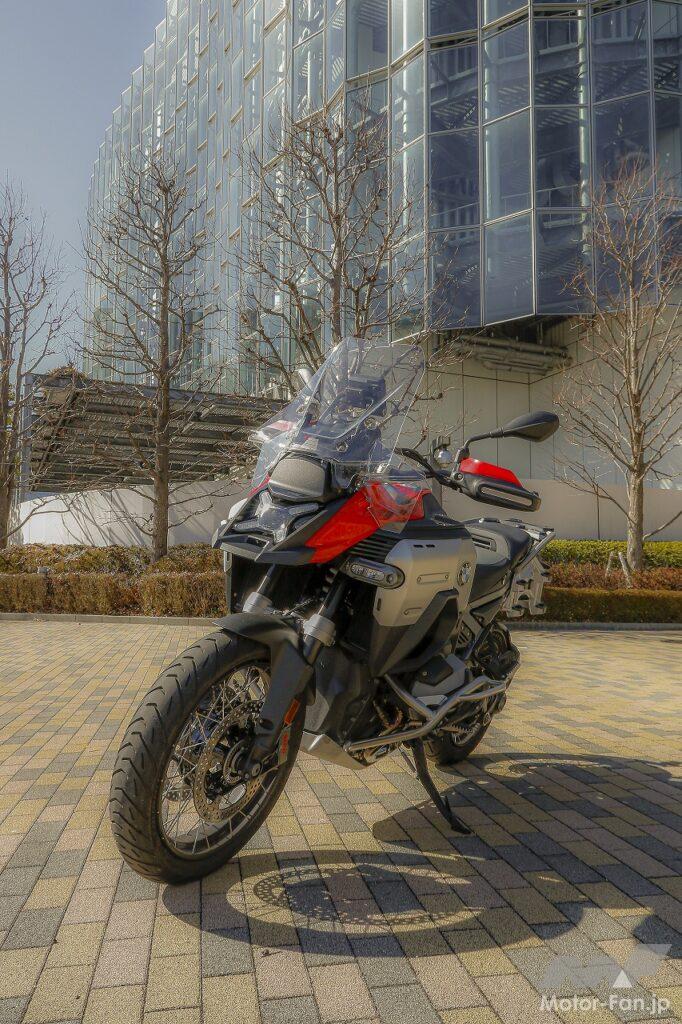
The adaptive vehicle height control system reduces anxiety about foot placement in urban areas where there are many starts and stops.
"The volume around the tank is incredible!" That was my first impression when I saw the latest R1300GS Adventure. Perhaps the bulkiness of the boxer engine and 30-liter fuel tank, concentrated near the center of the body, gives it a certain intimidating appearance.
The Adventure is the pinnacle of the R-GS series, and it's also classified as the largest model. The GS series' history began with the R80GS, which debuted in 1980. It continued with the second-generation R100GS, the R1100GS with a four-valve engine, and the R1150GS, with the Adventure model added in 2002. The R1200GS Adventure was released in 2005, and since 2013, it has adopted a water-cooled engine, five riding modes, semi-active ESA suspension, and more. It has further evolved into the R1250GS and R1300GS Adventure. With each model change, the R1200GS has consistently led the large adventure model scene, upgrading its performance and style to befit a champion.
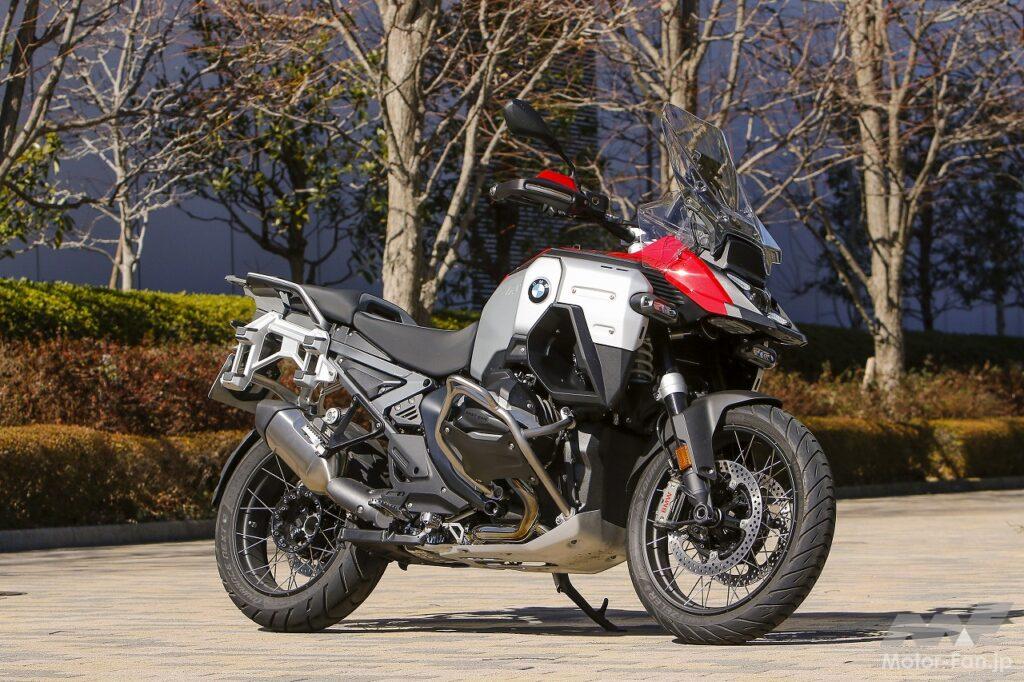
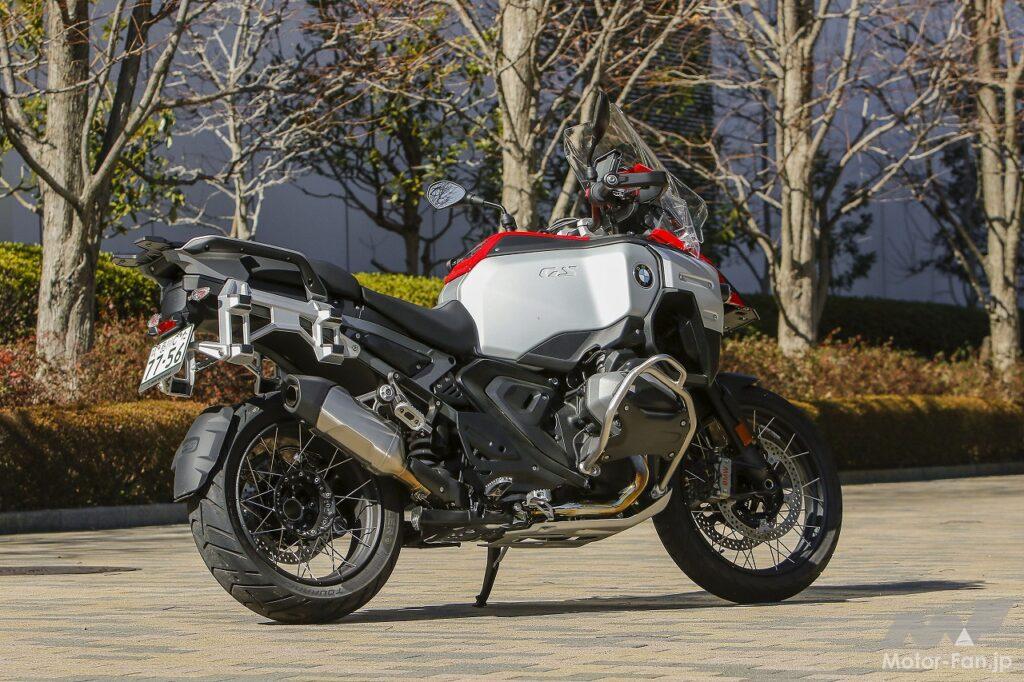
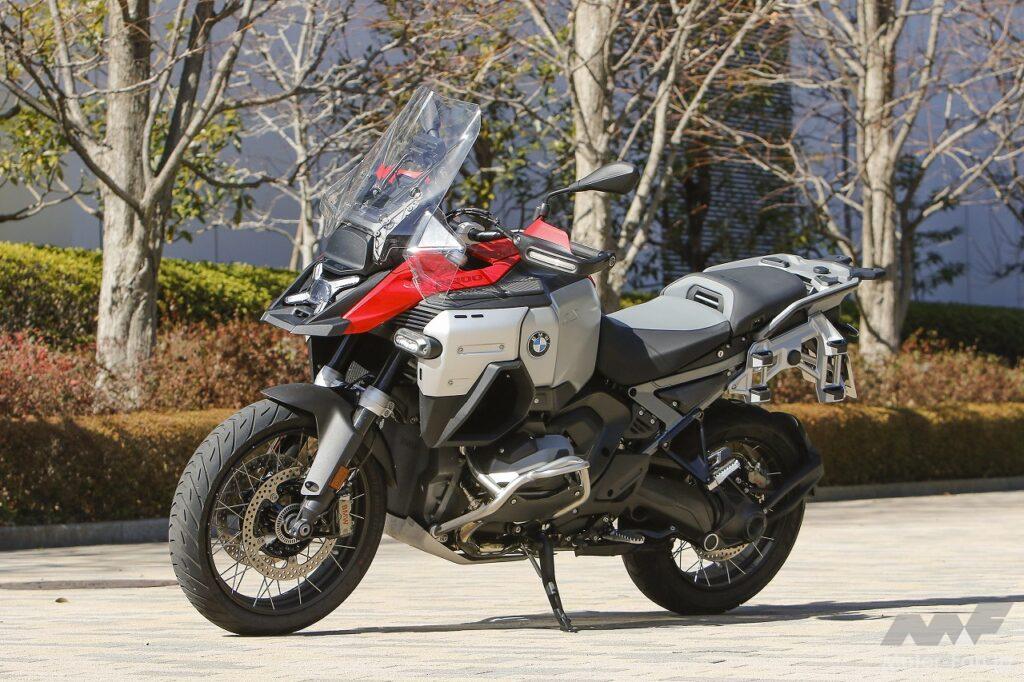
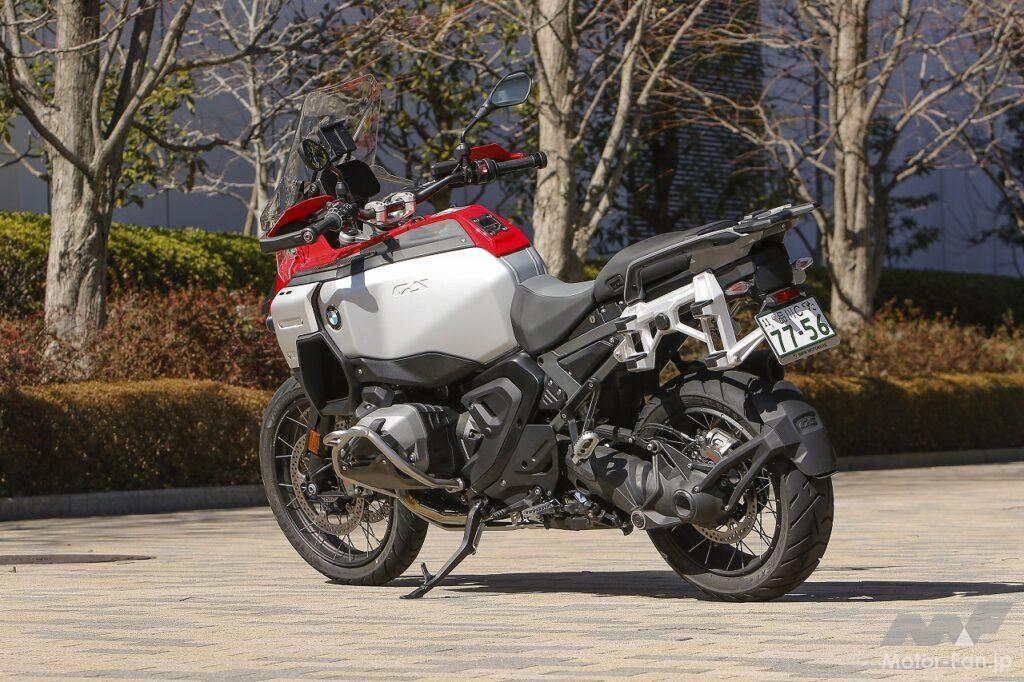
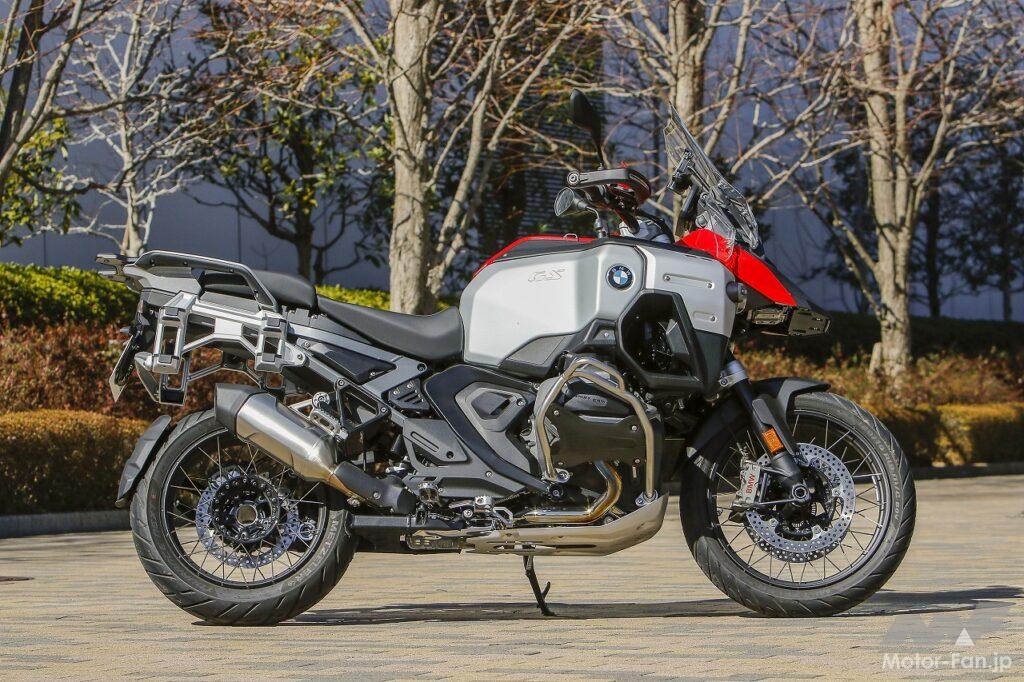
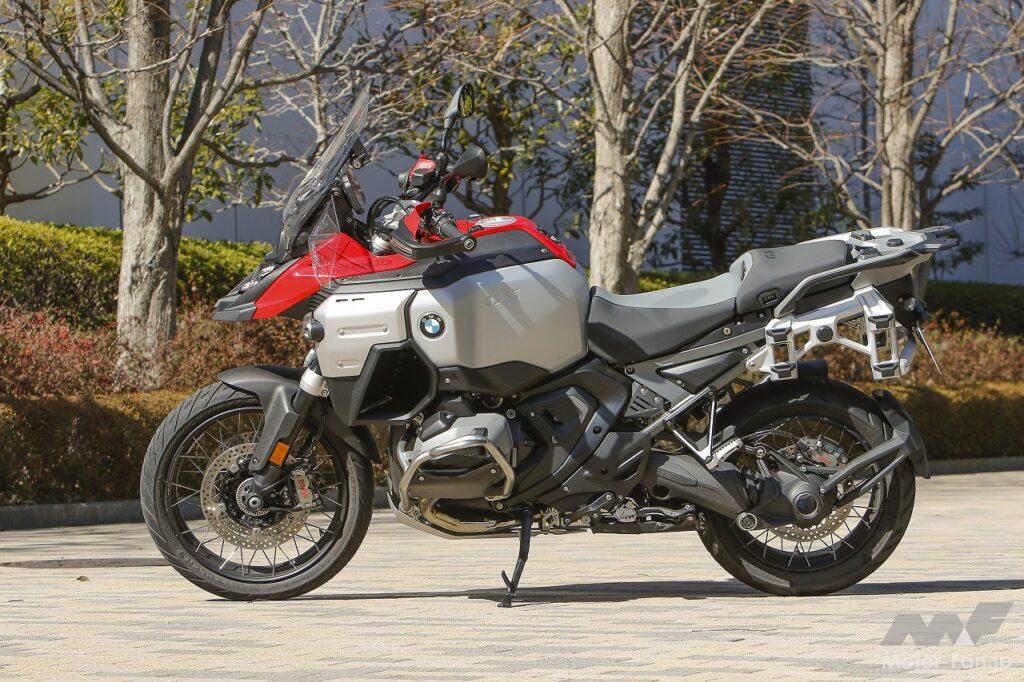
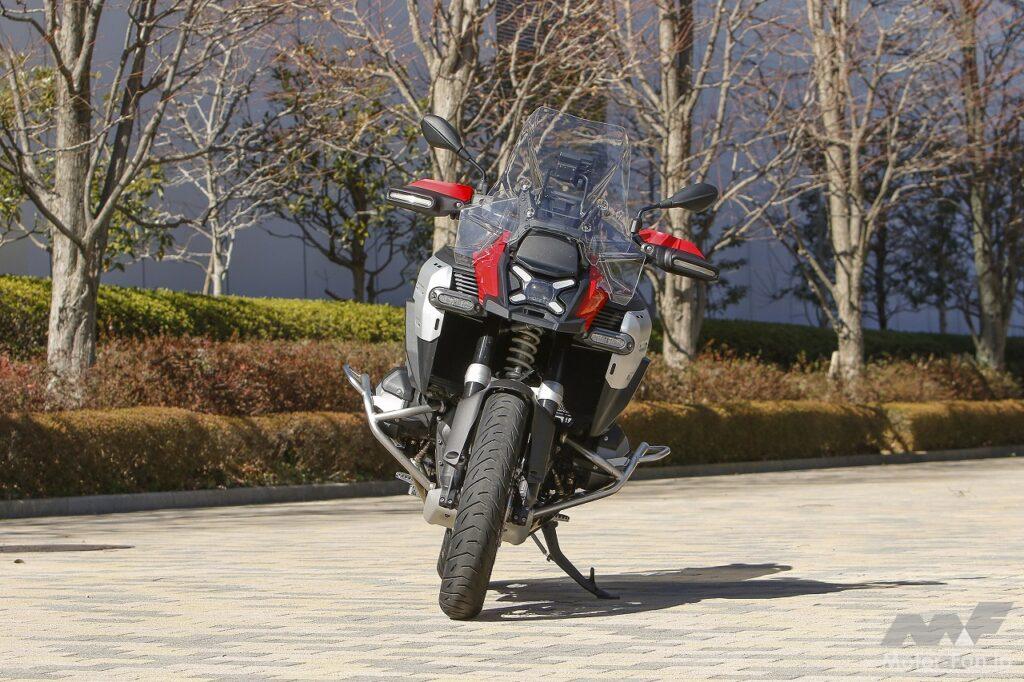
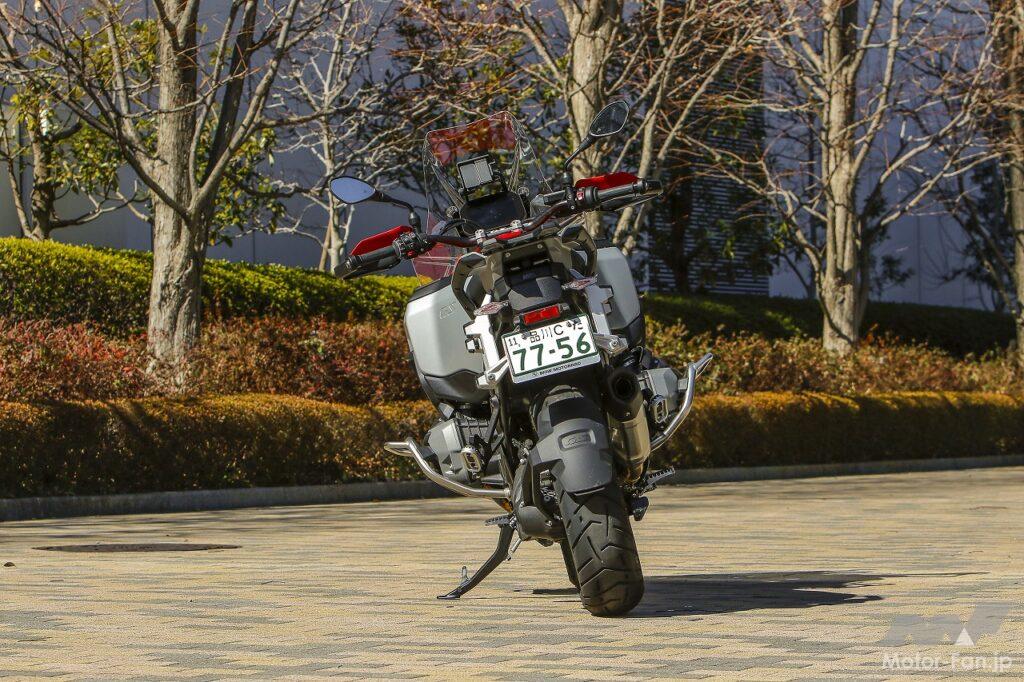
While the bike's historic presence is certainly impressive, it also feels a little cleaner than the previous 1250. With a weight of 284 kg (as reported by the Ministry of Land, Infrastructure, Transport and Tourism in Japan) at full fuel, it's a specification that makes it quite difficult to maneuver. However, once I sat down on the seat, I found it surprisingly easy to put my feet down, and my sense of insecurity immediately disappeared. This model is actually equipped with a system called Adaptive Ride Height Control, which lowers the bike by 30 mm when stopped with the vehicle height adjustment set to auto. The seat can be adjusted to two height positions in 20 mm increments, so this system changes the seat height from 840 mm - 860 mm to 870 mm - 890 mm. On the model I test rode, the seat was set low, so the seat height when stopped was 840 mm. This meant that it was easier to reach the ground than I expected. The Adaptive Ride Height Control system raises the bike by 30 mm when the bike is moving. This increases the ground clearance and improves dirt-road performance, but it can still be a challenge for smaller riders.
Foot reach (rider height 178cm)
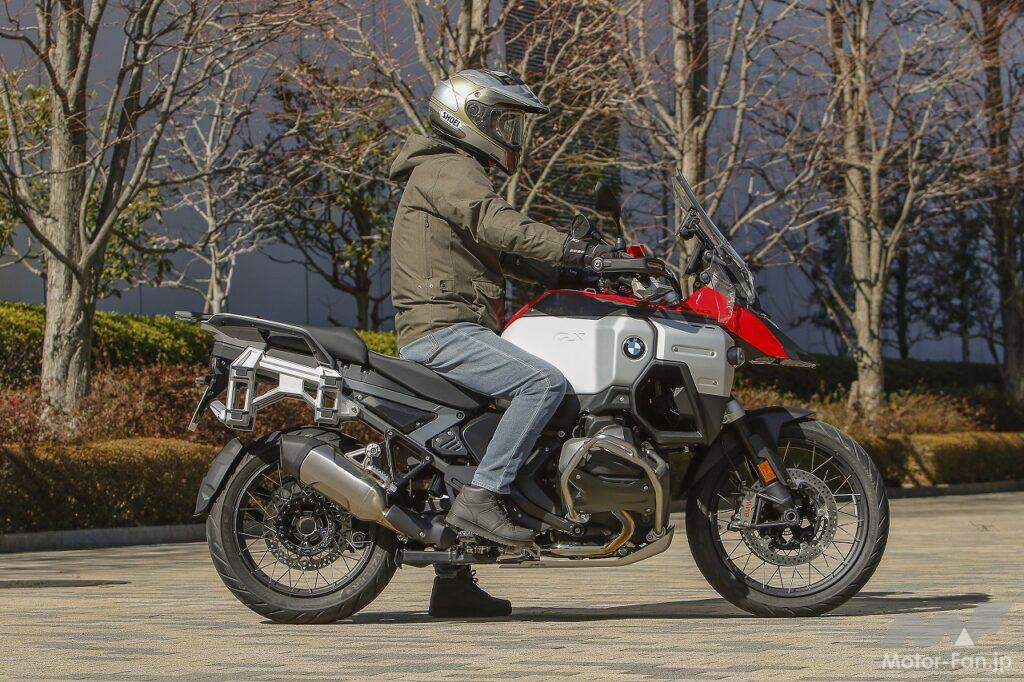
The riding position is relaxed, as it is a large adventure model.
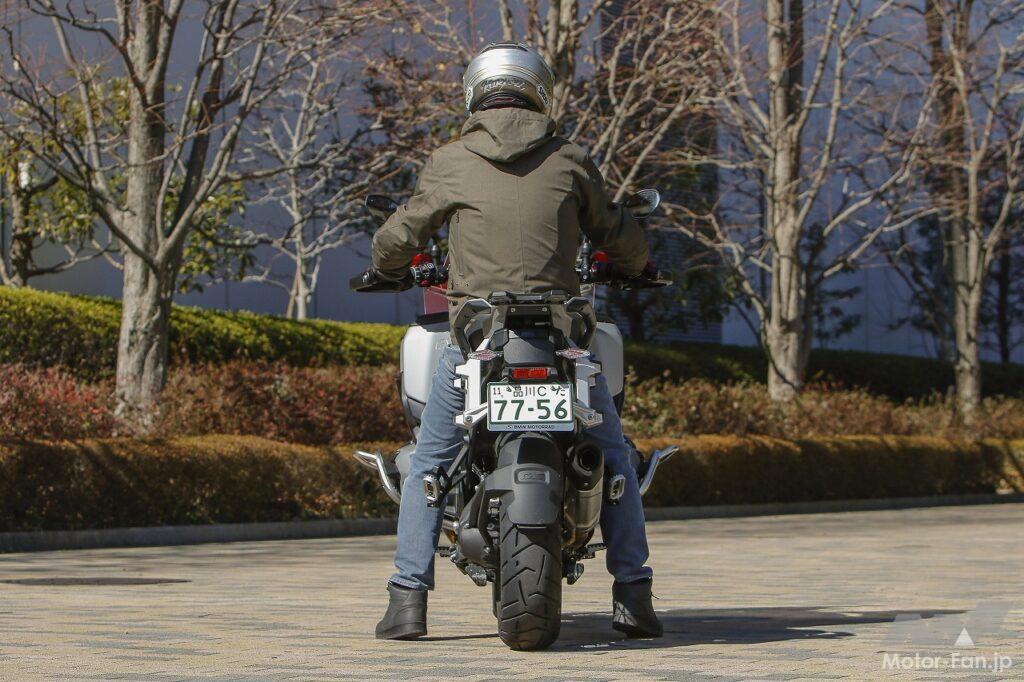
The huge fuel tank is intimidating, but the front of the seat is slim, making it easy to put your feet down.
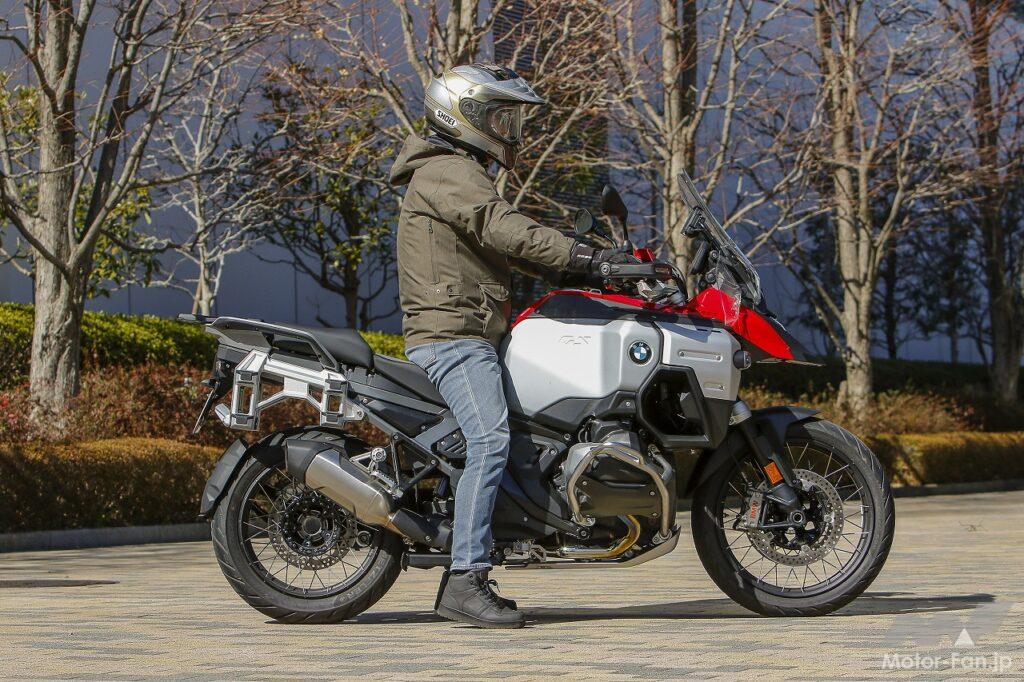
The seat height is available in two stages: 840mm-860mm and 870mm-890mm. When stopped, the seat height is lowered by adaptive ride height control.
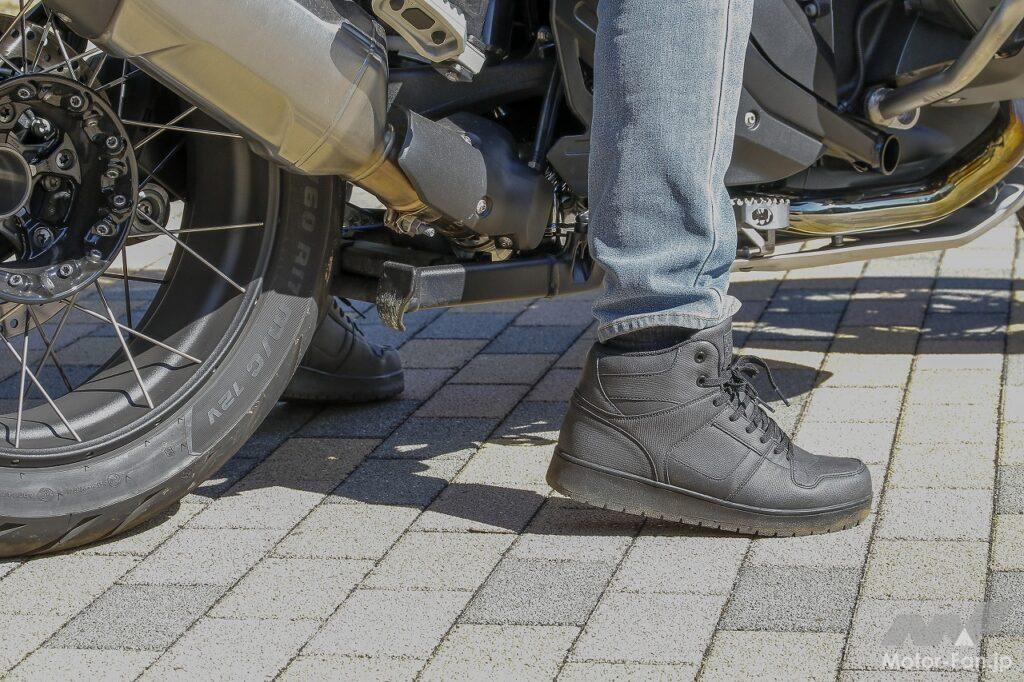
The two-stage adjustable seat was set to a low position, so the seat height was 840 mm, and the foot reach was quite good.
ASA, which does not require clutch operation, is a useful system that is especially effective when riding around town.

I turned on the ignition, squeezed the brake lever, and operated the starter. On ASA models, the brake must be applied before starting the engine. I set the D/M switch on my left hand to D. I set the riding mode to standard road.
Unsure of how the clutch would engage, I started by gradually opening the throttle. The action was very gradual, very similar to slowly accelerating with the clutch half engaged. The stability at extremely low speeds eliminated any sense of tension or anxiety. I then entered busy urban roads, and the bike shifted appropriately based on my speed and throttle position. While shift timing likely varies depending on the riding mode, as long as I was riding in road mode, the bike shifted very naturally. Moreover, it shifted as desired not only when accelerating but also when decelerating.
While shift timing varies from person to person, it's common sense to ride within the speed limit in urban areas. This naturally determines the throttle position when riding with the flow of traffic. I imagine the shifting operation will be similar. The ASA shifts gears with exquisite timing, as if it had learned my driving habits in urban areas.
When I stopped, the gear shifted to first gear. To shift into neutral, I pressed and held either the D/M switch or the shift pedal. The meter display indicated whether I was in neutral. Incidentally, I couldn't shift into neutral by using the shift pedal to shift between first and second, as with a typical return transmission. It took me a while to get used to this unique operating feel.
When riding in M mode, gears are changed using the shift pedal. However, when decelerating, the system automatically downshifts without my intervention. For example, turning left at an intersection in fifth gear can cause instability and, in the worst case, stall and even tip over on a typical motorcycle. While I'm not likely to be so careless in my riding, even if I did, the system would still shift down to the appropriate gear, preventing stalling.
Like Honda's DCT, many automatic transmissions are equipped with paddle shifters operated with the left hand. However, the ASA does not have paddle shifters. In M mode, you use the left-foot-operated shift pedal. However, this pedal is not mechanically connected to the transmission; it's an electronic gear-shift system. That's why you couldn't get into neutral. It's a bit
confusing, including the switching of other electronically controlled systems, but I thought that this ASA AT system not only makes touring more comfortable, but also provides appropriate driving with easy operation, especially in urban areas.
ADVERTISEMENT
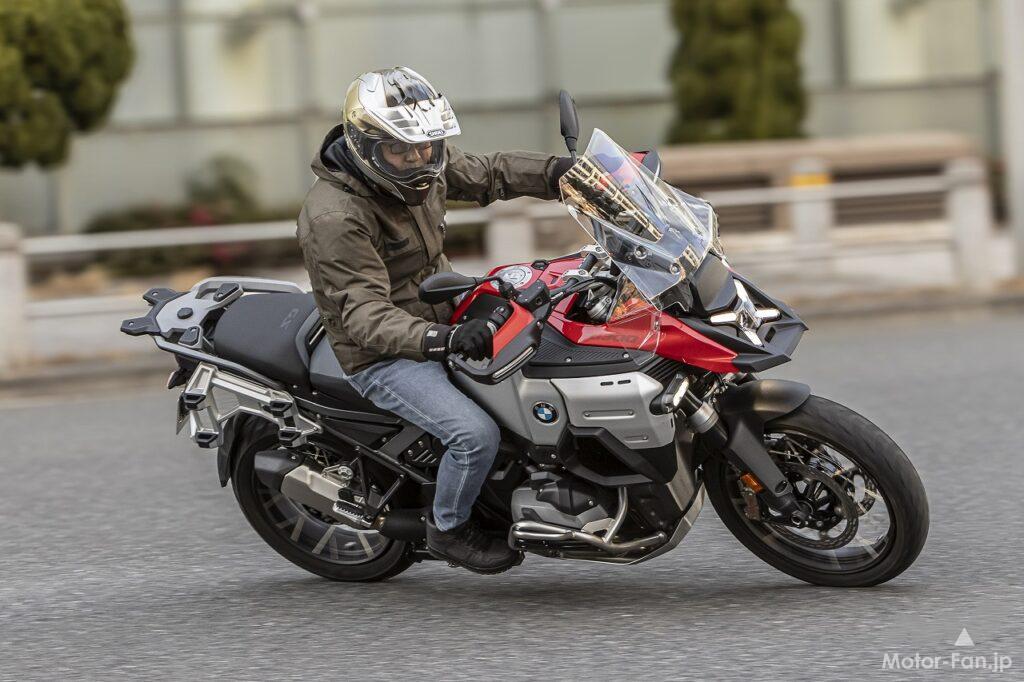
Riding modes are now found on many models, but since I was mainly riding in urban areas this time, I used Road mode extensively. I thought it was a mode that could be used for a wide range of riding, from street riding to touring. Eco mode is also sufficient in urban areas. The output characteristics become much gentler, but it still generates the necessary torque, so it may be ideal for enjoying street cruising. On the other hand, switching to Dynamic increases power and sharpens response. It may feel a bit hectic in the city, but it seems like it would be great for sporty riding when riding on winding roads. Other riding modes include Rain, Enduro, Dynamic Pro, and Enduro Pro, so you can choose the mode that best suits your riding situation.
The initial operation is soft and provides a high-quality ride.
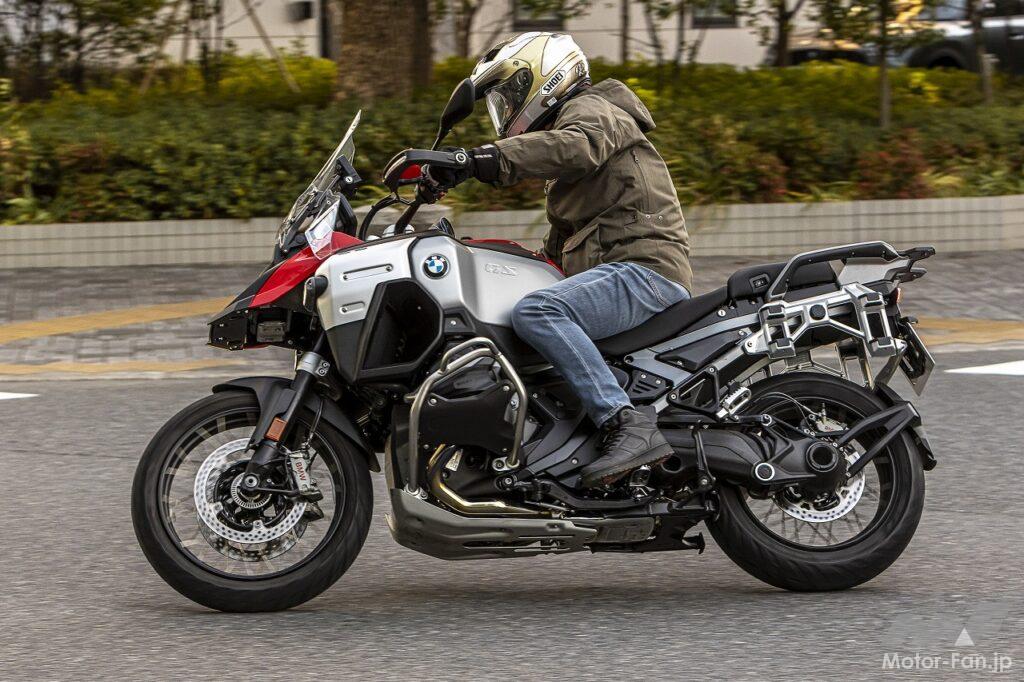
The electronically controlled suspension with a large stroke of 210mm in the front and 220mm in the rear is naturally effective on dirt roads. However, it also provided a very comfortable ride in city driving, as we did on this occasion. Even on what appears to be a smooth paved road at first glance, there are actually small bumps. Even when going over such small bumps, the suspension's soft initial action absorbs all impact, so the vehicle's behavior is not transmitted to the body. This allows for stable cornering at low speeds. On the other hand, when approaching a curve with somewhat hard braking, the dampers do their job well, allowing for cornering while maintaining high stability. Handling was lighter than I expected, and driving in city streets with many turns was not a struggle.

I was once again amazed at how advanced electronic control systems enhanced comfort and convenience, including ASA, which frees you from clutch operation; adaptive vehicle height control, which raises the vehicle height at 50km/h and lowers it at 25km/h; and comfort lift assist, which activates when you put the car on the center stand with the ignition on, extending the front and rear suspension in order to raise the vehicle height by 30mm, making it easier to put the car on the stand.
Furthermore, active cruise control, which automatically controls vehicle speed to maintain a constant distance from the vehicle ahead, allows you to set the distance as you like and also has a function that alerts you if an obstacle is detected. There are also various systems that support safe driving, such as a system that holds the vehicle when you apply the front brake to make starting on a slope easier, a canceller to prevent forgetting to turn off the turn signal, headlight pro that illuminates the direction of travel when cornering, and mirror warning lights that turn on when other vehicles are approaching on either side. It's truly a car full of features.
 The R1300GS Adventure has been improved in every way, and I really felt that it has taken another step ahead in this category.
Detailed explanation
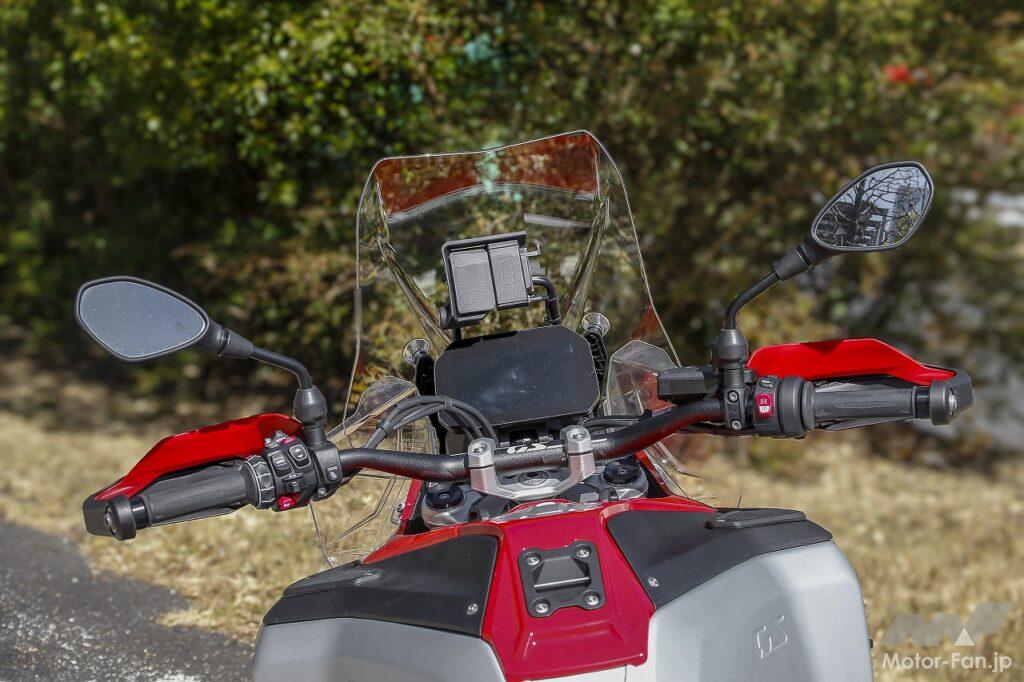
The tapered pipe handlebars create an upright upper body position. The mirrors have built-in warning lights that warn of approaching vehicles on both sides.
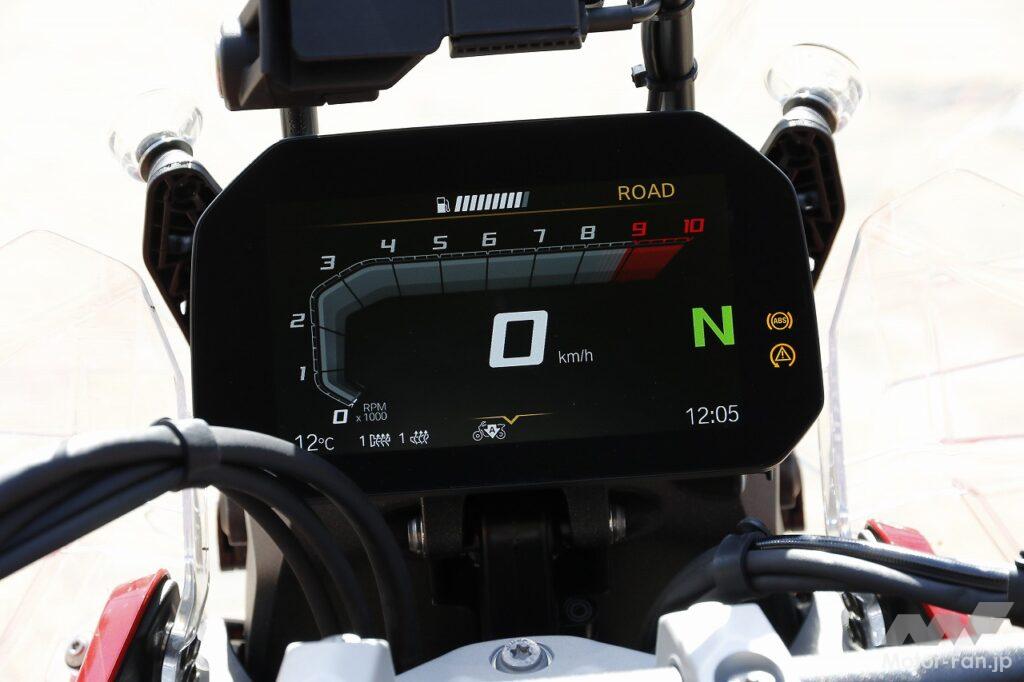
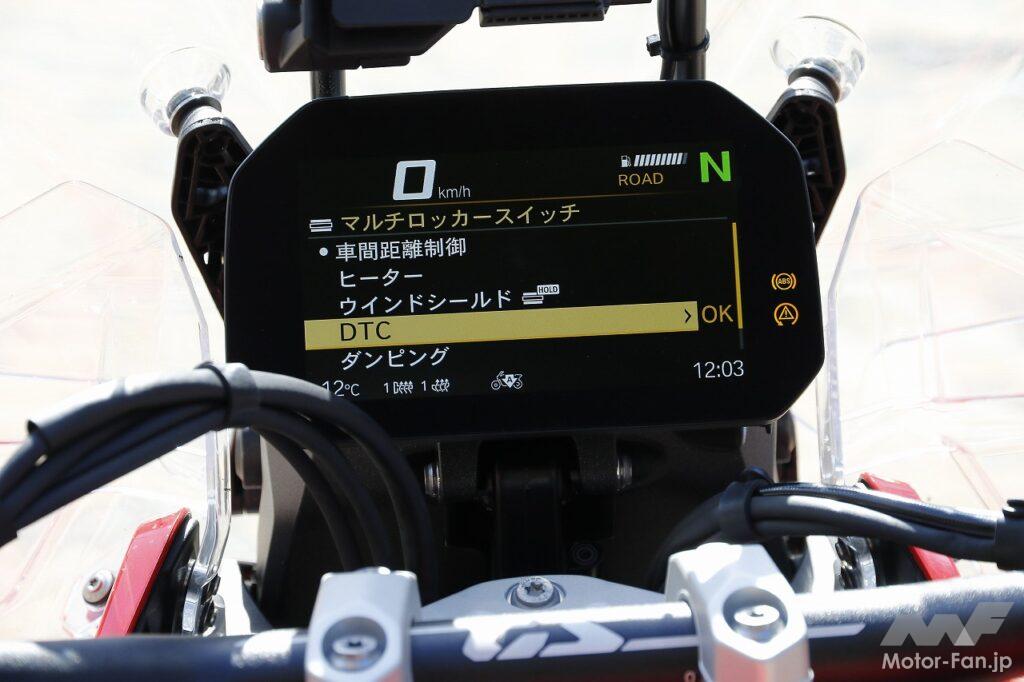
The meter is equipped with a 6.5-inch TFT LCD color display. You can also switch between various modes by checking the screen display and operating the switch.
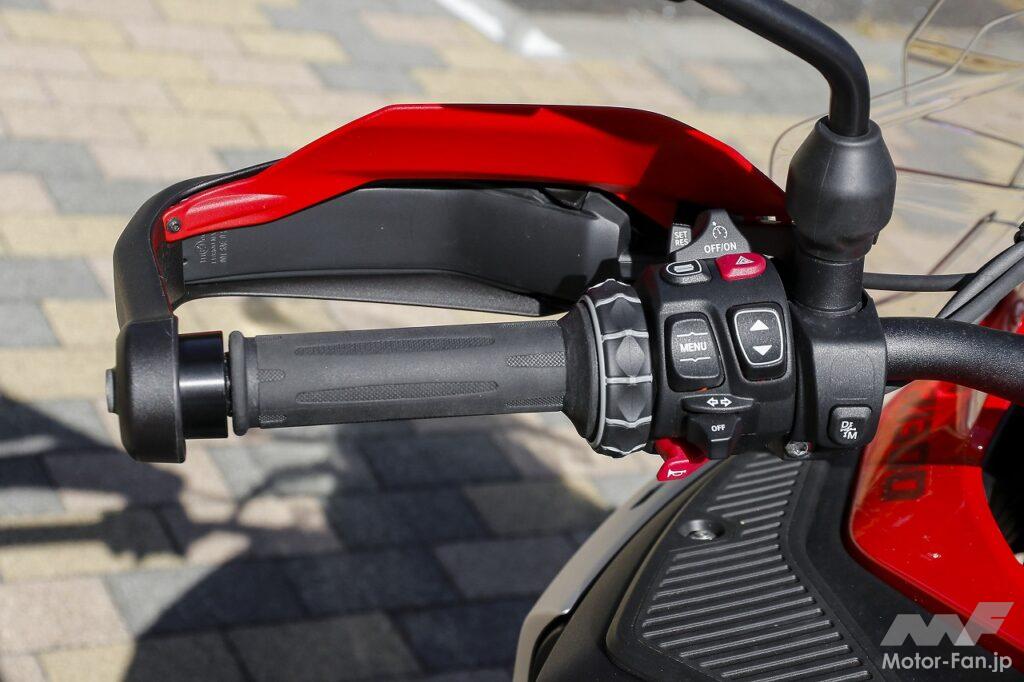
In addition to switches for the turn signals and horn, there is also an electric control switch. Naturally, the ASA model does not have a clutch lever.
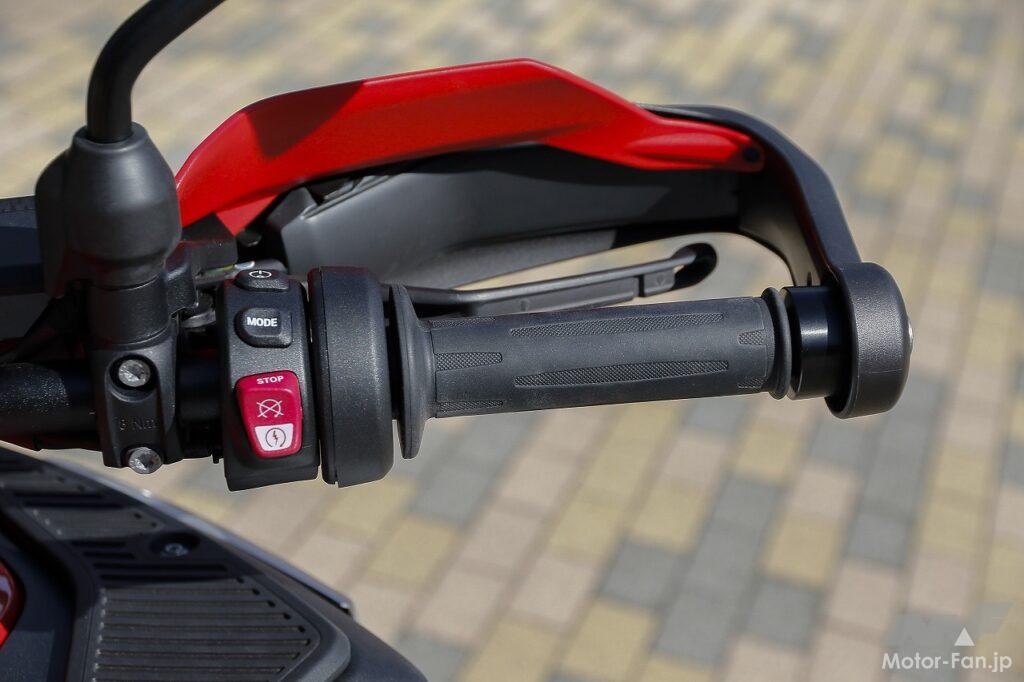
The riding mode switch is located on the right hand. Sturdy hand guards are also standard equipment.
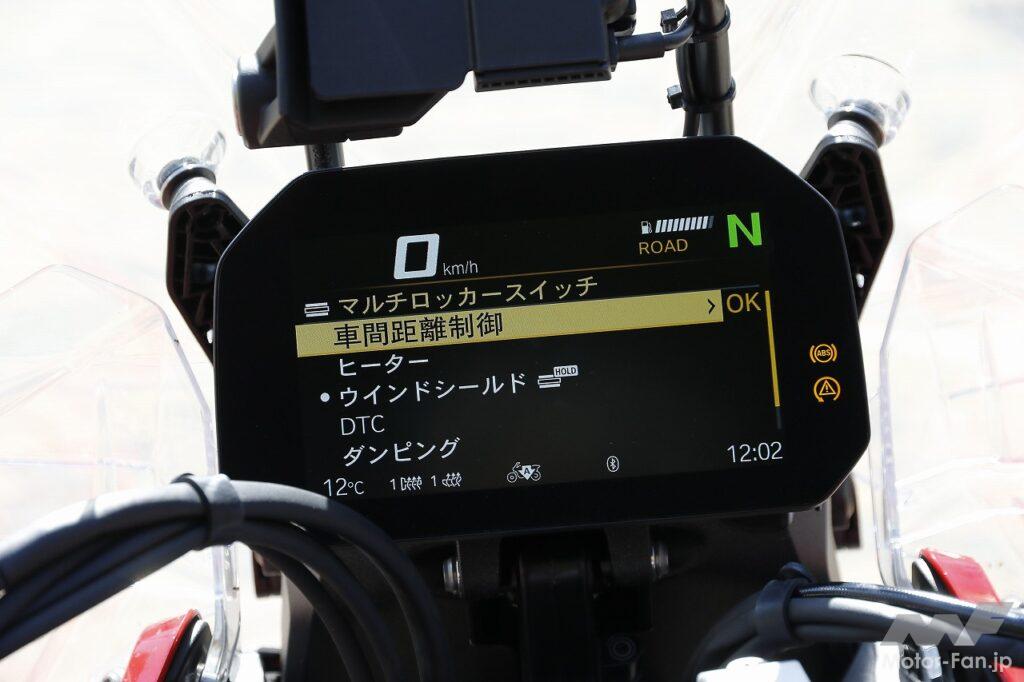
Check the display of each system and switch modes
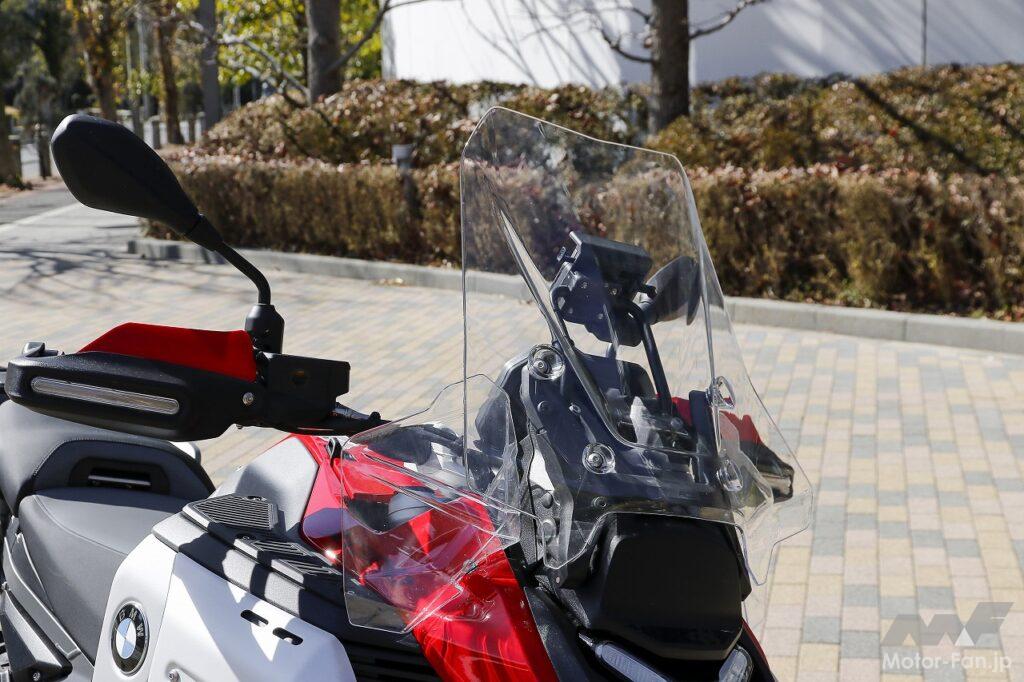
A large windscreen protects the rider from the wind
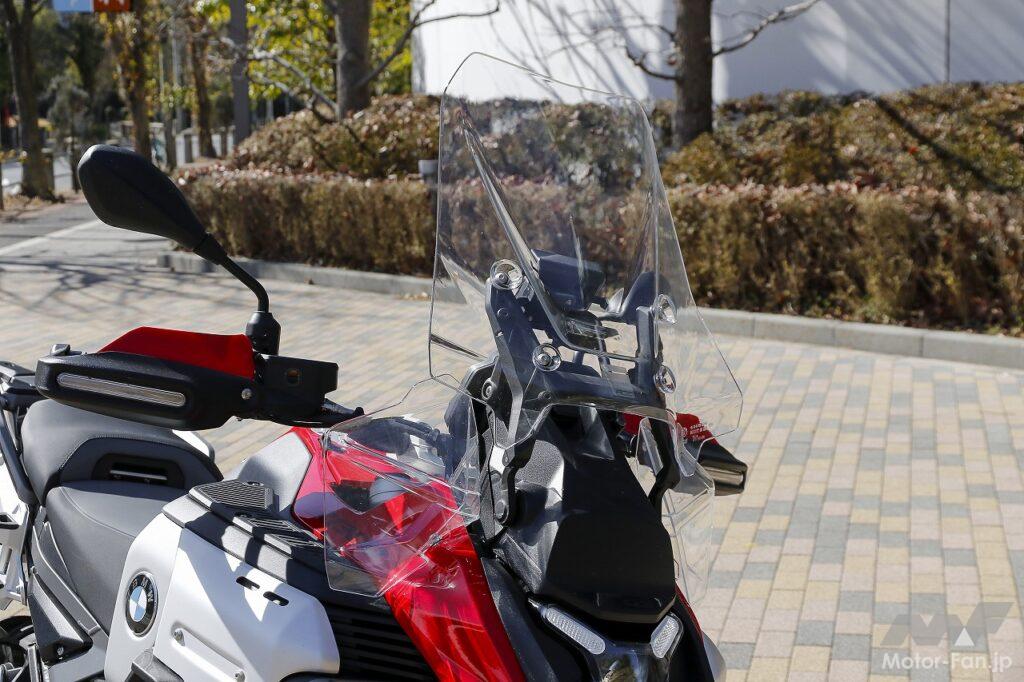
The windscreen is electrically adjustable in height.
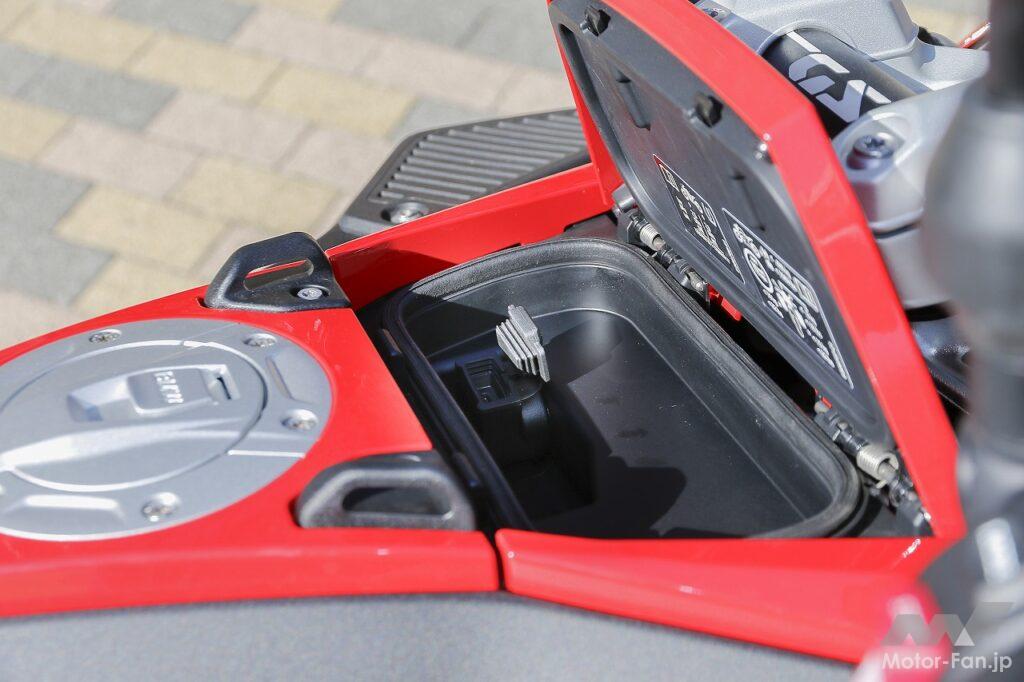
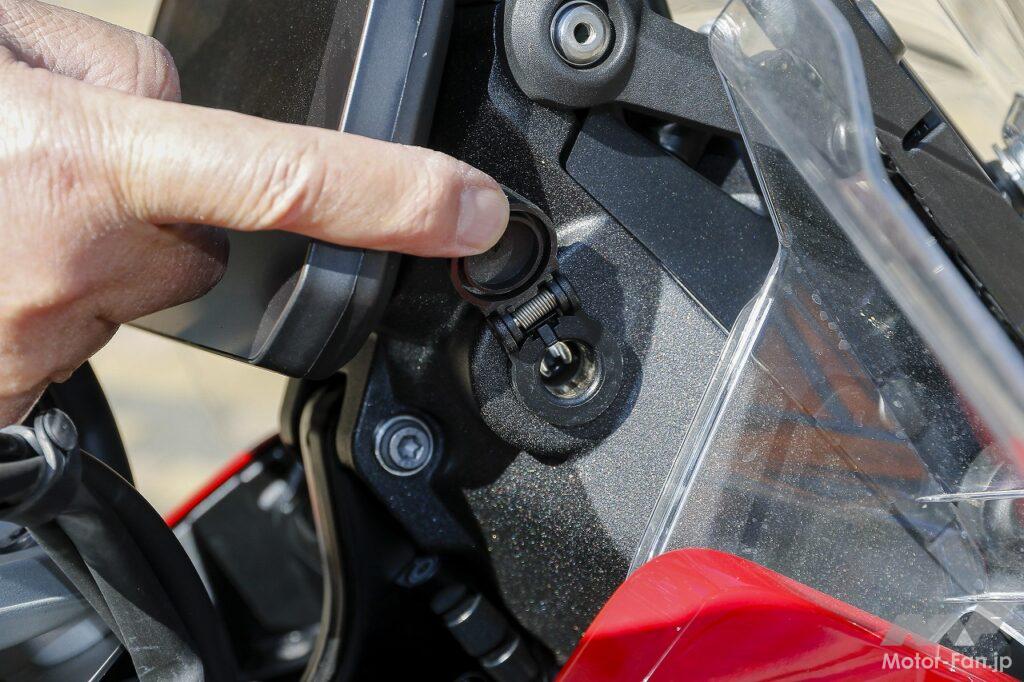
There is a small storage compartment and a USB power socket on the fuel tank.
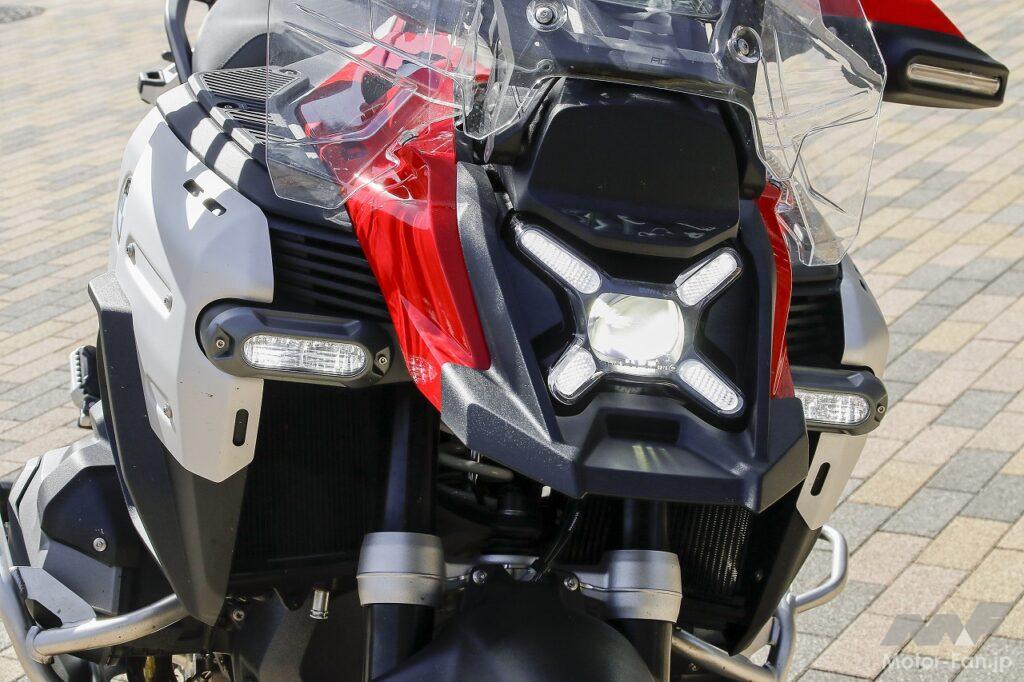
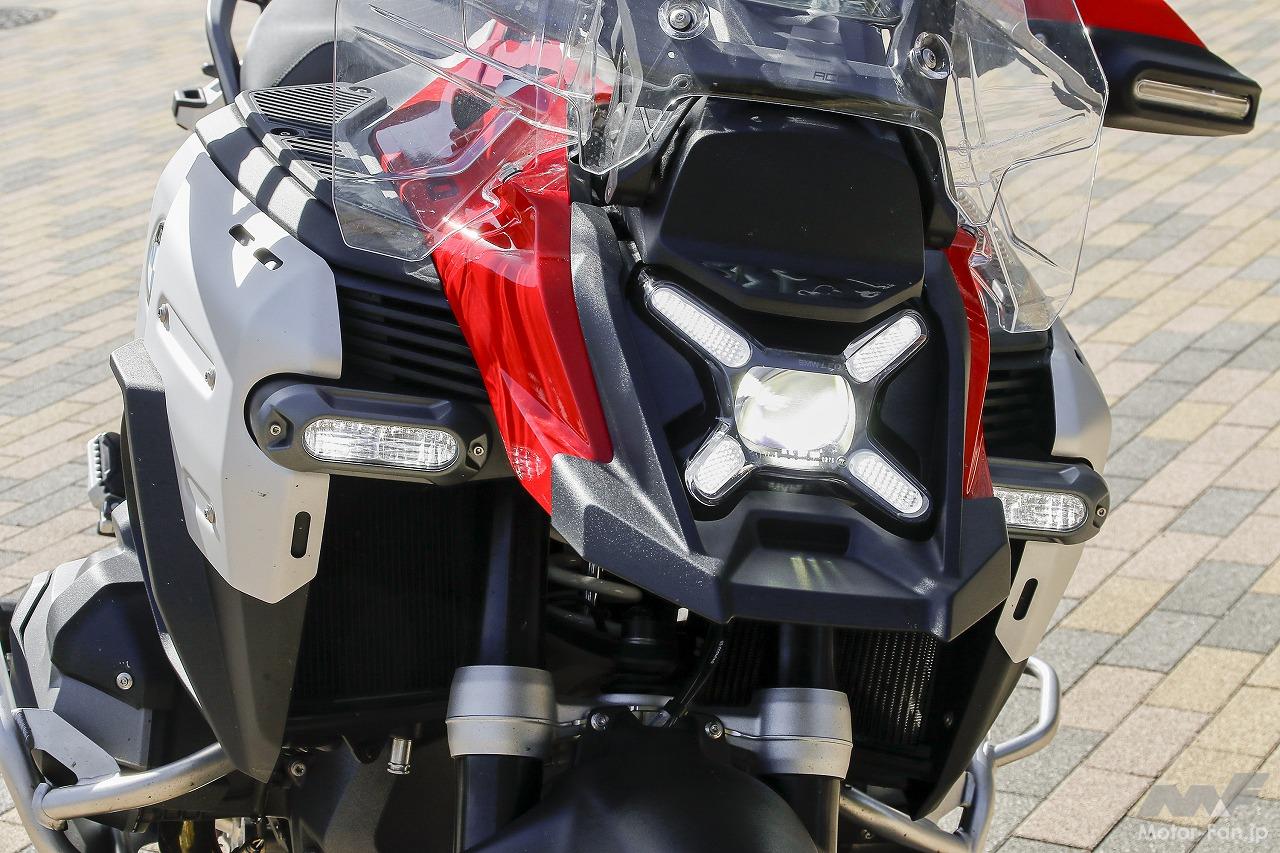
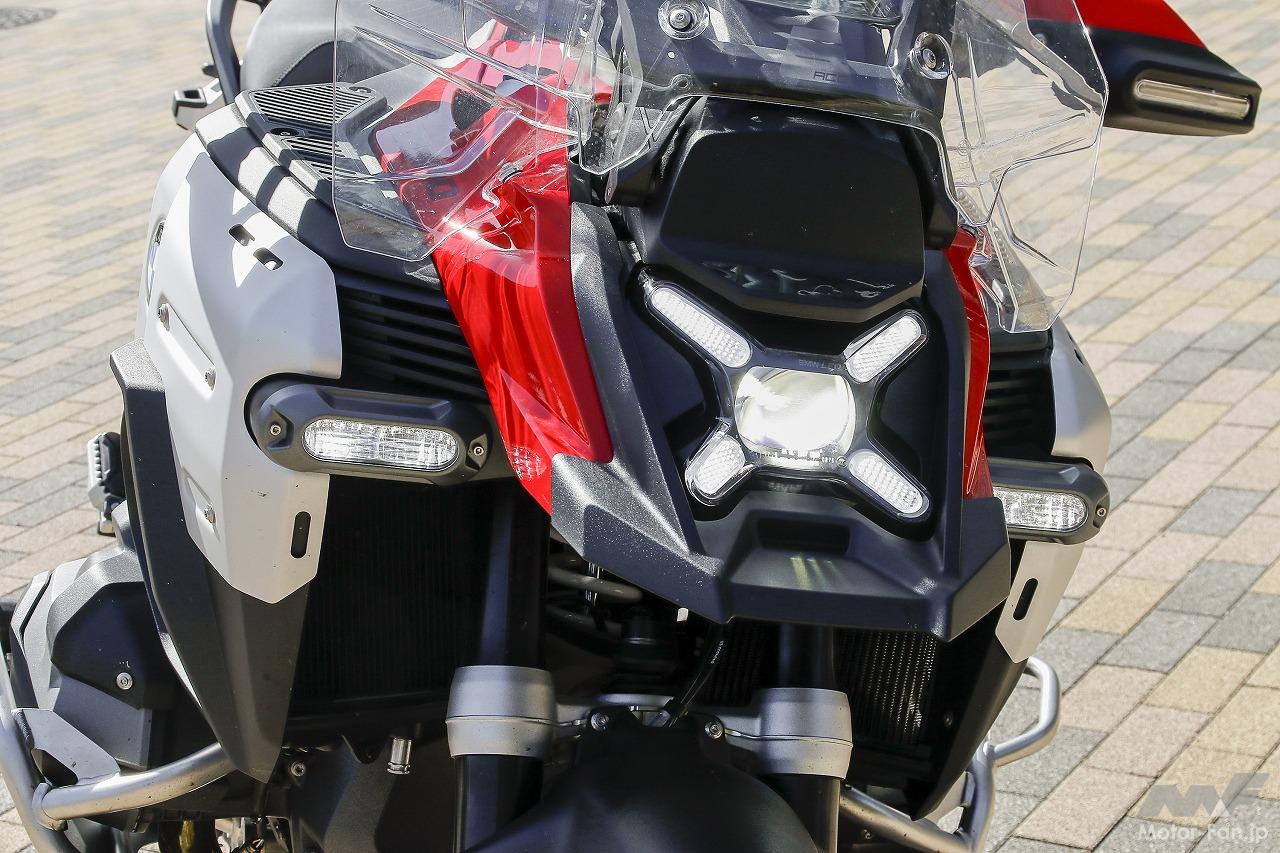
The uniquely designed LED headlights illuminate the direction of travel when cornering.
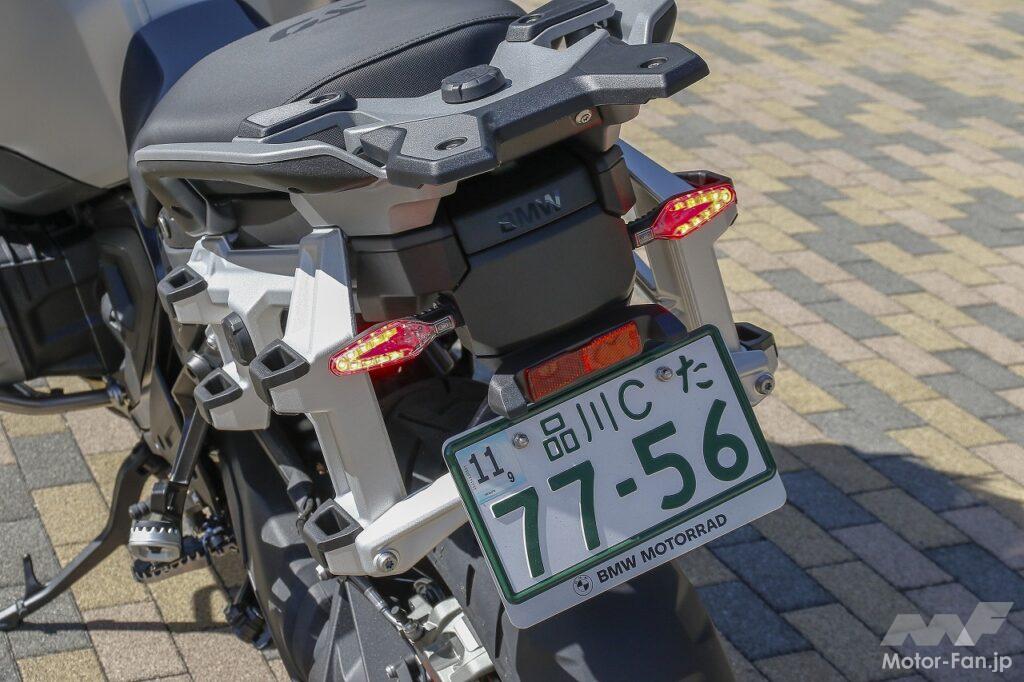
The tail lamp is a multi-type that also serves as a turn signal.
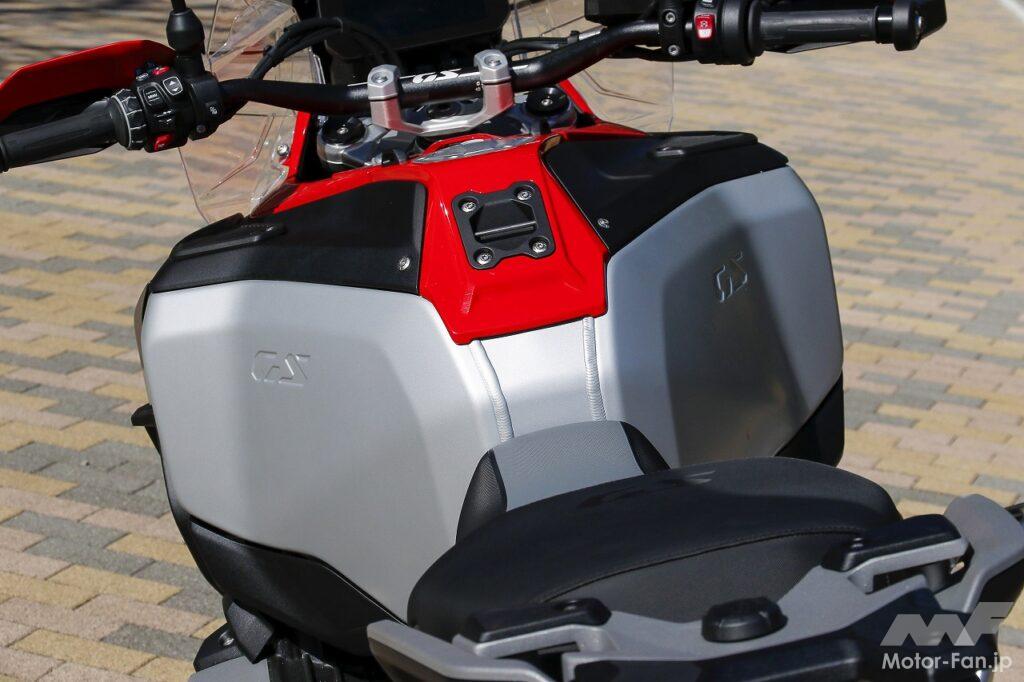
The fuel tank has a capacity of 30L and can be fitted with a genuine tank bag with one touch.
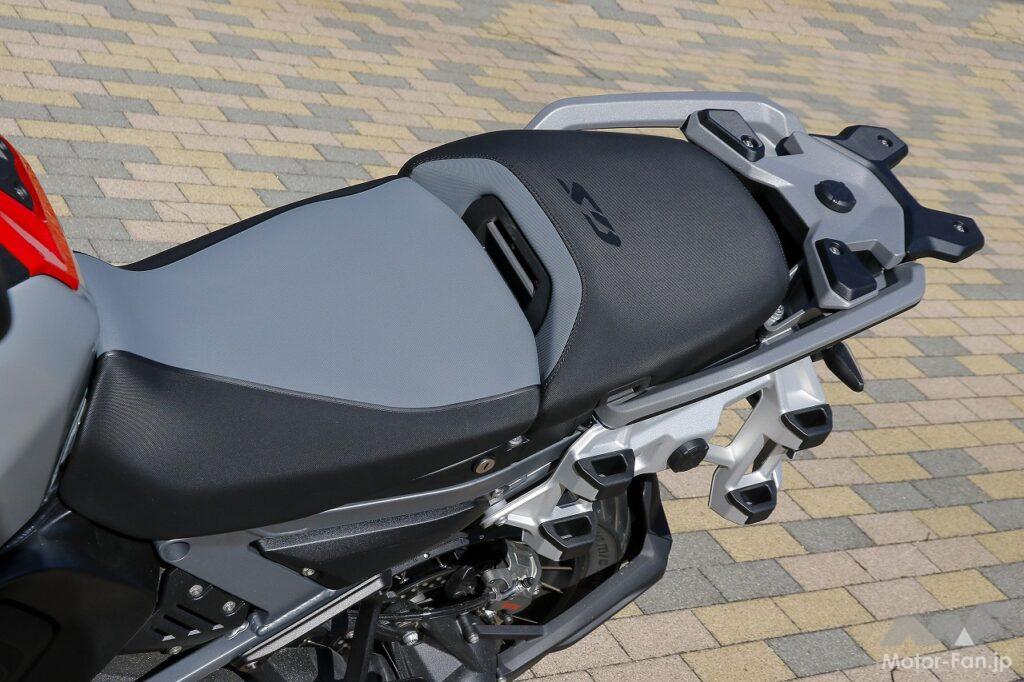
The seats are separate, and the front seats can be adjusted to two different heights. In addition, genuine pannier cases and a top box can be installed, and the top box tray can be moved to the left and right. There are also power sockets in the pannier and top box mounting areas.
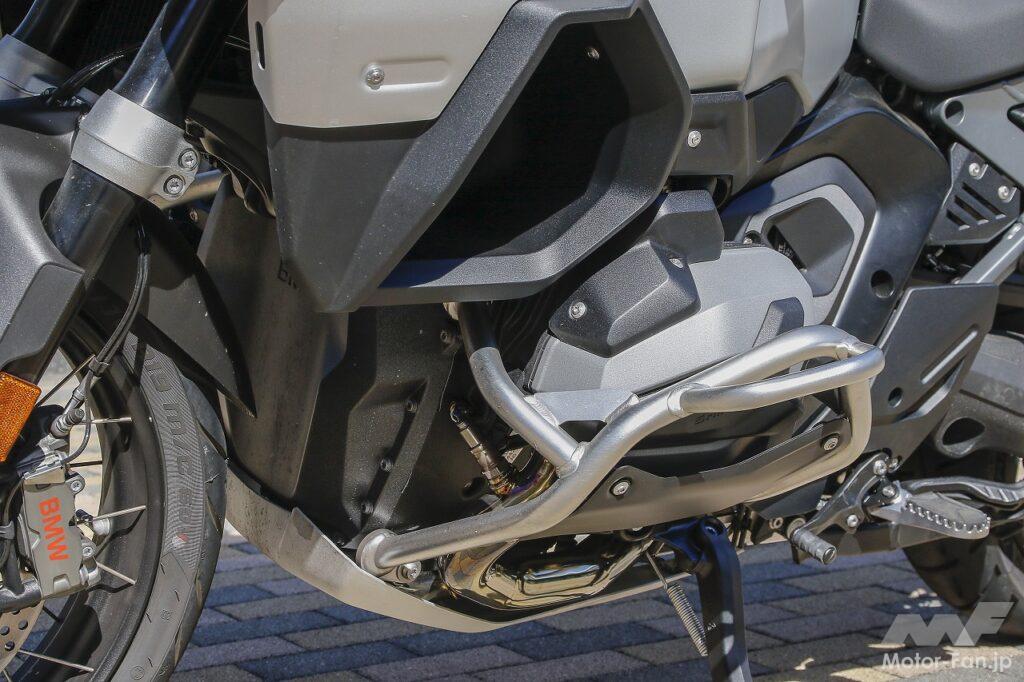
The boxer engine has been scaled up to 1300cc. Both power and torque have been increased. The Adventure model is equipped with a sturdy engine guard.
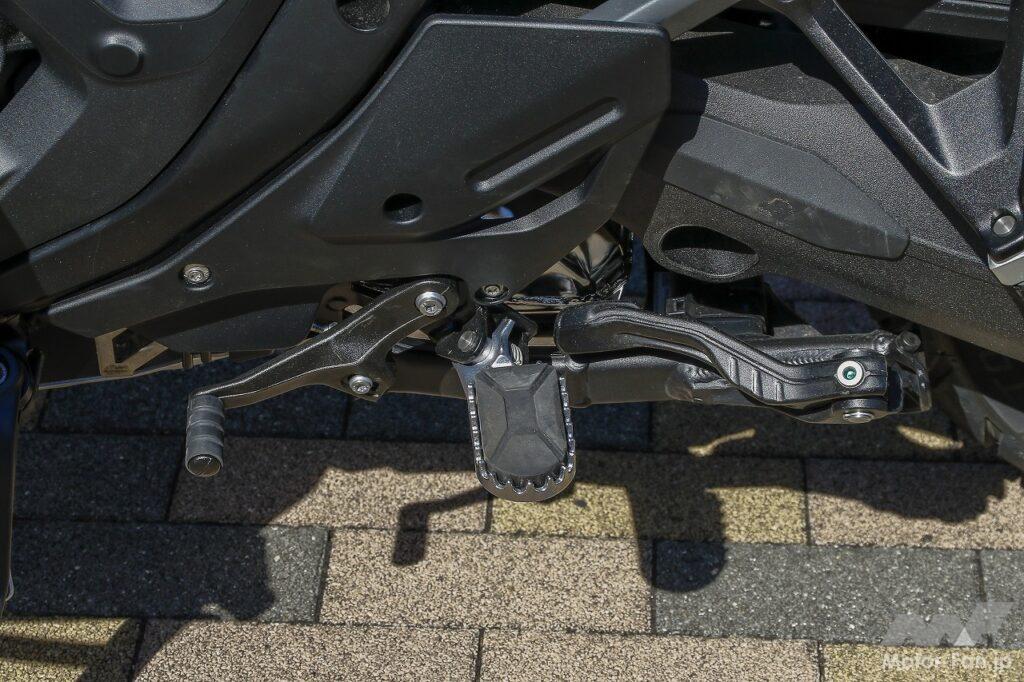
In addition to D mode, the ASA has an M mode. In M mode, gear changes are performed using the shift pedal.
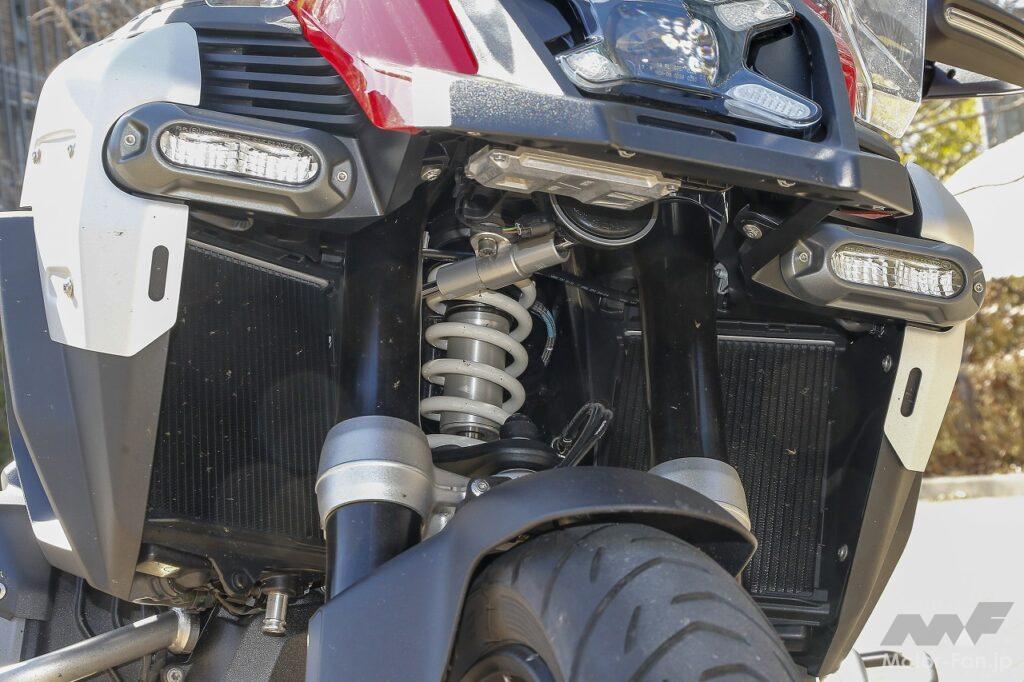
The front suspension has a stroke of 210 mm and is equipped with an EVO Telelever.
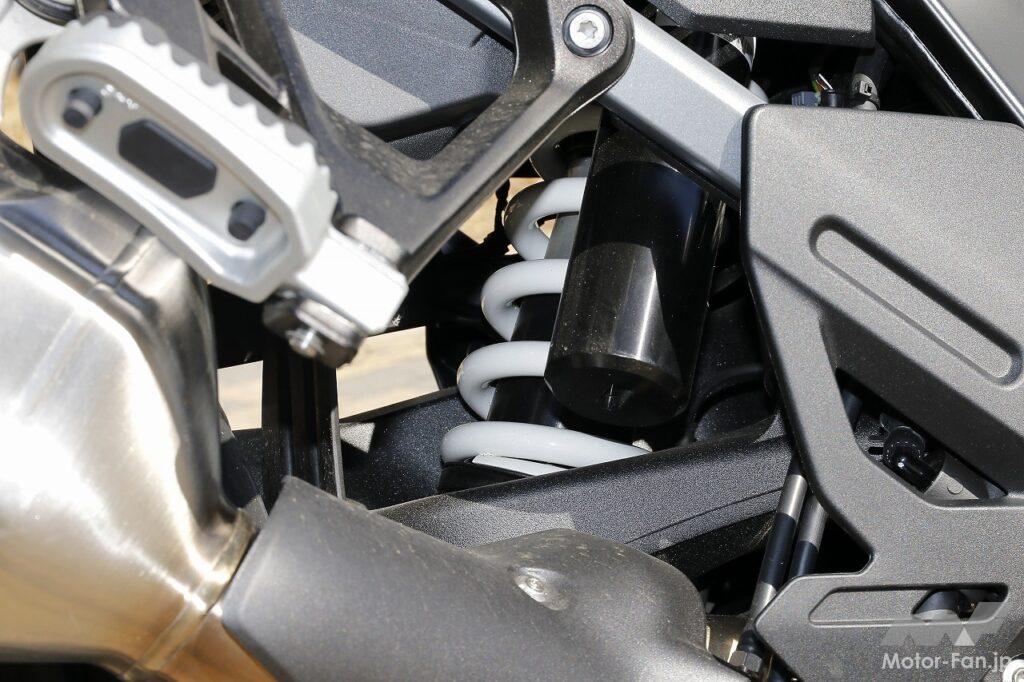
The rear suspension is an EVO Paralever with a stroke of 220 mm.
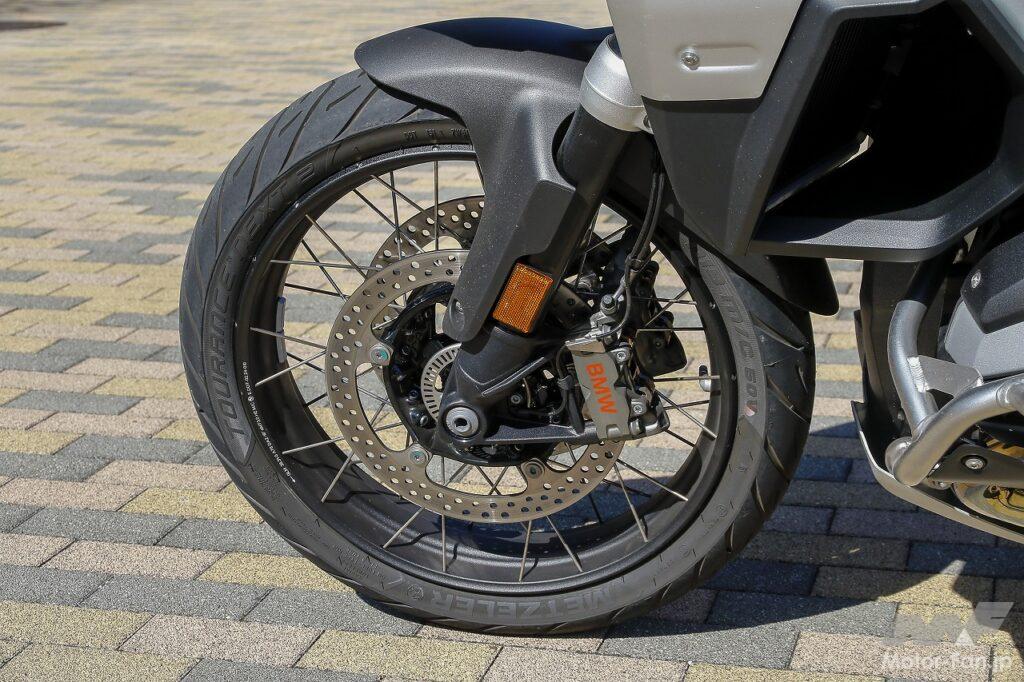
The front brakes are dual discs with Φ310mm rotors and 4-piston radial mount calipers. The tires are 120/70R19 tubeless.
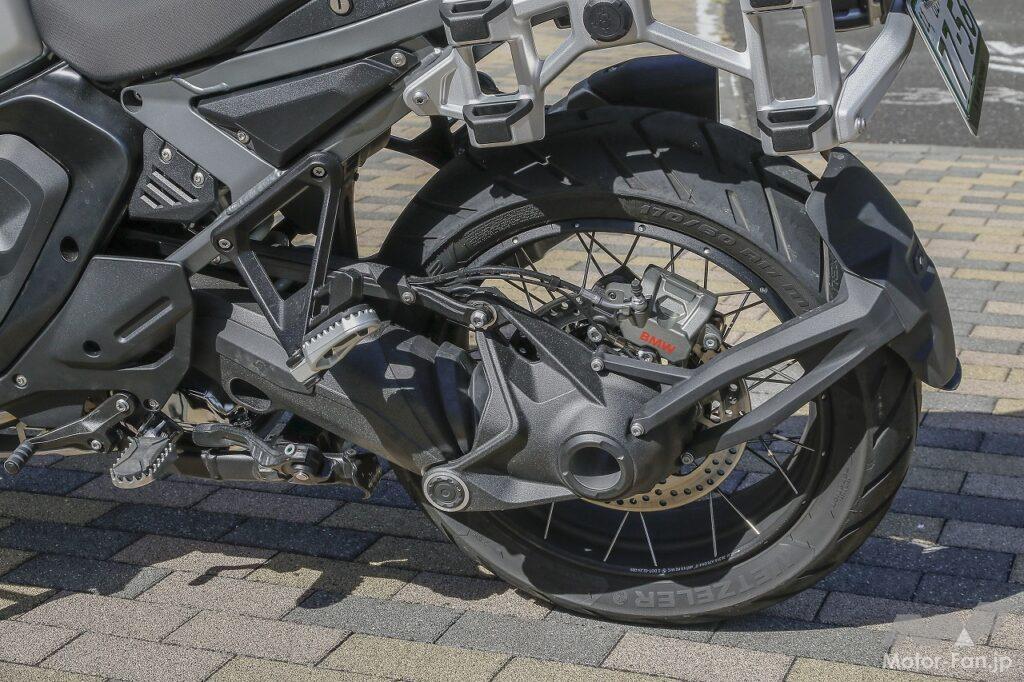
The rear brake is a Φ285mm rotor with a 2-piston floating caliper. The tire is 170/60R17 tubeless.
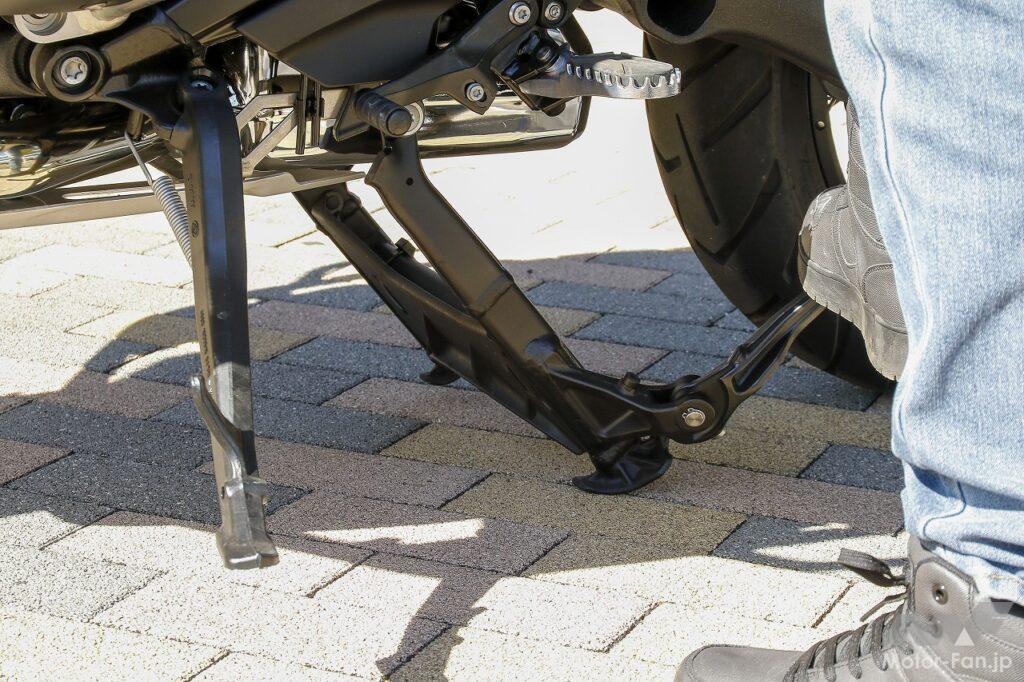
When you put the bike up on the center stand, the Comfort Lift Assist function activates, extending the front and rear suspensions in order, raising the vehicle height by 30 mm, making it easier to put the bike up on the center stand.
Main specifications
engine
Type: Air-cooled/water-cooled, 2-cylinder, 4-stroke boxer engine, DOHC, 2 differentials, variable intake camshaft control BMW ShiftCam.
Bore x stroke: 106.5 mm x 73 mm.
Displacement: 1,300 cc.
Maximum power: 107 kW (145 PS) at 7,750 rpm.
Maximum torque: 149 Nm at 6,500 rpm.
Compression ratio: 13.3:1. Ignition
/injection control: Electronically controlled intake pipe injection
. Emissions control: Closed-loop controlled three-way catalytic converter. Exhaust
gas standard: EURO 5.
Performance and fuel economy
Top speed: 220 km/h or more
(with case OA, top case OA, tank bag OA: 180 km/h)
Fuel consumption per litre according to WMTC (with one occupant): 20.4 km/L
CO2 emissions according to WMTC: 113 g/km
Range according to WMTC: 612 km
Fuel type: Unleaded premium gasoline (high octane) (ethanol 15% or less, E15)
95 ROZ/RON
90 AKI
Electrical equipment
Alternator: Three-phase AC alternator, 650 W (rated output)
Battery: 12 V / 14 Ah, maintenance-free, AGM battery
Power Transmission
Clutch: Wet multi-plate clutch, anti-hopping
Transmission: Constant mesh 6-speed transmission built into the engine block
Drive system: Cardan shaft
Traction control: BMW Motorrad DTC
Body and suspension
Frame: Sheet metal shell frame (drive unit is used for load sharing), rear frame is die-cast aluminium
Front suspension: BMW Motorrad EVO-Telelever, central DSA shock absorber
Rear suspension: BMW Motorrad EVO-Paralever, cast aluminium single swingarm, continuous swingarm bearing axle, central DSA suspension strut
Suspension stroke, front/rear: 210 mm/220 mm
Wheelbase: 1,534 mm
Caster: 118.8 mm
Steering head angle: 63.8°
Wheels: Cross-spoke wheels
Rim (front): 3.00″ x 19″
Rim (rear): 4.50″ x 17″
Tires (front): 120/70 R 19
Tires (rear): 170/60 R 17
Brakes (front): Twin disc brakes (310 mm diameter), floating mounted disc brakes, 4-piston radial brake
caliper Rear brakes: Single disc brake (285 mm diameter), bolted to disc rim, 2 Piston floating caliper
ABS: BMW Motorrad Full Integral ABS Pro (bank angle optimized)
Dimensions/weight
Seat height, unladen: 820/840 – 850/870 mm (with Adaptive Height Control Comfort); 840/860 – 870/890 mm (with Adaptive Height Control);
Inner leg curve, unladen: 1,840 mm (stationary, with Adaptive Height Control Comfort); 1,880 mm (stationary, with Adaptive Height Control);
Fuel tank capacity: 30 L
; Fuel reserve: approx. 4 L;
Overall length: 2,280 mm;
Overall height: with windscreen high: 1,540 mm; with windscreen high and GS Sport: 1,560 mm; Overall width:
1,012 mm;
Permitted total weight: 485 kg;
Maximum payload (standard equipment): 217 kg
; Vehicle weight (DIN unladen, ready to drive, 90% full fuel tank, without options): 269 kg
1) Vehicle weight (value reported by the Ministry of Land, Infrastructure, Transport and Tourism in Japan, with 100% fuel): 284 kg
1) Measured in accordance with Directive VO (EU) 168/2013, including all operating fluids and standard equipment, with the tank filled to 90% or more.
Color & Equipment
Color options
R 1300 GS Adventure Touring:
Racing Red,
Racing Blue Metallic,
Black Storm Metallic,
Aurelius Green Metallic Matte
R 1300 GS Adventure Touring AUTOMATED SHIFT ASSISTANT:
Racing Red,
Racing Blue Metallic
, Black Storm Metallic,
Aurelius Green Metallic Matte
R 1300 GS Adventure GS Sport:
Racing Blue Metallic
Equipment
Standard
engine and body
- Shift Cam
- Anti-hopping clutch
- Shaft drive
- Lithium-ion battery
- Steering damper
- Adjustable handbrake/clutch lever
- Adjustable electric high windscreen
- Navigation holder
- Engine Protection Bar
- Engine underguard
- Main stand
- Luggage rack
- Pannier case holder
- central locking system
- Chrome exhaust pipe
- Cross-spoke wheels (tubeless tires)
brake
- Full integral ABS Pro
- Sports Brake Caliper
suspension
- EVO Telelever
- Paralever
- DSA (Dynamic Suspension Adjustment)
Electronic equipment
- On-board computer
- 6.5-inch TFT LCD color display
- Connectivity
- Multi-Controller
- Keyless Ride
- Immobilizer
- 12V socket
- Accessory case with USB-A port
- Heated grips
- Heated seats (rider and passenger)
- tire pressure sensor
- Dynamic brake lights
- Hill Start Control
- DTC (Dynamic Traction Control)
- Dynamic Brake Control
- MSR (Dynamic Engine Brake Control)
- Riding Mode Pro
- Cruise control
- Riding Assist
- *Active Cruise Control
- *Front collision warning
- *Lane change warning
- Headlight Pro
- LED Daytime Riding Lights
- LED turn indicators
- Comfort turn indicators
- Multifunctional rear indicators
- LED fog lights
R 1300 GS Adventure Touring Equipment (equipped with the following in addition to standard equipment)
Adaptive Vehicle Height Control Comfort
- Adaptive vehicle height control: Seat height (suspension length) -20mm
Gearshift Assistant Pro
Hand protectors with LED turn signals
R 1300 GS Adventure Touring AUTOMATED SHIFT ASSISTANT equipment (equipped with the following in addition to standard equipment)
Adaptive Vehicle Height Control Comfort
- Adaptive vehicle height control: Seat height (suspension length) -20mm
Automated shift assistant (clutch lever-less)
Hand protectors with LED turn signals
R 1300 GS Adventure GS sports equipment (equipped with the following in addition to standard equipment)
Adaptive Vehicle Height Control
Enduro Package Pro
- Handlebar risers
- Sports hand lever (short type)
- Enduro Footrests
- Handlebar Protection
- Separate turn signals
Hand protectors
Aurelius Green Metallic Matte additional equipment for R 1300 GS Adventure Touring and Touring AUTOMATED SHIFT ASSISTANT
Style Option 719
Billet Pack Shadow
- Fuel tank lid
- Rider Footpegs
- Foot gear shift and brake lever
- Hand brake and clutch levers
- Ignition coil cover
*3-year warranty, ETC 2.0 onboard unit is standard equipment on all vehicles.