
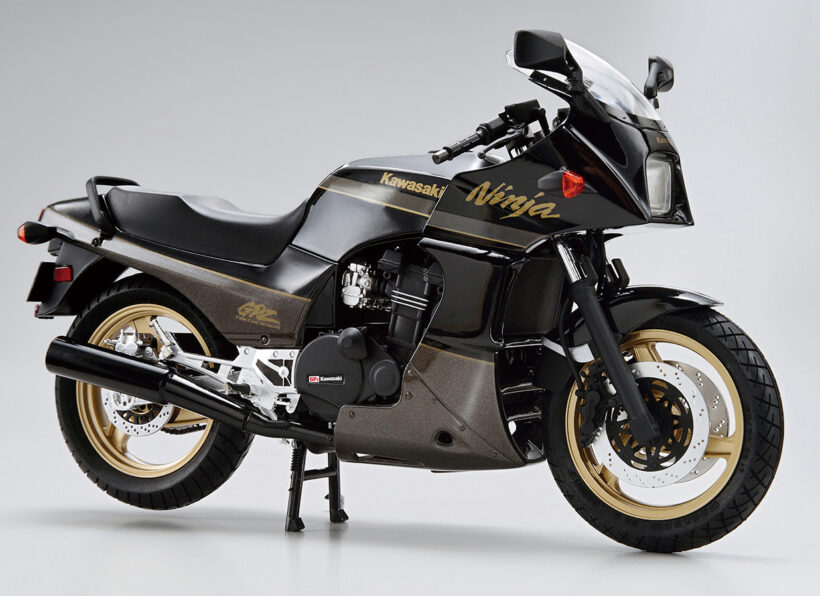

Aoshima The Bike No. 6 1/12 Kawasaki ZX900R GPZ900R Ninja ’02… 3,300 yen (tax included) Scheduled for release in May 2026
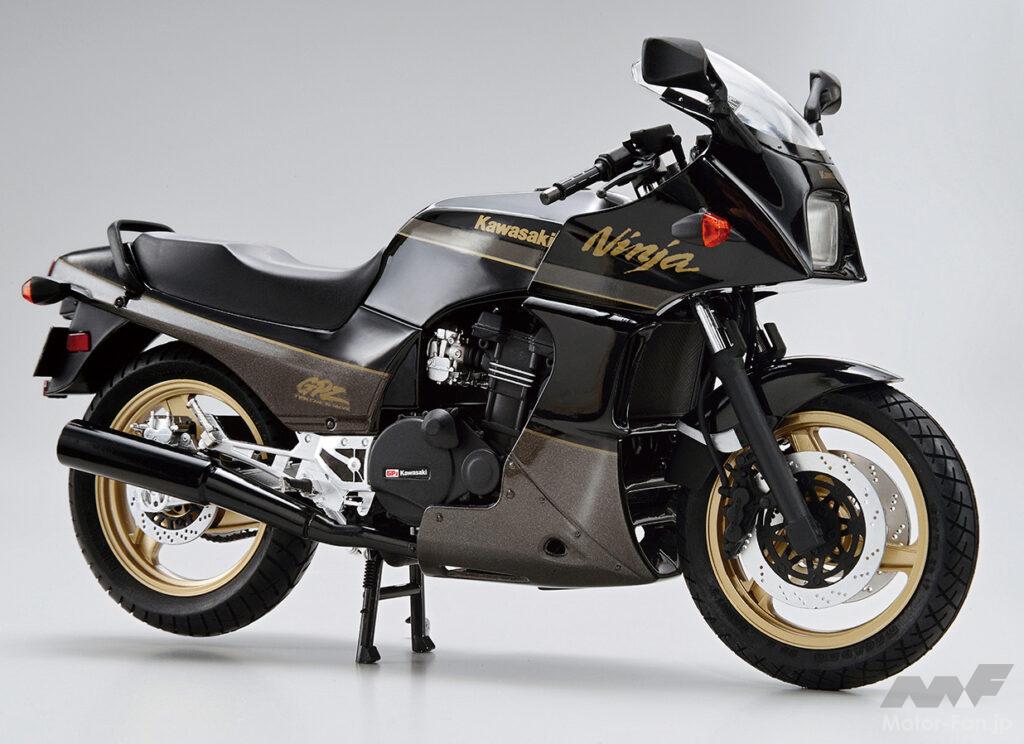
The image is a prototype and may differ from the actual product.
ADVERTISEMENT
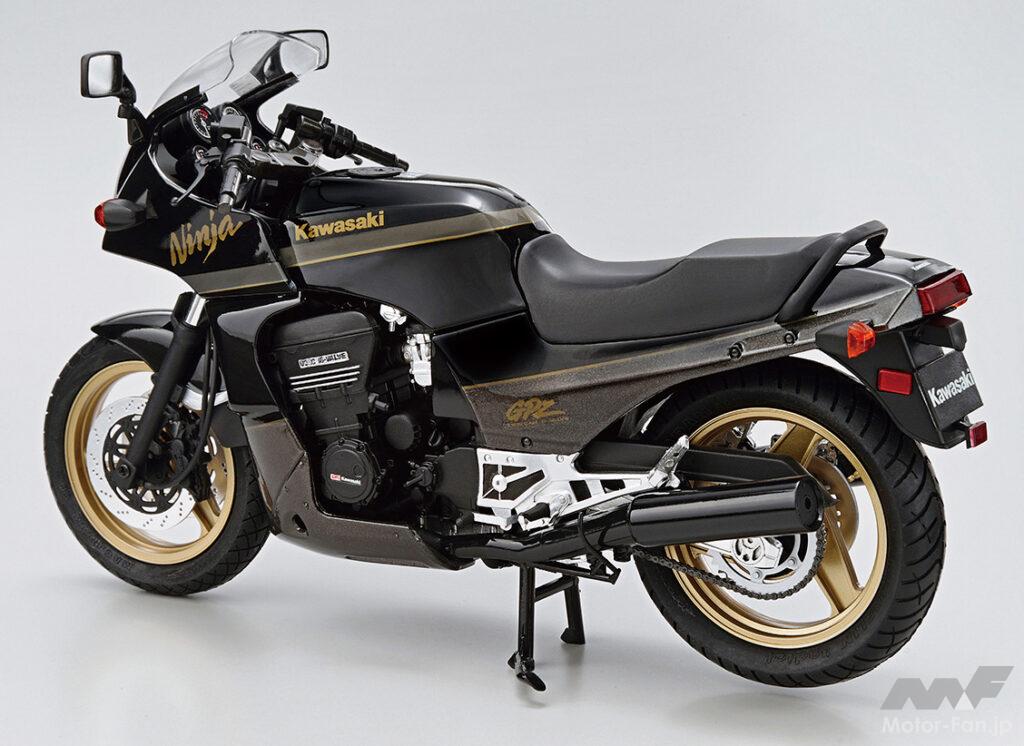
The image is a prototype and may differ from the actual product.
ADVERTISEMENT
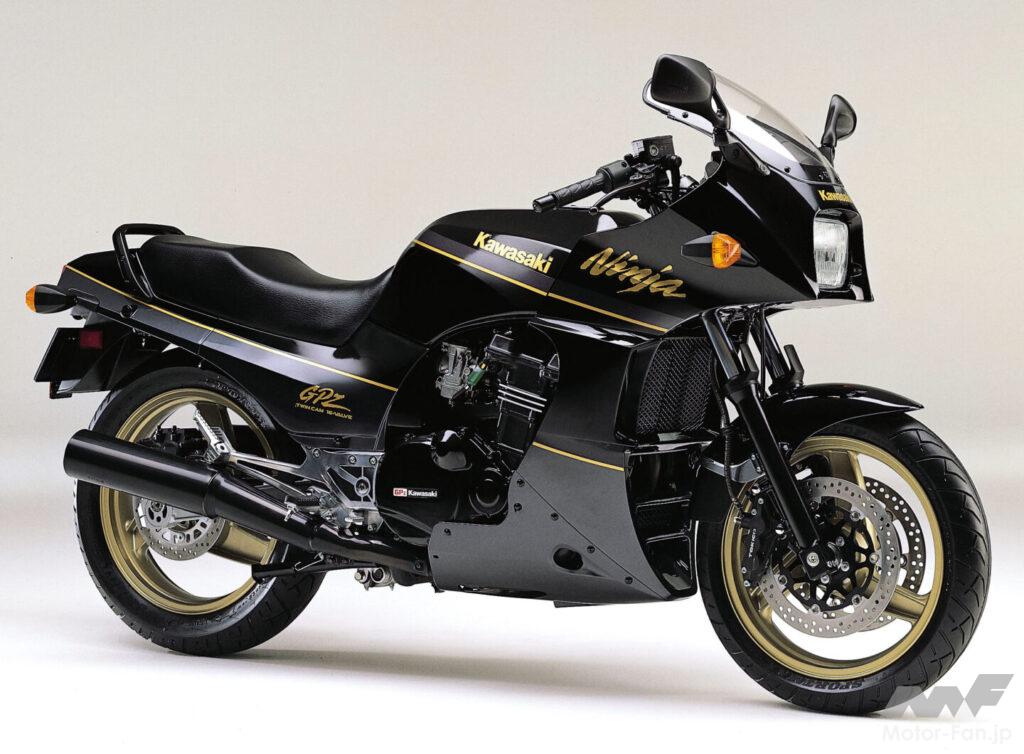
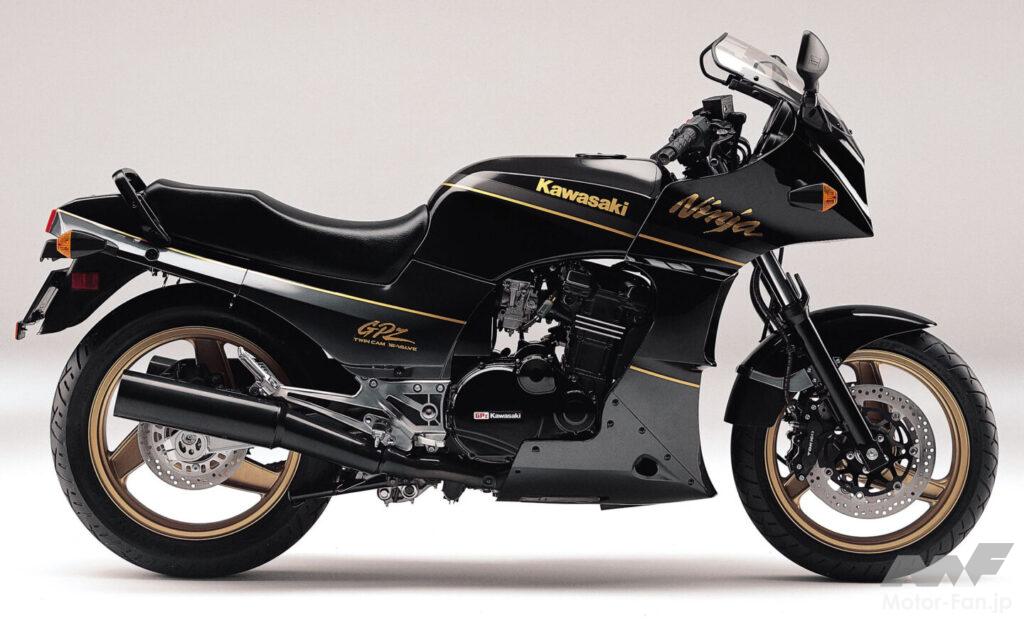
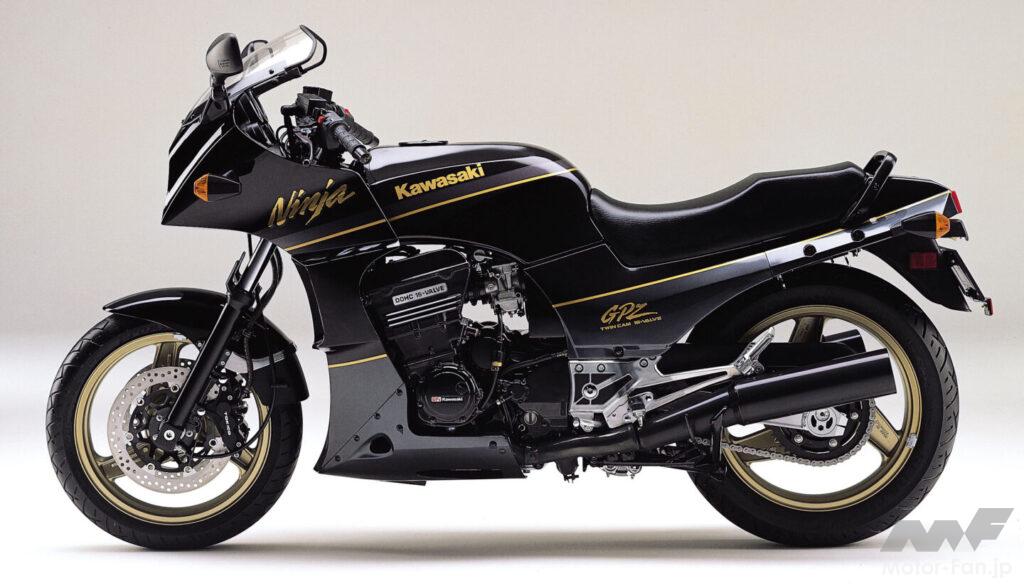
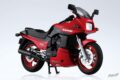
A real Kawasaki GPZ900R (A15/2002 model).
The Kawasaki GPZ900R Ninja was unveiled at the Paris Motor Show in France in 1983 and shocked the world. Also known as the first Ninja, it featured a diamond frame made of high-tensile steel pipes and a completely new, compact, water-cooled, four-stroke, in-line, four-cylinder, DOHC, four-valve, 908cc engine that used a side cam chain system. The Ninja evolved through various improvements and was sold for a long time until production ceased in 2003, making it a legendary, long-selling motorcycle that will go down in motorcycle history.
The photo shows a 2002 model called the “A15,” reproduced in a 1/12 scale plastic model. Every detail has been recreated, including the 17-inch front wheel, front forks fitted with inner tube guards, and opposed 6-piston front calipers. Wires and hoses are made of realistic vinyl pipes. The stem and axle use metal screws, and are designed to be easy to assemble while still maintaining strength.
Product specifications
Brand: AOSHIMA
Specifications: Plastic model
Series: The Bike No. 6
Release date: Scheduled for release in May 2026
Scale: 1/12
Price: 3,300 yen (including 10% consumption tax)
Publisher: Aoshima Bunka Kyozai Co., Ltd.
Official product website (pre-order) https://www.aoshima-bk.co.jp/product/4905083205082/
<<Note>>
*The photo is a prototype. Specifications may differ from the actual product.
Kawasaki’s first Ninja, GPZ900R
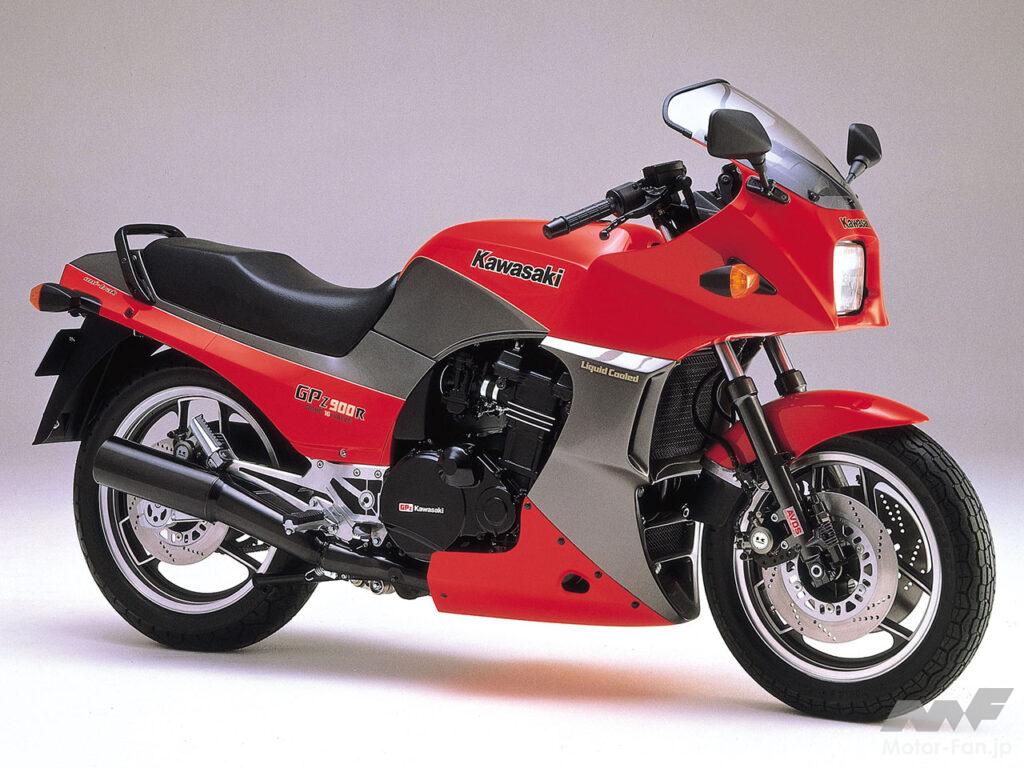
The first generation Kawasaki GPZ900R (A1) was released in 1984.
The name “Ninja” that is currently used on Kawasaki motorcycles was first given to the GPZ900R for the North American market. In other words, the first Ninja was the GPZ900R shown in the photo.
Kawasaki put the future of its motorcycle division on the line to create the next best model after the Z1, and the GPZ900R, developed with the aim of becoming the world’s fastest machine, made a stunning debut as an overseas model in 1984.
The water-cooled, 4-stroke, in-line 4-cylinder, DOHC, 4-valve, 908cc engine produced 115 horsepower, the highest output at the time. The bike’s driving performance was undoubtedly the “best in the world,” and it quickly made the Ninja name known around the world.
The GPZ900R appeared in the 1986 film “Top Gun” starring Tom Cruise as the beloved bike of the main character, Maverick. This spurred the popularity of the Ninja not only in Japan but on a global scale, and the 750cc version, the GPZ750R, and the 400cc version, the GPZ400R, were released in Japan, making the Ninja series an explosive hit.
The GPZ900R Ninja became popular thanks to the Hollywood movie “Top Gun” starring Tom Cruise.
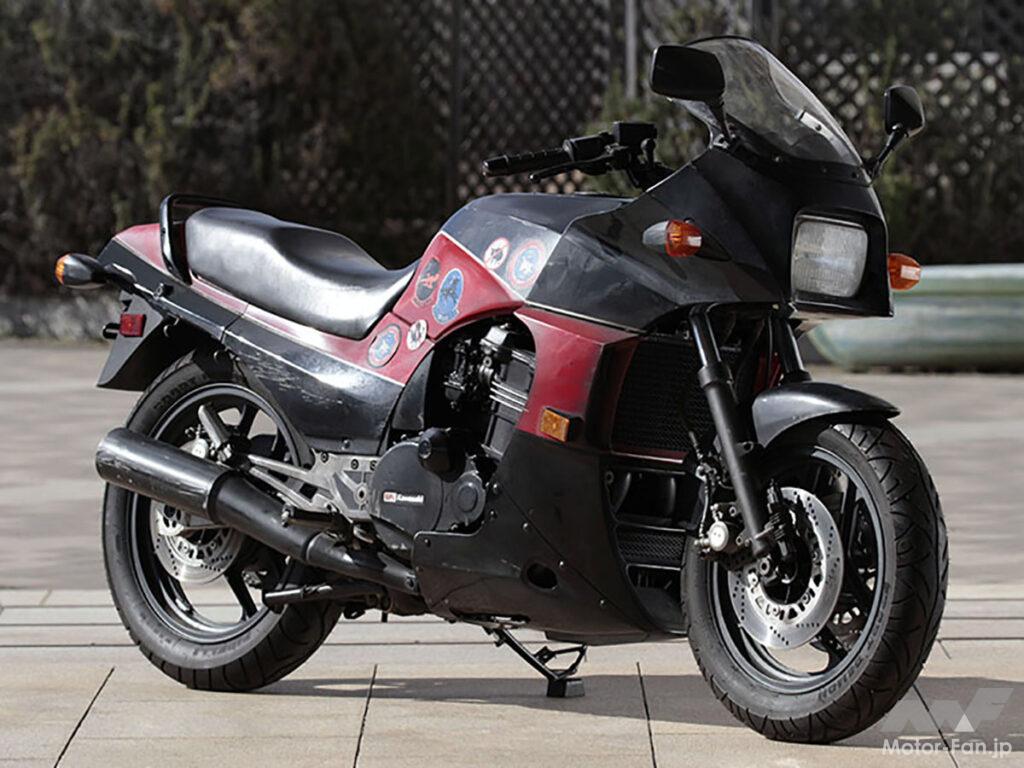
The Kawasaki GPZ900R Ninja’s popularity soared after it appeared in the 1986 American film “Top Gun,” starring Tom Cruise. The photo shows the Kawasaki GPZ900R Ninja used in the film “Top Gun: Maverick” (to be released in 2023), which was exhibited at the Kawasaki booth at EICMA 2022. The color is original to the film. Due to licensing reasons, the KAWASAKI and GPZ900R Ninja logos have been removed. The vehicle in the photo is also characterized by its paintwork, which creates an “aged” look.
“Top Gun,” a Hollywood movie starring Tom Cruise, was released in 1986. This film, which was Cruise’s breakthrough role, was a huge hit not only in the United States but also in Japan. It’s a well-known story that many riders with medium-sized motorcycle licenses (now standard motorcycle licenses) wanted to ride a Ninja, so they attempted to obtain a license with a lifted license (at the time, there was no system for obtaining it at an authorized driving school, and the only option was a one-shot test at a testing center), which was mocked as being “more difficult than the bar exam” and “harassing to motorcyclists.”
The 1990 model (ZX900-A7) underwent its first major minor change. The changes were mainly to the suspension, with the front wheels being increased in diameter from 16-inch to 17-inch. The front and rear wheel designs, front suspension (tube diameter increased from Φ38 to Φ41), mirror shape, meter, etc. were also changed. In addition, the body dimensions, weight, tire width, maximum power, and maximum torque were also revamped.
In 1990, the voluntary 750cc engine displacement limit was abolished in Japan. The GPZ900R was released in Japan as Kawasaki’s first over-750cc model starting with the 1991 model (A8) (the Japanese model was released as a reduced-power version of the overseas model).
Since its debut in 1984, the GPZ900R (ZX900-A1 to ZX900-A16) has undergone both full and minor changes and has steadily evolved. This long-selling model was discontinued with the 2003 model (A16).
Kawasaki GPZ900R A15 (2002 model).
ADVERTISEMENT
ADVERTISEMENT
 The original Kawasaki Ninja! A 1/12 scale plastic model of the GPZ900R Ninja (ZX900-A7) with 17-inch front wheels [AOSHIMA] | Motor-Fan is a media platform that distributes automotive-related articles.
The Bike No.49 1/12 Kawasaki ZX900A GPZ900R Ninja ’90 with custom parts… 3,960 yen (tax included) 1990 model Kawasaki GPZ900R Ninja (ZX900-A7 […]
 I went to a meeting where 100 GPZ900Rs and GPZ750Rs gathered. / Kawasaki | Motor-Fan Bikes
There is a public group on Facebook that seems to claim that the GPZ900R is the true Ninja (although apparently that’s not actually the case), and it has attracted a whopping 2,281 participants (as of May 29, 2019). We went undercover to cover the Northern Kanto Meeting, so we’ll bring you our report! Date and time: Sunday, April 28th Location: Omuro Park South Exit Parking Lot, Maebashi City, Gunma Prefecture Organizers: The Association that Calls Only the GPZ900R Ninjas, Maebashi Branch/Tochigi Branch TEXT ● Oya Den
 Doremi Collection Shows How to Transform a Kawasaki Z900RS into a Ninja GPZ900R! | Motor-Fan, a media platform that distributes automotive-related articles
Doremi Collection Z900RS GPZ900R Ninja Style Based on the popular retro sports car Kawasaki Z900RS, this model recreates the legendary Kawasaki GPZ900R, also known as the “first generation Ninja.”










![[DAYTONA] Unique insulation technology prevents cold feet! High-performance touring and camping air mattress for comfortable](https://motopeek.com/wp-content/uploads/2025/10/4628-1761685622112.jpg)