
![A thorough look at the Yamaha parallel-twin Fantic Caballero Scrambler 700 with an old friend: a 1000km test ride [2/3]](https://motopeek.com/wp-content/uploads/2025/02/3645-1760874246482.webp)

Fantic Caballero Scrambler 700…1,750,000 yen
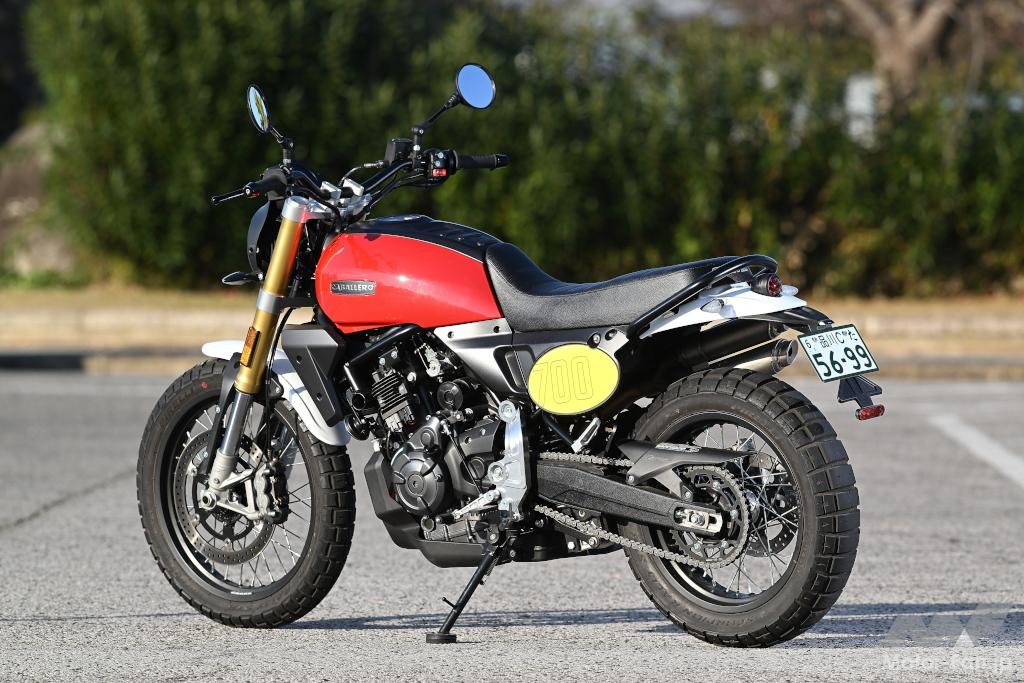
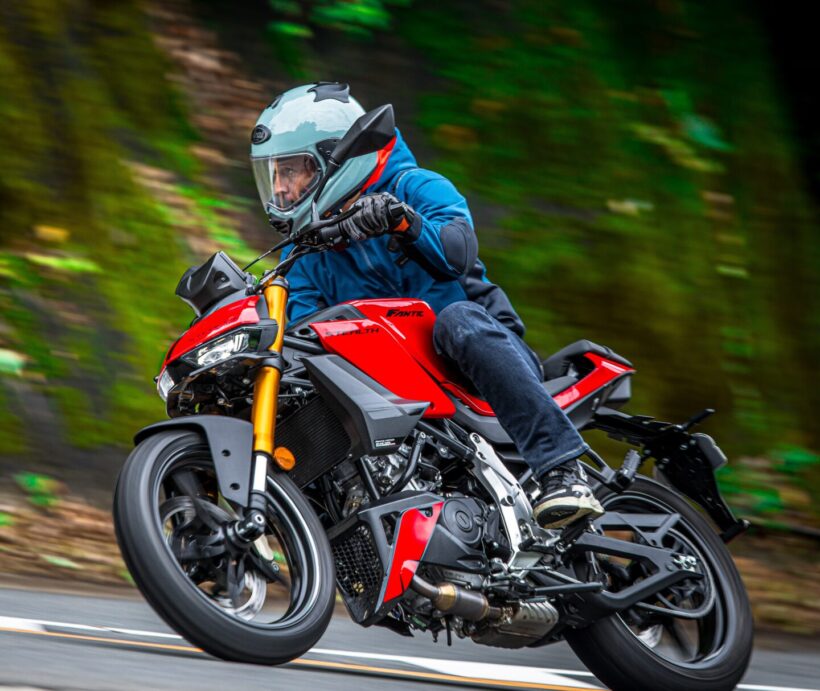
Judging from the name and looks, many people would probably imagine the Scrambler, which was popular in the 1960s and 1970s, but the ride feel of this bike is modern and it has very little of the feel of a vintage bike.
I asked four fellow touring buddies to take a test ride.
As I mentioned at the end of the first article, in the second I intend to write about the specific appeal of the Caballero Scrambler 700, but this time I’m going to change things up a bit and provide my impressions based mainly on the words of my long-time touring buddies, Kiyomoto-san, Motomura-san, Hirakawa-san and Ikenoue-san. Of course, sub-lending the PR vehicle is strictly prohibited, so permission had been given in advance by the importer’s motorist to allow any riders other than myself to ride, and the test ride method was for each of us to take turns with me mid-way through the tour, each getting about an hour for each test ride.
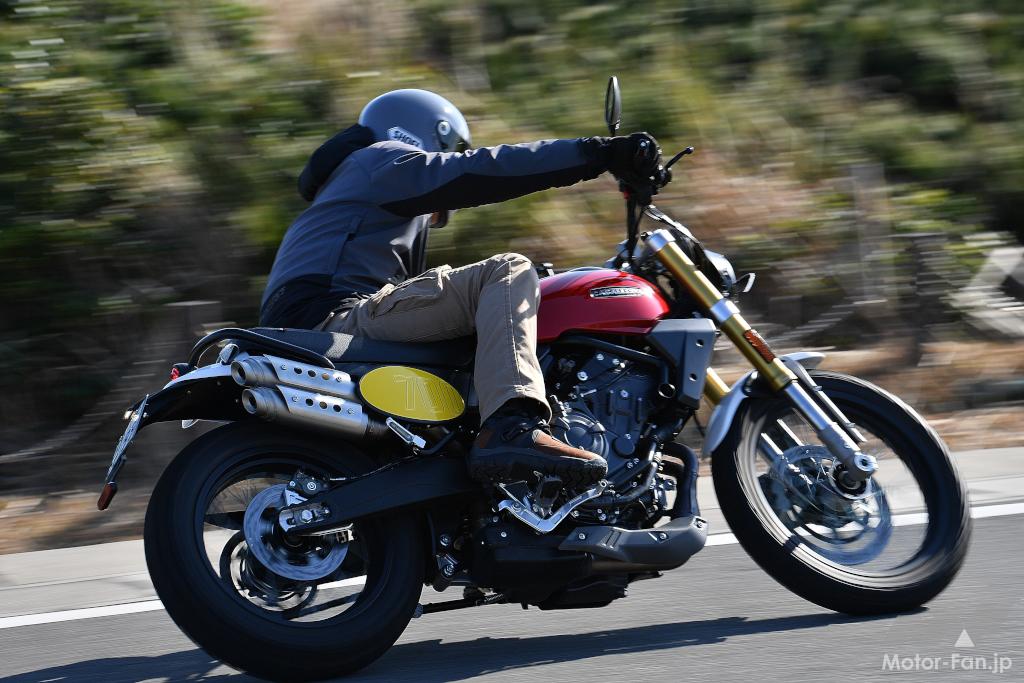
Incidentally, my four touring companions and I originally became friends through our shared Sportster connection and have been riding together for over 20 years, but unlike Motomura-san, Hirakawa-san (and me), who still stick to American V-twins, Kiyomoto-san has recently chosen the Yamaha MT-07, and Ikenoue-san the Suzuki SV650 and Royal Enfield Himalayan. Interestingly, opinions on the Caballero Scrambler 700 are still divided between those who love Sportsters and those who don’t.
Kiyomoto and Ikenoue gave high praise
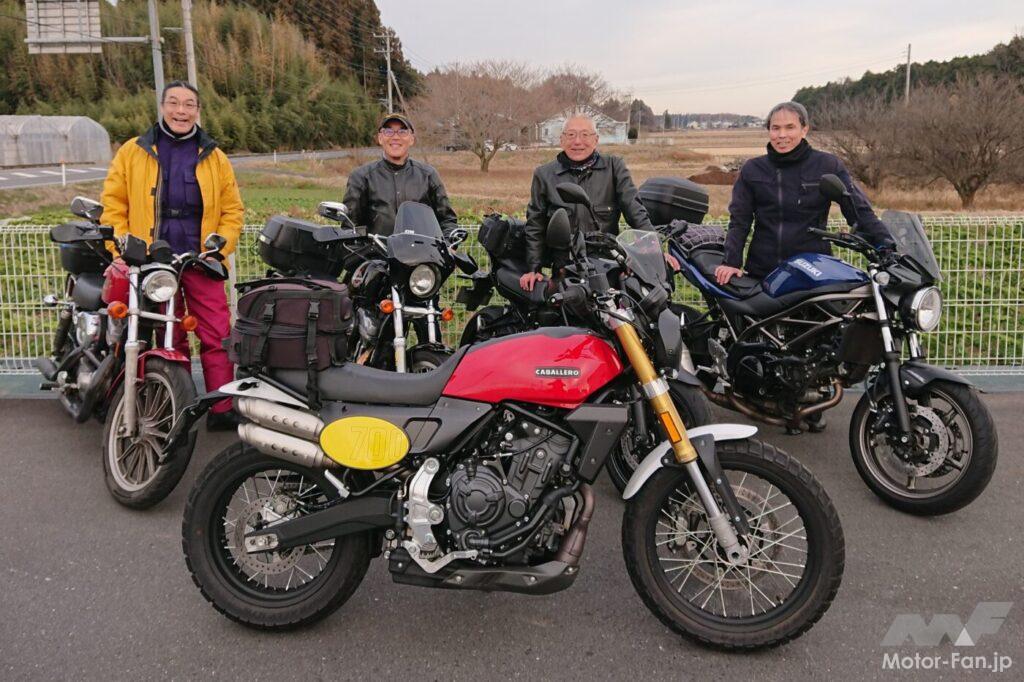
My touring companions are all veterans with around 30 to 40 years of motorcycle experience. From the right: Ikenoue, Kiyomoto, Motomura, and Hirakawa.
First, let’s start with the impressions of Kiyomoto, an owner of the MT-07, which is equipped with the same CP2 engine as the Caballero Scrambler 700. When Kiyomoto first purchased the MT-07 new in 2021, he felt something was off about the ride, but the problem was largely resolved by updating the settings of the front and rear shocks. Since then, he seems to have been steadily increasing the mileage…

“After about ten minutes of riding,  I knew this was it (laughs). What impressed me was how easy it was to open the throttle and how much fun it was to accelerate. The main reason for this is that the bike gives you an incredible sense of security, but the power unit’s response is also ideal. Conversely, compared to the stock MT-07, I felt that the bike was somehow unreliable, and that the engine’s response was abrupt when you first started to open the throttle, while its low-speed torque was lacking, but the Caballero Scrambler 700 has completely eliminated those complaints.”

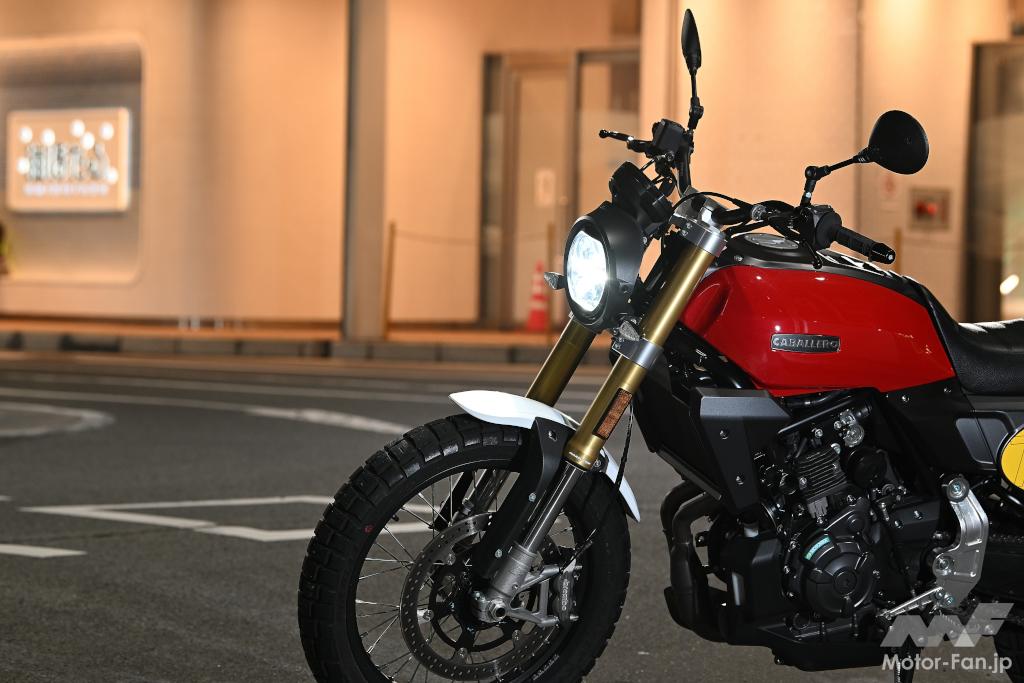
At first glance it looks simple and conventional, but the LED headlight is ultra-thin and the steering stem is machined from aluminum.
“Right now, I like my bike, which I’ve worked on, so I don’t plan on switching anytime soon, but when I first rode a bike with 19-inch front wheels and slim front and rear wheels (F: 110/80R19, R: 150/70R17; the MT-07 is F: 120/70ZR17, R: 180/55ZR17), I felt that this type of configuration was better suited to my touring, which I enjoy on rough roads.”
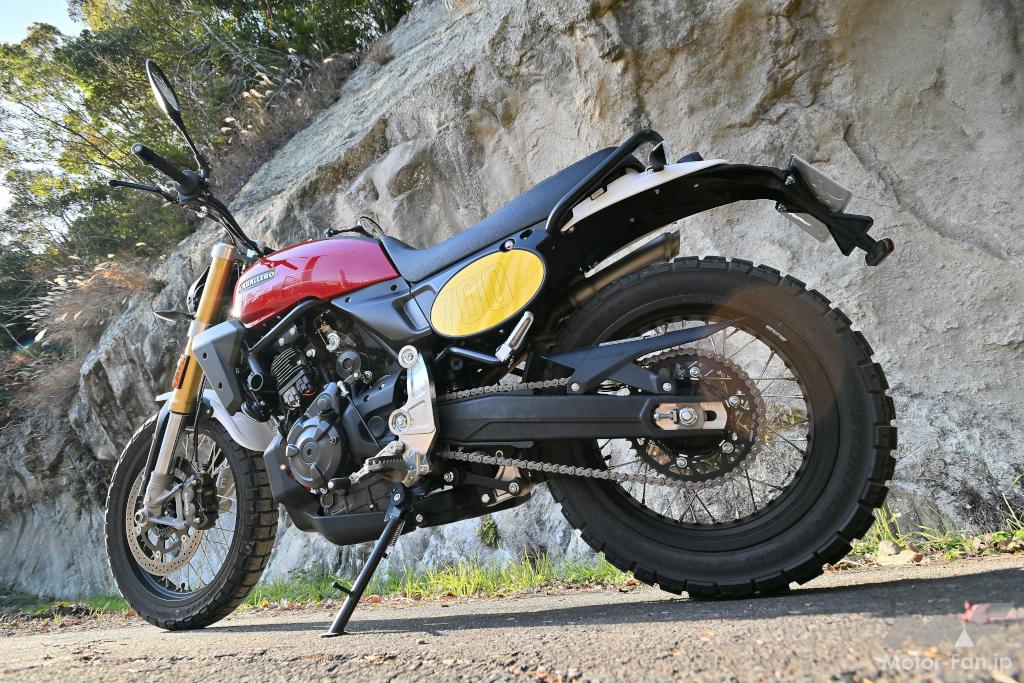
Ikenoue shares this view, but he spoke about the appeal of this bike from a different perspective than Kiyomoto.
“Initially, I thought the chromoly frame was a bit stiff, but perhaps because the front and rear suspension settings are so perfect, I never felt that stiffness was a negative factor. The front and rear suspension settings are truly exquisite, and not only does it provide a high-quality ride, it also provides excellent traction when you need it most, and when you open the throttle.”

The diamond-type chromoly frame is Fantic’s original. The front fork is a φ45mm inverted type, the rear suspension is a bottom link type, and the aluminum swing arm is a tapered type.
“The drivability of the power unit is excellent. When you open the throttle, the power comes out in a big burst and it continues to rev vigorously up to the high rpm range, but at the same time, it accelerates smoothly even from 3000 rpm in sixth gear, so you can enjoy a relaxed cruise. It’s lively but not unruly. These generous characteristics show the dedication of the Fantic engineers who created the unique injection map.”
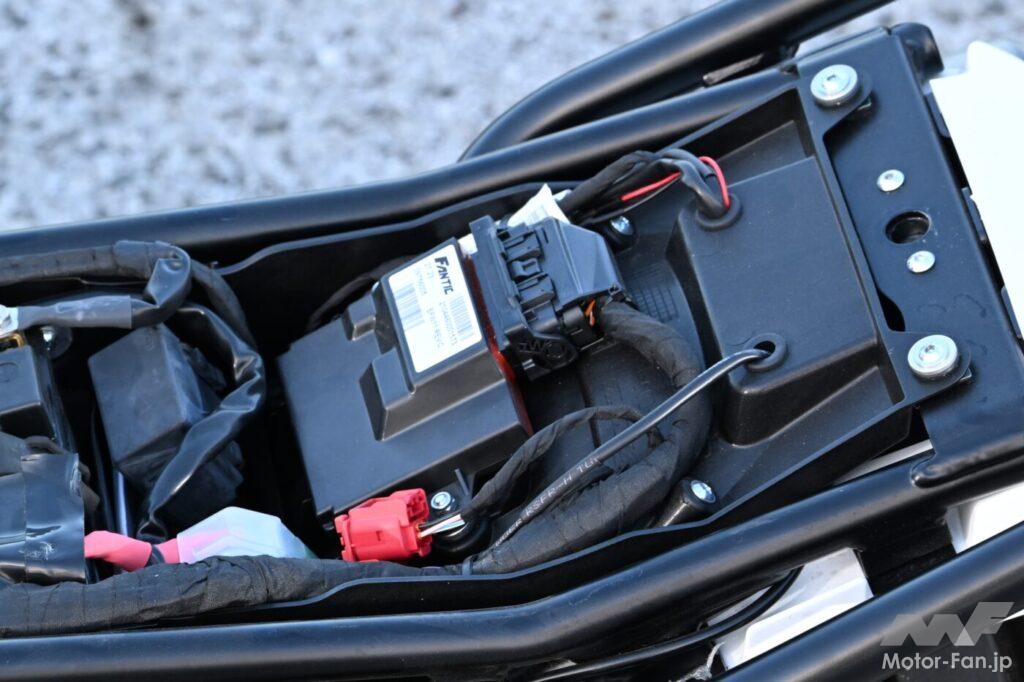
The ECU (Engine Control Unit) that fits under the seat is an original from Fantic. Not only the settings, but the body is also different from the Yamaha.
So, having switched from a Sportster to a modern bike, the two are full of praise. Just to be sure, we asked about any concerns they had, and it seemed that Kiyomoto was not satisfied with the single-disc front brake, and Ikenoue felt uncomfortable with the vague touch of the turn signal switch, but these were minor quibbles, and both seemed to be very impressed with the qualities of the Caballero Scrambler 700.
Unexpectedly high off-road performance

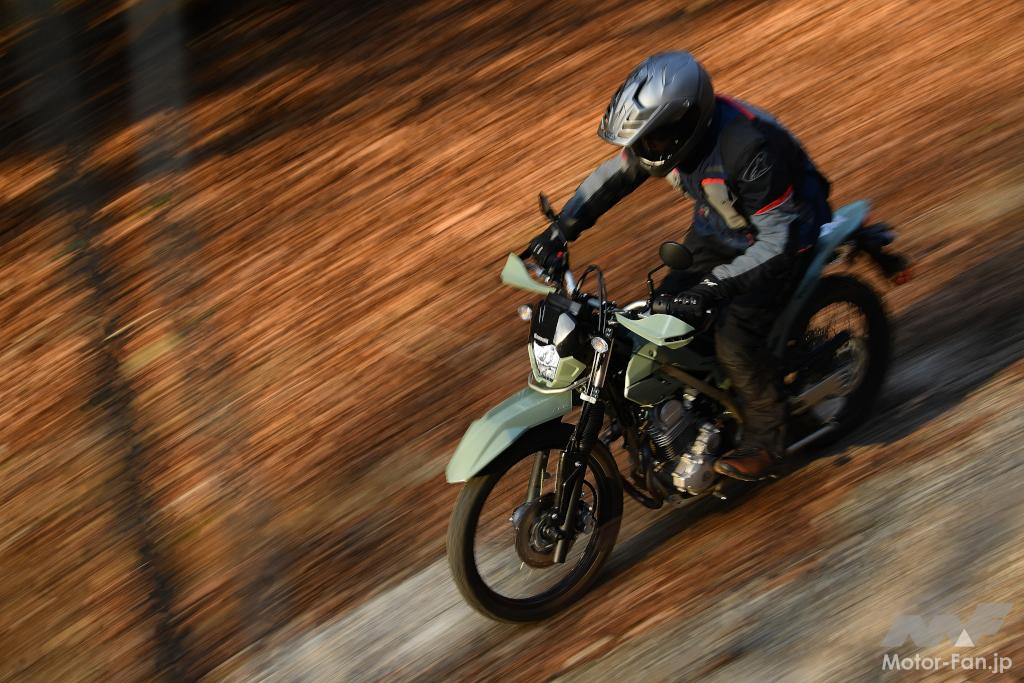
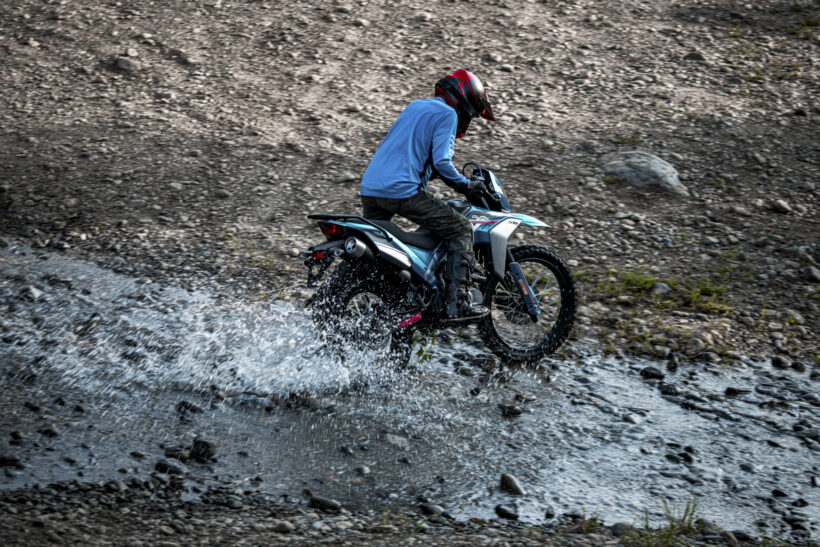
By the way, Kiyomoto-san and Ikenoue-san were also very interested in the bike’s performance on unpaved roads, but the test ride was only on paved roads. However, I rode on forest roads and sandy beaches while touring and taking photos, so I’ll write down my impressions below…
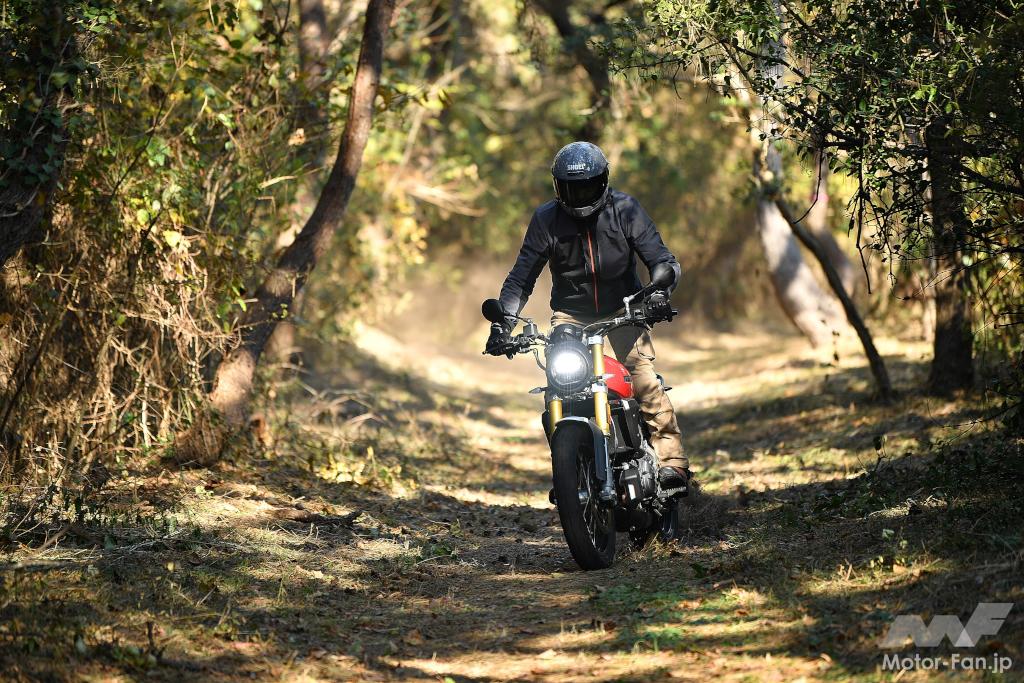
It was better than I expected. However, with an equipped weight of 181.5 kg and wheel travel of 150 mm front and rear, it’s not as easy to ride as a 250cc trail bike (for reference, the final model of the Yamaha Serow 250 weighs 133 kg, F: 225 mm / R: 180 mm), and its absolute rough-road performance probably doesn’t come close to that of the Ténéré 700 adventure tourer (205 kg, F: 210 / R: 200 mm), which is also equipped with the CP2 engine. That said, the Caballero Scrambler 700’s strengths remained intact even when the road conditions deteriorated, so I was able to ride on unpaved roads with confidence.
An unexpected remark by Motomura and Hirakawa
Next, we’d like to introduce some slightly nuanced opinions from two Sportster riders. What was Mr. Motomura’s impression of the 2002 XL883?
“I’ll say it up front: this bike is very attractive and fun, and I agree with what Kiyomoto-san and Ikenoue-san have to say. However, considering my age (60) and the pace of my usual touring… this bike is just too stiff (laughs). Even with the 19-inch front wheels, I don’t get the smooth self-steering that you get with a Sportster, and I have to be aware of turning it myself, which is something that bothers me personally.”
The opinions of the two supporters are similar, but Mr. Hirakawa, who drives a 1998 XL883, also seems to have some in common with Mr. Motomura.
“The Caballero Scrambler 700 really conveys the manufacturer’s vision, both in its looks and its ride. I love bikes like that, so I don’t really want to disagree… but compared to the Yamaha XSR700 I borrowed from a friend a few years ago, or Kiyomoto’s MT-07, which I’ve ridden a few times, it felt like there were fewer fuzzy areas. Of course, that’s why it has a direct feel, and I understand why some people like that, but personally I prefer a ride that’s a little more vague, with just the right amount of looseness.”
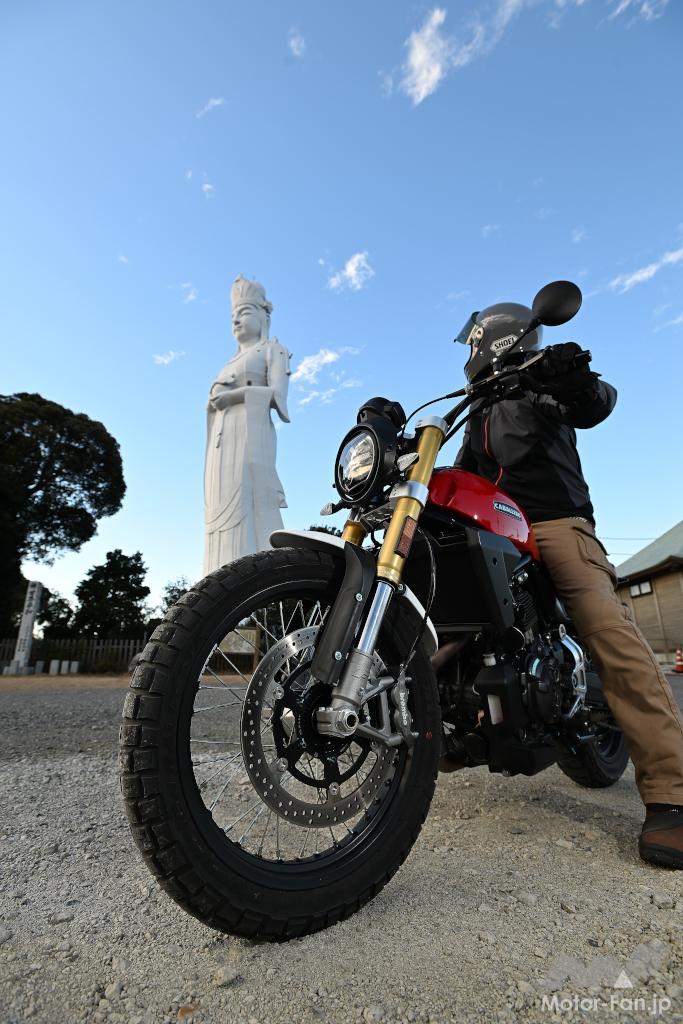
As I wrote in the first article, I was impressed by the Caballero Scrambler 700, so Motomura and Hirakawa’s words were a real eye-opener. On the other hand, while they listed the bike’s good points as if speaking for me, they also pointed out some unexpected aspects, which makes this article seem more substantial compared to the usual 1000km test rides.
It’s not for everyone, though…
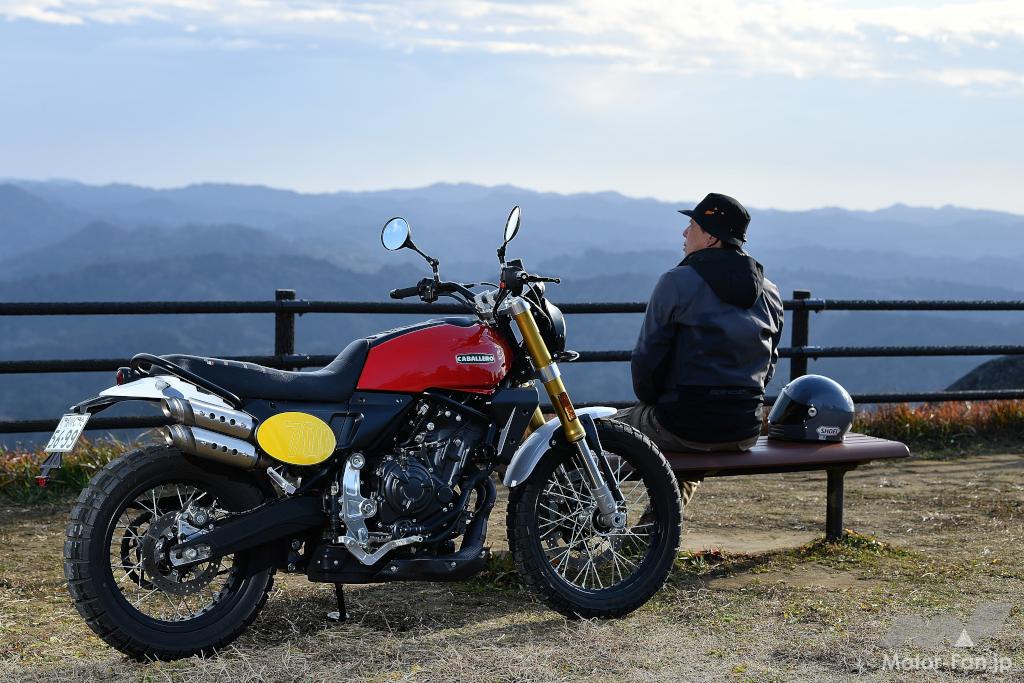
To sum up the opinions of the four people who participated in the test ride on the Caballero Scrambler 700, it seems that it appeals to some people, but it’s not for everyone… However, I don’t think it’s a bad thing that it’s not for everyone. Or rather, I feel that Fantic themselves are making this bike with the mindset that it’s OK as long as those who understand it can understand it.
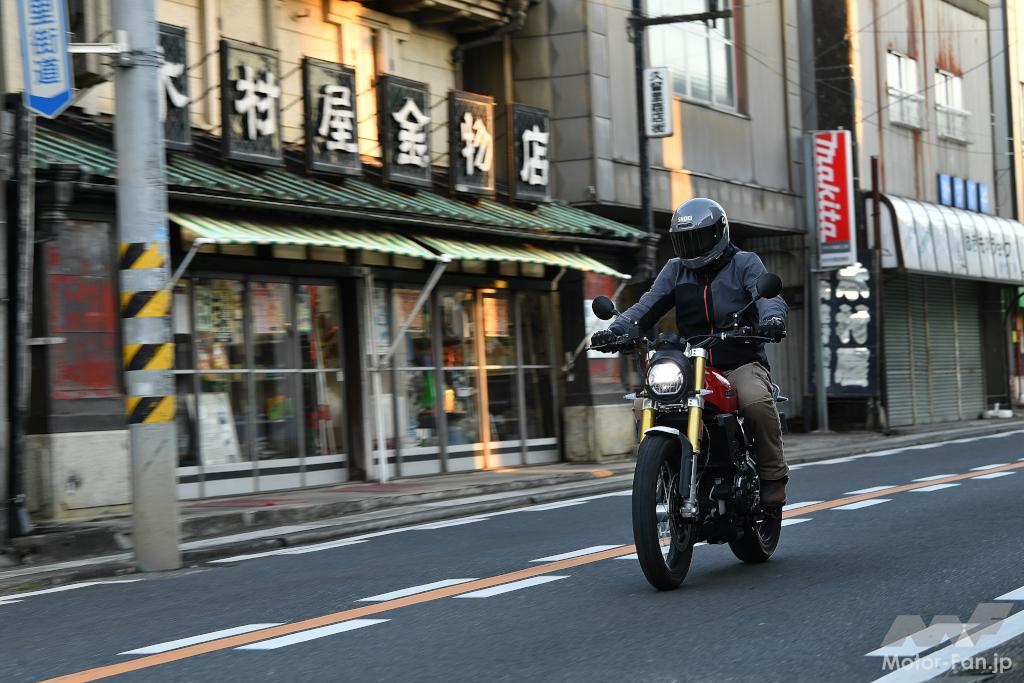
However, the Caballero Scrambler 700 does not have a particularly sharp character. Even Motomura and Hirakawa, who said that it did not suit their tastes, did not use words like “difficult to ride” or “high barrier to entry.” Oh, I intended to summarise, but this has become somewhat of a rambling discourse. But even if it is not for everyone, right now I feel that this model has a charm that cannot be found in other models, including Yamaha’s CP2 series, and I want as many people as possible to experience it for themselves.
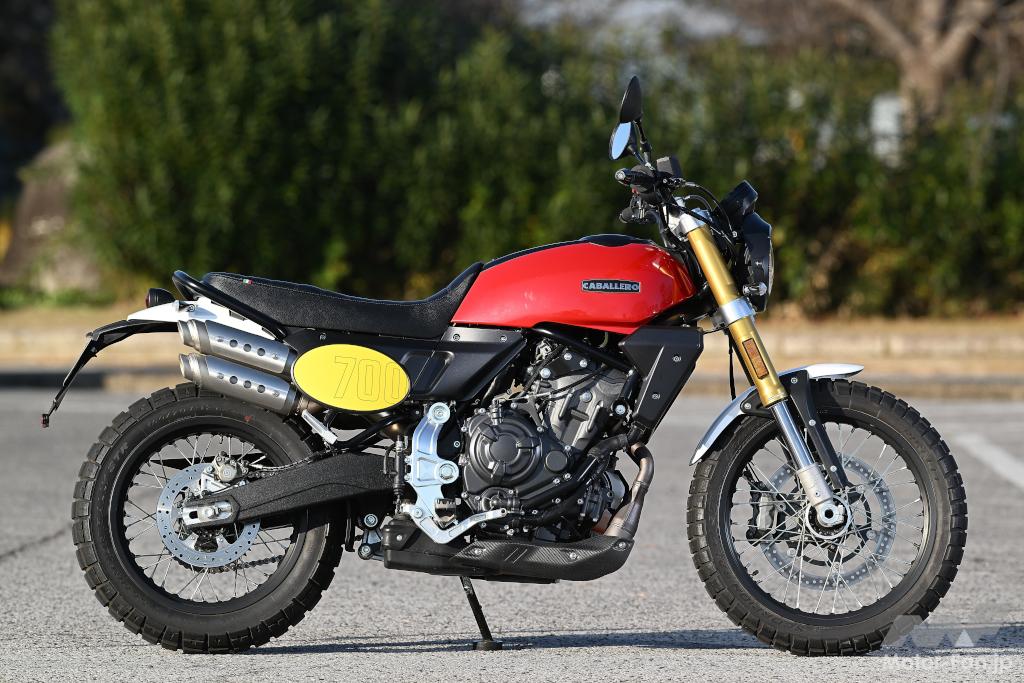
The original tires are Pirelli Scorpion Rally STR. The tire size of F: 110/80R19, R: 150/70R17 was a standard for adventure tourers from a generation ago, so there are plenty of aftermarket options available.
Main specifications
Model: Caballero Scrambler 700
Length x width x height: 2164mm x 890mm x 1136mm
Wheelbase: 1453mm
Seat height: 830mm
Engine type: Water-cooled 4-stroke parallel twin
Valve type: DOHC 4-valve
Total displacement: 689cc
Bore x stroke: 80.0mm x 68.6mm
Compression ratio: 11.5
Maximum power: 54.4kW (74ps) / 9400rpm
Maximum torque: 70N・m (7.14kgf・m) / 6500rpm
Starting method: Self-starter
Lubrication method: Wet sump
Fuel supply method: Fuel injection
Transmission type: Constant mesh 6-speed return
Clutch type: Wet multi-plate coil spring
Gear ratios
1st gear: 2.846
, 2nd gear: 2.125,
3rd gear: 1.632,
4th gear: 1.300,
5th gear: 1.091
6-speed: 0.964
Primary and secondary reduction ratio: 1.925, 2.813
Frame type: Diamond
Front suspension: Telescopic inverted type φ41mm
Rear suspension: Bottom link mono shock
Front tire size: 110/80R19
Rear tire size: 150/70R17
Front brake type: Hydraulic single disc
Rear brake type: Hydraulic single disc
Dry weight: 175kg
Fuel used: Unleaded high-octane gasoline
Fuel tank capacity: 13.5L
Seats: 2