
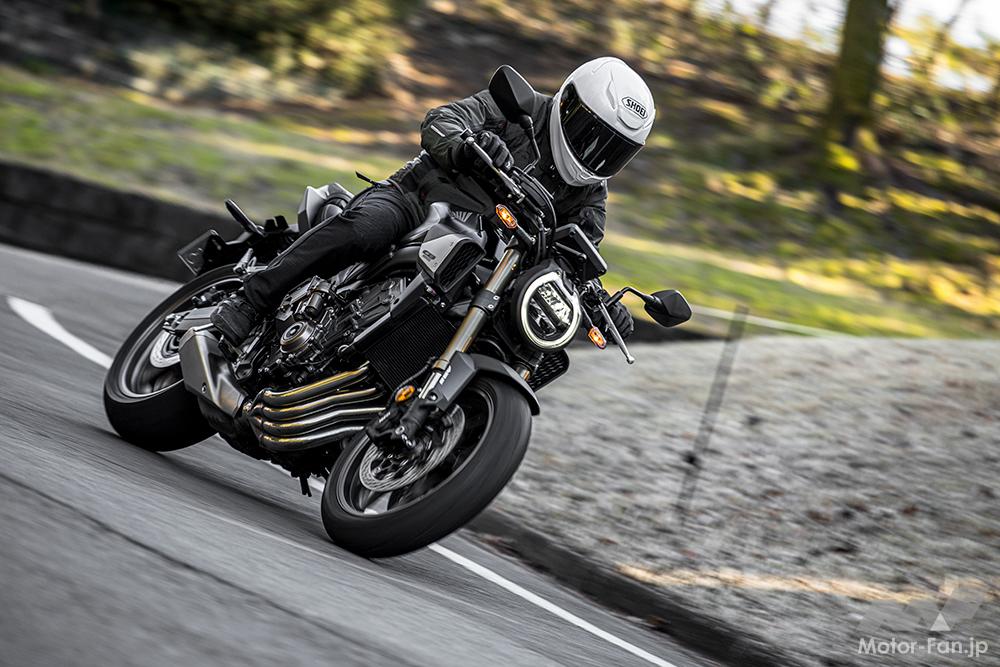
Lightweight and compact body comparable to a 400cc model and an engine inherited from the SS
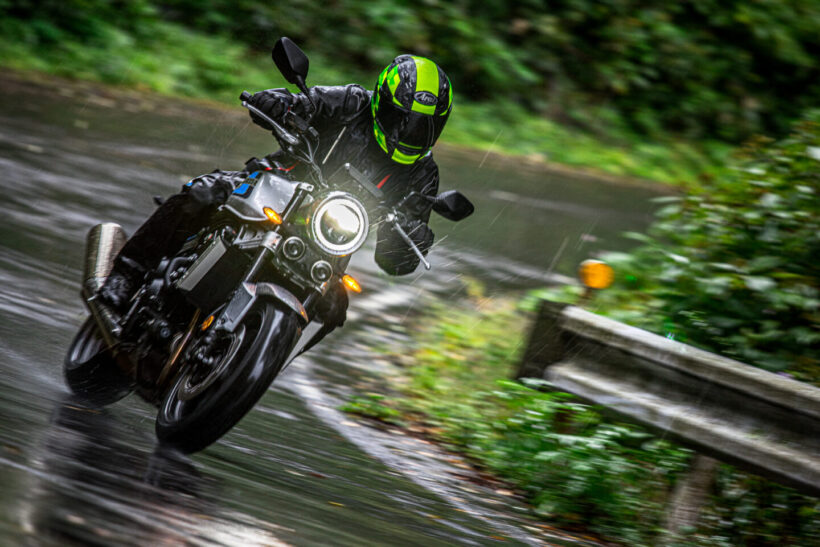
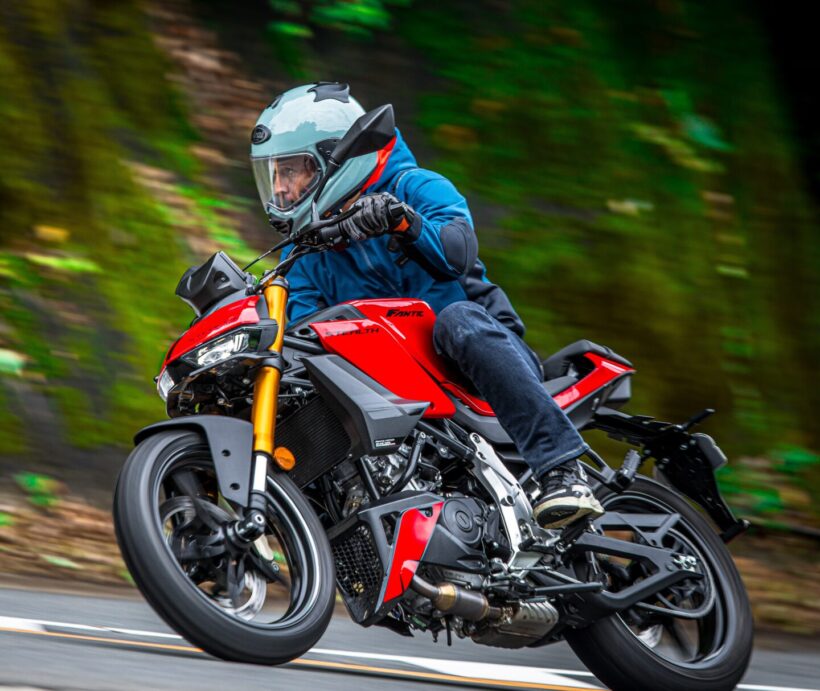
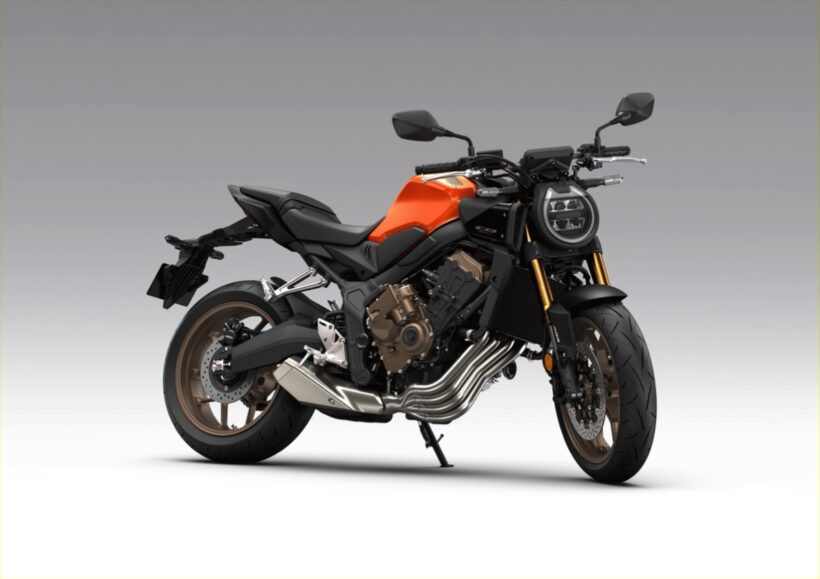
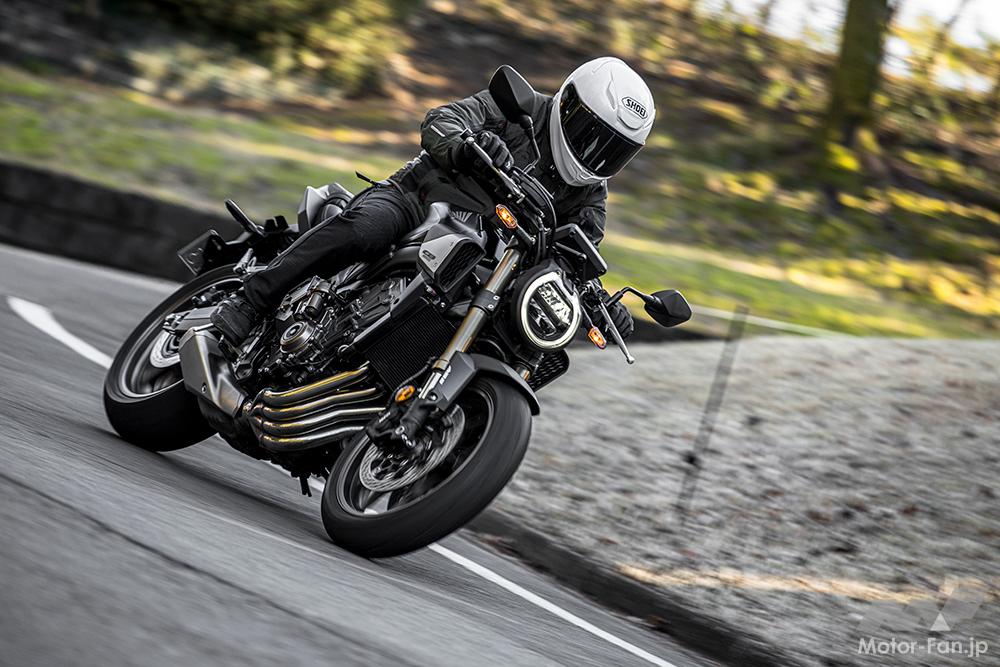
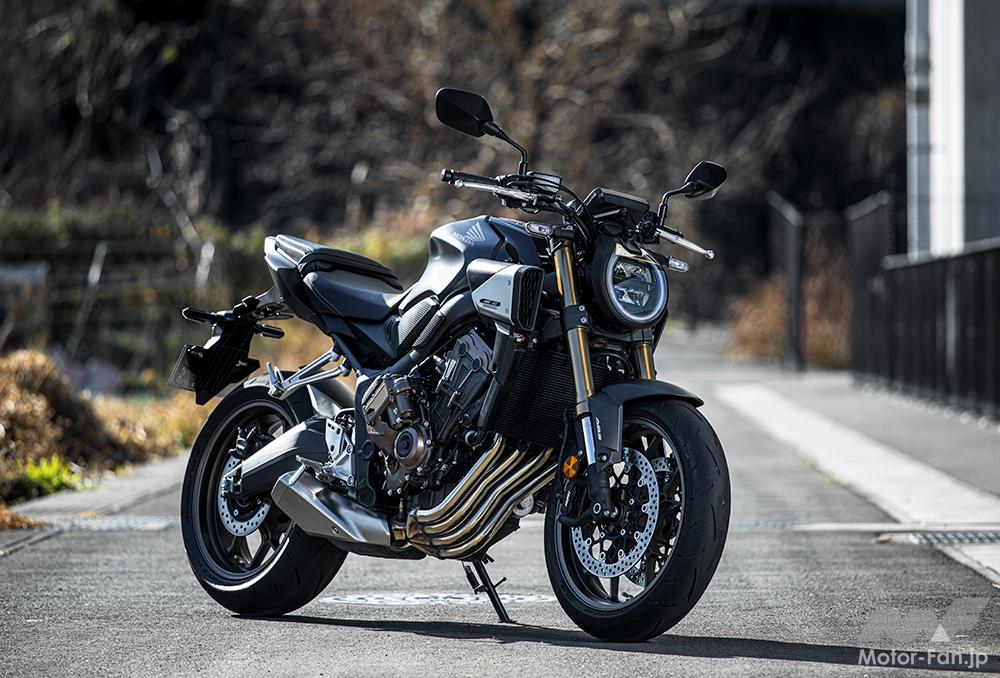
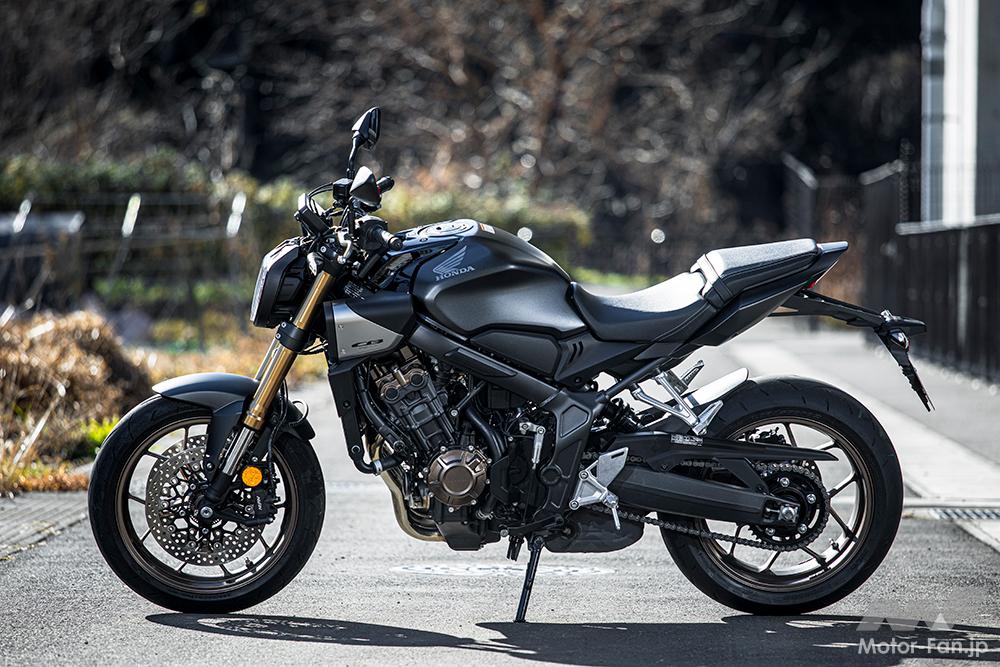
First, I’d like to talk about the CB650R as a motorcycle. The CB650R is very compact when standing still. It makes you wonder if a 650 was really that small. If you didn’t see the “650” on the side of the body, you wouldn’t doubt that it was a 400cc. This is a very good thing.
Honda CB650R E-Clutch… 1,089,000 yen
The CB650R debuted in 2019. It was developed as the successor to the CB650F, a long-loved naked sports model. According to documents from that time, the concept was “to enhance the excitement of a new-generation CB series that deepens the fundamental enjoyment of sports bikes.” To achieve this, the mass was centralized and an in-line 4-cylinder engine was installed.
ADVERTISEMENT
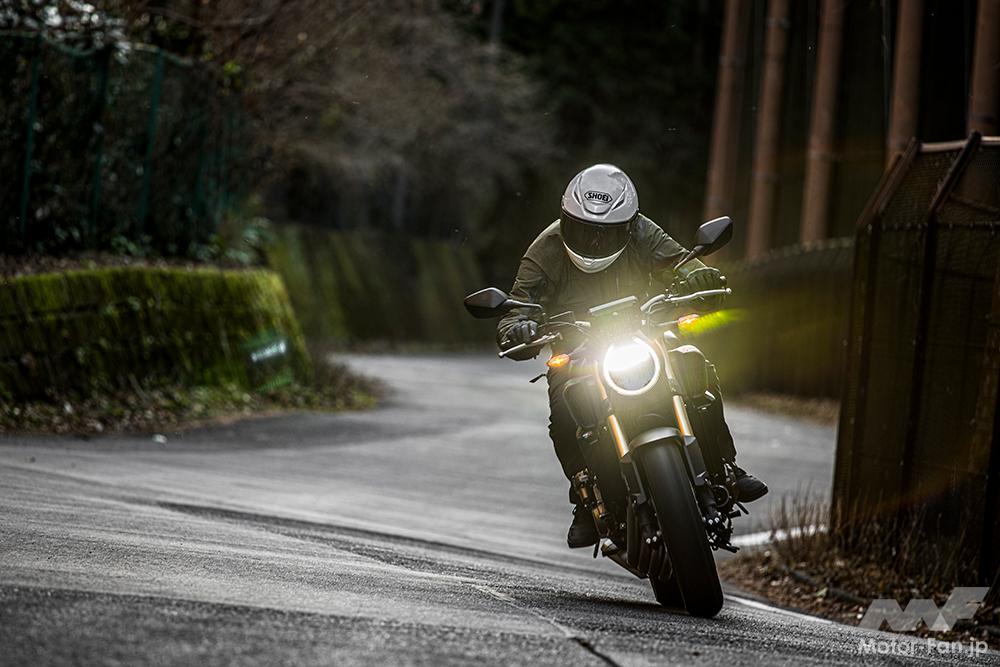
In-line four-cylinder engines are wide, which emphasizes their presence. However, the CB650R’s engine doesn’t make its presence known, despite its compact body being comparable to a 400cc engine. This is proof that the CB650R’s engine is not only designed to be compact, but also that the mass has been centralized and the modern body design has resulted in an excellent package.
The engine is well-trained. Whether you’re driving slowly behind a car in the city or enjoying the scenery on the outskirts, it’s incredibly smooth and powerful at both low and mid-speeds. You can feel the benefits of the 650cc displacement in any riding situation. And if you come across a good winding road, you can fully enjoy sport riding there. The high-revving engine feels great, and cornering is easy. Sports bike enthusiasts will be happy to pick up the pace on winding roads, and it will also be fun to ride on a circuit.
“E-Clutch” where the MCU and motor operate the clutch
And then there’s the E-Clutch. In addition to the CB650R E-Clutch, Honda’s E-Clutch-equipped vehicles have the same features as regular manually operated motorcycles: a clutch lever, a wet multi-plate coil spring clutch (although regular motorcycles have dry, single-plate, or diaphragm clutches), and a shift pedal. Motorcycles equipped with the E-Clutch can also be operated manually using these items.
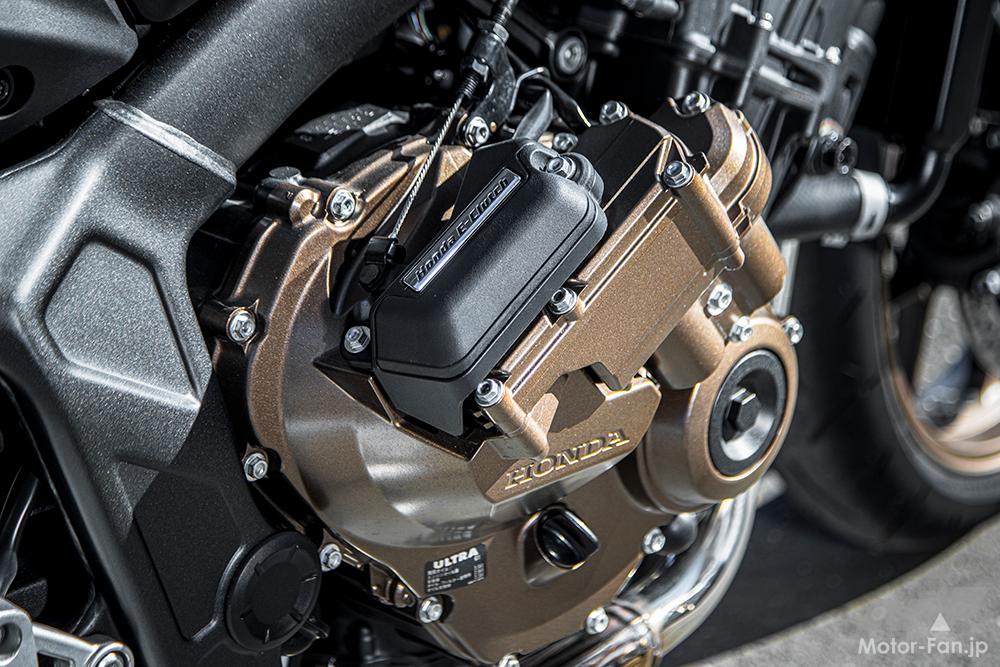
↑The “E-Clutch” unit installed on top of the crankcase cover on the right side of the engine
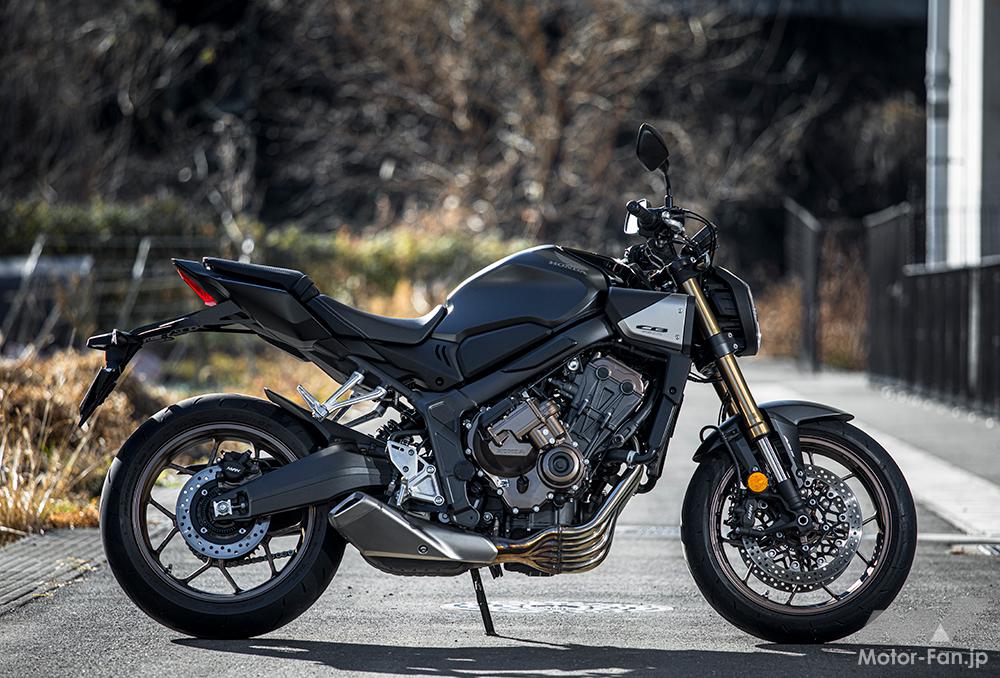
↑ When you pull the vehicle, there is no sense of incongruity due to the “E-Clutch” installed, and you can clearly see how compact the unit is.
However, with the E-Clutch, the motor automatically operates the clutch for the rider, eliminating the need for the half-clutch required for starting and stopping, or the clutch operation required for gear changes. The clutch disengagement and engagement are performed by two motors inside the E-Clutch unit, which is set on the crankcase cover on the right side of the engine, receiving commands from the MCU (Motor Control Unit). This MCU is connected to the ECU (Engine Control Unit), which controls the engine, via a mutual communication system called CAN (Can-Controller Area Network), and collects and shares all data about the vehicle while it is in motion. It controls the entire vehicle, including traction control, not only when the E-Clutch system is operating, but also when the clutch is operated manually.
This may sound complicated, but it’s actually quite simple to operate. With the gear in neutral, turn the main key to turn the ignition on, and the E-Clutch system will automatically activate. Then, without holding the clutch lever, step on the shift pedal to put the bike into first gear, open the throttle, and the bike will start moving. Your mind and body are used to operating the clutch, so you may hesitate to step on a gear without holding the clutch lever, but that’s only at first.
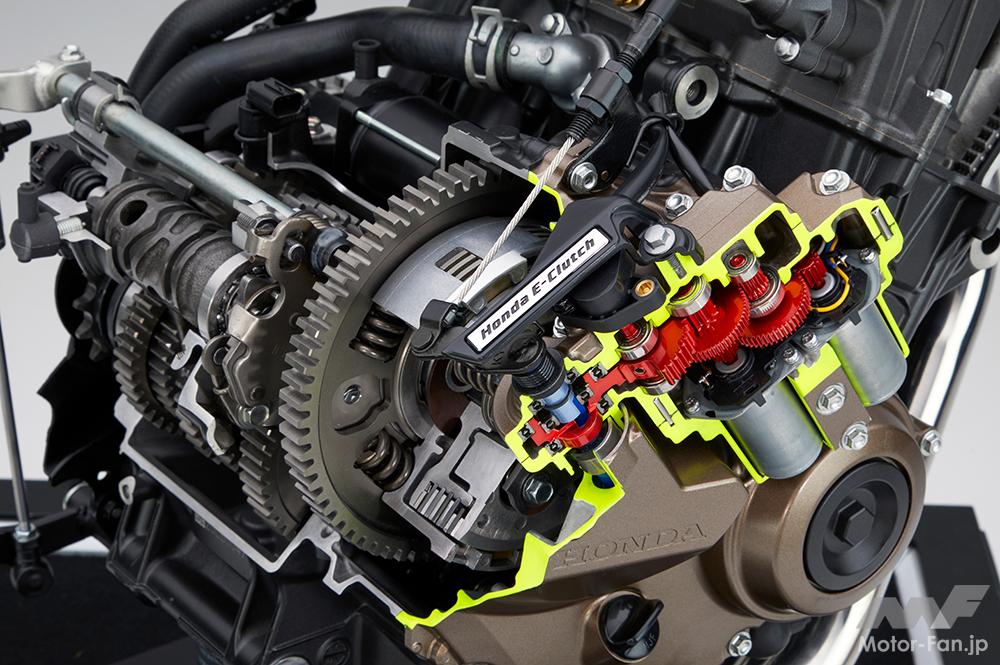
↑An exploded view of the E-Clutch. The two silver cylindrical parts on the right side of the photo are the motors that operate the clutch.
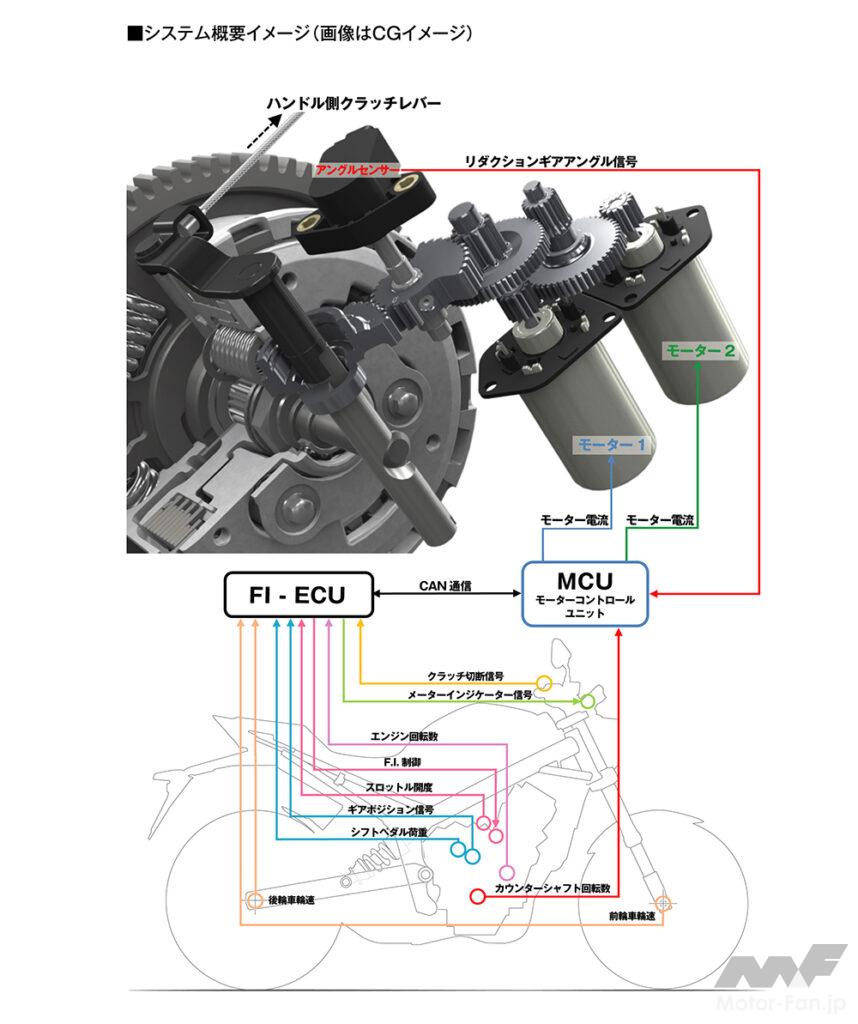
↑System overview. Various data is collected while the vehicle is running, and the ECU and MCU communicate with each other to operate the system.
Once you’ve started, you can ride as you please. The speed and opening of the throttle reflect the rider’s intentions. If you want to start slowly, apply the throttle slowly/lightly, and the bike will move accordingly. Applying the throttle quickly/bigger changes the engine RPM at which the clutch engages, resulting in a longer half-clutch state and sharper acceleration. Synchronizing the rider’s intentions with the E-Clutch’s response may take some getting used to, but the E-Clutch’s clutch operation is exquisite at all RPMs. Once I realized it was better than me, I no longer had any doubts or complaints. Starting/stopping and U-turning on hills, which require not just simple starting and stopping but also exquisite steering and balance, were initially nerve-wracking and awkward. However, the main reason for this was that I didn’t trust the E-Clutch system, leading to unnecessary operations and movements. However, as I became more familiar with the system and developed greater trust in it, I was able to achieve smoother movements than I could have achieved by operating it myself.
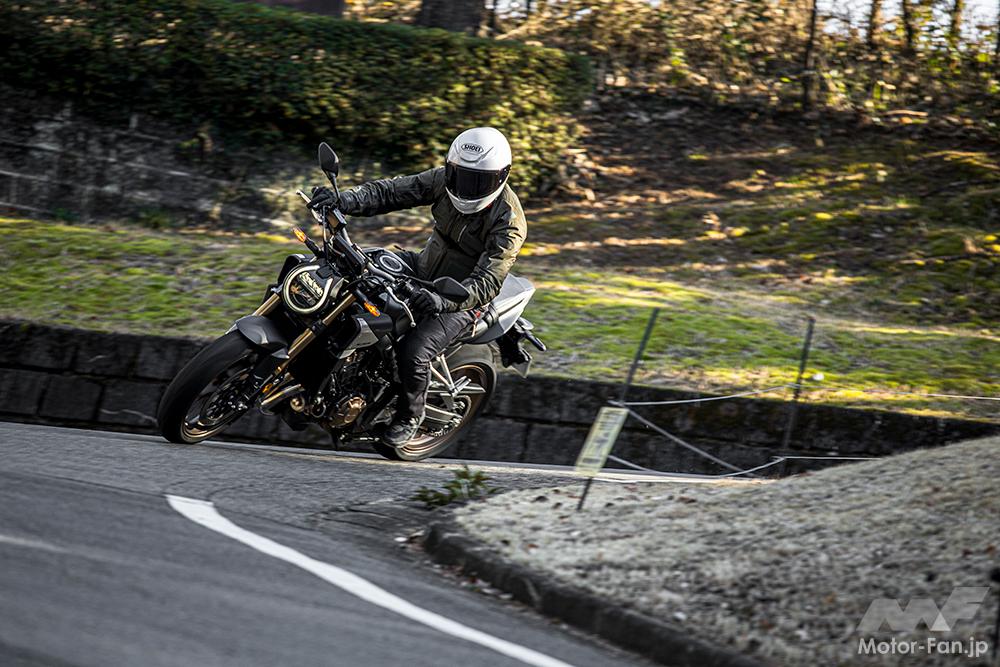
Shifting up and down is even simpler. Simply operate the shift pedal when you want to shift up or down. This is the same as operating a vehicle with a quick shifter. However, the vehicle itself is operated slightly differently. The ignition is still cut in time with the shift operation, but in addition, a subtle half-clutch operation is used. Because the CB650R uses a wire-operated throttle, it is not equipped with an auto-blipping function like other vehicles with electronically controlled throttles, in which the ECU detects shift operation and automatically adjusts engine speed. Instead, the half-clutch is applied precisely to absorb the impact caused by the difference in gear ratio with the selected gear when shifting up or down. This subtle half-clutch function also allows the rider to adjust engine speed by slamming on the accelerator when downshifting, even without operating the clutch.
The E-Clutch is a great benefit for beginners. It also opens up a new world for veterans.
Personally, I’ve never found clutch operation difficult, even in congested traffic, nor have I found shifting to be a hassle when touring or riding on winding roads. Therefore, I wasn’t particularly attracted to the E-Clutch, which eliminates the need for clutch operation. However, when I actually used it, I quickly got used to clutch-less riding, to the point where I thought it might be a good option. Therefore, it’s easy to imagine that the E-Clutch would be very beneficial for riders who find clutch operation stressful, or who are not used to using a clutch. And once you get used to it, I think bikes that require clutch operation might even be penalized for that alone.
Therefore, I thought that rather than installing it on a large 650cc vehicle, where clutch operation can be stressful, Honda would be better able to reach the wide range of riders they are targeting by installing it on a vehicle with an engine displacement of 400cc or less that can be ridden by motorcycle license holders. Thinking this through, I realized that the CB650R E-Clutch was also released in Europe, and that it included a power-restricted “A2 license specification” model aimed at beginners. Then, just before the 2025 Motorcycle Show, the Honda Rebel 250 E-Clutch was added to the lineup as a very popular model in the light motorcycle category. Yep, that makes sense.
Of course, the benefits of the E-Clutch are not limited to beginners. By eliminating the need to operate the clutch, riders can concentrate on other operations, and even experienced riders have the potential to discover new joys in riding. The only way to open that door is to try out the actual bike. We highly recommend finding, or even creating, an opportunity to ride the CB650R E-Clutch.
Riding position & foot reach (170cm/65kg)
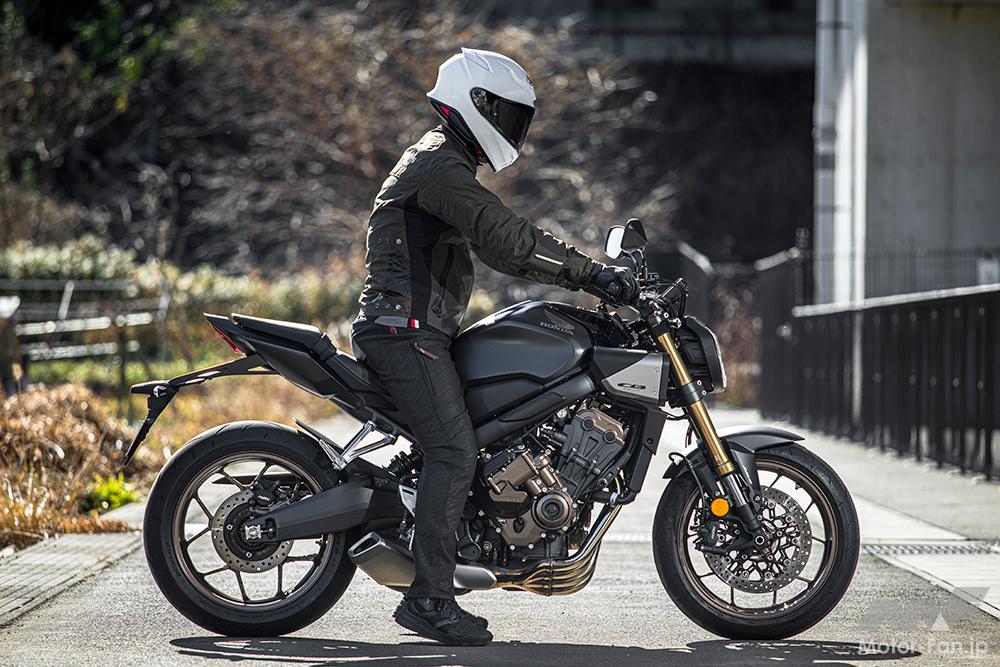
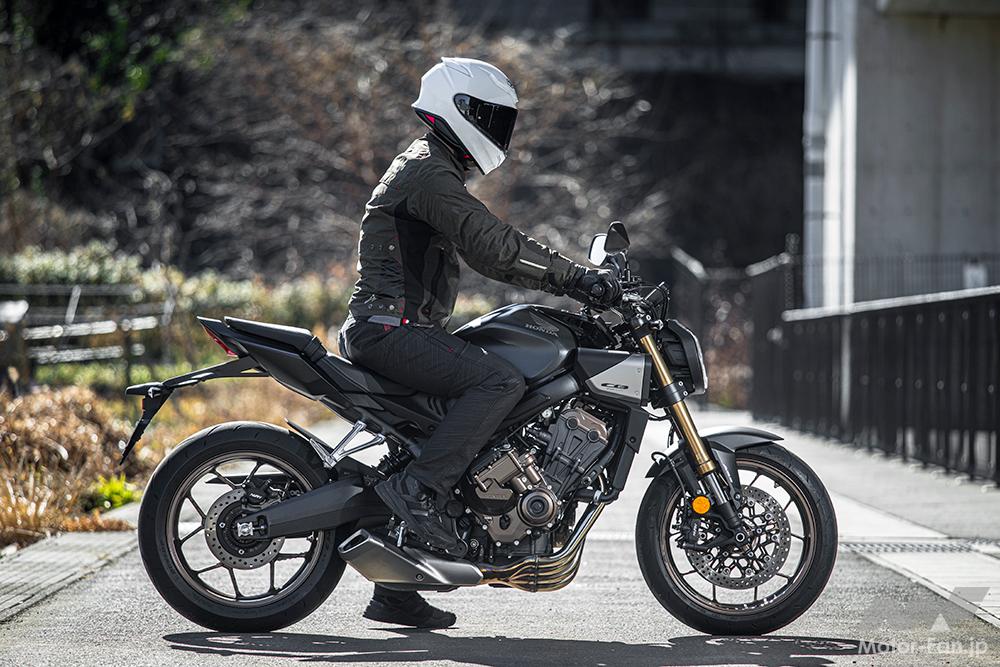
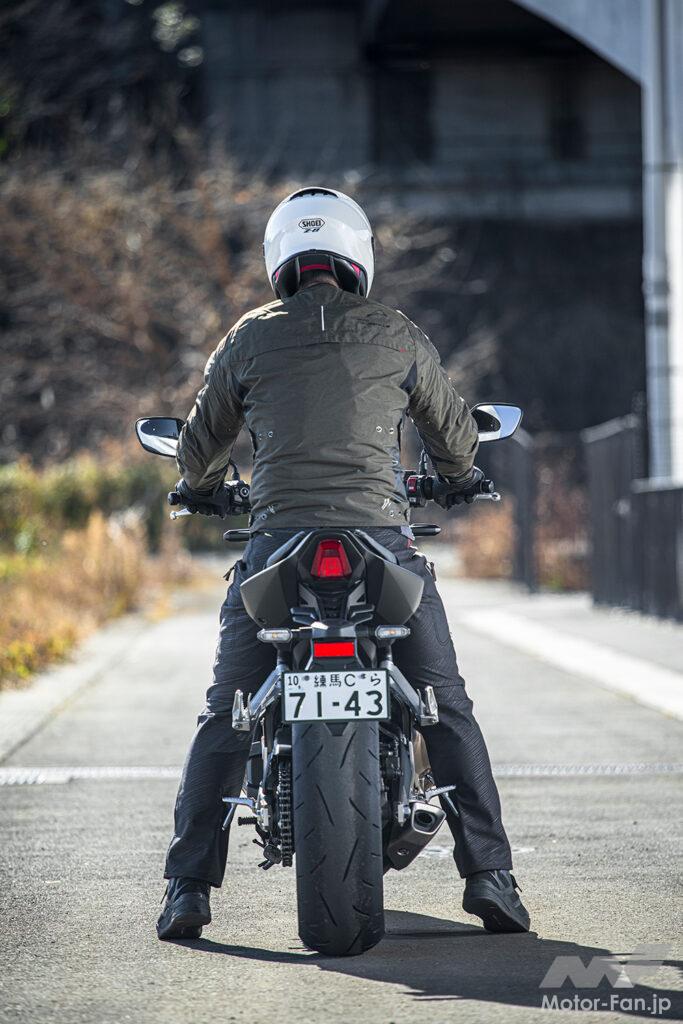
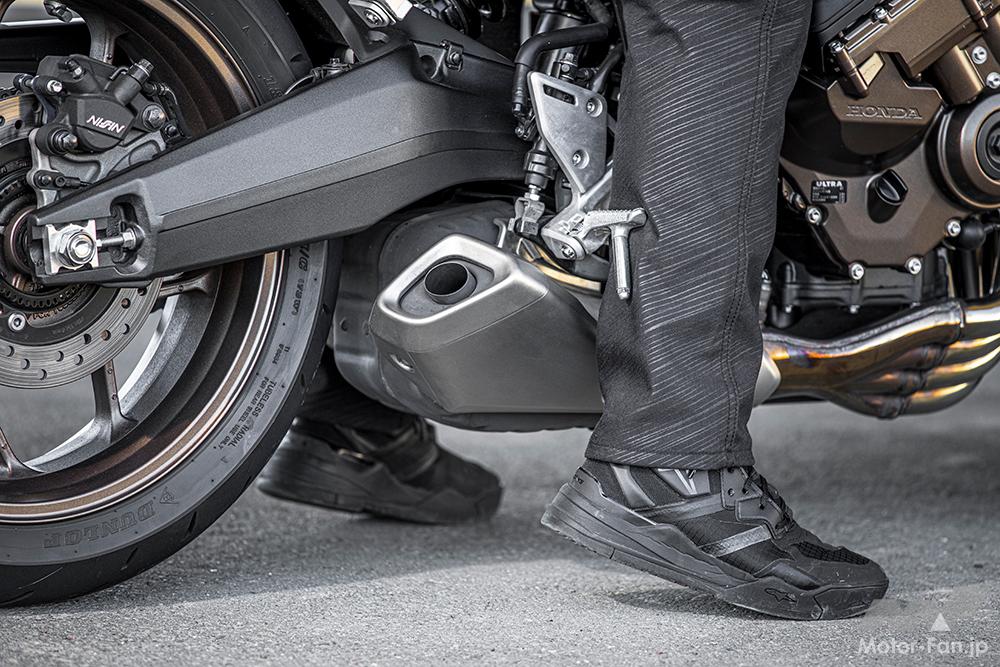
The riding position is very compact for a 600cc model. The knees bend naturally, and the grips are in a very natural position. When you stretch both feet out on the ground, you can plant your toes deep on the ground.
Detailed explanation
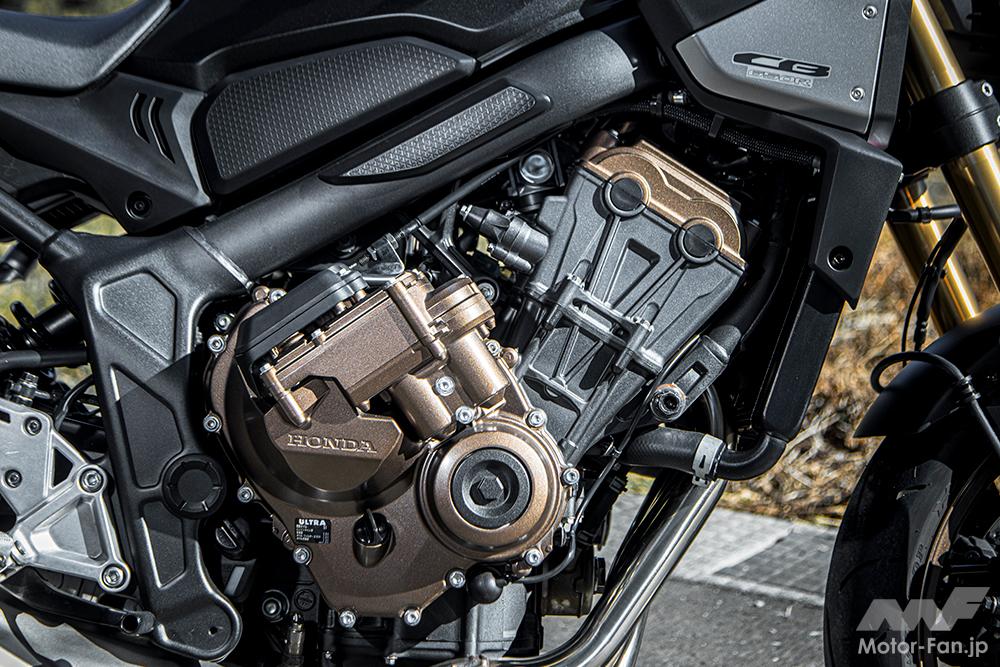
Equipped with a 648cc inline 4-cylinder, water-cooled, 4-stroke, DOHC 4-valve engine. It also features an assist and slipper clutch that reduces engine braking shock when shifting lightly and downshifting, as well as HSTC (Honda Selectable Traction Control) that can be turned on or off.
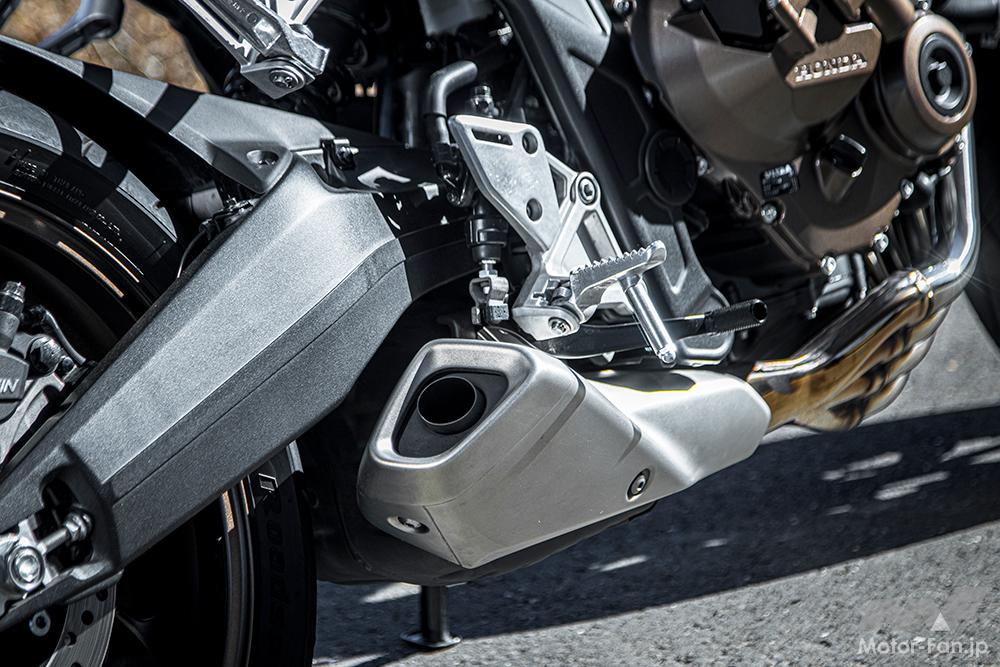
The beautiful exhaust system, with four exhaust pipes arranged side by side, is combined into one under the engine and connected to an extremely short silencer. The silencer outlet is designed to point slightly upward, delivering an exhilarating four-cylinder sound to the rider.
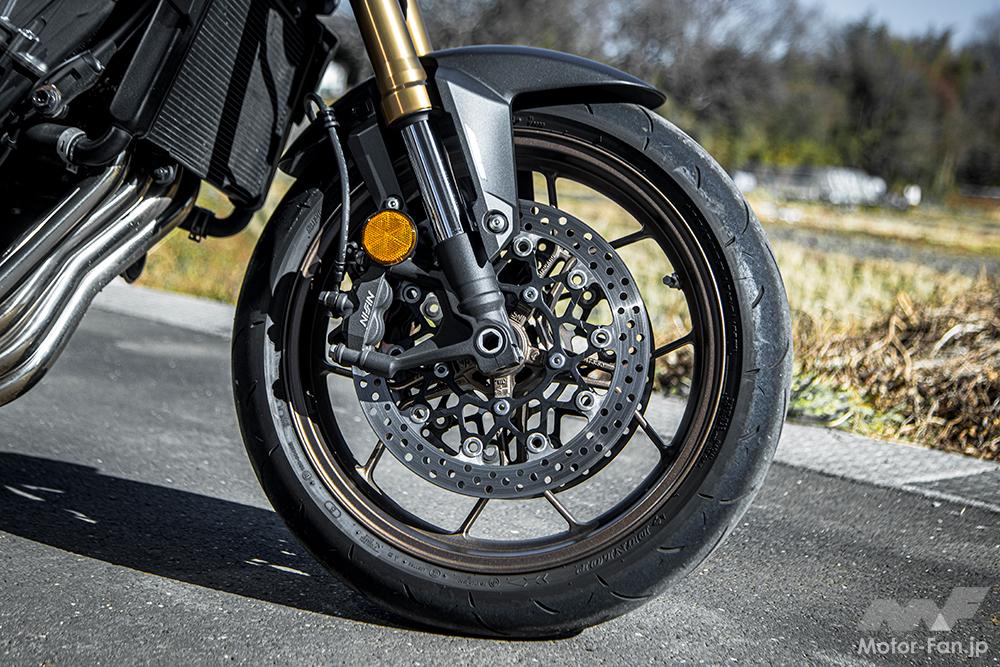
The front brakes are a set of φ310mm floating discs and radial mount calipers. The wheels are specially designed hollow aluminum GDC (gravity cast) five Y-spoke wheels.
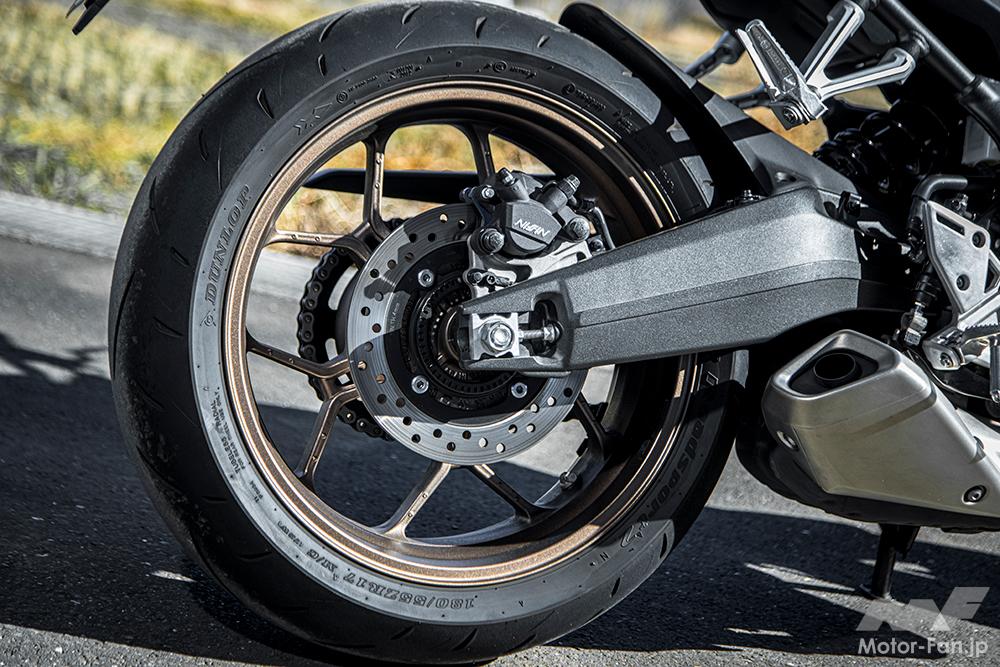
The rear brake is a combination of a φ240mm single disc and a single pod caliper. The wheel is a hollow aluminum GDC five Y-spoke wheel, just like the front. The swing arm is made of one piece cast aluminum.
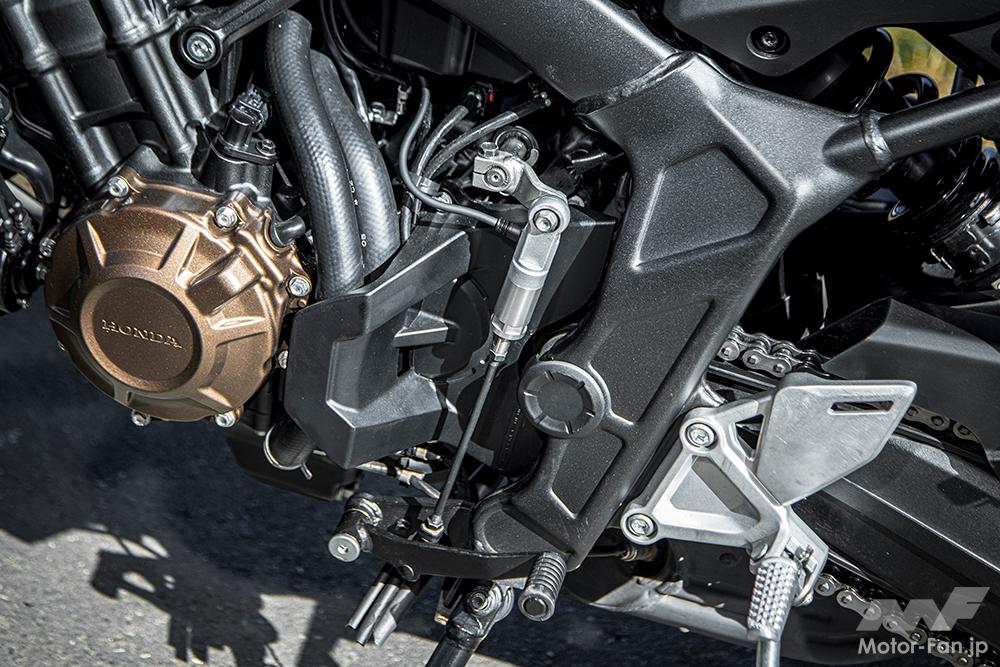
A sensor similar to a quick shifter is set around the shifter. This sensor detects shift operations while driving. In combination with information from other operating sensors, it cuts the engine ignition and the motor receives commands from the MCU to operate the clutch.
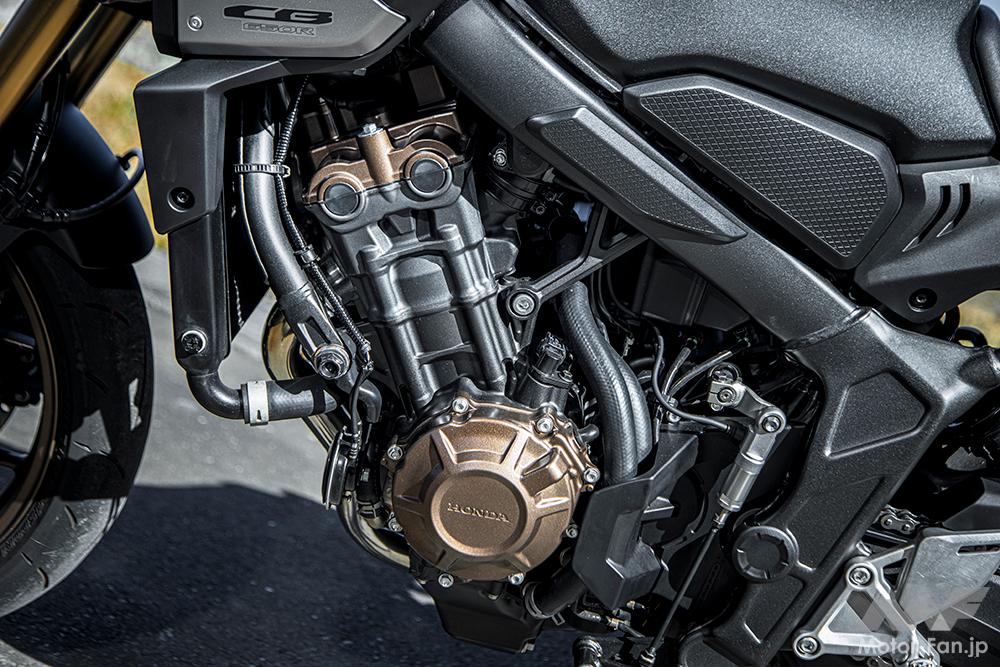
The frame is made of steel, which takes advantage of the flexibility of steel to achieve a good balance of rigidity.
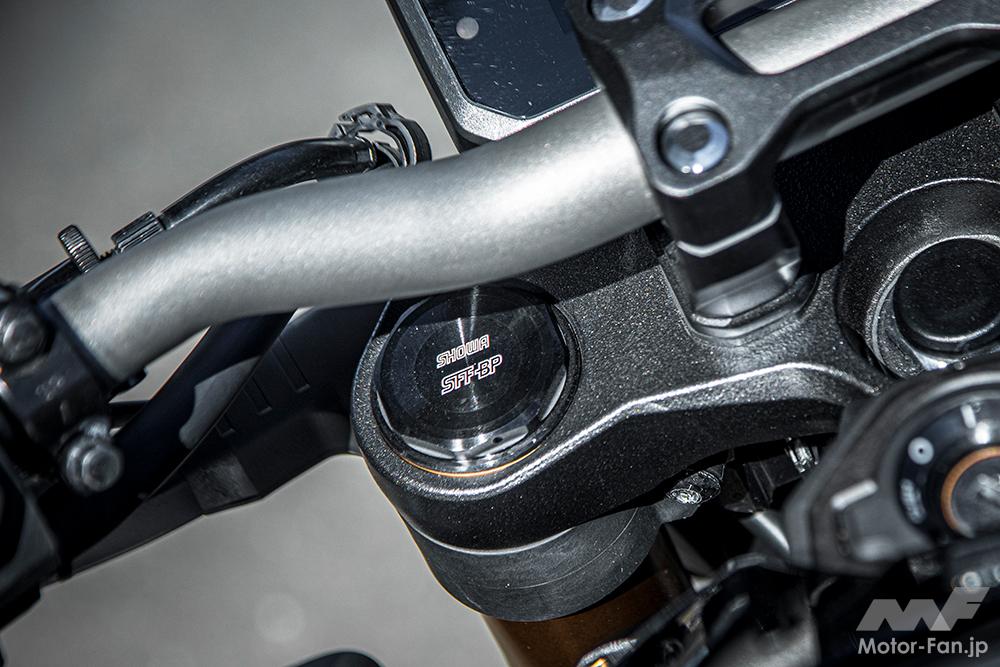
The front suspension uses a SHOWA SFF-BP front fork with an inner tube diameter of 41 mm.
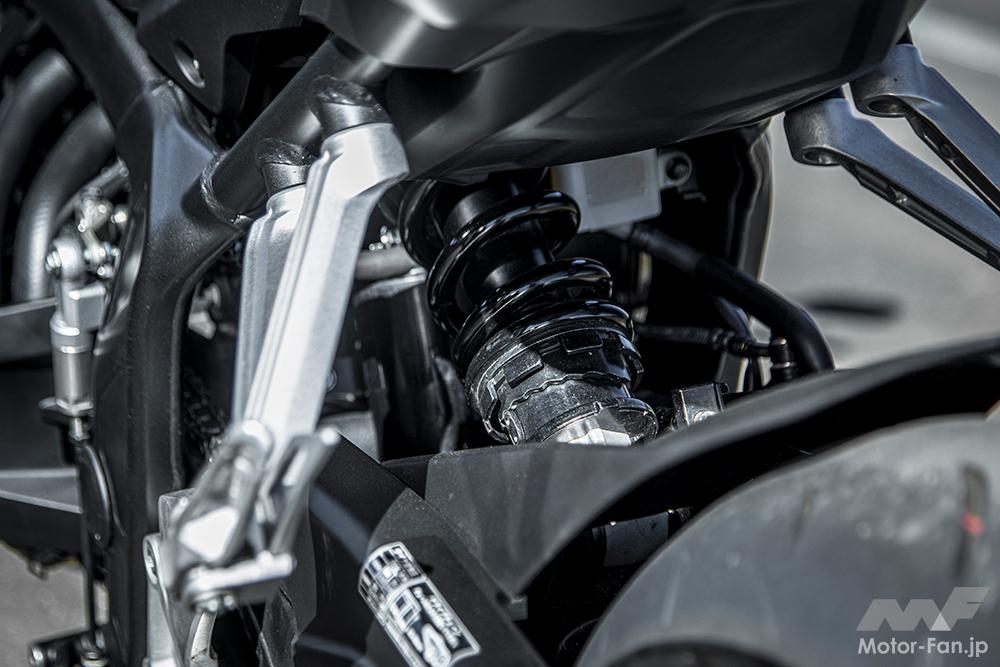
The rear shock unit is a Monocross type with no link and preload adjustment.
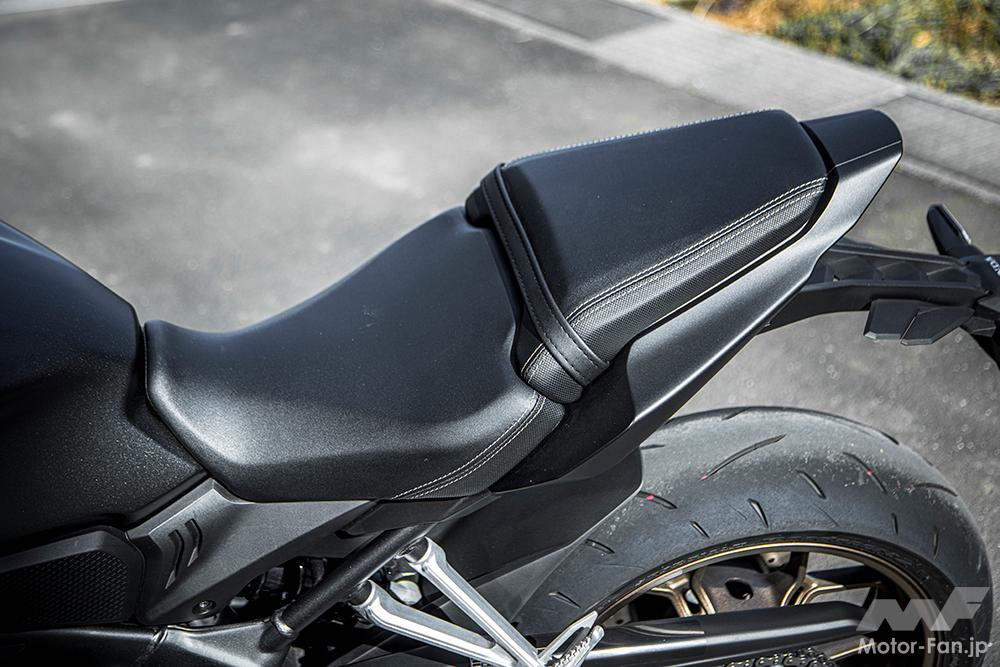
The seat is a separate type with separate seating surfaces for the rider and passenger. The tip of the rider’s seat is tapered, making it easy for the feet to reach the ground. The seat height is 810mm.
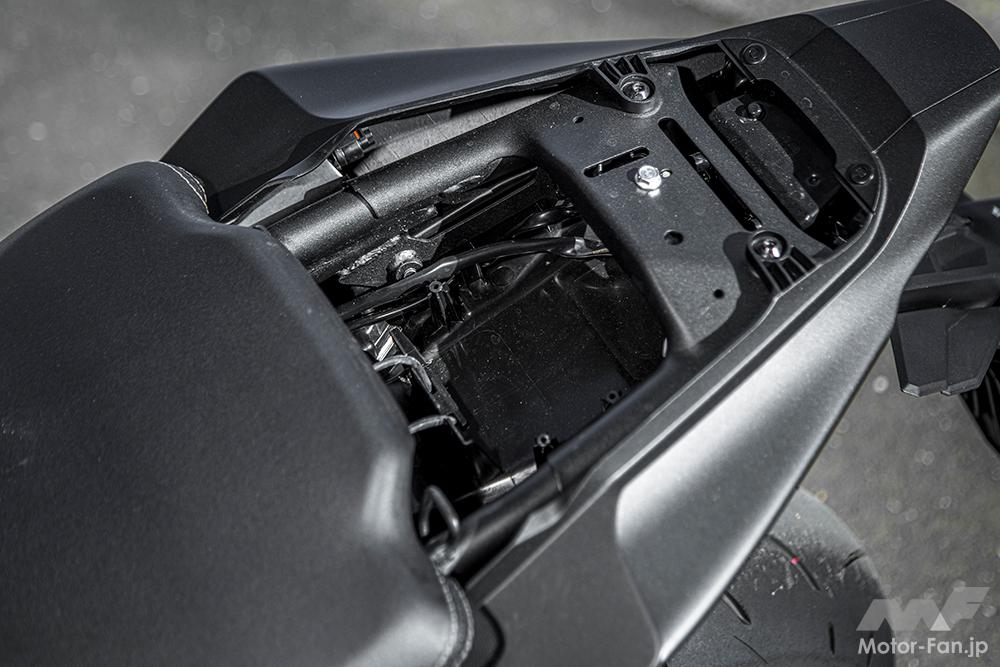
Under the passenger seat, which can be removed with the key, there is a storage space where ETC equipment can be placed.
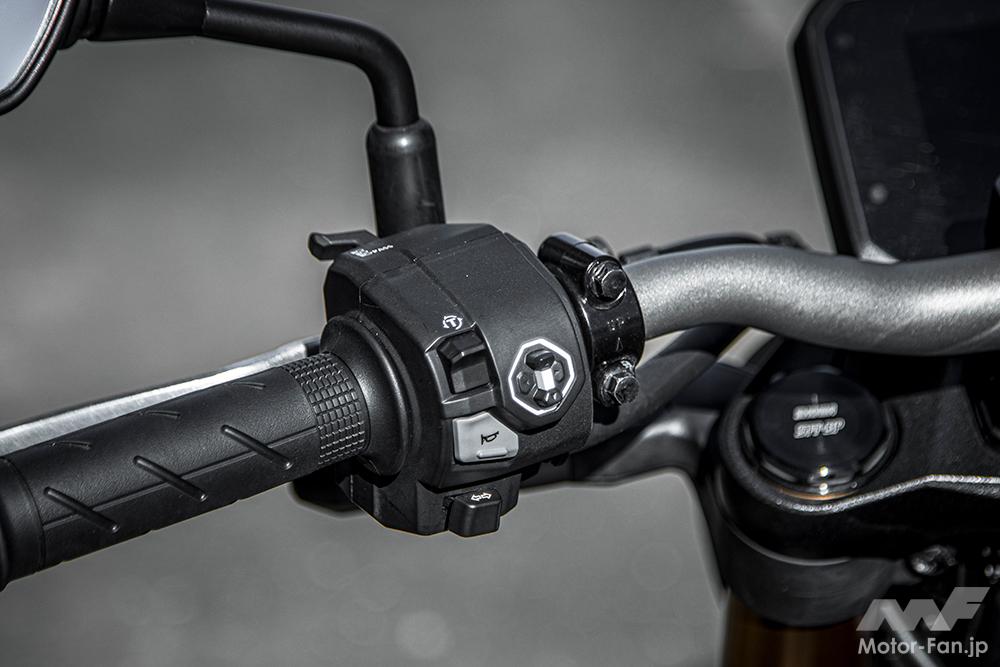
The left handlebar is fitted with a multi-function switch that allows you to operate and select various menus displayed on the TFT display. LED illumination also improves nighttime operability.
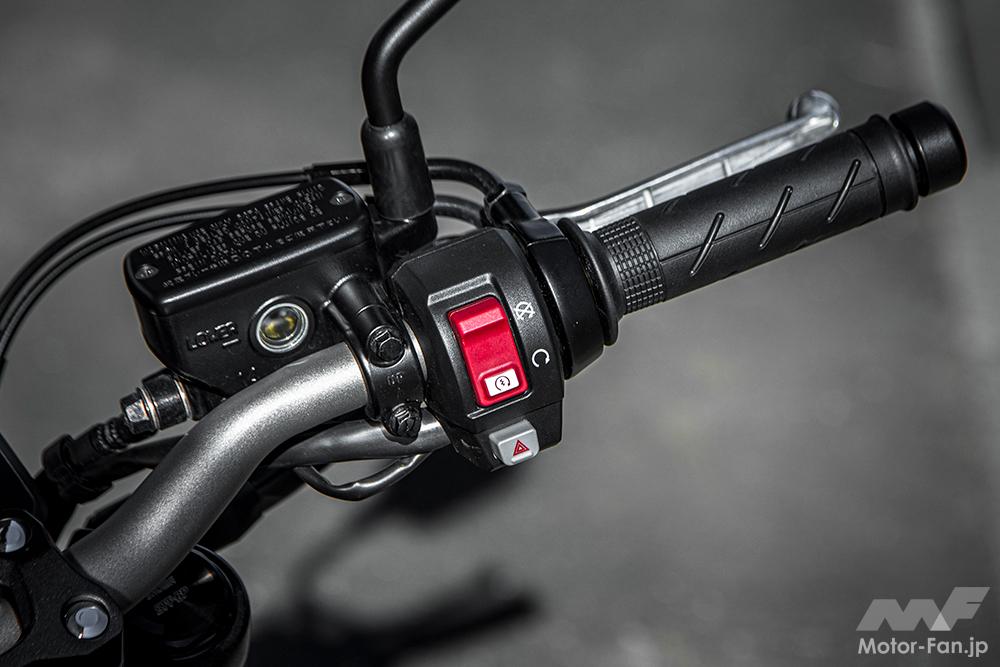
As you can see in this photo, the CB650R’s throttle is a wire type.
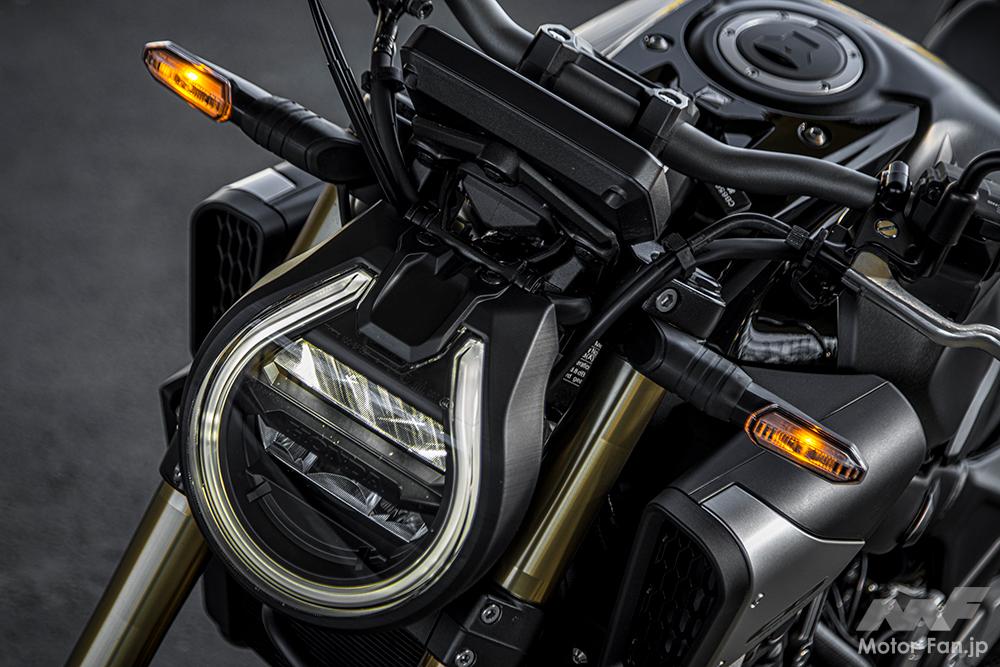
The headlights are LED. The round shape of the daytime running lights is reminiscent of classic round headlights, and the LED headlight unit is designed in the center. The slanted shape of the upper surface also enhances aerodynamic effects.
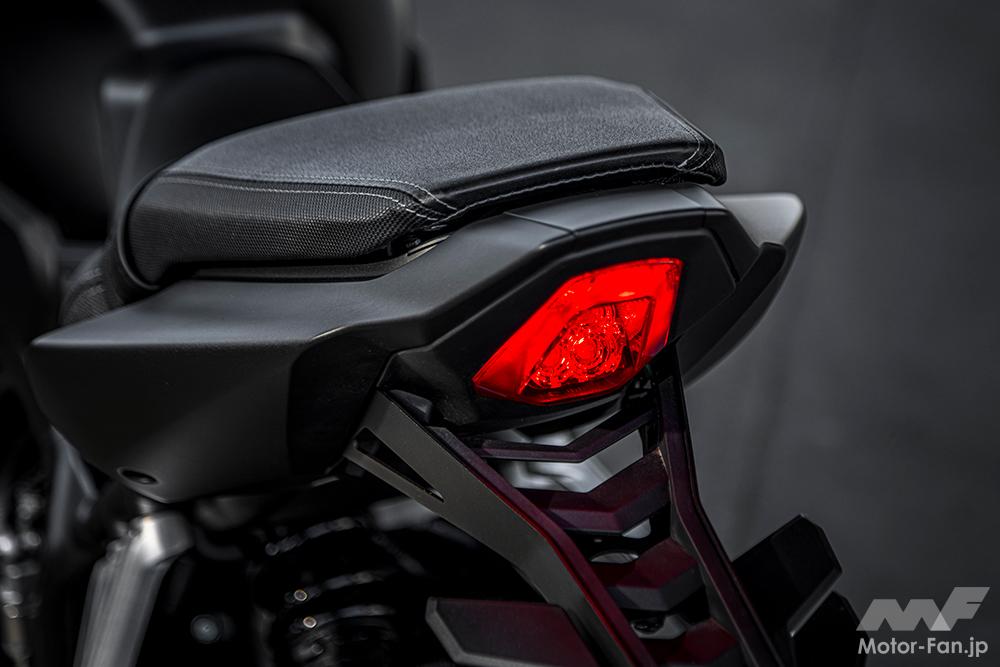
Tail lamp with four large LEDs. High visibility and realization
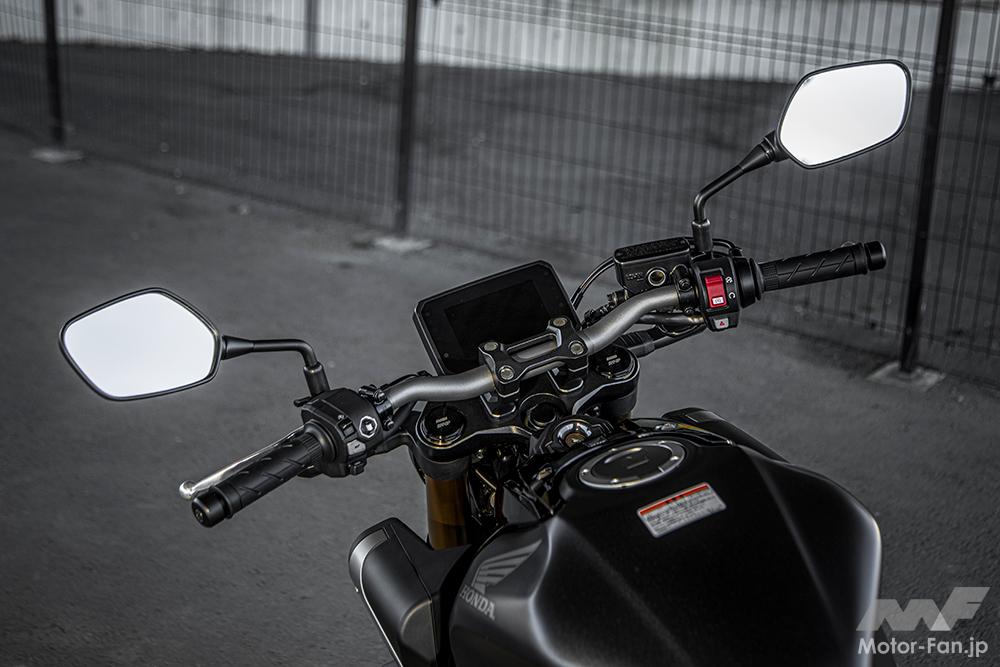
The handlebars are tapered aluminum type. They are flat and have almost no drooping angle, but they match the compact body and allow for a relaxed riding position.
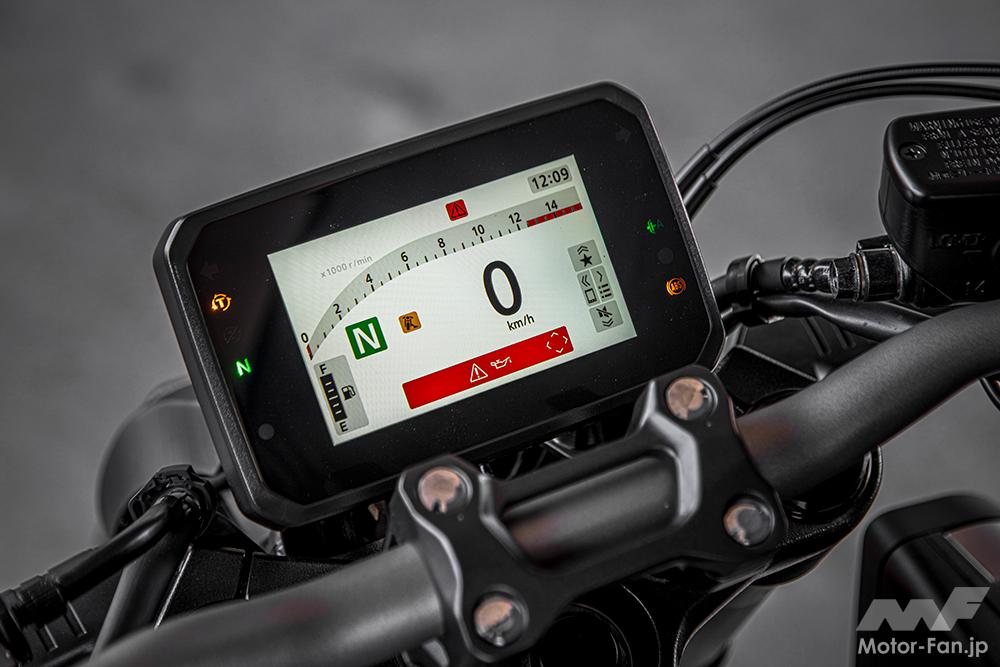
A 5.0-inch TFT full-color display shows various information. The background color can be selected between white and black. Auto, which automatically switches depending on the ambient light, can also be selected. When the “E-Clutch” system is operating, a green “A” mark lights up in the vertical indicator light row on the right side.
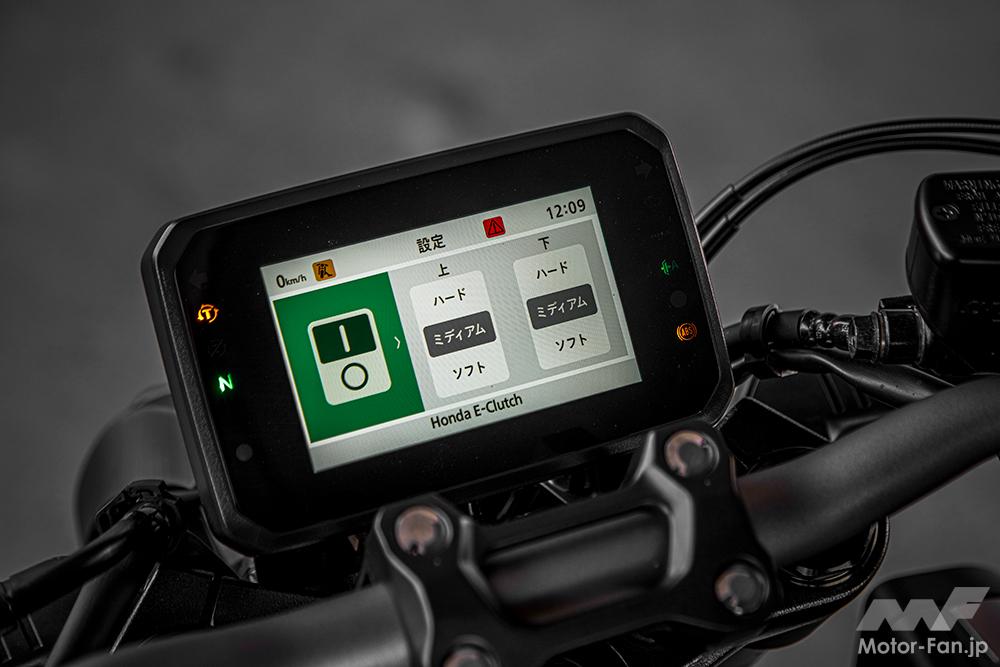
From the “FUNCTION” menu, you can select “Honda E-Clutch” to turn the “E-Clutch” system on or off, and you can also select the shift pedal load (i.e., response) from HARD/MEDIUM/SOFT.
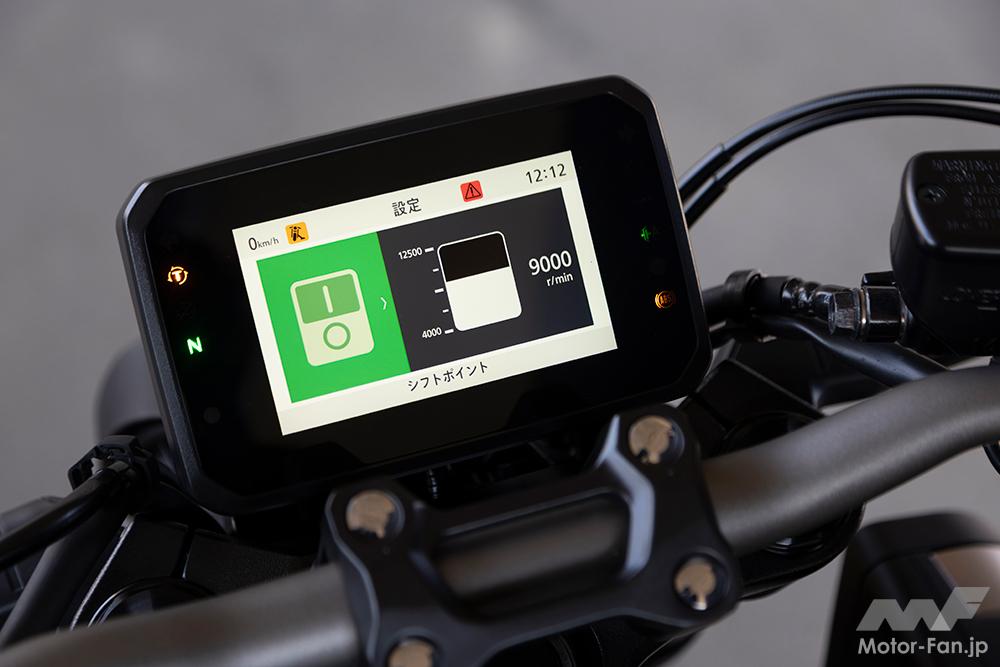
There is also a shift-up mode where you can set the desired shift-up RPM and the tachometer will flash to let you know when that RPM is reached. The photo shows the setting screen.
CB650R E-Clutch main specifications
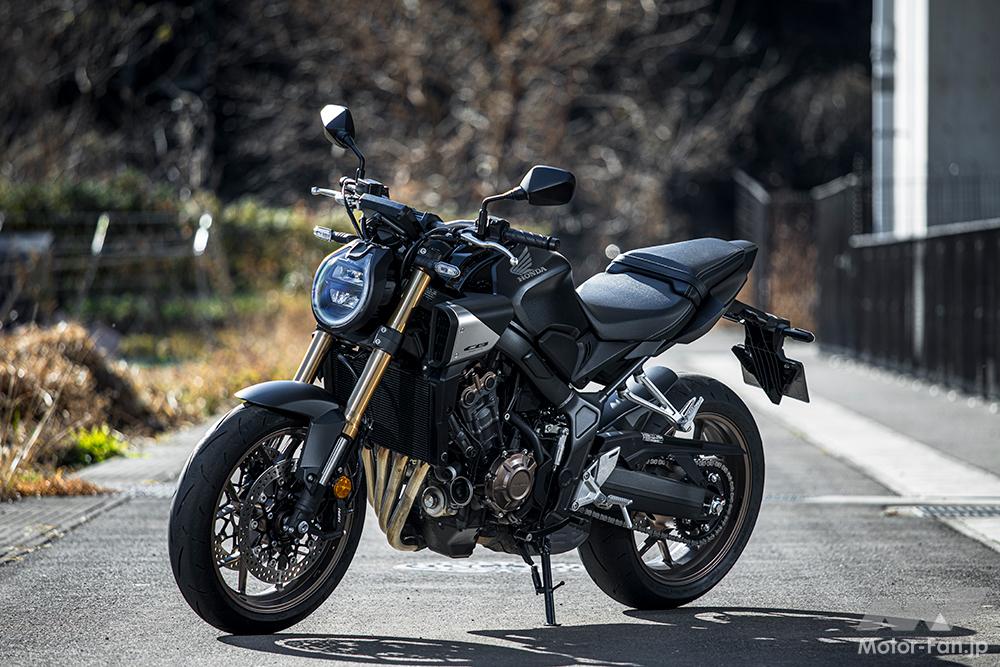
■Length x Width x Height 2,120 x 780 x 1,075 mm
■Wheelbase 1,450 mm
■Ground Clearance 150 mm
■Seat Height 810 mm
■Vehicle Weight 207 kg
■Engine Type Water-cooled 4-stroke DOHC 4-valve in-line 4-cylinder
■Total Displacement 648 cc
■Bore x Stroke 67.0 mm x 45.0 mm
■Compression Ratio 11.6:1
■Maximum Output 70 kW (95 PS) / 12,000 rpm
■Maximum Torque 63 N・m (6.5 kgf・m) / 9,500 rpm
■Fuel Supply System FI
■Fuel Tank Capacity 15 L
■Frame Diamond
■Suspension (Front & Rear) SHOWA SFF-BP41 mm inverted type / 122 mm stroke monoshock / preload level adjustment & 125 mm stroke
■Transmission Type 6-speed return
■Brake type (front and rear): 310mm double disc x radial mount caliper, 240mm single disc x single piston caliper
■Tire size (front and rear): 120/70ZR17M/C (58W), 180/55ZR17M/C (73W)
■Price: ¥1,089,000-