
![A new generation of “hydrogen-assisted” bicycle system developed by Toyota Boshoku [Japan Mobility Show 2025]](https://motopeek.com/wp-content/uploads/2025/11/4666-1762339687798.jpg)

A fuel cell (FCV) has been miniaturized to the size of a palm and installed on a bicycle!
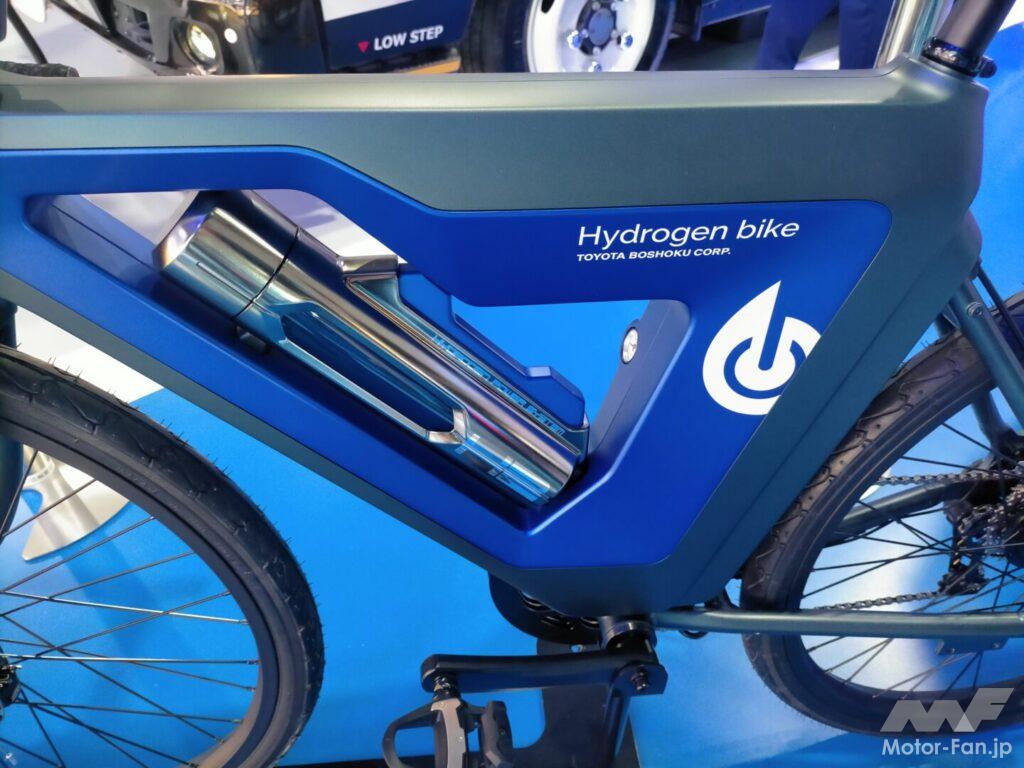
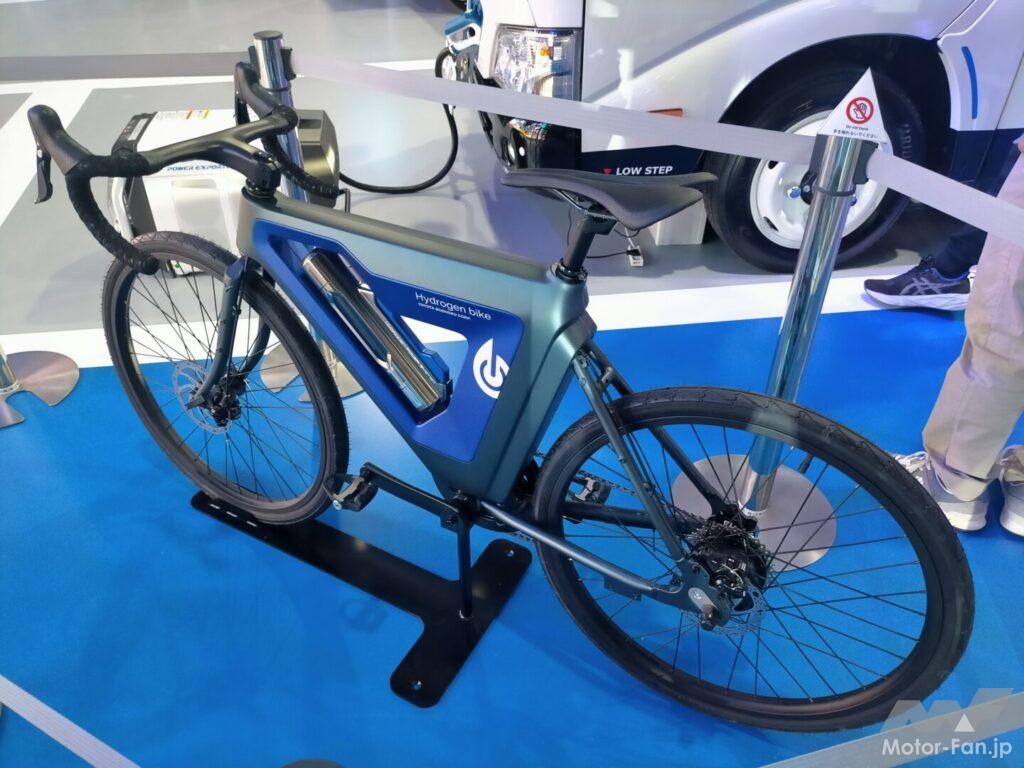
A palm-sized fuel cell (FCV) is placed inside the cover, and hydrogen is filled into a cylindrical bottle.
ADVERTISEMENT
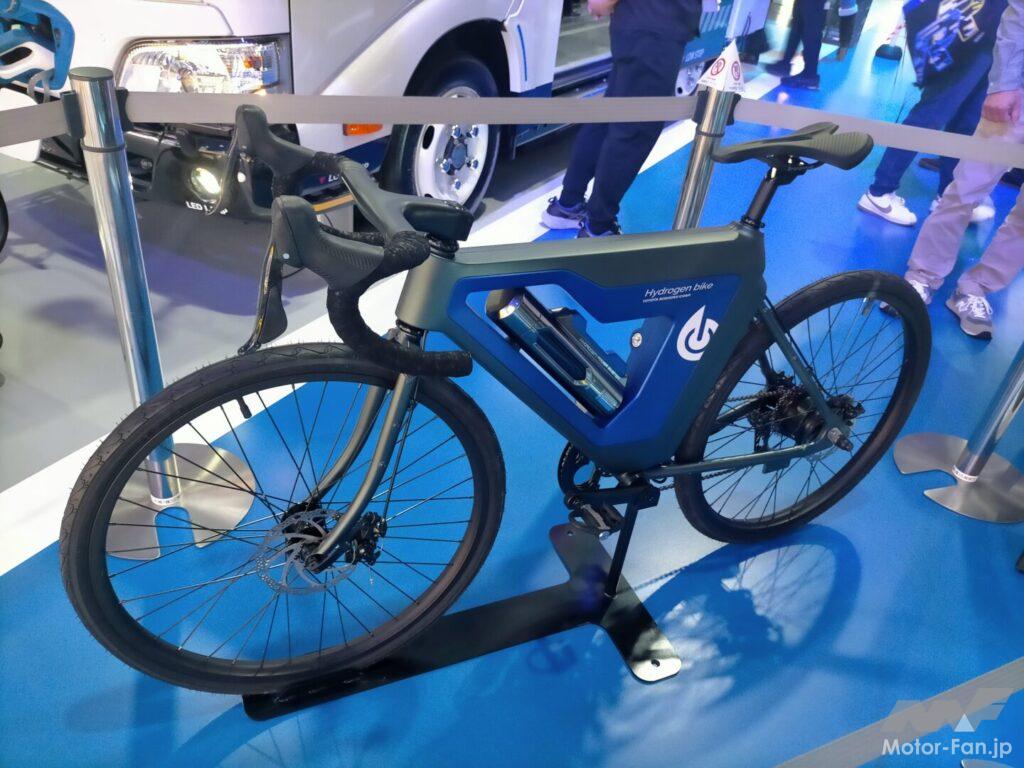
Toyota Boshoku, a group company of the automobile manufacturer Toyota, is an automobile parts manufacturer that mainly produces automobile interior parts and automobile filters.
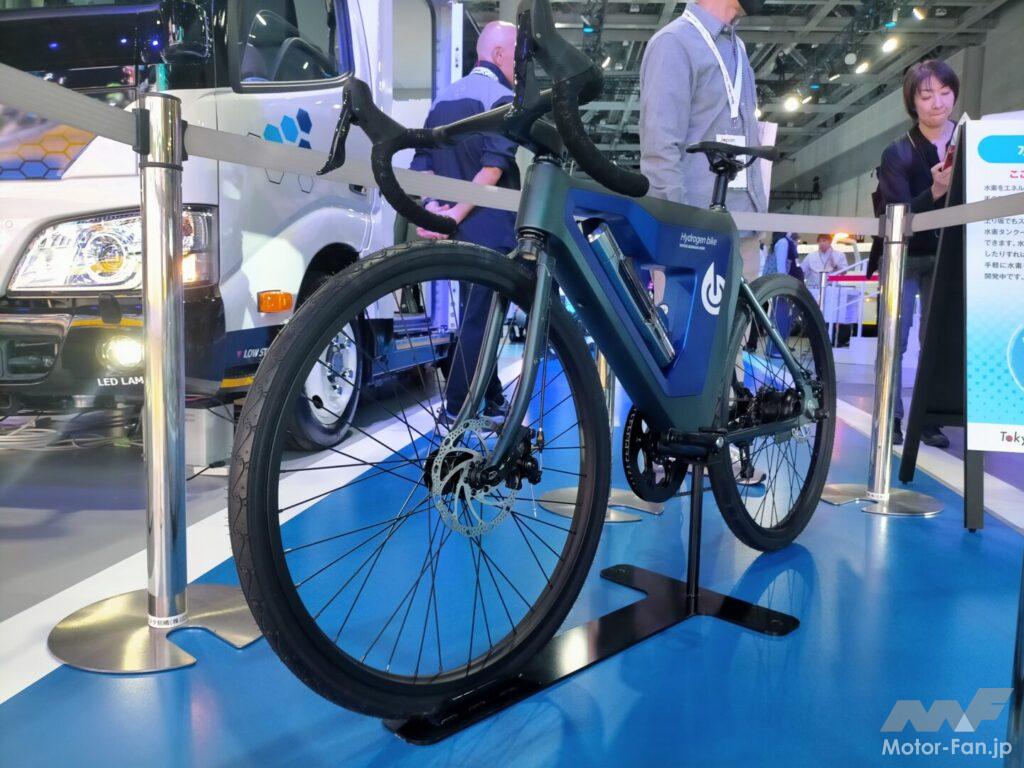
Toyota Boshoku has miniaturized a fuel cell (FCV) that can generate electricity using hydrogen as energy, to fit in the palm of your hand. This system has been installed on a bicycle, creating the hydrogen-assisted bicycle shown in the photo.
Commercially available electrically assisted bicycles are powered by lithium-ion batteries, but the bicycle pictured here uses a fuel cell (FCV) that generates its own electricity using hydrogen. This electricity is used to assist pedaling with the power of an electric motor, just like a regular electrically assisted bicycle.
The vehicle’s electric assist function provides a range of 80km with a single hydrogen tank. The electric assist function’s range can be extended by refueling with hydrogen or replacing the hydrogen tank. Toyota Boshoku is currently developing a “hydrogen filling device” that will allow for easy hydrogen refueling.
ADVERTISEMENT
Here are the key points about fuel cells (FCVs)!

An illustration of a fuel cell vehicle (FCV) that generates electrical energy during the chemical reaction between hydrogen and oxygen to turn them into water.
A fuel cell vehicle (FCV) is a system that generates electrical energy during the chemical reaction between hydrogen and oxygen to form water. Unlike electric vehicles (EVs), which store electrical energy in lithium-ion batteries, the key feature of FCVs is that they generate electricity within the fuel cell installed in the vehicle and use this electricity to power the motor.
Like electric vehicles (EVs), fuel cell vehicles (FCVs) do not emit harmful substances and only produce water. Unlike electric vehicles (EVs), which require long charging times, FCVs can be filled with hydrogen fuel in a short amount of time.
Some people may think of hydrogen as dangerous because it can explode. However, hydrogen has less energy than gasoline, and at room temperature and pressure, its combustion and explosive power are lower than gasoline, so it can be used safely in cars, motorcycles, and bicycles (Note 1).
*Note 1: The “hydrogen explosion” that occurred at the Fukushima nuclear power plant during the Great East Japan Earthquake in March 2011 was caused by leaked hydrogen being compressed inside a building, igniting, and burning and exploding. In conclusion, even if hydrogen stored on a bicycle leaks, it will not generally explode.
 Toyota’s Hydrogen Business Leader Discusses the Path to a Hydrogen Society [Smart Energy Week Spring 2024] | Motor-Fan, a media platform focused on automotive-related articles
Toyota’s FC (Fuel Cell) Development Journey As Toyota aims to transition to a mobility company, it continues to adopt a multi-pathway powertrain strategy. FCV (fuel cell vehicle) development has a relatively long history, with passenger cars dating back to 1999.