
![A 1000km test ride on the Kawasaki Ninja 400 that will make you want to customize the suspension to your liking [3/3]](https://motopeek.com/wp-content/uploads/2024/12/3970-1760966892432.jpg)
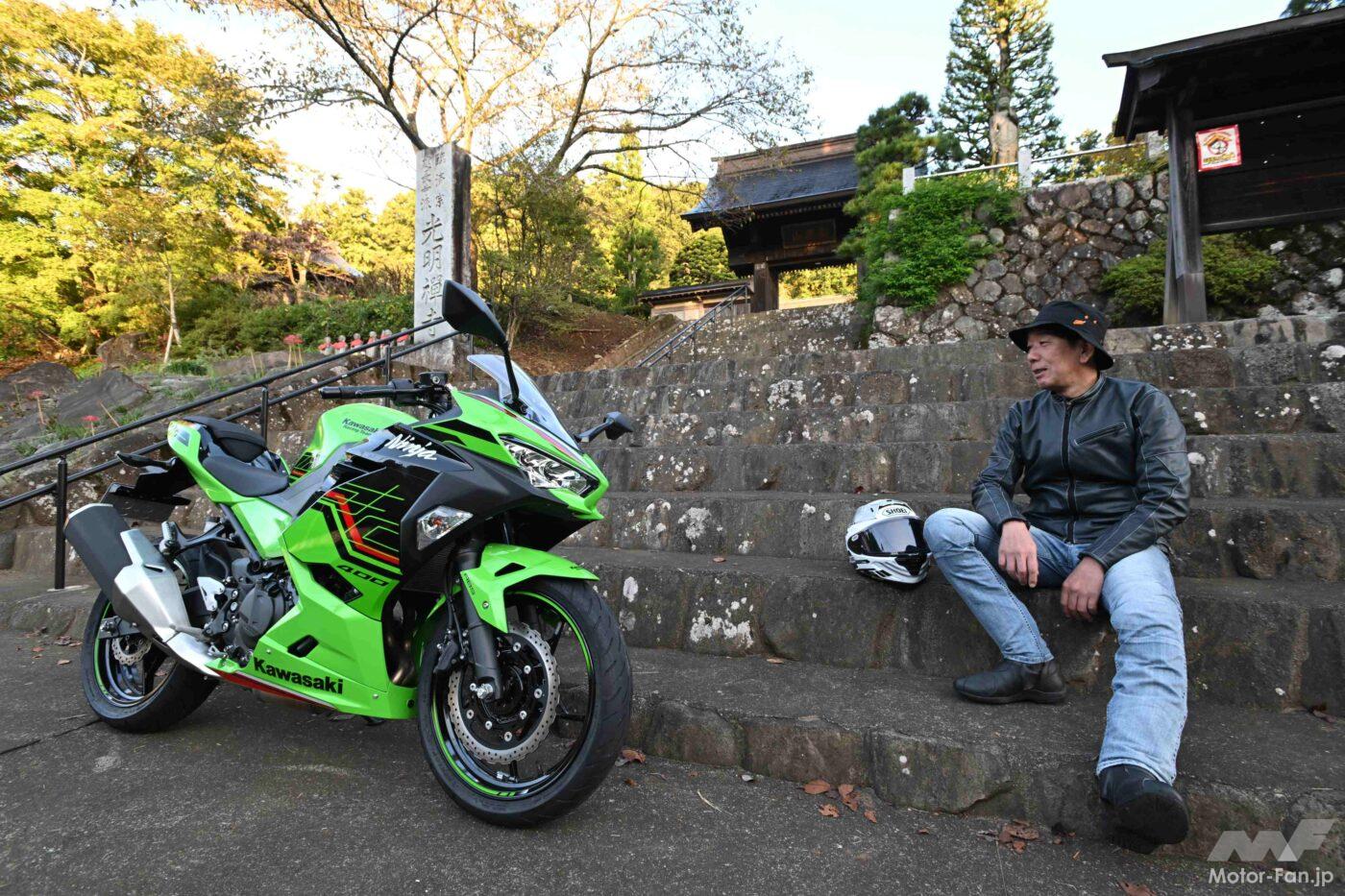
Kawasaki Ninja 400…770,000 yen
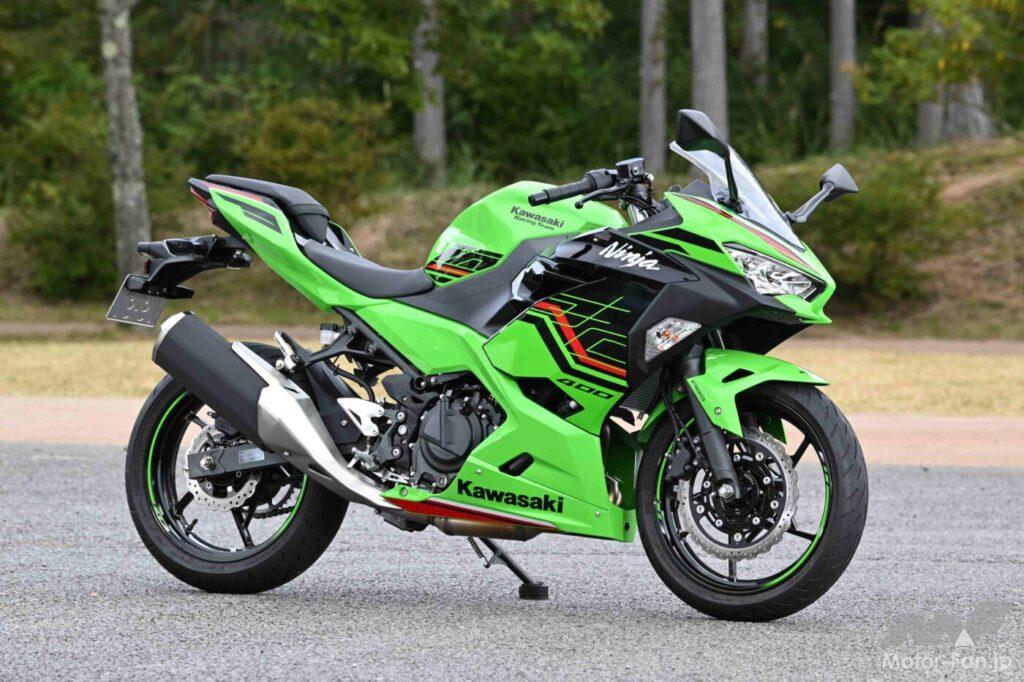
The current Ninja 400’s curb weight of 167 kg is the lightest of all Kawasaki’s water-cooled 400cc parallel twin series. The weight figures for its predecessors were 198 kg for the 1986 GPZ400S, 198 kg for the 1994 EX-4, 203 kg for the 2011 Ninja 400R, and 209 kg for the 2014 Ninja 400.
Riding position (height 182cm, weight 74kg) ★★★★☆
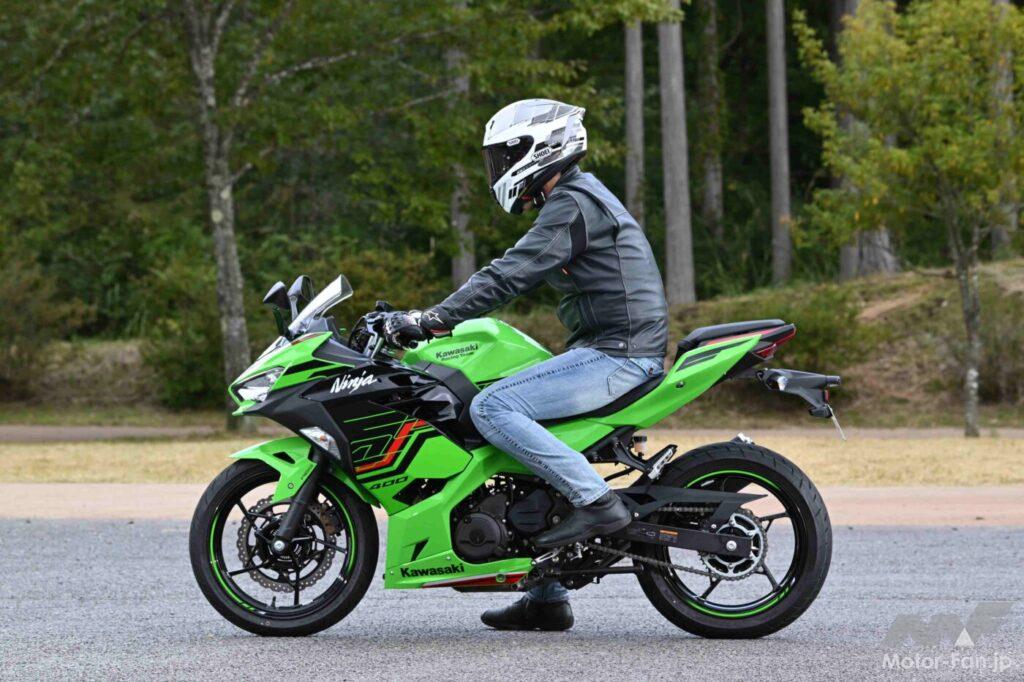
The riding position is like a sports tourer, and compared to the ZX-4R, which has the same engine displacement but a stronger emphasis on maneuverability, the handlebar grip position is higher and closer, and the seating position is lower. That’s why I’d like to say it’s ideal for city riding and long runs… but as a large-sized author, I felt it was a bit tight around the lower half of my body, so if I were to own this bike, I would probably install the genuine accessory high seat (priced at 18,480 yen) that raises the seat height from 785 to 815 mm.
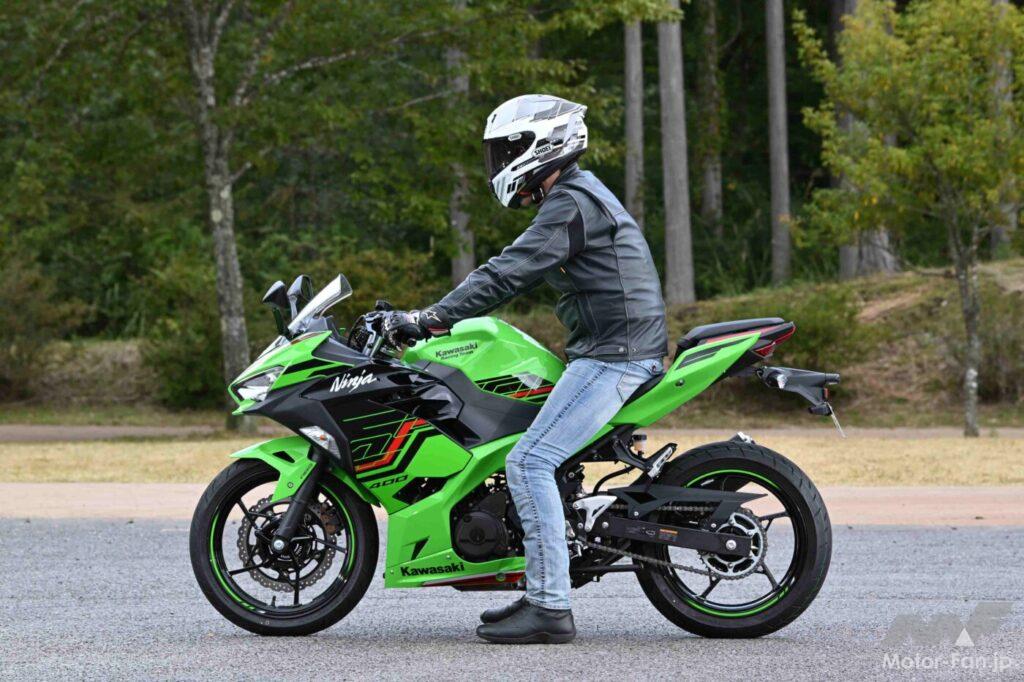
Aside from the tightness of the lower body, the foot reach is very good, with even a rider who is 160cm tall having 1/3 to 1/2 of both feet on the ground (a rider who is 170cm tall will have both feet flat on the ground).As an aside, the seat height of rival 400cc class full-cowl sports bikes on the market is the same as the Ninja 400 at 785mm for the Honda CBR400R, 5mm lower at 780mm for the Yamaha YZF-R3, and a manly 824mm for the KTM RC390.
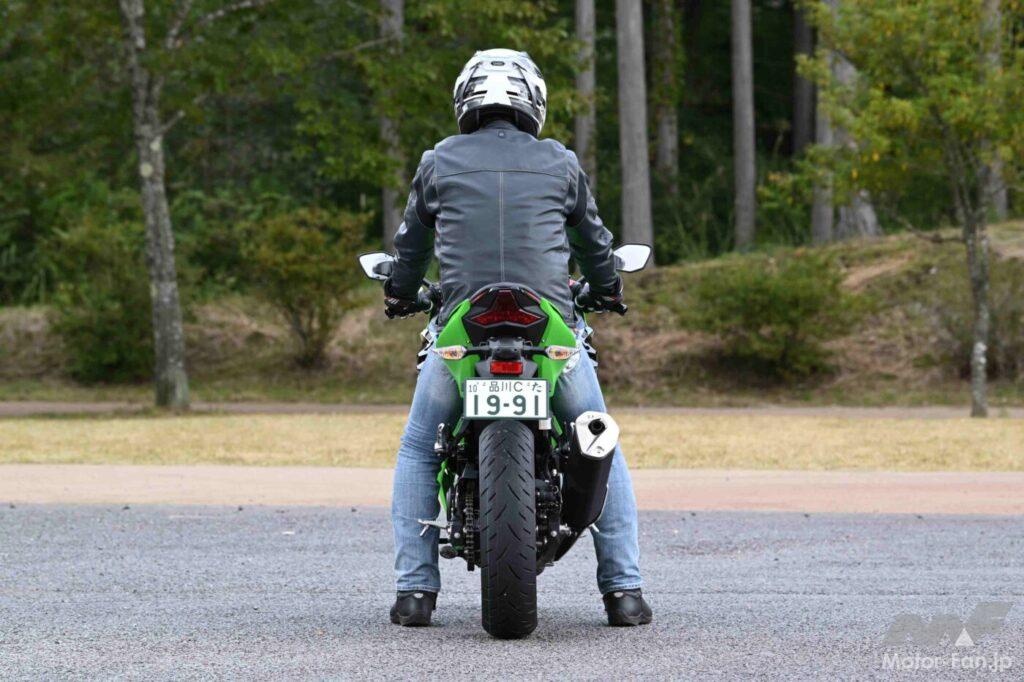
Tandem riding ★★★★☆
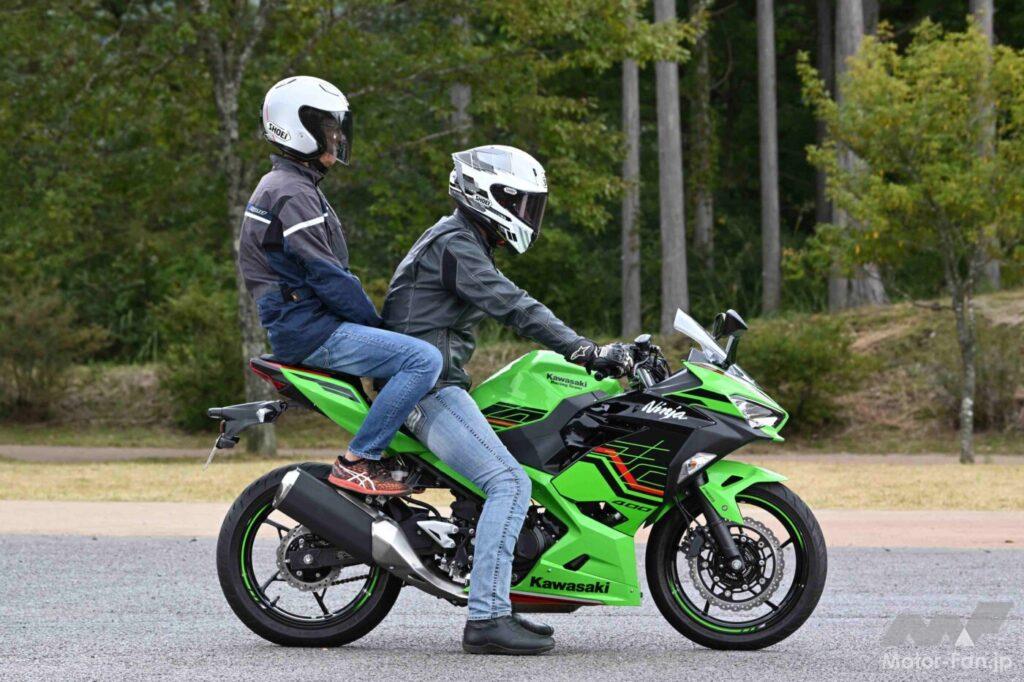
Although there was a big difference in the height of the front and rear seats, and I thought I might feel some discomfort, pillion riding was surprisingly comfortable. This impression was shared by photographer Togashi (height 172cm, weight 52kg) who sat in the back seat. “First of all, thanks to the perfect positioning of the footpegs, I was able to respond well to acceleration and deceleration, and the pillion belt was very easy to grip. The urethane seat has just the right amount of firmness, which feels good. If I had to point out a drawback, it would be that the seat wasn’t firmly attached to the body, but I think this problem could be solved by adding urethane or rubber around the claws to reduce the “play”. Of course, a grab bar would be even better, but I was impressed by how much more comfortable it was than I expected.”
Handling ★★★★★

Considering the standards of recent 400cc full-cowl sports bikes, it is easy to handle. That’s to be expected, since it shares the same basic design as the Ninja 250, but when pushing and pulling it, I really felt how light, small, and slim it is. Furthermore, while the handlebar angle and minimum turning radius of its rivals, the CBR400R and YZF-R3, are 32 degrees and 2.9m, the Ninja 400 is 35 degrees and 2.5m. And considering that the ZX-4R is 35 degrees and 2.6m, and the Ninja 650 is 32 degrees and 2.8m, it seems that Kawasaki has put a lot of effort into handling.
Steering wheel/meter area ★★★★☆

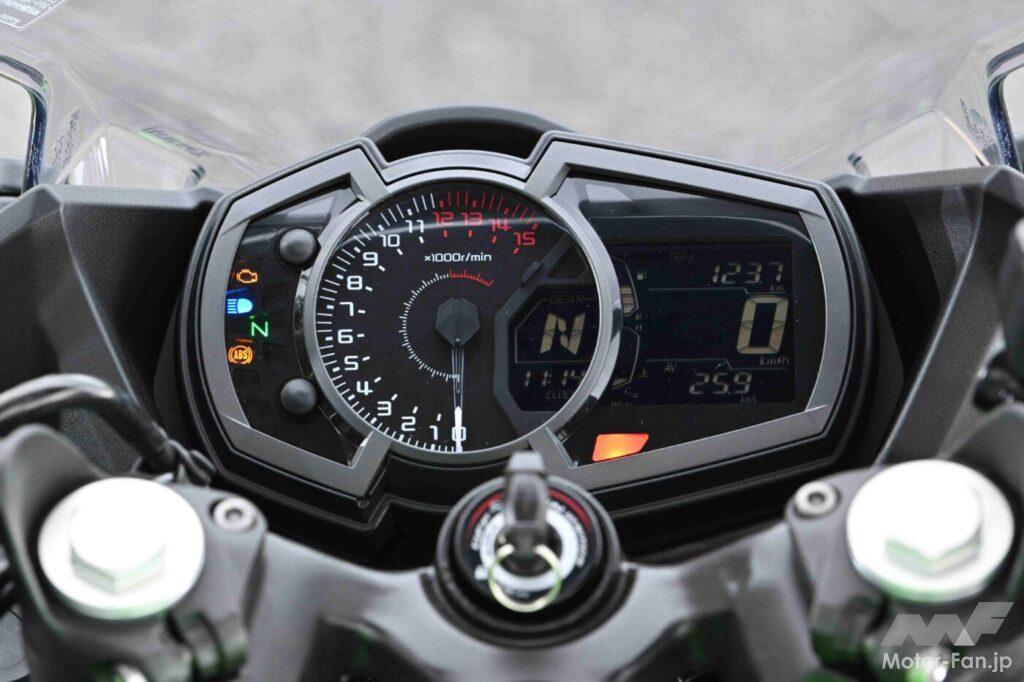
Although it looks like a supersport bike at first glance, the clip-on handlebars are clamped on the top bridge, with the base of the handlebars offset upwards. The rearview mirror has good visibility and is set in the right position with a satisfying click, making folding it down when parking easy. The wind protection of the screen is lacking. The meter is a needle-type tachometer + LCD monitor, and considering the recent rapid spread of TFT meters, this configuration is actually quite refreshing. The speed is displayed above with odometer/trip times x 2, and the instantaneous and average fuel consumption and cruising range are displayed below.
Left and right switch/lever ★★★☆☆

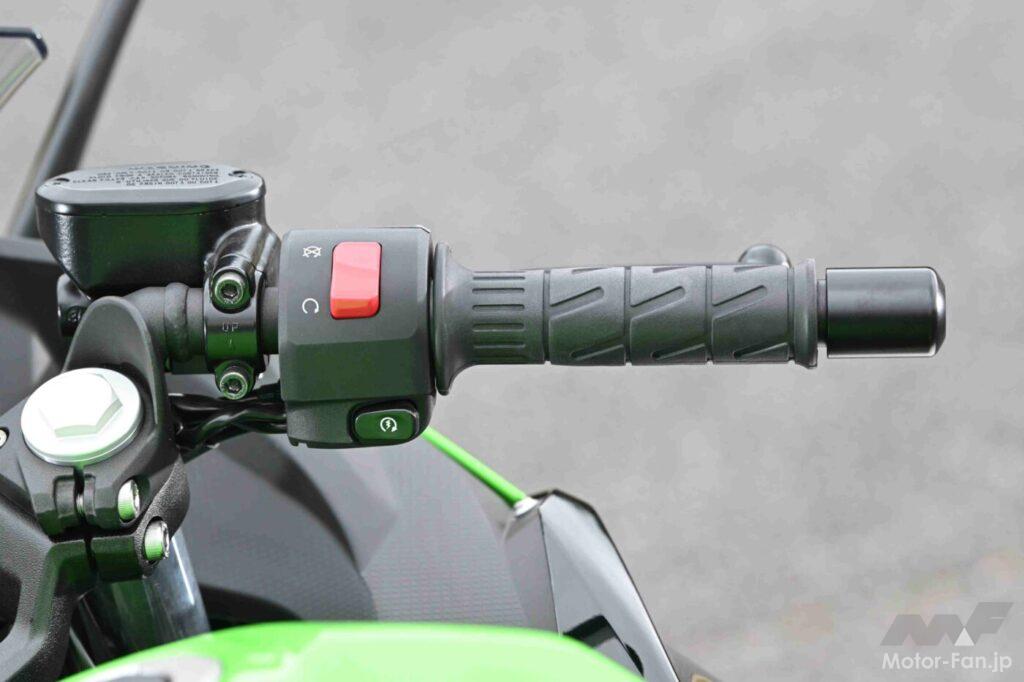
The simply configured left and right switch boxes and grip rubbers are standard items that Kawasaki has been using on various on-road models for a long time. The bar end weights for vibration control are the same as those on the Ninja 250.

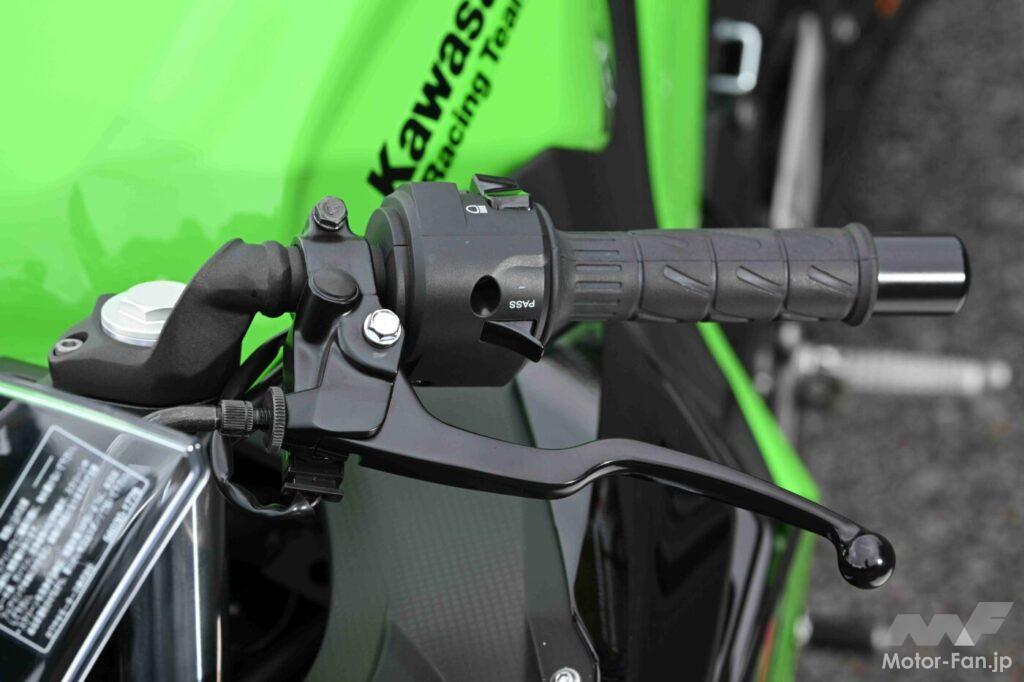
Kawasaki often uses dials to adjust the position of the brake and clutch levers even in the under-400cc world, but it seems they have placed emphasis on cutting costs, and the Ninja 400/250 does not have one (although the ZX-4R and 25R do).
Fuel tank/seat/step area ★★★★☆
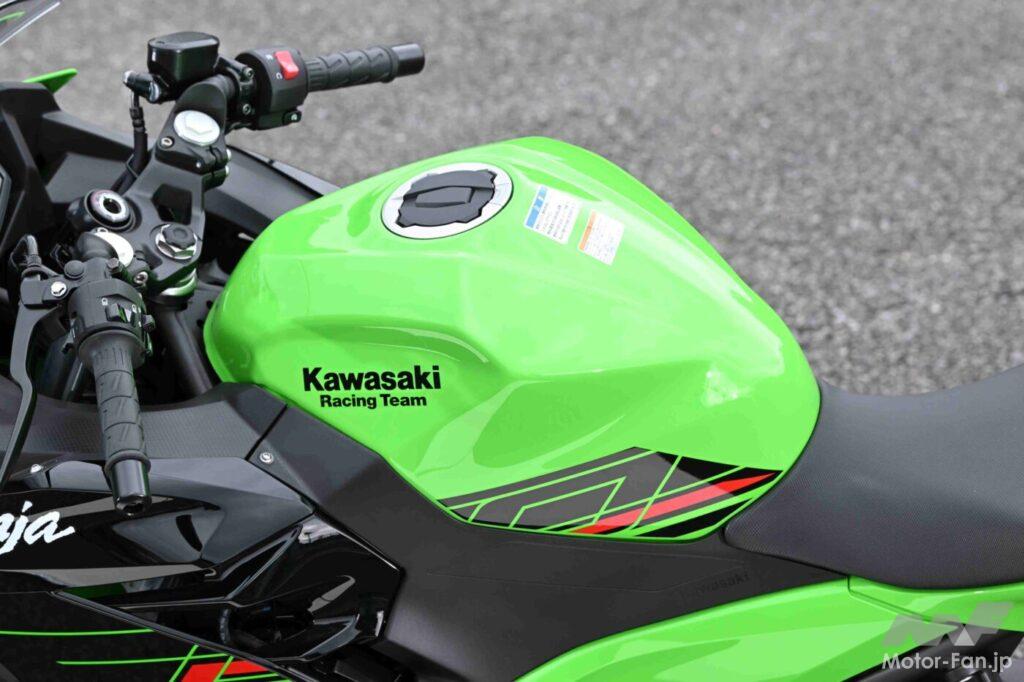
The gas tank and side covers are slim, a feature unique to parallel twin-cylinder vehicles, and the excellent feeling of contact with the ground around the front when decelerating, as mentioned in the second article, can be felt through these parts and the handlebars. The impression of the seat wasn’t particularly bad, but strictly speaking, the urethane is thin and the seat surface slopes downward at the front.

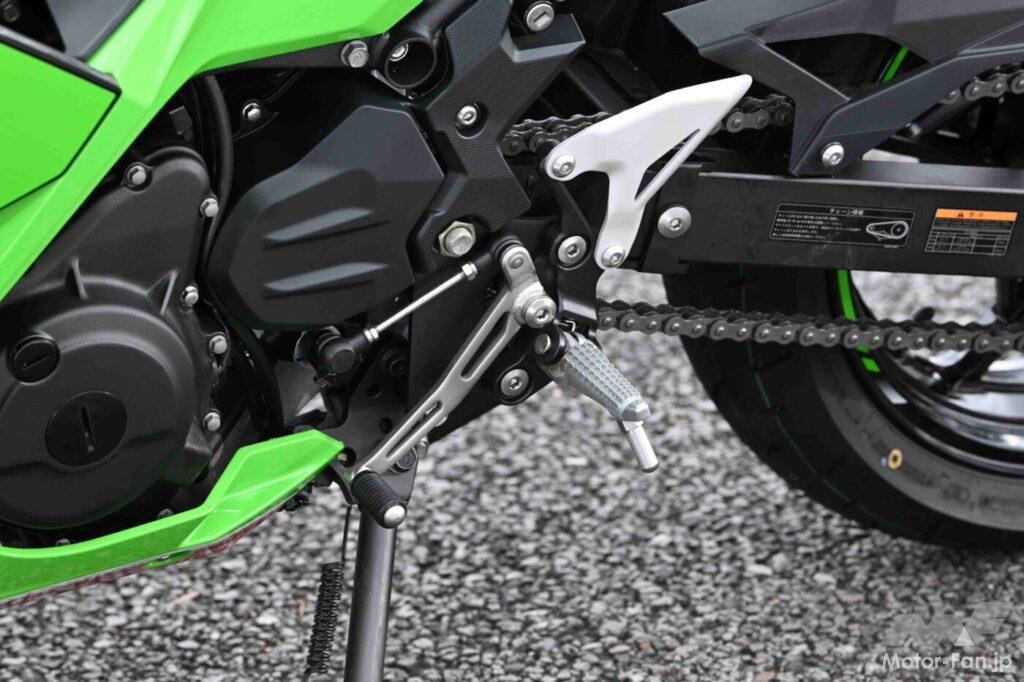
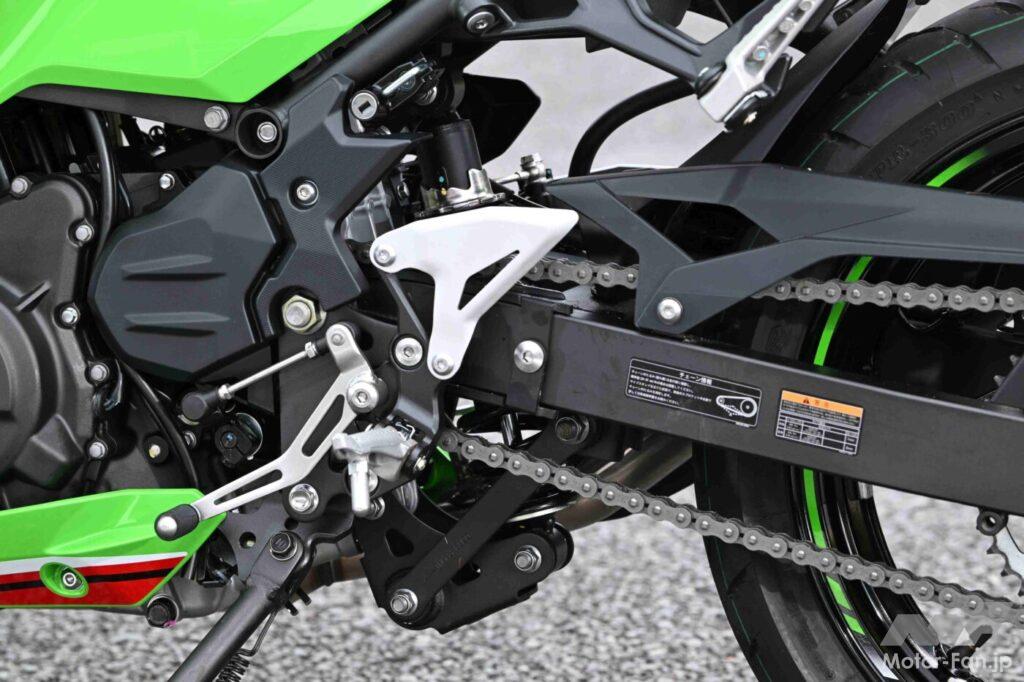
The footpegs are designed like supersport bikes, with no rubber on the top of the bars. However, based on supersport bikes, they are installed forward and downward. The heel plate is compact, but provides excellent grip.

Load capacity ★★★☆☆
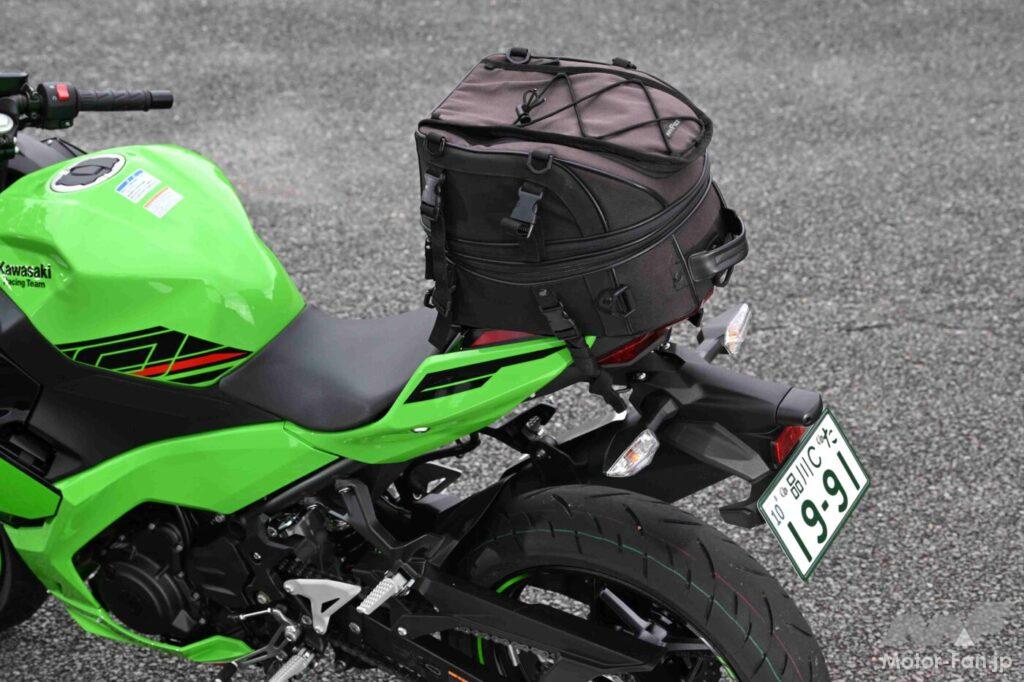
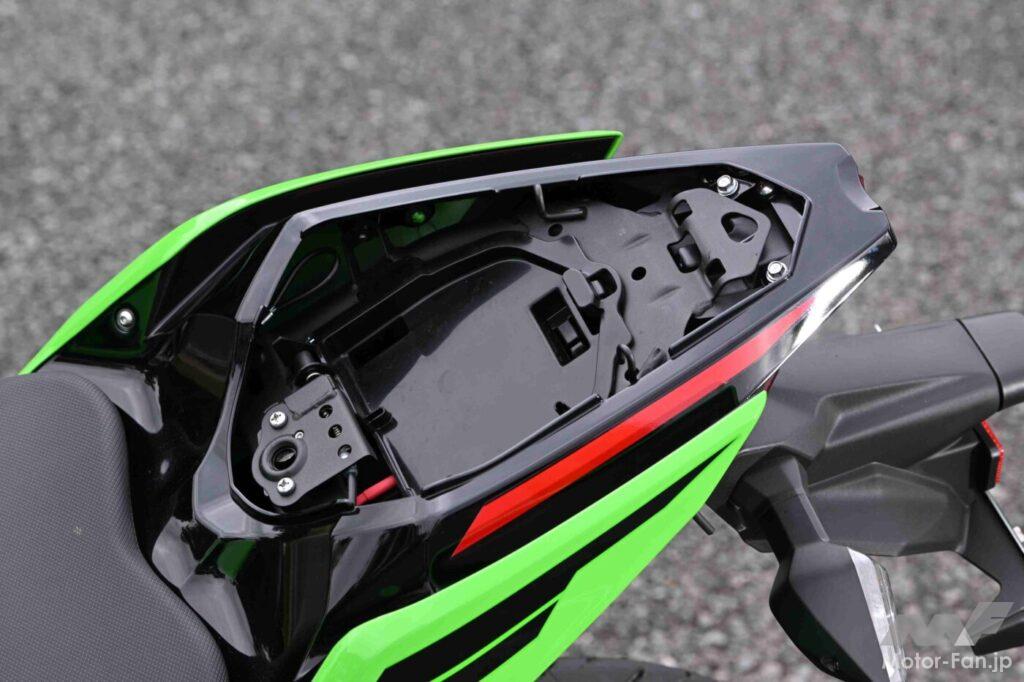
There are luggage hooks on the passenger step bracket and below the tail lamp, but the loading capacity is questionable. When I attached my personal Tanax double deck seat bag, I couldn’t say it felt very stable. The space under the passenger seat has a two-tiered structure, and can store an ETC unit as well as some small items. The main seat is not secured with bolts, but with the same catch lock system as the passenger seat, and can be removed by pulling a wire installed under the passenger seat.

Brakes ★★★☆☆
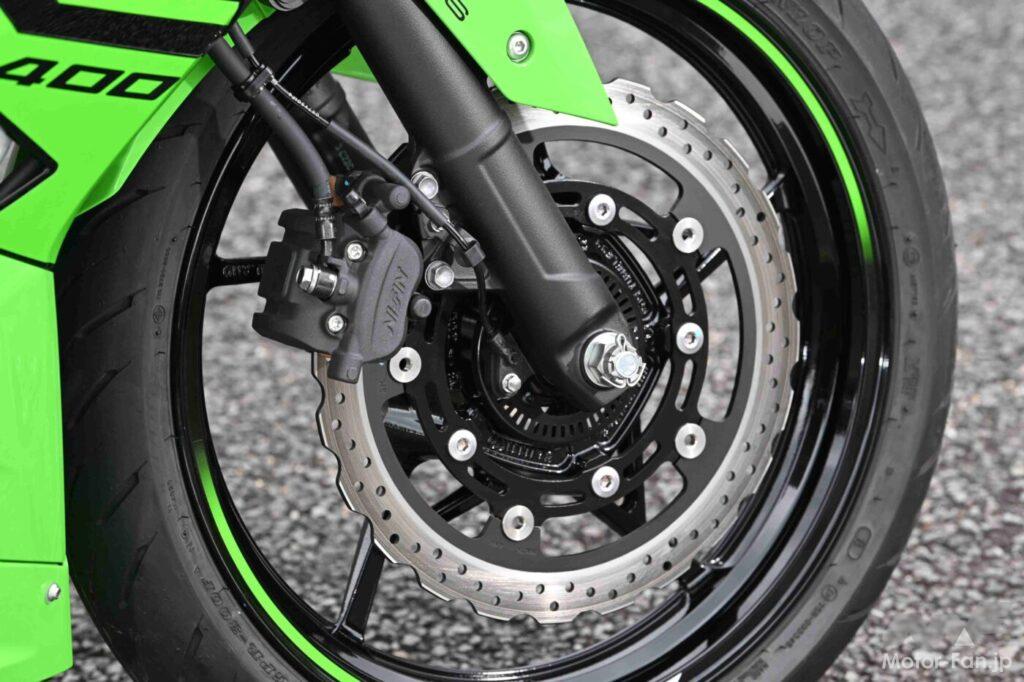
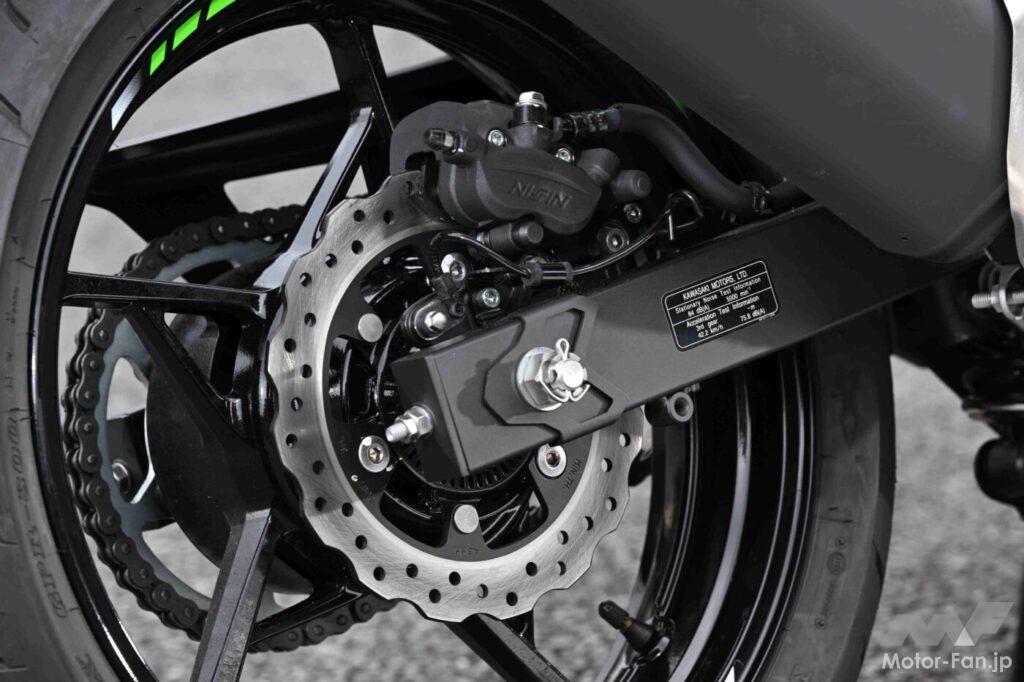
The brake discs are petal type, measuring 310mm in the front and 220mm in the rear, and the calipers are single-sided, two-piston type both front and rear. The previous model, which was the younger brother of the Ninja 650, used a double disc in the front, so some people may find this lacking, but I felt that the braking power was sufficient, and the single disc contributes to the light weight of the vehicle, so I personally have no objections to the current configuration.
Suspension ★★★☆☆
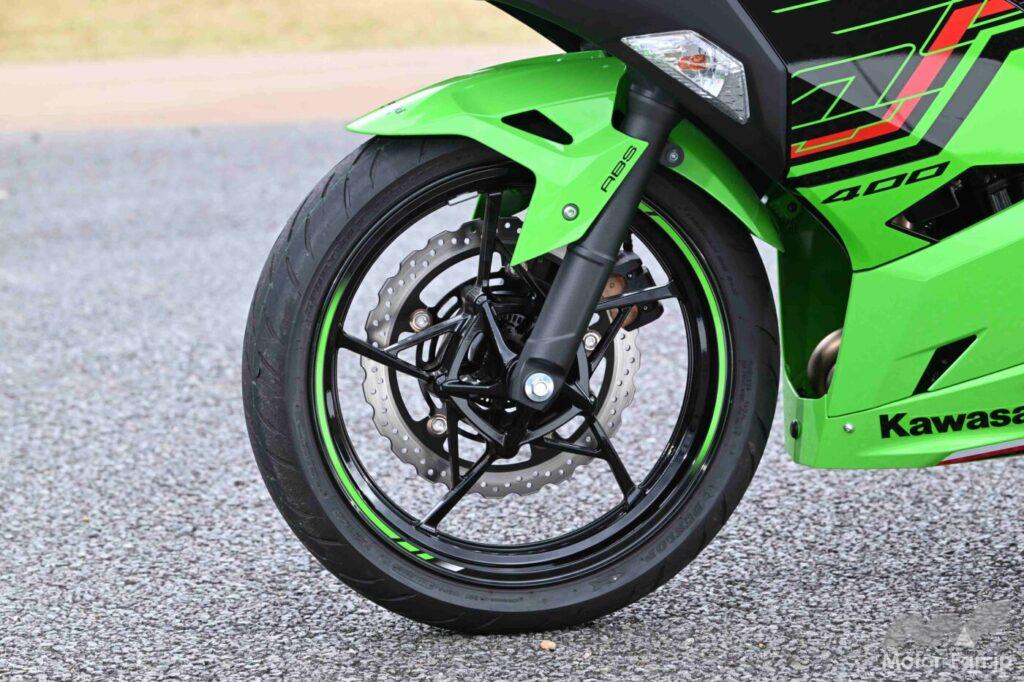
The 41mm upright front forks and link-type rear suspension move very naturally, but when enjoying sporty riding on mountain passes, there were several times when I felt that the front and rear dampers could be a little more effective (the only adjustment mechanism is a five-stage rear preload). Incidentally, most of the suspension parts, including the front and rear suspension, are the same as those of the Ninja 400 and 250, which were developed as sibling models; the only difference is the tires (400: radial, 250: bias).
In-vehicle tools ★★☆☆☆
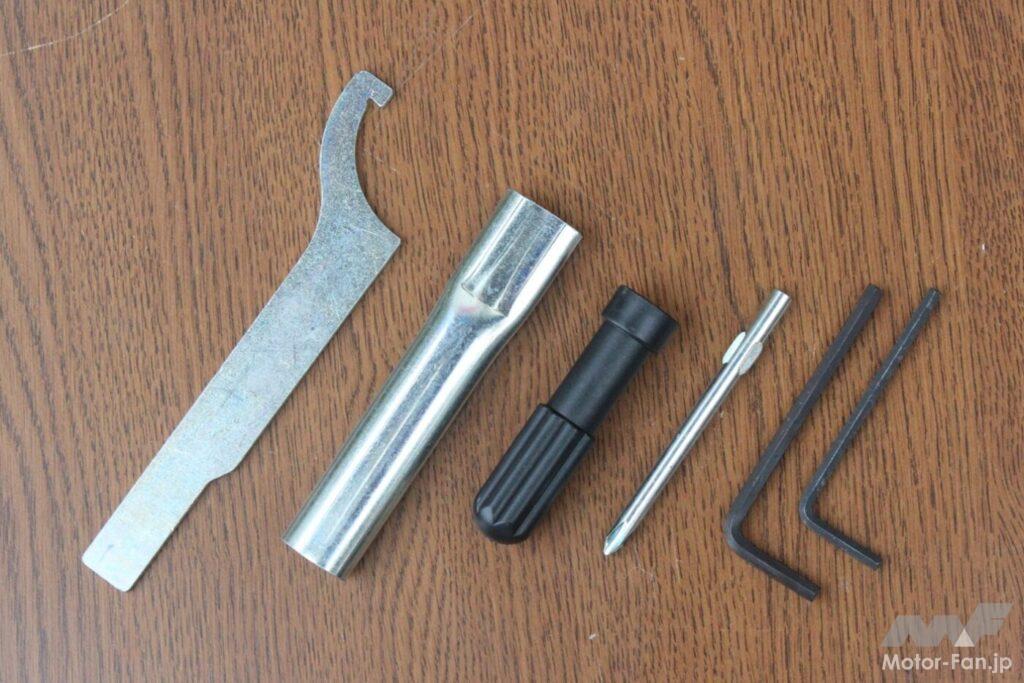
The current Ninja 400, which went on sale in 2018, originally came with a luxurious set of eight tools, but unfortunately, from the 2022 model onwards, the set has been reduced to four tools: two open-end wrenches (10/12mm, 14/17mm), a 24mm box end wrench, and pliers. It now includes a hook wrench and extension bar for adjusting the rear shock preload, an interchangeable screwdriver, and two L-shaped hex wrenches (4mm, 5mm).
Actual fuel consumption ★★★★★


The actual fuel economy measured in this article is usually lower than the figures posted online (many people say the Ninja 400 gets around 25-27km/L), but this time I was surprised at how good the fuel economy was. I wasn’t driving in an energy-efficient manner, so perhaps my throttle operation was a good match… The tank capacity is 14 liters, so the cruising range calculated from the average fuel economy is 29 x 14 = 406km. The reason the mileage in ③ and ④ is short is because I coordinated my timing with the friends I was touring with. The fuel warning light flashing at 2.9 liters remaining was only seen in ⑤ this time.
ADVERTISEMENT
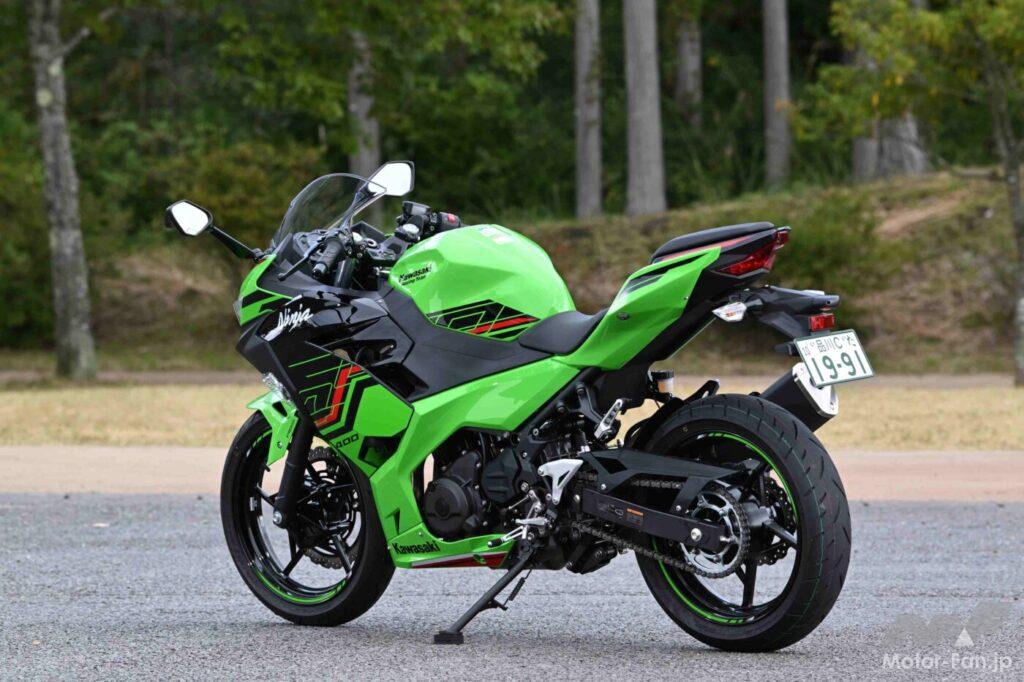
Until 2023, Kawasaki sold the Ninja 400 worldwide, which was almost identical to the Japanese model, but from 2024, they will introduce the Ninja 500, which has an increased displacement (actual displacement is 451cc) by repurposing technology from the Eliminator. The maximum power and torque for the North American model are 51ps and 43Nm, while the European model, which requires an A2 license, is 45.4ps and 42.6Nm.
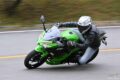 Now is the time to ride the Ninja 400. After realizing my own inadequacy, an ordinary middle-aged rider
  felt that this was the one. | Kawasaki 1000km Serious Test Ride [1/3]
The Ninja 400 has a racing look, but is also a versatile bike that can be used for a variety of purposes, and is popular with many riders. However, what first caught my eye about this model was the exquisitely tuned weight and maximum output. REPORT: Nakamura Tomohiko PHOTO: Togashi Hideaki
ADVERTISEMENT
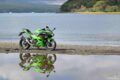 It has a wider range of riding than the ZX-4R, and you can feel the dynamic performance that is completely different from its predecessor. Kawasaki Ninja 400 1000km Serious Test Ride [2/3]
In terms of simple speed, the ZX-4R is superior, but in terms of comfort, the predecessor model from before 2017 seems to win. However, if you look at it from the perspective of being able to enjoy both sports riding and touring without excess or deficiency, the Ninja 400 has qualities that surpass both the ZX-4R and its predecessor. REPORT: Nakamura Tomohiko PHOTO: Togashi Hideaki
Main specifications
Model: Ninja 400
Model: 8BL-EX400L
Length x Width x Height: 1990mm x 710mm x 1120mm
Wheelbase: 1370mm
Ground Clearance: 140mm
Seat Height: 785mm
Caster/Trail: 24.7°/92mm
Engine Type: Water-cooled 4-stroke parallel twin
Valve Type: DOHC 4-valve
Total Displacement: 398cc
Bore x Stroke: 70.0mm x 51.8mm
Compression Ratio: 11.5
Maximum Power: 35kW (48ps) / 10,000rpm
Maximum Torque: 37N・m (3.8kgf・m) / 8,000rpm
Starting Method: Self-starter
Ignition Method: Full Transistor
Lubrication Method: Wet Sump
Fuel Supply Method: Fuel Injection
Transmission Type: Constant Mesh 6-Speed
Return Clutch Type: Wet Multi-Disc Coil Spring
Gear Ratio
1st Gear: 2.830
2nd Gear: 1.930
3rd gear: 1.420
4th gear: 1.140
5th gear: 0.960
6th gear: 0.840
1st and 2nd reduction ratios: 2.218 and 2.928
Frame type: Trellis (diamond type)
Front suspension: Telescopic upright type φ41mm
Rear suspension: Bottom link mono shock
Front tire size: 100/70R17
Rear tire size: 150/60R17
Front brake type: Hydraulic single disc
Rear brake type: Hydraulic single disc
Vehicle weight: 167kg
Fuel used: Unleaded regular gasoline
Fuel tank capacity: 14L
Passenger capacity: 2 people
Fuel consumption rate (Ministry of Land, Infrastructure, Transport and Tourism notification value): 31.1km/L (2 people)
Fuel consumption rate (WMTC mode value, class 3-2): 25.7km/L (1 person)