

QJ Motor SRV250A…698,000 yen

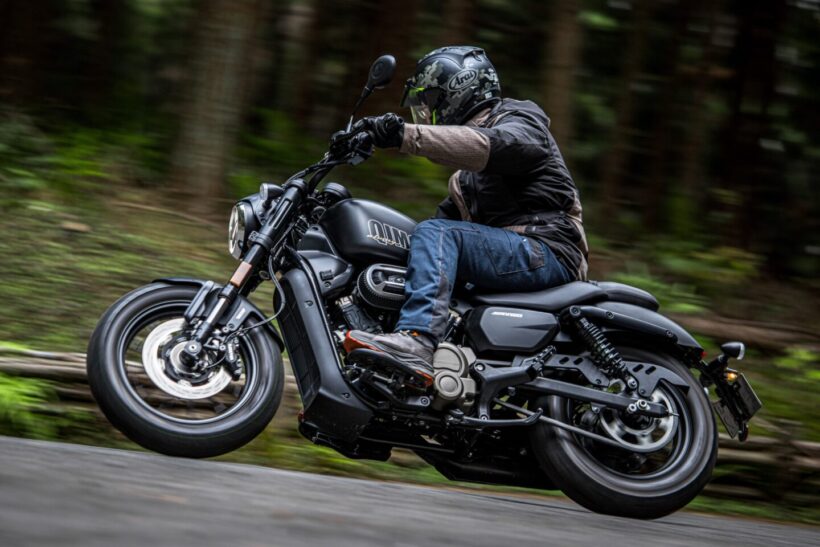
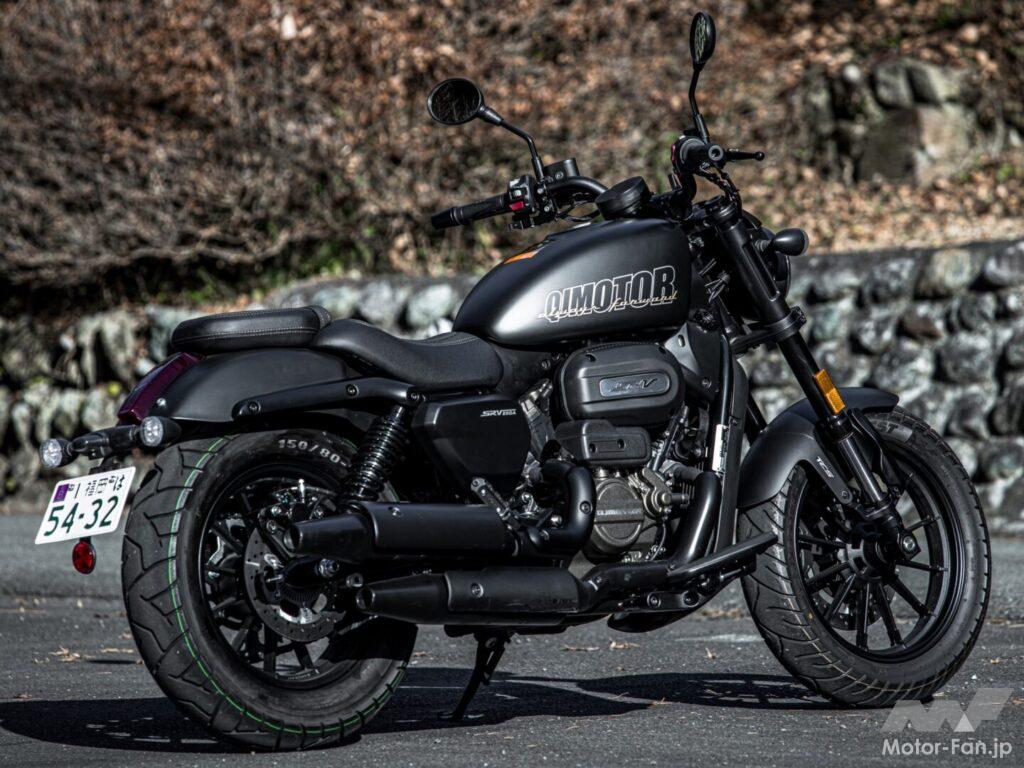
The compact bobber style has a presence that exceeds its class. The wheel diameter is 16 inches in the front and 15 inches in the rear. The inverted forks give it a modern impression. The left lever is for the rear brake, not the clutch.



ADVERTISEMENT

The standard tires are tubeless tires manufactured by CST, with a recommended air pressure of 225/250kPa, which is a little high.
ADVERTISEMENT

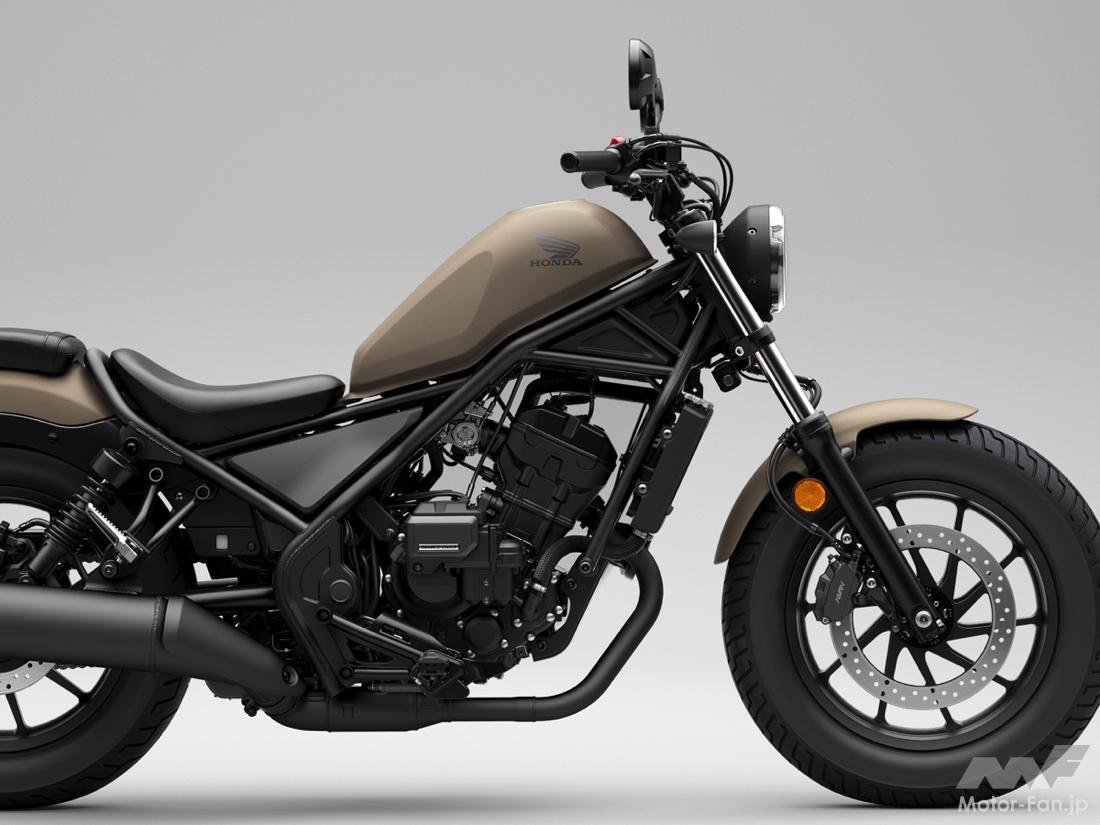
The body color is available in three colors: matte black, matte gray, and matte white. The Honda Rebel 250 E-Clutch is priced at 693,000 yen, which is only 5,000 yen more expensive than the SRV250A. While the Rebel 250 has a water-cooled single-cylinder engine, this one has a V-twin engine, and it also features an inverted fork and a color TFT meter, so it can be said that the cost performance is quite high.
It has the feel of a narrow-angle V-twin, and the AMT is quite practical.
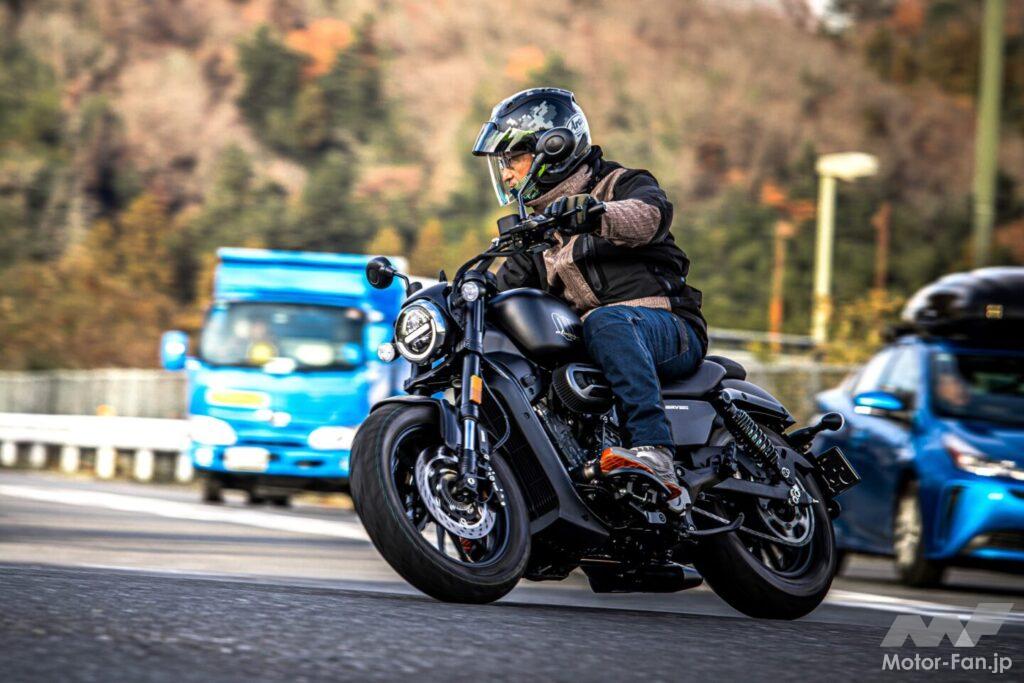
The QJ Motor’s SRV250A was unveiled in Japan at the Tokyo Motorcycle Show in March 2025. Based on the existing SRV250 cruiser, it incorporates a clutch and shift actuator to enable automatic transmission. The concept of using a manual transmission as a base is similar to Yamaha’s Y-AMT and BMW’s ASA. The QJ Motor’s adoption in the 250cc class is groundbreaking, and an added benefit is that it can be ridden with an automatic transmission-only license in Japan.
The engine is a 249cc water-cooled, four-stroke, V-twin with a claimed maximum output of 27.9 PS. This is slightly more than the 26 PS of the single-cylinder Rebel 250. Furthermore, since QJ Motor’s domestic catalogue lists it as an “AMT (Automated Manual Transmission),” this article will follow suit.

I couldn’t find any official documentation that listed the V angle, so I measured it with a protractor. It appears to be 60 degrees. Speaking of 250cc 60-degree V-twins, the Hyosung GV series also falls into this category, but while the bore diameter is the same at 58.0mm, the stroke is slightly different (QJ motor: 47.2mm, Hyosung: 47.0mm), so there doesn’t seem to be any particular connection.
I started the engine. The bass was thicker than I expected, and I couldn’t help but wonder, “Is this really a 250cc?” The sound belching out from the twin silencers was inclusive and pleasant to the rider’s ears. I was already captivated by the first impression.
This SRV250A has no pedals at either foot, and the left lever is for the rear brake. To shift from neutral to first gear, press the plus button on the left side of the handlebars. Then you’re ready to go. Just open the throttle slightly and the bike will start moving immediately, automatically shifting up to second and then third gear.
In STD mode, the program seems to shift up when the engine exceeds 4000 rpm and down when the engine drops below 3000 rpm. When accelerating on a flat road with the throttle open at around 30-50%, the shift shock is so minimal that it feels like a Honda DCT. On the other hand, when opening the throttle wide for rapid acceleration or on a steep uphill slope, the clutch is disengaged for a long time, causing the car to rock back and forth. However, this type of riding style is probably rare on a cruiser.
When the riding mode is switched to “S,” the power output characteristics and throttle response remain almost unchanged, but the shift-up point shifts to around 6000 rpm. This results in a more “pulling” characteristic, but since the torque in the mid-range is already strong, there is not much difference in the acceleration feeling itself.

The AMT fitted to the SRV250A also allows the selection of manual mode. Shifting up and down is controlled using the seesaw button on the left side of the handlebars, but the engine will forcibly upshift if the rpm exceeds 8000 rpm. Shifting up and down at will is also possible in AT mode, but the engine will not accept any operation if the engine rpm exceeds the allowable range. The rpm at top 6th gear and a 100 km/h reading on the meter is approximately 6000 rpm, and we were able to confirm a speed up to 120 km/h (approximately 8000 rpm).
If there’s one thing that bothers me, it’s how it behaves when stuck in traffic. It seems the clutch is set to fully engage at 10km/h, so it’s hard to move along at speeds below that. I tried every method I could think of, such as dragging the rear brake while opening the throttle, but I just couldn’t find a solution. During this test drive, I was unable to avoid the massive traffic jam on the Shuto Expressway that usually occurs at the end of the year, and I ended up struggling with this jerky behavior for over an hour.
That being said, that’s the only thing I’d like to see improved. If it were a manual transmission vehicle, my left hand would undoubtedly be screaming as it operated the clutch lever in the same situation. And above all, the SRV250A’s engine feel is superb. The small-displacement, narrow-angle V-twin has a pulsating feeling that’s like the continuous beating of a snare drum, and the way it smoothly accelerates from there into the high rpm range (probably due to the exquisite flywheel mass), and I can confidently say that this alone makes it well worth buying. I also felt this when I test rode the Hyosung GV250S-EVO Supreme, but even in the 250cc class, the flavor of a V-twin is fully conveyed.

I test rode the Hyosung GV250S-EVO Supreme in the fall of 2024. Check out the test ride report here .
The handling is neutral and the ride is comfortable.
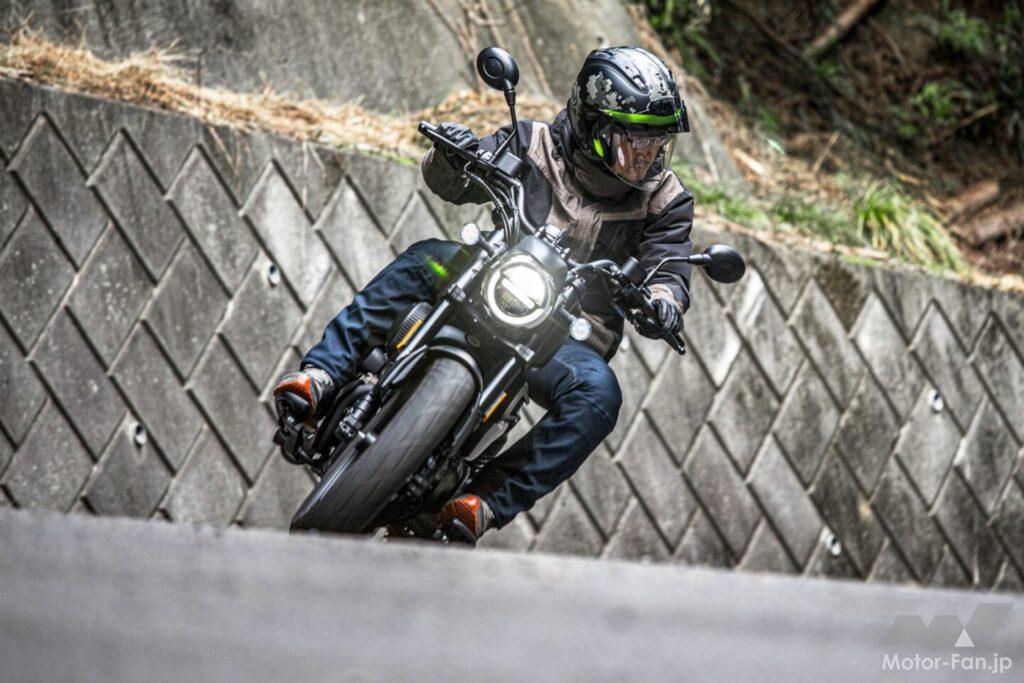
Next, let’s talk about handling. The first thing I noticed when I started riding was how comfortable the ride was, despite the low seat height. The rear suspension had a nice stroke, and even riding nearly 100km continuously, I didn’t experience any pain in my butt. Its direct rival, the Honda Rebel 250, has seen a reduction in the rear end jerking since adopting the E-clutch this year, but in terms of pure ride comfort, the SRV250A still wins.
The handling itself is extremely easy to handle, with the steering angle responding naturally to the lean of the body, and the response remains the same even at deep banking angles. However, if you get too excited about this and increase your pace on mountain roads, you will likely find that your line gets stuck at the end of the corner. It doesn’t turn as easily as you’d expect in the so-called secondary turning section, but this may be related to the comfortable rear suspension.
However, even if the bike starts to overshoot, it’s nice to have enough banking angle to give it a bit more lean. Also, the highly rigid inverted fork and the flexible frame are perfectly matched, allowing you to enter corners with confidence.
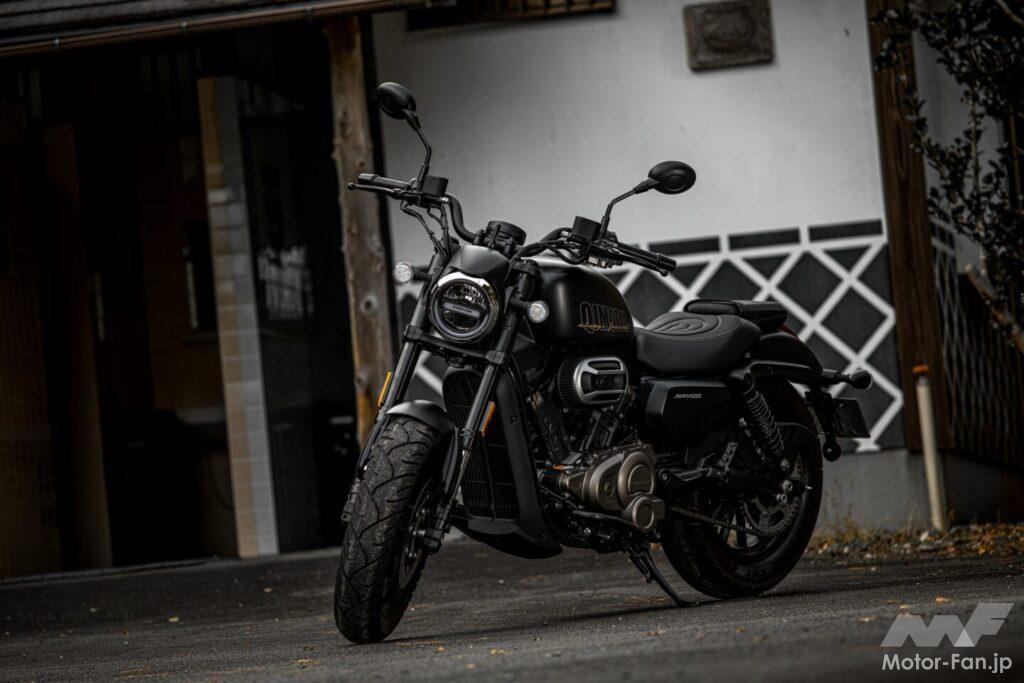
The brakes are operated with the right hand on the front and the left hand on the rear, just like on a scooter, but you’ll quickly get used to this. Control is more than sufficient both front and rear, and the ABS’s response when it intervenes is smooth.
The color TFT display has a high-quality feel, and is much easier to see and more satisfying than an LCD. Also, even though it’s a 250cc class bike, it’s very convenient that both the left and right levers have an opening angle adjustment mechanism. I was also surprised by the high level of perfection of the Rebel 250 E-Clutch, but for those who want the easy ride of an automatic, or those who insist that a cruiser must be a V-twin, or even riders who only have an automatic-only license, I would definitely recommend the SRV250A to your options.
Riding position and foot reach (175cm/68kg)
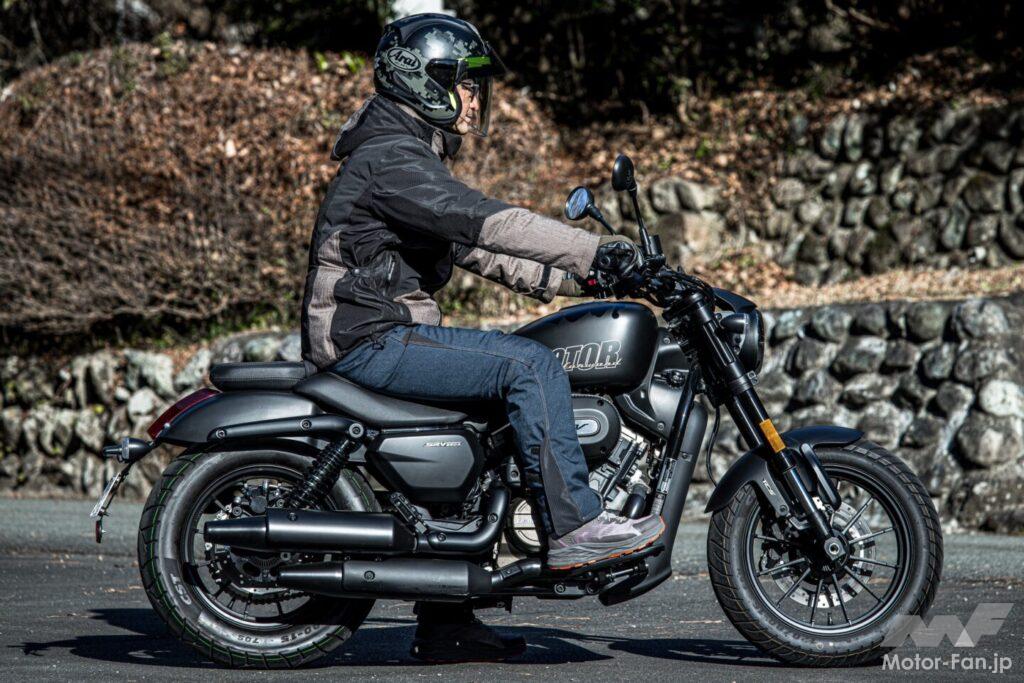
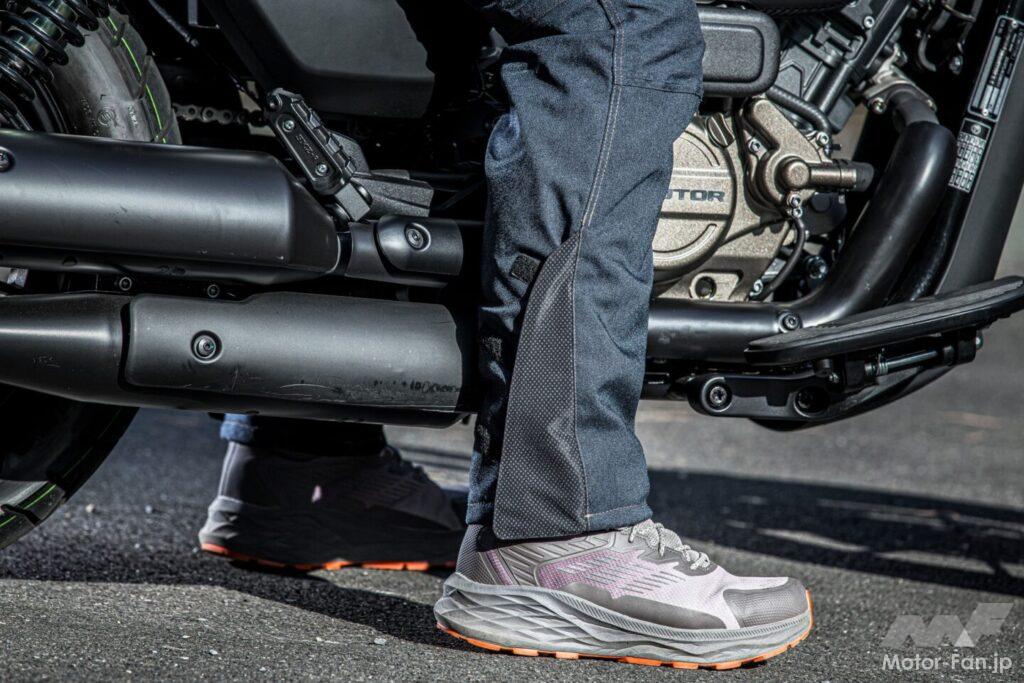
The seat height is 700mm. It’s slightly higher than the Rebel 250’s 690mm, but the urethane seat and rear shock absorber sink in at 1G, so the foot placement is about the same, or even better on the SRV250A. The step boards offer plenty of freedom in where to place your feet, and you barely notice your right foot touching the clutch actuator cover. The body of the bike looks compact from the rider’s perspective, but there’s no feeling of being cramped.
Detailed explanation

The engine is a 249cc water-cooled, four-stroke, V-twin engine that produces a maximum output of 27.9 PS/9000 rpm (the Rebel 250’s is 26 PS/9500 rpm). The AMT (automated manual transmission) has six gears and a wet multi-plate clutch.
ADVERTISEMENT
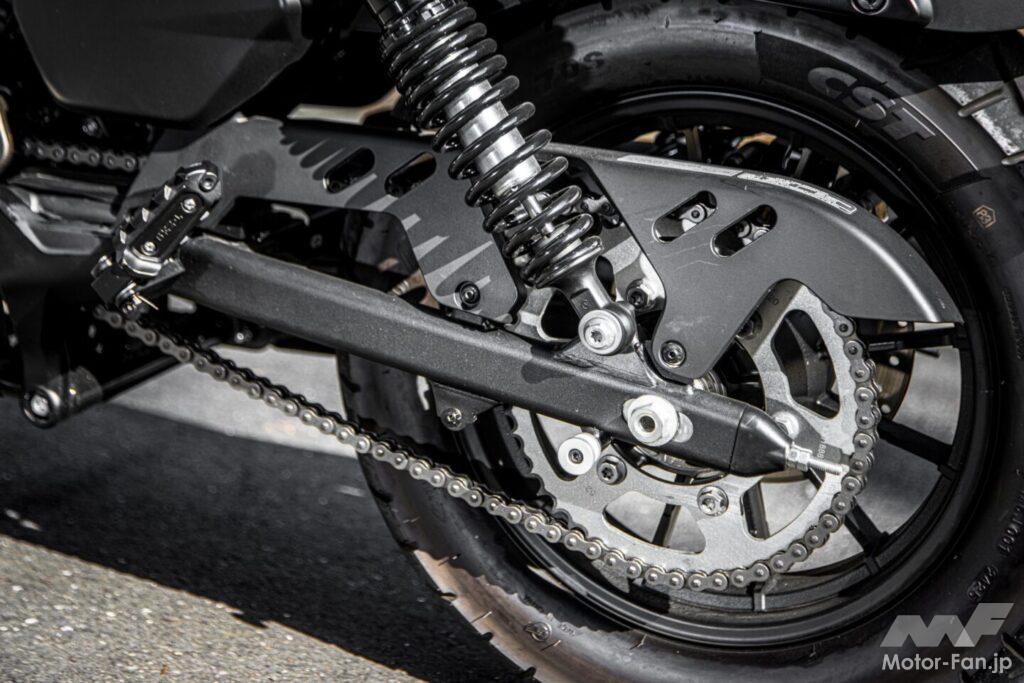
In the home country, the low-noise and low-maintenance belt drive is the standard specification, but the first batch that arrived in Japan uses the optional chain drive. The swing arm has an oval cross section.
ADVERTISEMENT

The inverted telescopic fork is non-adjustable. The front brake is a single, opposed 4-piston caliper with a cast QJ Motor logo. The front fender is made of resin.
ADVERTISEMENT

The rear brake caliper is a single piston type, and both the front and rear are equipped with ABS.
ADVERTISEMENT

The rear suspension is a conventional twin shock with a double nut type preload adjustment mechanism.
ADVERTISEMENT

It features an aluminum tapered handlebar, a rubber-mounted handlebar post, and a peanut-shaped tank with a capacity of 13.5L, slightly more than the Rebel 250’s 11L.
ADVERTISEMENT

AMT switches have been added to the left side of the steering wheel. The plus button shifts up and the minus button shifts down. The left lever is for the rear brake and also has a parking lock.
ADVERTISEMENT
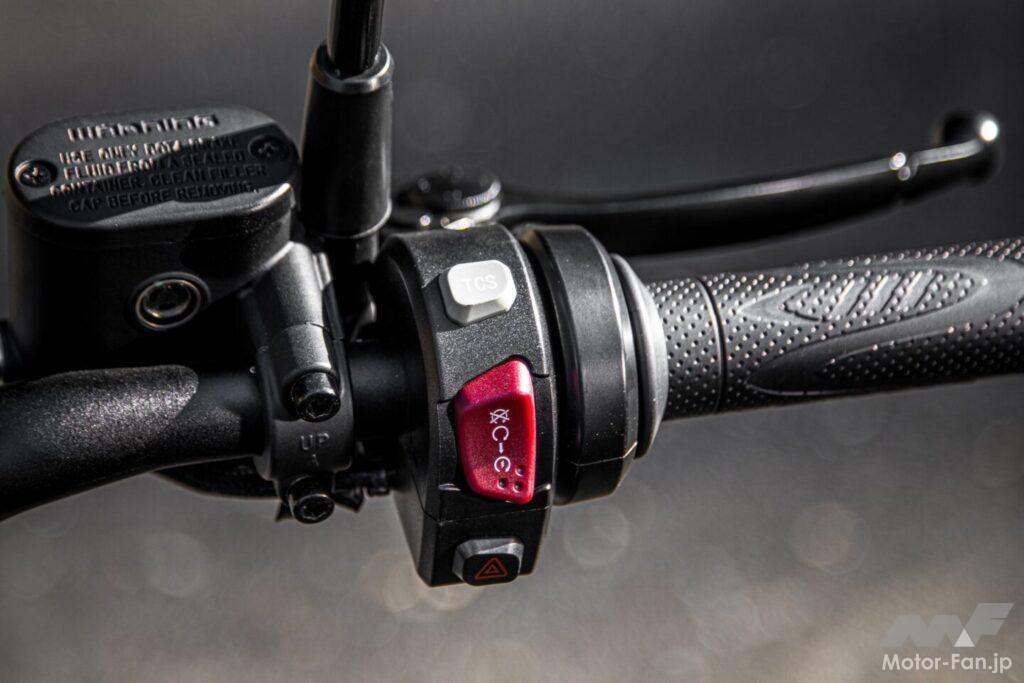
The traction control on/off button and hazard switch are located on the right side of the handlebars. The left and right brake levers have opening angle adjustment mechanisms.
ADVERTISEMENT
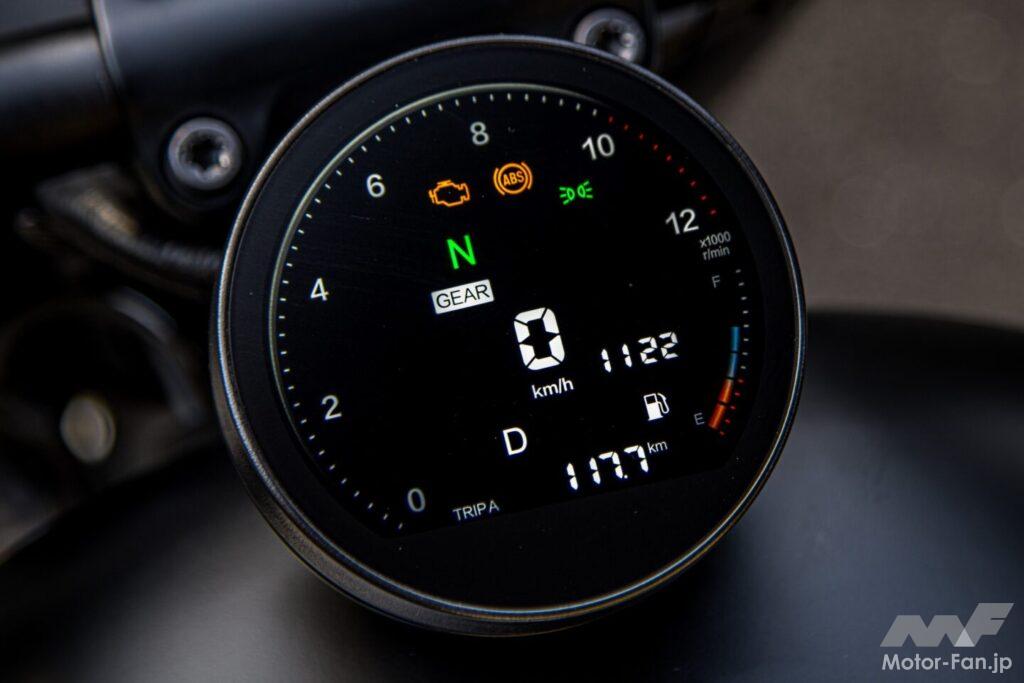
It uses a circular color TFT display, with a bar graph tachometer and fuel gauge laid out around the outside. It’s very easy to read, day or night.
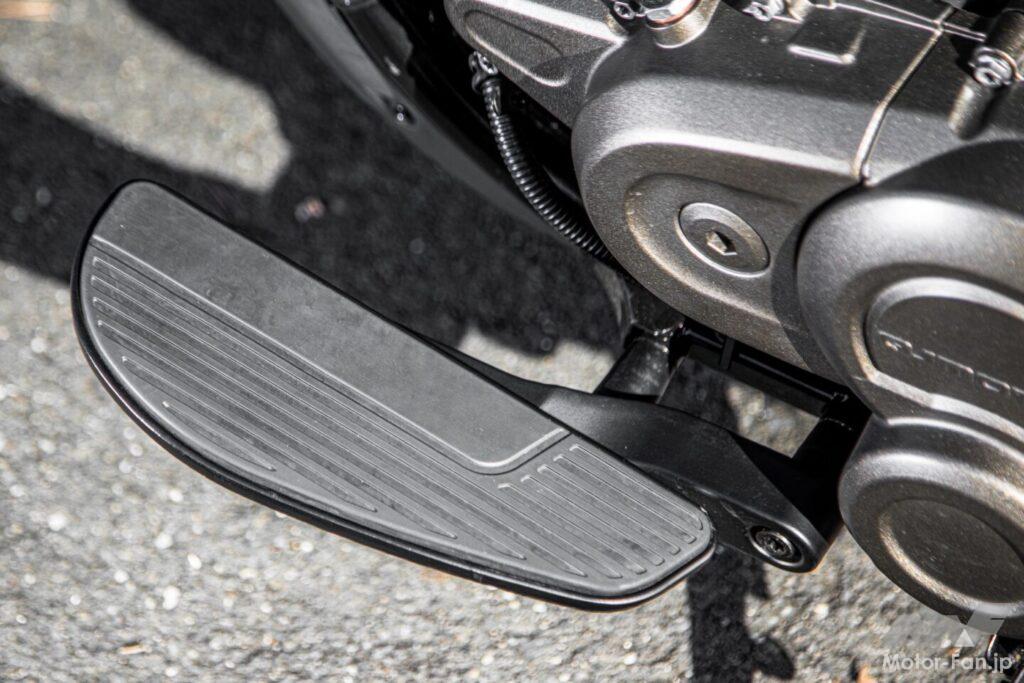
While the manual transmission SRV250 has bar-type steps, the SRV250A uses board-type steps. Furthermore, there are no pedals on either the left or right side.

It uses LED headlights that appear to be the same as those used on the Harley-Davidson X350, which is produced by QJ Motor. The QJ Motor logo is in the center. The turn signals are filament bulbs both front and rear.
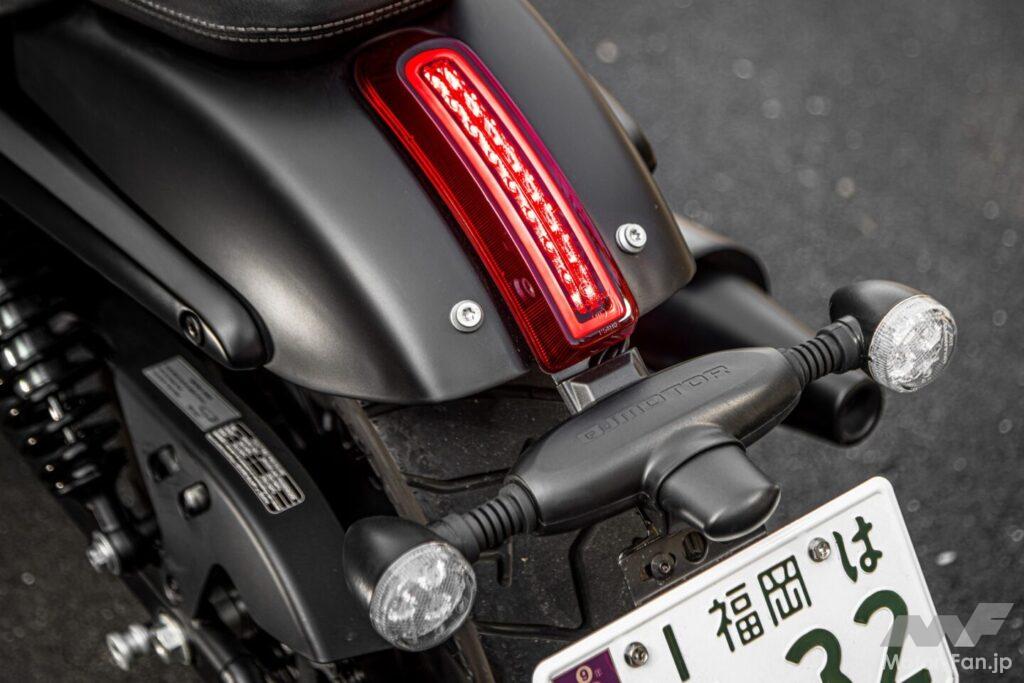
The LED taillights are simple yet striking, and the rear fenders are made of steel.

The front and rear seats are separate, and the pillion seat can be removed by unlocking the key lock.

The rider seat can be removed by loosening just one bolt. As you can see, the ECU, ABS unit, etc. are housed inside.

There is a USB socket on the lower left side of the steering head.
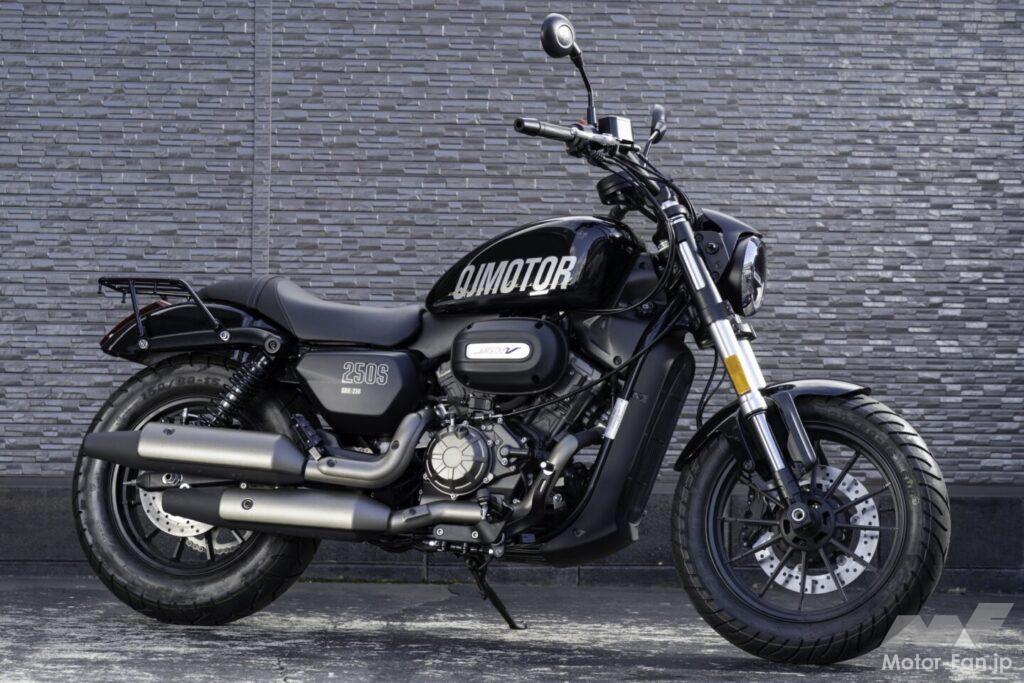
handles custom parts for Harley and BMW , is currently developing original parts for the SRV250. The vehicle in the photo is equipped with handlebar risers, a rear carrier, step relocation, small LED turn signals, a fender eliminator kit, and more. They will be available at QJ Motor dealers in the near future. (Photo: Natsume Kenji)
QJ Motor SRA250A Main Specifications
Engine
Type: 2-Cylinder V, 2V, Liquid-Cooled
Bore and Stroke: 58.0 x 47.2 mm
Displacement: 249 cc
Maximum Power: 27.9 BHP (20.5 kW) / 9000 RPM
Maximum Torque: 23.0 NM / 8000 RPM
Fuel System: EFI
Fuel Supply System: Electric
Clutch: Wet multi-plate
Transmission: AMT Chain
Chassis:
Front suspension: Telescopic Upside-Dawn;
Rear suspension: Telescopic coil spring oil-damped;
Front tire: 120/80-16
; Rear tire: 150/80-15;
Front brake: Disc ø280mm (ABS)
; Rear brake: Disc ø240mm (ABS)
Dimensions Overall L x W x H 2110 x 850 x 1100 mm
Wheelbase 1400 mm
Seat height 700 mm
Ground clearance 160 mm
Vehicle weight 167 kg
Fuel capacity 13.5 L