
Gloves are an “eternal challenge”
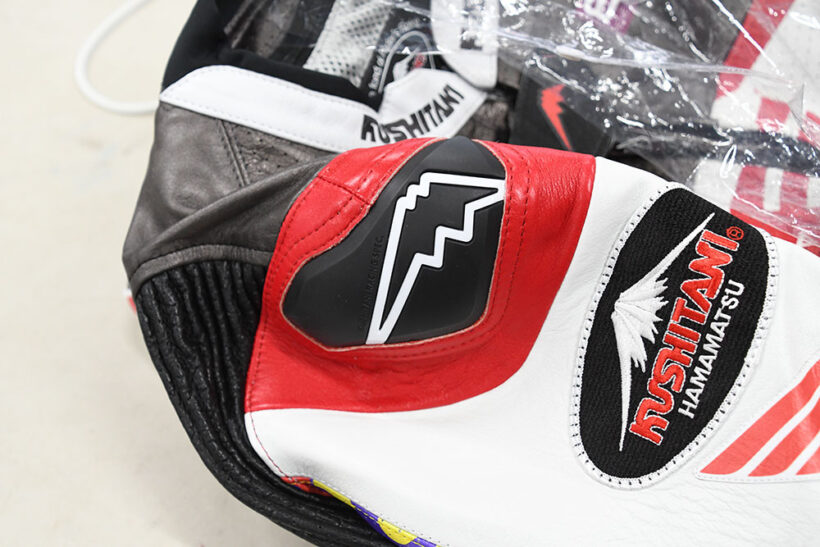
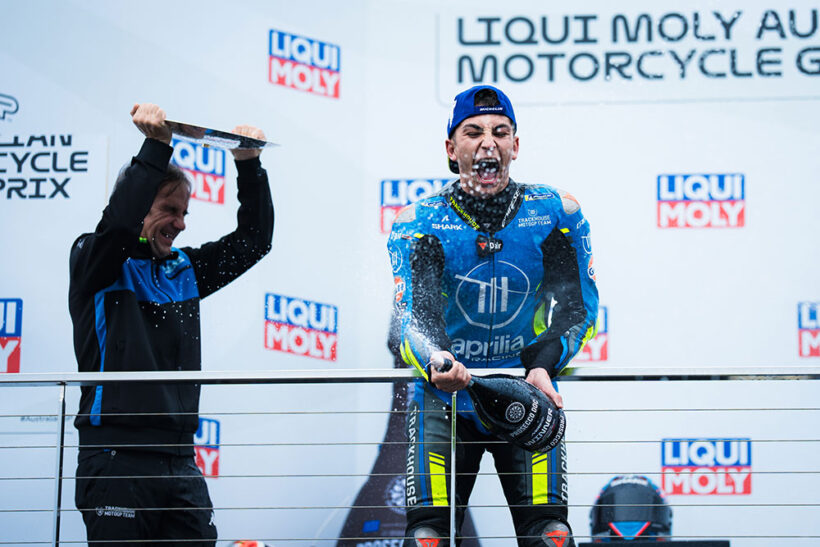
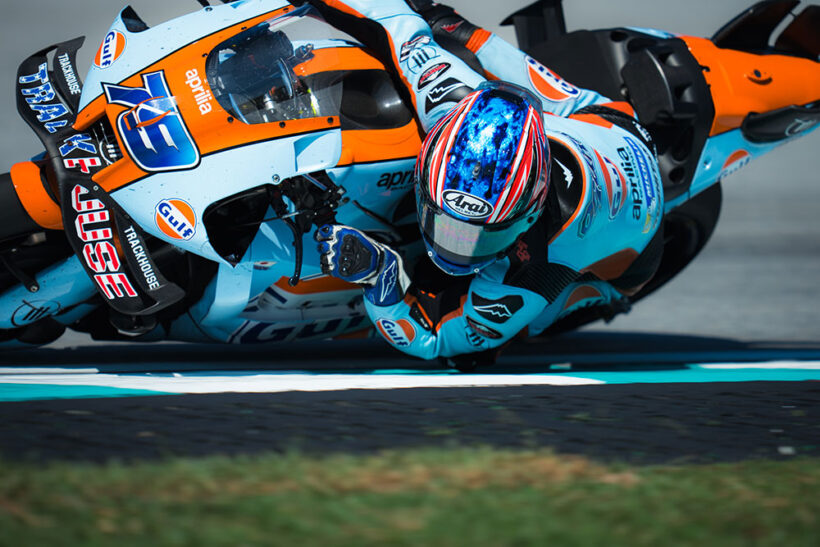
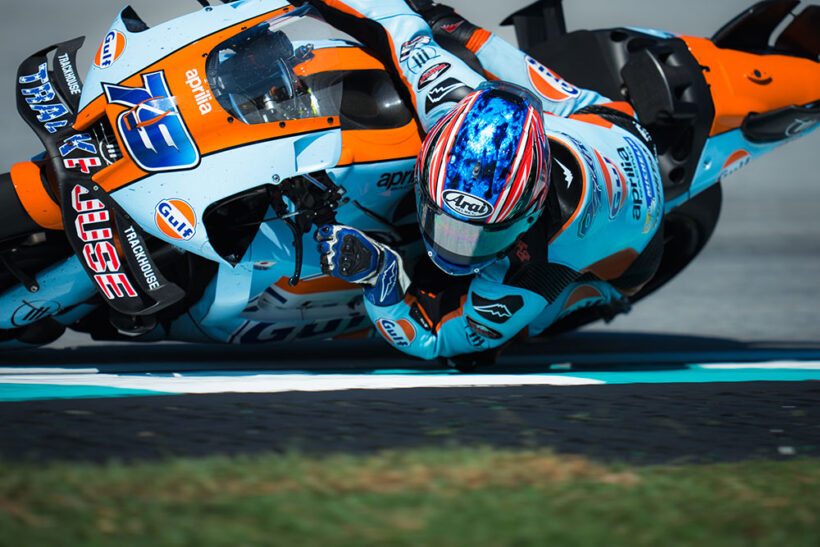
One of the manufacturers supplying racing suits to the MotoGP paddock is the Japanese manufacturer Kushitani. In the 2025 season, Kushitani will be moving into the top class with MotoGP riders Ai Ogura (Trackhouse MotoGP Team) and Somkiat Chantra (IDEMITSU Honda LCR). This season, Kushitani is supporting riders in the MotoGP class, as well as riders from IDEMITSU Honda Team Asia in the Moto2 class and Honda Team Asia in the Moto3 class.
In addition to racing suits, Kushitani supplies gloves and boots to MotoGP, Moto2, and Moto3 riders. The gloves are “GPV GLOVES II” (hereafter referred to as GPV), and the boots are “SUPERTECH R x ProtoCore Leather” in collaboration with Alpinestars. Ogura and Chantra use original coloring, but the products are no different from commercially available ones.
We spoke with Kushitani’s Racing Service Manager, Maki Mutsuura, at the Japanese Grand Prix about MotoGP racing services and the development of gloves on-site. This article focuses mainly on gloves, but we also have a separate article focusing on racing suits, so please take a look. (Article: Kushitani Supporting Riders in the Paddock: The Development of MotoGP Racing Suits )
“Gloves are an eternal challenge,” says Mutsuura.
“For example, our previous top model, the GPR, was developed without using resin pads on the surface.”
They have been developing safe gloves without using resin, but the current trend is that “no resin protection = danger.” For this reason, Kushitani has also started developing gloves with resin.
“But at the same time, I wanted to create something that didn’t reject the advances that resins had made up until then. That’s how GPV got started. At the time, Nozane (Kota), who was developing the MotoGP, was always coming to Hamamatsu for testing, so I got his feedback and we really worked together to create it. That’s how the GPV we know today came to be.”
Trial and error continues, and broadly speaking, the current GPV is the third type.
“When it comes to gloves, there’s no single right answer.”
“How can we improve our gloves to protect the rider? It’s a constant battle. We never think of our gloves as being perfect. We have to constantly develop them. They can’t be too stiff, and they can’t be too hard.”
“Gloves are very demanding, and you can feel the difference in millimeters with your fingers. So in some ways they are even more demanding and difficult than a racing suit. The parts of the body that don’t exert much force still have to work, and you have to perform fine work. But if you fall, there’s a chance you’ll hit the ground at over 300km/h.”
“I don’t think it’s perfect yet,” Mutsuura says firmly. “The moment I think it’s perfect, my evolution will stop.”
This tireless pursuit of safety is what is happening at MotoGP, and this state-of-the-art technology is reflected in the riding wear we wear when we ride our bikes.
Finally, we asked Mutsuura what is rewarding about working at Racing Service.
“Sometimes the players get angry with me, and sometimes they’re happy. Creating something through these interactions is very rewarding.”
“In the end, it would be ideal if we could create something that is completely safe. Something that is easy to move around in, durable, and inexpensive. It may be impossible to achieve all of these, but at the very least, if we compromise on safety, it’s all over.”
“It’s both rewarding and stressful, but the people who come and work here see when players get injured and are in a position to hear their opinions directly. I think it’s something that everyone is always thinking.”
The Japanese GP is a flyaway MotoGP, meaning it is held outside of Europe. As such, racing service is not carried out on the usual service track. However, there is a sewing machine there. Racing suits that have been worn down by the race are waiting to be painted. During the interview, Ogura’s assistant came in and then left again. It is from the conversations and feedback that take place here that Kushitani’s technology is born.
Kushitani
Racing Service Manager
Maki Mutsuura
Joined Kushitani in 1989. After working in product management, production management, and sales management from 1990, he was put in charge of racing services from 2003. Since then, he has been involved in service activities mainly in the All Japan region.

©Eri Ito
ADVERTISEMENT

Ai Ogura’s racing suit. The white part is slightly dirty (it rubs against the tank, causing the color to change), so it will be repainted and cleaned up. The work of the racing service is diverse. ©Eri Ito
ADVERTISEMENT

On Thursday, he prepared his racing suit for the race starting on Friday. ©Eri Ito

Racing Service has sewing machines, and repairs are made by sewing not only at the Japanese GP but also at the European rounds. ©Eri Ito