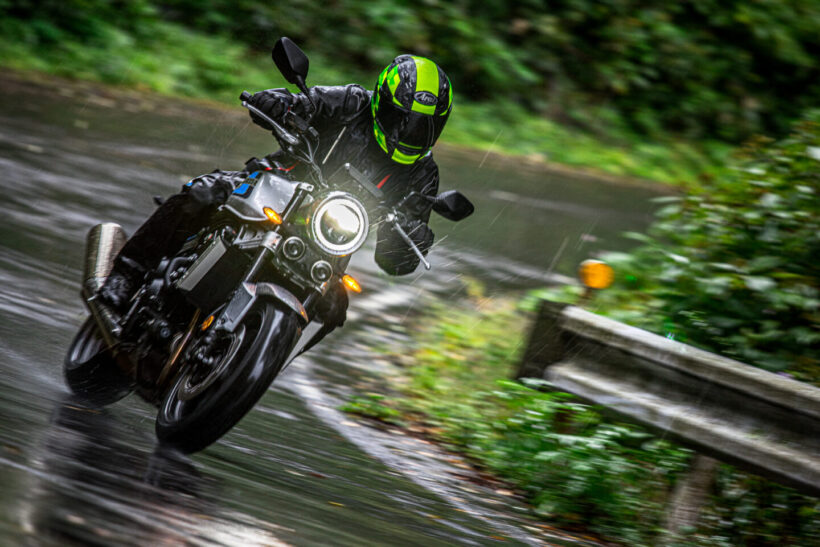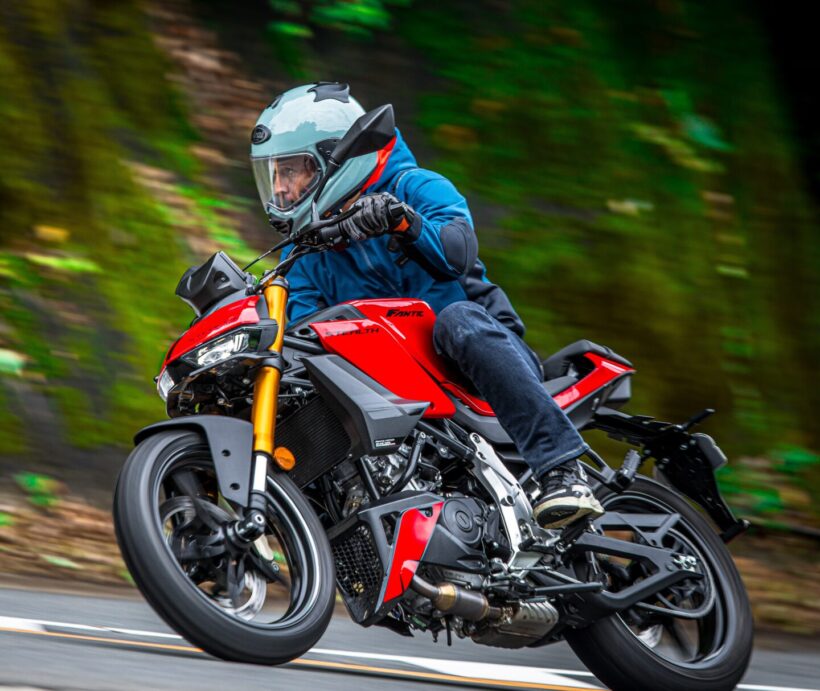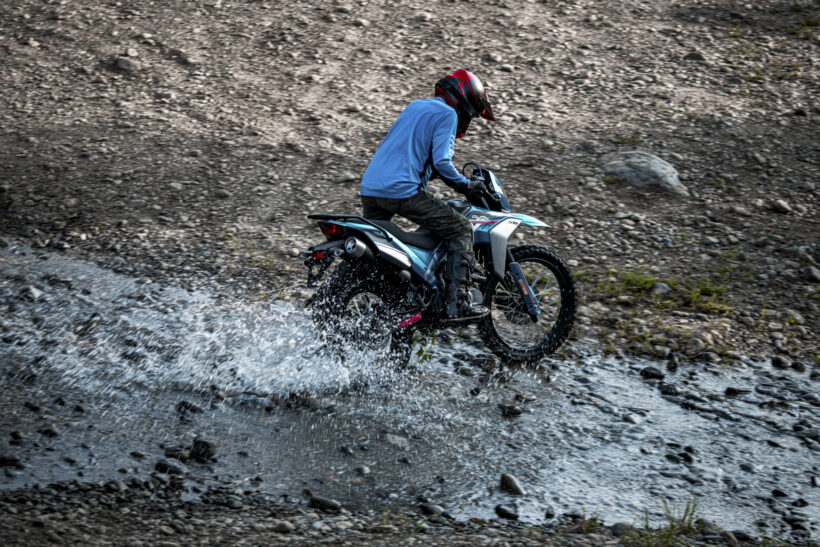

Yamaha XSR155…From 525,800 yen (Indonesia model)

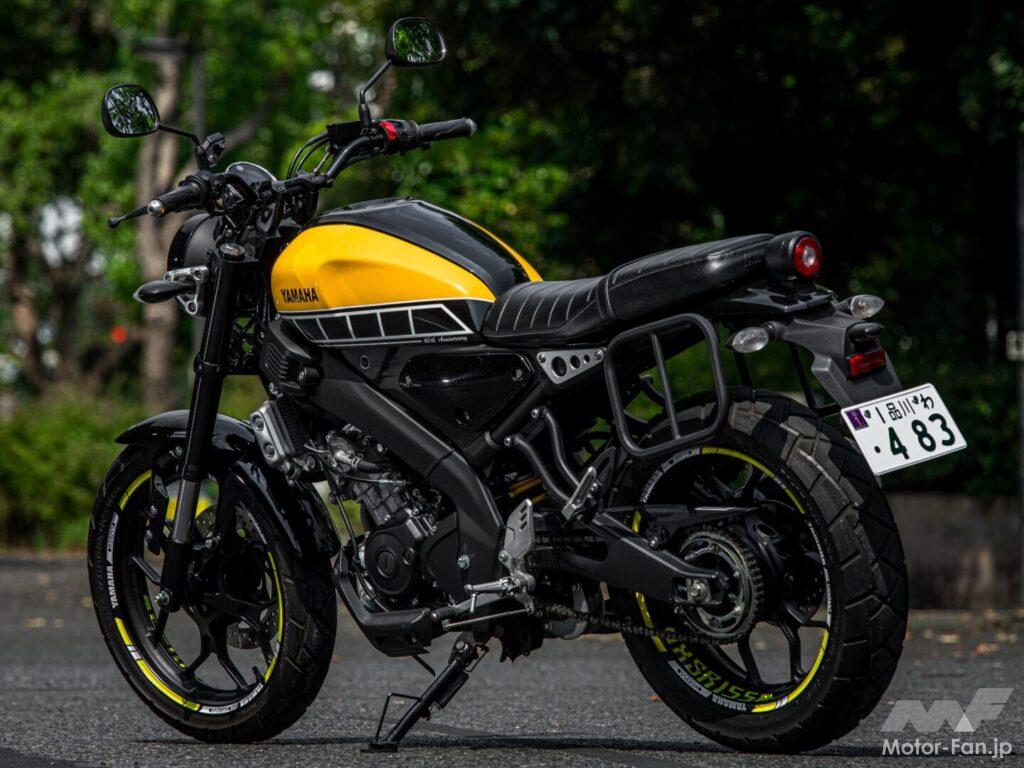
The test ride vehicle was a rental vehicle from Auto Salon Ogiyama, which has strong ties with Indonesia. This US Inter color, reminiscent of the XSR900 60th Anniversary (released April 15, 2016), was an original that the shop ordered from an Indonesian paint shop. It was sold for 577,500 yen.


ADVERTISEMENT

ADVERTISEMENT

As of October 2025, when this article was written, Auto Salon Ogiyama is currently selling the regular colors Matte Silver Premium, Metallic Black Elegance, and Metallic Brown Authentic (536,800 yen). In the past, Gauloises colors were also available.

XSR125 ABS (Japan, 2024 model). Test ride article here .
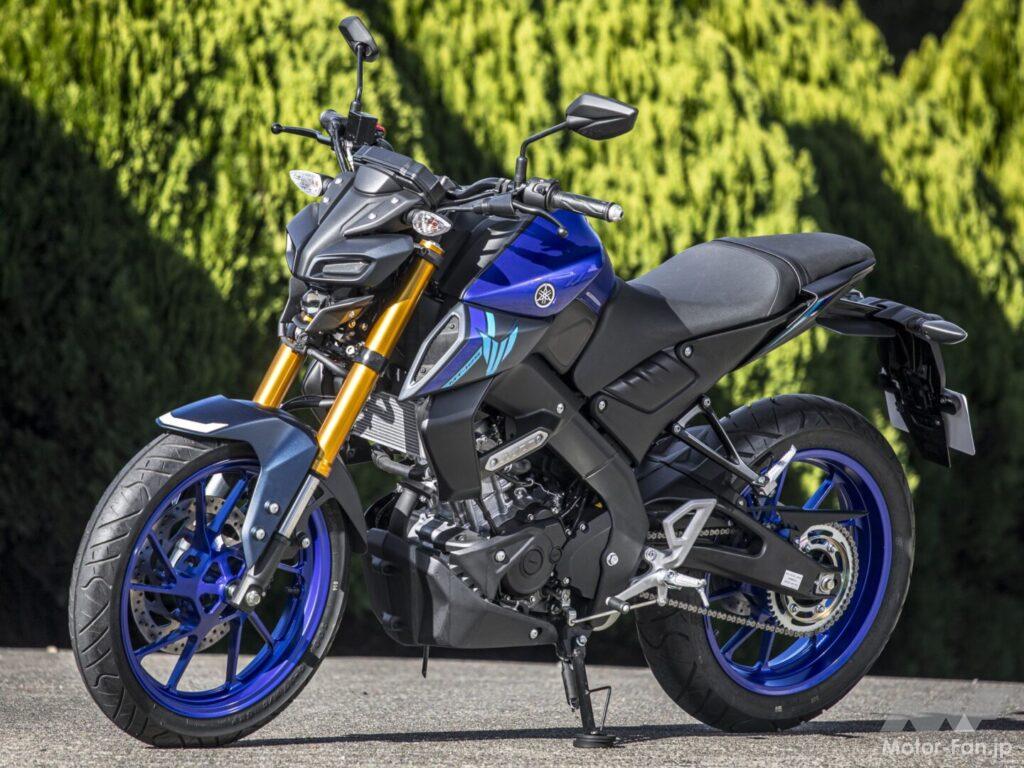
MT-125 ABS (Japan, 2024 model). Test ride article here .
It shares its platform with the XSR125, MT-125, YZF-R125/R15, and other models in the official Japanese lineup.
Refined performance, still as good as ever after six years

The first time I test rode the Yamaha XSR155 was in October 2019, shortly after its debut. I still remember how it beautifully inherited the DNA of the original XSR900, not only in styling but also in riding performance. Six years have passed since then, but the fact that it has continued to be produced to this day without any particular model changes is proof of its high level of perfection.
Customization culture seems to be thriving in Indonesia, and Auto Salon Ogiyama, where we borrowed the test vehicle, stocks a wide variety of parts, both genuine and aftermarket, including the 183cc and 206cc kits jointly developed with local company BRT. The room for customization, or the possibility of growth, is sure to be a major deciding factor when choosing your favorite car.
The XSR155 is equipped with a 155.09cc liquid-cooled single-cylinder engine that uses a variable valve mechanism (VVA). Riding it again, it’s clear that it’s more powerful than the 125cc model right from the get-go, and the benefits of the 24% increase in displacement are significant. The intake cam switches at 7,400 rpm, which corresponds to around 100 km/h in top sixth gear. This means that in most situations, including city riding, you’ll be riding with the low- and mid-speed cam. It’s easy to see why Yamaha chose to use such a complex system as VVA.
The VVA switches very smoothly, and the power curve flows seamlessly up to the redline at 11,000 rpm. When pulsing in third gear, the meter reads over 90 km/h, and coupled with the lightweight body of 134 kg, the power performance is so good that it can truly be described as “fast.” The throttle response is faithful to operation, and the clutch lever operation is light. There was no dissatisfaction with the shift feel, and I was once again reminded of the high level of perfection of the power unit.

The 155.09cc water-cooled SOHC 4-valve single-cylinder engine features a variable valve timing mechanism “VVA” on the intake valve side, an aluminum Diasil cylinder, forged aluminum pistons, an assist and slipper clutch, etc. The bore diameter is φ52mm for the 125, while the 155 is φ58mm. The stroke of 58.7mm is the same for both models.
Handling is natural and easy, and the overall package is highly complete.
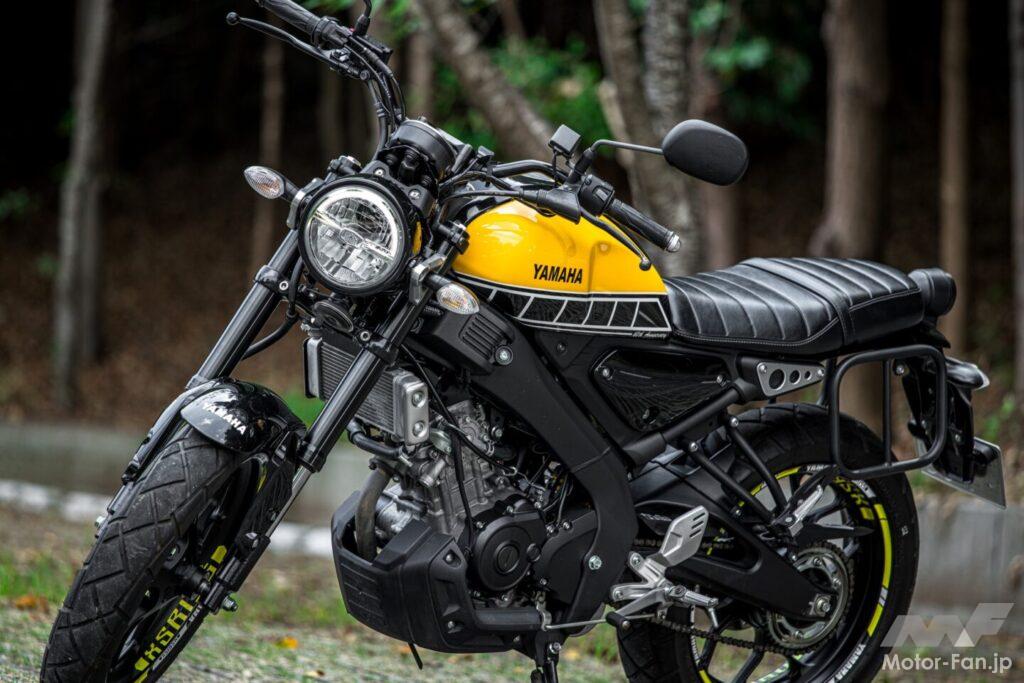
The XSR155, XSR125, MT-125, YZF-R125/R15 and others all share a common platform consisting of a steel twin-spar frame and inverted front forks. What’s interesting is that the XSR155 and 125 have a front tire that is one size wider and requires a lower specified air pressure. What’s more, the seating position is slightly further back. There’s no doubt that these differences give their handling a unique feel.
The steering characteristics of the XSR155 are that the front steering angle is rather gentle, yet the feeling of contact with the ground is strong. In addition, the 155 has more torque than the 125, so it’s easier to induce pitching of the body just by operating the throttle, and by making use of this, it is possible to make quick turns. At the same time, there is also the ease of leaving it up to the bike to turn smoothly, and I think this good balance is what supports the popularity of the XSR155. Furthermore, although the standard tires have a semi-block-style tread pattern, they provide more than enough grip on paved roads. Even riders who mainly ride on roads should have little to complain about.
The brakes provide sufficient stopping power for city riding, but on winding roads there were times when I felt that the initial braking force at the front could be a little stronger. This is probably because the engine has more power than the 125, so the pace naturally increased. The body of the bike feels rigid enough to withstand strong braking force, so if you want to ride in a sportier style, changing the brake pads would be an effective solution. The rear brake had good stopping power and controllability.
The main differences between the light motorcycle XSR155 and the Class 2 moped XSR125 are the licensing system and maintenance costs. The 125 has a cost advantage as it can be used for the family bike special clause in voluntary insurance, but depending on the conditions, the difference may be small, or even greater with a long-term contract. As a complete package, the 155 still wins, so we would recommend it without hesitation to riders who often use expressways or who already have a license for a regular motorcycle or higher.
Riding position and foot reach (175cm/68kg)

The riding position is made up of slightly wider handlebars and a flat seat that allows for a high degree of freedom in seating position.

The official seat height is 810mm, the same as the XSR125. Auto Salon Ogiyama is selling a lowering plate that lowers the seat by about 4cm.
Detailed explanation

The wheel diameter is 17 inches front and rear, and the standard tires are the same IRC Trail Winner GP-211 as the 125. The front forks are φ37mm inverted type, and the front calipers are pin-slide single-side two-piston.
ADVERTISEMENT

The Monocross rear suspension is a link type. Auto Salon Ogiyama is selling link plates (available in black, red, and yellow for 8,800 yen) that lower the car by about 4 cm. Wheel stickers with the car’s name are also available, and a set of front, rear, left, and right stickers is priced at 6,600 yen.
ADVERTISEMENT
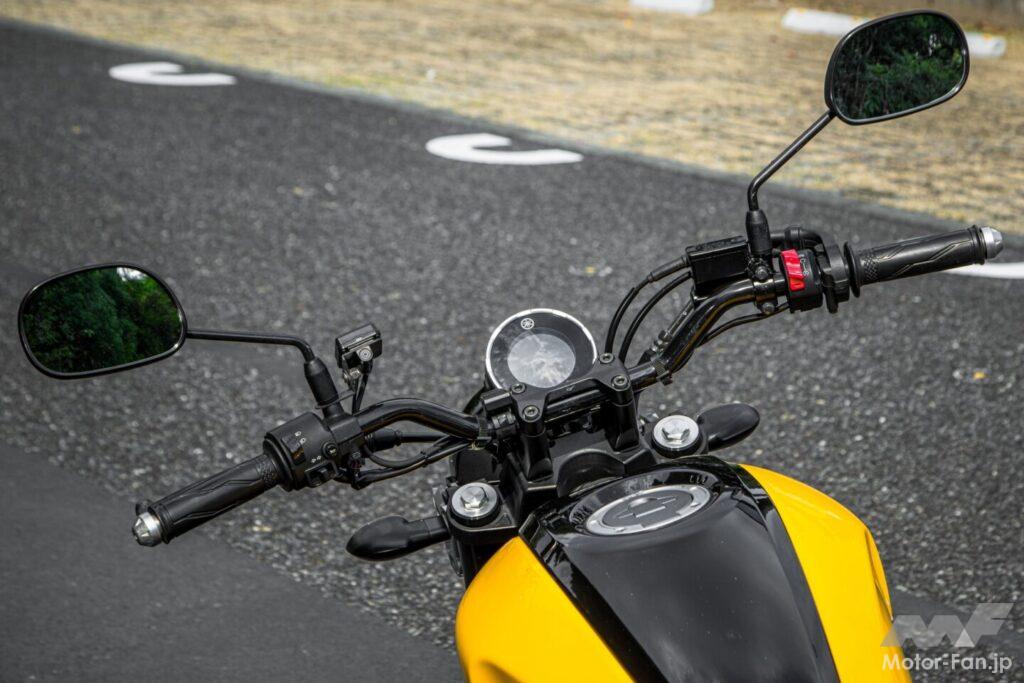
The cockpit is simple and unified in black. The fuel tank capacity is officially 10.4L.
ADVERTISEMENT

The car uses a round meter with a negative-positive inverted LCD. A bar graph tachometer and fuel gauge are laid out on the outer periphery, and various indicators are grouped around the meter rim.
ADVERTISEMENT

A simple switch box. No hazard switch.
ADVERTISEMENT

It features a classic tuck-roll seat. Auto Salon Ogiyama is currently selling the Indonesian Yamaha genuine accessory single seat (26,950 yen).
ADVERTISEMENT
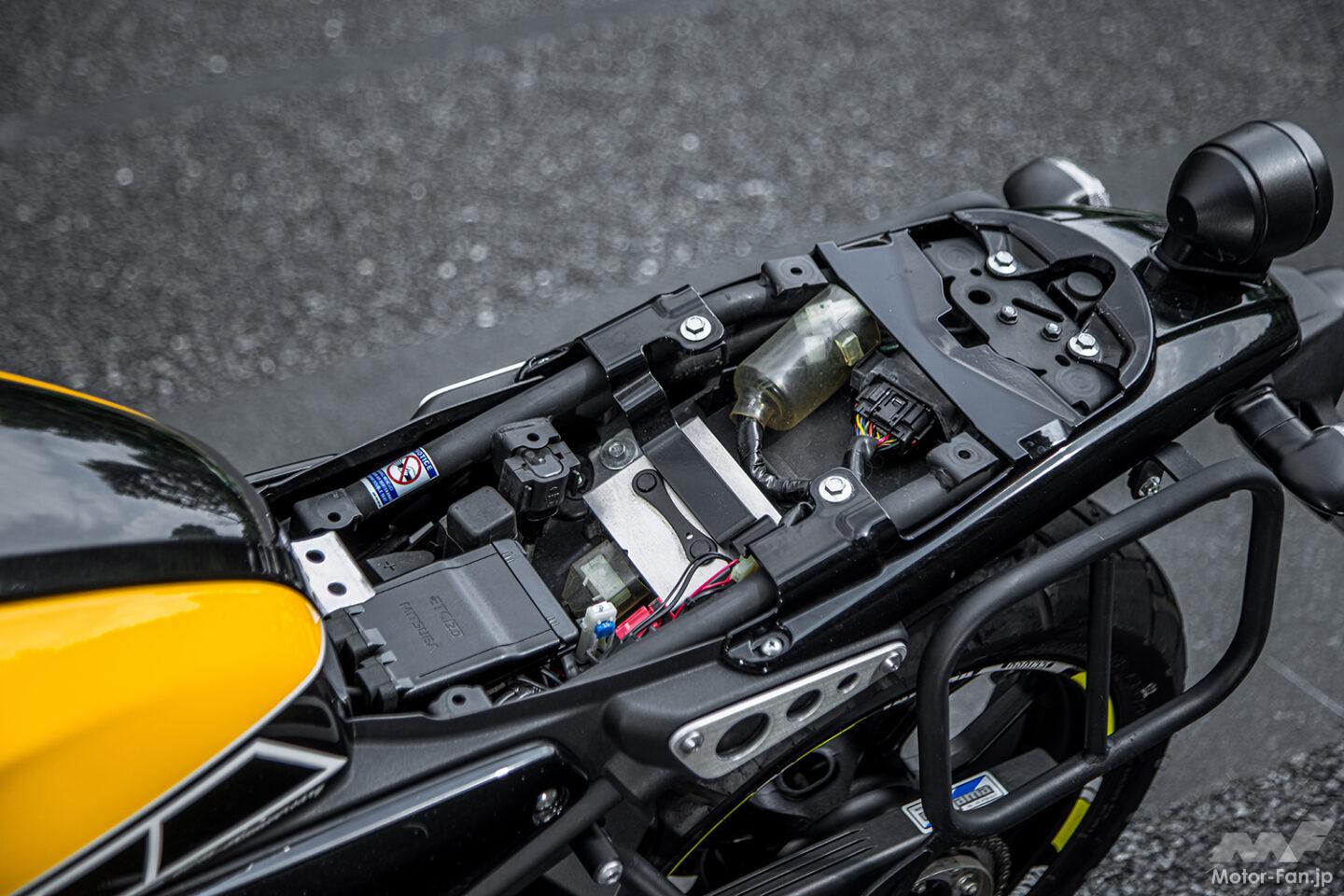
The front and rear integrated seats can be removed by unlocking the key. Installing an ETC onboard unit is also no problem.
ADVERTISEMENT
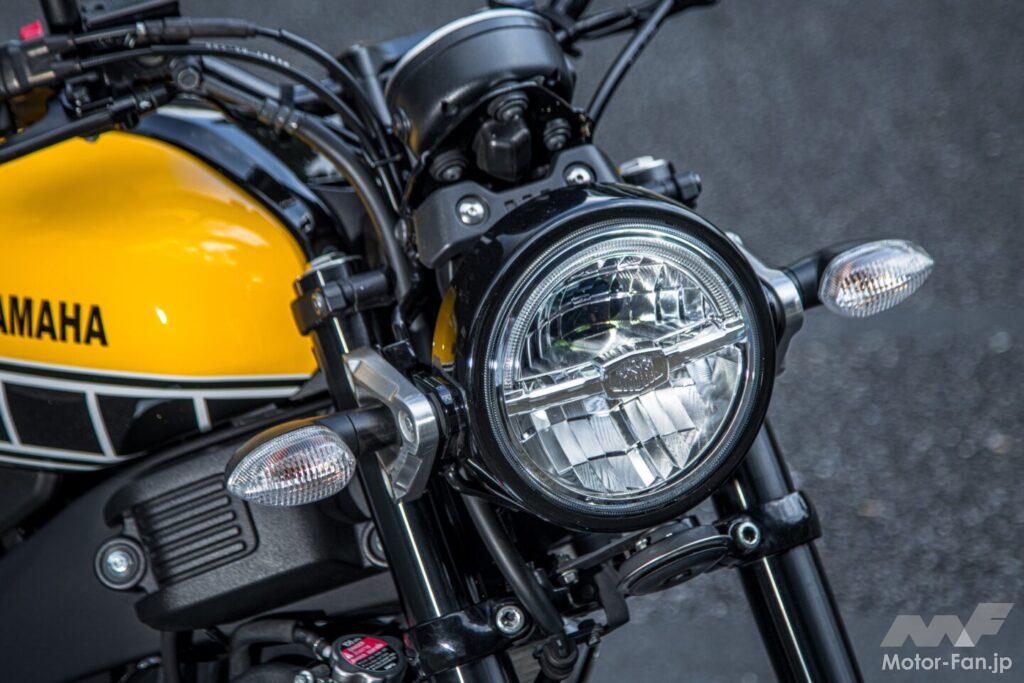
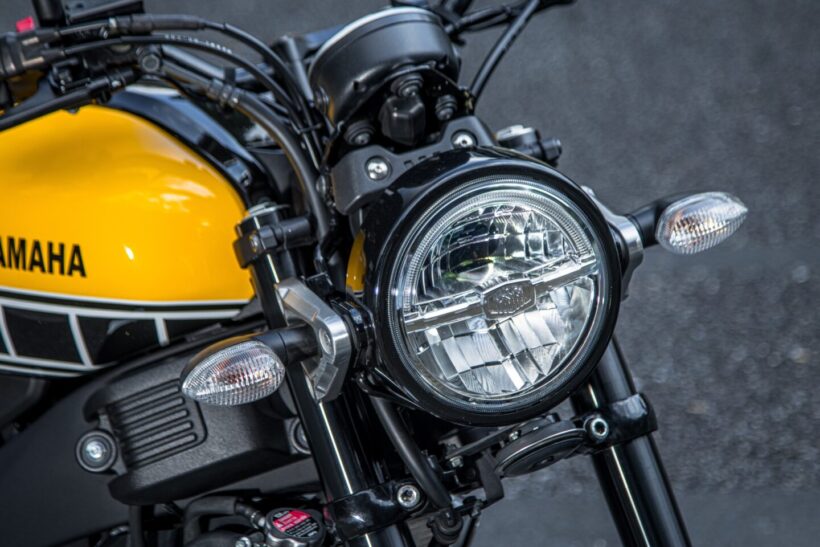
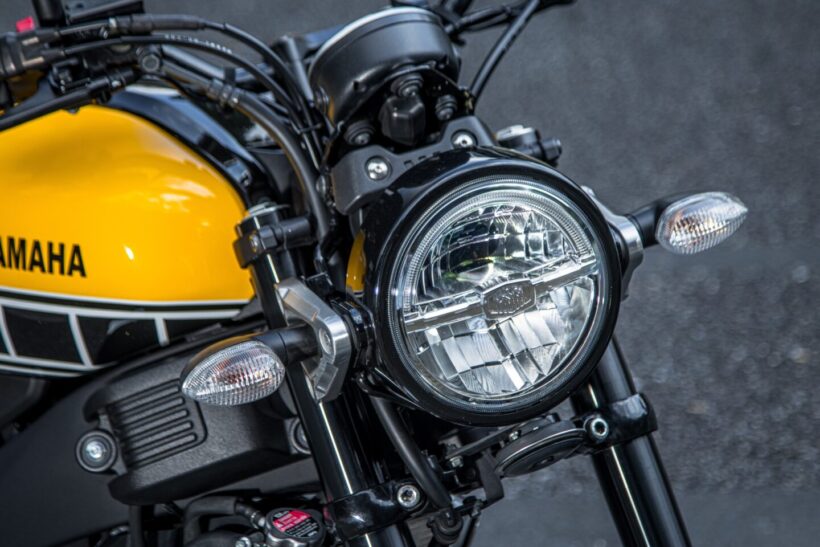
The round LED headlights are supported by aluminum stays, and the car’s logo is placed in the center of the lens.
ADVERTISEMENT
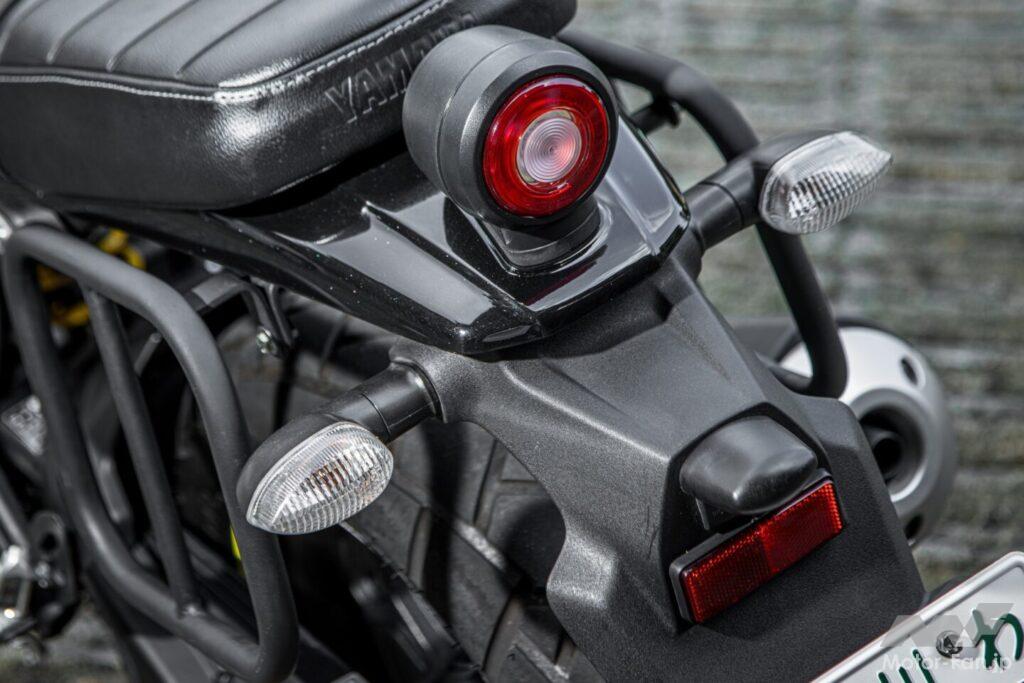
The round taillights are also LED, and the front and rear turn signals are filament bulbs.
Yamaha XSR155 Main Specifications
Length/width/height 2,007mm/804mm/1,080mm
Seat height 810mm
Wheelbase 1,330mm
Ground clearance 170mm
Vehicle weight 134kg
Engine type Water-cooled, 4-stroke, SOHC, 4-valve
Cylinder arrangement Single-cylinder
Displacement 155.09cm³
Bore x stroke 58.0mm x 58.7mm
Compression ratio 11.6:1
Maximum output 14.2kW (15PS) / 10,000 rpm
Maximum torque 14.7N・m (1.2kgf・m) / 8,500 rpm
Starting method Self-
lubrication method Wet sump
Engine oil capacity 1.05L
Fuel tank capacity 10.4L
Intake/fuel system/fuel supply system Fuel injection
Ignition method TCI (transistor type)
Battery type YTZ4V
Spark plug MR8E9
Clutch type Wet multi-plate assist & slipper clutch
Transmission / Transmission method Constant mesh 6-speed / Return type
Frame type Deltabox
Tire size (front / rear) 110/70-17M/C (54S) (tubeless) / 140/70-17M/C (66S) (tubeless)
Braking system (front / rear) Hydraulic single disc brake / Hydraulic single disc brake
Suspension method (front / rear) Telescopic (inverted type) / Swing arm (link type)
*Indonesia model