

Starting in 2023, the Tokyo Motor Show will be revamped from the previous “Tokyo Motor Show” to the “JAPAN MOBILITY SHOW” with the aim of realizing a co-creation platform originating from the mobility industry. This event alternates between business events and showcase events every year. The second event since the revamp, “JAPAN MOBILITY SHOW BIZWEEK 2024,” was held as a business event.
This year’s “JAPAN MOBILITY SHOW BIZWEEK 2024” was held in conjunction with the main event, the comprehensive technology and industry exhibition “CEATEC 2024 (Note 1)” (admission to both events is free). Compared to “CEATEC 2024,” which took up exhibition halls 2 to 8, “JAPAN MOBILITY SHOW BIZWEEK 2024” was a small-scale event taking up only exhibition hall 1, but the booths showcased noteworthy models and products that each company had developed using their own ideas and ingenuity.
※注1:「CEATEC(シーテック)」は2024年で25周年を迎える技術・産業の総合展示会。「Toward Society 5.0」をコンセプトに、経済発展と社会課題の解決を両立する「Society 5.0」の実現を目指したソリューションなどが集結。2024年はAIを中心とした出展が多く、25周年特別企画「AI for All」も話題を呼んだ。
JAPAN MOBILITY SHOW BIZWEEK 2024
A small urban EV: “Lean 3” developed by Lean Mobility
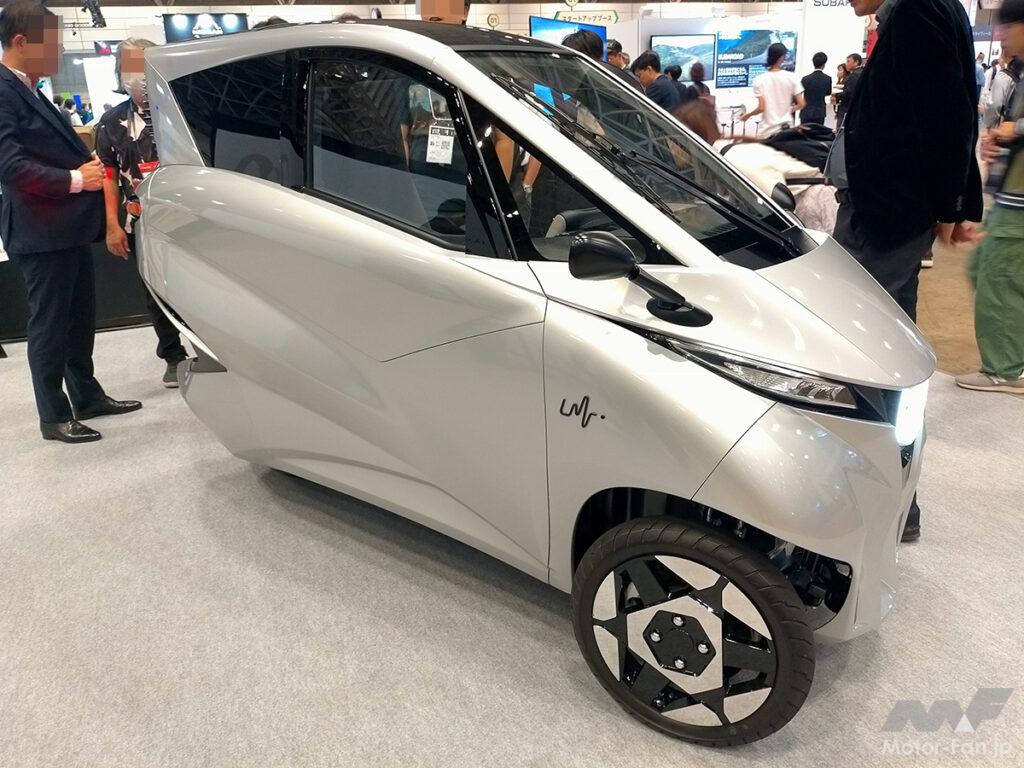
Length 2,470mm x width 970mm x height 1,570mm, wheel base 1,800mm. Seats 2 people (1 person for domestic minicar registration).
ADVERTISEMENT
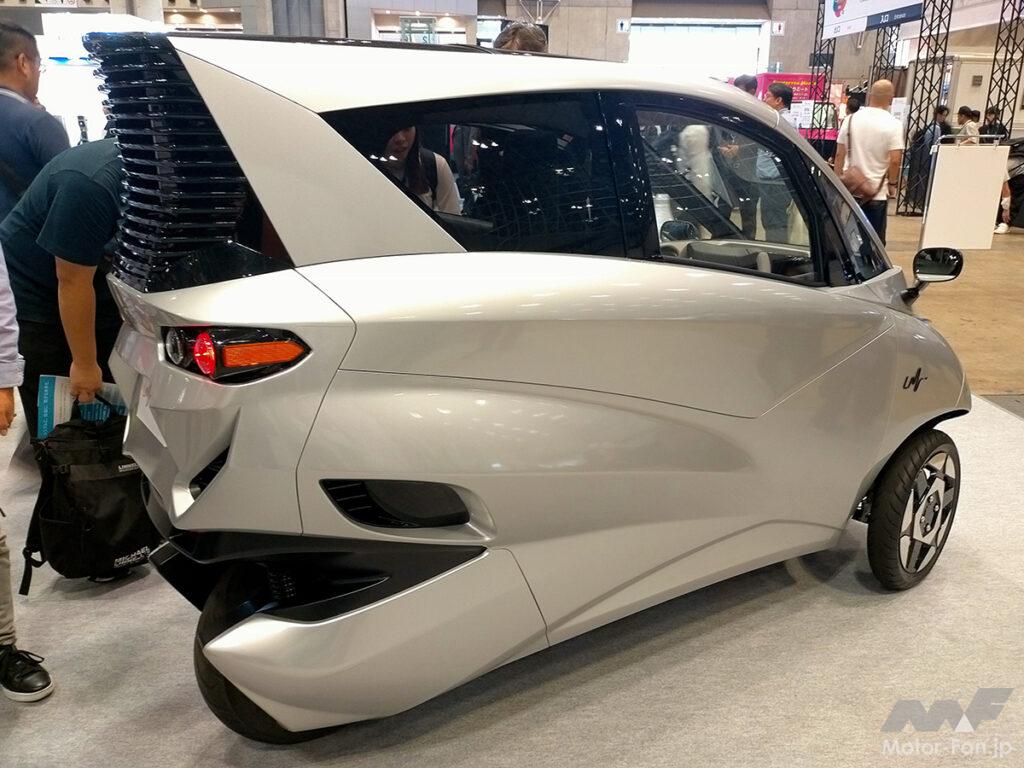
The exterior resembles a three-wheeled scooter with two front wheels, combined with a full-circle cabin like a box car.

The minimum turning radius is 3.6m, and the tread (the distance between the centres of the front tyres) is 850mm, compared to the tread of the Yamaha Tricity 125 three-wheeled bike, which is 680mm.

The wheels are 14 inches in diameter both front and rear. The Lean 3 system is steered by the two front wheels and driven by an in-wheel motor in the rear.
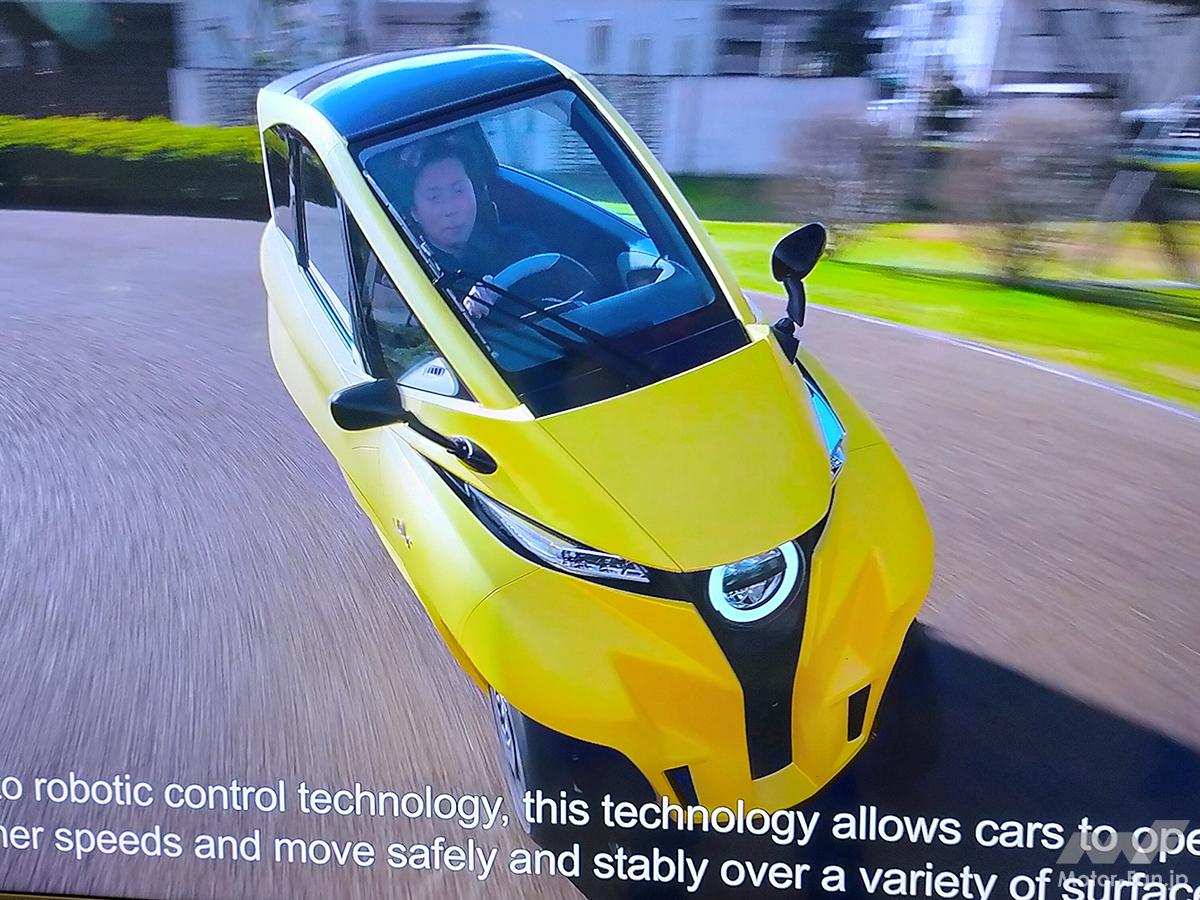
“Ride Roid” is a new category of small urban EV developed by Lean Mobility, a Japanese electric motorcycle manufacturer based in Toyota City, Aichi Prefecture. The first model, the “Lean3” shown in the photo, is about one-third the size of a passenger car (Note 2) but can seat two people (Note 3).
The Lean 3 features a full-body cabin (a so-called box car) and is equipped with air conditioning. Cutting-edge sensing and control technology ensures a safe and refreshing ride. The lean body, which places a low burden on the environment, makes it ideal for shopping on rainy days and for everyday transportation. It is characterized by its ability to bring all kinds of convenience to urban dwellers.
※注2:停車時の天面からの投影面積が乗用車の1/3
※注3:国内でのカテゴリーはミニカーとなるため1人乗り専用(2人乗り不可)。国内での最高速度は60km/h。
The focus of Lean 3 development was on the “low efficiency” of existing passenger cars. According to research by Lean Mobility, the average occupancy rate of an average passenger car with four or more seats is only 1.3 people.
Lean 3 aims to eliminate the “waste” in existing passenger cars and realize more efficient urban transportation. It also aims to expand people’s freedom of movement by approaching mobility electrification and services such as sharing. In addition, it aims to reduce the size of cars as hardware as a solution to road congestion and CO2 reduction.
What Is Active Lean? (Lean Mobility)
The “Active Lean System,” which has evolved and grown with robotic technology, is now available to optimally control the vehicle’s tilt.

Taking advantage of its narrow width despite being a box car (all-around cabin), the car is equipped with an “active lean system,” which allows the body to bank (tilt) when cornering.
ADVERTISEMENT
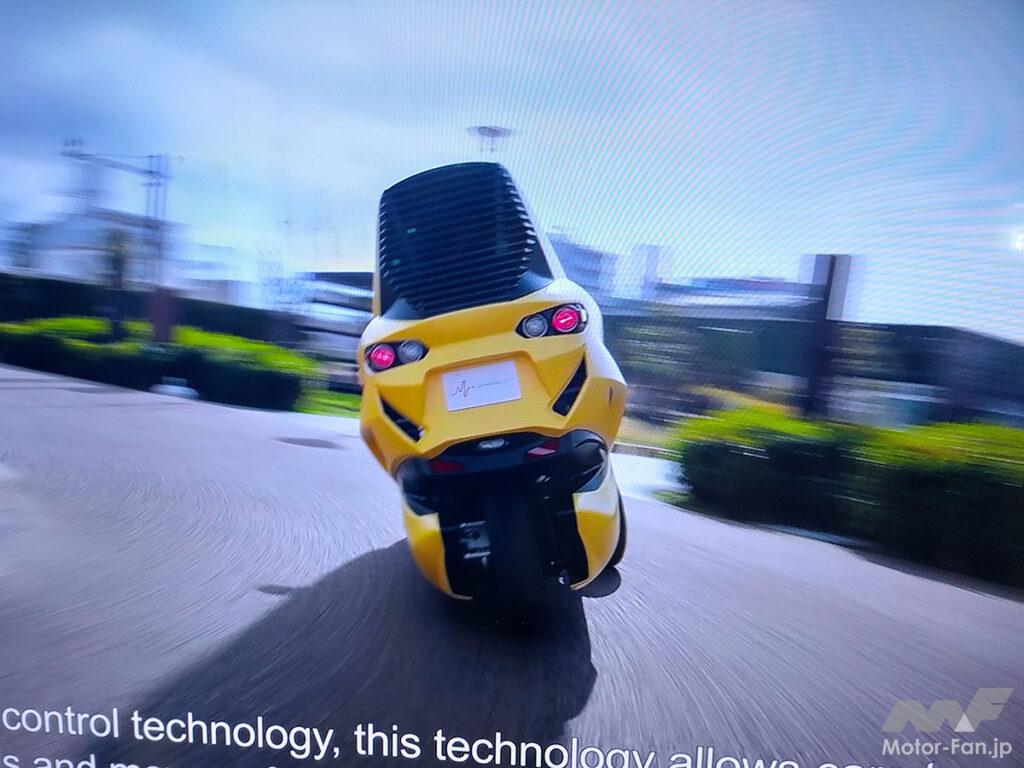
The “Active Lean System,” which has evolved in the field of robotics, constantly estimates the vehicle’s posture using a G-gyro sensor and dynamically controls the front, rear, left and right suspension when cornering. The key is to lean the vehicle to the optimal angle when cornering.
The Lean 3 uses two wheels in the front and one in the rear. When cornering, it leans the body over, just like three-wheeled bikes such as the Yamaha Tricity.
The vehicle incorporates cutting-edge technology called the “Active Lean System,” which controls the suspension and steering to optimally control the vehicle’s lean.
This technology, which has evolved primarily in the robotics industry, uses a G-gyro sensor to constantly estimate the vehicle’s posture and dynamically controls the front, rear, left and right suspension when cornering. By tilting the vehicle to the optimal angle when cornering, it achieves stable and comfortable driving in a variety of situations, including rough, uneven roads.
In addition to its compact, highly functional, enclosed cabin, the Lean 3 combines robotics technology for posture control with advanced automobile driving technology. The vehicle has a door for passengers to get in and out on the left side of the body, and the windshield is equipped with a wiper to keep rain and snow away. The interior is also equipped with air conditioning to keep passengers comfortable.
The Lean 3 system is steered by the two front wheels and driven by an in-wheel motor built into the rear wheels. The large drive battery installed under the floor has a capacity of 8.1 kWh. When fully charged, the vehicle has a range of 100 km in the WLTC Class 1 test cycle (for vehicles with a power-to-weight ratio of 22 W/kg or less).
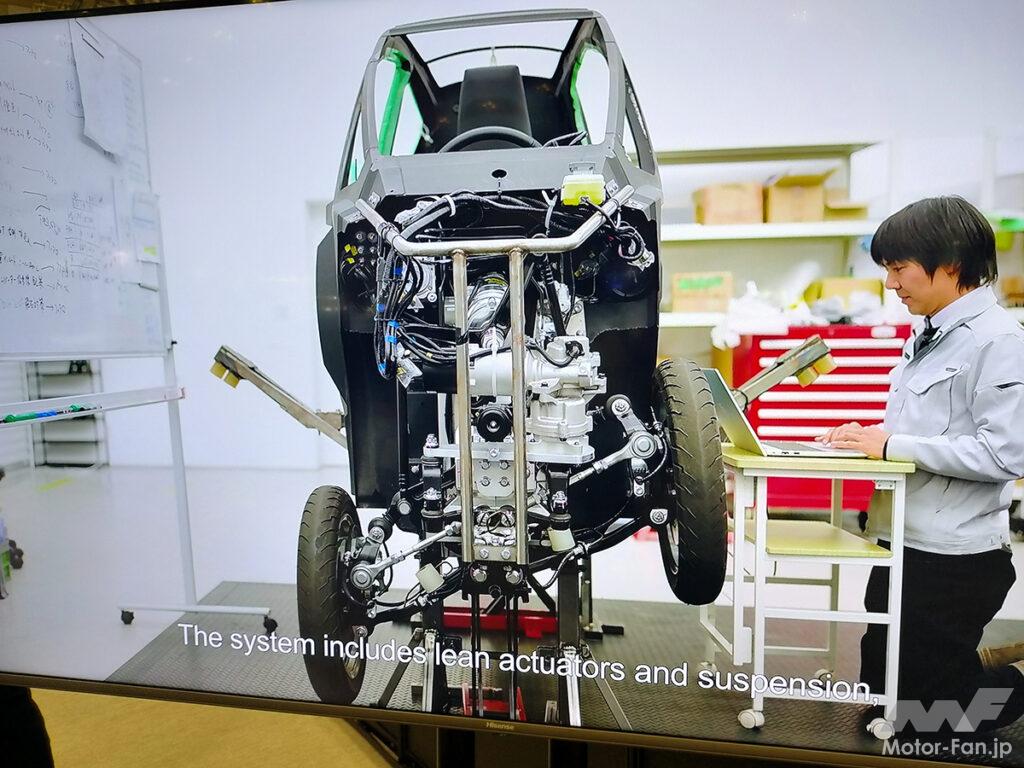
We are currently testing the “Active Lean System,” which optimally controls the vehicle’s tilt.
ADVERTISEMENT
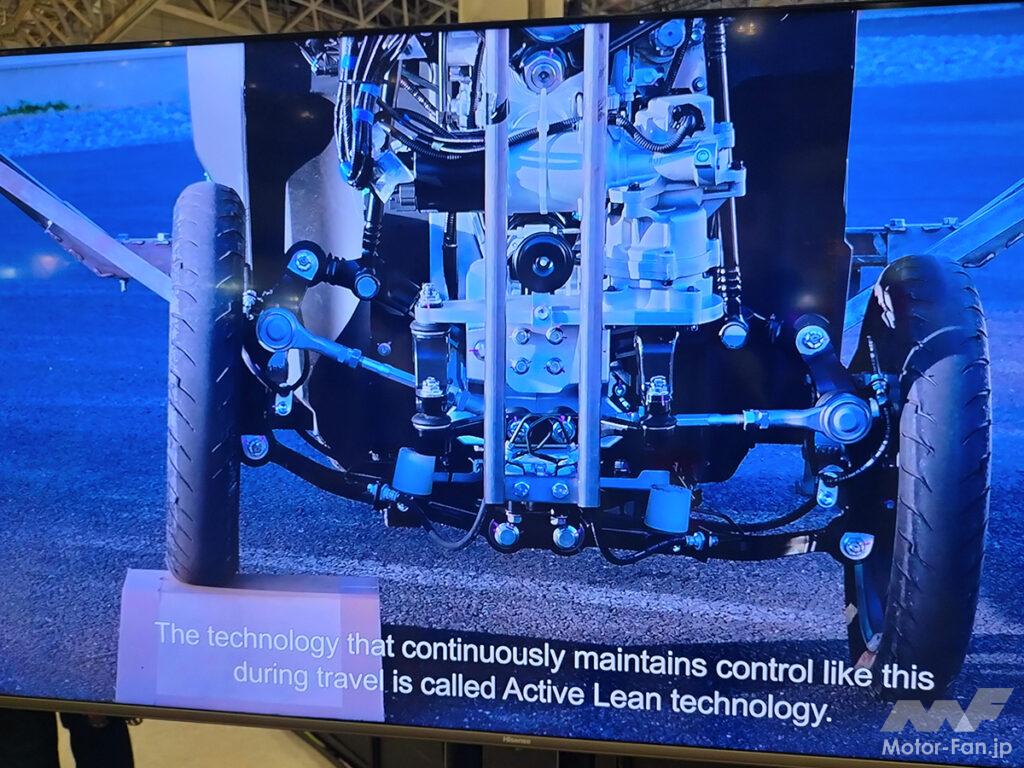
The car is running on a bump (obstacle) on the right front tire side.
Comparison with the Yamaha Tricity 125, a bike with two front wheels
Although the suspension, chassis design, and power source (electric and gasoline engine) are very different, the Lean Mobility Lean 3 and the Yamaha Tricity 125 have a somewhat similar image. Let’s compare the body and wheel diameter of the two vehicles.
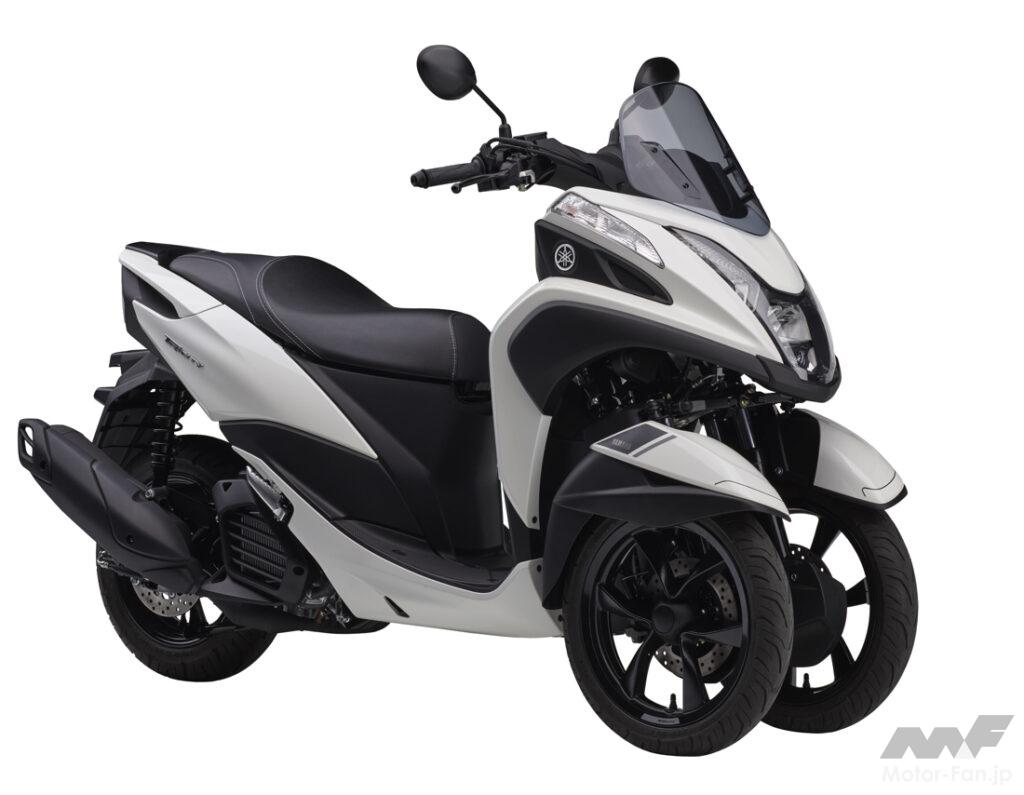
Yamaha Tricity 125
Lean Mobility Lean 3
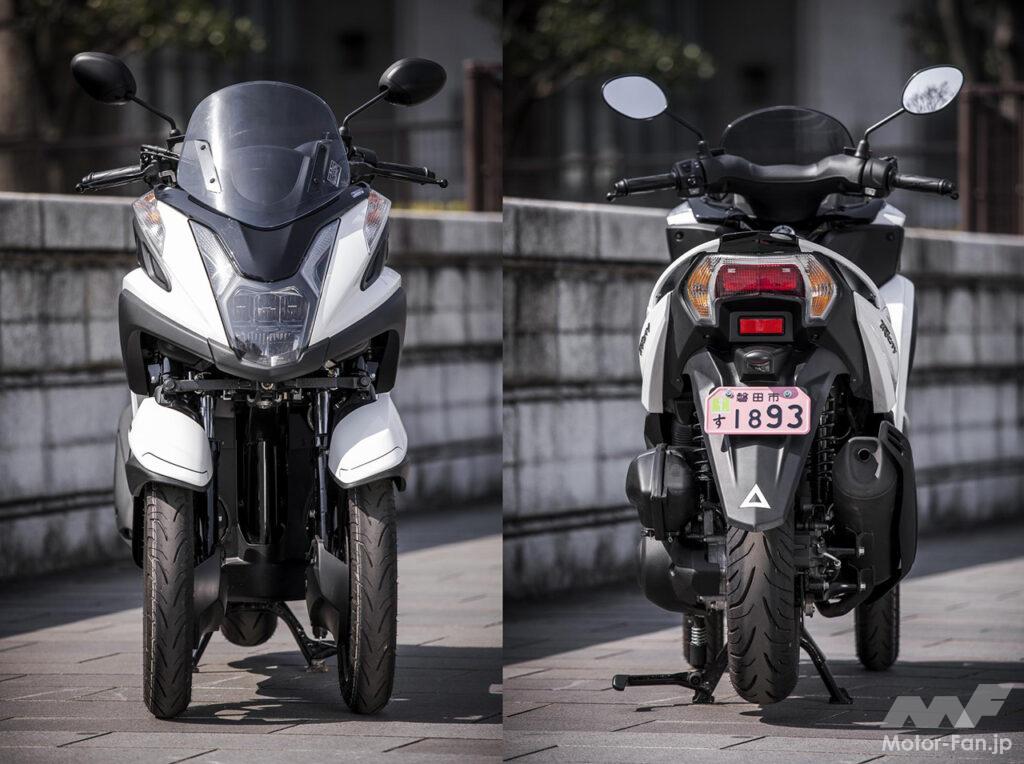
Yamaha Tricity 125
ADVERTISEMENT
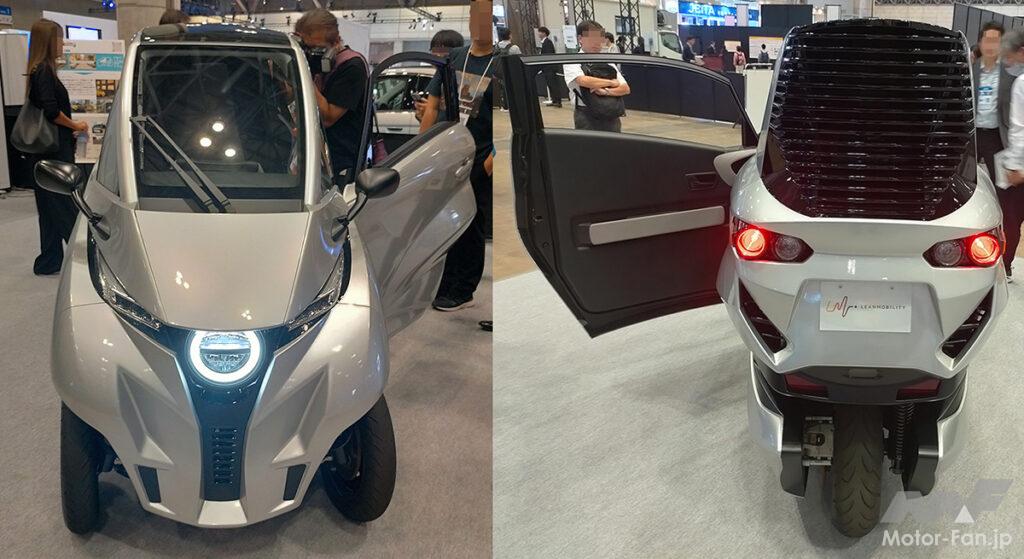
Lean Mobility Lean 3
| Lean Mobility Lean 3 | Yamaha Tricity 125 | |
| Total length x width x height | 2,470mm x 970mm x 1,570mm | 1,995mm x 750mm x 1,215mm |
| Wheelbase | 1,800mm | 1,410mm |
| Tread (distance between the centers of the front tires) | 850mm | 680mm |
| Passenger capacity | 2 people * 1 person for domestic minicar registration | 2 people |
| Wheel diameter | F14 inch R14 inch | F14 inch R13 inch |
ADVERTISEMENT
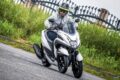 What’s new in the fully redesigned Tricity 125? We took a ride to find out.
The Tricity was released in September 2014 as Yamaha’s first two-wheeled, front-mounted, class 2 moped commuter bike. The light motorcycle Tricity 155 was added in January 2017. The basic styling of both bikes has not changed much since their initial release, but the 125 underwent a model change in 2018, and in 2023 both the 125 and 155 will have a new frame design, further evolving the bike. Here we bring you our first impressions of the new 125. REPORT: OYA Yuichi PHOTO: YAMADA Shunsuke
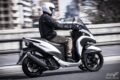 A veteran rider with about 50 years of experience is completely captivated by its stability! Tricity 125 Test Ride Report / Yamaha
When the three-wheeled Tricity was released in September 2014, I felt it was a historic milestone. There’s no doubt that three-wheeled personal commuters will become a necessity for many people in the future, and many two- and four-wheel vehicle manufacturers have begun development. Among them, the Tricity felt like the first step in a product that would lead the way for the next generation. REPORT: CHIKATA Shigeru PHOTO: YAMADA Shunsuke *This is a re-edited version of an article originally published on June 18, 2018. Prices, specifications, and color variations may differ from current versions.
Lean 3 was developed by a former Toyota i-ROAD chief engineer
Lean Mobility, the developer of Lean 3, was founded in Toyota City, Aichi Prefecture in 2022 by Akihiro Yanaka, who was developing the prototype compact car “i-ROAD” at the automobile manufacturer Toyota. Yanaka left Toyota on good terms and became independent. He inherited the intellectual property rights and licenses related to the i-ROAD, and went on to develop Lean 3.
The Lean 3 is categorized as a “minicar” in Japan, which can be driven with a regular driver’s license. Under the Road Traffic Act, it is a one-seater vehicle (two-seater vehicles are not permitted), and the domestic speed limit is 60km/h. In Taiwan and Europe, it is categorized as “L5,” with a speed limit of 80km/h. Therefore, the maximum speed of the Lean 3 for Taiwan is planned to be 80km/h.
The production of the vehicle will be outsourced to a factory in Taiwan, the scooter kingdom, and it will be released in Taiwan in mid-2025, followed by Japan, Europe, and other regions.
We will report on the release status in Taiwan, as well as the domestic specifications and domestic release price, as soon as we know!
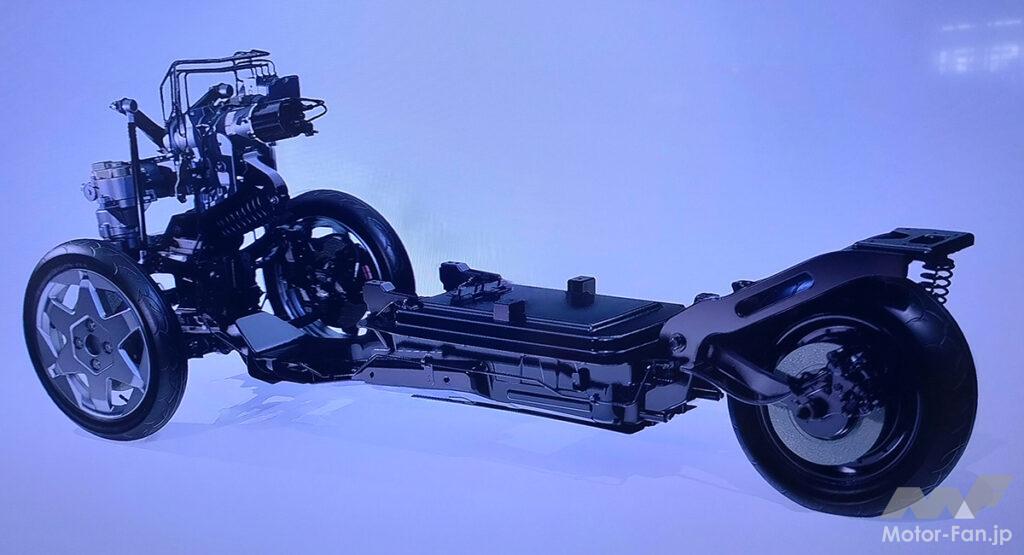
The large, high-capacity battery is located on the bottom. The rear suspension, which uses a swing arm, has a structure similar to that of a motorcycle, but the front suspension, which does not use a front fork, is significantly different from three-wheeled motorcycles such as the Yamaha Tricity.
ADVERTISEMENT
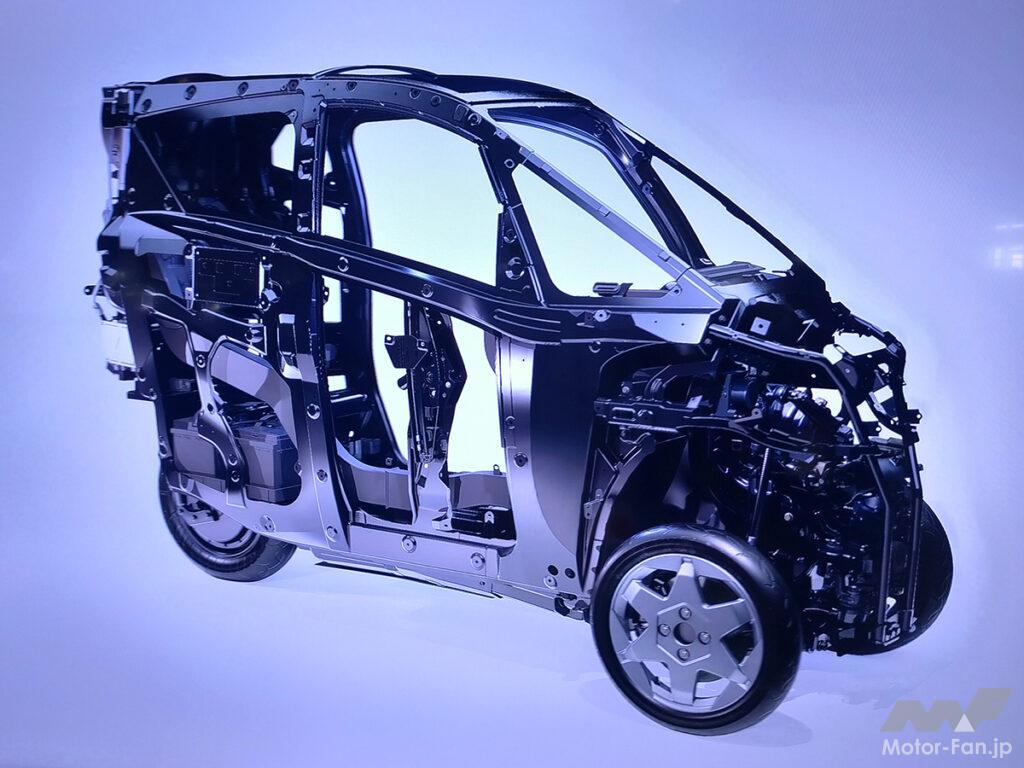
Pay attention to the complex body structure that has been carefully considered for rigidity.
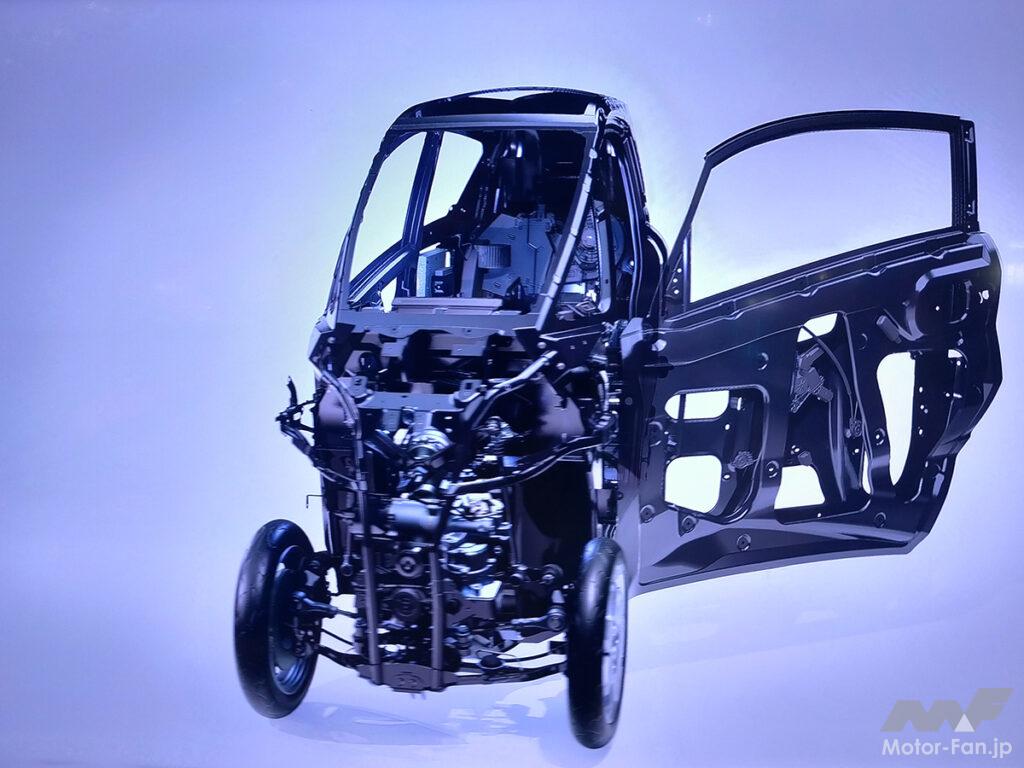
Not only driving performance but also collision safety performance is given the utmost importance.
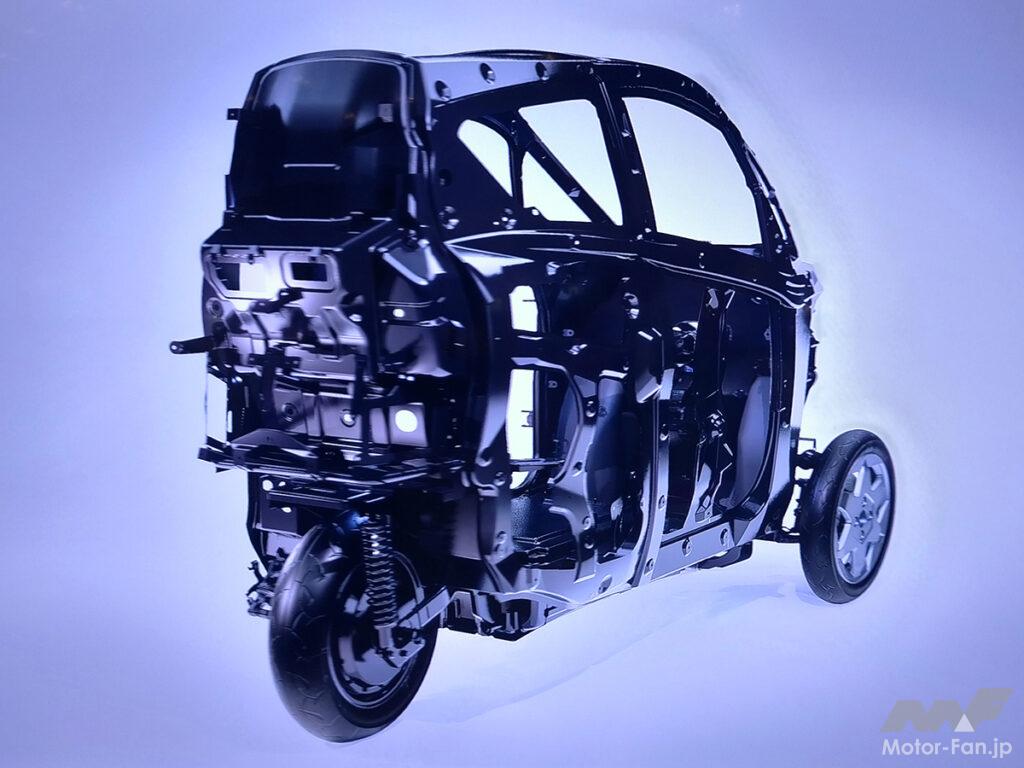
Designed to also take into account rear-end collisions.
It can accommodate two people! The interior is like half the size of a minicar, with a total width of 1480mm.
The Lean 3 features a car-style opening and closing door on the left side of the vehicle, and is 970mm wide. The standard limits the width of light vehicles to 1480mm or less. The driver’s seat in the Lean 3 is like half the cockpit of a light vehicle. For me, who is 172cm tall and weighs 60kg, the standard build for a Japanese man, it does not feel cramped at all. The vehicle is also equipped with air conditioning, making it comfortable to drive in the middle of summer or winter.
By tilting the back of the driver’s seat forward, you can access the rear seat. I tried sitting in the rear seat, but my impression was, “It’s a little cramped, but it’s fine for short distances and short trips.” In its current design, it can be said to be positioned merely as a supplementary seat.
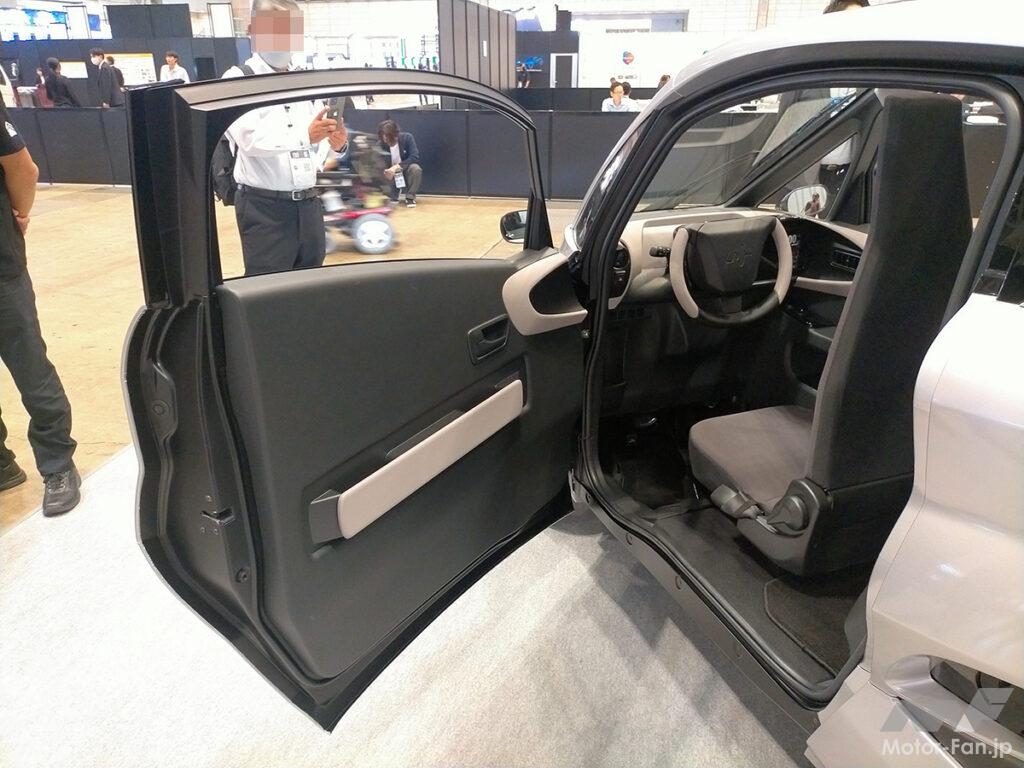
You enter by opening the car-style door on the left side of the vehicle. The door locking sensation (sealing sensation) is the same as in a normal car.
ADVERTISEMENT
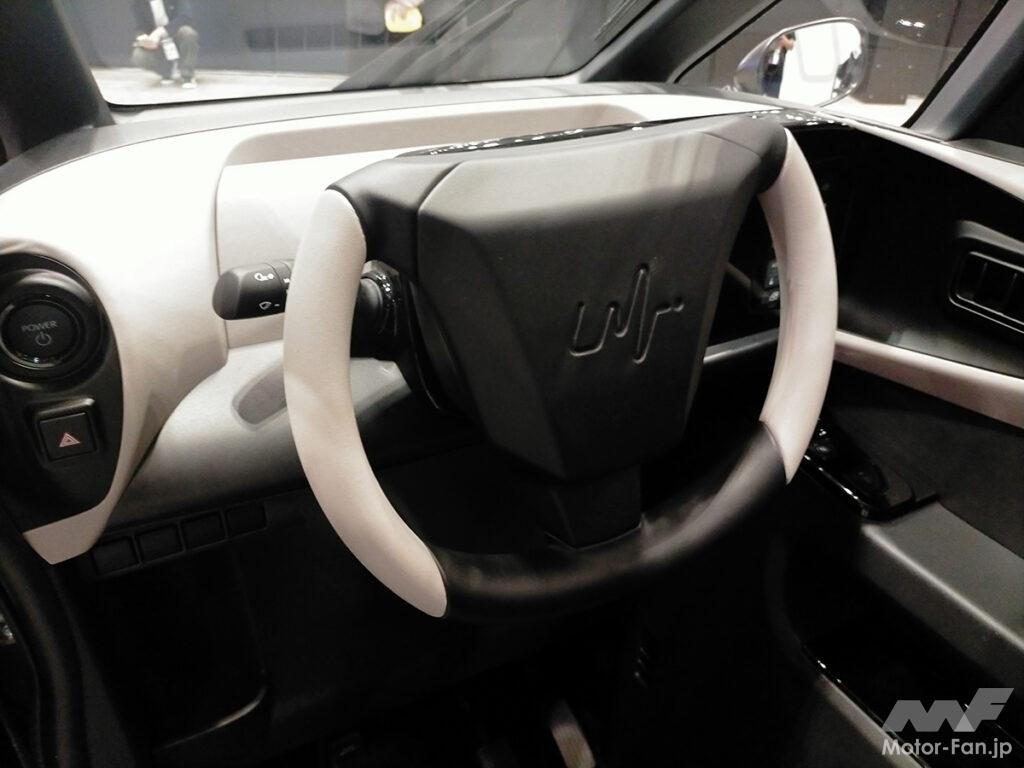
The D-shaped steering wheel, commonly used in sports cars, is used, and the accelerator pedal, brake pedal, turn signal arm, and wiper arm are positioned in the same way as gasoline and EV vehicles.
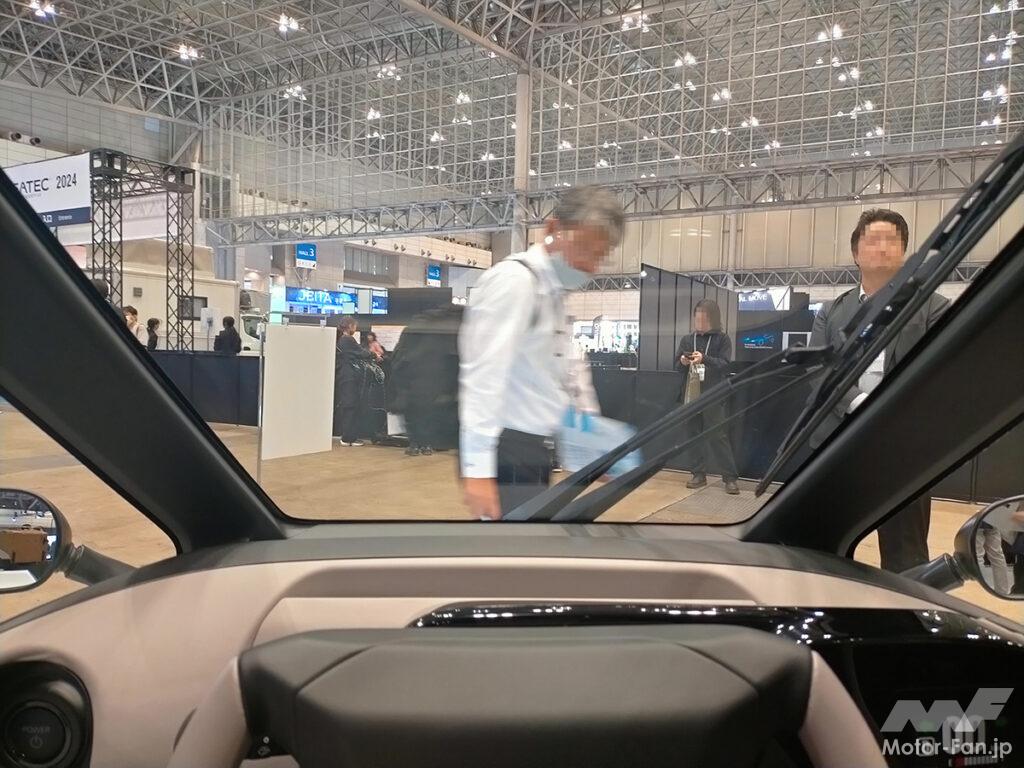
From the driver’s perspective while seated, visibility through the windshield and side windows is excellent.
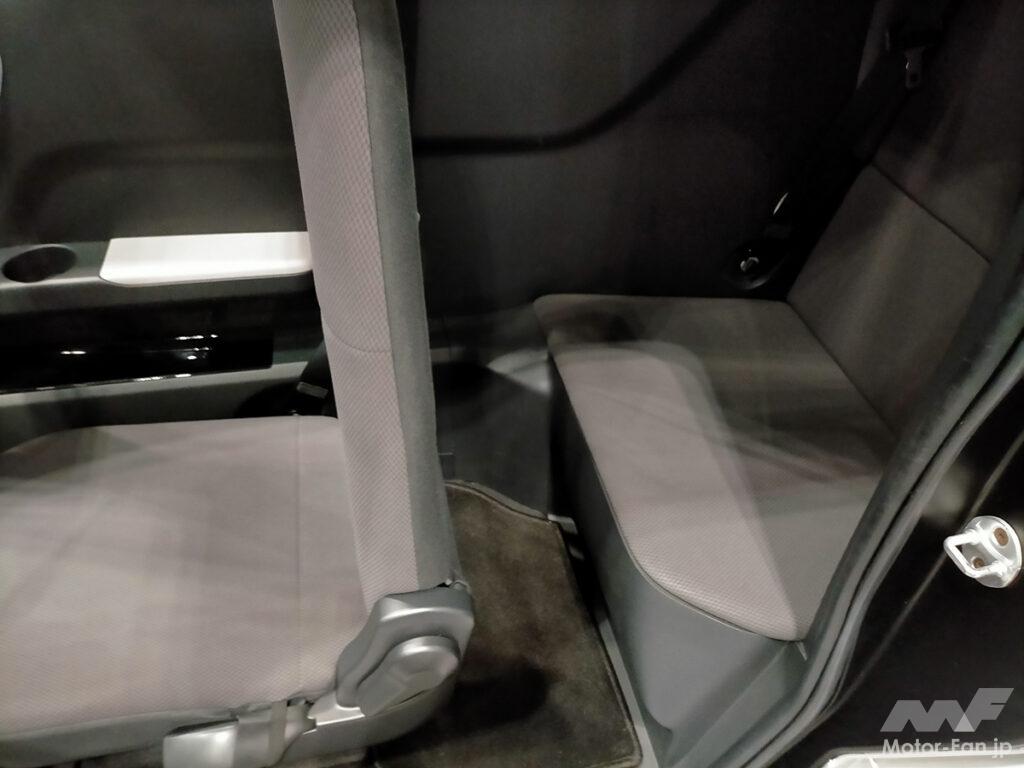
The driver’s seat is located in the front and an auxiliary seat is located in the rear.
detail

The front end is reminiscent of three-wheeled motorcycles such as the Yamaha Tricity series (although the structure is different). The front tire diameter is 14 inches. The tread (distance between the centers of the front tires) is 850 mm. The Yamaha Tricity 125 three-wheeled motorcycle has a tread of 680 mm and a front tire diameter of 14 inches. See above for the differences in the specifications of the two vehicles.
ADVERTISEMENT

The rear end is just like a scooter, equipped with motorcycle-style rear shocks and motorcycle-style tires.
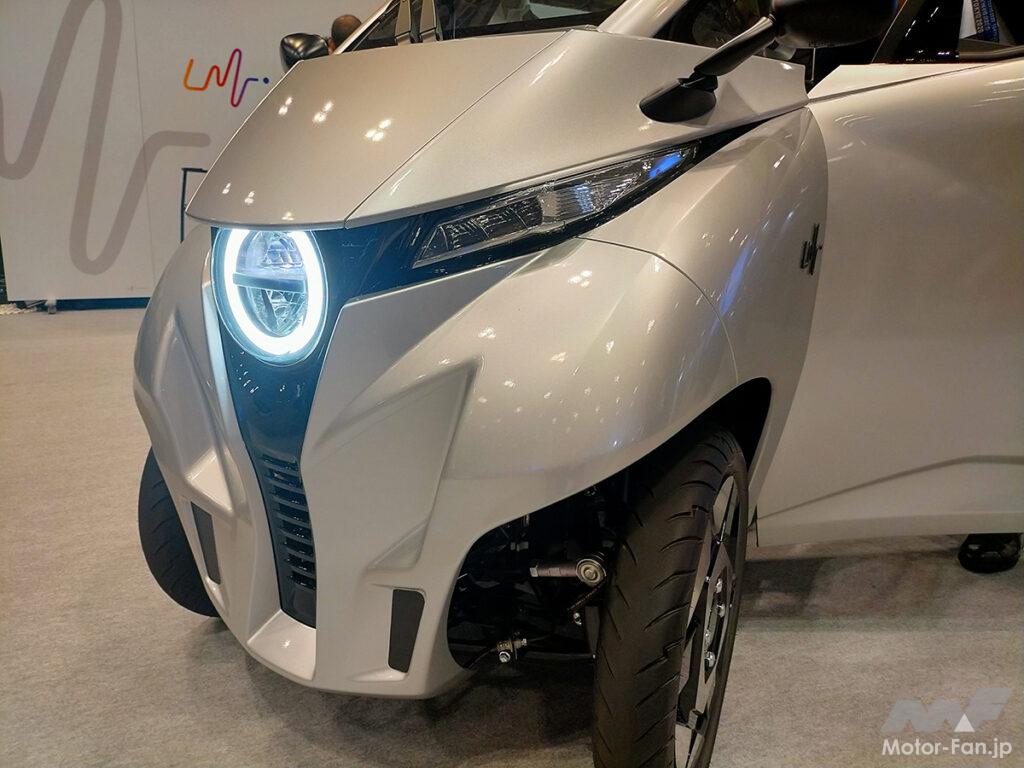
The front mask has a sharp image with a round LED headlamp in the center.
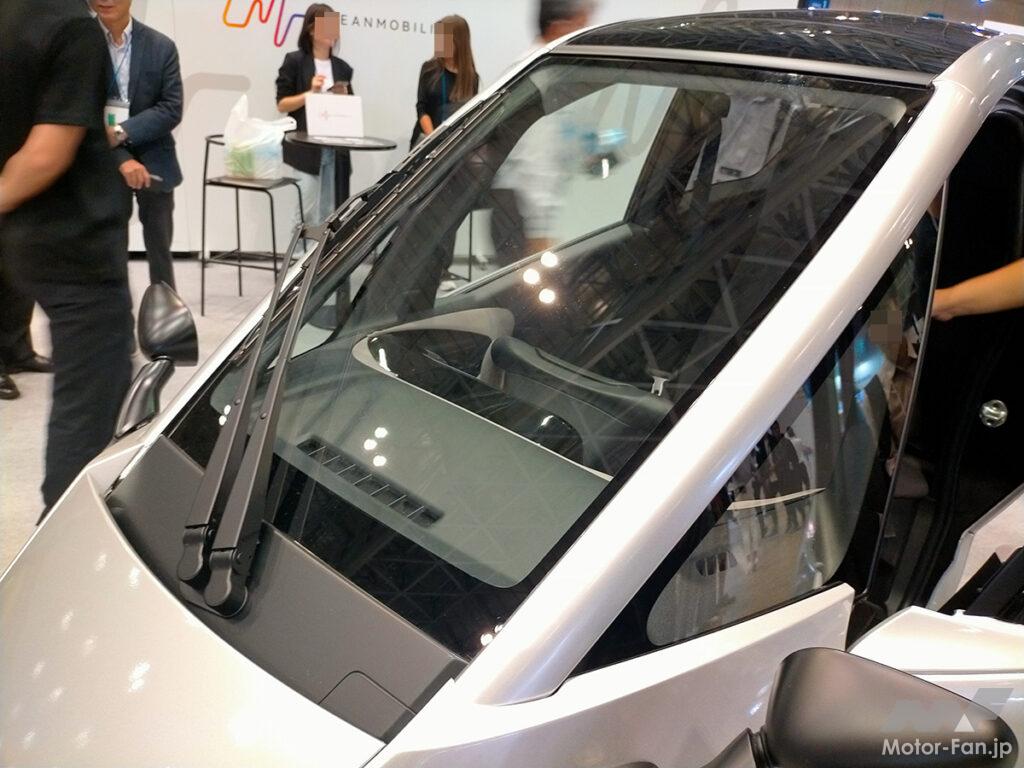
Like a normal car, it has a windshield with wipers.
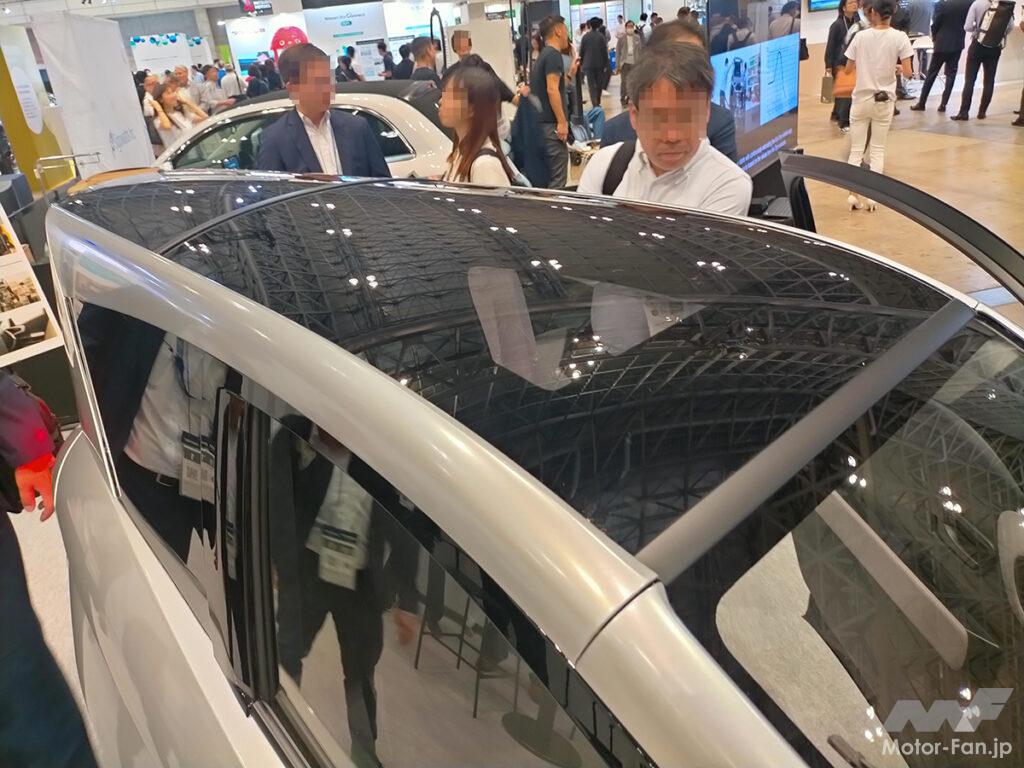
The roof is made of glass, which allows sunlight to enter and gives a sense of openness.

The tail part has a racy design.
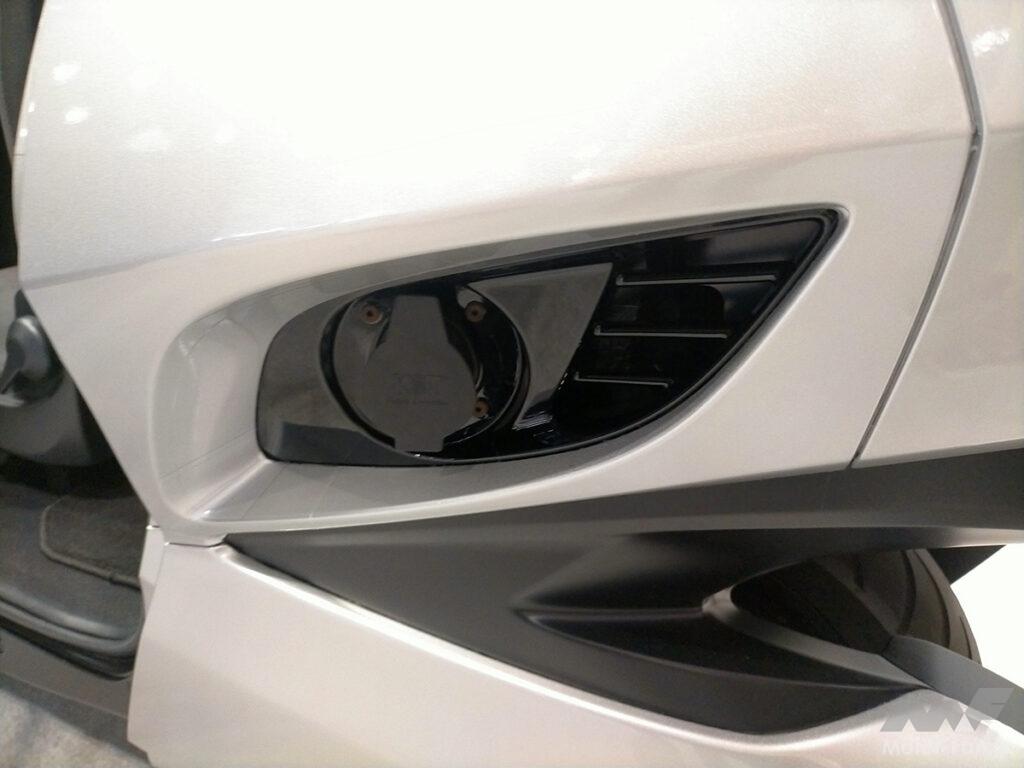
The power supply part of the charger.
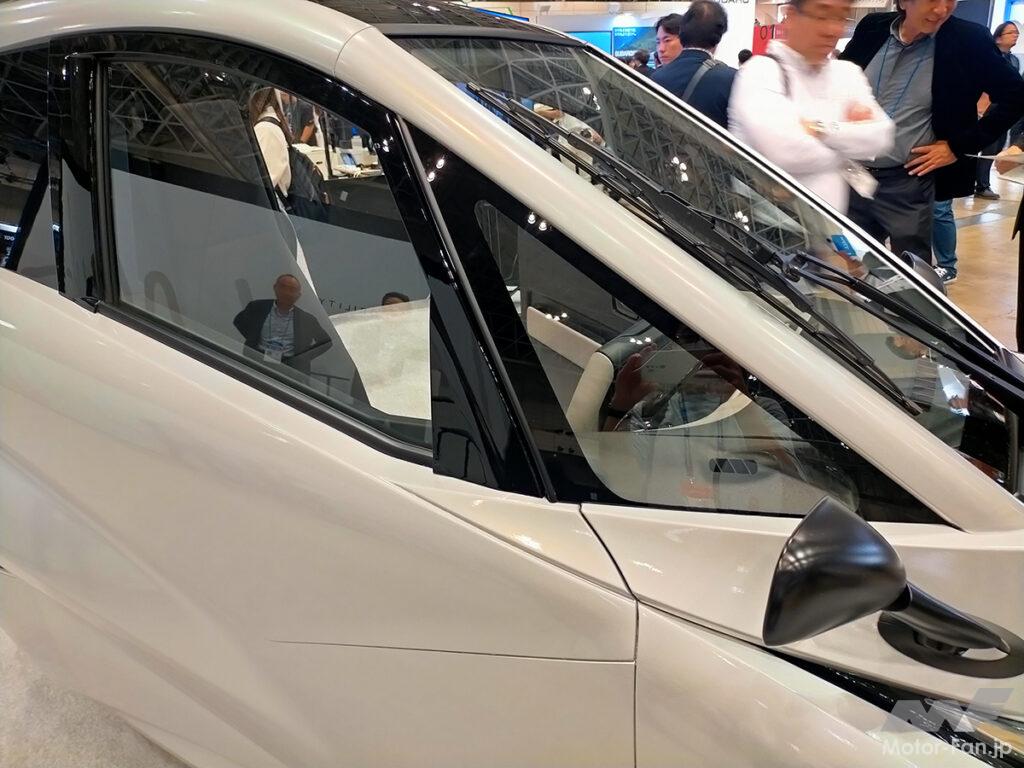
Side glass with a stylish image that takes into consideration good visibility and design.
ADVERTISEMENT
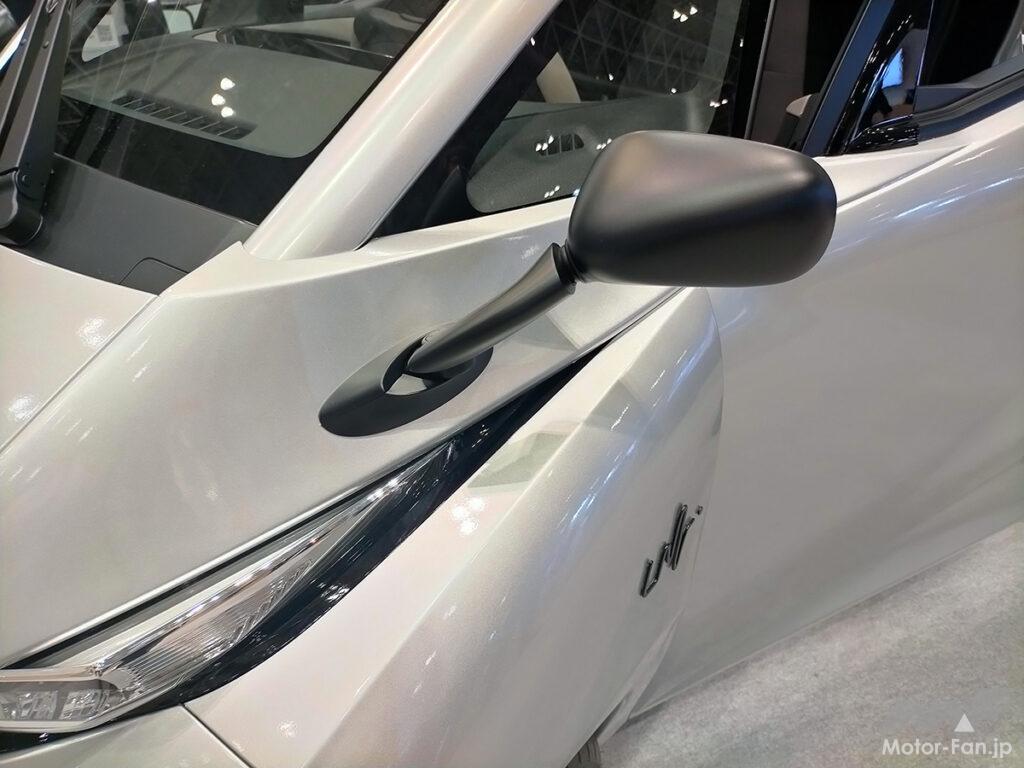
A rearview mirror reminiscent of a motorcycle.
Lean Mobility Lean 3 Main Specifications
| Total length x width x height | Total length 2,470mm x total width 970mm x total height 1,570mm |
| Wheelbase | 1,800mm |
| Tread (distance between the centers of the front tires) | 850mm |
| Minimum turning radius | 3.6 m |
| Passenger capacity | 2 people *1 person for domestic minicar registration |
| Drive system | Rear in-wheel motor |
| battery | Lithium-ion iron phosphate battery |
| Battery capacity | 8.1 kWh |
| Charging time | AC100V: Approx. 7 hours AC200V: Approx. 5 hours (provisional values as under development) |
| Driving distance per charge *WLTC class 1 | 100 km (provisional value due to development) |
| maximum speed | 80km/h or 60km/h |
| Air conditioning | can be |
| child seat | Can be installed (ISO-FIX F2X equivalent) |
*As the product is still under development, these specifications are subject to change.
ADVERTISEMENT
 Add a roof to the Yamaha Tricity 155 and it’s invincible! | Test drive report
It’s perfect for a variety of occasions, including solo touring, solo camping, tandem touring, tandem camping, and business! Comforti is a custom parts brand exclusively for the Yamaha TRICITY, produced by Yamaha vehicle expert shop YSP Yokohama Totsuka together with friend shops HV Factory and DUCA craftwork. Test drive the brand’s Shooting Brake, a complete machine based on the Tricity 155 that combines a roof and box, making it ideal for outdoor use. The Shooting Brake can also accommodate two people, and can easily carry luggage for two. It’s also ideal for long touring and camping. REPORT ● Kita Hideaki Inquiries ● HV Factory https://hvfactory.com/
 The license is for a standard car, no vehicle inspection is required, and it can be driven on highways (however, the top speed is 80km/h). My impressions after riding a three-wheeled EV available at Yodobashi Camera.
The electric sports tricycle “REVERSE TRIKER 3.0” is on sale at Yodobashi Camera, a major electronics retailer. The REVERSE TRIKER 3.0, which can also be ordered and purchased on Yodobashi Camera’s e-commerce site “Yodobashi.com”, is a much talked about model released by Vehicle Fun (headquarters: Edogawa-ku, Tokyo), which develops a variety of EV models. We visited the showroom of Vehicle Fun, the manufacturer, and took the plunge to test drive the REVERSE TRIKER 3.0. The acceleration that is unique to sports EVs, and different from engine vehicles, is impressive! REPORT: Kita Hideaki PHOTO: Yamada Shyunsuke Interview cooperation: Vehicle Fun http://www.vehiclefun.net/
 The new Yamaha Tricity 155’s capabilities are demonstrated in a circuit test! [Video: Moto Champ TV]
The Yamaha Tricity 155, which was first released in 2016, has undergone a full model change in 2023, evolving into its second generation. We will report on how the Tricity, which boasts outstanding stability thanks to its two front wheels and one rear wheel, has evolved, along with footage from a circuit test.