
![[For beginners] What can you learn from a motorcycle’s “spec sheet”? What are the “7 basic items̶](https://motopeek.com/wp-content/uploads/2024/10/4276-1760972897320.jpg)
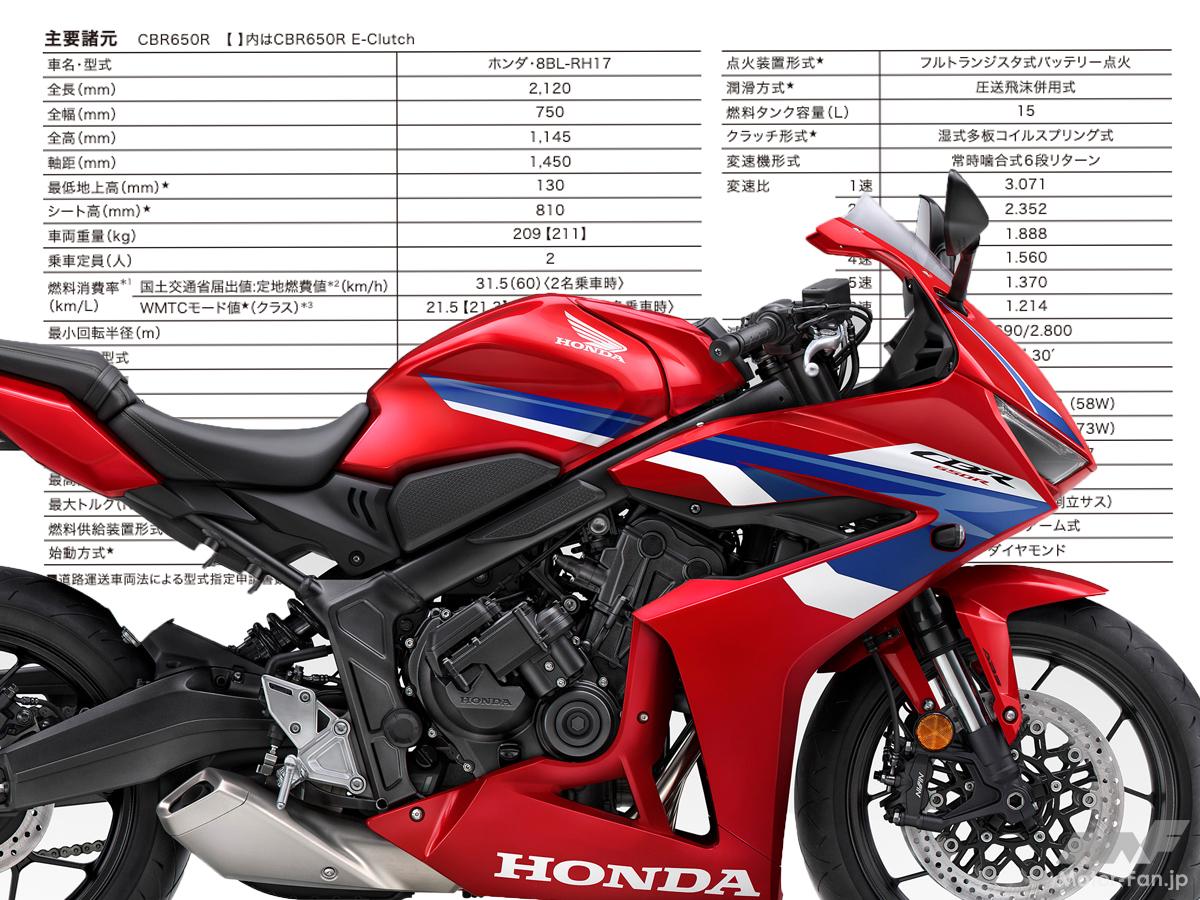
Vehicle size
First, there is the vehicle size. This is a numerical representation of the size of a motorcycle, and can be determined by looking at three things: overall length, overall width, and overall height.
The meaning of each is as follows:
Overall length = “The length from the front to the rear of the bike, including the tires”
Overall width = “The length of the widest part of the bike (excluding mirrors)”
Overall height = “The length from the ground to the highest point of the bike (excluding safety parts/mirrors)”
These figures are generally expressed in millimeters (mm), and mirrors are generally not included in the vehicle size.
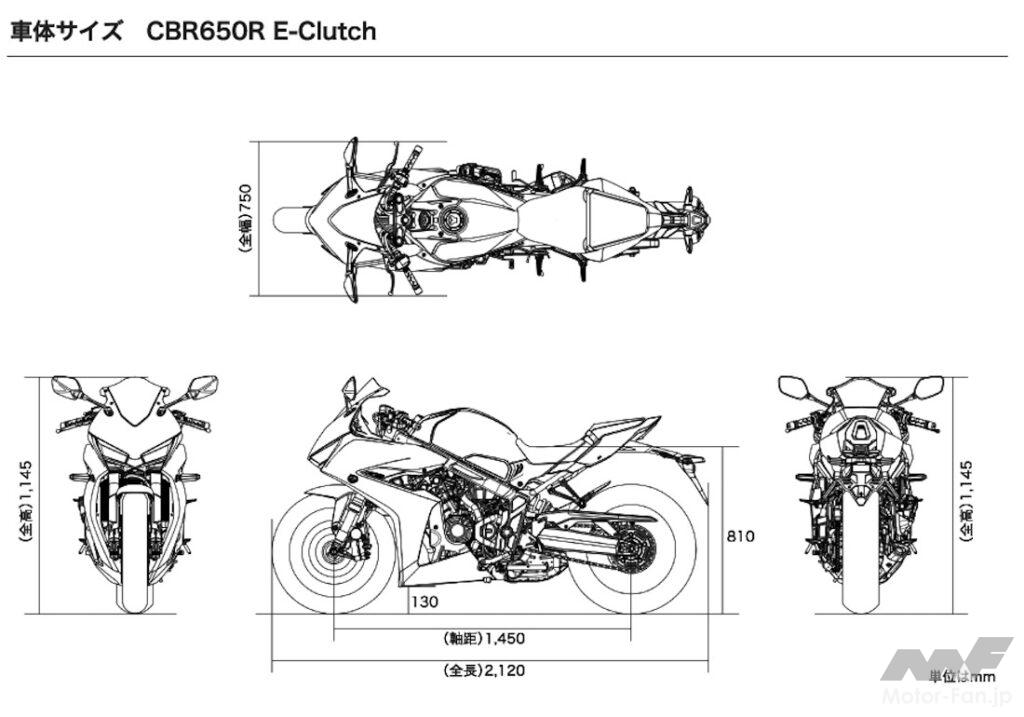
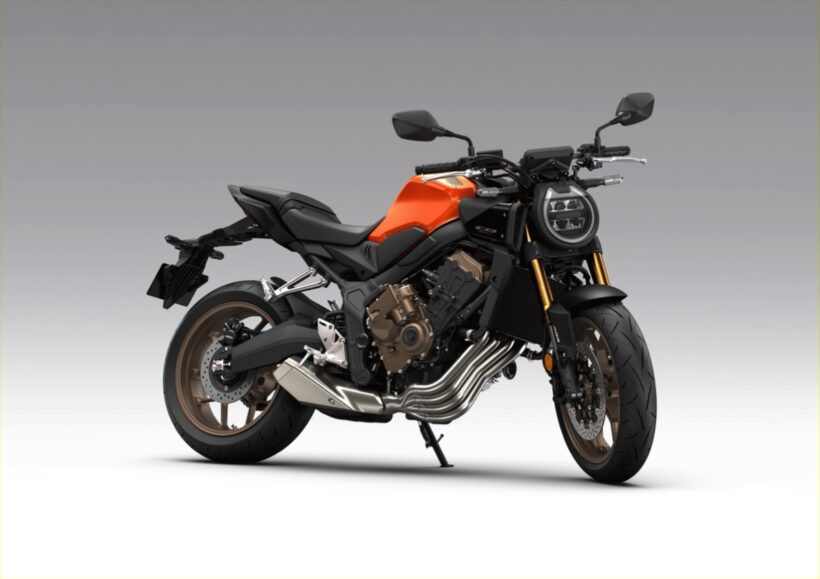
Example of vehicle size (Honda CBR650R E-Clutch)
Seat height
The length from the lowest point of the seat to the ground is the “seat height.” It can be said that this number can be used as a reference for the rider’s ability to reach the ground when riding. However, this number is only a design value. In reality, the number will change because the amount of suspension sinking changes depending on the rider’s weight, etc.
In addition, the quality of foot placement is also influenced by the shape of the seat and the structure of the vehicle. For example, even if the seat height is high, if the seat shape is narrow, it may be surprisingly easy to place your feet on the ground.
Therefore, it is best to think of the seat height as a reference value only. To be precise, we recommend that you try straddling the actual bike.
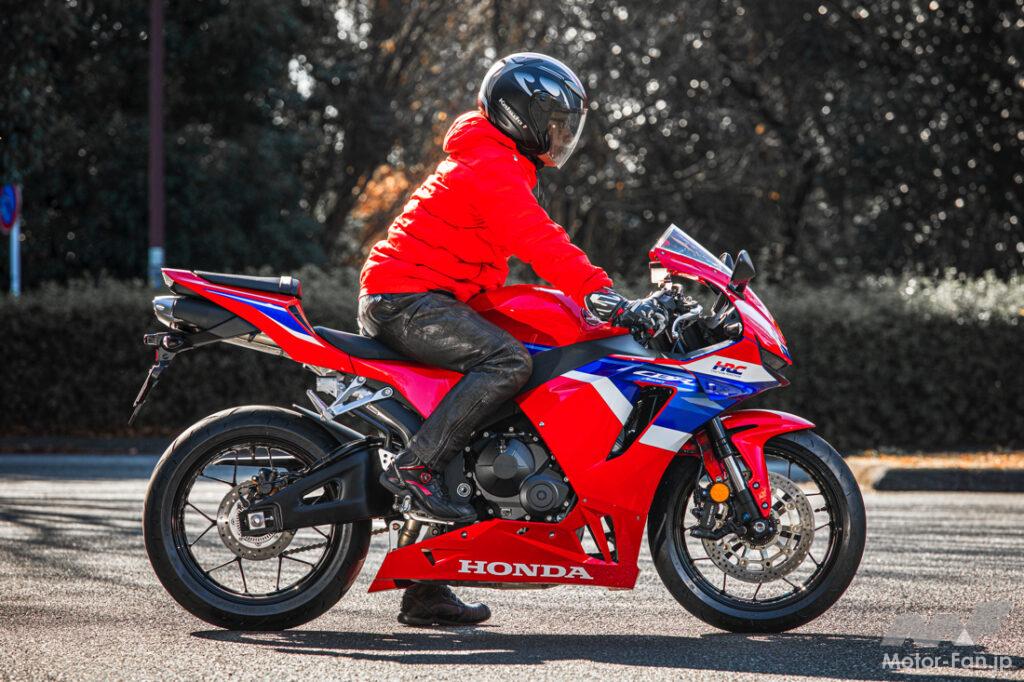
Seat height is a reference for foot reach
Vehicle weight
The weight of the entire motorcycle is called the “vehicle weight.” Some manufacturers refer to it as the “equipped weight,” but the four domestic manufacturers generally use the same term, meaning the total weight including gasoline, oil, coolant, battery fluid, etc. In other words, it is the weight of the motorcycle when it is ready to ride.
As an aside, there was a time when the weight was expressed as the “dry weight” excluding liquids such as gasoline and oil. Therefore, the specifications at that time were generally lighter than the weight when actually running.
On the other hand, the current vehicle weight (= equipped weight) is closer to the weight of a motorcycle that is actually ridden. Therefore, looking at the spec figures can be used as a reference for, for example, how easy it is to push a motorcycle around a parking lot.
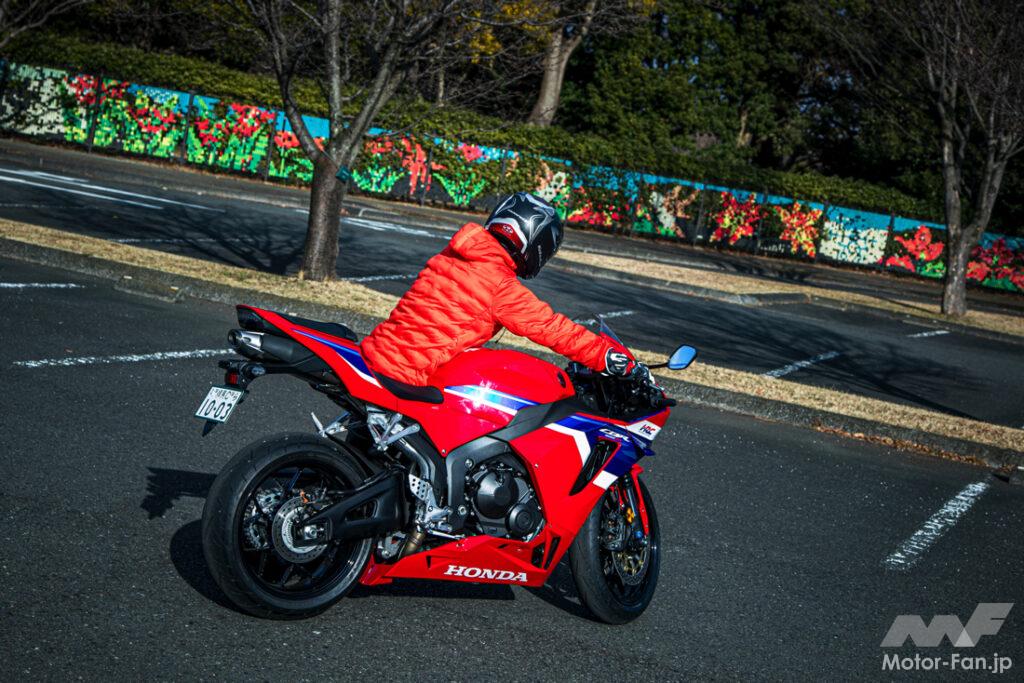
The vehicle weight also serves as a reference for the ease of pushing the vehicle.
Engine type
The engine type indicates the type of mechanism and format that the bike’s engine uses. Honda and Kawasaki use the category “engine type,” Yamaha uses the category “motor type,” and Suzuki uses the category “engine model/valve system,” but they are all basically the same.
For example, in the case of Honda cars,
The CBR650R is a “water-cooled 4-stroke DOHC 4-valve inline 4-cylinder” while
the GB350 is an “air-cooled 4-stroke OHC single-cylinder”
and the CBR250RR is a “water-cooled 4-stroke DOHC 4-valve inline 2-cylinder”
Of these, “water-cooled” and “air-cooled” refer to the engine cooling method, and in the above example, the CBR650R and CBR250RR have water-cooled engines, while the GB350 has an air-cooled engine.
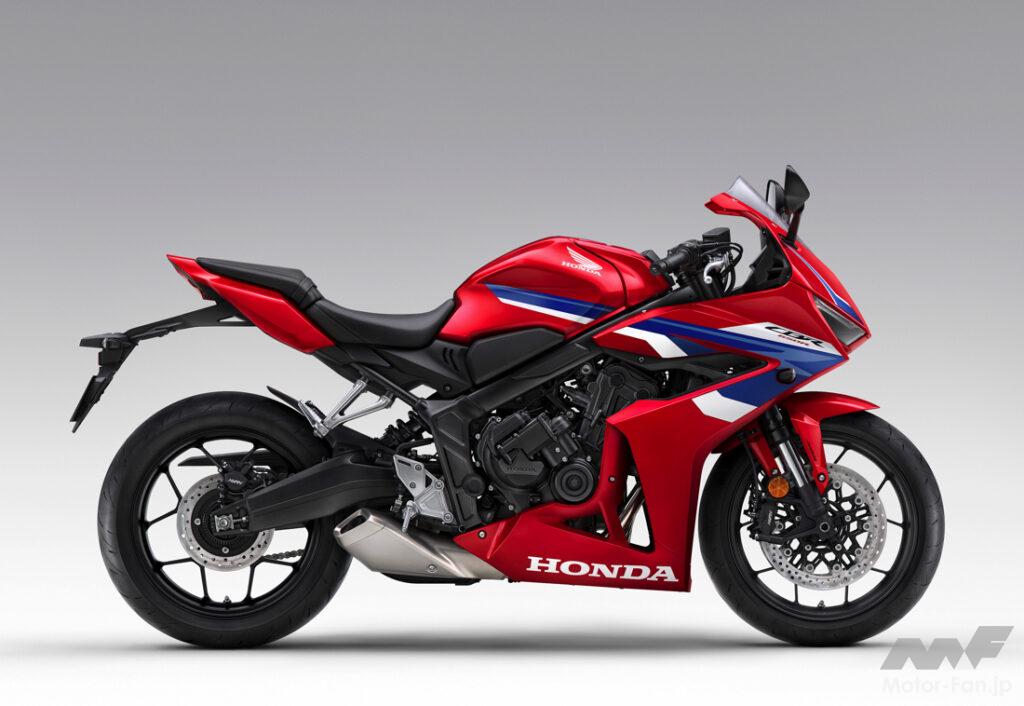
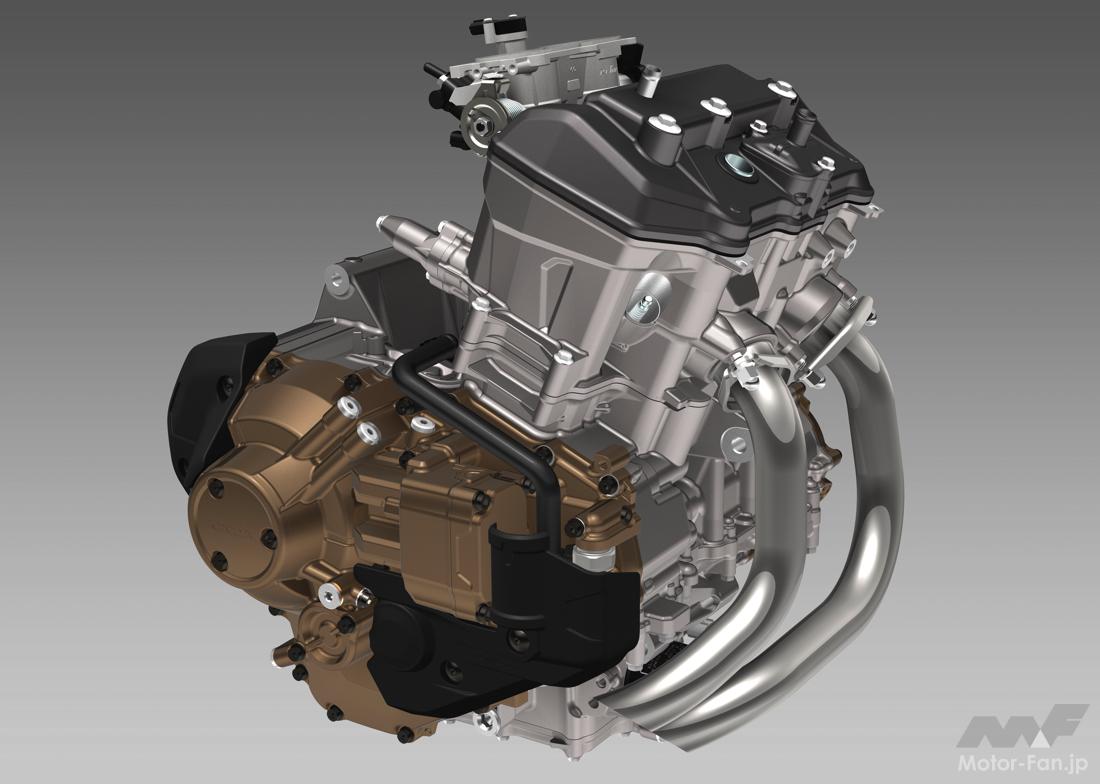
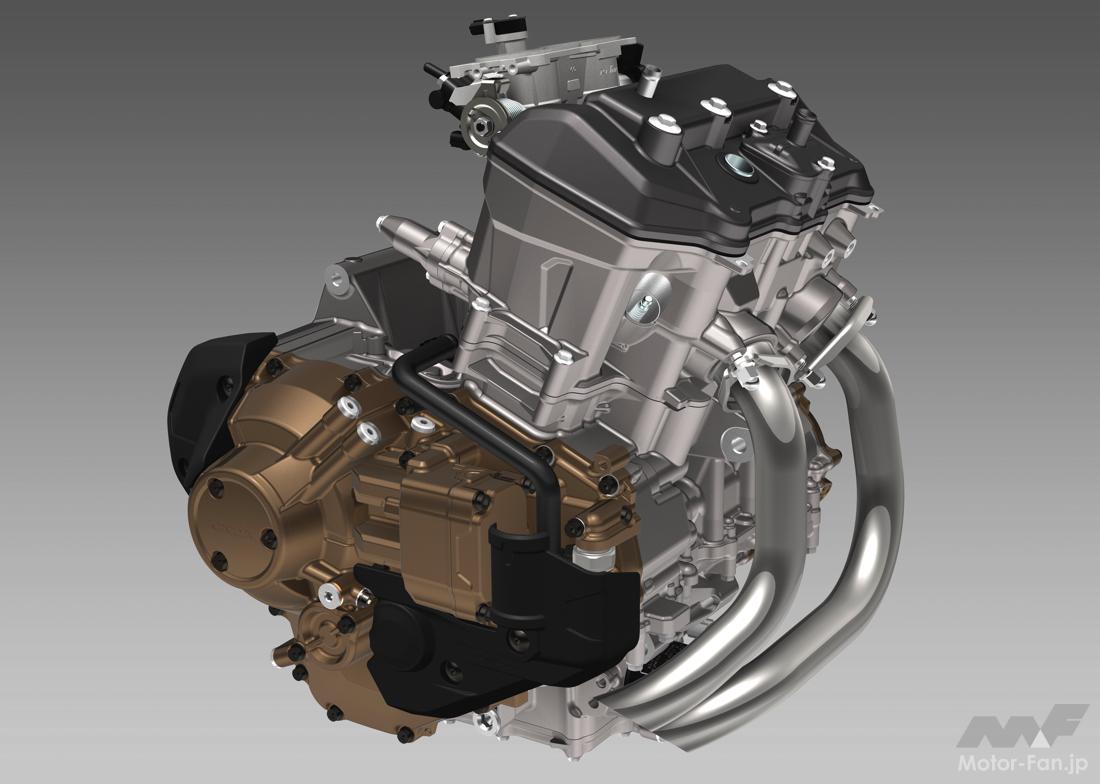
The CBR650R E-Clutch is equipped with a water-cooled, 4-stroke, DOHC, 4-valve, in-line 4-cylinder engine.
ADVERTISEMENT
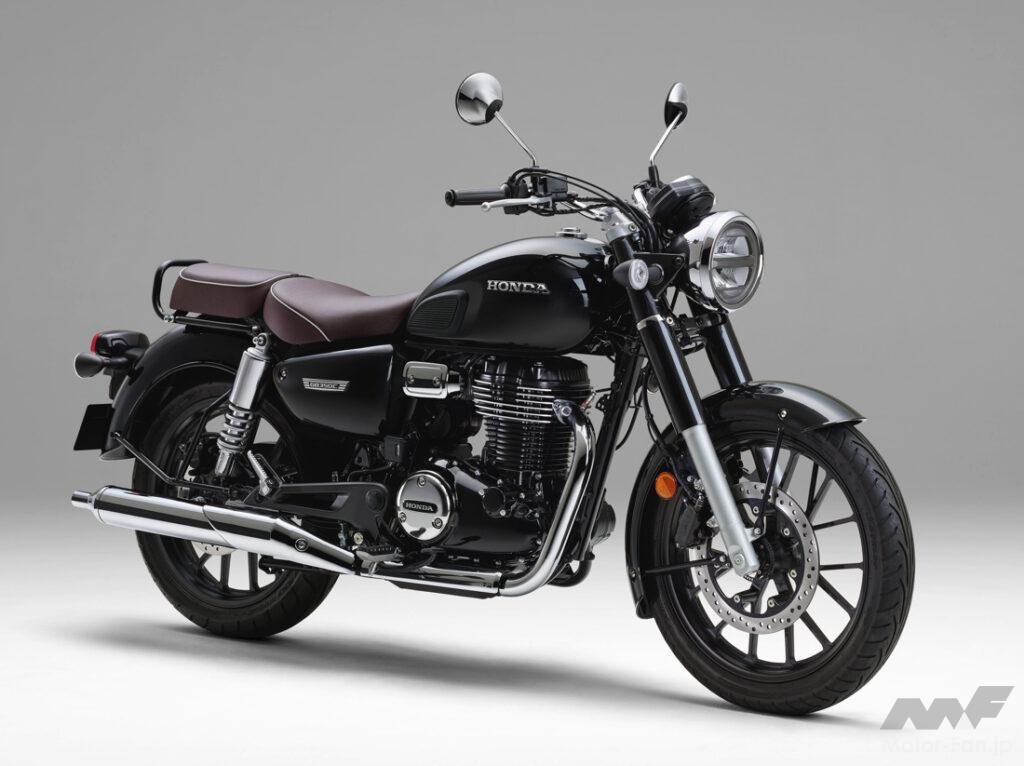
The GB350 series is equipped with an air-cooled 4-stroke OHC single-cylinder engine (photo shows GB350C).
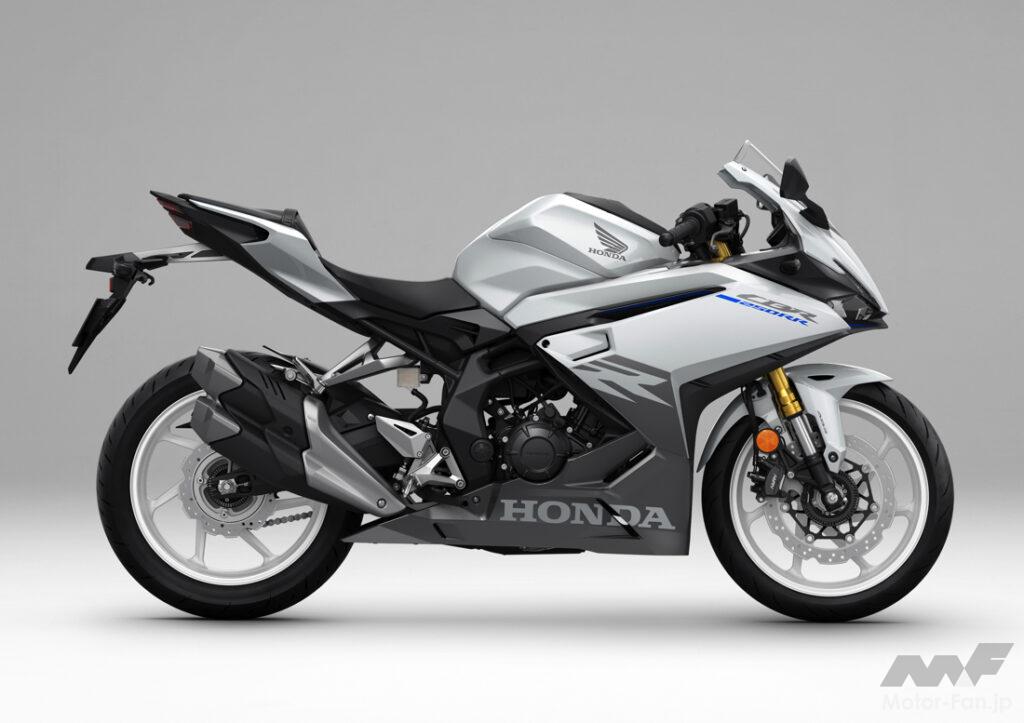
The CBR250RR is equipped with a water-cooled, four-stroke, DOHC, four-valve, in-line two-cylinder engine.
Also, “four-stroke” refers to the engine’s combustion cycle, and currently most domestically produced motorcycles use four-strokes (also called four-cycle).
DOHC and OHC refer to intake and exhaust valve mechanisms, with DOHC standing for “Double Over Head Camshaft” and OHC standing for “Over Head Camshaft.”
Furthermore, the “four valves” found on the CBR650R and CBR250RR refer to the number of intake and exhaust valves. In both cases, each cylinder has two intake valves and two exhaust valves, for a total of four valves.
And then there are indications such as “inline 4-cylinder,” “single cylinder,” and “inline 2-cylinder.” These indicate the number of cylinders in the engine and also the arrangement of the cylinders, such as “inline” for engines with multiple cylinders.
Incidentally, the CBR650R and CBR250RR, which use DOHC 4-valve 4-cylinder and 2-cylinder engines, have good combustion efficiency and operability at high rpm, making them engine types designed to generate higher power.
In contrast, the GB350, which uses an OHC single-cylinder engine, is designed to emphasize engine feel, allowing you to experience the unique heartbeat of a single engine, such as the thumping sensation at low rpm.
Maximum output and torque
Roughly speaking, maximum output indicates “how much power the engine can produce at its maximum capacity.” It is essentially “horsepower.” For example, in the case of the CBR650R, it is displayed as “70kW (95PS) / 12,000 rpm.”
kW (kilowatt) is the international unit of power used to calculate horsepower and is currently used worldwide. PS (pounds per square meter) is a unit of horsepower based on the metric system used in Japan and Europe. Since it is a unit that has long been familiar in Japan, Japanese manufacturers generally display both kW and PS.
The rpm refers to the engine speed (number of crankshaft revolutions per minute), and in this case, it indicates the number of revolutions at which maximum power is generated. The higher this number, the more power the bike is set to produce at higher rpm.
On the other hand, maximum torque is like the maximum force you apply to pedal a bicycle. In bicycle terms, the greater the torque, the greater the force you apply to pedal, resulting in greater acceleration. In other words, roughly speaking, torque is closely related to acceleration performance, and the greater the maximum torque, the better the acceleration.
The unit of measurement is N・m (Newton meter), which has also become the international standard in recent years. However, in Japan, as with maximum power output (PS), kgf-m has been the norm, so Japanese manufacturers generally display it in both N・m and kgf-m.
In this case, rpm also refers to the engine speed. For example, even on the same 250cc bike,
CBR250RR: 25N・m (2.5kgf-m) / 10,750rpm
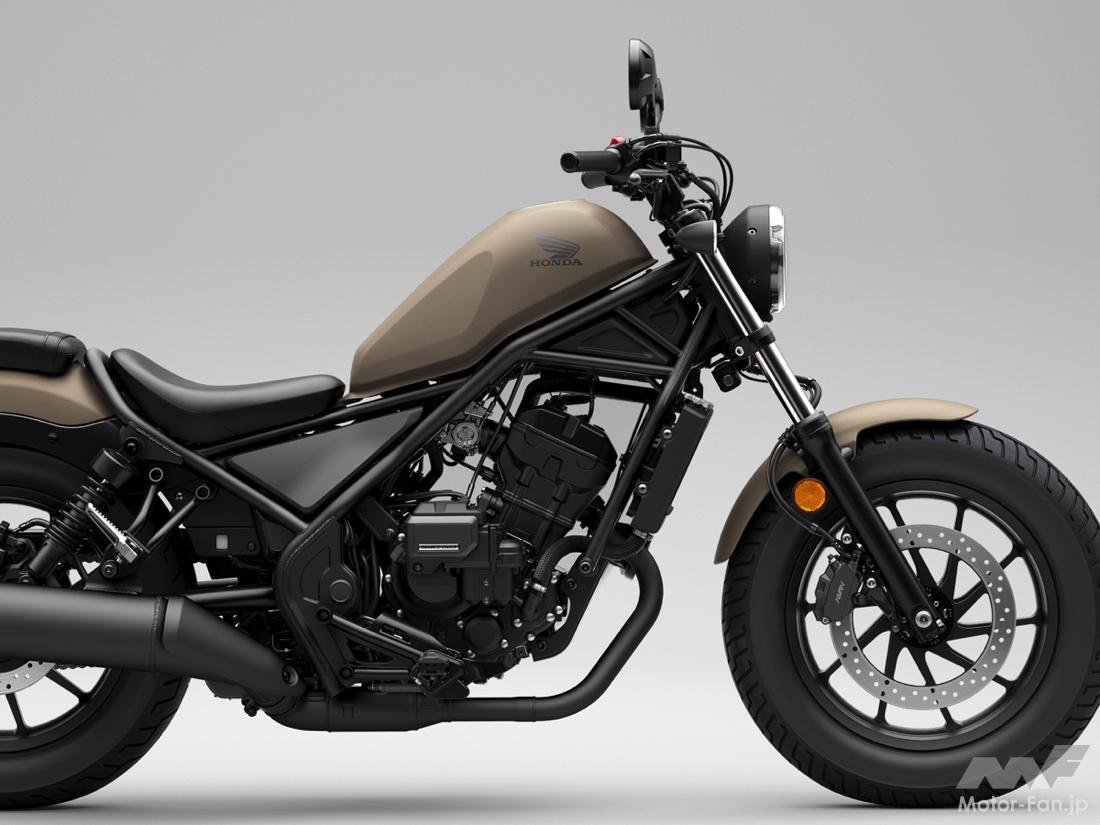
Rebel 250: 22N・m (2.2kgf-m) / 6,500rpm
Although the CBR250RR has slightly more torque, the Rebel 250 produces its maximum torque at roughly half the RPM of the CBR250RR. This means that the Rebel 250 is superior when it comes to smooth acceleration at low speeds, such as when starting off.
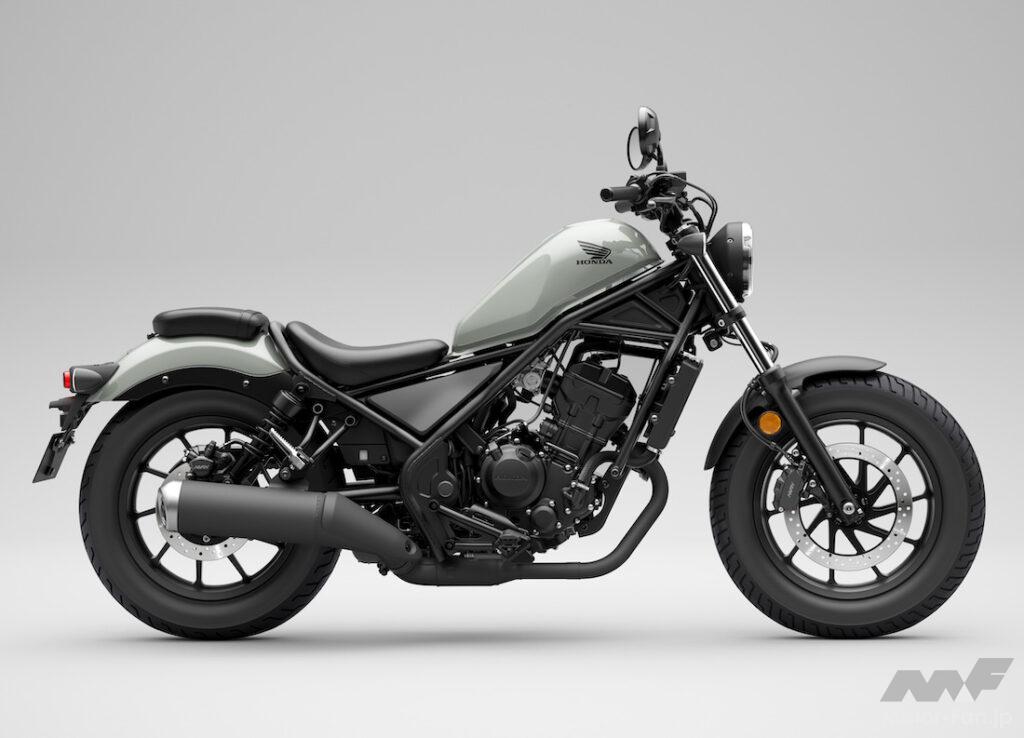
The Rebel 250’s appeal lies in its smooth acceleration at low speeds.
Fuel tank capacity
The “fuel tank capacity” is the amount of gasoline that can be stored in a fuel tank when it is filled to the brim.
In the case of motorcycles, the fuel tank is very important in terms of design, so the shape varies greatly depending on the model. As a result, the capacity may be larger than it appears, or may actually be smaller than you would expect.
Especially when touring, the cruising range, or “how far you can travel on one full tank of gas,” is very important. To use it as a reference, it’s important to remember how much gasoline your bike can hold.
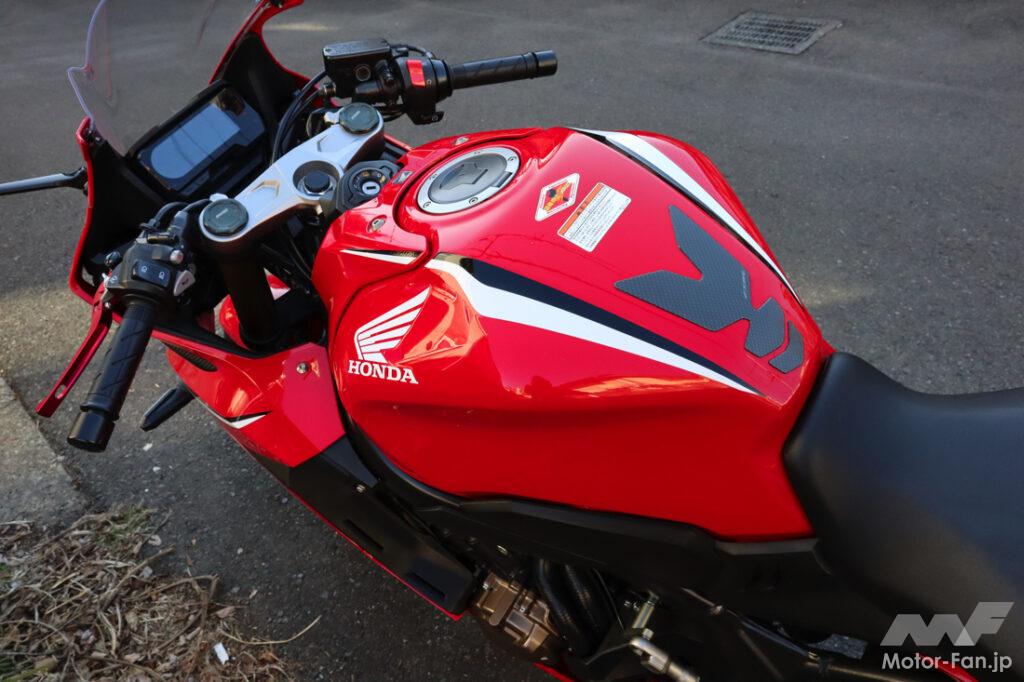
You should know the fuel tank capacity of your car.
fuel consumption rate
When traveling long distances, such as on a tour, fuel economy is also an important factor. The spec sheet lists the fuel consumption rate, which indicates how far you can travel on one liter of gasoline.
For example, in the Rebel 250 ,
Ministry of Land, Infrastructure, Transport and Tourism reported values: Constant speed fuel economy = 47.0 km/L (with two occupants)
WMTC mode value = 33.7 km/L (with one occupant)
It is written as follows.
The steady-state fuel consumption value here refers to the fuel consumption rate based on actual measurements taken while driving at a constant vehicle speed. The WMTC mode value refers to a calculated value based on the results of exhaust gas tests measured in an internationally standard driving mode that includes starting, accelerating, and stopping. This value has been used in recent years as it is closer to reality.
These figures are also reference values for knowing the cruising range of the bike you ride, as mentioned above. For example, in the case of the Rebel 250, the fuel tank capacity is 11L and the WMTC mode value is 33.7km/L. From these figures, the specs show that the cruising range on a single full tank is
“33.7km/L x 11L = 370.7km”
The calculation goes like this:
Of course, actual fuel economy and cruising range will vary depending on factors such as the weather and road conditions during riding, and the rider’s riding style. Therefore, although these figures are merely a guide, it is better to have no idea at all. It’s a good idea to check them beforehand before going on a tour.
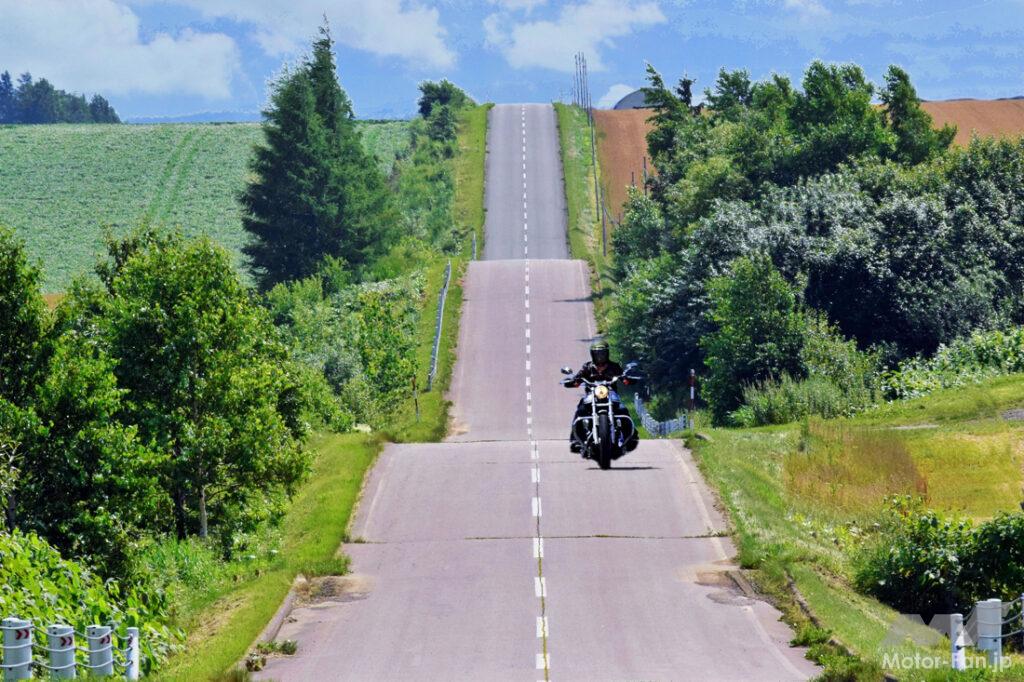
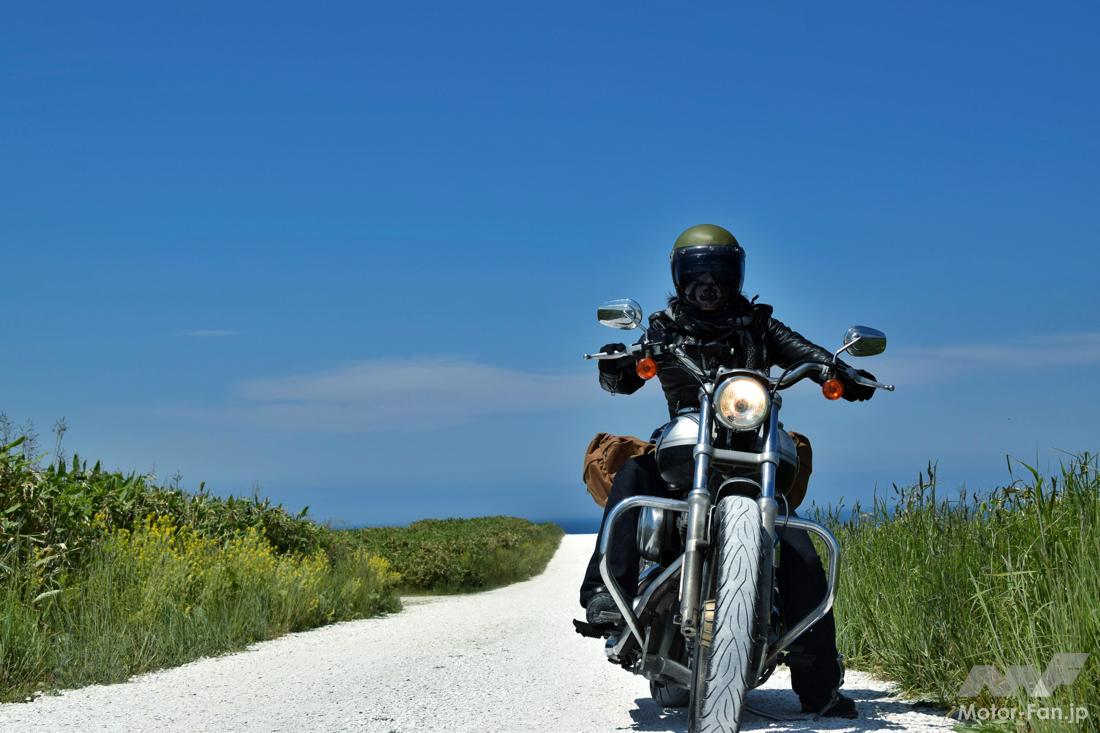
When touring, it is also important to know the cruising range with one full tank of fuel.
As you can see, the spec sheet shows the bike’s characteristics and performance. Starting with the seven items introduced here, if you gradually understand the meaning of the other items, you will be able to better understand the characteristics of your beloved bike or the bike you’re interested in, and you’ll undoubtedly be able to further enrich your motorcycle life.