
Starting in 2023, the Tokyo Motor Show will be revamped from the previous “Tokyo Motor Show” to the “JAPAN MOBILITY SHOW” with the aim of realizing a co-creation platform originating from the mobility industry. This event alternates between business events and showcase events every year. The second event since the revamp, “JAPAN MOBILITY SHOW BIZWEEK 2024,” was held as a business event.
This year’s “JAPAN MOBILITY SHOW BIZWEEK 2024” was held in conjunction with the main event, the comprehensive technology and industry exhibition “CEATEC 2024 (Note 1)” (admission to both events is free). Compared to “CEATEC 2024,” which took up exhibition halls 2 to 8, “JAPAN MOBILITY SHOW BIZWEEK 2024” was a small-scale event taking up only exhibition hall 1, but the booths showcased noteworthy models and products that each company had developed using their own ideas and ingenuity.
※注1:「CEATEC(シーテック)」は2024年で25周年を迎える技術・産業の総合展示会。「Toward Society 5.0」をコンセプトに、経済発展と社会課題の解決を両立する「Society 5.0」の実現を目指したソリューションなどが集結。2024年はAIを中心とした出展が多く、25周年特別企画「AI for All」も話題を呼んだ。
JAPAN MOBILITY SHOW BIZWEEK 2024
Fuel cell-powered small mobility
Developed by: Tokyo University of Technology, Faculty of Engineering, Department of Mechanical Engineering, Land, Sea and Air Mobile Robotics (Fukushima) Laboratory
ADVERTISEMENT
Research and development is being carried out in cooperation with Hundredths Corporation, Tokyo Metropolitan Industrial Technology Center, and Kikuchi Seisakusho Co., Ltd.
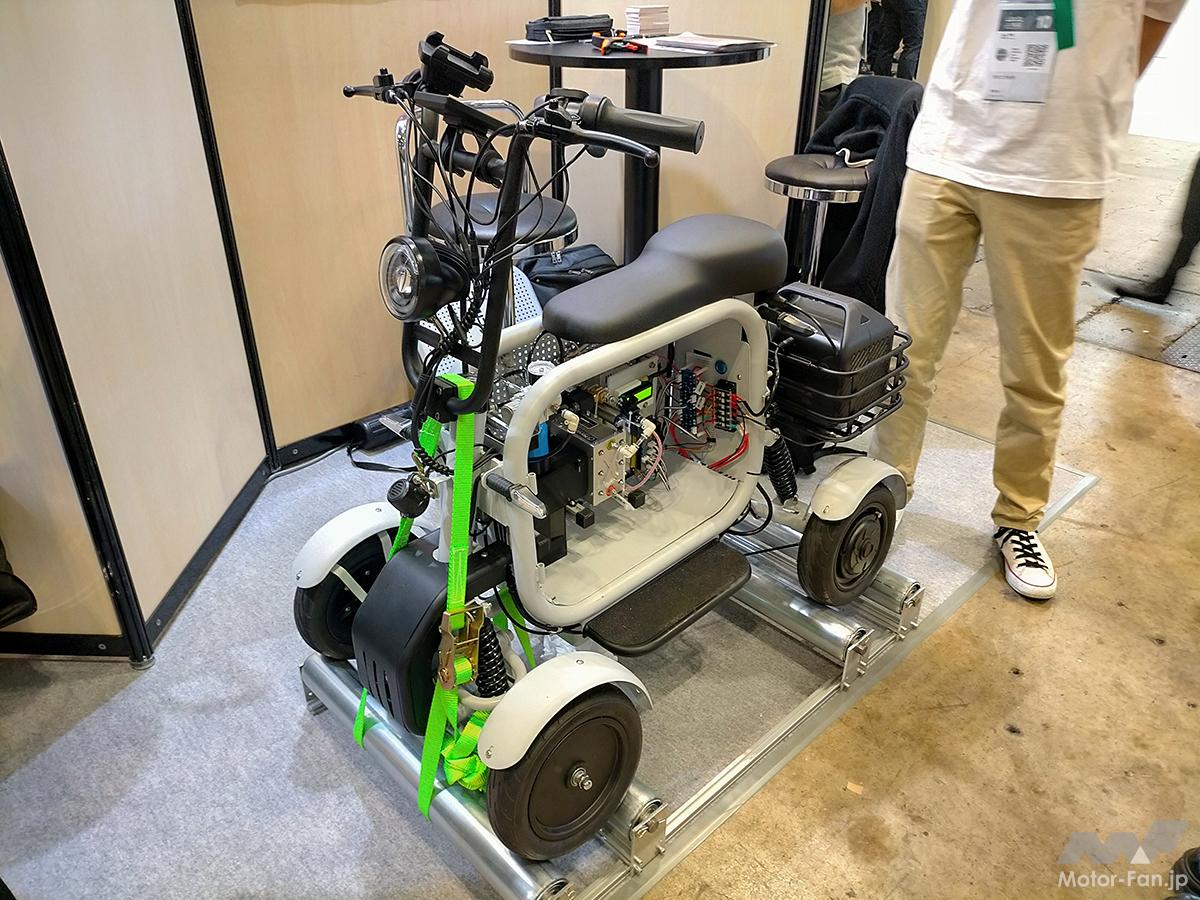
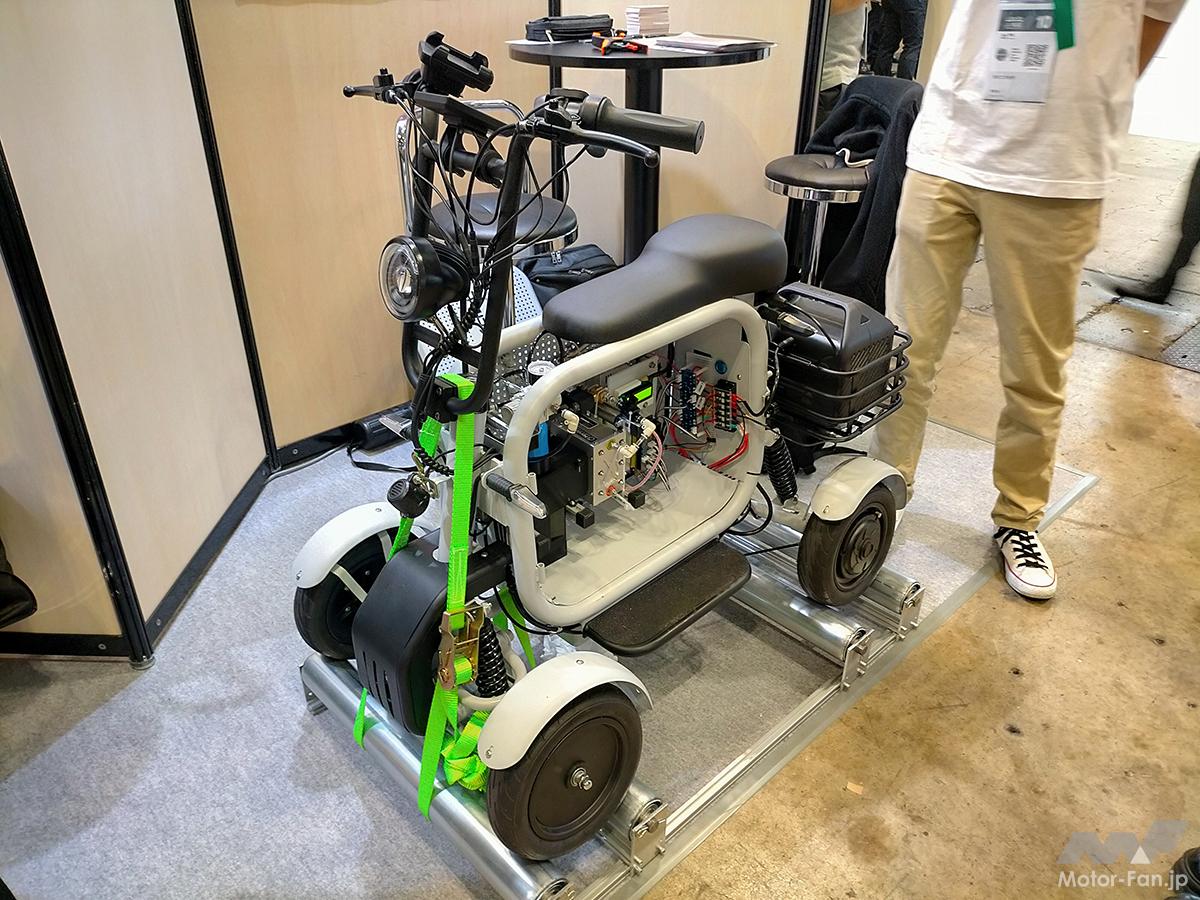
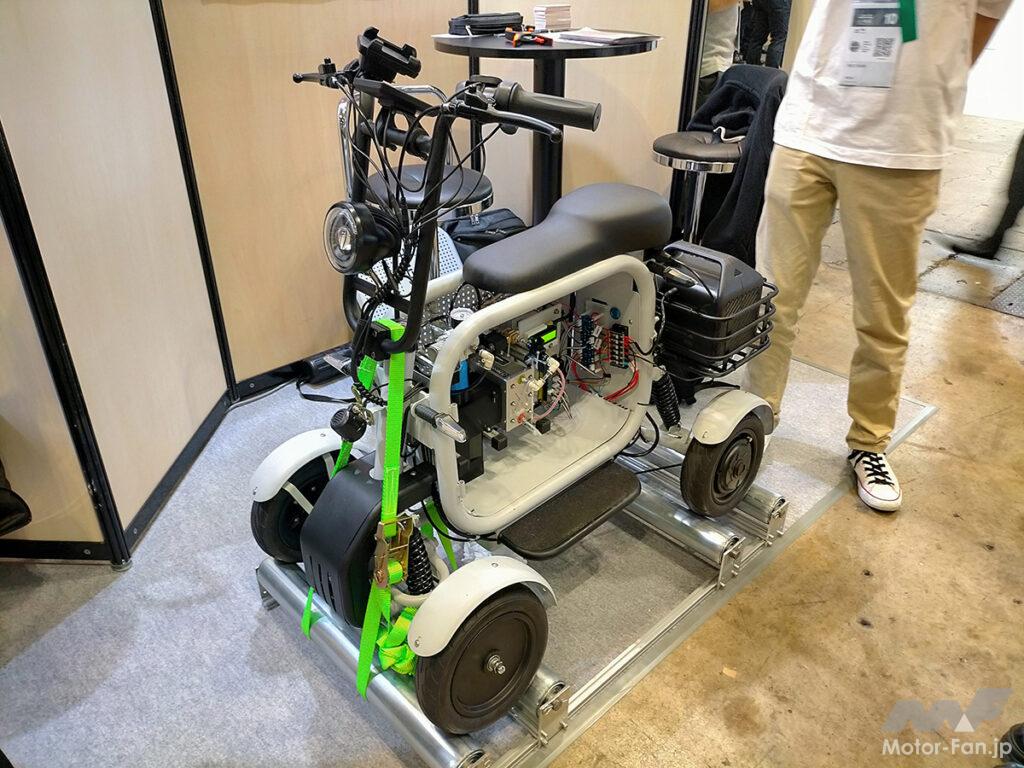
The photo shows a fuel cell-powered small mobility vehicle currently under research and development by the Land, Sea, and Air Mobile Robotics (Fukushima) Laboratory, Department of Mechanical Engineering, Faculty of Engineering, Tokyo University of Technology. The base vehicle is a specific small motorized bicycle electric cart called the “ebesah ChatKart” model (the photo shows a four-wheeled type, but a two-wheeled type is also available).
This fuel cell-powered compact mobility vehicle uses a fuel cell that generates electricity using hydrogen to power the motor in addition to the usual battery and electric motor. The key point is that the electrical energy generated by hydrogen is used as “auxiliary power” to make up about 20% of the total driving range.
水素って危険じゃないの?
水素と聞いて“水素爆弾”“水素爆発”をイメージし、「危険では?」と思う人もいるはず。しかし水素はガソリンに比べてエネルギーが低く、常温・常圧の場合はガソリンよりも燃焼力や爆発力が低いのが特徴。2011年3月の東日本大震災時に起こった福島原発事故の「水素爆発」は、漏れ出した大量の水素が建物内で圧縮されて着火し、燃焼・爆発。結論から言えば、仮に自動車やバイクに設置されたごく少量の水素が漏れても、基本的に燃焼・爆発することはない。
In addition to regular batteries, it also uses fuel cells that generate electricity using hydrogen. See the photo below for the names and configurations of each part.
ADVERTISEMENT
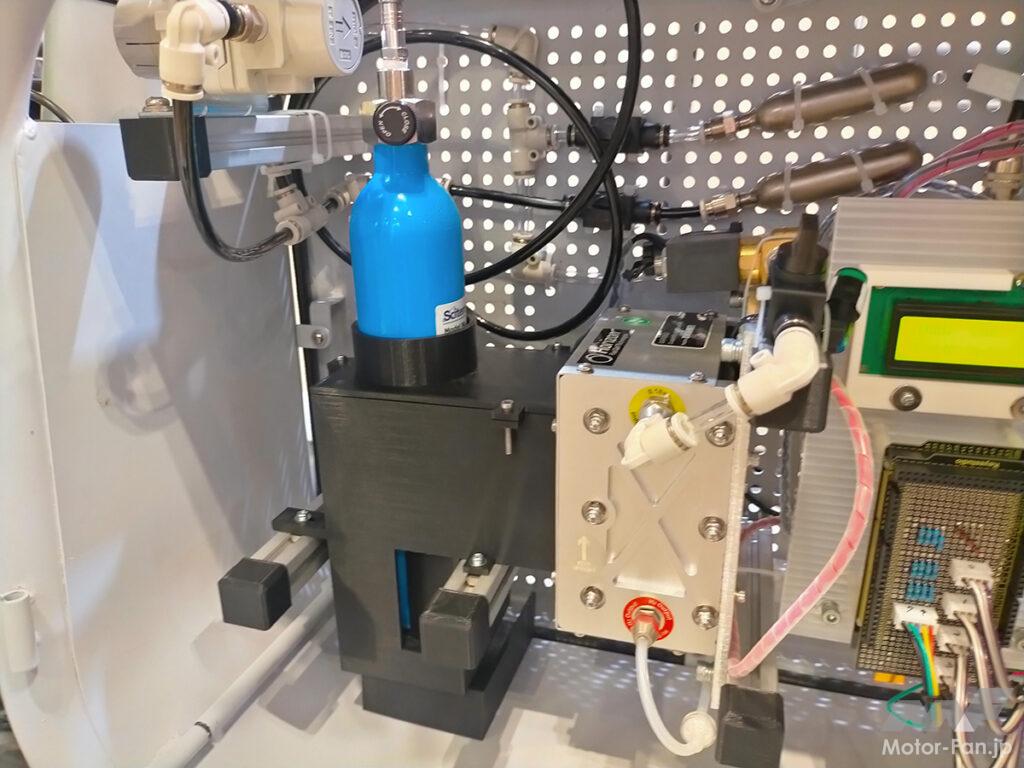
The blue hydrogen cylinder (hydrogen storage alloy canister) that hydrogen is injected into is a compact size, slightly smaller than a 500ml plastic bottle. Hydrogen is condensed in this cylinder.
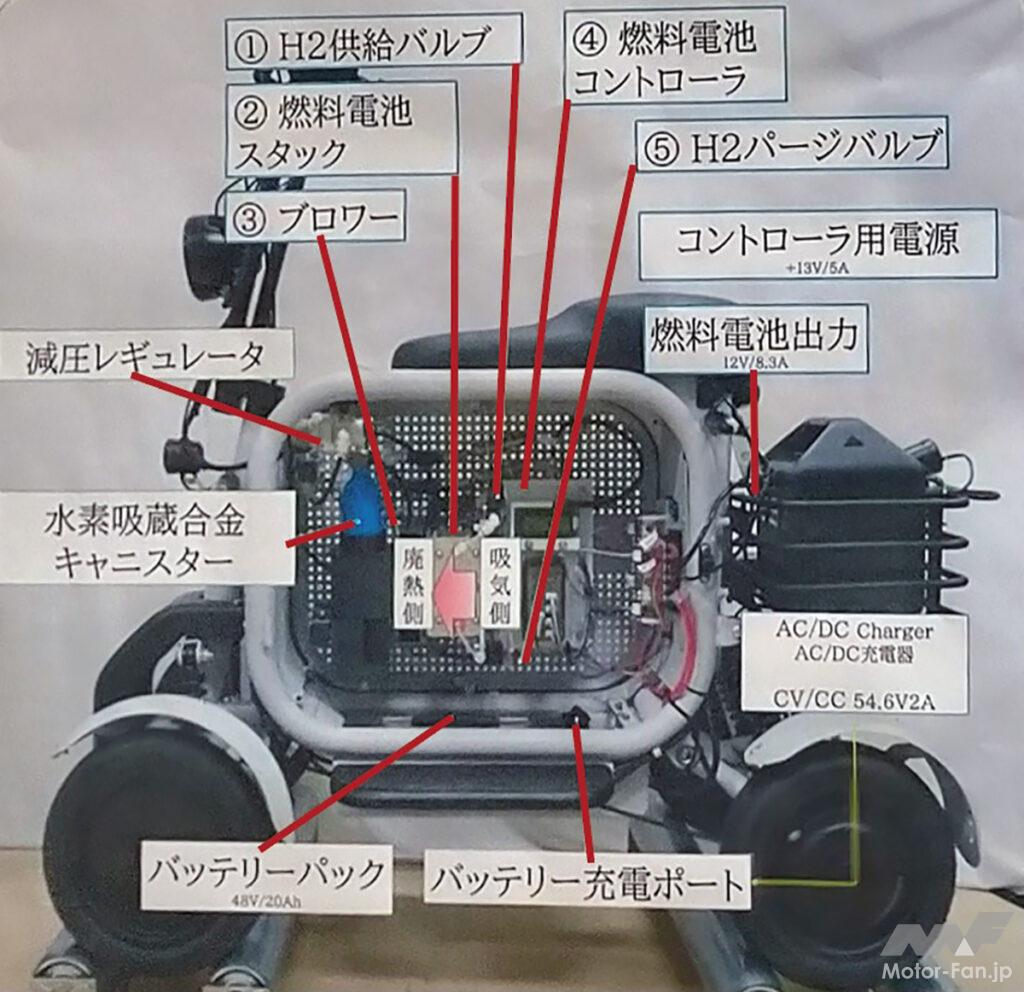
Names and structure of each part.
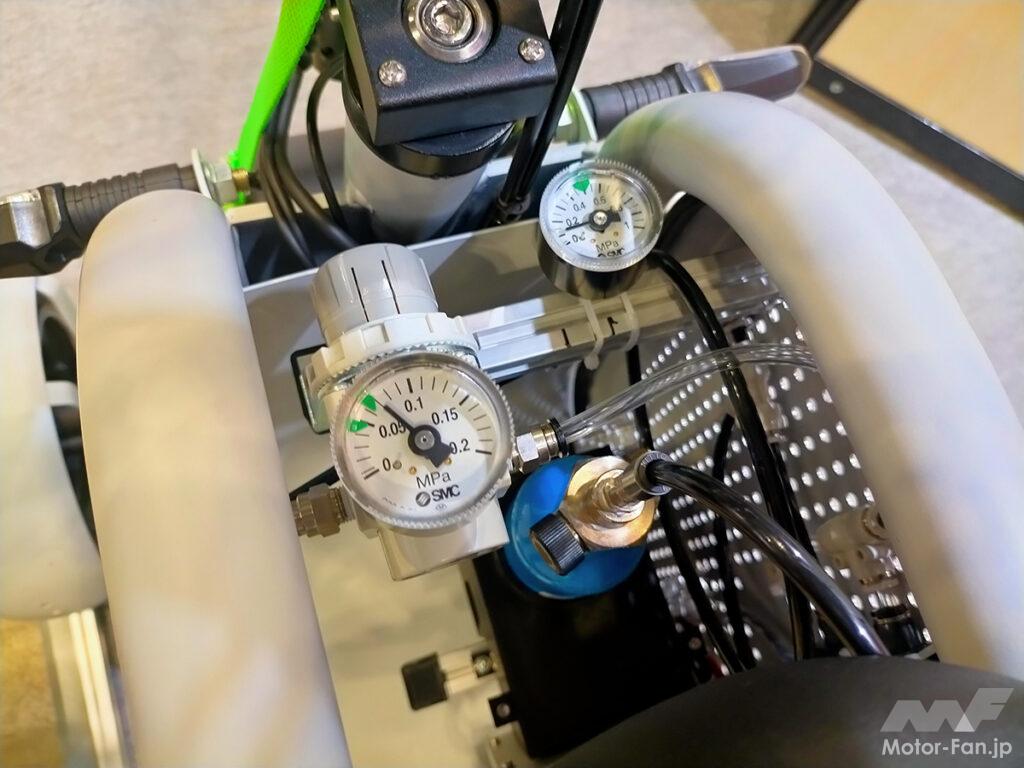
A meter was installed to display and check the amount of hydrogen flowing out, and another meter was installed to display and check the amount of hydrogen being adjusted (two meters in total).
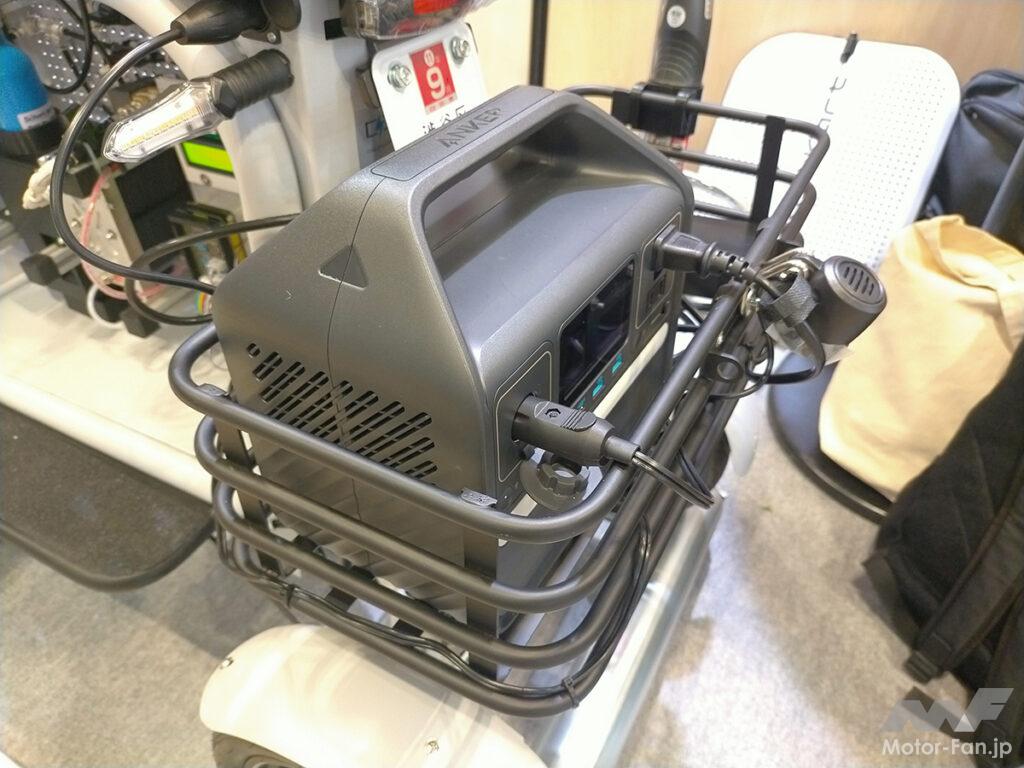
The system that converts hydrogen energy into power for the electric motor is a commercially available product, but the company plans to research and develop its own original device in the future.
Fuel cell vehicles (FCVs) are used in the commercially available Toyota Mirai
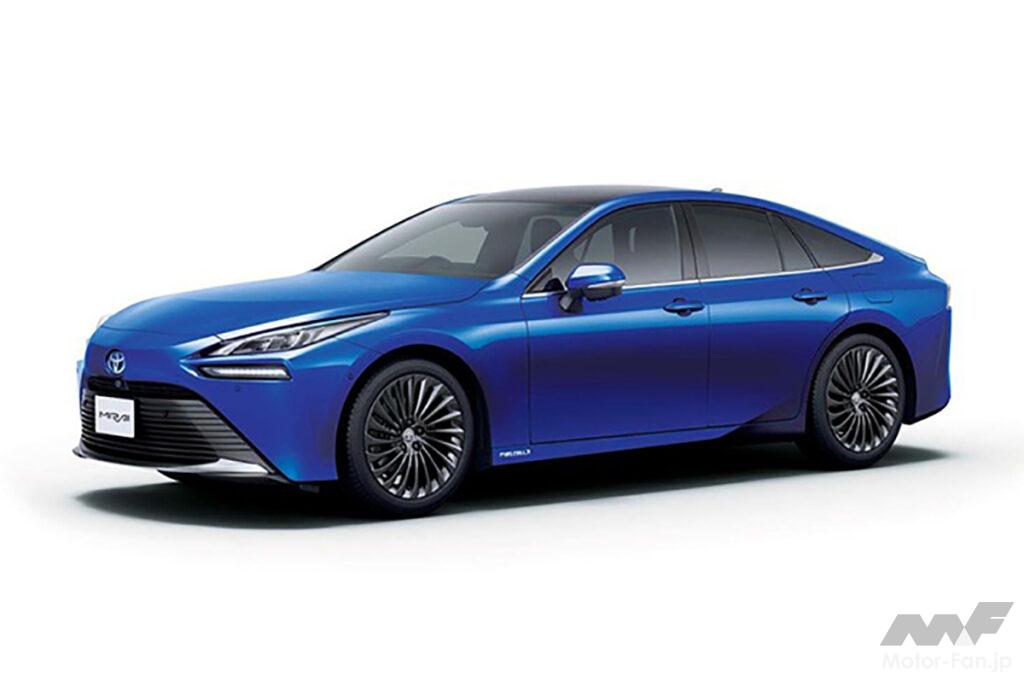
The Toyota Mirai is a commercially available model that uses a fuel cell vehicle (FCV).
ADVERTISEMENT
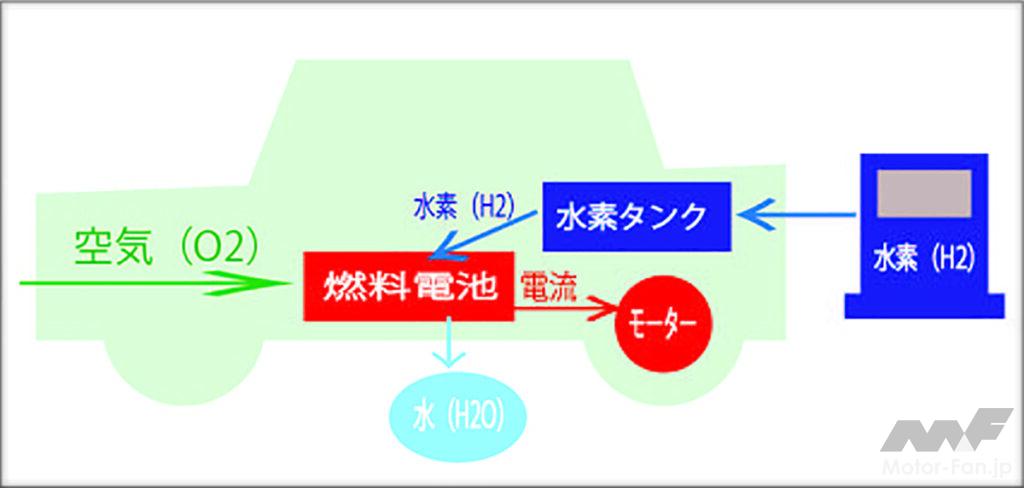
An illustration of how a fuel cell vehicle (FCV) works: it generates electrical energy when hydrogen and oxygen undergo a chemical reaction to turn them into water.
Fuel cell vehicles (FCVs), which use hydrogen to generate electricity and power their motors, are used in the Toyota Mirai, a commercially available car in Japan. Fuel cell vehicles (FCVs) are a system that generates electrical energy when hydrogen and oxygen undergo a chemical reaction to turn into water. Unlike electric vehicles (EVs), which store electricity in lithium-ion batteries, FCVs have a unique feature in that they have a generator installed inside the vehicle.
Do you remember the “electrolysis of water” science experiment you did as a child? When an electric current is passed through water with an electrolyte dissolved in it, the water breaks down into oxygen and hydrogen. Fuel cell vehicles (FCVs) use the opposite mechanism.
Like electric vehicles (EVs), fuel cell vehicles (FCVs) do not emit harmful substances, only water. Also, unlike electric vehicles (EVs), which require long charging times, fuel cell vehicles can be filled with hydrogen fuel in a short time. In addition, since electricity is generated within the fuel cell installed in the vehicle, no lithium-ion battery is required.
Another key point is that fuel cell vehicles (FCVs) have a longer driving distance per refueling than electric vehicles (EVs). However, because the installation of “hydrogen stations” that replace gas stations requires huge costs, amounting to hundreds of millions of yen, as of 2024, hydrogen has not yet become widespread.
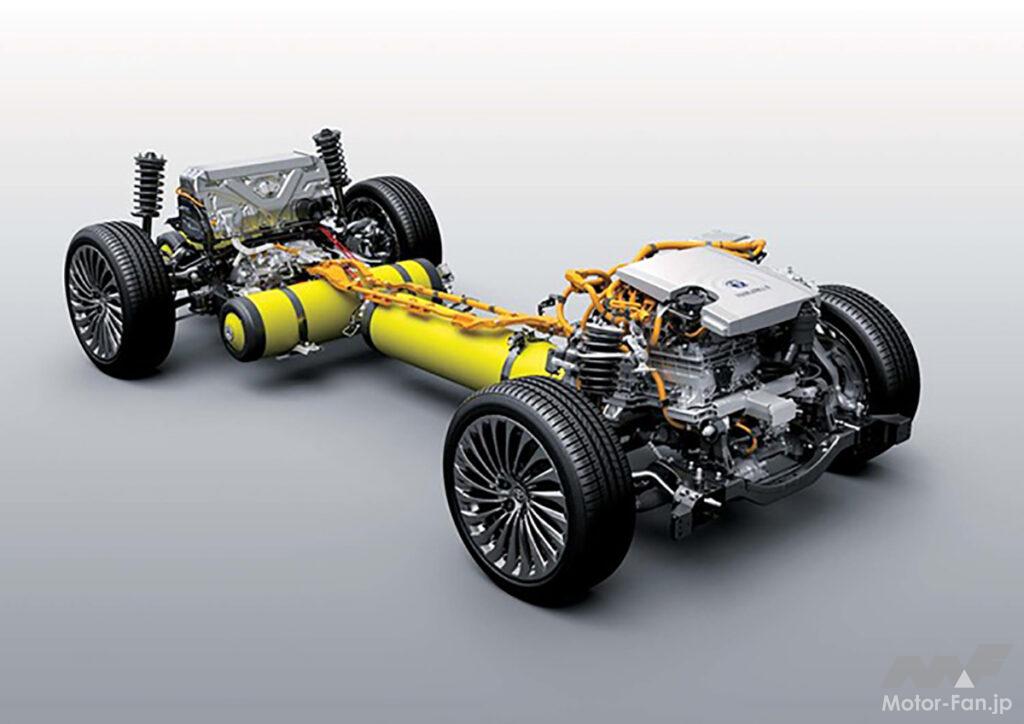
Toyota Mirai strip. The yellow part is the large hydrogen tank.
“Fuel cell powered” compact mobility: background and purpose of development
Containers filled with hydrogen storage alloys can store large amounts of hydrogen at low pressure (1 MPa or less) and are classified as non-hazardous materials. Due to these characteristics, systems have been proposed in which hydrogen is supplied from commercially available portable hydrogen storage alloy containers and used in fuel cell stacks to power various electric mobility vehicles.
In order to explore through hands-on experience how hydrogen energy can be used to realize a sustainable society, a laboratory at Tokyo University of Technology incorporated a hydrogen fuel cell system into the electric cart “ebesah ChatKart” and confirmed its operation.
The “fuel cell powered” compact mobility vehicle uses the hydrogen fuel cell system not as the “main power source” like the Toyota Mirai, but rather as a “sub-power source” that supplements the battery (accounting for about 20% of the total driving range).
The results of this research and development are as follows:
1: Operating environment of the entire system while driving
2: Measuring the power of each part
3: Checking the overall normal operation with or without fuel cell stack output short circuit control
4: Using the exhaust heat from the fuel cell stack to prevent overheating and condensation in the hydrogen storage canister
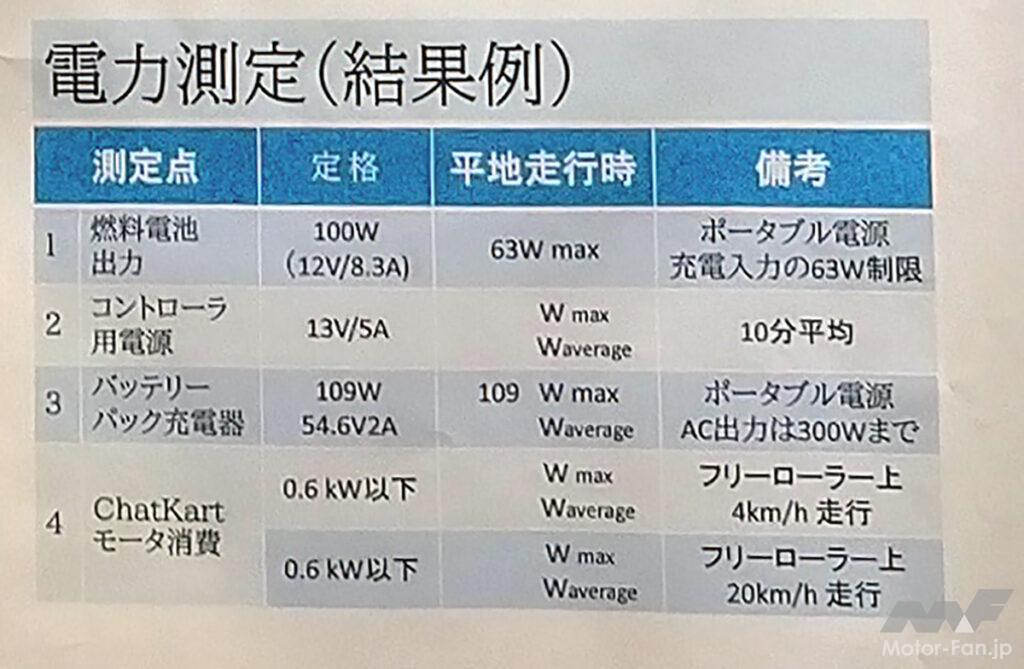
Future challenges include:
1: Verification of the effectiveness of output short circuit control of fuel cell stacks
2: Design and development of fuel cell stack controller and power converter circuit
3: Detailed energy evaluation
is planned.
 Kawasaki unveils hydrogen engine bike!
The 45th Coca-Cola Suzuka 8 Hours Endurance Road Race (Suzuka 8 Hours) came to a successful close on July 21, 2024. The race was of course exciting, but before the main event, Kawasaki Motorcycle Japan (Kawasaki) had a surprise. They raced a hydrogen-fueled motorcycle. PHOTO: Toshihiro Sato
 The hydrogen-engine vehicle “HySE-X1,” jointly developed by four Japanese motorcycle manufacturers and Toyota, placed fourth in its class at the Dakar Rally 2024 [Tokyo Auto Salon 2024]
Tokyo Auto Salon 2024 was held at Makuhari Messe in Chiba Prefecture from Friday, January 12th to Sunday, January 14th, 2024. The photo shows the “HySE-X1,” a vehicle equipped with a hydrogen fuel engine, on display at the “TOYO Tire” booth. The vehicle was jointly developed by Japanese motorcycle manufacturers Honda, Yamaha, Suzuki, and Kawasaki, as well as automobile manufacturer Toyota. The HySE-X1 competed in the new “Mission 1000” category of the “Dakar 2024,” held in Saudi Arabia from January 5th to January 19th, 2024, and finished in an impressive fourth place. Rally organizers commented, “They’re trying to change the world themselves. It’s crazy, in a good way.” PHOTO/REPORT●KITA Hideaki
 Taking on the EV supremacy of China and Europe with hydrogen engines, which are becoming more common in Japan! We saw the fighting spirit of Japanese manufacturers in this challenge | Japan Mobility Show 2023
The Japan Mobility Show (formerly the Tokyo Motor Show) was held (open to the public) from Saturday, October 28th to Sunday, November 5th, 2023. The biggest focus at this show was on electric vehicles (EVs) powered by motors and batteries. Among them, models equipped with hydrogen engines, the “fuel of the next generation,” were also exhibited. In Tokyo, many hydrogen buses using fuel cells (FCVs) are already in operation. This report looks at the current state of hydrogen engines in Japan, the challenges and efforts of domestic manufacturers challenging global standards, and the future potential of hydrogen engines. PHOTO/REPORT●KITA Hideaki