
Starting in 2023, the Tokyo Motor Show will be revamped from the previous “Tokyo Motor Show” to the “JAPAN MOBILITY SHOW” with the aim of realizing a co-creation platform originating from the mobility industry. This event alternates between business events and showcase events every year. The second event since the revamp, “JAPAN MOBILITY SHOW BIZWEEK 2024,” was held as a business event.
This year’s “JAPAN MOBILITY SHOW BIZWEEK 2024” was held in conjunction with the main event, the comprehensive technology and industry exhibition “CEATEC 2024 (Note 1)” (admission to both events is free). Compared to “CEATEC 2024,” which took up exhibition halls 2 to 8, “JAPAN MOBILITY SHOW BIZWEEK 2024” was a small-scale event taking up only exhibition hall 1, but the booths showcased noteworthy models and products that each company had developed using their own ideas and ingenuity.
※注1:「CEATEC(シーテック)」は2024年で25周年を迎える技術・産業の総合展示会。「Toward Society 5.0」をコンセプトに、経済発展と社会課題の解決を両立する「Society 5.0」の実現を目指したソリューションなどが集結。2024年はAIを中心とした出展が多く、25周年特別企画「AI for All」も話題を呼んだ。
JAPAN MOBILITY SHOW BIZWEEK 2024
Honda SmaChari… Providing “technology licenses” to bicycle-related companies
SmaChari is a system in which an electric assist unit (electric motor, battery, and control device) is attached to a regular bicycle and operated with a smartphone app. It is the first service in Japan that can turn a regular bicycle into an electric assist and connected bicycle (a system in which the vehicle is connected to the outside world using communications). Honda is currently licensing SmaChari technology to various bicycle-related companies.
ADVERTISEMENT
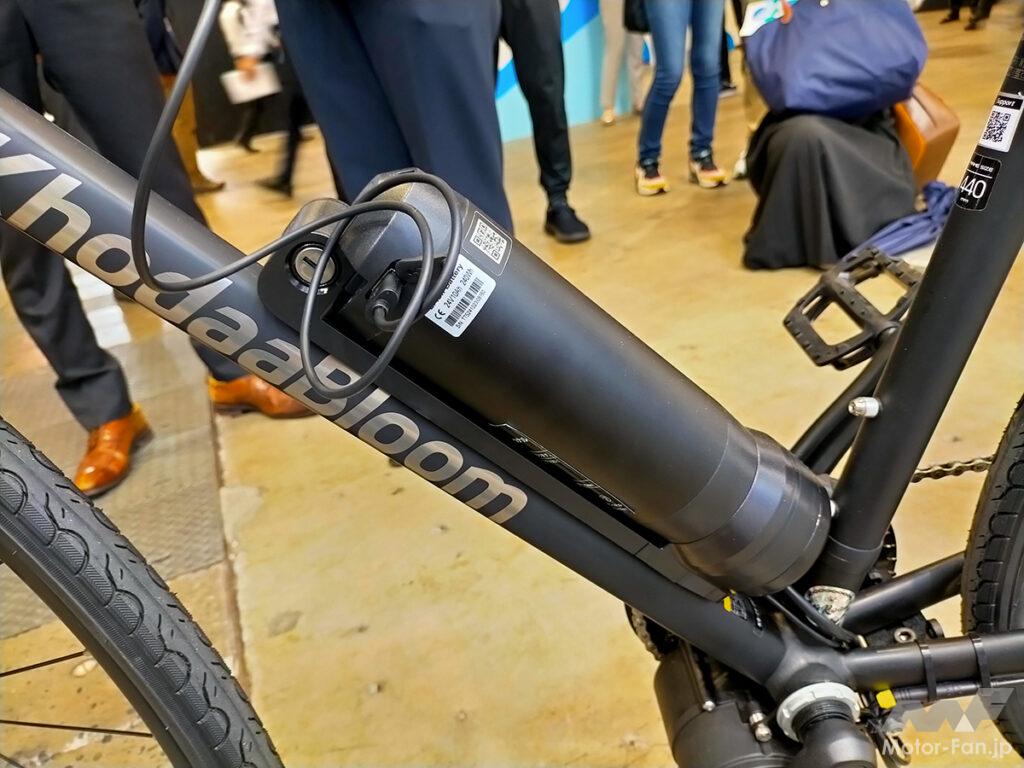
The detachable bottle-shaped battery with a key lock provides a high level of theft prevention and can also be used to charge a smartphone. The maximum range with the electric assist function is 100km (varies depending on riding conditions).
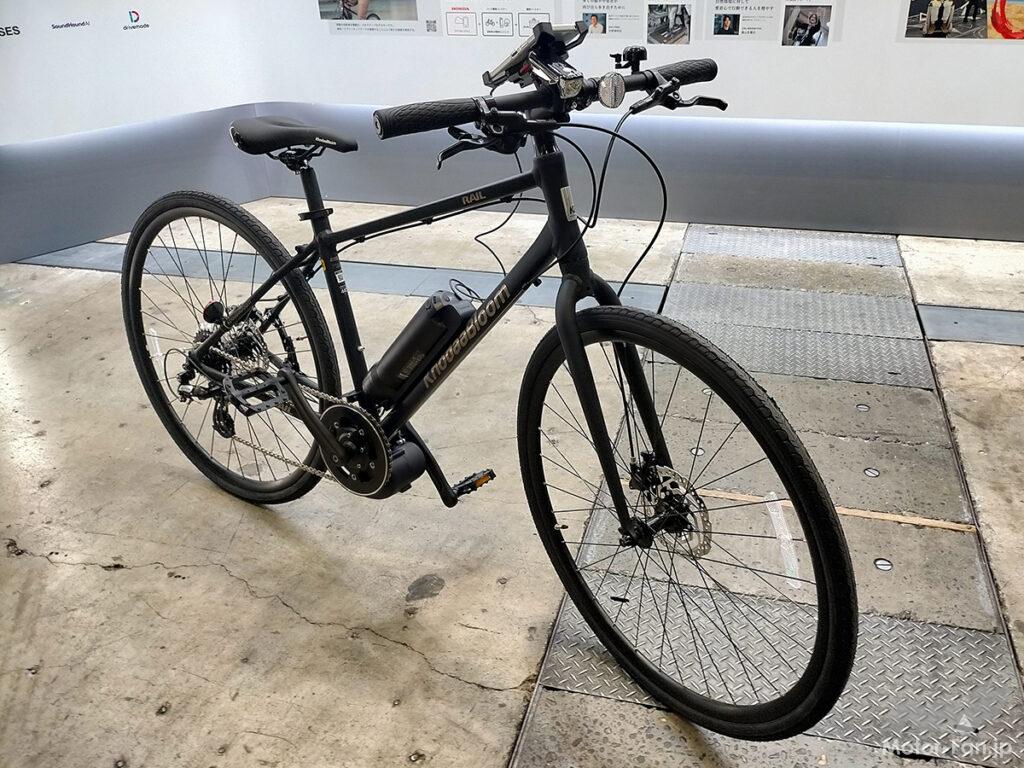
The first vehicle to use SmaChari is the electrically assisted bicycle “RAIL ACTIVE-e,” released by bicycle specialty store “Wise Road” in September 2023. The price is 220,000 yen (tax included).
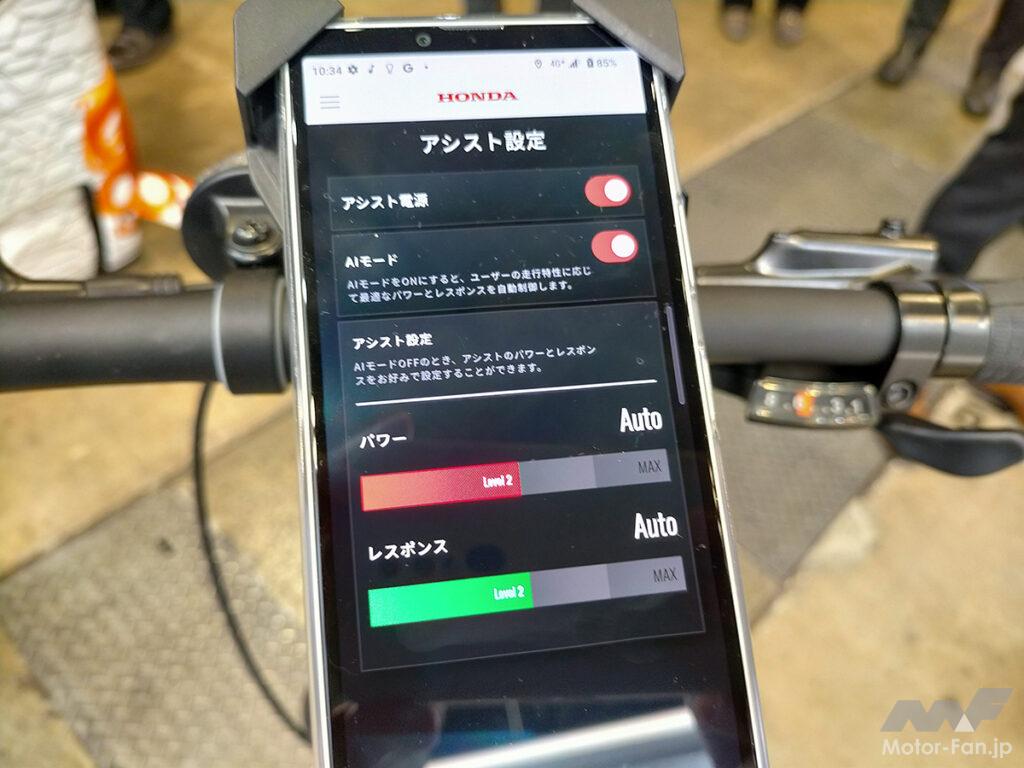
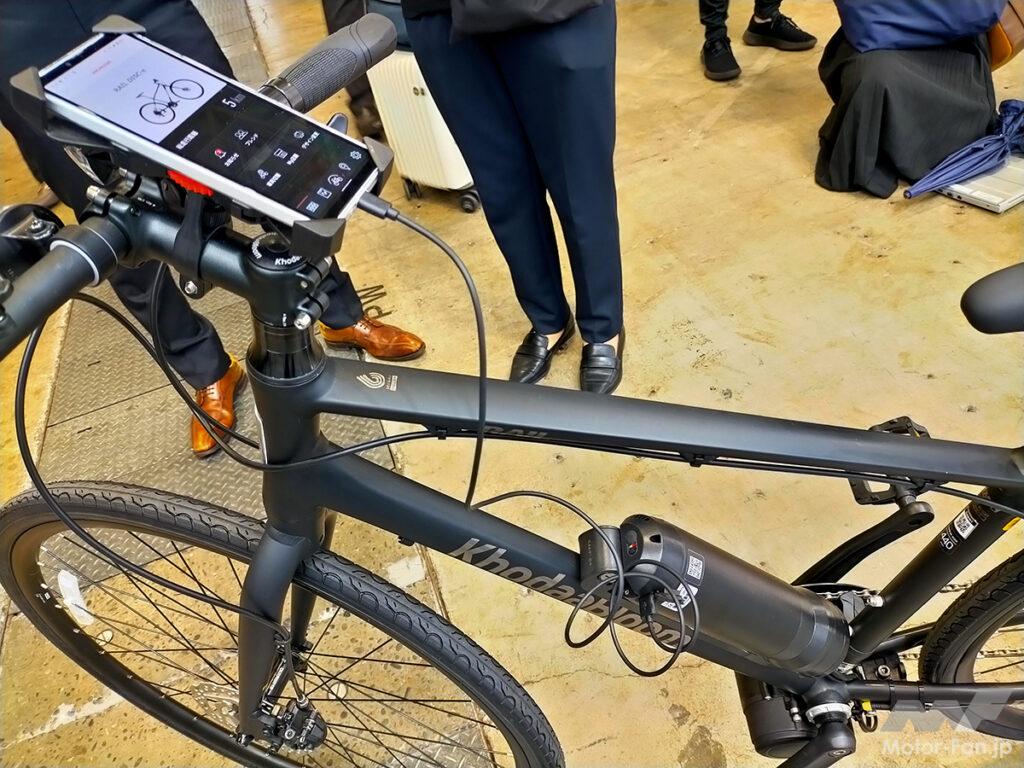
The photo shows the smartphone app screen (assistance settings screen). SmaChari features an “AI mode” that automatically adjusts the electric assist power. By turning AI mode off, you can adjust the assist power and response as you like. By turning the assist power off, you can use the bike as a regular bicycle.
The photo shows the electrically assisted bicycle “RAIL ACTIVE-e,” which is based on the authentic cross bike “RAIL ACTIVE” developed by Japanese sports bike brand “KhodaaBloom” and incorporates “SmaChari” developed by domestic motorcycle manufacturer Honda. It will be released by bicycle specialty store “Wise Road” from September 2023 for 220,000 yen (tax included).
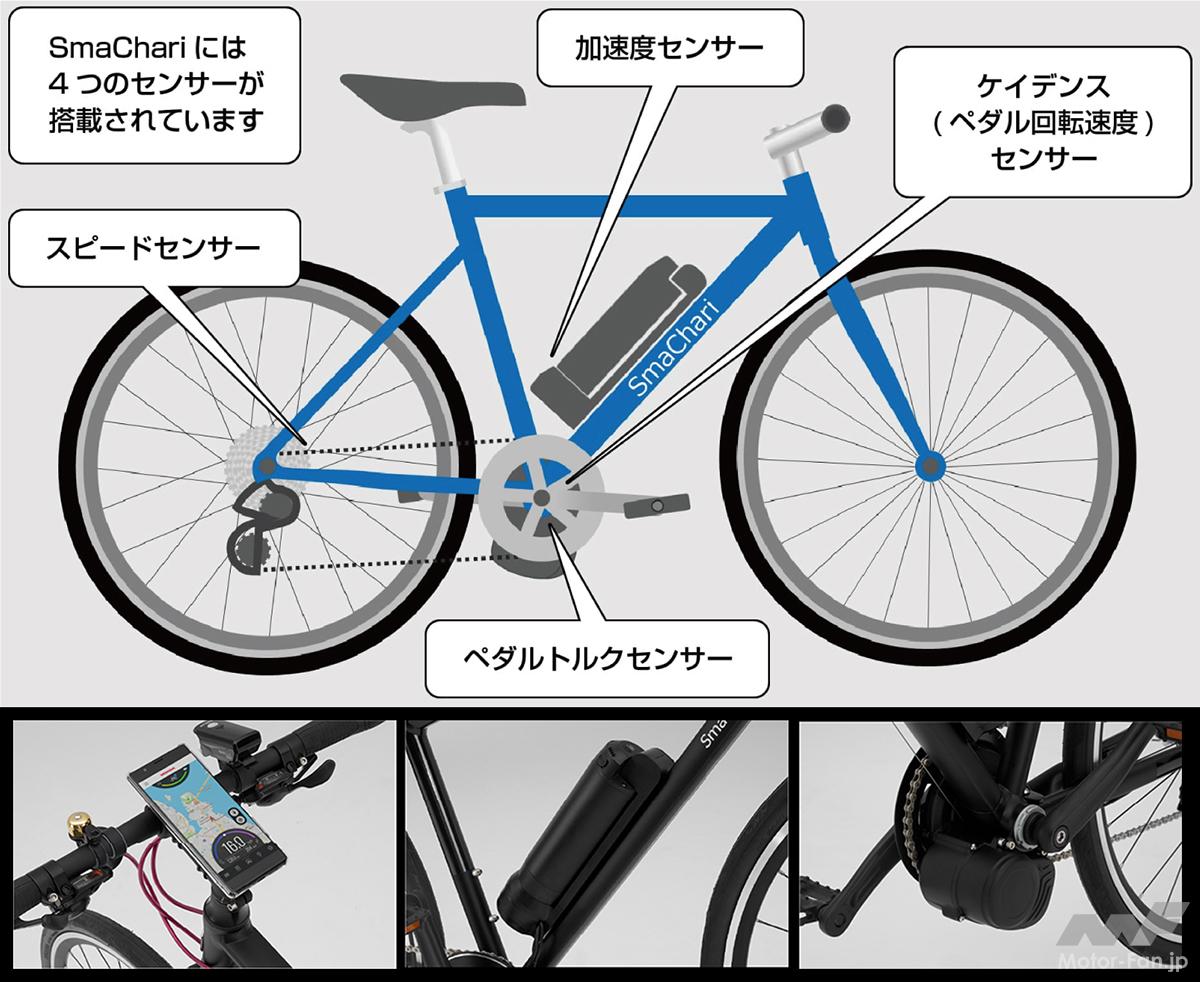
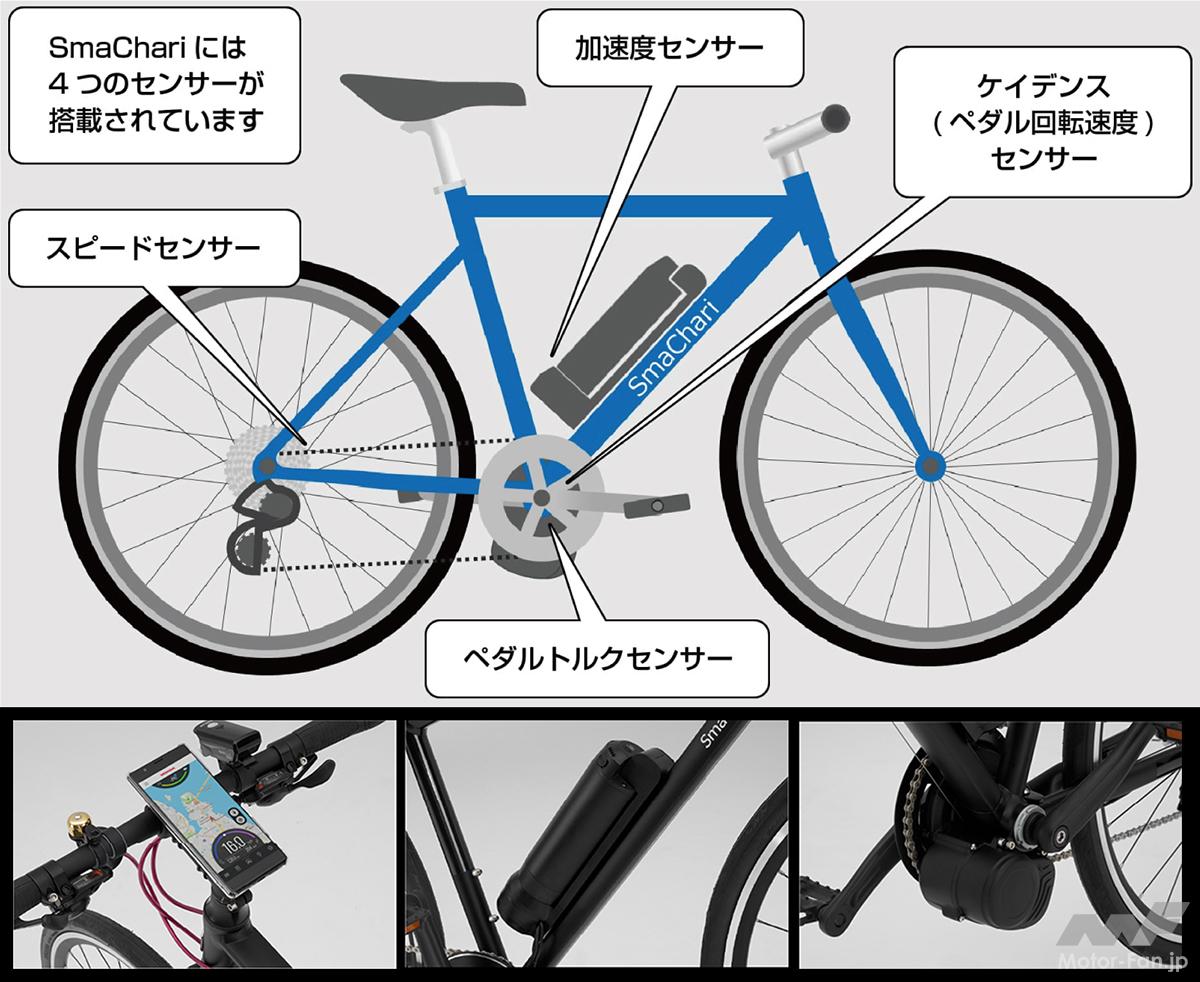
“SmaChari,” developed by Honda, is a system in which an electric assist unit (electric motor, battery, and control device) is retrofitted to a regular bicycle and the electric assist unit is operated using a smartphone app.
Honda does not sell the electric assist bicycle itself, but rather provides the SmaChari as a “technology license” to bicycle-related companies.
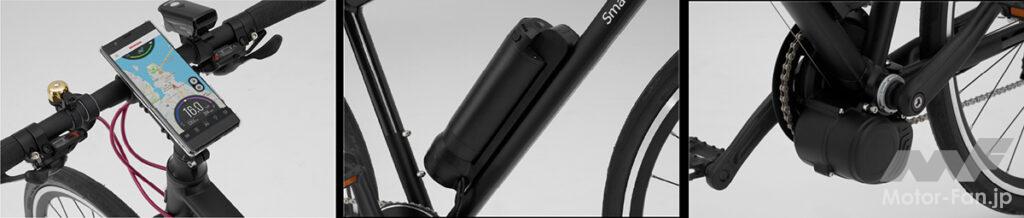
Left: Dedicated smartphone application Center: Battery Right: Electric motor system for power assist
When Honda launched the SmaChari business, they did not develop and manufacture the bicycles themselves, but instead licensed the technology to sell them. Here’s why…
The bicycle industry is made up of a variety of specialized companies splitting their work among themselves. Currently, the environment is favorable for procuring electric assist parts. In other words, following the logic of “let the experts do the work,” they decided that it would be best to leave the bicycles themselves and electric assist parts to bicycle and parts manufacturers.
SmaChari can also use general-purpose electric assist motors and batteries, which means bicycle manufacturers and related companies can use SmaChari to produce high-performance, highly functional electric assist bicycles at low cost.
Here are the key points of SmaChari!
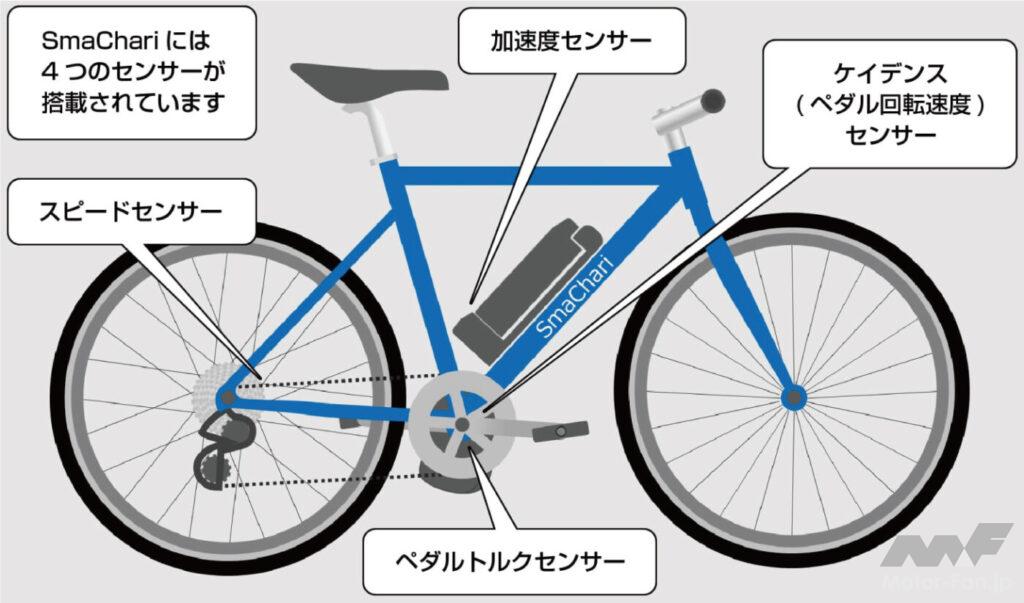
The structure of the SmaChari. *Illustration provided by Honda
Smooth assist control
In addition to finely tuned assist control with four power levels and four response levels, it also features sudden acceleration suppression control and AI mode, providing comfortable and safe assistance.
Smartphone key function
The bike can only be turned on from a smartphone linked to your account, a safety feature that also helps prevent theft.
Vehicle sharing between users
Users who have registered in advance can rent and borrow bicycles, and can control the rented bicycle from their smartphone.
Location sharing between users
Users who have registered with each other in advance can share their current location. This is a convenient feature that is useful for meeting up with someone while out and about, or keeping an eye on your children.
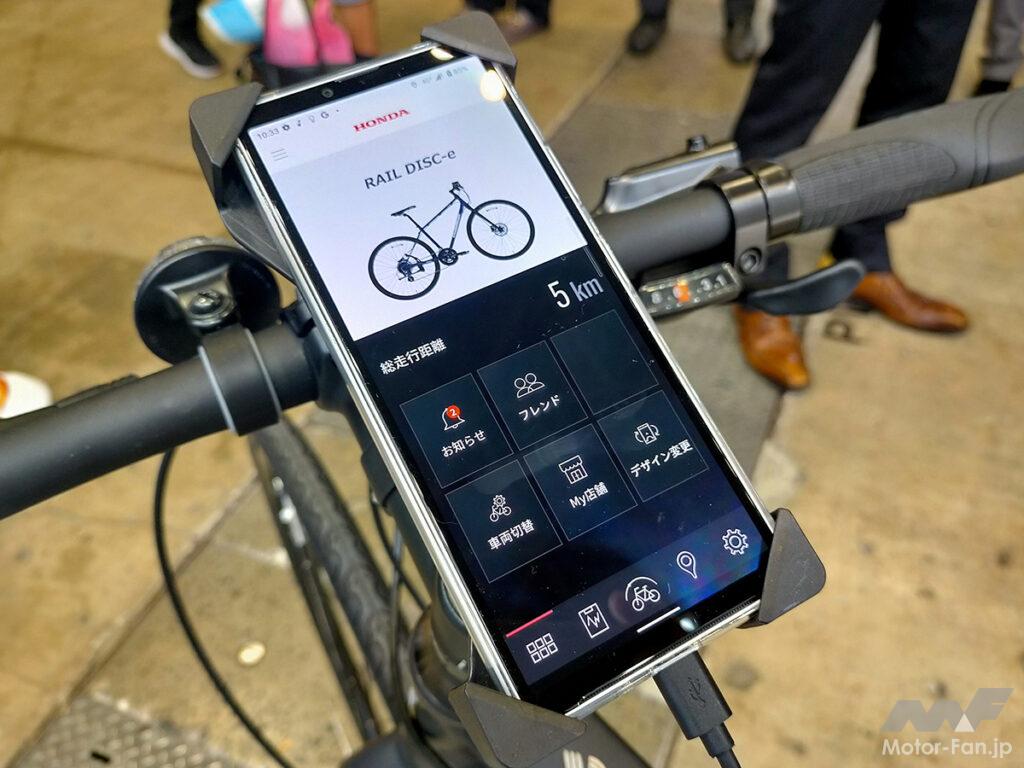
The main menu screen of the smartphone app.
ADVERTISEMENT
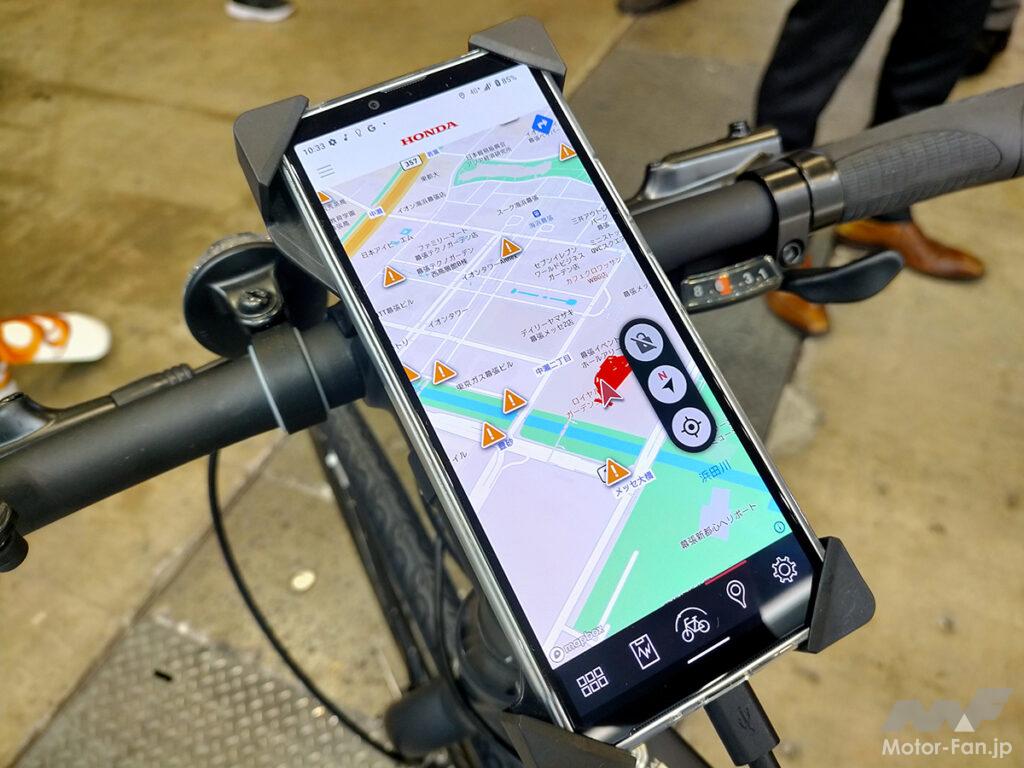
Map screen of a smartphone app.
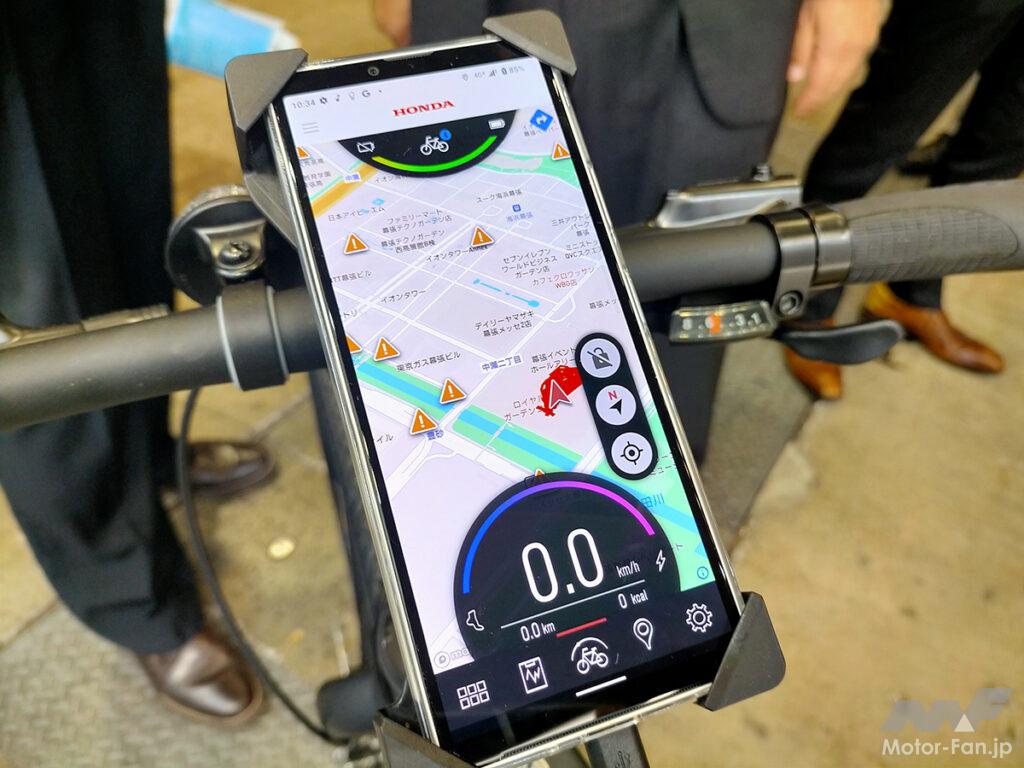
Smartphone app map + speed display + range + calorie consumption meter screen.
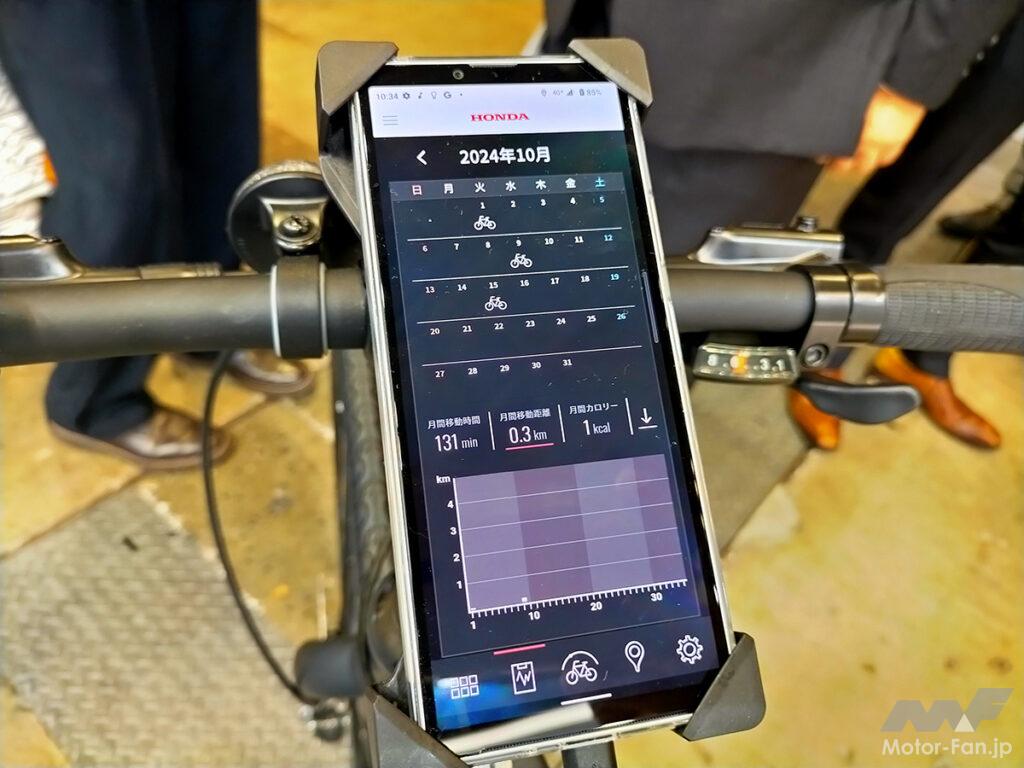
Driving log display screen on the smartphone app.
Is SmaChari a reincarnation of the Cub F, which was released in 1952?
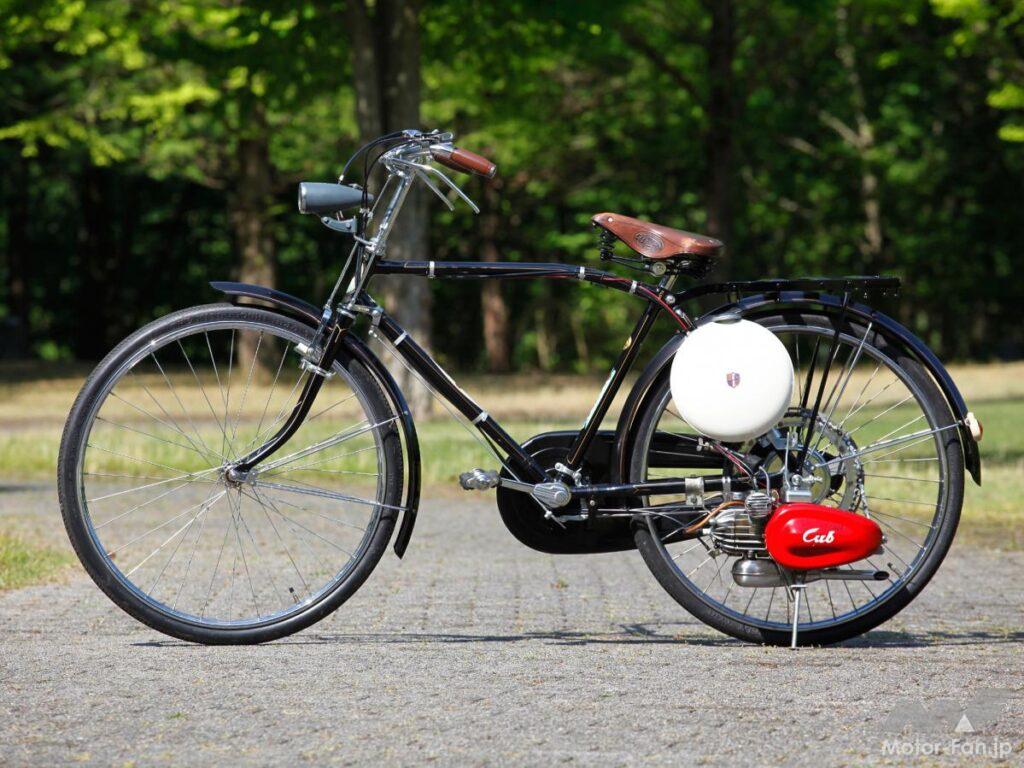
The bicycle in the photo, fitted with a Cub F model released in 1952 (Showa 27), is manufactured by Yamaguchi Bicycles. With its retro-style spring-loaded saddle, wide handlebars, and arm-linked front and rear brakes instead of wire-operated, the bike exudes the “Showa taste of the immediate post-war period.”
When Honda developed the SmaChari, they did not develop or manufacture the bike themselves, but only licensed the technology to sell it. Some people may have heard this and thought, “It looks a bit like the Honda Cub F.”
The Cub F, released in 1952 (Showa 27), is more accurately an auxiliary engine for bicycles. With a simple structure consisting of a commercially available bicycle fitted with a Cub F (auxiliary engine) weighing approximately 6 kg, it quickly became popular among ordinary people. Due to the unique sound of a two-stroke engine, the Cub F was affectionately nicknamed “Flat F.”
The Cub F, also known as the “bicycle motorcycle,” was an explosive hit nationwide and, prior to the Super Cub C100, laid the foundation for Honda’s rapid growth.
When Honda released the Cub F, they focused on bicycle shops across the country and sent promotional direct mail to approximately 55,000 bicycle stores nationwide. In exchange for a deposit, they would ship the Cub F packed in a cardboard box, an innovative sales method at the time.
The selling price of the auxiliary engine “Cub F” at the time was 25,000 yen. Sales of the “Cub F” were excellent, and approximately 13,000 bicycle dealerships became new sales bases for Honda.
The success of the Cub F led Honda to make large capital investments and build a new factory, which also served as a major stepping stone for the Super Cub C100, which was released six years later.
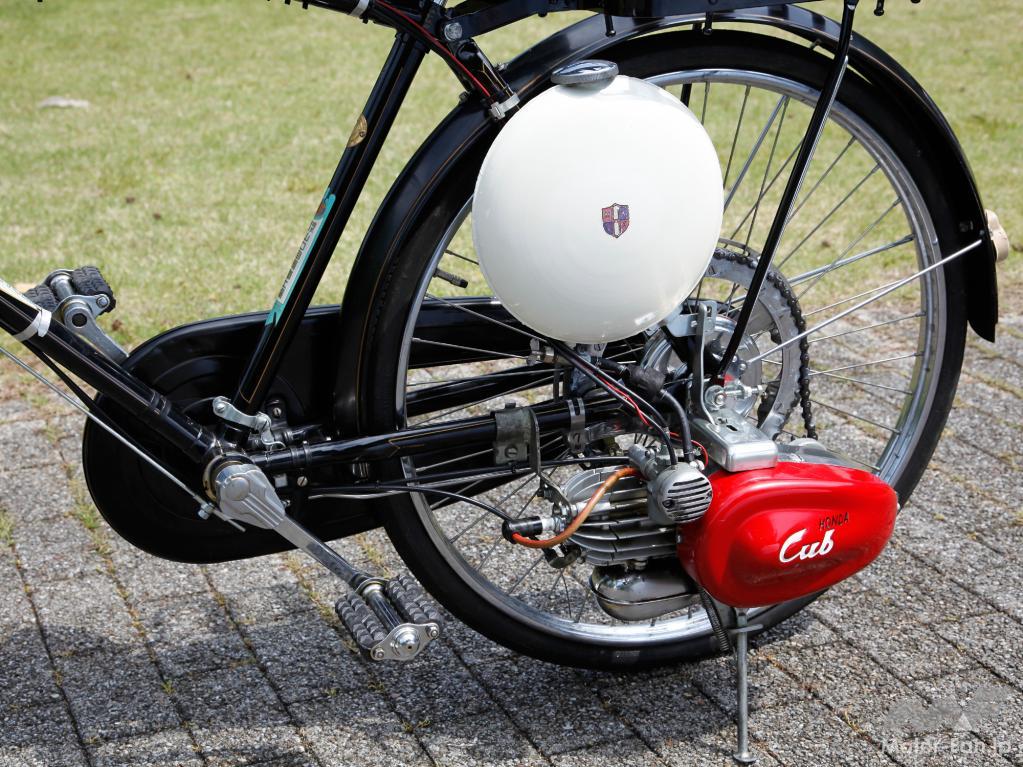
The Cub F, marked by a red engine cover with the “Cub” logo, is powered by an air-cooled, two-stroke, single-cylinder 49cc engine (bore 40mm x stroke 39.8mm). Maximum output is 1.0ps/3600rpm, and the top speed is set to 35km/h (both catalog values). Another distinctive feature of the Cub F is the white gas tank, which resembles a hot water bottle or water bottle.
ADVERTISEMENT
 A two-stroke Cub?! Combined with a bicycle?! We rode the rare “Cub F”! | Motor-Fan Bikes
The first Super Cub C100 was released in 1958 (Showa 33). Six years earlier, in 1952 (Showa 27), Honda released the Cub F, nicknamed “Batabata,” which could be ridden by people of all ages and genders. In fact, the “Cub” existed before the Super Cub C100 was released. REPORT ● Kita Hideaki (KITA Hideaki) RIDING IMPRESSION ● Chikata Shigeru (CHIKATA Shigeru) Photography cooperation ● Honda Collection Hall / Honda Motorcycle Japan PHOTO ● Honda Motorcycle Japan / Chikata Shigeru
Is it true that electric assist bicycles are the result of the determination of Yamaha’s development team, who lost the “HY war”?
An electric assist bicycle born from the idea of ”defeat Honda!”
In fact, Honda, which developed the above-mentioned “SmaChari” and “Cub F,” was heavily involved in the birth of electric assist bicycles.
The late 1970s and 1980s were the time of the boom in soft bikes (small scooters) and motorcycles (mainly replica racer models with cowls). Honda and Yamaha were engaged in a fierce battle for supremacy (sales volume) in the domestic motorcycle market. This battle became known as the HY (High-Y) Wars, and became a social phenomenon.
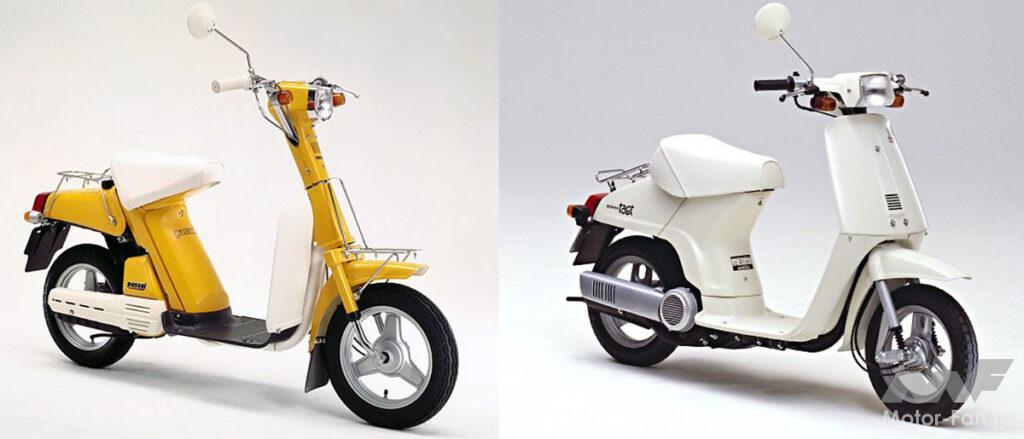
(Photo left) The Yamaha Passol (photo shows the 1977 model), a moped scooter that established a new category known as the “soft bike” and featured actress Yachigusa Kaoru as its commercial character. (Photo right) The Honda Tact (photo shows the 1980 model), which was introduced as a rival to the Yamaha Passol/Pasola, which was an unprecedented hit.
Yamaha then declared defeat. Having lost the HY war, Yamaha adopted the slogan “Defeat Honda!” and succeeded in developing a new form of mobility in 1989. This was the world’s first electrically assisted bicycle, which featured an assist function by attaching a motor and battery to a bicycle.
Yamaha was the first in the world to successfully develop and commercialize an electrically assisted bicycle, and it can be said to be the fruit of the determination of Yamaha’s engineers and developers, who had lost the HY war, to create it with the goal of “beating Honda!”
The engineer who came up with the idea (who later developed and commercialized an electrically assisted wheelchair) focused on the power steering of automobiles, which makes handling easier when the vehicle is stopped. Using a commercially available bicycle and power steering parts, he created a prototype electrically assisted bicycle.
The idea’s boss, who test drove the prototype for the first time, was shocked and said, “When I started pedaling, which should have been heavy, I was amazed at the feeling of being pushed from behind. I felt like Superman.” He was convinced that “this will definitely sell!”
However, some executives were opposed to commercializing it, saying, “You need a moped license to ride it, right? And according to estimates, it will cost almost the same as a moped when it’s released. There’s no way something like this will sell.”
In response, the developer, who took over from the original inventor, patiently negotiated with the National Police Agency and the Ministry of Transport, insisting that “this is a bicycle.” Later, important figures from the National Police Agency and the Ministry of Transport were invited to a riding event. As soon as they reached a slope, the important figures from the National Police Agency and the Ministry of Transport beamed with joy at the “exquisite feeling provided by the assist function,” and they remarked, “It’s certainly convenient, but it’s definitely not a moped. It’s a bicycle.”
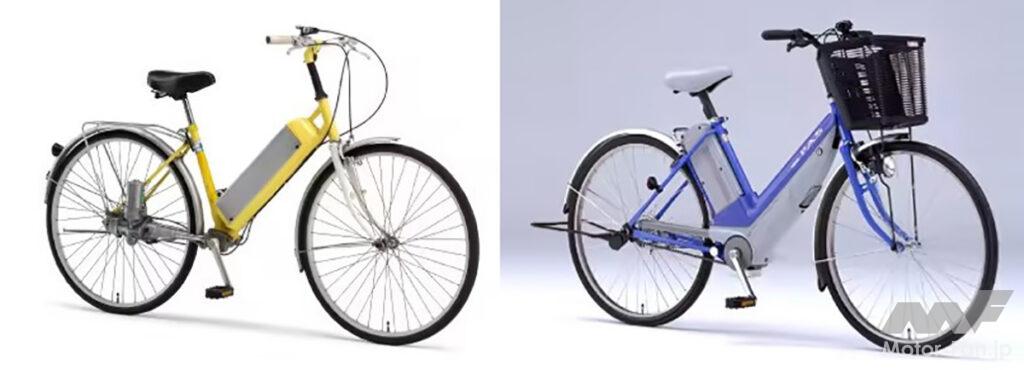
Photo on the left) A prototype of an electrically assisted bicycle developed by Yamaha (1989). Photo on the right) The first Yamaha PAS, released in 1993.
At a test ride event for the in-house prototype (left photo above), some female employees said they didn’t want it even for free because it was difficult to straddle (the battery was placed diagonally horizontally along the main frame). As a result, the design was reviewed from scratch, and the battery placement was changed to a diagonal vertical position under the seat (right photo above).
The first commercially available electrically assisted bicycle was the Yamaha PAS (pictured above, right), jointly developed in 1993 by bicycle manufacturer Bridgestone and Yamaha. Yamaha did not obtain a patent for its proprietary electrically assisted function, giving it exclusive rights to itself, but instead provided the technology to various bicycle-related companies. At Yamaha, the goal of electrically assisted bicycles changed from “beating Honda!” to “wanting to bring it to as many people as possible.”
The reason why Yamaha provided technology to bicycle-related companies was
・To popularize electric assist bicycles
・To lower market prices
In other words, they followed the logic of “let the experts do the work” and decided that it was best to leave the design of the bicycle itself to the bicycle manufacturer. In this respect, it is similar to the SmaChari and Cub F mentioned above.
For 10 years, from the launch of the PAS in 1993, Yamaha’s electrically assisted bicycle business was in the red. However, it has since turned a profit. According to a survey by the Ministry of Economy, Trade and Industry, of the bicycles manufactured domestically in the first half of 2018 (approximately 456,000 units), electrically assisted bicycles accounted for 67% (approximately 306,000 units), and on a value basis, this has grown to 86%. This is truly a case of “persistence is power.”
As of 2024, electric assist bicycles are widespread in over 30 countries around the world. In Japan, they are not only used by the general public, but are also used for bike sharing in the Tokyo metropolitan area and tourist destinations, for business purposes such as sales, for home delivery, and as police vehicles, among other uses.
Reference site: https://global.yamaha-motor.com/business/e-bike-systems/30th/jp.html#section-1989
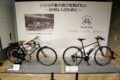 Will the Honda A-Type and Cub F-Type be revived with electric assist? The motorcycle motor that supported Japan’s postwar motorization is shifting from engines to electric motors
After the war, bicycles and “bike motors,” which are bicycles assisted by auxiliary engines, supported one corner of Japan’s motorization. Bike motors have changed from gasoline engines to electric motors, and are now used as modern commuter vehicles in the form of electrically assisted bicycles. Now, electrically assisted bicycles and electric bike motors are moving on to the next phase.
 Industry companies unveil new technology that allows charging while driving! Contactless wireless power transfer systems may be introduced on public roads in the future | Japan Mobility Show 2024
JAPAN MOBILITY SHOW BIZWEEK 2024 was held at Makuhari Messe in Chiba Prefecture from Tuesday, October 15th to Friday, October 18th, 2024. It featured electric vehicles (EVs) and hydrogen-fueled mobility, aiming for decarbonization. The event also featured exhibits of items and tools utilizing cutting-edge technologies such as AI, showcasing unique models and products packed with ingenuity. Here, we introduce the completely contactless wireless power transfer system developed by Power Wave, which enables high-power, wide-area charging for mobility vehicles while stationary or in motion. PHOTO/REPORT: Kita Hideaki Power Wave https://powerwave.co.jp/