
What is the constant fuel consumption value?
First, there’s the “steady-state fuel economy value.” This is the fuel economy figure that has long been published in catalogs and other publications. It is the value that motorcycle manufacturers submit to the Ministry of Land, Infrastructure, Transport and Tourism when applying for type designation or certification for a new vehicle, and in the past, this was the only figure listed on the spec sheet.

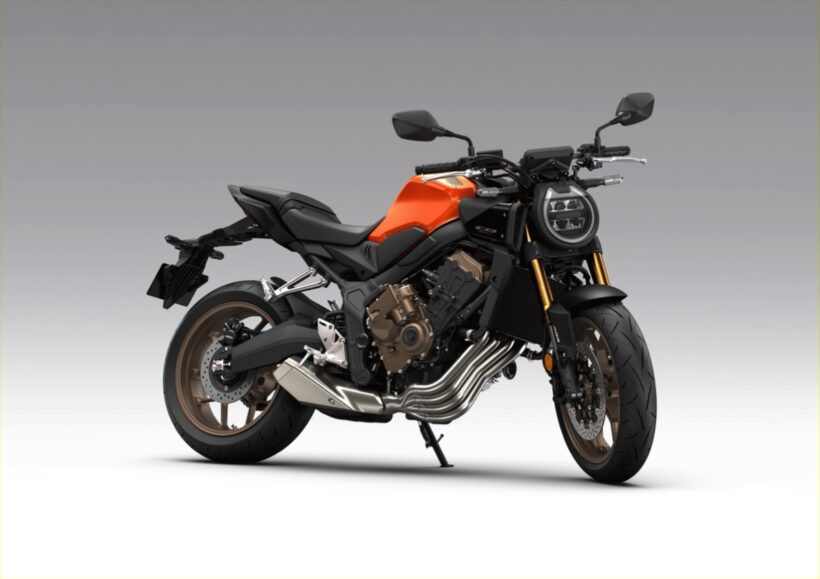
The fuel consumption rate in the spec sheet is divided into “constant fuel consumption value” and “WMTC mode value” (photo shows the spec sheet for the Honda CBR650R/E-clutch).
More specifically, the fuel economy is measured when riding on a flat, straight paved road at 60km/h (30km/h for bikes under 50cc). The figures are for bikes under 50cc with one occupant, and for bikes over 50cc with two occupants. The figure gives the impression of being close to the highest level of fuel economy that the bike can achieve. It seems quite difficult to actually ride and get this figure.
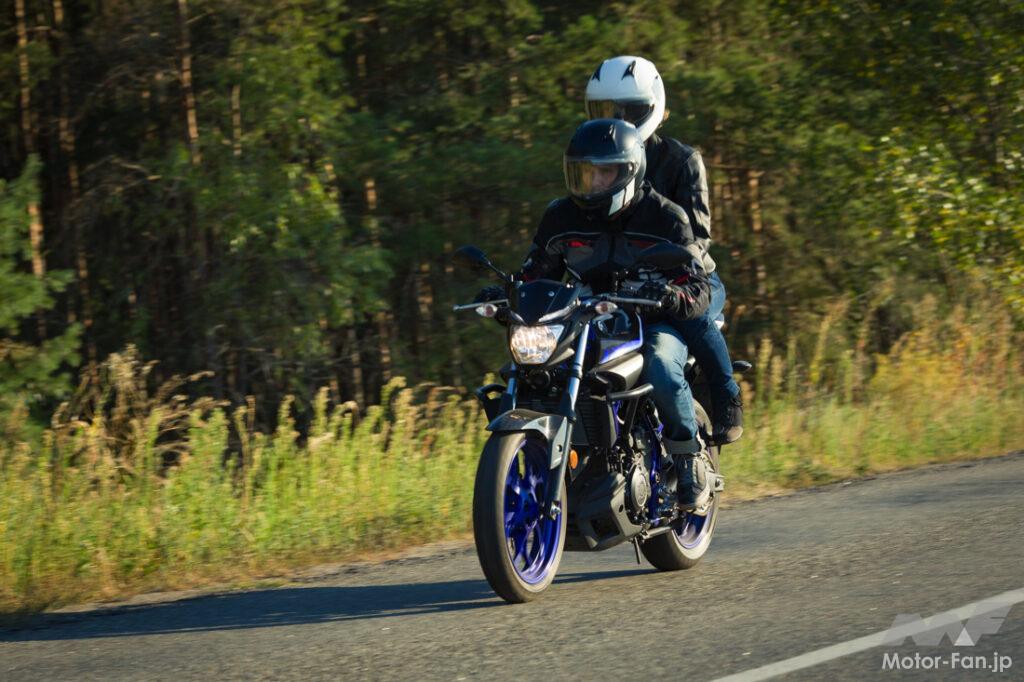
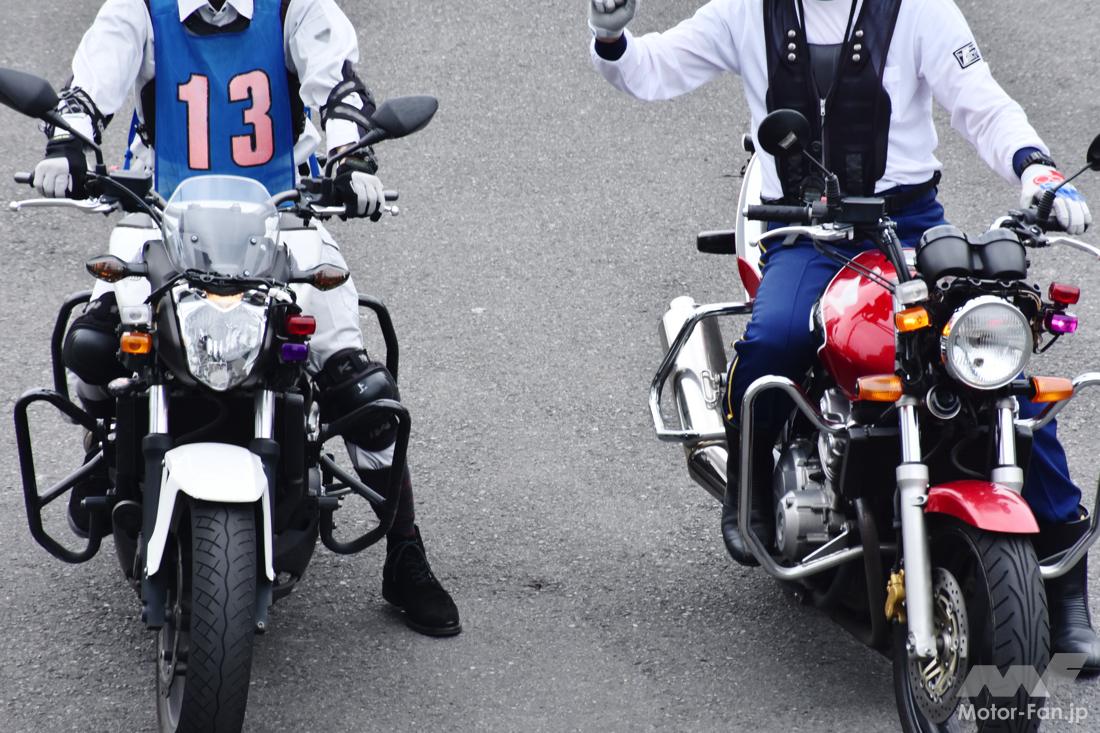
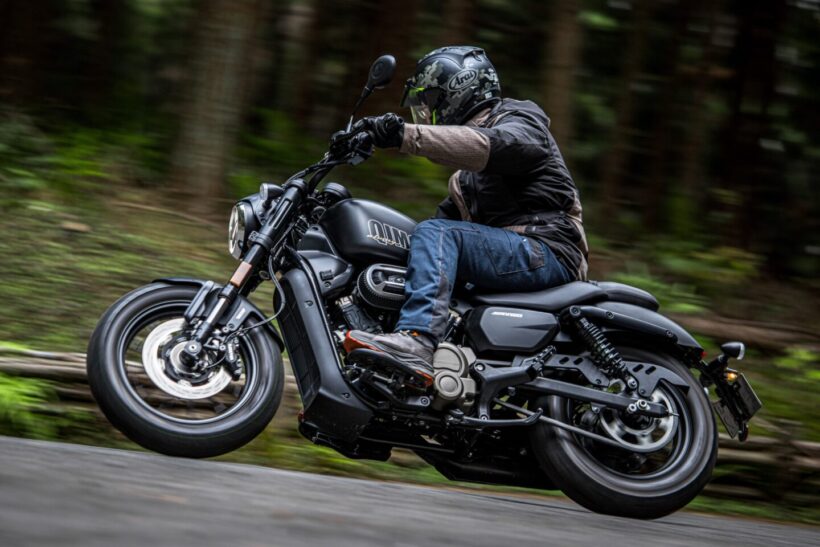
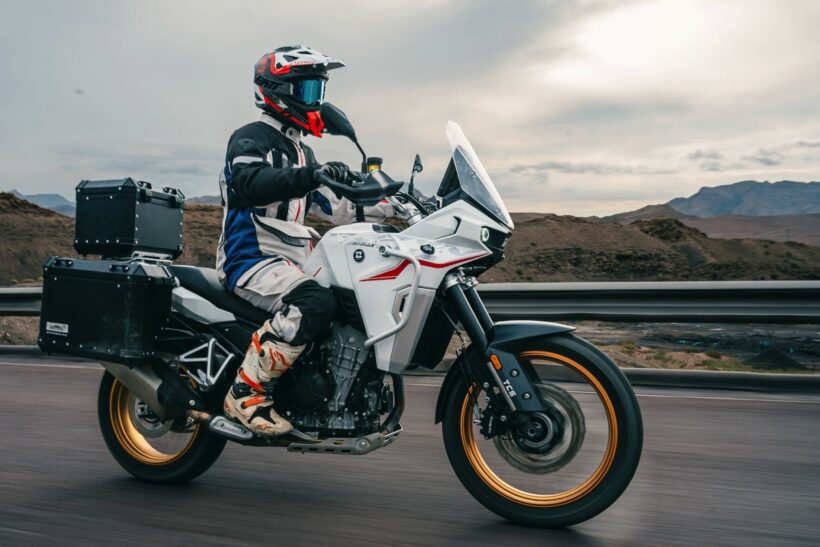
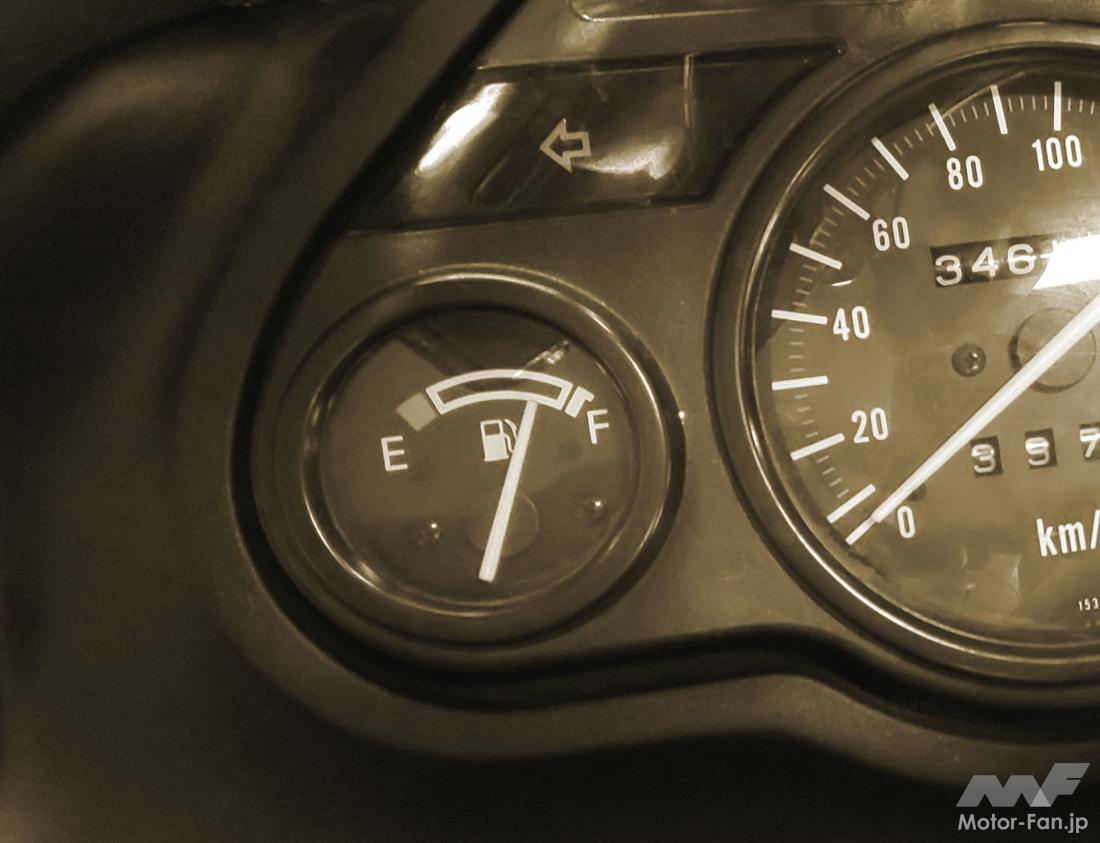
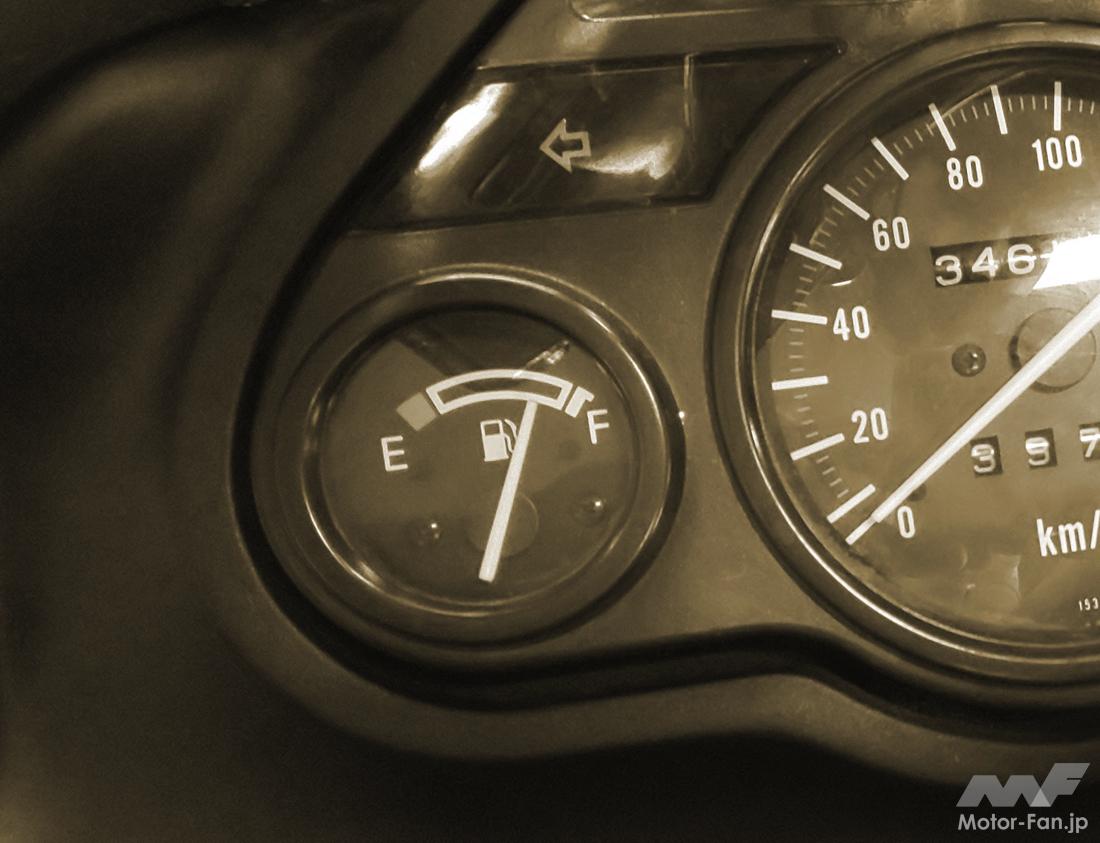
The steady-state fuel economy value was measured by driving on a flat, straight, paved road at 60km/h (30km/h for 50cc or less). (The photo is for illustrative purposes only and is unrelated to the actual measurements.)
What is the WMTC mode value?
Meanwhile, since July 2013, the “WMTC mode value” has been listed alongside the constant-vehicle fuel economy value in catalogs and other publications. This is a fuel economy value calculated using data from exhaust gas measurement tests conducted based on the internationally regulated standard (GTR).
Using a measuring device called a chassis dynamometer, tests are conducted according to patterns such as starting, accelerating, and stopping. In addition, motorcycles are classified into classes according to engine displacement and top speed, and by fine-tuning the riding mode for each class, it is possible to calculate in a way that is closer to actual use.
For WMTC mode values, the classes are classified as follows:
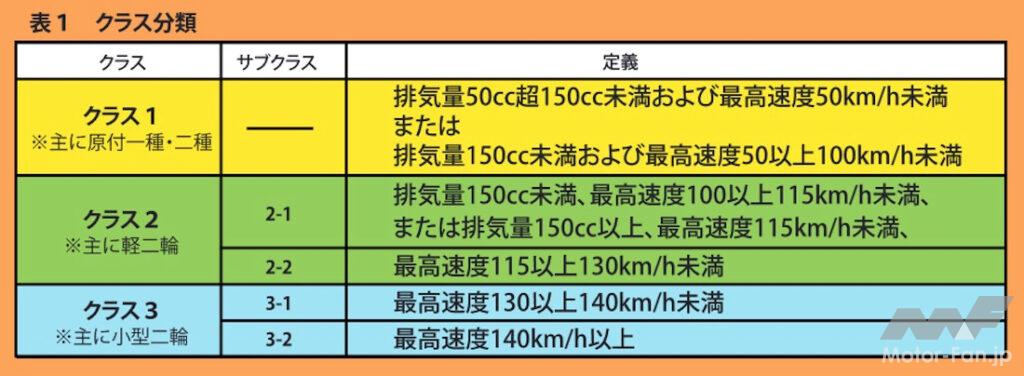
Source: Japan Automobile Manufacturers Association (excerpt from WMTC mode value pamphlet)
Why is it closer to actual fuel economy?
In this way, the WMTC mode values are divided into detailed classes and set for each driving mode. Moreover, although originally based on international standards, it is also based on data from driving surveys in Japan, Europe, India, China, the United States, and other countries.
In addition, the driving modes reflect typical usage conditions, such as city, suburban, and highway driving. This allows the fuel economy to be closer to the actual usage conditions of motorcycles ridden in Japan.
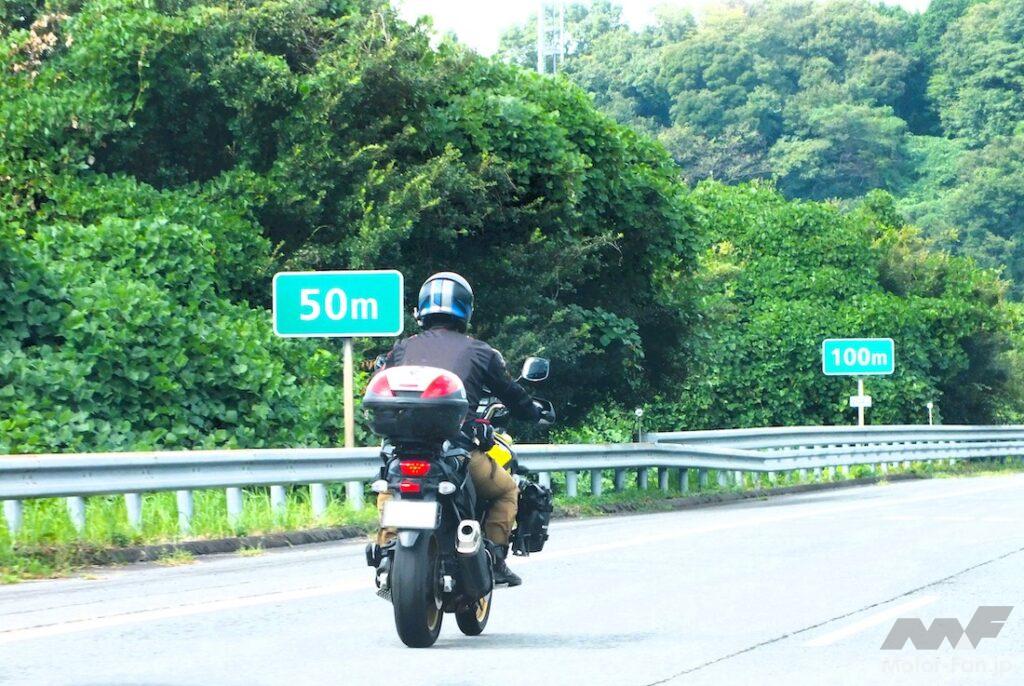
The WMTC mode values reflect typical driving conditions, such as urban, suburban, and highway driving.
Will it be exactly the same as the actual fuel economy?
Of course, this doesn’t mean that the fuel economy will be exactly the same as when actually driving the car.
This is because actual fuel economy is affected not only by how the rider uses the accelerator, but also by the state of the vehicle’s maintenance, such as tire pressure and oil.Furthermore, it is often affected by a variety of factors, such as road conditions, such as the unevenness of the road surface, and weather, such as sunny or rainy.
Therefore, the actual fuel economy may be lower or better than the WMTC mode value. Also, the WMTC mode value is the fuel economy when one person is riding. Therefore, when riding tandem with two people on a motorcycle over 50cc, the body of the motorcycle inevitably becomes heavier, and it can be said that the actual fuel economy will be different.
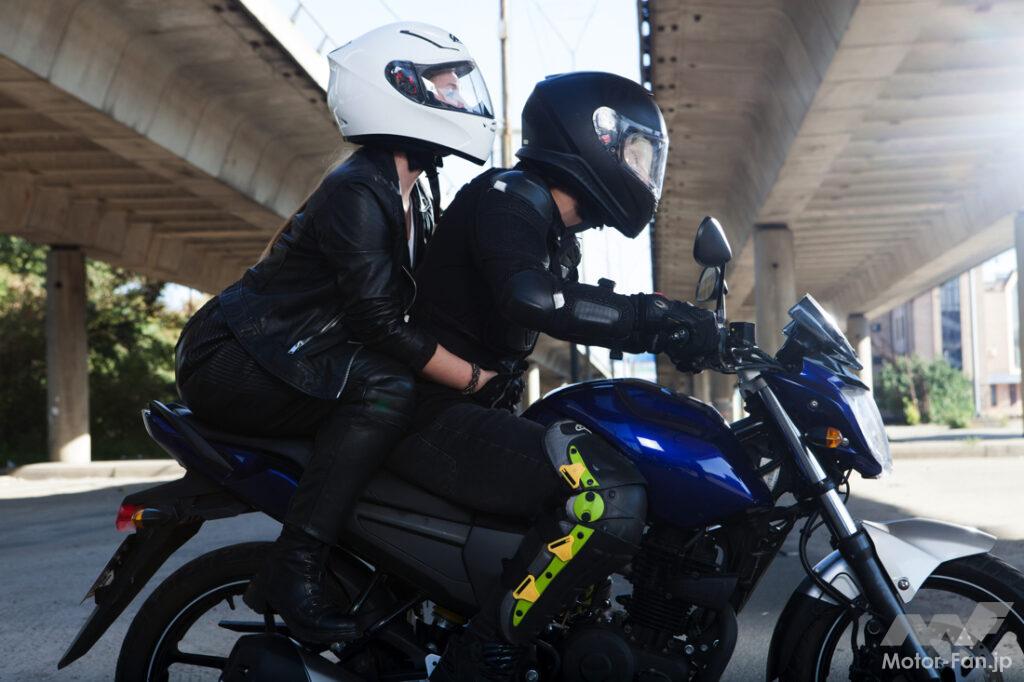
The WMTC mode value is the fuel consumption when one person is riding. When riding tandem, the body becomes heavier, so the fuel consumption will change.
However, since the WMTC mode value uses more detailed settings and data than conventional constant-velocity fuel consumption values, it is certain that it is closer to actual fuel consumption.
Fuel efficiency is an important factor when choosing a bike, not only for touring riders but also for those who mainly use it for everyday commuting to work or school. We hope you will make effective use of the WMTC mode values to help you find the perfect bike.