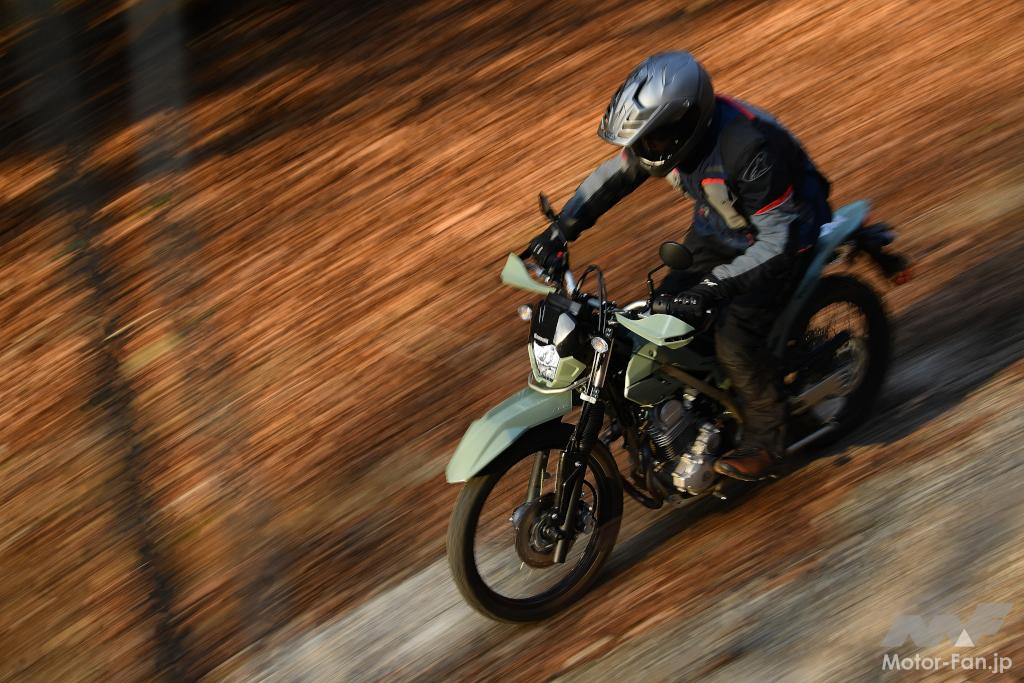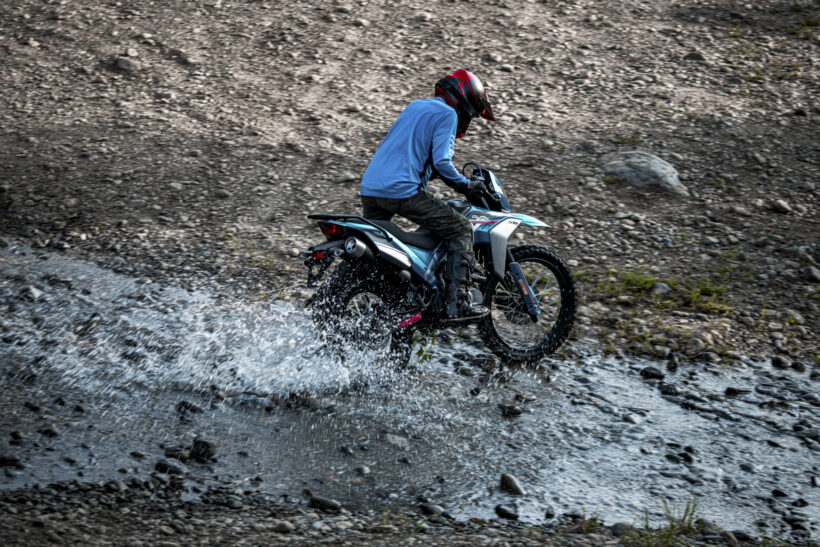

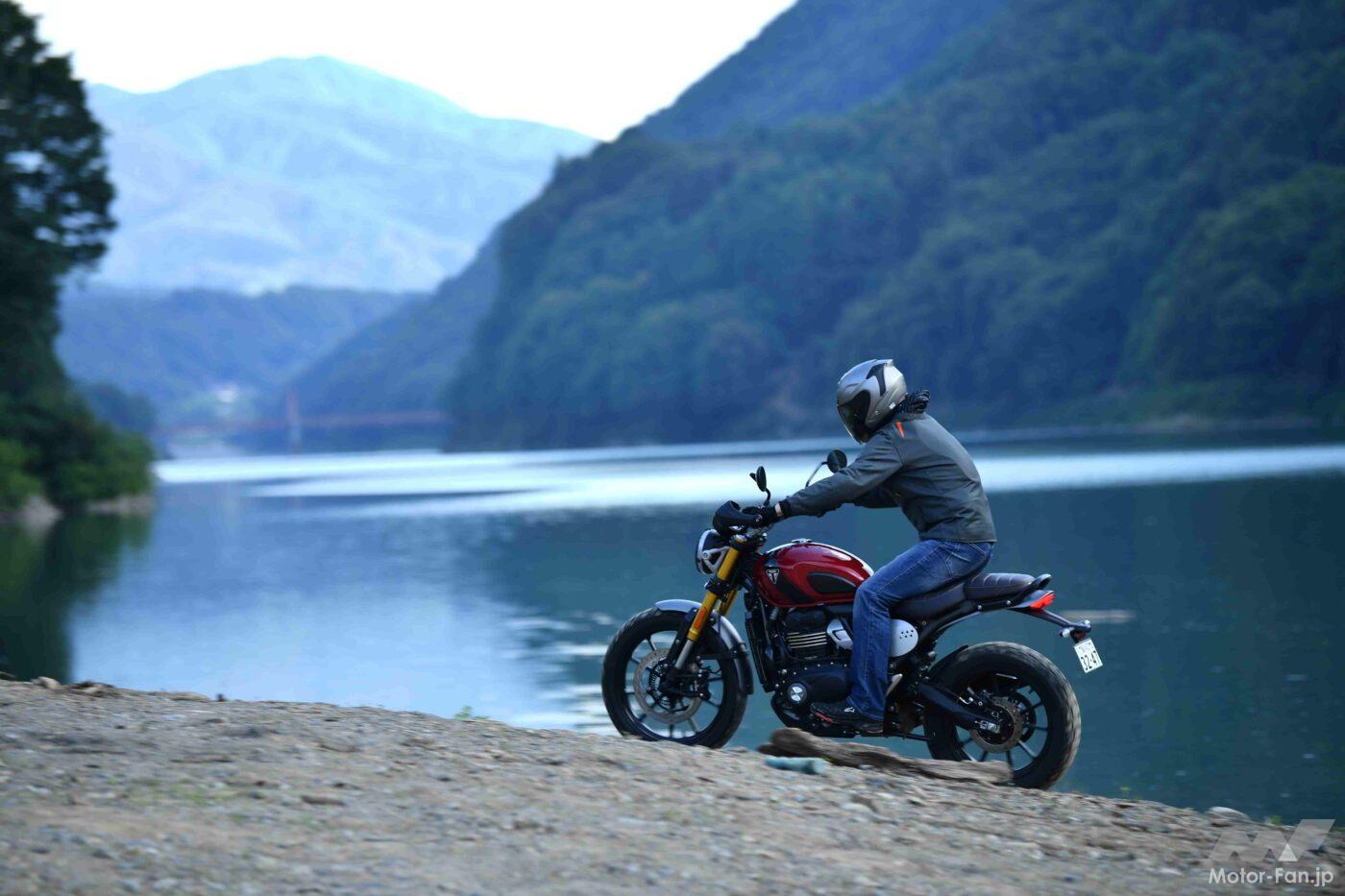
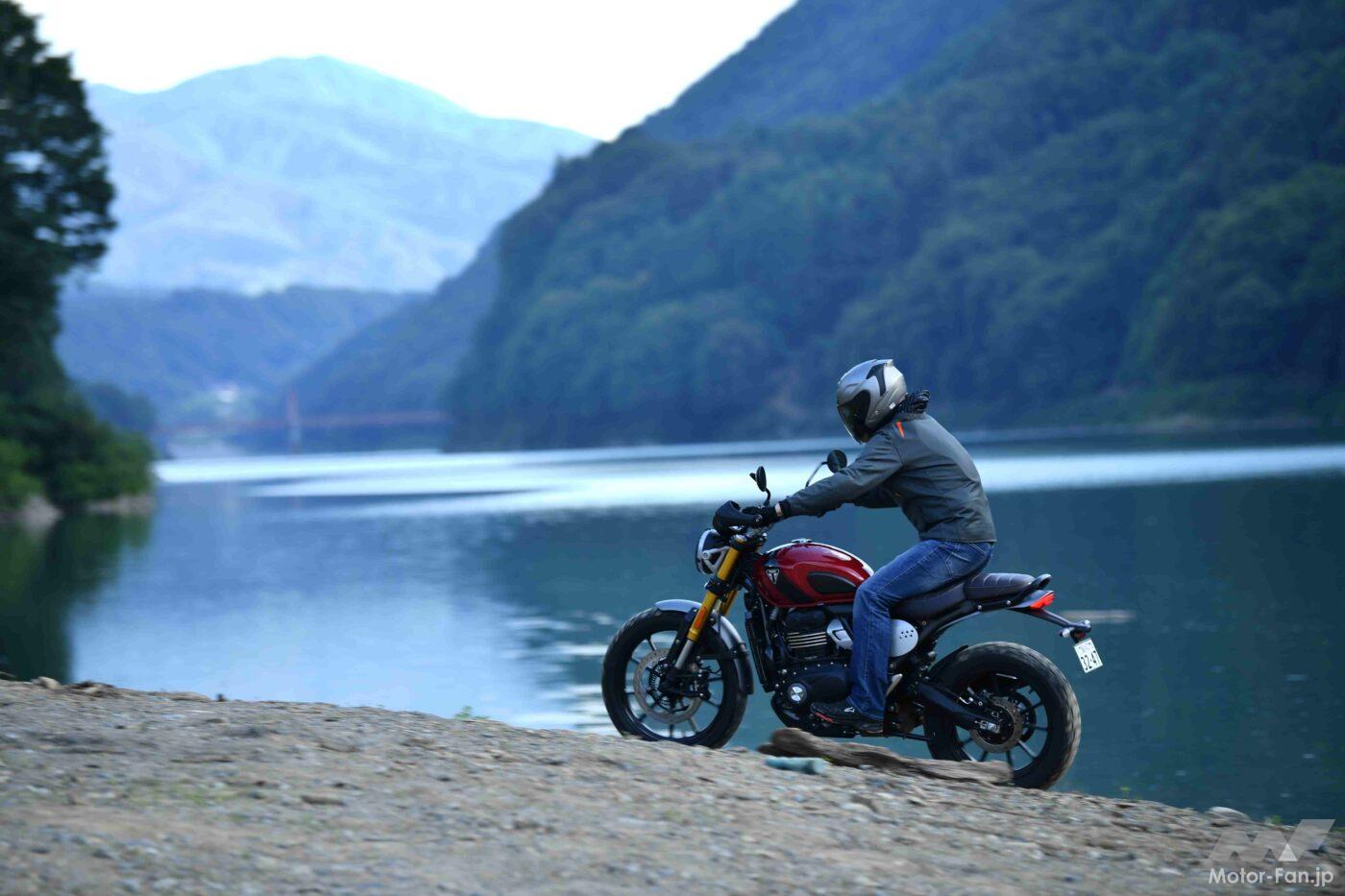
Triumph Scrambler 400X…819,000 yen
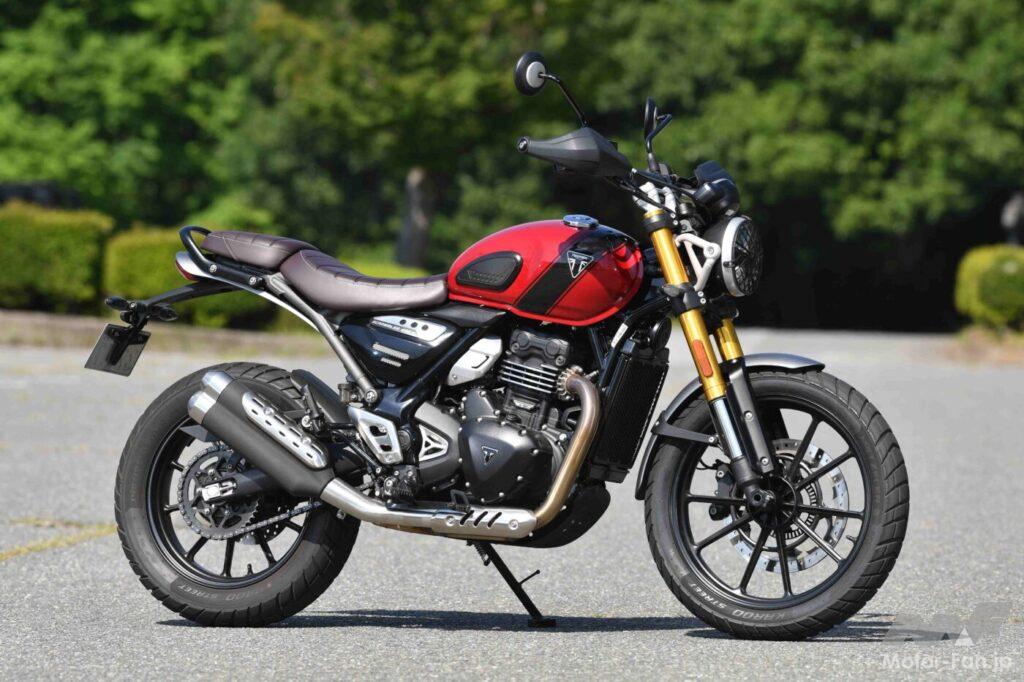
Following the existing 900cc and 1200cc vertical twin models, a 400cc single-cylinder model will be added from 2024, bringing the Triumph Scrambler series to three brothers.
The best solution for 350-400cc single-cylinder bikes?

This is just a really good point, isn’t it…? About six months ago, while working on another publication, I experienced the Speed 400 and Scrambler 400X, which Triumph will release in 2024, and I thought so wholeheartedly. After all, these two modern classics, created with an emphasis on the European A2 license and the Southeast Asian market, have qualities that make you want to describe them as taking the best parts of recent 350-400cc single-cylinder motorcycles.
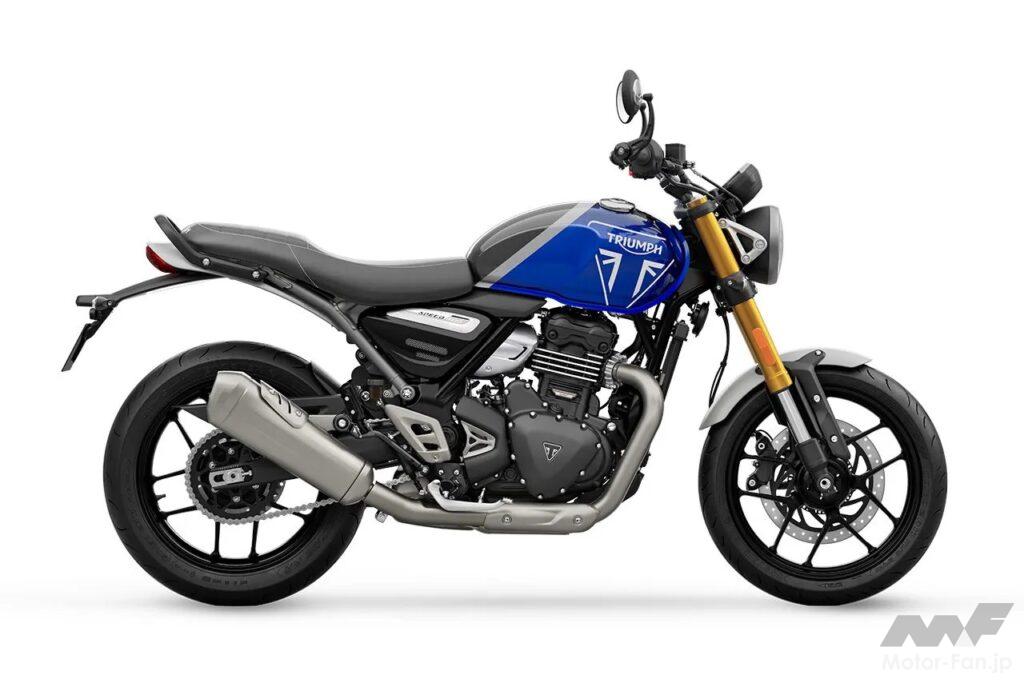
While the Scrambler 400X focuses on off-road performance and comfort, the Speed 400 focuses on friendliness and modern maneuverability.
The two Triumph 400cc single-cylinder bikes are siblings that share much of the basic design, but if we were to classify them, it would be fair to say that the Speed 400 is similar to the KTM 390 Duke and Husqvarna 401 series, while the Scrambler 400X is similar to the Yamaha SR, Honda GB and Royal Enfield 350 series. If you look at the maximum power output, curb weight, wheelbase and tire size listed below, you should be able to get a rough idea of the characteristics of recent 350-400cc single-cylinder bikes, including Triumph’s new model.
●Speed 400…40hp, 170kg, 1377mm, 17-inch wheels (front and rear)
●Scrambler 400X… 40hp, 179kg, 1418mm, 19-inch wheels (front and rear)
/17-inch wheels●390 Duke…45hp, 174.75kg, 1357mm, 17-inch wheels (front and rear )
●Vitpilen 401…45hp, 164.25kg, 1368mm, 17-inch wheels (front and rear)
●SR400 (2021 model)… 24hp, 175kg, 1410mm, 18-inch wheels (front and rear)
●GB350…20hp, 179kg, 1440mm, 19-inch wheels (front and rear)/18-inch wheels
●Bullitt 350…20hp, 195kg, 1390mm, 19-inch wheels (front and rear)/18-inch wheels
ADVERTISEMENT

The impression these figures make will vary from person to person, but for those who can’t get used to the innovativeness and aggressiveness of KTM and Husqvarna, or for those who feel that the performance of the SR, GB or Bullitt is lacking, I think Triumph’s 400cc single-cylinder could be the perfect solution. In any case, the Speed 400 and Scrambler 400X are models that combine the good old-fashioned charm and modern performance in a way that hasn’t been seen in the under-400cc class until now, and that’s why I feel they’re hitting the nail on the head…
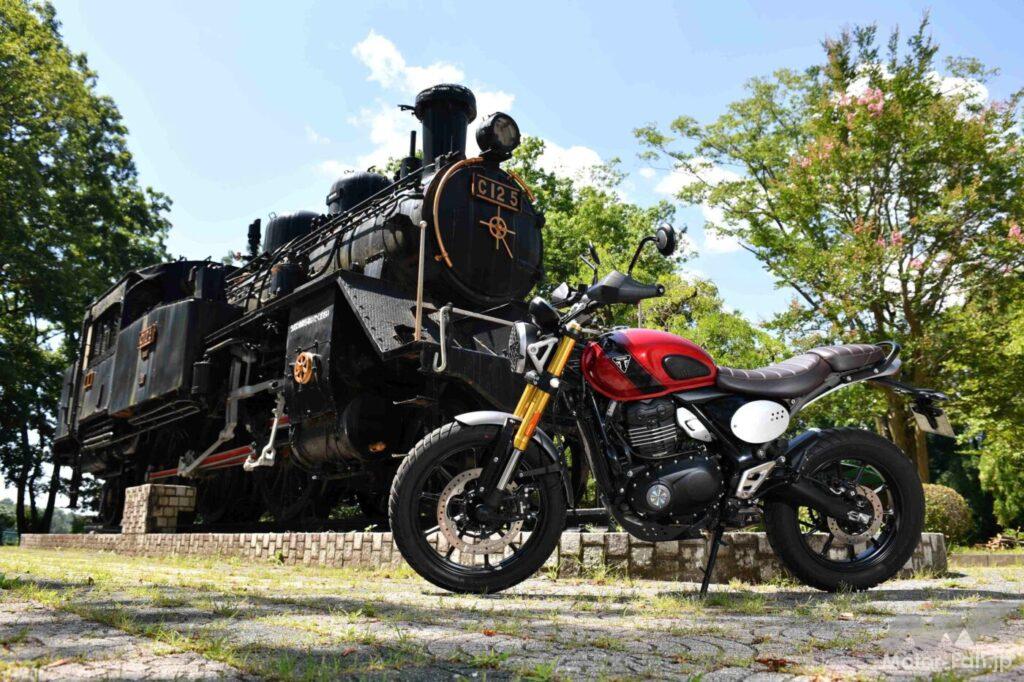
Differences between Speed 400 and Scrambler 400X

All lights are LED. The headlight is the same as the Speed 400, but the brackets are specially designed for each model, and the stone guard is a part unique to the Scrambler 400X.
So how do the two Triumph 400cc single-cylinder bikes coexist? Firstly, the Speed 400, with its low seat and low price (790mm, 729,000 yen; the Scrambler 400X is 835mm, 819,000 yen), is likely to be suitable for entry-level riders. Also, considering that the body is light and compact, and it uses 17-inch high-grip tires front and rear (the factory specified tires are Pirelli Diablo Rosso III and Metzeler Sportec M9RR), sports riding enthusiasts will also be able to enjoy it.
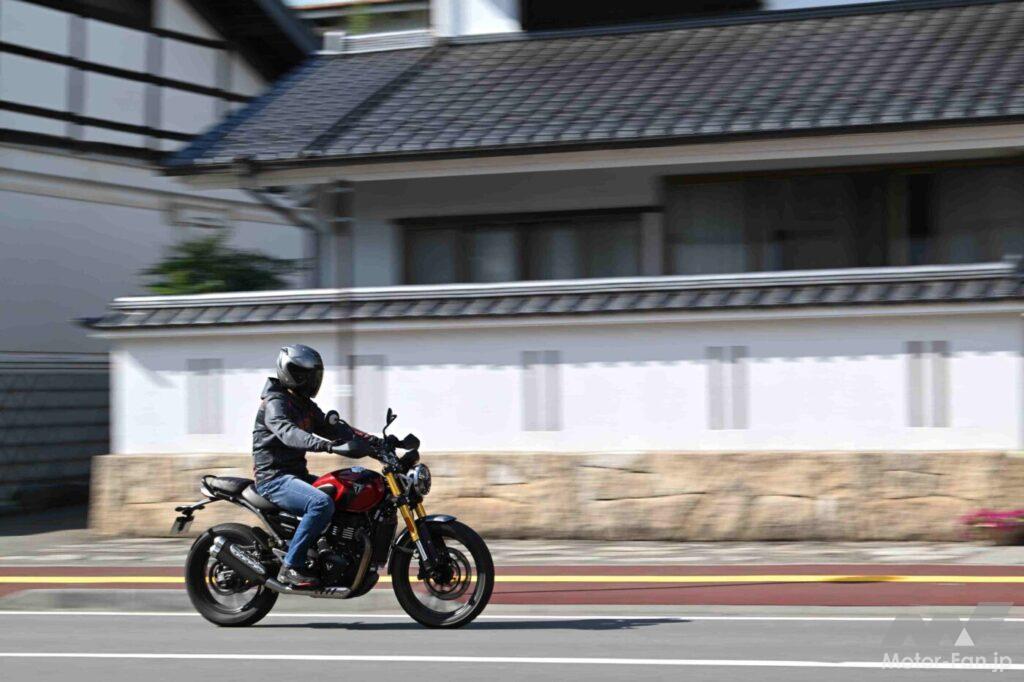
On the other hand, the Scrambler 400X’s features include a 19-inch front wheel (the factory-specified front and rear tires are Metzeler Karoo Street, which are designed with off-road use in mind), ample suspension stroke (150mm front and rear wheel travel. The Speed 400 has F: 140mm / R: 130mm), and a relaxed riding position, making this model the clear winner for long rides that include rough roads. However, for entry-level users and smaller riders, the large size of the bike may be a hindrance.
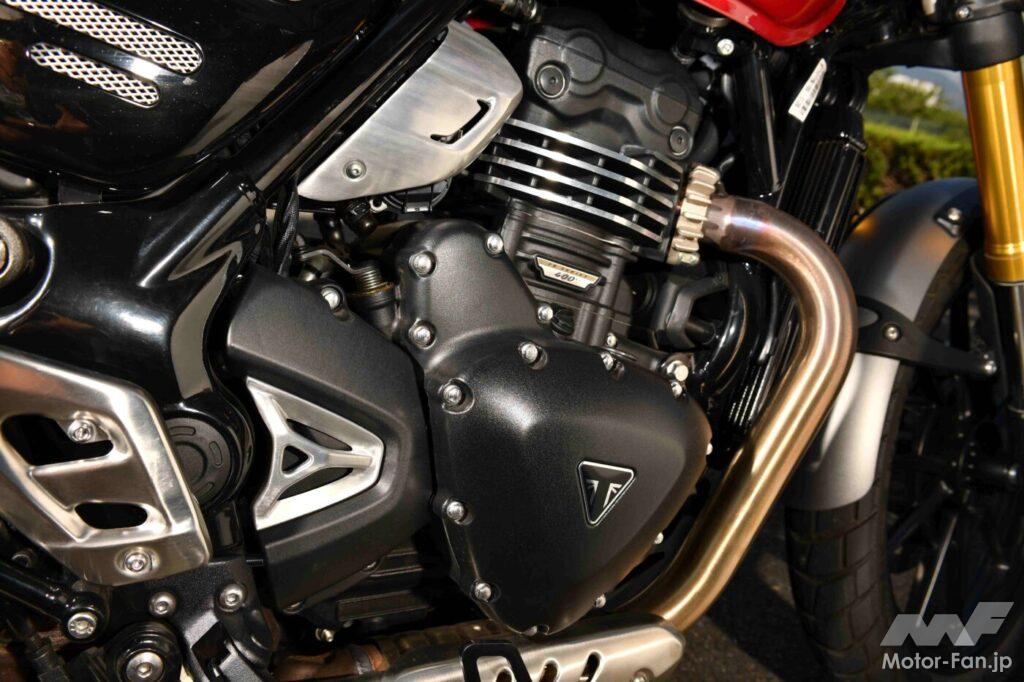
The exterior has a classic feel, but the inside of the water-cooled single-cylinder engine has a modern configuration. The bore and stroke are 89 x 64 mm, the same as the 2024 and later KTM and Husqvarna 390/401 singles.
For these reasons, it’s difficult to choose between the two, but the one I’ll be focusing on in this 1000km serious test ride is the Scrambler 400X. If you look at it from the perspective of attracting new users and expanding the base, it seems like Triumph’s main focus is the Speed 400, with its friendly size and price… but as someone who loves classic bikes and touring, I’m drawn to the Scrambler 400X (however, I also love sports riding, so I find the Speed 400, which is fun on mountain roads and circuits, quite appealing).
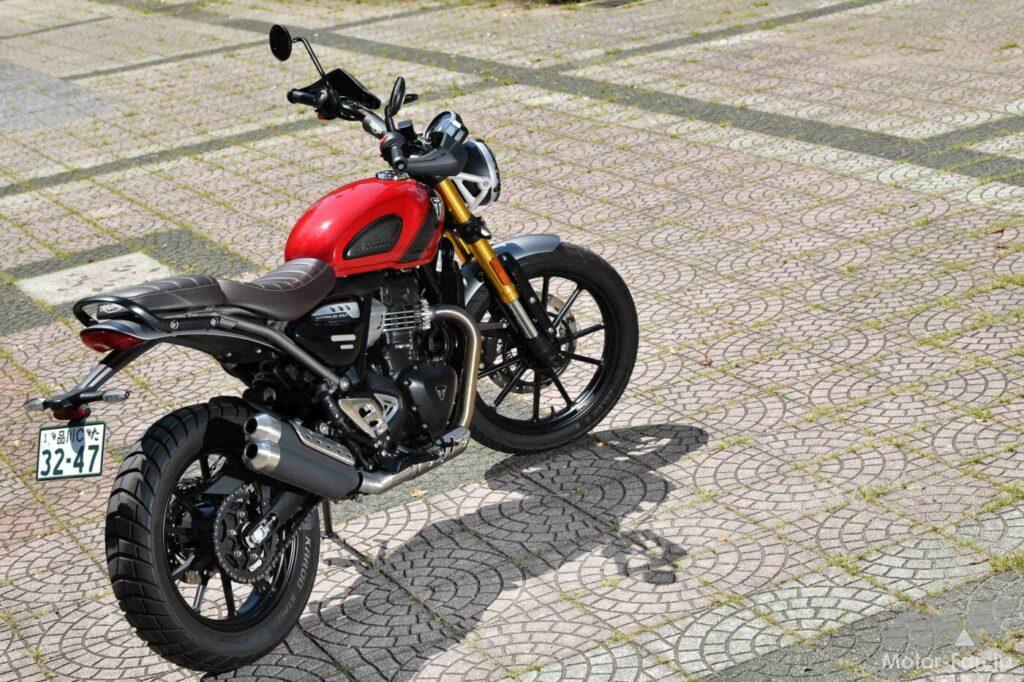
Even though the center of gravity is high, it is not light and fluttery.
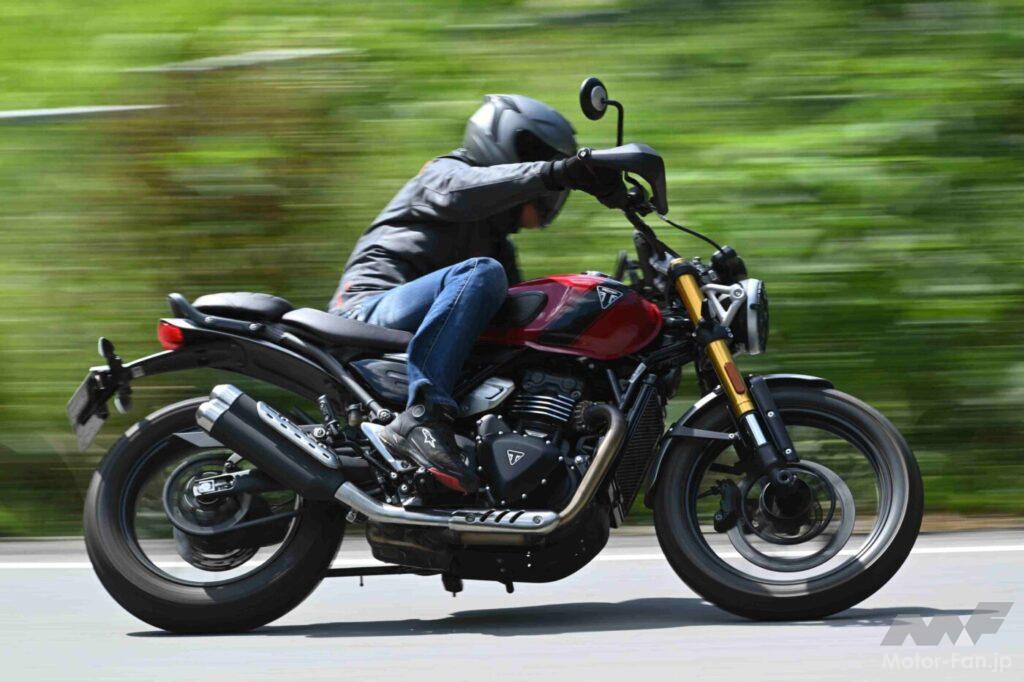
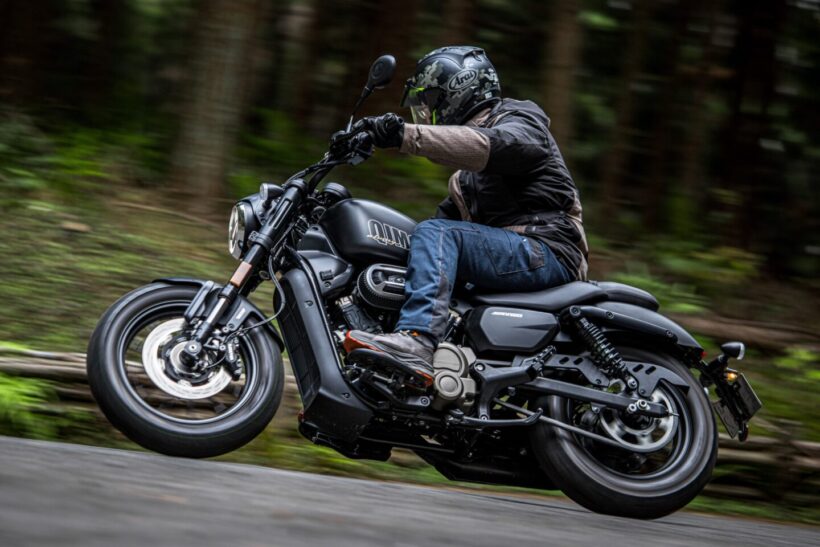
When people think of a Scrambler, they probably imagine it as a bike that can be easily ridden off-road and has smooth, nimble handling. I’m one of those people, and while the Scrambler 400X has decent off-road capabilities, it’s hard to say that it has a smooth ride.
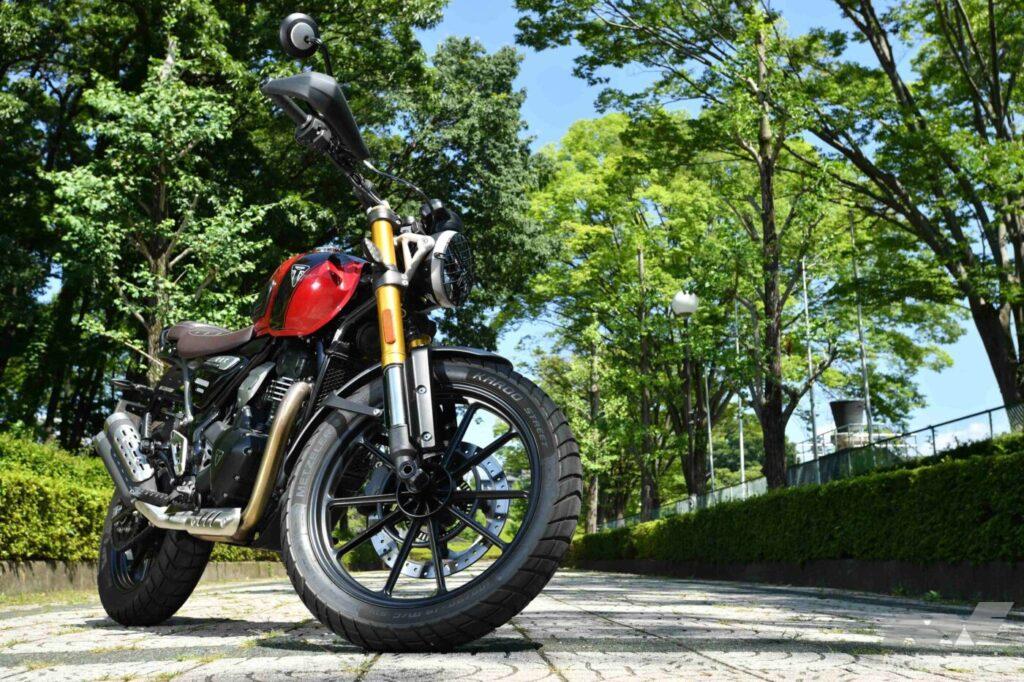
The main reasons for this are that the vehicle weight is 9 kg heavier than the Speed 400, the wheelbase is 41 mm longer, and the front and rear suspension has a soft feel due to the dampers not working well. In fact, before the test ride, I had imagined that the higher seat would raise the center of gravity including the rider, resulting in a light and agile ride… but compared to the Speed 400, the Scrambler 400X’s handling is, to put it positively, focused on stability, and, to put it negatively, sluggish.
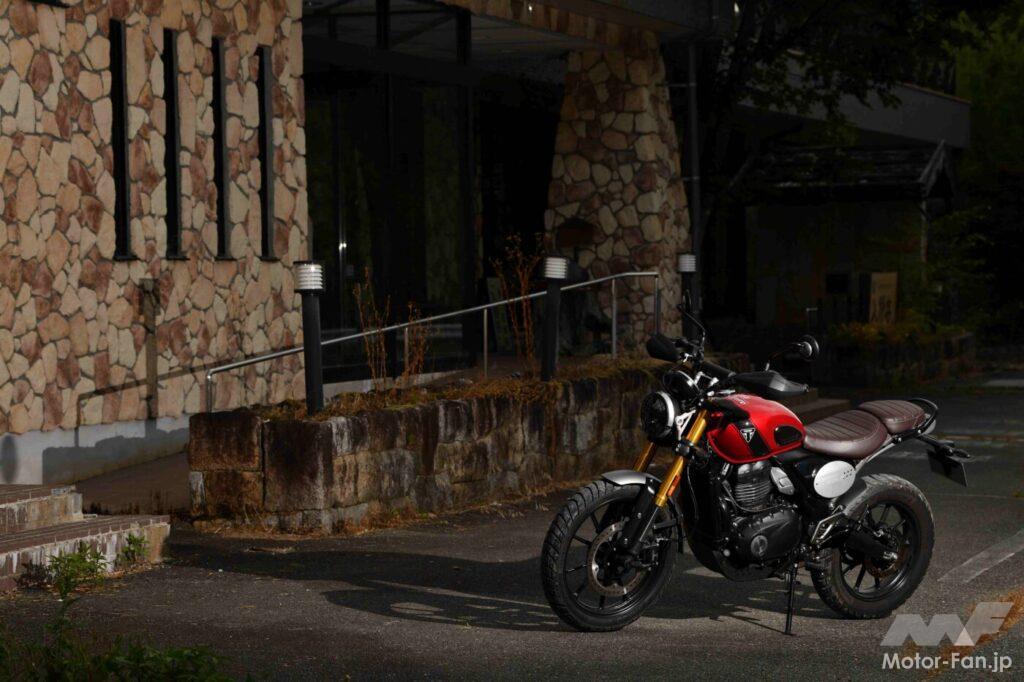
Well, that impression wasn’t a negative one for me. On the contrary, the Scrambler 400X’s gentle, gentle, and extremely stable ride was very appealing to those who love classic bikes and touring, and compared to the Speed 400, which is light, small, and has excellent maneuverability, I think it’s an exquisite differentiation. In any case, the Speed 400 and Scrambler 400X are so well thought out in so many ways that it’s hard to believe they’re the first under-400cc models that Triumph has produced under its current management (it’s been about half a century, if you include the time under the old management), so I think that if engineers from other manufacturers were to experience these two bikes, they would be left with the same impression as me: that they’ve hit the nail on the head.
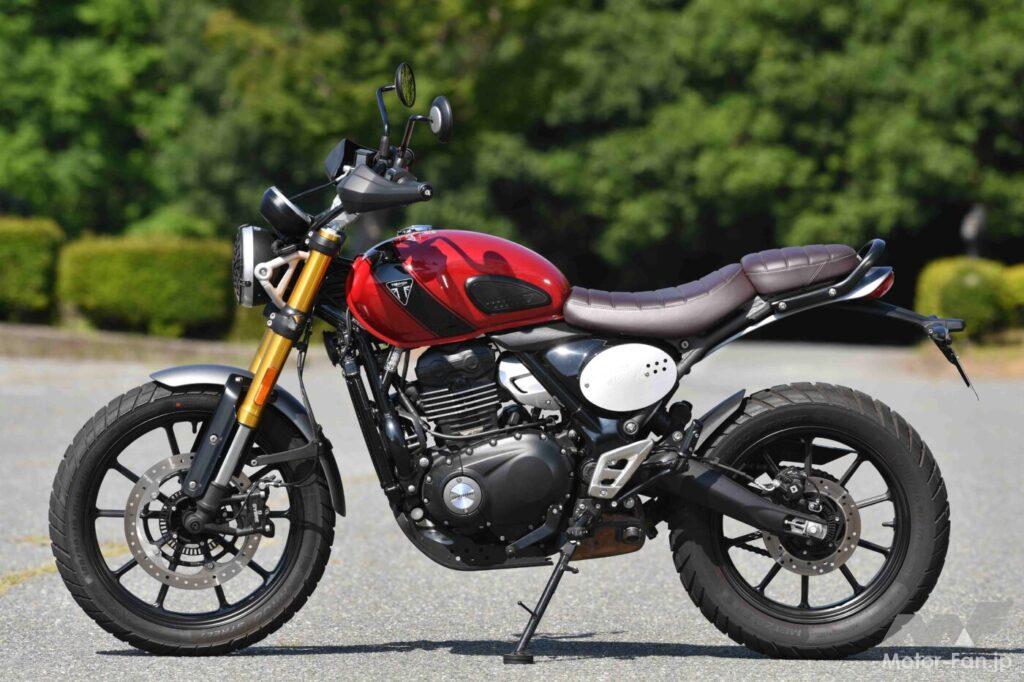
The basic structure of the diamond-type steel tubular frame is the same as that of its sister model, the Speed 400. However, to avoid interference between the 19-inch front wheel and the radiator, the Scrambler 400X’s steering head pipe is positioned further forward than the Speed 400.
ADVERTISEMENT
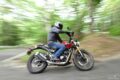 It’s a big single bike, but it’s easy to ride! The Triumph Scrambler 400X is a great bike for entry-level riders. | 1000km Test Drive [2/3]
Once you get your large motorcycle license, you’re not interested in the under 400cc class. I think there are quite a few riders like that in Japan, where there is a unique licensing system. However, once you experience the 400cc single-cylinder bikes that Triumph will begin selling from 2024, your attitude towards engine displacement will surely change dramatically. REPORT: Nakamura Tomohiko PHOTO: Togashi Hideaki
Main specifications
Model name: Scrambler 400X
Length x width x height: 2115mm x 900mm x 1170mm
Wheelbase: 1418mm
Ground clearance: 195mm
Seat height: 835mm
Caster/trail: 23.2°/108mm
Engine type: Water-cooled 4-stroke single cylinder
Valve type: DOHC 4-valve
Total displacement: 398.15cc
Bore x stroke: 89.0mm x 64.0mm
Compression ratio: 12.0
Maximum power: 29.44kW (40ps) / 8000rpm
Maximum torque: 37.5N・m (3.8kgf・m) / 6500rpm
Starting method: Self-starter
Ignition method: Full transistor
Lubrication method: Wet sump
Fuel supply method: Fuel injection
Transmission type: Constant mesh 6-speed
return Clutch type: Wet multi-plate coil spring
Gear ratio
1st gear: 2.830
2nd gear: 1.930
3rd gear: 1.420
4th gear: 1.140
5th gear: 0.960
6th gear: 0.840
1st and 2nd reduction ratios: 2.839, 3.070
Frame type: Hybrid spine/perimeter
Front suspension: Telescopic inverted type φ43mm
Rear suspension: Direct push monoshock
Front tire size: 100/90-19
Rear tire size: 140/80R17
Front brake type: Hydraulic single disc
Rear brake type: Hydraulic single disc
Vehicle weight: 179kg
Fuel used: Unleaded high-octane gasoline
Fuel tank capacity: 13L
Seats: 2 people