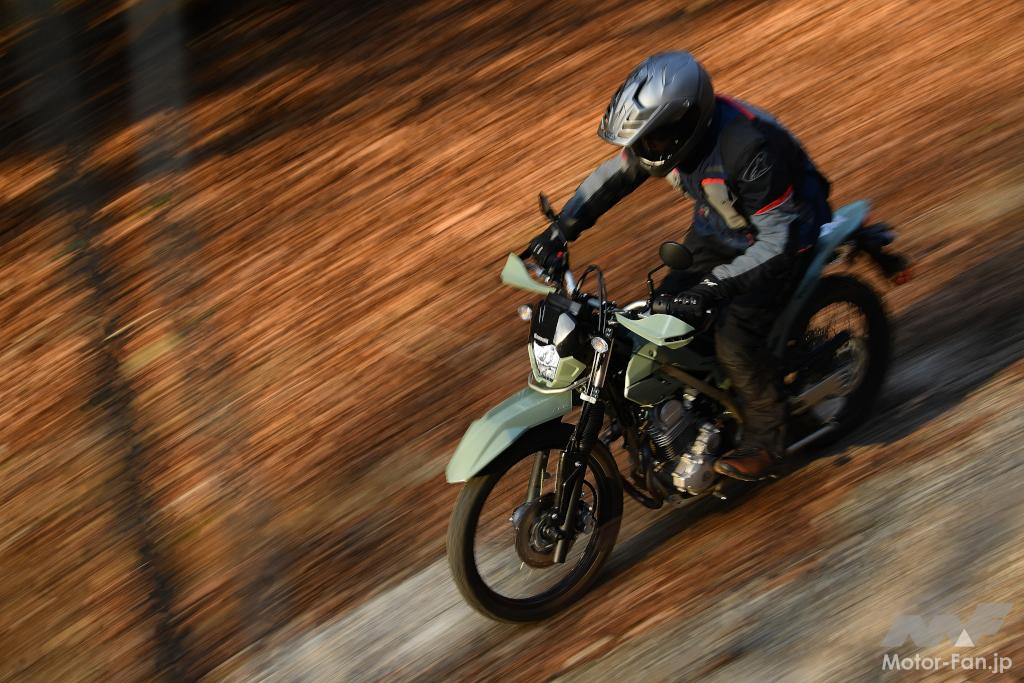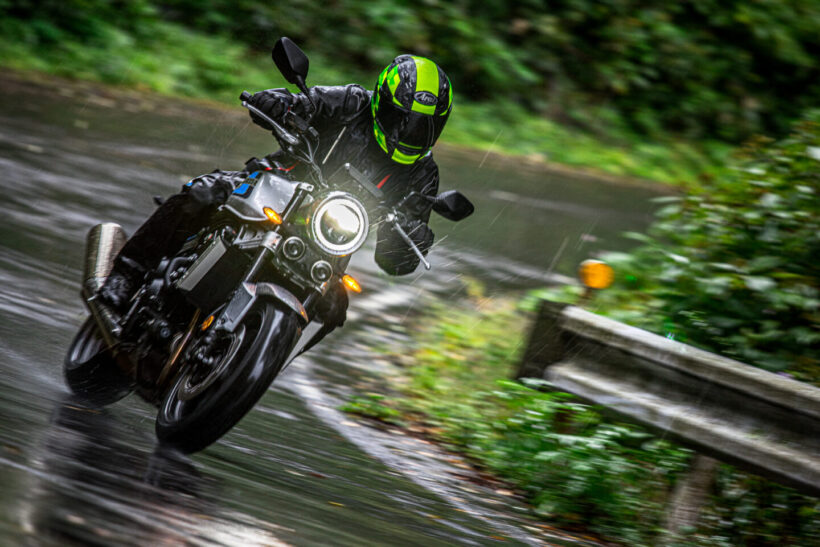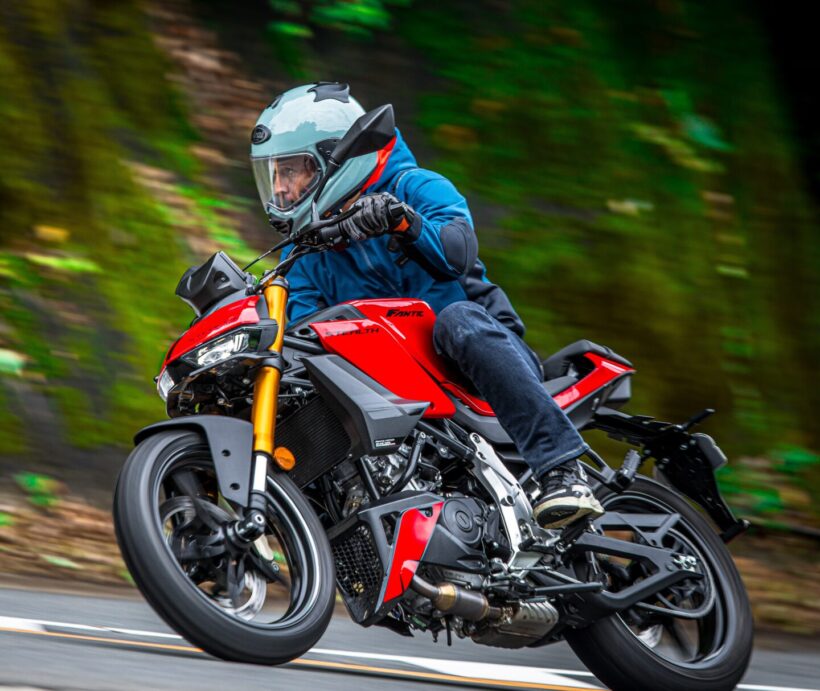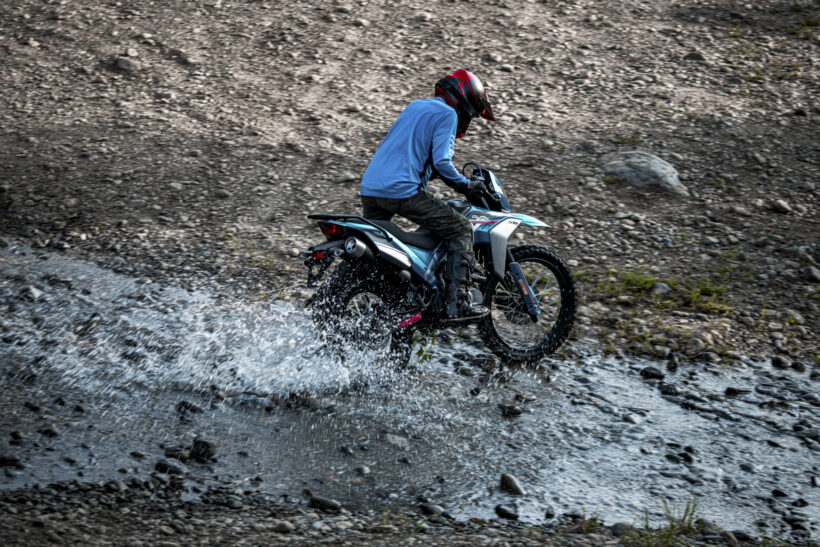

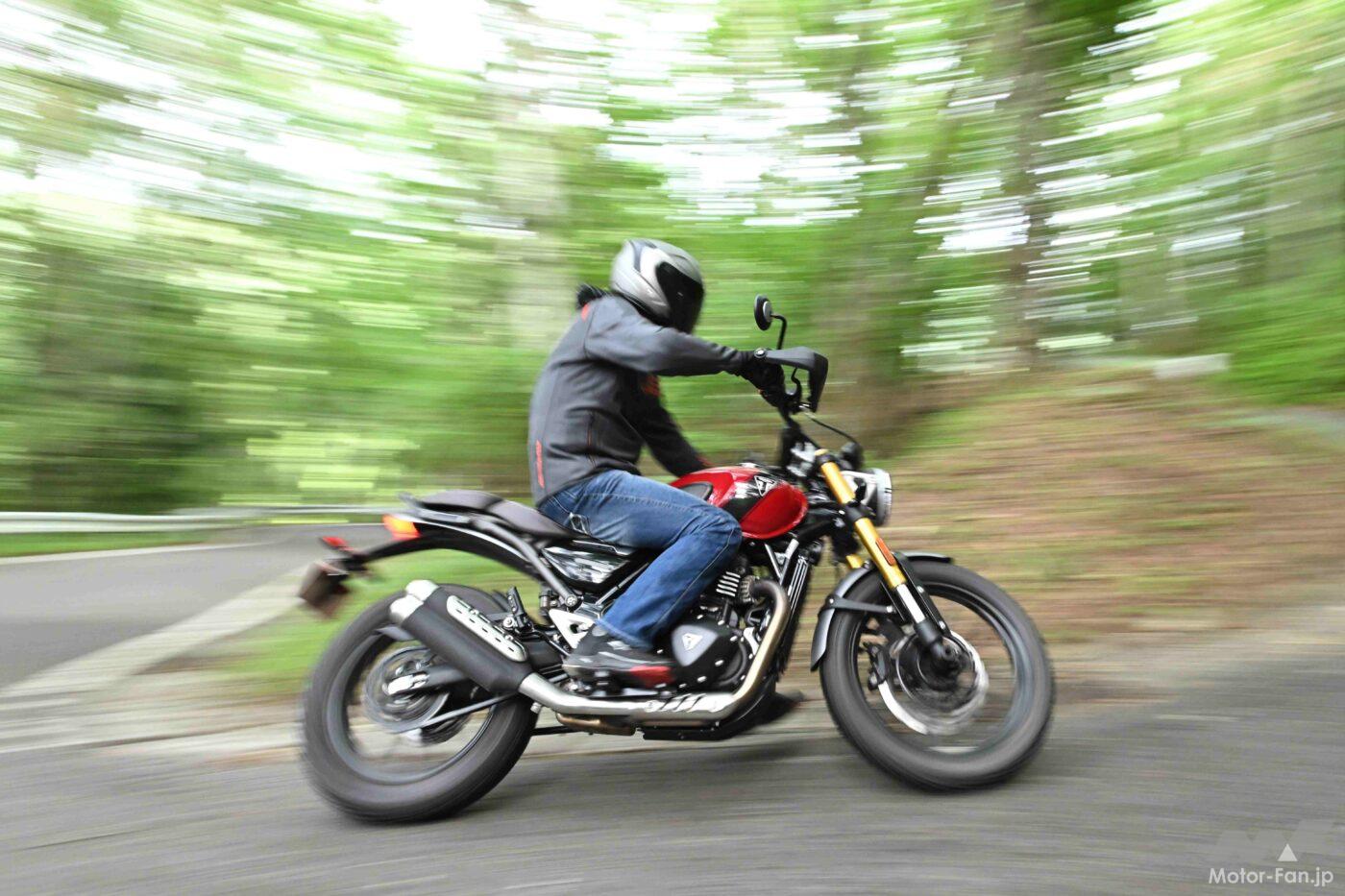
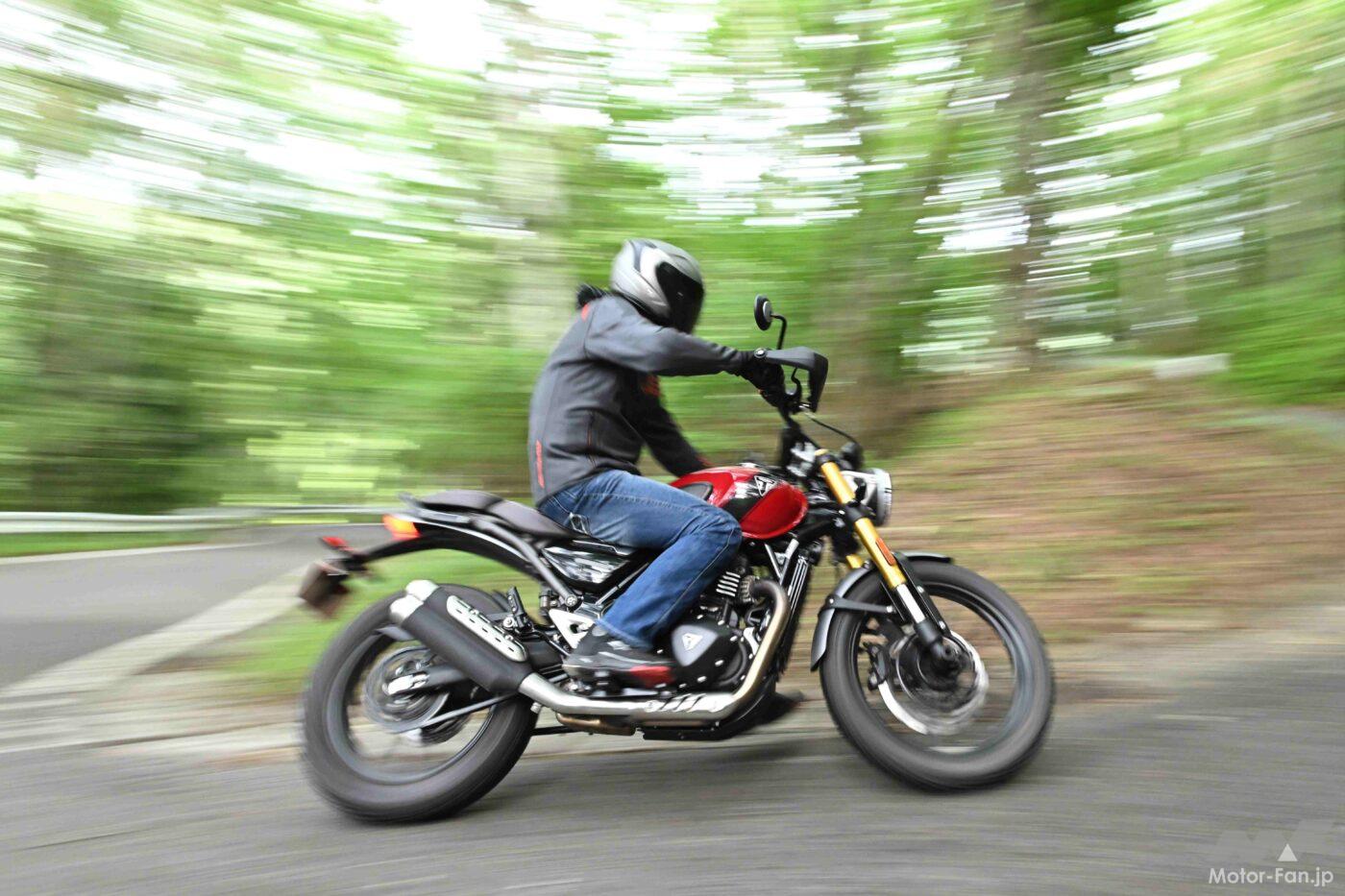
Triumph Scrambler 400X…819,000 yen
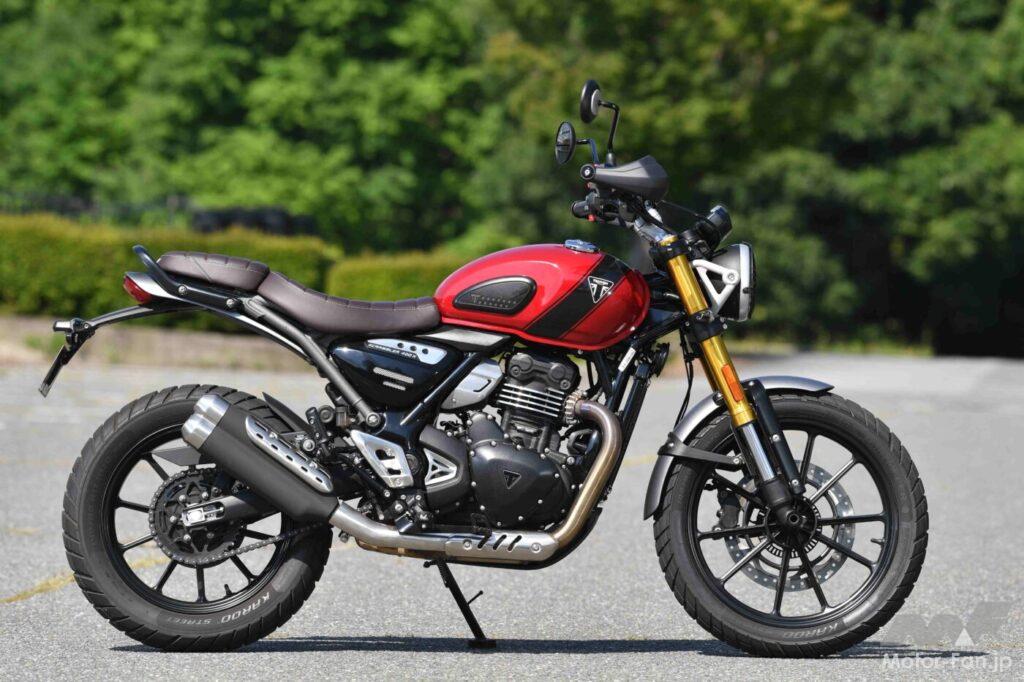
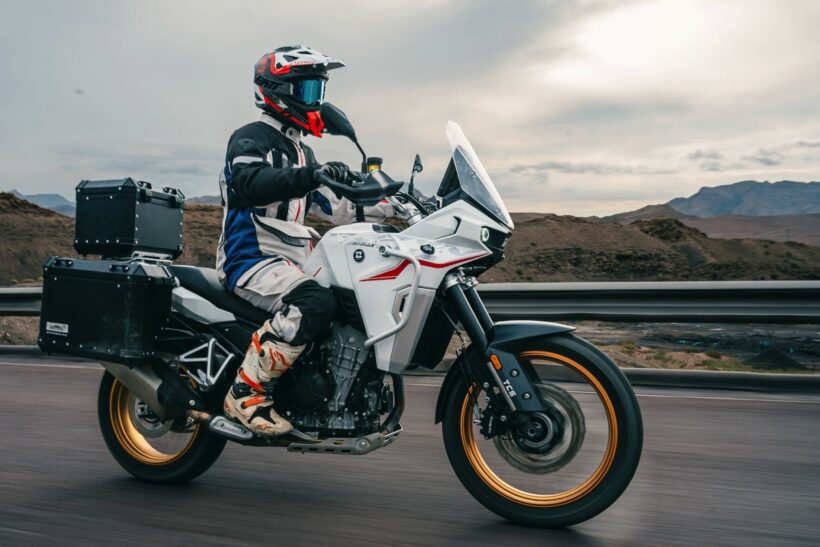
While its sibling, the Speed 400, focuses on friendliness and sportiness, the Scrambler 400X was developed with an emphasis on comfort and off-road performance. The exhaust is specially designed for each model, and the Scrambler 400X’s exhaust note is more lively and powerful than the Speed 400’s…or so I think.
There is no sign of compromise anywhere

Continuing from the first article, this also applies to its sister model, the Speed 400, but the first thing that impressed me about Triumph’s 400cc single-cylinder bike was its high quality, which was comparable to its big brother, the 900/1200cc twin bike. On the other hand, I didn’t feel there were any negative aspects to being made in India, but that may be to be expected, as Bajaj Auto, which is in charge of production, has been working on KTM’s Small Duke series for over a decade and has already built up a solid track record.
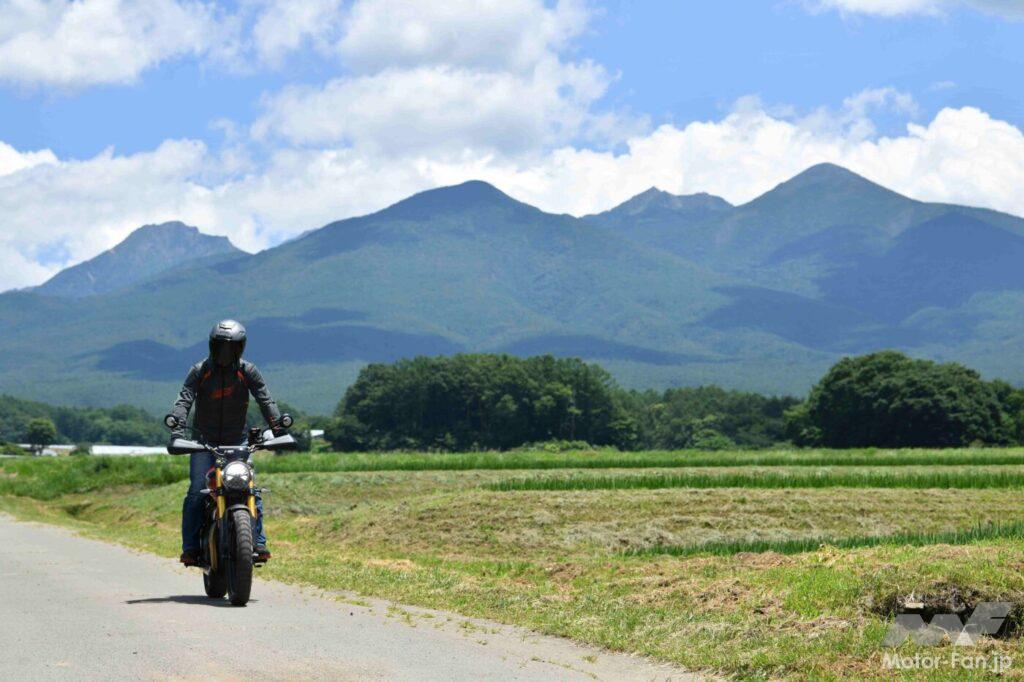
And in terms of ride quality, I didn’t notice any negative aspects of the Indian-made model… However, some of my colleagues have mentioned discomfort with the front and rear suspension movement, shift feeling, and front brake touch, so there are probably individual differences at this point.

I was also very impressed by the sincere craftsmanship that showed no sign of compromise. The Street 400 and Scrambler 400X are instantly recognizable in terms of their front and rear wheels and mufflers, but they also have many specially designed parts, such as the main frame (the basic structure is the same, but the distance between the swingarm pivot and head pipe is different), seat rails, front and rear suspension, and riding position-related parts, and the front and rear tires are the latest from Pirelli/Metzeler.

Furthermore, the introduction of an electronically controlled throttle and disengageable traction control, as well as the addition of an off-road mode to the Scrambler 400X’s ABS, are also elements worth mentioning. The classic looks tend to attract attention, but in the 400-500cc class in recent years, where emphasis has been placed on cost reduction, it is rare to find a model that conveys the passion of its creators to this extent.
Exquisite engine feeling and a proper riding position

The first thing I would like to point out as a merit of the two Triumph 400cc single-cylinder bikes is the single-cylinder engine’s extremely wide range of capabilities. The publicity materials and specs suggest that it is oriented towards high-revving, high-power output, but when actually riding it in various situations, it exhibits the comfortable pulsation and vibration that only a single engine can provide in the low and mid-rev range, making this engine enjoyable for both sporty riding and relaxed cruising.
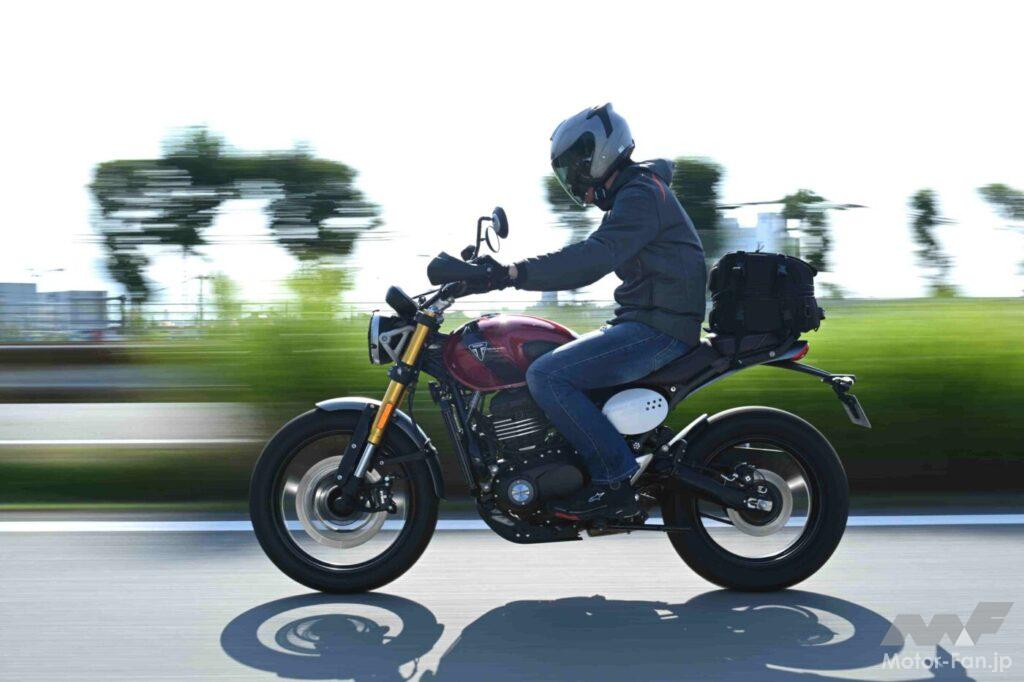
However, when considered by recent standards in the 400cc class, the figures of maximum output: 40ps/8000rpm and maximum torque: 3.8kgf・m/6500rpm are not surprising or unexpected (potential rivals are the KTM and Husqvarna 400cc single-cylinder models, with 45ps/8500rpm and 3.97kgf・m/7000rpm, and the Honda GB350 with 20ps/5500rpm and 3.0kgf・m/3000rpm. Incidentally, the Kawasaki ZX-4R, currently the most powerful bike in the 400cc class, has 77ps/14500rpm and 4.0kgf・m/13000rpm). That said, there were very few instances during this test ride where I noticed a lack of power, and the engine speed in top 6th gear at 100km/h at high speed was 5000rpm, and if you rev it up to 9000rpm where the rev limiter kicks in, it seems like you’ll be able to reach a speed of around 160km/h, so a rider of average skill level will likely not be dissatisfied with the power.
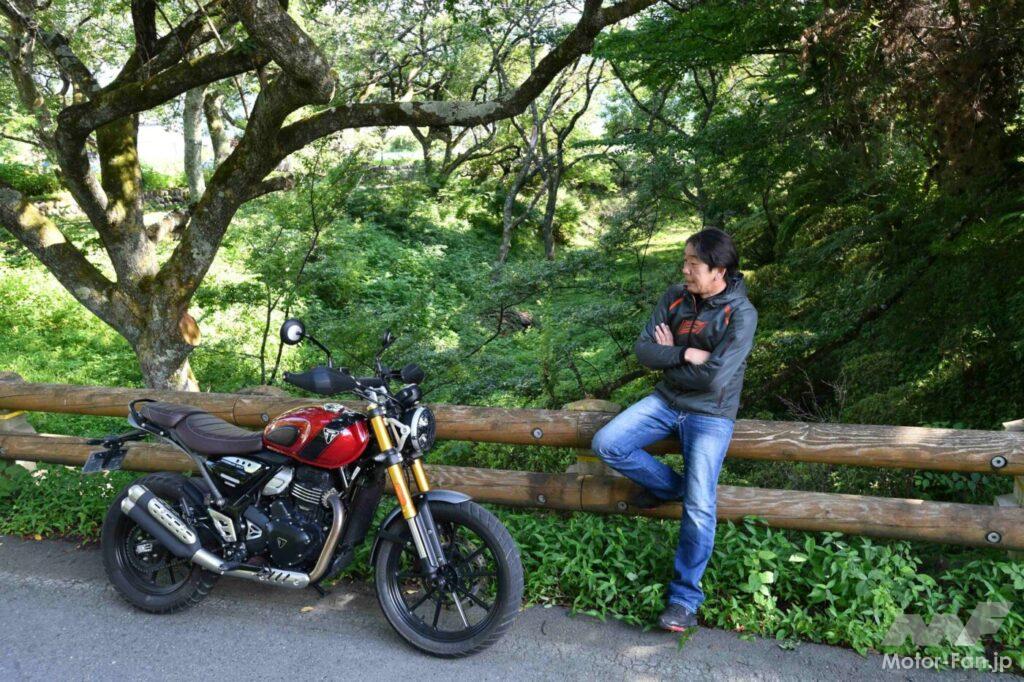
The next merit I’d like to mention is the riding position, which is highly flexible and puts no strain on the body. Of course, impressions on this matter will vary from bike to bike, with the Speed 400 being compact while the Scrambler 400X is large and generous, but the ability to change the seating position depending on the situation and the lack of strange pain or discomfort in the arms, legs, hips, or buttocks on long rides are elements that both bikes have in common. That said, when considering the front and rear wheel travel and wheelbase (Speed 400: F: 140mm / R: 130mm / 1377mm, Scrambler 400X: F: 150mm / 1418mm), the Scrambler 400X wins in terms of comfort and stability, but that doesn’t mean you can’t enjoy touring on the Speed 400.
I don’t feel the need to step up

I think that in the past, single-cylinder bikes around 400cc were seen as something a little more specialized, a vehicle chosen by people with certain preferences. However, during this test ride, I realized that with the advances in peripheral technology, modern single-cylinder bikes around 400cc now have the qualities to be a basic model that anyone can enjoy. After all, the problems that were said to be bad habits of big singles from a generation ago, such as difficulty in handling at low rpm, excessive vibration at high rpm, and strong engine braking when decelerating, no longer exist.
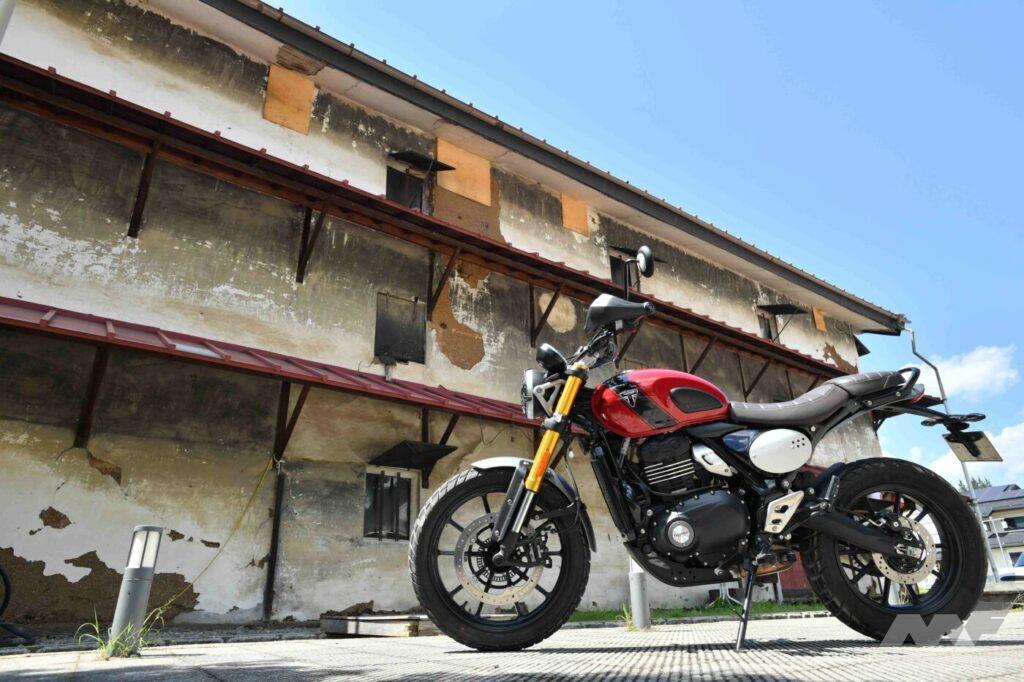
In other words, it is precisely because the Scrambler 400X has completely solved the problems of the big singles of the past that it can flexibly handle a variety of situations, from crowded city streets to comfortable winding roads. However, the impression people have of single-cylinder bikes varies from person to person, and while some people may be more comfortable with the Honda GB350 or Royal Enfield 350 series, which have a stronger old-school feel than the Triumph, I think there are many people who are attracted to the KTM 390 Duke or Husqvarna Vitpilen/Svartpilen 401, which are sportier and more aggressive than the Triumph.

However, the single-cylinder bikes around 400cc that I would most easily recommend to the general public right now are the Scrambler 400X and Speed 400, which have engines that deliver just the right amount of power, straightforward and gentle handling, are not difficult to operate at all, and can even handle touring with liter bikes if you so desire.
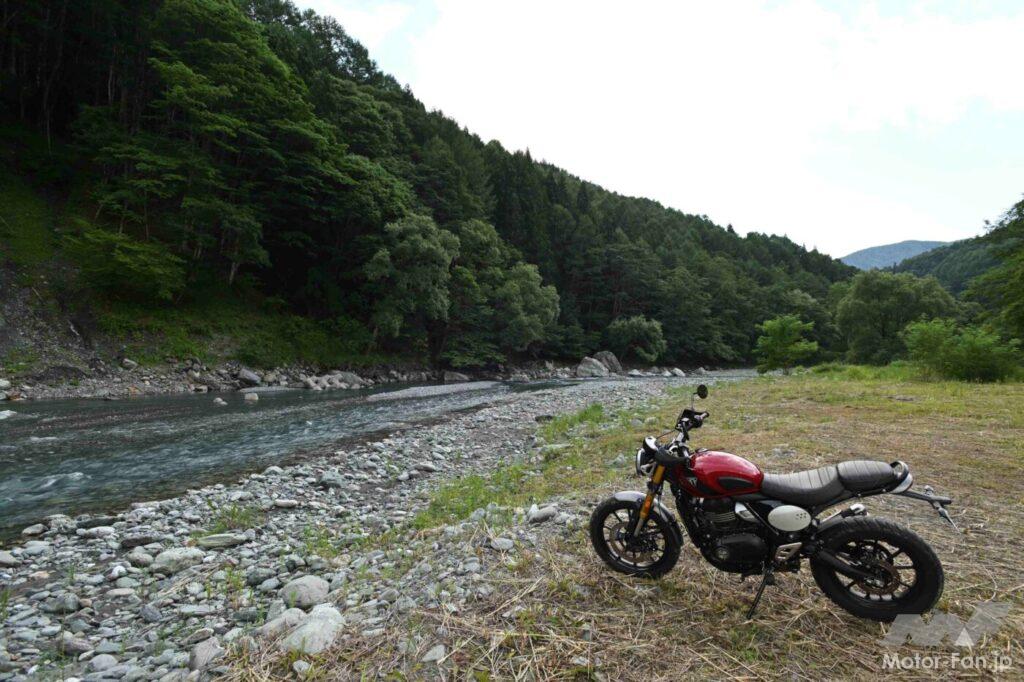
On the other hand, I was somewhat worried about Triumph’s strategy. Naturally, the company expects riders who purchase the Speed 400 and Scrambler 400X to upgrade to a modern classic 900/1200cc twin bike in the future. However, when test riding the Scrambler 400X, I didn’t really feel the need to step up. In fact, on Japan’s cramped roads, I felt that a 400cc single-cylinder bike would be more enjoyable.

Of course, large vehicles have their own unique appeal, but I wouldn’t be surprised if there are people who choose to continue riding 400cc single-cylinder vehicles, or even choose 400cc single-cylinder vehicles. On the other hand, if the premise was that people would step up, perhaps Triumph should have left some kind of “gap” between the two 400cc single-cylinder vehicles?
*In the third installment, which will be published soon, the author will explain each part from his own unique perspective, as well as introduce the actual fuel consumption measured after driving approximately 1,000 km.
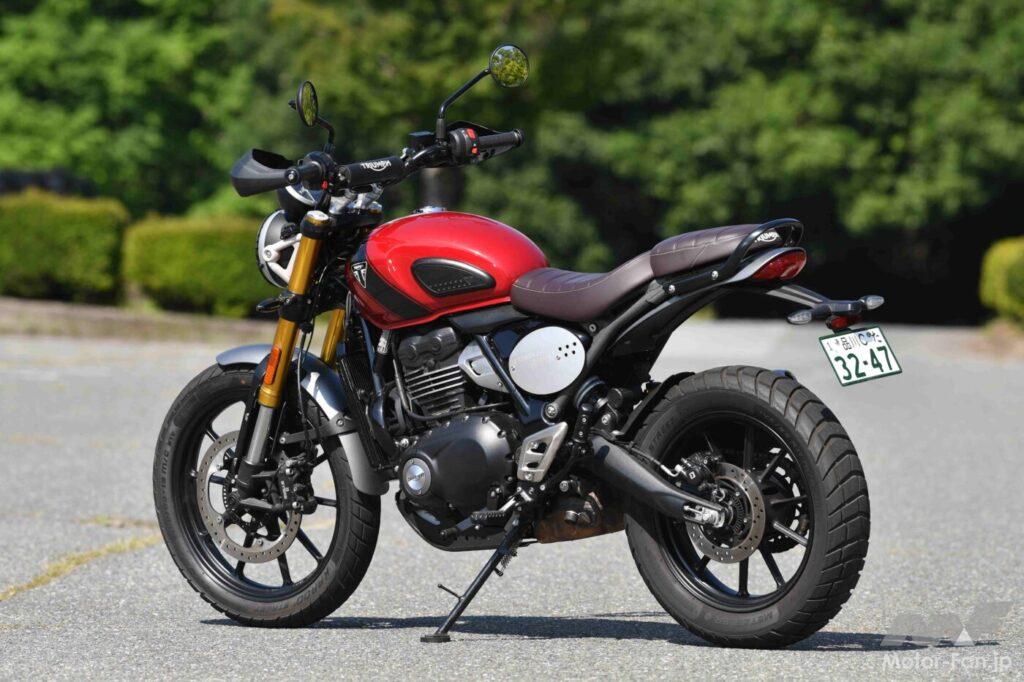
Although they look classic at first glance, the engine and chassis of the Speed 400 and Scrambler 400X are modern in design, with inverted forks and direct-pushing monoshock front and rear suspension. Although I don’t think Triumph intended this, it shares elements with the Kawasaki Z900RS, which is hugely popular in Japan.
ADVERTISEMENT
 SR + GB + Bullitt + Duke + Pyren ÷ 5 = Triumph Scrambler 400X? This bike combines the best of modern 350-400cc single-cylinder bikes. | 1000km Test Drive [1/3]
In recent years, the motorcycle market has seen a wide variety of neo-classic models. Among them, the Speed 400 and Scrambler 400X, which Triumph launched in 2024, are rare under-400cc models that combine the flavor of the good old days with modern maneuverability in just the right balance. REPORT: Nakamura Tomohiko PHOTO: Togashi Hideaki
Main specifications
Model name: Scrambler 400X
Length x width x height: 2115mm x 900mm x 1170mm
Wheelbase: 1418mm
Ground clearance: 195mm
Seat height: 835mm
Caster/trail: 23.2°/108mm
Engine type: Water-cooled 4-stroke single cylinder
Valve type: DOHC 4-valve
Total displacement: 398.15cc
Bore x stroke: 89.0mm x 64.0mm
Compression ratio: 12.0
Maximum power: 29.44kW (40ps) / 8000rpm
Maximum torque: 37.5N・m (3.8kgf・m) / 6500rpm
Starting method: Self-starter
Ignition method: Full transistor
Lubrication method: Wet sump
Fuel supply method: Fuel injection
Transmission type: Constant mesh 6-speed
return Clutch type: Wet multi-plate coil spring
Gear ratio
1st gear: 2.830
2nd gear: 1.930
3rd gear: 1.420
4th gear: 1.140
5th gear: 0.960
6th gear: 0.840
1st and 2nd reduction ratios: 2.839, 3.070
Frame type: Hybrid spine/perimeter
Front suspension: Telescopic inverted type φ43mm
Rear suspension: Direct push monoshock
Front tire size: 100/90-19
Rear tire size: 140/80R17
Front brake type: Hydraulic single disc
Rear brake type: Hydraulic single disc
Vehicle weight: 179kg
Fuel used: Unleaded high-octane gasoline
Fuel tank capacity: 13L
Seats: 2 people