

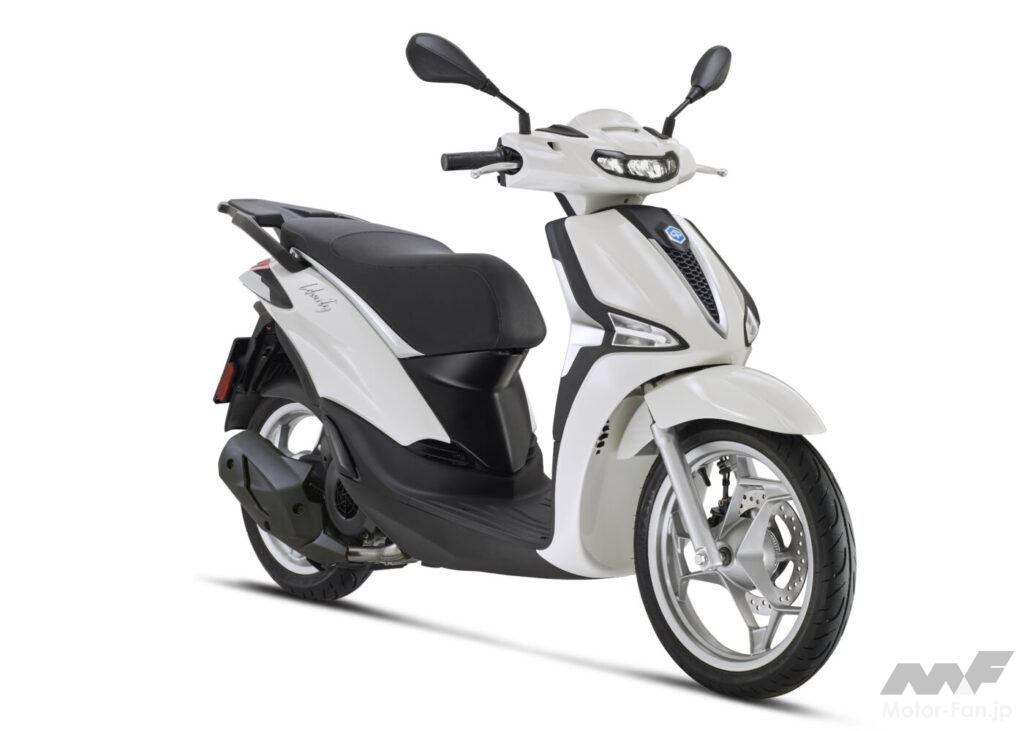
The engine, body, and everything else has been overhauled to evolve into the sixth generation.
The Piaggio Liberty was launched in 1997 as a scooter with large 16-inch wheels. Initially, only the 50cc model was available, but 125cc and 150cc models were later added. The second generation was released in 2004, the third in 2009, the fourth in 2013, and the fifth in 2016, and this latest full model change marks the sixth generation. It is a best-selling model, with over one million units sold worldwide.
All new models are equipped with air-cooled, single-cylinder, four-stroke, three-valve engines, eliminating the two-stroke engine that was previously only available in 50cc models. The new four-stroke 50cc engine delivers a maximum output of 2.2kW (3ps) and a maximum torque of 2.9Nm, ensuring ample power and ease of handling. The Liberty is popular among young people riding motorized vehicles for the first time, and is eligible for the European AM license. In Italy, the license can be obtained from the age of 14.
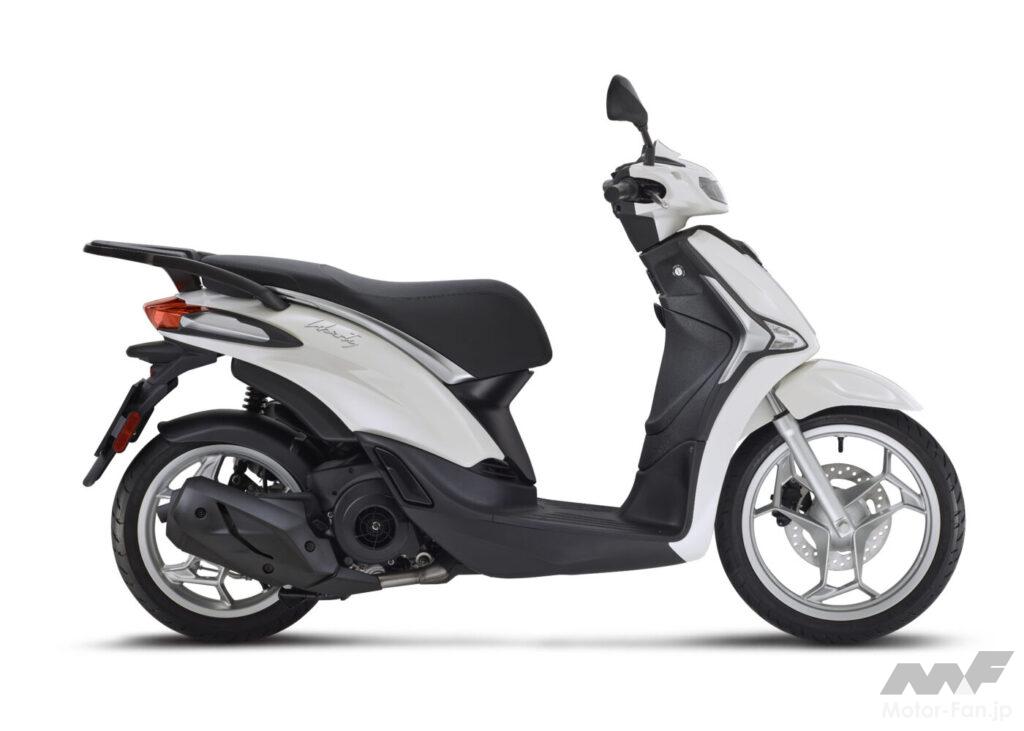
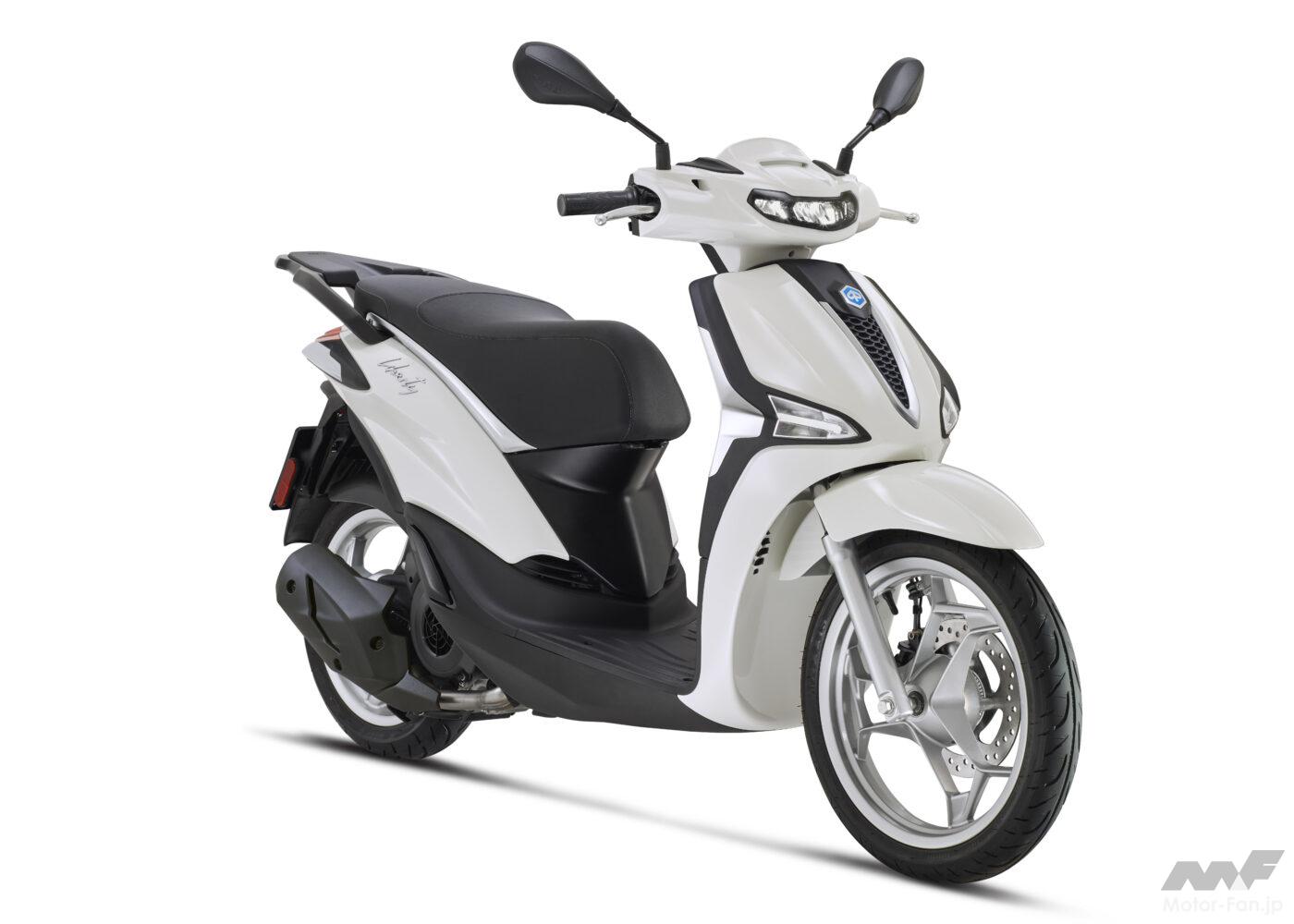
A high-wheel scooter with 16-inch front and 14-inch rear wheels.
The Liberty, known for its elegant style, continues its Italian design in this model. The front end has been extensively redesigned, adding a new dynamic and sporty impression. The horizontally oriented headlights are now fully LED. They blend in with the overall design, creating a striking signature for the modern and robust exterior. Piaggio’s signature “Central Tie” now features a honeycomb grille, creating a visual connection with Piaggio’s scooter series, the Beverly and Medley. Viewed from the side, the compact, refined lines elegantly combine a more robust front with a streamlined rear. The assist grip is now made of aluminum, allowing for the installation of options such as a top case.
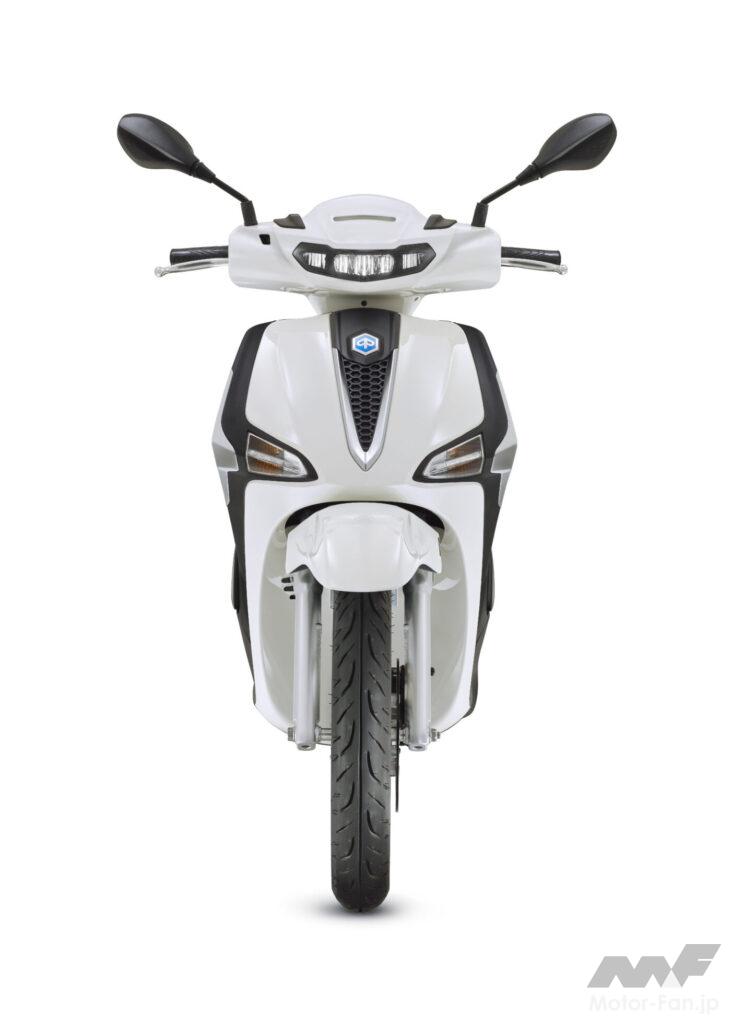
The adoption of horizontal LED headlights gives the car a more manly look.
While the basic design remains the same as the previous model, the ergonomic “triangle” of the seat, handlebars, grips, and foot position has been redesigned to further improve the excellent ride quality and comfort. The handlebars are now positioned higher than before, allowing for a more upright riding position, enabling greater vehicle control in any situation. The handlebars are equipped with a new full LCD meter cluster. The meter panel is a fully digital 5-inch color LCD panel and is equipped with a variety of functions, including a trip computer that displays average and instantaneous fuel consumption, itinerary, and mileage.
The new Liberty frame is constructed with high-strength steel tubing for lightweight handling. The 125 and 150 models feature a 1350mm wheelbase, while the 50 model features a 1370mm wheelbase, providing stability and confidence at all speeds. The wheels are 16-inch in the front and 14-inch in the rear, featuring a new three-spoke design. A high-profile 90/80 front tire and a generous 100/80 rear tire improve handling and reduce fuel consumption. The high profile of the front tire effectively absorbs impacts. The braking system combines a dual-piston caliper and 240mm disc in the front with a 140mm drum in the rear. ABS is standard on the 125 and 150 models.

The sports version of the Liberty S has the standard silver parts painted black.
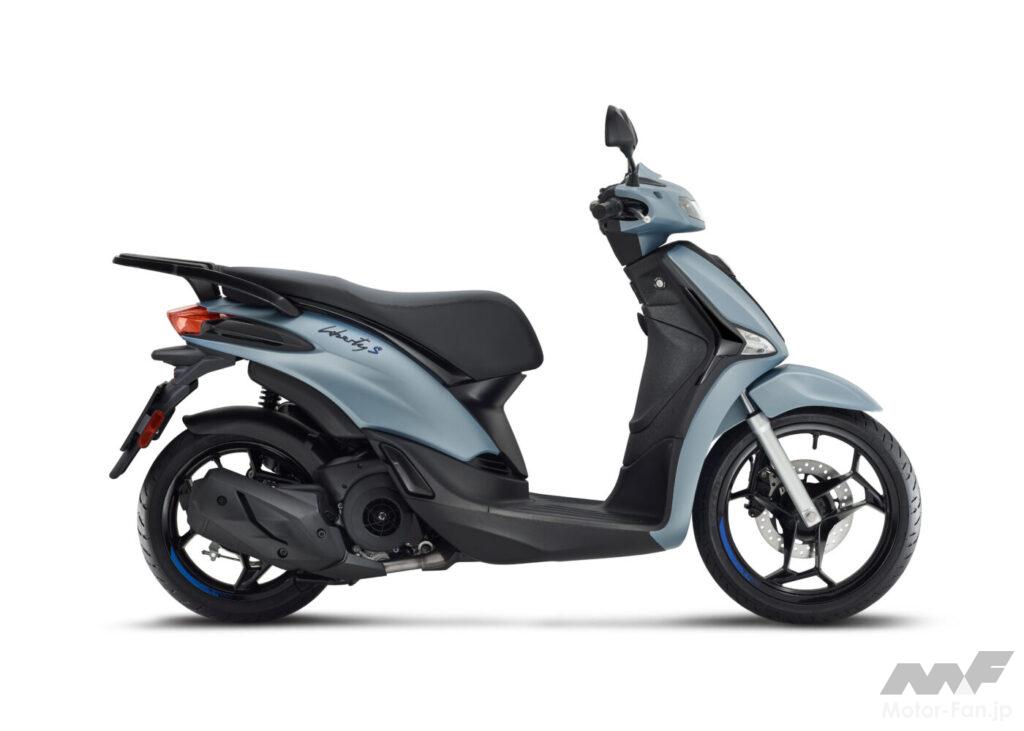
The wheels are painted black with blue accents.
All engines are four-stroke, air-cooled, single-cylinder injection-type. The three-valve OHC head and injection position have been optimized. Furthermore, by changing the position of the throttle body, exhaust gases have been reduced, fuel economy has been improved, and performance has been maximized. The 50cc and 125cc models have a low fuel consumption of just 2.5 liters per 100 km in WMTC mode, and the 150cc model has a low fuel consumption of 2.7 liters per 100 km.
The new Liberty will be available in three engines and two versions: the standard Liberty and the sports Liberty S.
At this time, there are no plans to introduce it in Japan.